A bathroom drain pipe may look like a simple plumbing component, but it plays a critical role in keeping your bathroom clean, dry, and free from drainage problems. Whether you are installing a new bathroom, replacing an old drain line, dealing with slow drainage, or choosing the right plumbing parts, understanding how bathroom drain pipes work can help you make better decisions.
In this guide, I will explain everything you need to know about bathroom drain pipes, including common sizes, pipe materials, installation basics, replacement signs, common problems, and when it is better to call a professional plumber.
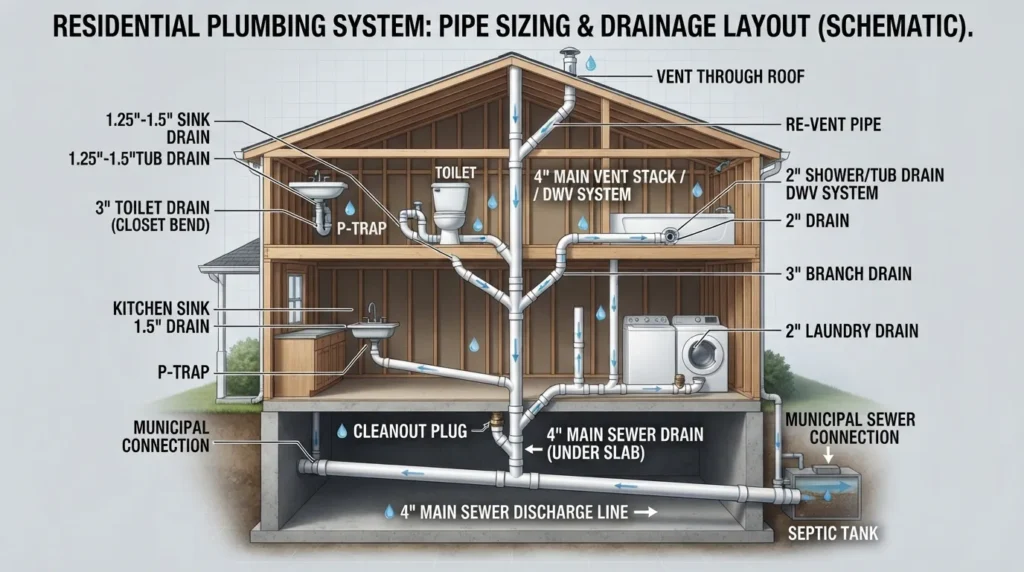
Most bathroom drain pipes are designed to safely carry wastewater from sinks, showers, bathtubs, and toilets into the home’s drainage system. The most common bathroom drain pipe sizes are usually 1 1/2 inches for bathroom sinks and around 2 inches for shower and tub drains, although exact requirements depend on the fixture and local plumbing codes.
What Is a Bathroom Drain Pipe?
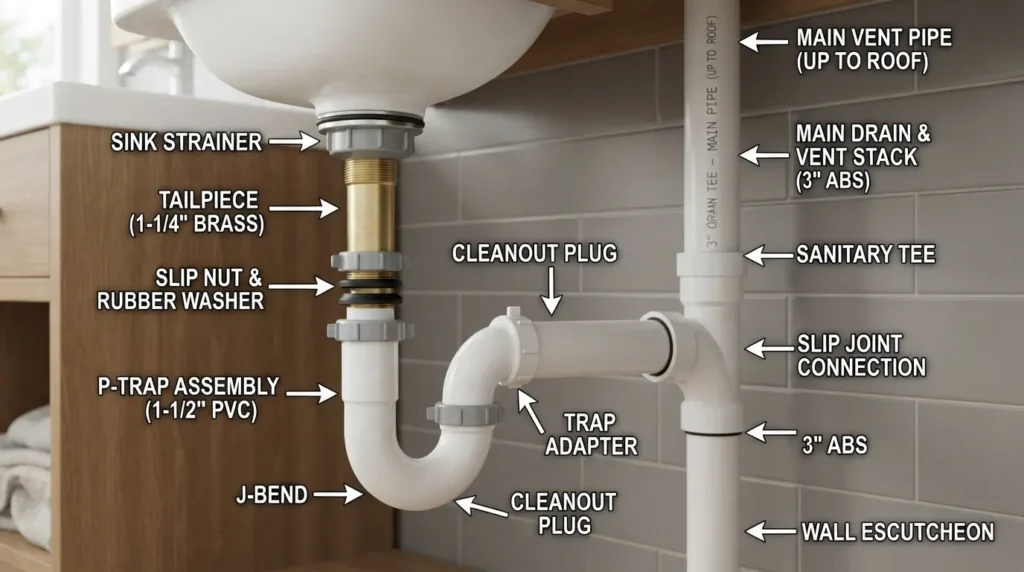
A bathroom drain pipe is a plumbing pipe that carries used water away from bathroom fixtures. It connects components such as bathroom sinks, showers, and bathtubs to the home’s main drainage system.
A complete bathroom drainage system usually includes several connected parts:
- Drain opening and drain assembly
- Drain pipe
- P-trap (a curved section that helps block sewer gases)
- Vent connection
- Main waste or sewer connection
Understanding these parts helps you identify problems faster and choose the correct replacement components when repairs are needed.
How Does a Bathroom Drain Pipe System Work?
When you use a bathroom fixture, wastewater flows through the drain opening into the connected pipe system. Gravity moves the water through properly sloped drain pipes toward the main drainage line.
The P-trap holds a small amount of water that creates a barrier against unpleasant sewer smells. Proper ventilation allows the drainage system to work efficiently without creating pressure problems.
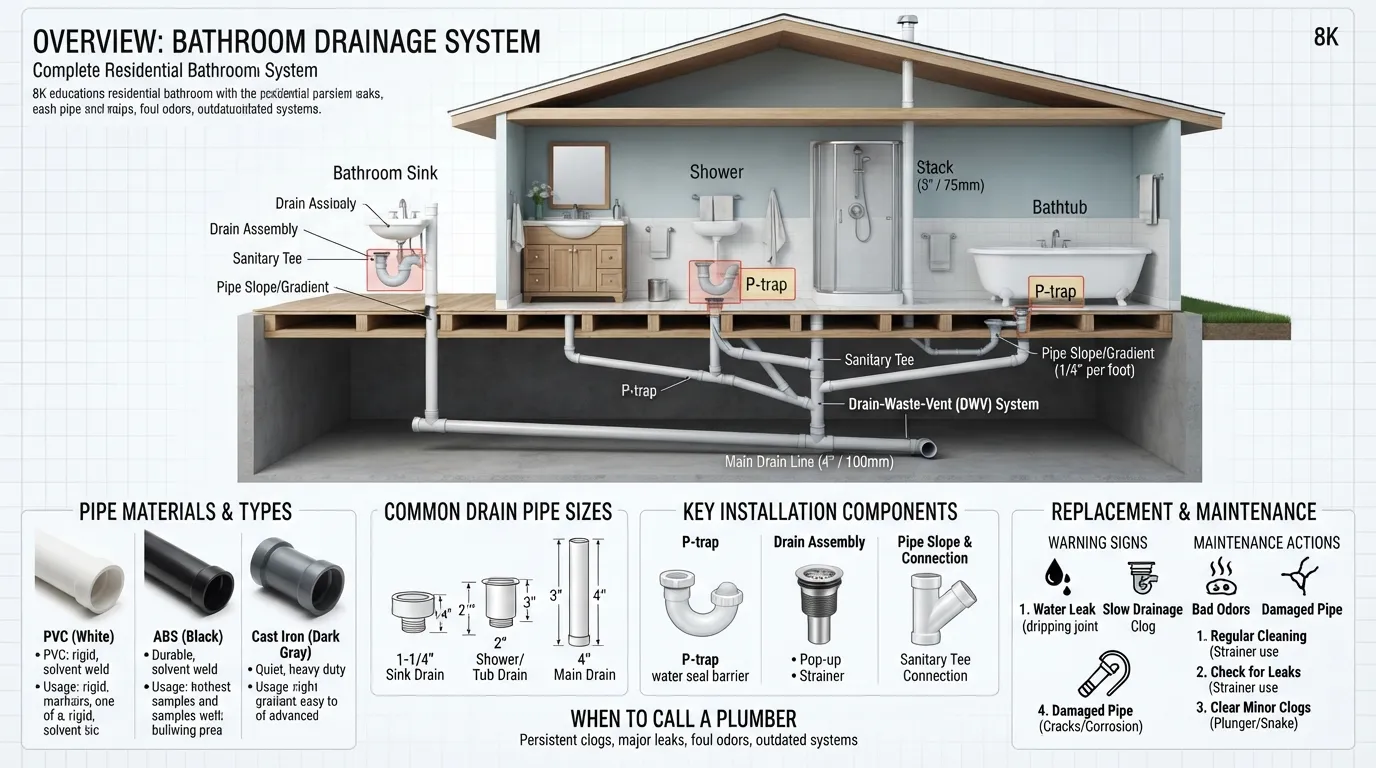
Bathroom Drain Pipe Diagram: Main Components Explained
A basic bathroom drain system typically follows this path:
Bathroom Fixture → Drain Assembly → P-Trap → Drain Pipe → Vent System → Main Drain Line
What Is the Standard Size of a Bathroom Drain Pipe?
One of the most common questions homeowners ask is about bathroom drain pipe size. The correct size depends on the fixture being connected.
| Bathroom Fixture | Common Drain Pipe Size | Important Note |
|---|---|---|
| Bathroom Sink | 1 1/2 inches | Common size for vanity and sink drains |
| Shower Drain | Around 2 inches | Designed for higher water flow |
| Bathtub Drain | Around 1 1/2 to 2 inches | Depends on system design |
Using the wrong pipe size can lead to slow drainage, frequent clogs, or installation issues. Always consider the fixture requirements and local plumbing standards.
Types of Bathroom Drain Pipes
Bathroom drain pipes are available in different materials. Each option has advantages depending on the plumbing system and installation requirements.
PVC Drain Pipe
PVC is one of the most commonly used materials for modern drainage systems. It is lightweight, corrosion-resistant, and widely available.
ABS Drain Pipe
ABS pipes are another plastic drainage option used in many plumbing applications. They are known for durability and impact resistance.
Cast Iron Drain Pipe
Cast iron pipes have historically been used in many buildings because of their strength and noise reduction properties, although modern replacements often use plastic materials.
Bathroom Drain Pipe Installation: Important Things to Know
Proper installation is essential because even a small mistake can create leaks, bad odors, or drainage problems.
- Choose the correct pipe size for the fixture.
- Ensure proper pipe slope for water flow.
- Install the correct P-trap connection.
- Seal joints properly to prevent leaks.
- Make sure the drainage system has proper ventilation.
Important:
Drain pipe installation mistakes can remain hidden until they cause water damage. If you are unsure about connections, slope, or drainage layout, professional plumbing help can prevent expensive repairs.
Signs You Need Bathroom Drain Pipe Replacement
Not every drainage issue requires a full replacement, but some warning signs indicate that your pipe system may need professional attention.
- Repeated slow drainage
- Persistent bad smells
- Water leaks around plumbing connections
- Visible cracks or damaged pipes
- Recurring drainage problems after cleaning
Bathroom Drain Pipe Problems and Solutions
| Problem | Possible Cause | Possible Solution |
|---|---|---|
| Slow Drain | Buildup or blockage | Drain inspection and cleaning |
| Bad Odor | Trap or drainage issue | Check plumbing components |
| Leaks | Damaged connections | Repair or replace damaged sections |
Bathroom Drain Pipe Cleaning and Maintenance
Regular maintenance can help reduce common drainage problems. Avoid putting hair, grease, or unsuitable materials into bathroom drains.
For professional help with blocked or slow drains, you can learn more about our drain cleaning service.
Bathroom Drain Pipe Parts and Related Resources
If you are researching replacement parts, fittings, or plumbing components, our bathroom and drain plumbing parts guide can help you understand the different options available.
Frequently Asked Questions About Bathroom Drain Pipes
What is the standard size for a bathroom drain pipe?
Bathroom sink drains commonly use 1 1/2-inch pipes, while showers and tubs often use larger drain sizes depending on the fixture requirements.
Can you use a 1 1/2 inch pipe for a bathroom sink drain?
Yes, 1 1/2-inch drain pipes are commonly used for bathroom sinks, but the correct installation depends on the plumbing system design.
What type of pipe is best for bathroom plumbing?
PVC and ABS are commonly used options for bathroom drainage systems. The best choice depends on your existing plumbing setup and local requirements.
Professional Bathroom Drain Pipe Help in Miami
Need Help With a Bathroom Drain Problem?
Whether you need drain cleaning, repairs, replacement, or professional advice, our plumbing team can help you find the right solution.
Contact our Miami plumbing team for professional assistance.