If you have opened a floor, looked below an old bathtub, or inspected older plumbing and found something that looks like a large metal can connected to the drain line, you may be looking at a drum trap.
A drum trap is an older type of plumbing trap that holds water inside a cylindrical chamber. That standing water creates a seal between your fixture and the drainage system, helping prevent sewer gases from traveling back into your home. Drum traps were commonly associated with older plumbing systems, especially bathtub drains, although configurations can vary.
The important part is this: finding a drum trap does not automatically tell you whether you need to clean it, leave it alone, or replace it.
I’ll show you how a drum trap works, how you can recognize one, why these old traps cause problems, how they compare with a P-trap, what Florida plumbing code says about them, and when professional attention makes sense.
What Is a Drum Trap in Plumbing?
A drum trap is a plumbing trap built around an enlarged, drum-shaped chamber rather than the curved section of pipe you see in a modern P-trap.
Its basic job is the same as other fixture traps:
- Allow wastewater to leave the fixture.
- Retain enough water to create a trap seal.
- Separate indoor air from gases inside the drainage system.
In a typical drum-trap arrangement, wastewater enters the chamber through one connection while the outlet is positioned so that some water remains inside the drum after the fixture finishes draining. That retained water forms the protective seal.
You are much more likely to encounter a drum trap as part of old plumbing than in a properly designed new fixture installation.
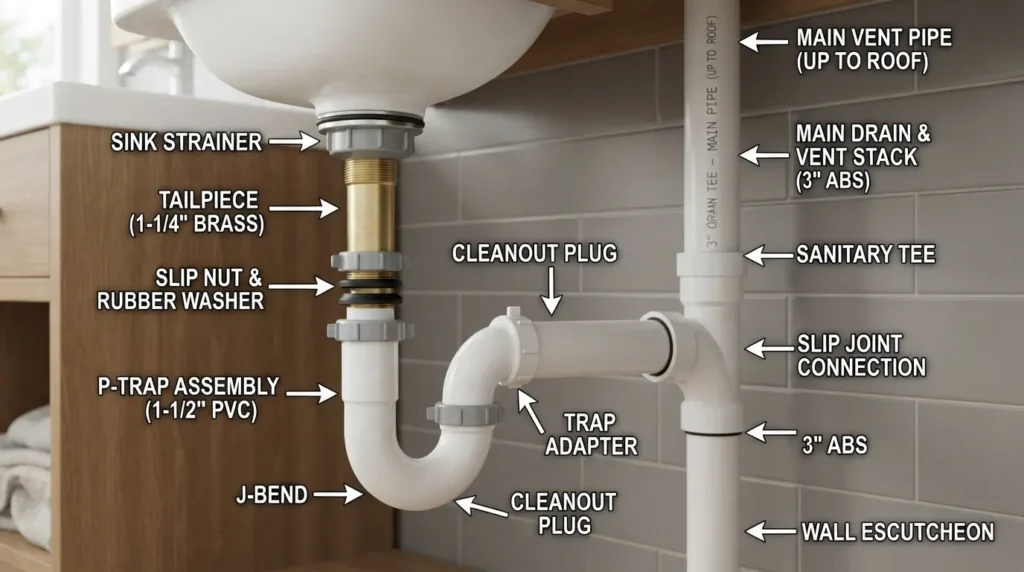
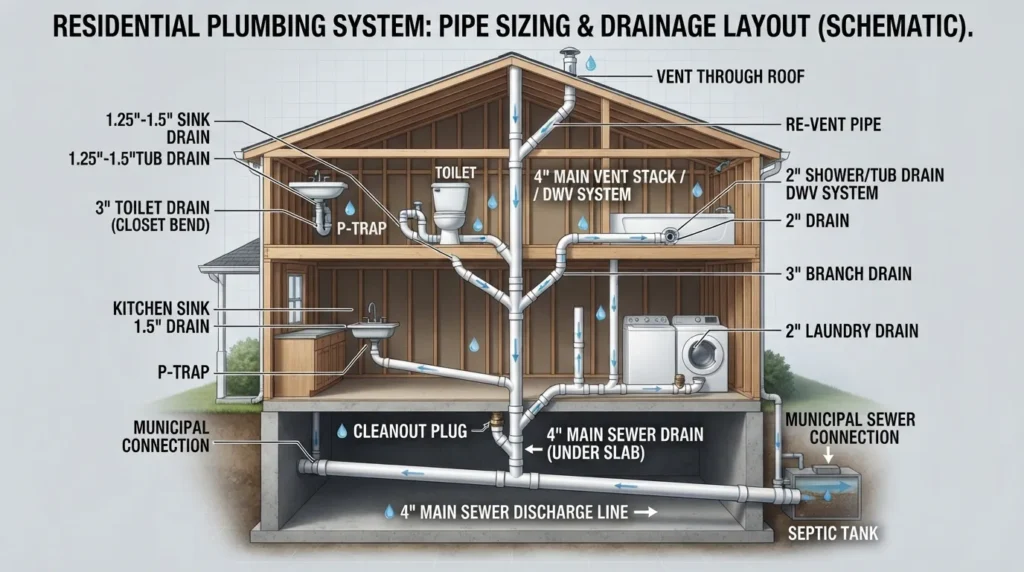
If you want to understand where traps fit into the rest of your drainage system, our guide to plumbing drain parts explains the other components working around the trap.
How Does a Drum Trap Work?
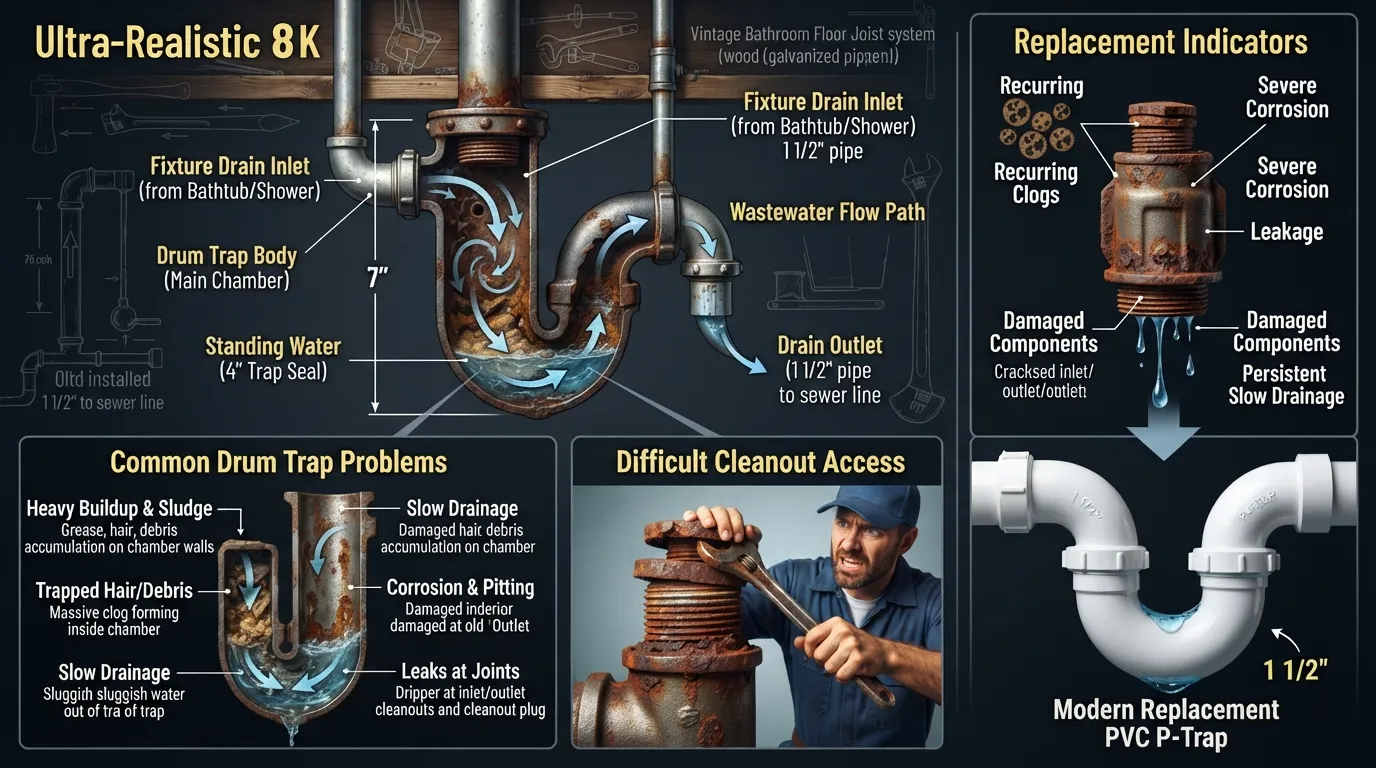
Think of a drum trap as a small water-holding chamber installed in the drain path.
A simplified flow looks like this:
Fixture drain → drum chamber → standing water seal → outlet → drain line
When you use the bathtub or other connected fixture, new wastewater enters the drum. Water already inside the chamber is displaced and flows through the outlet toward the drainage system.
When the flow stops, part of the water stays behind.
That standing water is important because it creates the trap seal that helps stop sewer gases from traveling through the drain opening and entering your living space.
Why did plumbers use such a large chamber?
One historical advantage of the drum design was the amount of water it retained.
A large water volume can make complete loss of the trap seal through siphoning less likely than it would be in some poorly vented older trap arrangements. That does not mean modern plumbing vent requirements should be ignored; it simply helps explain why drum traps made sense in older plumbing design.
The same large chamber that once looked advantageous also created one of the drum trap’s biggest weaknesses: debris can settle instead of being carried efficiently through the trap.
How Can You Tell If You Have a Drum Trap?
You usually cannot identify a drum trap simply by looking down your bathtub drain.
You need to look at the plumbing connected below or near the fixture.
Look for a large cylindrical body
A traditional drum trap may look like:
- A metal canister.
- A short cylindrical tank.
- A wide chamber that is noticeably larger than the connected drain pipe.
Older drum traps were made in different materials and configurations, so not every one looks identical. Iron and lead examples are documented in older homes, and drum traps have been installed in multiple orientations.
Check the plumbing around an older bathtub
Bathtubs are one of the fixtures most strongly associated with traditional drum traps.
Depending on the building, the trap may be:
- Below the bathtub.
- Between floor framing.
- Accessible from below.
- Hidden behind a ceiling.
- Near an access opening.
- Buried beneath finished flooring.
This is one reason homeowners sometimes discover a drum trap only during renovation or drain repairs.
Look for a cleanout cover
Many traditional drum traps were designed with a removable cover so the chamber could be opened for cleaning or retrieving an item that had gone down the drain.
Unfortunately, decades of corrosion can make that cover very difficult to remove. Some installations also leave poor physical access to the lid.
Why Are Drum Traps a Problem?
A drum trap can still perform its basic water-seal function, but the design has several disadvantages compared with modern fixture traps.
1. Hair, soap, and debris can collect inside
A modern P-trap is designed so flowing water helps carry material through the bend.
A drum trap behaves differently.
Because water moves through a relatively large chamber, heavier material can settle at the bottom instead of being swept downstream. Over time, that accumulation may contribute to:
- Slow bathtub drainage.
- Recurring clogs.
- Hair and soap buildup.
- Sediment accumulation.
- Unpleasant drain odors.
This lack of effective self-scouring action is one of the most important differences between old drum traps and modern P-trap arrangements.
2. They can be difficult to clean
The idea of a removable lid sounds convenient until that lid has been sitting in place for decades.
You may find:
- Rusted threads.
- A corroded cover.
- Very limited working space.
- A lid facing an inaccessible direction.
- Fragile old material.
- A trap hidden beneath flooring.
Forcing a badly corroded or soft old trap open can turn a drain-cleaning problem into a leaking or damaged plumbing assembly. Older lead traps deserve particular caution because the material can be damaged by excessive force.
3. They are more likely to hold dirty material
A drum trap does not only retain clean water.
Hair, soap residue, sediment, and other material may remain inside the chamber. When organic buildup sits in stagnant material, odor can become part of the complaint.
That means a bad bathroom smell is not always simply a “dry trap.”
If you have a drum trap, the odor could also be related to:
- Accumulated material.
- A leaking cleanout cover.
- Drainage problems.
- Trap-seal problems.
- Venting or other plumbing defects.
The source should be diagnosed rather than guessed.
4. Old trap materials can deteriorate
Age matters.
If the trap or surrounding piping has significant corrosion, leakage, damaged connections, or previous makeshift repairs, cleaning the chamber may not solve the actual plumbing problem.
At that point you are no longer dealing with only a clog. You are dealing with the condition of the drainage assembly itself.
Drum Trap vs. P-Trap: What Is the Difference?
If you are deciding what should replace an old drum trap, the comparison you usually need is drum trap vs. P-trap.
Drum trap
A drum trap:
- Uses an enlarged chamber to retain water.
- Is commonly associated with older plumbing.
- Can hold a relatively large amount of water.
- Allows debris to settle inside the chamber.
- May have a cleanout cover.
- Can become difficult to service as it ages.
P-trap
A P-trap:
- Uses a curved section of pipe to create the water seal.
- Is standard in modern fixture plumbing when properly installed.
- Has a more direct flow path.
- Is designed to be more self-scouring.
- Is generally easier to inspect and service.
- Works as part of a properly designed and vented drainage system.
So the main difference is not simply the shape.
The important difference is how water and debris move through the trap.
A drum trap creates a large holding chamber. A P-trap creates a compact water seal while allowing wastewater to move through a smoother path. That is a major reason P-traps became the practical modern solution for ordinary fixture drainage.
Why Are Drum Traps Prohibited in Modern Plumbing?
You may see websites simply say:
“Drum traps are illegal.”
That needs context.
Florida’s adopted plumbing code lists drum traps among prohibited trap types for ordinary applications, but the code also contains specific exceptions for drum traps used as solids interceptors and those serving chemical-waste systems.
So a better way to understand the rule is:
A traditional drum trap is not the normal code-compliant choice for a new household fixture installation, but there are specialized exceptions.
You should also separate installing a new drum trap from discovering an existing old drum trap.
If you already have one in an older property, whether work is required can depend on its condition, the type of renovation being performed, the plumbing changes involved, and requirements enforced by the local authority having jurisdiction.
If you are remodeling a bathroom or modifying the drainage system, have the existing setup evaluated before assuming it can simply remain as-is.
Does a Drum Trap Need a Vent?
This question causes a lot of confusion.
Historically, drum traps retained a large volume of water, which made them more resistant to losing their entire water seal through siphoning. That historical characteristic is one reason they appeared in older plumbing systems.
But you should not translate that into:
“A drum trap means I don’t need plumbing venting.”
Modern drainage systems rely on correctly designed trap and vent relationships to control air pressure and protect trap seals.
If you are replacing or modifying a drum trap, the plumber should evaluate the surrounding drain and vent arrangement rather than copying the old layout blindly.
Can You Open and Clean a Drum Trap?
Many drum traps were built with a cleanout cover, so yes, the design may allow access to the chamber.
The better question is:
Can your specific drum trap be opened without damaging it?
That depends on its condition and accessibility.
Be cautious if you see:
- Heavy corrosion.
- A severely rusted lid.
- Old lead construction.
- Evidence of previous leaks.
- A cracked or deformed trap.
- An inaccessible cover.
- Makeshift repairs around the cleanout.
If the lid is badly seized, applying more force is not automatically the right solution.
You could damage the trap, disturb an old connection, or create a leak that did not exist before.
Should You Clean a Drum Trap or Replace It?
This is where I would avoid giving you a one-size-fits-all answer.
Finding a drum trap does not necessarily mean you should immediately tear open the floor.
At the same time, repeatedly clearing the same failing drain without evaluating the trap is not a good long-term strategy either.
Cleaning may be worth evaluating when:
- The trap is physically sound.
- There is no active leak.
- Access is reasonable.
- The problem appears to be accumulated debris.
- The surrounding drain piping is otherwise serviceable.
- The cleanout can be accessed without damaging the assembly.
Documented real-world examples show that some older drum traps can continue functioning after proper cleaning when the trap itself remains in usable condition.
Replacement becomes more compelling when:
- The trap leaks.
- Corrosion is severe.
- The cleanout is damaged or inaccessible.
- You have recurring clogs.
- Odor keeps returning.
- The trap or surrounding piping is deteriorated.
- Previous repairs are unreliable.
- You are already opening the area during renovation.
- Drain piping needs to be reconfigured.
- The existing installation conflicts with the work needed to meet current requirements.
The right decision should consider the whole drain assembly, not just the drum itself.
What Does Drum Trap Replacement Involve?
A proper replacement is more than removing a metal can and attaching two pieces of pipe.
A plumber may need to evaluate:
- The fixture drain.
- The trap location.
- Existing pipe material and condition.
- Available space.
- Trap-arm configuration.
- Venting.
- Connection to the branch drain.
- Access through the floor, wall, or ceiling.
- Applicable plumbing-code requirements.
In a straightforward accessible installation, replacing an old trap can be relatively direct.
In a difficult installation, the trap may sit between framing, under finished flooring, beside old cast-iron piping, or in a location that requires more extensive drain modification.
That is why two drum-trap replacements can be very different jobs.
How Much Does Drum Trap Replacement Cost?
There is no useful universal price for drum-trap replacement because access often controls the job.
Your cost can change depending on:
- Whether the trap is exposed or concealed.
- Whether flooring or ceiling access is required.
- Condition of the surrounding pipe.
- Pipe material.
- Corrosion.
- Whether venting needs correction.
- How much of the drain must be rebuilt.
- Whether a simple P-trap retrofit is possible.
- Local permit or code requirements where applicable.
I would rather tell you what affects the price than give you a misleading national number that has nothing to do with your plumbing.
If you need an estimate for a Miami property, you can speak with a plumber and describe where the trap is located and what symptoms you are seeing.
What If My Drum Trap Is Causing a Slow Drain?
A slow drain can occur when hair, soap residue, or other material collects inside the drum.
But do not automatically assume the trap is the only blockage.
A slow bathtub could also involve:
- The fixture drain.
- The trap itself.
- The trap arm.
- A downstream branch drain.
- Old corroded piping.
- A larger drainage restriction.
That is why diagnosis matters.
If the problem is buildup that can be safely cleared without damaging the old assembly, professional drain cleaning may restore flow.
If the trap is badly deteriorated or keeps causing problems, replacement may be the more sensible long-term solution.
Can a Drum Trap Cause Sewer Smell?
Yes, a drum-trap system can be associated with sewer-like or foul drain odors, but there is more than one possible cause.
The large chamber can retain debris, and accumulated material can smell unpleasant. A damaged or poorly sealed cleanout cover may also create a problem. Trap-seal, venting, or other drain-system defects should also be considered.
If you smell something unusual, look at the pattern:
Smell appears when another fixture drains
That may point toward a drainage or pressure interaction that deserves further inspection.
Smell is strongest near the drum trap
The chamber, cap, leak, or accumulated material may be involved.
Smell returns shortly after cleaning
Do not keep treating the symptom indefinitely. The condition and design of the trap and connected drainage should be evaluated.
What About a PVC Drum Trap?
You may come across the phrase PVC drum trap, but material and design are two separate questions.
Making a drum-shaped trap out of PVC does not automatically turn the design into the preferred or code-compliant trap for an ordinary modern household fixture.
For a typical bathroom or other fixture installation, your goal should be a properly sized, accessible, code-compliant trap and vent arrangement—not simply recreating an obsolete configuration in newer material.
Specialized drum-trap applications are a separate matter and should not be confused with the old bathtub drum trap you may find in a house. Florida’s plumbing code specifically recognizes limited exceptions to its general drum-trap prohibition.
What Are the Different Types of Drum Traps?
There is not one single old drum-trap layout.
Drum traps have appeared in different:
- Shapes.
- Sizes.
- Materials.
- Inlet and outlet configurations.
- Orientations.
- Cleanout positions.
That is why identifying one by a single photograph can sometimes be misleading.
Focus on the function and internal water-seal arrangement, not only the outside appearance.
A cylindrical object connected to drainage is not automatically a correctly functioning drum trap.
What Other Plumbing Traps Are There?
You may hear several trap names when researching old plumbing, including:
- P-trap
- S-trap
- Drum trap
- Bottle trap
- Bell trap
That does not mean all trap designs are acceptable for modern use.
If someone asks, “What are the four types of plumbing traps?” there is no reason to assume that a random list of four represents four universally approved modern fixture traps. Different trap designs have existed historically, and plumbing codes restrict certain designs.
For a household repair or remodel, the question that matters is not:
“Does this trap exist?”
It is:
“Is this trap appropriate and code-compliant for this installation?”
What Type of Trap Should Replace a Drum Trap?
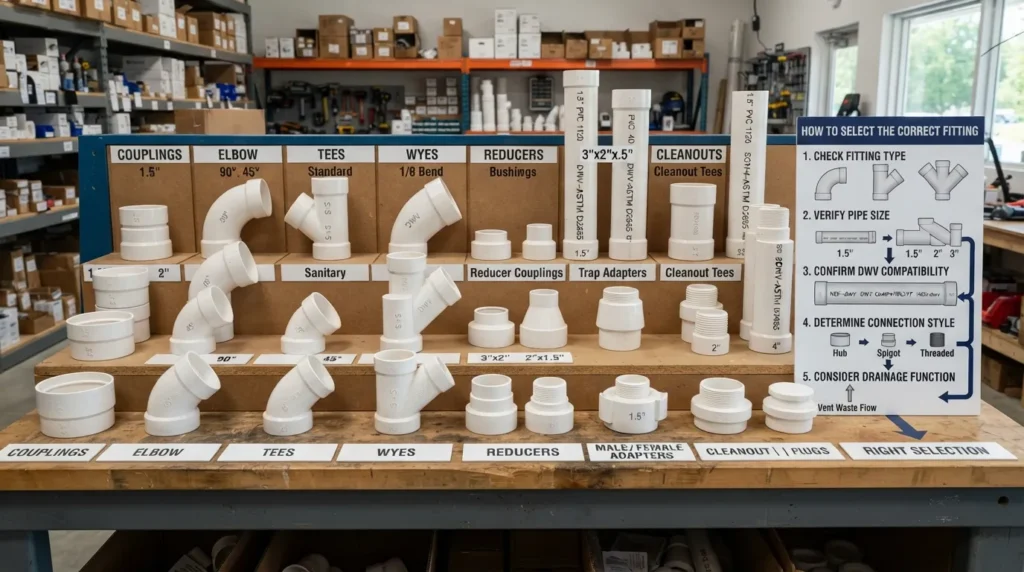
For an ordinary fixture where the layout allows it, replacement typically centers on a correctly installed P-trap integrated into a proper drainage and venting arrangement.
But I would not tell you to buy a P-trap and start cutting simply because you found a drum trap.
Before changing anything, you need to know:
- Where the existing vent is.
- Where the trap arm runs.
- Whether old piping is still sound.
- How much space is available.
- Whether structural access is required.
- What local code requires for the work.
The replacement should solve the old trap problem without creating a new drainage or venting problem.
When Should You Call a Plumber?
You should consider professional evaluation if:
- Your tub repeatedly drains slowly.
- The trap is leaking.
- You smell persistent foul odors.
- The cleanout cap is badly corroded.
- You cannot safely access the trap.
- Old lead or deteriorated metal is involved.
- Opening the trap may damage it.
- The drain has been cleared repeatedly.
- You are remodeling the bathroom.
- You plan to replace the trap.
- You are unsure whether the current setup meets code requirements.
If your home is in Miami-Dade and you need help identifying an old trap or deciding whether the problem is cleaning, repair, or replacement, our Miami plumbing team can inspect the drainage setup before you commit to unnecessary work.
Frequently Asked Questions About Drum Traps
What is the purpose of a drum trap?
A drum trap holds water inside a chamber to create a seal between a plumbing fixture and the drainage system. That water seal helps prevent sewer gases from traveling through the drain and entering the home.
Why are drum traps prohibited?
Traditional drum traps are not self-scouring like modern P-traps and can retain debris, making them more prone to buildup and difficult cleaning. Florida plumbing code lists drum traps among prohibited trap designs for ordinary use, while providing limited exceptions for specialized applications.
What is the main difference between a drum trap and a P-trap?
A drum trap stores water in a relatively large chamber. A P-trap creates its water seal in a curved section of pipe. The P-trap provides a more direct, self-scouring flow path and is the standard modern solution for ordinary fixture trapping when correctly installed.
What are the disadvantages of drum traps?
The main disadvantages are debris accumulation, recurring clogs, difficult cleanout access, corrosion, odor problems, and poor serviceability compared with modern P-traps.
What should replace a drum trap?
For many ordinary household fixtures, a properly installed and vented P-trap is the modern replacement. The exact retrofit depends on the existing drainage, venting, pipe material, available space, and local code requirements.
Can you open a drum trap?
Many drum traps have a removable cleanout cover, but old covers can rust or seize in place. If the trap is corroded, made from soft old material, leaking, or difficult to access, forcing it open can damage the assembly.
Does a drum trap need a vent?
Do not assume a drum trap eliminates the need for proper venting. Although the large water volume of historical drum traps made complete siphoning of the seal less likely, modern plumbing work should follow the required trap-and-vent arrangement for the installation.
Are all drum traps the same?
No. Older drum traps were installed in different materials, sizes, orientations, and inlet/outlet configurations. Their basic purpose is similar, but the actual installation can vary considerably.
Can an old drum trap still work?
Yes. An existing drum trap can still retain a water seal and drain a fixture, and documented old installations have remained functional for many years. That does not make the design appropriate for a new installation, and an existing trap should still be evaluated if it leaks, clogs repeatedly, smells, or becomes part of renovation work.
If you discovered a drum trap, you have found a piece of older plumbing technology—not automatically an emergency.
Its job is simple: hold water and block sewer gases.
Its weakness is also simple: the large chamber can collect material instead of flushing it efficiently downstream.
So I would not make the decision based on age alone.
I would ask:
- Is it leaking?
- Does the fixture drain slowly?
- Does it clog repeatedly?
- Is there an odor problem?
- Can the trap be accessed safely?
- Is the surrounding piping still sound?
- Are you already remodeling the area?
- Does the planned work require the drainage system to be brought into current compliance?
If the trap is functioning and there is no immediate defect, the situation may call for evaluation rather than panic. If it is corroded, leaking, inaccessible, repeatedly clogging, or already exposed during renovation, replacing the old arrangement with a properly designed modern trap may make far more sense.
The goal is not simply to remove an old drum trap.
The goal is to leave you with a drainage system that flows correctly, protects the trap seal, can be serviced when needed, and is appropriate for the plumbing work being performed.