If you’re dealing with a leaking drain, a lingering sewer smell, or you’re simply replacing an old fitting under your sink, you’ve probably run into the term PVC plumbing trap. It sounds like a small, forgettable piece of plastic pipe — but it’s actually one of the most important parts of your entire drainage system.
In this guide, I’ll walk you through exactly what a PVC plumbing trap does, the different types you’ll come across, how to pick the right size, why certain traps are actually illegal to install, and when it makes sense to call a professional instead of doing it yourself.
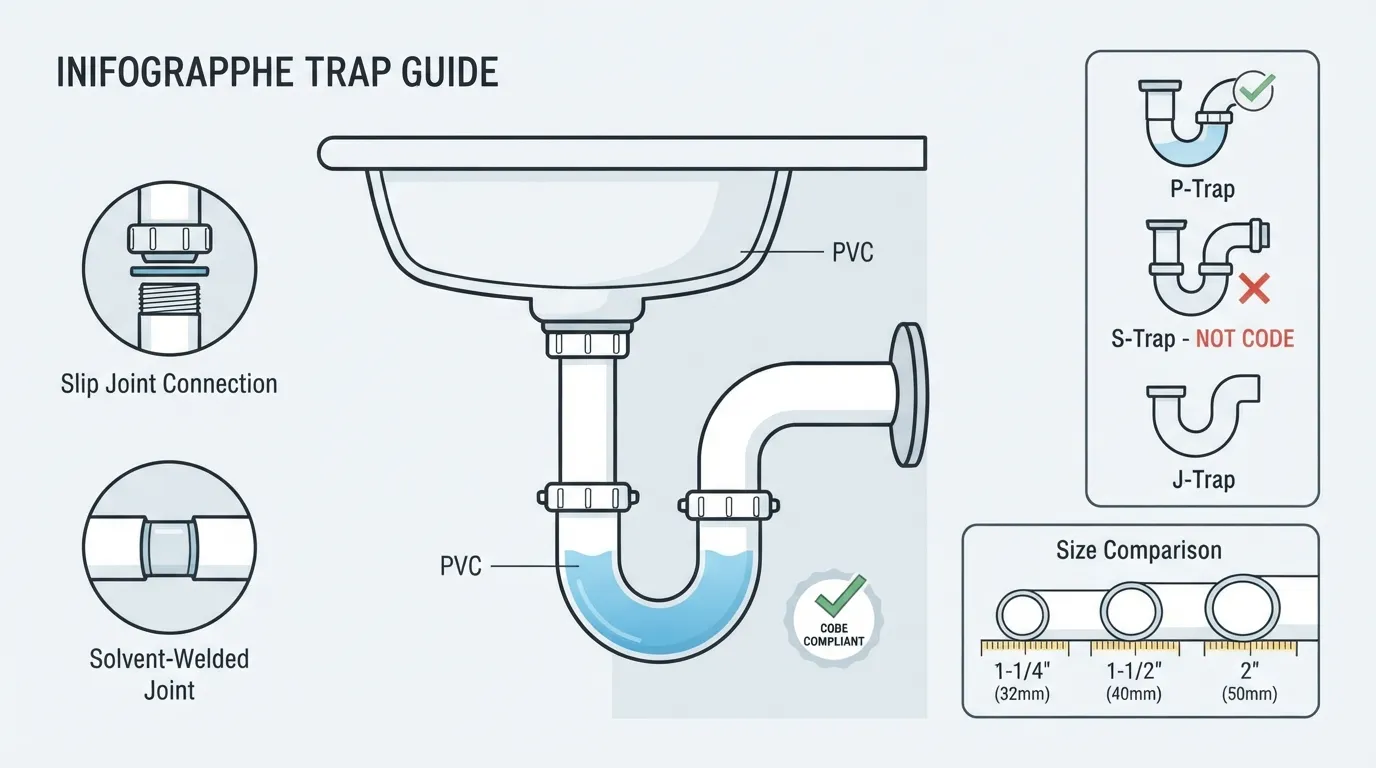
A PVC plumbing trap is a curved section of drain pipe (usually shaped like a “P”) installed under a sink, tub, or floor drain. It holds a small amount of water at all times, creating a seal that blocks sewer gas from entering your home while still allowing wastewater and debris to flow through.
What Does a PVC Plumbing Trap Actually Do?
Every drain trap has one core job: keep the connection between your home’s air and the sewer system separated. Here’s how it works:
- Water seal: After you use a sink, a small amount of water stays trapped in the curve of the pipe. This standing water blocks sewer gas from rising back up through the drain.
- Debris catching: Because the water sits still in the bend, heavier debris — hair, sediment, and even small dropped items like rings — tends to settle there instead of disappearing into the main line.
- Corrosion resistance: Unlike older metal traps, PVC doesn’t rust or corrode from constant exposure to water and drain-cleaning chemicals, which is a big reason it’s become the standard material for most residential plumbing.
Types of Plumbing Traps: P-Trap, S-Trap, J-Trap & More
One thing that trips people up is the number of trap names floating around. They’re not all interchangeable, and some of them aren’t even legal to install anymore. Here’s a breakdown of the traps you’ll actually encounter.
| Trap Type | Where It’s Used | Code Status |
|---|---|---|
| P-Trap | Kitchen sinks, bathroom sinks, most fixtures | Standard, code-approved |
| S-Trap | Common in older homes, floor-connected drains | Generally not code-compliant today |
| J-Trap | Another name commonly used for P-trap style fittings | Same as P-trap |
| Nahani Trap | Floor drains, common in certain regional plumbing systems | Region-specific use |
| Gully Trap | Outdoor drainage, where a pipe meets an open drain | Used mainly in exterior drainage systems |
| House Trap | Main sewer line, whole-house drain | Prohibited in most modern plumbing codes |
Why Are House Traps and S-Traps Often Prohibited?
Modern plumbing codes have moved away from house traps and S-traps mainly because of siphoning. In an S-trap, the sharp downward bend can let wastewater pull the water seal out of the trap as it drains, leaving the pipe empty and giving sewer gas a direct path into your home. House traps create similar venting problems and can restrict flow. If your home still has one of these older configurations, it’s worth having a plumber evaluate whether it needs to be updated to meet current code.
PVC Trap Fittings: Slip-Joint vs. Schedule 40 DWV
Beyond the shape of the trap, PVC drain trap fittings also come in two different construction styles, and picking the right one depends on where the trap is going.
Tubular Slip-Joint PVC
These traps use nuts and washers that you hand-tighten rather than glue. That makes them easy to remove for cleaning or clearing a clog, which is why they’re the go-to choice for the exposed trap under a kitchen or bathroom sink.
Schedule 40 DWV (Drain, Waste & Vent)
These are solvent-welded, meaning the fittings are permanently glued together with cement. They’re built for durability rather than accessibility, which is why they’re used behind walls, under slabs, or anywhere the connection won’t need to be taken apart again.
What Size PVC Trap Do You Need?
Trap sizing depends entirely on the fixture it’s connected to. Installing the wrong size is one of the most common DIY mistakes, so it’s worth double-checking before you buy.
| Trap Size | Typical Use |
|---|---|
| 1-1/4 inch | Bathroom vanity and lavatory sinks |
| 1-1/2 inch | Kitchen sinks, larger bathroom basins, utility sinks |
| 2 inch | Floor drains, laundry standpipes, larger fixtures |
If you’re unsure which size your fixture takes, check the drain outlet on your existing trap or the tailpiece coming down from the sink — that measurement should match the new trap you buy.
DIY Installation vs. Calling a Plumber
A slip-joint PVC trap under a sink is one of the more approachable DIY plumbing jobs — no glue, no soldering, just hand-tightened nuts. That said, there are situations where it’s genuinely worth calling in a professional.
You can likely DIY if:
- You’re replacing a visible slip-joint trap under a sink
- The rest of your drain lines are in good condition
- You’re comfortable working with basic hand tools
Call a plumber if:
- The trap is glued (Schedule 40 DWV) behind a wall or under a slab
- You suspect an outdated S-trap or house trap that needs code-compliant venting
- You’re getting persistent sewer odor even after replacing the trap
- There’s water damage, corrosion, or a slow leak you can’t pinpoint
If any of that sounds like your situation, it’s usually faster and safer to have it looked at properly rather than guessing. You can see the full range of plumbing services we handle here, or just give us a call and describe what you’re seeing — we can usually tell you over the phone whether it’s a simple fix or something that needs a site visit.
Key Takeaway
Not all traps are created equal, and not all of them are legal anymore. If your home still has an S-trap or house trap, it’s worth getting it inspected — replacing it with a proper P-trap and vent setup is a one-time fix that protects your indoor air quality for good.
Watch: How a P-Trap Works
If you’d rather see it in action before you buy or install anything, this video breaks down the mechanics of a P-trap visually:
Frequently Asked Questions
What is the difference between an S-trap and a P-trap?
A P-trap has a shape that maintains a consistent water seal and vents properly, which is why it’s the current code standard. An S-trap has a steeper double curve that can siphon the water seal out during drainage, leaving the pipe empty and allowing sewer gas to escape — which is why it’s largely been phased out of modern plumbing.
Why are house traps prohibited?
House traps sit on the main sewer line and were originally meant to block gas from the municipal sewer system. In practice, they restrict flow, create maintenance headaches, and interfere with proper venting — which is why most modern plumbing codes no longer allow them in new installations.
What is the difference between a P-trap and a Nahani trap?
A P-trap is typically used under sinks and fixtures with a tailpiece connection, while a Nahani trap is generally installed at floor level, often for floor drains, and is designed to handle a different flow pattern and installation angle.
What’s the difference between a gully trap and a P-trap?
A gully trap is used outdoors, typically where a drain pipe exits the house and connects to an open or exterior drainage system. A P-trap, on the other hand, is used indoors under fixtures like sinks and tubs.
Do you need plumbers tape on PVC P-traps?
Most slip-joint PVC traps rely on their nut-and-washer connection rather than thread tape, since the seal comes from the washer being compressed, not from threads. Plumbers tape is more relevant to threaded metal connections elsewhere in a plumbing system.
How much does it cost to replace a P-trap?
Cost depends on factors like the trap size, accessibility, whether it’s a simple slip-joint swap or a glued DWV fitting behind a wall, and your local labor rates. Because pricing varies by situation, the most accurate way to get a number is to describe your setup to a plumber directly rather than rely on a generic estimate.
What are the three main types of plumbing traps?
The most commonly referenced types are the P-trap (the modern standard), the S-trap (older, prone to siphoning), and specialty traps like the Nahani or gully trap, which are used in specific installation contexts such as floor drains or exterior drainage.
Final Thoughts
A PVC plumbing trap might be one of the smallest parts of your drainage system, but it’s doing constant, quiet work — keeping sewer gas out of your home and catching debris before it becomes a bigger problem. Getting the type, size, and installation right matters more than it looks like from the outside.
If you want to browse more of what we handle beyond just traps and fittings, you can check out our full plumbing services here, or if something under your sink is already giving you trouble, reach out to our team directly and we’ll help you sort it out.
Not Sure Which Trap You Need?
Send us a quick description of your drain issue and we’ll help you figure out the right fix — no guesswork required.
Helpful Resources
If you’re comparing options or looking to buy a PVC trap fitting directly, these are a few reliable places to check current selection and pricing: