A pipe break rarely gives you a warning. One minute everything is normal, and the next you’re staring at water spreading across the floor or hearing a hiss behind a wall you can’t see. If you’re dealing with this right now, or you just want to know what to watch for before it happens, this guide walks you through the signs, the causes, what to do in the first few minutes, and how to figure out whether you’re looking at a quick fix or a call to a professional.
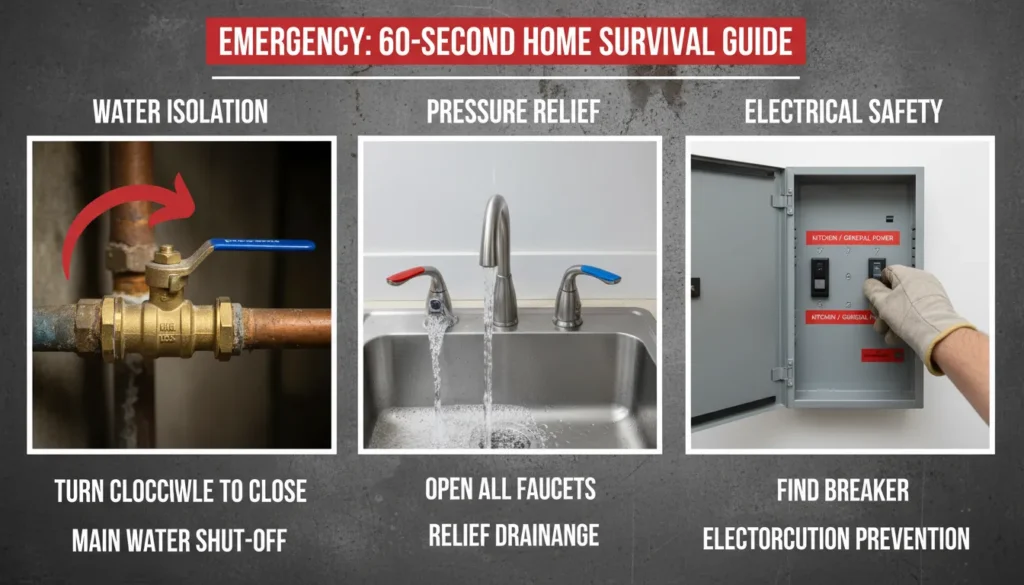
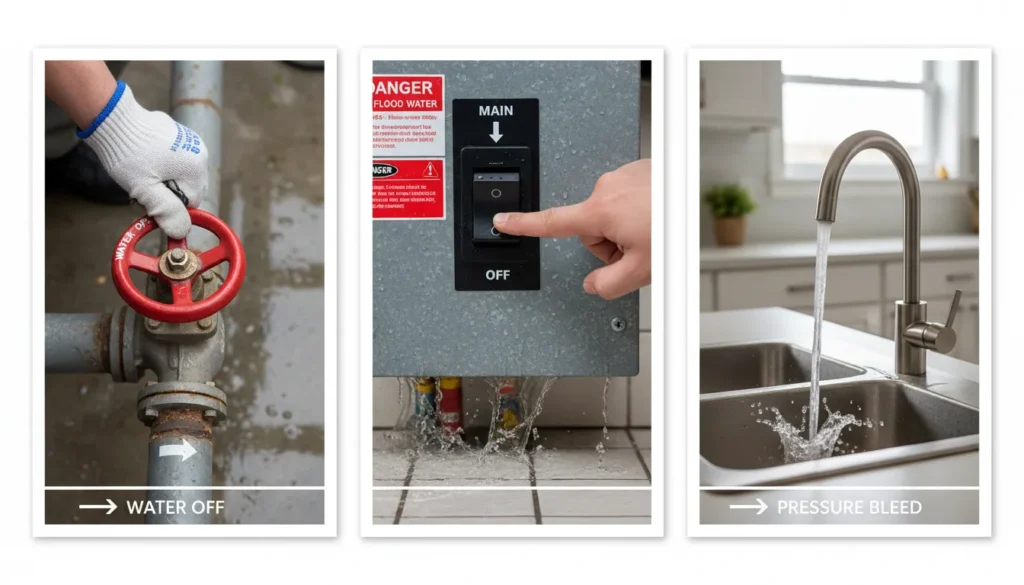
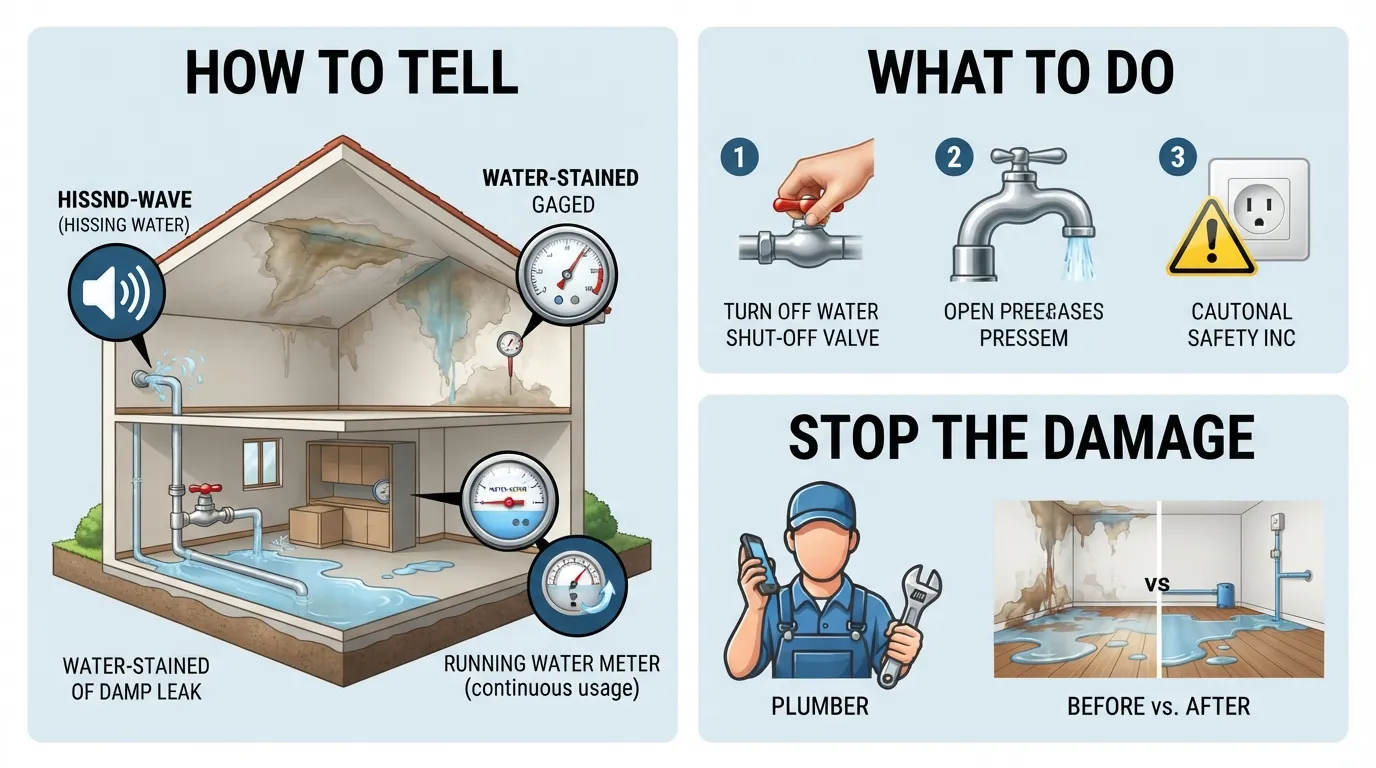
If you suspect a pipe has broken, shut off your main water supply valve first, open a few faucets to relieve pressure in the lines, keep people and pets away from any standing water near outlets or wiring, and photograph the damage before you start cleanup. Once the water is under control, call a licensed plumber to inspect the break and confirm what repair it actually needs.
How to Tell If a Pipe Has Actually Burst
Not every plumbing noise or damp spot means a pipe has burst, but there are a few signs that show up consistently when one has:
- A hissing, gurgling, or rushing water sound coming from inside a wall, ceiling, or floor — yes, you can often hear a pipe burst, especially if it’s under pressure and hidden behind drywall.
- A sudden, unexplained drop in water pressure at your faucets or shower.
- Water stains, bubbling paint, or sagging drywall/ceiling that weren’t there before.
- Damp or wet flooring, baseboards, or carpet with no obvious source like a spill.
- A musty smell developing in a room without any visible leak yet.
- Pooling water outside near your foundation or yard, even when it hasn’t rained.
- Your water meter still running after you’ve shut off every fixture in the house — this usually confirms water is escaping somewhere in the line.
If you’re seeing two or more of these at once, treat it as an active break rather than waiting to see if it gets worse.
Why Pipes Burst
Most burst pipes come down to one of a few root causes:
- High water pressure — pressure that consistently runs above the safe range puts ongoing stress on pipe joints and fittings until they give out.
- Corrosion and age — older metal piping weakens from the inside over years of use, until a weak point finally cracks under normal pressure.
- Shifting ground — soil movement can stress underground or slab-level pipes, especially where the ground isn’t perfectly stable.
- Tree roots — roots seeking moisture can grow into or crush older underground lines.
- Freezing temperatures — trapped water expands as it freezes, which can crack a pipe. This is a much smaller factor in South Florida than in colder climates, but it’s still worth a mention if you have exposed outdoor lines during a rare cold snap.
What Makes This More Common in Older Miami-Dade Homes
Freezing isn’t the main story here — Miami’s climate rarely gets cold enough for that to be a real factor. What we see more often locally is a combination of a few things: many homes in this area were built decades ago with galvanized steel or cast-iron piping that has simply been corroding from the inside for years, municipal water pressure that can run high depending on the neighborhood, and Florida’s limestone bedrock, which can shift or settle enough over time to put stress on underground lines. Hurricane season adds another layer — heavy rain saturates the ground and can accelerate that same shifting. If your home was built before the 1980s and still has its original piping, that combination is worth keeping in mind as a real risk factor, not just a theoretical one.
What to Do the Moment You Notice a Break
Do this first — in order
- Shut off the main water valve — this stops more water from feeding the break.
- Open a few faucets to drain the pressure still left in the pipes so the leak doesn’t keep flowing on its own.
- Cut power to the affected area if water is anywhere near outlets, switches, or appliances. If you’re not sure it’s safe to do this yourself, leave it to the electrician or plumber.
- Move anything valuable — furniture, electronics, boxes — away from the water.
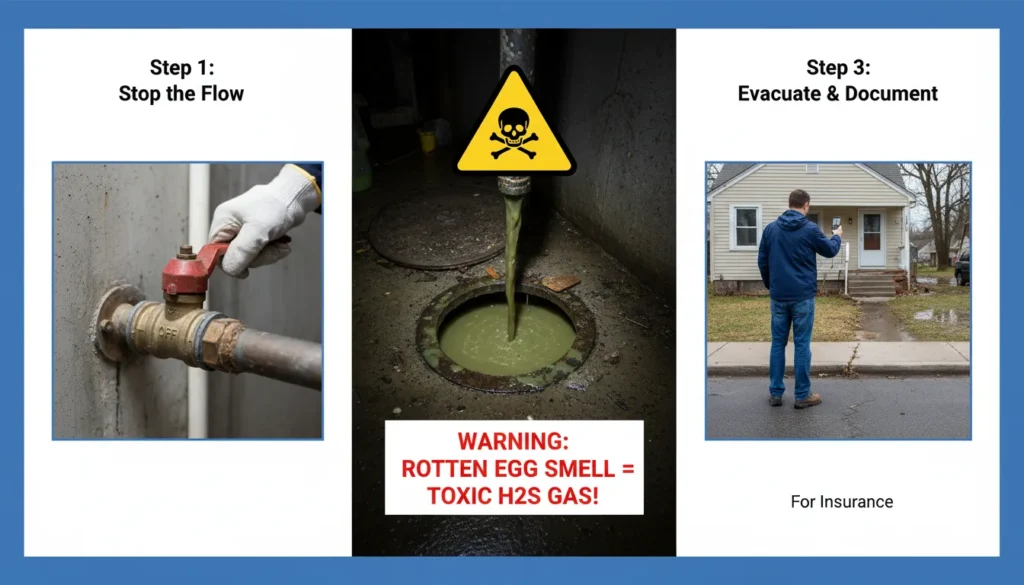
- Take photos and short videos of the damage as you find it, before you start mopping up or moving things.
- Call a licensed plumber to assess the break and confirm the right repair.
DIY Temporary Fix vs. Calling a Professional
A common question here is whether something like duct tape, rubber tape, or a patch kit can actually fix a burst pipe. The honest answer: those can slow a leak down for a short time, but they are not a repair. They don’t hold up under sustained water pressure, and relying on them for more than a few hours risks the same pipe failing again, often worse.
Temporary DIY Steps
- Shut off the main valve first — nothing else works without this
- Wrap a rubber patch or pipe repair clamp tightly over the break
- Use waterproof tape only as a short-term slow-down, not a fix
- Keep a bucket or towels in place to limit water spread
- Treat any of this as a stopgap measure only, not a solution
Call a Professional When…
- The break is hidden behind a wall, ceiling, or under a slab
- You can’t locate or reach the main shut-off valve
- Water keeps returning after you’ve stopped the visible leak
- The pipe is corroded, cracked in multiple spots, or very old
- You’re unsure what the pipe material is or how to cut/join it safely
How Urgent Is a Burst Pipe, Really?
Treat it as urgent, not optional. Even a small, slow leak can quietly soak into flooring, drywall, and subfloor for hours before it becomes visible, and that’s when mold and structural damage start. A visible, active burst is even more time-sensitive — the longer water runs, the more it costs to dry out and repair afterward. If you’re not confident you’ve fully stopped the source, or the break is somewhere you can’t inspect yourself, it’s worth getting an emergency pipe repair specialist out the same day rather than waiting to see if it settles down on its own.
Cleaning Up After a Burst Pipe
Once the leak itself is stopped, the cleanup matters just as much as the repair:
- Remove standing water quickly using towels, a wet vacuum, or a pump for larger amounts.
- Get air moving with fans and, if you have one, a dehumidifier — Florida’s humidity makes wet materials dry much slower than in drier climates.
- Pull up soaked carpet padding or insulation that can’t be fully dried, since these tend to hold moisture and encourage mold.
- Check inside cabinets, baseboards, and behind appliances — water travels further than it looks.
- Watch the area for the next week or two for any musty smell or discoloration, which can signal moisture that didn’t fully dry out.
For larger floods or damage that’s affected multiple rooms, a water damage restoration company is usually a better fit than DIY cleanup alone.
Does Homeowners Insurance Cover a Burst Pipe?
Most standard homeowners policies do cover water damage from a burst pipe when the break is sudden and accidental — for example, a pipe that fails without warning. What they typically do not cover is damage caused by gradual issues, like a slow leak that went unnoticed and unaddressed for months, or damage tied to a lack of routine maintenance. This distinction between “sudden” and “gradual” damage is usually the deciding factor in whether a claim gets approved.
In Florida specifically, it’s also worth checking whether your policy is named-peril (covers only listed causes of loss) or open-peril (covers everything except what’s specifically excluded), since that affects how a burst-pipe claim gets handled. As for responsibility: if the break is inside your home’s own plumbing, it’s generally on you and your insurer; if it’s in the municipal main line before it reaches your property, that typically falls to the utility or local water authority.
Is It Expensive to Fix?
The cost of repairing a burst pipe depends heavily on where the break is and how it’s accessed. A pipe that’s exposed under a sink is a straightforward repair. A break hidden inside a wall, under a concrete slab, or underground involves more labor just to reach it, which is where cost climbs. Pipe material matters too — older galvanized or cast-iron lines often need more than a spot repair since the surrounding pipe may be just as worn. If the same section of plumbing keeps failing, it may be a sign that a broader repipe is worth discussing rather than repeatedly patching individual breaks — the same way you’d eventually plan for something like a water heater replacement once repairs stop being cost-effective. A licensed plumber can give you an accurate, situation-specific quote after seeing the break in person.
Preventing Future Pipe Breaks
- Have your water pressure checked and, if needed, install a pressure-reducing valve.
- Get older galvanized or cast-iron piping inspected periodically, especially in homes built before the 1980s.
- Keep an eye on trees planted near underground lines and have roots checked if you notice slow drains or damp patches in the yard.
- Know where your main shut-off valve is before you ever need it in an emergency.
- Schedule a plumbing inspection after major storms, since ground saturation and shifting can stress older lines.
If you want a broader look at keeping your plumbing in good shape beyond just pipe breaks, the team at Miami Florida Plumbing covers the full range of what a Miami home typically needs on our plumbing services page.
Key Takeaways
- Shut off your main valve and relieve pressure before anything else
- Yes, you can often hear a pipe burst — a hissing or rushing sound behind a wall is a real warning sign
- Tape and patch kits only buy you time, they don’t fix the problem
- In Miami, high pressure, aging pipes, and shifting ground matter more than freezing
- Sudden bursts are usually covered by insurance; gradual leaks usually aren’t
- Hidden or repeated breaks are a sign to call a professional, not keep patching
Watch: Fixing a Broken or Split Pipe
This video shows how a fast repair on a split or ruptured pipe can be done using modern push-fit fittings, which is useful context if you want to see the process before a plumber arrives:
Frequently Asked Questions
When should I actually worry about a pipe bursting?
Pay attention if you notice a sudden pressure drop, a hissing sound in a wall, an unexplained damp spot, or your water meter still moving after every fixture is off. Any two of these together is worth acting on right away.
Who is responsible if a pipe breaks?
If the break is inside your home’s plumbing, it’s your responsibility and typically falls to your homeowners insurance. If it’s in the main line before it reaches your property, it’s usually the local water utility’s responsibility.
Does homeowners insurance cover a burst pipe?
Usually yes, if the break was sudden and accidental. Damage from a slow leak that built up gradually over time is typically excluded, since insurers treat that as a maintenance issue rather than a sudden loss.
What should I do immediately after a pipe bursts?
Shut off your main water valve, open a few faucets to drain remaining pressure, keep water away from outlets and electronics, photograph the damage, and call a licensed plumber.
How urgent is a burst pipe?
Very. Even water you can’t see is soaking into flooring and drywall the longer it runs, which increases both the damage and the eventual repair cost.
Can you actually hear a pipe burst?
Yes, often you can. A hissing, gurgling, or rushing water sound coming from behind a wall or under the floor is one of the more reliable early signs.
Why would a pipe suddenly burst?
The most common reasons are high water pressure, corrosion from age, ground movement, tree root intrusion, and — less commonly in Florida — freezing temperatures.
Can a pipe still burst if the water is turned off?
A pipe already weakened by corrosion or pressure damage can still crack or fail even with the water off, since the physical stress on the pipe material doesn’t disappear just because the flow has stopped. Turning the water off stops the flooding, but it doesn’t undo existing damage to the pipe itself.
Is it expensive to fix a burst pipe?
It depends mainly on where the break is. An exposed, easily reached pipe is a simple repair; a break hidden in a wall, under a slab, or underground costs more because of the extra labor needed just to access it.
Can I put duct tape on a leaking pipe?
Only as a very short-term measure to slow the leak while you shut off the water and wait for a plumber. It won’t hold under sustained pressure and isn’t a real repair.
Dealing With a Burst Pipe Right Now?
Shut off your main valve, then get a licensed Miami plumber on the way to stop the damage before it spreads.