If you’ve noticed a soggy patch of lawn, a mini geyser in your yard, or a sprinkler zone that just won’t build pressure, you’re probably dealing with a broken sprinkler pipe. The good news? In most cases, this is a repair you can handle yourself in an afternoon with the right tools. Below, we’ll walk you through exactly how to find the break, fix it correctly the first time, and know when it’s smarter to call in a professional instead.
To fix a broken sprinkler pipe, run the zone to locate the leak, dig out and clean the damaged section, cut out the broken piece with PVC cutters or a hacksaw, then join a new pipe section using couplings (glued for PVC, or barbed with clamps for flexible poly pipe). Test the repair before backfilling the trench.
Common Signs of a Broken Sprinkler Pipe (and What Causes It)
Before you start digging, it helps to confirm what you’re actually dealing with. Typical signs include:
- A puddle or wet patch that appears even when the sprinklers are off
- Low water pressure in one specific zone
- Water bubbling or spraying up from the ground
- A noticeable spike in your water bill with no obvious explanation
Here in South Florida, sprinkler and irrigation lines take a beating from a few local factors: sandy, shifting soil that puts uneven pressure on pipe joints, tree and shrub roots that grow into or crush shallow lines, and heavy rain or hurricane-season debris that can shift the ground around buried pipes. Understanding the cause can also help you prevent the same break from happening again in the same spot.
Tools and Materials You’ll Need
- Replacement pipe — matching diameter (commonly 1/2-inch or 1-inch), in PVC or flexible poly tubing
- PVC cutters or a hacksaw — for a clean, straight cut
- Couplings — standard slip couplings, barbed fittings, or telescoping repair couplings
- PVC primer and cement — if you’re gluing a rigid PVC repair
- Hose clamps or pinch clamps — required if you’re using barbed fittings
- A shovel — to expose the damaged section of pipe
DIY or Call a Plumber? Quick Decision Guide
This repair is usually a good DIY project if the break is shallow, easy to access, and you’re comfortable working with PVC or poly fittings. It’s worth calling a professional if the pipe is under concrete or a hardscape, the damage is widespread across multiple zones, or you’re not confident diagnosing exactly where the leak is coming from. In those cases, a professional plumbing service can save you from turning a small repair into a bigger, more expensive one.
Step-by-Step: How to Fix a Broken Sprinkler Pipe
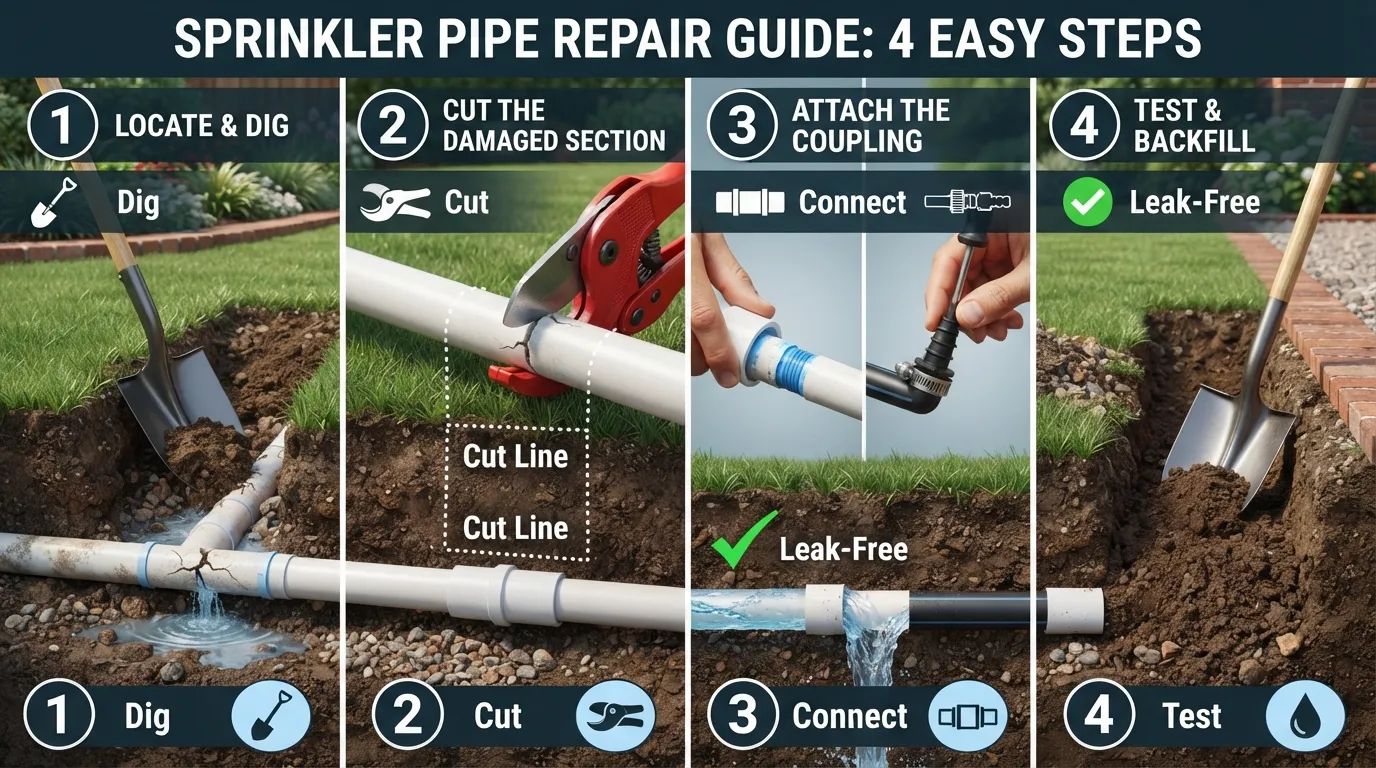
1. Locate the Damage and Dig It Out
Turn on the affected sprinkler zone and watch for pooling water or a small geyser — that’s your break. Shut the water off, then dig a wide, generous trench around the area so you have room to actually work, not just a narrow slot. Clear away the loose mud and dirt until the pipe is fully exposed.
2. Cut Out the Broken Section
Using PVC cutters (or a hacksaw for tougher pipe), cut out the damaged portion. Make sure your cuts go past the edges of any visible cracks — a crack that isn’t fully removed will just reopen later. Keep your cuts straight, and wipe both pipe ends clean and dry before moving on.
3. Join the New Pipe Section
How you reconnect the pipe depends on the material:
- Rigid PVC pipe: Apply PVC primer to the pipe ends and inside the new fittings, wait a few seconds, then apply PVC cement. Push the new pipe section into the couplings with a slight twist to seat it fully.
- Flexible poly pipe: Insert a barbed coupling into each end of the old pipe, then slide a pinch clamp or standard hose clamp over each connection and tighten firmly.
4. Test Before You Backfill
Turn the water back on slowly and check the repair closely for leaks. If it holds dry, backfill the trench and gently tamp the soil around — not directly on top of — the pipe. Packing dirt too firmly on the new fittings can stress the joint and cause a repeat failure.
PVC vs. Flexible Poly Pipe: Which Repair Method Applies to You?
Not sure what kind of pipe you’re working with? Here’s a quick side-by-side comparison to help you choose the right repair method.
Rigid PVC Pipe
Look: Hard white or gray plastic, doesn’t bend
Repair method: Glued slip couplings using PVC primer and cement
Best for: Permanent, high-durability repairs
Flexible Polyethylene (Poly) Pipe
Look: Black, bendable tubing
Repair method: Barbed coupling secured with hose or pinch clamps — no glue needed
Best for: Quicker repairs and pipe runs that need flexibility
How to Fix a Broken Sprinkler Pipe Under Concrete
Pipes that run beneath a driveway, patio, or sidewalk are a different challenge altogether, since you can’t just dig straight down to reach them. In this situation:
- First confirm the break is actually under the concrete and not just nearby — trace the line and check pressure on either side of the slab.
- Where possible, irrigation contractors often reroute the line around the obstruction rather than cutting into concrete, connecting into the existing pipe on both sides with couplings.
- If tunneling under the slab is necessary, this typically requires specialized equipment to bore underneath without cracking the concrete above.
This is one of the few sprinkler repair situations where we’d genuinely recommend bringing in a professional rather than attempting it yourself — cutting into a concrete slab incorrectly can turn a simple pipe repair into a much bigger and more expensive project.
Do Flex Seal, Gorilla Tape, or JB Weld Actually Fix a Sprinkler Pipe?
Does Flex Seal work on sprinkler pipes?
It can slow a leak temporarily, but it’s not a long-term fix. Constant water pressure and ground moisture tend to break the seal down over time.
Will Gorilla Tape stop a leaking pipe?
Gorilla Tape can buy you a short-term patch in an emergency, but it’s not designed to hold under sustained water pressure or when buried underground.
Will JB Weld work on water pipes?
JB Weld can bond to plastic and may hold a small hairline crack briefly, but it’s not a reliable permanent solution for pressurized irrigation lines.
The bottom line: these products can act as a temporary patch to stop water loss until you can properly repair the pipe, but none of them replace a proper coupling repair for a lasting fix.
Common Mistakes to Avoid When Repairing a Sprinkler Pipe
- Not cutting past the crack. Leaving even a small hairline crack in the pipe often leads to the same repair failing within weeks.
- Skipping the primer on PVC joints. Cement alone doesn’t bond as reliably — primer softens the plastic surface for a proper weld.
- Over-tightening clamps on poly pipe. This can crush or deform the barbed fitting instead of sealing it.
- Backfilling too soon. Always test the repair under water pressure before covering the trench back up.
- Packing soil directly on top of the fitting. This adds stress to the new joint and can cause it to crack again.
Watch It in Action
If you’d rather see the repair process visually before grabbing your tools, these walkthroughs cover both the glued PVC method and the barbed, clamp-based method for flexible poly pipe.
When to Call a Professional Plumber Instead
Most single-point sprinkler breaks are a manageable weekend fix. But it’s worth calling in help if you’re dealing with a break under concrete, a leak you can’t locate, repeated breaks in the same zone, or damage that seems connected to your main water line rather than just the irrigation system. If you’re also dealing with other plumbing concerns around the house — for example, needing a water heater replacement — it’s often worth having a licensed plumber look at everything at once.
Not Sure If It’s a DIY Fix?
The team at Miami Florida Plumbing can diagnose the break and repair it correctly the first time.
Frequently Asked Questions
Can a sprinkler pipe be patched?
Yes, for small cracks a patch kit or repair coupling can work as a temporary measure, but cutting out the damaged section and installing a proper coupling gives a more reliable, lasting repair.
How do you fix a broken pipe outside without replacing it?
For very small leaks, a rubber repair sleeve with hose clamps can seal the pipe without cutting it out entirely. This works best as a short-term fix rather than a permanent solution.
How do you fix a broken outdoor water pipe?
The same core process applies: shut off the water, expose the damaged section, cut past the crack, and reconnect with the appropriate coupling for your pipe material.
What can I use to fix a broken pipe?
Slip couplings for PVC, barbed couplings with clamps for poly pipe, or a rubber repair sleeve for small emergency leaks are the most common options.
What can I put on a pipe to stop a leak?
A rubber repair sleeve with hose clamps or a properly installed coupling are the most dependable options. Tapes and sealants can slow a leak temporarily but shouldn’t be treated as a permanent fix.
How to fix a broken water pipe in the ground?
Dig a trench to expose the pipe, cut out the damaged section past the crack, and reconnect with the correct coupling method for PVC or poly pipe before testing and backfilling.
Final Thoughts
Fixing a broken sprinkler pipe is one of the more approachable DIY plumbing repairs — as long as you take the time to locate the break properly, cut past the damage, and use the right coupling method for your pipe type. If the break is hidden under concrete, keeps recurring, or you’d simply rather leave it to a professional, our team is here to help. Explore our full range of plumbing services or give us a call today to get it fixed right.