If you’re planning to install, replace, or extend a gas pipe, the material and size you choose directly affect safety, efficiency, and whether your project passes inspection. Whether you’re running a line to a new stove, connecting a pool heater, or routing gas underground to a detached garage, this guide walks you through the pipe types, sizing basics, and installation standards you need to know before you start.
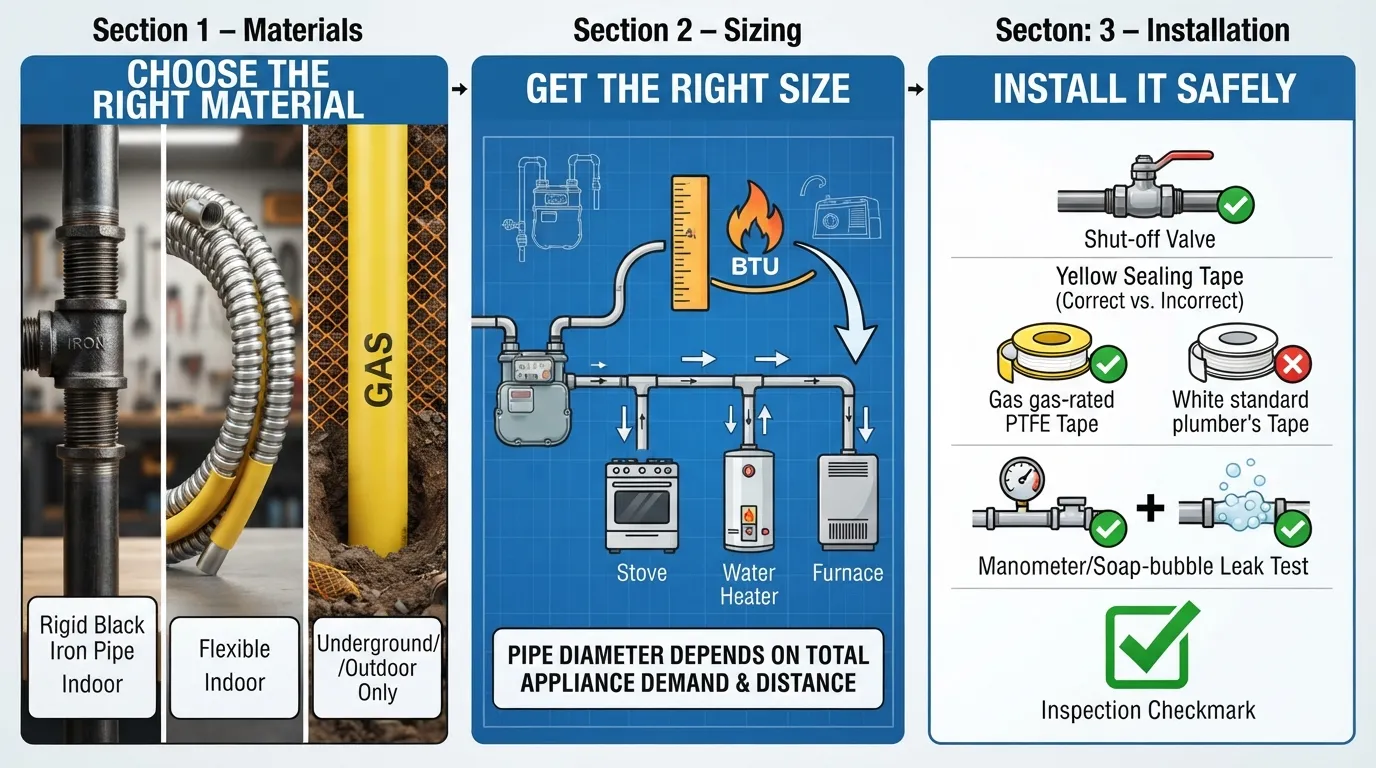
Most residential gas pipe systems use one of three materials — rigid black iron for indoor lines, flexible CSST for easier indoor routing, or yellow polyethylene (PE) for underground outdoor lines. The correct pipe size depends on your total appliance demand (BTUs) and the distance from your gas meter, so sizing should always be confirmed against local code or by a licensed plumber before installation.
What Is a Gas Pipe, and Why Does the Material Matter?
A gas pipe is the line that carries natural gas or liquid propane from your meter or tank to the appliances that use it — furnaces, water heaters, ranges, dryers, fireplaces, and outdoor equipment like grills or pool heaters. Because these lines carry a flammable fuel under pressure, the material, size, and installation method are all governed by strict building codes, and getting any of them wrong can lead to leaks, appliance malfunctions, or unsafe pressure drops.
The three materials below cover the vast majority of residential and light commercial gas piping, and each one is suited to a different part of the job.
The Three Main Types of Gas Pipe
1. Black Iron Pipe
Black iron is the traditional, rigid pipe most people picture when they think of a gas line. It’s threaded and connected using fittings sealed with yellow Teflon tape or gas-rated pipe dope — never the white tape used for water lines. Because it’s rigid, it’s most commonly used for indoor, exposed, or straight-run applications where flexibility isn’t needed.
2. CSST (Corrugated Stainless Steel Tubing)
CSST is a flexible, coated stainless steel tubing that makes it much easier to route gas through walls, ceilings, and tight indoor spaces without needing multiple rigid fittings and elbow joints. It’s a popular choice in renovations and additions where snaking a line through existing framing would otherwise be difficult with black iron.
3. Polyethylene (PE / MDPE) Pipe
Polyethylene, sometimes labeled MDPE, is the yellow flexible pipe designed strictly for underground, outdoor gas lines — for example, running gas from your meter to a detached garage, outdoor kitchen, or pool heater. It resists corrosion in the soil, but it is not rated for indoor use under any circumstances and must transition to an approved indoor material (typically black iron or CSST) where it enters the building.
| Material | Best Use | Location |
|---|---|---|
| Black Iron | Straight indoor runs, exposed piping | Indoor only |
| CSST | Routing through walls, tight spaces, renovations | Indoor only |
| Polyethylene (PE) | Buried lines to garages, pool heaters, outbuildings | Underground / outdoor only |
What Is an IPS Gas Line?
IPS stands for “Iron Pipe Size,” a standardized sizing system originally based on iron pipe dimensions. You’ll see it referenced on polyethylene gas pipe products (for example, “1-inch IPS”) because it tells installers the pipe’s outside diameter follows the same sizing convention as traditional iron pipe, which keeps fittings and transitions consistent across materials.
How Gas Pipe Sizing Actually Works
This is where most DIY gas projects go wrong. Pipe size isn’t a guess — it’s calculated based on two factors:
- Total gas demand (BTUs): the combined BTU rating of every appliance the line will feed.
- Pipe length and layout: the distance from the meter to the farthest appliance, plus the number of fittings and turns along the way.
Common residential pipe diameters range from 1/2 inch and 3/4 inch (typical for single appliances like a range or water heater) up to 1 inch or larger for longer runs or multiple high-demand appliances. But the exact size — and how many BTUs a given diameter can safely carry — depends on the length of that specific run and the gas pressure in the system, which is why local code sizing tables (not a flat rule of thumb) determine the final answer.
⚠ Why Guessing the Size Is Risky: An undersized gas pipe can starve your appliances of fuel, causing weak flames, pilot light failures, or unsafe combustion. An oversized line isn’t automatically dangerous, but it can waste material and, in some cases, complicate pressure regulation. Sizing should always be confirmed against your local gas code before you buy pipe or start cutting.
What Size Is an Older Home’s Gas Pipe?
Older homes were typically sized for the appliances installed at the time, often using smaller-diameter black iron. If you’re adding a new appliance — like a tankless water heater or an outdoor grill — to an existing line, it’s worth having a licensed plumber inspect the current pipe to confirm it can handle the added demand rather than assuming it will.
Indoor vs. Underground Gas Lines: What Changes
Underground gas line kits — commonly sold in 1/2 inch, 3/4 inch, and 1 inch diameters — use polyethylene pipe specifically because it resists moisture and soil corrosion over time. These lines require proper burial depth, tracer wire for future locating, and approved transition fittings where the pipe comes up into the building. Florida’s building code, like California’s, has specific depth and protection requirements for buried gas lines, and requirements can vary depending on your county and whether the line crosses under a driveway or structure — so it’s worth confirming local permit requirements in the Miami area before digging.
DIY vs. Calling a Licensed Plumber
Decision Guide
You can research and plan on your own if: you’re just comparing pipe materials, learning code basics, or getting quotes before a project.
Call a licensed plumber if: you’re cutting, threading, or connecting an actual gas line, running a new underground line, sizing a system with multiple appliances, or dealing with any existing line that smells like gas or seems damaged. Most jurisdictions, including Miami-Dade, require a permit and licensed installation for gas work — and improperly sealed or sized connections are a real safety hazard, not just a code technicality.
Installation and Safety Essentials
Regardless of which material is used, a proper gas pipe installation follows the same core safety steps:
- Sizing confirmation — total BTU demand and run length are calculated against code tables before any pipe is cut.
- Shut-off valves — every appliance gets its own accessible shut-off valve.
- Proper sealing — threaded connections are sealed with yellow, gas-rated Teflon tape or pipe dope. White tape (rated for water) is never used on gas fittings.
- Leak testing — before the gas supply is turned on, the system is pressurized with air and every joint is checked with a manometer and soapy water, looking for bubbles that indicate a leak.
- Inspection — new or altered gas lines typically need to pass a local inspection before they’re put into service.
⚠ If You Smell Gas: Do not attempt to test, tighten, or repair a line yourself. Leave the area, avoid switches or open flames, and contact your gas utility or a licensed plumber immediately.
Watch: Installing Gas Piping
If you’d like to see how flexible gas piping is cut, connected, and routed in practice, this walkthrough is a helpful visual reference before your project starts.
Frequently Asked Questions
What is the best type of pipe for a gas line?
There isn’t one universal “best” pipe — it depends on the application. Black iron and CSST are approved for indoor use, while polyethylene is required for underground, outdoor runs. The right choice depends on your layout, whether the line is buried, and local code requirements.
What is the standard size for a gas pipe?
There’s no single standard size for every home. Residential lines commonly range from 1/2 inch to 1 inch in diameter, but the correct size depends on total appliance BTU demand and the distance the line has to travel.
How do I know what size gas pipe I have?
You can measure the outside diameter of an exposed section with calipers or a tape measure, but confirming the actual rated capacity of an existing line — especially in an older home — is best left to a licensed plumber who can inspect it against current code.
What happens if you oversize a gas line?
An oversized line generally won’t create a safety hazard on its own, but it adds unnecessary material cost and can complicate pressure balance in some system designs. It’s why sizing is calculated rather than rounded up “just in case.”
What type of pipe do I use for gas?
Use black iron or CSST for indoor runs, and polyethylene (PE) for underground, outdoor runs. Never use PE indoors or standard water-line materials for any gas application.
Key Takeaways
- Black iron and CSST are for indoor gas lines; polyethylene (PE) is for underground, outdoor lines only.
- Pipe size depends on total BTU demand and run length — not a one-size-fits-all rule.
- Always seal threaded connections with yellow, gas-rated tape or pipe dope — never white tape.
- Leak testing and inspection are required before any new or altered line goes into service.
- Miami-Dade permit and licensing requirements apply to gas line work — check before you dig or connect.
Need a Gas Pipe Installed or Inspected in Miami?
Our licensed team at Miami Florida Plumbing can size, install, and test your gas line to code — indoors or underground.
If your project also involves a new water heater, take a look at our detailed water heater replacement guide for sizing and installation specifics. And if you’re tackling other plumbing work alongside your gas line, browse our full range of plumbing services to see how we can help with the rest of the job.
Additional Resources
- ICC: Underground Gas Piping System Requirements — for a closer look at the code standards underground gas lines must meet.
- IPEX HOME-FLEX Underground Gas Pipe — manufacturer specifications for polyethylene underground gas pipe.