If you’re dealing with a tight space under a sink, a water heater connection that won’t line up, or a drain run that needs to bend around framing, flexible pipe is probably the answer you’re looking for. In this guide, I’ll walk you through every type of flexible plumbing pipe available today, where each one belongs in your home, what Florida plumbing code says about them, and when it makes more sense to call a licensed plumber instead of tackling it yourself.
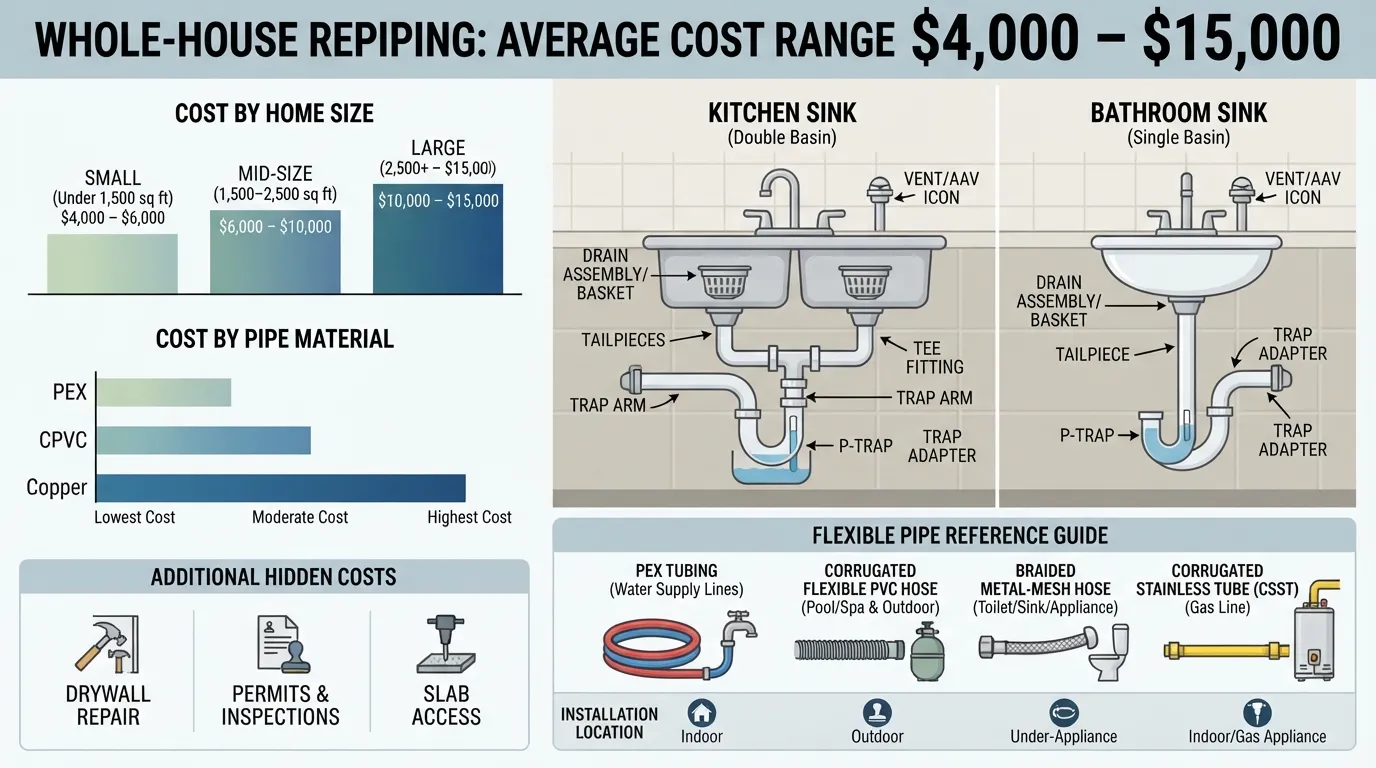
Flexible plumbing pipe is any tubing that can bend without fittings or joints, letting it route around obstacles. The most common types are PEX tubing (hot and cold water supply), flexible PVC or “spa flex” (pools, spas, and irrigation), braided stainless steel hoses (toilet, sink, and appliance connections), and corrugated stainless steel tubing, or CSST (gas line routing).
What Is Flexible Plumbing Pipe, Exactly?
Traditional rigid pipe, like copper or hard PVC, needs an elbow fitting every time the line has to change direction. Flexible pipe skips that step. Because the material itself bends, you can run it around a stud, behind a cabinet, or into a cramped mechanical closet with far fewer connections. Fewer connections generally means fewer places for a leak to start, which is a big part of why flexible piping has become the default choice for supply lines and appliance connections in most homes built or renovated in the last decade.
That said, “flexible” doesn’t mean “one size fits all.” Each type below is engineered for a specific job, and using the wrong one in the wrong place is one of the most common issues we run into on service calls.
The 4 Main Types of Flexible Plumbing Pipe
1. PEX Tubing (Cross-Linked Polyethylene)
PEX has largely replaced copper as the go-to material for hot and cold water supply lines. It’s color-coded (typically red for hot, blue for cold), bends easily by hand, and resists freezing better than rigid copper because it can expand slightly without cracking. It’s also faster to install, which is one reason it’s become standard in new construction and repiping jobs. If you’ve had a water heater replaced recently and noticed the connecting lines were flexible instead of rigid copper, there’s a good chance PEX was used, and our team frequently pairs PEX connections with our water heater replacement services for exactly this reason.
2. Flexible PVC (Spa Flex)
Flexible PVC, often called “spa flex,” has a rigid internal spiral wrapped in a flexible outer wall. It’s built for pools, spas, and outdoor water features where the line needs to curve around equipment pads or through tight trenches. The biggest advantage here is that it glues with standard PVC cement, so it integrates easily with existing rigid PVC plumbing.
3. Braided Stainless Steel Hoses
These are the short, flexible connectors you’ll find running from a shutoff valve to a toilet, sink faucet, or washing machine. They’re rated for high burst pressure and use threaded ends, which makes them easy to swap out without special tools. Because they see constant water pressure and are often hidden behind appliances, they’re also one of the most overlooked sources of slow leaks in a home.
4. Corrugated Stainless Steel Tubing (CSST)
CSST is a flexible metal tubing used almost exclusively for indoor gas line routing to appliances like water heaters, ranges, and dryers. It’s not a DIY material. CSST requires proper bonding and grounding to meet code and reduce the risk of damage from electrical surges, including lightning strikes, which is a real consideration during Florida’s storm season. Any gas line work involving CSST should be handled by a licensed plumber.
Comparing the Options at a Glance
PEX Tubing
Best for: Hot and cold water supply lines
Strengths: Freeze resistant, fast to install, fewer fittings
Watch out for: Needs UV protection if run outdoors or exposed to sunlight
Flexible PVC (Spa Flex)
Best for: Pools, spas, and outdoor water features
Strengths: Glues with standard PVC cement, bends around equipment
Watch out for: Not rated for potable indoor water supply
Braided Stainless Steel Hoses
Best for: Toilet, sink, and appliance connections
Strengths: High burst resistance, easy threaded install
Watch out for: Should be replaced periodically, not left indefinitely
CSST
Best for: Indoor gas line routing
Strengths: Flexible routing to gas appliances
Watch out for: Requires professional bonding and grounding
Pros and Cons of Flexible Plumbing Pipe
Pros:
- Faster installation with fewer fittings needed
- Easier to route through tight spaces and around framing
- Handles minor shifting better than rigid pipe, which matters in areas prone to settling
Cons:
- Generally shorter lifespan than rigid copper piping
- Vulnerable to UV damage if not rated for outdoor or sun exposure
- Corrugated or accordion-style flexible drain pipe can trap debris and clog more easily than smooth rigid drain pipe
Flexible Pipe Considerations for Miami and South Florida Homes
Local conditions change how flexible piping performs over time, and it’s worth thinking through before you decide what to use.
- Heat and UV exposure: South Florida’s sun is intense year-round. Any flexible line that runs outdoors, near a water heater on an exterior wall, or through an attic with poor ventilation should be UV-rated or properly insulated, since unprotected PVC and PEX can degrade faster under constant heat.
- Humidity and moisture: High humidity accelerates corrosion on any exposed metal fittings connected to flexible lines, so stainless steel components and proper sealing matter more here than in drier climates.
- Storm season and grounding: If your home uses CSST for gas lines, proper bonding and grounding isn’t optional; it’s a safety requirement, and it becomes especially relevant during Florida’s hurricane and lightning season.
- Local code compliance: Florida plumbing code has specific requirements for where flexible drain pipe can and cannot be used, and not every flexible product sold at a hardware store is code-compliant for every application in this area.
DIY vs. Calling a Licensed Plumber
Generally safe to DIY:
- Replacing a braided stainless steel supply hose on a toilet or faucet
- Swapping a worn washing machine hose
Better left to a professional:
- Any CSST or gas line work, due to bonding, grounding, and code requirements
- New PEX water heater connections or full repiping
- Flexible drain pipe installation, since incorrect routing or slope can violate code and cause recurring clogs
If your project falls into that second list, it’s worth having it done right the first time. Our licensed plumbers handle everything from supply line upgrades to full plumbing services across Miami, and we’re happy to walk you through what your specific setup needs before any work begins.
Not sure which flexible pipe your project needs?
Our team can assess your setup and recommend the right material and installation approach.
Watch: Flexible Pipe Installation in Action
If you’d rather see how flexible piping is installed before deciding on a DIY repair, this video walks through the process step by step.
Frequently Asked Questions
What is the most flexible pipe for plumbing?
PEX tubing is generally considered the most flexible option for water supply lines, since it bends by hand around obstacles without needing heat or special tools.
Can you use flexible pipe for plumbing?
Yes. PEX, flexible PVC, braided stainless steel hoses, and CSST are all widely used and code-approved for specific plumbing applications, as long as the right type is used for the right job.
What is the flexible plumbing pipe called?
There isn’t one single name, since it depends on the application. The most common terms are PEX (water supply), spa flex or flexible PVC (pools and spas), braided supply lines (fixtures and appliances), and CSST (gas lines).
Are flexible drain pipes against code?
Not universally, but flexible drain pipe use is restricted in many jurisdictions, including parts of Florida, especially for buried or long-run drain applications. It’s worth confirming with a licensed plumber before installing flexible drain pipe rather than assuming it’s allowed everywhere.
What are the disadvantages of using flexible pipe?
The main downsides are a shorter overall lifespan compared to rigid copper, vulnerability to UV damage if not properly rated, and a higher chance of debris buildup in corrugated or accordion-style flexible drain lines.
Can a toilet, shower, and sink share the same drain?
In many cases yes, as long as the shared drain line is sized correctly and vented properly according to code. This isn’t something to guess on, since incorrect sizing can lead to slow drains or sewer gas issues.
Are flexible drain pipes good?
They can be useful for short, accessible connections, but they’re generally not recommended for long or buried runs because corrugated interiors can trap debris and increase the risk of clogs over time.
How many toilets can you put on a 3 inch drain line?
A 3-inch drain line can typically handle multiple toilets, but the exact number depends on local plumbing code, fixture unit calculations, and venting. A licensed plumber can confirm the correct capacity for your specific setup.
Can you bury a flex drain pipe?
Some flexible drain products are rated for burial, but many plumbing codes restrict or prohibit burying flexible drain pipe due to long-term durability and clogging concerns. Always confirm with local code before burying any flexible line.
What are the most common plumbing code violations?
Common violations include improper venting, incorrect pipe sizing, using non-code-approved flexible drain pipe in restricted applications, and improper CSST bonding and grounding on gas lines.
Flexible plumbing pipe makes installation faster and easier in tight spaces, but the right choice always depends on the application: PEX for water supply, spa flex for pools and outdoor water features, braided stainless steel for fixture connections, and CSST for gas lines. In a climate like Miami’s, UV exposure, humidity, and storm-related grounding requirements add another layer worth getting right the first time. When a project touches gas lines, full repiping, or drain routing, it’s worth having a licensed plumber confirm the material and installation meet current Florida code.
Have questions about a specific repair or upgrade? Visit Miami Florida Plumbing or give our team a call to talk through your project.
Additional Resources
If you’re comparing specific flexible pipe products or brands, these retailers carry a range of options: