Is Your Water Bill Too High? 8 Causes, 3 Leak Tests and How to Fix It
Why Is My Water Bill So High?
Most sudden or unexpected spikes in your water bill usually come down to a handful of common culprits, ranging from hidden plumbing leaks to running toilets or increased seasonal outdoor irrigation. When your monthly statement jumps unexpectedly without any obvious change in your household habits, identifying the root cause quickly can prevent hundreds of dollars in wasted water and costly structural damage.
Most High Water Bills Come from Leaks, Toilets, or Irrigation
Pinpointing a sudden billing spike is typically straightforward once you check the most frequent offenders. The top five causes for an unusually high water bill include:
Hidden plumbing leaks in underground supply lines or behind walls.
A continuously running toilet caused by a warped or misaligned flapper.
Outdoor irrigation system issues, such as broken sprinkler heads or unmonitored timers.
Faulty water-using appliances, including malfunctioning water softeners stuck in a regeneration cycle.
Municipal utility rate increases or occasional meter reading errors.
What This Guide Will Help You Do
Taking a systematic approach can help you diagnose and resolve the issue before your next billing cycle. This guide will walk you through:
Pinpointing the exact cause of your spike through a step-by-step investigation.
Conducting a simple home water meter test to check for hidden leaks.
Knowing how to dispute an incorrect charge or reduce your overall water consumption.
Is It a Sudden Spike or a Gradual Increase?
Distinguishing between a sharp, sudden jump on your statement and a slow, creeping increase over several months is the best first clue. While sudden spikes usually point to acute plumbing failures or leaks, gradual increases often indicate developing fixture wear, subtle behavioral changes, or seasonal adjustments in outdoor water use.
Sudden Spike or Gradual Increase? Start Here
Identifying whether your high water bill is the result of a sudden spike or a gradual climb over several months is the fastest diagnostic shortcut to finding the root cause. While a sudden jump almost always indicates an acute plumbing failure, fixture malfunction, or billing error, a slow creep over time typically points to aging hardware, changing household habits, or a very subtle, hidden leak.
If Your Bill Jumped Suddenly (Likely Causes)
A sharp, unexpected surge from one month to the next usually points to a specific mechanical failure or an acute event. Check these primary culprits first:
A brand new or worsening hidden leak in your main supply line or irrigation system.
A toilet flapper failure that is allowing water to run continuously into the drain.
An outdoor irrigation timer reset that accidentally triggered excessive watering schedules.
A water softener stuck in an endless regeneration cycle, continuously flushing water.
An estimated meter reading that was drastically corrected by an actual reading.
Unusual temporary factors, such as visiting house guests or filling a large swimming pool.
If Your Bill Has Climbed Slowly Over Months
If your monthly water statements have crept upward over several billing cycles without a dramatic leap, the cause is usually cumulative. Common reasons for a gradual increase include:
A slow, silent plumbing leak, such as a dripping faucet or a slightly weeping valve.
Aging, mineral-scaled fixtures that reduce water efficiency over time.
Municipal utility rate increases or updated seasonal pricing tiers.
Subtle shifts in household habits, such as longer showers or more frequent laundry loads.
An increase in household occupants or long-term guests.
If Your Bill Doubled (or Became 10x Normal)
When your water bill doubles overnight or shoots up to ten times its normal amount, you are almost certainly dealing with a major catastrophic failure, a stuck utility valve, or a severe billing discrepancy.
Check your water meter immediately to see if the leak indicator dial is spinning wildly while all indoor and outdoor taps are completely shut off.
If a major pipe has ruptured or an outdoor line has broken, turn off your main water shut-off valve right away and call an emergency plumber to inspect your system.
Quick Decision Table
| Symptom | Most Likely Cause | What to Check First |
| Sudden Spike | Running toilet, broken pipe, or stuck irrigation | Water meter leak indicator, toilet flappers, outdoor lines |
| Gradual Climb | Slow fixture leak, rate hike, or usage shift | Past statements, household habits, faucet aerators |
| Doubled / 10x Normal | Major mainline break or meter/billing error | Main water meter reading, utility billing department |
8 Common Reasons Your Water Bill Is Too High
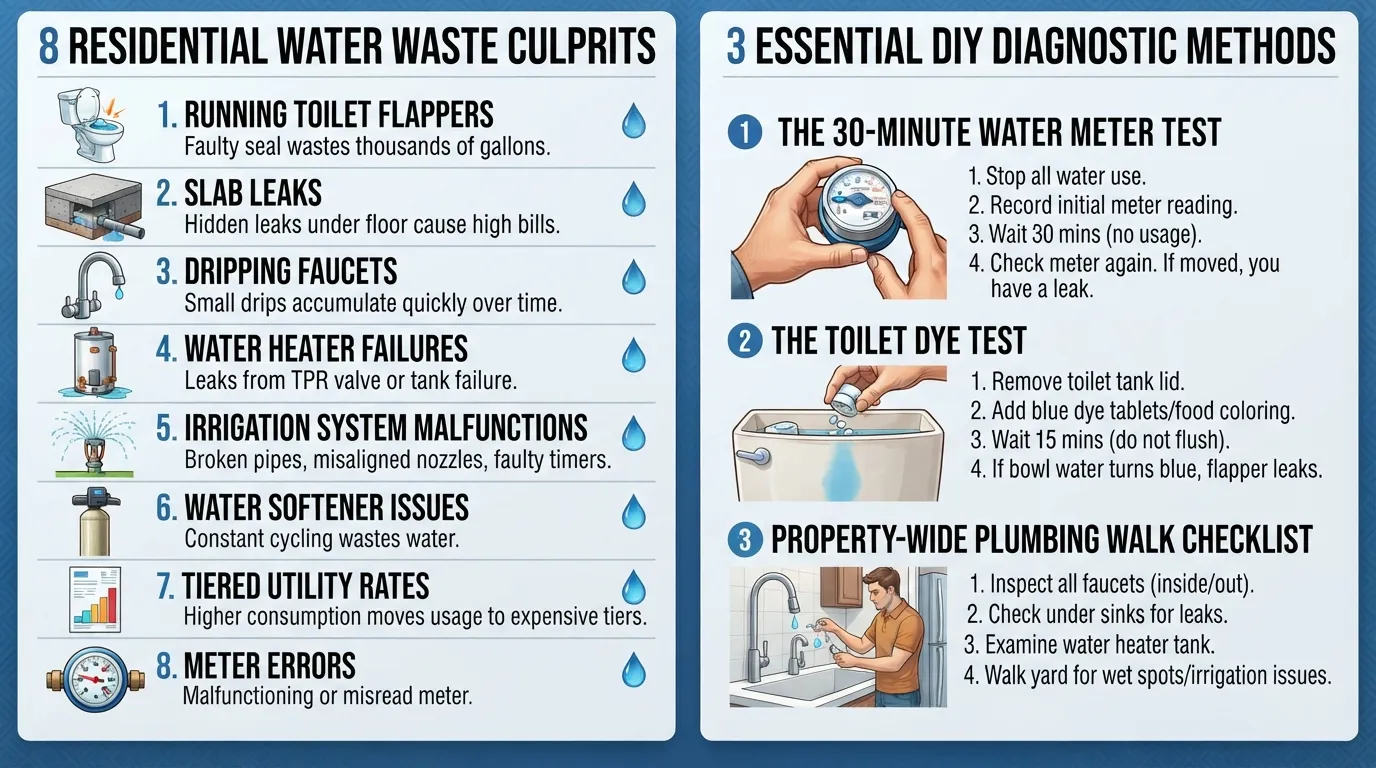
When your utility statement spikes without warning, identifying the exact root cause helps you stop ongoing water waste and prevents inflated charges on your next bill. Understanding how much water these common malfunctions waste gives you the insight needed to resolve the issue quickly.
1. A Running Toilet (Failing Flapper)
A worn, warped, or misaligned flapper valve inside your toilet tank can allow water to continuously trickle from the tank into the bowl without ever being flushed. According to EPA estimates, a single running toilet can waste upwards of two hundred gallons of water per day, rapidly driving up monthly utility costs.
How to spot it: Drop a few drops of food coloring into your toilet tank and wait ten minutes without flushing; if the color bleeds into the bowl, you have a silent leak requiring professional toilet repair.
2. Hidden Leaks Behind Walls, Under Slabs, or in the Main Line
Subsurface plumbing failures often go completely unnoticed because they occur out of sight behind drywall or underneath concrete flooring. In regions like South Florida, homes built directly on concrete slab foundations frequently experience aggressive under-slab corrosion where supply lines rupture silently into the soil without ever showing surface puddles.
How to spot it: Check your main water meter while all indoor taps are closed to see if the low-flow indicator dial is spinning, which signals the need for professional leak detection and repair.
3. Dripping Faucets and Leaking Showerheads
While a single slow drip from a bathroom or kitchen fixture might seem minor, constant drops accumulate into hundreds of gallons of wasted water over the course of a billing cycle. Worn-out rubber washers, corroded valve seats, and loose O-rings are the primary mechanical failures behind these persistent drips.
How to spot it: Visually inspect all indoor bathroom and kitchen sinks, tub spouts, and showerheads for moisture, mineral crust buildup, or audible dripping sounds.
4. A Leaking or Malfunctioning Water Heater
Water heater tanks hold dozens of gallons under constant pressure, making them prime candidates for unnoticed water loss as components age. Tank corrosion, compromised tank seams, or a faulty pressure relief valve discharging water into an overflow drain can continuously drain your system.
How to spot it: Inspect the floor around your water heater base for standing moisture and check the discharge pipe connected to the safety valve for active trickling; scheduling regular water heater service catches these failures early.
5. Irrigation and Sprinkler Problems
Outdoor irrigation systems account for some of the largest residential water usage spikes, especially in warm climates like Miami where long growing seasons and high evaporation rates demand frequent watering schedules. Broken sprinkler heads, severed lateral lines, or automated timers that accidentally trigger multi-cycle schedules can dump thousands of gallons onto lawns overnight.
How to spot it: Run your irrigation system manually during daylight hours and walk the entire zone layout to watch for geysers, misting heads, or sunken lines.
6. Water Softener or Equipment Stuck in Regeneration
Automatic water treatment systems rely on internal control valves and timer assemblies to periodically flush and regenerate their resin beds with brine solution. When a control valve jams or a motorized timer fails, the system can become permanently stuck in an endless regeneration loop, constantly dumping raw water straight down the drain.
How to spot it: Listen closely to your water softener unit during off-peak hours to see if it remains stuck in a continuous brine draw or rinsing cycle for multiple hours.
7. Rate Increases, Tiered Pricing, or Seasonal Charges
Not every high bill stems from a physical plumbing leak or equipment malfunction; many surges are driven directly by municipal utility billing structures. Local water authorities frequently implement tiered pricing models where high-consumption summer months or drought-period surcharges push the cost per gallon significantly higher.
How to spot it: Compare the total gallons consumed on your current billing statement against the usage figures from the exact same billing cycle last year.
8. Meter Errors or Misread Estimates
Utility companies occasionally rely on automated meter reading transponders or manual meter readers who can misread digits or transmit corrupted usage data. While true meter failures are relatively rare, digital registers can experience battery glitches or mechanical sticking that misrepresents actual consumption.
How to spot it: Read your physical water meter dial directly and compare the recorded cumulative numbers against the meter read figures printed on the top of your utility bill.
What we see in the field: In our daily plumbing practice across Miami homes, the absolute most common culprit behind a sudden bill spike is a silent flapper leak inside a guest bathroom toilet, followed closely by broken sprinkler heads hidden beneath lush lawn overgrowth.
How to Check for a Water Leak at Home 3 Simple Tests
Uncovering an uninvited leak does not always require opening up walls or tearing up your yard. By methodically executing a few targeted diagnostic checks, you can quickly determine whether water is escaping your system and isolate exactly where the trouble lies.
Test 1: The Water Meter Test
The master water meter provides the ultimate diagnostic verdict on whether water is constantly flowing when it shouldn’t be.
Ensure every indoor faucet, showerhead, and outdoor hose bib is tightly closed. Verify that your automatic dishwasher and washing machine are not mid-cycle.
Find your property’s meter box, typically embedded in the ground near the front curb or sidewalk, and lift the heavy protective lid.
Inspect the meter face for a small low-flow triangular indicator triangle, red sweep hand, or digital flow symbol designed to detect minute leaks.
Leave the entire property completely undisturbed for up to half an hour to let the meter register any slow, continuous flow.
Return to the meter and see if the low-flow indicator triangle has rotated or if the numerical dial has advanced.
What the result means: If the low-flow indicator is spinning or the digits have increased while every tap is shut off, water is actively escaping somewhere on your property.
The video below walks you through how to read your water meter and track down hidden supply line issues.
Test 2: The Toilet Dye Test
Silent toilet flapper leaks are the single most frequent cause of unexpected water waste, often slipping past notice because the water slips straight down the drain without surfacing.
Lift off the back tank lid of each toilet in your home and set it safely aside on a towel.
Place 5 to 10 drops of dark food colouring (blue or red work best) directly into the water inside the tank until the water changes hue.
Leave the toilet completely undisturbed for approximately 10 minutes, making sure no one flushes or uses the fixture during this test window.
Look closely at the water standing in the lower toilet bowl to see if the dye has bled through from the tank.
What the result means: If coloured water appears in the bowl without anyone flushing, your flapper valve is failing and allowing continuous silent leakage into the sewer line.
The demonstration below highlights how to inspect and troubleshoot silent toilet leaks.
Test 3: Walk the Property (Outdoor and Indoor Inspection)
A thorough physical walk-through helps pinpoint localized plumbing failures before they cause extensive property damage. Scan your home and yard for these diagnostic warning signs:
Inspect all outdoor hose bibs for slow drips, loose packing nuts, or cracked vacuum breakers.
Review your automatic irrigation zones to ensure sprinkler heads pop up properly and do not pool water around valve boxes.
Search your yard for unusually damp, spongy, or lush green patches of grass that indicate an underground main line break.
Check interior walls and ceilings for bubbling paint, yellow water stains, or a persistent musty smell.
Listen closely near baseboards or utility closets for the faint sound of running water when the house is entirely quiet.
Feel for warm or hot spots on concrete or tile floors, which often signal a hot water slab leak.
What to Do If a Test Shows a Leak
When your diagnostic tests confirm an active leak, taking immediate, structured steps minimizes structural damage and limits billing inflation:
Shut off your main water valve immediately if the leak is major or active.
Take clear photographs of the leak location, damaged fixtures, and current meter readings for your records.
Schedule professional leak detection to pinpoint hidden line breaches accurately.
Contact a licensed technician for emergency plumbing help if a pressurized pipe has ruptured.
Pro Tip from a Licensed Plumber
One of the most common mistakes homeowners make during the water meter test is forgetting to account for modern automated appliances or smart irrigation systems. Always check that your refrigerator ice maker isn’t actively cycling, your water softener isn’t scheduled for automated midnight regeneration, and your smart irrigation controller is fully paused before concluding you have a mainline leak.
High Water Bill but No Visible Leak? Check These Next
Discovering an unusually high water bill when every household fixture appears bone-dry is one of the most frustrating dilemmas a property owner can face. When there are no puddles under sinks, dripping faucets, or running toilets to explain the charges, the culprit is almost always hiding behind walls, beneath concrete slabs, within automated equipment, or originating from a utility billing error.
Underground or Slab Leaks You Can’t See
Water supply lines running underground between the city meter and your home, or routed beneath concrete foundation slabs, can rupture without showing any obvious water inside the living area. Because the escaping water drains directly into the surrounding soil or sub-base, the surface stays completely dry while thousands of gallons drain away. Scheduling professional leak detection services is essential to pinpoint pressurized breaks beneath foundations before they compromise structural integrity.
Signs to watch for: The main water meter continues to move when every indoor valve is closed, unexplained wet or spongy patches appear in the yard, overall water pressure drops noticeably, or specific floor tiles feel unusually warm to the touch.
Irrigation Systems Running on Their Own
Automated underground lawn sprinkler systems operate out of sight, making it easy for subsurface lateral line breaks or stuck zone valves to waste immense volumes of water unnoticed. Furthermore, timer battery backups or electronic controller glitches can cause irrigation schedules to trigger multiple times a day or run during heavy rainstorms.
Signs to watch for: Unusually lush green turf patches directly over sprinkler lines, pooling water near sprinkler valve boxes, or turf areas that remain constantly saturated even during dry weather.
Water Softener or Equipment Issues
Whole-house water filtration units and water softeners rely on automated control valves that cycle through regeneration and backwashing phases. When these mechanical control valves get stuck open, the unit can continuously discharge hundreds of gallons of treated water straight into the drain line for days on end without creating any visible floor leaks.
Signs to watch for: Continuous trickling or running sounds coming from the utility drain line attached to your filtration equipment, or salt levels in your water softener dropping much faster than normal.
Toilets That Leak Silently
Even if a toilet tank looks completely normal at a glance, subtle internal leaks can persist indefinitely. A slightly warped flapper, a fill valve set too high, or a leaking flush valve gasket allows water to slip past the tank and flow continuously down the drain without ever pooling on the bathroom floor.
Signs to watch for: The toilet tank periodically refilling on its own every few minutes when no one has flushed, or positive food coloring test results in the bowl.
Billing or Meter Errors
Sometimes your plumbing system is functioning perfectly, but the utility statement itself contains an error. Utility providers frequently issue estimated billing statements based on historical averages rather than actual meter reads, followed by a massive correction month that artificially inflates charges. Alternatively, digital meter transmitters can occasionally malfunction.
Signs to watch for: An extraordinarily high usage charge on your statement while your independent home meter test confirms zero water movement when all fixtures are shut off.
Changes in Household Usage
Sudden shifts in household routines or seasonal lifestyle adjustments can drive up water consumption higher than most homeowners realize. Guests staying for an extended visit, filling a large backyard swimming pool, installing a high-water-use appliance, or running garden hoses continuously during dry spells will rapidly spike monthly consumption totals.
Signs to watch for: Recent additions of long-term house guests, frequent laundry cycles, outdoor pressure-washing projects, or pool auto-fill lines stuck in the open position.
Elimination Checklist
| Check Area | How to Inspect | What a Positive Result Means |
|---|---|---|
| Water Meter | Perform the 30-minute meter test with all fixtures shut off. | Continuous movement indicates a hidden underground or slab leak. |
| Toilet Flappers | Drop dark food coloring into the tank and wait 10 minutes. | Color bleeding into the bowl confirms a silent flapper leak. |
| Irrigation Timer | Manually cycle through every sprinkler zone during daylight. | Broken heads, leaks, or erroneous schedules wasting water. |
| Utility Statement | Compare total gallon consumption against historical averages. | Highlights whether the spike is volume-based or a billing error. |
How Much Should a Water Bill Be? Is Your Bill Actually High?
Determining whether your monthly water bill is genuinely high requires looking past raw dollar amounts and evaluating your actual consumption volume against household size, regional rate structures, and historical baselines. Because utility rates and sewer fees vary drastically by municipality, a dollar figure that seems expensive in one area might be entirely average in another.
What Is the Average Water Bill?
For most single-family households across the United States, a typical water and sewer bill ranges from seventy to one hundred and twenty dollars per month, though rates climb significantly higher in metropolitan areas or regions with tiered pricing structures. According to data from the EPA WaterSense program and local utility providers such as the Miami-Dade Water and Sewer Department, water consumption scales directly with the number of occupants living in the home.
| Household Size | Typical Monthly Usage (Gallons) | Notes |
| 1–2 People | 2,000 to 4,000 gallons | Assumes standard indoor use without heavy lawn irrigation or pools. |
| 3–4 People | 6,000 to 10,000 gallons | Typical family home usage; includes frequent laundry and dishwashing. |
| 5+ People | 12,000 to 15,000+ gallons | Higher volume usage; heavily influenced by bathing frequency and lawn watering. |
Note: All benchmark figures should be verified against EPA or local utility data before final publication.
Is $100, $400, or $500 a Month a High Water Bill?
There is no single dollar amount that automatically defines a high water bill because every utility calculates costs differently. A monthly bill of one hundred dollars is often completely normal for a family of four, whereas that same amount would be exceptionally high for a single occupant. Conversely, bills reaching four to five hundred dollars almost always signal an underlying problem—such as a major underground leak, a stuck irrigation valve, or steep commercial-tier pricing—unless you are filling a large swimming pool or running heavy agricultural landscaping.
How to Read Your Water Bill
Deciphering the layout of your utility statement helps you separate actual water consumption from fixed administrative fees and bundled sewer charges. For a comprehensive walkthrough of utility line items, consult the EPA’s guide to understanding your water bill . Pay close attention to these core components:
Billing Period: The exact calendar span covered by the current statement (typically 30 to 60 days).
Meter Readings: The previous meter read and the current meter read used to calculate total usage.
Usage Units: The volume of water consumed, usually measured in gallons or CCF (hundred cubic feet, where one CCF equals approximately 748 gallons).
Tiered Rates: Pricing structures where the cost per gallon increases once consumption crosses specific thresholds.
Fixed Charges: Mandatory base service fees for meter maintenance and infrastructure upkeep regardless of water use.
Sewer Charges: Fees calculated as a percentage of your water usage to cover wastewater treatment.
Adjustments: Credits or penalty fees applied from previous billing cycles or leak adjustments.
How to Compare Your Bill to Your Own Baseline
Evaluating your current statement against historical trends is the most accurate way to detect abnormal usage patterns without relying on generalized regional averages.
Gather your past 6 to 12 monthly utility statements to establish a clear historical pattern.
Focus primarily on the total gallons or CCF consumed rather than the dollar amount, as rates frequently change.
Compare your current month’s usage directly against the exact same billing cycle from the previous year to account for seasonal habits.
Why Is My Water Bill So High in 2026?
If your household habits and fixture usage have remained identical to previous years yet your statements continue to climb, macro-level economic and environmental factors are likely at play. Municipalities across the country have implemented steady utility rate increases to fund aging water treatment infrastructure upgrades and combat rising energy costs required for pumping. Furthermore, extended dry spells and seasonal demand spikes often trigger higher outdoor irrigation requirements, pushing households into expensive upper-tier pricing brackets.
Why Is the Sewer Portion of My Water Bill So High?
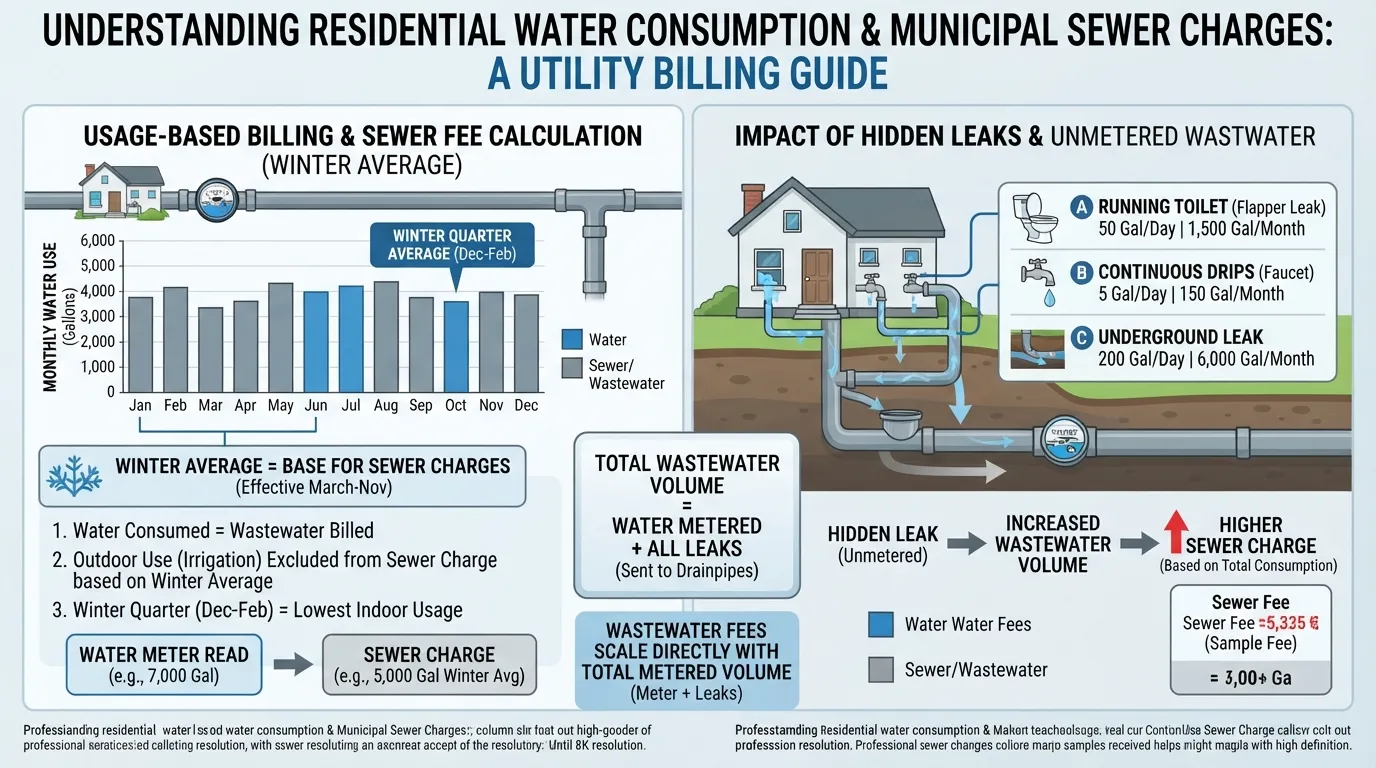
When you open your monthly utility statement and find that the wastewater or sewer charges rival or exceed the cost of the actual water consumed, it can feel like a billing penalty. Because municipal utilities typically calculate sewer fees as a direct derivative of your metered water usage, understanding how wastewater is billed reveals why an ordinary leak can double the financial impact of your statement.
How Sewer Charges Are Usually Calculated
Municipal utility providers rarely install separate meters to measure the exact amount of wastewater leaving your home through the drainpipes. Instead, most cities bill for sewer services based on the volume of fresh water delivered to your property, assuming that every gallon coming in eventually goes down the drain.
Usage-Based Billing: A flat rate per thousand gallons or CCF consumed is added directly to your wastewater total.
Winter Average Calculations: Many municipalities calculate your summer sewer fees based on your lower water consumption during winter months (when outdoor watering stops), establishing a baseline to protect homeowners from peak summer irrigation spikes. (Note: Always verify specific municipal formulas with your local utility provider.)
Why Outdoor Water Use or Leaks May (or May Not) Affect Your Sewer Charge
Water used for outdoor irrigation, filling a swimming pool, or washing your car does not enter the municipal sanitary sewer system, yet many basic utility billing structures charge you for sewer services on every gallon registered by your meter.
If your sprinkler system develops an underground leak, that water soaks into the yard rather than flowing into the sewer main, but an unmetered system may still trigger combined charges.
Some municipal utility departments offer sewer fee exemptions, secondary irrigation meters, or one-time leak adjustment credits if you can prove via a plumber’s receipt that the lost water never entered the sewer system.
When A High Sewer Charge Signals a Plumbing Problem
An unexpectedly massive sewer fee is frequently the first numeric indicator that water is escaping inside your home and flowing continuously down your drainpipes. Because wastewater fees scale directly with total metered volume, any constant indoor flow translates into doubled utility charges.
Running Toilets: A silent flapper leak sends hundreds of gallons per day straight into the sewer system, driving up both your water and wastewater totals simultaneously.
Leaking Fixtures: Faulty water heaters, continuously dripping valves, and running appliances all contribute to wastewater volume.
Main Drain or Line Issues: In certain scenarios involving damaged sewer infrastructure or root intrusion, specialized sewer line services are required to inspect and clear structural blockages that disrupt proper drainage flow.
High Water Bill in an Apartment, Rental, or Business
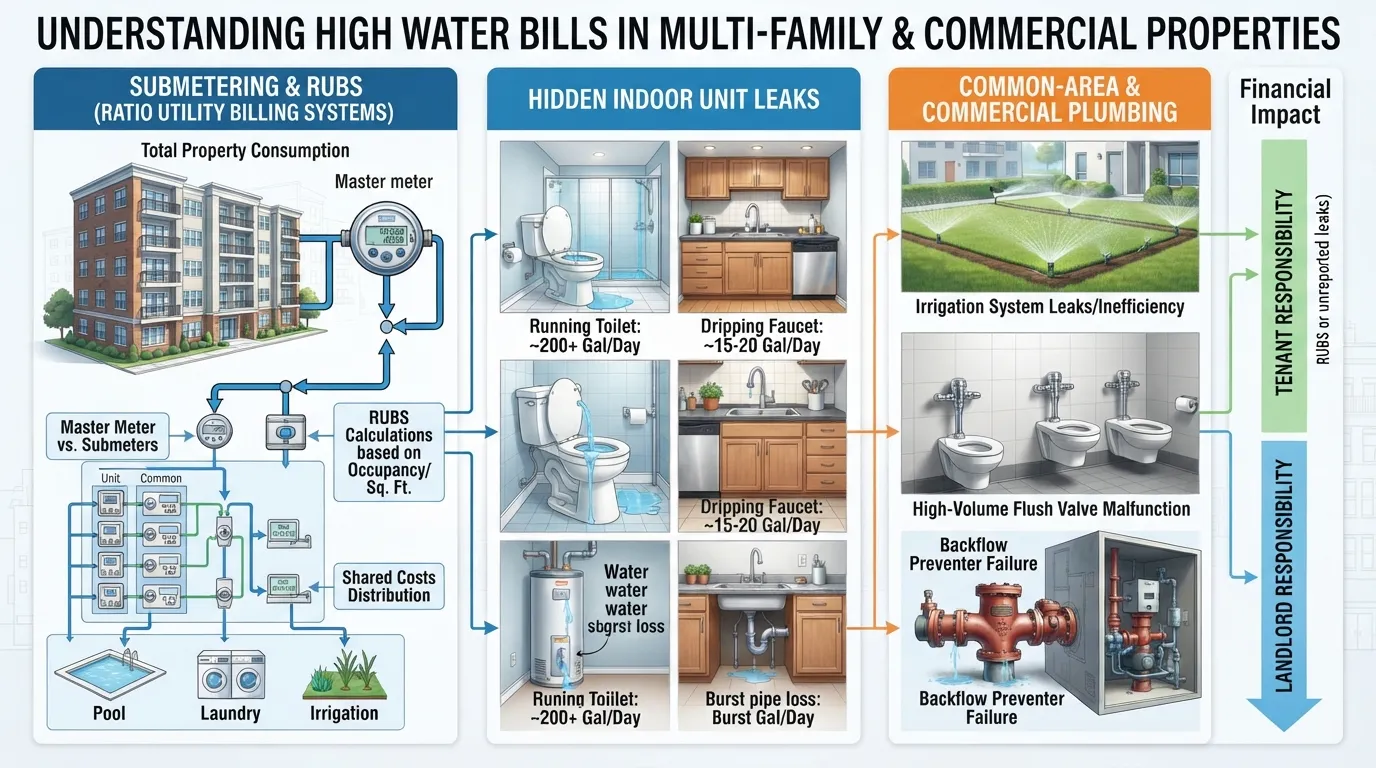
Dealing with an unexpectedly high water bill in a multi-family apartment, leased rental unit, or commercial building involves an entirely different set of complications than owning a single-family home. When you do not have direct access to the main property service lines or control over the building’s overarching infrastructure, identifying who is responsible and how to resolve the charge requires a clear strategy.
Why Apartment Water Bills Can Jump
Apartment and multi-tenant water bills frequently spike due to billing structures and shared infrastructure issues that individual residents cannot easily monitor.
Submetering and RUBS: Many multi-family complexes utilize Submetering or Ratio Utility Billing Systems (RUBS), where total building water consumption is divided among tenants based on square footage or occupancy rather than individual usage, meaning your bill can rise due to your neighbors’ habits.
Hidden Unit Leaks: A single running toilet or leaking bathroom fixture inside a rental unit can rapidly inflate bills, especially when utilities are individually metered.
Common-Area Leaks: Shared laundry facilities, irrigation systems for community courtyards, or leaking pool auto-fills can silently drive up overall property consumption metrics.
What Renters Should Do First
If you live in a rented apartment or home and receive a shockingly high utility statement, follow these immediate steps before contacting management:
Perform a basic toilet dye test and inspect all accessible kitchen and bathroom fixtures for slow drips.
Photograph your individual apartment water meter or submeter reading if accessible.
Notify your landlord or property manager in writing immediately, attaching copies of the high bill and documenting the date of notification.
Request a complete itemized breakdown of the utility bill or submeter data from the property management office.
Who Is Responsible for the Repair?
Determining financial and maintenance responsibility depends heavily on lease terms, local tenant protection laws, and where the leak originates.
Generally, landlords and property owners are responsible for maintaining structural plumbing, main supply lines, and major fixtures like water heaters or permanently installed toilets.
Tenants are typically only responsible for utility payments as outlined in their lease or for damage caused by explicit negligence.
Always review your specific lease agreement and consult local tenant rights regulations to understand your legal protections regarding utility disputes.
Business and Commercial Properties
Commercial properties—including office buildings, retail shops, and restaurants—feature complex plumbing architectures with high-volume fixtures, commercial restrooms, and extensive irrigation networks that can easily mask expensive leaks.
A single stuck flush valve on an automatic commercial toilet or a hidden backflow preventer leak can waste thousands of gallons overnight.
Because commercial water rates are often significantly higher than residential tiers, even a minor fixture leak translates into a major financial loss.
Facility managers should schedule routine commercial plumbing services and proactive water audits to catch system inefficiencies before billing cycles close.
Can You Dispute a High Water Bill? Who to Call
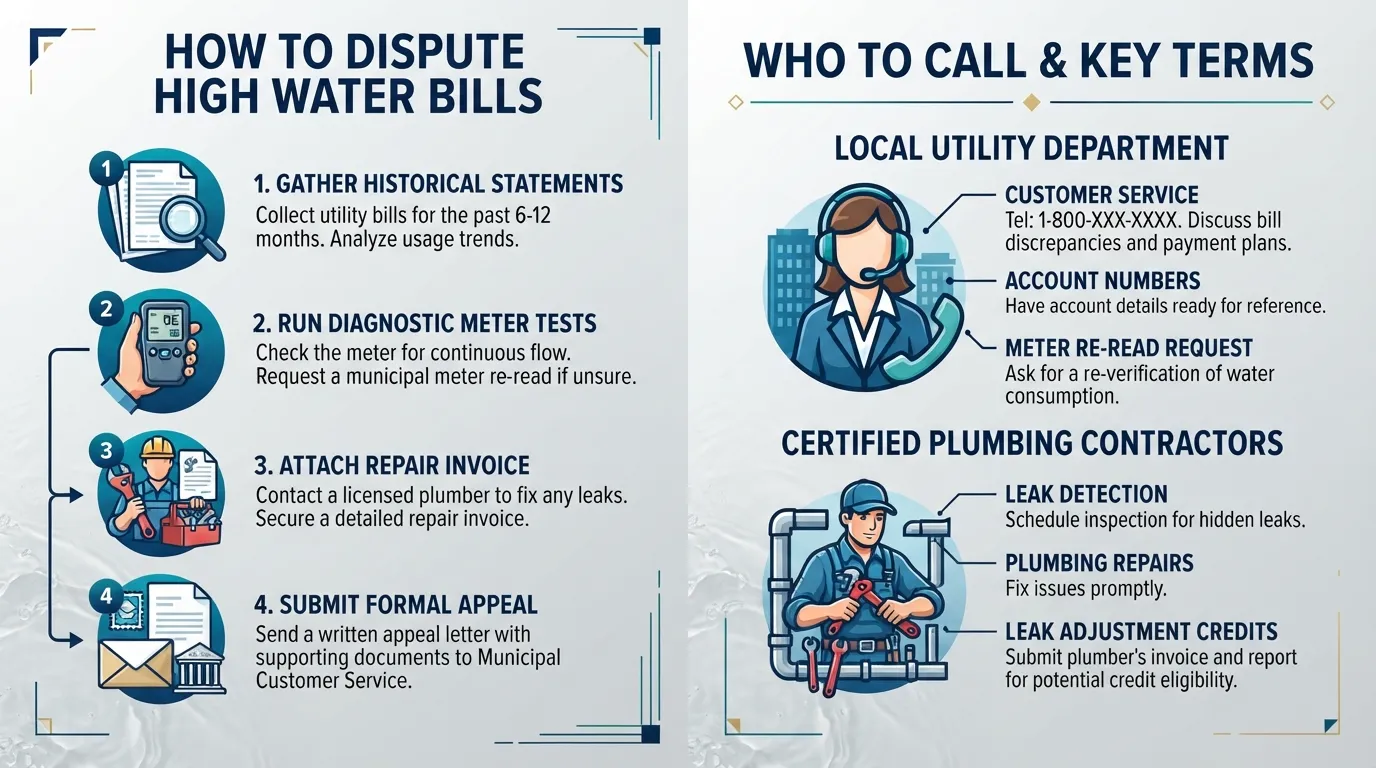
Receiving an unexpectedly exorbitant water bill can feel overwhelming, but property owners do not simply have to absorb the cost of a billing error or an unforeseen leak. Understanding how to navigate the dispute process, what documentation to prepare, and who to contact ensures you can successfully request utility adjustments, leak credits, or formal meter tests.
Yes, You Can Dispute a High Water Bill (Here’s How)
Yes, nearly all municipal utility providers maintain formal dispute and leak adjustment policies that allow customers to contest abnormal charges. By methodically isolating the root cause of the spike, gathering supporting diagnostic evidence, and submitting a structured appeal backed by a licensed plumber’s documentation, you can frequently recover a significant portion of an inflated bill or secure a deferred payment plan.
Step-by-Step: How to Dispute Your Bill
Successfully contesting a utility charge requires a calm, evidence-based approach that demonstrates you took immediate steps to investigate and resolve the issue.
Collect your previous 6 to 12 monthly utility statements and note the exact gallon or CCF consumption figures compared to the disputed bill.
Perform the 30-minute water meter leak test and conduct food coloring tests on all toilets to verify whether active leaks exist.
Hire a qualified licensed plumber to repair any identified pipe or fixture breaches and retain a formal, itemized invoice showing the date and nature of the fix.
Call your local water and sewer department’s billing inquiry department to report the abnormal spike and request a formal review or leak credit application.
Ask the utility company to send a technician out to manually re-read your meter or perform a mechanical accuracy test if you suspect a meter malfunction.
Inquire if your municipality offers a one-time wastewater leak adjustment credit or a temporary payment extension while your dispute is processed.
Submit your completed dispute form, meter photos, and repair receipts via certified mail or official online support portals to maintain a documented record.
What Documents to Have Ready
Having your paperwork organized before you call or write to the utility provider significantly accelerates the review process and prevents administrative delays.
Account Information: Your exact utility account number, service address, and registered contact details.
Historical Records: The last 6 to 12 monthly statements showing your normal consumption baseline.
Visual Evidence: Clear photographs of your water meter display taken before and after a test window.
Professional Documentation: A dated repair receipt, invoice, or diagnostic report from your plumbing contractor confirming the leak was successfully repaired.
Who Do You Call About a High Water Bill?
Knowing who to contact depends on whether the issue stems from municipal billing errors or private property plumbing failures.
Utility Customer Service: Call your local water and sewer provider first to open a high-bill inquiry, request meter checks, and obtain official leak adjustment paperwork.
Licensed Plumber: Contact a professional plumbing contractor if diagnostic tests reveal hidden pipe leaks, failing water heaters, or silent fixture defects that require expert repair.
Jurisdiction Boundary Note: Municipal utilities generally own and maintain the infrastructure up to and including the water meter box, whereas property owners are legally responsible for all supply lines, valves, and fixtures located on the house side of the meter.
Sample Dispute Email (Copy-Ready Template)
Subject: Utility Bill Dispute and Leak Adjustment Request – Account #[Insert Account Number]
Dear Customer Service Department,
I am writing to formally dispute the excessive water and sewer charges billed on [Insert Bill Date] for service address [Insert Property Address], Account #[Insert Account Number]. Our recorded consumption of [Insert Gallons/CCF] represents an abnormal [Insert Percentage]% increase over our historical baseline with no change in household occupancy.
Upon receiving the statement, we immediately performed diagnostic checks, discovered a hidden plumbing issue, and hired a licensed plumbing professional to resolve it on [Insert Repair Date]. Attached please find copies of the disputed bill, our pre- and post-repair meter readings, and the official plumber’s repair invoice.
Because the leaked water did not enter the municipal sewer system and has been fully repaired, I respectfully request a formal meter re-read, a review of our account, and a leak adjustment credit on our wastewater charges.
Thank you for your prompt attention to this matter. I look forward to your response.
Sincerely,
[Your Name]
[Your Phone Number]
Pro Tip from Our Field Experience
In our professional plumbing experience across South Florida, submitting a detailed, written repair invoice from a licensed plumber alongside your utility adjustment application dramatically strengthens your case. Municipal water boards are far more likely to approve wastewater credit refunds when presented with undeniable proof that an underground or hidden leak has been permanently corrected.
How to Reduce Your Water Bill
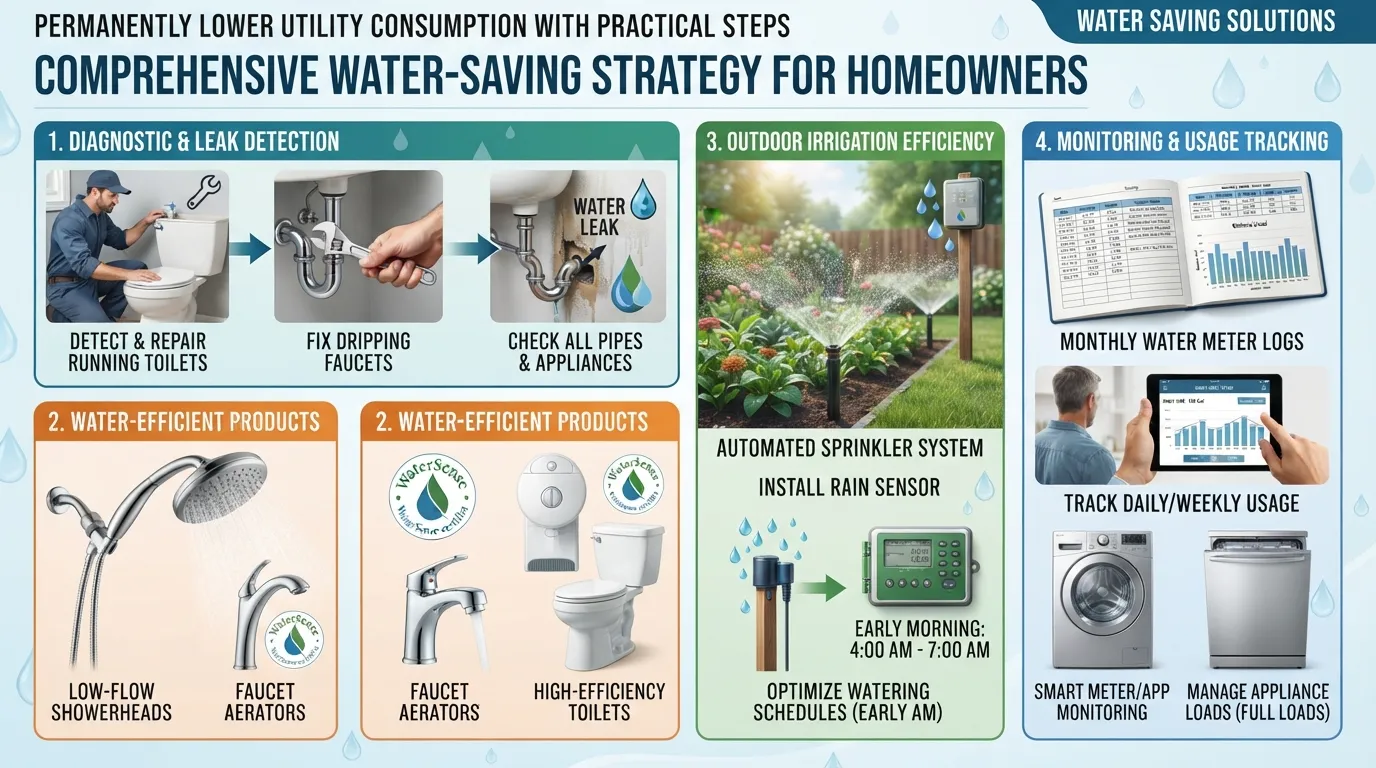
Lowering a consistently high monthly utility bill does not require a complete lifestyle overhaul. By systematically tackling silent waste, upgrading inefficient hardware, and adopting smart daily conservation habits, you can permanently slash your water consumption and keep utility costs under strict control.
Fix Small Leaks and Running Toilets First
Before investing in expensive new technology or changing your daily habits, eliminate the silent structural leaks that drain hundreds of gallons a day without your knowledge. A single running toilet flapper or a leaking under-sink supply line can waste more water in a month than a family of four consumes through normal bathing. Repairing these hidden failures provides the single fastest return on investment.
Upgrade to Efficient Fixtures
Replacing outdated, high-volume plumbing fixtures with modern water-efficient alternatives permanently reduces your baseline consumption without sacrificing performance.
Low-Flow Toilets: Modern high-efficiency toilets use 1.28 gallons per flush or less compared to older 3.5-to-5-gallon models.
WaterSense Showerheads: Certified low-flow showerheads restrict flow rates to 2.0 gallons per minute or lower while maintaining strong pressure through optimized spray aeration.
Faucet Aerators: Installing threaded aerators on bathroom and kitchen faucets mixes air into the stream, cutting water volume by up to 30 percent while keeping flow steady.
Water Your Lawn Smarter
Outdoor irrigation accounts for a massive portion of residential water use, particularly in warm climates where lush landscaping requires frequent hydration. Optimizing your outdoor watering prevents massive utility spikes.
Adjust your irrigation timer to water exclusively during the cooler early-morning hours to minimize loss from midday evaporation.
Install and regularly test an automatic rain sensor or smart soil-moisture controller to prevent the system from activating during or after rainstorms.
Routinely walk your yard to inspect sprinkler heads for breaks, clogs, or misaligned spray patterns that water pavement instead of turf.
Always check local municipal regulations—such as South Florida water management district restrictions—to ensure your irrigation schedule complies with permitted watering days and times.
Change Everyday Habits
Small, conscious adjustments to your daily routine compound into substantial monthly water savings across an entire billing cycle.
Run washing machines and dishwashers exclusively with full loads rather than partial cycles.
Shorten shower times by even two to three minutes to save dozens of gallons per session.
Never use your toilet bowl as a wastebasket for tissues, wipes, or debris that require unnecessary flushing.
Turn off the tap while brushing your teeth, shaving, or scrubbing dishes.
Maintain Your Water Heater and Softener
Neglected water-heating and water-treatment equipment can quietly waste thousands of gallons of water and electricity over time. Sticking to a consistent schedule of professional water heater maintenance ensures that tank anode rods, pressure relief valves, and internal sediment buildup are checked before minor leaks or continuous valve discharges occur.
Monitor Usage Monthly
The most effective way to prevent future billing shocks is to establish a proactive monthly monitoring routine rather than waiting for your utility statement to arrive.
Record your master water meter reading on the first of every month to track exact consumption trends.
Compare monthly usage totals against previous years to catch abnormal upward shifts instantly.
Consider installing a smart digital water monitor or flow sensor on your main supply line to receive instant smartphone alerts if continuous, unmanaged water flow is detected while you are away.
When to Call a Plumber for a High Water Bill
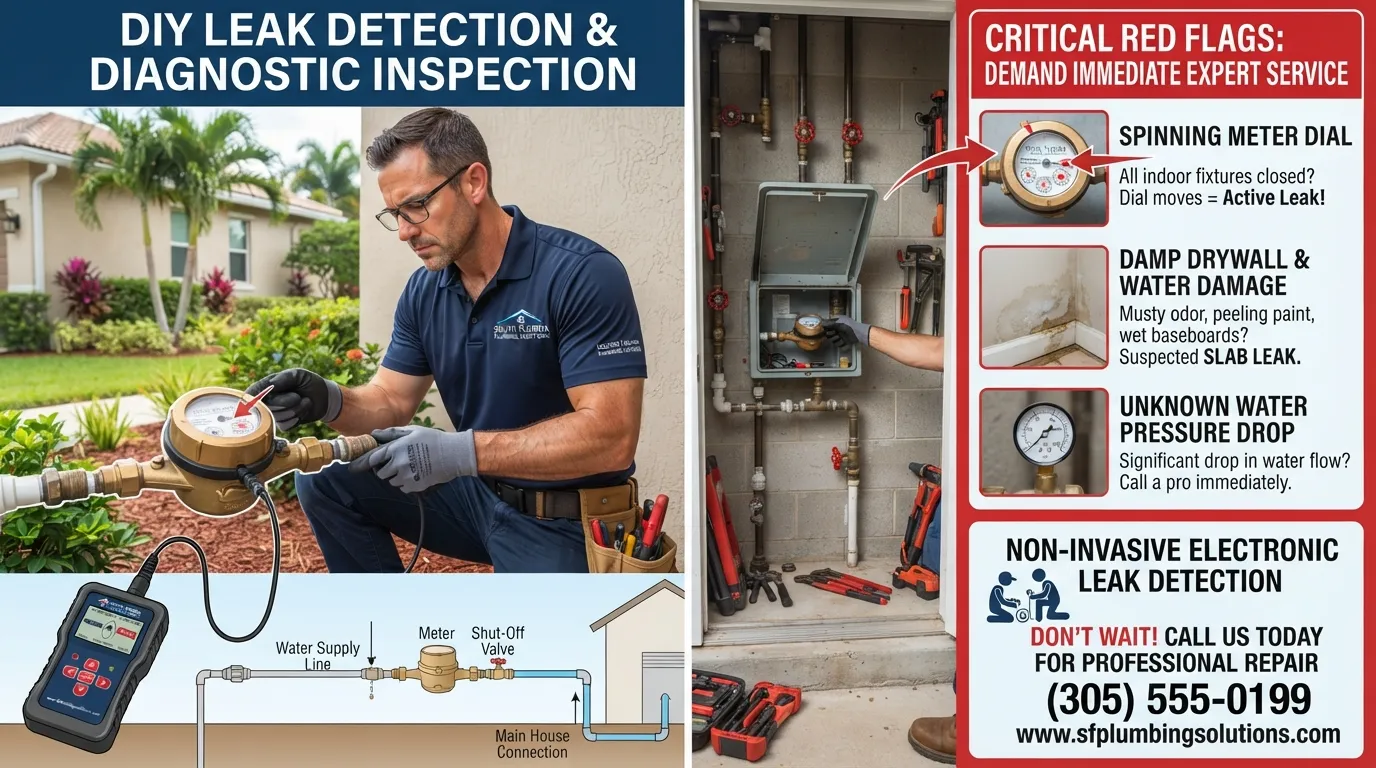
Knowing when to stop troubleshooting on your own and bring in a professional can mean the difference between a minor plumbing repair and thousands of dollars in property water damage. When DIY diagnostic checks fail to isolate the source of an unexplained spike, professional intervention is necessary to locate and repair hidden failures before they compromise your home’s foundation or plumbing infrastructure.
Signs You Should Call a Professional Right Away
Certain warning signs indicate that a water leak or plumbing malfunction has moved beyond simple DIY fixes and requires immediate expert attention.
The water meter continues to spin or register movement even when every indoor valve, faucet, and appliance is completely shut off.
Unexplained warm spots on tile floors, persistent damp drywall, or buckling baseboards appear without any visible surface source.
A sudden, severe drop in water pressure coincides with a massive jump in your monthly utility statement.
You suspect a pressurized slab leak beneath your concrete foundation or a broken underground supply line between the street meter and your house.
An urgent plumbing crisis threatens active property flooding, requiring the dispatch of an emergency plumber to mitigate structural damage.
What a Professional Leak Detection Visit Involves
Hiring licensed plumbing professionals for specialized leak detection and repair services eliminates guesswork and prevents unnecessary property destruction. Rather than tearing up walls or ripping out flooring blindly, modern technicians utilize advanced diagnostic equipment—such as electronic acoustic listening devices, thermal imaging cameras, and helium gas testing—to pinpoint the exact location of a subsurface pipe break with pinpoint accuracy. Once the breach is isolated, the plumber provides transparent repair options ranging from targeted pipe patching to full repiping.
What to Do While You Wait for the Plumber
If you have booked a service visit and are waiting for your technician to arrive, take these proactive steps to protect your property:
Locate your home’s main water shut-off valve and be prepared to turn it off immediately if a pipe ruptures or leaks worsen.
Minimize all indoor water usage to prevent compounding pressure on compromised lines or inflating your bill further.
Take clear photographs of the affected areas, active water meters, and your high utility statements to share with the technician upon arrival.
Professional Assistance
Think you have a leak? Book Now to schedule a professional leak detection visit and protect your property from hidden water damage.
Frequently Asked Questions
Is $100 a month a high water bill?
A one-hundred-dollar monthly water bill is typically normal for an average family of three to four people, but it can be considered high for a single-occupant household or a small apartment. Determining whether this figure is excessive depends heavily on your local municipal utility rates, whether sewer charges are bundled into the total, and your household’s baseline water consumption patterns.
Why is my water bill so high all of a sudden?
A sudden, unexpected spike in your water bill almost always points to an active leak or a sudden fixture failure, such as a running toilet flapper, a stuck irrigation valve, or a hidden pipe breach. Unlike gradual increases caused by seasonal habits or utility rate adjustments, overnight bill doublings are classic red flags for unmanaged water loss.
How much should my water bill be on average?
For most single-family homes across the United States, a typical combined water and sewer bill ranges from seventy to one hundred and twenty dollars per month. Individual costs scale directly with occupancy, with one-to-two-person households consuming around two to four thousand gallons monthly, while larger families use upwards of six to ten thousand gallons.
Why is my water bill so high with no leaks?
When your bill is exceptionally high and every visible plumbing fixture appears bone-dry, water is usually escaping through underground supply lines, hidden foundation slab leaks, malfunctioning water softeners, or automated irrigation systems running out of schedule. In rarer cases, estimated utility billing errors or faulty meter transmitters can artificially inflate charges despite clean diagnostic tests.
Is a $500 water bill normal?
A five-hundred-dollar monthly water bill is almost never normal for a standard residential property unless you are filling a large swimming pool, running heavy agricultural landscaping, or dealing with a major underground pipe rupture. Bills of this magnitude usually signal a severe continuous leak or a severe billing calculation error that requires immediate professional investigation.
Can you dispute a high water bill?
Yes, nearly all municipal utility providers maintain formal dispute and leak adjustment policies that allow customers to contest abnormal charges. By performing diagnostic meter tests, repairing underlying plumbing failures, and submitting a structured appeal backed by a licensed plumber’s invoice, property owners can frequently recover partial credits or secure payment plans.
Why has my water bill doubled?
A doubled water bill nearly always indicates that a continuous flow of water is moving through your meter 24 hours a day, effectively doubling your daily consumption volume. Common culprits include silent toilet flapper leaks, stuck irrigation zone valves, or underground supply line ruptures that dump thousands of gallons straight into surrounding soil.
What runs up your water bill the most?
Outdoor lawn irrigation systems and continuous indoor plumbing leaks—specifically running toilets and dripping supply lines—account for the largest volume of wasted water in residential properties. Because wastewater fees are calculated directly from your total water usage, these hidden losses drive up both water and sewer charges simultaneously.
How can I reduce my water bill?
Lowering your monthly utility costs requires fixing active leaks first, upgrading to water-efficient fixtures like WaterSense showerheads and low-flow toilets, and optimizing outdoor irrigation schedules. Establishing a monthly meter-reading routine and running appliances only with full loads further prevents unnecessary consumption spikes.
Who do I call if my water bill is too high?
You should contact your local municipal water and sewer department’s customer service team first to open a high-bill inquiry, request meter checks, and obtain leak adjustment paperwork. If diagnostic tests reveal physical pipe failures or hidden leaks on your property side of the meter, you must call a professional licensed plumber to handle the repairs.
Why is my water bill $400?
A four-hundred-dollar utility statement typically indicates heavy upper-tier pricing consumption, extensive lawn watering, or an unmanaged plumbing leak running continuously throughout the billing cycle. Reviewing your usage history and comparing gallon volumes against previous billing periods will help clarify whether the cost stems from high volume or rate tiers.
Why is my water bill so high in an apartment?
Apartment water bills frequently jump due to shared building infrastructure, submetering systems, or Ratio Utility Billing Systems (RUBS) where total property consumption is split among tenants. Additionally, a single running toilet inside a rental unit can rapidly inflate individually metered bills or shared community billing averages.
Final Takeaways and Next Steps
Tackling a shockingly high water bill requires a methodical approach that eliminates guesswork and separates municipal billing anomalies from active plumbing failures. By following a structured investigation plan, you can protect your budget, resolve hidden leaks, and restore your monthly utility consumption back to normal baselines.
Your 5-Step Action Plan
Review your past 6 to 12 monthly utility statements to confirm the exact percentage or volume increase before panicking.
Check your master meter dial with all indoor water turned off to verify if continuous unmanaged flow is occurring.
Drop food coloring into every toilet tank to check for silent flapper leaks silently draining hundreds of gallons daily.
Walk your property lines to check sprinkler systems, hose bibs, and under-sink plumbing for slow drips or damp spots.
File a formal leak adjustment request with your local water department or schedule professional service if repairs require expertise.
Need Help Finding the Cause of Your High Water Bill?
If diagnostic tests fail to uncover the source of your inflated statement or you suspect a hidden underground slab leak, our licensed team is here to help. Explore our plumbing services to learn more about our diagnostic expertise across the Miami area.
About the Author
Carlos Mendoza, Master Plumber
License: CFC1429882
Experience: 18+ years in residential and commercial plumbing diagnostics
Service Area: Miami-Dade County, Florida
Carlos is a licensed South Florida master plumber specializing in non-invasive electronic leak detection, high-volume water consumption diagnostics, and municipal utility dispute documentation.
Main Services
Related Posts
Need a Plumber in Miami?
Schedule service online or speak directly with the EZ Plumbing team.
Owner-Led Local Service
Know who is behind the business before you request service. The owners, contact line and Miami service pages are published clearly.
- Named business owners
- Direct phone and social channels
- Local Miami service information
Clear Help Before You Book
Review the relevant service page, contact the team directly and use the booking page when you are ready—without relying on vague claims.
- Service-specific information
- Direct questions before scheduling
- Clear online booking route