Need to replace a sink supply line but aren’t sure what size or connection you need? I’ll walk you through what sink supply lines do, how 3/8-inch and 1/2-inch connections work, how to measure the line, how to choose the right length, and how supply lines differ from sink drain pipes.
What Are Sink Supply Lines?
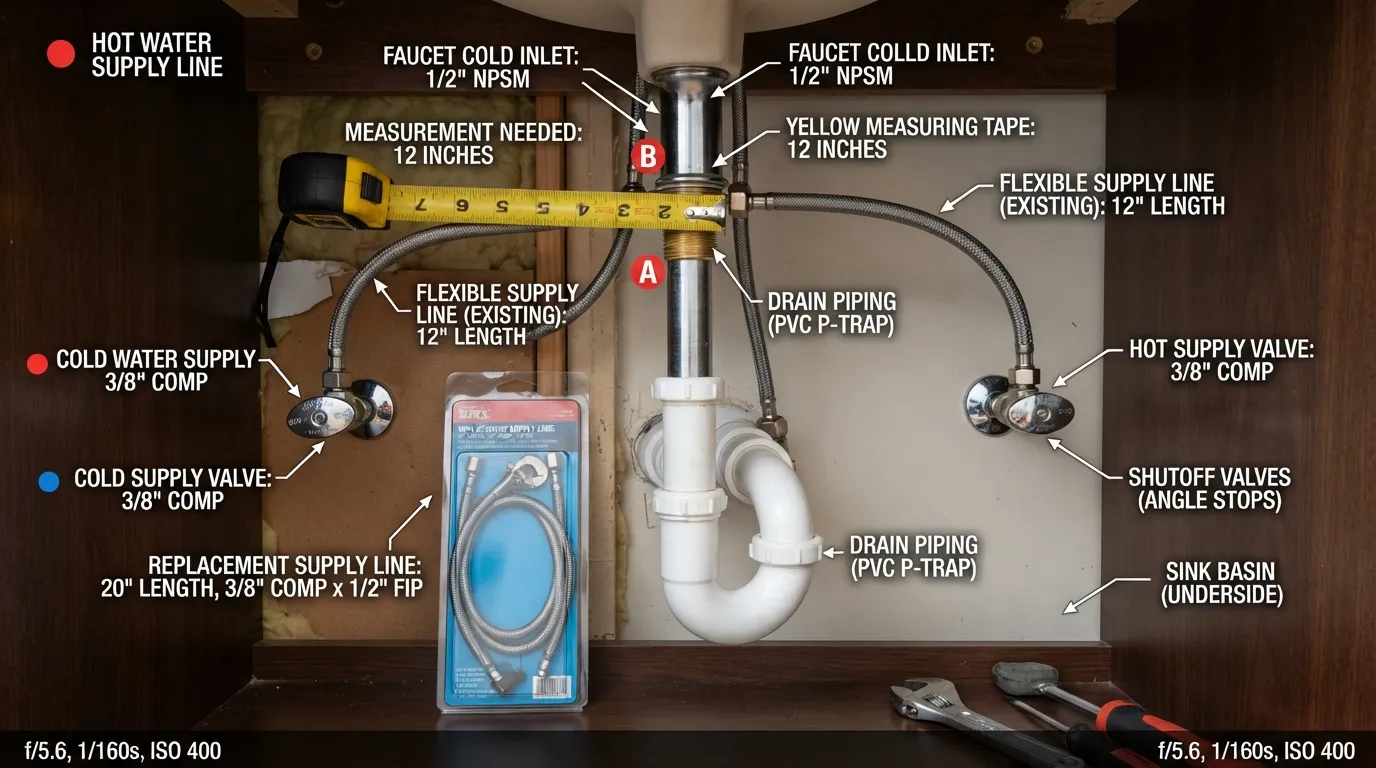
Sink supply lines are flexible water lines that connect the shutoff valves under your sink to the faucet. They carry hot and cold water from the home’s water supply to the faucet.
The important part: don’t choose a replacement simply because it says “3/8-inch.” A supply line can have different connection sizes at its two ends, so you need to identify both connections and choose a length that fits without stretching, sharp bends, or unnecessary loops.
What Are Sink Supply Lines?
A sink supply line is the flexible connector between a water shutoff valve and a faucet. Under a typical kitchen or bathroom sink, you’ll usually find separate hot and cold water connections feeding the faucet.
These lines are commonly flexible so they can route through the limited space underneath a sink without requiring rigid pipe to line up perfectly with the faucet connections.
When you shop for a replacement, you’ll see specifications such as connection size, fitting type, length, and material. Those details matter because the new line has to match the connections already installed at your sink.
The easiest rule to remember: one end of the supply line connects to the water supply valve, and the other connects to the faucet. Check both ends before buying a replacement.
How Do Sink Supply Lines Work?
The basic path is simple:
Water travels through the home’s plumbing to the shutoff valve.
The valve lets you turn the sink’s water supply off without shutting down the entire home.
The flexible line carries water from the valve to the faucet.
The faucet delivers the water into the sink.
What Size Are Sink Supply Lines?
There isn’t one universal size that applies to every sink. A common faucet supply-line configuration is a 3/8-inch compression connection on the shutoff-valve side and a 1/2-inch FIP connection on the faucet side, but other combinations are available.
That’s why the question “Is a sink supply line 3/8?” doesn’t have a simple yes-or-no answer. The 3/8-inch measurement may describe one end of the connection rather than the entire supply line.
Why You May See “3/8 × 1/2”
A specification such as 3/8-inch compression × 1/2-inch FIP describes the two connection ends. In a common configuration, the 3/8-inch compression end connects to the water supply valve, while the 1/2-inch FIP end connects to a compatible faucet connection.
So don’t shop from the first number you see. Match both ends of the old line or verify the faucet and valve specifications before purchasing.
What Are the Different Types of Sink Water Supply Lines?
Sink supply lines can differ by material, connection type, length, and construction. The right choice depends on the existing plumbing and the requirements of your faucet.
Braided Stainless Steel Supply Lines
Braided stainless steel supply lines are widely available for faucet applications. They typically have a flexible inner hose surrounded by braided metal, giving the line flexibility while adding an exterior layer of protection.
PEX Supply Lines
PEX-based flexible supply lines are another option. They can be useful where flexibility and routing are important, but the connection ends and product specifications still need to match the installation.
Reinforced PVC Supply Lines
Reinforced PVC faucet supply lines are also available. As with any replacement line, look beyond the material and verify the fitting type, connection sizes, intended use, and required length.
Different Connection Types
You may encounter terms such as compression, FIP, flare, push-fit, or other fitting descriptions. These terms describe how the line connects to the plumbing components, so the fitting type is just as important as the numerical size.
Don’t Confuse Connection Size With Hose Length
A supply line might be described by its connection sizes and separately by its overall length. For example, “3/8-inch compression × 1/2-inch FIP × 20-inch” tells you three different things: the connection configuration and the line length.
Are Sink and Toilet Supply Lines the Same Size?
Not necessarily. Sink faucets and toilets can use different connection configurations, so you shouldn’t assume a toilet supply line will fit a sink faucet simply because one of its measurements looks familiar.
A common toilet connection, for example, can use a different faucet-side connection from a sink supply line. Always identify the fixture and check both ends before buying a replacement.
Kitchen Sink Supply Lines vs. Bathroom Sink Supply Lines
Kitchen and bathroom sinks both use water supply lines, but the fixture location by itself does not tell you which size or connection you need.
The more reliable approach is to identify the actual faucet and shutoff-valve connections. Two sinks in different rooms can require similar supply lines, while two faucets in the same type of room can have different connection requirements.
How to Measure Sink Supply Lines
If you’re replacing an existing line, measuring before shopping can save you from buying the wrong product.
- Turn off the water. Close the appropriate shutoff valve before disconnecting anything.
- Look at both ends. Identify how the existing line connects to the shutoff valve and the faucet.
- Identify the connection sizes. Don’t assume that one measurement describes both ends.
- Measure the route. Check the practical distance from the supply valve to the faucet connection.
- Allow room for a gradual bend. The replacement should not be stretched tight or forced into a sharp bend.
- Compare the old line with the replacement specifications before installation.
A Common Measuring Mistake
Don’t measure only the straight-line distance and then buy a line that is exactly that length. The line needs enough length to make a natural route between the connections without being stretched or sharply bent.
How Long Should Sink Supply Lines Be?
Supply lines are available in multiple lengths, including commonly sold options such as 12, 16, 20, 24, and 30 inches. The correct length depends on the distance and routing between your shutoff valve and faucet.
Choose a line long enough to connect comfortably, but avoid creating a large unnecessary loop underneath the sink.
Simple Length Rule
Measure the practical route from the valve to the faucet, then choose a compatible supply line that leaves enough room for smooth bends and connection without excess slack.
How Do You Choose the Right Sink Supply Line?
When you’re standing in a hardware store or looking at several online options, use this checklist instead of guessing from the product title.
Sink Supply Line vs. Sink PVC Drain Pipe
These two parts are easy to confuse because both are located under the sink, but they perform completely different jobs.
Sink Supply Line
Carries fresh water from the shutoff valve to the faucet.
Sink PVC Drain Pipe
Carries wastewater away from the sink toward the home’s drain system.
P-Trap
Forms part of the sink drain assembly and holds a water seal in the trap.
So if you’re searching for sink PVC drain pipe, PVC pipe for a kitchen sink drain, or PVC sink drain fittings, you’re dealing with the drain side of the plumbing—not the faucet’s water supply lines.
If your under-sink plumbing has multiple problems, it can help to review the full range of plumbing services available for different plumbing issues.
Can You Replace Under-Sink Plumbing Yourself?
A straightforward supply-line replacement can be manageable when the shutoff valve and faucet connections are accessible and in good condition. The key is to identify the correct replacement before disconnecting the old line.
- Clear the area underneath the sink.
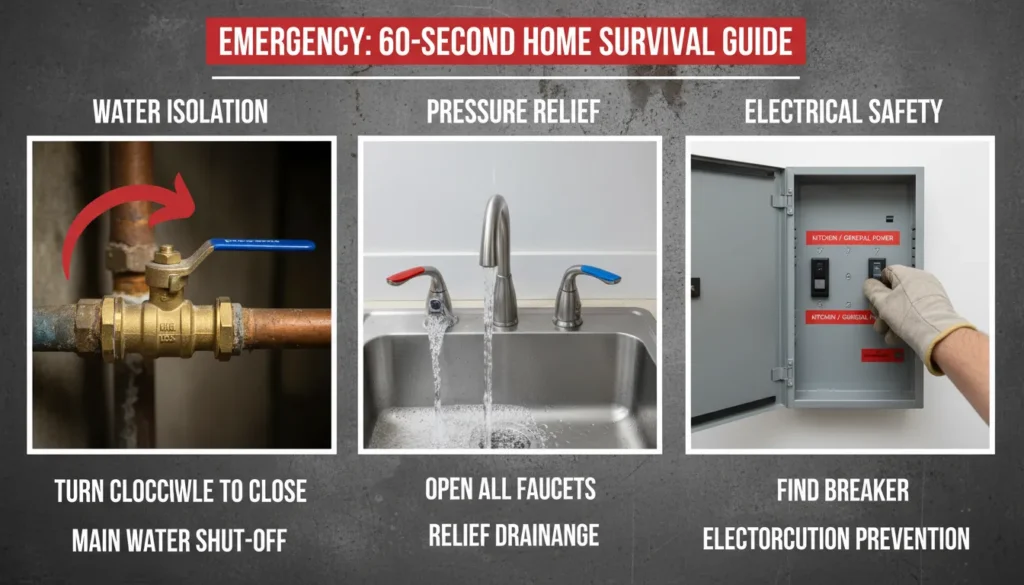
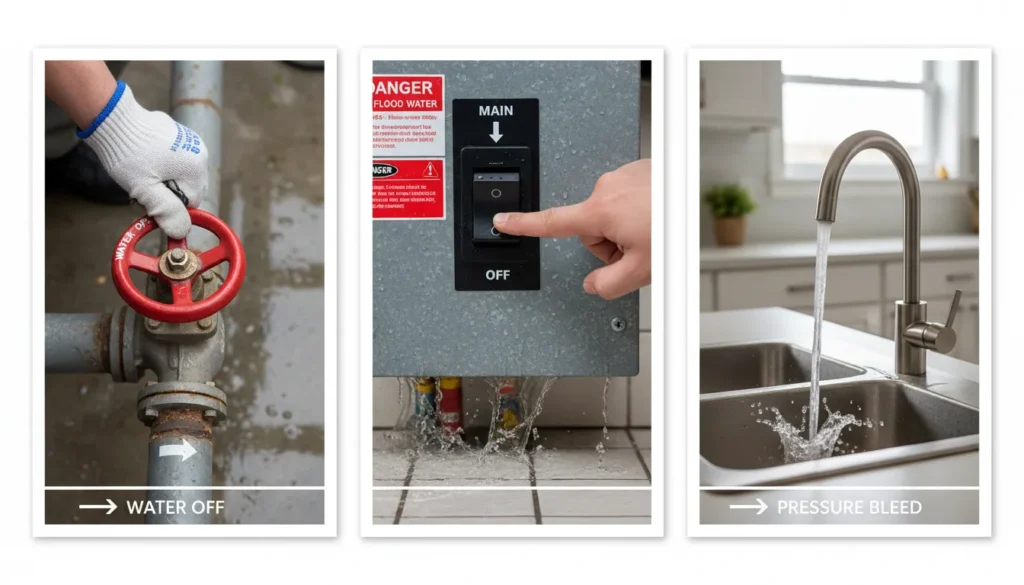
- Close the appropriate water shutoff valve.
- Open the faucet briefly to relieve pressure.
- Place a container or towel underneath the connection for residual water.
- Disconnect the old supply line carefully.
- Compare the old line’s connection ends and length with the replacement.
- Connect the new line according to the manufacturer’s instructions and the fitting type.
- Restore the water slowly.
- Inspect both connections carefully for leaks.
When Should You Stop and Get Professional Help?
If the shutoff valve is damaged, the connection is badly corroded, the fitting will not disconnect, the plumbing is difficult to access, or the leak continues after the replacement, don’t keep forcing the connection. A plumbing professional can determine whether the problem is the supply line, valve, faucet connection, or another part of the plumbing system.
Why Do Sink Supply Lines Leak?
A leaking supply line doesn’t always mean the flexible line itself has failed. The problem can also be at one of the connections.
- Aged or damaged supply line
- Corrosion around a connection
- A loose connection
- An incompatible fitting
- A damaged shutoff valve connection
- A kinked or improperly routed line
- Installation or connection problems
What Should You Check First?
Dry the area, restore the water carefully, and watch each connection. Don’t assume the wettest-looking point is automatically where the water originates. Trace the moisture back toward the source and check the valve-to-line and line-to-faucet connections.
Do You Need a Sink Supply Line Adapter or Extension?
Sometimes an adapter or extension can solve a compatibility or reach problem, but it should not be your first assumption.
First determine why the existing line does not fit. If the wrong connection type or size was selected, the better solution may simply be a supply line with the correct ends.
Before Adding an Adapter, Ask:
- Is the existing supply line the wrong size?
- Is the connection type incorrect?
- Is the line simply too short?
- Would the correct replacement line eliminate the extra connection?
- Does the manufacturer specify an adapter for this faucet connection?
How High Should Kitchen Sink Supply Lines Be?
The exact rough-in position depends on the sink cabinet, faucet, shutoff valves, plumbing layout, and local installation requirements. Rather than relying on one universal height, make sure the valves are accessible and the supply lines can reach the faucet without being stretched or sharply bent.
If you’re planning a new plumbing installation rather than replacing an existing line, the faucet manufacturer’s installation instructions and applicable plumbing requirements should guide the exact placement.
How Far Apart Should Sink Supply Lines Be?
For an existing sink, the most useful approach is to work from the actual faucet and shutoff-valve configuration rather than forcing the installation to match a generic measurement. The two supply connections need to remain accessible and route cleanly to their respective faucet connections.
For new construction or a plumbing alteration, follow the faucet manufacturer’s rough-in requirements and applicable plumbing code rather than treating a general internet measurement as a universal rule.
Sink Supply Lines Buying Checklist
If you’re buying a replacement today, save yourself a return trip by checking these items first:
Common Sink Supply Line Mistakes to Avoid
Choosing by Size Alone
Seeing “3/8-inch” doesn’t tell you everything. Check both connection ends.
Buying the Longest Line Available
Extra length isn’t automatically better. Excess tubing can create unnecessary loops and make the under-sink area harder to manage.
Confusing Supply Lines With Drain Pipes
Supply lines carry clean water to the faucet. PVC drain piping handles wastewater. They are separate parts of the plumbing system.
Adding an Adapter Without Identifying the Problem
First determine whether the problem is size, fitting type, length, or an incompatible component. An adapter isn’t always the best solution.
Ignoring a Small Leak
A small under-sink leak can damage the cabinet or surrounding materials. If you notice moisture, find the source and address it rather than assuming it will disappear.
Frequently Asked Questions About Sink Supply Lines
What is the standard supply line for a sink?
There isn’t one universal configuration for every sink. A common faucet supply-line setup uses a 3/8-inch compression connection at the shutoff valve and a 1/2-inch FIP connection at the faucet, but other connection combinations are available. Verify both ends before buying.
Is a sink supply line 3/8 inch?
It can have a 3/8-inch connection, but that doesn’t necessarily mean both ends are 3/8 inch. Common configurations can use different connection sizes on each end.
How do I measure sink supply lines?
Identify both connection ends, determine their sizes and fitting types, and measure the practical route between the shutoff valve and faucet. Choose a line that provides enough length for smooth bends without excessive slack.
How long are sink supply lines?
They are sold in multiple lengths. The correct length depends on the distance and routing between the shutoff valve and faucet, not simply on whether the sink is in a kitchen or bathroom.
Are sink and toilet supply lines the same size?
Not necessarily. Sink faucets and toilets can use different connection configurations. Always check the fixture-specific connection requirements.
Can you put a 90-degree elbow in a sink drain?
A 90-degree fitting can be part of some drain configurations, but the appropriate fitting and layout depend on the drain design, available space, slope, and applicable plumbing requirements. Don’t treat a generic fitting as automatically suitable for every sink drain.
How high should kitchen sink supply lines be?
There isn’t one universal height that works for every installation. The valves need to remain accessible and the supply lines need to reach the faucet without being stretched or sharply bent. For new installations, follow the faucet manufacturer’s requirements and applicable plumbing rules.
How far apart should sink supply lines be?
The spacing depends on the faucet, sink, valves, and plumbing layout. For an existing installation, work from the actual connections. For new work, follow the faucet’s installation requirements rather than relying on a single generic spacing measurement.
What is the difference between a sink supply line and a faucet pipe?
“Faucet pipe” is a broad term that can refer to different parts of a faucet plumbing setup. A faucet supply line specifically refers to the connector carrying water between the shutoff valve and faucet.
Do kitchen and bathroom sinks use the same supply lines?
They can use similar supply-line configurations, but the room itself doesn’t determine the correct line. Check the faucet and shutoff-valve connections on the specific sink.
A Simple Way to Find the Right Sink Supply Line
Identify → Measure → Match → Install → Check
Identify both connection ends. Measure the practical route. Match the connection sizes and fitting types. Install according to the product instructions. Then restore the water slowly and check every connection for leaks.
That process is much safer than buying a line simply because the package says “sink supply line” or because one number looks familiar.
Need Help With Under-Sink Plumbing?
If you’re dealing with a leaking supply line, damaged shutoff valve, difficult connection, or a larger plumbing problem under the sink, you don’t have to guess which component is causing the issue.
Get Help With Your Plumbing Problem
For broader plumbing needs, you can review our full plumbing services or return to our home page to learn more about available help.
Related Supply-Line Resources
If you’re comparing supply-line types or checking available connection configurations before buying, these established plumbing retailers can help you review current product categories and specifications:
Final Takeaway
Choosing a sink supply line is mostly about compatibility, not guesswork. Identify the faucet connection, identify the shutoff-valve connection, measure the required route, and then choose a supply line with the correct fittings and enough length for a clean installation.
And remember: a sink supply line and a PVC sink drain pipe do completely different jobs. Once you know which side of the plumbing you’re working on, selecting the right component becomes much easier.