A cracked or burst pipe rarely waits for a convenient time. One minute everything’s normal, and the next you’re standing in water trying to remember where the shutoff valve even is. If that’s where you are right now, take a breath — you can stop the damage in the next few minutes, and then decide calmly whether this is a DIY fix or a job for a plumber.
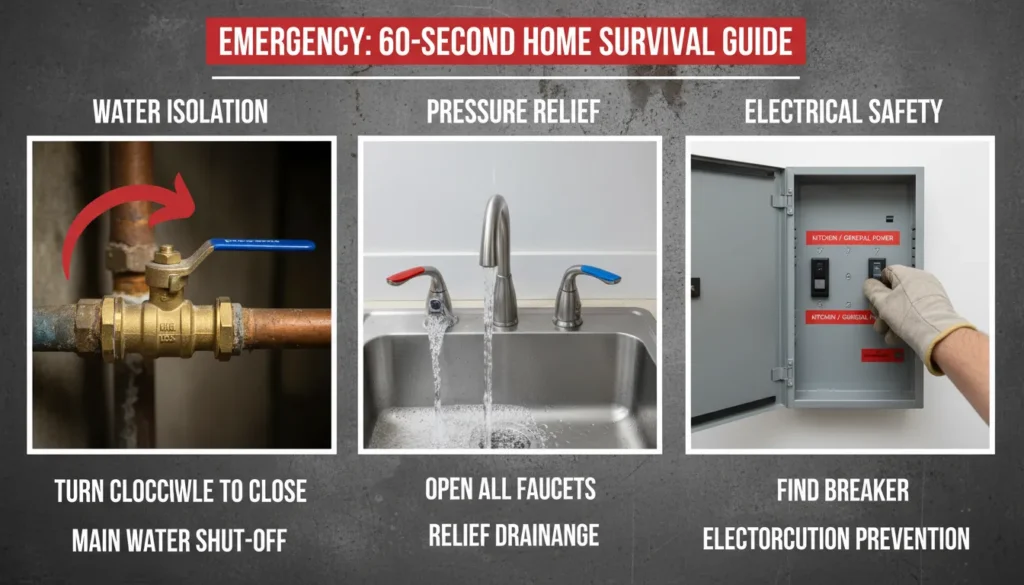
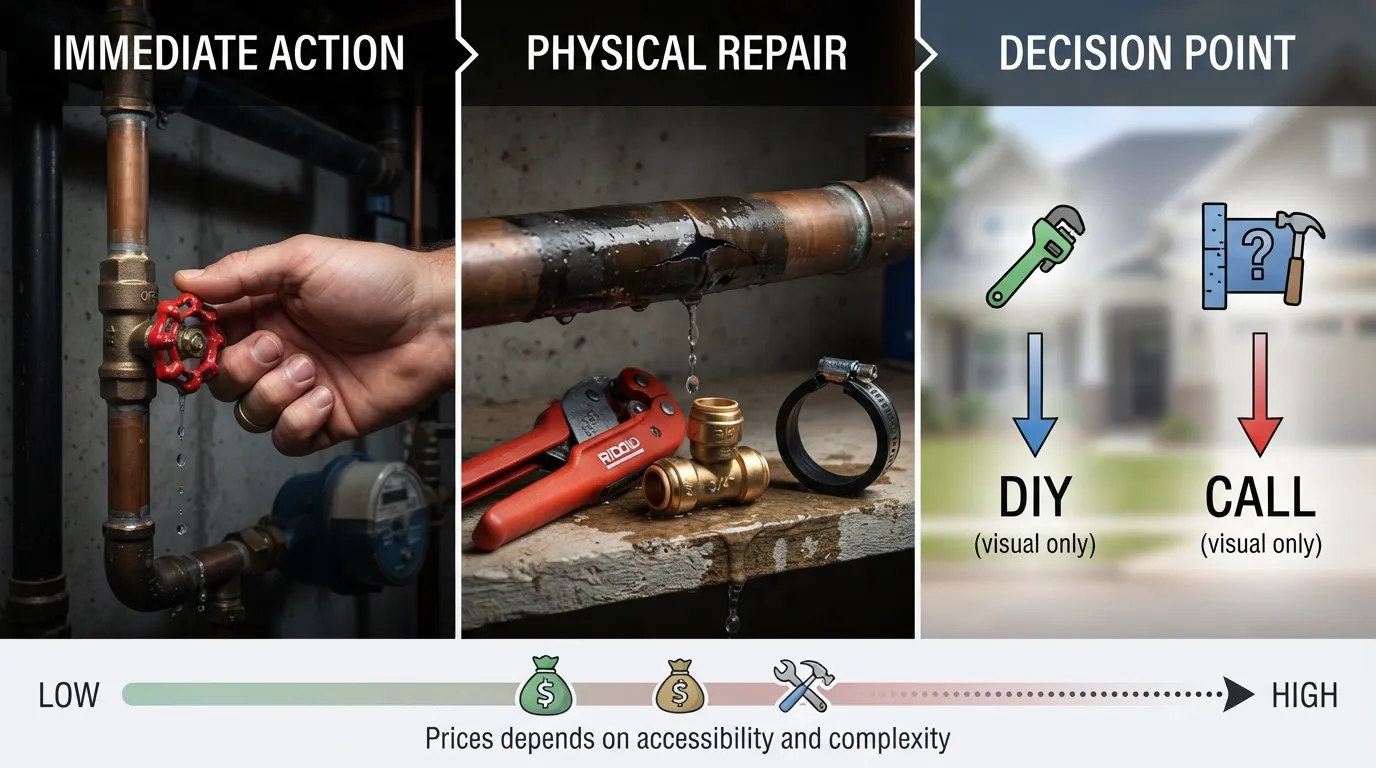
Shut off your main water valve right away, then open the lowest faucets in the house to drain the remaining water and pressure out of the lines. Once the pipe is dry, cut out the damaged section with a pipe cutter, smooth the edges, and seal the gap with a push-fit coupling (like a SharkBite) or an emergency rubber repair clamp. This holds until you can make a permanent repair or call a plumber.
First 5 Minutes: Stop the Damage
Before you think about tools or repairs, your only job is to stop water from spreading. Do these in order:
⚠ Emergency Checklist
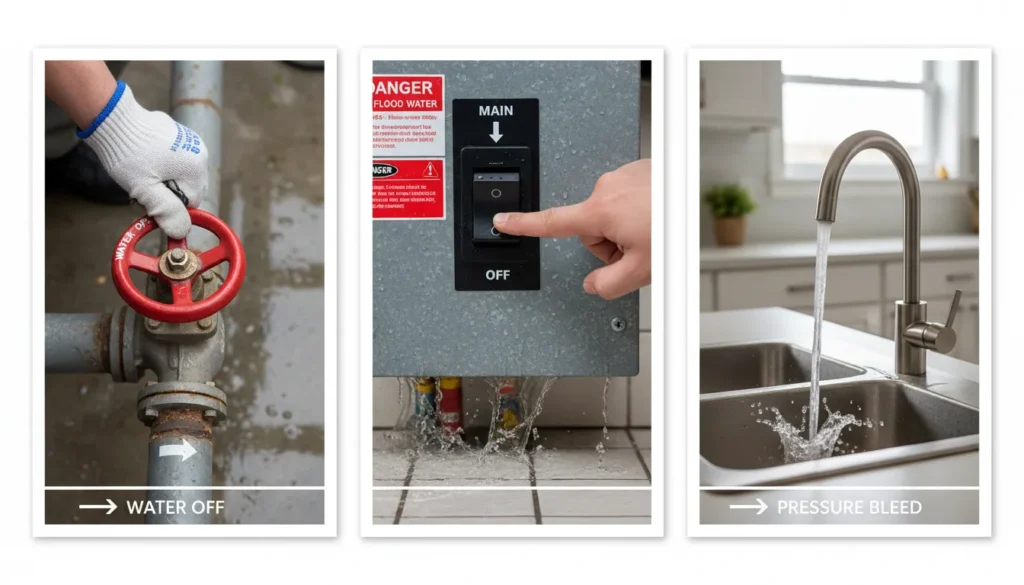
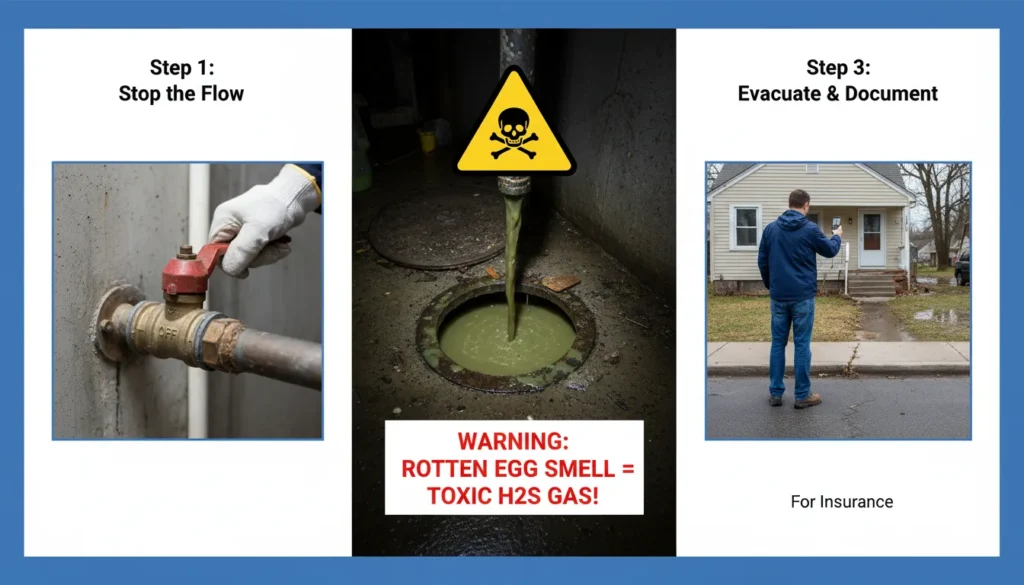
- Shut off your home’s main water valve, not just the fixture nearest the break.
- Open the lowest faucets and any outdoor spigots to drain the remaining water and relieve pressure in the lines.
- If the break is near an outlet, switch, or electrical panel, turn off power to that area at the breaker before doing anything else.
- Move furniture, electronics, and belongings away from standing water.
- Soak up or mop standing water as soon as it’s safe to reduce damage to floors and walls.
Diagnose the Break First: Material and Location Matter
Not every pipe break is fixed the same way. Before you buy a repair clamp or coupling, figure out two things: what the pipe is made of, and where the break actually is. Getting this wrong is one of the most common reasons a “quick fix” fails within a day or two.
By Pipe Material
- Copper – Rigid and durable, but repairs usually need soldering or a specific copper-rated push-fit coupling. Regular pipe tape or epoxy is only a very short-term patch.
- PVC – Common for drain and some supply lines. PVC cement joints and slip couplings work well, and PVC is generally the easiest material for a homeowner to repair.
- PEX – Flexible plastic tubing. Push-fit or crimp/clamp fittings are made specifically for PEX and are usually the fastest fix.
By Location
- Exposed indoor pipe – Easiest to access and repair yourself if you’re comfortable with basic tools.
- Inside a wall – You’ll likely need to open drywall to reach the break, which is where most homeowners decide to bring in a professional.
- Outdoor pipe – Exposed to weather and more prone to repeat breaks if the original patch isn’t rated for outdoor use.
- Underground or under-slab – This almost always requires professional equipment to locate and access the break without causing further damage.
How to Repair the Pipe, Step by Step
Once the water is off and the area is drained, here’s the general process for a temporary or semi-permanent repair on an accessible pipe:
- Cut out the damaged section. Use a pipe cutter to remove the cracked or split area cleanly, cutting a little past the visible damage on both sides.
- Smooth the edges. File down any rough burrs on the inside and outside of the cut, since sharp edges can damage seals on push-fit fittings.
- Mark the fit depth. Measure and mark how far your coupling or replacement pipe segment needs to insert, so you know it’s fully seated.
- Secure the fitting. Push the coupling or new pipe segment firmly into place until it locks. For an emergency-only fix, a rubber repair clamp can be tightened directly over the break instead.
- Turn the water back on slowly and check the repair closely for drips before walking away.
Watch: cutting, prepping, and fixing a burst pipe with a push-fit fitting.
DIY Fix or Call a Plumber? Here’s How to Decide
A repair clamp or coupling can absolutely get you through the day, but that doesn’t always mean you should stop there. Use this to gauge how far to go on your own:
| Situation | Best Approach |
|---|---|
| Small crack in an exposed, easy-to-reach pipe | DIY clamp or push-fit coupling is usually fine |
| Break is behind a wall or under the slab | Call a plumber to locate and access it properly |
| Repeated breaks in the same area | Likely a sign of a larger pipe or pressure issue — get it inspected |
| Break is near electrical wiring or outlets | Call a professional — safety risk, not just a plumbing one |
| You’re not confident cutting or fitting pipe | A temporary clamp to stop leaking, then call a plumber for the permanent fix |
If you’d rather not risk a second leak forming behind the wall, our pipe repair service can handle everything from a quick emergency patch to a full section replacement.
How Much Does It Cost to Fix a Burst Pipe?
There’s no single number here, and be cautious of any article that gives you an exact figure without seeing the job. Cost depends on several factors:
- Accessibility – An exposed pipe under a sink is far cheaper to fix than one buried under a slab or hidden inside a finished wall.
- Pipe material – Copper repairs generally involve more labor (soldering) than PEX or PVC.
- Damage repair – If drywall, flooring, or cabinetry needs to be opened up or replaced, that adds to the total separately from the plumbing work itself.
- Time of service – An after-hours or emergency call typically costs more than a scheduled daytime appointment.
The most reliable way to know your actual cost is to have a plumber look at the specific break and give you a written estimate before work begins.
Will Homeowners Insurance Cover a Burst Pipe?
Often, yes — but it depends heavily on the cause. Most homeowners policies cover water damage that happens suddenly and accidentally, such as a pipe that bursts without warning. What they typically don’t cover is damage from a problem that built up gradually, like a slow leak you knew about but never repaired, or damage tied to poor maintenance.
A Note on Talking to Your Insurance Company
Stick to the facts: when you noticed the break, what you did to stop it, and any repairs made. Avoid guessing about how long the pipe may have been leaking or speculating about the cause — let the plumber’s assessment establish that. Every policy is different, so for anything involving a claim, confirm the specifics directly with your insurance provider.
What Happens When a Pipe Bursts Under Your House?
A break under a slab or crawl space is harder to catch early because you won’t see water right away. Instead, look for warning signs: an unexplained spike in your water bill, warm spots on the floor (for hot water lines), the sound of running water when everything’s off, or damp patches appearing on flooring. Because these breaks are hidden, they’re one of the clearest cases where professional leak detection equipment is worth the cost — digging blind can turn a small repair into a much bigger one.
Who Is Responsible for Pipes Outside Your House?
This depends on where exactly the pipe sits. As a general rule, the water line running from the street to your property line is usually the utility or municipality’s responsibility, while the section from the property line into your home — including the pipe under your yard — is typically the homeowner’s. Because this varies by city and by the specific location of the break, it’s worth confirming with your local water utility or a plumber before assuming who’s on the hook for repairs.
Why Miami Homes Are More Prone to Pipe Breaks
If you’re dealing with this in South Florida, a few local factors are worth knowing about. Many older Miami homes still have galvanized steel or early-generation copper piping, both of which corrode faster in our humid, high-mineral-content water conditions. Add in the pressure swings that come with hurricane season and heavy seasonal rain, and pipes that are already weakened by corrosion are more likely to crack under stress. If your home was built before the 1980s and you’re seeing repeat breaks, it may be a sign the piping itself — not just one section — is due for an upgrade.
The team at Miami Florida Plumbing regularly sees this pattern across older neighborhoods in the area, which is why a proper inspection matters as much as fixing the immediate break.
Preventing Future Pipe Breaks
- Have your home’s water pressure checked — consistently high pressure stresses pipes over time.
- Insulate exposed pipes, especially outdoor and crawl-space lines.
- Address small leaks and corrosion signs early instead of waiting for a full break.
- If your home has older galvanized or copper piping, ask about its condition during your next plumbing visit — this is also a good time to check on your water heater, since aging units often show wear around the same age as the surrounding pipes.
Key Takeaways
- Shut off the main water valve and drain the lines before attempting any repair.
- Pipe material (copper, PVC, PEX) and break location determine the right repair method.
- A clamp or push-fit coupling is a solid emergency fix, but hidden or repeated breaks need a professional.
- Insurance often covers sudden pipe bursts, not gradual leaks — document facts, not guesses.
- Older Miami homes with galvanized or aging copper pipe are more prone to repeat breaks.
Frequently Asked Questions
How long does it take to fix a pipe break?
An accessible break with a push-fit coupling or clamp can often be fixed within an hour. Breaks behind walls, under slabs, or underground take longer since they involve locating the break and accessing it first.
Can pipes still burst if the water is turned off?
Yes. Trapped pressure or ice expansion inside a closed pipe can still cause a crack even after the main valve is shut, though shutting off the water does stop the leak from spreading further once it happens.
What should I do if I have a burst water pipe outside my house?
Shut off the main valve the same way you would for an indoor break, then assess whether the pipe is on your side of the property line. Outdoor breaks are exposed to soil and weather, so a temporary clamp should be followed up with a proper repair soon.
What two events are typically not covered under homeowners insurance?
Most standard policies exclude gradual damage from long-term wear or neglect, and damage resulting from a lack of routine maintenance. Coverage details vary by insurer, so confirm specifics with your provider.
Who is responsible for pipes outside a house?
Generally, the utility company owns the line up to your property boundary, and the homeowner is responsible from that point into the house. Confirm with your local water authority, since this can vary.
Not Sure If It’s a DIY Fix?
A patched pipe that fails again can cause more damage than the original break. Our team can find the exact cause and fix it the right way, whether it’s a quick repair or a sign of bigger issues with your home’s plumbing system.