If your home has aging metal pipes, rusty water, or recurring leaks, you’ve probably come across PEX repiping as a solution. But before you commit to tearing into your walls, you likely have real questions: How much disruption will this cause? Is PEX actually safe? And will it really outlast the pipes you already have?
This guide walks you through exactly what a PEX repipe involves, how it compares to copper and PVC, what the process looks like from start to finish, and the honest answers to the questions most articles skip — including the insurance and lawsuit concerns you may have read about. At Miami Florida Plumbing, we’ve put this together so you can make a confident, informed decision.
A PEX repipe replaces your home’s old metal water supply lines with flexible cross-linked polyethylene (PEX) tubing. It’s typically faster to install than copper, resists corrosion and scale buildup, and handles temperature changes well — which is why it’s become the go-to choice for whole-home repiping projects.
What Is a PEX Repipe, Exactly?
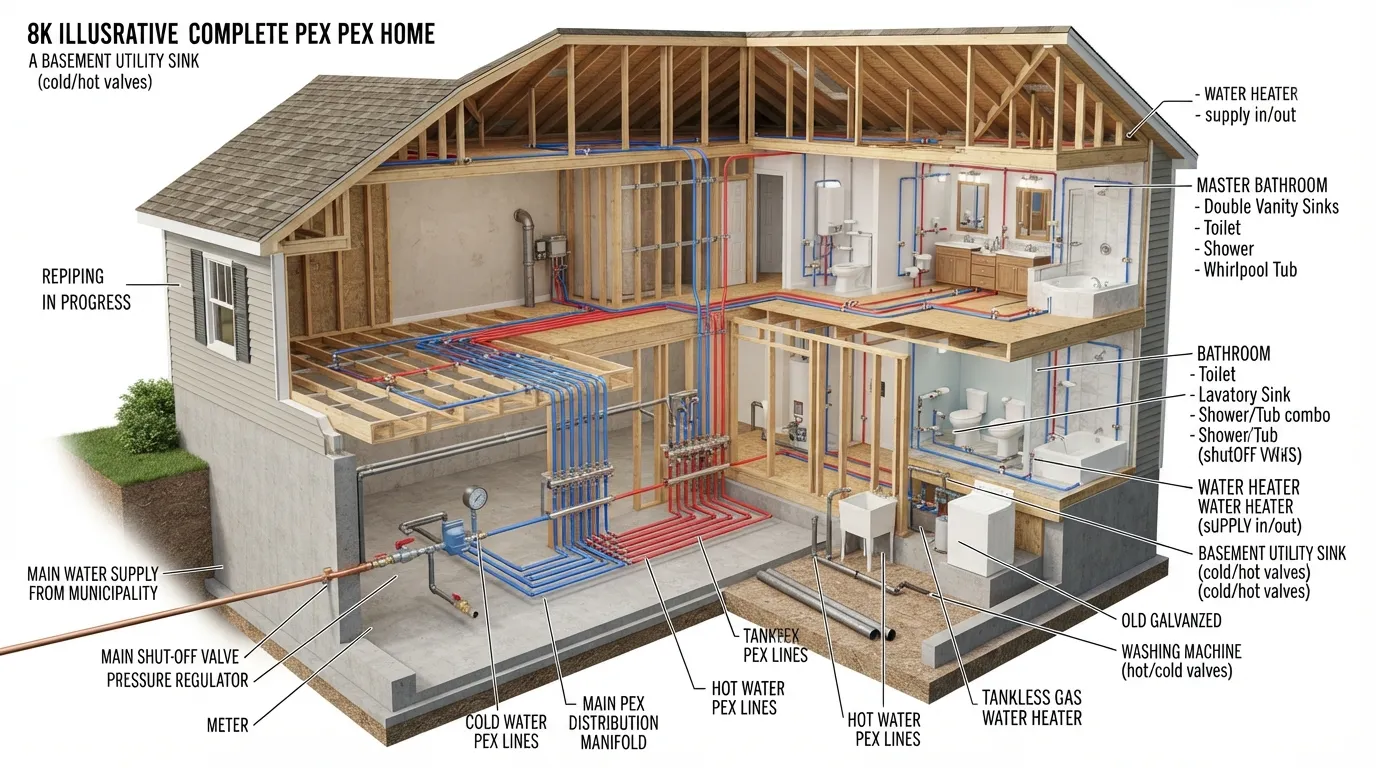
A repipe means removing your home’s existing water supply pipes — usually galvanized steel or copper that has started corroding, leaking, or scaling from the inside — and replacing them with new tubing. When that new tubing is PEX, plumbers run flexible lines through your attic, crawlspace, or walls instead of relying on the rigid, joint-heavy layout that copper requires.
Because PEX bends around corners and obstacles, it usually needs far fewer fittings than copper, which means fewer potential leak points over the life of your plumbing system.
Why Homeowners Choose PEX Over Metal Pipes
- Corrosion resistance: Unlike galvanized steel or copper, PEX doesn’t rust or scale internally, which protects your water quality over time.
- Flexibility: PEX bends around framing and obstacles, reducing the number of joints and fittings needed.
- Faster installation: Fewer fittings and easier routing generally mean less labor time compared to rigid copper piping.
- Freeze resistance: PEX has some flexibility to expand slightly under freezing conditions, which can reduce (though not eliminate) burst-pipe risk.
PEX-A vs. PEX-B: Which One Should Your Home Use?
One detail a lot of homeowners never get a straight answer on is the difference between PEX-A and PEX-B — even though it directly affects how your repipe is installed and connected.
| Feature | PEX-A | PEX-B |
|---|---|---|
| Manufacturing process | Peroxide method — more flexible material | Silane method — slightly stiffer |
| Flexibility | Higher — easier to route through tight spaces | Moderate — may need more fittings on tight bends |
| Fitting method | Expansion fittings (cold expansion) | Crimp or clamp fittings |
| Typical cost | Generally higher material cost | Generally lower material cost |
Neither type is universally “better” — the right choice depends on your home’s layout, budget, and the fitting method your plumber prefers to work with. A licensed plumber can evaluate your specific home and recommend which one fits best.
PEX vs. Copper vs. PVC: How Do They Compare?
| Factor | PEX | Copper | PVC |
|---|---|---|---|
| Corrosion resistance | Excellent | Can corrode over time | Excellent |
| Flexibility | Very flexible | Rigid | Rigid |
| Best used for | Hot and cold water supply lines | Water supply lines | Drain, waste, and vent lines (not typically for hot supply) |
| Installation speed | Fast | Slower — more joints and soldering | Fast |
How Long Does It Take to Repipe a House with PEX?
The timeline depends on your home’s size, how accessible your existing pipes are, and whether your home sits on a slab or has a crawlspace/attic. A crawlspace or attic layout is typically faster to work with since plumbers can route new PEX lines without opening as much drywall. A slab home, where pipes run under or through the concrete foundation, usually takes longer because the approach often shifts to overhead routing through walls and ceilings instead of digging into the slab.
Most whole-home repipes are completed within a few working days, though the exact duration depends on your home’s specific layout and condition. A licensed plumber can give you an accurate timeline after inspecting your property.
How Many Years Does PEX Plumbing Last?
PEX is manufactured to have a long service life when installed correctly and protected from prolonged direct UV exposure (sunlight can degrade PEX over many years if it’s left exposed outdoors). Because it doesn’t corrode or scale internally the way older metal pipes do, it tends to hold up well over decades of normal indoor use, provided water pressure and temperature stay within manufacturer specifications.
The PEX Repiping Process: Step by Step
- Plan the routes. Your plumber maps out where hot and cold lines will run — through the attic, crawlspace, or interior walls — based on your home’s layout.
- Open access points. Small, targeted access holes are cut into drywall where needed to pull the new lines through. A professional crew keeps this as minimal and clean as possible.
- Run and secure the PEX lines. New tubing is fastened using approved plastic clamps, with enough slack left for natural expansion and contraction.
- Connect fixtures. Lines are tied into your existing fixtures — sinks, showers, toilets, water heater — using the appropriate fittings for the PEX type installed.
- Pressure test the system. Before anything is closed up, the new lines are pressure-tested to catch any leaks early.
- Patch and restore. Access points are closed and patched, and your plumber does a final walkthrough with you.
If your repipe is happening alongside other plumbing upgrades — for instance, if you’re also dealing with an aging unit — it’s worth reviewing our guide on water heater replacement so both jobs can be planned together and minimize disruption to your home.
Honest Answer: What About Insurance and PEX Lawsuits?
This is a fair concern, and most articles skip it entirely. Some insurance companies have, in specific cases, expressed caution around older or specific batches of PEX due to isolated manufacturing defects and past litigation involving certain fittings and brands from years ago. This does not mean all PEX plumbing is unsafe or uninsurable.
What actually matters is using code-approved PEX materials, proper fittings, and a licensed installer who follows manufacturer specifications. If you have concerns about your homeowner’s policy, it’s worth a quick conversation with your insurance provider before your project begins — and a reputable plumber should be transparent about the materials and brands they use.
DIY or Hire a Professional?
Decision Checklist
DIY may work if: You have plumbing experience, your local code allows homeowner-performed work, and you’re only replacing a small, accessible section.
Hiring a pro is the safer route if: You’re repiping the whole house, your home is on a slab, you want the work permitted and inspected correctly, or you simply want it done right the first time without opening walls twice.
Whole-home repipes involve pressure testing, code compliance, and coordination across every fixture in your house — which is why most homeowners choose a licensed plumber rather than tackling it themselves. If you’d like to see everything else we handle, take a look at our full range of plumbing services.
Watch: What a PEX Repipe Actually Looks Like
If you’d rather see the process in action before deciding, these videos walk through real PEX repiping jobs from start to finish:
Key Takeaways
- PEX resists corrosion and generally installs faster than copper, with fewer fittings needed.
- PEX-A offers more flexibility; PEX-B is typically more budget-friendly — your plumber can recommend the right fit.
- Slab homes usually take longer to repipe than crawlspace or attic layouts.
- Insurance and past lawsuit concerns are valid to ask about, but code-approved materials and licensed installation address most of these issues.
- Whole-home repipes are best handled by a licensed professional to ensure proper permitting, pressure testing, and code compliance.
Frequently Asked Questions
What is a PEX repipe?
It’s the process of removing a home’s old metal water supply pipes and replacing them with flexible PEX tubing, typically to fix corrosion, leaks, or aging plumbing.
Is it better to repipe a house with PEX or copper?
Both are valid, code-approved materials. PEX tends to install faster and resist corrosion better, while copper has a long track record and can be preferred in certain applications. The right choice depends on your home, budget, and your plumber’s recommendation.
Do plumbers recommend PEX?
Many plumbers recommend PEX for repiping projects because of its flexibility, corrosion resistance, and faster installation time, though the best material depends on your specific home and plumbing needs.
What is the downside to PEX plumbing?
PEX can degrade with prolonged direct UV exposure, isn’t recommended for outdoor exposed runs without protection, and some homeowners have concerns about past lawsuits tied to specific older fittings — which is why using code-approved materials and a licensed installer matters.
Why don’t some insurance companies favor PEX plumbing?
This traces back to isolated past incidents involving specific fittings and manufacturing batches, not PEX as a material category overall. Checking with your insurer and using licensed, code-compliant installation typically resolves this concern.
Which is better, PVC or PEX?
They usually aren’t interchangeable for the same purpose. PVC is commonly used for drain, waste, and vent lines, while PEX is used for hot and cold water supply lines.
How long does it take to repipe a house with PEX?
Most whole-home repipes take a few working days, though slab homes and larger or less accessible layouts can take longer.
Ready to Repipe Your Home With PEX?
Our licensed Miami plumbers can walk through your home, explain your options, and give you a clear plan for your repipe.