If you’ve spotted water dripping from a PVC joint, you don’t always need to cut the pipe out right away. In most cases, you can stop the leak temporarily with a few household or hardware-store materials, buy yourself some time, and plan a permanent fix on your own schedule instead of in a panic.
Below, we’ll walk you through exactly how to patch a leaking PVC joint without cutting anything, which method works best for your situation, and when it’s time to call a professional instead of relying on a temporary patch.
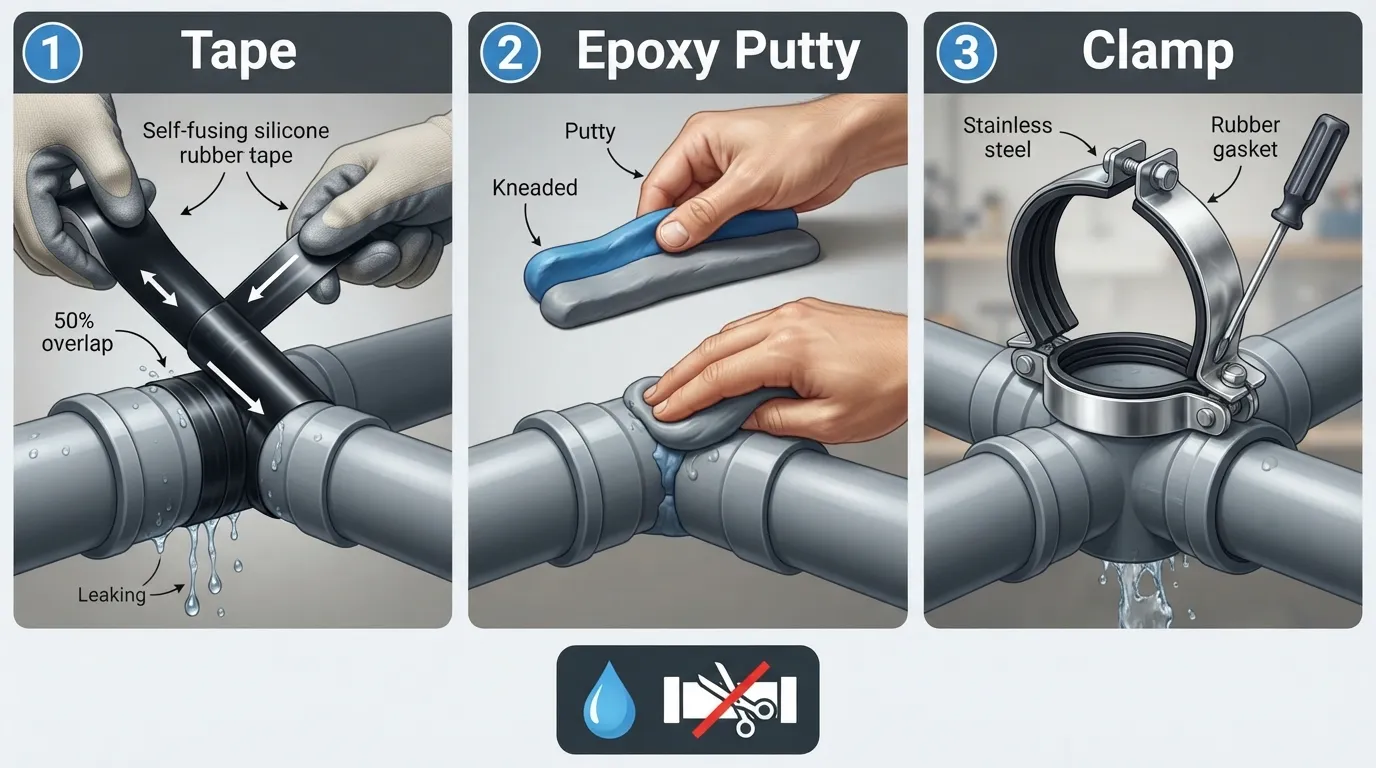
You can fix a leaking PVC joint without cutting it by using one of these temporary repair methods:
- Silicone self-fusing rubber tape – stretched and wrapped tightly around the joint
- Epoxy putty – kneaded and pressed into the leaking gap
- A pipe repair clamp – a hinged sleeve tightened directly over the leak
These fixes work well for low-pressure pipes and drain lines, and can hold a pressurized line over until you’re ready for a permanent repair. They are not a substitute for replacing a failed joint long-term.
Step 1: Figure Out What Kind of Pipe You’re Dealing With
Before you patch anything, it helps to know exactly what you’re working with — this changes which repair method makes sense and how urgent the fix really is.
Ask yourself:
- Is it a drain pipe or a pressurized water line? Drain pipes carry gravity-fed wastewater at low pressure, while supply lines are under constant pressure and leak more forcefully.
- Is the pipe indoors, outdoors, or underground? Buried or underground leaks are harder to access and usually need excavation for a permanent fix, even if you patch them temporarily first.
- Is this a glued (solvent-welded) joint or a threaded fitting? A leak right at a glued joint usually means the solvent weld itself has failed, which affects how well a surface patch will hold.
A pressurized supply line leak is more urgent since it’s under constant stress and can worsen quickly. A drain line leak, while less urgent, still needs attention before it causes water damage or mold underneath cabinets or flooring.
Step 2: How to Patch a Leaking PVC Joint
Once the water is shut off and the area is prepped, the actual patching process is straightforward:
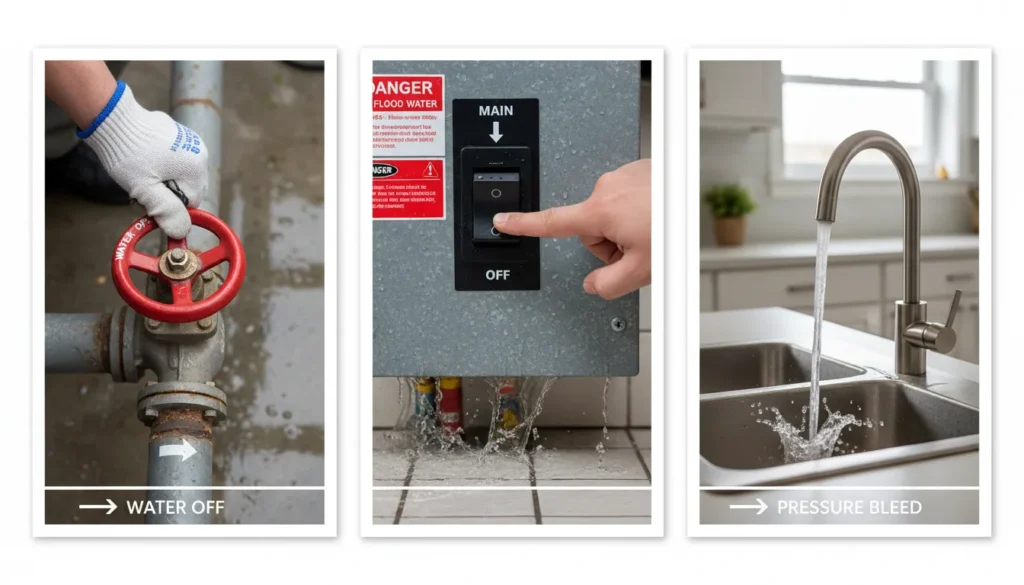
- Turn off the water completely so the pipe is dry and depressurized before you start.
- Clean the joint thoroughly. Wipe away all dirt, grease, and grime with a cloth so the repair material can bond properly.
- Lightly sand the pipe around the joint with medium-grit sandpaper. This roughens the surface so your patch grips instead of sliding.
- Apply your chosen repair material — tape, epoxy putty, or a clamp — tightly and evenly over the leaking joint.
- Let it cure fully according to the product’s instructions before turning the water back on.
Rushing the curing step is one of the most common reasons a “quick fix” fails within hours instead of holding for weeks.
Which Repair Method Should You Use?
Not every method suits every leak. Here’s how the most common options compare:
| Method | How It Works | Best For |
|---|---|---|
| Silicone self-fusing tape | Only sticks to itself; wrapped tightly under stretch to form a waterproof seal | Small drips on low-pressure lines and drain pipes |
| Epoxy putty | Two-part clay mixed until uniform, pressed into the gap, hardens like plastic | Gaps or small cracks at a glued joint |
| Pipe repair clamp | Rubber sleeve wraps the leak, hinged metal/plastic shell tightens over it with screws | Pressurized water lines that need a firmer hold |
| JB Weld / epoxy adhesives | Applied directly to the cleaned, dry joint and left to cure fully | Dry, low-vibration joints — check the product label to confirm it’s rated for your pipe and pressure |
| Flex Seal / rubberized sealants | Sprayed or brushed on to form a flexible rubber coating | Minor seepage; check the label before using on pressurized lines |
Always check the packaging on whatever product you choose — cure times, pressure ratings, and pipe compatibility vary between brands, and using something outside its rated use is a common reason temporary patches fail early.
Fixing a Leak at a Glued (Solvent-Welded) Joint
A leak right at a glued PVC joint usually means the solvent weld didn’t fully seal, or it’s degraded over time from movement, temperature swings, or age. Epoxy putty tends to work best here because it can be pressed directly into the seam where the fitting meets the pipe, filling the exact spot where the weld failed. A repair clamp is a solid backup if the leak is on a straight section near the joint rather than inside the fitting itself.
Keep in mind that a glued joint that’s already failed once is more likely to leak again nearby. Treat any patch here as a hold-over, not a permanent solution.
Repairing an Underground or Buried PVC Pipe
If the leaking joint is buried — under a slab, yard, or driveway — you’re usually dealing with a bigger job than a joint sitting in an open crawlspace or under a sink. You’ll typically need to expose the pipe before any patch, temporary or permanent, can be applied properly. Once exposed, the same methods above (clamp or epoxy putty) can buy time, but ongoing pressure and soil movement make underground joints more prone to reopening a leak than exposed indoor pipe.
If you’re not able to safely locate and expose the leak yourself, this is one of the more common situations where calling in a professional saves both time and further water damage.
⚠ Important Safety Notes
- These are temporary repairs. To permanently fix a leaking joint, the damaged section eventually needs to be cut out and replaced with new glued fittings.
- Never use tape, epoxy, or sealant products on gas lines. These fixes are only appropriate for water and drain lines.
- Make sure the water is fully shut off and the pipe is dry before applying any patch — moisture prevents most repair materials from bonding properly.
Watch It Done
If you’d rather see the repair process in action before trying it yourself, this video walks through a similar temporary PVC joint fix step by step:
When to Call a Plumber Instead of Patching It Yourself
A tape, putty, or clamp fix is meant to hold you over — not replace a proper repair. It’s time to bring in a professional when:
- The leak is on a pressurized supply line and keeps reopening after a patch
- The joint is buried underground or behind a wall/slab and needs to be exposed safely
- You’re seeing water damage, staining, or mold starting to form nearby
- You’re not confident identifying whether the pipe is a drain line or a pressurized line
If any of that sounds like your situation, our team at Miami Florida Plumbing can take a look and handle a permanent fix instead of a patch that might not hold. We offer professional plumbing repair services across Miami for exactly these kinds of pipe and joint issues.
It’s also worth noting that PVC and CPVC joints are common around water heater connections, where constant pressure and heat cycling can wear on a weld over time. If you’re dealing with a leak near your water heater specifically, our guide on water heater replacement covers when a full replacement makes more sense than a repair.
Frequently Asked Questions
Can JB Weld fix a PVC leak?
Yes, in many cases, as long as the joint is clean, dry, and the product is applied and cured according to the label. It’s best suited to dry, low-movement joints rather than active pressurized leaks.
Will Flex Seal stop a leaking pipe?
Flex Seal and similar rubberized sealants can slow or stop minor seepage. Check the packaging to confirm it’s rated for pressurized water lines before relying on it for anything beyond a small drip.
Will plumbers putty stop a joint leak?
Plumbers putty is designed for sealing fixtures like drains and faucets, not for patching pressurized or leaking PVC joints. Epoxy putty (a different product) is the better choice for joint repairs.
Can you put tape on a leaking pipe?
Yes — silicone self-fusing tape is one of the most common temporary fixes. Wrap it tightly while stretching it so it bonds to itself and forms a watertight seal over the joint.
What are some quick fixes for a leaky pipe joint?
Silicone tape, epoxy putty, and pipe repair clamps are the three most reliable quick fixes. All three require the pipe to be shut off, cleaned, and dried first for the repair to hold.
Key Takeaways
- Tape, epoxy putty, and pipe clamps can all stop a PVC joint leak temporarily without cutting the pipe.
- Always shut off the water, clean, and dry the joint before applying any repair.
- Pressurized supply lines need a firmer fix (clamp) than low-pressure drain lines.
- Underground and buried leaks usually need to be exposed before any repair, temporary or permanent, will hold.
- These fixes are temporary — the joint will eventually need to be cut out and properly re-glued.
- Never use these repair methods on gas lines.
Need a Permanent Fix Instead of a Patch?
If your PVC joint keeps leaking or you’re not comfortable handling the repair yourself, our licensed team is ready to help — anywhere in Miami.