If you’re staring at your fridge’s water line, an RO system, or an ice maker connection and trying to figure out which 1/4 inch water line fitting you actually need, you’re not alone. Most confusion around these small parts comes down to one thing: sizing. Is it measured by outside diameter or inside diameter? Is it the same as 1/4 NPT? We’ll clear all of that up below, along with which fitting type fits your specific job.
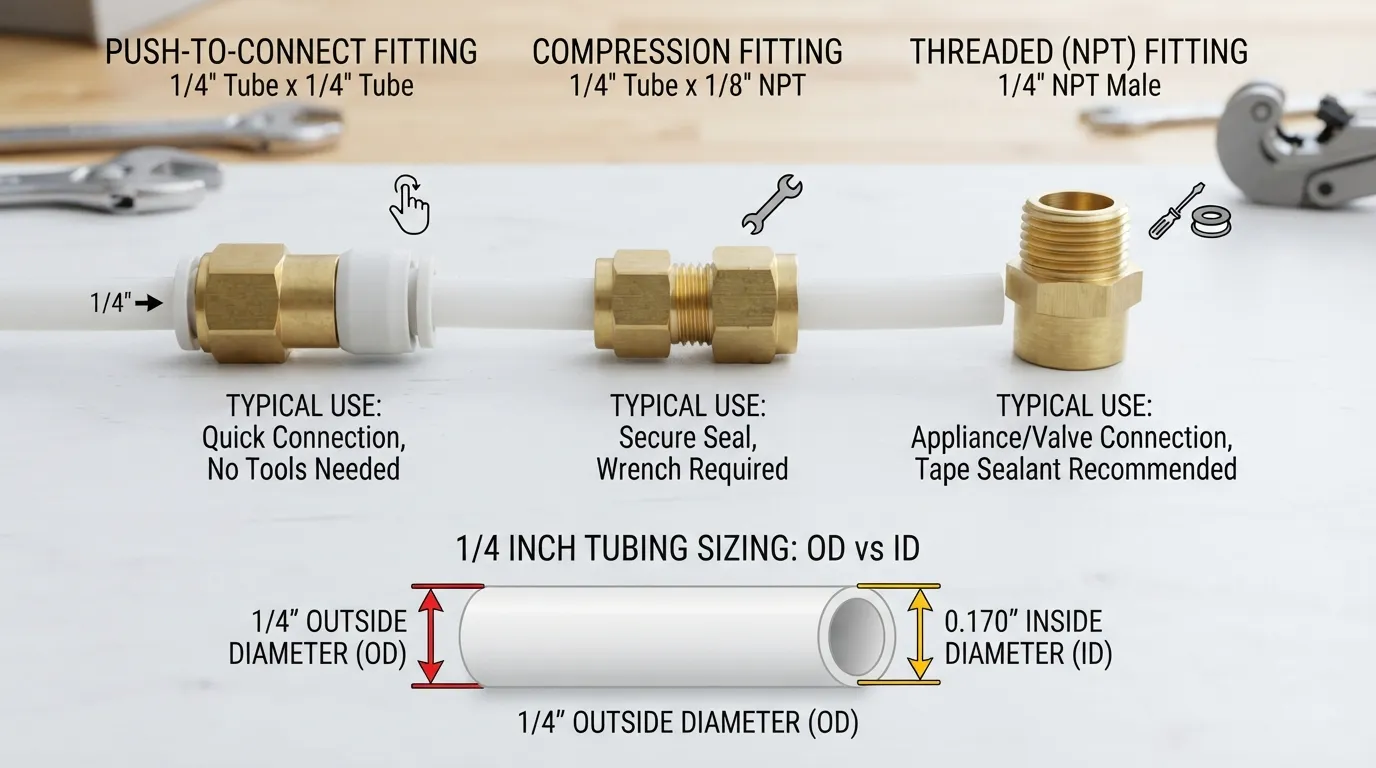
A 1/4 inch water line fitting is a small connector used to join, split, shut off, or terminate 1/4-inch tubing — commonly used for refrigerators, ice makers, reverse osmosis (RO) systems, and aquariums. The three main types are push-to-connect (no tools needed), compression (nut and ferrule, tightened with a wrench), and threaded/NPT (screwed into appliances or valves). Most household kits use 1/4″ OD (outside diameter) tubing, which has roughly 3/16″ ID.
What Is a 1/4 Inch Water Line Fitting?
A 1/4 inch water line fitting is any connector designed to work with 1/4-inch tubing — the small, flexible line you’ll usually find running behind a refrigerator, under a sink to an RO unit, or feeding an ice maker. These fittings let you connect two lengths of tubing, split one line into two, add a shut-off valve, or terminate the line at an appliance.
They’re built from plastic (polypropylene or polyethylene), copper, or brass, depending on the application and whether the line is exposed to sunlight, pressure, or buried underground.
1/4 Inch Sizing Explained: OD vs. ID vs. NPT
This is where most people get stuck, so let’s settle it clearly.
- Tubing is measured by OD (outside diameter), not ID. When you buy “1/4 inch tubing,” the outside of the tube measures 1/4″ (0.25″). The inside diameter (ID) is smaller — typically around 3/16″ (0.170″–0.190″) once you account for wall thickness.
- 1/4 NPT is a different measurement entirely. NPT (National Pipe Thread) refers to thread size on a fitting, not tubing diameter. A 1/4″ NPT thread has an actual outer thread diameter of roughly 0.54″, not 1/4″. Don’t confuse “1/4 inch tubing” with “1/4 NPT” — they’re not interchangeable terms.
- Irrigation and RO tubing commonly follow the same 1/4″ OD standard, so most push-to-connect fittings work across fridge lines, RO systems, and drip irrigation setups.
Types of 1/4 Inch Water Line Fittings Compared
Each fitting type suits a different situation. Here’s how they stack up:
Push-to-Connect
Also known as: John Guest / quick-connect fittings
How it works: Push the tubing straight in — an internal collet grips it and creates a seal.
Tools needed: None
Best for: RO systems, fridges, ice makers, quick DIY repairs
Compression Fitting
How it works: A threaded nut squeezes a metal or plastic ferrule against the tube as it’s tightened.
Tools needed: Wrench
Best for: Copper tubing, permanent joins, higher-pressure connections
Threaded (NPT) Fitting
How it works: Screws directly into an appliance, valve, or another threaded fitting.
Tools needed: Wrench, thread seal tape (optional with self-sealing ferrules)
Best for: Connecting the line to a fridge, shut-off valve, or water filter housing
Common Fitting Shapes You’ll Come Across
- Couplings/Unions — join two straight sections of tubing together
- Tees — split one line into two separate paths
- Elbows — make a 90-degree turn without kinking the tubing
- Shut-off valves — let you stop water flow to one line without shutting off your main supply
Which Fitting Do You Need? By Application
Refrigerator or Ice Maker Line
Push-to-connect fittings are the standard here since they let you swap or extend the line without special tools. Use PE (polyethylene) tubing, which is what most fridge water line kits include.
Reverse Osmosis (RO) Systems
RO systems almost universally use 1/4″ OD push-to-connect fittings, since the whole system is designed around quick, tool-free assembly and easy filter changes.
Aquariums
Push-to-connect or compression fittings both work, but check that the fitting material is safe for aquarium use and won’t introduce contaminants into the tank.
Underground Water Line Fittings
This is where a lot of general guides fall short. For buried or exterior lines, plastic push-to-connect fittings aren’t the right choice long-term — soil movement, temperature swings, and constant moisture put more strain on the joint. For underground 1/4″ lines (common in irrigation drip systems or buried appliance feeds), compression fittings or solvent-welded/threaded connections rated for burial are the safer, more durable option. If you’re unsure whether your specific setup needs a burial-rated fitting, that’s a good moment to get it checked rather than guess.
Compatible Tubing Materials
- Polyethylene (PE) / Polypropylene (PP) — flexible, most common for fridges and filters
- Soft Copper — durable, traditional, needs careful bending
- PEX / CPVC — rigid plastic used in broader household plumbing runs
How to Install a 1/4″ Water Line Fitting (Step by Step)
- Shut off the water supply to the line you’re working on.
- Cut the tubing cleanly using a proper tubing cutter — a straight, flat cut is essential for a leak-free seal. Jagged cuts are one of the most common causes of leaks.
- Insert the tubing — for push-to-connect fittings, push firmly until it stops. For compression fittings, slide the nut and ferrule onto the tube first, then insert.
- Tighten (if applicable) — for compression and threaded fittings, tighten snugly with a wrench. Don’t overtighten.
- Turn the water back on and check for leaks at the connection point before walking away.
Common Mistake to Avoid: Over-tightening compression fittings is one of the most frequent installation errors. Tighten until snug, not as tight as possible — excess force can crush or crack the tubing and cause the exact leak you were trying to prevent.
Watch: Identifying Water Pipe Fittings
This short video walks through identifying common water fitting types, which is useful if you’re not sure what you’re currently working with:
Key Takeaways
- 1/4″ tubing is measured by outside diameter, not inside diameter — don’t confuse it with 1/4 NPT thread size.
- Push-to-connect fittings are the easiest option for fridges, ice makers, and RO systems.
- Compression fittings suit copper tubing and more permanent connections.
- For underground or buried lines, avoid basic plastic push-to-connect fittings — use burial-rated compression or threaded connections instead.
- A clean, straight cut on the tubing prevents most leaks before they start.
Frequently Asked Questions
How do I connect a 1/4″ water line?
For push-to-connect fittings, cut the tubing cleanly and push it straight into the fitting until it seats. For compression fittings, slide the nut and ferrule onto the tube, insert it into the fitting body, then tighten the nut with a wrench until snug.
What size is 1/4 inch NPT?
1/4″ NPT refers to thread size, not tubing diameter. The actual outer thread diameter of a 1/4″ NPT fitting is roughly 0.54″, which is why it shouldn’t be confused with 1/4″ OD tubing.
What is the ID of 1/4 inch tubing?
The inside diameter is typically around 3/16″ (roughly 0.170″–0.190″), depending on wall thickness — the 1/4″ measurement refers to the outside diameter.
Is tubing measured by OD or ID?
By OD (outside diameter). This is the industry standard for water line tubing sizing.
What is the ID of 1/4 inch irrigation tubing?
Similar to standard 1/4″ water line tubing, irrigation tubing is generally sized by a 1/4″ OD, with an ID of roughly 3/16″, though this can vary slightly by manufacturer and wall thickness.
What are the common sizes of tubes used in water lines?
For small appliance and filtration lines, 1/4″ and 3/8″ OD are the most common sizes, with 1/4″ being standard for fridges, ice makers, and RO systems.
When to Call a Plumber Instead of DIY-ing It
Small push-to-connect repairs on an RO system or fridge line are usually safe DIY territory. But if you’re dealing with an underground line, a persistent leak after installation, or you’re unsure which fitting is rated for your situation, it’s worth having it looked at properly rather than risking water damage. If you’re in the Miami area and want a second opinion before you commit to a fix, our team can help you sort it out.
Not sure which fitting or repair approach is right for your water line? We can help you get it right the first time.
For appliance line and water heater connection concerns specifically, take a look at our water heater replacement guide, or browse our full plumbing services for anything beyond a simple fitting swap.
Where to Buy 1/4″ Water Line Fittings
If you already know which fitting type and size you need, these retailers carry a wide range of push-to-connect, compression, and threaded 1/4″ fittings: