If you’re dealing with a leaking outdoor spigot, planning a new yard line, or just trying to figure out which pipe material makes sense for your home, you’re in the right place. Below, I’ll walk you through the outdoor water pipe types that actually matter, how they hold up in Miami’s climate, and when it’s worth calling a professional instead of tackling it yourself.
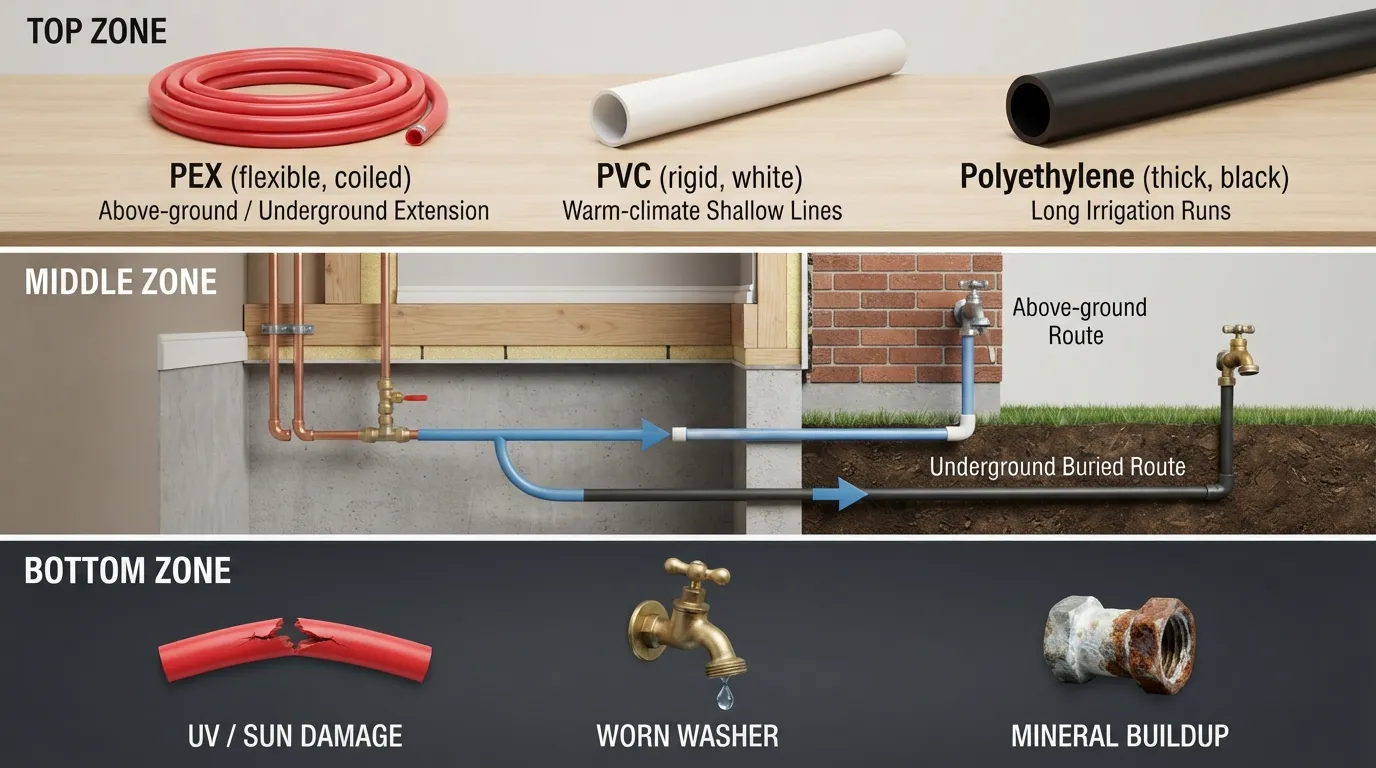
For most Florida homes, PEX pipe is the best all-around choice for outdoor water lines because it resists bursting, handles pressure changes well, and is easy to install for both above-ground and underground runs. PVC (Schedule 40) works well for above-ground or shallow lines in warm climates, while polyethylene (poly) pipe is typically used for longer underground runs like irrigation systems.
What Is an Outdoor Water Pipe?
An outdoor water pipe (also called an outdoor water line) is the piping that carries water from your home’s main supply out to your yard, garden, spigot, or an outbuilding. Getting the material, sizing, and installation right isn’t just about convenience — it directly affects whether you deal with leaks, low water pressure, or pipe failure down the road.
While a lot of general guidance online focuses on freeze protection, that’s less of a concern here in South Florida. Instead, our outdoor pipes have to deal with intense UV exposure, heat cycling, and often hard water — all of which wear down certain materials faster than others.
Types of Outdoor Water Pipes Compared
There are three main pipe materials used for outdoor water lines. Here’s how they compare:
| Pipe Type | Best Use | Key Advantage |
|---|---|---|
| PEX | Above-ground or underground direct line extensions | Flexible, easy to install, highly resistant to bursting |
| PVC (Schedule 40) | Above-ground or shallow underground lines in warm climates | Rigid, durable, solvent-cement connections |
| Polyethylene (Poly) | Main underground supply and irrigation lines | Heavy-duty, highly flexible, long-run friendly |
If you’re extending a line from your home to a new spigot or outbuilding, PEX is usually the simplest option to work with. For longer irrigation runs across your yard, poly pipe tends to be the more practical choice.
Outdoor Spigot vs. Hose Bib: What’s the Difference?
These terms get used interchangeably, and honestly, in most everyday conversation they mean the same thing. A hose bib is the technical/plumbing term for the outdoor faucet you attach a garden hose to. Spigot is simply the more common, everyday name for the same fixture. You’ll also hear it called an outdoor faucet or, in colder climates, a “sillcock” — specifically a “frost-free sillcock” when the shut-off valve is set back inside the wall to protect it from freezing.
What Size Pipe Do You Need for an Outdoor Spigot?
Most residential outdoor spigots connect to either 1/2-inch or 3/4-inch supply pipe. The right size depends on your existing plumbing and how much water flow you need — a 3/4-inch line will generally give you better pressure if you’re running multiple hoses or a sprinkler system off the same line. This is one of those details worth confirming against your home’s existing plumbing before you buy fittings, since matching the wrong size leads to leaks or restricted flow.
Common Outdoor Pipe and Spigot Problems in Florida
Since freezing isn’t the main threat here, the issues Miami homeowners run into with outdoor pipes tend to look different from what you’ll read in national guides:
- UV degradation: Constant sun exposure can make exposed PVC brittle over time, leading to cracks.
- Corrosion from hard water: Mineral buildup inside older metal fittings can restrict flow and cause leaks at joints.
- Worn washers and valve seats: A dripping spigot is often just a worn internal washer — a common and usually simple fix.
- Loose or corroded connections: Outdoor fittings exposed to moisture and heat can loosen or corrode faster than indoor plumbing.
- Low water pressure: Often caused by pipe sizing issues, buildup inside the line, or a partially closed shut-off valve.
Heads Up: A slow drip at an outdoor spigot might seem minor, but left unaddressed it can lead to water waste and, in some cases, water intrusion near your foundation if the leak is at the wall connection. It’s worth having it checked before it becomes a bigger repair.
Above-Ground vs. Underground Installation
Whether you run your outdoor line above ground or bury it depends on the purpose:
- Above-ground lines are easier to install and inspect, and are common for short runs to a single spigot.
- Underground lines are the better choice for irrigation systems or when you’re running water to a detached structure, since they keep the yard clear and protect the pipe from sun and impact damage.
If you do bury a line, it should be installed at a consistent, adequate depth and protected from being accidentally struck during future yard work — marking the line’s path is a simple step that saves headaches later.
DIY vs. Calling a Professional Plumber
Not every outdoor pipe issue needs a professional, but some situations are worth it. Here’s how I’d think about it:
✅ Usually Safe for DIY
- Replacing a worn spigot washer
- Swapping an old hose bib for a new one
- Attaching a spigot extender
- Installing an above-ground hose connection
📞 Call a Professional
- Running a new underground line
- Persistent leaks at the wall connection
- Low pressure affecting multiple fixtures
- Any work tying into your main water supply
If you’re unsure which category your situation falls into, it’s always reasonable to get a professional opinion first rather than guess. Our team at Miami Florida Plumbing can take a look and give you a straight answer on whether it’s a quick fix or something that needs a full repair.
Watch: Running an Outdoor Water Line
If you’re a visual learner, this video walks through the process of digging and running a water line out to a remote spigot in the yard — useful context before deciding whether this is a DIY project for you.
Key Takeaways
- PEX is generally the most practical outdoor pipe material for Florida homes.
- Spigot and hose bib refer to the same fixture — the terms are used interchangeably.
- In Miami, UV exposure and hard water cause more outdoor pipe issues than freezing does.
- Minor fixes like washer replacement are DIY-friendly; new lines and wall leaks call for a pro.
Frequently Asked Questions
What is a spigot extender?
A spigot extender is a fitting that attaches to your existing outdoor faucet to extend its reach or make it easier to connect a hose, often used when the original spigot sits too close to the ground or a wall.
What type of pipe is best for an outdoor spigot?
PEX is typically the best choice for connecting to an outdoor spigot thanks to its flexibility and resistance to pressure-related failure, though PVC is a solid option for shorter, above-ground runs.
What are common problems with hose bibs?
The most frequent issues are worn internal washers causing drips, corroded or loose fittings, and reduced flow from mineral buildup inside the valve.
What size pipe should I use for an outdoor water spigot?
Most homes use either 1/2-inch or 3/4-inch pipe, with 3/4-inch generally offering better flow if the line will feed multiple outlets.
Need Help With Your Outdoor Water Line?
If your outdoor spigot is leaking, your water pressure has dropped, or you’re planning a new line and want it done right the first time, our licensed team can help. We also handle related work like water heater replacement and the full range of residential plumbing services across Miami.
Have an Outdoor Pipe or Spigot Issue?
Get a straight answer from a licensed Miami plumber before it turns into a bigger repair.
Additional Resources
If you’re comparing specific products or want a deeper technical discussion on pipe selection, these resources may help: