
The Strangest Items Found in Drains: Real Finds from Pipes, Sewers and Storm Drains
The Strangest Items Found in Drains
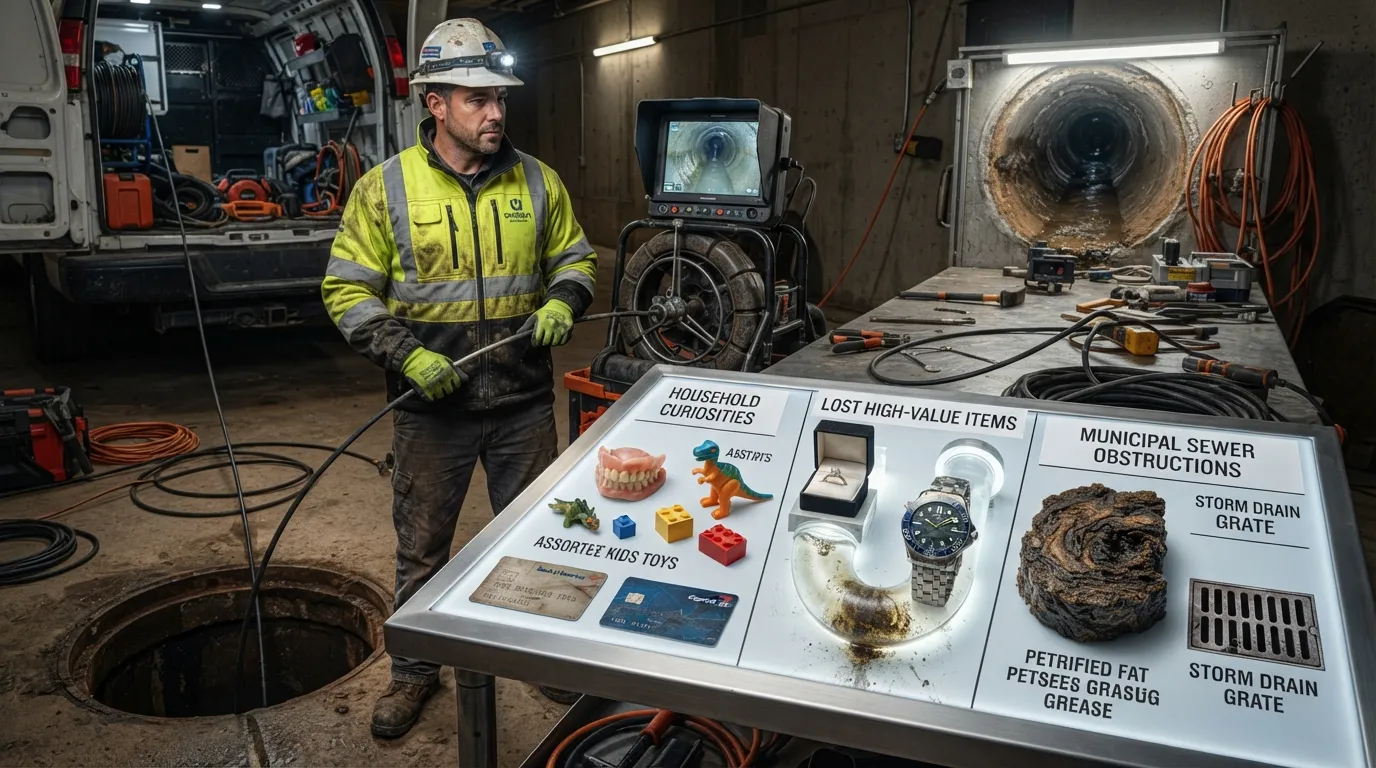
Drains across the globe frequently trap far more than wastewater. Municipal workers and residential plumbers routinely clear home pipes and storm drains blocked by massive fatbergs, lost dentures, oversized household debris, and even live animals such as alligators and snakes. These bizarre blockages stem from a mix of severe urban runoff, accidental drops, and improper disposal habits down indoor fixtures.
While basic hair clogs are routine, the hidden network beneath our floors and streets acts as an unintended time capsule of human activity. The sheer structural variety of sewer systems means if an object can fit down a drop—or migrate through storm lines—crews will eventually encounter it.
Below, we break down the most remarkable real-world drain finds, unpack how these items navigate your pipes, reveal the critical everyday items you should never flush, and detail exact steps to take if a valuable object slips down your line.
Strangest Finds at a Glance
Sewer systems and residential plumbing lines hold some of the most unexpected discoveries ever documented by municipal crews and drain specialists. From historical artifacts to living creatures, the scope of items pulled from pipes highlights how interconnected—and vulnerable—our drainage networks are.
Top 10 Strangest Things Found in Drains and Sewers
Live Alligator: Rescued from a storm drain main in Paris, France, where it had adapted to surviving on local waste and rat populations.
Vintage Mini Cooper Car: Extracted by utility workers from a massive municipal sewer pipe in London, England.
Civil War Cannonball: Discovered by a residential plumber wedged tight inside a home drain line in Mississippi.
Live Cow: Located by emergency crews under a manhole cover after falling through a breach in China.
130-Ton Fatberg: Broken apart over nine weeks by sewer crews inside a Victorian-era trunk sewer in Whitechapel, London.
Full Set of Dentures: Recovered by drain technicians lodged at a structural elbow in a residential sewer main.
Rolex Watches & Diamond Rings: Fished out of collection vats by treatment plant operators processing city intake lines.
Prosthetic Leg: Discovered during routine maintenance inside a rural septic tank system.
Motocross Bike: Pulled out by public works personnel clearing a choked stormwater culvert.
Intact Lightbulbs: Extracted unbroken from household toilet waste pipes by residential plumbing technicians.
Quick-Reference Summary of Major Sewer Discoveries
| Item | Primary Location Found | Pipe & System Type |
| Live Alligators & Reptiles | City storm drains & municipal lines | Storm Drain / Sewer Main |
| Livestock (Sheep, Cows, Pigs) | Rural access points & manhole shafts | Sewer Main / Municipal Line |
| Fatbergs & Grease Masses | City center distribution trunks | Sewer Main |
| Vehicles (Mini Cooper, Motocross Bikes) | Major urban drainage channels | Storm Drain / Primary Culvert |
| High-Value Items (Rolex, Diamond Rings, Cash) | Treatment screens & residential junctions | Home Pipe / Sewer Main |
| Household Curios (Dentures, Lightbulbs, Toys) | Branch line traps & cleanout points | Home Pipe |
Strangest Animals Found in Drains and Storm Drains
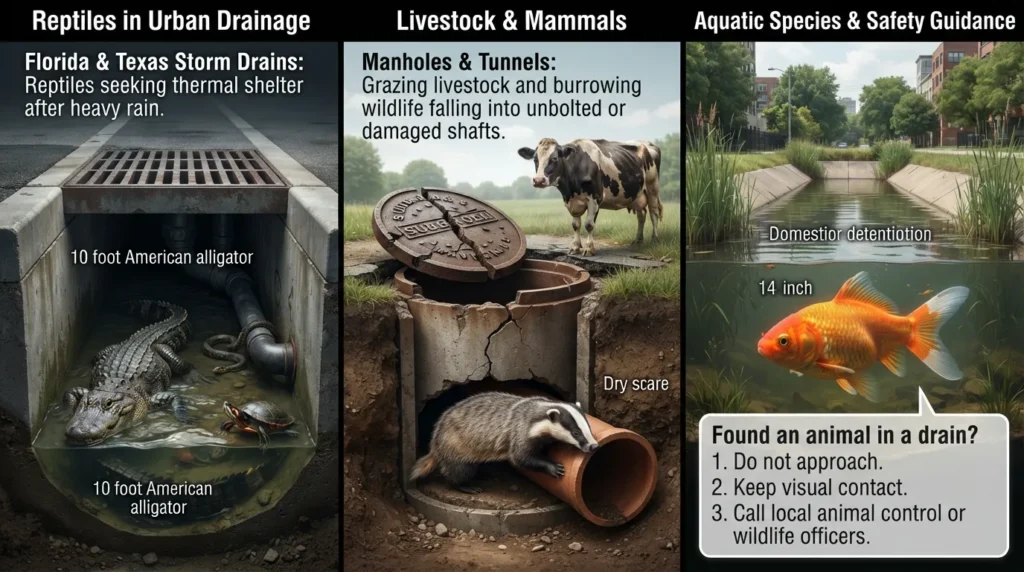
Subterranean drainage networks act as accidental wildlife corridors, trapping or harboring animals that stray into subterranean pipes. Urban runoff, open access shafts, and search for shelter draw various species deep into storm drains and sewer main networks.
Alligators in Florida and Texas Storm Drains
Reptiles frequently utilize storm drains as thermal buffers and hidden hunting routes, particularly across Florida and Texas. During heavy rain events, rising water levels push alligators out of overcrowded retention ponds and canals into nearby municipal stormwater systems.
Size and Scale: While internet urban legends claim massive monsters lurk beneath every city, actual rescues in southern states typically involve alligators ranging from 6 to 10 feet long. However, wildlife officers have occasionally documented larger specimens up to 11 to 14 feet trapped in primary drainage culverts.
Behavioral Drivers: Reptiles are cold-blooded creatures that seek out the dark, insulated climate of subterranean concrete pipes during extreme seasonal weather, using drainage grates to ambush prey like rodents and waterbirds.
Livestock Rescued from Manholes and Tunnels
Livestock incidents occur surprisingly often in suburban-rural fringe zones where pastures border municipal drainage basins. Open, damaged, or unbolted manholes pose a direct hazard to heavy grazing animals.
Cows: Full-grown cattle weighing over 1,000 pounds occasionally slip hoof-first into collapsed manhole shafts or wash into wide concrete drainage tunnels during flash floods. These high-stakes rescues require municipal cranes, heavy winch harnesses, and emergency technical extraction teams to lift the animal to safety.
Sheep: Driven by herd movement, sheep frequently wander into open stormwater culverts during dry spells, traveling hundreds of yards into darkness before getting lost or trapped by narrow pipe bends.
Snakes, Turtles, Badgers, and Goldfish
Smaller wildlife species actively exploit subterranean drainage environments for nesting, feeding, or refuge.
Snakes and Turtles: Snapping turtles, cottonmouths, and invasive pythons navigate urban pipes regularly, entering through catch basins to feed on trapped frogs and insects.
Badgers and Burrowers: Nocturnal burrowing mammals like badgers expand their underground territories by tunneling into compromised terracotta sewer walls or nesting in dry storm main junctions.
Goldfish Growth Surge: Flushed or released aquarium goldfish can survive and dramatically enlarge when they reach open stormwater holding basins or overflow reservoirs. Rich in organic waste, insect larvae, and lacking natural predators, these domestic carp can reach lengths over 14 inches and weigh over 3 pounds.
What to Do If You See an Animal in a Drain
Do Not Approach or Touch: Never reach into a drain cover, catch basin, or pipe opening to pull out a trapped animal. Stressed, injured, or territorial wildlife can inflict serious bites, scratches, or envenomation.
Maintain Visual Contact: Keep a safe distance while monitoring the exact grate or manhole cover where the animal was spotted so you can direct responders.
Call Local Authorities: Immediately contact local animal control, public works departments, or state wildlife conservation officers. These agencies possess specialized hoist equipment, net systems, and personal protective gear designed for safe subterranean animal extractions.
Giant Objects and Fatbergs: What Gets Stuck in Municipal Sewers
Massive structural blockages represent the most dangerous and costly challenges faced by urban drainage managers. When high-volume waste, improper commercial disposal, and large solid debris collide, entire municipal pipe networks can grind to a halt.
Vehicles in the Sewer Main
Subterranean main lines in historic European cities were built large enough for maintenance crews to walk through, making them wide enough to trap full-sized vehicles:
Vintage Mini Cooper: Water utility workers in London, England, famously encountered a discarded vintage Mini Cooper wedged inside a major trunk sewer line.
Motocross Bikes and Mopeds: Public works technicians routinely use heavy winch trucks to haul wrecked motocross bikes and scooters out of stormwater culverts, where they were illegally dumped or washed down during extreme storm surges.
What Is a Fatberg?
A fatberg is a rock-like subterranean mass formed in wastewater systems when un-ingested fats, oils, and grease (FOG) combine with non-biodegradable solids—primarily wet wipes, sanitary items, and paper towels. Over time, chemical saponification hardens this mixture into a concrete-hard deposit that chokes off water flow across entire sewer main lines.
How Fatbergs Form and Why They Need Pickaxes to Clear
Fatbergs expand as warm grease enters cool underground pipes, coating the crown and walls of the conduit. Wet wipes and debris stick to the tacky oil surface, trapping more fat in a continuous feedback loop.
The Whitechapel Giant: In 2017, Thames Water crews in London discovered a massive fatberg in Whitechapel measuring 250 meters (820 feet) long and weighing approximately 130 metric tons—equivalent to eleven double-decker buses.
Extraction Effort: Clearing such a mass requires highly specialized equipment. Utility crews must wear full biohazard suits and work in cramped underground quarters, using pickaxes, high-pressure jetting hoses, and industrial vacuum tankers over several consecutive weeks to break the petrified grease apart inch by inch.
How Restaurants and Businesses Can Prevent Grease Buildup
Commercial kitchens are the primary source of underground grease accumulation. Establishing strict waste management protocols keeps municipal lines clear and protects facilities from catastrophic backup hazards.
Install and Service Grease Interceptors: Commercial kitchens must install code-compliant grease traps and schedule professional cleaning to prevent hot cooking oils from washing into city infrastructure.
Schedule Routine Line Maintenance: Businesses require specialized commercial plumbing services to inspect internal lines, test backflow valves, and keep grease interceptors operating within municipal compliance standards.
Clear Organic Buildup Hydro-Jetting: High-volume kitchens should utilize regular hydro-jetting and professional drain cleaning to strip grease film off pipe walls before it hardens into solid deposits.
What Utilities Say Is Most Unusual
Municipal operators see thousands of strange items, but specific discoveries stand out for public works departments. According to the San Francisco Public Utilities Commission (SFPUC), some of the most unusual things found in the sewer include:
A $100 Bill: Intact cash periodically makes its way through collector screens into municipal treatment plants.
A Dozen Super Bouncy Balls: Plant operators at San Francisco’s Oceanside Treatment Facility discovered dozens of toy bouncy balls ricocheting off fine intake screens, turning a filter room into a giant arcade.
San Francisco Public Utilities CommissionA Baby Seal: In a rare wildlife encounter, a live baby seal was safely rescued after being swept into a wastewater pretreatment bar screen.
San Francisco Public Utilities Commission
Strangest Things Found in Home Plumbing
Residential plumbing systems regularly capture bizarre personal items that slip past everyday notice. Because home pipes feature narrow bends and tight structural traps, even small misplaced objects can wedge tight and trigger major system blockages.
Dentures and Other Items Knocked Into Toilets and Sinks
Dentures rank among the most frequently recovered medical items in household plumbing. They typically slip down sink drains during morning routines or fall from laps into toilet bowls before flushing occurs. When a foreign object enters a toilet, it often wedges hard into the internal trapway, requiring professional toilet repair to dismantle the fixture and retrieve the item safely.
Valuables Plumbers Recover: Diamond Rings, Rolex Watches, and Cash
Residential plumbers and wastewater technicians routinely rescue high-value personal items that owners accidentally wash away:
Diamond Rings: Engagement and wedding rings frequently slide off soapy hands over kitchen sinks or bathroom drains, settling in the under-sink P-trap before they reach the main sewer line.
Rolex Watches & Cash: Luxury timepieces and paper currency occasionally fall off bathroom countertops directly into open drains or get swept down during hurried cleaning routines.
Items Kids Flush and Employees Hide: Toys, Lightbulbs, Credit Cards, and Mini Liquor Bottles
Household drains and commercial office lines act as accidental catch-alls for novelty items, contraband, and child playthings. Plumbers frequently extract plastic action figures, intact glass lightbulbs, discarded credit cards, and miniature liquor bottles flushed down residential sewer lines.
Why Small Objects Cause Big Clogs
Small objects rarely cause an immediate, total blockage on their own. Instead, they act as structural anchors inside residential piping:
Debris Catching: A misplaced toy, toothbrush, or credit card creates an irregular surface inside smooth pipes.
Secondary Buildup: Hair strands, soap scum, grease, and wet wipes snag on the protruding object, compounding over time until water flow is completely restricted.
Resolution: When minor blockages resist standard plunging, homeowners should rely on professional drain cleaning services to clear out the core obstruction safely without damaging internal pipe walls.
Real Stories from the Field: What Plumbers Actually Find
Field experience reveals that subterranean plumbing systems and residential pipes harbor an incredible array of unexpected items. While training manuals focus on grease, scale, and root intrusion, frontline technicians frequently encounter bizarre physical obstructions that challenge standard diagnosis.
Strangest Items Our Plumbers Have Pulled from Drains
The Sump Pump Mystery: A South Florida service team tracked down a severe commercial backup only to extract an entire intact set of car keys and a heavy key fob wedged directly inside the discharge impeller.
Bathroom Disasters: During a routine residential service call in Miami, a technician recovered a full set of metal-backed ceramic false teeth lodged tightly inside a main sewer cleanout fitting.
The Playground Trap: While scoping a slow residential drain line with a high-resolution drain camera, field technicians discovered a collection of plastic toy action figures tightly wedged past a kitchen branch line sanitary tee.
Why Strange Items Get Flushed or Dropped
Accidental Slips: High-value items like rings, watches, and personal accessories frequently slip off soapy fingers during routine handwashing or sink cleaning.
Child Curiosity: Toddlers and young children frequently experiment by dropping toys, household items, and novelties down open toilet bowls or floor drains.
Disguising Contraband: In commercial and multi-family housing facilities, occupants occasionally flush miniature liquor bottles, credit cards, or small prohibited items to hide them quickly during unexpected inspections.
Lessons Technicians Want Homeowners to Know
Always Keep Drain Covers Secured: Installing mesh strainers in sinks, showers, and utility basins prevents small personal items from slipping into vulnerable P-traps.
Never Use Toilets as Trash Cans: Treat toilets strictly for human waste and toilet paper; flushing wipes, hygiene products, or toys almost always results in severe fixture blockages.
Address Slow Drains Immediately: If a drain begins to empty sluggishly, stop using the fixture immediately and inspect the trap before a small trapped object catches enough secondary debris to cause a total pipe occlusion.
How Do These Items End Up in Pipes, and What Damage Do They Cause?
Understanding the entry points and structural impact of foreign objects helps homeowners prevent catastrophic plumbing failures. When non-flushable debris interacts with standard household wastewater flow, the resulting stress can destroy underground infrastructure.
The Most Common Ways Objects Enter Drains
Stormwater Runoff & Surface Openings: Heavy rainfall pushes street litter, small rocks, yard waste, and animals into unmeshed storm grates, catch basins, and open yard cleanouts.
Accidental Domestic Drops: Vanity counter items, jewelry, hygiene products, and small kitchen utensils slip into un-screened sink drains and open toilet bowls during daily use.
Misguided Flushing Habits: Users frequently mistake flushable labeling on wipes, feminine products, and paper towels as safe for plumbing, leading to gradual accumulation inside main lines.
Root Intrusion & Pipe Compromise: Pre-existing cracks in aging clay or cast iron pipes attract tree roots, creating open gaps where dirt, rocks, and outdoor debris enter the system.
What Happens Inside the Pipe
When a foreign object enters a wastewater line, it initiates a distinct sequence of structural failures within the piping network:
Partial Blockage Stage: The object lodges at a directional fitting, pipe elbow, or low spot (belly), narrowing the pipe diameter and slowing down wastewater flow.
Debris Snagging Stage: Toilet paper, hair, and grease catch on the lodged object’s edges, rapidly compounding the initial restriction.
Full Sewer Backup Stage: Water flow halts entirely, forcing raw sewage backwards toward low-lying home fixtures, drain basins, and basement floors.
How Plumbers Find the Cause: Drain Camera Inspections
Locating solid obstructions buried deep underground requires specialized optical equipment rather than guesswork:
CCTV Drain Camera Inspections: Technicians feed a high-definition, self-leveling sewer camera on a flexible push-cable through a cleanout access port into the main line.
Real-Time Diagnostics: The camera transmits live video to a monitor, revealing the exact location, material makeup, and depth of the blockage without damaging surrounding property.
Targeted Solutions: Identifying whether the obstruction is a toy, tree root mass, or hardened grease allows technicians to select precise clearing methods, such as augering or high-pressure hydro jetting.
Comprehensive Line Testing: Homeowners experiencing recurring or unexplained backups can schedule a detailed sewer line inspection to pinpoint hidden foreign objects and evaluate overall pipe integrity.
Hidden Plumbing Damage Blockages Can Cause
Solid objects lodged inside drains do far more than interrupt water flow; they subject the entire plumbing framework to ongoing mechanical stress:
Joint Separation & Pipe Cracks: Standing water creates immense hydraulic pressure behind a dense blockage, pushing joint seals apart and cracking aged pipes.
Slow Sub-Slab Leaks: Trapped wastewater slowly seeps out through compromised joints, eroding soil beneath concrete slabs and causing structural settling.
Sewer Gas Intrusion: Severe pressure imbalances can siphon water out of home P-traps, allowing dangerous hydrogen sulfide sewer gases to vent into living spaces.
Early Detection: Property owners who notice slow drains or damp foundation spots should utilize professional leak detection services to find and repair pipe breaches before extensive structural damage occurs.
What Should Never Go Down Your Drain?
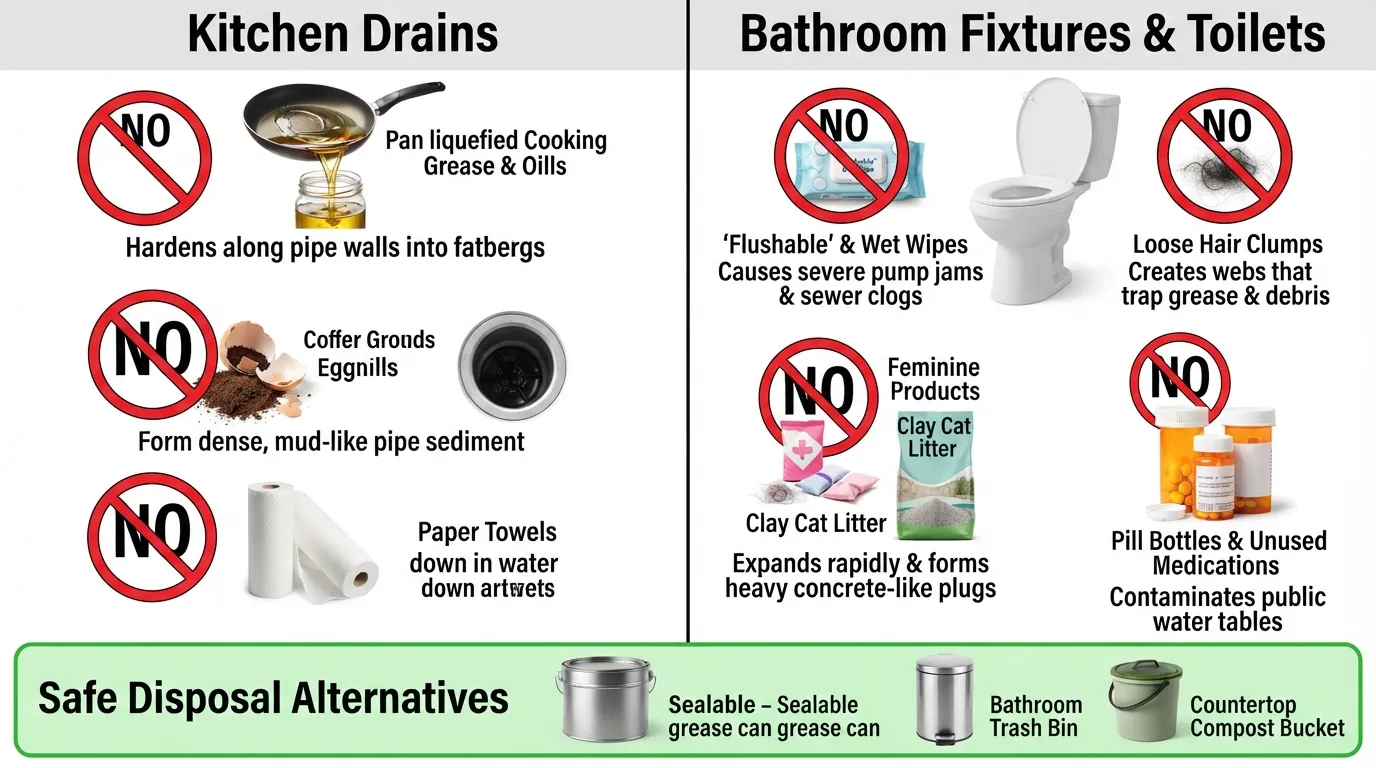
Protecting home plumbing and public sewer infrastructure requires knowing what materials safely break down in water and what materials trigger severe blockages. Many everyday items labeled as disposable actually congeal, expand, or weave into dense obstructions inside kitchen drains and toilet lines.
10 Things You Should Never Put Down the Drain
Cooking Grease, Oils, and Butter: Cooled cooking grease hardens along pipe walls, capturing passing debris and creating dense, concrete-like fatberg blockages.
Wet Wipes: Synthetic fibers in wet wipes do not disintegrate in water, tangling inside main lines to form massive structural clogs.
“Flushable” Wipes: Despite marketing claims, flushable wipes fail to dissolve quickly, snagging on pipe joints and accumulating into severe obstructions.
Loose Hair: Strands catch on internal pipe joints and roughness, creating net-like webs that trap soap scum and solid waste.
Coffee Grounds: Fine grounds aggregate inside P-traps, settling into a dense, mud-like sediment that completely restricts wastewater flow.
Eggshells: Even when processed through a garbage disposal, eggshells create abrasive, heavy sand-like particles that settle in low pipe bends and stick to grease buildup.
Paper Towels and Tissues: Thicker paper towels are engineered for strength when wet, refusing to dissolve like standard toilet paper.
Feminine Hygiene Products: Cotton materials expand significantly upon absorbing moisture, quickly wedging tight inside narrow toilet discharge pipes.
Medications and Pharmaceuticals: Chemical compounds bypass standard municipal water treatment filters, contaminating local water tables and aquatic ecosystems.
Cat Litter (Including Flushable Types): Clay-based and silica cat litter absorb water and clump into heavy, cementitious plugs deep inside home drains.
What About “Flushable” Wipes?
Marketing labels on consumer wipe packaging often conflict directly with plumbing reality. While flushable wipes will clear the toilet bowl upon flushing, their synthetic material composition prevents them from breaking down rapidly in water.
The Disintegration Gap: Standard toilet paper begins dissolving into tiny cellulose fibers within seconds of water immersion. Flushable wipes retain their tensile strength for weeks.
Pump and Impeller Jamming: When wipes travel down municipal lines, they wrap around wastewater lift station pumps, burning out motors and triggering costly citywide sewage backups.
System Safeguards: If wipes or non-flushable items have caused persistent sluggishness in your home pipes, scheduling a preventative drain cleaning can clear out built-up fibers before they cause a total system shutdown.
Safe Disposal Alternatives
Dispose of Oils in the Trash: Allow cooking grease to cool in a sealable jar or tin can, then discard it directly into your solid waste bin.
Trash All Wipes and Personal Care Items: Keep a small wastebasket next to toilets and vanity sinks specifically for wipes, cotton swabs, and paper towels.
Compost Kitchen Scrap Organics: Collect coffee grounds, eggshells, and food scraps in a countertop compost bin rather than washing them down the kitchen drain.
Utilize Community Take-Back Programs: Drop off unused medications at local pharmacies or authorized public safety stations to protect regional water sources.
Bugs in Your Drains: Drain Flies, Bathroom Mites, and Sink Bugs
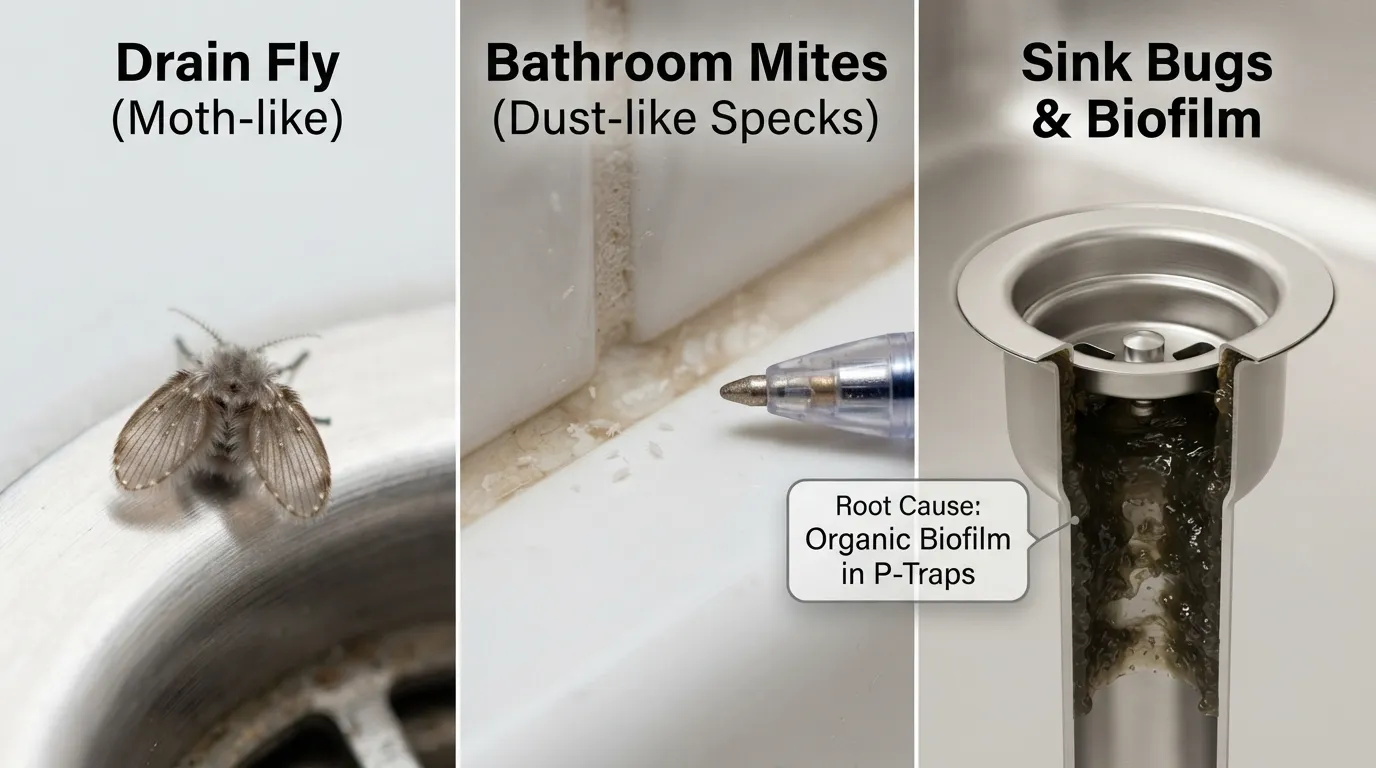
Persistent insect activity around household sinks and showers often indicates an underlying buildup of organic matter within your piping. Moisture, standing water, and decaying waste inside unmaintained P-traps create ideal breeding grounds for specialized drain bugs.
What Types of Bugs Can Be Found in Drains?
Drain Flies (Filter Flies / Moth Flies): Small, dark insects that feed on the gelatinous biofilm coating internal pipe walls.
Drain Gnats & Phorid Flies: Tiny, fast-moving flies attracted to decaying organic matter, sewage leaks, and moist soil beneath compromised drains.
Bathroom Mites & Springtails: Microscopic pests that thrive in humid environments, feeding on mold and fungal growth along damp tile grout and drain rims.
Cockroaches: Larger pests that enter homes through unsealed sewer lines and dry P-traps in search of water and organic debris.
What Do Drain Bugs and Bathroom Mites Look Like?
Drain Flies: Measure 1.5 to 5 mm long with fuzzy, moth-like bodies and light-colored, heart-shaped wings held flat over their backs when at rest.
Bathroom Mites: Extremely tiny (under 1 mm), white or translucent arachnids that appear as slow-moving specks along moist porcelain surfaces.
Springtails: Slender, wingless insects ranging from 1 to 2 mm in color from white to dark grey, capable of jumping short distances when disturbed.
What Are the Tiny Bugs That Look Like a Speck of Dirt?
The tiny, dark specks moving slowly near your sink or shower drain are typically mold mites, springtails, or early-stage drain fly larvae.
Because they measure less than a millimeter, they often look like static flecks of dust or dirt until they begin crawling. These pests feed directly on mold spores, mildew, and decaying hair caught inside the top lip of the drain opening.
Will Bleach Get Rid of Drain Flies?
No, poured bleach is ineffective for long-term drain fly elimination. Bleach is a liquid that flows straight past the problem without removing the thick, gelatinous biofilm lining the pipe walls where drain fly eggs and larvae reside.
Survival in Biofilm: Drain fly larvae live deep inside organic sludge; liquid bleach merely washes over the top surface without penetrating the breeding mass.
Pipe Damage Risks: Pouring large amounts of bleach can degrade older metal pipes and destroy beneficial bacteria in septic systems.
Chemical Hazard Warning: Never mix bleach with ammonia, vinegar, or acid-based drain cleaners, as doing so releases toxic chloramine or chlorine gas into your home.
What to Pour Down the Drain to Stop Bugs
To eliminate drain bugs safely, you must break down the organic biofilm lining the pipe without damaging your plumbing system:
Enzyme-Based Drain Cleaners: Use non-corrosive, bacterial or enzymatic drain cleaners designed to digest organic sludge, hair, and soap scum over several hours.
Baking Soda and Vinegar Flush: Pour 1/2 cup of baking soda followed by 1 cup of white vinegar down the drain. Cover the opening for 15 minutes, then flush with boiling water to scrub light buildup.
Physical Scrubbing: Remove the drain cover and clean the top 3 to 6 inches of the pipe using a stiff pipe brush and dish soap to physically destroy egg-laying sites.
When Bugs Signal a Deeper Drain Problem
If insects continue emerging despite thorough cleaning, the infestation likely stems from a structural plumbing failure deeper in the line.
Broken or Cracked Pipes: Persistent phorid flies or drain gnats often indicate a subterranean pipe crack under your foundation slab, where leaking sewage creates moist soil conditions.
Dry or Siphoned P-Traps: Unused guest bathroom drains or siphoned traps allow sewer gases and pests to move freely from the main line into living spaces.
Resolving Persistent Infestations: When home remedies fail to eliminate recurring sink bugs, schedule a professional drain cleaning to scour away stubborn subterranean biofilm and inspect lines for hidden structural leaks.
What to Do If Something Valuable or Strange Goes Down the Drain
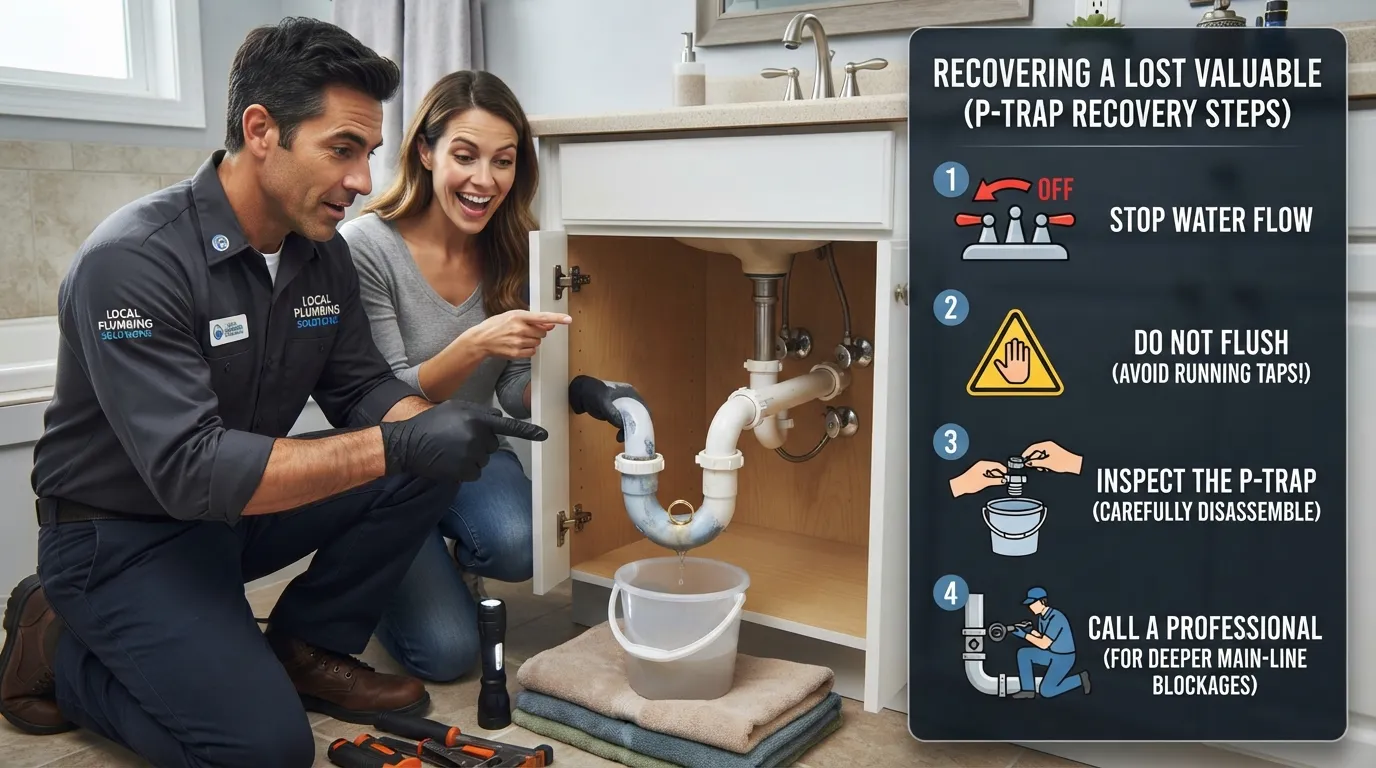
Dropping a valuable item down a drain or dealing with a sudden, strange blockage requires immediate, strategic action. Taking the right steps in the first few minutes can mean the difference between an easy recovery and a costly, destructive plumbing emergency.
Step 1: Stop Using the Fixture
The moment a ring, toy, or foreign object falls into a sink, tub, or toilet, freeze immediately:
Turn Off the Faucet: Shut off the water supply handle under the sink or stop using the fixture instantly to prevent water from washing the item deeper into the main sewer line.
Stop Toilet Usage: Do not flush the toilet under any circumstances. Flushing creates a powerful siphon effect that pushes solid objects past the accessible internal trapway.
Step 2: Don’t Flush or Run Water Repeatedly
Running water or flushing again to “see if it clears” is the single most common mistake homeowners make:
Sewer Main Migration: Water flow forces light or buoyant objects into the main sewer line, making recovery significantly more difficult and expensive.
Compounding Clogs: If the object is lodged, running additional water fills the pipes, leading to an immediate local overflow and potential water damage to surrounding cabinets or flooring.
Step 3: What You Can Safely Try Yourself
If an item slips down a bathroom or kitchen sink drain, you may be able to retrieve it from the P-trap before taking more invasive action:
Place a Bucket Under the Drain: Position a small bucket beneath the curved PVC or metal pipe (P-trap) under your sink to catch trapped wastewater.
Unscrew the Slip Nuts: Turn the plastic or metal slip nuts on both ends of the curved U-bend pipe by hand or using slip-joint pliers.
Inspect the Trap: Carefully drop the pipe segment and check for your ring or lost item inside the standing water trap.
Know Your Limits: Avoid shoving wire coat hangers down the line, as this can push items past the P-trap or puncture older plastic and copper pipes.
Step 4: Know When to Call a Professional
If an item passes beyond the under-sink P-trap, gets stuck inside a toilet trapway, or causes a dense, unmovable clog, DIY methods will no longer work:
Avoid Mechanical Snakes: Inserting a motorized or manual drain snake without seeing inside the pipe can scratch, crush, or permanently damage delicate jewelry and push foreign objects deeper into underground lines.
Camera Inspection: Professional plumbing technicians utilize HD video cameras to pinpoint the exact location of lost items without damaging your pipes.
Schedule Retrieval Services: If your valuable item is unreachable, you can directly book a plumber to perform a safe optical inspection and mechanical recovery.
Why Chemical Drain Cleaners Are Not the Answer for Solid Objects
Liquid chemical drain openers are formulated strictly to dissolve hair, soap scum, and light organic material:
Incomplete Cleansing: Caustic chemicals cannot dissolve metal rings, dense plastics, glass lightbulbs, or synthetic wet wipes.
Hazardous Standing Pools: Pouring acid or lye into a clogged line creates a bowl full of toxic, burning chemical water that presents severe hazards to technicians attempting manual extraction later.
Pipe Degradation: Caustic solutions produce intense heat (exothermic reactions) that can warp PVC pipes, melt plastic joints, and soften older cast-iron lines.
Plumbing Emergencies: Overflowing Toilet, Sewage Backup, Water Not Draining
When a strange blockage causes wastewater to reverse direction, immediate professional intervention is required to safeguard your home’s hygiene:
Shut Off Main Water: Locate your home’s main water shutoff valve or the local shutoff knob behind the overflowing toilet and turn it clockwise until fully closed.
Avoid Health Hazards: Raw sewage contains dangerous pathogens and bacteria; keep children and pets away from standing wastewater.
Dispatch Immediate Assistance: For severe backups or complete mainline blockages, contact an emergency plumber to inspect the system, clear the obstruction, and restore safe wastewater flow.
Warning Signs of a Blocked or Damaged Drain
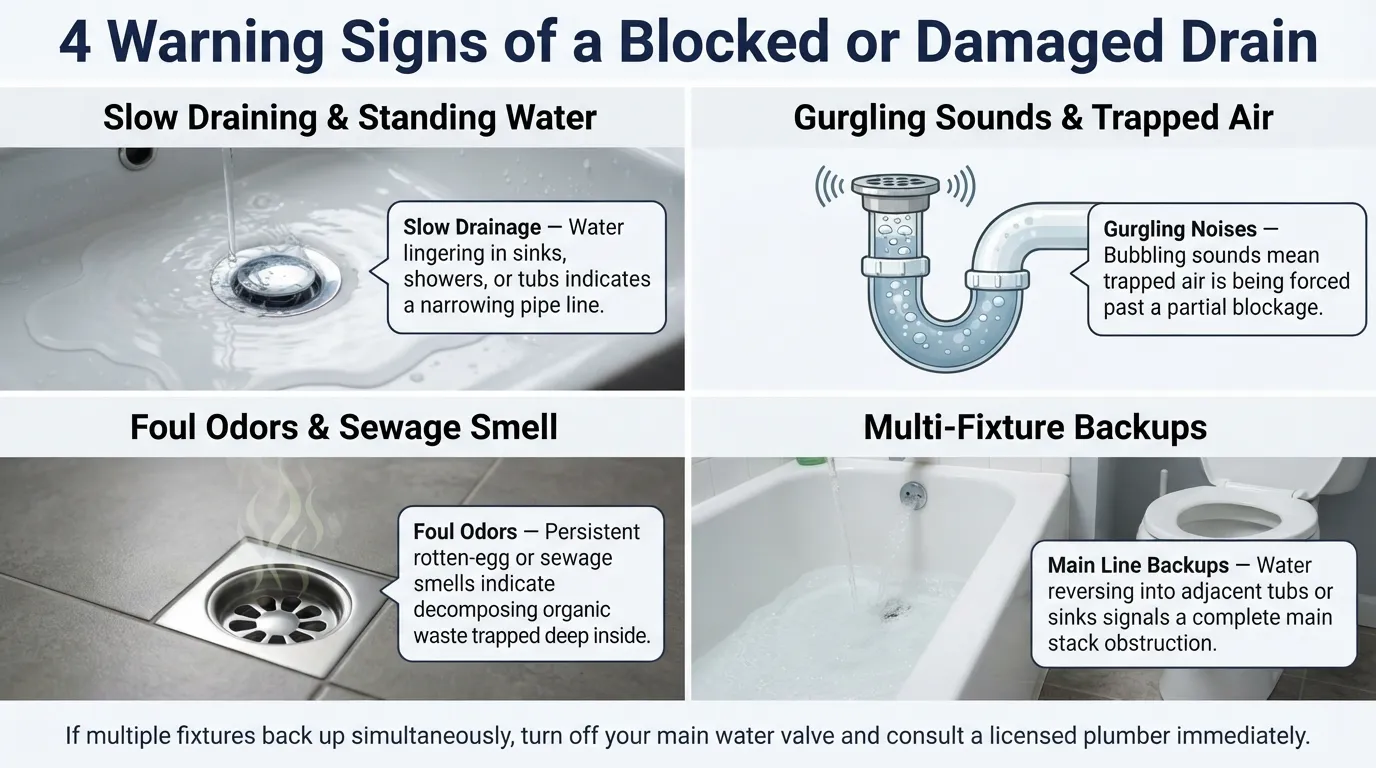
Recognizing early warning signs of drain distress helps homeowners address minor obstructions before they escalate into destructive system failures. Strange objects, grease accumulation, and structural pipe damage always show clear physical symptoms before total wastewater blockages occur.
Slow Draining and Gurgling Sounds
The earliest indicator of a foreign object or buildup inside your plumbing is a noticeable shift in how wastewater leaves your fixtures:
Slow Drainage: Water pooling around your feet in the shower or lingering in a sink indicates that a partial obstruction is constricting the pipe’s internal diameter.
Gurgling Sounds: Glug-glug or bubbling noises coming from drains after running water signal trapped air pockets. Wastewater forced past a restricted pipe creates a vacuum effect, pulling air through nearby P-traps.
Recurring Clogs in Multiple Fixtures
When individual home fixtures frequently clog despite routine plunging, the restriction is rarely isolated to a single local trap:
Cross-Fixture Effects: Running the bathroom sink may cause water to bubble up in the tub, or flushing a toilet might cause water to back up into the shower drain.
Shared Branch Line Blockages: These symptoms point to a dense obstruction—such as flushed wipes, toys, or accumulated grease—lodged inside a shared drain stack or secondary branch line.
Foul Odors and Backups
Persistent plumbing smells and wastewater reversals indicate advanced drainage failure that requires prompt attention:
Sewage Smells: A rotten-egg odor emitting from sink or floor drains means trapped organic waste is decomposing behind a blockage, or sewer gas is passing through a siphoned P-trap.
Visible Backups: Dark, dirty water or sewage reversing into low-lying fixtures—such as basement floor drains or ground-floor bathtubs—is a sign of complete line occlusion.
When It’s a Main Sewer Line Problem
When every fixture throughout a home fails simultaneously, the obstruction resides inside the main sewer line connecting the property to municipal infrastructure:
System-Wide Backups: Flushing any toilet in the house causes immediate water backups across ground-floor drains and shower basins.
Unexplained Yard Conditions: Soggy, overly green patches of grass or sudden foul-smelling depressions in the lawn indicate an underground sewer line crack caused by pressure from severe blockages or root intrusions.
Restoring System Flow: If you observe multiple warning signs or suspect a main stack obstruction, utilizing comprehensive sewer line services will identify the root cause and restore full system capacity.
Frequently Asked Questions
What are the strangest things found in drains?
The strangest items pulled from municipal and residential drains include live alligators, vintage Mini Coopers, Civil War cannonballs, 130-ton fatbergs, full sets of dentures, diamond rings, Rolex watches, intact lightbulbs, and credit cards.
What can be found in sewers?
Sewers contain a mix of municipal wastewater, congealed cooking fats, wet wipes, lost personal valuables, cash, construction debris, street litter, motorbikes, and various urban wildlife such as snakes, rats, turtles, and alligators.
What are 10 things that should never be put down the drain?
Never flush or wash down: cooking grease, wet wipes, flushable wipes, loose hair, coffee grounds, eggshells, paper towels, feminine hygiene products, unused medications, or clay cat litter.
What types of bugs can be found in drains?
Common drain insects include fuzzy moth-like drain flies, fruit flies, phorid flies, drain gnats, cockroaches, springtails, and tiny microscopic bathroom mold mites that feed on organic pipe biofilm.
What do bathroom mites or drain bugs look like?
Drain flies look like tiny, fuzzy moths with heart-shaped wings. Bathroom mites appear as microscopic, white or translucent slow-moving specks that resemble moving dust along moist tile and drain surfaces.
What can I pour down the drain to stop bugs?
Pour an enzyme-based organic drain cleaner down the line to digest the gelatinous biofilm breeding ground. Alternatively, flush a mixture of baking soda, vinegar, and boiling water to scour light organic waste.
Will bleach get rid of drain flies?
No. Liquid bleach washes quickly over pipe walls without penetrating or removing the thick gelatinous organic sludge where drain fly larvae live and breed.
What is the weirdest thing a plumber has found in a toilet or drain?
Technicians routinely report pulling intact ceramic tile spacers, stacks of credit cards wedged inside P-traps, vintage silver spoons inside root masses, and live rodents trapped inside shower drains.
What is the “135 rule” in plumbing?
The 135 rule is a building code standard stating that a horizontal drainage pipe cannot make a aggregate direction change exceeding 135 degrees (such as a 90-degree elbow plus a 45-degree fitting) without installing an accessible cleanout port or vent connection. Sharp, unvented turns slow water velocity, causing solids and grease to accumulate into chronic, recurring clogs.
Conclusion and Call to Action
The hidden piping networks running beneath our properties collect a remarkable array of history, lost personal belongings, and unusual debris. Understanding how these blockages form allows homeowners to adopt simple disposal habits that protect their plumbing lines from catastrophic backups.
Final Thoughts: Strange Finds, Simple Prevention
While the strangest items found in drains make for fascinating stories, they also highlight the vulnerability of residential and municipal wastewater systems. Guarding your sinks and toilets against non-flushable waste is the most effective approach to proactive plumbing prevention. Establishing simple household rules keeps your water flowing freely and prevents unexpected structural pipe repairs.
Need Help With a Stubborn Clog or Lost Item?
If a valuable item slipped down your drain or you are dealing with persistent clogged drains, our experienced technicians are ready to help. We utilize advanced camera diagnostic equipment to locate subterranean obstructions and restore your system without causing unnecessary pipe damage. Explore our plumbing services to learn how we protect homes across Miami, or book a plumber directly to schedule your inspection today.
Main Services
Related Posts
Need a Plumber in Miami?
Schedule service online or speak directly with the EZ Plumbing team.
Owner-Led Local Service
Know who is behind the business before you request service. The owners, contact line and Miami service pages are published clearly.
- Named business owners
- Direct phone and social channels
- Local Miami service information
Clear Help Before You Book
Review the relevant service page, contact the team directly and use the booking page when you are ready—without relying on vague claims.
- Service-specific information
- Direct questions before scheduling
- Clear online booking route