Roto-Rooter Jingle Turns 67: The Full Story of America’s Famous Plumbing Jingle
Roto-Rooter Jingle Turns 67
When Did the Roto-Rooter Jingle Debut?
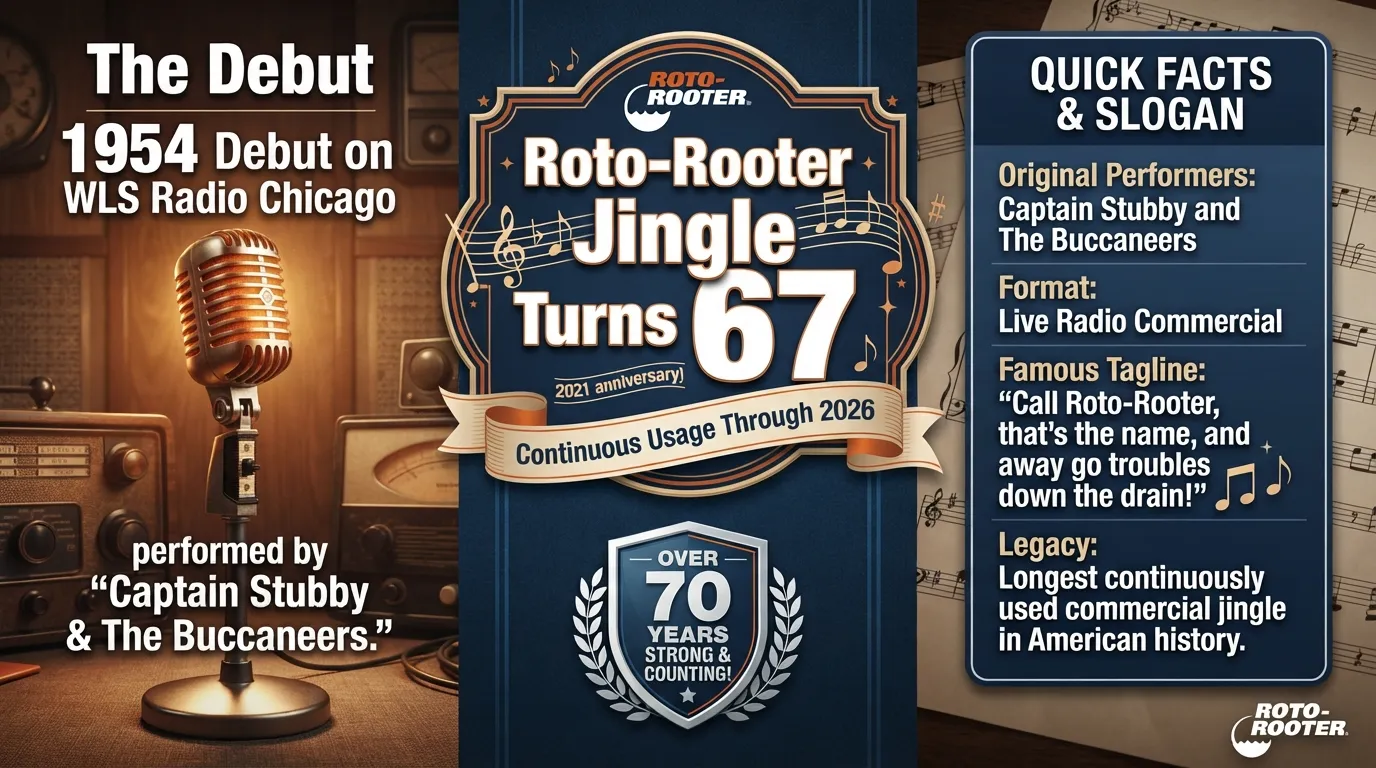
The classic Roto-Rooter jingle debuted in 1954. It was written and performed live for the very first time on WLS Radio in Chicago by Captain Stubby and The Buccaneers, a famous musical comedy group of that era. It quickly became a staple of commercial broadcasting across radio and television.
Why “Turns 67” and How Old Is It Now?
The popular phrase “Roto-Rooter Jingle Turns 67” stems from a major corporate celebration campaign held in 2021.
The 2021 Milestone: The campaign marked 67 uninterrupted years of broadcasting the catchy commercial theme since its 1954 debut.
Current Age: As of 2026, the famous tune is officially 72 years old, holding its status as the longest continuously used jingle in American advertising history.
Quick Facts Box
Debut Year: 1954
Original Broadcast Station: WLS Radio (Chicago)
First Performers: Captain Stubby and The Buccaneers
Primary Medium: Live radio commercial
Slogan Theme: “Call Roto-Rooter, that’s the name, and away go troubles down the drain!”
Status: Still actively used in modern media campaigns across radio, TV, and digital platforms
Where the Roto-Rooter Jingle Came From: Origin Story
The 1954 Radio Debut on WLS Chicago
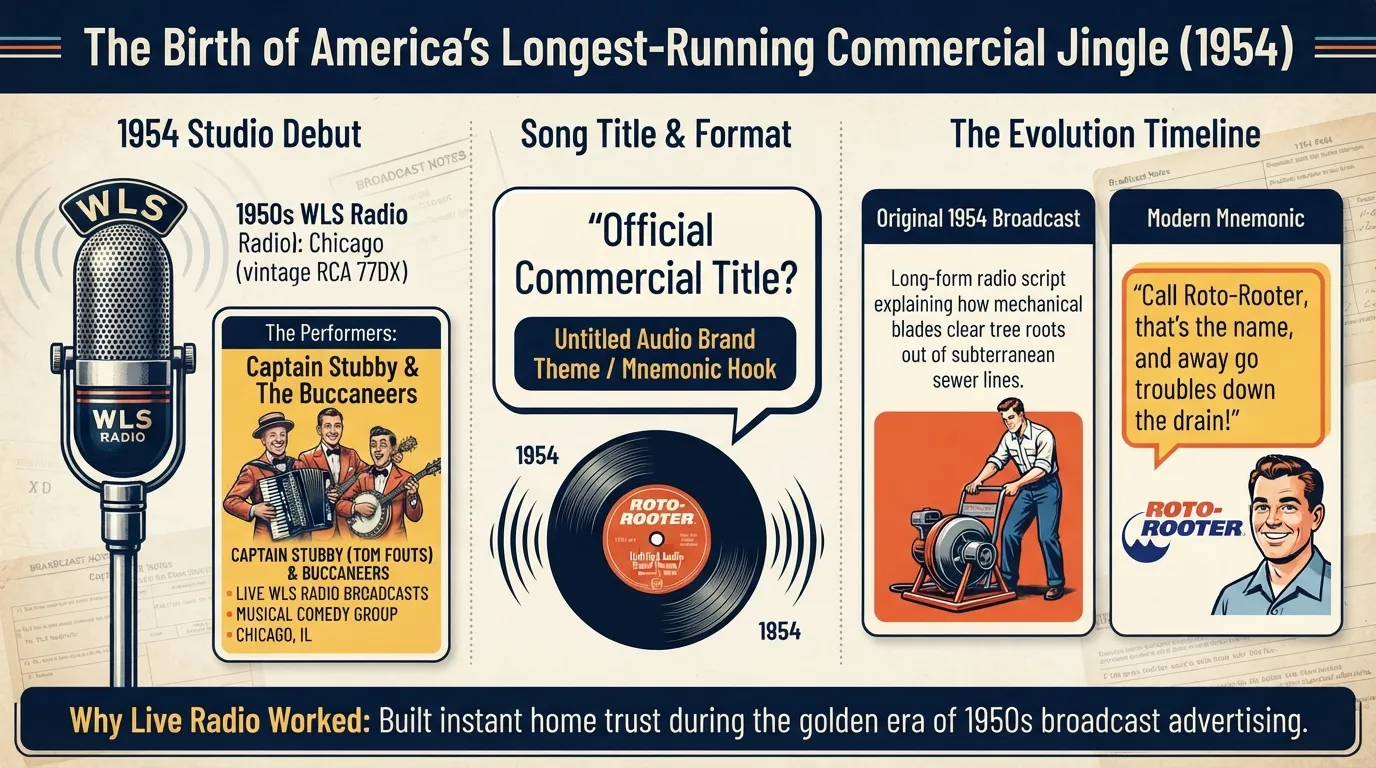
The iconic original Roto-Rooter jingle was written and broadcast for the first time in 1954 as a live, on-air commercial on WLS Radio in Chicago. This initial broadcast laid the groundwork for what would become an advertising masterpiece, as detailed on the official Roto-Rooter jingle page noopener.
Who Were Captain Stubby and The Buccaneers?
The tune was brought to life by Captain Stubby and The Buccaneers, a highly popular musical comedy and variety group of the 1950s. Led by Tom Fouts (known as Captain Stubby), the group was chosen for their folksy charm, tight harmonies, and mainstream radio appeal on programs like the National Barn Dance.
What Is the Roto-Rooter Commercial Song Called?
There is no official standalone commercial title for the tune; it is universally recognized by consumers and industry professionals simply as the Roto-Rooter jingle or theme song. Its central hook revolves entirely around the company’s memorable brand name and slogan.
The Original Longer Version vs. the Short Mnemonic
Early iterations of the broadcast piece were significantly longer than the modern mnemonic, incorporating narrative verses tailored to 1950s household challenges.
Detailed Problem Solving: Early versions explicitly detailed how the service cleared stubborn tree roots out of clogged underground sewer lines.
Evolution to Mnemonic: As television and radio formatting shifted toward fast-paced advertising, the tune was compressed into the catchy, punchy hook used today.
Why a Live Radio Jingle Worked in the 1950s
During the golden era of 1950s radio advertising, live singing commercials created an intimate connection with listeners before television saturation took over.
Live Delivery: Performing the commercial live on air added authenticity and trust.
Memorability: Catchy, upbeat melodies ensured listeners retained emergency plumbing numbers long after the broadcast ended.
How the Jingle Evolved from 1954 to 2026
Roto-Rooter Jingle Timeline
The famous tune has spanned over seven decades of media transformation. Key milestones in its evolution include:
1954: Live debut on WLS Radio in Chicago by Captain Stubby and The Buccaneers.
1960s–1990s: Transition into national television commercials, cementing the audio logo across living rooms nationwide.
2000s–2020s: Expansion into digital streaming, social media clips, and targeted YouTube commercials.
2021–2026: Celebration of its multi-decade legacy, maintaining active integration into modern marketing campaigns.
From Radio to TV to Digital
The format of the campaign shifted alongside technological advancements in home media.
Radio Beginnings: Early broadcasts relied solely on audio theater and live vocal delivery to paint a vivid picture of plumbing solutions.
Television Era: Visual storytelling paired the catchy mnemonic with professional plumbing trucks and technicians in uniform.
Digital Integration: Today, the tune reaches audiences through targeted YouTube pre-rolls, streaming ads, and short-form corporate social content.
Recent Roto-Rooter Commercials (2023, 2025, 2026) and How the Jingle Is Used Today
Recent broadcast iterations maintain strict brand consistency by utilizing the historic audio mnemonic at the close of every spot. Whether featured in Roto-Rooter commercial 2023, Roto-Rooter commercial 2025, or ongoing Roto-Rooter commercial 2026 media placements, the signature tagline anchors the brand’s instant recognition across linear TV and digital feeds.
The NASCAR Commercial Connection
The brand has occasionally bridged its traditional plumbing audience with sports marketing through high-visibility automotive sponsorships. The NASCAR commercial integration featured high-speed pacing paired with the dependable brand message, showcasing how classic audio branding adapts to fast-paced sporting environments.
Did the Tune Ever Change?
While instrumentation and arrangement styles have been updated to match modern audio production standards, the core melody and famous rhythm remain remarkably intact. This deliberate preservation ensures maximum brand recall across generations without diluting its historical equity.
Why the Roto-Rooter Jingle Is So Hard to Forget
The Mnemonic Power of a Short, Rhyming Slogan
The enduring survival of the tune comes down to the science of musical memory and catchy audio cues. Mnemonic advertising leverages simple rhymes, rhythmic pacing, and vocal repetition to lodge phrases directly into the brain’s long-term auditory processing centers. This earworm effect explains why listeners who heard the melody decades ago can still recall the phrasing instantly.
What the Slogan Actually Promises
Great advertising slogans do more than sound catchy; they immediately communicate value and reassurance.
Immediate Relief: The core lyrical hook creates a vivid mental image of messy household problems vanishing instantly.
Problem-to-Solution Framing: By pairing the brand identity directly with the resolution of plumbing stress, the slogan builds instant trust.
Why People Still Search for This Jingle
Online discussion forums frequently feature nostalgic threads where users try to track down half-remembered commercial tunes from their childhood. This distinctive search behavior highlights a deep-seated cultural curiosity, driving consumers to look up the origins of vintage audio branding long after their first hearing.
Other Classic 1950s and 1960s Jingles People Remember
The golden era of broadcast advertising produced several legendary audio hooks that share a similar level of historic brand recall.
Chiquita Banana (1944): A bouncy, calypso-style tune teaching consumers how to ripen and store bananas.
Brylcreem (1950s): A punchy radio and TV jingle promoting hair styling cream with a memorable rhythmic tagline.
Campbell’s Soup (1950s): The warm, inviting melody that cemented comfort food associations across generations of television viewers.
Roto-Rooter Brand Facts: Founder, Name, and Owner
Who Invented the Roto-Rooter?
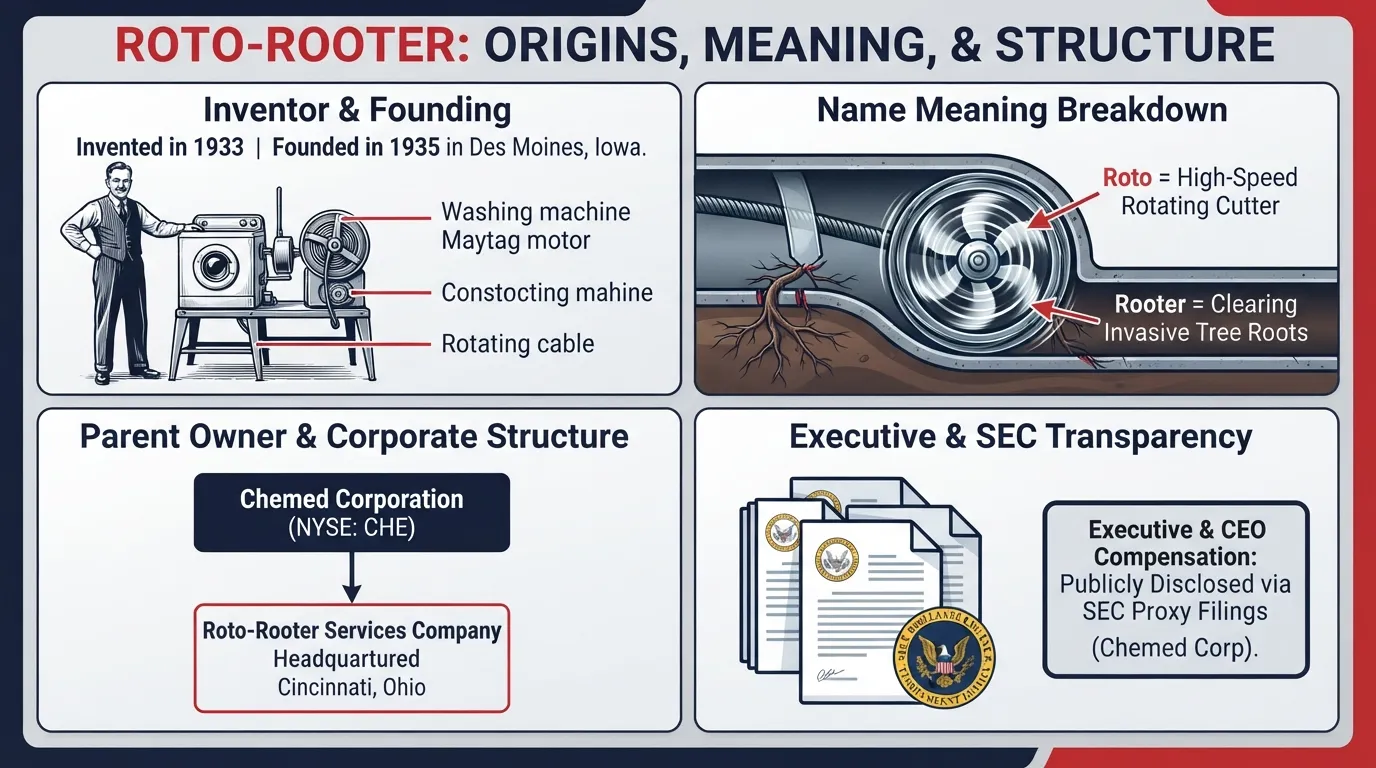
The Roto-Rooter machine was invented by Samuel Blanc in 1933 in Des Moines, Iowa. Blanc engineered a specialized drain cleaning device using a washing machine motor, roller skate wheels, and a flexible steel cable attached to sharp, rotating blades. His invention allowed plumbing professionals to clear stubborn blockages directly from underground pipes without digging up lawns.
When Was Roto-Rooter Founded?
Roto-Rooter was officially founded in 1935 as a commercial enterprise after Samuel Blanc patented his sewer cleaning machine.
Startup Era: The company began by selling machines and territorial franchise rights to independent operators across the United States.
National Expansion: Over the decades, it grew into North America’s largest provider of plumbing and drain cleaning services.
What Does “Roto-Rooter” Stand For?
The name Roto-Rooter is a descriptive play on the machine’s primary mechanism and function.
“Roto”: Refers to the rapid rotating blade assembly powered by the motor.
“Rooter”: Describes the primary purpose of the tool—root cutting and clearing invasive tree roots that penetrate underground sewer lines.
What Company Owns Roto-Rooter?
Roto-Rooter is a wholly-owned subsidiary of Chemed Corporation, a publicly traded company based in Cincinnati, Ohio (NYSE: CHE). Operating under the formal division name Roto-Rooter Services Company, it represents one of Chemed’s primary commercial business segments alongside healthcare operations.
How Much Does the CEO Make?
Exact CEO compensation figures for the executive leadership of Roto-Rooter Services Company are disclosed in official SEC regulatory filings submitted by its parent company, Chemed Corporation. Executive pay typically comprises a mix of base salary, performance bonuses, and stock-based equity compensation, which fluctuates annually according to corporate financial performance and public proxy statements.
What the Jingle Promised: How Drain and Sewer Cleaning Actually Works
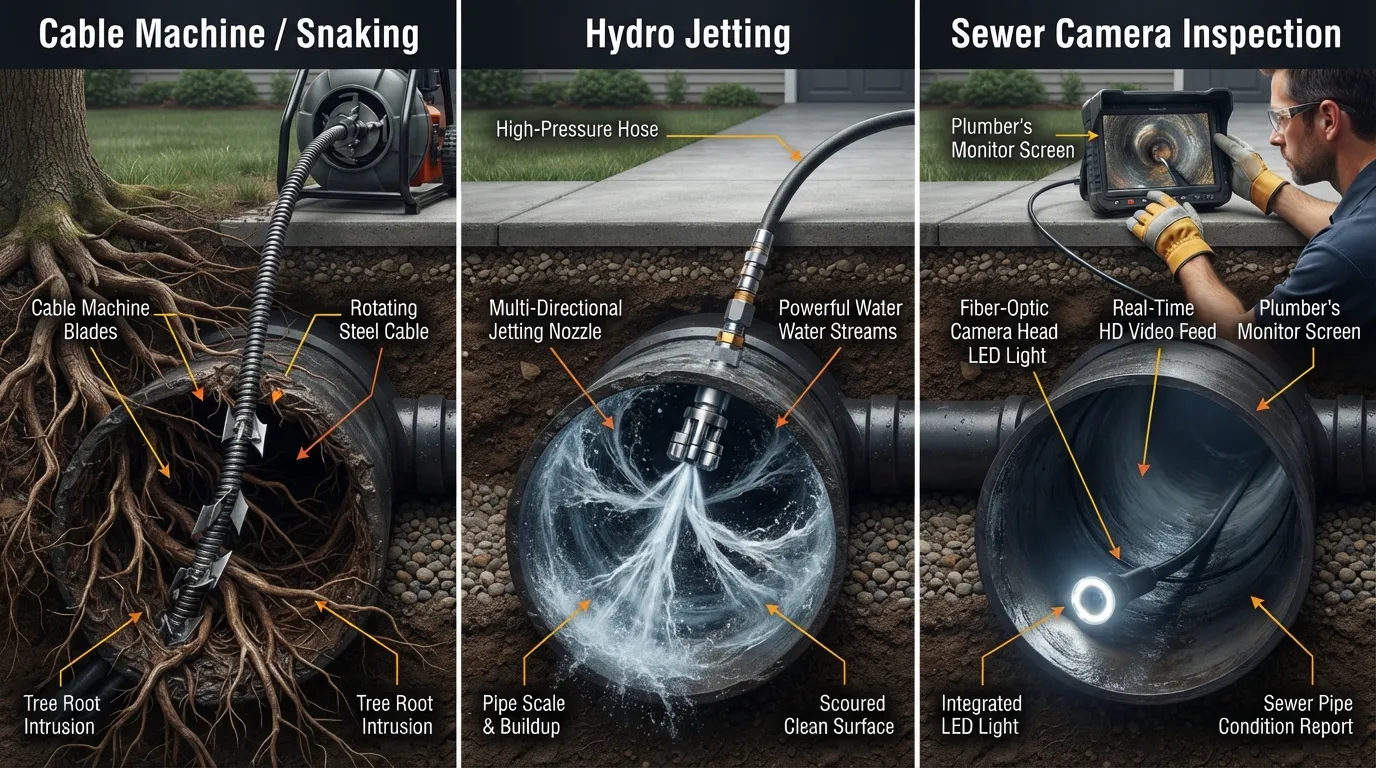
How a Drain Cleaning Machine Clears a Clog
The promise of watching residential issues disappear relies on physical clearing power rather than chemical solvents. Modern plumbing experts utilize specialized equipment for professional drain cleaning to break down dense obstructions. A flexible steel cable equipped with a specialized cutting tip rotates at high speeds inside the pipe, slicing through grease, hair, and solid debris to restore full wastewater flow.
Why Tree Roots Are a Classic Sewer Line Problem
The original 1954 commercial specifically highlighted root intrusion because tree root systems naturally seek out moist, nutrient-rich environments. Tiny microscopic cracks or loose joints in older underground pipes attract roots, which slowly expand inside the pipe and create severe blockages. Addressing these subterranean disruptions requires dedicated sewer line repair and inspection to prevent full system backups into the home.
Cable Machine vs. Hydro Jetting vs. Camera Inspection
Plumbing specialists choose specific clearing techniques depending on the nature and severity of the pipe blockage:
Cable Machine (Snaking): Ideal for puncturing simple solid clogs and physically scraping away invasive roots.
Hydro Jetting: Uses high-pressure water streams to blast away heavy grease buildup, scale, and mud along pipe walls.
Sewer Camera Inspection: Deploys a flexible fiber-optic camera into the line to visually diagnose the exact depth, cause, and extent of the pipe damage.
What a Plumber Sees on Site
Field experience reveals that what homeowners assume is a localized clog often stems from a deeper structural issue in the main line. For example, a recurring kitchen sink backing up may actually be caused by grease and food solids building up right where the branch drain meets an intruded root mass in the sewer system. A licensed plumber evaluates these visual signs, runs a diagnostic camera to confirm the obstruction type, and selects the exact mechanical tool needed to solve the underlying problem safely.
Is Roto-Rooter Expensive? What Really Drives Drain Cleaning Costs
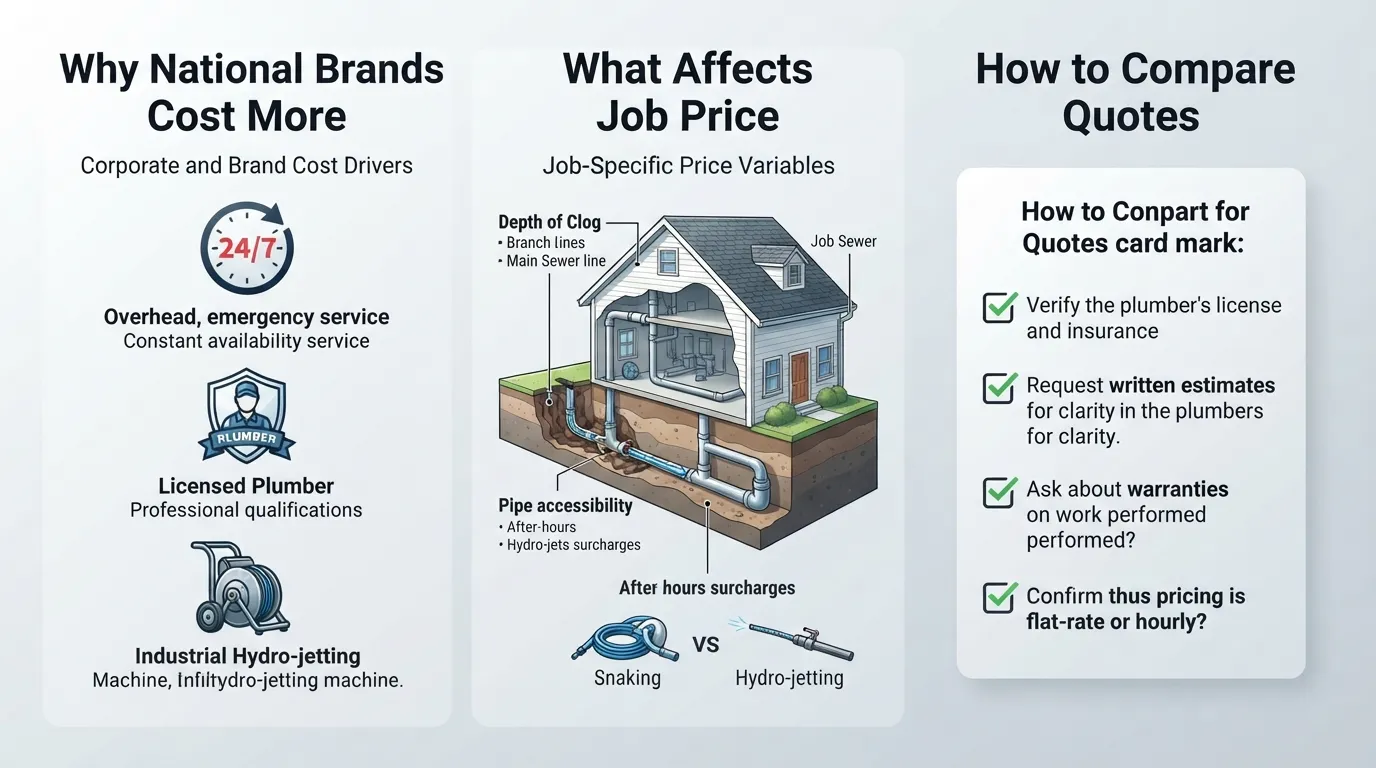
Why Is Roto-Rooter Seen as Expensive?
Consumers often perceive Roto-Rooter prices as higher than small, independent solo operators due to standard corporate operating models across the commercial plumbing sector.
24/7 Fleet Availability: Operating round-the-clock dispatch networks, fully stocked service vehicles, and active call centers requires substantial operational overhead.
Licensed & Insured Technicians: Premium pricing structures account for comprehensive liability insurance, background checks, ongoing technical training, and state licensing compliance.
Commercial Grade Equipment: Utilizing industrial heavy-duty cable machines, hydro-jetting rigs, and advanced sewer diagnostic cameras represents thousands of dollars in specialized equipment investment.
Is Roto-Rooter a Rip Off?
Labeling the service as a “rip off” overlooks the distinction between premium franchise pricing and low-cost independent operations. Online customer feedback reveals mixed experiences, often varying by local franchise management and specific job complexity.
Rather than relying on online rumors, consumers should evaluate quotes objectively based on upfront transparency, clear guarantees, and immediate emergency availability.
What Affects Drain Cleaning Prices for Any Plumber
Drain clearing fees vary widely across the plumbing industry based on several technical and situational variables:
Location of the Clog: Simple fixture clogs (sinks, showers) cost significantly less than clearing obstructions deep inside the main underground sewer line.
Pipe Accessibility & Condition: Main lines with cleanout access points require less labor than aging, broken, or collapsed pipes buried under concrete slabs.
Emergency & After-Hours Timing: Needing an emergency plumber late at night, on weekends, or during major holidays typically incurs higher service rates across all plumbing companies.
Clearing Method Required: Basic mechanical snaking with a cable machine is far less labor- and equipment-intensive than high-pressure hydro-jetting or trenchless repair.
How to Compare Plumbing Quotes
Before approving any repair or drain clearing job, protect your budget by evaluating candidate contractors against this simple checklist:
Verify Licensing & Insurance: Ensure the technician holds active state plumbing credentials and comprehensive liability coverage.
Require a Written Estimate: Request an itemized on-site estimate detailing labor, parts, and equipment charges before work begins.
Ask About Guarantees: Inquire about written warranties or callback guarantees on drain clearing services if the blockage recurs shortly after treatment.
Clarify Flat-Rate vs. Hourly: Confirm whether the service uses fixed flat-rate pricing or hourly billing to avoid surprise expenses on complex jobs.
This video offers an in-depth breakdown of current drain cleaning expenses and explain how different equipment choices impact your overall bill: 2025 Roto-Rooter Cost Explained
When to Call a Plumber: Signs Your Drain Needs Professional Help
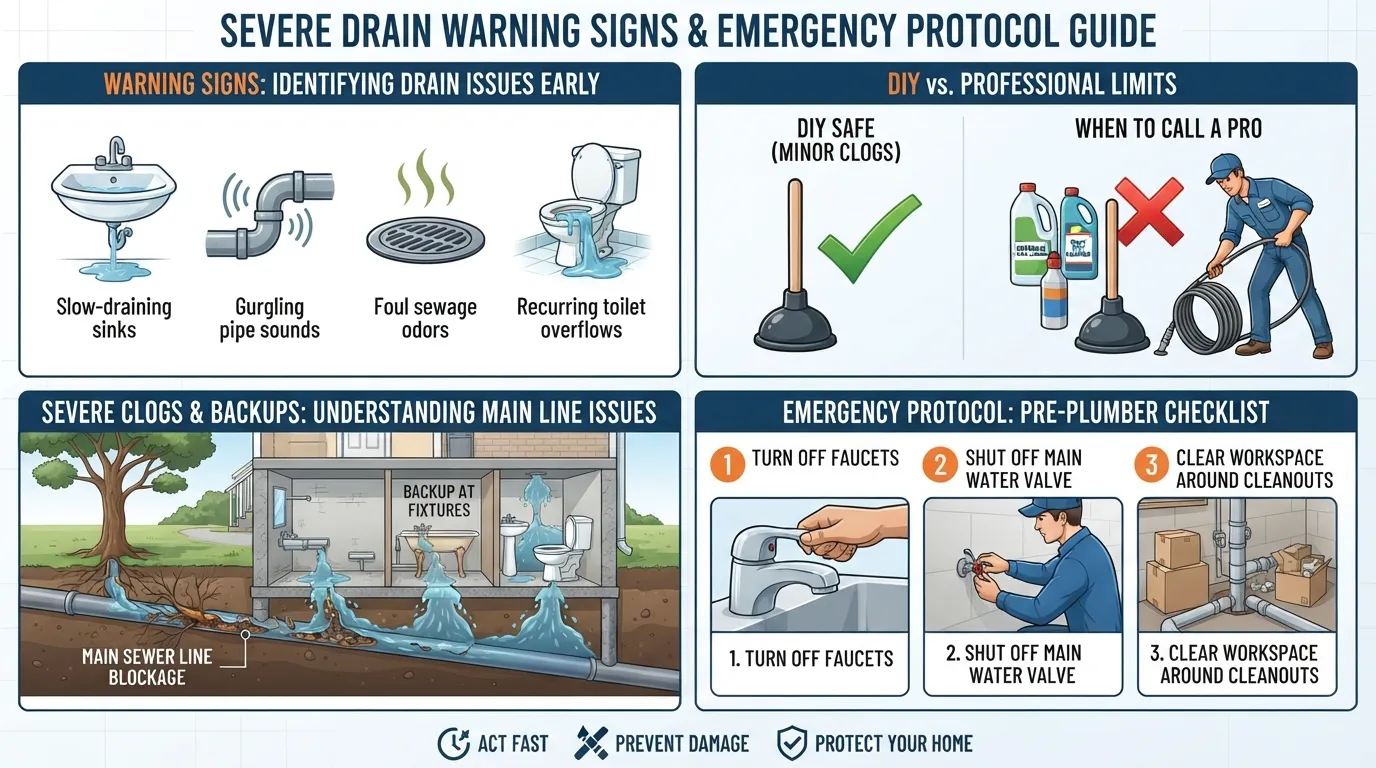
Warning Signs of a Serious Drain or Sewer Problem
Ignoring minor plumbing issues can quickly lead to severe structural damage and costly repairs. While a single slow-draining sink might only need quick attention, widespread symptoms across multiple fixtures indicate an obstruction in the main sewer stack.
Slow Drains in Multiple Fixtures: Sinks, tubs, and showers taking excessive time to drain simultaneously point to a deeper main line obstruction.
Gurgling Pipes: Strange glug-glug noises coming from toilets or sinks when water drains signal trapped air bubbles caused by a clogged vent or line.
Bad Sewage Odors: Foul sewer gas smells emanating from floor drains or sinks indicate dried-up traps or broken pipe seals.
Repeated Backups: Sewage backing up into lower-level bathtubs when flushing a toilet requires immediate intervention from an emergency plumber.
When a Plunger Is Not Enough
A basic hand plunger or light household drain snake works well for minor surface obstructions near the sink trap or toilet bowl. However, pushing DIY attempts too far can exacerbate the issue.
Chemical Drain Cleaners: Avoid harsh chemical pour-in cleaners; they can corrode older pipes, damage seals, and fail against heavy grease or tree roots.
Excessive Force: Forcing rigid tools down curved drain pipes risks cracking delicate PVC fittings or punching holes in corroded cast-iron lines.
Knowing When to Stop: If two attempts with a manual plunger fail to clear the blockage, stop and seek professional plumbing services to diagnose the pipe without causing damage.
Clogged Toilets and Repeat Backups
Toilets that overflow or clog continuously are among the most urgent residential drain issues. A single isolated block typically involves trapped paper waste, but frequent overflows usually indicate a deeper obstruction or worn internal components requiring specialized toilet repair.
What to Do Before the Plumber Arrives
While waiting for a certified technician to arrive on site, taking a few immediate precautionary steps can minimize water damage and protect your home:
Stop Using Water: Turn off all running faucets, washing machines, and dishwashers to prevent additional wastewater from entering clogged lines.
Shut Off the Main Valve: Locate and close your home’s main shutoff valve if water is actively overflowing onto floors.
Clear the Work Area: Move rugs, personal items, and storage boxes away from the affected fixtures or main cleanout access point so the technician can begin work immediately.
Would you like help combining these sections into a complete, final article document or creating meta titles and descriptions for the page?
Roto-Rooter Jingle FAQs
When was the Roto-Rooter jingle first performed?
The classic commercial theme was performed for the very first time in 1954. It debuted as a live radio broadcast originating from WLS Radio in Chicago, quickly becoming a cornerstone of mid-century broadcast marketing across the country.
Who performed the original Roto-Rooter jingle?
The original rendition was created and sung live by Captain Stubby and The Buccaneers. The popular 1950s musical comedy ensemble was widely known for their regular featured performances on national variety radio programs.
What is the name of the Roto-Rooter commercial song?
The commercial piece does not have an official standalone song title. It is universally referred to by advertising agencies, broadcasting networks, and consumers simply as the Roto-Rooter jingle or theme song.
What is Roto-Rooter’s slogan?
The brand’s primary advertising slogan is: “Call Roto-Rooter, that’s the name, and away go troubles down the drain!” The full lyrics, which describe how their machinery clears blocked plumbing pipes, remain protected under corporate copyright.
Who invented the Roto-Rooter?
The mechanical pipe-clearing machine was invented by Samuel Blanc in 1933 in Des Moines, Iowa. He constructed the prototype using a motor from a washing machine, roller skate wheels, and flexible steel blades.
When was Roto-Rooter founded?
Roto-Rooter was officially established as a business enterprise in 1935, shortly after Samuel Blanc patented his specialized mechanical drain-clearing equipment and began licensing regional franchise operations.
What does Roto-Rooter stand for?
The company name directly describes how the clearing machine operates. “Roto” signifies the high-speed rotating cutter blades, while “Rooter” represents its primary function of cutting through invasive tree roots in sewer lines.
What company owns Roto-Rooter?
Roto-Rooter is owned by Chemed Corporation, a publicly traded firm headquartered in Cincinnati, Ohio. The plumbing division operates under the official corporate name Roto-Rooter Services Company.
Why is Roto-Rooter so expensive?
Pricing reflects the high operational costs associated with maintaining a full national service fleet. Key cost drivers include 24/7 emergency availability, fully insured and state-licensed plumbers, and heavy-duty industrial diagnostic equipment.
Is Roto-Rooter a rip off?
No, Roto-Rooter is an established national service provider, though franchise pricing runs higher than local independent operators. Property owners can avoid billing surprises by requesting a written, on-site quote before any work begins.
Where can I find the original Roto-Rooter jingle?
The authentic original 1954 audio recording can be streamed online via official corporate video archives, company media pages, or major video platforms like YouTube.
Is the Roto-Rooter jingle still used today?
Yes, the signature mnemonic remains actively integrated into modern marketing efforts across television, radio, YouTube, and digital platforms, making it the longest continuously used jingle in American history.
Final Thoughts and Next Step
Why the Roto-Rooter Jingle Still Matters
The rich Roto-Rooter jingle history highlights how a simple radio commercial, first broadcast in 1954, grew into an enduring advertising icon. By combining a memorable vocal hook with clear problem-solving messaging, the melody established a benchmark for corporate brand recall that continues to resonate across modern media platforms today.
Need Help With a Clogged Drain Today?
If you are dealing with backing-up sinks, stubborn sewer lines, or severe household blockages, resolving the issue quickly requires experienced, hands-on attention. Contacting a licensed plumber ensures your pipes are safely evaluated and thoroughly cleared with professional-grade equipment.
To schedule a diagnostic inspection or receive prompt drain cleaning service, you can Book a plumber online to get your system running smoothly again.
Main Services
Related Posts
Need a Plumber in Miami?
Schedule service online or speak directly with the EZ Plumbing team.
Owner-Led Local Service
Know who is behind the business before you request service. The owners, contact line and Miami service pages are published clearly.
- Named business owners
- Direct phone and social channels
- Local Miami service information
Clear Help Before You Book
Review the relevant service page, contact the team directly and use the booking page when you are ready—without relying on vague claims.
- Service-specific information
- Direct questions before scheduling
- Clear online booking route