Kids and Plumbing 101: A Parent's Complete Guide to Protecting Your Pipes and Your Family
Kids and Plumbing 101
What Every Parent Should Know in 30 Seconds
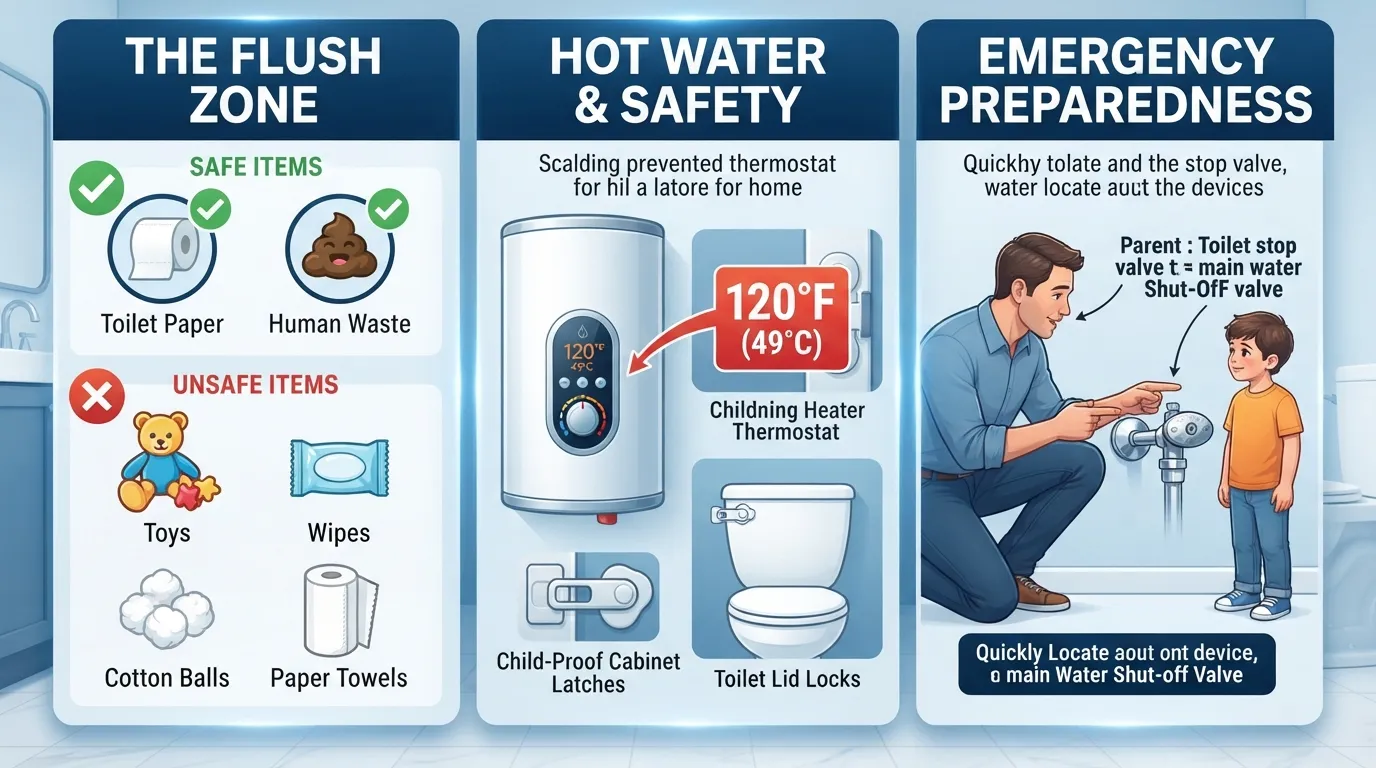
Teaching children basic plumbing safety protects your home from costly water damage and keeps your family safe. The core rule is simple: only human waste and toilet paper belong in the toilet, only water and tiny food scraps should go down the sink, and tap water temperature must be capped to prevent scalds.
Toilet Safety: Flush nothing except human waste and modest amounts of toilet paper.
Sink Etiquette: Keep toys, trash, and heavy grease out of kitchen and bathroom drains.
Pockets First: Check pockets for small trinkets before placing clothes in the laundry washer.
Hot Water Awareness: Set your water heater to a safe maximum temperature to avoid accidental burns.
Emergency Control: Teach older children the location of the main water shut-off valve and how to turn it off.
Why Kids and Plumbing Are a Risky Mix
Children explore the world through hands-on curiosity. To a toddler, the toilet bowl resembles a miniature water park or a mysterious portal where items disappear with the press of a handle. Small toys, bath crayons, and entire rolls of paper towels frequently become test subjects in child-led flushing experiments.
When foreign objects travel down the drain, they quickly catch on pipe joints or existing buildup. Repeatedly forcing non-flushable items into the system leads to stubborn blockages, backed-up sewage, and expensive emergency calls. Even items marketed as “flushable wipes” fail to break down like toilet paper, creating massive traps for child-deposited debris.
Professional Plumber Insight: “In over fifteen years of responding to residential emergency calls, the most unusual child-related blockage I ever cleared was a fully intact plastic action figure jammed sideways inside a trap—holding back three days’ worth of household wastewater.”
What You’ll Learn in This Guide
Teaching Kids What Can and Cannot Be Flushed
Preventing Scalds: Managing Water Heater Temperatures for Children
Child-Proofing Bathroom and Kitchen Plumbing Fixtures
How to Teach Your Kids to Use the Main Water Shut-Off Valve
Step-by-Step DIY Solutions for Child-Caused Toilet Clogs
Would you like to move directly into drafting the next section, or would you like to refine any specific entities or internal link anchors for this opening section?
What Kids Should Never Flush or Drain
Toilet Rules: What Is Safe to Flush
Keeping household pipes clear starts with a simple rule: the toilet is only meant for human waste and toilet paper. Every other item placed into the bowl increases the risk of severe pipe blockages and system backups.
Safe to Flush: Human waste and reasonable amounts of standard toilet paper.
Unsafe to Flush: Small toys, baby wipes, cleaning wipes, Q-tips, dental floss, disposable diapers, cotton balls, and paper towels.
Many everyday personal care items fail to dissolve in water. While toilet paper disintegrates within seconds of flushing, materials like cotton balls, diapers, and paper towels absorb liquid, expand in size, and form impenetrable dams inside residential drain lines.
Are Flushable Wipes Really Flushable?
No, flushable wipes are not truly flushable despite what their product packaging claims. While they will physically pass through a toilet bowl when flushed, they do not dissolve in water like toilet paper and rapidly create dense clogs in household pipes.
Unlike regular tissue paper made from short wood fibers that separate instantly in water, wipes are constructed from synthetic fibers designed to stay strong when wet. When flushed down a toilet, these durable sheets travel through the drainage system completely intact.
Plumber’s Practical Observation: Over time, flushed wipes snag on tiny imperfections or rough joints inside the drain pipes. Once a single wipe catches, it traps passing hair, grease, and other debris, growing into a massive obstruction that completely stops wastewater flow.
Kitchen Sink Rules: Grease, Oil and Food Scraps
Kitchen drain pipes require strict care to remain open and functional. Kids should learn early on that fats, cooking oils, and grease must never be poured into the kitchen sink because liquid fats cool down and solidify inside cool drain lines, coating the interior pipe walls.
Teach children to scrape left-over grease and food scraps directly into the trash can before rinsing plates. When grease mixes with solid food particles down the drain, it forms a sticky paste that chokes off water flow and causes foul odors. If your kitchen sink is already draining slowly or completely blocked due to accumulated buildup, schedule a professional drain cleaning to clear the line before a complete backup occurs.
Bathtub and Shower Drain Rules
Bathroom drains are susceptible to specific types of debris during children’s bath times. Loose hair and soap scum frequently bind together inside shower traps, but playtime items create the most immediate blockages.
Hair and Soap Scum: Combine to form dense matting inside the tub drain.
Small Toys & Caps: Shampoo caps and small plastic toys easily fall into open drains.
Bath Bombs & Glitter: Unmelted salts, body glitter, and dense oils from bath products stick to drain walls and trap other particles.
The Laundry “Pocket Check”
Washing machine drain lines can easily become clogged by items left inside children’s clothing. Small foreign objects bypass the washer’s internal filter during the drain cycle and travel directly into the home’s main drainage system.
Check Every Pocket: Inspect pants, hoodies, and jackets for candy wrappers, tissues, coins, and small plastic toys before loading them.
Remove Loose Paper: Tissues and paper scraps disintegrate into tiny fibers that clog the washing machine drain pump.
Secure Small Items: Place tiny items like kids’ socks into mesh laundry bags to prevent them from slipping into the drain pathway.
Quick Reference Table: Safe vs. Unsafe by Fixture
| Fixture | OK to Put Down | Never Put Down | Possible Result |
| Toilet | Human waste, standard toilet paper | Wipes, Q-tips, floss, diapers, toys, paper towels | Immediate toilet overflow, main sewer line blockage |
| Kitchen Sink | Cold water, small water-soluble liquids | Cooking oil, grease, fats, heavy food scraps | Grease coating pipe interior, slow drains, clogged disposal |
| Bathtub / Shower | Water, body soap, shampoo | Hair, small toys, bottle caps, bath glitter, solid bath bombs | Slow tub drainage, standing water, hair-and-scum clogs |
| Washing Machine | Water, laundry detergent, fabric softener | Tissues, paper wrappers, pocket trinkets, coins | Washing machine pump failure, clogged laundry line drain |
How Your Home’s Plumbing Works, Explained for Kids
The Three Basic Parts of Home Plumbing
Understanding plumbing for beginners starts with recognizing that a house operates much like a living organism. The entire residential plumbing system relies on three core components working together seamlessly:
Water Supply: The network of pressurized pipes that brings clean, fresh water into your home for drinking, handwashing, and baths.
Drain System: The gravity-fed pipes that carry used wastewater and sewage safely away from every sink, tub, and toilet.
Plumbing Vents: Vertical pipes leading up through the roof that let fresh air into the system so wastewater can flow smoothly without creating suction locks.
Where Does /the Water Go When You Flush?
When you flush a toilet or drain a sink, wastewater begins an invisible journey through your walls and floors. Think of pipes as the body’s veins: clean water flows in through high-pressure arteries, while used water travels out through drainage pathways.
Step 1: Used water and waste drop down from the fixture into a curved pipe called a trap.
Step 2: Gravity pulls the wastewater into larger vertical pipes hidden inside the walls, known as stack pipes.
Step 3: The wastewater flows downward into the main sewer line located beneath the lowest floor or basement.
Step 4: The water exits your home entirely, traveling out to the municipal city sewer main or an underground septic tank.
For a closer look at how minor blockages are cleared during family-friendly maintenance, you can watch Snaking a DRAIN with a helper! – plumbing 101 + family friendly activity [00:00].
Mini Home Tour: Where to Find Plumbing in Your House
To help children connect classroom concepts to real life, take a quick walk around your property to spot active plumbing fixtures. If you ever encounter complex system issues beyond standard DIY fixes, professional plumbing services can diagnose and repair hidden infrastructure.
Bathroom: Toilets, bathtubs, and bathroom sinks manage daily hygiene water.
Kitchen: The sink and garbage disposal handle food preparation cleanup.
Utility Room: The washing machine and water heater keep clothes clean and showers warm.
Outdoors: Exterior hose bibs (spigots) and the main water shut-off valve control exterior water flow.
A Simple Plumbing Glossary for Kids
Trap: The U-shaped bend under sinks that holds a little water to block bad sewer smells from entering the room.
Valve: A gate or handle that can be turned to stop or start the flow of water.
Vent: A roof-level pipe that gives air to the drainage system so water drains quickly and quietly.
Drain: An opening with a pipe attached that lets used water leave your home.
Main Line: The biggest pipe in the house that collects waste from all smaller drains and carries it outside.
Faucet: The tap or nozzle where clean water comes out of the wall or sink.
Pipe: A hollow tube made of metal or plastic that carries water from place to place.
Pressure: The invisible pushing force that pushes clean water up through pipes to reach upstairs showers.
Water Heater: A large metal tank that warms up cold water so you can enjoy hot showers.
Plumbing System: The complete hidden network of pipes, valves, and fixtures keeping your home supplied with water.
Kids and Plumbing by Age: What to Teach and When
Toddlers (Ages 2–4): Protect, Don’t Teach Yet
At this age, children explore through physical interaction and curiosity without understanding cause and effect. Toddlers view water fixtures as play areas, making active child-proofing measures far more effective than verbal instruction.
Install Toilet Lid Locks: Prevent young children from dropping toys, keys, or entire rolls of paper into the bowl.
Secure Cabinet Doors: Lock under-sink cabinets containing toxic cleaning chemicals, drain cleaners, and small plumbing tools.
Use Drain Covers: Keep flat silicon strainers over bathtub and sink drains so tiny objects cannot fall into open traps.
Supervise Bath Time: Never leave toddlers unattended around filling tubs or open faucets to protect against burns and overflows.
Early Kids (Ages 5–8): Simple Rules and Habits
Children in early elementary school can learn consistent daily habits that prevent accidental pipe blockages. Focus on clear, repeatable actions they can execute without constant supervision.
Teach them that toilets are strictly for toilet paper and human waste—never for paper towels or tissue paper. Show them how to turn off the sink faucet completely while brushing their teeth to conserve water and prevent sink overflows. Encourage kids to report any standing water, running toilets, or small drips immediately so adults can address minor leaks early.
Tweens (Ages 9–12): Basic Know-How
Tweens are capable of understanding simple household mechanics and taking action when minor plumbing problems arise. This age group can safely handle basic tools and locate isolation valves.
Plunger Basics: Teach them how to seal a cup plunger over a slow toilet drain and use firm, vertical plunges to clear light blockages.
Toilet Shut-Off Location: Show them the small chrome angle stop valve behind the toilet and explain how turning it clockwise stops incoming water during an overflow.
Identifying Active Leaks: Guide them on how to inspect around sink traps and refrigerator water lines for moisture, pooling water, or continuous running sounds.
Teens (Ages 13+): Real Household Skills
Teens can master functional home maintenance responsibilities and understand the boundary between quick DIY tasks and major plumbing emergencies.
Locate the Main Water Shut-Off Valve: Show them where the primary main line valve enters the house (usually in the basement, garage, or outdoor meter box) and how to turn it off completely in a crisis.
Clear Minor Sink Clogs: Demonstrate how to clear hair buildup from bathroom sink pop-up stoppers using a flexible zip-it tool or manually cleaning the strainer.
Know When to Call a Professional: Teach them that overflowing main lines, raw sewage backups, or leaking hot water heaters require turning off the water supply immediately and contacting a licensed plumber.
Age-by-Age Quick Chart
| Age Group | Key Risks | What to Teach | What to Avoid |
| Toddlers (Ages 2–4) | Flushing toys, falling in, scalding water, eating drain cleaners | Child-proofing locks, staying away from chemicals, bath safety | Expecting toddlers to follow verbal rules consistently |
| Early Kids (Ages 5–8) | Excessive toilet paper use, leaving faucets running | Toilet paper limits, turning taps off completely, reporting drips | Allowing children to handle chemical drain products |
| Tweens (Ages 9–12) | Minor toilet overflows, ignoring small leaks | Using a plunger, turning off individual fixture valves, spotting leaks | Attempting complex disassembly of under-sink drain traps |
| Teens (Ages 13+) | Delayed response during major leaks, improper tool usage | Main shut-off valve operation, hair removal, emergency protocols | DIY attempts on gas-fired water heaters or main sewer lines |
Would you like to proceed with drafting the next section, or should we refine any of the age-based safety guidelines for this outline?
Kid-Safe Plumbing: Hot Water, Drains and Under-Sink Hazards
What Temperature Should Your Water Heater Be Set To?
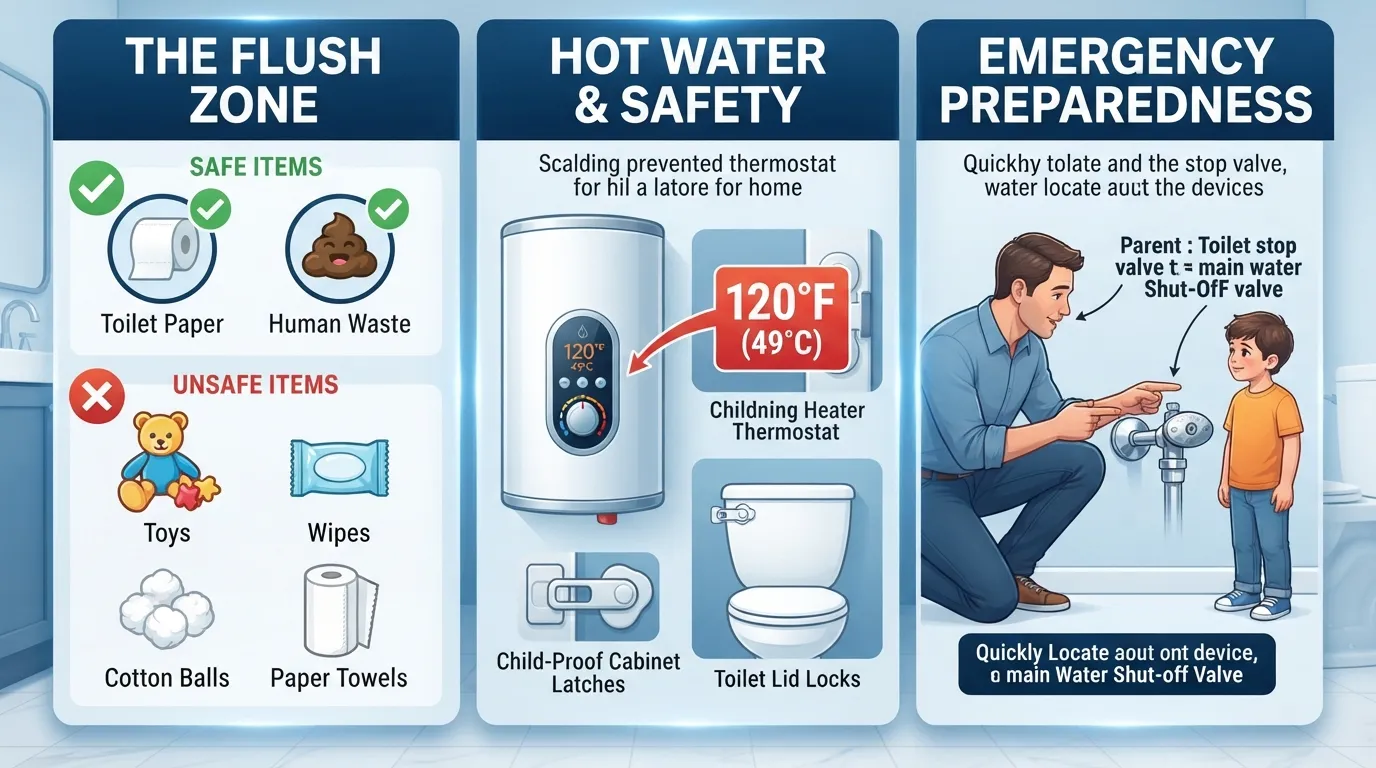
The safe maximum setting for a home water heater when young children are present is 120°F (49°C). Lowering your water heater thermostat to this baseline eliminates severe burn risks while providing plenty of hot water for household cleaning and bathing.
Children’s skin is significantly thinner than adult skin, making them far more vulnerable to rapid thermal burns. Water heated to 140°F can cause a third-degree burn on a child’s skin in less than five seconds, whereas tap water kept at 120°F takes about five minutes of continuous contact to cause a similar injury. According to the U.S. Consumer Product Safety Commission’s tap water scald guidance, setting your temperature carefully is one of the most effective ways to prevent accidental scald injuries in the home.
How to Check Your Water Temperature at the Tap
You cannot rely solely on the markings on your water heater’s control dial, as internal thermostats can drift over time. Testing the actual temperature of the water coming out of your household faucets gives you an accurate measurement.
Turn on the Hot Water: Open the hot water tap in the bathroom or kitchen farthest from the heater and let it run for approximately 60 seconds.
Measure with a Thermometer: Hold a digital kitchen thermometer directly in the stream of running water until the temperature reading stabilizes.
Adjust the Thermostat: If the reading exceeds 120°F (49°C), adjust the temperature dial on your water heater downward. If your unit is older, lacks clear degree markings, or continues to deliver scorching water after adjustment, schedule professional water heater service to calibrate or replace the thermostat.
Retest After 24 Hours: Allow the water heater tank a full day to adjust to the new setting, then re-test the water temperature at the tap.
Bath-Time Safety Habits
Establishing safe bath-time routines reduces the likelihood of accidental burns and slips. Always control the water flow yourself before placing children into the tub.
Test Water First: Always swirl your hand through the bath water to test the temperature across the entire tub before letting a child step in.
Run Cold Water Last: Turn on the cold water valve first when filling the tub, and finish by running cold water for a few seconds to cool the faucet spout.
Never Leave Children Unattended: Supervise bath time continuously; toddlers can accidentally turn on hot water knobs while playing.
Chemical Drain Cleaners and Under-Sink Dangers
Liquid chemical drain cleaners pose severe safety hazards in households with young children. These caustic formulas contain highly corrosive acids or lye that can cause permanent chemical burns to skin and eyes if splashed.
Store all chemical cleaners, bleach, and detergents in high cabinets or behind locked doors secured with safety latches. Never mix different chemical drain products together, as combining them can unleash toxic fumes or create explosive heat reactions inside your pipes. Beyond human safety hazards, chemical drain cleaners erode older metal pipes and soften plastic PVC joints over time. When severe or repeated clogs occur, calling a professional plumber is always the safer, more durable alternative.
Toilet and Sink Child-Proofing Checklist
Toilet Lid Locks: Install adjustable latch straps on toilet lids to prevent toddlers from opening the bowl or dropping toys inside.
Cabinet Latches: Secure under-sink cabinet doors with child-safety latches to restrict access to plumbing pipes and hazardous cleaning chemicals.
Faucet Covers: Place soft silicone covers over metal bathtub faucets to protect children from bumps and hot metal surfaces.
Anti-Slip Mats: Position non-slip rubber mats inside the bathtub and on the floor outside to prevent slips around wet fixtures.
Emergency: What to Do if Something Goes Down the Toilet
First Things First: Stay Calm and Stop Flushing
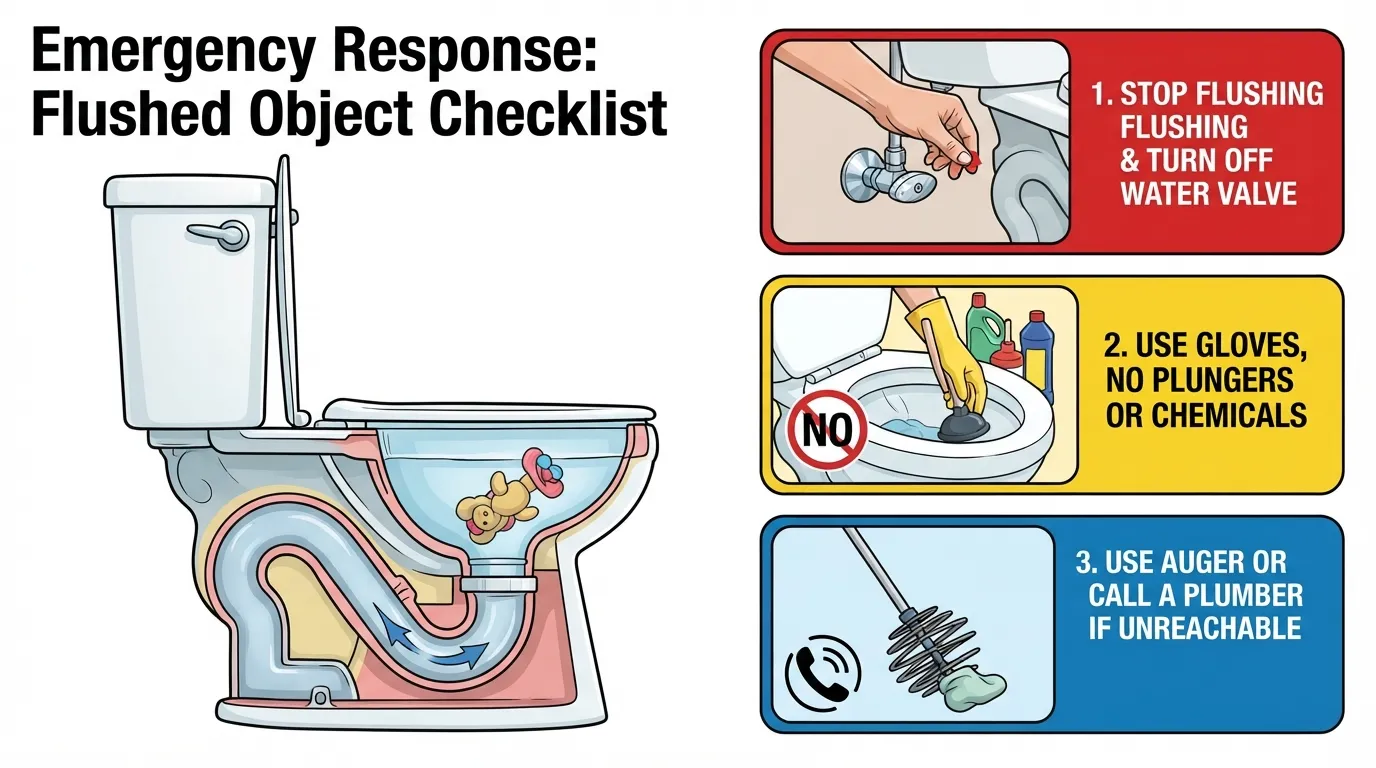
When a child accidentally drops a toy or foreign object into the toilet bowl, your immediate action determines whether it becomes a minor retrieval or a major plumbing emergency. Do not press the flush handle again under any circumstances.
Repeated flushing forces the trapped item deeper into the internal trapway or main sewer line, turning an easily accessible blockage into a severe main line backup. Avoid pouring caustic chemical drain cleaners into the bowl; chemicals will not dissolve plastic, rubber, or cloth items, and they leave behind a pool of hazardous, corrosive liquid that makes manual retrieval dangerous.
Step-by-Step: Retrieve a Flushed Object Safely
Acting quickly with the right technique gives you the best chance of removing the object before it moves beyond the toilet trap.
Stop Water Flow Immediately: Turn the chrome toilet shut-off valve behind the toilet bowl clockwise until it is tight to shut off incoming water and prevent accidental overflows.
Put On Protective Gloves: Wear heavy rubber gloves before reaching into the toilet bowl to search for the item.
Inspect the Trap: Look into the bottom opening of the bowl. If the item is visible, gently reach in and lift it out directly.
Avoid Plunging Hard Objects: Never use a standard toilet plunger on solid items like plastic toys, action figures, or glass. Plunging creates suction and pressure that pushes solid objects farther into the waste line.
Use a Closet Auger Carefully: If you own a toilet auger (plumbing snake), feed it gently into the drain to hook soft items like small towels or socks. Stop immediately if you feel resistance against a hard plastic object to avoid scratching the porcelain or jamming the item permanently.
When DIY retrieval attempts fail or the item remains wedged tightly out of reach, continuing to push tools into the drain can damage internal pipe joints. Contacting expert technicians for specialized toilet repair ensures the fixture is safely pulled and cleared without damaging your home’s drainage infrastructure.
What Not to Do (Common Mistakes)
Don’t Keep Flushing: Pressing the handle repeatedly guarantees an overflow and drives foreign objects further down the waste pipe.
Don’t Pour Liquid Drain Cleaners: Chemical solutions cannot break down solid toys or wipes and pose severe burn risks to anyone servicing the toilet later.
Don’t Force Metal Coat Hangers: Wire coat hangers easily scratch porcelain, break off inside the trapway, and push blockages beyond reach.
Don’t Ignore Slow Drainage: Assuming an object “passed through” just because the water eventually drains away often leads to sudden, catastrophic blockages later down the line.
Signs the Object Has Moved Deeper into the Pipes
If the flushed toy passes through the toilet’s internal trapway, it will eventually lodge inside the main branch line. Look out for these warning signs that indicate a growing main line obstruction:
Gurgling Sounds: Loud gurgling noises coming from nearby bathroom or kitchen drains when a fixture runs.
Slow Drainage Across Fixtures: Water draining slowly in adjacent bathtubs, showers, or sinks when the toilet is used.
Water Backups: Wastewater rising into the shower basin or bathtub when flushing the toilet.
Recurring Toilet Clogs: The toilet clogs repeatedly during normal use even when flushing minimal toilet paper.
When to Call an Emergency Plumber
Some child-related plumbing mishaps require immediate intervention from a licensed professional equipped with commercial drain cameras and heavy-duty augers. You should contact an emergency plumber right away if:
The toilet bowl is overflowing onto the bathroom floor and shutting off the supply valve fails to stop the flow.
Multiple plumbing fixtures throughout the house are backing up simultaneously.
A hard, irreplaceable, or valuable object is lodged deep within the pipe and cannot be reached with basic hand tools.
Need Immediate Professional Assistance? Don’t let a child-caused blockage turn into expensive structural water damage. Book a plumber now to have a licensed technician inspect and clear your lines safely.
Teach Kids and Teens Where the Shut-Off Valves Are
Why Every Family Member Should Know the Main Water Shut-Off
When a pipe bursts or an supply line ruptures, water flows at high pressure, discharging dozens of gallons per minute into your home. Knowing how to locate and operate the main shut-off valve within seconds is the single most effective defense against catastrophic water damage.
Imagine a scenario where a flexible supply hose under a bathroom sink snaps while parents are in the backyard or out briefly. A teenager who knows how to quickly turn off the main valve can limit the spill to a few gallons, saving thousands of dollars in drywall, flooring, and furniture repairs.
How to Find Your Main Shut-Off and Fixture Valves
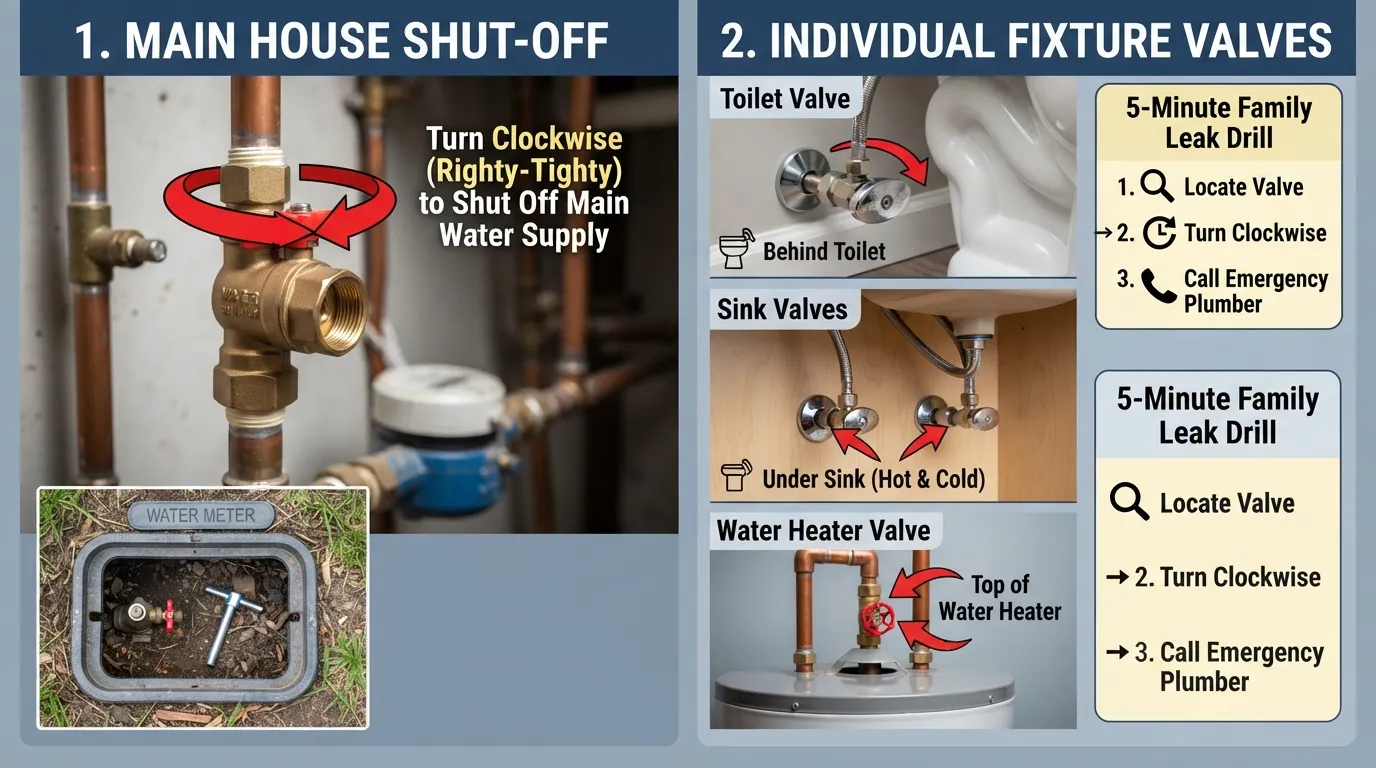
Every home has two primary levels of water control: individual fixture valves (angle stops) and the main shut-off valve that cuts power to the entire house.
Toilet Fixture Valves: Located directly behind the toilet bowl near the floor, usually a small oval chrome handle attached to the wall.
Sink Fixture Valves: Situated inside under-sink cabinets near the back wall; separate hot and cold angle stop knobs control water to the faucet.
Main Water Shut-Off Valve: Commonly found in the basement, garage near the front wall, crawl space, or outdoors inside a ground-level box near the street water meter.
Water Heater Valve: Positioned on the cold water inlet pipe directly above the top of the water heater tank.
A Simple Family “Leak Drill”
Conducting a quick, 5-minute family walkthrough builds practical confidence so children and teens know exactly what to do during a sudden plumbing emergency.
Show the Locations: Walk through the house together and point out the main shut-off valve, water meter, and key angle stop valves under sinks and behind toilets.
Practice the Turn: Demonstrate how turning the valve handle clockwise (“righty-tighty”) cuts off water flow. Have older kids physically place their hands on the valve handle to turn it.
Establish an Action Plan: Teach children to first shut off the nearest valve during a burst, then inform an adult immediately, and know where emergency plumber contact numbers are saved.
Signs of a Hidden Leak Kids Can Help Spot
Children are naturally observant and can act as great home safety helpers by catching minor plumbing problems before they turn into major structural repairs. Teach kids and teens to watch for these subtle indicators of plumbing leaks:
Dripping Sounds: Continuous clicking or rhythmic dripping noises behind walls, under sinks, or inside ceiling cavities.
Water Stains: Yellowish brown rings, blistering paint, or discoloration spreading across ceilings or drywall.
Damp Spots: Unexplained wet carpet patches, squishy floorboards, or pooling moisture underneath kitchen and bathroom cabinets.
Unexplained Water Bill Spikes: High monthly water utility bills when household usage habits haven’t changed.
If your family notices damp spots or running water sounds but cannot locate the physical source, professional leak detection and repair services can pinpoint hidden underground and in-wall pipe leaks before major damage occurs.
Simple Water-Saving Habits Kids Can Learn
Turn Off the Tap: Brushing Teeth and Washing Hands
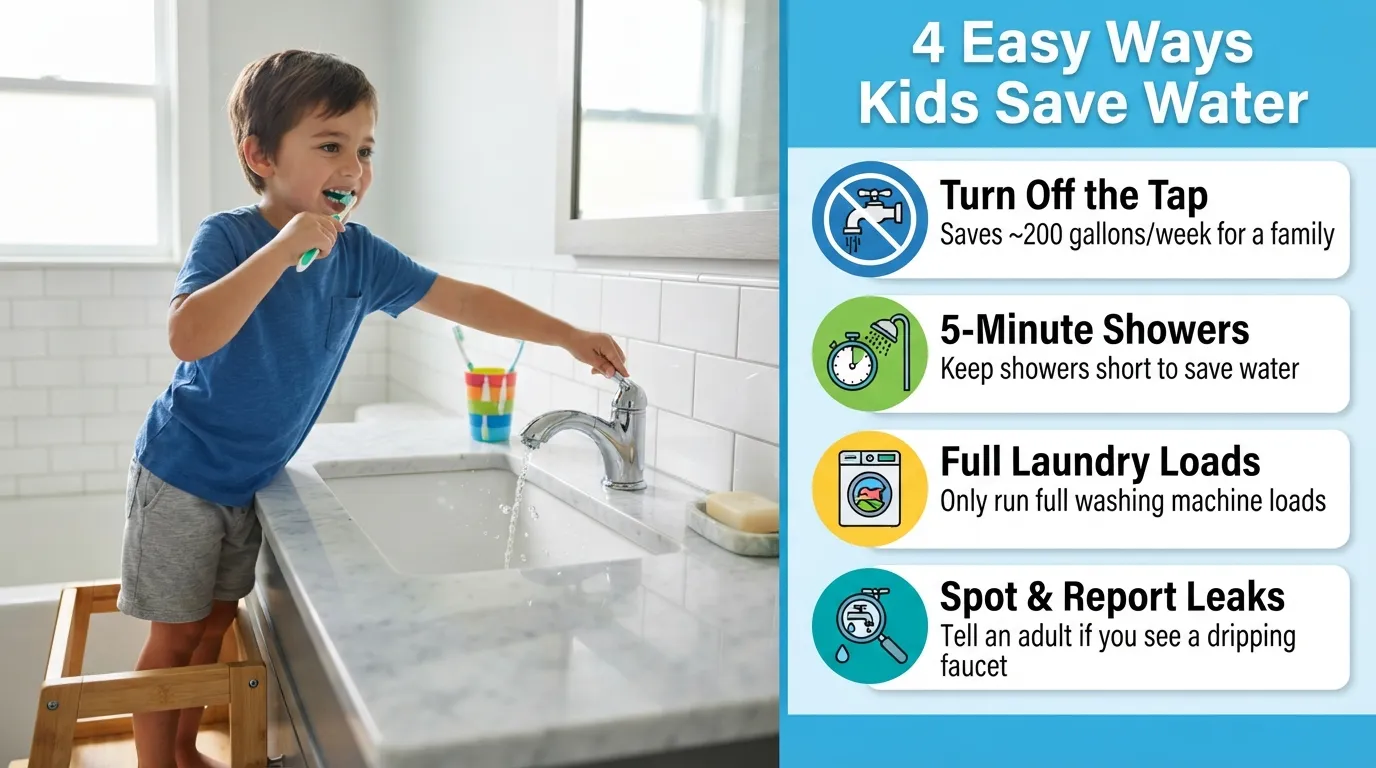
Teaching children to turn off the water while brushing their teeth or lathering their hands is one of the easiest ways to introduce lifelong conservation values. A running bathroom faucet can discharge up to 2.5 gallons of water every minute.
For a family of four, leaving the tap running during routine morning and evening hygiene can waste an estimated 200 gallons of water per week. Remind kids to wet their toothbrush, turn the handle completely off, and only reopen the valve for a quick rinse at the end.
Shorter Showers and Full Loads
Water conservation inside bathrooms and utility rooms relies heavily on managing duration and capacity. Showers account for a massive percentage of indoor residential water use, making shorter shower times an effective target for older kids and teens.
Set Time Limits: Encourage children to aim for 5-minute showers by playing a favorite song or setting a visual shower timer.
Wait for Full Loads: Teach kids and teens to wait until there is a full basket of clothes or a complete rack of dishes before running the washing machine or dishwasher.
Report Leaks Early: Promptly fixing a dripping tap or a running toilet stops hundreds of gallons from slipping down the drain uninvited.
Spotting and Reporting Dripping Faucets and Running Toilets
Children can become official home leak detectives by keeping an eye out for malfunctioning fixtures. A single dripping tap can waste thousands of gallons of water annually if left ignored.
Teach kids to listen for the faint hissing sound of a running toilet flapper or to check if bathroom sink handles are dripping after use. When children spot a drip, reward their attentiveness by showing them how to report it immediately so an adult can replace a worn washer or flapper.
Turning Water Saving into a Family Game
Transforming water conservation into a fun, interactive challenge keeps kids engaged without feeling scolded. Setting up a simple reward chart turns daily habits into a collaborative family achievement.
Create a Habit Tracker: Hang a weekly chart on the refrigerator with columns for turning off taps, taking quick showers, and reporting drips.
Award Points: Give kids a star or sticker every time they successfully demonstrate a water-saving habit without being reminded.
Celebrate Success: Set a fun family reward—like a weekend movie night or a trip to the park—once the household reaches a weekly conservation goal.
Fun, Sports and Safe Plumbing Activities to Do with Kids
Build a Mini Pipe Model with Clear Tubing
Transform basic STEM learning into a hands-on building project by constructing a transparent mini drainage system. Using clear vinyl tubing, small funnels, and waterproof tape, kids can build a tabletop pipeline to see how water travels from one point to another.
Pouring colored water mixed with a bit of glitter through the tubes lets children watch how fluids flow around bends and drop downward through gravity. Introduce obstacles like small bits of tissue or hair to visually demonstrate how clogs form when unauthorized items enter the system.
The Bottle “Flush” Experiment (Why Wipes Clog but Toilet Paper Doesn’t)
Demonstrating the difference between flushable wipes and toilet paper using a simple glass jar experiment helps kids understand why strict bathroom rules exist.
Prepare Two Jars: Fill two identical glass jars or plastic water bottles halfway with room-temperature tap water.
Add Paper and Wipe: Place a single square of standard toilet paper into the first jar, and a “flushable” wipe or paper towel into the second jar.
Shake and Observe: Secure the lids tightly and have your child shake both jars vigorously for 30 seconds.
Review the Results: The toilet paper immediately breaks down into a soft, cloudy suspension that dissolves safely. In contrast, the wipe remains completely intact and structurally sound, proving why it creates dangerous blockages in home drain lines.
Follow the Water: A Home Plumbing Scavenger Hunt
Turn an afternoon into an educational plumbing scavenger hunt by giving kids a checklist to locate key fixtures around the house and yard.
The Sentry Trap: Find the curved U-bend pipe hidden underneath the kitchen sink.
The Air Vent: Spot the vertical vent pipe rising up through the roof or visible in the attic.
The Master Control: Locate the main water shut-off valve with an adult’s help.
The Outdoor Tap: Find the exterior garden hose spigot used for watering plants.
Printable Family Plumbing Rules Chart (Design Asset)
Hang a clean, easy-to-read reference chart near bathroom mirrors or in utility rooms to keep plumbing safety top of mind for the entire family.
Our Family Plumbing Rules
Flush Only the Big 2: Only human waste and toilet paper go in the toilet bowl.
Scrape Before You Rinse: Keep grease, fats, and food scraps out of the kitchen sink.
Turn Taps Off Completely: Always close faucets firmly after brushing teeth or washing hands.
Check Pockets First: Empty wrappers and toys out of clothes before doing laundry.
Call for Help: Tell a grown-up immediately if you see a drip, leak, or running water.
Fun, Safe Plumbing Activities to Do with Kids
Build a Mini Pipe Model with Clear Tubing
Transform basic STEM learning into an engaging, hands-on building project by constructing a transparent mini drainage system. Using clear vinyl tubing, small funnels, and waterproof tape, kids can build a tabletop pipeline to see firsthand how water travels from one point to another.
Pouring colored water mixed with a bit of glitter through the tubes lets children watch how fluids flow around bends and drop downward through gravity. Introduce obstacles like small bits of tissue or hair to visually demonstrate how clogs form when unauthorized items enter the system.
The Bottle “Flush” Experiment (Why Wipes Clog but Toilet Paper Doesn’t)
Demonstrating the difference between flushable wipes and toilet paper using a simple glass jar experiment helps kids understand why strict bathroom rules exist.
Prepare Two Jars: Fill two identical glass jars or plastic water bottles halfway with room-temperature tap water.
Add Paper and Wipe: Place a single square of standard toilet paper into the first jar, and a “flushable” wipe or paper towel into the second jar.
Shake and Observe: Secure the lids tightly and have your child shake both jars vigorously for 30 seconds.
Review the Results: The toilet paper immediately breaks down into a soft, cloudy suspension that dissolves safely. In contrast, the wipe remains completely intact and structurally sound, proving why it creates dangerous blockages in home drain lines.
Follow the Water: A Home Plumbing Scavenger Hunt
Turn an afternoon into an educational plumbing scavenger hunt by giving kids a checklist to locate key fixtures around the house and yard.
The Sentry Trap: Find the curved U-bend pipe hidden underneath the kitchen sink.
The Air Vent: Spot the vertical vent pipe rising up through the roof or visible in the attic.
The Master Control: Locate the main water shut-off valve with an adult’s help.
The Outdoor Tap: Find the exterior garden hose spigot used for watering plants.
Printable Family Plumbing Rules Chart (Design Asset)
Hang a clean, easy-to-read reference chart near bathroom mirrors or in utility rooms to keep plumbing safety top of mind for the entire family.
Our Family Plumbing Rules
Flush Only the Big 2: Only human waste and toilet paper go in the toilet bowl.
Scrape Before You Rinse: Keep grease, fats, and food scraps out of the kitchen sink.
Turn Taps Off Completely: Always close faucets firmly after brushing teeth or washing hands.
Check Pockets First: Empty wrappers and toys out of clothes before doing laundry.
Call for Help: Tell a grown-up immediately if you see a drip, leak, or running water.
What Does a Plumber Do? Plumbing Careers and Tools Explained for Kids
What Does a Plumber Do? (Kid-Friendly Answer)
A plumber is a skilled specialist who builds, installs, and repairs the hidden pipe networks that bring clean water into our homes and safely carry wastewater away. They make sure our shower water stays warm, our sinks drain quickly, and our toilets flush reliably.
Beyond fixing leaks, plumbers work on complex infrastructure project designs, connect gas supply lines, and install appliances like dishwashers and water heaters. They act as community health guardians by keeping drinking water clean and preventing sewage contamination.
5 Common Plumbing Tools and What They Do
Plumbers use specialized hand and power tools to assemble, inspect, and unblock household pipes.
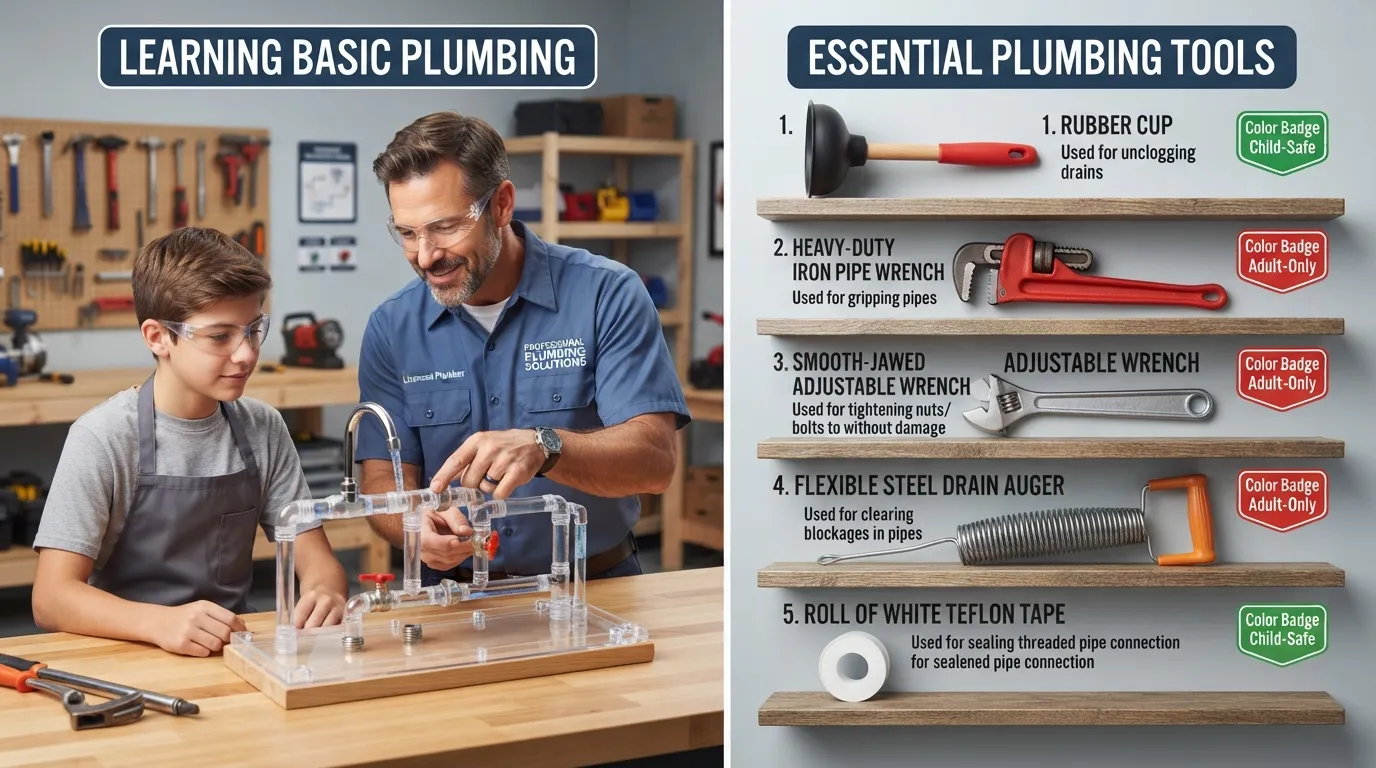
Plunger: A flexible rubber cup attached to a handle that uses air and water pressure to push through minor toilet and drain clogs.
Pipe Wrench: A heavy-duty iron wrench with serrated steel jaws designed to grip and turn round metal pipes securely.
Adjustable Wrench: A versatile smooth-jawed tool with a movable jaw used to tighten hexagonal compression nuts without scratching chrome finishes.
Drain Snake (Auger): A long, flexible steel cable rotated manually or by motor to reach deep into drain lines and clear stubborn blockages.
Plumber’s Tape (Teflon Tape): A thin white PTFE film wrapped around threaded pipe joints to create a watertight seal and prevent minor leaks.
Safe Tools Kids Can Try, and Tools to Leave to Adults
Children can safely handle simple non-powered maintenance tools under adult supervision to learn basic mechanics. Using a standard cup plunger on a sink or wrapping Teflon tape around an unattached pipe fitting helps kids build hands-on confidence.
However, heavy tools like pipe wrenches, electric drain snakes, and metal pipe cutters should remain strictly off-limits to young children. Motorized snakes can twist rapidly, and heavy iron wrenches pose pinching and impact hazards.
Is Plumbing a Good Career for a Curious Kid?
Plumbing offers an excellent, rewarding career path for young people who enjoy hands-on problem solving, science, and practical mechanics. Unlike many professions requiring four-year academic degrees, plumbers learn their trade through paid apprenticeships, combining classroom instruction with real-world experience under a licensed plumber.
Because every home, school, and business relies on functional water lines, skilled plumbers remain in high demand across the country. Becoming a licensed master plumber opens up opportunities to manage large construction projects, run an independent business, and earn a strong income without taking on heavy student loan debt.
A Day in the Life of a Plumber: “Every single day brings a fresh puzzle to solve. One morning you might be using a high-tech video camera to locate a lost toy inside an underground pipe, and by the afternoon you’re installing a brand-new water heater for a family. The best part of the job is turning off a major leak and seeing the instant relief on a homeowner’s face.”
When Kid-Related Clogs Go Deeper: Septic, Main Line and Sewer Issues
Why Repeated Clogs Point to a Bigger Problem
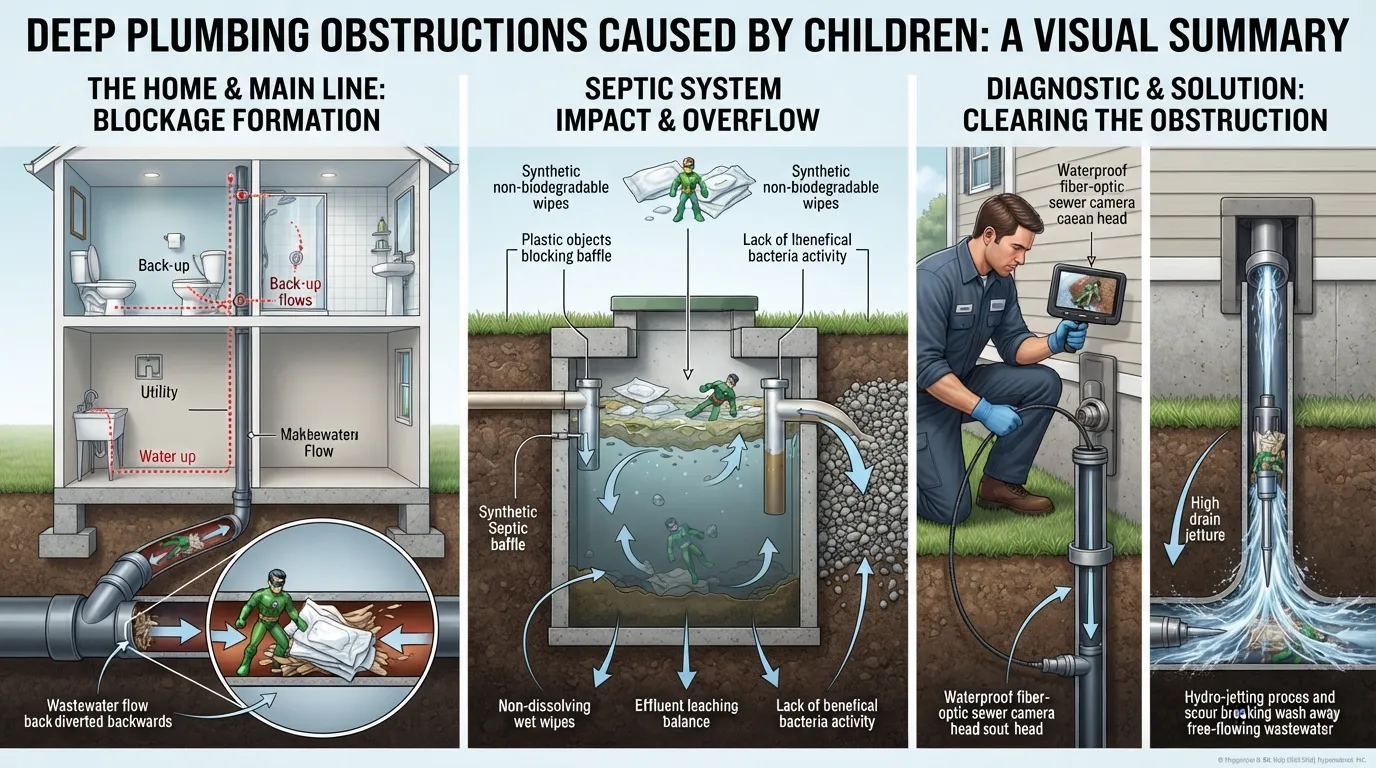
When a single toilet or sink clogs occasionally, the issue usually sits right at the fixture’s trapway. However, when toilet backups happen repeatedly or multiple drains throughout the house start running slowly at the same time, the foreign object flushed by a curious child has likely moved far past the individual drain line and lodged inside your home’s main sewer line.
Persistent gurgling sounds coming from bathroom drains when you run the washing machine, water rising into the shower basin when a toilet is flushed, or persistent sewage odors indoors indicate a major downstream obstruction. Attempting repeated plunging on a main line block will not resolve the issue and often increases water pressure against pipe joints, leading to indoor sewage leaks. When routine clearing fails, scheduling professional drain cleaning can quickly locate and flush out deep-seated debris.
Septic vs. Sewer: Why the Rules Differ
Homes connected to a private septic system face far stricter drain rules than those tied into municipal sewer lines. A septic tank relies on a delicate biological ecosystem of living bacteria to break down organic human waste and toilet paper into sludge and effluent liquid.
Non-flushable items like wipes, cotton swabs, plastic toys, and heavy cooking grease do not break down inside a septic tank. Instead, foreign objects float or sink, quickly filling up the tank and clogging the outlet baffle. Furthermore, pouring harsh chemical drain cleaners down the sink kills the beneficial bacteria needed to break down waste, causing the whole septic system to fail, overflow into the drain field, and require expensive pumping or complete system replacement.
How Wipes and Toys Can End Up Causing Sewer Line Damage
When synthetic flushable wipes or small plastic toys escape the home’s branch pipes, they enter the main sewer line beneath your slab or yard. Main lines are rarely perfectly smooth; over time, older clay, cast iron, or PVC pipes develop tiny offset joints, interior scale buildup, or minor tree root intrusions.
When a hard plastic toy or a cluster of synthetic wipes travels down the sewer pipe, it easily snags on these rough internal spots. Once an initial item catches, every subsequent flush of toilet paper, hair, and grease builds up around it, creating a dense, impenetrable dam. As wastewater collects behind this obstruction, static pressure mounts, which can crack aging pipe walls, cause underground sewage leaks, or trigger sudden sewage backups into the home’s lowest drains. In these severe scenarios, comprehensive sewer line repair and inspection is required to clear the blockage and restore structural pipe integrity.
Why a Plumber Uses Cameras and Professional Tools
Attempting to guess where a flushed toy or clump of wipes is stuck inside hidden underground pipes often leads to unnecessary destruction or ineffective fixes. Modern plumbers utilize specialized fiber-optic video camera inspection systems attached to flexible push-cables to inspect the exact interior conditions of your drain line in real time.
By feeding a waterproof camera into the sewer line, the plumber can locate the precise distance and depth of the child-related obstruction, view what the object is, and evaluate whether the pipe itself has suffered damage. Once located, professionals use specialized tools like motorized drain augers to retrieve hard objects or high-pressure hydro jetting equipment—which blast powerful streams of water through the line—to completely scour away grease, wipe masses, and debris without damaging your plumbing system.
Kids and Plumbing FAQs
What should kids never flush down the toilet?
Kids should never flush wipes, paper towels, tissue paper, cotton balls, Q-tips, dental floss, diapers, or plastic toys. The toilet is designed strictly for human waste and standard toilet paper; all other household items fail to dissolve in water and will quickly create severe pipe blockages.
What does a plumber do for kids? (explain in simple terms)
A plumber is a helper who keeps our home’s water running smoothly and safely. They fix leaky faucets, clear clogged drain pipes, and install big appliances like water heaters so families can enjoy fresh drinking water, clean clothes, and warm bath times every day.
How do I teach my child about plumbing?
Teach children about plumbing through simple household rules, visual experiments, and interactive walks around the home. Show them how to turn off taps completely, perform a jar test comparing dissolving toilet paper to wipes, and guide them in locating fixture shut-off valves behind sinks and toilets.
What are the three types of plumbing?
The three main types of household plumbing systems are the water supply system (delivering pressurized clean water), the drain-waste system (carrying used wastewater away via gravity), and the vent system (supplying air flow so wastewater drains smoothly without siphoning P-trap water seals).
What tools do plumbers use most often?
Plumbers frequently rely on plungers for minor drain obstructions, pipe wrenches to grip heavy threaded metal pipes, adjustable wrenches for delicate chrome nuts, drain snakes (augers) to clear deep line clogs, and Teflon tape to form watertight seals on pipe threads.
What temperature should a water heater be set to for kids?
A home water heater should be capped at 120°F (49°C) when young children live in the house. Setting the thermostat to this safe baseline prevents severe tap water scald injuries, as children’s thin skin burns in under five seconds when exposed to water heated to 140°F.
Are flushable wipes safe for pipes?
No, flushable wipes are not safe for plumbing systems or city sewer infrastructure. Despite product labeling claims, wipes contain durable synthetic fibers that fail to disintegrate in water, causing them to snag on internal pipe joints and trap debris until a complete clog forms.
What should I do if my child flushes a toy?
If a child flushes a toy, stop flushing immediately and turn the chrome valve behind the toilet clockwise to shut off the water supply. Put on rubber gloves to search the bowl opening manually, and avoid using a plunger or chemicals, which push solid objects deeper into lines.
How do I learn basic plumbing as a beginner?
Beginners can learn essential plumbing by reading DIY home maintenance guides, watching video tutorials from licensed plumbers, practicing minor repairs like changing faucet washers or flappers, and enrolling in introductory vocational courses or trade workshops to master hand tools safely.
Should kids learn basic household repairs?
Yes, learning age-appropriate household repairs builds self-reliance, practical problem-solving skills, and respect for home safety. Teaching children how to turn off water valves, clear light sink drains, and conserve water fosters responsible habits that protect living spaces throughout their lives.
What is the 135 rule in plumbing?
The 135 rule in plumbing dictates that any horizontal drain line change in direction must not exceed an aggregate angle of 135 degrees without an accessible cleanout or vent. Plumbers use sweeping 45-degree fittings rather than sharp 90-degree elbows to maintain waste flow momentum and prevent recurring blockages.
Final Takeaways and When to Book a Plumber
Quick Recap: The 6 Golden Rules of Kids and Plumbing
Building a safe and disaster-free home environment starts with consistent daily habits and simple safety rules that every family member can follow.
Flush Only the Big 2: Restrict toilet use strictly to human waste and standard toilet paper—never flush wipes, tissues, or toys.
Keep Fats Out of Sinks: Scrape grease, oils, and solid food particles directly into the trash rather than pouring them down kitchen drains.
Empty Pockets Before Laundry: Inspect children’s hoodie, jacket, and pants pockets for trinkets and wrappers before starting a washing machine cycle.
Cap Water Heater Temperature: Set your water heater thermostat to 120°F (49°C) to protect children from accidental tap water scalds.
Know Your Water Shut-Offs: Teach older kids and teens how to locate and close individual fixture valves and the main water shut-off in emergencies.
Report Leaks Immediately: Reward children for spotting dripping faucets, running toilets, or damp cabinet spots before minor leaks cause major water damage.
Need Help with a Kid-Related Plumbing Problem?
Even with clear rules and careful child-proofing in place, unexpected plumbing mishaps can still happen. Whether a flushed action figure is causing an immediate overflow, a stubborn wipe blockage is slowing down your main line, or you need expert assistance calibrating your water heater, professional help is just a click away. Explore our full range of plumbing services to keep your home’s drainage and water supply operating smoothly year-round.
Main Services
Related Posts
Need a Plumber in Miami?
Schedule service online or speak directly with the EZ Plumbing team.
Owner-Led Local Service
Know who is behind the business before you request service. The owners, contact line and Miami service pages are published clearly.
- Named business owners
- Direct phone and social channels
- Local Miami service information
Clear Help Before You Book
Review the relevant service page, contact the team directly and use the booking page when you are ready—without relying on vague claims.
- Service-specific information
- Direct questions before scheduling
- Clear online booking route