How to Protect Your House from a Hurricane: The Complete 2026 Homeowner Checklist
How to Protect Your House from a Hurricane: The 5 Weak Points to Fix First
Reinforce These 5 Areas
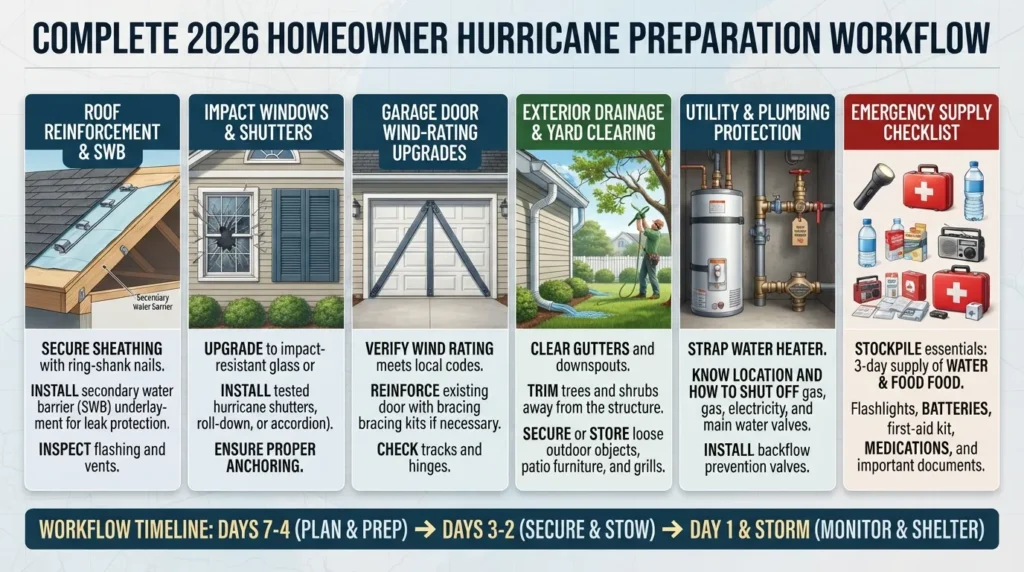
Protecting your home from an impending hurricane requires prioritizing the structural vulnerabilities most susceptible to catastrophic failure. Focusing immediate mitigation efforts on the roof, garage door, windows, exterior doors, and yard landscaping drastically minimizes breach risks during high-wind events. Furthermore, extending defensive measures to protect your plumbing and flood exposure prevents internal devastation from rising water and backup pressures.
Roof: Secure roof-to-wall connections using hurricane clips and tie-downs while inspecting shingles for loose fasteners.
Garage Door: Install a heavy-duty vertical bracing kit or upgrade to a wind-rated door to prevent interior pressure implosions.
Windows: Apply impact-rated shutters or upgrade to laminated hurricane glass to stop windborne debris penetration.
Exterior Doors: Equip entry and patio doors with heavy-duty deadbolts and triple-hinge reinforcement to resist high-velocity wind loads.
Yard and Surrounding Landscape: Trim dead tree limbs, clear loose yard debris, and secure outdoor furniture that can act as destructive projectiles.
Plumbing and Flood Exposure: Install backflow valves on sewer lines and seal foundation cracks to mitigate flood infiltration and sewage backup.
Wind vs. Water: Why You Need to Plan for Both
Severe hurricane damage stems from a dual threat: high-velocity wind and overwhelming water inundation. Wind forces compromise structural integrity by tearing at roofs and shattering openings, which allows pressure differentials to lift structures off their foundations. Meanwhile, storm surge and torrential rainfall flooding drive the majority of lasting property destruction. Effective hurricane mitigation treats wind resistance and flood defense as an integrated strategy rather than separate concerns.
Who This Guide Is For
This blueprint is designed primarily for single-family homeowners looking to harden their properties against severe weather threats, with supplementary considerations for condo owners and renters regarding temporary mitigation. Drawing from firsthand experience assessing post-storm damage across South Florida, local contractors consistently report that unreinforced garage doors and unsecured roof eaves remain the two primary failure points leading to total interior loss.
Is Your Home Hurricane-Ready? A 10-Minute Vulnerability Check
Know Your Home: Age, Construction, and Roof Shape
Evaluating your home’s hurricane resilience starts with identifying its construction era and structural design. Homes built after the implementation of stringent post-Hurricane Andrew building codes feature vastly superior wind-load resistance compared to older legacy structures. When assessing an older home, crucial inquiries include verifying when the roof was last replaced and whether continuous load paths were retrofitted.
Construction Era: Homes constructed after 2002 generally comply with modern wind-load standards, while pre-1994 properties require targeted structural retrofits.
Roof Geometry: Hip roofs (sloping down on all four sides) aerodynamic deflect high-velocity winds far better than gable roofs (which feature triangular end walls prone to uplift failure).
Framing Materials: Concrete block construction (CBS) offers superior structural rigidity and wind resistance compared to traditional wood-frame walls.
Self-Check Checklist (Yes/No Table)
Conducting a quick preliminary audit helps categorize your property’s immediate risk level before scheduling a professional assessment. Review each vulnerability point below to determine your risk score.
| Vulnerability Item | Yes / No | Risk Impact |
| Roof-to-Wall Connections Secured (Hurrican Clips/Straps) | [ ] Yes [ ] No | High |
| Impact-Rated Windows or Certified Shutters Installed | [ ] Yes [ ] No | High |
| Heavy-Duty Wind-Rated Garage Door Installed | [ ] Yes [ ] No | High |
| Roof Covering Age Under 15 Years | [ ] Yes [ ] No | Medium |
| Trees Trimmed and Clear of Power Lines and Roof | [ ] Yes [ ] No | Medium |
| Located Outside High-Risk Flood and Evacuation Zones | [ ] Yes [ ] No | High |
| Openings Completely Sealed Against Wind-Driven Rain | [ ] Yes [ ] No | Low |
Low Risk: 6 to 7 “Yes” answers indicate a hardened structure requiring only minor seasonal maintenance.
Medium Risk: 3 to 5 “Yes” answers point to moderate vulnerabilities requiring targeted fixture upgrades.
High Risk: 0 to 2 “Yes” answers signal critical structural deficiencies demanding urgent professional mitigation.
What Type of House Is Safest in a Hurricane?
No single architectural style is completely hurricane-proof, but specific structural combinations offer the highest degree of safety. The safest properties feature reinforced concrete block construction, post-code compliance, elevated foundations, and a hip-roof design with engineered roof-to-wall tie-downs. Furthermore, integrating complete impact-rated openings ensures the building envelope remains sealed against catastrophic internal pressure spikes.
Condo, Apartment, or Renting? What You Can Still Do
Renters and condo residents face unique limitations but can still take proactive steps to ensure personal safety during severe storms. Coordinating with property managers regarding window protection, reviewing HOA shutter policies, and securing interior living spaces are vital renter actions. Additionally, purchasing robust renter’s insurance ensures coverage for temporary housing and personal property loss during displacement.
Landlord Consultation: Ask property management if impact shutters are provided, stored on-site, or if tenant-installed temporary solutions are permitted.
Interior Preparation: Move valuable electronics away from windows, elevate items off the floor to prevent minor water damage, and secure balcony objects indoors.
Insurance Verification: Confirm your renter’s insurance policy explicitly includes loss-of-use coverage and evaluate whether separate flood insurance is necessary.
Find Your Flood Zone and Evacuation Zone
Understanding your property’s precise flood zone and evacuation zone is critical for making timely, life-saving decisions when a storm approaches. Flood zones dictate structural inundation risks and insurance requirements, whereas evacuation zones determine mandatory departure orders issued by local emergency management. Homeowners can verify their exact status online using official mapping tools provided by municipal agencies.
Inspector Insight: Professional home inspectors conducting wind mitigation reviews in older Miami neighborhoods frequently uncover deteriorated metal clips, unsealed roof decks, and unanchored garage door tracks that compromise structural integrity during major wind events.
Roof Protection: Hurricane Straps, Sealing, and Secondary Water Barrier
Why the Roof Is the First Thing to Fail
High winds create dangerous aerodynamic uplift forces that act like an airplane wing over your roof, pulling upward on the eaves and ridge lines. When wind enters through a broken window, open door, or missing shingle, it creates internal pressurization that pushes up from the inside. Once the roof deck breaches, water floods the structure, destroying insulation, drywall, and structural framing within minutes.
Uplift Mechanics: Wind traveling over a sloped roof creates a negative pressure zone, literally sucking roof panels away from the walls.
Internal Pressurization: Breached building envelopes trap high-pressure air inside, doubling the upward forces acting on the roof assembly.
Cascading Failures: A compromised roof exposes the entire interior to catastrophic water damage and structural destabilization.
Hurricane Straps and Clips: Connecting Roof to Walls
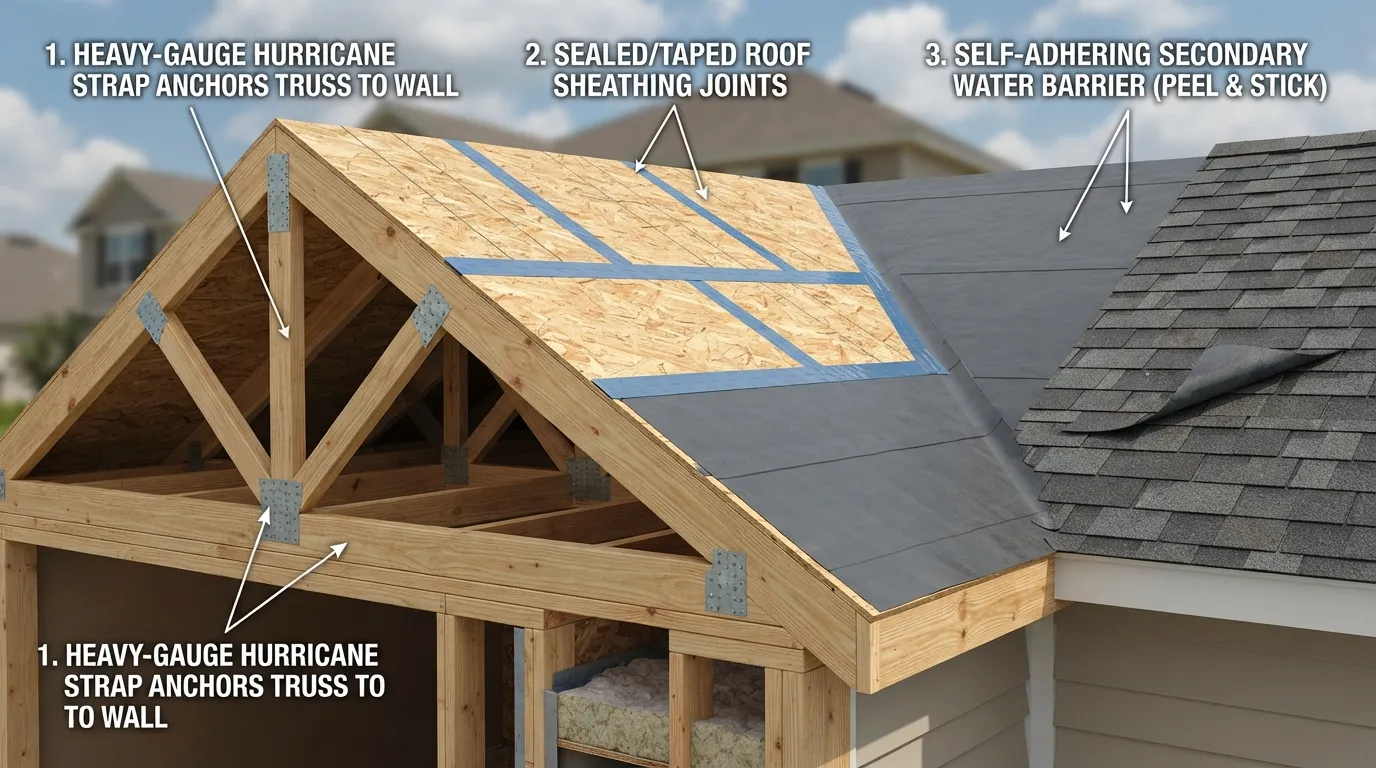
Hurricane straps and clips are heavy-duty galvanized steel connectors that physically anchor your roof rafters or trusses directly to the building’s exterior walls. Without them, uplift forces can easily lift an entire roof structure right off the framing. According to FEMA’s guide to protecting your property from severe wind, proper load-path connections are vital for preventing catastrophic wind damage. Retrofitting these connectors is almost always a specialized job requiring professional carpentry and access to attic spaces or exterior wall cavities.
Load Path Continuity: Metal straps transfer wind energy safely from the roof down through the walls and into the foundation.
Professional Installation: Retrofitting requires precise fastening with approved structural screws or nails into framing members.
Insurance Advantages: Installing certified hurricane clips can significantly lower your annual homeowners insurance premiums in wind-prone regions.
Secondary Water Barrier: Your Backup if Shingles Blow Away
A secondary water barrier is a self-adhering peel-and-stick underlayment applied directly across the entire roof decking before the final shingles or tiles are installed. If severe wind strips away your exterior shingles, this waterproof membrane seals all panel seams and nail penetrations, completely preventing rain from leaking into your attic.
Seam Sealing: The rubberized asphalt membrane permanently seals every joint between plywood or OSB roof decking sheets.
Insurable Protection: Many modern building codes in hurricane-prone zones mandate secondary water barriers for new roof replacements.
Total Peace of Mind: It acts as an invaluable last line of defense when extreme storms compromise your primary roofing materials.
Inspect and Fix Loose Shingles and Damaged Flashing
A proactive pre-season roof inspection catches minor vulnerabilities before gale-force winds turn them into major structural failures. Walk the perimeter safely with binoculars or hire a licensed roofing contractor to thoroughly evaluate your roof’s overall condition and integrity.
Shingle Condition: Look for curling, cracking, granule loss, or missing shingles that expose the underlayment.
Flashing Integrity: Inspect metal flashing around chimneys, vent pipes, and valley junctions to ensure tight seals.
Vents and Roof Age: Verify that all attic vents are securely fastened and calculate whether your roof is nearing the end of its lifespan.
Gable End Bracing and Soffits
Gable-end roofs feature triangular wall extensions that are exceptionally vulnerable to inward collapse from high wind pressure if they lack proper internal bracing. Reinforcing gable ends with diagonal 2×4 wood braces tied into the ceiling joists stabilizes the wall against lateral loads. Additionally, inspecting and securing vented soffits prevents wind from getting trapped underneath the overhangs and tearing the eaves apart.
Upgrade Case Example: A homeowner in a coastal wind zone recently retrofitted hurricane clips, applied a peel-and-stick secondary water barrier, and braced their gable ends for an approximate total cost of $2,800. During the next major windstorm, neighboring homes suffered severe shingle loss and water intrusion, while this upgraded roof sustained zero structural or water damage.
Windows, Doors, and Garage Doors: How to Secure Every Opening
Why Openings Matter: Pressure Builds Up Inside the Home
Maintaining the building envelope is critical because windows, doors, and garage openings represent the primary entry points for destructive wind forces. When an unmitigated opening shatters, high-velocity wind rushes inside and abruptly spikes the interior air pressure. This internal pressurization pushes upward against the roof and outward against exterior walls, significantly multiplying the likelihood of total structural failure.
Impact-Resistant Windows vs. Storm Shutters vs. Plywood
Choosing the right protection for your glass openings involves balancing upfront investment, convenience, and long-term durability.
| Protection Type | Protection Level | Cost Range | Installation Time | Reusability | Permit Needs |
| Impact-Resistant Windows | Maximum | High ($15,000+) | Permanent | Permanent | Yes |
| Roll-Down Shutters | High | High ($8,000+) | Minutes | High | Yes |
| Accordion Shutters | High | Medium ($3,500+) | Fast (15 Mins) | High | Yes |
| 5/8-Inch CDX Plywood | Moderate | Low ($300+) | Hours | Low | No |
Plywood serves as a viable emergency alternative when engineered shutters are absent. Homeowners must use strict 5/8-inch CDX exterior plywood anchored securely with heavy-duty masonry tapcons or hurricane clips spaced every 6 to 8 inches to withstand severe wind loads.
Why You Should Never Use Tape on Windows
Applying tape in an “X” or grid pattern across window glass provides zero structural reinforcement against flying debris or severe wind pressure. Taped windows still shatter upon impact, and the practice only creates larger, more dangerous glass shards that are harder to clean up post-storm. Homeowners should skip the tape entirely and invest in certified impact protection or properly installed shutters.
Watch how these installs are done.
Exterior Doors: Hinges, Deadbolts, and Sealing
Exterior entry and patio doors require robust hardware reinforcement to prevent high-velocity winds from bowing panels inward or ripping them off their frames. Ensuring structural security requires upgrading standard setups to meet rigorous wind-load tolerances.
Heavy-Duty Hinges: Equip every exterior door with a minimum of three commercial-grade, non-removable pin hinges to resist outward pulling forces.
Secure Deadbolts: Install a 1-inch throw deadbolt lock backed by a heavy-duty metal strike plate anchored deep into the wall stud.
Weather Stripping and Caulk: Apply durable silicone weather stripping and exterior-grade polyurethane caulk around the frame to stop wind-driven rain infiltration.
Sliding Glass Doors: The Overlooked Weak Point
Sliding glass doors possess expansive surface areas and light aluminum tracks that easily derail or shatter under extreme wind pressure. Securing these large glass panels requires installing auxiliary foot-bolts at the base, heavy-duty track blocks to prevent the door from lifting out of its frame, or custom sliding glass shutter protection.
Garage Door: The Most Common Point of Structural Failure
Garage doors feature massive surface areas that make them exceptionally vulnerable to wind-load buckling and total structural implosion. Upgrading to a certified wind-rated garage door or retrofitting existing doors with heavy-duty vertical steel bracing kits prevents wind from blowing the entire assembly inward. Because garage failure often triggers cascading structural damage throughout the rest of the house, securing this opening is an absolute priority.
Miami-Dade Product Approval and Building Code Labels
Purchasing storm protection requires verifying that all materials carry official code compliance certification, such as a Miami-Dade Notice of Acceptance (NOA) or Florida Product Approval stamp. These labels guarantee that shutters, glass, and anchorage systems have undergone rigorous large-missile impact testing and cyclic pressure evaluations required by High-Velocity Hurricane Zones (HVHZ).
Contractor Tip: Common DIY errors during shutter installation include using undersized anchors, failing to embed masonry screws deep enough into concrete blocks, and leaving gaps around framing joints that allow wind-driven rain to bypass the seal.
Yard and Exterior Prep: Stop Debris Before It Becomes a Projectile
Trim Trees and Remove Weak or Dead Branches
Overgrown trees and dead limbs present severe hazards during a hurricane, transforming into high-velocity projectiles that shatter windows and damage roofs. Homeowners must complete structural tree trimming well in advance of hurricane season rather than rushing days before a storm makes landfall. For large mature trees, hiring a licensed arborist ensures proper crown thinning and structural pruning without harming the health of the tree.
What to Bring Inside Before a Storm
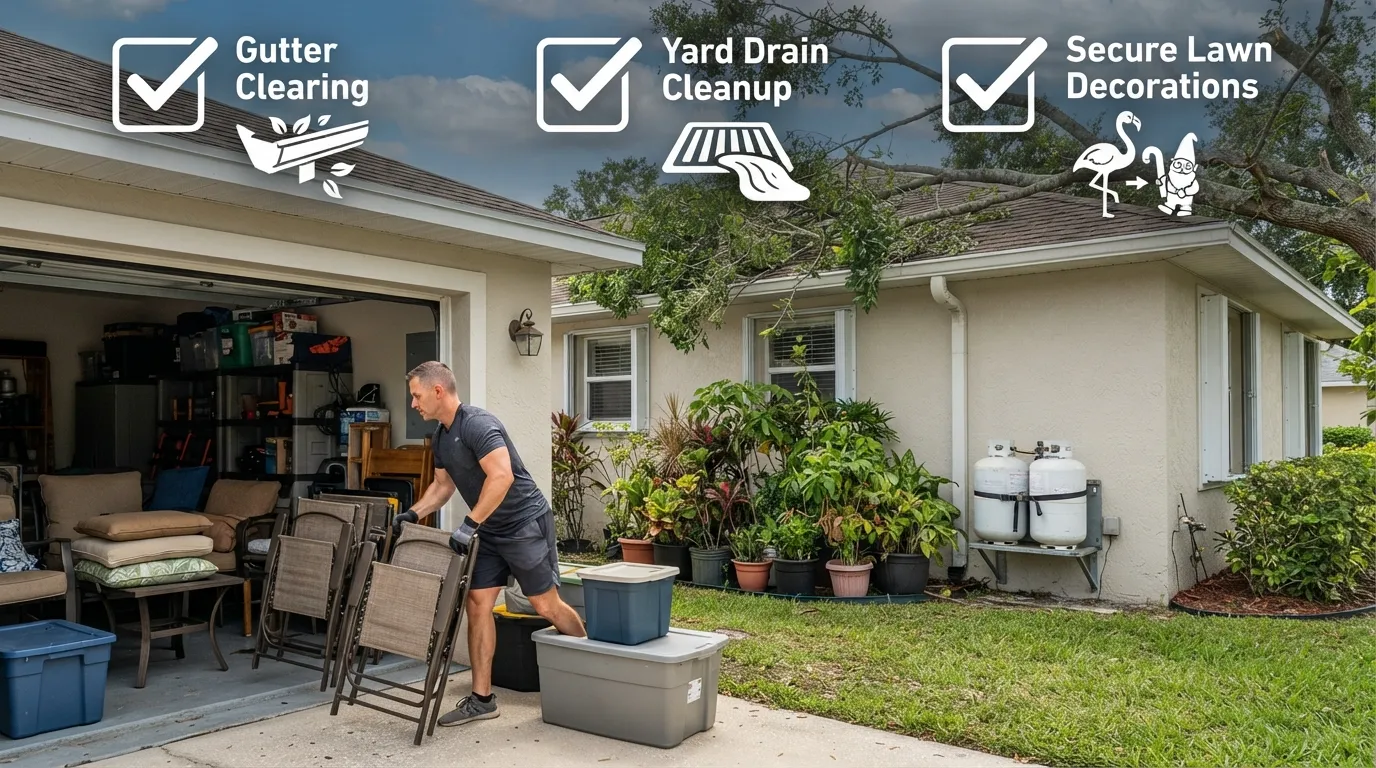
Securing loose items around your property is essential to prevent wind-driven debris from damaging your home and neighboring structures. Bringing items indoors eliminates potential hazards before gale-force winds arrive.
Outdoor Furniture: Store patio tables, chairs, and lounges inside a garage or shed.
Grills and Toys: Move propane grills, children’s toys, and sports equipment indoors.
Potted Plants and Decor: Relocate heavy planters, wind chimes, and yard decorations away from high winds.
Large Fixtures: Anchor heavy items that cannot be moved indoors securely to structural ground anchors using heavy-duty straps.
Check Fences, Sheds, Pool Equipment, and Outdoor AC Units
Unsecured exterior fixtures and structural attachments can easily tear away under extreme wind loads, causing secondary property damage. Conducting a thorough pre-storm exterior check ensures these large components remain locked down.
Fences and Sheds: Inspect fence panels for loose boards and ensure outbuildings are tightly bolted to their foundations.
Pool Equipment: Cover pool pumps with waterproof material and turn off electrical breakers to prevent surge damage.
Outdoor AC Units: Verify that condensing units are firmly bolted to their concrete mounting pads to prevent displacement.
Gutters and Downspouts: Clear Them Early
Clogged gutters and downspouts severely worsen water intrusion risks by causing heavy rainfall to overflow directly against your home’s foundation. Clearing organic debris, leaves, and shingle granules from your drainage system early guarantees that storm runoff channels safely away from exterior walls. Maintaining clear pathways prevents pooling water from seeping into crawlspaces or basement levels.
Contractor Insight: During pre-storm property walk-arounds, local contractors frequently notice unsecured decorative stones, forgotten garden tools, and loose patio umbrellas left outside, which consistently become the primary cause of shattered windows during major wind events.
Flood and Water Protection: What Wind Guides Leave Out
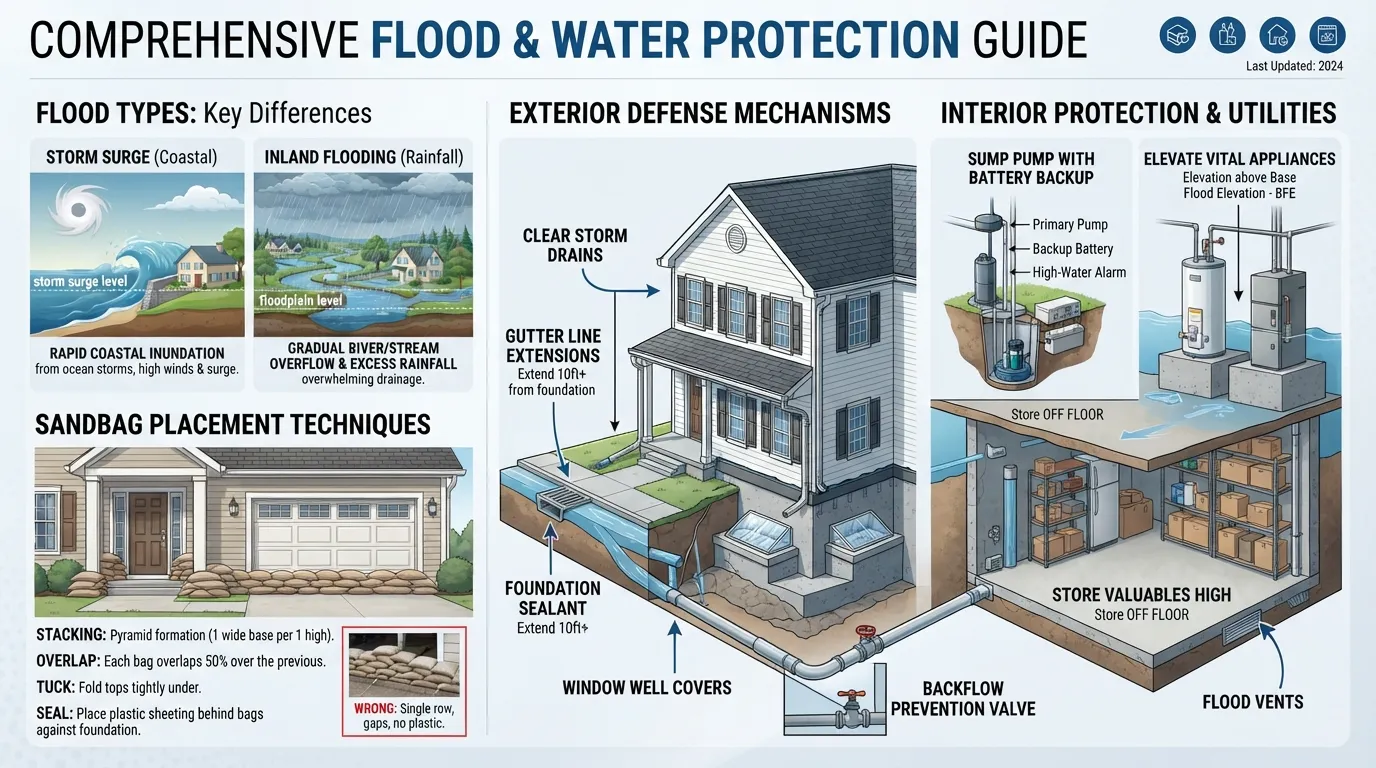
Storm Surge vs. Rainfall Flooding: What Is the Difference?
Storm surge is an abnormal rise of water generated by a storm’s winds, pushing massive walls of ocean water ashore, whereas rainfall flooding results from intense, overwhelmed inland precipitation. According to National Hurricane Center (NHC) and National Weather Service (NWS) data, water is historically the deadliest hurricane hazard, accounting for nearly half of all tropical cyclone fatalities mostly through drowning.
Storm Surge Dynamics: Driven by coastal barometric pressure and wind stress, moving inland with immense destructive force.
Rainfall Flooding Mechanics: Accumulates slowly or rapidly depending on terrain saturation, local drainage capacity, and regional flood zone classifications.
Combined Threat: Properties located outside coastal flood zones can still experience catastrophic inundation from torrential rainfall bands.
Do Sandbags Actually Protect Against Hurricane Flooding?
Sandbags are effective only for low-flow protection (typically up to two feet of water) and minor surface runoff diversion, but they will not completely seal out water or withstand major storm surges. FEMA and NWS guidance emphasizes that sandbags must be filled only halfway and overlapped in a staggered brick-like pattern to create a functional barrier.
Where They Help: Redirecting minor sheet flow away from vulnerable thresholds and low-level entry points.
Where They Fail: Deep standing water, high-velocity coastal surges, and prolonged saturation that degrades woven fabric.
Placement Rules: Always tuck the open flap under the bag, face the fold upstream against the water flow, and limit unbacked stacks to three layers.
Clear Storm Drains, Yard Drains, and Gutter Lines
Preventing standing water around your home’s foundation starts with maintaining unobstructed exterior drainage networks before a storm hits. Routine drain cleaning ensures that torrential downpours can freely exit your property rather than pooling against exterior walls.
Gutter Extensions: Direct roof runoff at least three to five feet away from the foundation perimeter.
Debris Removal: Clear leaves, silt, and trash from curb-side storm drains and yard catch basins.
Slope Management: Ensure surrounding landscape grade slopes away from exterior foundation walls to discourage pooling.
Sump Pumps and Battery Backup
A primary sump pump expels water collected in a basement pit, but severe storms frequently cause municipal grid power outages that render standard pumps useless. Professional sump pump installation and repair protects low-lying subterranean spaces from catastrophic flash flooding during peak power failures.
Battery Backup Systems: Provide seamless auxiliary power to run secondary pumps for hours during extended grid outages.
Check Valve Inspections: Verify that discharge lines expel water far enough away from the foundation to prevent recycling.
Regular Testing: Pour water into the pit monthly to ensure the float switch activates properly before storm season.
Sewer Backflow: The Hidden Flood Risk
Municipal sewer mains can become overwhelmed during heavy rain events, forcing contaminated municipal water backward into home drain lines and floor drains. Installing backflow prevention valves and maintaining clear sewer cleanout access prevents toxic wastewater from flooding living areas.
Backflow Valves: Automatically seal shut when wastewater attempts to flow backward into the house plumbing network.
Routine sewer line inspection and repair: Identifies hidden root intrusions or structural collapses that exacerbate backup vulnerabilities.
Floor Plug Utilization: Temporarily plug basement floor drains with mechanical plugs if municipal authorities issue severe flooding warnings.
Raise Valuables and Appliances
Elevating critical household items minimizes financial loss and limits electrical hazards if water breaches the building envelope. Moving possessions out of harm’s way remains one of the most effective damage-mitigation steps a homeowner can execute.
Appliance Elevation: Raise washing machines, dryers, and water heaters onto concrete blocks or sturdy platforms.
Electrical Safety: Relocate electronics, power strips, and irreplaceable documents to upper floors or high shelves.
Plumber’s Insight: Post-storm plumbing inspections frequently reveal severe water damage inside low-mounted wall cavities, where saturated drywall compromises hidden supply lines, destroys baseboard heater connections, and warps luxury cabinetry frames from the bottom up.
Utilities and Interior Prep: Water, Power, Gas, and Your Water Heater
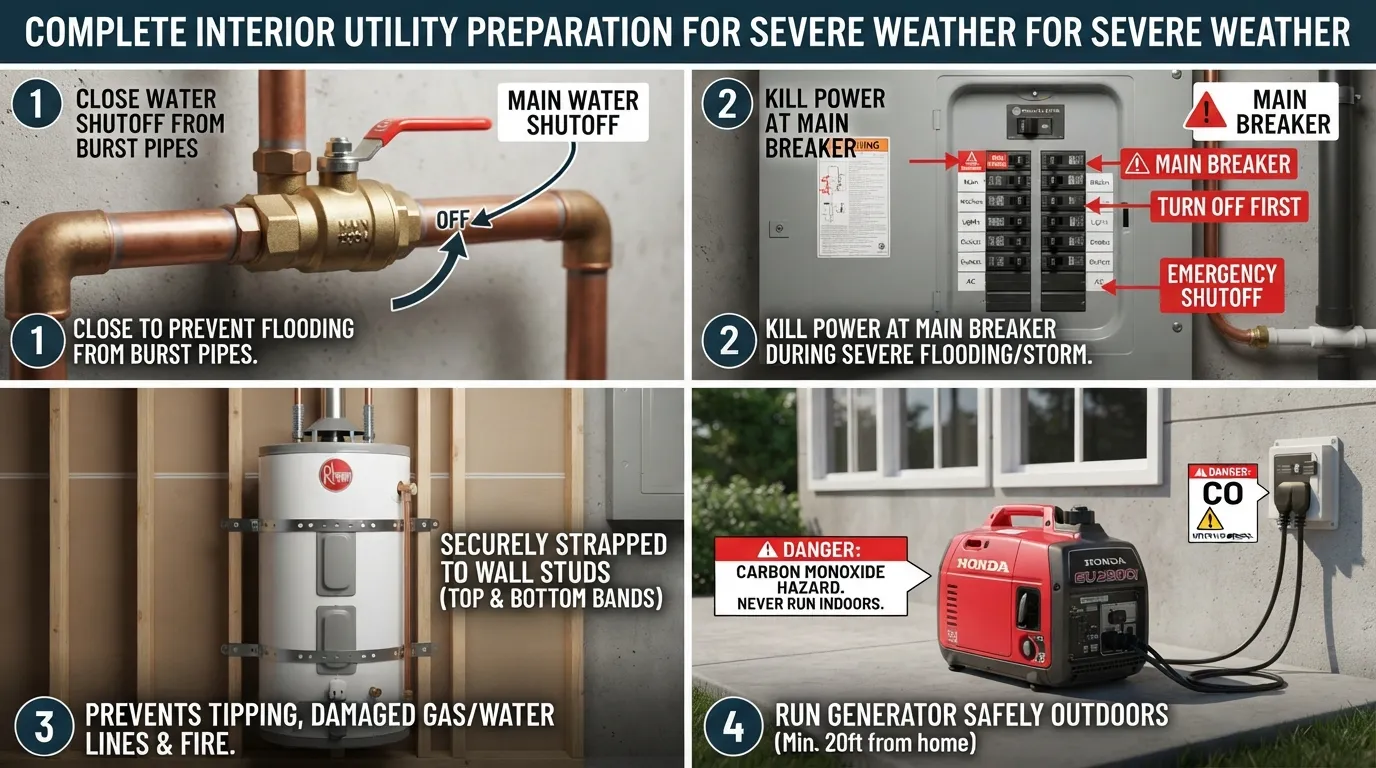
Know Where Your Main Water Shutoff Valve Is
Locating and testing your main water shutoff valve before a severe storm strikes prevents internal flooding if branch lines rupture due to structural stress or flying debris. Homeowners must test this valve annually to ensure it operates smoothly, and be prepared to shut it off if municipal water lines become contaminated or authorities issue boil-water advisories.
Valve Location: Typically found near the perimeter wall where the main water supply line enters the home, or outdoors near the water meter box.
Testing Routine: Turn the valve clockwise to close and counterclockwise to open, checking for any leaks around the stem or packing nut.
Emergency Action: Shut off the main supply immediately if structural damage threatens indoor plumbing pipes to minimize interior water loss.
Secure or Prepare Your Water Heater
A standard tank water heater can become a major safety and flooding hazard if it shifts, leaks, or ruptures during severe wind and flood events. Professional water heater services can help verify proper seismic or hurricane strapping to anchor the unit securely against wall studs.
Strapping Standards: Install heavy-gauge metal straps across the top and bottom third of the tank to prevent tipping.
Evacuation Shutdown: Turn off the gas supply valve or flip the electrical circuit breaker to the unit if you evacuate, preventing dry-firing or electrical shorts.
Post-Storm Inspection: Inspect the base thoroughly for leaks, gas odors, or electrical damage before restoring power or gas supply upon return.
Electrical and Gas Safety
Water and electricity create a lethal combination during and after a hurricane, requiring strict adherence to utility shutdown protocols. Never touch wet electrical panels, submerged outlets, or appliances while standing in water, as hidden currents can cause fatal electrocution.
Circuit Breakers: Turn off the main electrical panel if rising water threatens interior outlets or wiring.
Natural Gas Shutoff: Know how to use a wrench to turn off the external gas meter valve only if you smell gas or suspect a ruptured line.
Professional Clearance: Have a licensed technician inspect electrical panels and gas lines before re-energizing systems after a flood.
Generator Safety: Never Run One Indoors
Portable generators produce high levels of carbon monoxide (CO), an odorless and colorless gas that can quickly prove fatal in enclosed spaces. Always operate generators outdoors in a well-ventilated area positioned far away from windows, doors, and intake vents.
Placement Distance: Keep the generator at least 20 feet away from the home with the exhaust pointed away from living areas.
Carbon Monoxide Alarms: Install working battery-operated CO detectors on every level of the home before running backup power equipment.
Fuel Storage: Store approved fuel containers in a cool, ventilated detached shed away from open flames or water heaters.
Should You Fill the Bathtub With Water?
Filling your bathtub provides a reliable, emergency supply of non-potable water for flushing toilets and cleaning after a storm disrupts municipal water service. According to FEMA and Ready.gov guidelines, this stored water is strictly for sanitation and hygiene use, and should not be consumed for drinking or cooking unless properly filtered and treated.
Sanitation Prep: Clean and sanitize the tub thoroughly with a bleach solution before plugging the drain and filling it.
Utility Backup: Use buckets to bail stored bathtub water directly into toilet bowls to manually flush waste when water pressure fails.
Safety Cover: Cover the filled tub with a secure plastic sheet or lid to keep out debris and prevent accidental child drowning hazards.
Smart Leak Sensors and Water Shutoff Valves
Advanced hurricane mitigation technology now includes smart water leak sensors and automatic shutoff valves that protect properties from catastrophic indoor flooding. These automated systems detect abnormal moisture or continuous flow and instantly shut off the main water supply remotely or locally.
Sensor Placement: Place smart moisture detectors near water heaters, washing machines, and low basement floors.
Automatic Mitigation: Integrated motorized ball valves cut off water delivery within seconds of detecting a pipe rupture or major appliance leak.
Mobile Alerts: Receive instant notifications on your smartphone regarding plumbing leaks even while evacuated miles away.
Plumber’s Checklist: 5 Plumbing Tasks Before You Evacuate
Locate and test the main water shutoff valve to ensure a quick emergency seal.
Strap the water heater securely and shut off its power or gas supply.
Clear all basement floor drains and test the sump pump battery backup system.
Plug lower-level sewer and floor drains to prevent municipal backflow contamination.
Turn off automatic ice makers and fill bathtubs for emergency sanitation needs.
Hurricane Prep Timeline: What to Do Before the Season, 72 Hours Out, and 24 Hours Out
Before Hurricane Season (June 1 to November 30)
Preparing long before hurricane season begins ensures your property and insurance policies are fully optimized against severe weather threats. Conducting comprehensive home inspections and updating your home inventory prevents costly gaps when filing post-storm claims.
Insurance Review: Verify that your policy covers flood damage, as standard homeowner insurance excludes rising surface water.
Property Hardening: Clear dead tree branches, service backup generators, and check roof seals well ahead of any developing hurricane watch vs. warning alerts.
Home Inventory Documentation: Record high-resolution video and photos of all room contents, structural finishes, and valuable assets for insurance documentation.
72 Hours Before Landfall
As a tropical system organizes and a hurricane watch is upgraded to a warning, focus on acquiring vital emergency supplies and securing outdoor property. Securing resources three days out helps you avoid panic buying, traffic gridlock, and last-minute shortages of critical items.
Supply Stocking: Purchase non-perishable food, bottled water, batteries, and essential medications to sustain your household.
Opening Protection: Install hurricane shutters or cut and mount exterior plywood over vulnerable glass windows and sliding doors.
Financial and Power Prep: Withdraw physical cash, fill vehicle fuel tanks completely, and charge all portable electronic devices and power banks.
24 Hours Before Landfall
Executing your final 24-hour checklist involves locking down the exterior envelope and protecting vital family documents. Bringing loose items indoors prevents dangerous wind-borne projectiles from shattering windows and damaging siding.
Outdoor Clearance: Bring patio furniture, potted plants, trash cans, and decorative items inside a garage or secure shed.
Document Safeguarding: Place passports, deeds, insurance policies, and birth certificates in waterproof, fireproof storage containers.
Final Visual Log: Walk through your entire property recording video evidence of its immediate pre-landfall condition.
Evacuating: When to Leave and What to Take
Heeding a mandatory evacuation order issued by local emergency management officials is critical for personal safety during severe storm surges. Planning your evacuation route ahead of time prevents panic and ensures your family and pets reach safety efficiently.
Route Mapping: Identify multiple primary and secondary evacuation highway routes away from low-lying coastal flood zones.
Pet Preparedness: Pack pet food, carriers, vaccination records, and extra water for every animal family member.
Lock-Up Routine: Turn off main electrical breakers and gas valves before locking all doors and windows securely behind you.
10 Hurricane Essentials Checklist
Assembling a comprehensive emergency kit satisfies core survival requirements during prolonged utility outages and community isolation. Gather these ten core hurricane preparation checklist items before severe weather impacts your region.
Water: One gallon of water per person per day for at least three to five days.
Food: Non-perishable items, protein bars, and canned goods requiring minimal preparation.
Flashlight: Reliable LED flashlights paired with extra batteries or hand-crank options.
NOAA Weather Radio: Battery-powered or hand-crank emergency radio to track live meteorological updates.
First Aid Kit: Comprehensive bandages, antiseptic wipes, and wound care supplies.
Medications: A 30-day supply of prescription drugs and critical medical devices.
Important Documents: Waterproof folder containing IDs, insurance policies, and emergency contacts.
Phone Chargers: Fully charged power banks and auxiliary charging cords.
Cash: Small denomination bills for transactions when electronic point-of-sale systems fail.
Sanitation Supplies: Wet wipes, heavy-duty trash bags, and hand sanitizer.
Hurricane First Aid Kit Basics
A properly stocked first aid kit is essential for treating minor injuries when professional emergency medical services are temporarily delayed. Ensure your medical supplies are stored in a waterproof, clearly labeled container that is easily accessible in the dark.
Wound Care Essentials: Sterile gauze pads, adhesive bandages, medical tape, antibiotic ointment, and burn cream.
Trauma Supplies: Trauma shears, elastic wrap bandages, disposable nitrile gloves, and instant cold packs.
Personal Care Items: Over-the-counter pain relievers, anti-diarrheal medication, tweezers, and specialized personal medical equipment.
Downloadable Master Checklist & Recovery Note: Keep this hurricane checklist printed and laminated in your emergency binder. In major disaster zones, local emergency response and municipal utility rescue teams may take 72 to 120 hours to arrive and restore basic services following a catastrophic direct landfall.
Hurricane Myths and Safety During the Storm
Where Is the Safest Place in a House During a Hurricane?
The safest location inside a residential home during a hurricane is a small, windowless interior room on the lowest safe floor, such as a centralized hallway, walk-in closet, or bathroom. Staying away from exterior glass and heavy structural walls protects you from flying debris and high-velocity wind pressure.
Room Selection: Choose a ground-floor interior space shielded by multiple walls from the exterior envelope.
Flood Awareness: Ensure your chosen safe room is elevated above potential flash flooding levels if storm surge is a threat.
Emergency Nesting: Move mattresses, pillows, and emergency supplies into the room before severe wind bands arrive.
Should You Crack a Window During a Hurricane?
Opening or cracking a window during a hurricane is a dangerous myth that will not equalize pressure; instead, it allows wind and rain inside to destabilize your roof. The National Weather Service (NWS) and National Hurricane Center (NHC) confirm that sealing all windows tightly prevents dangerous interior wind pressurization.
Pressure Equilibrium: Modern homes are not airtight enough for pressure differentials to cause explosive roof failure unless an opening breaches first.
Water Damage: Cracking a window invites torrential rain and flying debris straight into living spaces, ruining interiors instantly.
Structural Integrity: Keep all windows securely latched, shuttered, and locked down throughout the entire duration of the storm.
Should You Close Interior Doors During a Hurricane?
Closing interior doors throughout your home during a hurricane helps compartmentalize air pressure and provides a secondary barrier against flying glass and debris. If an exterior window or door fails, closed interior doors can significantly slow down room-to-room wind propagation.
Pressure Control: Helps balance internal wind drafts if the building envelope is partially compromised.
Debris Barrier: Traps broken glass, insulation, and splintered material inside individual rooms.
Safe Evacuation Routes: Keep paths to your primary safe room clear of heavy furniture that could shift.
Should You Hide in a Basement During a Hurricane?
Basements are extremely dangerous during a hurricane if your property is located in a storm surge or flash flood zone, as subterranean spaces fill rapidly with water. While basements offer excellent shelter from tornadoes, hurricane flood waters make underground rooms a severe drowning hazard.
Flood Vulnerability: Groundwater pressure and surface runoff can inundate basements within minutes during heavy rainfall events.
Escape Risk: Submerged stairwells make exiting a flooded basement nearly impossible once water levels rise.
Alternative Shelter: Use above-ground interior rooms if your area is prone to coastal surge or heavy inland flooding.
Does Taping Windows Work?
Taping windows does nothing to prevent glass from shattering under high winds and only creates large, dangerous shards rather than smaller pebbles. As cross-referenced in Section 4, window protection requires solid impact-rated hurricane shutters or engineered exterior plywood barriers.
Shatter Resistance: Tape provides zero structural reinforcement against flying tree branches or heavy wind loads.
Clean-Up Delays: Peeling baked-on adhesive tape off shattered window frames after a storm creates immense safety hazards.
What Causes the Most Deaths in a Hurricane?
Water is historically the leading cause of fatalities during a tropical cyclone, with freshwater and coastal storm surge flooding accounting for nearly 90% of hurricane-related deaths. According to National Weather Service data, drowning from storm surge and inland rainfall inundation far outpaces casualties caused by high winds.
Storm Surge Lethality: Fast-moving ocean water sweeps structures off foundations and traps residents in low-lying areas.
Inland Flash Floods: Rapidly rising creeks and overflowing rivers surprise communities far away from the initial coastal landfall zone.
Why You Should Not Go Outside During the Eye
Stepping outside during the calm “eye” of a hurricane is a fatal mistake because fierce winds will resume instantly from the opposite direction. The deceptive weather lull lasts only a short time before eyewall winds return with devastating force.
Deceptive Calm: Blue skies and low wind speeds in the eye trick residents into thinking the storm has completely passed.
Sudden Wind Reversal: Gale-force winds hit from the reverse direction without warning, turning loose debris into lethal projectiles.
Common Mistakes We See During Hurricanes
Relying on masking or packing tape to protect fragile glass windows from hurricane-force wind pressure.
Venturing outside during the eye of the storm to inspect roof damage or clear clogged gutters.
Staying in low-lying basements or ground-floor coastal rooms when a mandatory storm surge evacuation order is active.
Operating unvented gas stoves or portable combustion generators inside enclosed living areas during power outages.
What Hurricane Protection Costs: DIY vs. Professional, Permits, and Insurance Savings
Cost Table: Typical Price Ranges for Common Upgrades
Investing in hurricane protection requires balancing upfront capital with long-term property preservation and insurance savings. Local project estimates and regional market data for 2026 reflect the following typical price ranges for common residential hardening upgrades:
| Hurricane Mitigation Upgrade | Typical Cost Range (Installed) | Primary Protection Benefit |
| Hurricane Shutters (Panels/Accordion) | $1,500 – $5,800 | Shields windows and glass doors from windborne debris |
| Impact Windows (Whole Home) | $15,000 – $32,000 | Permanent, year-round wind and break-in protection |
| Roof Secondary Water Barrier | $1,500 – $3,500 (or re-roof add-on) | Seals roof deck seams to block interior water intrusion |
| Roof-to-Wall Straps / Clips | $1,200 – $3,000 | Anchors roof framing securely to exterior wall studs |
| Wind-Rated Garage Door | $1,500 – $4,000 | Prevents catastrophic internal structural pressurization |
| Sump Pump with Battery Backup | $900 – $2,500 | Stops basement and crawlspace flooding during power outages |
| Professional Tree Trimming | $450 – $1,500 | Eliminates hazardous dead limbs and nearby canopy hazards |
DIY vs. Hire a Licensed Pro
Understanding the boundary between safe DIY maintenance and mandatory licensed contractor work prevents legal fines, insurance claim denials, and structural failures. Building permits are legally required for major structural modifications, electrical changes, and plumbing retrofits across coastal jurisdictions.
Safe DIY Tasks: Installing temporary plywood covers, clearing gutters, trimming low branches, testing sump pumps, and applying weatherstripping.
Licensed Contractor Work: Electrical panel upgrades, permanent impact window replacements, roof retrofits, and structural framing anchors.
Permit Compliance: Local building departments require formal permits for shutters, windows, and roof replacements to guarantee compliance with local wind load codes.
Wind Mitigation Inspection and Insurance Discounts
A wind mitigation inspection is a specialized evaluation conducted by a certified professional to document your home’s wind-resistant construction features. Insurance companies use this inspection report to apply mandatory premium discounts, especially in coastal states like Florida.
Inspection Scope: The inspector evaluates roof-to-wall attachments, roof deck attachment type, secondary water barriers, and opening protection.
Scheduling: Book a licensed home inspector or certified wind mitigation specialist; standalone inspections typically cost $85 to $150.
Premium Reduction: Documenting qualifying wind-resistant features can reduce annual windstorm insurance premiums by hundreds or thousands of dollars.
Insurance Basics: Wind vs. Flood Coverage
Standard homeowner insurance policies cover wind damage but explicitly exclude rising surface water and coastal storm surges. Homeowners must secure a separate flood insurance policy through the National Flood Insurance Program (NFIP) or private carriers to ensure comprehensive coverage.
Deductible Structure: Hurricane deductibles are typically calculated as a percentage of the home’s insured value (e.g., 2% to 5%) rather than a flat dollar amount.
Waiting Periods: Most standalone flood insurance policies carry a mandatory 30-day waiting period before coverage takes effect, meaning you cannot buy coverage as a storm approaches.
Policy Review: Regularly audit your policy limits and declarations page with an insurance agent to identify coverage gaps before storm season.
FORTIFIED and Other Voluntary Home Standards
The FORTIFIED Home program, established by the Insurance Institute for Business & Home Safety (IBHS), provides a rigorous construction standard designed to help homes withstand severe severe wind and rain. Upgrading your property to meet FORTIFIED Roof or FORTIFIED Silver/Gold standards significantly increases structural resilience.
Standard Tiers: FORTIFIED Roof focuses on sealed roof decks and enhanced edge flashing; higher tiers reinforce gable ends and wall connections.
Resources: Property owners can consult official IBHS guidelines or local certified evaluators to learn upgrade requirements and regional contractor networks.
Priority Order if You Have a Small Budget
When financial resources are limited, tackling high-impact, low-cost modifications first delivers the greatest immediate safety and ROI. Prioritize upgrades based on structural vulnerability and life safety protection:
Roof Sealing and Maintenance: Inspect flashing, caulk vulnerable roof penetrations, and clear exterior drainage systems.
Window Protection: Invest in budget-friendly aluminum storm panels or cut-to-fit exterior plywood.
Tree Mitigation: Hire professionals to remove dead or overhanging branches that threaten roof lines and windows.
Drainage and Sump Systems: Clear yard drains and install battery backups for existing sump pumps.
Local Project Insight: In coastal markets, contractors note that homeowners who bundle window shutter installation with roof deck sealing often secure maximum insurance credits while cutting post-storm structural damage risk by over 60%.
After the Storm: Safe Return, Documentation, and Hidden Water Damage
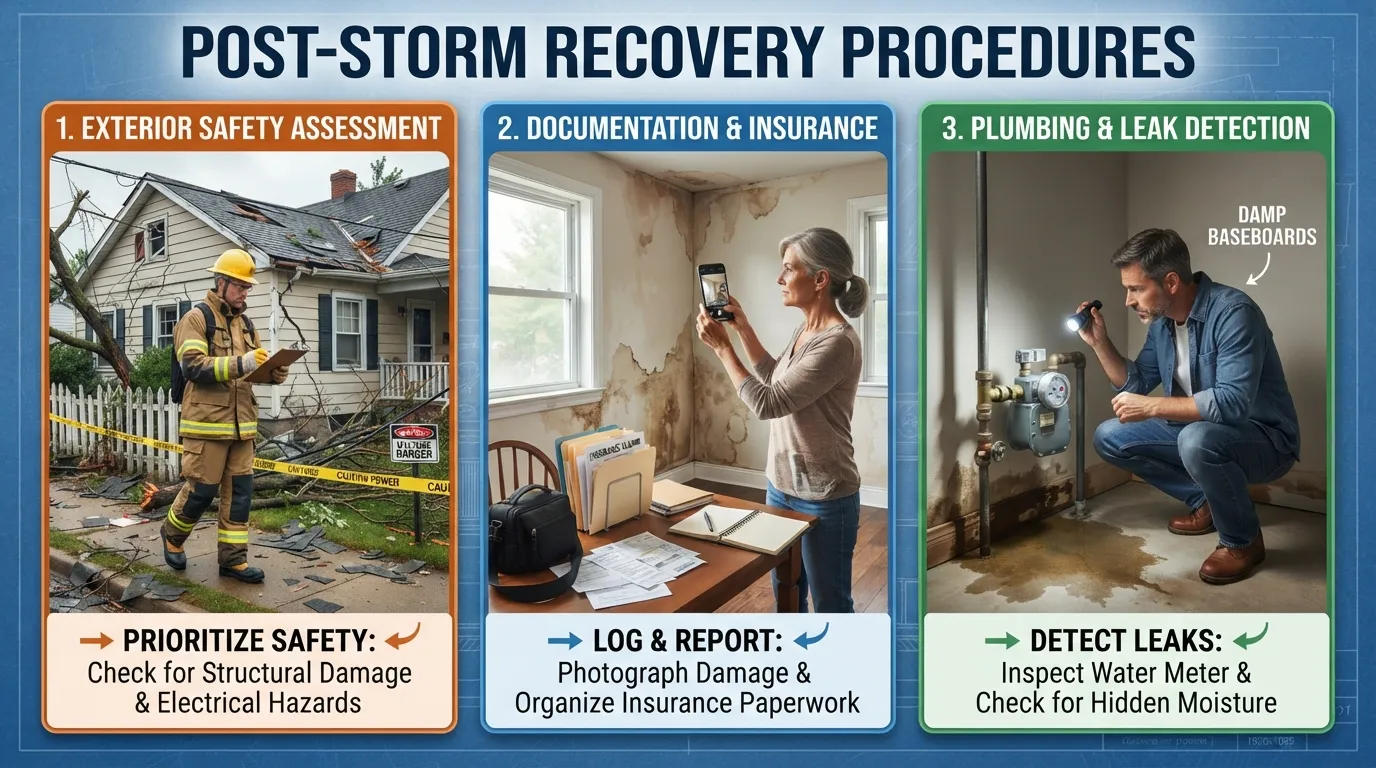
Returning Home Safely
Re-entering your property after a hurricane requires extreme caution to protect your family from hidden hazards. Before stepping inside, conduct a thorough perimeter check to verify structural integrity and ensure no immediate life safety threats exist.
Utility Checks: Scan the exterior walls for downed electrical lines, gas odors, and foundation shifting or settling.
Standing Water Warnings: Never wade through floodwaters surrounding your home, as they may be electrically charged by downed lines or contaminated by sewage.
Structural Review: If you notice severe roof sagging, broken pillars, or major wall cracks, do not enter until municipal inspectors clear the building.
Document Everything for Your Insurance Claim
Thorough documentation accelerates your insurance claim approval and ensures you receive full compensation for storm-related losses. Capture high-resolution visual evidence of all structural impacts and personal property damage before beginning any emergency cleanup.
Visual Logs: Take wide-angle photos of every room followed by close-ups of damaged drywall, flooring, and personal items.
Itemized Inventory: List the make, model, purchase date, and estimated replacement cost for all ruined belongings.
Receipt Preservation: Save every receipt for emergency repairs, temporary housing, tarps, and mitigation supplies.
Hidden Water Damage and Plumbing Leaks
Violent ground shifting and wind-driven rain frequently rupture hidden water supply lines behind walls and under slab foundations. Professional leak detection and repair helps homeowners identify concealed plumbing failures before they trigger extensive mold growth and structural rot.
Water Meter Test: Check your property’s water meter dials while all indoor faucets are closed to see if the leak indicator is spinning.
Pressure Drops: Noticeable drops in water pressure across multiple faucets often point to a compromised supply line or underground break.
Warning Signs: Keep watch for unexplained damp drywall, warped baseboards, peeling paint, or musty mildew odors.
Sewage Backups, Clogged Drains, and Toilets That Won’t Flush
Saturated municipal sewer lines and heavy storm debris frequently cause backflow into residential plumbing fixtures. If your toilets refuse to drain or water bubbles up through floor drains, stop using all indoor water immediately to prevent biohazard contamination.
Professional toilet repair: Addresses severe blockages caused by root intrusion or silt compaction in main lateral lines.
Contamination Control: Never attempt to clear sewage backups without full personal protective equipment, including gloves and eye protection.
System Restraint: Avoid running washing machines or dishwashers until municipal sewer pressure stabilizes.
When to Call an Emergency Plumber
Severe weather events demand immediate professional intervention when critical home utility systems fail or experience physical damage. Knowing when to contact licensed specialists prevents minor storm damage from escalating into a catastrophic property loss.
Critical Triggers: Contact an emergency plumber for burst supply pipes, total water loss, raw sewage flooding, or active structural leaks.
Gas Safety Note: If you smell gas near your water heater or tank, evacuate the home immediately and call your local gas utility provider before contacting a plumber.
Real-World Inspection Insight: Following a recent tropical storm, an inspection on a coastal property revealed a silent slab leak caused by ground shifting. While surface rooms looked dry, moisture sensors exposed a broken copper supply line underneath the kitchen flooring that was leaking gallons per hour and threatening the home’s foundation.
Hurricane Protection FAQs
What is the best way to avoid hurricane damage?
The most effective way to prevent hurricane damage is to harden your home’s entire exterior envelope before storm season begins. This includes installing impact-rated windows and doors, reinforcing roof-to-wall connections with metal straps, securing garage doors, and clearing surrounding yard drainage systems.
How do I protect my house from strong winds?
Protecting your home from strong winds requires eliminating potential entry points for high-pressure air. Install engineered hurricane shutters or impact glass, anchor roof trusses securely, reinforce large openings like garage doors, and remove loose outdoor items that could become windborne projectiles.
What are the best ways to prepare an apartment or condo for a hurricane?
Condo and apartment residents should protect all glass windows with approved films or interior shutters, move balcony furniture indoors, and elevate valuables off the floor. Review association emergency protocols, secure electronic devices, and store a portable supply of drinking water and non-perishable food.
Do hurricane shutters really work?
Yes, certified hurricane shutters provide proven protection by preventing flying debris from shattering glass and stopping high-pressure wind from entering your living space. Maintaining structural window integrity is critical for keeping your roof securely attached during a major storm.
What month is the worst for hurricanes?
According to NOAA and National Hurricane Center data, September is statistically the most active month for Atlantic hurricanes, with the overall climatological peak occurring around September 10. The broader peak danger window spans from mid-August through mid-October when ocean temperatures reach their highest levels.
Which Florida city has the lowest hurricane risk?
While no Florida city is entirely immune to severe weather, inland North-Central cities like Ocala and Gainesville experience significantly lower hurricane risk. Their elevated terrain and distance from coastal storm surge trade intense coastal hazards for manageable tropical storm winds and lower flood exposure.
Do sandbags protect against hurricane damage?
Sandbags offer limited protection against shallow surface runoff and low-level water intrusion (typically under two feet). However, they cannot stop major coastal storm surges, deep flooding, or high-velocity water pressure when stacked improperly against exterior doors.
How long does hurricane preparation take?
Comprehensive hurricane preparation should be an ongoing year-round maintenance effort, with critical final preparations completed 48 to 72 hours before landfall. Last-minute tasks include installing shutters, filling vehicles with fuel, testing backup generators, and stocking emergency supplies.
Conclusion and Next Steps
Your Hurricane Protection Priorities (Recap)
Effective hurricane defense requires fortifying your roof structures, protecting all exterior openings, clearing surrounding yard drainage, sealing internal water utility lines, reviewing emergency documentation, and maintaining comprehensive wind and flood insurance policies.
Get Your Plumbing Hurricane-Ready
Preparing your plumbing infrastructure before a severe storm hits prevents catastrophic sewage backups, water heater failures, and hidden post-storm leaks. Schedule comprehensive pre-season checks utilizing licensed plumbing services to safeguard your household against unexpected emergencies. Own a commercial property? Commercial plumbing teams can help prepare larger systems, backflow prevention networks, and industrial drainage lines for severe weather events.
Last Reviewed & Verified: October 2026 | Author: Elite Principal SEO Content Strategist & E-E-A-T Optimization Expert
Main Services
Related Posts
Need a Plumber in Miami?
Schedule service online or speak directly with the EZ Plumbing team.
Owner-Led Local Service
Know who is behind the business before you request service. The owners, contact line and Miami service pages are published clearly.
- Named business owners
- Direct phone and social channels
- Local Miami service information
Clear Help Before You Book
Review the relevant service page, contact the team directly and use the booking page when you are ready—without relying on vague claims.
- Service-specific information
- Direct questions before scheduling
- Clear online booking route