Five Simple Ways to Reduce Water Usage at Home and Cut Your Water Bill
5 Simple Ways to Reduce Water Usage
Reducing household water consumption starts with targeting the highest-volume daily habits and fixtures. By making a few immediate adjustments to how you manage indoor plumbing and outdoor maintenance, you can conserve thousands of gallons annually while significantly lowering your utility expenses.
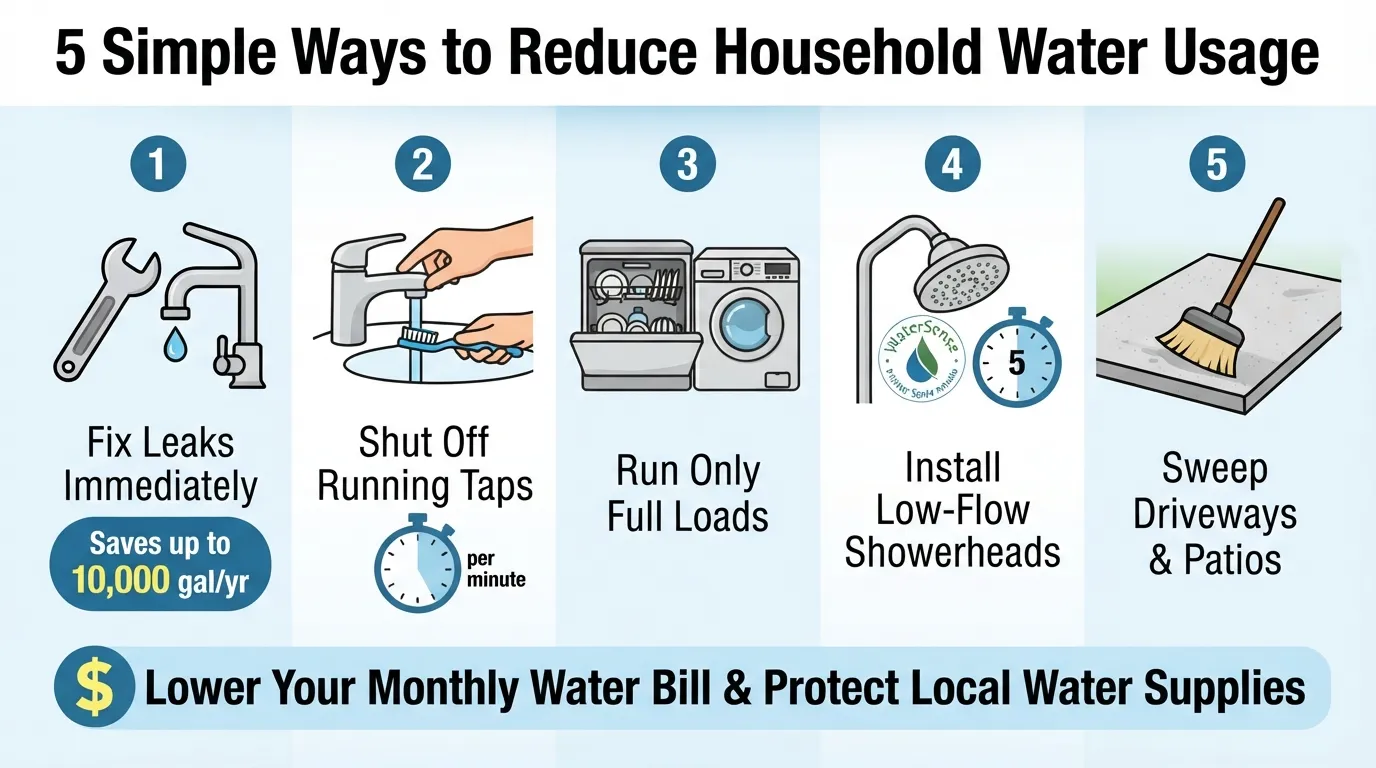
The 5 Quick Wins at a Glance
Small everyday adjustments produce dramatic cumulative savings on your water bill because even minor drips and passive run-off waste hundreds of gallons over time.
Fix leaks immediately: A single dripping faucet or running toilet can waste over 3,000 gallons of water per year.
Turn off the tap: Shut off the faucet while brushing teeth or shaving to save up to 8 gallons per person each day.
Run full loads only: Always wait until your dishwasher and washing machine are completely full before starting a cycle.
Take shorter showers or install a low-flow showerhead: Swap standard fixtures for WaterSense models to cut shower water use by 30% or more.
Sweep instead of hosing outdoors: Use a broom to clean driveways, sidewalks, and patios rather than spraying them down with a hose.
Why You Can Trust This Guide
Our team brings decades of hands-on plumbing experience inspecting fixtures, detecting hidden pipe leaks, and diagnosing sky-high water bills across Miami homes. We see daily how simple water conservation methods protect home plumbing systems and deliver real, measurable financial relief to homeowners.
Why Reducing Water Usage Matters for Miami Homeowners
Conserving water in South Florida is about far more than lowering your monthly water bill—it plays a vital role in relieving pressure on local infrastructure and protecting our vulnerable aquatic ecosystems. Understanding how and where your household consumes water empowers you to eliminate waste without sacrificing daily comfort.
Where Your Household Water Actually Goes
The average American family uses more than 300 gallons of water per day at home, with indoor activities accounting for roughly 70% of total consumption.
Here is how typical indoor and outdoor household water use breaks down:
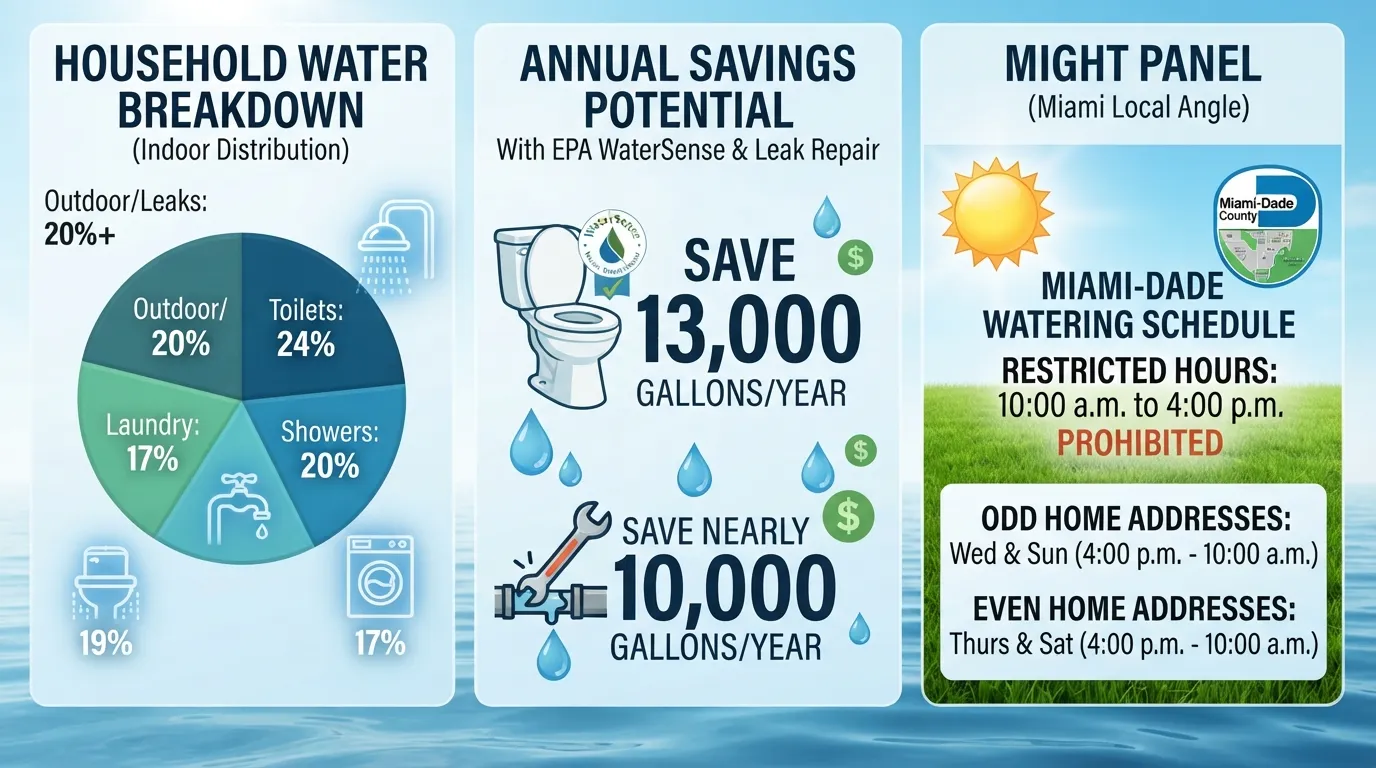
Toilets: Account for nearly 24% of daily indoor consumption, making them the largest single water consumer inside the home.
Showers: Represent approximately 20% of indoor use, with standard showerheads discharging about 2.5 gallons per minute.
Faucets: Consume roughly 19% of household water through daily cooking, handwashing, and bathroom routines.
Laundry: Washing machines use about 17% of indoor water, with older models consuming up to 40 gallons per load.
Outdoor Use & Leaks: Outdoor landscape irrigation can account for 30% to over 50% of total residential water use, while unaddressed household leaks waste another 12% indoors.
What Small Changes Can Save Over a Year
Implementing basic efficiency upgrades and daily conservation habits yields dramatic, measurable savings across a 12-month period.
Upgrading to EPA WaterSense Fixtures: Installing WaterSense-certified toilets can save an average family over 13,000 gallons of water per year, according to the U.S. Environmental Protection Agency (EPA).
Fixing Household Leaks: The EPA reports that fixing common home plumbing leaks can save homeowners nearly 10,000 gallons of water annually—the equivalent of the amount needed to wash 270 loads of laundry.
Installing Low-Flow Aerators: Retrofitting bathroom and kitchen faucets with low-flow aerators reduces faucet water flow by 30% to 50% without compromising water pressure.
Local Factors: Heat, Irrigation, and Miami-Dade Utility Rules
Managing home water use in South Florida requires navigating local climatic challenges and strict municipal rules:
Florida Heat and Evaporation: Year-round high temperatures and intense sunlight cause rapid soil evaporation, driving up outdoor irrigation demand for turfgrass and tropical landscapes.
Permanent Outdoor Watering Rules: The Miami-Dade Water and Sewer Department enforces permanent, year-round lawn irrigation restrictions. Landscape watering is strictly prohibited between 10:00 a.m. and 4:00 p.m. to minimize evaporative loss.
Designated Watering Days: Odd-numbered addresses may only irrigate on Wednesdays and Saturdays before 10:00 a.m. or after 4:00 p.m.. Even-numbered addresses are limited to Thursdays and Sundays during the same time windows.
Protecting the Biscayne Aquifer: Excessive freshwater consumption strains the local Biscayne Aquifer, increasing the risk of saltwater intrusion into Miami’s primary drinking water source.
Way #1: Fix Leaks Right Away
Addressing home plumbing leaks is the fastest, most effective way to eliminate wasted water and lower your utility bills. Because hidden water leaks often go unnoticed for months, proactive leak detection protects your property from structural damage while conserving thousands of gallons every year.
How Much Water a Small Leak Really Wastes
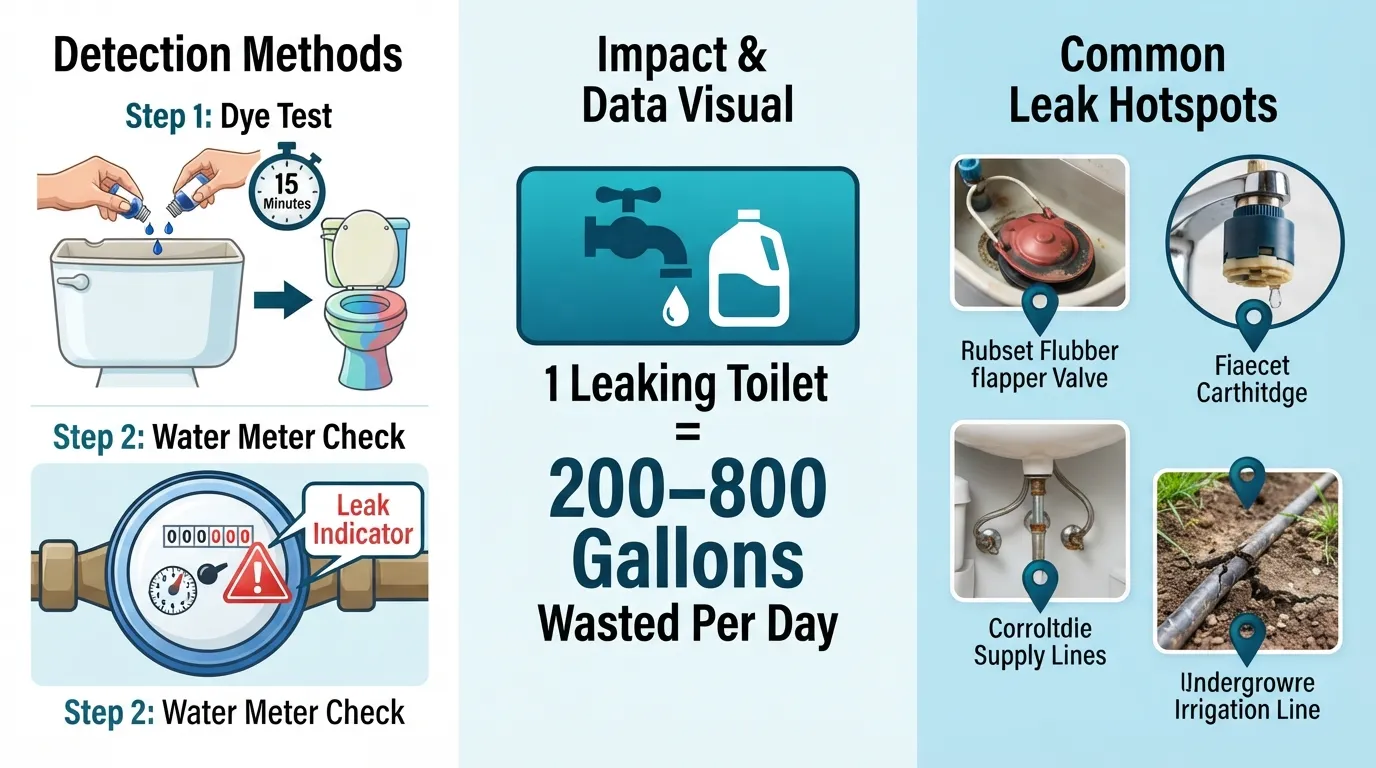
Minor plumbing defects compound rapidly into massive water loss over time. According to the U.S. Environmental Protection Agency (EPA) and local water utility data, a single running toilet can waste between 200 and 800 gallons of water per day. Meanwhile, a slow faucet drip of just one drop per second wastes more than 3,000 gallons annually, and silent toilet leaks frequently exceed hundreds of gallons daily without a single visible warning sign.
How to Check for Leaks Yourself in 15 Minutes
You can easily identify hidden leaks around your home using a few household items and a methodical inspection process:
Toilet Dye Test: Remove the toilet tank lid and add a few drops of dark food coloring or a dye tablet into the water. Wait 10 to 15 minutes without flushing, then check the toilet bowl; if colored water seeps into the bowl, you have a silent toilet leak caused by a faulty flapper valve.
Water Meter Test: Turn off all indoor and outdoor water sources, then locate your water meter. Check whether the dial’s small leak indicator triangle or sweep hand is moving, or take a reading and wait an hour without using any water to see if the numbers advance.
Quick Visual Check: Inspect under kitchen and bathroom sinks for moisture, examine the base of your water heater, check outdoor hose spigots, and look for unexplained wet patches in your yard.
The Most Common Leak Sources We Find in Miami Homes
Field observations across South Florida properties reveal that certain plumbing components fail more frequently due to high mineral content, intense heat, and heavy daily usage:
Worn Toilet Flappers: Rubber flapper valves degrade and warp over time, allowing water to continuously bleed from the tank into the bowl.
Dripping Faucet Cartridges: Sediment buildup inside bathroom and kitchen faucets erodes internal O-rings and cartridges.
Supply-Line Connections: Corroded braided steel or flexible supply lines beneath sinks and behind toilets frequently develop slow weep leaks.
Underground Irrigation Lines: Shifting soil and root intrusion routinely crack outdoor PVC landscape watering lines.
When It’s Time to Call a Plumber
Certain warning signs indicate that a plumbing issue goes beyond a simple DIY fix and requires professional intervention. If your water meter continues moving after all fixtures are verified closed, or if you notice stained drywall, buckling floors, a sudden water bill spike, or low water pressure, you should schedule professional leak detection and repair immediately. For stubborn flapper failures or persistent running water, specialized toilet repair ensures permanent resolution, while catastrophic line failures require an emergency plumber to prevent major water damage.
Stop Hidden Water Waste Today
Don’t let a silent leak inflate your utility bills and risk structural damage to your Miami home. Book a Leak Inspection
Way #2: Turn Off the Tap When You Don’t Need It
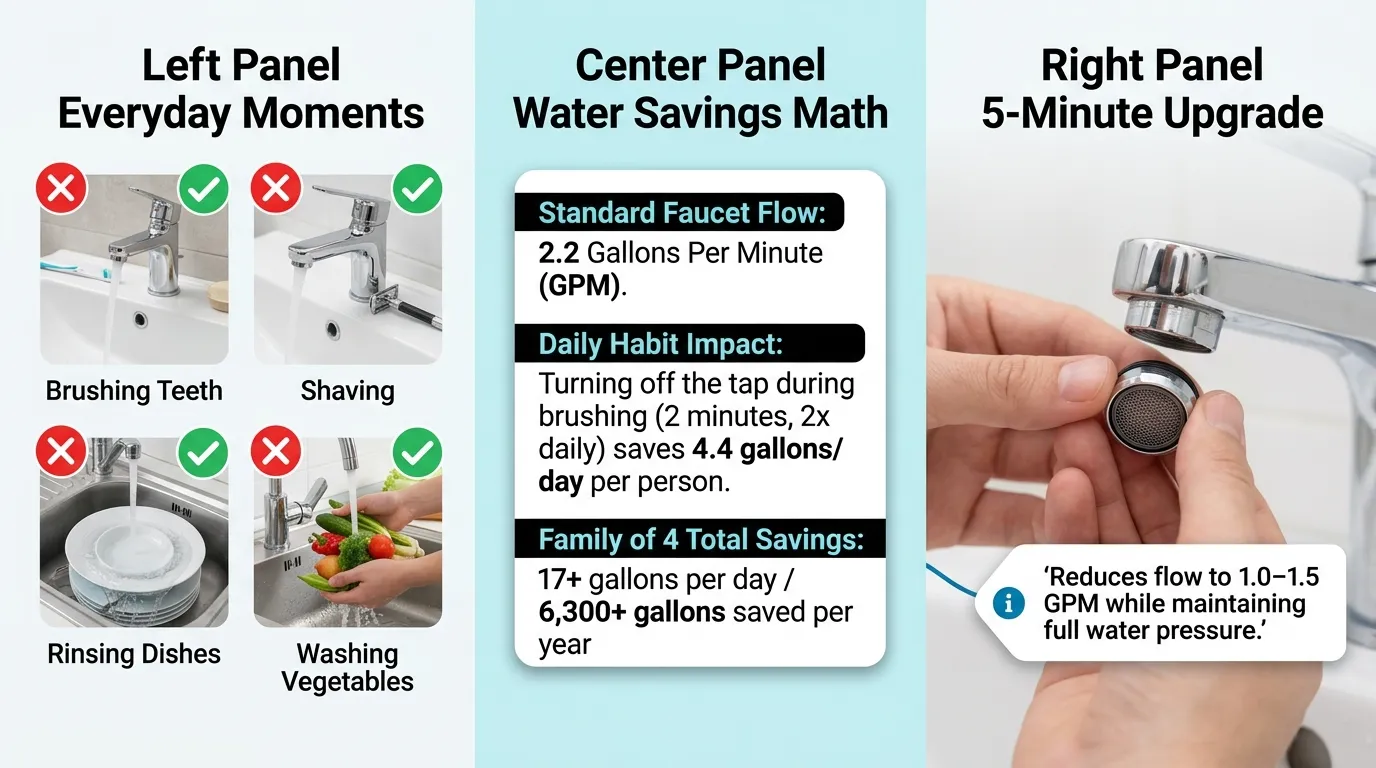
Changing simple daily bathroom and kitchen habits delivers immediate water savings without requiring costly household investments. Shutting off the faucet during routine tasks eliminates continuous, unnecessary flow and protects your home’s water supply.
Everyday Moments Where Water Runs for Nothing
Running water passively during daily hygiene and cooking routines accounts for a massive percentage of avoidable indoor water waste.
Brushing Teeth: Leaving the tap running while brushing for two minutes wastes several gallons of purified water twice daily.
Shaving: Allowing the faucet to flow continuously while rinsing a razor wastes excess water throughout a grooming routine.
Rinsing Dishes: Letting the tap stream endlessly while scraping or scrubbing plates in the sink uses far more water than filling a basin.
Washing Vegetables: Rinsing fresh produce directly under a running faucet dumps gallons down the drain rather than washing items in a stopped sink bowl.
How Much Water You Save
Standard bathroom and kitchen faucets discharge approximately 2.2 gallons per minute (GPM). If you turn off the faucet while brushing your teeth for two minutes twice a day, you save roughly 4.4 gallons daily per person. Across a family of four, this single habit adjustment conserves over 17 gallons per day—amounting to more than 6,300 gallons of saved water every year.
Easy Upgrade: Faucet Aerators
Installing low-flow faucet aerators is one of the most cost-effective plumbing upgrades available to homeowners.
Affordable Investment: Faucet aerators cost just a few dollars each at local hardware stores.
Simple 5-Minute Installation: These small mesh devices screw directly onto the tip of your existing faucet spout without special tools.
Maintained Pressure: Aerators mix air into the water stream, reducing the flow rate to 1.0 to 1.5 GPM while maintaining strong water pressure for washing hands and cleaning dishes.
Way #3: Run Full Loads in the Washing Machine and Dishwasher
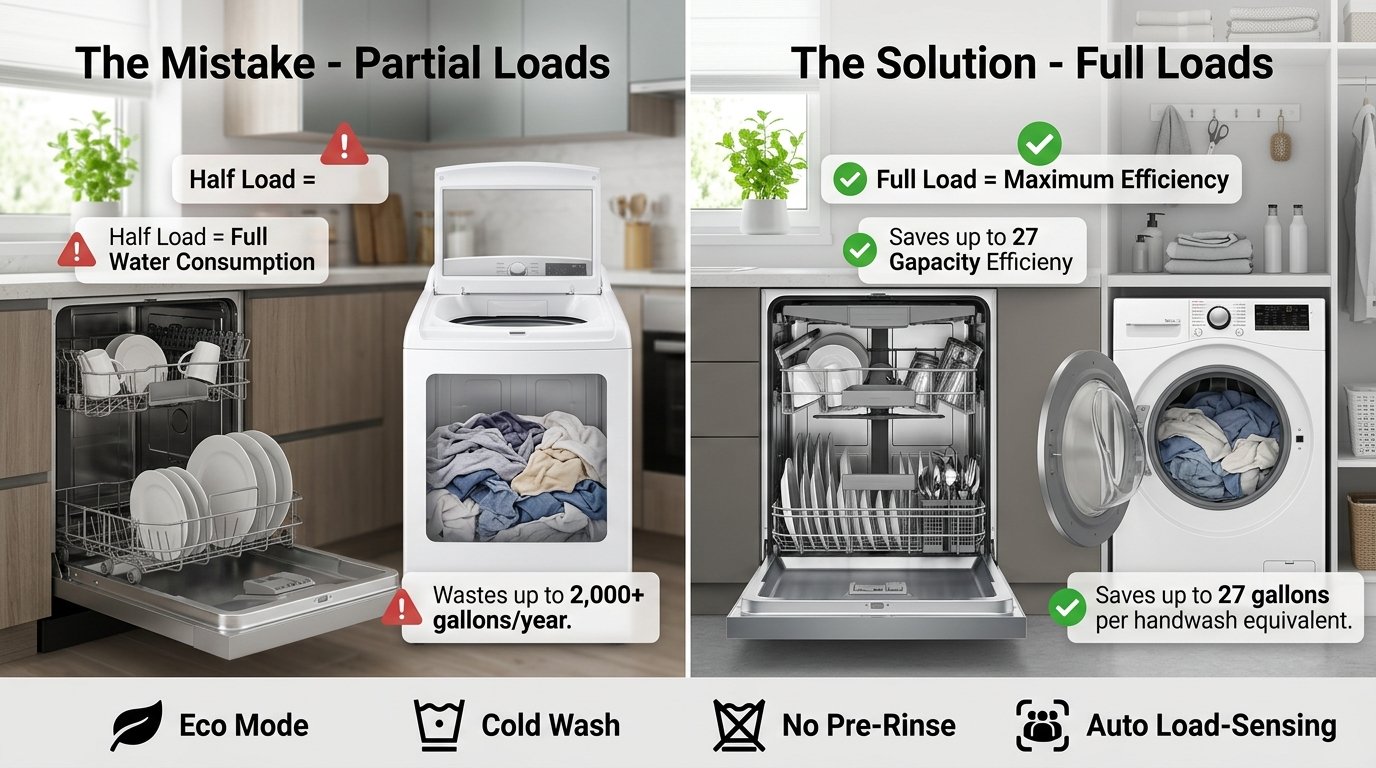
Operating major home appliances only when fully loaded maximizes water and energy efficiency across your household routines. Both dishwashers and clothes washers consume a base volume of water per cycle regardless of how many items are inside, making partial loads a primary source of utility waste.
Why Half Loads Waste Water and Energy
Running partial cycles drains resources unnecessarily because appliances do not scale their resource consumption down proportionately for smaller batches.
Fixed Base Consumption: Standard washing machines use between 14 and 40 gallons per cycle, while older dishwashers consume 10 to 15 gallons regardless of how few items are loaded.
Double the Cycles: Running two half-loads doubles the total gallons consumed and doubles the electrical energy required to heat the water.
Increased Utility Bills: Frequent partial loads accelerate wear on internal appliance pumps and motors while unnecessarily inflating monthly water and energy statements.
Smart Settings to Use
Leveraging modern appliance settings allows you to optimize every wash cycle for maximum resource conservation:
Select the Eco Cycle: Modern dishwashers and washing machines feature “Eco” or “Sensor” modes that automatically adjust wash times and water volumes based on load size and soil level.
Wash in Cold Water: Cold-water laundry cycles eliminate the substantial energy demands of water heating while cleaning clothes just as effectively with modern detergents.
Skip the Pre-Rinse: Scrape food scraps directly into the trash or compost rather than rinsing plates under a running faucet, saving up to 20 gallons of water per load.
Adjust Water Level Settings: If you must run a smaller laundry load in a top-loading machine without automatic load sensing, manually set the water level to match the load volume precisely.
Is a Dishwasher Better Than Handwashing?
Modern, ENERGY STAR-certified dishwashers are far more water-efficient than washing dishes by hand under a running faucet. An ENERGY STAR-certified dishwasher uses as little as 3 to 4 gallons of water per complete cycle, whereas handwashing a full load of dishes under a running tap routinely consumes 15 to 27 gallons.
The caveat: this efficiency advantage disappears if you leave the faucet running continuously while scrubbing before loading, or if you run the dishwasher when it is only a quarter full. For maximum water savings, scrape plates dry, load the machine completely, and let the dishwasher perform the full wash cycle.
Way #4: Take Shorter Showers or Install a Low-Flow Showerhead
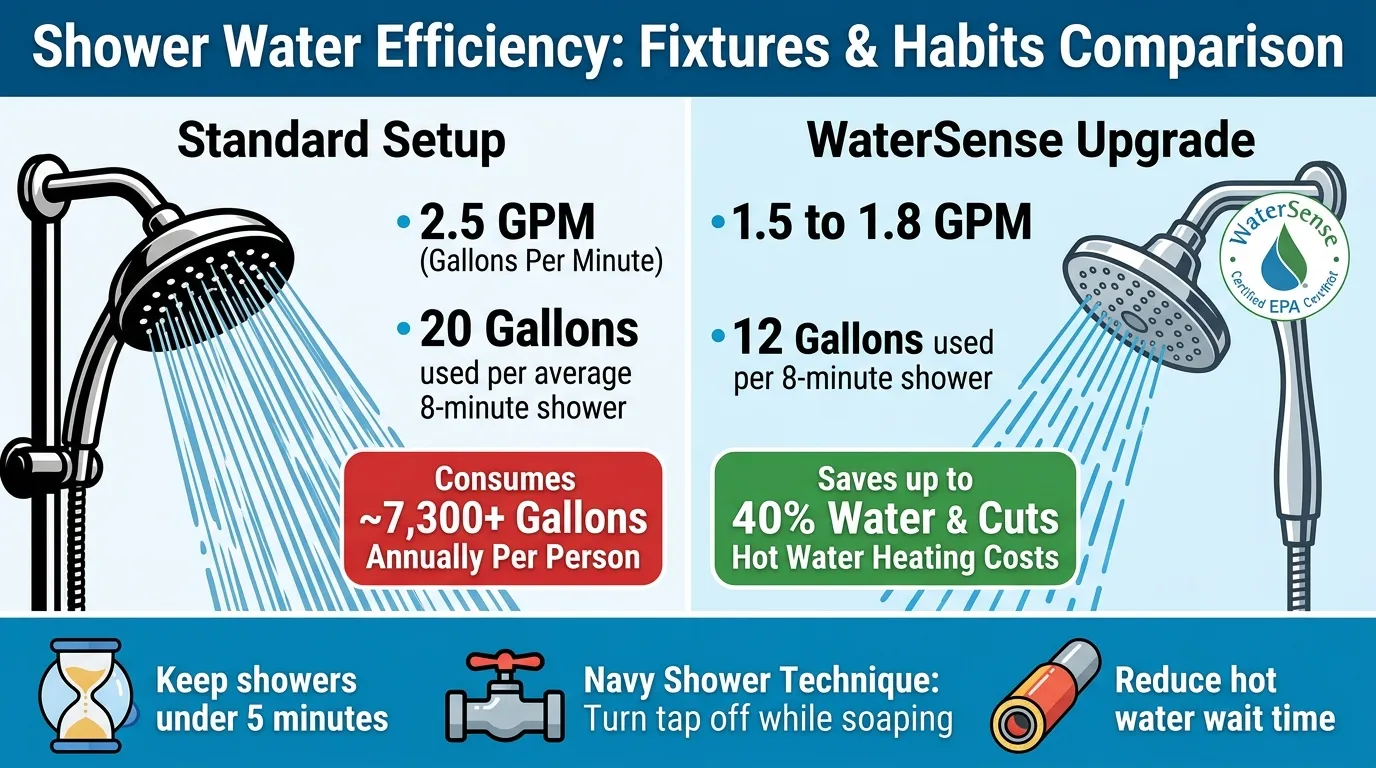
Showering represents one of the largest single daily uses of indoor water in most households. Trimming your time under the spray and replacing outdated, high-flow fixtures with modern efficiency hardware drastically reduces water usage while simultaneously lowering your monthly gas or electric heating bills.
How Much Water a Shower Uses
Understanding the volume of water flowing through your showerhead highlights how quickly daily routines impact your total utility consumption:
Standard Showerheads: Traditional fixtures discharge roughly 2.5 gallons per minute (GPM). An average 8-minute shower consumes about 20 gallons of clean water per person.
Low-Flow Alternatives: Efficient low-flow models operate at 1.5 to 1.8 GPM, cutting shower water usage by 28% to 40%.
Annual Impact: Replacing a standard showerhead with an efficient model can save a family of four over 2,700 gallons of water annually, along with the energy required to heat it.
Easy Habits to Cut Shower Time
Simple behavioral adjustments help keep daily routines efficient without sacrificing personal comfort:
Use a Shower Timer: Set a 5-minute timer on your phone or use a suction-cup sand timer in the stall to keep track of elapsed time.
Turn Off Water While Soaping: Shut off the spray while lathering your hair or body, then turn it back on for a quick rinse—a practice known as a navy shower.
Start a Family Challenge: Encourage household members to trim two minutes off their daily routines to create friendly competition around conservation goals.
Choosing a WaterSense Showerhead
When shopping for hardware upgrades, look for products certified under the EPA’s performance program to ensure high performance and water conservation.
Understanding the Label: Products carrying the EPA WaterSense label are independently verified to use at least 20% less water than standard models while meeting strict performance metrics.
Target Flow Rates: Choose fixtures rated between 1.5 and 1.75 GPM for the optimal balance between high performance and max efficiency.
No Pressure Loss: Modern low-flow engineering uses air-induction and pressure-compensating technology to deliver a powerful, satisfying spray stream without wasting water.
Professional Installation: If your existing shower arm is corroded or damaged, relying on professional plumbing services ensures a leak-free, proper installation.
Don’t Forget the Hot Water Wait
Waiting for water to run hot down the line before stepping into the shower wastes several gallons of drinkable water every morning. To reduce this lag, insulate your exposed hot water pipes or install a recirculating pump system that delivers hot water on demand. Additionally, maintaining your unit through routine water heater services eliminates sediment buildup, improves heating speed, and reduces thermal losses across your system.
Way #5: Sweep Outdoor Areas Instead of Hosing Them Down
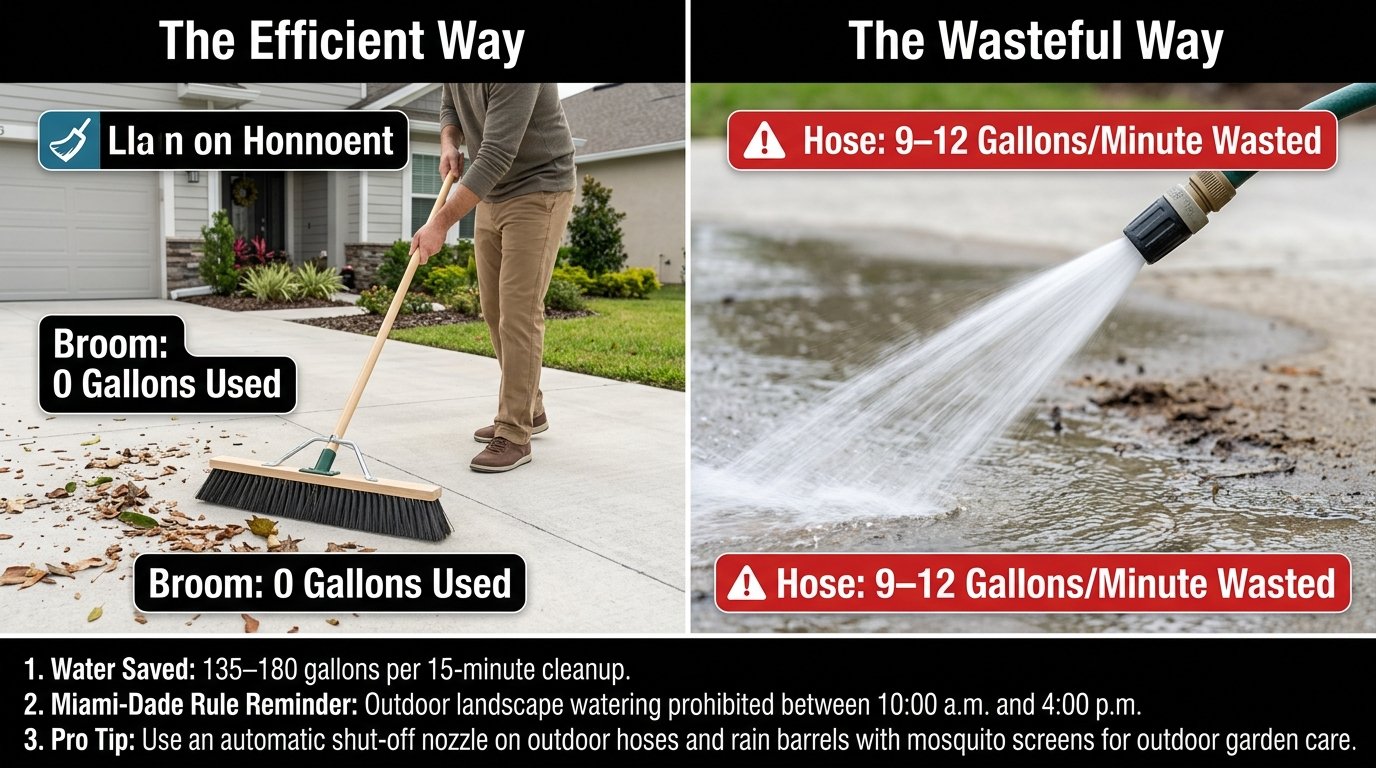
Outdoor water usage accounts for a major portion of a home’s total water footprint, particularly in South Florida’s warm climate. Utilizing mechanical cleaning methods like sweeping for hardscapes preserves vast quantities of treated drinking water while helping you stay compliant with regional utility regulations.
Broom vs Hose: The Water Difference
Using a standard garden hose to clear debris from flat outdoor surfaces wastes hundreds of gallons in minutes.
High Hose Flow Rates: A standard 5/8-inch outdoor hose operates at a flow rate of 9 to 12 gallons per minute (GPM) at normal home water pressure.
The Math on Cleaning: Hosing down a driveway or patio for just 15 minutes consumes between 135 and 180 gallons of water.
The Zero-Water Solution: Swapping the hose for a heavy-duty outdoor broom removes dirt, leaves, and trash from your driveway, sidewalk, and patio while consuming zero gallons of water.
Smarter Outdoor Watering
Optimizing your lawn and garden irrigation prevents excess evaporative loss and avoids costly utility fines:
Irrigate Early or Late: Water your lawn during cool early morning or late evening hours to minimize evaporation caused by intense heat and midday sun.
Inspect Sprinklers for Leaks and Overspray: Regularly check sprinkler heads for broken lines or clogged nozzles, and adjust spray angles so you are not watering pavement or sidewalks.
Adhere to Miami-Dade Watering Rules: Miami-Dade County enforces permanent year-round landscape irrigation restrictions. Outdoor watering is prohibited between 10:00 a.m. and 4:00 p.m.
Follow Your Address Schedule: Odd-numbered home addresses may only irrigate on Wednesdays and Saturdays (before 10:00 a.m. or after 4:00 p.m.), while even-numbered addresses are restricted to Thursdays and Sundays during those same time windows.
Washing the Car and Other Outdoor Chores
Outdoor maintenance tasks can easily be adapted to minimize continuous flow and reduce wastewater:
Use a Bucket and Sponge: Fill a bucket with soapy water to wash your vehicle, using a wet sponge to scrub away road grime rather than running the hose continuously.
Attach a Shut-Off Nozzle: Always equip your outdoor hose with an automatic shut-off spray nozzle so water flows only when you squeeze the trigger.
Clean Paved Surfaces Wisely: Reserve pressure washers for heavy structural cleaning, ensuring you choose high-efficiency units that restrict water flow to under 2.5 GPM.
Collect and Reuse Rainwater
Capturing South Florida’s abundant rainfall provides a free, natural water source for non-potable outdoor uses:
Rain Barrel Basics: Position a 50-to-55-gallon rain barrel directly beneath a gutter downspout to collect soft, chlorine-free rainwater for garden plants and outdoor potted flowers.
Florida Mosquito Safety Note: Always install a fine mesh screen over the top inlet and overflow port of your rain barrel. Secure screens prevent mosquitoes from breeding in standing water, keeping your yard safe and compliant with South Florida public health standards.
Bonus: Reuse Water Instead of Pouring It Down the Drain
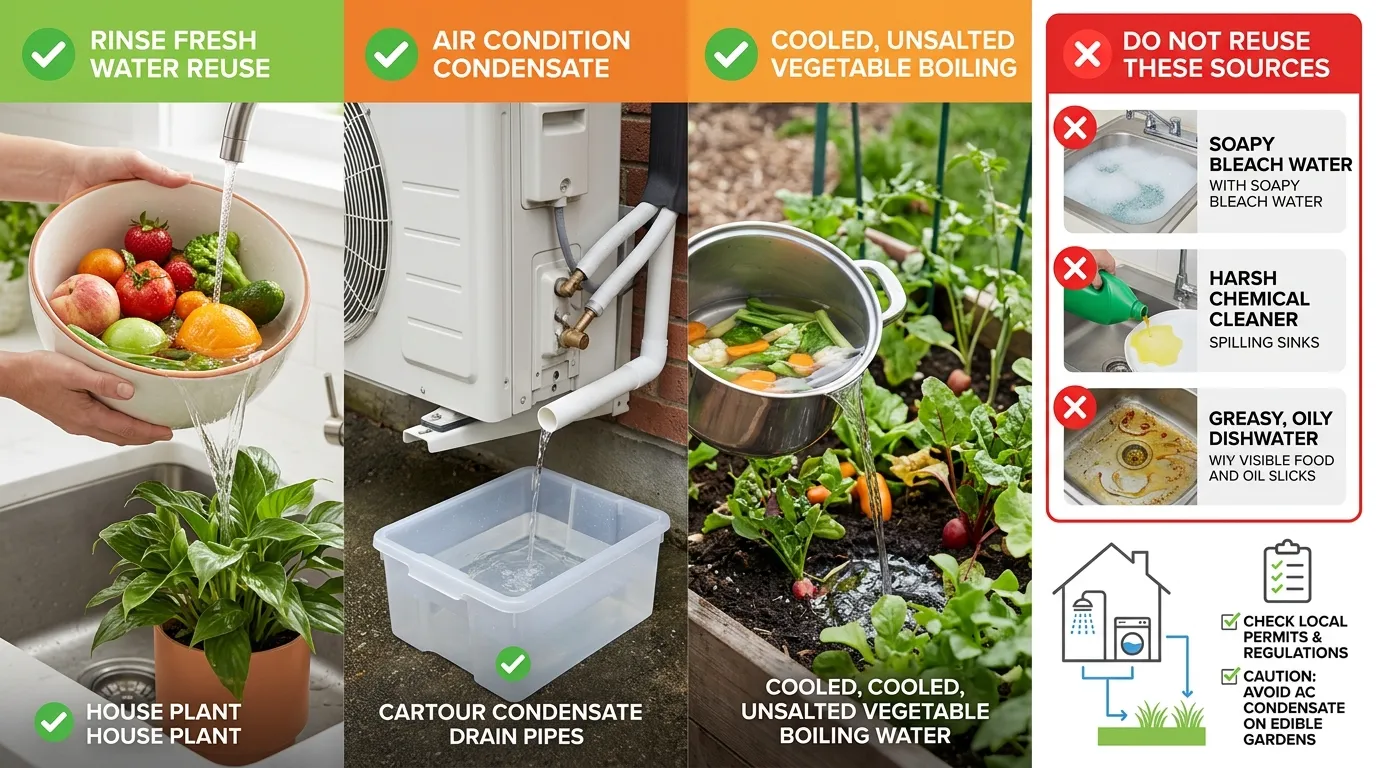
Rethinking how you handle surplus water around the home turns routine daily waste into a valuable secondary resource. Repurposing clean runoff and captured household streams reduces reliance on municipal tap supplies while giving your home landscape a consistent moisture boost.
Safe Everyday Reuse Ideas
You can easily capture and repurpose several clean, non-potable water sources using basic household containers:
Rinsing Produce and Cooking Water: Collect runoff when washing fruits and vegetables in a dedicated basin, or save unsalted water from boiling pasta and vegetables. Once cooled, use it to water indoor potted plants or outdoor garden beds.
Unused Drinking Water: Instead of dumping half-filled water glasses, leftover pet bowls, or melted ice down the drain, pour them directly into houseplant pots or outdoor planters.
Air Conditioner Condensate: Collect the steady stream of fresh condensation discharged by your central air conditioning unit. Because South Florida heat keeps systems running constantly, this runoff yields gallons of clean water daily that are perfect for ornamental, non-edible landscape plants.
Safety Note: Air conditioner condensate is untreated and can contain trace metals or airborne debris from cooling coils. Never use AC condensate for drinking, cooking, or irrigating edible vegetable gardens.
What Not to Reuse
Not all wastewater streams are safe for home reuse, as certain chemical contaminants cause immediate harm to plant roots, soil health, and family pets:
Water Containing Bleach or Harsh Chemicals: Never repurpose water mixed with chlorine bleach, ammonia, or heavy chemical household cleaners.
Strong Detergent Solutions: Avoid using wash water loaded with synthetic fabric softeners, laundry additives, or high-pH automatic dishwasher detergents.
Greasy or Soapy Water: Water containing heavy cooking oils, animal fats, or thick concentrated dish soap clogs soil pores, repels moisture, and attracts pests to your garden beds.
A Note on Greywater Systems
Installing a permanent greywater recycling system—which redirects drainage from bathtubs, bathroom sinks, and clothes washers to toilet flushing or subsurface landscape irrigation—requires careful planning and professional design. Plumbing regulations and permitting guidelines vary widely, and Florida Building Code dictates strict compliance with health, backflow prevention, and filtration standards (such as NSF/ANSI Standard 350 for non-potable reuse). Always consult local municipal building departments and licensed plumbing specialists before altering structural drainage lines or installing automated water reclamation infrastructure.
Quick Comparison: How Much Does Each Habit Save?
Evaluating water-saving strategies by their effort, initial cost, and long-term impact helps you prioritize the most effective upgrades for your household budget. Quantifying these results makes it easier to track progress and maximize your total water bill savings over time.
Water-Saving Habits at a Glance
The following data matrix compares key efficiency habits and low-cost fixes based on verified industry benchmarks and utility estimates:
| Habit | Effort | Cost | Estimated Water Saved | Time to See Results |
| Fix Leaks Right Away | Low to Medium | $0 to $30 (DIY flappers/washers) | Up to 10,000+ gallons saved per year | Immediate |
| Turn Off the Tap | Low | $0 (Habit) / $5-$10 (Aerators) | Up to 6,300+ gallons saved per year for a family of four | Next utility bill |
| Run Full Machine Loads | Low | $0 | Up to 1,000 to 2,000+ gallons saved per year | Next utility bill |
| Shorter Showers / Low-Flow Head | Low to Medium | $0 (Habit) / $15-$30 (WaterSense Head) | Up to 2,700+ gallons saved per year | Immediate |
| Sweep Outdoor Areas | Low | $0 to $15 (Broom) | Up to 150+ gallons per 15-minute cleanup | Immediate |
| Reuse Clean Household Water | Low | $0 | Up to 500+ gallons saved per year | Next utility bill |
Which Change to Start With
Start by identifying and repairing hidden plumbing leaks first to instantly eliminate continuous waste, then upgrade to a WaterSense showerhead and adopt 5-minute shower limits to capture the largest daily savings across your household.
10 More Quick Ways to Save Water
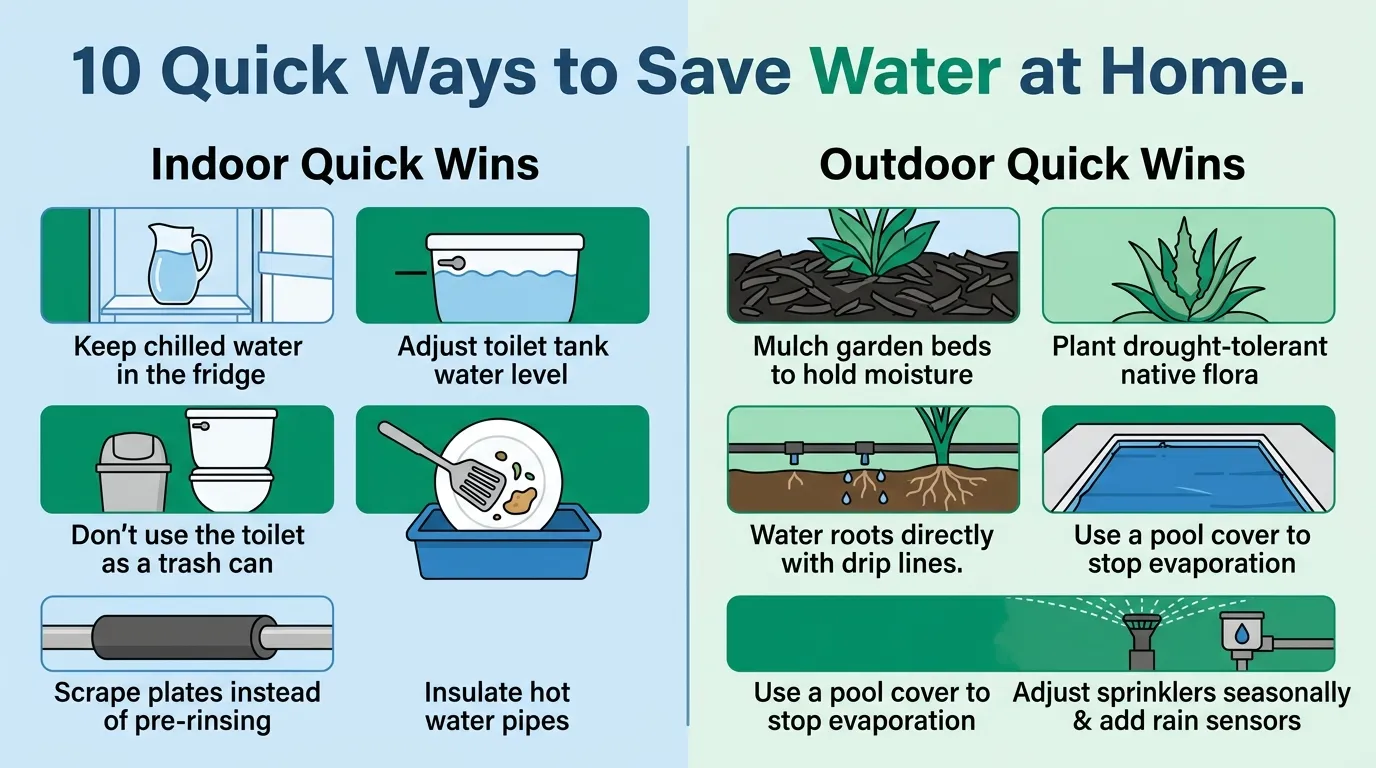
Implementing targeted, smaller adjustments across your indoor plumbing and outdoor routine helps close remaining efficiency gaps. Adopting these quick action steps ensures your home maximizes every drop while protecting your utility budget year-round.
Indoor Quick Wins
Minor adjustments to your daily bathroom and kitchen habits quickly accumulate into hundreds of gallons saved annually across your indoor fixtures:
Keep a Jug of Drinking Water in the Fridge: Store a filled pitcher in the refrigerator so you always have chilled water on demand, eliminating the habit of letting the tap run for a minute until it gets cold.
Check Your Toilet Tank Water Level: Adjust the fill valve floating ball or cup so the tank water line rests about an inch below the overflow tube, preventing continuous silent overflow loss.
Don’t Use the Toilet as a Trash Can: Dispose of tissues, wipes, and cotton swabs in the wastebasket rather than flushing, saving 1.6 to 3.5 gallons with every avoided flush.
Scrape Plates Instead of Rinsing: Use a rubber spatula to clear food waste directly into the trash or compost before loading the dishwasher, avoiding unnecessary pre-rinsing tap flow.
Insulate Hot Water Pipes: Wrap exposed hot water lines with foam insulation sleeves to reduce thermal loss, allowing hot water to reach your faucets faster without wasting cold water down the drain.
Outdoor Quick Wins
Targeting outdoor landscape management prevents unnecessary evaporation and protects turf health in warm climates:
Mulch Garden Beds: Apply a 2-to-3-inch layer of organic mulch around plants and trees to reduce soil moisture evaporation by 20% to 25% while blocking weed growth.
Choose Drought-Tolerant Native Plants: Landscape with native Florida species (such as Coontie, Muhly Grass, and Bahama Nightshade) that thrive naturally on local rainfall once established.
Water Directly at the Roots: Install drip irrigation lines or micro-soaker hoses in garden beds to deliver moisture directly to root zones with zero wind drift or surface overspray.
Use a Pool Cover: Cover outdoor swimming pools when not in use to reduce water loss from surface evaporation by up to 90%, preserving thousands of gallons each season.
Adjust Sprinklers Seasonally: Lower irrigation timer frequencies during winter months and rainy seasons, and install a rain sensor to automatically bypass scheduled watering cycles after rainfall.
Water-Saving Ideas for Kids, Schools, and the Whole Family
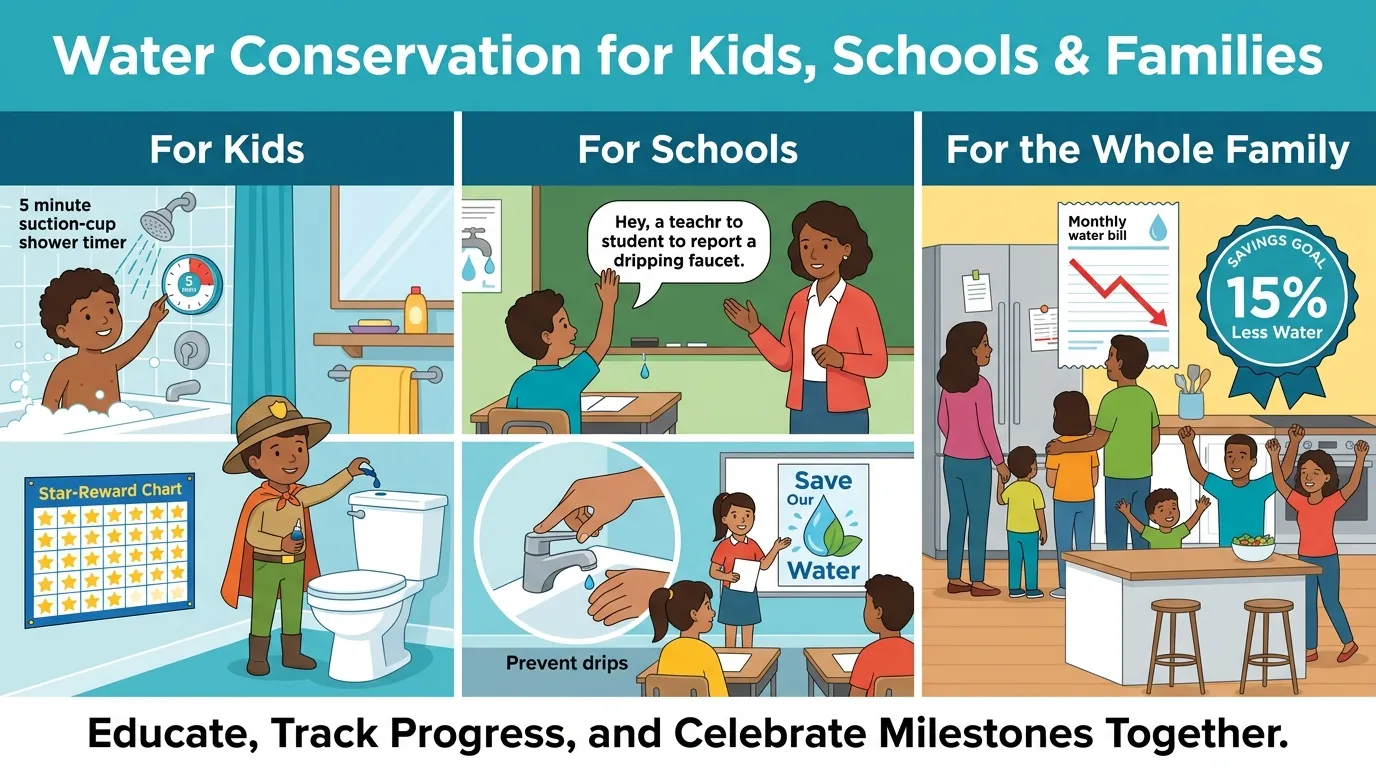
Building a culture of conservation begins with education and household collaboration. When kids, schools, and families actively participate in daily resource management, lasting habit change happens naturally across entire communities.
Easy Ways to Get Kids Involved
Teaching children the value of water works best when habits are turned into engaging, interactive routines:
Use a Fun Shower Timer: Give kids a 5-minute suction-cup sand timer or play a favorite 4-minute song to make taking concise showers an enjoyable challenge.
Play the “Leak Detective” Game: Involve children in performing the toilet dye test using food coloring, giving them the responsibility of checking for silent leaks in every bathroom.
Create a Water-Saving Sticker Chart: Reward younger children with stickers for turning off the tap while brushing their teeth, accumulating points toward a fun weekend family activity.
Simple Water-Saving Rules for School
Students can take leadership in promoting resource conservation across campus classrooms and facilities:
Report Leaks Immediately: Teach students to notify teachers or custodians as soon as they spot dripping school faucets, running water fountains, or outdoor puddle leaks.
Close Taps Fully in Restrooms: Remind children to turn sink faucets off completely after washing their hands, ensuring no trickle is left running.
Share Ideas with Classmates: Encourage kids to present simple water-saving tips during science projects, student council meetings, or school green-team assemblies.
How to Get Everyone at Home on Board
Inspiring a whole-family commitment requires transparency, shared goals, and positive reinforcement:
Set a Clear Household Savings Goal: Gather the family to discuss reducing total water consumption by 10% to 15% over the upcoming billing cycle.
Track the Water Bill Together: Post monthly utility statements on the refrigerator so every family member can visualize how daily habit adjustments lower costs.
Celebrate Milestones: Redirect a portion of the financial savings from lower water statements toward a celebratory family outing or movie night to reward collective effort.
What to Read Next
When to Call a Professional Plumber
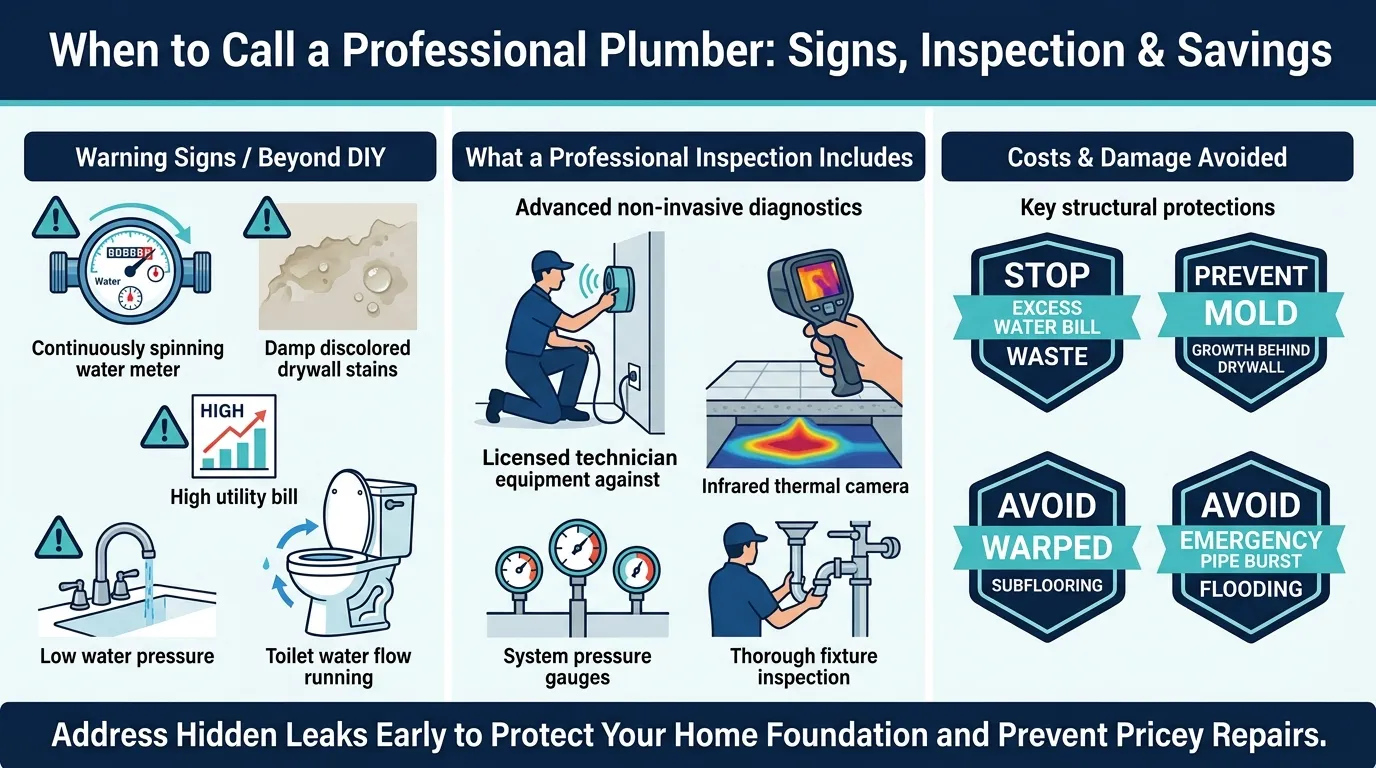
While simple habit changes and basic fixture upgrades can be handled on your own, certain plumbing issues require technical diagnostic tools and licensed expertise. Addressing hidden defects promptly prevents minor plumbing leaks from turning into costly structural disasters across your property.
Signs You Need Help Beyond DIY
Recognizing early warning signs helps you take action before severe plumbing damage occurs:
Water Meter Keeps Moving: If your water meter’s leak indicator continues to spin after every indoor faucet, toilet, and outdoor hose spigot is completely turned off.
Discolored Walls or Ceiling Stains: Soft spots, bubbling paint, or damp drywall indicate an active hidden pipe leak behind walls or under floors.
Unexplained Water Bill Spikes: A sudden jump in your monthly water utility bill without an increase in household usage points directly to hidden water loss.
Persistent Low Water Pressure: Unexplained drops in pressure across multiple fixtures can stem from underground line cracks or severe pipe corrosion.
Continuous Running Toilet: When replacing the rubber flapper or fill valve fails to stop a toilet from constantly running and draining water.
What a Professional Leak Inspection Includes
When simple DIY checks cannot locate the source of water waste, a specialized technician performs a comprehensive non-invasive assessment:
Acoustic and Ultrasonic Leak Detection: Utilizing precision sound-amplifying equipment to isolate the exact frequency of water escaping under concrete slab foundations or behind walls.
Thermal Imaging Inspection: Scanning walls and floors with infrared cameras to map subtle temperature variations caused by hidden moisture accumulation.
System Pressure Testing: Isolating individual supply loops to verify system integrity and measure rate of pressure loss.
Fixture and Line Evaluation: Inspecting all exposed supply connections, valves, water heaters, and outdoor irrigation tie-ins for micro-weeps and degradation.
Costs You Avoid by Fixing Leaks Early
Partnering with a licensed plumber at the first sign of trouble saves thousands of dollars over time:
Excess Utility Expense: Eliminating ongoing water waste stops high monthly billing surcharges immediately.
Structural Water Damage: Stopping leaks early protects subflooring, drywall, cabinetry, and home foundations from rotting and warping.
Mold and Mildew Remediation: Moisture hidden behind walls rapidly fosters toxic mold growth in South Florida’s humid climate, triggering expensive remediation services.
Emergency Plumbing Repairs: Proactive inspection prevents catastrophic pipe ruptures that demand immediate emergency plumbing service to stop active flooding.
Protect Your Home and Lower Your Bills
Don’t let a hidden leak damage your Miami property or inflate your utility costs. Schedule an expert assessment today.
Frequently Asked Questions
What are five easy ways to save water?
The five easiest ways to save water at home are fixing hidden leaks promptly, shutting off the tap while brushing or shaving, running full loads in dishwashers and washing machines, installing low-flow WaterSense showerheads, and sweeping outdoor driveways or patios with a broom instead of spraying them down with a garden hose.
What are some simple ways to reduce water usage?
Reducing household water usage starts with small daily habit changes, such as taking shorter 5-minute showers and turning off the faucet while preparing food. Upgrading to low-flow faucet aerators, using cold water for laundry cycles, mulching garden beds, and scraping dishes dry instead of pre-rinsing them under running water also deliver instant water savings.
What are 10 simple ways to save water?
You can save water by keeping chilled water in the fridge, checking toilet tank water levels, insulating hot water pipes, mulching garden beds, planting native Florida flora, using drip irrigation, covering swimming pools, adjusting sprinklers seasonally, using a rain barrel, and using a bucket and hose shut-off nozzle when washing cars. See our complete 10 More Quick Ways to Save Water section above for detailed steps.
What is the best idea for water reuse?
The best everyday water reuse strategy is capturing clean runoff from washing fruits and vegetables, unsalted cooking water, and central air conditioner condensate to water non-edible outdoor plants and landscape beds. Repurposing clean household water keeps your garden hydrated while reducing reliance on municipal tap water without adding safety or chemical risks.
How can I promote water conservation to others?
Promote water conservation by involving family members in fun challenges, tracking your monthly utility bill improvements together, and teaching kids to report leaks. In your community or school, share simple conservation practices during meetings or events, model smart outdoor watering habits, and encourage neighbors to schedule routine plumbing leak inspections to protect shared local water resources.
How can I tell if I have a hidden water leak?
Check for hidden leaks by performing a 15-minute water meter test: turn off all indoor and outdoor fixtures and observe whether your meter’s leak indicator triangle moves. You can also run a toilet dye test using food coloring in the tank, check under sinks for moisture, or watch for unexplained water bill spikes, wall discoloration, and persistent low pressure.
How much water can I save by fixing a leaky toilet?
Fixing a leaking toilet saves between 200 and 800 gallons of water per day, depending on the severity of the leak. Addressing a silent flapper failure or worn fill valve eliminates hundreds of gallons of daily water waste, preventing thousands of wasted gallons each month and significantly lowering your utility expenses.
Conclusion
Taking proactive steps to reduce water usage at home protects South Florida’s vital natural resources while delivering immediate relief to your monthly utility budget. By combining simple everyday habits with basic plumbing maintenance, you can eliminate wasteful water loss across your property without sacrificing daily comfort.
Start Small, Save More
Conserving water does not require drastic lifestyle sacrifices—it begins with small, consistent actions around your house. By fixing minor leaks immediately, turning off running taps, operating full appliance loads, switching to low-flow showerheads, and sweeping outdoor hardscapes, your household can easily save tens of thousands of gallons of water every year.
Your Next Step
Take five minutes today to perform a simple toilet dye test or conduct a water meter check to ensure your home is free of hidden water waste. If your DIY tests reveal an active leak or an unexplained meter movement, partnering with a licensed plumber ensures the issue is resolved quickly and correctly before structural damage occurs.
Main Services
Related Posts
Need a Plumber in Miami?
Schedule service online or speak directly with the EZ Plumbing team.
Owner-Led Local Service
Know who is behind the business before you request service. The owners, contact line and Miami service pages are published clearly.
- Named business owners
- Direct phone and social channels
- Local Miami service information
Clear Help Before You Book
Review the relevant service page, contact the team directly and use the booking page when you are ready—without relying on vague claims.
- Service-specific information
- Direct questions before scheduling
- Clear online booking route