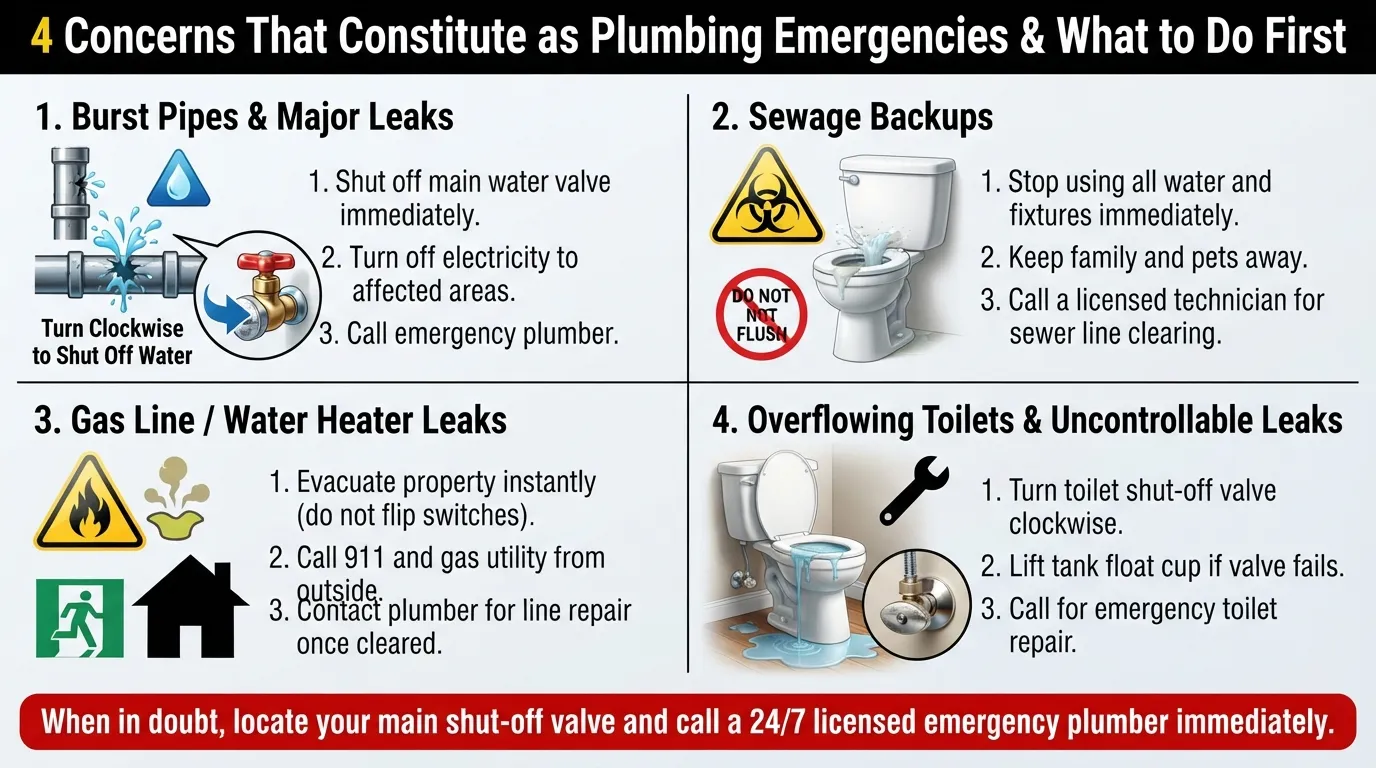
4 Concerns That Constitute as Plumbing Emergencies and What to Do First
What Counts as a Plumbing Emergency?
A plumbing emergency is any sudden, severe failure in your home’s plumbing system that threatens structural water damage, cuts off essential clean water access, or presents an immediate health and safety risk. When facing an active crisis, contacting an experienced emergency plumber right away prevents thousands of dollars in property damage and protects your household from contaminated water exposures.
The 4 Most Critical Plumbing Emergencies
Burst Pipes: Uncontrolled water gushing into walls, ceilings, or flooring that rapidly destroys property structure.
Sewage Backups: Raw sewage surfacing through floor drains, showers, or toilets, creating severe biohazard conditions.
Gas Leaks: Hazardous leaks in gas-powered water heater lines or supply pipes posing immediate explosion and toxicity risks.
Overflowing Toilets and Uncontrollable Leaks: Main shut-off failures or continuous overflows that cannot be stopped manually.
Plumbing Emergency Triage Checklist
Understanding whether your situation requires immediate late-night dispatch or a standard business-hour appointment helps manage costs while protecting your home. Use this quick breakdown to evaluate your urgency:
| Call Now (Immediate Dispatch) | Call Today (Same-Day Priority) | Can Wait a Day (Standard Appointment) |
| Active burst pipe or water line rupture | Single drain clog with other working fixtures | Dripping faucet or minor fixture leak |
| Raw sewage backing up into home | Water heater running warm but not hot | Running toilet with shut-off valve working |
| Uncontrollable toilet overflow | Minor water heater leak contained in pan | Slow-draining bathroom sink |
Critical Safety Warning: If you smell natural gas or suspect a fuel line leak near your water heater or appliances, evacuate all occupants from the home immediately. Call 911 or your local gas utility from a safe distance before contacting a professional plumber.
Emergency #1: Burst Pipes and Major Water Leaks
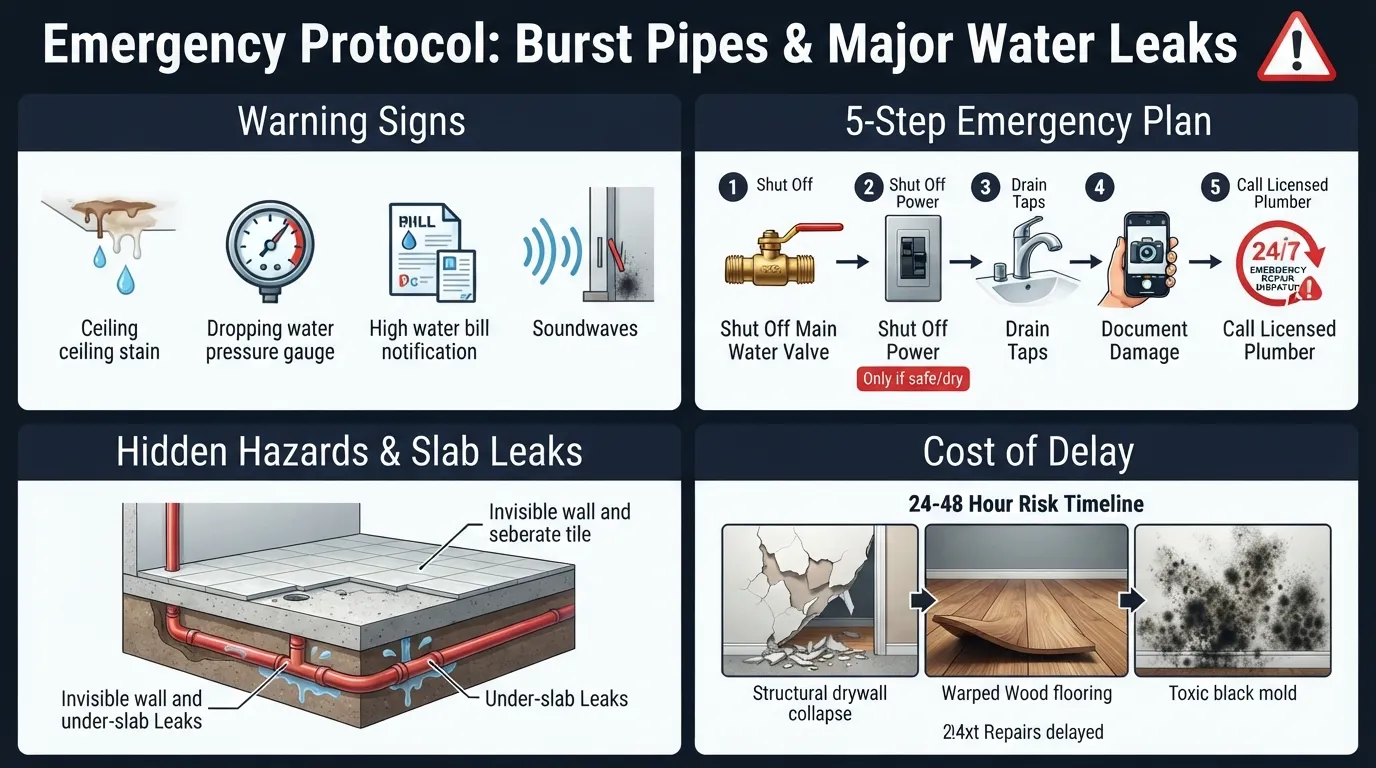
A burst pipe can discharge hundreds of gallons of water into your home within minutes, causing severe structural degradation and immediate property loss. Knowing how to spot the early warning signs and taking prompt, systematic action prevents catastrophic flood damage across your living space.
Warning Signs of a Burst Pipe
Pipes often show distinct indicators before completely rupturing or shortly after a hidden break occurs:
Sudden Water Pressure Drop: A abrupt decrease in flow across multiple faucets usually signals a major breach in the supply line.
Water Stains on Ceilings or Walls: Discoloration, bubbling paint, or bulging drywall indicates pooling water behind building materials.
Running Water Sounds: Hearing running or dripping water when all household taps and appliances are turned off.
Unexplained Spike in Water Bills: A drastic jump in monthly utility costs often points to an undetected leak within the plumbing network.
What to Do Right Now: Step-by-Step Emergency Response
If a pipe ruptures, execute these crucial steps immediately to minimize physical damage and restore control:
Shut Off the Main Water Valve: Locate your home’s main control valve and turn it off completely to halt incoming water pressure.
Turn Off Electricity to the Area: Shut off circuit breakers serving the affected rooms only if you can safely reach the electrical panel without stepping in standing water.
Open Taps to Drain the System: Turn on cold and hot water faucets on the lowest level of the home to drain remaining water out of the pipes.
Document the Damage: Take detailed photos and videos of affected walls, flooring, and personal property for insurance claims.
Call a Professional Plumber: Contact an experienced emergency plumber to inspect, locate, and repair the pipe rupture.
Why Waiting Makes It Worse
Delaying repairs by even a few hours significantly amplifies total restoration costs and structural hazards:
Rapid Mold Growth: Toxic mold spores begin colonizing damp drywall, wood, and insulation within 24 to 48 hours.
Warped Flooring and Ruined Drywall: Hardwood floors buckle, subflooring rots, and drywall loses structural integrity when saturated.
Escalating Restoration Costs: What begins as a localized plumbing fix quickly turns into an expensive, multi-room reconstruction project.
Hidden Leaks Inside Walls and Under Slabs
Many Miami homes are constructed on concrete slab foundations, placing supply lines directly beneath heavy concrete. When underground or in-wall pipes corrode or shift, leaks can flow undetected for weeks, silently eroding soil stability and foundation strength. Specialized, non-invasive leak detection and repair is critical for pinpointing these hidden breaches without needlessly damaging your home’s slab or walls.
Field Note: Real Service Call Experience
“During late-night service calls, our technicians frequently discover homeowners attempting temporary fixes—like wrapping duct tape or epoxy putty over a high-pressure burst pipe. These makeshift seals fail within hours under standard line pressure, resulting in submerged living rooms by morning. Never rely on temporary patches for active main supply ruptures; immediate shut-off and proper pipe replacement are mandatory.”
Emergency #2: Sewage Backups and Main Drain Blockages
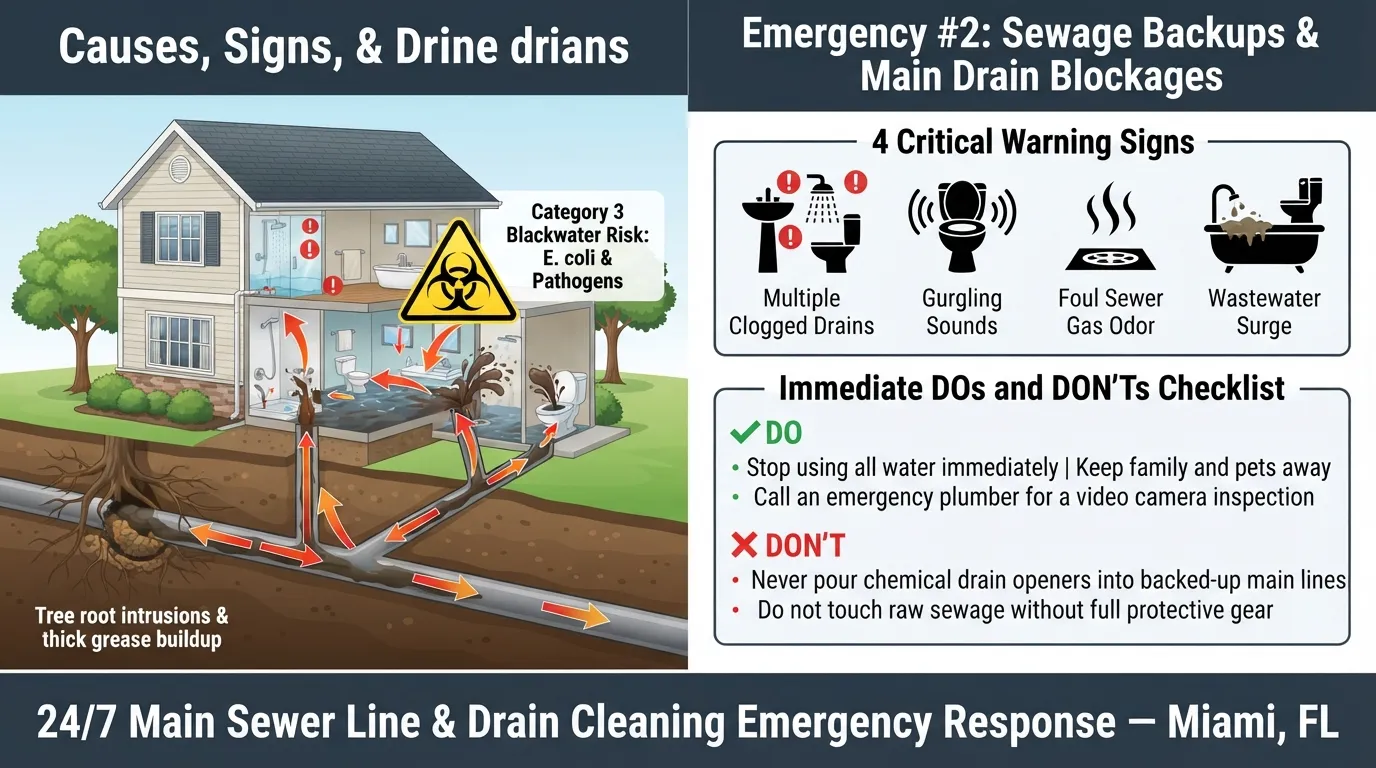
A sewage backup is an immediate biohazard emergency that occurs when wastewater cannot flow out through your main drain, forcing untreated sewage back up into your home’s fixtures. Beyond causing extensive property destruction, main sewer line failures expose occupants to dangerous pathogens, requiring urgent professional intervention and specialized containment.
Why Sewage Backup Is a Health Emergency
Wastewater backing up into living spaces is classified as Category 3 “blackwater,” meaning it is heavily saturated with harmful microorganisms, including E. coli, Salmonella, parasites, and airborne pathogens. According to official CDC guidance on sewage exposure, direct contact or breathing in air from contaminated areas poses severe health risks, including gastroenteritis, skin infections, and respiratory illness. Never attempt to clean or wade through raw sewage without professional personal protective equipment (PPE).
4 Signs Your Sewer Line Is Broken or Blocked
Recognizing early warning indicators helps you identify a failing sewer line before wastewater breaks through into your living spaces:
Multiple Drains Clogging Simultaneously: Fixtures across different bathrooms or levels backing up at the exact same time.
Gurgling Toilets and Drains: Air trapped behind a main line blockage producing loud gurgling noises when fixtures drain.
Pervasive Foul Odors: Foul sewer gas smells rising from floor drains, sinks, or around the exterior foundation.
Wastewater Surging in Low-Lying Fixtures: Flushing a toilet or running a washing machine causes dirty water to back up into the lowest tub or shower drain.
What to Do (and What NOT to Do) During a Backup
Taking the right safety measures keeps your family safe and prevents further system damage during a main block:
DO Stop Using All Water Immediately: Do not flush toilets, run sinks, or operate laundry appliances, as all discharge will force more wastewater into your home.
DO Evacuate Affected Areas: Keep children and pets away from contaminated areas to prevent accidental exposure or tracking.
DO Call a Professional Plumber: Contact a technician immediately to perform professional drain cleaning and clear the main cleanout.
DO NOT Pour Chemical Drain Cleaners: Never use chemical openers on a blocked main drain; caustic chemicals pool in standing sewage, creating toxic fumes and severe chemical burn hazards for technicians.
DO NOT Attempt Unprotected Cleanup: Avoid handling raw sewage or saturated materials without heavy-duty rubber boots, gloves, and respiratory protection.
Common Causes of Main Sewer Line Failures
Tree Root Intrusion: Fast-growing roots penetrate underground pipe joints, expanding over time to form complete blockages.
Grease and Debris Accumulation: Cooking oils, fats, and non-flushable wipes bind together inside main pipes, catching solid waste.
Structural Pipe Failure: Aging clay, iron, or PVC lines crack, bell, or collapse due to soil shifting and decades of wear.
Field Note: Real Service Call Experience
“We responded to a residential emergency where a homeowner tried clearing a gurgling lower-level toilet using standard off-the-shelf liquid drain opener. The issue was actually a severe tree-root blockage in the main line, causing several gallons of caustic chemical liquid to back up directly into their shower basin. Our team had to wear full chemical hazard suits alongside standard biohazard gear to clear the line and neutralize the acid before performing a full video camera inspection.”
Emergency #3: Gas Leaks Near Water Heaters and Gas Lines
A natural gas or propane leak is an immediate life-safety crisis that requires swift, deliberate action. Because many homes rely on gas lines to power fuel-burning appliances, recognizing the signs of a gas leak and knowing the proper emergency sequence protects your household from fire, explosion, and dangerous carbon monoxide exposure.
How to Recognize a Gas Leak
Natural gas is naturally odorless and colorless, but utility companies inject a chemical called mercaptan to give it a distinct, highly noticeable warning scent:
Sulfur or “Rotten Egg” Smell: A strong, sharp odor near your water heater, stove, or indoor supply lines.
Hissing or Whistling Sounds: Audible escaping gas near gas valves, appliance connectors, or outdoor meters.
Dead or Dying Vegetation: Patches of dead grass or plants directly above underground gas supply pipes.
Physical Symptoms: Unexplained dizziness, nausea, headaches, or difficulty breathing while inside the home.
What to Do Immediately During a Gas Leak
If you smell gas or suspect a line breach, follow these immediate safety procedures without delay:
Evacuate All Occupants Instantly: Get all family members and pets out of the property immediately.
Avoid Electrical Sparks: Do not switch lights on or off, use landline phones, operate appliances, or ignite any open flames.
Do Not Use Mobile Phones Indoors: Walk a safe distance away from the building before using your cell phone.
Call 911 and Your Gas Utility: Report the gas emergency to local first responders and the gas utility company from outside the home.
Do Not Re-Enter: Wait until emergency personnel formally inspect and declare the building safe before going back inside.
When the Plumber Gets Involved
Once first responders or the utility company safely shut off the main gas supply and confirm the residence is clear of combustible fumes, repairs can begin. A licensed plumber certified in fuel piping can then inspect, pressure-test, and repair damaged supply pipes or faulty connections on your gas water heater.
| Step 1: Emergency Response | Step 2: System Safety Clear | Step 3: Professional Repair |
| Call 911 & Gas Company | Utility / Fire Dept Inspection | Licensed Plumber Repair |
| Evacuate property instantly to shut off main supply and ensure site safety. | Emergency teams clear the home of toxic or explosive gas buildup. | Certified technicians fix gas line fittings, appliances, or piping. |
Gas vs. Plumbing: Who to Call First?
Always call 911 and your gas utility provider first to secure the site and turn off the gas. Contact a licensed plumbing contractor only after emergency officials confirm the physical environment is safe for technicians to perform gas line repairs or water heater replacements.
Emergency #4: Overflowing Toilets and Leaks You Can’t Stop
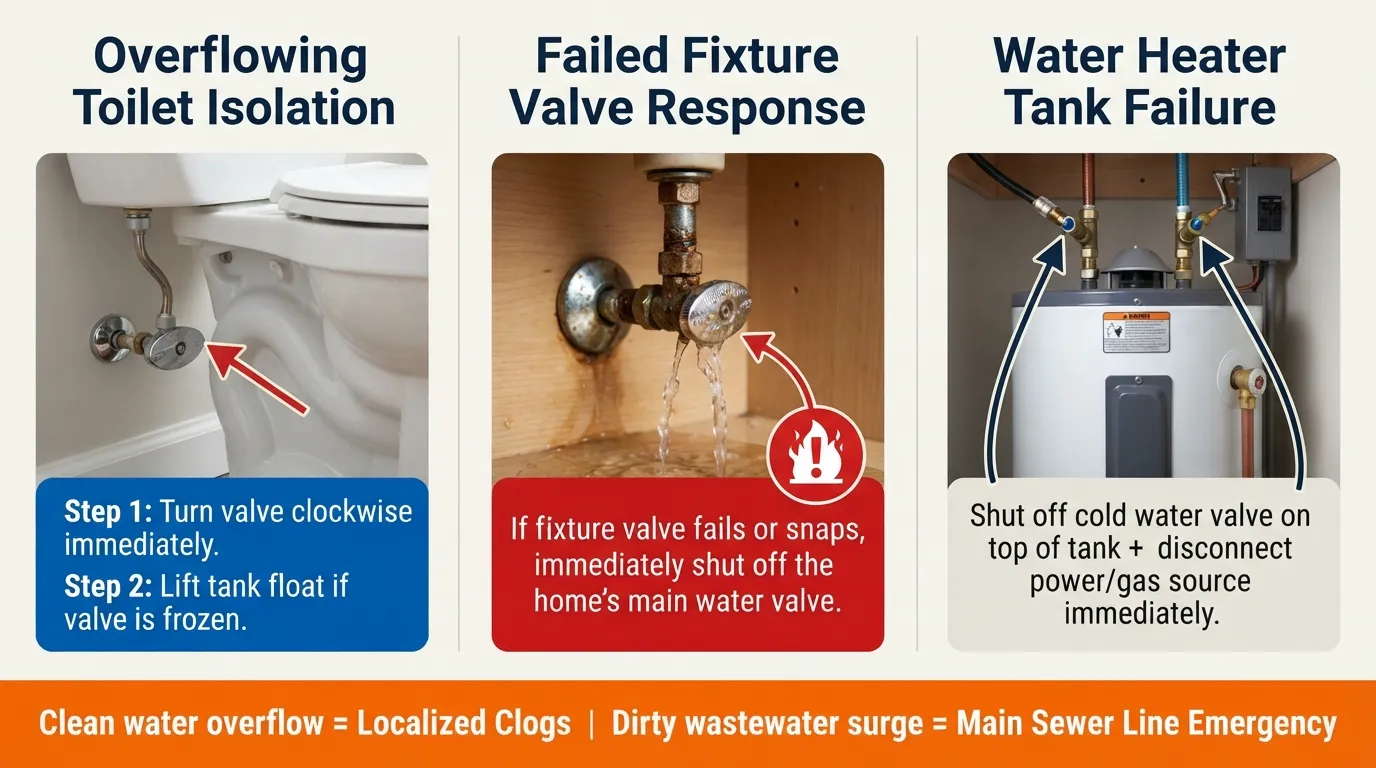
Uncontrollable leaks and overflowing fixtures present immediate threats to your home’s interior, causing rapid water accumulation on floors and subflooring. Addressing these localized plumbing crises effectively requires knowing how to isolate individual fixtures and recognizing when a broader utility or weather-related issue is at play.
A Toilet That Won’t Stop Overflowing
An overflowing toilet can ruin bathroom flooring within minutes and seep into lower-level ceilings if not stopped promptly:
Reach for the Toilet Shut-Off Valve: Immediately turn the oval shut-off valve located on the wall behind the toilet clockwise until it tightens completely.
Stop the Fill Mechanism: If the valve is stuck, carefully remove the tank lid, lift the float ball or cup to stop water from filling, and hold it up until flow stops.
Identify the Water Source: If clean water is filling the bowl, it is a localized clog; if dirty wastewater surges upward from the drain, it is a main sewer backup requiring professional toilet repair.
A Leak You Can’t Stop at the Fixture Valve
When localized shut-off valves under sinks or behind washing machines fail, freeze, or corrode, water continues pouring unchecked into your living area. If an individual fixture valve snaps or fails to stop the water flow completely, skip localized troubleshooting and immediately turn off your property’s main water control valve. Once the main line is secured, contact a plumber to safely swap out the failed fixture valve and repair damaged piping.
Water Heater Tank Leaking or Failing
A ruptured water heater tank can discharge up to 50–80 gallons of heated water into surrounding utility closets or garages in a matter of minutes:
Shut Off Water Supply: Turn the cold water inlet valve on top of the tank clockwise to stop incoming flow.
Disconnect Power Source: Turn off the circuit breaker for electric models, or switch the control valve to “OFF” for gas units.
Why It Causes Fast Flooding: Thermal expansion combined with internal tank sediment corrosion leads to sudden bottom-seam ruptures rather than minor slow drips.
No Water at All: Emergency vs. Municipal Utility Outage
Experiencing a sudden, complete loss of water across every faucet in your home can indicate a severe internal main break or an external municipal supply issue:
Check Neighboring Properties: Contact neighbors or check your municipal water provider’s outage map to see if the main street line is down.
Inspect Your Property Exterior: Look for sudden pooling water, soggy ground, or gushing water near your meter box or main valve.
Determine Next Steps: If neighboring homes have normal pressure but your home has zero water flow (with no municipal outage), you likely have a primary supply line rupture requiring immediate emergency repair.
Flooding from Storms and Power Outages
During South Florida’s intense storm season, heavy rainfall combined with sudden electrical grid failures often leads to rapid indoor water accumulation:
Loss of Power to Sump Pumps: Power outages shut down standard electrical pumps, preventing automatic drainage during torrential downpours.
Back-Up Protection Systems: Installing battery-backup or water-powered sump pump systems ensures uninterrupted water evacuation even when primary grid power drops out.
What Is NOT a Plumbing Emergency?
Not every plumbing inconvenience requires an expensive late-night emergency dispatch. Distinguishing between a true crisis and a non-emergency repair helps you avoid unnecessary after-hours service fees while ensuring critical issues still receive timely attention during standard business hours.
Issues That Can Usually Wait Until Business Hours
If the issue is isolated, contained, and does not pose immediate property damage or safety hazards, it can safely wait for a standard scheduled appointment:
Slow Drain in a Single Sink: A single bathroom or kitchen drain flowing slowly—provided other household drains function normally.
Dripping Faucet: A steady drip from a spout or handle with water contained inside the sink basin.
Running Toilet: A toilet that continues running due to a faulty flapper or fill valve, provided the shut-off valve works and water stays inside the bowl.
Low Water Pressure in One Fixture: A localized drop in pressure limited to a single faucet or showerhead (often caused by a clogged aerator).
Minor Appliance Drips: A small, contained leak underneath a sink or appliance catching safely in a bucket or drain pan.
Warning Signs a “Minor” Problem Is Turning Serious
A routine maintenance issue can quickly escalate into an emergency. Watch for these red flags that signal a situation is worsening:
Trouble Spreads to Multiple Fixtures: A single slow drain turns into multiple clogged sinks, tubs, or gurgling toilets throughout the house.
Sewer Odors Appear: You begin smelling persistent rotten egg or raw sewage odors near drains or foundation walls.
Water Begins Spreading Uncontained: Water breaks out of containment pans or buckets, saturating drywall, baseboards, or subflooring.
Shut-Off Valves Fail: You attempt to isolate a running fixture, but the local shut-off valve freezes, snaps, or fails to stop the water flow.
The Quick Decision Checklist: Emergency vs. Standard Service
Use this straightforward rule of thumb to decide whether to call an emergency plumber immediately or wait for normal operating hours:
| Scenario | Can You Stop or Contain the Water? | Is There a Health or Safety Risk? | Action Required |
| Burst pipe, active flooding, main line sewer backup, or gas odor | NO | YES | Call Emergency Plumber Immediately |
| Clogged main drain, warm water heater running cold, single toilet down in 1-bathroom home | YES | LOW / MODERATE | Call for Same-Day / Priority Service |
| Dripping faucet, slow bathroom drain, minor running toilet, low pressure at one sink | YES | NO | Schedule Standard Business Hours Visit |
What to Do Before the Plumber Arrives
The actions you take in the minutes between discovering a plumbing crisis and the arrival of a professional can dramatically limit structural destruction and lower restoration expenses. Following a clear protocol secures your home, protects your personal safety, and simplifies future insurance claims.
Your 6-Step Emergency Checklist
Execute these six critical actions as soon as an active plumbing failure occurs:
Shut Off the Water: Immediately close the main water valve or local fixture valve to stop incoming flow.
Protect Electrical Systems: Disconnect power at the breaker panel if water approaches outlets, wiring, or electrical appliances.
Contain Standing Water: Use towels, buckets, or a wet/dry vacuum to extract standing water and prevent deeper saturation.
Move Valuables to Higher Ground: Elevate rugs, furniture, electronics, and personal belongings out of water pathways.
Document the Damage Thoroughly: Capture clear photos and video footage of all affected areas, structures, and belongings.
Contact a Licensed Professional: Call your emergency plumbing technician and notify your homeowners insurance provider.
Safety First: Navigating Water and Electricity
Water and electricity create an immediate life-threatening hazard during indoor flooding:
Avoid Standing Water: Never walk through standing water if it reaches electrical outlets, power cords, or major appliances.
Inspect the Circuit Panel: Do not attempt to reset breakers or switch off main power if the electrical panel itself is wet or surrounded by standing water.
Wait for Safety Clearance: If electrical hazards exist and cannot be shut off safely from a dry location, evacuate the property and wait for emergency personnel or electric utility responders.
How to Document Damage for Your Insurance Claim
Filing a successful homeowners insurance claim relies on providing thorough, early proof of structural and personal property loss:
Capture Before-Cleanup Evidence: Take wide-angle and close-up photos and videos of the damage before starting any water removal.
Catalog Affected Belongings: Itemize ruined furniture, flooring, drywall, and personal goods, noting model numbers or purchase receipts when available.
Keep All Repair Receipts: Retain invoices from emergency plumbing repairs, water damage restoration services, or equipment rentals like industrial dehumidifiers.
Know Your Shut-Off Points Before an Emergency
Locating and testing key shut-off valves before a crisis occurs saves vital minutes during a home emergency:
| Shut-Off Point | Typical Location | How to Operate |
| Main Water Valve | Near the water meter, basement entry, garage, or front exterior wall | Turn lever 90 degrees (quarter-turn) or wheel clockwise until tight |
| Water Heater Valve | Top cold water pipe leading directly into the unit | Turn inline lever or gate wheel valve clockwise to shut off supply |
| Fixture Valves (Toilet/Sink) | Directly behind toilets or underneath sink cabinets | Turn small oval chrome knob clockwise until fully closed |
How Much Does an Emergency Plumber Cost, and How Fast Can They Arrive?
Understanding the financial and time factors involved in dispatching a 24/7 emergency plumber helps you make confident, informed decisions during a high-stress crisis. Addressing plumbing failures swiftly balances dispatch expenses against the far higher price tag of extensive property restoration.
Key Factors Affecting Emergency Plumbing Costs
Emergency plumbing service pricing varies based on several situational variables unique to your home and the breakdown:
Timing and Dispatch Hours: Service calls requested late at night, on weekends, or during major holidays incur higher base dispatch rates.
Severity and Structural Complexity: Complex system failures like hidden slab breaches or main line tree root clearings require specialized tools and more labor hours than minor valve swaps.
Required Replacement Parts: Heavy-duty components, custom piping, or specialized water heater valves add to overall equipment costs.
Accessibility Challenges: Hard-to-reach lines inside tight crawlspaces, concrete slabs, or multi-story walls increase physical labor requirements.
Why After-Hours Calls Cost More
Dispatching a certified technician outside standard business hours involves dedicated on-call staffing, immediate dispatch logistics, and prioritized material sourcing. Premium after-hours rates ensure licensed professionals and fully equipped service vehicles remain on standby 24 hours a day, 365 days a year, ready to deploy to your doorstep within moments of a critical call.
Cost of Acting Fast vs. The Price of Waiting
Investing in immediate professional intervention yields massive long-term savings by heading off catastrophic secondary destruction:
| Immediate Action vs. Delayed Response | Immediate Professional Repair | Delayed / Deferred Repair |
| Primary Plumbing Expense | Standard emergency dispatch & direct pipe repair | Standard pipe repair plus extensive line re-piping |
| Property Structural Damage | Minor water cleanup contained to immediate area | Saturated subflooring, ruined drywall, ruined cabinetry |
| Secondary Remediation Costs | $0 (No mold or structural decay) | Thousands in mold remediation & structural rebuilding |
| Overall Financial Impact | Predictable, localized repair cost | Escalating water damage restoration costs |
Expected Response Times for Emergency Dispatch
When an active pipe rupture or sewage backup threatens your property, rapid deployment is critical. Professional 24/7 plumbing providers prioritize active flooding and health hazards, coordinating localized technician routes to minimize arrival windows. Upon receiving your call, dispatchers immediately guide you through emergency shut-off steps over the phone while transmitting real-time routing details to the nearest service vehicle to ensure arrival as fast as humanly possible.
How to Choose a Reliable Emergency Plumber
Selecting the right professional during an active plumbing crisis requires balancing speed with rigorous vetting. Choosing a qualified, reputable contractor ensures your property is repaired safely while protecting you from predatory pricing and poor workmanship.
Checklist: What to Look For in an Emergency Plumber
Before authorizing work on your property, confirm that your service provider meets these essential quality and safety criteria:
Active Florida Plumbing License: Ensure the technician holds a valid license from the Florida Department of Business and Professional Regulation (DBPR).
Comprehensive Liability and Workers’ Comp Insurance: Verify insurance coverage to protect your home from accidental damages during high-stress repairs.
True 24/7 Availability: Look for dedicated round-the-clock dispatchers rather than third-party answering services that delay response times.
Upfront Price Transparency: Demand clear written estimates covering emergency dispatch fees, hourly labor rates, and equipment expenses before work begins.
Proven Local Reviews: Check independent review platforms for verified customer feedback detailing punctuality, cleanliness, and technical skills.
Clear Communication: Choose contractors who explain root causes clearly and provide detailed repair options.
Red Flags to Avoid During a Plumbing Crisis
Refusal to Provide License Numbers: Avoid contractors who cannot produce a active DBPR license number upon request.
Vague or Cash-Only Estimates: Beware of technicians who offer verbal-only estimates or demand cash upfront before inspecting the problem.
High-Pressure Sales Tactics: Avoid companies that push unnecessary, full-system replacements when a localized repair resolves the crisis.
No Physical Business Address: Exercise caution with unverified pop-up operators who lack a physical location or established local presence.
Why Local Expertise Matters in Miami
Miami’s unique coastal geography, high water table, and local building codes demand specialized plumbing knowledge. Local technicians understand the intricacies of slab-on-grade foundations, aging cast-iron drainage lines, and strict municipal hurricane preparedness codes. Working with a dedicated local plumber ensures your repairs comply fully with South Florida standards while receiving priority dispatch during regional weather events.
Note for Commercial Property Managers: Business operations require immediate continuity during a plumbing disaster. Partnering with a dedicated provider offering specialized commercial plumbing services guarantees rapid code compliance, heavy-duty grease trap and main line management, and minimal disruption to your commercial tenants.
Frequently Asked Questions
How do I locate my home’s main water shut-off valve?
Main shut-off valves are typically located near your water meter box by the front curb, along an exterior wall, inside the garage, or near the main water heater supply line. Turn lever valves 90 degrees or wheel valves clockwise until fully closed.
Will homeowners insurance cover burst pipe water damage?
Most standard homeowners policies cover sudden and accidental water discharge caused by burst pipes. However, coverage often excludes gradual damage caused by unresolved long-term leaks or lack of routine maintenance.
Can I use chemical drain cleaners during a main sewer backup?
No. Never pour chemical drain cleaners into a backed-up sewer line. Caustic chemicals become trapped in standing wastewater, creating hazardous fumes and extreme skin-burn risks for technicians attempting mechanical repairs.
Prevent Plumbing Emergencies Before They Happen
The most effective way to handle a plumbing emergency is to stop it before it starts. Establishing proactive household habits and scheduling periodic professional inspections protects your home from costly disruptions and extends the life of your plumbing system.
5 Simple Habits That Prevent Most Emergencies
Adopting a few simple maintenance routines significantly reduces your risk of unexpected plumbing failures:
Locate and Test Your Main Shut-Off Valve: Know the exact position of your main water valve and turn it twice a year to ensure it operates smoothly during an emergency.
Keep Fats, Oils, and Wipes Out of Drains: Never pour cooking grease down kitchen sinks or flush “flushable” wipes down toilets, as these are primary causes of severe pipe blockages.
Maintain Your Water Heater Regularly: Schedule annual tank flushes to remove mineral sediment buildup that degrades heating elements and corrodes internal walls.
Monitor Monthly Water Bills: Keep a close eye on your utility statements for sudden, unexplained spikes that often indicate hidden indoor or slab leaks.
Address Slow Drains Early: Treat sluggish sinks or showers immediately before minor line buildup hardens into a total main line blockage.
When to Schedule a Professional Plumbing Inspection
While routine home care helps, professional diagnostic evaluations identify hidden structural hazards before they cause severe damage. You should schedule an inspection if your property meets any of these criteria:
Older Homes (20+ Years): Aging cast-iron or galvanized steel supply and drain lines are highly vulnerable to interior corrosion and structural failure.
Recurring Drain Blockages: Repeated clogs across multiple fixtures indicate tree-root intrusion or deteriorating main sewer pipes.
Aging Water Heaters: Conventional tank water heaters over 8 to 10 years old present a high risk for sudden bottom-seam ruptures and complete failure.
Preparing Your Plumbing for Hurricane Season
South Florida’s intense tropical storm season creates unique challenges for residential plumbing systems due to heavy rainfall and potential power outages:
Verify Shut-Off Valve Access: Clear debris, vegetation, or storage boxes away from outdoor water meters and main shut-off valves before severe weather arrives.
Identify Gas and Water Lines: Ensure family members know where main gas supply levers and water valves are located if immediate shut-down is needed during evacuation.
Prepare Backup Systems for Outages: Test battery-backup systems on sump pumps and drainage equipment before power outages hit to prevent severe storm flooding.
Plumbing Emergency FAQs
What classifies as a plumbing emergency?
A plumbing emergency is any sudden failure that risks active property damage, creates immediate biohazard or health hazards, or completely cuts off running water or sanitation. Situations like burst supply lines, raw sewage backups, natural gas leaks near appliances, and main line flooding require immediate emergency dispatch.
What counts as emergency plumbing?
Emergency plumbing includes 24/7 priority repairs designed to contain active disasters. Services cover main line shut-offs, high-pressure pipe repairs, sewer camera inspections and cleanouts, slab leak isolation, gas line leak repair, and clearing major main drain blockages causing fixtures to overflow.
What is considered a major plumbing issue?
A major plumbing issue involves extensive structural or systemic damage across your primary supply or drainage network. Examples include cracked concrete slab foundation leaks, collapsed underground sewer pipes, corroded gas lines, ruptured water heater tanks, and tree root intrusions blocking main service lines.
How do I know if I have a plumbing emergency?
You have a plumbing emergency if water is flowing uncontrollably, sewage is surging into sinks or tubs, or you smell natural gas or sulfur. If turning local fixture shut-off valves fails to stop advancing water or if health hazards exist, contact an emergency plumber immediately.
When do you need an emergency plumber?
Call an emergency plumber immediately when an issue cannot be safely isolated or contained until standard business hours. Immediate dispatch is required for active main pipe bursts, gas line leaks, severe sewer backups, or total water supply loss across all home fixtures.
What are some hazards in plumbing?
Plumbing hazards include exposure to Category 3 sewage pathogens (E. coli, parasites), toxic gas inhalation (methane, natural gas, carbon monoxide), electrical shock from standing water near power outlets, structural building collapses, and severe chemical burns from misusing caustic drain openers.
What are four signs that your sewer line is broken?
Four definitive indicators of a broken or severely blocked sewer line are:
Multiple drains, showers, and toilets clogging simultaneously.
Loud gurgling sounds coming from fixtures when water drains.
Foul sewer gas odors rising from floor drains or yard spaces.
Wastewater backing up into lower tubs or showers during toilet flushes.
What is the first thing to do when a pipe bursts?
The immediate first step when a pipe bursts is to locate and close your home’s main water shut-off valve. Shutting off the main water supply instantly stops incoming pressure, halts active indoor flooding, and limits structural water damage while you wait for a technician.
What is the “135 rule” in plumbing?
The 135 rule refers to a technical pipe fitting guideline where plumbers use gradual 135-degree bends (45-degree offset fittings) rather than sharp 90-degree turns in drainage lines. This design principle reduces turbulence, keeps wastewater moving efficiently, and minimizes debris buildup that leads to line blockages.
Is a gas smell a plumbing emergency?
Yes, smelling natural gas or rotten eggs near a water heater or pipe is a critical life-safety emergency. Evacuate all household occupants and pets immediately without turning light switches on or off, call 911 and your local gas utility from outside, and contact a licensed plumber after responders confirm the building is safe.
Need an Emergency Plumber in Miami? We’re Ready When You Call
When a plumbing disaster strikes your South Florida home, every second counts. Delaying repairs or waiting until standard business hours risks massive structural damage, hazardous mold contamination, and thousands of dollars in restoration expenses. Partnering with a fast, reliable, and licensed local expert ensures your home is protected around the clock.
Quick Recap: The 4 Plumbing Emergencies
Burst Pipes & Major Water Leaks: Locate and shut off your property’s main water valve instantly to stop advancing floodwater.
Sewage Backups & Main Drain Blockages: Stop using all running water immediately and keep household members away from contaminated blackwater areas.
Gas Leaks Near Water Heaters or Lines: Evacuate all occupants to a safe distance outside and call 911 along with your gas utility provider first.
Overflowing Toilets & Uncontrollable Leaks: Turn the local fixture shut-off valve clockwise or turn off the main water valve if individual controls fail.
Call or Book Service Now
Don’t wait for minor leaks to turn into major property loss. Our licensed technicians are on standby 24 hours a day, 7 days a week, offering rapid dispatch and upfront, honest pricing with zero hidden fees.
Direct Phone: 786-239-6529
Operating Hours: Available 24/7 — Every Day of the Year
Online Reservations: Book Now
Our Miami Service Areas & Trust Signals
We proudly provide complete emergency plumbing services and general residential or commercial maintenance across all of Miami-Dade County, including Downtown Miami, Miami Beach, Coral Gables, Hialeah, Doral, and Kendall.
State Licensed & Insured: Fully licensed Florida State Plumbing Contractor (Lic #CFC1432859).
10+ Years of Local Experience: Over a decade serving South Florida homeowners with code-compliant repairs tailored to local slab foundations and coastal conditions.
Proven Local Reputation: Rated 4.9/5 stars across 50+ verified customer reviews.
Rapid Response On-Site: Dedicated dispatch logistics ensuring a 30-minute arrival window for urgent emergencies.
Whether you are facing a late-night burst pipe or need to schedule an annual system checkup, explore our full list of all plumbing services to keep your property running smoothly.
Main Services
Related Posts
Need a Plumber in Miami?
Schedule service online or speak directly with the EZ Plumbing team.
Owner-Led Local Service
Know who is behind the business before you request service. The owners, contact line and Miami service pages are published clearly.
- Named business owners
- Direct phone and social channels
- Local Miami service information
Clear Help Before You Book
Review the relevant service page, contact the team directly and use the booking page when you are ready—without relying on vague claims.
- Service-specific information
- Direct questions before scheduling
- Clear online booking route