Common Sewer Issues Homeowners Face: Causes, Signs & Fixes
Understanding Sewer Line Issues
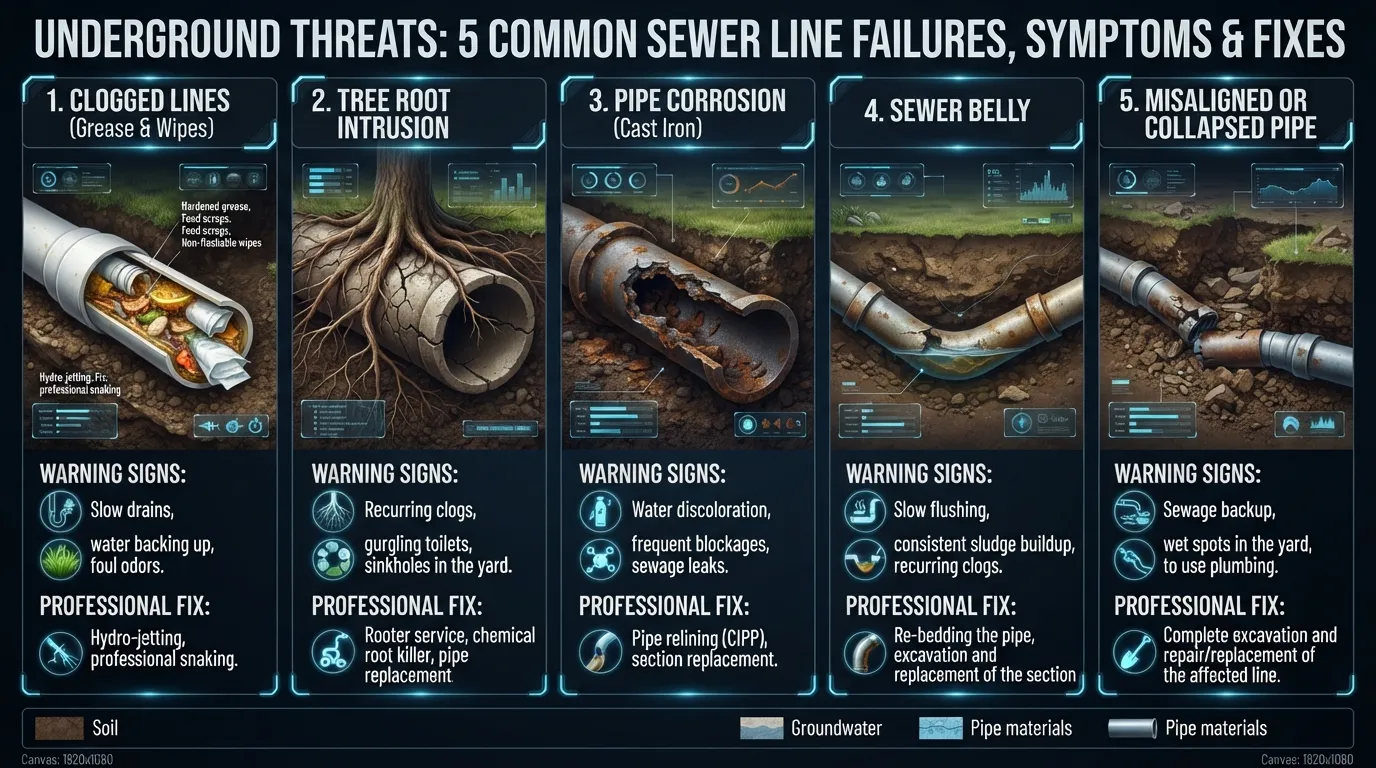
Dealing with wastewater backup or a failing plumbing system usually points back to one core problem: a damaged or obstructed sewer line. The most common culprits behind these failures include tree root intrusion, pipe corrosion, a sewer belly, and misaligned/collapsed pipes.
Recognizing these triggers early prevents catastrophic property damage. Here is a fast breakdown of what causes residential sewer failures:
Tree Root Intrusion: Roots naturally gravitate toward moisture, breaking into tiny cracks in older pipes to cause severe clogged lines.
Pipe Corrosion: Aging cast iron or clay lines deteriorate over time, leading to structural collapse and major leaks.
Sewer Belly: A dip in the underground pipe causes wastewater to pool, slowing down drainage and catching debris.
Structural Failures: Shifting soil often results in misaligned/collapsed pipes, halting all drainage completely.
Expert Insight: If you notice multiple plumbing fixtures backing up simultaneously or foul odors lingering near your drains, a primary sewer line inspection is urgently needed.
Warning Signs Your Home Has a Sewer Problem
Recognizing the early warning signs of a broken or obstructed main sewer line can save you thousands in emergency plumbing repairs. When your plumbing system fails, it rarely happens without giving prior notice.
The primary indicators of a compromised sewer line include slow-moving drainage, distinct gurgling sounds, unpleasant odors, and unexplained lawn anomalies.
Multiple Slow Drains or Backups
When a single sink or tub drains slowly, the issue is typically localized to that specific fixture’s trap or branch line. However, if multiple fixtures—such as your toilets, showers, and bathroom sinks—begin draining sluggishly at the same time, the problem points directly to a main sewer backup.
Whole-House Impact: Water struggling to exit multiple independent drains signals a centralized restriction in the main sewer lateral.
Fixture Interaction: Flushing a toilet causes water to bubble up into the shower or tub drain because wastewater has nowhere else to go.
Gurgling or Bubbling Noises
Hearing a strange gurgling noise or bubbling sound when your plumbing fixtures empty is a classic symptom of trapped air in your drain lines. As wastewater attempts to flow past an obstruction or a structural defect, it forces air bubbles backward up through the pipes and plumbing traps.
Air Displacement: Blockages or pipe bellies trap air pockets that get forcefully displaced by running water.
Warning Triggers: Pay close attention if your toilet bowl bubbles when the washing machine drains or a sink empties.
Sewage Odors Indoors or in the Yard
A healthy plumbing system uses traps and vent stacks to safely route sewer gases up through your roof. If you detect a persistent sewage odor inside your home, near basement floor drains, or outside in the yard, it usually indicates a cracked, broken, or unsealed pipe venting gas where it shouldn’t.
Gas Leaks: Cracks, loose pipe joints, or dry floor drain traps allow noxious sewer gases to seep into living spaces.
Yard Smells: A lingering foul odor outdoors often highlights a major structural breach or subsurface leak along the main line leading to the municipal connection or septic tank.
Soggy, Sunken, or Extra-Lush Lawn Patches
Your underground sewer line runs from your house out to the municipal street or septic system. When a pipe cracks, separates, or suffers a complete collapse, leaking wastewater pooling underground will alter the landscape directly above the damage.
Unusual Vegetation: Wastewater acts as a potent fertilizer, causing a specific strip of grass to grow significantly greener and lusher than the surrounding lawn.
Surface Shifts: Persistent leaks wash away surrounding soil, leading to a spongy, soggy lawn patch or localized sinkholes and depressions.
Expert Diagnostic Tip: If you notice any combination of these symptoms, avoid using chemical drain cleaners, as they can damage older pipes and fail to clear structural obstructions like root masses or collapsed sections. Instead, schedule a professional video camera inspection to pinpoint the exact issu.
The 5 Most Common Sewer Issues Homeowners Face
Main sewer line failures stem from a predictable set of structural defects and misuse patterns. Identifying the exact mechanism behind a plumbing failure determines whether your system requires targeted cleaning, trenchless rehabilitation, or a full excavation.
The five most frequent sewer issues homeowners encounter involve clogs, biological intrusions, material degradation, and geometric shifts.
Clogged Sewer Lines (Grease, Wipes, Hair, Food Scraps)
Everyday habits inside the home contribute heavily to restricted wastewater flow. Pouring cooking oils down the kitchen sink creates a sticky grease buildup that traps hair, food scraps, and soap scum along the pipe walls. Furthermore, flushing non-flushable wipes—even those marketed as disposable—acts as a primary catalyst for total blockages. If you are dealing with frequent localized restrictions, proper drain cleaning is necessary to clear accumulated organic debris before it hardens into a permanent restriction.
Grease Accumulation: Fats, oils, and grease (FOG) solidify inside underground pipes, dramatically reducing the internal diameter of the line.
Myth vs. Reality: Unlike toilet paper, synthetic wipes do not dissolve in water; they twist into dense ropes that catch on pipe imperfections.
Tree Root Intrusion
Subsurface sewer lines transport warm water and nutrients, making them a prime target for underground flora. Trees and large shrubs naturally send out expanding roots that detect microscopic moisture vapor escaping from pipe joints. Once inside, root intrusion acts like a net, capturing toilet paper and solid waste until the line closes completely.
Joint Vulnerability: Older materials like clay pipes feature unsealed or mortar-sealed joints that offer zero resistance against aggressive root growth.
Progressive Damage: As roots expand inside minor cracks, they exert high radial pressure, eventually fracturing the surrounding pipe walls.
Pipe Corrosion (Aging Metal/Clay Pipes)
Plumbing infrastructure degrades over decades depending on the native soil chemistry and the age of the installation. Vintage homes frequently rely on fragile cast-iron pipes or clay systems that undergo progressive chemical and physical deterioration over time.
Pitting and Scaling: Interior pipe pitting occurs as oxidizing cast iron develops rough, scabby surfaces that snag solid waste and slow down wastewater velocity.
Structural Thinning: Decades of exposure to acidic wastewater and corrosive sewer gases eventually cause pipe bottoms to thin out and disintegrate.
Sewer Bellies (Sagging Pipe Sections)
A sewer belly occurs when a section of the underground pipe loses its proper gravitational slope and sags downward. This creates a low spot or basin where wastewater and solid waste permanently pool instead of flowing out to the municipal connection or septic tank.
Standing Water: The stagnant water trapped in the sag acts as a continuous drag point, causing repeated localized clogs even if no foreign objects are introduced.
Installation Flaws: Bellies are frequently triggered by improper initial soil compaction during construction or heavy surface loads shifting the earth over time.
Misaligned or Collapsed Pipes
Severe earth movement can disrupt the alignment of your entire sewer lateral. When ground conditions alter drastically, pipe joints separate or crush under excessive physical pressure.
Shifting Soil: Ground freezing, heavy seismic activity, or settling backfill creates a pipe joint offset, leaving a sharp lip inside the line.
Pipe Collapse: Fragile or severely corroded lines subjected to external ground weight eventually experience total pipe collapse, resulting in an immediate and complete stoppage of all wastewater discharge.
Strategic Consideration: When diagnosing chronic sewer failures, a professional video camera inspection is the only definitive way to distinguish between a simple soft blockage and a catastrophic structural collapse.
Sewer Line vs. Drain Line: Understanding the Difference
Homeowners often use the terms interchangeably, but distinguishing between a drain line and the main sewer line is essential for diagnosing plumbing failures and determining repair responsibilities. While both handle wastewater removal, they serve entirely different scopes of your home’s plumbing architecture.
The core differences lie in their scale, location, and destination within your wastewater system:
| Feature | Drain Line | Main Sewer Line |
| Scope | Localized to individual fixtures (sinks, showers, toilets). | Collects and carries wastewater from all combined household drains. |
| Location | Located inside walls, beneath floors, and inside the home. | Runs underground from the building exterior out to the property boundary. |
| Destination | Routes wastewater from indoor fixtures into the primary home stack. | Transports all waste through a lateral line to the municipal sewer connection or septic tank. |
| Failure Impact | Causes localized flooding or slow draining at a single fixture. | Causes whole-house backups, multiple fixture overflows, and yard contamination. |
Key Takeaway: A blockage in a single drain line usually requires a quick plunging or local snake, whereas a failure in your main sewer line demands heavy-duty clearing or trenchless repair because it cuts off the entire property’s wastewater exit route.
How to Find and Inspect Your Main Sewer Line
Pinpointing the exact path of your underground sewer lateral is essential before performing any major landscaping, clearing blockages, or hiring a contractor. Knowing where your pipes run and how to access them saves both time and expensive exploratory excavation.
Whether you are trying to self-diagnose an ongoing drainage issue or preparing for an evaluation, locating the main cleanout and understanding professional assessments are key steps.
Locating Your Cleanout Access Point
Your sewer cleanout is a capped vertical pipe connected directly to your main lateral line, typically designed to give plumbers easy physical access to clear blockages. Finding it is the first step in any DIY inspection or servicing effort.
Interior Signs: Look along the lowest level of your home—such as a basement wall, utility room floor, or crawlspace—for a 3-to-4-inch capped vertical PVC or cast-iron pipe.
Exterior Perimeter: Search outdoors near the foundation directly beneath a primary bathroom or kitchen sink, or walk along a straight visual line between your home and the street’s municipal line connection.
What a Professional Camera Inspection Involves
If you cannot locate your access point or need a definitive diagnosis for recurring backups, specialized diagnostics provide a clear picture of your pipe’s interior condition. A professional camera inspection utilizes a high-resolution, waterproof push-camera inserted directly into the cleanout access point.
Real-Time Assessment: Technicians navigate the line to visually identify root intrusion, structural cracks, grease buildup, or severe pipe offsets on a live monitor.
Precise Depth Mapping: Modern inspection systems feature built-in sonde transmitters that allow plumbers to pinpoint the exact underground location and depth of any damage from the surface.
If you can’t locate or inspect it yourself, a professional leak/line inspection service can help diagnose hidden structural failures before they escalate into emergencies.
Health Risks: What Is "Sewage Sickness"?
A compromised main sewer line is much more than an unpleasant plumbing inconvenience; it represents a major household biohazard event. When raw wastewater breaches your containment pipes, it introduces Category 3 “black water” into your living spaces.
Understanding the real medical hazards associated with raw sewage exposure is vital for protecting your family from acute infections and severe pathogen-driven illness.
Common Symptoms of Sewage Exposure
Contact with or inhalation of contaminated wastewater puts occupants at risk of severe biological transmission. According to guidelines outlined by the Centers for Disease Control and Prevention (CDC), raw sewage harbors pathogenic bacteria, viruses, and parasites that trigger distinct clinical syndromes.
Gastrointestinal Distress: Ingesting or coming into accidental contact with bacterial contamination from strains like E. coli or Salmonella causes severe stomach cramps, nausea, vomiting, and acute diarrhea.
Systemic Infections: Waterborne parasites like Giardia and viral infections such as Hepatitis A lead to prolonged fatigue, high fevers, jaundice, and debilitating intestinal illness.
Respiratory Irritation: As standing wastewater evaporates or dries, aerosolized mold spores and bacterial endotoxins trigger coughing, sinus inflammation, and worsened asthma symptoms.
Why Quick Action Matters
A sewage backup health risk multiplies rapidly the longer wastewater remains unaddressed inside a home or pooling across a yard. Moisture and organic waste create an ideal breeding ground for hazardous microbial colonies and toxic mold within 24 to 48 hours.
Pathogen Proliferation: Microorganisms multiply exponentially in stagnant indoor wastewater, increasing the likelihood of airborne transmission throughout your HVAC system.
Professional Remediation: Standard household cleaners cannot safely sanitize black water contamination. Prompt intervention by certified biohazard restoration specialists is necessary to remove compromised porous materials and protect your environment.
Safety Precaution: If you experience an active sewage backup, keep children and pets completely away from the affected area, avoid skin contact with the water, and call a professional plumber and restoration team immediately.
Why Miami Homes Are Especially Prone to These Sewer Issues
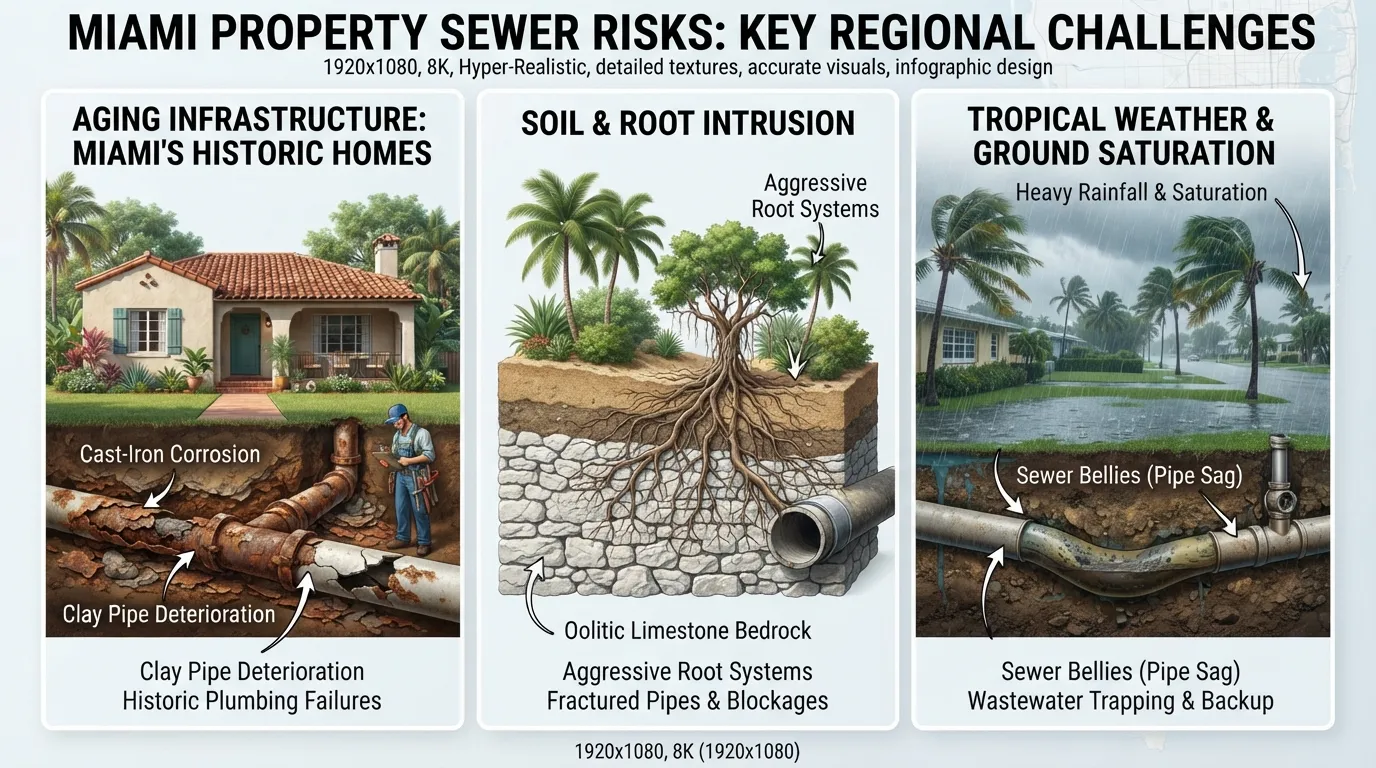
While sewer line failures can happen anywhere, geographic and environmental factors make South Florida properties uniquely vulnerable. National plumbing guides often overlook regional climate and geological realities, leaving local homeowners exposed to recurring infrastructure failures.
From unique municipal building histories to unpredictable tropical weather, several regional factors accelerate plumbing degradation in the region.
Aging Cast-Iron and Clay Pipes in Older Miami Neighborhoods
Many historic residential properties throughout Miami-Dade older homes—such as those in Coral Gables, Coconut Grove, and Miami Shores—rely on decades-old plumbing infrastructure. Built during mid-century booms, these homes originally utilized cast-iron or clay lateral lines that have long exceeded their intended engineering lifespan.
Accelerated Deterioration: Decades of exposure to warm, humid wastewater trigger rapid interior cast-iron pipe corrosion, causing walls to pit, scale, and eventually disintegrate underground.
Structural Brittle Points: Vintage clay systems feature unsealed mortar joints that easily buckle or shift as surrounding urban foundations settle over time.
Limestone and Sandy Soil Encouraging Root Intrusion
South Florida features a highly unique geological profile defined by porous Oolitic limestone bedrock and loose, sandy topsoil. This environment dictates how underground flora behaves in search of essential moisture and nutrients.
Aggressive Root Pathways: Loose, well-aerated sandy soil allows aggressive tropical roots to travel easily across property lines directly toward damp sewer pipes.
Limestone Fracturing: As tree roots expand across Miami’s hard limestone formations, they exert immense pressure on underground lateral joints, widening minor cracks and causing severe root blockages.
Hurricane-Season Ground Saturation and Sewer Bellies
Tropical storms, heavy downpours, and annual hurricane seasons dump immense volumes of water into South Florida’s water table within hours. This extreme weather creates severe underground shifting that directly impacts your wastewater drainage.
Extreme Ground Saturation: Rapidly changing water tables cause heavy soil displacement, washing away essential backfill support beneath sewer pipes.
Formation of Sags: As the surrounding earth shifts and settles after heavy flooding, rigid pipes can dip or sag, creating permanent sewer bellies that trap waste and trigger chronic backups.
Local Expert Advice: If your Miami home was built before the 1980s, schedule a proactive video camera inspection before hurricane season peaks to catch hidden pipe corrosion or root intrusion before heavy rains trigger a full system backup.
How Much Does It Cost to Repair or Replace a Sewer Line?
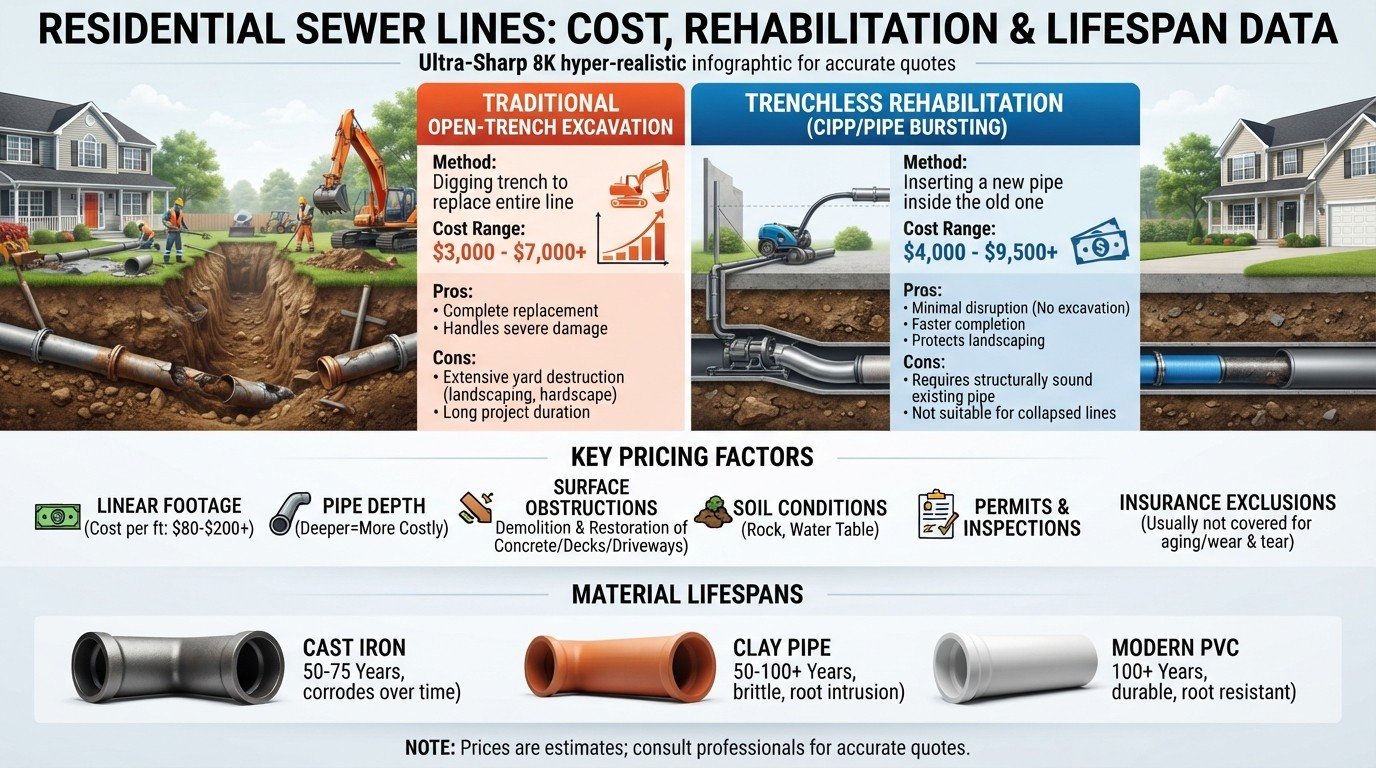
Budgeting for a failing sewer lateral requires understanding the financial and structural variables involved. Because underground pipes are difficult to access, repair and replacement costs vary dramatically based on the extent of the damage, the depth of the line, and the methods required by your plumbing contractor.
Knowing the typical pricing framework, insurance rules, and longevity expectations helps homeowners plan effectively for unexpected plumbing failures.
Factors That Affect Repair/Replacement Cost
The cost to fix a compromised sewer line typically ranges from $1,500 for localized spot repairs to between $3,000 and $7,000 for a complete sewer line replacement cost. Several core project variables drive these numbers up or down:
Replacement Method: Traditional open-trench excavation requires heavy digging, whereas trenchless repair options—such as pipe bursting or cured-in-place pipe (CIPP) lining—pull new materials through existing paths, often preserving your yard and landscaping.
Distance and Depth: The linear footage from your home foundation to the street connection, combined with how deep the pipe is buried, dictates overall labor and material hours.
Obstruction Demolition: Breaking through concrete driveways, interior slabs, or stone patios adds significant manual labor and equipment expenses to the project.
Does Homeowners Insurance Cover It?
A common misconception is that standard policies pay for underground plumbing failures. In most cases, insurance coverage exclusions apply to subterranean infrastructure.
Standard Policy Limitations: Standard homeowners insurance policies view gradual deterioration, pipe material lifespan expiration, tree root intrusion, and normal wear and tear as homeowner maintenance responsibilities rather than sudden, accidental perils.
Endorsement Options: Insurance carriers frequently offer a separate “buried utility line” or “service line” endorsement rider that specifically covers underground water and sewer line failures for a modest annual premium.
Typical Sewer Line Lifespan
Knowing the age and material composition of your existing infrastructure helps predict when your system will require replacement before a catastrophic backup occurs.
Cast Iron: Typically lasts 50 to 75 years, though interior pitting and corrosion accelerate breakdown in humid or acidic soil conditions.
Clay Pipe: Can endure for 50 to 60 years, but rigid joints are highly susceptible to shifting soil and root separation.
Modern Plastics (PVC/ABS): Designed to last 100 years or more under proper installation conditions, offering high resistance to root intrusion and chemical corrosion.
Cost-Saving Strategy: Ask local plumbing professionals if trenchless pipe lining is a viable alternative for your property. While upfront costs can be comparable to traditional digging, trenchless methods spare you thousands of dollars in post-project landscaping, driveway restoration, and lawn rebuilding.
DIY vs. Calling a Professional Plumber
Deciding whether to tackle a plumbing issue yourself or call in an expert depends entirely on the nature of the blockage. While minor maintenance and preventative care can be handled safely by homeowners, major infrastructure failures require immediate intervention by trained technicians.
Knowing where the line is drawn between simple upkeep and an urgent plumbing crisis prevents property damage and saves you from hazardous exposure.
Situations You Can Manage Yourself
Certain minor restrictions and preventative upkeep tasks can be safely managed without professional help, provided you catch them early.
Preventative Root Control: If you live in an area prone to root intrusion, you can apply an approved root-killing treatment containing copper sulfate down your toilet twice a year to inhibit root growth inside the pipes.
Minor Fixture Clogs: Using a standard plunger or a small hand-auger to clear simple sink or shower clogs is safe and effective when the issue remains isolated to local branch lines.
When It’s a Plumbing Emergency
Any symptom indicating a compromised main lateral line moves the situation past do-it-yourself fixes and into professional territory.
Whole-House Backups: If multiple toilets and drains are overflowing simultaneously, stop using all water fixtures immediately and call an emergency plumber to prevent structural contamination.
Structural Failures: When video inspections confirm a complete pipe collapse, major root blockage, or severe offset, advanced procedures like professional sewer repair or trenchless pipe lining are required to restore flow safely.
Final Expert Verdict: Never rely on caustic chemical drain cleaners for main line blockages. They fail to dissolve structural obstructions like collapsed sections or heavy root mats, and they can severely injure plumbing technicians if professional extraction is later required.
How Long Does Sewer Line Replacement Take?
Replacing a main sewer line typically takes anywhere from 1 to 3 days for standard residential properties, though the exact duration depends heavily on the chosen repair method, pipe depth, and site accessibility.
Understanding project timelines helps homeowners plan around temporary water shutoffs and property disruptions:
Trenchless Replacement Timeline: Modern trenchless methods—such as pipe bursting or CIPP lining—are remarkably fast, usually completed in 1 day with minimal disruption to your yard, driveway, or landscaping.
Traditional Excavation Timeline: Traditional open-trench digging requires heavy excavation and subsequent property restoration, generally taking 2 to 3 days (or longer if deep city connections or concrete slab breaking are involved).
Timeline Consideration: While the physical replacement work takes just a few days, always account for local plumbing permit approvals and mandatory municipal inspection scheduling, which can add a brief waiting period before normal use resumes.
Frequently Asked Questions About Sewer Lines
To help you navigate plumbing maintenance, diagnose problems quickly, and understand technical standards, here are direct answers to common questions regarding sewer lines.
What is the “135 rule” in plumbing?
In professional plumbing code discussions, the 135 rule typically refers to the maximum allowable cumulative change in direction (degrees of bends) permitted in certain drainage or trap arm sections before a cleanout or different venting arrangement is required.
Cumulative Angles: For instance, combining a 90-degree elbow and a 45-degree bend totals a 135-degree change in horizontal direction.
Serviceability and Flow: Exceeding this threshold without adding a cleanout or proper vent creates turbulence, increases solid waste buildup, and often causes building inspections to fail.
Can tree roots permanently destroy a sewer pipe?
Yes. Left unchecked, aggressive root systems exert intense radial pressure on minor pipe cracks and joint seams, eventually fracturing clay, cast-iron, or concrete lines entirely. Routine camera inspections and mechanical snaking help keep intrusion under control before total structural collapse occurs.
Will pouring boiling water down my drains clear a main sewer clog?
Boiling water can help dissolve minor soap or grease accumulation inside localized indoor branch lines (like a kitchen sink trap). However, it has zero effect on main sewer line blockages, tree root masses, structural bellies, or collapsed sections.
How often should a main sewer line be inspected?
Homeowners with mature landscaping or older piping materials (such as cast iron or clay) should schedule a professional video camera inspection every 2 to 3 years. For newer PVC systems, an inspection every 5 to 7 years or right before buying a home is generally sufficient.
Final Recommendation: Proactive monitoring and immediate responses to early warning signs are your best defense against catastrophic sewer failures and expensive property damage.
Secure Your Home With a Professional Inspection
Ignoring minor plumbing warning signs almost always leads to major structural emergencies and costly property repairs down the road. Whether you are dealing with persistent slow drains, unexplained lawn anomalies, or an aging plumbing infrastructure, taking prompt action protects both your home and your peace of mind.
Do not wait for a complete system backup to address hidden sewer issues. To get expert guidance and keep your wastewater system running smoothly, explore our full range of plumbing services today.
When you are ready for a definitive diagnosis or emergency support, schedule a professional inspection with our experienced team to safeguard your home’s foundation and plumbing system.
Main Services
Related Posts
Need a Plumber in Miami?
Schedule service online or speak directly with the EZ Plumbing team.
Owner-Led Local Service
Know who is behind the business before you request service. The owners, contact line and Miami service pages are published clearly.
- Named business owners
- Direct phone and social channels
- Local Miami service information
Clear Help Before You Book
Review the relevant service page, contact the team directly and use the booking page when you are ready—without relying on vague claims.
- Service-specific information
- Direct questions before scheduling
- Clear online booking route