How to Unclog a Drain: 9 DIY Fixes That Actually Work
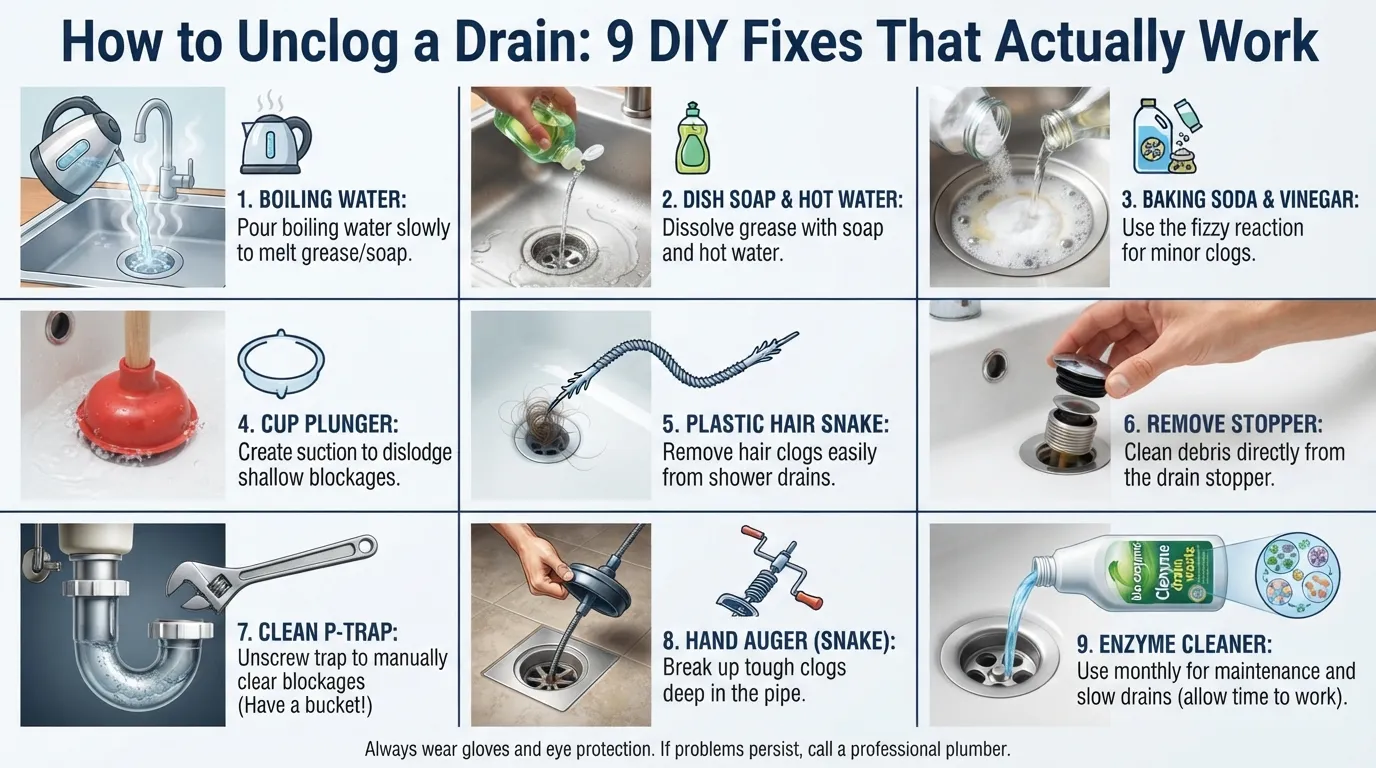
Why Is My Drain Clogged? (Understanding the Problem First)
Pinpointing the exact root cause of a blockage prevents recurring plumbing emergencies and protects your home’s infrastructure from severe water damage. Recognizing early warning signs allows homeowners to intervene before a minor buildup escalates into a costly pipe replacement or total system backup.
Common Signs of a Clogged Drain
Identifying early indicators of a restricted pipe prevents catastrophic overflows and structural water damage in your home. Catching these symptoms early saves time and reduces repair expenses.
Slow Draining Sink: Water lingers in the basin long after you turn off the faucet, indicating narrowing pipe interiors due to accumulated buildup.
Gurgling Sounds: Trapped air escaping through the plumbing vent or drainage pipes creates bubbling noises when appliances or sinks drain.
Foul Odors: Decomposing organic matter, trapped food particles, and decaying hair generate unpleasant sewage or mildew smells near fixtures.
Water Pooling: Standing water surfaces around shower drains or basement floor grates during normal usage, signaling an obstruction downstream.
What Actually Causes Drain Clogs
Most blockages form gradually over months as everyday debris adheres to interior pipe walls and restricts water flow. Understanding these common culprits helps you modify daily habits to protect your plumbing system.
Hair Accumulation: Loose strands bind with soap scum and oils, forming dense, fibrous webs that trap moisture and clog bathroom pipes.
Grease and Soap Scum: Liquid fats solidify inside cold pipes while binding with mineral-rich soap residue to form a concrete-like lining.
Mineral Buildup: Hard water deposits accumulate calcium and magnesium scales inside older metal pipes, drastically reducing their interior diameter.
Foreign Objects: Accidental flushing or washing of non-flushable items creates immediate, solid blockages that halt all drainage.
Kitchen Sink vs. Bathroom Sink vs. Bathtub — Different Clogs, Different Causes
Different plumbing fixtures experience unique usage patterns, which means the underlying cause of a blockage varies depending on the specific room. Matching the symptom to the fixture pinpoints the exact location and nature of the restriction.
Kitchen Sinks: Primarily suffer from congealed cooking oils, grease, starchy food waste, and coffee grounds that cling to horizontal pipe runs.
Bathroom Sinks: Frequently clog due to a combination of toothpaste, hair, shaving debris, and hardened soap scum accumulation near the stopper.
Bathtubs and Showers: Almost exclusively trap large volumes of long hair mixed with body oils, pet fur, and soap residue within the trap.
Fast, Natural DIY Fixes You Can Try Right Now
Clearing a sluggish or blocked drain doesn’t always require harsh chemical cleaners or expensive plumbing fees. Safe, natural alternatives can cut through organic buildup effectively when applied correctly to the affected fixture.
Boiling Water Method (Step-by-Step)
Thermal shock helps melt and flush away congealed fats, cooking oils, and soft soap scum lining your pipes. Use this method as a first line of defense for slow-draining sinks.
Bring a full kettle of water to a rolling boil on your stove.
Slowly and carefully pour the hot water directly into the drain in two or three stages, allowing it a few seconds to work between pours.
Run your hot tap faucet for a minute afterward to flush away the loosened residue completely.
Baking Soda and Vinegar Method (Step-by-Step)
The classic chemical reaction between an alkali and an acid creates carbon dioxide fizzing action that loosens trapped debris. This foaming process helps dislodge organic grime inside accessible pipe traps.
Pour half a cup of dry baking soda directly down the opening of the clogged drain.
Follow it immediately with one cup of white distilled vinegar and cover the drain opening with a stopper or cloth to trap the expanding fizz.
Let the mixture react for 15 to 30 minutes before flushing the system thoroughly with a kettle of hot water.
Why Baking Soda and Vinegar Doesn’t Always Work (Myth vs. Reality)
While internet lore treats baking soda and vinegar as a magic bullet for every plumbing issue, its physical limitations restrict its actual effectiveness. Understanding what this mixture can and cannot do prevents frustrating trial-and-error.
Neutralization Reality: Mixing an acid (vinegar) and a base (baking soda) neutralizes both components, creating mostly salty water and carbon dioxide gas; it lacks the strong dissolving power of commercial lye-based cleaners.
Inability to Clear Hair: The fizzing action cannot dissolve dense hairballs or hard mineral scale cemented deep inside bathroom traps.
Best Used for Maintenance: This method excels at eliminating minor surface grease layers and neutralizing sour odors rather than blasting through severe structural clogs.
Dish Soap (Dawn) + Hot Water Trick — Does It Really Unclog Drains?
Dish soap acts as a powerful surfactant that breaks down stubborn grease bonds holding clogs together. When combined with thermal energy, it provides a legitimate grease-cutting solution.
Surfactant Action: Dawn lowers surface tension, allowing hot water to penetrate, lift, and encapsulate oily sludge so it flows easily down the pipe.
Application Technique: Squirt a generous amount of liquid dish soap down the drain, let it sit for 10 minutes, and chase it with a pot of hot water.
Limitations: Highly effective against kitchen grease blocks, but entirely useless against solid object obstructions or heavy hair mats.
The Salt Trick — Why Some People Pour Salt Down the Drain Every Night
Homeowners often practice the nightly ritual of dumping coarse salt down their sink drains for proactive maintenance. Knowing the mechanics behind this habit reveals its true preventative value.
Mild Abrasive Scouring: Granular salt acts as a gentle scouring agent that strips away nascent organic slime before it hardens into a permanent blockage.
Deodorizing Properties: Salt naturally inhibits bacterial growth inside the dark, damp interior of P-traps, reducing foul sink odors overnight.
Preventative Only: Salt will not dissolve existing major clogs or break through compacted foreign debris; it simply keeps clean pipes running smoothly.
Mechanical Tools That Clear Clogs Fast
When chemical solutions and natural DIY methods fail to break through dense organic obstructions, mechanical intervention is required. Physical tools provide direct, targeted force to dislodge or extract stubborn blockages without damaging your pipe infrastructure.
Using a Plunger the Right Way
Proper plunging relies on maintaining complete hydraulic pressure to force clogs forward or pull them back out. Incorrect technique only pushes water past the obstruction instead of dislodging it.
Seal the Overflow Opening: Cover the sink or tub overflow hole tightly with a wet cloth or tape to prevent air pressure from escaping during execution.
Wet Rag Technique: Pack a damp washcloth firmly around the plunger handle base if working on double-basin kitchen sinks to isolate suction.
Pump Technique: Form a watertight seal over the drain opening, submerge the rubber bell in water, and execute rapid, forceful vertical thrusts without breaking suction.
Plastic Hair Snake / Zip-It Tool — Best for Bathroom Drains
Flexible plastic barbs make hair-snakes the premier weapon against shallow, hair-choked bathroom sink and shower drains. They require zero plumbing disassembly and deliver instant visual results.
Insertion & Engagement: Feed the flexible barbed strip past the pop-up stopper directly down the drain throat until it hits resistance.
Twist and Extract: Rotate the handle slightly as instructed in plumbing guides to catch hair bundles on the micro-hooks, then pull upward steadily.
Disposal: Remove the retrieved mass directly into a trash bag before sanitizing the reusable tool for future maintenance.
Drain Snake (Auger) — Best for Deeper, Stubborn Clogs
Handheld drum augers feature a coiled steel cable designed to navigate tight pipe bends and chew through dense blockages located further down the line. They provide mechanical leverage that plungers cannot match.
Feed the Cable: Loosen the thumbscrew on the auger housing and feed the steel cable slowly into the drain opening by hand.
Crank Through Obstructions: Once you feel resistance, tighten the thumbscrew and turn the crank handle clockwise to bore into or hook the obstruction.
Retrieve and Flush: Pull the cable back out while wiping it clean with disposable rags, then run hot water to clear remaining fragments.
Comparison Table: Which Tool Is Fastest and Strongest for Your Clog Type
Selecting the right mechanical instrument depends entirely on the depth and composition of the obstruction in your plumbing system.
| Tool Type | Best Used For | Speed | Strength Level | Primary Limitation |
| Cup Plunger | Surface sink and tub clogs | Very Fast | Moderate | Ineffective against hard mineral or deep pipe clogs |
| Plastic Hair Snake | Bathroom hair mats near the drain opening | Fast | Low-Moderate | Cannot reach past the P-trap curve |
| Handheld Drain Auger | Deep pipe clogs, main branch lines, and dense root/paper blocks | Moderate | High |
How to Clean the P-Trap (When Other Methods Fail)
When plunging and snaking fail to clear a stubborn restriction, accessing the curved pipe section underneath your sink provides a direct path to the obstruction. Manual cleaning eliminates the exact point where heavy grease, hair mats, and debris accumulate.
Tools You Need Before You Start
Gathering the proper supplies beforehand prevents messy spills and protects your cabinetry from accidental water damage during the teardown process.
A Deep Bucket: Place this directly beneath the curved pipe assembly to capture stagnant water and trapped sludge as soon as the fittings loosen.
Channel-Lock Pliers or Pipe Wrench: Used to gently loosen tight or stuck slip nuts without rounding off the plastic or metal edges.
Heavy-Duty Rubber Gloves & Old Towels: Protect your hands from foul-smelling organic waste and line the cabinet floor against stray drips.
Step-by-Step: Removing and Clearing the P-Trap
Dismantling the under-sink drainage assembly requires careful sequencing to ensure you can reassemble it without causing leaks or structural misalignments.
Position the Bucket: Slide your bucket securely underneath the curved P-trap section to catch internal water release.
Loosen the Slip Nuts: Turn the large plastic or metal retaining nuts connecting both ends of the P-trap counterclockwise by hand or with channel-locks.
Clean the Interior: Lower the trap into your bucket, dump the collected debris, and flush the curved pipe clean using a brush or running water.
Common Mistakes to Avoid
Avoiding typical DIY errors during reassembly protects your under-sink plumbing issues from escalating into costly cabinet water damage.
Stripped Threads: Never force slip nuts onto threads at an angle; always hand-thread them completely straight before applying final tightening torque.
Overtightening Fittings: Cranking down plastic slip nuts excessively with heavy tools cracks the washers and warps the pipe fittings, causing persistent leaks.
Forgetting Washer Placement: Ensure the tapered rubber washers are oriented correctly with the tapered edge facing inward toward the connection joint to guarantee a watertight seal.
Fixing Clogs by Location — Kitchen, Bathroom & Bathtub
Different household fixtures accumulate distinct types of debris based on daily usage, requiring targeted unclogging strategies rather than a one-size-fits-all approach. Applying the correct technique for your specific fixture ensures a faster, more permanent fix.
Kitchen Sink Clogs — Best Methods for Grease and Food Buildup
Kitchen blockages are almost exclusively caused by congealed cooking fats, starchy food waste, and accumulated soap residue inside horizontal drain runs.
Thermal and Surfactant Flushing: Combat grease blocks by pouring boiling water combined with heavy-duty liquid dish soap down the drain to melt and dissolve oily sludge.
Garbage Disposal Inspection: If a dual-basin kitchen sink backs up on one side, check the garbage disposal chamber for wedged food waste or a tripped reset button.
Avoid Harsh Lye on Old Pipes: Skip corrosive chemical drain openers if your kitchen features older metal pipes, as they can accelerate internal corrosion and joint leaks.
Bathroom Sink Clogs — Best Methods for Hair and Product Buildup
Bathroom sink restrictions typically stem from a dense mixture of loose hair, toothpaste, shaving debris, and hardened soap scum trapped near the stopper.
Targeted Hair Extraction: Remove the pop-up stopper rod and snake a plastic Zip-It tool directly down the opening to pull out accumulated hair clumps instantly.
Surface Fizzing Action: Use a baking soda and white vinegar treatment to fizz away minor soap scum and freshen up slow-moving vanity drains.
P-Trap Teardown: If hair snakes cannot reach the obstruction, detach and clean the curved P-trap assembly directly underneath the basin vanity.
Bathtub and Shower Drain Clogs — Best Methods
Shower and bathtub drains face massive volumes of long hair and body oils that bind tightly together inside deep trap configurations.
Integrated Strainer Removal: Unscrew or pop off the protective tub strainer grid to gain direct access to the hair-choked crossbar underneath.
Mechanical Augering: Feed a flexible hand auger through the tub drain opening to snag and wind up deep hair mats that sit past standard reach.
Proactive Mesh Guards: Install a silicone hair catcher over the drain opening to intercept loose strands before they enter and choke the main waste line.
If stubborn blockages continue to recur across any of these household fixtures despite your best DIY efforts, contact our experts for comprehensive professional drain cleaning services.
When DIY Isn't Enough — Signs You Need a Professional Plumber
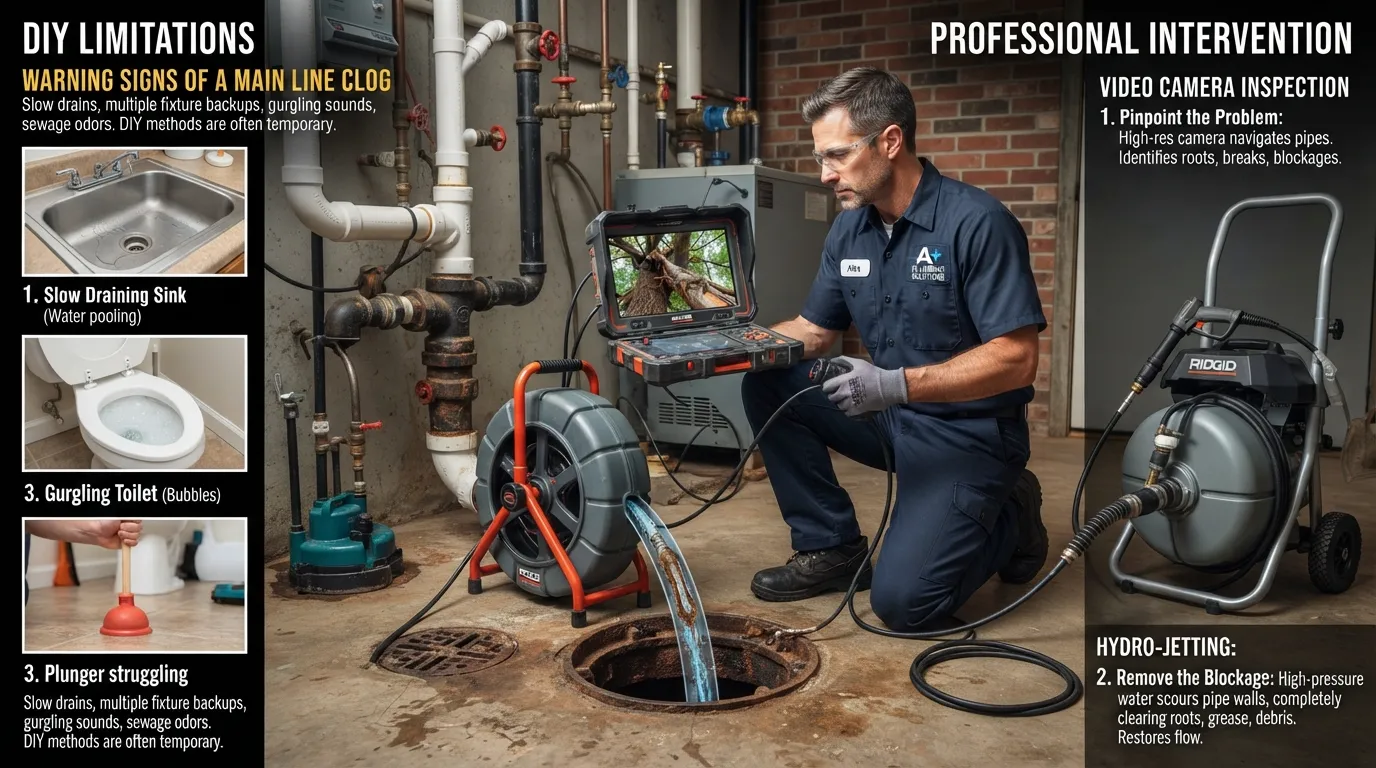
Recognizing when a simple household blockage has escalated into a structural plumbing emergency prevents catastrophic property damage and expensive structural repairs. Knowing your limits saves hours of frustration and protects your home’s main drainage grid from permanent failure.
Warning Signs of a Serious Clog
Certain symptoms indicate that the restriction is no longer localized to a single fixture trap, pointing instead toward a severe main line issue. Ignoring these red flags can lead to total system failure and unsanitary overflows.
Multiple Drains Backing Up: Water surfacing in your bathtub or shower when you flush the toilet or run the kitchen sink signals a centralized blockage.
Persistent Sewage Smells: Foul, gassy odors permeating your living spaces indicate a break or severe obstruction in your home’s main vent or sewer line.
Water Backing Up in Fixtures: Wastewater bubbling up through basement floor drains or lower-level sinks during heavy appliance use means your main sewer lateral is blocked.
DIY vs. Professional Plumber — Cost and Time Comparison
Weighing the investment of personal time and minor equipment costs against expert intervention helps you decide when to hand off the job. Professional services offer guaranteed results and specialized diagnostic technology for complex failures.
DIY Approach: Cost ranges from ten to thirty dollars for tools like augers or zip-tools, requiring one to two hours of hands-on labor with uncertain success rates for deep blockages.
Professional Plumbing Service: Cost varies based on severity, but delivers immediate resolution using industrial-grade hydro-jetting and video camera inspections that protect your plumbing warranty.
What Happens During a Professional Drain Cleaning Visit
Hiring an experienced emergency plumber ensures a systematic, non-destructive approach to clearing stubborn blockages. Technicians use advanced diagnostics to locate the precise root cause before executing heavy-duty solutions.
Video Camera Inspection: A flexible fiber-optic camera is threaded down your pipes to visually locate roots, breaks, or deep grease buildup.
Hydro-Jetting Technology: High-pressure water streams scour pipe interiors completely clean, removing scale and grease far more effectively than manual snakes.
System Testing: The plumber runs full flow tests to verify that every fixture drains efficiently before providing ongoing maintenance recommendations through a comprehensive professional drain cleaning service.
Sewer Jetting and Advanced Professional Solutions
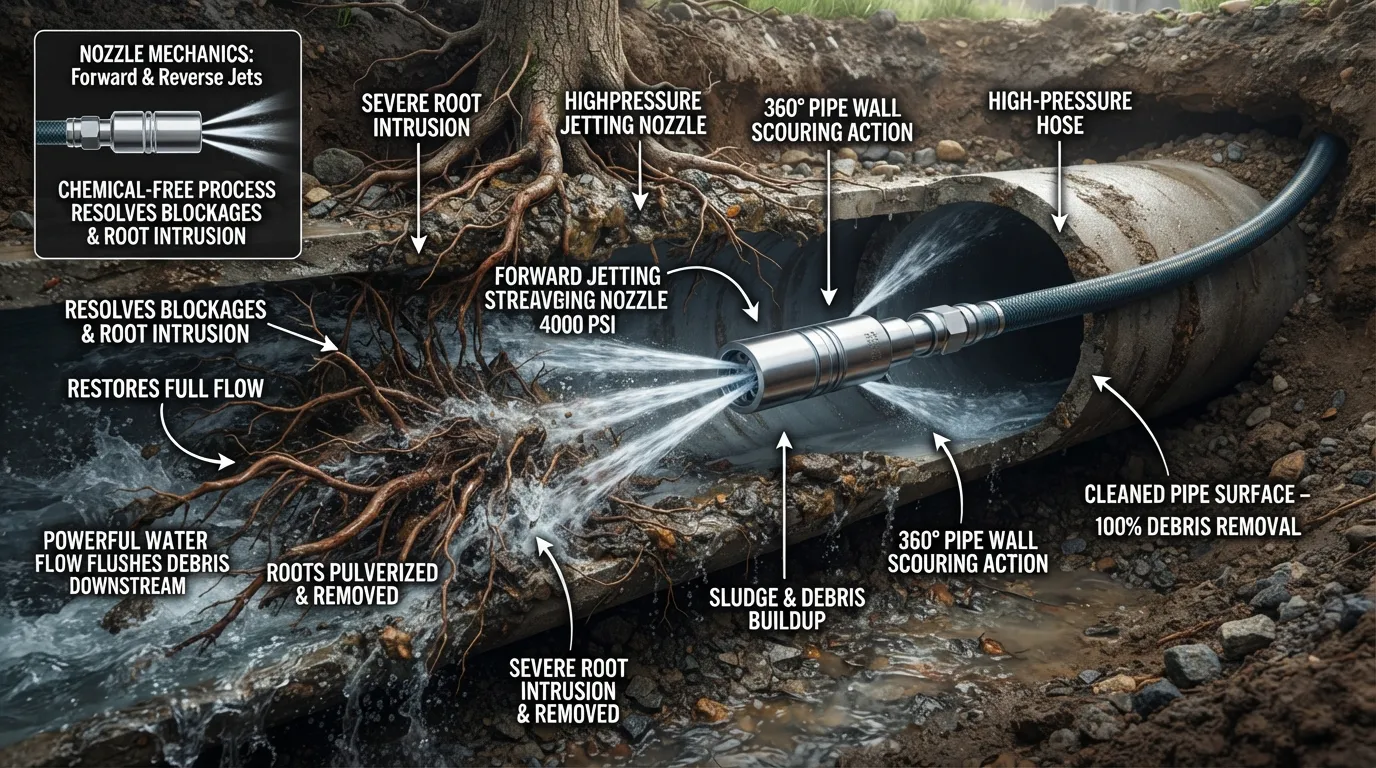
When standard mechanical snakes and household clearing techniques fail, advanced high-pressure flushing offers a permanent restorative solution. Heavy municipal-grade technology eliminates stubborn organic matter and clears structural obstructions located deep within underground piping networks.
What Is Sewer Jetting and How Does It Work?
Sewer jetting, also known as hydro jetting, is an advanced pipe-cleaning method that forces water up to 4,000 PSI through specialized rotating nozzles. This intense hydraulic pressure completely strips grease, mineral scale, and heavy debris from pipe walls, restoring internal flow capacity.
Omnidirectional Scouring: Forward-facing jets break through solid blockages, while backward-facing streams propel the hose forward while scouring the interior circumference of the pipe clean.
100% Debris Removal: Unlike drain snakes that only punch a temporary hole through a clog, hydro jetting flushes away all residual grease, fat, and bio-film accumulations.
Chemical-Free Cleaning: Operates using pure, high-pressure water, making it environmentally safe and non-destructive for modern PVC and structurally sound clay or iron piping.
When Sewer Jetting Is the Right Solution
Sewer jetting is the definitive solution when mechanical snaking fails to provide lasting relief for severe drainage issues. It is engineered to pulverize stubborn obstructions, clear organic invasions, and restore proper flow through your main waste line.
Tree Root Intrusion: High-pressure water blasts slice through aggressive fibrous tree root systems that enter pipe joints, clearing the line without requiring costly excavation.
Recurring Clogs: Eliminates frequent, unexplained blockages by removing the sticky grease and scale layers that catch passing debris time after time.
Main Sewer Line Obstructions: Provides the mechanical force needed to clear deep, heavy sludge accumulations inside your primary sewer line that sit far beyond the reach of handheld equipment.
How to Prevent Future Clogs (Maintenance Checklist)
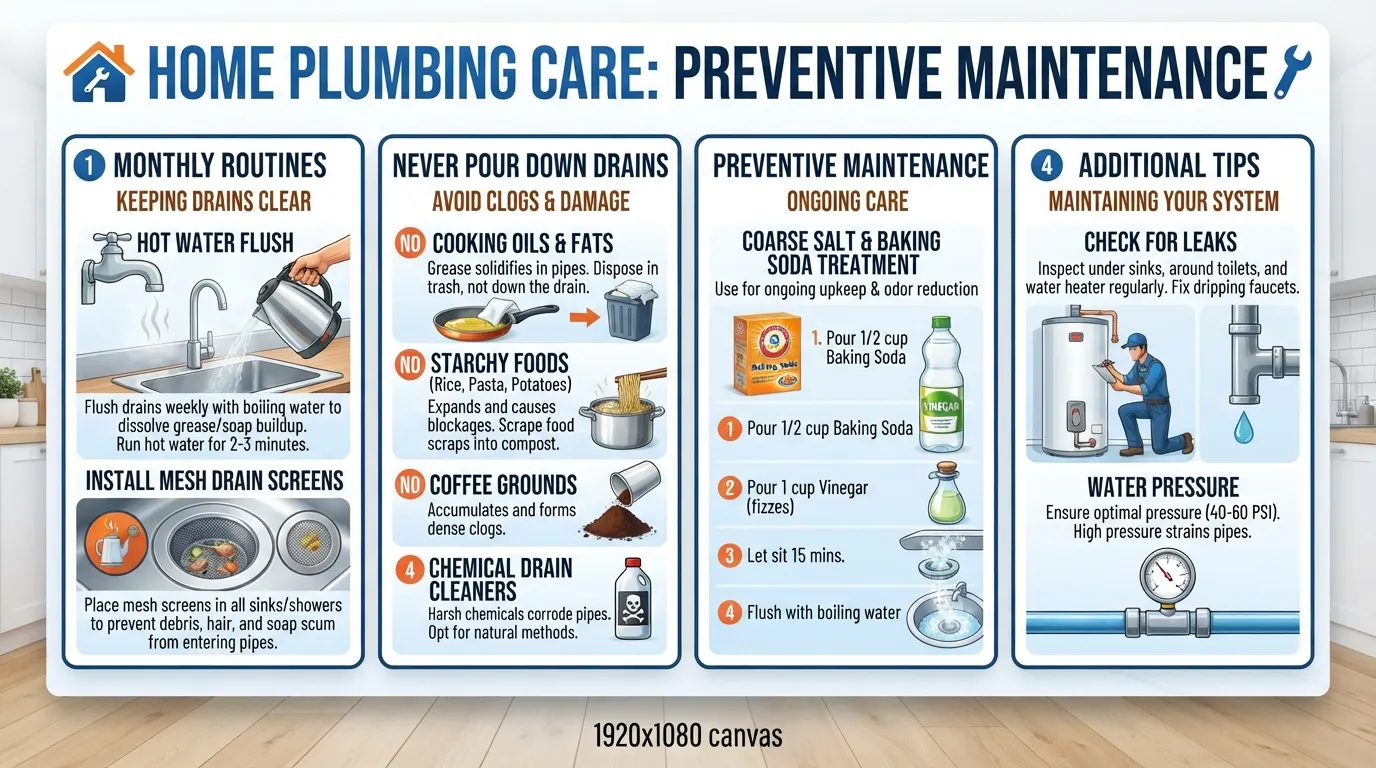
Proactive upkeep ensures your plumbing system flows smoothly and eliminates the need for emergency repairs or expensive service calls. Implementing consistent, preventative habits protects your pipes from accumulating the debris that causes sudden blockages.
Monthly Drain Maintenance Routine (hot water flush, mesh screens)
Establishing a regular upkeep schedule prevents organic residue and soap scum from bonding to the interior walls of your pipes. Consistent maintenance preserves optimal water flow across all household fixtures.
Mesh Drain Screens: Install stainless steel or silicone strainers in every sink, shower, and tub to catch loose hair and food particles before they enter the waste line.
Monthly Hot Water Flush: Pour a kettle of hot water down each drain once a month to melt and wash away lingering soap residue and minor grease films.
Enzyme Cleaner Treatment: Apply a natural, bacterial enzyme cleaner overnight to dissolve hidden organic sludge safely without harming pipe seals.
What Never to Pour Down Your Drain
Avoiding improper disposal habits prevents solid blockages and protects your household plumbing network from severe, recurring damage. Knowing what stays out of your sink is the foundation of preventive plumbing care.
Cooking Oils and Fats: Never dump liquid bacon grease, cooking oil, or butter down the kitchen sink, as they solidify quickly inside cold pipes.
Starchy and Fibrous Foods: Keep coffee grounds, pasta, rice, potato peels, and eggshells out of the drain and garbage disposal to avoid dense clogs.
Non-Flushable Hygiene Products: Never wash wet wipes, cotton swabs, dental floss, or feminine products down bathroom sinks or toilets.
The Salt Method as Ongoing Prevention
Using coarse salt as a regular preventative measure provides a gentle, chemical-free way to maintain clean lines. It offers an easy, low-effort habit for keeping your drainage system fresh.
Scouring Action: Periodic applications of coarse salt scrub away nascent organic slime along the P-trap before it hardens into a permanent restriction.
Odor Control: Salt naturally inhibits bacterial growth inside dark pipe bends, eliminating foul sink smells overnight.
Routine Application: Pour half a cup of coarse salt down vulnerable kitchen and bathroom drains every few weeks followed by warm water for optimal upkeep.
Frequently Asked Questions
How do you unblock a badly blocked drain?
Clearing a severely blocked drain requires matching your tool selection to the severity and location of the obstruction. Start with mechanical methods like a cup plunger or a handheld drain auger to physically break through or pull out the blockage. If those fail, removing and cleaning the under-sink P-trap directly provides a clear path to heavy sludge and debris accumulations.
Does pouring boiling water down a drain help unclog it?
Boiling water effectively melts and flushes away congealed cooking fats, grease, and soft soap scum lining your pipes. It serves as an excellent first line of defense for slow-moving kitchen sinks, though it will not dissolve solid hair mats or hard mineral deposits.
What is the strongest thing to unclog a sink?
Mechanical augers (drain snakes) and professional hydro-jetting represent the strongest physical solutions for clearing severe sink blockages. For chemical options, professional-grade lye or gel drain openers provide maximum dissolving power, though they should be used cautiously to prevent pipe damage.
How can I clear a clogged drain without using chemicals, plungers, or rods?
You can clear minor organic blockages by pouring a mixture of half a cup of baking soda followed by one cup of white vinegar down the drain, letting it fizz for 30 minutes, and flushing it with hot water. Alternatively, a heavy treatment of liquid dish soap and hot water helps break down grease bonds naturally.
What should I do if I have a clogged drain?
First, identify whether the issue affects a single fixture or multiple drains throughout your home to gauge the severity of the blockage. Try safe, natural methods or a standard cup plunger, and escalate to a drain snake or P-trap cleaning if the obstruction persists.
How do I clear a clogged sewage line?
Main sewer line blockages require professional intervention, such as video camera inspections and high-pressure sewer jetting or commercial rooter equipment. If multiple household drains back up simultaneously or wastewater surfaces in floor drains, contact a licensed plumber immediately to prevent structural damage.
Related Plumbing Problems You Might Also Be Facing
Plumbing networks rarely experience problems in complete isolation. When your home’s drainage grid faces stress, underlying failures often manifest across other interconnected household systems.
Additional Plumbing Concerns and Related Fixes
Addressing related maintenance issues prevents compound failures and protects your entire home infrastructure from costly secondary damage.
Water Heater Complications: Sediment accumulation or failing heating elements can disrupt hot water supply and create pressure imbalances; explore options for professional water heater service when performance drops.
Toilet Troubles: Stubborn bowl overflows or continuous running mechanisms waste thousands of gallons and signal venting or flapper faults; resolve these with targeted toilet repair solutions.
Basement Drainage Failures: Heavy seasonal storms can overwhelm below-grade drainage, requiring reliable sump pump maintenance to prevent catastrophic foundation flooding.
Business Facility Restritions: Multi-story commercial spaces require specialized grease trap upkeep and high-capacity system servicing through expert commercial plumbing specialists.
Conclusion & Call-to-Action
Dealing with a stubborn drain clog can disrupt your daily routine, but tackling the issue with the right strategy makes all the difference. From simple natural flushes and mechanical tools to comprehensive hydro-jetting, taking immediate action protects your home from severe water damage.
Quick Recap — Which Method Should You Try First
Matching the right technique to your specific blockage saves time and prevents unnecessary plumbing stress.
Start Simple: Use hot water, dish soap, or a baking soda and white vinegar treatment for minor grease or soap scum buildup.
Go Mechanical: Reach for a cup plunger, hair snake, or handheld auger when organic debris or hair mats block the fixture trap.
Inspect the P-Trap: Detach and manually clean the under-sink curved pipe assembly if surface methods fail to restore proper flow.
Still Have a Clogged Drain? Book a Professional Plumber Today
When deep mainline obstructions or recurring blockages defy all DIY efforts, expert intervention is your best safeguard against structural plumbing failures. Relying on specialized equipment ensures your system is thoroughly cleared without risk to your pipes.
Expert Diagnostics: Advanced video camera inspections locate the exact root cause of deep or hidden blockages instantly.
Guaranteed Results: Professional hydro-jetting and heavy-duty augers completely restore full pipe capacity across your entire drainage grid.
Immediate Assistance: Ready to restore normal flow? Secure your appointment today by visiting our online booking portal or exploring our full range of plumbing services for prompt, reliable assistance from a licensed plumber.
Main Services
Related Posts
Need a Plumber in Miami?
Schedule service online or speak directly with the EZ Plumbing team.
Owner-Led Local Service
Know who is behind the business before you request service. The owners, contact line and Miami service pages are published clearly.
- Named business owners
- Direct phone and social channels
- Local Miami service information
Clear Help Before You Book
Review the relevant service page, contact the team directly and use the booking page when you are ready—without relying on vague claims.
- Service-specific information
- Direct questions before scheduling
- Clear online booking route