Chemicals That Could Harm Your Washing Machine Drain and What to Use Instead
Chemicals That Harm Your Washing Machine Drain: Core Assessment
Immediate Overview of Chemical Threats
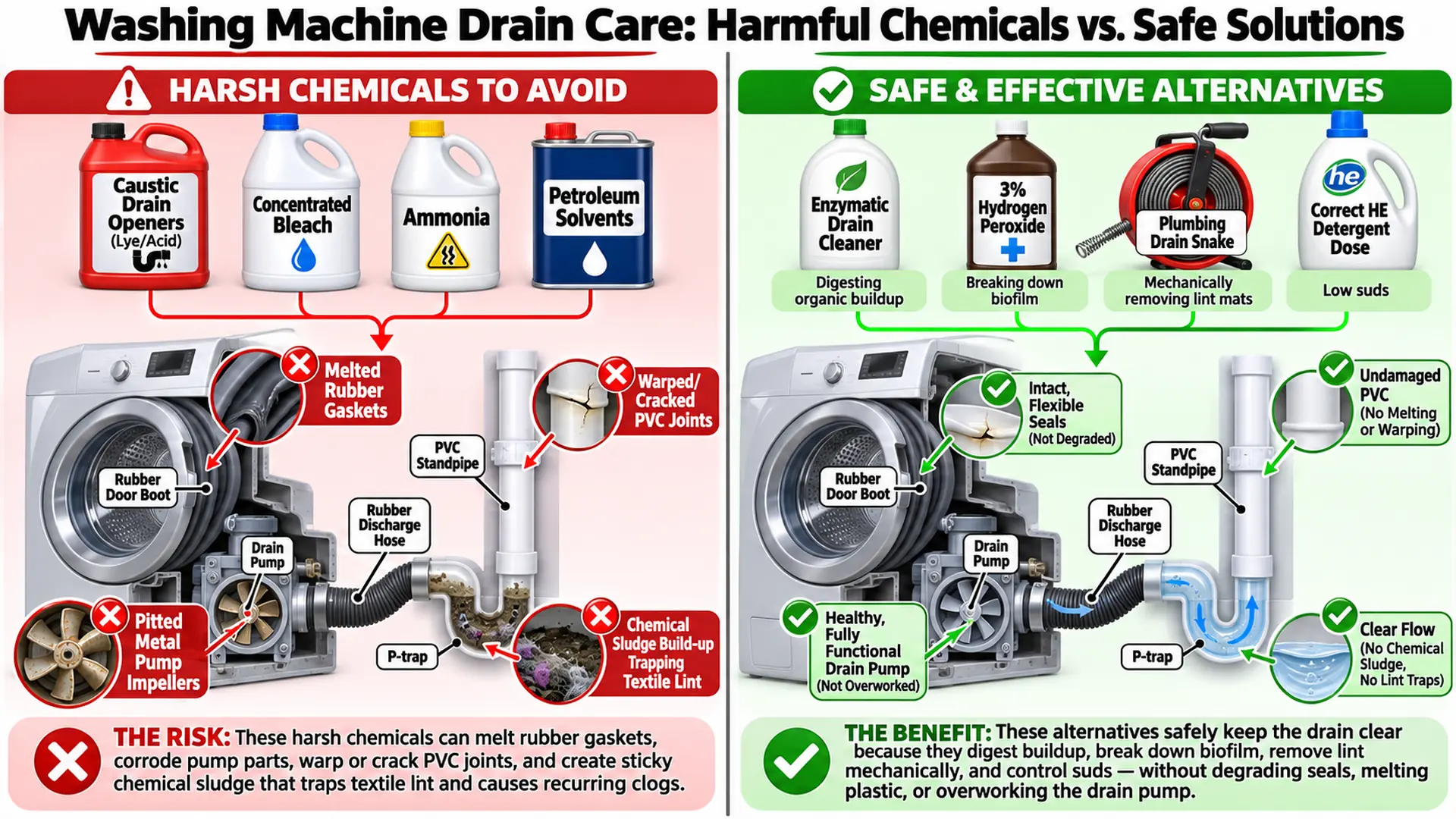
Harsh chemical drain cleaners, concentrated chlorine bleach, ammonia, petroleum solvents, and excessive laundry detergent are the primary culprits that degrade washing machine drains. These caustic substances aggressively corrode internal rubber hoses, deteriorate PVC standpipes, damage drain pumps, and accumulate sticky sludge that triggers stubborn blockages.
Chemical Damage Comparison At-a-Glance
| Chemical Type | What It Damages | Safer Alternative |
|---|---|---|
| Lye and Acid Drain Cleaners | PVC pipes, metal plumbing, drain pumps, and rubber seals | Enzymatic drain cleaners or a mechanical plumbing snake |
| Concentrated Chlorine Bleach | Rubber hoses, internal seals, metal fittings, and septic tank bacteria | Controlled, sparing application or an oxygen-based whitening alternative |
| Ammonia Solutions | Triggers toxic gas hazards and accelerates severe metal corrosion | Never pour down drains; strictly avoid mixing with bleach |
| Paint Thinner, Acetone, and Solvents | Plastic components, flexible seals, and creates extreme fire risks | Proper disposal through certified local hazardous waste facilities |
| Excess Detergent, Non-HE Soap, or Stuck Pods | Accumulates dense sludge, clogging pumps and internal drain lines | Correct HE detergent measured precisely; pods placed directly inside the drum |
Why the Washer Drain Is More Vulnerable Than a Sink Drain
Washing machine drains endure structural stress far exceeding standard household sinks due to high-volume, high-velocity water discharge combined with heavy mechanical vibration. This unique operational environment accelerates the chemical breakdown of internal materials when harsh substances are introduced.
The drainage system relies on a delicate network of flexible hoses, rigid PVC standpipes, a P-trap, and a heavy-duty drain pump. Chemical exposure compromises these components rapidly because standing chemical residue mixes with loose textile lint and soap scum.
High-Volume Discharge: Rapidly flushes corrosive solutions against rubber seals and pipe junctions under immense hydraulic pressure.
Lint and Soap Scum Accumulation: Traps chemical residues, creating a dense sludge that starves and overworks the drain pump.
Vibration Stress: Amplifies micro-cracks caused by caustic agents across plastic and rubber plumbing components.
The Chemicals That Damage Your Washing Machine Drain, One by One
Chemical Drain Cleaners (Lye, Sulfuric Acid, Hydrochloric Acid)
What it is: Highly caustic or acidic chemical compounds (including sodium hydroxide, sulfuric acid, and hydrochloric acid) marketed for clearing stubborn household clogs.
What it damages: Generates extreme exothermic heat that rapidly warps and cracks rigid PVC standpipes, melts internal rubber gaskets/seals, and corrodes metal drain pumps and plumbing fittings.
Warning signs: Chemical odors near the standpipe, premature softening or cracking of rubber hoses, and sudden leaks around pipe joints or the P-trap.
What to use instead: Enzymatic drain cleaners or a mechanical plumbing snake.
Plumber’s Note: Repeated use of acid-based cleaners in a laundry standpipe frequently leads to catastrophic P-trap failure, requiring total replacement of brittle PVC drainage elbows and rusted pump housing units.
Excessive Chlorine Bleach
What it is: A powerful oxidizing agent used for whitening and disinfecting laundry loads, becoming hazardous when applied in excessive concentrations or frequencies.
What it damages: Degrades flexible rubber hoses, door gaskets, internal rubber seals, and metal drain components through aggressive oxidation, while killing beneficial septic tank bacteria.
Warning signs: Brittle or discolored rubber hoses, persistent chemical odors, and premature cracking around washing machine seals.
What to use instead: Measured, sparing applications of bleach according to garment care labels, or an oxygen-based whitening alternative.
Ammonia-Based Products
What it is: Alkaline cleaning compounds containing dissolved ammonia gas, frequently used for stripping heavy stains and grease.
What it damages: Accelerates severe metal corrosion on internal pump parts and fixtures, and produces lethal chlorine gas if inadvertently mixed with bleach residues in the drain line.
Warning signs: Pungent, irritating fumes rising from the standpipe and accelerated pitting on metal components.
What to use instead: Never pour ammonia down a washing machine drain; use specialized mild surfactant cleaners for laundry pre-treatments.
Solvents, Paint Thinner and Acetone
What it is: Volatile petroleum-based solvents and chemicals used for removing paint, adhesives, or grease from textiles.
What it damages: Chemically melts plastic housing and drainage components, and creates extreme fire and explosion hazards when volatile vapors mix with hot dryer exhaust or electrical sparks.
Warning signs: Softened or deformed plastic drain lines and lingering chemical solvent odors in the laundry room.
What to use instead: Proper hazardous waste disposal for stained textiles before washing, avoiding chemical solvents entirely in domestic laundry drains.
Grease, Oils and Wax
What it is: Viscous fatty substances, cooking oils, or automotive lubricants introduced via heavily soiled workwear or rags.
What it damages: Coats the interior of the drain line and P-trap, trapping loose lint and soap scum to form persistent, obstructive blockages.
Warning signs: Slow-draining water, gurgling sounds during high-volume discharge, and recurring backups in the standpipe.
What to use instead: Pre-soaking and washing oily garments in industrial degreasers off-site, or wiping excess grease with disposable towels before washing.
Too Much Detergent, Non-HE Soap and Detergent Pods
What it is: Over-dosing traditional or high-efficiency laundry detergents, using non-HE soaps that produce excessive foam, or relying on undissolved pods and fabric softener buildup.
What it damages: Creates a massive “sudslock” effect that overworks the drain pump, while leaving sticky scum and undissolved pod casing residue that clogs drainage lines and creates thick sludge.
Warning signs: Excessive foam remaining during cycles, clothes feeling slick or soapy after a wash, and musty odors or slow draining.
What to use instead: Precise measuring of HE detergent according to load size, and placing detergent pods directly into the drum rather than the dispenser drawer.
Visual Summary
To see a detailed professional breakdown of how excess detergent and soap residue impact drainage and machine performance, watch this expert guide: 6 Common Laundry Issues Caused by Using too Much Detergent.
Never Mix These: Dangerous Chemical Combinations
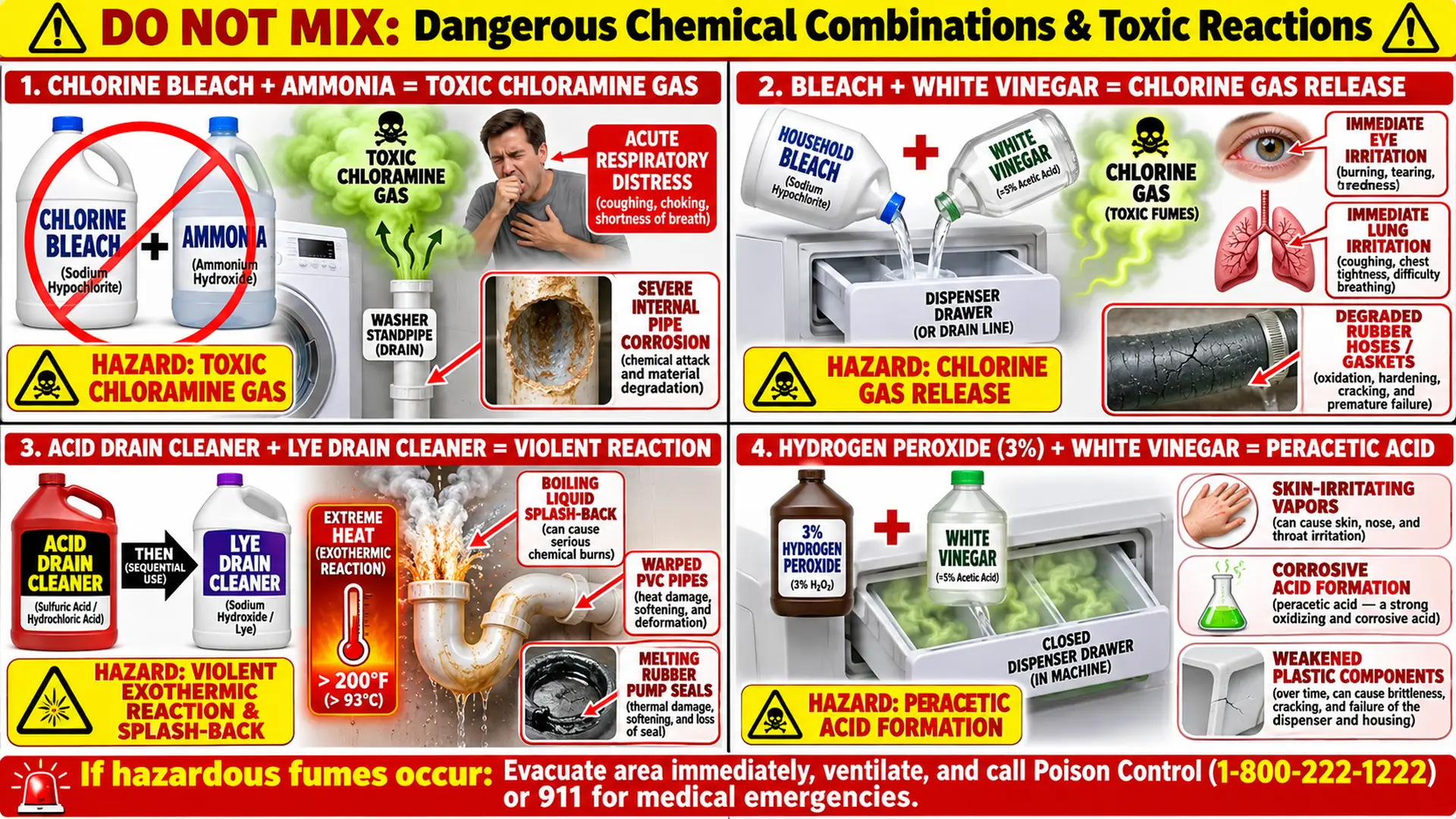
Bleach + Ammonia
Combining chlorine bleach with ammonia or ammonia-containing cleaning products triggers a immediate chemical reaction that releases toxic chloramine gas.
Inhaling these volatile vapors irritates the respiratory system, causing severe chest pain, coughing, and shortness of breath. When poured into a washing machine standpipe, the toxic gas can quickly back up through the drainage line and saturate the laundry room environment.
Immediate Hazard: Production of toxic chloramine gas and hydrazine.
Drain Impact: Accelerates severe corrosion on internal pump fittings and metal drain connectors.
Safety Protocol: Always flush the drain line thoroughly with clean water before introducing a different cleaning agent.
Bleach + Vinegar
Mixing household bleach with any acidic substance—such as white vinegar or chemical descalers—produces dangerous chlorine gas.
Even small amounts of vinegar residual inside the detergent dispenser drawer or standpipe can react with chlorine bleach during a wash cycle. Exposure to chlorine gas causes immediate burning of the eyes, nose, and lungs, and can cause long-term damage to mucous membranes.
Immediate Hazard: Release of hazardous, heavy chlorine gas.
Drain Impact: Acidic reactions degrade internal rubber gaskets/seals and PVC pipe joints under high heat.
Safety Protocol: Use bleach and vinegar in entirely separate maintenance cycles, ensuring multiple rinse flushes between uses.
Two Different Drain Cleaners in the Same Line
Pouring a second chemical drain cleaner into a line already treated with another product is one of the most hazardous plumbing practices.
Combining an acid-based cleaner (such as sulfuric acid) with an alkaline lye cleaner (sodium hydroxide) triggers a violent exothermic reaction. The rapid heat build-up can boil standing water instantly, spraying corrosive chemicals out of the standpipe while melting plastic drain components.
Immediate Hazard: Chemical splashes, rapid boiling, and toxic vapor generation.
Drain Impact: Warps PVC standpipes, degrades rubber hoses, and destroys internal drain pump seals.
Safety Protocol: If an initial chemical treatment fails, clear the blockage using a mechanical plumbing snake rather than adding another chemical product.
Hydrogen Peroxide + Vinegar in a Closed Dispenser
Combining hydrogen peroxide and vinegar creates peracetic acid, a highly corrosive compound that emits irritating vapors.
When mixed inside a closed detergent dispenser drawer or within the tight confines of a washing machine drum, peracetic acid can irritate the skin, eyes, and respiratory tract. While diluted 3% hydrogen peroxide is safe for isolated laundry applications, it must never be combined with vinegar or chlorine bleach in the same wash cycle.
Immediate Hazard: Formation of corrosive peracetic acid.
Drain Impact: Degrades internal rubber seals and dispenser housing materials over time.
Safety Protocol: Use 3% hydrogen peroxide only as a standalone agent and never mix it with vinegar or bleach in a single wash cycle.
Never combine any of the following household chemicals in your washing machine or drain line:
Bleach + Ammonia: Produces lethal chloramine gas.
Bleach + Vinegar: Generates toxic chlorine gas.
Acid Drain Cleaner + Lye Drain Cleaner: Causes violent exothermic reactions and splashes caustic chemicals.
Hydrogen Peroxide + Vinegar: Forms skin and lung-irritating peracetic acid.
Can You Use Drano or Liquid-Plumber in a Washing Machine Drain?
Is It Safe to Pour Drano Down a Washing Machine Drain?
Pouring traditional Drano or caustic gel drain cleaners directly into a washing machine standpipe is strongly discouraged by appliance technicians and plumbing professionals. While some chemical formulations are marketed as safe for standard PVC sink pipes, washing machine drainage networks contain sensitive rubber seals, flexible hoses, and internal drain pumps that easily warp or degrade when exposed to heat-generating sodium hydroxide (lye).
Always consult your specific appliance manufacturer instructions and the chemical product label before attempting any chemical treatment. Because standing chemical residue inside a washer standpipe can react violently with residual detergent or bleach from previous laundry cycles, introducing caustic agents carries a high risk of damaging internal components and voiding your machine’s warranty.
Can You Put Liquid-Plumber in a Washing Machine?
Liquid-Plumber and similar heavy-duty chemical clog removers should not be poured into a washing machine drum, dispenser drawer, or standpipe. These products rely on aggressive chemical reactions designed for open, gravity-fed sink pipes, not the motorized drainage systems of modern washing machines.
When chemical drain openers enter the wash tub or drain pump, they sit in contact with flexible rubber gaskets and pump impellers, leading to premature brittleness, leaks, and mechanical failure. For persistent backups in a washing machine line, safer alternatives like an enzymatic drain treatment or a mechanical plumbing snake should always be used instead.
Why You Shouldn’t Use a Plunger After a Chemical Drain Cleaner
Using a plunger on a washer standpipe or P-trap that already contains a chemical drain cleaner creates a severe splash-back hazard. The forceful plunging motion generates hydraulic pressure that can push caustic chemical solutions backward out of the pipe opening, spraying skin and eyes with hazardous fluids.
Chemical Splash-Back Risk: Caustic liquids like lye or acid can cause instant skin burns and permanent eye damage upon contact.
Structural Hose Damage: High pressure from plunging can disconnect internal rubber hoses or crack weakened PVC joints under chemical stress.
Safe Alternative: If chemical cleaners were mistakenly added, flush the line thoroughly with cold water from a distance or call a licensed plumber to snake the line safely.
Can I Put Dawn (Dish Soap) in a Washing Machine?
Standard dish soap like Dawn must never be used inside a washing machine, even in tiny amounts. Unlike high-efficiency (HE) laundry detergent formulated for low-sudsing operation, liquid dish soap creates massive volumes of persistent foam that quickly trigger a “sudslock” state.
Over-Sudsing Overflow: Foam can spill over the tub, shorting out electronic control boards and damaging internal wiring.
Drain Pump Cavitation: Excessive suds prevent the drain pump from pushing water out, locking the machine in a continuous drain error loop.
Emergency Cleanup: If dish soap is accidentally added, pour a cup of white vinegar or a tablespoon of cooking oil directly into the drum to break down the foam before running a rinse cycle.
Does Your Pipe Type or Septic System Change the Risk?
PVC vs. Cast Iron vs. Galvanized or Metal Drain Lines
The material used in your drainage system determines how it reacts to harsh chemicals. Modern homes typically feature rigid PVC standpipes, whereas older properties often rely on heavy cast iron or galvanized steel plumbing.
Chemical drain cleaners generate intense exothermic heat and acid-base reactions. This rapidly softens or warps PVC joints and accelerates internal oxidation and scaling inside metallic plumbing.
| Pipe Type | Main Risk | What to Avoid |
| PVC / Abs Plastic | Thermal warping, joint seal failure, and structural softening | Heat-generating sulfuric acid and high-concentration lye drain openers |
| Cast Iron | Accelerated internal rusting, pipe wall thinning, and heavy scale buildup | Hydrochloric acid, harsh chemical descalers, and persistent bleach exposure |
| Galvanized Steel | Protective zinc coating stripping, joint corrosion, and sudden pinpoint leaks | Industrial acid formulations and undiluted chlorine compounds |
If chemical exposure causes severe scaling, cracking, or wall thinning along your interior plumbing, professional pipe repair and repiping becomes necessary to restore structural integrity.
Washing Machine Drains on a Septic System
For homes relying on an on-site septic system, any chemical poured down the washing machine drain directly enters the septic tank. Septic systems rely on a living ecosystem of anaerobic bacteria to digest organic solids and keep the drain field clear.
Excessive chlorine bleach, ammonia, and chemical drain openers act as potent anti-bacterial agents. Pouring these products down the washer standpipe kills the beneficial microbes inside the tank, preventing proper waste breakdown and causing untreated sludge to migrate directly into the drain field.
Bacterial Ecosystem Rupture: Frequent use of harsh chemicals sterilizes the tank, leading to rapid solid waste accumulation.
Overdue Maintenance Risks: When septic tank pumping is overdue, chemical sludge mixes with settled solids, accelerating system backups into the home.
Safe Application: Limit chlorine bleach to small, diluted quantities or switch entirely to oxygen-based whitening alternatives.
City Sewer vs. Septic: A Quick Comparison
Understanding the structural destination of your wastewater highlights why chemical caution is essential regardless of where you live.
| Operational Factor | Municipal City Sewer | On-Site Septic System |
| Waste Treatment Mechanism | Off-site industrial municipal treatment facilities | On-site biological breakdown powered by living bacteria |
| Chemical Tolerance | Moderately higher tolerance for household diluted wash water | Highly sensitive; small chemical spikes kill necessary bacteria |
| Primary Failure Risk | Localized pipe corrosion, grease blockages, and standpipe backups | Total drain field failure, tank soil clogging, and costly system replacement |
| Maintenance Need | Regular line clearing and lint trap cleaning | Routine inspections, tank pumping, and strict chemical avoidance |
When Chemical Damage Has Reached the Main Line
When chemical degradation extends past the immediate washer P-trap, it begins eating away at the primary branch and main sewer lateral. Repeated exposure to caustic drain openers can create sagging pipe sections, collapsed joints, or severe pinhole leaks underground.
Warning signs that chemical damage has compromised your main line include multiple slow-draining fixtures throughout the home, persistent foul sewer gas odors, and recurring sewage backups during high-volume washing machine discharge cycles.
When structural pipe failure occurs beneath the slab or yard, seeking professional sewer line repair is crucial to evaluate the damage using video camera inspections and restore proper drainage flow.
Signs Your Washing Machine Drain Is Already Damaged
Warning Signs Checklist
Detecting early signs of drain line distress prevents minor chemical degradation from turning into structural property damage. Use this diagnostic table to assess your drain system’s condition:
| Symptom | Likely Cause | Urgency Level |
| Slow Draining or Water Backing Up | Sludge buildup from detergent pods, lint, or soap scum restricting internal pipe diameter | Medium: Inspect P-trap and clear line promptly. |
| Gurgling Sounds from Standpipe | Trapped air pockets caused by partial line blockages or inadequate vent pipe airflow | Medium: Monitor drainage flow and check venting. |
| Sewage or Chemical Odors | Dried P-trap, stagnant detergent sludge, or chemical reactions inside the drain line | Medium: Flush line with clean water; ventilate area. |
| Puddle Around Standpipe Base | Cracks in PVC fittings caused by chemical heat, or an over-sudsing overflow | High: Requires immediate water leak repair to avoid subfloor damage. |
| Stiff, Brittle, or Cracked Hoses | High chemical exposure from bleach or drain cleaners breaking down rubber compounds | High: Shut off water supply and replace compromised hoses immediately. |
| Grinding or Excessive Drain Pump Noise | Physical debris, calcified soap scum, or chemical corrosion damaging pump impellers | High: Discontinue washer use to prevent total pump burnout. |
| Rust-Colored Stains Around Connections | Corrosive acid or lye drain cleaners eating away at metal fittings or cast iron pipes | High: Inspect metal fittings for structural wall thinning. |
What Else Clogs a Washing Machine Drain? (It’s Not Always Chemicals)
Chemical accumulation is only one factor in washer drainage issues. Non-chemical obstructions frequently combine with soap residues to form dense, persistent clogs inside the standpipe and P-trap.
Lint and Fabric Fibers: Microscopic textile fibers shed during wash cycles bypass lint traps, settling inside the P-trap to create a felt-like mesh.
Pet Hair and Loose Threads: Clump together with sticky detergent scum, forming tough binders that restrict water flow.
Small Trapped Foreign Objects: Coins, socks, receipts, and small items slipping past tub seals lodge inside the drain hose or pump impeller housing.
Incorrect Standpipe Installation: A standpipe set lower than 30 inches or lacking an proper air gap causes siphoning, back siphoning, or frequent water spillage.
What to Do First: Step-by-Step
When you notice active drainage backups or suspect chemical pipe damage, follow these immediate response steps to minimize safety risks and structural impacts:
Stop the Cycle Immediately: Press the pause or stop button on your washing machine to halt high-volume water discharge.
Shut Off the Water Supply: Turn off the hot and cold water shut-off valves behind the machine if water is overflowing.
Never Add Additional Chemicals: Avoid pouring secondary drain openers or hot water into a blocked line that already contains chemical products.
Ventilate the Area: Open windows and activate exhaust fans if chemical odors or vapors are present in the laundry space.
Document Visible Damage: Take photo or video evidence of puddles, cracked fittings, or backing-up standpipes for diagnostic and insurance purposes.
When to Call a Licensed Plumber
While minor surface lint buildup can be cleaned manually, deep drainage obstructions and chemically degraded pipes require professional intervention. Attempting DIY repairs on compromised lines often leads to hidden leaks within wall cavities.
Persistent standpipe overflows, recurring P-trap blockages, grinding drain pump sounds, or visible cracks on PVC joints indicate structural drainage failure. Contact a licensed plumbing expert for professional washing machine drain repair to restore proper wastewater flow and ensure code-compliant connections.
How a Plumber Finds the Real Cause
Modern plumbing diagnostics rely on precision technology to inspect the interior of your drainage network without invasive demolition.
Technicians deploy a specialized high-definition camera mounted on a flexible fiber-optic cable, pushing it directly down the standpipe, through the P-trap, and into the primary lateral branch. Conducting a thorough sewer camera inspection reveals exact pipe conditions in real time, pinpointing structural issues such as:
Chemical Etching and Cracks: Locating softened PVC joints, thermal warps, or acid-eaten metal pipe walls.
Sludge and Scale Layers: Identifying dense detergent accumulation, calcified soap scum, or heavy rust scaling.
Foreign Object Obstructions: Spotting lodged items, heavy lint mats, or intruding tree roots restricting flow.
Line Sags and Offset Joints: Detecting misaligned pipe sections that trap wastewater and trigger recurring backups.
Safe Alternatives: How to Clean and Clear a Washer Drain Without Harsh Chemicals
Enzyme Cleaners
Enzymatic drain cleaners utilize biological catalysts—specifically targeted bacteria and active enzymes—to break down organic waste, accumulated soap scum, lint mats, and grease inside your washing machine lines. Unlike corrosive acids or lye, enzymes do not generate extreme heat or compromise flexible rubber seals, PVC standpipes, or internal drain pumps.
How They Work: Enzymes target and liquefy specific organic molecules like fats, proteins, and carbohydrates, turning stubborn buildup into water-soluble compounds that flush away easily.
When to Use Them: Ideal for monthly preventative maintenance or clearing slow-running P-trap assemblies before a complete blockage forms.
Baking Soda and Vinegar: What It Really Does
Baking soda and vinegar offer a popular natural cleaning method, but understanding their limitations prevents frustration when dealing with tough plumbing clogs. While AI search overviews frequently promote this mixture for all-purpose drain cleaning, a true physical clog requires mechanical removal.
Routine Freshening: A half-cup of baking soda followed by warm white vinegar works well to neutralize mild sour odors, loosen minor soap scum, and freshen the standpipe when flushed with hot water.
The Neutralization Limit: Because baking soda is basic and vinegar is acidic, combining them causes a neutralization reaction that produces mostly water and carbon dioxide gas. This reaction creates fizzing action that loosens surface residue, but it lacks the chemical strength needed to dissolve a heavy, compacted blockage.
3% Hydrogen Peroxide for Odor and Biofilm
Plain 3% hydrogen peroxide is a powerful, low-cost oxidizer that breaks down stubborn biofilm—the slimy bacterial layer that causes musty odors and traps lint inside washing machine drums, door boots, and drainage hoses.
Application Protocol: Pour one cup of standard 3% hydrogen peroxide directly into an empty drum and run a long, hot water cycle, or apply it to a cloth to clean hidden door seal gutters.
Gentle Alternative: Unlike frequent chlorine bleach applications, dilute hydrogen peroxide sanitizes organic buildup without degrading flexible rubber hoses or harming septic tank bacteria.
To see a master plumber explain how standard hydrogen peroxide targets internal washing machine biofilm and protects internal components, watch this comprehensive guide: 9 Things Plumbers Don’t Want You to Know About Hydrogen Peroxide and Your Washing Machine.
Clearing a Blocked Washer Drain with a Drain Snake
When a physical obstruction or dense lint mat blocks the standpipe or P-trap, a mechanical drain snake (plumbing auger) provides a safe and effective physical solution.
Safety Preparation: Put on protective work gloves and safety glasses to shield against stagnant water splash-back.
Access the Standpipe: Disconnect the washing machine drain hose from the vertical standpipe and place a bucket underneath to catch residual water.
Insert the Auger: Feed the flexible steel cable slowly into the standpipe opening until you encounter resistance at the P-trap or clog.
Rotate and Engage: Crank the handle clockwise while gently pushing forward to hook or break apart the accumulated lint and debris.
Flush the Line: Retract the snake, reconnect the hose, and run a controlled test rinse cycle with hot water to verify proper drainage.
When to Stop: If the metal cable encounters a hard, unyielding obstruction or fails to clear after multiple passes, stop immediately and call a licensed plumber to avoid damaging pipe joints.
When Hydro Jetting Is the Better Choice
When laundry drain lines suffer from chronic, recurring clogs, heavy grease accumulation, or dense mineral scale that a standard hand snake cannot fully remove, professional professional drain cleaning and hydro jetting is the superior solution. Hydro jetting uses high-pressure water streams to scour the interior walls of your drainage pipes completely clean, restoring them to full diameter without chemical corrosion.
Use the Right Amount of the Right Detergent
Preventing future drain blockages starts with modifying laundry habits to eliminate excess residue at the source.
HE vs. Non-HE: Always use High-Efficiency (HE) detergent in modern washing machines to minimize foam generation and prevent destructive “sudslock” conditions.
Powder vs. Liquid: Measure liquid detergents accurately; excessive amounts fail to dissolve completely, turning into a sticky paste inside the drain pump and standpipe.
Pod Placement: Always place detergent pods directly into the washing machine drum before adding clothes rather than putting them in the dispenser drawer, ensuring they dissolve fully during the wash cycle.
Safety and First Aid: Fumes, Skin Contact and Spills
If You Inhale Drain Cleaner or Bleach Fumes
Inhaled chemical vapors from caustic drain openers, concentrated chlorine bleach, or accidental mixtures (such as bleach and ammonia) quickly irritate the respiratory tract. According to poison.org’s guide to drain cleaner ingredients, non-enzymatic drain cleaners contain high concentrations of corrosive acids or alkalis that present immediate inhalation risks.
If irritating fumes or noxious gases fill your laundry room, take these steps right away:
Evacuate the Area: Leave the room immediately to breathe fresh air outside or in an unexposed part of the home.
Ventilate the Space: Open nearby windows and exterior doors only if you can do so safely without continuous inhalation. Turn on exhaust fans.
Seek Emergency Medical Help: Call 911 immediately if anyone experiences severe chest pain, shortness of breath, persistent coughing, dizziness, or throat swelling.
Contact Poison Control: Call the US Poison Help line at 1-800-222-1222 (available 24/7) or use webPOISONCONTROL for expert guidance on specific chemical inhalation risks.
If a Chemical Touches Skin or Eyes
Direct contact with acid- or lye-based drain cleaners, solvents, or concentrated bleach causes severe chemical burns, tissue damage, and intense irritation. Chemical splash-back can occur easily when pouring products into a backed-up standpipe.
Skin Exposure Procedure: Flush the affected skin area continuously with cool running water for at least 15 to 20 minutes. Carefully strip away contaminated clothing during the rinse. Never apply neutralizing chemicals (like vinegar on lye burns), as the reaction generates thermal heat that worsens skin damage.
Eye Exposure Procedure: Hold eyelids open and flush eyes with clean, tepid tap water or saline solution for 15 to 20 minutes continuously. Remove contact lenses after the first 5 minutes if present.
Medical Evaluation: Review the product label for specific first-aid instructions and seek immediate emergency medical care for skin blistering, deep chemical burns, or any eye contact with caustic products.
What to Do After a Chemical Spill Near the Washer
Uncontrolled chemical spills around the washing machine threaten subfloors, damage surrounding finishes, and release hazardous vapors into your home’s air supply.
Isolate and Ventilate: Keep pets and family members away from the laundry area. Open windows to maintain constant air circulation.
Put On Personal Protective Gear: Wear thick rubber gloves, safety goggles, and closed-toe rubber boots before managing the spill.
Absorb Liquids: Use non-reactive absorbent materials like cat litter, sand, or heavy paper towels to contain liquid drain cleaners or solvents. Avoid using cloth rags that can react chemically with acids or oxidizers.
Clean the Surface: Carefully sweep up absorbed material, place it into a sealed plastic bucket, and rinse the floor surface with clean water.
Safe Storage and Disposal
Storing and disposing of hazardous laundry chemicals correctly prevents accidental poisonings, chemical fires, and severe plumbing corrosion.
Original Containers: Keep all chemical drain openers, solvents, paint thinners, and bleaching agents in their original, clearly labeled containers with child-resistant caps tightly closed.
Secure Location: Store household chemicals in a cool, dry, well-ventilated cabinet away from direct sunlight, heat sources, and child access.
Never Pour Solvents Down Drains: Avoid dumping paint thinners, acetone, or petroleum solvents into your washing machine standpipe or home plumbing lines.
Hazardous Waste Disposal: Contact your municipal sanitation department or local waste authority to schedule drop-offs at a certified hazardous waste disposal facility for unused chemicals and empty containers.
When Overflow Becomes an Emergency
A washing machine standpipe overflow containing active chemical drain cleaners or sewage backup presents an immediate health and property threat. Stagnant chemical water rapidly penetrates subflooring, warps drywall, damages electrical outlets, and risks major structural contamination.
If a standpipe backup will not stop, if chemical water floods your floor, or if your primary drain line collapses from structural chemical degradation, immediately shut off your home’s main water supply valve.
Contact a licensed 24/7 emergency plumber to stop active flooding, isolate the drainage failure, and clear the line safely.
Monthly Prevention Checklist for a Healthy Washer Drain
Monthly Washer Drain Checklist
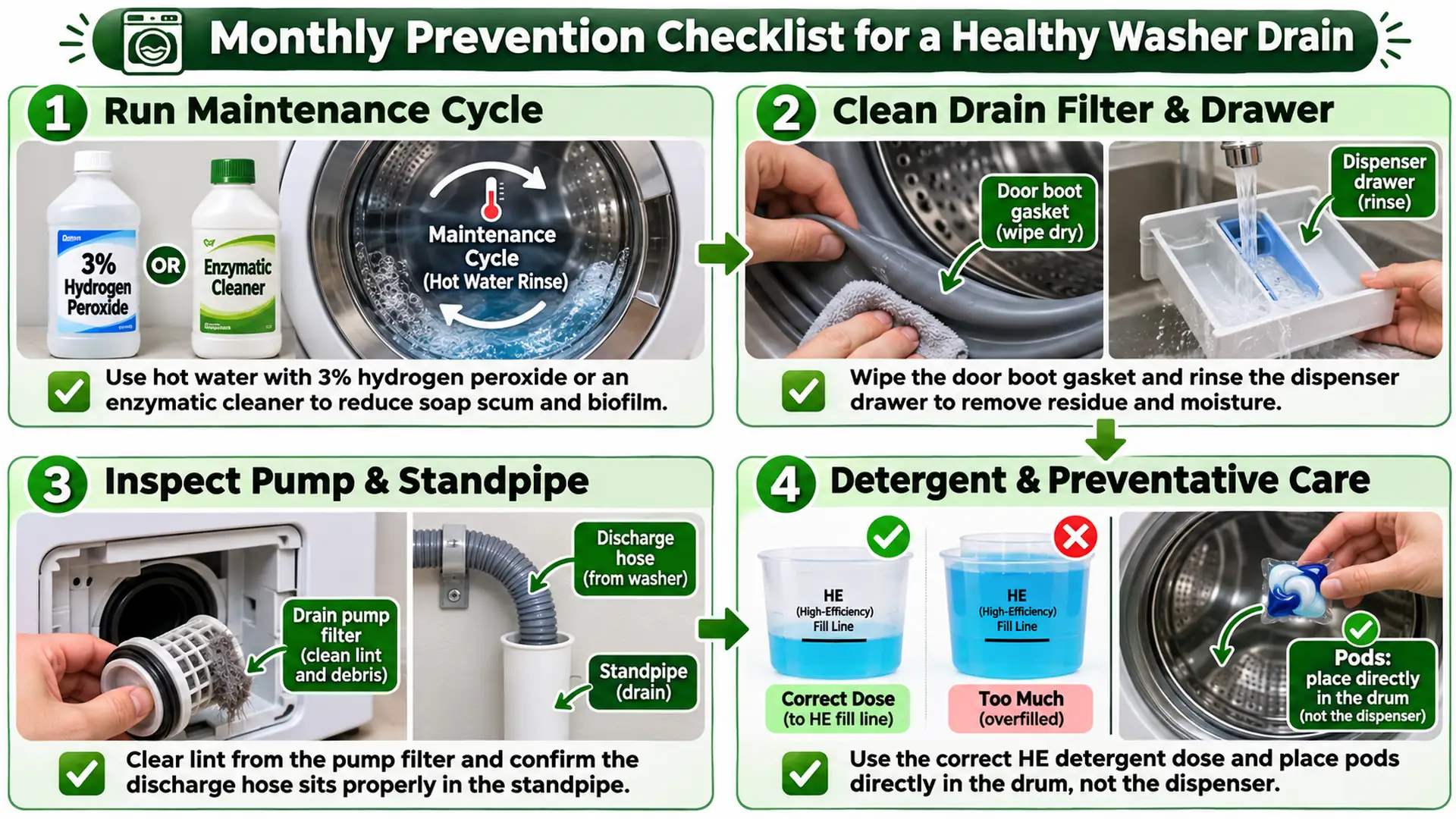
Establishing a simple monthly routine prevents lint, soap scum, and sludge from building up into major drainage obstructions. Follow this multi-point checklist to keep your system running at peak performance:
Run a Maintenance Hot Cycle: Run your machine empty on its highest heat setting using one cup of 3% hydrogen peroxide or a dedicated enzymatic cleaner to strip organic biofilm and detergent buildup from the drum and outer tub.
Clean the Drain Pump Filter: Access the filter basket behind the lower front panel of your machine, clear out trapped coins, hairpins, and lint, and rinse the housing to prevent pump strain.
Inspect the Detergent Drawer: Remove the dispenser drawer, soak it in warm water to dissolve dried detergent paste and fabric softener wax, and wipe out the cavity jets.
Check the Drain Hose and Standpipe: Ensure the flexible discharge hose is free of sharp kinks, firmly secured to the standpipe, and maintains a proper air gap without being shoved too far down into the P-trap.
Wipe the Door Gasket: Peel back the flexible rubber boot on front-loading washers, clear out standing water and trapped debris, and wipe down the inner fold with a peroxide-soaked cloth.
Detergent and Additive Rules of Thumb
Proper dosing habits eliminate the primary cause of washing machine drain clogs before excess soap ever reaches your plumbing.
Strictly Use HE Detergents: High-Efficiency (HE) formulas produce low suds designed for modern low-water washers. Standard non-HE soaps create excessive foam that causes drain pump “sudslock.”
Limit Liquid Dosing: Use no more than two tablespoons of liquid HE detergent per normal load. Over-dosing leaves undissolved residue that coats pipe walls.
Place Pods Directly in the Drum: Toss detergent pods into the back of the empty wash drum before loading clothes—never place pods in the dispenser drawer, where they can partially dissolve and clog internal lines.
Skip Commercial Liquid Softeners: Switch to wool dryer balls or plain white vinegar in the rinse compartment, as traditional fabric softeners contain fats and waxes that build up inside pipes.
Every 6–12 Months
In addition to monthly cleaning, perform a bi-annual structural check to catch wear and tear on your plumbing before leaks occur:
Inspect Hoses and Connection Fittings: Check rubber fill and drain hoses for signs of bulging, cracking, stiffness, or salt-like corrosion around hose clamps. Replace standard rubber hoses every 3 to 5 years with braided stainless-steel supply lines.
Apply an Enzymatic Drain Treatment: Pour a slow-acting enzymatic drain cleaner directly into the standpipe overnight to break down deep-seated lint mats and grease lining the P-trap.
Monitor Flow and Sound Warnings: Listen for new gurgling noises or watch for slow water evacuation during high-volume discharge cycles, which indicate early line restrictions.
What Never to Pour Down Any Drain
Protect your washing machine drainage system, internal pump seals, and main sewer lateral by keeping these destructive substances out of your standpipe:
Harsh Chemical Drain Cleaners: Sodium hydroxide (lye), sulfuric acid, and hydrochloric acid generate excessive thermal heat that warps PVC, corrodes pumps, and damages rubber gaskets.
Petroleum Solvents and Paint Thinners: Chemical solvents dissolve plastic components, degrade hose materials, and create dangerous flammable gas hazards.
Fats, Cooking Oils, and Grease: Liquid fats solidify upon cooling, creating a sticky coating inside the standpipe that traps lint and triggers heavy blockages.
Excessive Chlorine Bleach: Frequent, concentrated bleach applications harden internal rubber seals and destroy beneficial bacteria in residential septic systems.
FAQs About Washing Machine Drain Chemicals
What could be clogging my washing machine drain pipe?
A washing machine drain pipe is typically clogged by a combination of dense textile lint, pet hair, undissolved detergent sludge, and fabric softener wax. Over time, these materials collect inside the standpipe and P-trap, forming a stubborn barrier that traps foreign objects like coins, tissue, or buttons.
Why do some plumbers say not to use baking soda and vinegar to unclog a drain?
Plumbers advise against relying on baking soda and vinegar for actual clogs because the acid and base partly neutralize each other, producing mostly water and carbon dioxide gas. While the fizzing action can freshen a smelly drain or loosen light surface scum, it lacks the chemical strength needed to break down dense, compacted lint mats or heavy sludge.
What chemical is commonly found in drain cleaners?
Most commercial chemical drain cleaners rely on severe caustic bases such as sodium hydroxide (lye) or strong mineral acids like sulfuric acid and hydrochloric acid. These volatile substances dissolve hair and grease through exothermic chemical reactions, but they generate high heat that can melt plastic pipes and destroy internal washer components.
Is bleach safe for septic systems?
Occasional, highly diluted applications of chlorine bleach are generally safe for septic systems, but frequent or concentrated use damages system health. Chlorine bleach is a potent antibacterial agent that sterilizes the beneficial anaerobic bacteria inside your septic tank, stopping waste breakdown and causing solids to clog your drain field.
Is OxiClean safe to use for a smelly washer drain?
Yes, oxygen-based cleaners like OxiClean are safe and effective for treating organic smells and biofilm inside your washing machine. Unlike harsh chlorine bleach or chemical drain openers, oxygen bleaches break down safely into water and oxygen without degrading rubber seals, warping PVC standpipes, or harming septic bacteria.
What is the best drain cleaner for a washing machine drain?
The safest and most effective option for a washing machine drain is an enzymatic drain cleaner rather than a chemical opener. Enzymes naturally digest soap scum, grease, and organic buildup over several hours without generating heat, releasing dangerous fumes, or corroding delicate drain pump seals and hoses.
Can I use a plunger after pouring drain cleaner?
No, you should never use a plunger on a standpipe or drain that contains active chemical drain cleaners. Plunging creates strong hydraulic pressure that can cause severe splash-back, spraying skin and eyes with caustic chemicals, or force hazardous fluids through weakened pipe joints.
Is it safe to use Drano in a washing machine drain?
Pouring Drano directly down a washing machine standpipe is not recommended by appliance technicians or plumbers. The caustic lye formula generates intense thermal heat that can warp PVC drain lines, deteriorate internal rubber gaskets, and damage sensitive drain pump mechanisms.
What should I do if I inhale drain cleaner fumes?
If you inhale chemical drain cleaner or bleach fumes, move to fresh air immediately and open windows to ventilate the space. Seek emergency medical attention by calling 911 if you experience breathing difficulty, coughing, or chest tightness, and call Poison Control at 1-800-222-1222 for specific guidance.
Which laundry detergent is best for septic and drain health?
High-Efficiency (HE) liquid detergents or eco-friendly liquid formulas designed for low water usage are best for drain and septic health. They dissolve quickly, produce minimal foam to prevent pump “sudslock,” and contain fewer insoluble fillers than powdered soaps, reducing sludge accumulation in standpipes and septic tanks.
Conclusion and Next Step
Key Takeaways
Avoid Caustic Cleaners: Chemical drain openers containing lye, sulfuric acid, or hydrochloric acid generate extreme heat and corrosive reactions that degrade PVC standpipes, warp flexible hoses, and destroy internal drain pump seals.
Never Mix Laundry Chemicals: Combining bleach with ammonia, vinegar, or other drain openers creates hazardous chloramine or chlorine gases that pose severe health risks and accelerate pipe corrosion.
Opt for Safe Alternatives: Use non-corrosive enzymatic drain cleaners for routine maintenance, plain 3% hydrogen peroxide for biofilm odor control, and a mechanical plumbing snake or professional hydro jetting for stubborn blockages.
Practice Proper Laundry Dosing: Always use High-Efficiency (HE) detergent in precise, minimal amounts to prevent excessive suds, thick sludge buildup, and pump “sudslock.”
Act Early on Warning Signs: Address slow drainage, standpipe gurgling, and localized leaks immediately to prevent minor P-trap blockages from escalating into major structural sewer line repairs.
Need Help With a Damaged or Clogged Washer Drain?
If your washing machine drain is backing up, leaking around the standpipe, or showing signs of chemical pipe damage, expert assistance is available. Licensed plumbing technicians quickly diagnose complex drainage issues, conduct non-invasive camera inspections, and clear persistent blockages without relying on harsh chemicals.
Explore our full range of plumbing services to learn how professional drain cleaning, pipe repairs, and system maintenance protect your home. View the areas we serve across Miami-Dade and Broward counties to confirm local coverage, or conveniently book a plumber online to schedule an appointment. For immediate assistance with urgent standpipe backups, call directly at 786-239-6529.
Article Review & E-E-A-T Verification
Written & Reviewed By: Oscar (Lead Master Plumbing Specialist) & The Technical Team at EZ Plumbing Repair Services
Credentials: Florida State-Certified (CFC) Licensed Plumbers
Expertise: Residential drainage diagnostics, washing machine standpipe clearing, P-trap repairs, and main sewer line restoration across Miami-Dade and Broward counties.
Field Experience: 10+ years of hands-on plumbing service resolving severe chemical pipe degradation, line backups, and appliance drainage failures for South Florida homeowners.
Last Updated: November 2026
Main Services
Related Posts
Need a Plumber in Miami?
Schedule service online or speak directly with the EZ Plumbing team.
Owner-Led Local Service
Know who is behind the business before you request service. The owners, contact line and Miami service pages are published clearly.
- Named business owners
- Direct phone and social channels
- Local Miami service information
Clear Help Before You Book
Review the relevant service page, contact the team directly and use the booking page when you are ready—without relying on vague claims.
- Service-specific information
- Direct questions before scheduling
- Clear online booking route