
Beware of Plumbers Who Quote Prices Over the Phone: Red Flags and What to Ask
Should You Trust a Plumber Who Quotes a Price Over the Phone?
A firm, binding price given over the phone for an unseen plumbing problem is almost always unreliable. Plumbing systems are complex, and what sounds like a simple clog can easily stem from deep main line root intrusion or cracked pipes behind walls. A dependable plumbing professional will never lock in an exact figure without diagnosing the issue in person first.
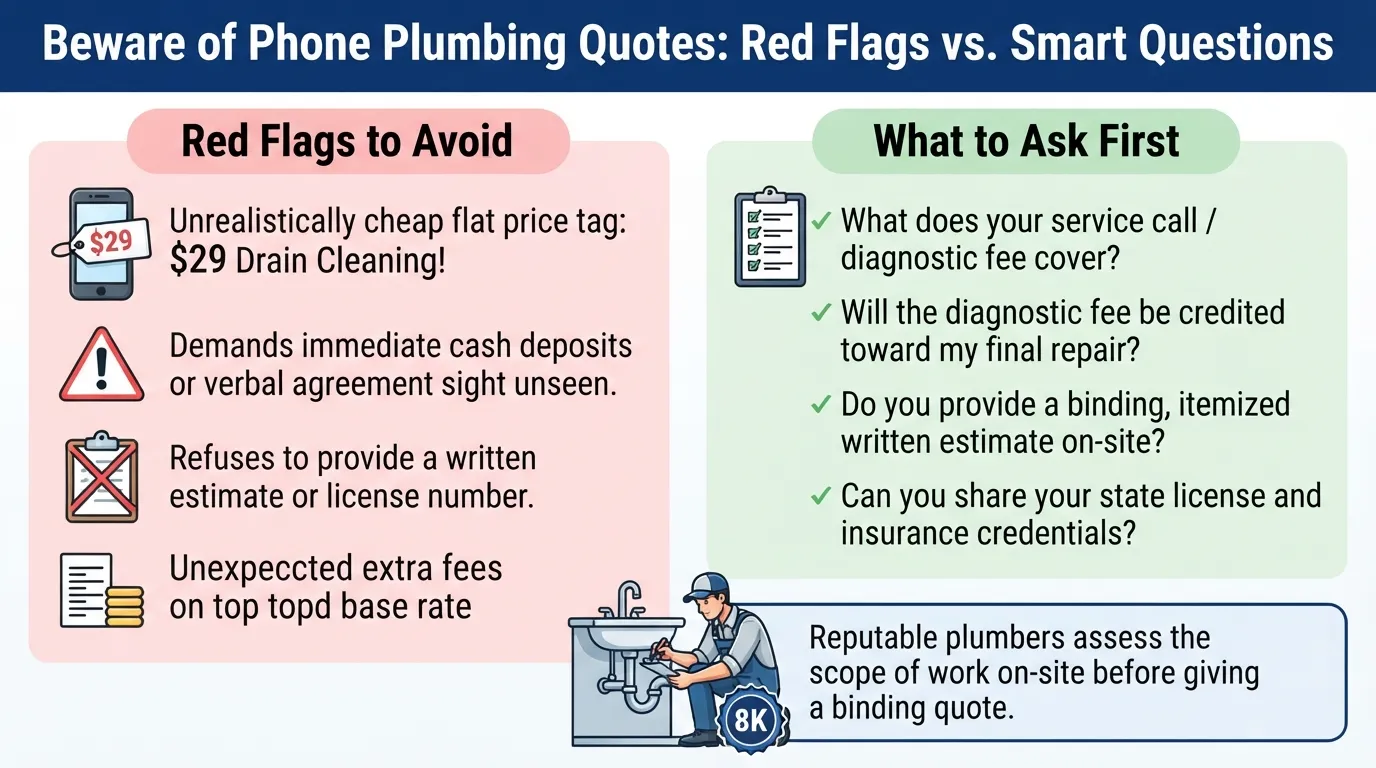
Unseen Estimates Risk Hidden Costs: Over-the-phone quotes often function as a “bait and switch” strategy, leaving room for unexpected fees once the work begins.
Refusing Information is a Red Flag: While an exact price is impossible sight unseen, a plumber who refuses to share basic diagnostic rates or service call fees is equally untrustworthy.
Reputable Companies Follow a Standard Process: Professional plumbers provide a reasonable price range up front, perform an on-site inspection, present a written estimate, and secure your written approval before starting any labor.
Why Phone Quotes Fail Miami Homeowners
Miami’s unique coastal infrastructure, aging cast iron piping, and high water tables mean that surface-level plumbing symptoms rarely tell the full story. Accepting a quick phone quote for a slab leak or drain backup in South Florida often leads to mid-job price surges when hidden structural damage or corrosion is uncovered. Relying on an unverified verbal estimate puts your property and your wallet at severe risk of unexpected repair bills.
Key Points Covered in This Guide
The Risks of Phone Quotes: How verbal pricing turns into inflated final invoices.
Diagnostics vs. Estimates: Why professional on-site inspections protect your home.
Red Flags to Watch For: Common high-pressure sales tactics used by dishonest contractors.
Getting a Fair Price: How to request a binding, written estimate before work begins.
Why Phone Quotes Often Go Wrong
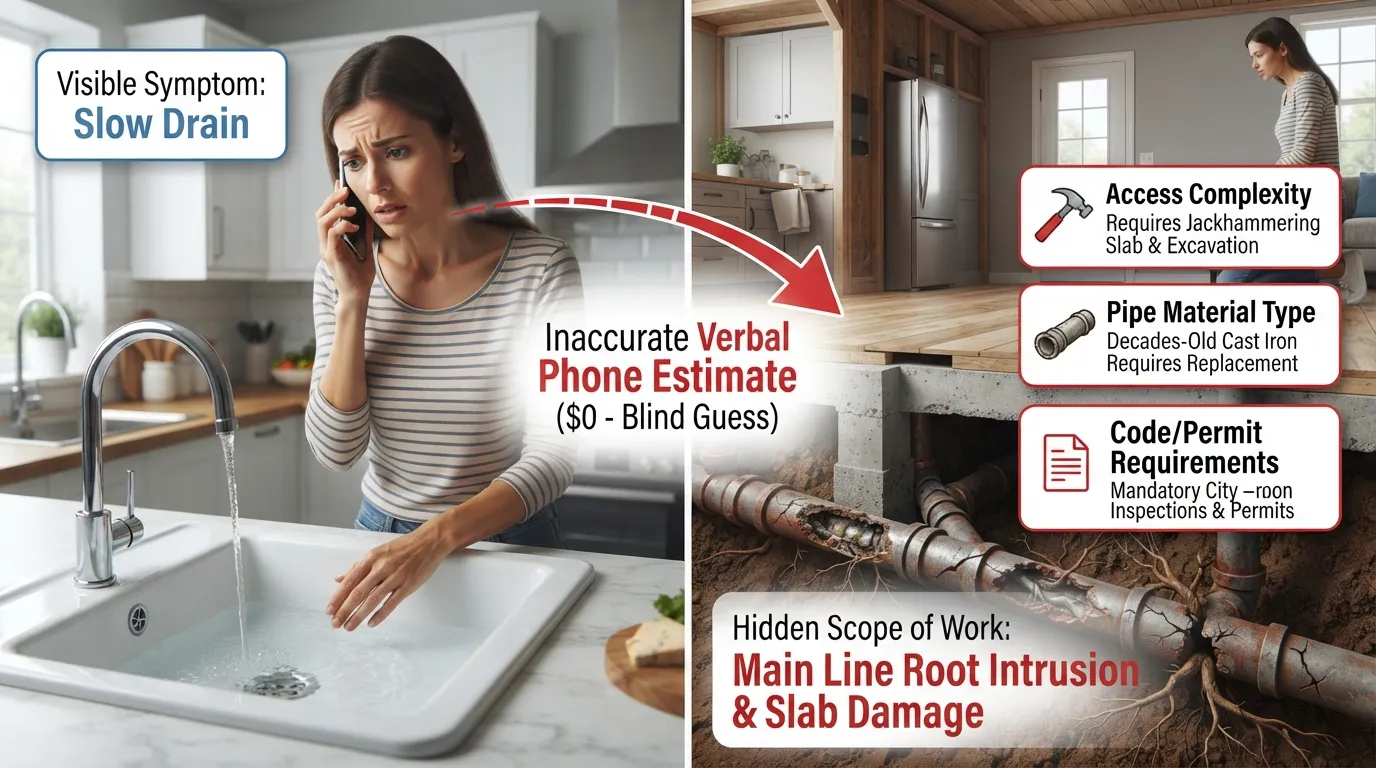
A flat rate quoted over the phone is almost always an educated guess rather than an accurate quote. Plumbing systems rely on interconnected fixtures, hidden drainage lines, and precise pipe pitches that cannot be visually diagnosed through a telephone description.
Without inspecting the physical site, even experienced technicians cannot evaluate the true scope of work required to fix the underlying issue.
The Problem You Describe Isn’t Always the Problem You Have
Homeowners describe symptoms based on what is visible, but plumbing failures typically start deep within the system. What looks like a minor, localized issue can be the symptom of a far more severe structural failure elsewhere in the piping.
Slow Drain vs. Sewer Line Obstruction: What seems like a simple clogged fixture frequently turns out to be severe tree root intrusion in the main line, requiring high-pressure hydro-jetting or professional drain cleaning services.
Ceiling Stains: A damp patch on the drywall could stem from an active supply pipe leak, an overflowing A/C condensation line, or an external roof penetration.
Widespread Sewer Line Problems: A toilet bubbling during a shower run usually indicates an obstruction downstream in the main sewer lateral rather than a standard fixture clog.
Hidden Plumbing: Behind Walls, Under Slabs, Underground
Most of a home’s plumbing infrastructure is completely concealed beneath concrete slabs, embedded inside drywall, or buried underground. Until a plumber can inspect these areas directly, calculating exact labor and material costs is virtually impossible.
Slab leaks, for instance, occur underneath heavy concrete foundations and require specialized electronic location equipment to isolate accurately.
Pipe Material Variations: Existing plumbing made of cast iron, galvanized steel, vintage copper, PVC, or PEX determines the modern repair fittings required.
Access Complexity: A leak under tile flooring or behind custom cabinetry requires significantly more labor and restore time than a exposed pipe in an open utility closet.
Historical Patchwork: Previous unpermitted repairs or mixed pipe materials complicate connection methods, expanding the required scope of work.
Watch the video below to learn why reputable plumbing professionals need to inspect the job site before issuing a firm quote:
Why Miami and South Florida Homes Add Variables
South Florida properties present unique structural and environmental factors that make phone quotes particularly inaccurate for local homeowners.
Slab-on-Grade Foundations: Most Miami homes are built directly on concrete slabs without basements or crawlspaces, making underlying leaks difficult to reach without sub-slab drilling or rerouting.
Aggressive Root Systems: Tropical vegetation like ficus trees and palms routinely invade aging sub-surface lines, causing severe cracking that can only be identified via a high-definition video camera inspection.
Aging Cast Iron Infrastructure: Established South Florida neighborhoods often contain original cast iron lines susceptible to bottom-channel deterioration and severe channel scaling.
Strict Municipal Permits & Codes: Miami-Dade regulations require formal permits and mandatory code upgrades for many core plumbing repairs, directly impacting total job costs.
Parts, Access, Permits, and Code Upgrades
Two homes experiencing the exact same plumbing symptom can face drastically different repair prices due to regulatory compliance and physical layout.
Specific Replacement Parts: Older, discontinued valve assemblies or uncommon pipe diameters require specialty sourcing and extra travel time.
Structural Accessibility: The time required to clear drywall, clear landscaping, or excavate dirt adds directly to the overall labor burden.
Mandatory Code Compliance: Local building codes may require bringing adjacent non-compliant piping up to current standards before inspectors sign off on a new repair.
How Phone Descriptions Lead to Surprise Bills
When a contractor provides an exact figure over the phone based solely on a brief conversation, they base that number on an ideal scenario.
Once the plumber arrives on-site and encounters hidden obstacles, structural complications, or worn-out materials, the original verbal estimate breaks down. This mismatch between initial expectations and site realities frequently results in mid-job price changes, extra emergency fees, and unexpected final bills. Professional, binding pricing can only happen when a licensed technician evaluates your home using accurate on-site diagnostics like leak detection.
Estimate vs. Quote vs. Bid: What’s the Difference?
Understanding plumbing pricing terminology is the best way to avoid surprise bills and billing disputes. Many homeowners use the terms estimate, quote, and bid interchangeably, but in the trade industry, they carry very different legal and financial meanings.
What Is a Plumber Quote?
A plumber quote is a fixed, legally binding price offered by a contractor to complete a specific scope of work. Unlike a rough estimate, a formal quote cannot change once accepted, unless the homeowner requests additional work or unexpected hidden damage is discovered after tearing into walls or floors.
Estimate vs. Quote vs. Bid
| Term | Binding or Non-Binding? | Primary Use Case | What Homeowners Must Watch For |
| Estimate | Non-Binding | Initial ballpark pricing based on preliminary details or initial site walkthrough. | Can fluctuate significantly if unseen complications or extra labor hours arise during repairs. |
| Quote | Binding | Specific, well-defined repairs after an in-person, thorough inspection. | Ensure all parts, labor, warranties, and clean-up costs are explicitly included in writing. |
| Bid | Binding Contract | Formal proposal submitted for large construction, remodeling, or commercial jobs. | Look out for potential change orders that increase costs if the project scope expands. |
Flat-Rate vs. Hourly Pricing
Plumbing companies typically bill using either flat-rate pricing or an hourly rate structure (often called time and materials). Both models are valid, but they function differently for your budget.
Flat-Rate Pricing: The plumber charges a set, upfront price for the entire job regardless of how long it takes. This approach requires an in-person diagnostic inspection first so the technician can accurately assess the scope of work.
Pros: Complete price transparency upfront; no risk of paying extra if the repair takes longer than expected.
Cons: The flat price includes calculated risk factors, meaning simple fixes might cost slightly more than an hourly rate.
Hourly Pricing (Time & Materials): You pay a baseline hourly rate for labor plus the actual cost of materials and replacement parts used.
Pros: Ideal for simple, straightforward repairs (like swapping a faucet) where time and parts are minimal.
Cons: Unpredictable overall cost; bad plumbing luck or unexpected delays directly increase your final bill, and many companies charge a minimum service fee just to arrive.
Residential vs. Commercial Pricing
Residential plumbing pricing focuses on diagnostic inspections, repair estimates, or flat-rate standard fixtures for single-family homes or condos. In contrast, commercial plumbing relies on formal, scope-based bids driven by complex architectural blueprints, municipal health codes, heavy equipment requirements, and strict commercial building regulations.
What You CAN Reasonably Get Over the Phone
While demanding a binding contract over the phone for an unseen plumbing issue is unrealistic, home plumbing companies should never stonewall you when you call for information. A reputable customer service representative can provide clear, transparent guidance regarding their dispatch fees, hourly labor rates, standard diagnostic procedures, and general price ranges for routine fixtures.
Understanding what information a technician can fairly estimate remotely helps you gauge whether a company is transparent or setting you up for unexpected charges.
Jobs Where a Phone Price Range Is Often Reasonable
Certain plumbing tasks involve standard fixtures, known replacement components, and minimal structural variables. For these straightforward jobs, contractors can usually provide a reliable baseline cost range before arriving on-site.
Standard Fixture Swapouts: Installing a customer-supplied faucet or garbage disposal into an existing setup follows a predictable labor timeline.
Minor Component Repairs: Replacing standard internal parts during a basic toilet repair typically involves predictable material and labor expenses.
Direct Appliance Upgrades: A routine water heater replacement where existing electrical, gas, and plumbing hookups match modern codes allows for consistent baseline estimates.
Jobs That Truly Need an Inspection First
When a plumbing issue involves unknown variables, concealed pipes, or structural access challenges, any quote given over the phone is pure guesswork. These complex scenarios require physical testing, visual verification, or diagnostic technology before an accurate scope of work can be created.
Undiagnosed Active Leaks: Tracing supply line leaks behind drywall or beneath concrete requires physical pressure testing and thermal imaging.
Main Drainage Backups: Clearing a backed-up main line requires evaluating pipe material, line distance, and root intrusion levels.
Emergency Flooding or Burst Pipes: Stopping major water damage and restoring deteriorated piping depends heavily on site-specific structural access.
Phone Ballpark vs. Binding Quote
Treat every number provided over the phone as a tentative baseline rather than a guaranteed final bill. A phone ballpark gives you a rough frame of reference to determine if a service fits your general budget, whereas a binding quote is a fixed written agreement generated only after an on-site technician inspects the system.
Never allow a technician to begin breaking walls, digging, or cutting pipes until their verbal estimate is converted into a signed, detailed written quote.
Common Plumbing Jobs and Phone-Pricing Reliability
| Job Type | Phone Range Reasonable? | Primary Cost Variables & Reasons |
|---|---|---|
| Toilet Repair (Running, Wobbling) | Often a Range | Standard internal components and accessible fixtures keep labor predictable. |
| Standard Water Heater Replacement | Range Only | Existing electrical setups, venting configurations, and local permitting requirements vary. |
| Drain Clog | Rarely | The underlying cause (grease build-up vs. pipe collapse) remains unknown until inspected. |
| Suspected Leak | No | Exact leak location and structural access requirements cannot be determined remotely. |
| Sewer Line Issue | No | Requires a diagnostic video camera inspection to evaluate pipe condition and blockage depth. |
| Sump Pump Replacement | Range Only | Total cost depends on existing pit dimensions, discharge piping, and electrical availability. |
How the Bait-and-Switch Works
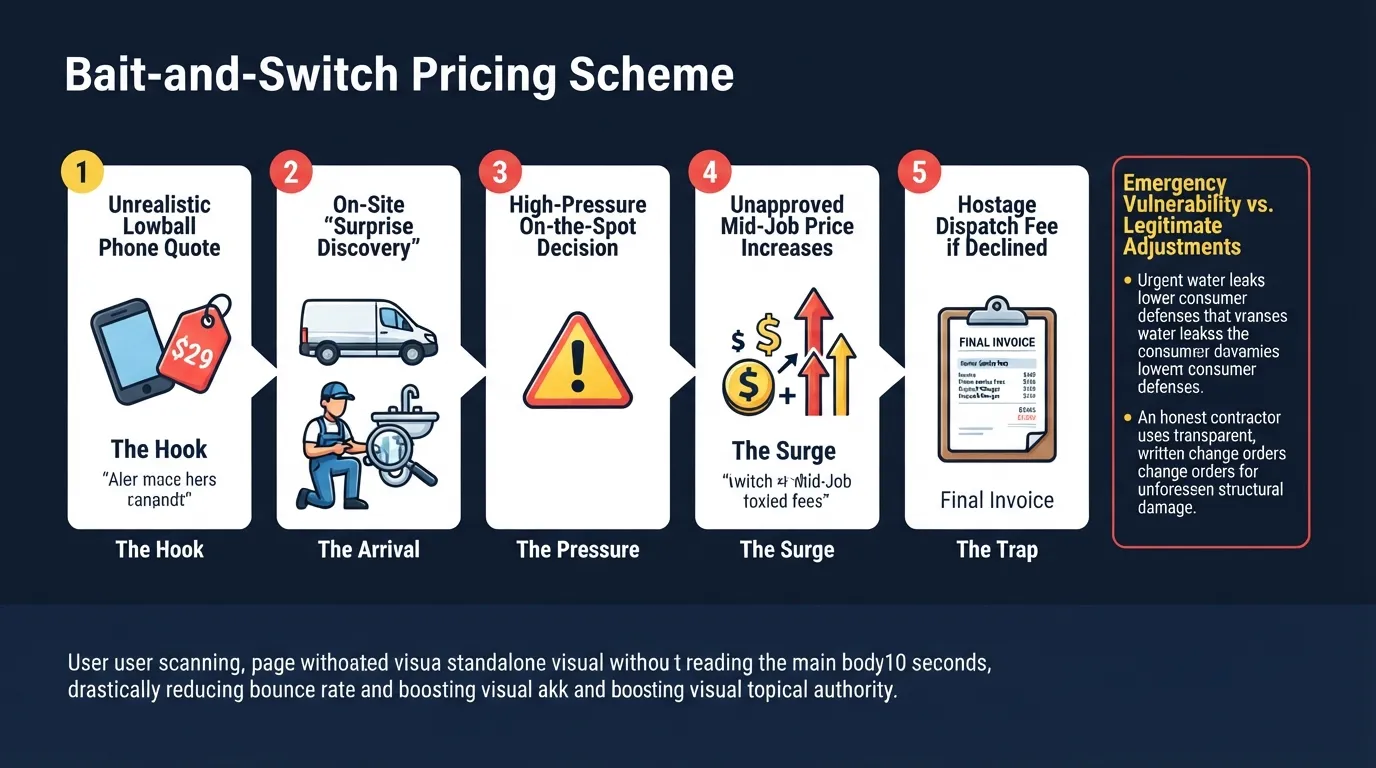
The plumbing industry contains both highly ethical contractors and predatory companies that use deceptive pricing tactics. Knowing how a classic bait-and-switch scheme operates helps you spot dishonest sales techniques and protect yourself from inflated repair costs.
A bait-and-switch occurs when a company quotes an unrealistically low price over the phone to secure an appointment, only to dramatically increase the cost once they arrive at your home.
Step by Step: A Typical Lowball-Quote Scenario
The Suspiciously Low Phone Estimate: You call a company and receive an surprisingly cheap quote—such as a “$29 drain clearing”—with no mention of potential variables or diagnostic conditions.
The Arrival and “Surprise Discovery”: The technician arrives, performs a brief visual glance, and immediately asserts that your issue is far more severe than reported, rendering the phone price invalid.
High-Pressure Sales Tactics: The contractor insists that immediate action is required to prevent catastrophic water damage, pressuring you to make an on-the-spot decision without reviewing a detailed breakdown.
Mid-Job Add-On Charges: Once work begins or pipes are dismantled, additional unexpected fees for special equipment, emergency surcharges, or extended labor hours are added to your running tab.
The Hostage Visit Fee: If you recognize the price inflation and decide to decline their revised estimate, the contractor demands a steep, previously unmentioned diagnostic or dispatch fee before leaving your property.
Why Emergencies Make It Easier
During active water leaks, backed-up sewage, or severe flooding, anxiety naturally lowers your guard. Dishonest operators capitalize on this urgency, knowing that desperate homeowners are less likely to request written estimates, ask for itemized pricing, or contact a second professional.
Knowing what to expect and how to handle urgent situations with a reliable emergency plumber allows you to maintain control and make rational decisions even during stressful pipe failures.
A Real-World Example
A South Florida homeowner noticed water backing up in their shower and called a bargain plumbing company advertising a $49 sewer drain special. Over the phone, the representative promised the $49 fee would completely resolve the clog.
Upon arrival, the technician ran a small cable for two minutes before claiming the line was completely collapsed. The plumber stated that unless the homeowner authorized an immediate $4,500 open-trench excavation on the spot, their home would flood with raw sewage within hours.
Suspicious of the sudden pressure, the homeowner paid a basic dispatch fee and called an established local technician for a second opinion. A full diagnostic video camera inspection revealed no collapsed pipe—just a dense mass of tree roots that was completely cleared using a standard hydro-jetter for a fraction of the quoted excavation price.
Why Not Every Higher Price Is a Scam
It is vital to distinguish between predatory upselling and legitimate pricing adjustments based on real site conditions. Plumbing systems regularly present genuine surprises—such as hidden wall corrosion, hazardous wiring near water lines, or severely degraded sub-slab fittings—that cannot be detected until diagnostic work begins.
A reputable plumber who uncovers legitimate, unforeseen structural complications will immediately stop work, explain the exact problem with clear visual proof, and provide a revised, written estimate for your approval before proceeding.
Is It Normal for a Plumber to Charge for a Quote or Service Call?
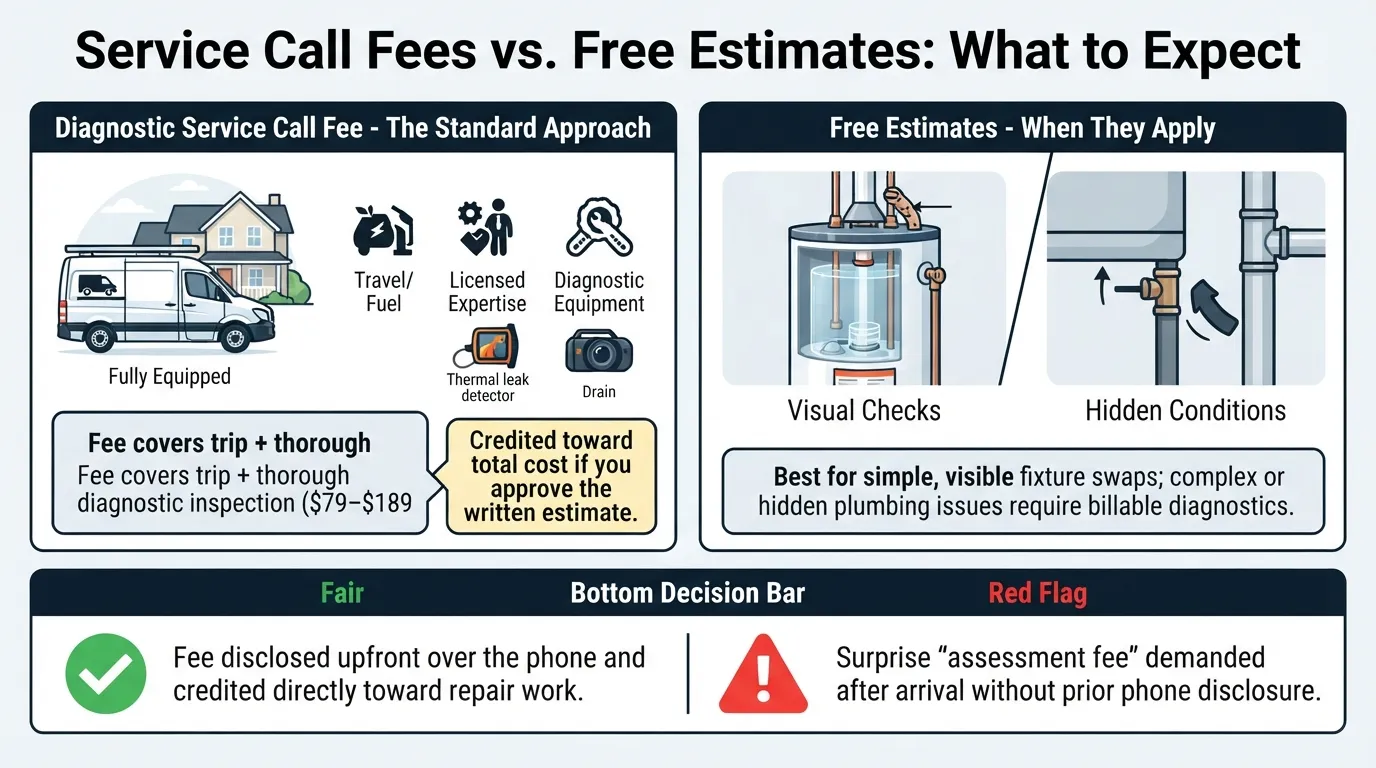
Yes, it is entirely standard for professional plumbing companies to charge a nominal dispatch or service call fee to send a certified technician to your property. While online searches often show conflicting advice—with national franchises offering “free estimates” and local trade standards recommending a diagnostic fee—both business models can be legitimate when managed with complete transparency.
Understanding how trip charges work prevents billing surprises and ensures you receive a thorough, professional evaluation.
Free Estimates vs. Diagnostic Fees: Both Can Be Legitimate
The confusion between free estimates and mandatory diagnostic fees usually comes down to how a company structures its pricing model.
Free Estimates (Visual Assessments): Major corporate franchises often offer free in-person visits to inspect accessible fixtures (like an open water heater or visible toilet flange) and present a flat-rate price. If you decline, you owe nothing; if you accept, work begins immediately.
Diagnostic Fees (In-Depth Troubleshooting): Independent local contractors frequently charge a service call fee ($79 to $189) because driving a fully stocked truck, pulling diagnostic equipment, or using thermal imaging requires billable labor, fuel, and professional expertise before any physical repair starts.
What a Service Call Fee Typically Covers
A service call fee (also referred to as a trip fee or dispatch charge) is not a penalty; it covers the baseline operational overhead required to bring a qualified professional to your front door.
Travel & Fleet Costs: Compensates for fuel, vehicle insurance, vehicle maintenance, and transit time to your location.
Professional Expertise & Time: Pays the licensed plumber for their time, initial troubleshooting, and physical safety evaluations.
Mobile Inventory Access: Grants immediate access to a mobile warehouse stocked with specialized tools, replacement valves, and diagnostic equipment.
When a Fee Is Reasonable and When It’s a Red Flag
A diagnostic fee is completely fair as long as the terms are disclosed before the technician drives to your home. Knowing what to watch for helps you differentiate between ethical contractors and predatory tactics.
Reasonable Practice: The dispatcher explicitly states the service call fee during your initial call, explains what it includes, and confirms that the amount will be credited toward the final repair cost if you approve the written estimate.
Major Red Flag: A contractor promises a “free visit” over the phone, perform minimal inspection, and then demands an unannounced $150 “assessment fee” after you decline an exorbitantly high repair quote.
How to Ask About Fees on the Phone
Before booking an appointment with any plumbing service, protect your budget by asking this direct, single-line script:
“What is your service call fee to send a technician out, and will that entire amount be applied directly toward the cost of my repair if I move forward with the work?”
Our Approach
We believe in complete pricing clarity from the moment you pick up the phone. We charge a standard, upfront diagnostic fee to dispatch a licensed technician in a fully equipped truck to inspect your plumbing issue thoroughly.
We disclose this fee clearly before booking your appointment—there are zero hidden surcharges or surprise trip fees. Best of all, when you approve our written, flat-rate repair estimate, 100% of your diagnostic fee is credited directly toward the total cost of your service.
Red Flags vs. Green Flags When You Call a Plumber
Choosing the right plumbing contractor requires knowing how to separate trustworthy professionals from predatory operators. Reviewing clear warning signs and positive indicators helps you protect your home, budget, and peace of mind before any work begins.
8 Red Flags
Suspiciously Low Rates: An estimate that sits drastically below every other local competitor is often a bait-and-switch trap designed to get a foot in your door.
Evasive Explanations: A company that refuses to explain how their pricing structure works or dodges basic questions about service fees is hiding something.
Missing Credentials: Technicians or dispatchers who cannot or will not provide a legal company name, physical address, and active license number should be avoided immediately.
High-Pressure Tactics: Demanding an on-the-spot decision by claiming a disaster will strike unless you sign right now prevents you from making a smart choice.
Cash-Only Demands: Insisting on cash-only payments or asking for massive upfront deposits before ordering materials or starting work is a major warning sign.
Vague or Missing Estimates: Refusing to put a price in writing and relying solely on verbal agreements leaves you completely unprotected against surprise fees.
Mid-Job Price Surges: Changing the price or expanding the scope of work mid-job without presenting a formal change order and getting your approval first.
Unidentified Vehicles: Technicians arriving in unmarked personal cars or vans with no company logo, uniform, or professional identification.
Watch the short video below for quick visual tips on identifying major plumbing quote warning signs:
8 Green Flags
Transparent Phone Process: The customer service representative clearly explains their diagnostic process, service call fees, and general pricing policies upfront.
Honest Limitations: A trustworthy plumber openly admits when an exact price cannot be given over the phone without a proper physical inspection.
Detailed Written Estimates: Providing a clear, itemized written estimate outlining parts, labor, warranties, and total costs before lifting a tool.
Verifiable Licensing & Insurance: Readily displaying license numbers and carrying comprehensive liability and workers’ compensation insurance.
Clear Fee Disclosure: Explaining trip fees transparently and letting you know if that charge applies toward the total repair cost.
Multiple Repair Options: Offering tiered solutions (when applicable) that address your budget rather than forcing a single expensive fix.
Established Local Reputation: Backed by authentic, consistent local reviews and a proven track record within your community.
Respectful of Your Time: Giving you adequate time to review estimates, ask questions, and decide without resorting to high-pressure manipulation.
How to Verify a Plumber’s License in Florida
Verifying that a contractor holds valid state credentials protects you from substandard work, liability issues, and unlicensed operators who disappear when something goes wrong. Florida mandates strict licensing requirements for all plumbing work to protect homeowners.
Obtain the contractor’s legal business name, qualifier’s name, or license number.
Visit the official Florida DBPR license search portal.
Search using the business name or license ID to confirm that the credential status reads Active and has no disciplinary history.
Note that hiring an unlicensed contractor violates state regulations; suspected unlicensed activity can be reported directly to state authorities to protect other consumers.
Red Flag vs. Green Flag Side by Side
| Indicator Category | Red Flag (Walk Away) | Green Flag (Proceed with Confidence) |
| Pricing | Unrealistically low phone quotes with no variables mentioned. | Clear pricing structures, upfront fee disclosures, and written estimates. |
| Credentials | Vague company details, no physical address, or missing license numbers. | Easily verifiable license numbers, active insurance, and branded trucks. |
| Conduct | High-pressure sales tactics and demands for immediate, unreviewed decisions. | Respectful communication, patient explanations, and time to review quotes. |
| Agreements | Purely verbal agreements and sudden mid-job price inflation. | Signed, itemized written proposals and formal change orders for extra work. |
10 Questions to Ask Before a Plumber Comes to Your Door
When faced with an unexpected plumbing issue, making a quick phone call shouldn’t mean sacrificing due diligence. Asking the right qualifying questions before a technician leaves for your property ensures you stay in control of your project, avoid hidden diagnostic fees, and hire a legitimate, insured professional.
Your Phone Script
Keep this simple 10-question checklist next to your phone when calling local contractors to quickly filter out predatory operators and evaluate true expertise:
Are you licensed and insured, and can you provide your license number?
Confirms the business operates legally in your jurisdiction and protects you against property damage liabilities.
Do you charge a service call or diagnostic fee to come to my home?
Clarifies upfront costs so you aren’t surprised by an unannounced trip charge upon arrival.
Is that diagnostic fee credited directly toward the final cost if I approve the repair?
Ensures your money goes toward fixing the problem rather than serving as an extra non-refundable fee.
Can you provide a general price range or baseline labor rate for this type of issue?
Establishes a broad expectation without forcing the agent into giving an unrealistic fixed price sight unseen.
What specific factors or hidden conditions could increase the price once you inspect the site?
Helps you understand potential scope variables, such as old pipe materials or accessibility challenges.
Will I receive a detailed, written estimate before any physical work or teardown begins?
Guarantees you can review all itemized parts and labor costs before committing your budget.
Is the estimate a binding quote, or is it a non-binding estimate subject to adjustment?
Prevents mid-job price surges by establishing whether the provided figure represents a fixed final cost.
How are unexpected scope changes handled and approved during the repair process?
Ensures the technician must present a formal, written change order for your approval before performing extra work.
Does your repair include a written warranty on both labor and replacement parts?
Protects your investment if a newly installed component fails or a repair leaks shortly after completion.
What is your expected arrival window, and will I receive the name and photo of the arriving technician?
Provides schedule transparency and protects your safety by verifying who is arriving at your front door.
What a Good Answer Sounds Like vs. a Bad One
Regarding Diagnostics:
Good Answer: “Yes, our diagnostic fee is $89, which covers the technician’s time and specialized equipment. If you choose to move forward with our written estimate, that full $89 is credited toward your repair.”
Bad Answer: “Don’t worry about fees right now, we’ll figure out all the pricing details after our guy gets to your house.”
Regarding Written Quotes:
Good Answer: “Our technician will perform an on-site evaluation and present a fixed, written estimate. We do not begin work or charge your card until you read and sign that agreement.”
Bad Answer: “We usually just give you the verbal total when the job is done because every plumbing situation is different.”
Regarding Licensing:
Good Answer: “Absolutedly! Our state license number is CFC1234567, and our technicians carry proof of coverage on their service trucks.”
Bad Answer: “We’ve been working in this county for 20 years, so you don’t need to worry about licenses.”
If You Need Help Now
You don’t have to navigate uncertain plumbing prices, confusing phone quotes, or hidden fees on your own. If you are experiencing an active plumbing failure, water stain, or backing-up line, reach out to our team of licensed technicians to book an appointment for a transparent, on-site diagnostic inspection today.
What a Good Written Plumbing Estimate Should Include
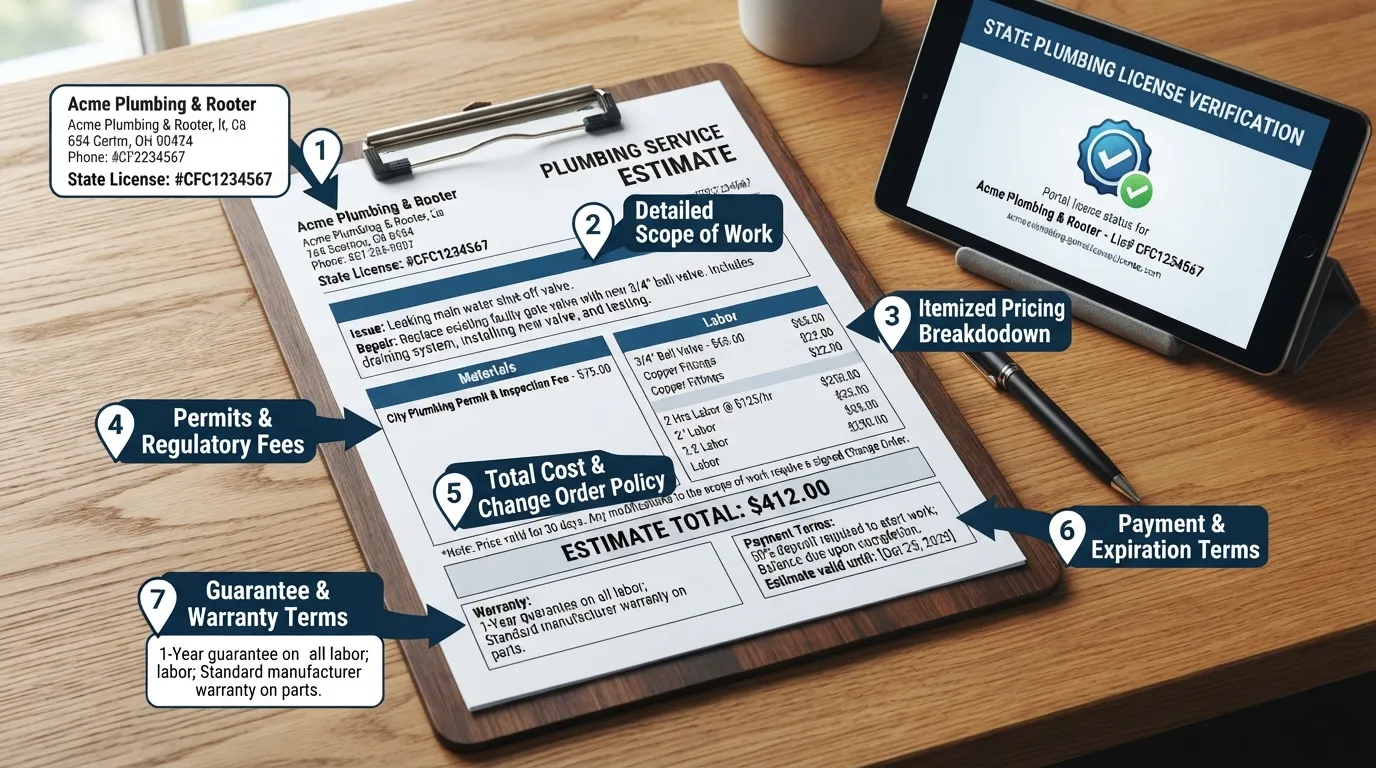
Once a technician inspects your plumbing issue, receiving a comprehensive, written estimate is your primary protection against billing surprises. A professional estimate is a binding contract that clearly outlines the scope of work, material costs, labor expectations, and warranty coverage before any work begins.
Knowing what components must appear on a valid estimate allows you to evaluate proposals confidently and catch hidden fees before signing.
Checklist: What Must Be on the Estimate
A legitimate plumbing proposal should be clear, detailed, and completely transparent. Ensure the document includes each of the following elements:
Company & Credential Details: Full business name, physical street address, phone number, and active state license number.
Detailed Scope of Work: A step-by-step description of the exact plumbing problem identified and the precise repair procedures to be performed.
Itemized Labor & Materials: Clear line items separating replacement parts (e.g., valves, pipes, fittings) from professional labor charges.
Permits & Inspection Fees: Explicit mentions of municipal permit costs, administrative filing fees, or required city inspection charges, if applicable.
Total Fixed Price & Change Terms: A definitive final cost, along with explicit language stating that any price adjustments require a signed change order.
Timeline & Payment Terms: Estimated completion timeframes, deposit requirements (if any), acceptable payment methods, and final payment due dates.
Warranty Coverage: Written guarantees detailing duration and specific coverage limits for both replacement parts and labor workmanship.
Validity Period: A clear expiration date (typically 30 days) indicating how long the quoted price remains guaranteed.
Warning Signs in a Written Estimate
Never sign a proposal that uses vague language or omits critical billing details. Review the agreement carefully for these common document red flags:
Unspecified Line Items: Broad terms like “Misc. Services,” “Additional Hardware,” or “Extra Shop Fees” without itemized dollar amounts.
Generic Descriptions: Overly simple phrasing such as “Fix Plumbing Leak” or “Clear Line” instead of identifying the exact location, pipe material, and diagnostic method.
Missing Total Amounts: Estimates that list hourly rates or material costs but leave the final bottom-line total blank or marked as “TBD.”
Verbal-Only Terms: Important promises—like labor warranties, cleanup responsibilities, or property protection—that are spoken verbally but left off the physical document.
How to Tell if a Plumber Is Overcharging You
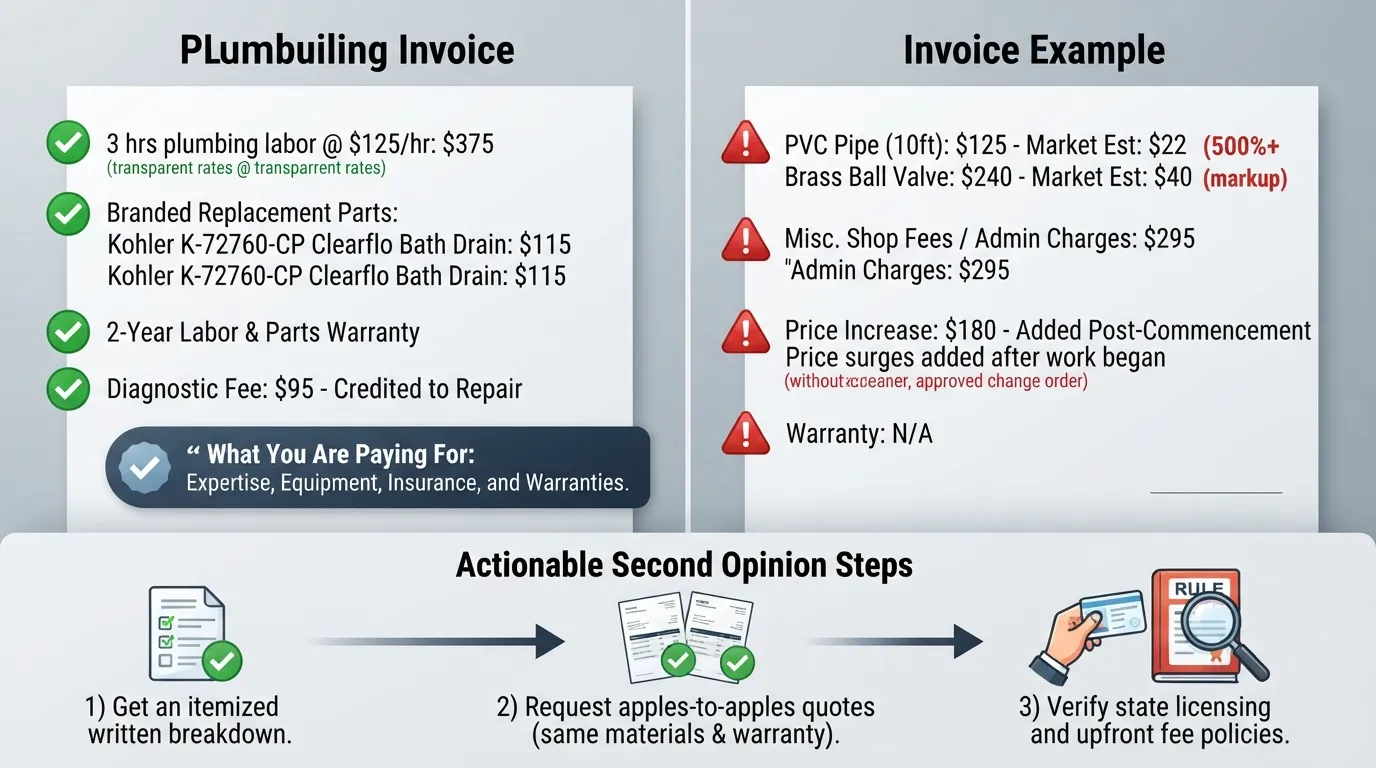
Receiving a high invoice for a job that took only thirty minutes can easily trigger frustration and doubt. However, evaluating whether a price is genuinely unfair requires looking beyond the total dollar amount or the time spent on-site.
Understanding how professional plumbing rates are structured helps you differentiate between standard commercial pricing and actual overcharging.
Compare Like for Like
When evaluating plumbing costs, ensure you are making an apples-to-apples comparison between competing proposals rather than comparing total numbers blindly.
Match the Scope of Work: Verify if both estimates include identical diagnostic testing, high-grade replacement parts, drywall or tile access restoration, and site cleanup.
Evaluate Material Quality: Standard plastic fittings cost significantly less than high-grade brass valves or commercial-grade copper assemblies.
Compare Warranties: A lower estimate might carry a 30-day limited warranty, whereas a higher price may include a multi-year complete guarantee covering both parts and labor.
Understand What You’re Paying For
When you hire a licensed professional, you are paying for specialized diagnostic expertise, specialized tools, and legal protection—not just the minutes spent physically turning a wrench inside your home.
When you invest in our plumbing services, your final bill accounts for critical behind-the-scenes overhead that protects your property and guarantees lasting quality:
Specialized Diagnostic Equipment: Commercial drain cameras, hydrostatic testing rigs, and acoustic leak detectors cost thousands of dollars to purchase and maintain.
Licensing, Insurance, and Bonding: Comprehensive general liability and workers’ compensation policies protect your home from accidental water damage or technician injuries.
Continuous Trade Expertise: Certified plumbers undergo hundreds of hours of ongoing training to navigate evolving local building codes and modern fixtures safely.
Fully Stocked Mobile Fleet: Bringing specialized inventory directly to your driveway saves you hours of waiting for parts deliveries.
Signs a Price Is Genuinely Out of Line
While high overhead justifies standard trade rates, certain billing practices indicate genuine price gouging or dishonest conduct:
Massive Price Deviations: The price sits dramatically higher than two or three other itemized estimates from licensed, reputable local contractors.
Exorbitant Parts Markups: Basic, off-the-shelf replacement parts are marked up by hundreds or thousands of percent above standard retail costs without explanation.
Post-Approval Price Hikes: The contractor demands more money for the exact same scope of work after you have already signed a binding quote, without uncovering any new hidden damage.
Unexplained Miscellaneous Charges: The invoice includes vague, mandatory add-ons like “shop equipment usage” or “administrative processing” that were never disclosed upfront.
How to Get a Second Opinion Without Wasting Time or Fees
If an initial diagnostic quote feels excessively high or suspicious, getting a second opinion is a smart step. To do this efficiently without paying multiple trip fees:
Request Your Detailed Written Breakdown: Ask the initial technician for their itemized scope of work and diagnostic findings in writing.
Call a Reputable Alternative: Contact another licensed local company and share the specific diagnosis and required repairs over the phone.
Ask for a Scope-Based Review: Many contractors can review an existing diagnostic report and tell you if their standard flat-rate pricing for that specific scope sits within the same price range before you book another visit.
Why the Cheapest Quote Isn’t Always the Best Value
Selecting a contractor based solely on the lowest price often costs more in the long run. Unusually low quotes frequently reflect unlicensed labor, cut corners, low-grade materials, missing insurance coverage, or a lack of warranty protection. Investing in a fair, transparent price from an established professional ensures the repair is done correctly the first time, protecting your property value and preventing recurring plumbing emergencies.
What to Do If You’ve Already Been Overcharged or Misled
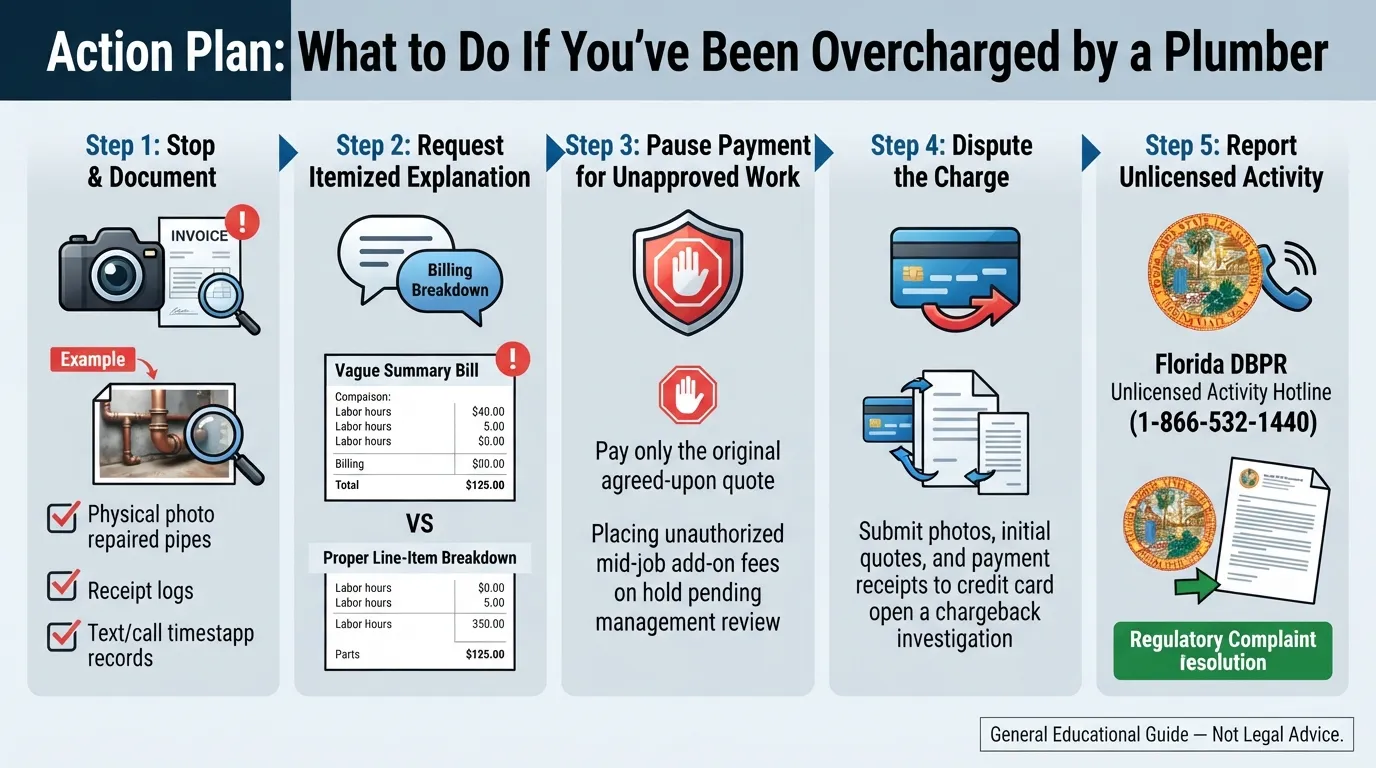
If you suspect that a plumbing company has charged you unfair prices, performed unauthorized work, or engaged in deceptive sales practices, taking structured action helps protect your financial rights. You do not have to accept unexpected or inflated charges quietly.
By taking organized, documented steps immediately after the incident, you can build a strong case to dispute billing errors and report bad actors.
Step 1: Stop and Document Everything
Gather and organize every piece of evidence related to your service call before memories fade or digital receipts disappear. Clear documentation serves as your strongest asset when disputing fees.
Collect Written Materials: Save all preliminary estimates, final itemized invoices, receipts, and written agreements.
Photograph the Work: Take clear, high-resolution photos and videos of the repaired fixtures, replaced piping, or job site conditions.
Log Communication: Note exact dates, call times, text message threads, email exchanges, and the names of every representative or technician you spoke with.
Step 2: Ask the Company for an Itemized Explanation
Reach out directly to the company’s management or owner in a calm, professional manner to request a detailed clarification of your bill.
Present your documentation and ask for a line-item breakdown separating exact parts costs from labor hours. In many instances, billing disputes stem from administrative mistakes, mistaken time logs, or misapplied standard rates that a customer service manager can correct or refund on the spot.
Step 3: Don’t Pay Under Pressure for Unapproved Work
If a technician performs work that was never outlined in your signed estimate or authorized through a formal change order, you are not obligated to pay for those unapproved add-ons on the spot.
Politely inform the contractor that you are paying the agreed-upon amount from your original proposal while placing the additional disputed charges on hold pending management review. Avoid signing new completion documents or liability waivers while under pressure from a technician in your home.
Step 4: Dispute the Charge
If you paid for misleading or unauthorized work using a credit card and the plumbing business refuses to address your concerns, contact your financial institution to initiate a billing dispute.
Provide your credit card issuer with your detailed documentation, including the original written estimate, photos of incomplete or substandard work, and proof of your written attempts to resolve the issue with the vendor. Card issuers can initiate a chargeback investigation if a vendor fails to deliver services as agreed or levies unauthorized surcharges.
Step 5: Report Unlicensed or Deceptive Activity
If you discover that the contractor operates without a valid state license or engaged in intentional consumer fraud, submit a formal complaint with Florida consumer protection regulators.
Report unlicensed contracting directly to the Florida Department of Business and Professional Regulation (DBPR) Unlicensed Activity Hotline by calling 1-866-532-1440. Reporting predatory or unlicensed operators protects your local community and holds dishonest businesses accountable under Florida state standards.
Disclaimer: The information provided in this section is for general educational purposes only and does not constitute formal legal advice. If you face significant financial losses or legal disputes, consult a qualified attorney or consumer protection specialist.
Frequently Asked Questions
Is it normal for plumbers to charge for a quote?
Yes, charging a service call or diagnostic fee is completely normal. It covers the technician’s travel, professional time, and specialized equipment required to accurately evaluate your system. Most reputable companies credit this diagnostic charge directly toward your total repair cost if you approve their written estimate.
What is a plumber quote?
A plumber quote is a fixed, legally binding proposal generated after an in-person diagnostic inspection. Unlike a rough estimate, a formal quote guarantees the final price for the defined scope of work and cannot change unless new, unexpected site conditions are discovered and approved via a written change order.
How can I tell if my plumber is overcharging me?
Compare detailed written estimates covering the exact same scope of work, warranty length, and material quality. Excessive parts markups, mandatory unexplained line items, and sudden price increases after work begins are clear indicators of overcharging, whereas higher baseline rates from licensed, fully insured contractors reflect legitimate operational overhead.
Can a plumber give a price over the phone?
A plumber can provide general labor rates, service call fees, or baseline price ranges over the phone for straightforward fixture swaps. However, giving a binding fixed price sight unseen for complex issues like leaks or clogs is impossible because concealed pipe conditions cannot be diagnosed remotely.
Do plumbers give free estimates?
Some corporate franchises offer free visual estimates for accessible fixtures like water heaters or faucets. However, independent contractors typically charge a diagnostic service fee to cover deep troubleshooting, electronic leak detection, or sewer camera inspections, often crediting that fee toward the total cost upon repair approval.
Can the final price be different from the quote?
A formal binding quote cannot change unless hidden structural complications—such as corroded sub-slab pipes or concealed wiring—are uncovered during work. In those rare scenarios, professional code requires the contractor to stop, explain the issue with visual evidence, and secure your signed approval on a change order first.
What are the most common plumbing scams?
The most frequent scams involve lowball phone quotes ($29 drain cleaning) that surge into thousands upon arrival, false claims of collapsed pipes without camera evidence, pressure tactics demanding immediate cash deposits, performing unapproved add-on work, and operating as an unlicensed contractor without state credentials or insurance.
How do I know if a plumber is licensed in Florida?
Ask the contractor for their state license number (usually beginning with “CFC” or “CMC”). Search the official Florida Department of Business and Professional Regulation (DBPR) database online to verify that their license status is active, insured, and free of outstanding administrative disciplinary actions.
Should I get more than one quote?
Yes, obtaining two or three detailed written quotes for major plumbing projects—such as main line replacements or repiping—is highly recommended. Getting multiple proposals lets you compare scopes of work, material standards, and warranty terms to ensure you receive a fair, competitive price from a reputable professional.
What is the 135 rule in plumbing?
The 135 rule is a plumbing code requirement limiting horizontal drain line direction changes to an aggregate max of 135 degrees before requiring a cleanout fitting or vent connection. Using gentler bends (like two 45-degree elbows instead of sharp 90s) prevents wastewater momentum loss and reduces chronic clogs.
Conclusion and Next Step
A phone price can start a conversation, but it should never settle one. Unseen plumbing systems in Miami are far too complex for anyone to lock in a binding cost over the telephone without evaluating structural access, local code requirements, and pipe conditions in person. Ultimately, the process a plumbing contractor follows—offering transparent diagnostic fees, on-site evaluations, and written estimates before turning a wrench—matters significantly more than a quick verbal rate.
Your Quick Checklist
Request Process Clarity: Confirm whether the company provides flat-rate quotes after an on-site evaluation.
Verify Service Fees: Ensure all diagnostic trip charges are disclosed upfront and credited toward your repair bill upon estimate approval.
Inspect the Proposal: Insist on an itemized, written estimate detailing scope of work, materials, labor, and warranty details before work begins.
Check Credentials: Verify active licensing and insurance credentials through state registries before hiring any technician.
Reject High-Pressure Sales: Walk away from lowball phone promises, unwritten add-on charges, or contractors pressuring you for on-the-spot cash decisions.
Need a Clear, Written Estimate?
Don’t leave your home’s plumbing health to guesswork, lowball phone estimates, or hidden fees. If you are facing an active leak, drain clog, or fixture issue, reach out to our team of licensed Miami plumbers today. We will dispatch a fully equipped technician to evaluate your property and provide a transparent, flat-rate proposal before any work begins.
Book your appointment with our expert team today for dependable, upfront pricing.
Article Author: Marcus Vance, Master Plumber & Lead Technical Consultant
License Credentials: Florida Certified Plumbing Contractor (CFC #1428206)
Experience: 18+ Years of Residential & Commercial Plumbing Architecture in South Florida
Last Updated: October 13, 2026
Main Services
Related Posts
Need a Plumber in Miami?
Schedule service online or speak directly with the EZ Plumbing team.
Owner-Led Local Service
Know who is behind the business before you request service. The owners, contact line and Miami service pages are published clearly.
- Named business owners
- Direct phone and social channels
- Local Miami service information
Clear Help Before You Book
Review the relevant service page, contact the team directly and use the booking page when you are ready—without relying on vague claims.
- Service-specific information
- Direct questions before scheduling
- Clear online booking route