6 Ways to Create an Eco-Friendly Spa Bathroom: Budget Tips and Easy Swaps
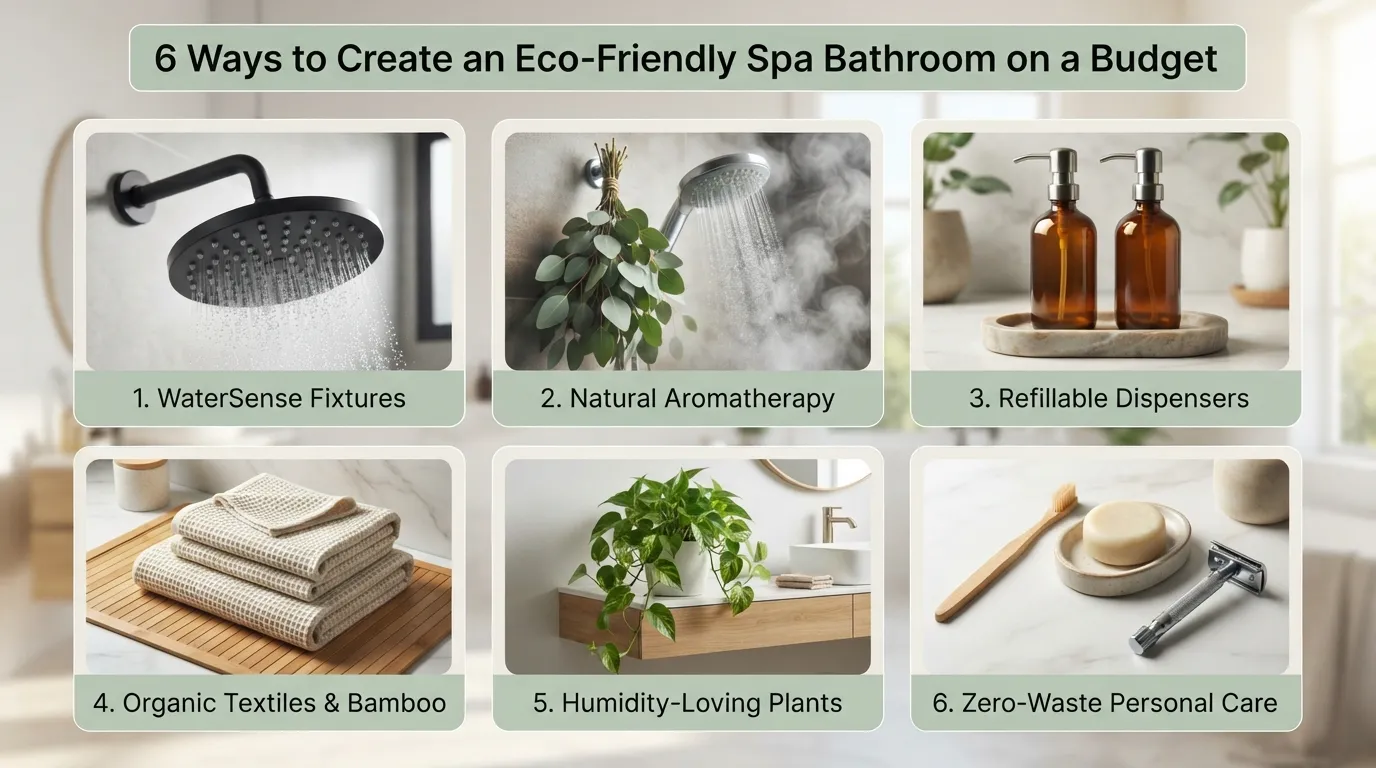
How to Turn Your Bathroom into an Eco-Friendly Spa
An eco-friendly spa bathroom blends water-efficient fixtures, non-toxic natural materials, air-purifying greenery, refillable products, and low-waste daily swaps. You do not need a full-scale renovation to build a relaxing retreat. By pairing sustainable bathroom upgrades with mindful design choices, you can create a luxurious, low-impact sanctuary that conserves natural resources while reducing utility bills.
Whether you are a homeowner planning a full remodel, a renter seeking non-permanent upgrades, or a budget-conscious decorator targeting high-impact changes, this guide provides actionable strategies for every experience level. Ahead, you will discover six practical transformation steps, realistic cost estimates, essential safety guidelines, and a quick checklist to help you execute your project seamlessly.
At a Glance: 6 Ways to Create an Eco-Friendly Spa
Upgrade to Low-Flow Fixtures: Install EPA WaterSense-certified showerheads and aerators to drastically reduce water consumption without sacrificing water pressure.
Integrate Natural & Upcycled Materials: Incorporate sustainable bamboo, reclaimed wood, organic cotton, and stone to bring grounding, non-toxic textures into your space.
Harness Biophilic Design: Add moisture-loving indoor plants to naturally purify air, regulate humidity, and create a tranquil natural atmosphere.
Switch to Refillable & Zero-Waste Swaps: Replace single-use plastic bottles with refillable glass dispensers, solid bar soaps, and plastic-free personal care items.
Optimize Energy Efficiency: Transition to warm LED lighting, smart thermostats, and energy-conscious water heating to cut electrical waste.
Curate Non-Toxic Aromatherapy: Use pure essential oil diffusers, natural soy candles, and eucalyptus bundles for a clean, chemical-free spa scent.
Way 1: Install Water-Efficient Fixtures Without Losing the Spa Feel
Installing water-efficient fixtures slashes resource consumption without compromising your daily relaxation. By upgrading to engineered low-flow technology, you maintain luxurious pressure and soothing water coverage while conserving thousands of gallons annually.
What Does the WaterSense label Actually Mean?
The Environmental Protection Agency (EPA) developed the WaterSense label to help consumers identify high-performance, water-efficient products. Certified fixtures must prove they use at least 20 percent less water than standard models while maintaining superior functional performance.
Rigorous Certification: Independent third-party testing guarantees that water savings do not compromise user comfort or power.
Resource Conservation: Standardizing these fixtures prevents billions of gallons of municipal water waste every single year.
Utility Savings: Lower water usage directly translates to reduced monthly utility bills and lower energy consumption for water heating.
Low-Flow Showerheads That Still Feel Like a Spa
Source: Eco-friendly spa bathroom ideas
Modern engineering has eliminated the weak trickle associated with old water-saving devices. Today’s aerated and laminar showerheads inject air into the water stream, producing voluminous, high-pressure droplets that envelop your body like a high-end resort shower.
Bucket Test Method: Place a one-gallon bucket under your showerhead and time how many seconds it takes to fill; if it fills in under 20 seconds, your flow rate exceeds 3 gallons per minute (GPM) and is ripe for an upgrade.
Aerated vs. Rain Styles: Choose aerated models for an intense, bubbly massage, or select wide-face low-flow rain showerheads that maximize coverage while keeping flow rates at a conservative 1.5 to 2.0 GPM.
Waterfall and Low-Flow Faucets: Sound, Style and Savings
Waterfall faucets transform ordinary sink routines into serene, nature-inspired rituals by mimicking the tranquil acoustics of a mountain stream. Pairing these architectural statements with integrated aerators ensures a gentle, non-splashing laminar flow.
Aesthetic Elegance: Open-spout designs create a mesmerizing visual arc that elevates minimalist and organic bathroom aesthetics.
Controlled Flow Rates: High-efficiency bathroom sink aerators limit flow to 1.2 GPM or lower without sacrificing rinsing power.
Dual-Flush and High-Efficiency Toilets
Standard older toilets consume up to 3.5 to 7 gallons per flush, placing an unnecessary burden on municipal water systems. Upgrading to a high-efficiency or dual-flush model allows you to choose between a light liquid flush and a heavier solid flush.
Targeted Volume Options: Dual-flush systems typically use around 1.1 gallons for liquids and 1.6 gallons for solids, optimizing water consumption per use.
Maintenance and Repair: A running or continuously leaking fixture can silently drain thousands of gallons. Routine toilet repair ensures your high-efficiency system operates at peak water-saving capacity.
Hidden Leaks: The Least Eco-Friendly Thing in Your Bathroom
Even the most sustainable fixtures fail to conserve resources if unseen plumbing failures persist behind the scenes. Silent flapper leaks and slow behind-the-wall drips waste significant amounts of water daily without your immediate knowledge.
Simple Dye Test: Place a few drops of dark food coloring into your toilet tank; if color seeps into the bowl within 10 minutes without flushing, you have a silent leak.
Professional Diagnosis: Unexplained spikes in your utility bill warrant professional leak detection to pinpoint and resolve hidden structural plumbing failures quickly.
Efficient Water Heating for Longer, Greener Showers
Heating water accounts for a major portion of a home’s total energy consumption. Transitioning to a modern water heater, such as a tankless or hybrid heat pump system, delivers endless hot water on demand while slashing standby energy losses.
On-Demand Heating: Tankless systems heat water only when you turn on the tap, eliminating the continuous energy drain of heating a standing storage tank.
Eco-Friendly Synergy: Combining low-flow showerheads with an efficient water heater reduces both your water footprint and your household carbon emissions.
Quick Cost and Savings Snapshot
| Upgrade Type | Approximate Cost Range | Main Benefit |
| WaterSense Showerhead | $30 – $150 | Maintains spa pressure while cutting water use by 30% |
| Dual-Flush Toilet | $150 – $400 | Cuts flush volume down to 1.1–1.6 gallons per use |
| High-Efficiency Faucet Aerator | $10 – $25 | Lowers sink flow to 1.2 GPM without splashing |
| Tankless Water Heater | $1,000 – $3,500 | Eliminates standby energy loss for greener hot showers |
Way 2: Use Natural Aromatherapy Instead of Synthetic Scents
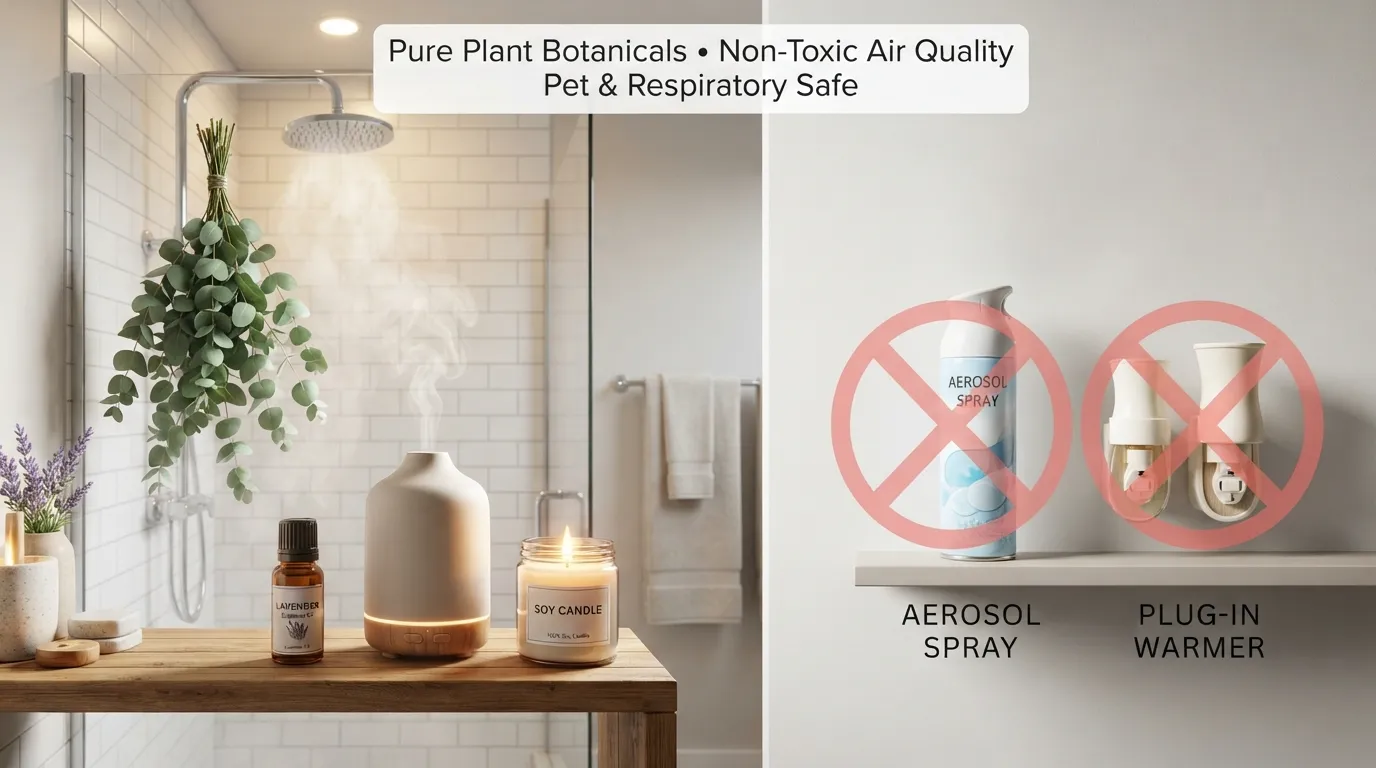
True spa-like relaxation engages all your senses, starting with the air you breathe. Replacing chemical room sprays with plant-based aromatherapy creates an authentic, restorative atmosphere while improving indoor air quality.
Why Synthetic Candles and Air Fresheners Work Against a Healthy Spa
Many commercial air fresheners, aerosol sprays, and paraffin candles rely on synthetic fragrances and petroleum derivatives. When burned or sprayed in enclosed bathroom spaces, they release volatile organic compounds (VOCs) that degrade indoor air quality.
Air Pollution Hazards: Synthetic scents often release phthalates, formaldehyde, and benzene into small, humid spaces.
Respiratory Irritation: Artificial fragrances can trigger headaches, sinus congestion, and allergic reactions during what should be a soothing bath.
Eco-Friendly Transition: Switching to natural botanicals ensures your sensory relaxation supports overall respiratory health and environmental wellness.
Best Essential Oils for a Bathroom Spa
High-purity essential oils offer therapeutic benefits derived directly from flowers, leaves, and bark. Selecting the right plant extracts allows you to customize your home spa experience based on your mood and wellness goals.
Eucalyptus: Releases a crisp, clarifying aroma that opens airways, clears sinuses, and mimics the refreshing vapor of a traditional steam room.
Lavender: Delivers soothing botanical notes that lower stress levels, ease muscle tension, and promote deep relaxation before sleep.
Tea Tree: Offers potent antibacterial and antifungal properties, imparting a clean, medicinal note while naturally purifying humid bathroom air.
How to Hang Fresh Eucalyptus on Your Showerhead
Hanging fresh eucalyptus branches in your shower uses natural shower steam to diffuse rich botanical oils without any electricity or artificial diffusers.
Gather and Prep: Purchase a fresh bundle of eucalyptus from a local florist, lay the stems flat on a counter, and roll over them gently with a rolling pin to bruise the leaves and release their natural aromatic oils.
Secure the Stems: Trim the lower stem ends evenly and bind the bundle together tightly using natural, biodegradable twine or cotton string.
Anchor to Fixture: Tie the bundle securely behind your showerhead, angling the leaves downward so they hang near the water stream without sitting directly under the continuous flow.
Maintain and Refresh: Enjoy the herbal steam for 2 to 3 weeks; refresh the fragrance mid-way by gently squeezing the leaves, and compost the stems when the scent fades completely.
Safety Notes: Pets, Children and Skin Sensitivity
Essential oils are powerful natural compounds that require mindful application around vulnerable family members and pets.
Safety Warning: Concentrated essential oils like tea tree, eucalyptus, and citrus are toxic to dogs and cats when inhaled in enclosed spaces or absorbed through fur. Keep bathroom doors open during use, avoid direct topical application on skin without a carrier oil, and ensure all diffusers remain well out of reach of young children.
Eco-Friendly Alternatives: Beeswax or Soy Candles, Reed Diffusers, Dried Herbs
If you prefer passive fragrance methods over active diffusers, several clean-burning and low-waste options can fill your space with subtle botanical scents.
Soy and Beeswax Candles: Choose 100 percent natural soy or sustainably harvested beeswax candles paired with lead-free cotton wicks for a clean, non-toxic flame.
Reed Diffusers: Utilize natural rattan reeds placed in glass bottles filled with plant-derived carrier oils and pure essential oils for long-lasting, flame-free aroma.
Dried Herb Bundles: Hang dried lavender, rosemary, or mint in small linen sachets near towel racks to release gentle herbal notes whenever humidity rises.
Way 3: Switch to Refillable Dispensers and Plastic-Free Products
Eliminating clutter and mismatched plastic packaging immediately elevates your bathroom’s visual appeal. Transitioning to sleek refillable containers and solid personal care products reduces single-use plastic waste while transforming messy countertops into an organized, minimalist haven.
Glass, Ceramic and Stone Dispensers: Which Material Suits You?
Replacing disposable plastic bottles with permanent, high-quality dispensers gives your vanity a cohesive, high-end feel. Choosing the right material balances aesthetic design, daily durability, and safety in wet conditions.
Glass Dispensers: Offer a timeless, transparent look that makes monitoring liquid levels effortless; amber or cobalt glass also protects light-sensitive natural soap ingredients.
Ceramic Vessels: Provide a warm, artisanal feel with infinite glaze and color options, offering moderate weight and high scratch resistance for daily use.
Natural Stone (Granite/Marble): Delivers maximum grounding texture and substantial weight that prevents slipping on wet counters, though it requires periodic sealing to avoid staining.
| Material | Durability | Aesthetic Vibe | Wet-Surface Safety | Cost Range |
| Glass | Moderate (fragile if dropped) | Modern / Minimalist | Fair (pair with non-slip base) | $10 – $25 |
| Ceramic | Good (chip-resistant) | Artisanal / Spa-Crafted | Good | $15 – $35 |
| Stone | High (impact-resistant) | Organic / Earthy | Excellent (heavy base) | $25 – $60 |
Solid Alternatives: Shampoo Bars, Soap Bars and Bamboo Toothbrushes
Solid personal care products eliminate the need for plastic liquid packaging entirely, significantly reducing transportation emissions and landfill waste.
Shampoo and Conditioner Bars: Formulated without water weight or harsh sulfates, these concentrated bars deliver rich lathers that nourish hair and outlast up to three liquid plastic bottles.
Cold-Processed Bar Soaps: Enriched with natural oils and plant extracts, solid soap bars gently cleanse skin without leaving synthetic film or generating plastic bottle clutter.
Bamboo Toothbrushes: Crafted with biodegradable, naturally antimicrobial bamboo handles, these eco-friendly oral care tools replace non-recyclable plastic toothbrushes effortlessly.
How to Refill Without Mess or Contamination
Proper maintenance prevents bacteria growth and keeps your refillable dispensers looking pristine over long-term use.
Thorough Washing: Clean pump bottles thoroughly with hot soapy water and allow them to air dry completely before refilling to eliminate moisture that could harbour mold or bacteria.
Smart Labeling: Use waterproof, minimal labels or silicone bands to identify contents clearly while maintaining a clean aesthetic across matching containers.
Pump Maintenance: Flush pump nozzles with warm water during every refill cycle to clear dried soap residue and prevent clogging.
A Simple Setup for a Minimalist Spa Counter
Creating a serene spa environment requires keeping surfaces uncluttered and intentionally curated.
Tray Grouping: Arrange matching dispensers on a small tray made of natural teak, stone, or bamboo to collect water drips and define the vanity zone.
Concealed Storage: Keep daily essentials tucked inside drawers, leaving only your uniform dispensers, a solid soap dish, and a small plant on open view.
Unified Palette: Stick to monochromatic tones for your soap vessels and trays to cultivate a calm, distraction-free environment.
Way 4: Choose Sustainable Textiles, Bamboo and Natural Materials
Integrating organic textiles and sustainably harvested woods brings tactile warmth, grounding textures, and moisture-regulating properties to your bathroom. Selecting raw, non-toxic materials elevates room aesthetics while ensuring your bath space remains free from synthetic microplastics and chemical off-gassing.
Organic Linen and Cotton Towels: What to Look For
Standard towels are often produced using conventional cotton heavily treated with synthetic pesticides, synthetic dyes, and chemical softeners that wash out into waterways. Upgrading to organic linens and towels guarantees soft, highly absorbent fabrics that are gentle on your skin and the environment.
GOTS Certification: The Global Organic Textile Standard (GOTS) verifies that fibers are at least 95 percent organic and processed without toxic heavy metals, formaldehyde, or harsh bleaches.
OEKO-TEX Standard 100: This independent certification tests finished textile products to ensure they are completely free from harmful levels of over 300 toxic substances and allergens.
Linen vs. Organic Cotton: Linen derived from flax requires minimal water to cultivate and dries significantly faster than traditional cotton, naturally preventing mildew growth in humid spaces.
Bamboo Shelving, Stools and Bath Mats: Is Bamboo Really Eco-Friendly?
Bamboo has surged in popularity as a primary material for eco-friendly bath accessories, shelving, and slatted bath mats due to its rapid growth rate and innate water resistance. However, evaluating how bamboo products are manufactured helps you avoid greenwashing.
Rapid Renewable Growth: Bamboo is a fast-growing grass that regenerates naturally without replanting, reaching full maturity in just 3 to 5 years without synthetic fertilizers.
Sourcing & Certifications: Look for Forest Stewardship Council (FSC) certified bamboo to ensure harvesting practices protect biodiversity and local ecosystems.
Mechanical vs. Chemical Processing: Solid bamboo items (such as stools and bath mats) retain natural structural integrity, whereas soft bamboo textiles undergo intensive chemical processing that requires strict closed-loop manufacturing to stay eco-friendly.
Teak, Wood and Woven Baskets in a Humid Bathroom
Incorporating natural timber and woven accents creates an inviting, spa-like atmosphere, but organic fibers require proper care to withstand daily exposure to moisture and steam.
Teak Wood Performance: Naturally rich in protective oils, high-grade teak resists water penetration, rot, and fungal growth, making it the premier choice for shower benches and bath caddies.
Sealing and Drying: Treat unvarnished natural wood pieces with organic linseed or tung oil annually, and wipe down surfaces after heavy steam sessions to maintain moisture protection.
Ventilated Storage: Use woven seagrass, jute, or rattan baskets for rolled towels and laundry, placing them in well-ventilated corners away from standing shower splash zones to prevent mold development.
Quick Comparison Table: Natural Materials for a Wet Environment
| Material | Durability in Humidity | Maintenance Required | Eco & Sustainability Notes |
| Organic Cotton | High (machine washable) | Regular laundering; air-drying recommended | GOTS certification ensures pesticide-free farming and lower water pollution. |
| Organic Linen | Very High (dries quickly) | Simple washing; resists bacteria naturally | Requires minimal irrigation and fewer pesticides than standard cotton crops. |
| Sustainably Harvested Bamboo | High (water-resistant) | Wipe clean; avoid prolonged standing water | Rapidly renewable grass; verify FSC certification for responsible forestry. |
| Grade-A Teak Wood | Exceptional (rot-resistant) | Annual oiling to retain golden hue | Highly durable for decades; choose reclaimed or FSC-certified sources. |
| Seagrass / Rattan | Moderate | Keep off wet floors; maintain good air flow | Biodegradable natural fibers; ideal for dry towel storage and hamper bins. |
Way 5: Add Humidity-Loving Plants and Keep the Air Fresh
Transforming your bathroom into an organic sanctuary requires bringing living elements indoors. Humidity-loving plants thrive in warm, damp environments while introducing lush greenery that calms the mind and cleanses the indoor atmosphere.
Best Plants for Bathroom Humidity
Bathrooms naturally mimic tropical understories, making them ideal habitats for flora that absorb atmospheric moisture directly through their leaves. Selecting the right species ensures vibrant growth even in challenging indoor spaces.
Source: Spa bathroom decor ideas
Pothos: An exceptionally resilient, low-light trailing vine that tolerates neglect and adapts easily to high humidity and indirect windows.
Boston Ferns: Love heavy mist and moisture, unfurling vibrant, feathery fronds that soften hard architectural corners and elevate spa aesthetics.
Snake Plants: Thrive in low light and intermittent humidity while filtering indoor toxins, though they prefer drying out between waterings.
Pet Safety Consideration: Pothos and certain ferns can cause mild toxicity if ingested by cats or dogs, so place trailing vines on high shelves or choose pet-safe alternatives like spider plants and calatheas.
Do Bathroom Plants Really Purify the Air?
While indoor houseplants capture carbon dioxide and release oxygen, scientific studies show that biological air purification alone cannot replace active mechanical ventilation.
The NASA Study Context: Classic indoor plant research demonstrates that vegetation removes volatile organic compounds (VOCs) in sealed laboratory chambers.
Real-World Air Exchange: In open home environments, ventilation rates outpace plant absorption capacity, meaning plants act more as aesthetic and mood enhancers than standalone air purifiers.
Holistic Benefits: Even if plants do not single-handedly clean a room’s air, their visual presence measurably reduces psychological stress, lowers blood pressure, and completes the spa ambiance.
Ventilation and Mold Prevention: The Other Half of a Healthy Spa Bathroom
A true wellness space must remain free from stagnant air, mildew, and toxic mold spores that compromise respiratory health.
Exhaust Fan Discipline: Run your bathroom exhaust fan during every shower and leave it operating for 20 to 30 minutes afterward to completely evacuate trapped humidity.
Proper Towel Drying: Hang wet bath towels on wide bars rather than bunched hooks to accelerate drying and prevent musty odors.
Mindful Air Circulation: Crack the window slightly during warm weather or use a silent counter fan to promote healthy airflow across damp surfaces.
Easy Placement Ideas
Strategic plant placement maximizes visual impact while keeping greenery safe from heavy water splashes and foot traffic.
Floating Wall Shelves: Position trailing pothos or heartleaf philodendron on high shelves to draw the eye upward and soften bare walls.
Shower Caddy and Curtain Rods: Hang moisture-loving ferns in lightweight macramé holders near the shower to catch ambient steam without blocking walkways.
Window Ledge and Vanity Corners: Group smaller potted succulents or herbs on sunny window sills to create mini indoor botanical focal points.
Way 6: Make Zero-Waste Swaps That Last
Adopting zero-waste habits delivers immediate environmental benefits without requiring structural renovations or high spending. Replacing disposable personal care products with durable, eco-friendly alternatives eliminates plastic trash, protects household plumbing, and saves money over time.
Recycled Toilet Paper and Bamboo Tissue
Conventional toilet paper production relies on virgin tree pulp, demanding vast amounts of water and land while driving deforestation. Transitioning to post-consumer recycled paper or rapidly renewable bamboo tissue preserves forest ecosystems while reducing carbon emissions.
Post-Consumer Recycled Paper: Manufactured entirely from discarded paper materials, diverting waste from landfills without sacrificing soft, dependable texture.
Bamboo Tissue: Utilizes fast-growing, pesticide-free bamboo grass, producing zero-plastic, biodegradable tissue that dissolves easily in septic and sewer systems.
Plastic-Free Packaging: Select brands that package bulk orders in individual paper wrapping rather than single-use plastic film.
Washable Cotton Cloths Instead of Wipes and Paper Towels
Single-use paper towels and cleaning wipes generate unnecessary household waste and recurring expenses. Replacing paper products with washable, organic cotton cloths creates a reusable cleaning system that lasts for years.
Microfiber Alternatives: Choose natural organic cotton or hemp cloths over synthetic microfiber, preventing microplastics from shedding into laundry wastewater.
Dedicated Color Coding: Assign different colored washcloths for facial care, counter wiping, and deep cleaning to maintain strict hygiene standards across your home.
Easy Care Routine: Store used cloths in a small, breathable mesh laundry bag under the vanity and toss them into your weekly wash cycle.
Reusable Cotton Rounds, Safety Razors and Compostable Items
Personal care items make up a major portion of non-recyclable bathroom waste. Sustainable alternatives replace single-use plastic razors, synthetic swabs, and single-use makeup pads seamlessly.
Metal Safety Razors: Crafted from stainless steel or brass, double-edged safety razors deliver a smooth shave while eliminating plastic razor cartridge waste.
Washable Cotton Makeup Pads: Soft organic cotton rounds scrub off makeup smoothly and can be washed hundreds of times before degrading.
Compostable Wooden Swabs: Swap plastic-stemmed cotton swabs for bamboo or wood-stemmed options that break down naturally in home compost bins.
Eco-Friendly Cleaning: Natural Cleaners vs. Harsh Chemicals
Commercial bathroom cleansers often contain corrosive acids and synthetic fragrances that irritate skin and pollute waterways. Simple household staples perform exceptionally well without stripping protective pipe coatings or releasing toxic vapors.
Vinegar and Water Solution: Mix equal parts white distilled vinegar and water to cut through soap scum, remove mineral deposits, and shine chrome fixtures naturally.
Baking Soda Scrub: Sprinkle baking soda on porcelain sinks or tub surfaces and scrub with a damp cloth to lift stubborn grime gently without scratching surface finishes.
Pipe Protection: Corrosive chemical drain cleaners erode plumbing lines over time and leach toxic compounds into local aquifers; when a stubborn clogged drain occurs, schedule professional drain cleaning to protect your pipes and the environment.
Never Flush These: A Short Warning on Wipes
Despite deceptive packaging labels, the flushable wipes myth poses a serious risk to plumbing infrastructure. Single-use wet wipes fail to break down like toilet paper, binding with fats and hair inside wastewater pipes.
Plumbing Warning: Disposable wipes are the leading cause of severe residential pipe blockages and municipal sewer fatbergs. Flushing wet wipes, paper towels, or feminine hygiene products causes expensive back-ups into your home. Dispose of all wet wipes in the trash—never in the toilet.
Bonus: Eco-Friendly Materials for a Bathroom Renovation
If you are planning a full structural update rather than cosmetic swaps, selecting sustainable building materials yields long-term environmental benefits and increases home value. Upgrading tiles, wall coatings, and lighting transforms your sanctuary while maximizing energy efficiency and indoor air quality.
Sustainable Bathroom Tiles: Recycled Glass, Ceramic and Natural Stone
Surfacing materials make up the largest physical volume in any bathroom renovation. Choosing eco-friendly tiles sourced from post-industrial waste or natural mineral deposits reduces landfill demand and carbon-intensive quarrying.
Recycled Glass Tiles: Crafted from post-consumer bottles or manufacturing scrap, glass tiles provide a translucent, luminous finish that reflects light and resists mold growth naturally.
Locally Sourced Ceramic Tiles: High-density ceramic options manufactured with recycled clay offer extreme durability and require minimal water during maintenance over decades of use.
Sustainably Harvested Natural Stone: Slabs of slate, granite, or limestone deliver timeless grounding aesthetics; ensure stone is quarried locally to minimize transportation-related carbon emissions.
Low-VOC and Zero-VOC Paint for Healthier Air
Conventional paints contain Volatile Organic Compounds (VOCs) that off-gas harmful chemicals like formaldehyde into your home long after application. High-humidity spaces accelerate this chemical release, making non-toxic wall coatings essential.
Zero-VOC Formulations: Select zero-VOC paints to prevent toxic off-gassing, ensuring clean, scent-free air immediately after repainting.
GREENGUARD Gold Certification: Look for wall coatings certified under GREENGUARD Gold standards, guaranteeing strict limits on chemical emissions for sensitive indoor environments.
Mildew-Resistant Additives: Ensure eco-paints feature mineral-based antimicrobial properties to prevent mold growth on steam-exposed walls without using toxic fungicides.
LED Lighting and Dimmers for a Spa Atmosphere
Lighting design dictates the mood of a home spa while driving a significant portion of daily electrical energy consumption. Modern lighting upgrades deliver warm ambient illumination while drastically lowering wattage.
High-Efficiency LED Bulbs: Quality LEDs consume up to 85 percent less energy than traditional incandescent bulbs and last up to 25,000 hours, eliminating frequent bulb disposal.
Warm Color Temperatures: Choose 2700K to 3000K warm-white LEDs to replicate soft, natural sunlight and foster deep mental relaxation during evening baths.
Smart Dimmer Switches: Installing dimmers allows you to scale down lighting intensity during evening baths, conserving power while creating a calm, soothing atmosphere.
Natural Light and Window Treatments
Maximizing natural daylight reduces reliance on electric lighting during the daytime while keeping indoor moisture levels under control.
Privacy Window Films: Apply translucent frosting films to existing windows to flood the room with natural daylight while preserving complete privacy without heavy fabric drapes.
Sustainably Sourced Wood Blinds: Install bamboo or FSC-certified timber blinds to control light angles while introducing rich, natural wood textures to your windows.
Solar Tubes and Skylights: Consider installing a solar tube during a roof-access renovation to channel direct sunlight into windowless interior bathrooms without electrical wiring.
Budget vs. Full Remodel: What to Do First
| Upgrade Scope | Cosmetic / Budget Updates | Full Eco-Remodel |
| Example Actions | Low-flow showerhead, zero-VOC paint, LED bulbs, plants | Recycled tiles, tankless water heater, new water-efficient plumbing |
| Cost Range | $100 – $500 | $5,000 – $20,000+ |
| Environmental Impact | Immediate water and energy reduction; zero landfill waste | Comprehensive long-term energy savings and toxic-free surfaces |
| Installation Difficulty | Easy DIY (no specialized tools required) | High (requires professional contractors and licensed plumbers) |
How to Create a Spa Bathroom on a Budget
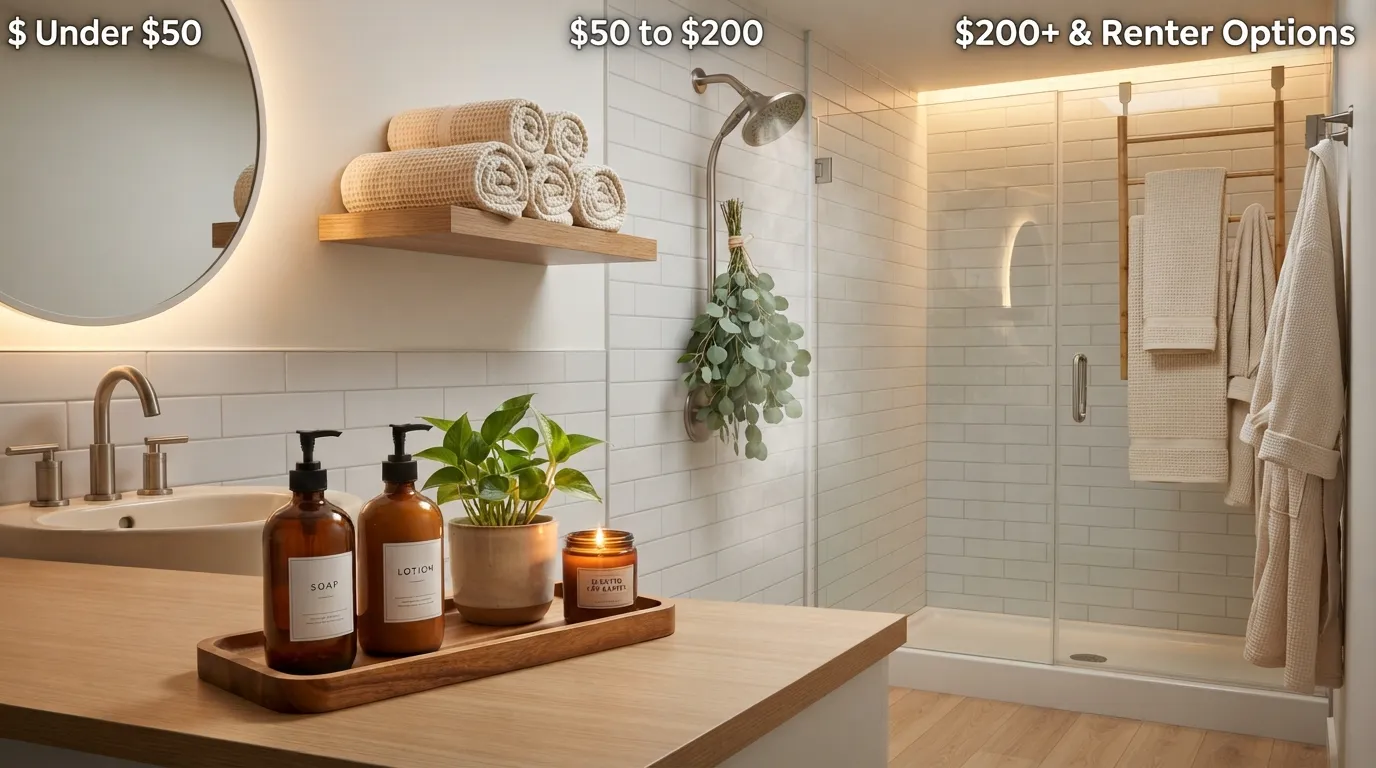
Transforming your bathroom into a restorative sanctuary does not require a luxury budget or a full-scale renovation. By prioritizing high-impact upgrades at every price point, you can achieve an upscale, eco-friendly spa atmosphere for surprisingly little time and money.
Source: Create a spa-like bathroom at home
Under $50: Quick Wins
Small, thoughtful updates can instantly alter the sensory feel of your bathroom without requiring tools or permanent alterations.
Botanical Aromatherapy: Tie a fresh eucalyptus bundle to your showerhead and set out a natural soy candle for immediate resort-style scents.
Dispenser Switch: Pour store-bought liquid soaps into matching glass or ceramic pump bottles to eliminate visual clutter on your vanity.
Greenery Addition: Propagate a budget-friendly pothos clipping in a glass jar or place a small resilient fern on your windowsill.
$50 to $200: Mid-Range Upgrades
Investing slightly more unlocks enhanced comfort, better water efficiency, and improved daily functionality.
WaterSense Showerhead Upgrade: Swap your standard showerhead for an aerated, high-pressure low-flow model that cuts water use while boosting spray volume.
Textile Refresh: Invest in a plush organic cotton bath mat and a set of GOTS-certified waffle-weave towels for superior skin comfort.
Floating Storage Shelves: Mount natural wood shelving to clear off countertops and display folded linens or plants neatly.
$200+: Bigger Investments
For those willing to spend a bit more, structural fixtures and upgraded hardware deliver permanent luxury and long-term utility savings.
Designer Fixtures: Install a high-efficiency waterfall sink faucet or a dual-flush toilet to maximize water conservation and modern aesthetic appeal.
Warm LED Lighting: Replace harsh vanity bulbs with warm-spectrum dimmable LEDs and stylish eco-friendly light fixtures.
Recycled Accent Tiles: Retile your shower niche or vanity backsplash using luminous recycled glass tiles for a custom artisan finish.
Renter-Friendly Ideas
Renters can easily create a luxurious, temporary spa environment by focusing on non-permanent, damage-free updates.
Tension Rod Shelving: Use tension shower caddies and over-the-door hooks to add storage without drilling into tiled walls.
Peel-and-Stick Accents: Apply removable waterproof wallpaper or frosted privacy window films that peel off cleanly upon moving out.
Freestanding Accessories: Rely on bamboo bath trays, freestanding towel ladders, and portable counter trays to establish a spa-like aesthetic instantly.
Spa Bathroom Essentials, Colors and 2026 Trends
Designing a timeless home sanctuary requires balancing core functional items with contemporary color theory and design movements. Curating high-quality spa essentials alongside forward-thinking sustainable trends ensures your bathroom feels tranquil, elevated, and environmentally conscious for years to come.
What Are the Must-Haves for a Spa Bathroom?
A true home spa balances physical comfort with seamless functionality. Outfitting your space with these core essentials creates a luxurious sanctuary that supports daily self-care rituals:
High-Efficiency WaterSense Showerhead: A rain or aerated spray fixture that maximizes droplet volume while conserving water.
Plush Organic Textiles: Ultra-absorbent GOTS-certified organic cotton or linen towels and a quick-drying natural bath mat.
Uniform Refillable Vessels: Glass, ceramic, or natural stone pump dispensers to eliminate visual plastic clutter.
Plant-Based Aromatherapy: A essential oil diffuser, pure soy or beeswax candles, or a fresh hanging eucalyptus bundle.
Humidity-Loving Greenery: Air-refreshing potted plants like pothos, Boston ferns, or snake plants positioned near indirect light.
Natural Wood Accents: Moisture-resistant teak shower benches, bamboo caddies, or slatted wooden floor mats.
Layered Dimmable Lighting: Warm 2700K–3000K LED fixtures paired with smart dimmer switches to set a soothing evening mood.
Non-Toxic Cleaning Essentials: Natural cleaning agents like vinegar, baking soda, and biodegradable washcloths to keep surfaces pristine safely.
Best Colors for a Spa Bathroom
Color psychology plays a vital role in dictating the nervous system’s stress response. Grounding neutral palettes and muted botanical tones promote mental calm while maintaining a clean, organic look.
Soft Sage Greens: Soft botanical greens bring the natural outdoors inside, promoting restoration and pairing beautifully with light wood finishes.
Warm Greige and Cream: Blending warm gray and beige creates a soft, inviting backdrop that reflects light without the clinical feel of stark pure white.
Earthy Terracotta and Sand: Muted clay and warm sandy tones introduce grounding warmth and tactile comfort to tiled surfaces and vanity walls.
Dusty Sky and Soft Blues: Subtle watery blues evoke tranquil coastal atmosphere, lowering heart rates and encouraging deep relaxation.
Bathroom Trends for 2026
Design developments in 2026 emphasize warm minimalism, raw tactile materials, and invisible, energy-saving smart technology:
Tactile Natural Materials: Smooth, fluted, or corrugated light oak furniture, raw clay plaster, and unpolished natural stone-effect tiles dominate surface choices over glossy synthetics.
Discreet Smart Technology: Invisible, concealed water-saving faucets, integrated mood lighting, and automated water-consumption tracking focus on usability without disrupting serene aesthetics.
Biomorphic and Rounded Forms: Curved shower enclosures, pill-shaped mirrors, and soft-edged vanities replace harsh industrial angles to create fluid, soothing room layouts.
Japandi and Scandinavian Fusion: Combining Scandinavian functionalism with Japanese rustic minimalism centers the bathroom around clutter-free surfaces and natural textures.
Printable or Visual Checklist
Eco-Friendly Spa Bathroom Checklist
Complete Step-by-Step Sustainable Transformation Guide
Water & Fixtures
Products & Swaps
Ambiance & Textiles
Care & Maintenance
Common Mistakes and How to Spot Greenwashing
Transitioning to an eco-friendly spa bathroom requires making informed, conscious decisions rather than succumbing to clever marketing. Avoiding common design pitfalls and recognizing misleading sustainability claims ensures your home sanctuary delivers genuine environmental benefits.
5 Mistakes That Make a “Green” Bathroom Less Sustainable
Even well-intentioned updates can unintentionally increase resource waste if executed without a long-term plan. Avoiding these five common mistakes keeps your sustainability journey on track:
Buying Everything New at Once: Discarding functional fixtures, plastic bottles, or towels prematurely creates unnecessary landfill waste; utilize existing items until they reach the end of their usable life.
Ignoring Hidden Water Leaks: Investing in eco-friendly products while ignoring a slowly dripping faucet or leaking toilet flapper renders your water conservation efforts ineffective.
Trusting Uncertified Eco Products: Purchasing items labeled “natural” or “earth-friendly” without verified third-party seals often leads to buying hidden synthetic materials.
Over-Scenting Small Spaces: Burning excessive candles or using heavy essential oil diffusers in small, unventilated rooms compromises indoor air quality and causes respiratory irritation.
Neglecting Room Ventilation: Skipping exhaust fan usage leads to moisture buildup, structural mold, and ruined organic wall finishes, forcing premature repairs.
How to Spot Greenwashing
Greenwashing occurs when manufacturers use deceptive marketing language to make products appear more environmentally friendly than they actually are. Learning to read labels critically helps you bypass false claims and select truly sustainable goods.
Vague Marketing Buzzwords: Be cautious of terms like “eco-conscious,” “green,” “all-natural,” or “pure,” which lack legal definitions or standardized regulatory oversight.
Look for Verified Certifications: Require reputable third-party certifications on packaging, such as WaterSense for plumbing, GOTS or OEKO-TEX for textiles, GREENGUARD Gold for paints, and FSC for wood products.
Examine Full Packaging: Watch for “eco-friendly” bar soaps or bamboo toothbrushes wrapped in non-recyclable single-use plastic film, which negates their low-impact benefits.
Why a Quick Plumbing Check Is the Best Eco Upgrade
Before investing in new organic linens, botanical decor, or luxury accessories, addressing your underlying plumbing infrastructure yields the highest environmental return. Unseen leaks, pressure imbalances, and worn internal valves silently waste thousands of gallons of water each year.
Partnering with a licensed expert for a comprehensive household inspection ensures your fixtures perform efficiently, preserves your home’s structural integrity, and prevents costly emergency repairs. Scheduling routine checks with a professional plumber establishes a dependable, leak-free foundation for your sustainable spa sanctuary.
Frequently Asked Questions
What are some ideas for a spa-like bathroom?
Combine low-flow WaterSense fixtures with natural materials like bamboo, teak, and organic linen towels. Hang fresh eucalyptus from your showerhead for natural steam aromatherapy, add humidity-loving indoor plants like pothos or ferns, and switch to warm, dimmable LED lighting to establish a calming sanctuary without a full remodel.
What are some eco-friendly bathroom products?
Essential eco-friendly bathroom products include solid shampoo and conditioner bars, bamboo toothbrushes, refillable glass soap dispensers, post-consumer recycled or bamboo toilet paper, organic cotton washcloths, metal safety razors, and non-toxic cleaners made from simple household staples like distilled white vinegar and baking soda.
How can I create a spa-like bathroom on a budget?
Start with low-cost updates under $50, such as hanging fresh eucalyptus, decluttering vanities with uniform glass pump bottles, and adding small potted plants. For $50 to $200, install an aerated WaterSense showerhead, swap synthetic bath mats for organic cotton, and mount floating wood shelving for organized towel storage.
What are the must-haves for a spa bathroom?
Must-have elements include a high-pressure low-flow showerhead, GOTS-certified organic cotton towels, pure essential oil aromatherapy, refillable stone or glass soap vessels, live air-purifying plants, warm dimmable lighting, moisture-resistant teak accessories, and non-toxic, eco-friendly cleaning supplies to maintain healthy indoor air quality.
What colors are suitable for a spa bathroom?
Soft sage greens, warm greige, creamy whites, sandy terracottas, and muted watery blues work best for a spa bathroom. These natural, organic hues reduce stress, reflect light gently, and create a tranquil, nature-inspired backdrop that pairs seamlessly with raw wood and stone accents.
What materials should be used for an eco-friendly bathroom renovation?
Opt for FSC-certified bamboo or teak wood, recycled glass, locally sourced ceramic tiles, zero-VOC paints certified by GREENGUARD Gold, and natural textiles like GOTS-certified organic cotton and fast-drying flax linen. These non-toxic materials resist humidity, prevent indoor off-gassing, and lower environmental footprint.
Are there eco-friendly options for modern bathroom tiles?
Yes, sustainable tile options include recycled glass tiles made from post-consumer bottles, high-density ceramic tiles crafted from recycled industrial clay, and locally quarried natural stone like slate or granite. These choices reduce landfill waste, eliminate toxic emissions, and provide long-lasting durability in humid environments.
What are the bathroom trends for 2026?
Key 2026 bathroom trends focus on warm minimalism, fluted natural wood vanities, raw clay wall finishes, Japandi aesthetic influences, biomorphic curved fixtures, and invisible smart technology that tracks water conservation effortlessly while maintaining a calming, clutter-free environment.
Would you like me to refine any specific section, add schema markup for other parts of the article, or help outline additional topics?
Conclusion and Next Step
Transforming your daily space into an eco-friendly spa bathroom comes down to combining water-efficient fixtures, natural materials, zero-waste personal care swaps, botanical aromatherapy, humidity-loving plants, and sustainable textiles.
You do not need to tackle every upgrade overnight to make a meaningful difference. Start with the easiest, most accessible swap—like hanging a bundle of fresh eucalyptus or replacing single-use plastic bottles with glass refillable dispensers—and gradually build toward larger sustainable updates.
If you are ready to upgrade to WaterSense-certified fixtures, test for hidden leaks, or ensure your home’s pipes are fully optimized before starting a renovation project, working with an experienced professional ensures the job is done right. Book a plumber today to establish an efficient, leak-free foundation for your eco-friendly bathroom transformation.
Main Services
Related Posts
Need a Plumber in Miami?
Schedule service online or speak directly with the EZ Plumbing team.
Owner-Led Local Service
Know who is behind the business before you request service. The owners, contact line and Miami service pages are published clearly.
- Named business owners
- Direct phone and social channels
- Local Miami service information
Clear Help Before You Book
Review the relevant service page, contact the team directly and use the booking page when you are ready—without relying on vague claims.
- Service-specific information
- Direct questions before scheduling
- Clear online booking route