How Do I Snake a Bathtub Drain? A Step by Step Guide
How to Snake a Bathtub Drain
Snaking a bathtub drain quickly resolves stubborn hair clogs and slow drainage by accessing the plumbing directly through the overflow opening or drain hole using a hand auger. This straightforward maintenance task clears blockages efficiently without needing harsh chemical cleaners that can degrade your pipes over time.
Quick Step-by-Step Process
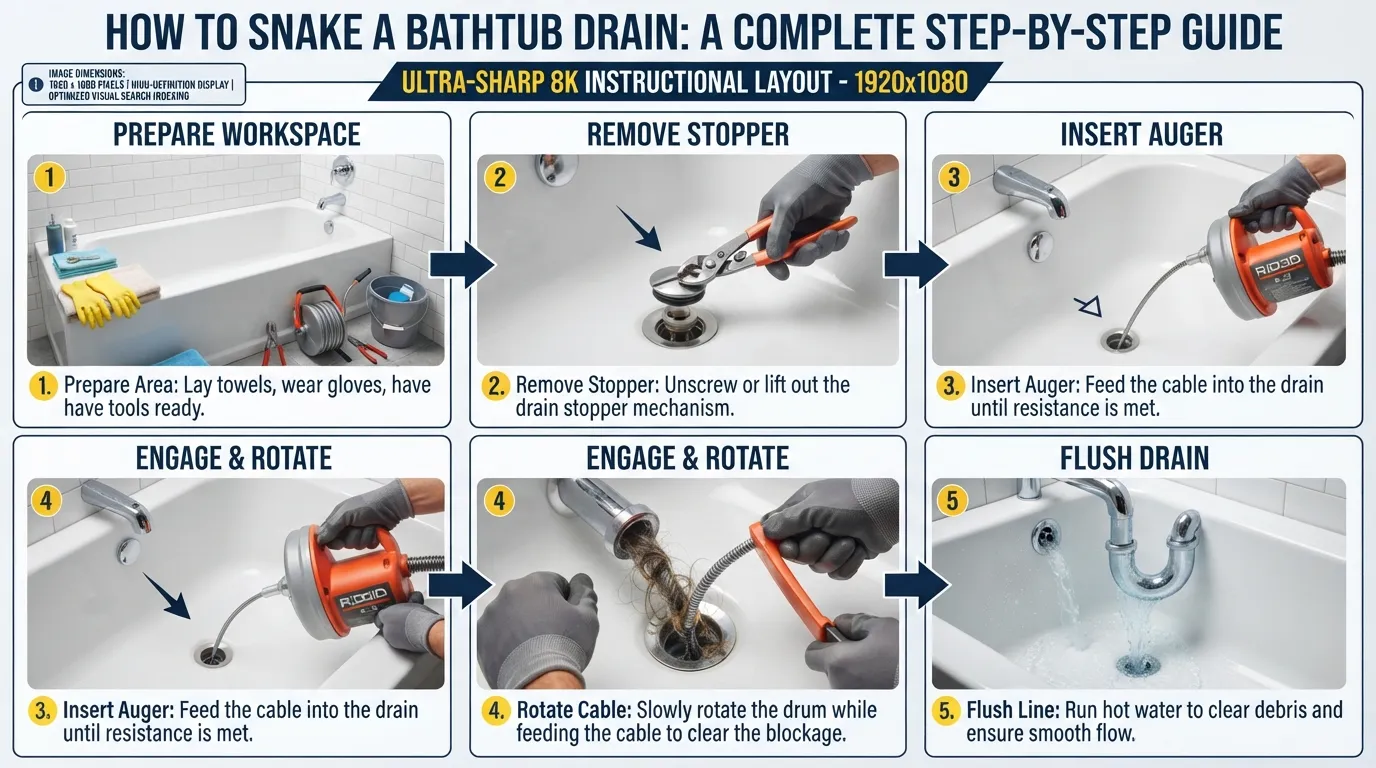
Clearing a stubborn blockage requires a methodical approach to ensure the tool navigates the pipe bends successfully. Follow this sequence to clear your tub safely:
Remove the tub stopper by unscrewing or lifting it out of the drain opening.
Feed the drain snake or hand auger cable carefully through the overflow opening rather than the main drain for better maneuverability around the P-trap.
Crank the handle clockwise while pushing gently when you feel resistance to engage the clog.
Break up or hook the hair clog securely onto the auger coils.
Pull out the snake slowly and clean the debris off the cable.
Flush the pipe thoroughly with hot water to wash away remaining residue.
Time, Difficulty, and Tools Required
Tackling this project is a beginner-friendly DIY task that most people can complete quickly. Review the basic requirements below to prepare your workspace:
Estimated Time: 20 to 45 minutes from initial setup to the final hot water flush.
Difficulty Level: Easy and accessible, requiring basic patience rather than advanced plumbing experience.
Required Tools: A standard hand auger or drain snake, pliers or a screwdriver for removing the tub stopper, and a bucket or old rags for quick cleanup.
What You Need Before You Start
Preparing the proper gear and selecting the right equipment ensures you clear a bathtub clog efficiently without damaging delicate plumbing fixtures or straining your pipes.
Tools and Materials Checklist
Gathering your equipment beforehand prevents frustrating mid-job interruptions and keeps your workspace clean and organized.
Hand Auger: The primary tool required for navigating complex pipe bends and gripping hair masses.
Work Gloves: Protects your hands from sharp pipe edges, dirty stagnant water, and trapped debris.
Screwdriver: Needed to remove the faceplate screws and linkage assembly from the bathtub overflow opening.
Needle-Nose Pliers: Useful for gripping and pulling out stubborn hair clogs or detached stoppers.
Rag or Towel: Placed around the opening to wipe away grease and protect the tub surface from scratches.
Bucket: Positioned underneath the trap or overflow to catch residual dirty water when working or cleaning up.
Flashlight or Phone Light: Helps you inspect the interior of the overflow or main drain pipe clearly.
What Size and Type of Drain Snake Is Best for a Bathtub?
Choosing the correct auger protects your plumbing fixtures and ensures the cable can successfully reach the blockage.
Hand Auger: This is the best snake for a bathtub drain. It features a compact drum containing 15 to 25 feet of flexible steel cable, operated via a hand crank and secured with a thumb screw.
Drum Auger vs. Toilet Auger: Avoid using a toilet auger (closet auger) on a bathtub drain. Toilet augers have a fixed protective bulb and a rigid J-bend sleeve specifically engineered for porcelain toilet bowls; they cannot negotiate the tight bends and internal plumbing angles of a bathtub P-trap. Large commercial drum augers can also be too powerful and may scratch or crack PVC or thin residential tub piping if handled improperly.
Recommended Specs: Look for a cable thickness of around 1/4-inch to 5/16-inch with a length of 15 to 25 feet, which easily maneuvers through 1.5-inch residential tub waste and overflow pipes.
Plumber’s Tip: What We Actually Use on Service Calls
Professional plumbers almost always feed the auger directly through the bathtub’s overflow plate opening rather than the main tub drain hole. The overflow pipe leads in a straight vertical drop down to the sanitary tee and the P-trap, bypassing the restrictive crossbars of the drain stopper and offering a much smoother path straight to the clog.
Identify Your Stopper Type and Remove It
Removing your bathtub stopper correctly provides unobstructed access to the pipes, preventing damage to your drain assembly and ensuring you can feed the snake smoothly. Different stopper mechanisms require specific detachment techniques before you can begin clearing the clog.
How to Tell Which Bathtub Stopper You Have
Identifying your hardware correctly ensures you use the right removal method without breaking the linkage or stripping the threads. Review the quick visual breakdown below to match your hardware:
Pop-Up Stopper: Features a small rocker arm visible down the drain or a cap that lifts with a lever on the overflow plate.
Trip-Lever Stopper: Operates via a lever on the overflow plate that lifts and lowers an internal linkage mechanism inside the pipe.
Toe-Touch Stopper: A spring-loaded stopper that locks down or pops up when pressed with your foot.
Lift-and-Turn Stopper: Raised by twisting and pulling upward, often secured by a small set screw on the side of the cylinder.
Source video: https://www.youtube.com/watch?v=uOE7eDBuaIk
How to Remove a Pop-Up Stopper
Pop-up stoppers are typically held in place by a horizontal rocker arm located underneath the drain assembly.
Open the stopper fully and reach down to grasp the cap.
Twist the stopper counterclockwise while holding the body to unscrew it from the rocker arm.
If it does not unscrew, loosen the small nut on the rocker arm underneath the tub or pull the stopper straight up while rocking it gently to disengage it.
How to Remove a Trip-Lever Stopper
Trip-lever stoppers do not require touching the drain hole at all, as the mechanism sits entirely within the overflow assembly.
Locate the two screws on the overflow faceplate.
Unscrew and remove the faceplate carefully.
Pull the attached metal linkage and attached brass cylinder slowly out through the overflow opening, twisting it as needed to clear the pipe elbow.
How to Remove a Toe-Touch Stopper
Toe-touch stoppers rely on a simple internal threaded post that secures them to a crossbar inside the drain.
Depress the stopper into the closed position.
Hold the outer cap firmly while turning the entire assembly counterclockwise by hand.
If it spins freely without unscrewing, look for a small set screw on the side of the cap and loosen it with an Allen wrench.
How to Remove a Lift-and-Turn Stopper
Lift-and-turn stoppers use a tension-based design similar to toe-touch models but require a slight rotation to lock or release.
Pull the knob upward and turn it to the open position.
Inspect the base of the cylinder for a tiny set screw.
Loosen the set screw using a small hex key or flathead screwdriver, then lift the entire stopper straight up off its post.
My Pop-Up Drain Is Stuck. How Can I Fix It?
A pop-up drain gets stuck when mineral scale, hair, and soap scum accumulate around the rocker arm and threads.
Apply a few drops of penetrating oil or liquid dish soap around the base of the stuck stopper.
Let it sit for 10 minutes to penetrate mineral buildup.
Grip the cap with pliers wrapped in a cloth to protect the finish, and gently rock it back and forth to break the seal.
What to Do If You Can’t Unscrew the Drain Stopper
Stubborn stoppers can seize up due to severe corrosion or overtightening during past installations.
Apply penetrating fluid and wait 15 minutes before attempting to turn the part again.
Check for hidden set screws on the cylindrical body before applying brute force.
Stop immediately if the crossbar inside the drain begins to twist or crack, as damaging the crossbar requires replacing the entire drain waste and overflow assembly.
Why Won’t My Pop-Up Plug Pop Up?
A pop-up plug fails to pop up when the internal spring mechanism loses tension or the rocker arm connection slips out of alignment.
Inspect the linkage or rocker arm to ensure it is securely connected to the plunger.
Remove accumulated hair and soap scum clogging the movement of the rocker arm.
Replace worn spring clips or the entire stopper assembly if the internal components are permanently stripped.
Method 1 – How to Snake a Bathtub Drain Through the Overflow Opening
Snaking through the overflow opening provides a direct, unobstructed path down to the P-trap and main waste line, making it the most effective technique for clearing deep hair clogs. This method bypasses the tight crossbars of the bathtub drain stopper and allows your hand auger to navigate the plumbing bends smoothly.
Why Snaking Through the Overflow Often Works Better
The primary reason professional plumbers choose the overflow pipe is geometry. The main bathtub drain drops straight down into a sharp 90-degree elbow that instantly blocks rigid snake cables, whereas the overflow pipe connects via a gentler downward slope that leads straight into the sanitary tee and the P-trap below.
Remove the Overflow Faceplate and Linkage
Unscrew the two screws holding the overflow faceplate in place and pull it outward. If your tub uses a trip-lever mechanism, carefully slide the attached metal linkage and stopper cylinder out of the pipe to clear the opening for your cable.
Step 2: Pull Out Visible Hair and Debris First
Shine a flashlight into the open overflow port and use needle-nose pliers or a bent wire to extract any visible clumps of hair or soap scum near the entrance. Clearing this top layer prevents you from pushing loose debris deeper into the branch lines.
Step 3: Feed the Snake and Lock the Cable
Pull about 12 inches of cable out of the hand auger drum and guide the tip into the open overflow port. Tighten the drum’s thumb screw securely to lock the cable in place so it cannot slip back into the housing while you feed it.
Step 4: Turn Clockwise and Push Gently Until You Feel Resistance
Rotate the hand crank in a clockwise direction while applying steady, gentle pressure downward. Continue feeding short segments of cable until you encounter firm resistance, which signals that you have reached the P-trap or the compacted clog.
Step 5: Break Through or Hook the Clog
Maintain clockwise rotation and gently nudge the cable back and forth against the blockage. This action allows the auger coil to either bore through the mass or securely hook onto the tangled hair and gunk causing the slow drainage.
Step 6: Retract the Cable While Cranking and Wipe It Clean
Spin the crank counterclockwise while pulling the cable steadily out of the pipe, using an old rag to wipe away slimy debris as it emerges. Repeat the process if necessary until the cable comes out clean, then run hot water to test the flow. If your pipes remain obstructed despite multiple attempts, you may need to look into professional drain cleaning services to resolve deep mainline issues.
Common Mistakes That Damage Pipes or Make Clogs Worse
Forcing the Cable: Pushing aggressively against hard blockages can kink thin brass tubing or crack PVC fittings.
Reversing the Crank Too Early: Turning the handle counterclockwise inside a tight bend can cause the cable to knot or buckle inside the pipe wall.
Scratched Fixtures: Letting the exposed metal drum grind against the acrylic or porcelain tub surface leaves permanent scratches.
Method 2 – How to Snake a Bathtub Drain Without the Overflow or With the Stopper in Place
Snaking directly through the main drain opening becomes necessary when your bathtub lacks an accessible overflow plate or features a sealed architectural design. While this route requires navigating a tighter 90-degree bend right under the drain hole, careful handling ensures you still clear the blockage effectively.
When You Should Snake Through the Drain Instead
You should choose the main drain opening when working on specific custom tubs, standalone soaking tubs without exposed overflow pipes, or walk-in showers that lack an upper access port entirely. This method is also useful for localized blockages sitting right at the drain strainer before the waste and overflow junction.
How to Snake a Tub Drain Without Removing the Overflow Plate
Remove the drain stopper or grid strainer completely to expose the waste opening.
Feed the end of the hand auger cable straight down through the main drain hole instead of the overflow port.
Crank the handle slowly in a clockwise direction as the cable hits the 90-degree elbow directly beneath the tub.
How to Snake a Drain That Has a Stopper or Strainer Still Attached
Check if your drain cover features a permanent crossbar or a non-removable protective strainer basket.
Guide a slender 1/4-inch cable carefully through the open slots of the strainer grille without forcing the metal coils against the bars.
Rotate the handle with minimal speed to let the auger head slip past the restrictive strainer grid and into the waste pipe.
How to Snake a Shower Drain
Remove the protective snap-on or screw-down plastic shower strainer cover using a screwdriver.
Insert the drain snake directly down the vertical pipe opening, keeping the cable centered to prevent it from catching on the P-trap walls.
Crank clockwise to hook hair masses, which are the primary cause of slow-draining residential showers.
Tips for Getting the Cable Around the Bend
Pushing a rigid steel cable through a tight 90-degree drain elbow requires finesse rather than brute strength. Feed only short, 6-inch lengths of cable at a time while maintaining a steady clockwise spin, allowing the flexible coil to naturally bounce and pivot around the pipe curve without binding or kinking.
How to Tell the Clog Is Gone and Put Everything Back
Confirming that your plumbing is completely unobstructed ensures you won’t face another backing-up tub a few hours later. Finishing the job with a proper reinstallation prevents hidden leaks behind your tub wall.
How to Test That the Drain Is Fully Clear
Run hot tap water at full blast for at least two to three minutes to push away loosened debris and test the overall drainage speed.
Watch the water swirl down the drain rapidly without forming a rising pool around your ankles.
Listen closely for any gurgling sounds or delayed bubbling, which indicate trapped air or a partially remaining obstruction down the line.
How to Clean and Store Your Snake
Pull the cable entirely out of the drum while wiping it down thoroughly with a rag soaked in a mild disinfectant or soapy water.
Dry the steel cable completely before winding it back into the housing to prevent rust and corrosion from seizing the mechanism.
Spray a light coat of WD-40 or machine oil onto the cable to maintain its flexibility for future use.
How to Reinstall the Overflow Plate and Stopper Properly
Position the rubber or foam overflow gasket correctly behind the faceplate, ensuring the opening aligns with the pipe hole to prevent costly water leaks.
Tighten the faceplate or trip-lever screws evenly by hand so the gasket compresses uniformly against the tub wall without shifting.
Screw your bathtub stopper back onto its rocker arm or threaded post, testing its mechanical up-and-down motion before filling the tub. If you notice any moisture seeping around the gasket or drain assembly after finishing, look into leak detection and repair options to protect your subfloor from water damage.
Why Won't My Snake Go Down the Bathtub Drain?
Encountering resistance or a cable that refuses to advance further can stall your plumbing project quickly. Understanding the root cause of the blockage helps you adjust your technique safely without damaging your pipes.
Common Reasons a Drain Snake Gets Stuck
When your hand auger stops moving forward, it is usually due to one of several specific physical barriers inside the waste system:
Wrong Entry Point: Attempting to snake through the main drain hole instead of the overflow opening often forces the cable directly into a 90-degree angle or up toward the opposing pipe wall.
Cable Too Thick or Too Rigid: Using a heavy-duty cable (like a toilet auger or a commercial machine snake) makes it nearly impossible to navigate the tight 1.5-inch residential P-trap bends.
Compacted Hair and Soap Scum: A dense, tightly packed hair mass can act like a solid plug, jamming the auger tip instead of allowing the coil to bite and hook through it.
Foreign Objects: Hard items like dropped bottle caps, bath toys, or razor guards can wedge sideways in the pipe elbow, blocking the snake completely.
What to Try Next
If your cable refuses to advance, switch your strategy to overcome the obstruction safely:
Switch Entry Ports: If you started at the main drain, remove the overflow faceplate and insert the snake through the upper opening to secure a straighter vertical alignment toward the P-trap.
Rotate More Slowly: Reduce your cranking speed and apply gentle, steady manual pressure rather than forcing the tool, allowing the flexible tip to find the correct angle around the bend.
Try a Thinner Cable: Switch to a standard 1/4-inch hand auger cable designed specifically to negotiate tight residential plumbing configurations.
How Far Down Should the Snake Go?
Knowing the expected distance of your plumbing runs helps you track whether the tool has successfully reached the problem area:
The P-Trap: Typically located about 2 to 4 feet past the overflow opening or main drain entrance.
The Branch Drain: Reaching 5 to 10 feet into the system means your cable has cleared the trap and entered the main horizontal waste line where major clogs often accumulate.
When NOT to Snake – Signs of aigger Drain Problem
Recognizing when a clog extends beyond a simple localized hair trap prevents you from wasting time on DIY fixes that cannot resolve structural or systemic plumbing failures. Knowing when to step back protects your home from severe wastewater damage.
Why Is Dirty Water Coming Out of My Bathtub Drain?
Dirty water surfacing in your bathtub indicates that wastewater from another fixture is trapped and has nowhere else to go. Because the bathtub drain is typically the lowest plumbing point in a bathroom group, rising water backs up into the tub first whenever a shared branch line or main waste stack is blocked.
Why Is My Toilet Backing Up Into the Bathtub?
Your toilet and bathtub share common vertical drain and vent lines inside your home’s framing. When a severe obstruction blocks the shared waste pipe downstream, flushing the toilet forces wastewater backward through the path of least resistance, resulting in foul water bubbling up into your bathtub basin. If your toilet is struggling along with your tub, specialized toilet repair or main line clearing may be required.
Signs the Clog Is in the Main Sewer Line
Multiple Slow Fixtures: Sinks, showers, and tubs throughout the house drain sluggishly at the exact same time.
Fixture Interferences: Using the washing machine or running a bathroom sink causes gurgling or rising water in the bathtub or toilet.
Persistent Sewage Odors: Foul, gassy smells emanate from floor drains and fixtures, pointing toward venting failures or a major main line breach. If you notice structural pipe damage or persistent sewer line problems, professional intervention is mandatory.
When to Stop and Call a Plumber
Stop snaking immediately and seek professional help under the following conditions:
Standing water refuses to recede at all and continues rising despite repeated clearing attempts.
Your snake repeatedly hits a hard, unyielding metal or concrete obstruction at the exact same distance.
Sewage backup floods your living space, creating serious health and sanitation hazards that require an emergency plumber.
How Much Does It Cost to Snake a Bathtub Drain?
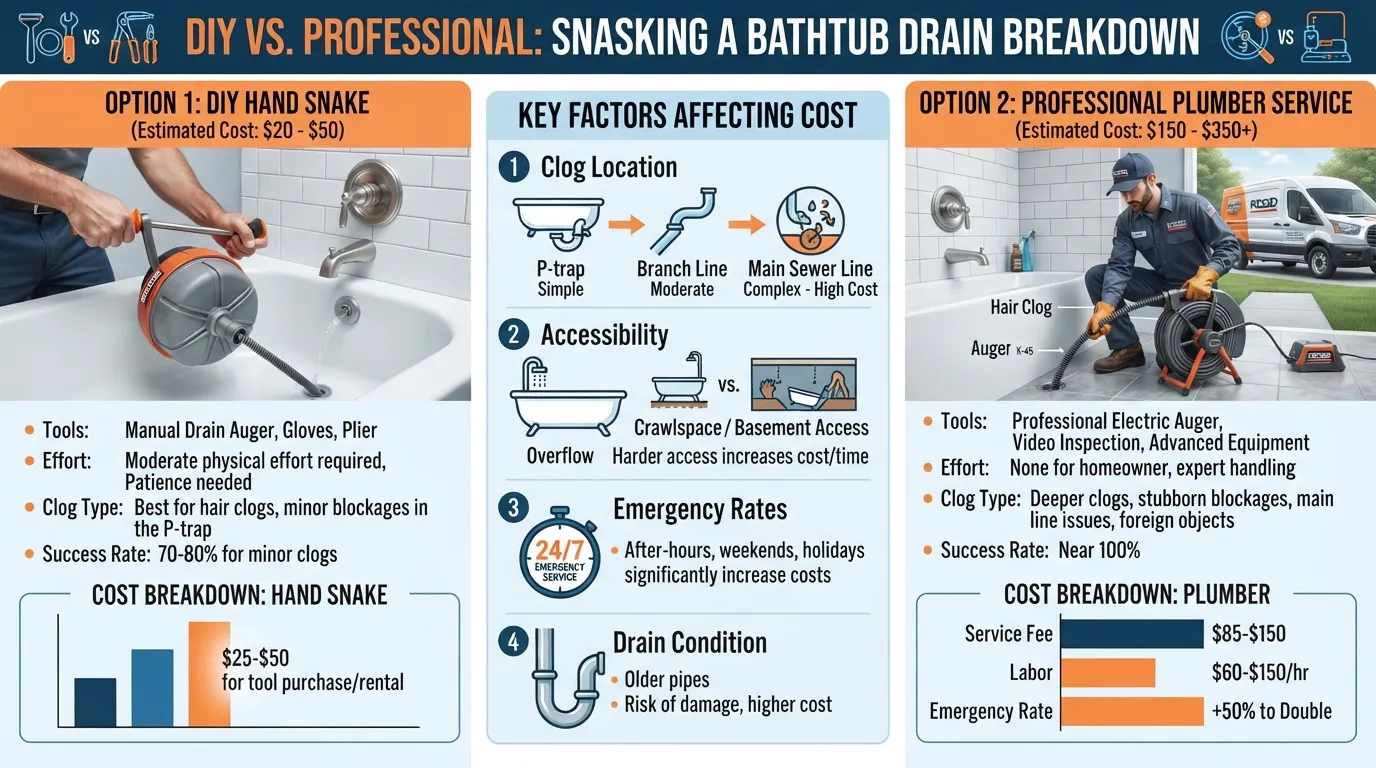
Clearing a stubborn clog in a bathtub drain typically costs between $100 and $250 for professional snaking, while a DIY approach using a basic hand snake costs under $25. The final price depends significantly on whether you clear the obstruction yourself or hire a licensed professional, as well as the complexity and depth of the blockage within your plumbing system.
DIY Cost: What a Drain Snake Costs
Tackling a bathtub clog yourself is the most budget-friendly option, with basic hand-crank drum augers and plastic drain snakes ranging from $5 to $25 at any local hardware store. A simple flexible plastic zip-tool costs less than $5 and quickly removes hair clogs trapped right beneath the strainer.
Plastic Zip-Strips ($3 – $7): Ideal for shallow hair and soap scum clogs located within the first few inches of the overflow or waste and overflow tee.
Handheld Drum Augers ($15 – $30): Features a 15-to-25-foot cable stored inside a housing unit, perfect for reaching deeper pipe bends where hair and grease accumulate.
Safety & Prep: Always wear rubber gloves, protect your flooring with towels, and avoid mixing chemical drain cleaners with mechanical snaking to prevent skin burns from splashing caustic residue.
Professional Cost: What Plumbers Typically Charge
Hiring a professional ensures the blockage is cleared safely without damaging your pipes, with standard service calls ranging from $100 to $250. This rate usually covers a standard service fee and up to an hour of labor to clear localized clogs in accessible branch lines.
Standard Service Fee: Most licensed technicians charge a flat dispatch fee or hourly rate ranging between $75 and $150 per hour.
Complex Blockages: If the obstruction requires pulling the tub trap or accessing the main sewer line, labor costs can scale up to $350 or more.
For reliable local repairs, scheduling a professional drain cleaning service ensures your bathtub and main lines are inspected and cleared thoroughly.
What Affects the Price
Several distinct factors influence the final bill when a plumber evaluates a slow or completely blocked bathtub drain:
Clog Location: Clogs located near the pop-up stopper or trap are fast to clear, whereas blockages further down the main sewer line require specialized heavy-duty machinery.
Accessibility: Tubs lacking a dedicated access panel behind the wall or tub may require more intricate maneuvering to clear the drain assembly safely.
Camera Inspection: Plumbers often use sewer cameras to diagnose recurring clogs or cracked pipes, adding $150 to $300 to the total service cost.
Emergency or After-Hours Service: Calling a technician on weekends, holidays, or late at night typically incurs premium emergency dispatch rates that double standard service fees.
DIY or Plumber: A Quick Decision Guide
| Feature | DIY Drain Snaking | Professional Plumber |
| Estimated Cost | $5 to $30 | $100 to $250+ |
| Time Investment | 30 to 60 minutes | 1 to 2 hours |
| Skill Level Required | Beginner-friendly | Expert technician |
| Best For | Surface hair clogs, slow drainage | Recurring clogs, main line blocks, root intrusion |
Ready to get your plumbing running smoothly again? Request a Quote or Book Online to schedule an appointment with our expert technicians.
Other Ways to Unclog a Bathtub Drain and the Fastest Method
What Is the Fastest Way to Unclog a Bathtub Drain?
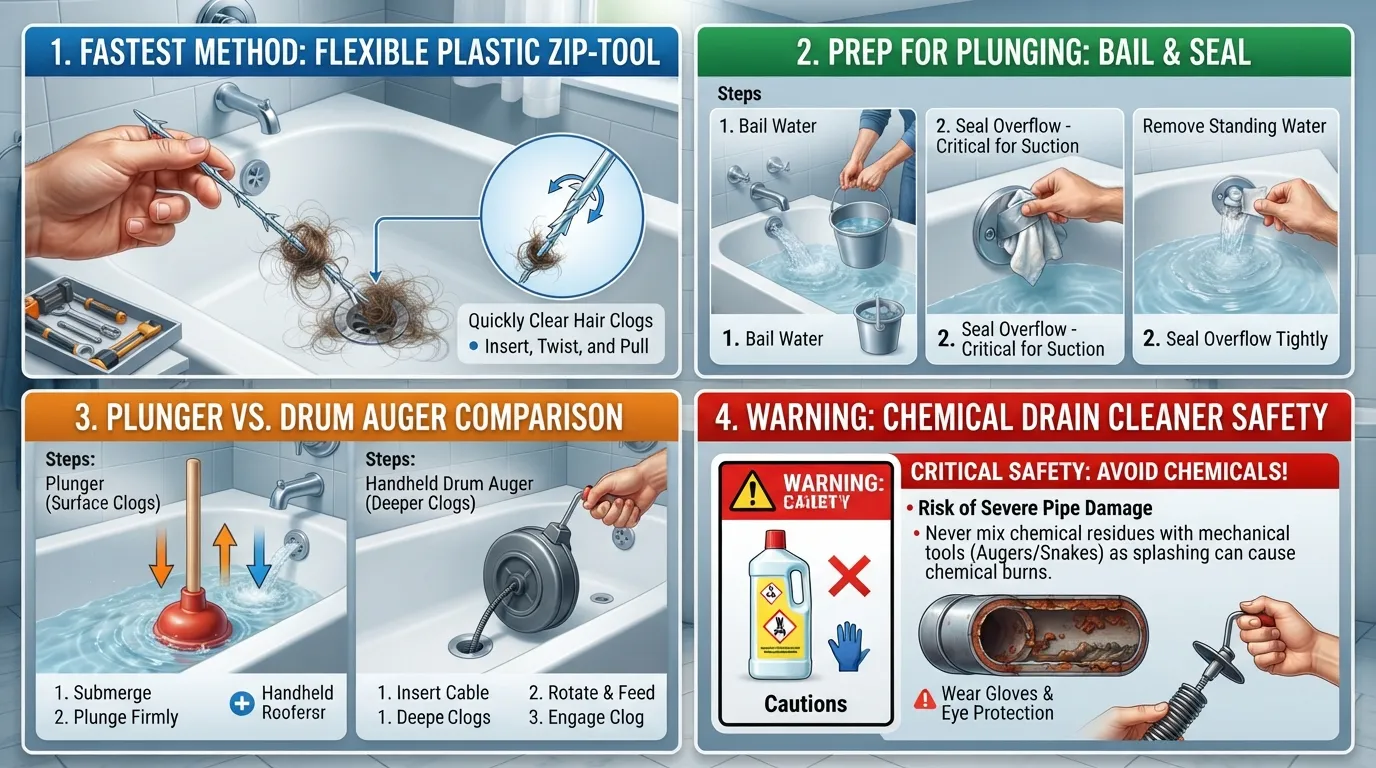
Using a flexible plastic zip-strip or hair-removal tool is the absolute fastest way to clear a typical bathtub clog, often resolving the issue in under 60 seconds without any plumbing disassembly. This method immediately extracts the tangled mass of hair and soap scum caught right beneath the drain strainer, which accounts for the vast majority of bathroom slow-downs.
How to Unclog a Bathtub With Standing Water
When your bathtub is filled with standing water, traditional snaking or plunging becomes messy unless you prepare correctly and use the right technique. Standing water indicates a complete blockage in the trap or waste line, requiring a structured approach to clear without flooding your bathroom floor.
Bail Out Excess Water: Use a bucket or large cup to scoop out the standing water into the toilet or sink until only a shallow amount remains around the drain.
Cover the Overflow Plate: Tape a wet rag or plastic sheet completely over the overflow opening to maintain airtight suction when using a plunger.
Plunge Vigorously: Place a cup plunger firmly over the main drain opening and execute 5 to 10 sharp, forceful vertical thrusts to dislodge the trapped obstruction.
How to Clear a Slow Bathtub Drain
A slow-draining tub is an early warning sign of accumulating organic buildup, hair, and mineral residue lining the interior walls of your drain pipe. Catching a slow drain early prevents total blockages and eliminates the need for emergency plumbing interventions.
Remove the Stopper: Unscrew or lift out the pop-up drain stopper, as hair frequently wraps directly around the mechanical linkage mechanism.
Run a Zip-Tool: Insert a barbed plastic hair-removal tool deep into the drain opening, twist gently, and pull upward to snag trapped debris.
Flush with Boiling Water: Pour a kettle of boiling water slowly down the drain in stages to melt away residual soap scum and grease buildup.
Plunger, Hair-Removal Tool, or Snake: Which Should You Use First?
Choosing the right tool depends entirely on the depth of the blockage and the symptoms your fixture is displaying:
Hair-Removal Tool (First Choice): Best for surface clogs, slow drainage, and accessible hair masses near the top of the drain.
Plunger (Second Choice): Best for sudden total blockages accompanied by standing water where hair tools cannot reach deep enough.
Drain Snake (Third Choice): Best for stubborn, deep-seated clogs located past the P-trap or further down the branch drain line.
Why We Don’t Recommend Chemical Drain Cleaners
Pouring harsh chemical drain cleaners down your bathtub is strongly discouraged by plumbing professionals due to severe risks to your home and personal safety. Lye- or acid-based formulas generate extreme heat that can warp PVC pipes, corrode metal fixtures, and cause permanent chemical burns if splashing occurs. Furthermore, you must never use a mechanical drain snake or plunger if chemical cleaner is currently sitting in standing water, as the trapped liquid will splash dangerously back into your face and skin. For comprehensive safety measures, refer to official poison control guidance regarding caustic household cleaner exposure.
How to Prevent Bathtub Drain Clogs
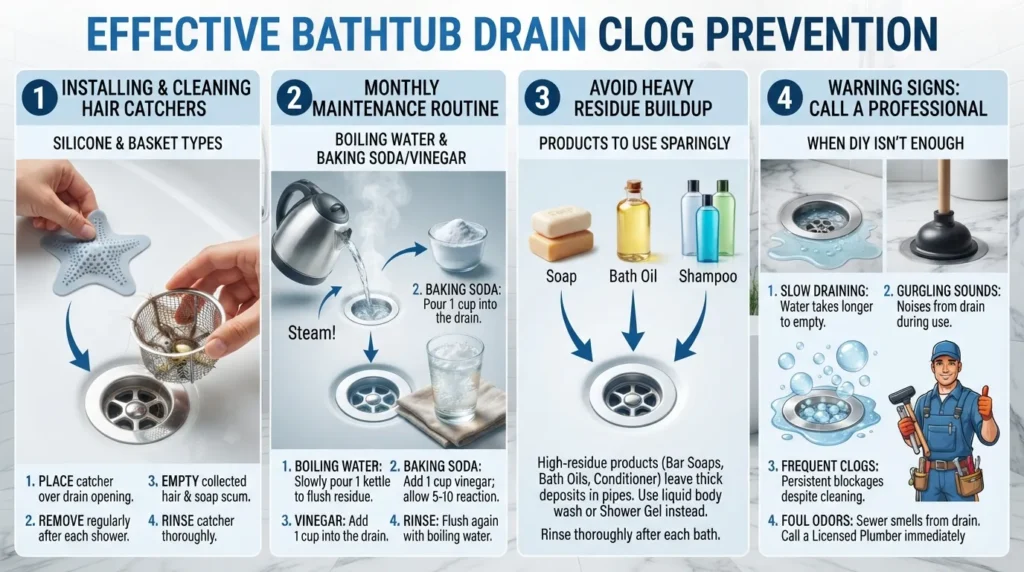
Preventing bathtub clogs is far easier and less costly than clearing a stubborn blockage after it forms. Implementing consistent daily and monthly prevention habits protects your plumbing lines, eliminates foul odors, and keeps your water draining efficiently.
Use a Hair Catcher
Installing a quality hair catcher is the single most effective defense against the leading cause of bathtub blockages. Because hair binds with soap scum and skin oils to form dense blockages, catching it at the surface stops clogs before they enter your pipes.
Silicone Starfish and Flat Mesh Screens: Inexpensive and easy to rinse out after every shower, though flat screens can occasionally restrict water flow if not cleaned regularly.
In-Drain Basket Strainers: Units like the TubShroom sit securely inside the drain cylinder, capturing hair along a cylindrical core while allowing water to flow freely around the edges.
Avoid Suction-Cup Covers That Shift: Ensure your hair catcher fits snugly or locks into place so hair cannot slip past the gaps around the perimeter.
Monthly Maintenance Habits
Performing simple, routine maintenance every four weeks keeps your drain walls clear of organic slime and soapy residue. Regular flushing prevents microscopic buildup from escalating into a full blockage.
Boiling Water Flush: Pour a kettle of boiling water down the drain in two or three stages, allowing the heat to melt away accumulated soap scum and grease buildup.
Baking Soda and Vinegar Rinse: Pour one-half cup of baking soda down the drain followed by one-half cup of white vinegar, let it fizz for fifteen minutes, and flush with hot water.
Quick Strainer Cleanup: Remove and wipe down your drain stopper and hair catcher monthly to eliminate trapped slime and hair strands before they migrate deeper.
Soap, Oils and Products That Build Up in Tub Drains
Many everyday bath and body products leave behind stubborn residues that adhere to interior pipe walls and trap loose hair. Understanding which products contribute most to clogs helps you manage your cleaning routine effectively.
Bar Soap vs. Liquid Body Wash: Traditional tallow-based bar soaps react with hard water minerals to form a sticky, insoluble soap scum that clings tightly to pipe interiors.
Bath Oils and Body Butters: Heavy oils and rich bath bombs coat your plumbing lines in a slick film that readily grabs loose hair and debris.
Exfoliating Scrubs: Sugar, salt, and microbeads from body scrubs settle in pipe bends and traps, forming a dense sludge if not flushed thoroughly with hot water.
When to Schedule a Professional Drain Cleaning
Even with diligent preventative care, older plumbing systems or persistent root intrusion can cause recurring drainage issues that require expert intervention. Knowing when to call a specialist protects your home from severe water damage.
Recurring Slow Drains: If your tub repeatedly clogs within weeks of clearing, deeper issues like pipe sagging or main line scaling may be present.
Multi-Fixture Backups: When draining your bathtub causes water to bubble up in your toilet or bathroom sink, the blockage is located in the main sewer line rather than the branch line.
For persistent plumbing issues or aging infrastructure, booking a scheduled drain cleaning ensures your entire system is professionally inspected and cleared.
Frequently Asked Questions
Can I use a toilet auger on a bathtub drain?
Using a toilet auger on a bathtub drain is strongly discouraged because the rigid, large-diameter head and protective rubber bowl are designed exclusively for porcelain toilet bowls. The oversized head will not fit past your bathtub strainer or into narrow P-trap bends, and it can easily scratch acrylic finishes or crack residential PVC pipe joints.
How far should I push a drain snake into a bathtub drain?
Pushing your drain snake 15 to 25 feet into a bathtub drain is usually sufficient to clear standard clogs located within branch lines. Stop feeding the cable immediately if you encounter immovable resistance, as forcing it further can puncture plastic pipe elbows or bind the cable inside tight intersections.
Should I snake through the overflow or the drain?
Snaking through the waste and overflow opening is often the most direct route, as removing the faceplate provides a straight, unobstructed path down into the P-trap. Accessing the line from the overflow bypasses the complex angles of the tub shoe and pop-up linkage, making it easier to maneuver your auger cable.
What is an overflow drain for a bathtub?
The overflow drain is a secondary safety opening located near the top of the tub wall designed to prevent water from spilling over the edge onto your bathroom floor. It connects directly to the waste and overflow tee pipe, allowing excess water to flow safely down into the main drainage system.
How do I snake a bathtub drain without removing the stopper?
Snaking a bathtub drain without removing the stopper is generally impossible for most modern fixtures, as the pop-up mechanism and crossbars block the entry point of the cable. You must unscrew or lift out the stopper assembly to clear a clear, unobstructed path for your hand auger or zip-tool.
What is the best way to unclog a bathtub?
Using a flexible plastic hair-removal tool or zip-strip is the best way to clear a bathtub clog because it instantly extracts tangled hair without requiring plumbing disassembly. For deeper blockages, following up with a handheld drum auger or a cup plunger successfully restores full water drainage.
How often should I snake my bathtub drain?
Snaking your bathtub drain is typically only necessary when a clog occurs or when drainage noticeably slows down due to hair accumulation. Performing routine preventative maintenance, such as monthly hot water flushes and using a hair catcher, eliminates the need for frequent mechanical snaking.
Can snaking a drain damage pipes?
Snaking a drain can damage pipes if excessive force is applied, if the wrong auger size is used, or if the cable is jammed aggressively against fragile PVC elbows. Always feed the cable slowly, rotate the drum gently, and hire a professional if you feel heavy resistance to avoid cracking your plumbing system.
Need Help With a Stubborn Clog?
When DIY methods and hand snaking fail to resolve a recurring blockage, professional intervention is the safest and most efficient way to protect your plumbing infrastructure. Knowing when to hand over the job to licensed experts prevents accidental pipe damage and ensures your entire drainage system flows smoothly.
When It’s Time to Call a Professional
If your bathtub continues to drain slowly despite your best efforts, or if you encounter multiple warning signs simultaneously, it is time to schedule expert service. Reaching out to a professional prevents minor clogs from turning into major household leaks or structural water damage.
Persistent, Recurring Blockages: If a clog returns within days of clearing or snaking, deeper structural issues like pipe sagging, root intrusion, or main line scaling are likely present.
Multi-Fixture Backups: When draining your tub causes water to back up into your toilet, shower stall, or bathroom sink, the obstruction is located deep within your main sewer line rather than a simple branch pipe.
Uncertainty or Stubborn Resistance: If your snake cable hits unyielding resistance or you lack the proper access panel to inspect your bathtub plumbing, calling a professional avoids costly pipe fractures.
What to Expect When You Book
Scheduling expert help ensures a transparent, hassle-free process from the moment a licensed technician arrives at your home. Professional plumbers utilize advanced diagnostic tools and commercial-grade equipment to resolve stubborn clogs quickly and cleanly.
Prompt Arrival & Inspection: Your technician arrives on time, listens to your drainage issues, and performs a thorough visual or camera inspection of your plumbing lines.
Safe, Effective Clearing: Using specialized professional drain cleaning equipment, the plumber clears the obstruction efficiently without harming your pipes or bathroom fixtures.
Flow Testing & Cleanup: The technician tests the water flow to ensure complete drainage, cleans up the work area thoroughly, and provides preventative recommendations for the future.
Ready to restore your plumbing system? For reliable local assistance, explore our professional drain cleaning services or learn more about our comprehensive plumbing services.
Main Services
Related Posts
Need a Plumber in Miami?
Schedule service online or speak directly with the EZ Plumbing team.
Owner-Led Local Service
Know who is behind the business before you request service. The owners, contact line and Miami service pages are published clearly.
- Named business owners
- Direct phone and social channels
- Local Miami service information
Clear Help Before You Book
Review the relevant service page, contact the team directly and use the booking page when you are ready—without relying on vague claims.
- Service-specific information
- Direct questions before scheduling
- Clear online booking route