4 Essentials To Create A Luxury Bathroom: Costs, Mistakes and What Is Actually Worth It
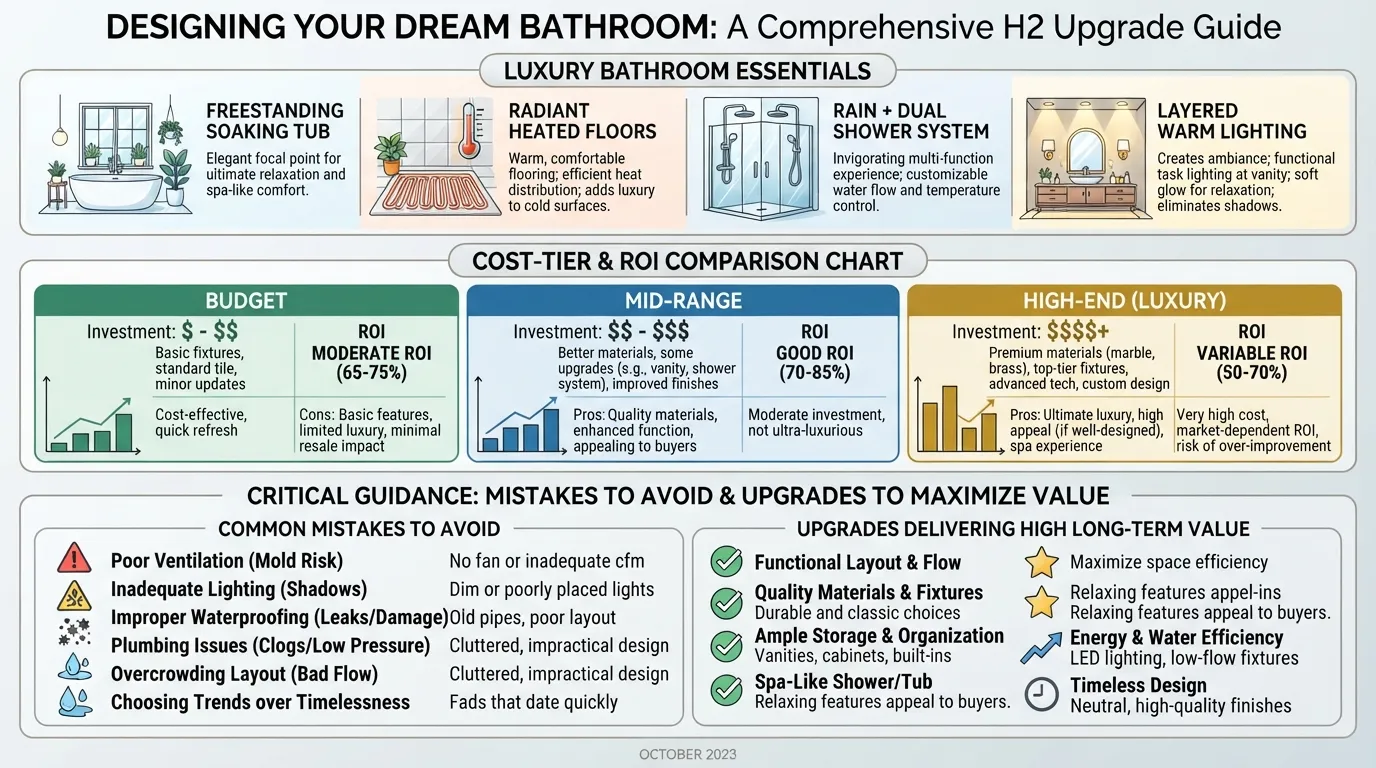
Crafting the Ultimate Luxury Bathroom: Essential Elements and Expert Insights
Transforming a standard bathroom into a high-end, spa-like sanctuary requires more than just high-end aesthetics—it demands precise engineering and flawless execution. Creating a true luxury bathroom centers around four indispensable features: a freestanding soaking tub, radiant heated floors, a multi-outlet rainfall shower, and sophisticated layered warm lighting.
While most design blogs focus entirely on surface-level finishes and tile selections, they frequently overlook the complex mechanical and plumbing infrastructure required to support these heavy, high-flow fixtures. Consulting with licensed plumbers early in the design phase ensures your structural framing, water pressure, and drainage systems can handle heavy installations like cast-iron tubs and multi-head digital shower systems safely.
This comprehensive guide covers realistic budgeting breakdowns, common remodeling pitfalls to avoid, high-ROI upgrades worth investing in, and specialized layout solutions for small or compact spaces. Whether you are planning a full-scale home renovation or looking for high-impact upgrades, you will discover the exact strategies needed to build a durable, high-performing luxury retreat.
What Are the 4 Essentials of a Luxury Bathroom?
Achieving a true spa-like atmosphere relies on specific high-end fixtures that elevate both daily comfort and long-term home value. The four core elements outlined below form the foundation of any high-end bathroom remodel.
The 4 Essentials at a Glance
| Essential | What It Adds | Typical Cost Range (Low / Mid / High) | Difficulty (DIY vs. pro) | Best For |
| Freestanding Soaking Tub | Architectural focal point and deep-immersion relaxation | $1,200 – $3,500 – $8,000+ | Professional only | Medium-to-large floor plans |
| Radiant Heated Floors | Consistent underfoot warmth and superior thermal comfort | $800 – $2,000 – $4,500+ | Professional installation recommended | Cold climates and tile flooring |
| Rainfall & Dual Shower System | Spa-grade hydrotherapy and customizable water delivery | $600 – $1,800 – $5,000+ | Professional only | Daily wellness routines |
| Layered Warm Lighting | Adjustable ambiance, highlighting textures, and task clarity | $300 – $1,000 – $3,000+ | Intermediate / Pro for wiring | All bathroom layouts |
Watch: what makes a bathroom feel luxurious.
What Actually Makes a Bathroom Feel “Luxurious”
Unmatched Physical Comfort: True luxury focuses on sensory experiences, replacing cold surfaces with warm floors, ergonomic tubs, and precise water control.
Premium Tactile Materials: High-end finishes like natural stone, brushed brass, matte black fixtures, and custom millwork create a timeless, high-end feel.
Intelligent Layered Lighting: Combining dimmable architectural lights, back-lit mirrors, and warm sconces eliminates harsh shadows and creates a soothing environment.
Clutter-Free Minimalism: Clean spatial design, concealed storage, and hidden hardware reduce visual clutter to promote absolute calm.
Why These 4 Beat the Usual “Luxury Checklists”
Focusing on these four essentials provides a significantly higher return on investment and daily satisfaction than superficial decor trends. While decorative accessories can easily be swapped out, upgrading foundational features like high-end fixtures, radiant heat, and intelligent lighting directly transforms your daily routine while maximizing your property’s resale value.
Essential #1: A Freestanding Soaking Tub
A freestanding soaking tub serves as the undeniable crown jewel of any high-end bathroom. Beyond its stunning visual impact, it transforms an ordinary daily routine into a restorative spa-like ritual.
Why a Freestanding Tub Is the Centerpiece of a Luxury Bathroom
Architectural Focal Point: A sculptural tub instantly draws the eye, establishing an upscale design statement that defines the entire room’s layout.
Deep Immersion: Unlike standard alcove tubs, soaking tubs are deeper and ergonomically designed to submerge your shoulders fully in warm water.
Spatial Flow: Freestanding designs create a sense of openness and airiness around the perimeter, making even modest bathrooms feel grander.
Tub Types and Materials Compared
Japanese Soaking Tubs: Deep, compact, and vertical—perfect for smaller footprints where you prefer an upright, chest-deep soak.
Clawfoot & Modern Oval Tubs: Clawfoot models bring vintage character to traditional spaces, while sleek oval profiles suit contemporary aesthetics.
Material Breakdown: Acrylic offers lightweight affordability and decent warmth; stone resin provides exceptional thermal retention and a velvety touch; cast iron delivers unmatched durability and classic weight.
What a Plumber Checks Before Installing a Freestanding Tub
Structural Floor Load: Heavy cast iron or stone resin tubs filled with water and an adult can weigh over 1,000 pounds, requiring professional floor joist inspection.
Filler and Faucet Routing: Floor-mounted fillers require subfloor supply lines, while wall-mounted options demand precise alignment before drywall installation.
Drain and Venting Alignment: The rough-in must match the exact centerline of the tub’s waste-and-overflow assembly to prevent leaks and slow draining.
Will Your Water Heater Keep Up?
Hot Water Demand: Standard luxury soaking tubs hold 60 to 100+ gallons of water, which easily depletes conventional tank water heaters.
Sizing the System: Upgrading your hot water capacity or switching to a high-flow tankless unit ensures your bath stays hot from start to finish.
Care and Maintenance Tips
Surface Protection: Clean acrylic and stone resin with non-abrasive, pH-neutral cleaners to preserve their glossy or matte finishes without scratching.
Preventing Blockages: Keep hair and soap scum at bay to prevent a slow or clogged tub drain from interrupting your relaxation.
Pro Tip / Common Mistake: Never install a heavy freestanding tub directly over finished tile without confirming subfloor rigidity. Skipping structural reinforcement leads to sagging floors, cracked tiles, and broken plumbing seals under the tub base.
Essential #2: Heated Floors
Radiant floor heating eliminates the shock of stepping onto cold tile, elevating a luxury bathroom into a truly comfortable sanctuary. By warming objects and surfaces directly from underneath, under-tile heating delivers consistent, luxurious thermal comfort.
How Radiant Floor Heating Works in a Bathroom
Direct Thermal Transfer: Unlike forced-air vents that blow hot air around, radiant systems warm the subfloor directly, which radiates gentle heat upward into the room and keeps your feet warm.
Balanced Energy Efficiency: According to the U.S. Department of Energy (or review their radiant heating overview), radiant systems can be more efficient than traditional air systems because they eliminate duct heat losses and provide steady, comfortable warmth.
Zoned Comfort Control: Bathrooms equipped with dedicated thermostats allow you to heat the floor independently of the rest of your home’s central HVAC schedule.
Electric vs. Hydronic Radiant Heat
| Feature | Electric Radiant Mats | Hydronic Tubing Systems |
| Installation Cost | Lower ($5 – $12 per sq. ft.) | Higher ($15 – $25+ per sq. ft.) |
| Running Cost | Higher continuous electricity draw | Lower operating cost via a dedicated water heater or boiler |
| Best For | Bathroom remodels and small footprints | New construction and whole-home builds |
| Source Needed | Standard 120V or 240V electrical circuit | Closed-loop hot water supply |
What It Costs and What Affects the Price
Square Footage: Total floor area dictates how many heating mats or tubing loops are required.
Flooring Material: Thick natural stone requires higher output capacity than standard ceramic or porcelain tile.
Thermostat Selection: Basic manual dials cost less, whereas smart Wi-Fi programmable thermostats add convenience at a higher initial price point.
Retrofit Complexity: Installing electric mats during a remodel requires minimal height clearance, whereas hydronic systems often require raising the subfloor.
Is Heated Flooring Worth It in a Warm Climate?
Morning Chill Factor: Even in warm regions, early morning tile can feel surprisingly cold to bare feet, making targeted under-tile heating a welcome luxury.
Resale Appeal: Homebuyers across all climates view heated bathroom floors as a high-end differentiator that signals quality construction.
Installation Timing: Why It Must Be Planned Before Tile Goes Down
Subfloor Integration: Heating cables, mats, or tubing must be embedded securely within the thinset mortar or self-leveling underlayment before any tile is laid.
Electrical Rough-In: Floor sensors and power leads must be channeled into the wall and connected to a dedicated electrical box before drywall and finishes are completed.
Common Mistake: Failing to install a programmable thermostat or skipping rigorous continuity testing of the heating wire before tiling. If the wire is damaged during tile installation and not tested beforehand, tearing up finished tile to fix it becomes an expensive nightmare.
Essential #3: A Rainfall or Dual Shower System
Transforming your shower into a true hydrotherapy retreat requires upgrading beyond standard single-head builder fixtures. A well-engineered shower system blends sensory indulgence with precise plumbing performance.
Rainfall vs. Dual Shower vs. Shower Panel vs. Steam Shower
| System Type | Sensory Feel | Typical Cost Range | Water Consumption | Space Needed |
| Rainfall Showerhead | Gentle, drenching overhead rainfall | $300 – $1,200 | Moderate to High (2.0 – 2.5+ GPM) | Standard or large footprint |
| Dual Shower System | Combines overhead rainhead with a flexible handheld | $600 – $2,500 | Adjustable (varies by active heads) | Medium-to-large enclosure |
| Multi-Port Shower Panel | Body jets, overhead spray, and handheld in one unit | $800 – $3,000 | High (multiple simultaneous sprays) | Standard alcove or corner |
| Enclosed Steam Shower | Therapeutic, relaxing steam vapor environment | $2,500 – $7,000+ | Low water usage, high electrical demand | Dedicated sealed stall |
See a high-end shower system in action.
Water Pressure, Flow Rate and Valves: What Actually Delivers a “Spa” Experience
Thermostatic vs. Pressure-Balancing Valves: Thermostatic valves allow you to set your exact preferred water temperature independently of water volume, preventing sudden temperature shocks when another fixture is used.
Independent Volume Controls: High-end systems utilize separate volume and divert control valves so you can run the rainfall head, handheld, or body jets individually or simultaneously.
Supply Line Sizing: Standard 1/2-inch water supply lines may restrict flow for multi-head systems; upgrading to 3/4-inch supply lines ensures adequate water pressure and volume.
Glass, Drainage and Waterproofing Basics
Curbless Entry and Linear Drains: Linear drains allow for seamless, curbless walk-in entries, creating an open, modern aesthetic that is also wheelchair accessible.
Multi-Layer Waterproofing: Installing a continuous sheet or liquid-applied waterproofing membrane behind tile protects framing studs from moisture damage.
Preventing Failures: Comprehensive waterproofing prevents hidden leaks behind shower walls that can cause silent structural mold and rot.
Water-Efficiency Note
Optimized Flow Ratings: Modern luxury showerheads utilize air-induction technology to mix air with water, delivering a heavy, drenching spray while maintaining responsible flow rates.
Eco-Friendly Luxury: Selecting high-performance fixtures ensures you enjoy an indulgent spa experience without excessive water waste or inflated utility bills.
Small-Bathroom Version
Rainhead and Handheld Combo: If you have limited space, a ceiling- or wall-mounted rainhead paired with a sliding bar handheld sprayer provides maximum versatility without requiring a massive shower stall.
Compact Glass Enclosures: Frameless glass shower doors eliminate visual barriers, reflecting natural light to make compact bathrooms feel significantly larger.
Essential #4: Layered, Warm Lighting
Lighting can make or break the atmosphere of a luxury bathroom. Replacing harsh, single-source overhead glare with a thoughtful combination of fixtures transforms the space into a warm, inviting sanctuary.
The 3 Layers of Bathroom Lighting
Ambient Lighting: Overhead flush mounts, recessed ceiling cans, or cove lighting provide overall illumination to make the entire room feel bright and open.
Task Lighting: Sconces, illuminated mirrors, and vanity fixtures deliver bright, shadow-free illumination essential for grooming, shaving, and applying makeup.
Accent Lighting: Low-profile LED strip lights tucked beneath floating vanities, inside shower niches, or under freestanding tub bases add a dramatic architectural glow.
Lighting ideas for a luxury bathroom.
Choosing the Right Color Temperature and Brightness
Warm White Spectrum: Choose bulbs with a color temperature between 2700K and 3000K to maintain a cozy, spa-like ambiance instead of a sterile clinical feel.
High Color Rendering Index (CRI): Select vanity bulbs with a CRI of 90 or higher to ensure skin tones and colors appear natural and accurate.
Master Dimmers: Installing digital dimmers on every circuit allows you to transition seamlessly from bright morning prep lighting to a dim, relaxing evening soak.
Where to Place Sconces and Mirror Lighting
Side-Mounted Sconces: Place vertical sconces at eye level on either side of the mirror to eliminate unflattering under-chin shadows.
Backlit Mirrors: If side sconces do not fit your layout, a high-quality backlit LED mirror provides even facial illumination across the entire reflection.
Avoiding Overhead Glare: Avoid placing a single bright downlight directly above the vanity mirror, as it highlights facial lines and creates harsh shadows.
Moisture-Safe Fixtures and Safety Ratings
Damp and Wet Ratings: Ensure all fixtures placed near sinks are damp-rated, while fixtures installed directly inside shower stalls or above soaking tubs carry an official wet-rating.
Electrical Compliance: Bathroom electrical circuits must adhere to strict building codes regarding proximity to water sources.
Professional Wiring: Always partner with a licensed electrician to handle wet-location wiring, GFCI protection, and complex multi-zone dimmer integration safely.
Quick Lighting Upgrade Ideas on a Budget
Swap Standard Switches: Upgrading basic toggle switches to modern sliding or smart dimmers instantly introduces adjustable mood control.
Under-Cabinet LED Strips: Peel-and-stick, warm-white LED ribbon lights beneath floating vanities create a high-end designer look for a fraction of the cost.
High-CRI Bulb Swap: Simply replacing cool-toned builder bulbs with warm, high-CRI LED alternatives significantly elevates the visual warmth of the room.
What Makes a Bathroom Look Tacky? Common Luxury Mistakes
Even with a high budget, bathrooms can easily miss the mark if key design principles and mechanical requirements are overlooked. Avoiding common pitfalls ensures your space looks genuinely high-end rather than cheaply overdone.
7 Design Mistakes That Make a Bathroom Look Cheap
Overcrowding Material Palettes: Mixing more than three distinct tile patterns or stone types creates visual chaos instead of a cohesive luxury feel.
Mismatched Metal Finishes: Using clashing hardware finishes (like polished brass faucets next to brushed nickel drawer pulls) breaks the room’s design harmony.
Undersized Fixtures and Mirrors: Installing tiny mirrors or undersized vanities makes a large bathroom look disproportionate and poorly planned.
Harsh Cool Lighting: Using clinical daylight or cool-white bulbs strips away warmth and gives the space an uninviting, sterile feel.
Visual Clutter: Leaving toiletries, bottles, and grooming tools out in the open ruins the clean, minimalist look of a spa-like retreat.
Trend Overload: Incorporating too many short-lived design fads dates the room quickly instead of maintaining timeless elegance.
Poor Ventilation: Skipping a robust exhaust fan leads to moisture buildup, peeling paint, and mold growth that ruins finishes.
Plumbing and Installation Regrets Homeowners Report
Improper Shower Valve Placement: Locating the shower control valve directly under the showerhead forces you to step into freezing water to turn it on.
Missing Shut-Off Valves: Omitting dedicated water shut-offs right at the vanity or toilet makes routine maintenance or emergency repairs unnecessarily difficult.
Undersized Water Heater Capacity: Installing a luxury multi-head shower or soaking tub without upgrading your hot water heater results in running out of hot water halfway through use.
Skipped Waterproofing Layers: Relying only on cement backer board without a continuous waterproof membrane leads to undetected leaks behind the tile.
Noisy or Ineffective Exhaust Fans: Choosing a cheap, loud exhaust fan means homeowners often avoid turning it on, leading to long-term humidity damage.
How to Avoid Each Mistake
Stick to a strict palette: Limit your finish and tile selection to two or three complementary materials.
Unify your hardware: Choose a single metal finish for all faucets, hinges, pulls, and shower trims.
Scale up mirrors: Choose oversized mirrors or full-vanity widths to maximize light and space.
Choose warm color temperatures: Stick exclusively to 2700K–3000K bulbs for a soft, flattering glow.
Design concealed storage: Install medicine cabinets, tall linen towers, and vanity drawers to keep countertops entirely clear.
Prioritize timeless foundations: Invest in classic marble, porcelain, and clean lines rather than ultra-trendy colors.
Size your ventilation properly: Install a quiet, high-CFM exhaust fan timed to run automatically after showers.
Install accessible shut-offs: Ensure every major fixture features an isolated shut-off valve for quick maintenance.
Upgrade your water heater: Match your tank size or switch to a tankless system capable of handling high-flow tubs and showers.
Insist on full waterproofing: Apply a continuous liquid or sheet waterproofing membrane over all wet-area substrates before tiling.
Which Luxury Upgrades Are Actually Worth It?
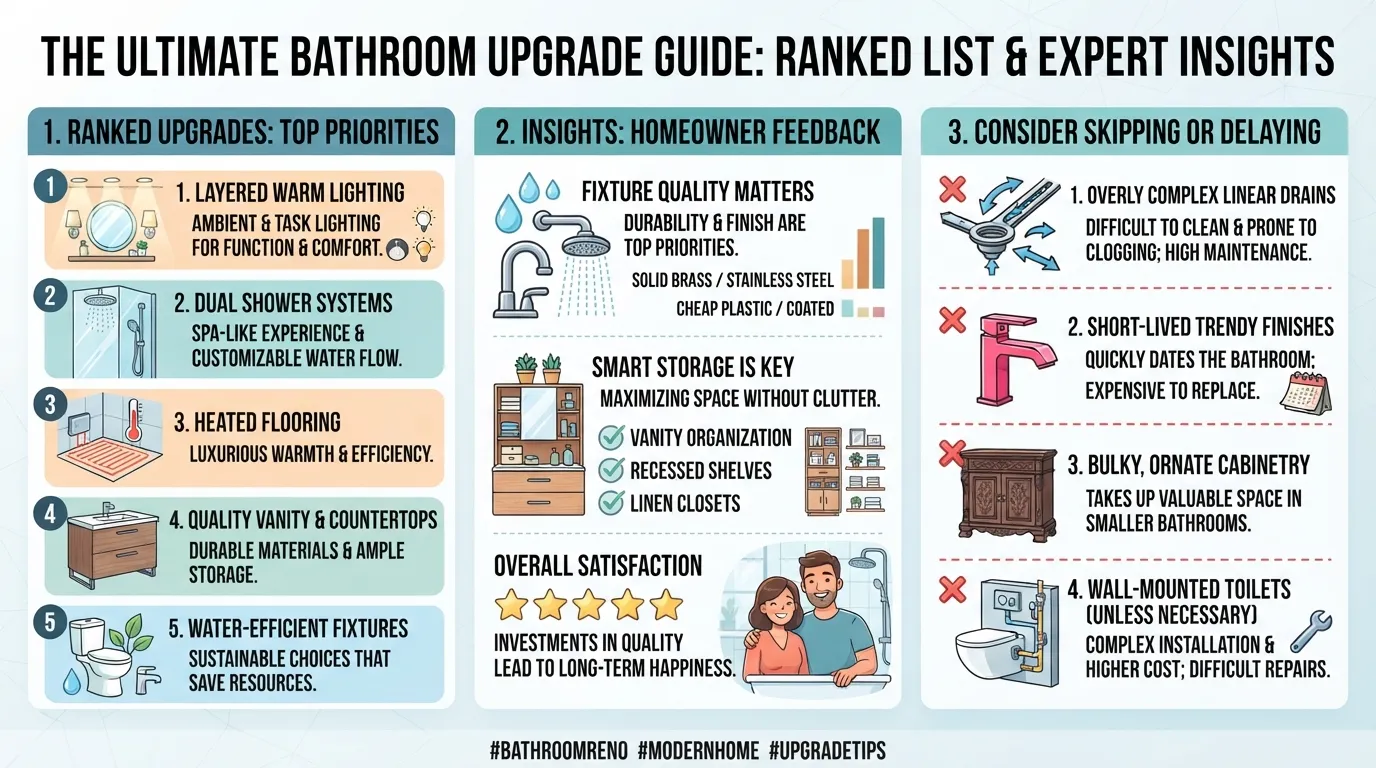
Navigating a high-end bathroom renovation requires balancing emotional indulgences with smart financial choices. Understanding how the four essentials stack up in daily utility and long-term resale value helps you allocate your budget where it matters most.
Our Worth-It Ranking of the 4 Essentials
1. Layered Warm Lighting (Best Overall Value): Delivering the highest visual impact relative to cost, dimmable architectural lighting and high-CRI vanity fixtures instantly elevate the room for a modest investment.
2. Rainfall & Dual Shower Systems (Best Daily Utility): Upgraded hydrotherapy transforms your morning routine, offering immediate sensory rewards and strong buyer appeal during a future home sale.
3. Radiant Heated Floors (Best Comfort Investment): Under-tile heating provides unmatched underfoot comfort during chilly mornings, serving as a standout luxury feature for discerning homebuyers.
4. Freestanding Soaking Tubs (Best Aesthetic Statement): While a sculptural tub creates an undeniable focal point, it takes up substantial square footage and is used less frequently than daily shower systems.
What Homeowners Say Is Worth the Money
Quality Fixture Construction: Homeowners consistently report that investing in solid, premium-grade brass and ceramic fixtures prevents premature leaks, loose handles, and finish tarnishing.
Smart Storage Solutions: Custom built-in vanity drawers, recessed shower niches, and pull-out organizers eliminate clutter, keeping countertops sleek and maintenance effortless.
Upgraded Ventilation and Timers: Quiet, high-efficiency exhaust fans paired with automated timers protect expensive tile, paint, and framing investments from long-term moisture damage.
Upgrades You Can Skip or Delay
Overly Complex Linear Trench Drains: While stylish, complex linear drains are more difficult to clean and install correctly than traditional centered drains.
Ultra-Trendy Finishes: Fads like highly specialized metallic colors can date a bathroom quickly compared to classic brushed nickel, matte black, or polished chrome.
Redundant Digital Gadgets: High-tech automated shower panels with excessive digital screens often introduce complicated maintenance issues down the road.
Splurge vs. Save: Where to Put Your Budget
Splurge On: The infrastructure you touch and rely on daily—including solid plumbing valves, smooth-gliding drawer slides, frameless glass enclosures, and core electrical components.
Save On: Easily swappable decorative elements such as mirrors, freestanding hardware accessories, wall paint colors, and secondary accent tiles.
How to Get a Luxury Bathroom Without Spending a Fortune
Achieving a high-end, spa-like atmosphere does not require an unlimited budget. Smart planning, strategic material choices, and focusing on high-impact upgrades allow you to create an upscale retreat at almost any price point.
Luxury Bathroom Cost Tiers
| Budget Tier | Typical Price Range | What It Includes for Each Essential |
| Budget Refresh | $4,000 – $10,000 | Cosmetic updates: acrylic alcove tub upgrade, plug-in bath mats, single-handle rainfall showerhead, and warm-toned LED bulb swaps. |
| Mid-Range Remodel | $15,000 – $30,000 | Quality upgrades: standard freestanding soaking tub, electric under-tile heating mats, dual shower system, and layered vanity lighting with dimmers. |
| High-End Luxury | $40,000 – $80,000+ | Premium customization: stone-resin soaking tub, hydronic radiant floors, digital multi-port thermostatic shower system, and custom architectural lighting. |
Quick Wins Under a Small Budget
Lighting Swaps: Replacing standard switches with digital dimmers and swapping cool builder bulbs for 2700K warm LEDs instantly transforms the room’s mood.
Rainhead and Handheld Upgrades: Swapping a basic showerhead for an affordable rainfall combo creates an immediate luxury shower experience without plumbing reconfiguration.
Cohesive Hardware Updates: Replacing mismatched cabinet pulls, faucets, and towel bars with a single uniform finish (like matte black or brushed brass) provides instant design polish.
Upgraded Textiles: Swapping old towels for plush, oversized Turkish cotton bath sheets and adding a neutral natural-stone tray elevates everyday details.
Luxury in a Small Bathroom
Wall-Hung Vanities: Floating vanities expose more floor area, creating an optical illusion of space while keeping the room feeling light and open.
Frameless Glass Enclosures: Eliminating bulky metal frames around your shower allows light to pass freely across the entire room.
Compact Soaking Tubs: Utilizing Japanese-style deep vertical soaking tubs delivers full-body immersion in tight floor plans where traditional oval tubs will not fit.
Recessed Lighting & Niches: Recessed LED ceiling lights and built-in wall shower niches eliminate protruding fixtures to maintain clean, clutter-free lines.
Phasing Your Upgrades
Prioritize Rough-In Infrastructure First: Always invest in proper waterproofing, supply line sizing, and electrical wiring behind the walls before tackling cosmetic surfaces.
Phase the Finishes: If budget is tight, install the core plumbing and structural essentials first, then phase in decorative lighting fixtures, mirrors, and custom hardware over time.
Luxury Bathroom Trends for 2026 and Bonus Upgrades
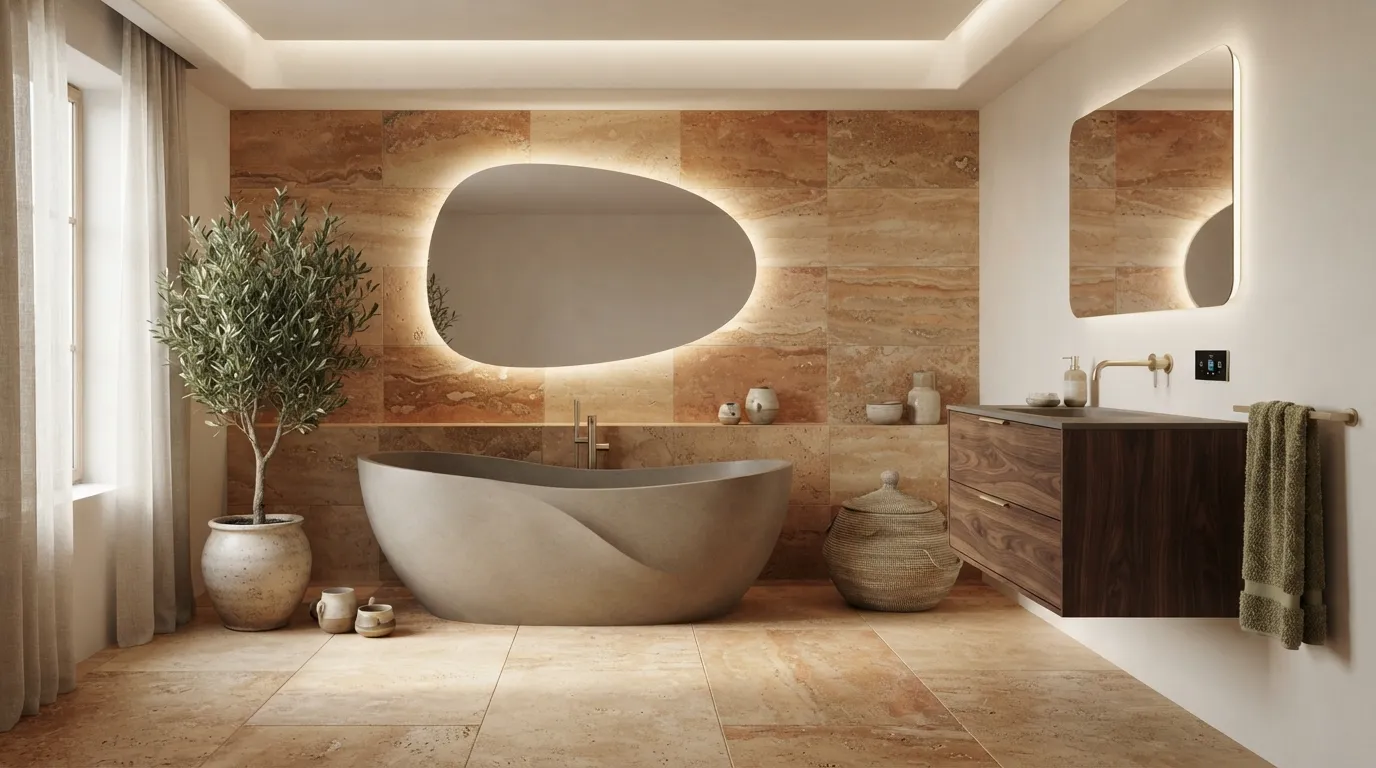
Modern luxury bathrooms are evolving into highly personalized, wellness-focused sanctuaries. Staying up to date with emerging design movements and specialized bonus upgrades allows you to craft a functional, state-of-the-art retreat.
Luxury Bathroom Design Trends in 2026
Warm Neutrals and Earthy Tones: Design choices are shifting away from stark minimalism toward enveloping warm palettes, featuring rich terracotta, sage green, and soothing greige.
Natural Raw Materials: Natural stone tiles (like travertine and limestone), tactile textured surfaces, and light or dark wood vanities bring organic warmth into the space.
Discrete Smart Technology: Advanced features like concealed thermostatic valves, app-controlled shower pre-heating, and integrated ambient lighting blend seamlessly into the architecture.
Color-Drenching and Cohesive Hues: Applying a single harmonious shade across walls, cabinetry, and tile grout creates a dramatic, cohesive statement look.
Bonus Upgrades Beyond the 4 Essentials
Smart Toilets and Bidet Seats: Offering heated seats, built-in nightlights, automated lid openers, and customizable warm-water cleansing for ultimate comfort.
Heated Towel Rails: Hardwired or hydronic towel warmers ensure you are wrapped in cozy warmth immediately after stepping out of the shower.
Enclosed Steam Showers: Sealed glass stalls equipped with steam generators transform standard showers into therapeutic relaxation chambers.
Double Vanities: Dual sinks with custom organizational drawers maximize efficiency and personal space for shared master bathrooms.
Built-In Niche Storage: Prefabricated waterproof shower niches keep bottles and soaps neatly recessed out of the way for clean, minimalist sightlines.
Luxury Bathroom Brands to Know by Category
Fixtures and Faucets: Kohler, Grohe, Hansgrohe, and Brizo offer reliable engineering, smooth operation, and exquisite finishes.
Tubs and Ceramics: Duravit, Villeroy & Boch, and TOTO deliver exceptional craftsmanship for soaking tubs, basins, and smart toilets.
High-End Architectural Hardware & Fittings: Dornbracht, Waterworks, and Rohl provide luxury design lines with superior metallic finishes.
Smart Toilets and Bidets: What to Know Before You Buy
Electrical Requirements: Most electronic smart toilets and bidet seats require a dedicated, GFCI-protected electrical outlet positioned close to the toilet base.
Water Supply Adjustments: Ensure your plumber verifies the water supply line routing and pressure requirements during the rough-in phase to guarantee seamless operation.
Professional Installation: Partnering with a qualified expert for proper toilet installation and repair ensures strict compliance with local backflow and plumbing codes.
Bathroom Remodel Process and Timeline
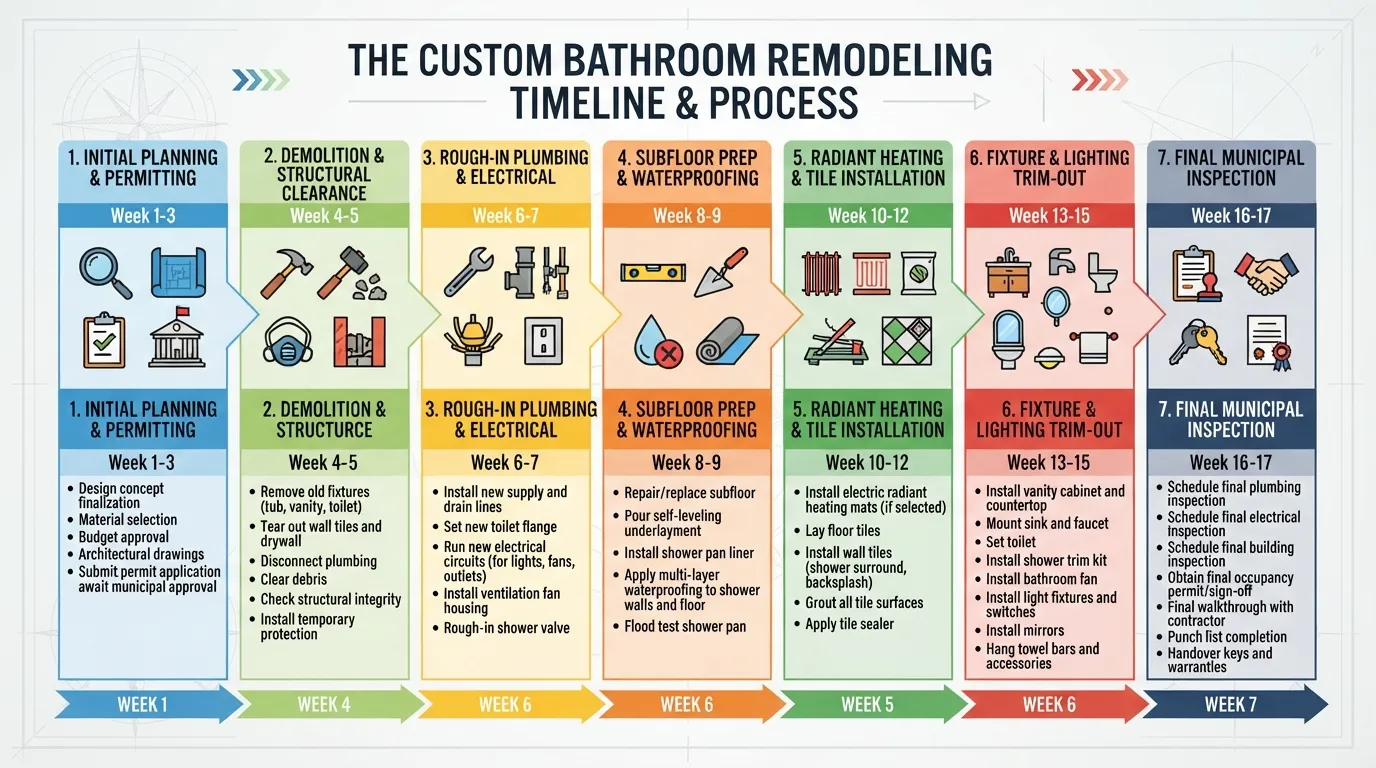
Successfully executing a high-end luxury bathroom renovation requires meticulous planning, a well-defined sequence of trades, and professional oversight. Understanding the timeline and project phases helps keep your remodel on track and ensures enduring quality.
Step-by-Step Remodel Sequence
Planning, Design, and Permits: Finalize layouts, select all plumbing fixtures and finishes, secure architectural approvals, and pull necessary municipal permits before starting demolition.
Demolition and Debris Removal: Strip the bathroom down to the studs and subfloor, clearing out old fixtures, worn materials, and outdated wiring.
Rough-In Plumbing and Electrical: Run new supply lines, position shower valves, install drainage paths, and set electrical boxes for lighting, heated floors, and smart fixtures.
Subfloor Preparation and Waterproofing: Level the subfloor, install continuous waterproofing membranes, and test drainage systems to prevent hidden water damage.
Radiant Floor and Tile Installation: Lay heating mats or tubing, followed by precise stone or porcelain tile installation on floors and shower walls.
Fixture, Lighting, and Finish Trim: Mount vanities, freestanding tubs, faucets, shower heads, mirrors, and decorative lighting before conducting final inspections.
How Long Does a Luxury Bathroom Remodel Take?
Standard Cosmetic Update: A surface-level refresh or minor update typically takes 2 to 4 weeks.
Mid-Range Renovation: A full-gut remodel involving plumbing and electrical reconfiguration generally runs 4 to 8 weeks.
Custom Luxury Build: High-end, complex master bath transformations featuring custom stone work, steam showers, and extensive structural changes can require 8 to 14+ weeks.
Who You Need on the Team
Licensed Plumber: Essential for running supply lines, installing complex valves, and ensuring plumbing services comply with local codes.
Certified Electrician: Required to manage high-load circuits, GFCI protection, under-tile heating controls, and intricate layered lighting.
Expert Tile Setter: Critical for executing complex patterns, large-format natural stone, and seamless curbless shower slopes.
General Contractor or Designer: Oversees day-to-day scheduling, coordination between trades, and overall aesthetic cohesion.
Questions to Ask Before Hiring a Contractor
Licensing and Insurance: Verify that the contractor and all subcontractors carry active state licenses and comprehensive liability insurance.
Portfolio and References: Review past master bathroom projects and speak with previous clients to gauge communication and craftsmanship.
Timeline and Contingencies: Request a written milestone schedule and clarify how unexpected issues (like hidden water damage or framing adjustments) are handled.
Permits and Code Basics
Municipal Requirements: Most structural, plumbing, and electrical alterations require local building permits to ensure safety compliance.
Inspection Milestones: Expect municipal inspectors to sign off on rough-in plumbing and electrical work before drywall and tile are installed.
Ready to bring your luxury bathroom vision to life? Connect with our expert team to discuss your project or schedule a consultation today.
FAQs
What are the must-haves for a luxury bathroom?
A true luxury bathroom centers around four foundational must-haves: a sculptural freestanding soaking tub, radiant heated floors, a multi-outlet rainfall or dual shower system, and sophisticated layered warm lighting. Together, these elements deliver an indulgent daily spa experience while significantly maximizing your home’s long-term resale value.
What are some luxury bathroom items?
Popular high-end items include frameless glass walk-in enclosures, smart bidet toilets, linear trench drains, digital thermostatic shower valves, floating double vanities, and illuminated backlit mirrors. Premium materials like natural marble, stone resin basins, and brushed brass or matte black fixtures further elevate the tactile experience.
How can I make my bathroom look luxurious on a budget?
Achieve a high-end feel on a budget by swapping standard switches for digital dimmers, replacing cool builder bulbs with 2700K warm LEDs, and updating mismatched hardware to a single unified finish. Adding plush Turkish cotton towels and a wall-hung mirror instantly transforms the space for minimal cost.
How do I make a bathroom look posh?
Making a bathroom look posh requires a cohesive material palette, minimalist clutter-free countertops, and refined architectural details. Stick to no more than three complementary tile or stone finishes, integrate side-mounted vanity sconces to eliminate shadows, and feature a stunning statement freestanding soaking tub.
What are the trends for luxury bathroom design in 2026?
Current luxury bathroom design trends emphasize warm neutral earth tones, organic raw materials like travertine and limestone, color-drenched monochromatic palettes, and discreet smart technology. Concealed thermostatic valves, touchless controls, and integrated spa-grade steam showers are leading the modern wellness movement.
What makes a bathroom look tacky?
Bathrooms often look tacky due to overcrowded material palettes, clashing metal finishes, undersized mirrors, harsh cool-white lighting, and excessive visible clutter. Skipping proper exhaust ventilation also leads to moisture damage and peeling finishes that detract from an upscale aesthetic.
How long does a luxury bathroom remodel take?
A custom luxury bathroom renovation typically takes between 8 to 14 weeks from demolition to final inspection. Complex structural changes, custom tile work, and specialized plumbing rough-ins for steam showers or freestanding tubs require meticulous craftsmanship that cannot be rushed.
Are heated floors worth it in a bathroom?
Radiant heated floors are widely considered one of the best upgrades for eliminating the shock of cold tile on chilly mornings. They provide consistent thermal comfort, operate efficiently under tile or stone surfaces, and serve as a major selling point for prospective homebuyers.
Conclusion
Transforming your space into a high-end sanctuary comes down to focusing on foundational quality, thoughtful design, and precise engineering.
Freestanding Soaking Tub: Serves as a stunning architectural centerpiece for deep-immersion relaxation.
Radiant Heated Floors: Delivers consistent, luxurious underfoot warmth that eliminates cold tile shock.
Rainfall & Dual Shower System: Elevates your daily routine with spa-grade hydrotherapy and flexible spray options.
Layered Warm Lighting: Replaces harsh glare with adjustable ambient, task, and accent illumination.
Always prioritize your plumbing and electrical infrastructure during the initial planning phase to support heavy fixtures and multi-outlet systems safely behind the walls. Partnering with a professional ensures your renovation avoids costly structural and waterproofing mistakes. Ready to start your transformation? Click here to book your bathroom plumbing consultation and bring your luxury bathroom vision to life.
Main Services
Related Posts
Need a Plumber in Miami?
Schedule service online or speak directly with the EZ Plumbing team.
Owner-Led Local Service
Know who is behind the business before you request service. The owners, contact line and Miami service pages are published clearly.
- Named business owners
- Direct phone and social channels
- Local Miami service information
Clear Help Before You Book
Review the relevant service page, contact the team directly and use the booking page when you are ready—without relying on vague claims.
- Service-specific information
- Direct questions before scheduling
- Clear online booking route