If you are dealing with repeated leaks, low water pressure, rusty or discolored water, or aging plumbing, you may be wondering whether you need another repair or whether it is time to consider repiping a house.
Whole-house repiping means replacing the home’s aging water-supply piping with a new plumbing system. But deciding whether to repipe is not simply a matter of looking at one leak or one old pipe. Your home’s age, existing pipe material, number and location of plumbing problems, foundation type, accessibility, and the cost and scope of the proposed work all matter.
If your home has recurring leaks, widespread corrosion, persistent low water pressure, or aging/problematic plumbing materials, it is worth having the plumbing system evaluated for a whole-house repipe rather than continuing to repair individual failures one at a time. The right solution still depends on the condition and layout of your particular home.
In this guide, I will walk you through the signs to look for, what repiping can cost, how PEX, copper, and CPVC compare, what happens during the project, how a slab or crawlspace can affect the work, and what I would ask a plumbing company before accepting a repiping quote.
What Is Repiping a House?
Repiping a house is the replacement of the home’s existing water-supply piping with new pipes. In a whole-house plumbing replacement, the new supply lines are routed to the home’s plumbing fixtures and connected to the existing plumbing system where appropriate.
Depending on the home’s construction and accessibility, plumbers may route new piping through areas such as an attic, crawlspace, floor joists, or other accessible spaces. The old pipes do not necessarily have to be completely removed; in some repiping projects, old lines are abandoned in place after the new system is installed.
That is why repiping is different from fixing one leaking pipe. A repair addresses an individual failure. A whole-house repipe addresses the condition of the home’s broader water-supply piping system.
When Does a House Need Repiping?
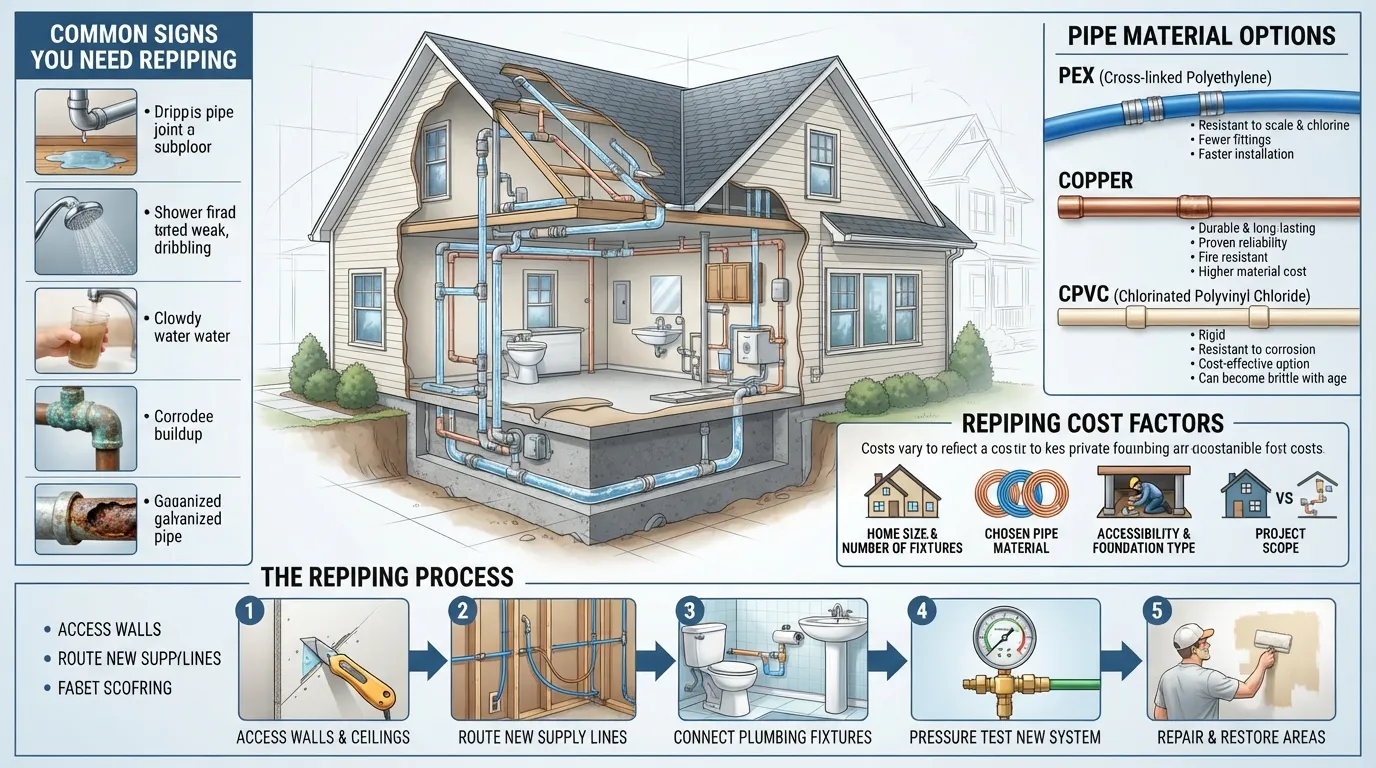
There is no single symptom that automatically means your entire plumbing system must be replaced. However, several problems together can be a strong reason to have the system evaluated.
1. Frequent or recurring leaks
One isolated leak does not necessarily mean you need to replace every pipe in the house. But when leaks keep appearing in different locations, repeatedly repairing individual sections may no longer address the underlying problem.
Repeated pinhole leaks and recurring slab leaks are particularly important warning signs to investigate.
2. Low water pressure
Low water pressure can have several possible causes, so it should be properly diagnosed rather than automatically blamed on old pipes. However, widespread pressure problems combined with corrosion or aging plumbing can indicate that the existing water-supply system deserves a closer inspection.
3. Rusty, yellow, or discolored water
Discolored water can be associated with deteriorating or corroded plumbing, although other causes are possible. If you are seeing rusty or yellow water along with other plumbing problems, ask a professional to determine where the problem is originating.
4. Visible corrosion or flaking pipes
If accessible pipes show significant corrosion, flaking, deterioration, or staining, do not ignore it. Visible deterioration can be a useful clue about the condition of the plumbing system, especially when combined with leaks or pressure problems.
5. Aging or problematic pipe materials
Older homes can contain plumbing materials that homeowners may want to have evaluated as part of a replacement decision. The research reviewed for this guide specifically identified galvanized steel and polybutylene among materials associated with repiping concerns.
Do not decide on a whole-house repipe based on one symptom alone. Look at the pattern: pipe age and material, number of failures, location of leaks, water pressure, visible corrosion, and the expected cost of continuing repairs.
Repair, Partial Replacement, or Whole-House Repiping?
One of the most important questions is not simply, “Do I have a leak?” It is:
“Is repairing this problem still the sensible long-term option?”
A practical way to approach the decision is to compare three possibilities.
This is not a substitute for an inspection. The point is to avoid making a major plumbing decision based on one repair invoice or one isolated symptom.
How Much Does It Cost to Repipe a House?
Repiping costs can vary substantially from one home to another. The research reviewed for this article showed a broad planning range of approximately $4,000 to $15,000 for a standard whole-house repipe, with commonly cited projects falling around $8,000 to $12,000.
Those numbers should be treated as planning ranges rather than a quote for your home. A real estimate depends on the home’s layout, pipe material, accessibility, number of fixtures, and exactly what the contractor includes.
What affects the cost of repiping?
- Home size and layout
- Number of bathrooms and plumbing fixtures
- Number of stories
- Existing pipe material
- New pipe material selected
- Slab, crawlspace, attic, or other access conditions
- How much wall or ceiling access is required
- Permit requirements
- Replacement of shut-off valves
- Whether the mainline is included in the scope
- Drywall patching and restoration
- Painting and final finishing
Two contractors can give you very different prices because their scopes are different. Before comparing numbers, compare exactly what each quote includes: pipe material, fixtures, valves, mainline work, testing, permits, access, drywall work, cleanup, and restoration.
Repiping Cost by Pipe Material
The pipe material you choose can significantly affect both material and labor costs. The research provided for this article showed the following ranges:
These ranges are not a substitute for a project-specific estimate. Material selection should also take into account the home’s construction, installation environment, local requirements, and the recommendations of a qualified plumbing professional.
PEX vs. Copper vs. CPVC: Which Is Better?
There is no universal winner for every house.
The better question is:
“Which material fits my home’s needs, installation conditions, budget, and long-term priorities?”
PEX
PEX is flexible, which can make routing new water lines through accessible areas easier in many installations. Its flexibility can also reduce the number of cuts needed to access walls compared with more rigid piping in some situations.
If minimizing installation complexity is important, PEX may be worth discussing with your plumber.
Copper
Copper is a long-established plumbing material and is known for durability. However, it can cost more because both the material and installation labor can be more expensive.
If you are considering copper, ask the contractor to explain why it is appropriate for your specific home and how the additional cost compares with other suitable options.
CPVC
CPVC can be a budget-conscious option and uses glued connections. However, its rigid nature can affect routing and joint requirements, so the installation environment matters.
Do not choose a pipe material solely because it is the cheapest or because someone says it is always the “best.” Ask your plumbing contractor to explain the material choice in relation to your home’s layout, access, installation environment, expected durability, and total installed cost.
What Happens During a Whole-House Repiping Project?
A whole-house repipe can often take approximately 2 to 5 days according to the research reviewed for this article, although the actual schedule depends on the home’s size, construction, access, project scope, crew, and other conditions.
1. Wall and ceiling access
Plumbers may make controlled openings in drywall or ceilings to access existing water lines. The amount of access required depends heavily on the home’s construction and the routing of the new pipes.
2. Routing the new water lines
New lines may be routed through accessible areas such as an attic, crawlspace, or floor-joist spaces. In some installations, the existing pipes are left in place and abandoned rather than completely removed.
3. Connecting the fixtures
The new water-supply system is connected to fixtures such as sinks, showers, toilets, and the water heater. New shut-off valves may also be part of the project scope.
4. Testing the new system
The completed plumbing system should be properly tested for leaks and pressure integrity before the project is considered complete.
5. Drywall repair and restoration
This is one area you should clarify before signing a contract. Plumbing work may require access openings, but final drywall finishing and painting may not be included in a standard plumbing quote.
Ask exactly what the contractor means by “drywall repair.” Does that mean rough patching only, or does it include texture matching, sanding, priming, and painting?
Does a Slab Foundation Make Repiping More Difficult?
A slab foundation can change how a repiping project is approached because access to plumbing beneath or within the slab can be different from a home with an accessible crawlspace.
That does not automatically mean a slab house cannot be repiped. The important question is how the new water lines can be routed and what access will be required.
In a home with a crawlspace or accessible attic, the plumber may have more routing options. A slab home may require a different strategy depending on the existing plumbing layout and the locations of fixtures.
Ask your contractor to show you where the new lines will run, which areas require access, whether any flooring or wall surfaces must be opened, and what restoration is included in the quote.
Should You Repipe Instead of Repairing a Slab Leak?
Not every slab leak automatically means you need a whole-house repipe.
The more useful question is whether the slab leak is an isolated failure or part of a broader pattern of deteriorating water-supply piping.
If you have one isolated problem and the rest of the system is in good condition, repair may be appropriate. If you have recurring leaks, multiple failures, corrosion, or an aging plumbing system, it may make more sense to evaluate whether continued repairs are becoming a temporary solution.
Ask the plumber to explain why they recommend repair, rerouting, partial replacement, or whole-house repiping rather than accepting a recommendation without understanding the reasoning.
How Long Does It Take to Repipe a House?
A whole-house repiping project may take around 2 to 5 days based on the research reviewed, but your actual timeline can be shorter or longer.
Factors that can affect the schedule include:
- Home size
- Number of fixtures
- Number of bathrooms
- Number of floors
- Pipe-routing complexity
- Slab or crawlspace conditions
- Attic accessibility
- Amount of wall access required
- Testing and inspection requirements
- Drywall and restoration work
Before work starts, ask when the water will be shut off, when individual fixtures will become usable again, and what the contractor expects the homeowner to do during each stage.
Can You Repipe a House Yourself With PEX?
PEX can be easier to work with than some rigid piping materials, but a whole-house plumbing replacement is much more than connecting pieces of pipe.
You also need to consider the existing plumbing layout, fixture connections, shut-off valves, pressure testing, access, local requirements, and the consequences of a hidden leak.
If you are considering DIY repiping, make sure you understand the requirements that apply to your property before beginning work. For a whole-house replacement, professional evaluation and installation can be particularly important when access is difficult or the plumbing system is complex.
What Are the Alternatives to Whole-House Repiping?
Whole-house repiping is not the only possible response to a plumbing problem.
Depending on the condition of the system, alternatives can include:
- Repairing an isolated leak
- Replacing a deteriorated section of piping
- Rerouting a problematic line
- Replacing a particular branch of the plumbing system
- Evaluating the system further before committing to replacement
The best choice depends on whether the problem is isolated or widespread. A good plumbing evaluation should explain the available options rather than presenting whole-house repiping as the answer to every leak.
Is Repiping a House Worth It?
This is ultimately a cost-versus-condition decision.
Repiping can be a major investment, but repeatedly repairing an aging system can also become expensive and inconvenient. The right decision depends on the condition of your current plumbing, the frequency of failures, the expected future repair needs, and the cost and scope of a new system.
Repiping may deserve serious consideration when:
- Leaks are recurring in multiple areas.
- The existing supply piping is significantly deteriorated.
- You are dealing with repeated pinhole or similar failures.
- Low water pressure is occurring alongside other signs of aging plumbing.
- Your existing pipe material is a concern.
- Continued repairs are becoming frequent or disruptive.
If this is not your forever home
You may also be wondering whether repiping makes sense if you plan to sell or move.
There is no universal answer. Consider the condition of the existing plumbing, the likelihood of future repairs, the results of a home inspection, the expectations of buyers in your market, and the documentation you can provide for completed work.
Do not assume that a repipe automatically produces a particular increase in home value. Instead, evaluate the project as a way of addressing an aging or problematic plumbing system and reducing future plumbing concerns.
Why Can Repiping Be So Expensive?
People often focus on the cost of the pipe itself, but a repiping project involves much more than purchasing pipe.
You are paying for the planning, labor, access, routing, fixture connections, valves, testing, project management, and potentially restoration of surfaces that had to be opened to reach the plumbing.
Homes with difficult access or complicated layouts can require more labor than homes where new lines can be routed easily through accessible spaces.
That is why two homes of similar size can receive different repiping estimates.
What Should Be Included in a Repiping Quote?
This is one of the most important sections to review before hiring a contractor.
I recommend asking for an itemized scope rather than comparing only the final dollar amount.
- Which pipe material is being installed?
- How many fixtures are included?
- Are new shut-off valves included?
- Is the mainline included?
- Who handles required permits?
- How will the new lines be routed?
- How much wall or ceiling access is expected?
- Is pressure testing included?
- Does the price include drywall patching?
- Does it include texture matching, painting, and final finishing?
- Who is responsible for cleanup?
- What warranty and documentation will you receive?
Pay particular attention to the mainline. A quote can sound comprehensive while covering only the interior supply piping. Ask whether the primary line to the municipal meter is part of the scope or not.
What Should You Do Before a Repipe Starts?
A little preparation can make a major plumbing project easier to manage.
Confirm the project scope
Make sure you understand exactly which pipes are being replaced and which are not.
Ask about access
Find out which walls, ceilings, floors, attic areas, or other parts of the home may need access.
Protect your belongings
Repiping can involve cutting into drywall and creating dust. Protect furniture, electronics, and other belongings before work begins.
Clarify restoration
Do not assume that the plumbing company will provide complete drywall and painting restoration unless the written scope says so.
Confirm permits and testing
Ask who is responsible for applicable permits, inspections, and testing, and make sure these responsibilities are clear before the project starts.
How to Compare Two Repiping Contractors
Imagine you receive two quotes:
Contractor A: $7,500
Contractor B: $10,000
It would be tempting to choose Contractor A immediately.
But what if Contractor A excludes drywall restoration, several shut-off valves, or part of the mainline while Contractor B includes them?
The cheaper quote may not actually be the cheaper project.
Instead, compare:
- Pipe material
- Number of fixtures included
- Valves included
- Mainline scope
- Access and routing plan
- Testing
- Permits
- Drywall restoration
- Painting and finishing
- Cleanup
- Warranty
Compare scope first. Compare price second.
How Often Should a House Be Repiped?
There is no single repiping schedule that applies equally to every house.
The need for replacement depends on the plumbing material, installation conditions, age and condition of the system, history of leaks, corrosion, water pressure, and other factors.
Instead of waiting for an arbitrary number of years, pay attention to the condition of your plumbing and recurring warning signs.
A Simple Repiping Decision Guide
If several of these questions raise concerns, a professional plumbing evaluation can help you determine whether repair, partial replacement, or whole-house repiping is the most sensible path.
Repiping a House: Frequently Asked Questions
How much does it cost to repipe a 2,000-square-foot house?
There is no reliable single price based on square footage alone. The research reviewed for this guide showed whole-house repiping ranges of approximately $4,000 to $15,000, but the final cost can change based on pipe material, number of fixtures, accessibility, foundation, routing, labor, valves, mainline scope, and restoration.
Is it worth repiping a house?
It can be worth considering when an aging plumbing system has recurring leaks, corrosion, pressure problems, or other widespread issues. The decision should be based on the condition of the system and the cost of continued repairs versus replacement.
Can you repipe a house with a slab foundation?
Yes, a slab foundation does not automatically prevent a home from being repiped. The installation strategy depends on the home’s layout and available routing options. Ask the contractor how the new lines will be routed and what access or restoration will be required.
How difficult is it to repipe a house?
A whole-house repipe is a significant plumbing project because it involves routing new water-supply lines throughout the home, connecting fixtures, testing the system, and potentially opening and restoring walls or ceilings.
Is PEX better than copper for repiping?
Neither is universally better for every home. PEX can offer flexible routing and may reduce access work in some installations, while copper is known for durability but can have higher material and labor costs. The right choice depends on your home and project requirements.
How long does a whole-house repipe take?
The research reviewed for this guide indicates approximately 2 to 5 days for a typical project, although the actual timeline depends on home size, access, routing complexity, number of fixtures, and restoration requirements.
Should I repipe instead of repairing a slab leak?
Not automatically. If the slab leak is isolated, repair may be appropriate. If it is one of several recurring plumbing failures, a whole-house plumbing evaluation may help determine whether repiping is the more appropriate long-term option.
Can I repipe my own house with PEX?
PEX can be relatively accessible to work with, but whole-house repiping involves more than installing pipe. You also need to consider connections, valves, testing, access, applicable requirements, and the consequences of installation errors. Understand the requirements for your project before attempting a whole-house replacement yourself.
What are the alternatives to repiping a house?
Depending on the condition of the plumbing, alternatives may include repairing an isolated leak, replacing a deteriorated section, rerouting a problematic line, or replacing only a particular branch of the system.
Why is repiping so expensive?
The cost includes more than pipe. Labor, access, routing, fixture connections, valves, testing, permits, project complexity, and potential drywall restoration can all contribute to the total project cost.
How often should a house be repiped?
There is no universal schedule. The condition and material of the plumbing system, its history of failures, and the home’s specific circumstances are more useful indicators than a fixed timetable.
Before You Hire a Plumbing Company
A good repiping decision starts with a clear understanding of your existing system and a detailed scope of work.
If you are researching plumbing options for your home, you can learn more about the broader plumbing services available for your home before deciding what type of work you need.
You can also explore professional plumbing help for your home when you are ready to discuss your particular plumbing situation.
If you are dealing with recurring leaks, aging pipes, low water pressure, or other signs of plumbing deterioration, getting the system evaluated can help you understand whether repair, partial replacement, or whole-house repiping makes sense.
Final Takeaway: Don’t Wait for the Next Leak to Make the Decision
Repiping a house is a major project, so you should not decide based on a generic cost estimate or a single plumbing symptom.
Instead, look at the entire picture: the age and material of your pipes, recurring leaks, corrosion, water pressure, water appearance, foundation and access conditions, repair history, replacement options, and the complete scope of the repiping quote.
If your plumbing problems are isolated, a repair may be all you need. If failures are becoming widespread or recurring, whole-house plumbing replacement may deserve serious consideration.
And when you compare repiping contractors, remember one simple rule:
The best repiping decision is the one that gives you a clear understanding of what is being replaced, how it will be installed, what it will cost, and what happens after the new plumbing is tested.
Related Resources for Homeowners
If you are researching whether your home needs a plumbing replacement, these related questions are worth exploring as part of your decision-making process:
- What to expect when repiping a house
- How repiping works in a home with a slab foundation
- How PEX compares with copper for whole-house repiping
- How to prepare your home before a repipe
- How to compare whole-house repiping estimates