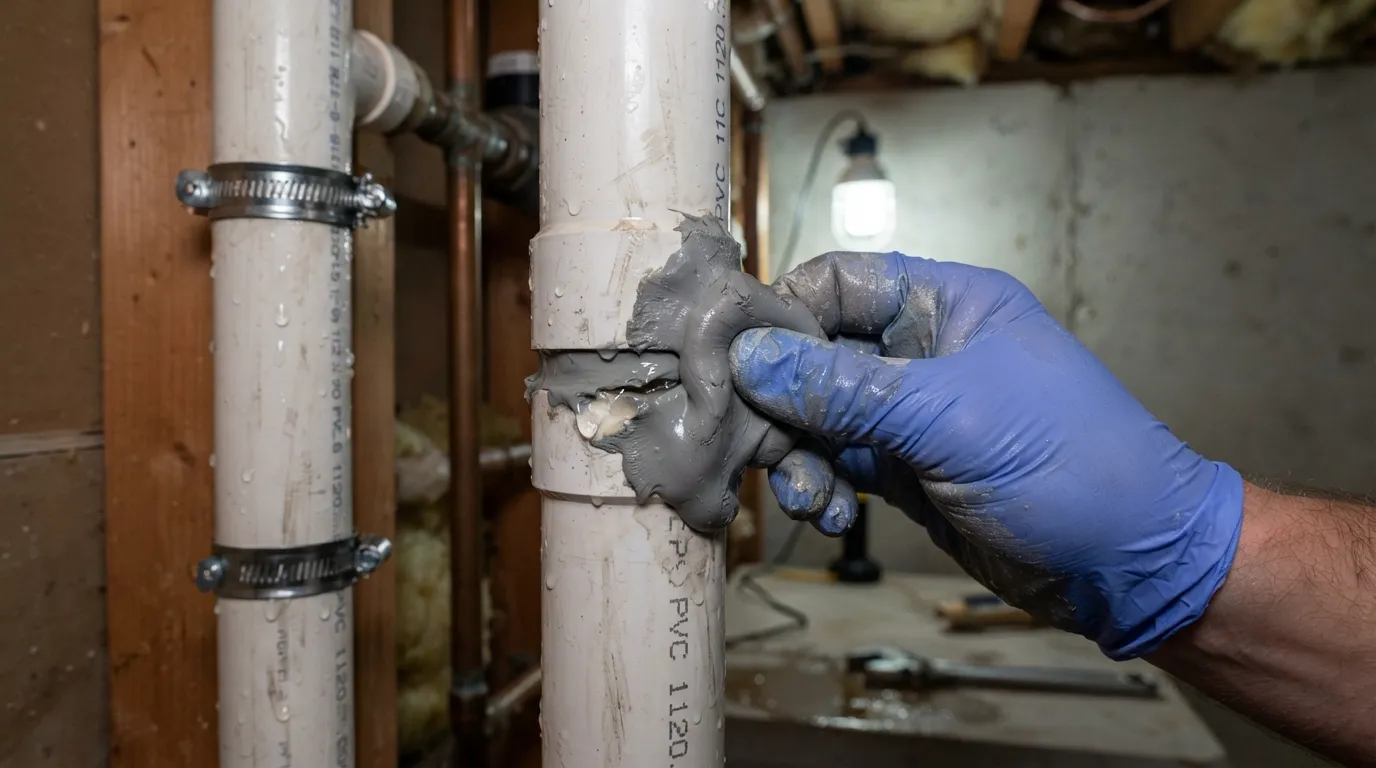
A small hole or crack in a PVC pipe does not always mean you need to replace the entire pipe. Epoxy putty can sometimes provide a practical patch for a small, localized defect, especially on a low-pressure line. But the right repair depends on where the damage is, how large it is, and whether the pipe carries pressure.
Quick Answer: Can You Repair PVC With Epoxy?
Yes, epoxy putty can be used to patch some small PVC holes, pinholes, cracks, and localized leaks. However, it should not automatically be treated as a permanent repair for every PVC pipe.
The key question is not simply “Does epoxy work on PVC?” It is “Is epoxy appropriate for this particular PVC damage?” Small defects on accessible, low-pressure sections may be candidates for a patch. A badly damaged pipe, large crack, failing fitting, or problematic pressurized line may need a more durable repair such as replacing the damaged pipe or fitting.
Before You Use PVC Epoxy, Identify the Damage
If you are looking for PVC epoxy repair, start by finding exactly where the water is escaping. A leak on the middle of a straight pipe is not the same repair problem as a leak at a glued joint or elbow.
Use these three questions first:
- What is damaged? A pinhole, crack, larger hole, joint, or fitting?
- Where is the damage? On the pipe wall, at a glued joint, or around a fitting?
- Is the line pressurized? A drain line and a pressurized water-supply line should not automatically be treated the same way.
How to Repair a Small PVC Pipe Hole With Epoxy Putty
If your damage is small and localized and you have determined that an epoxy patch is appropriate, preparation matters as much as the putty itself.
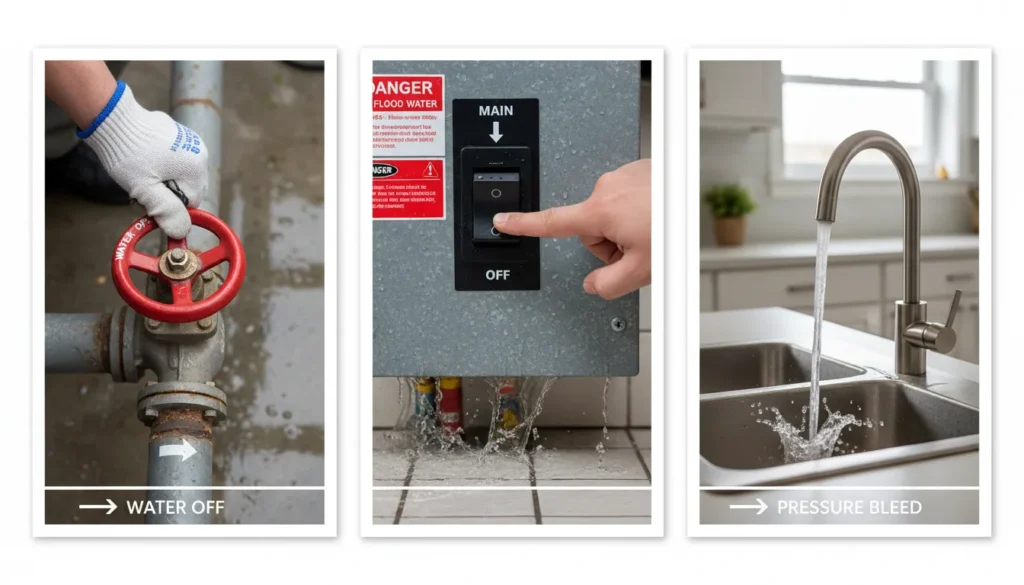
1. Shut Off the Water and Relieve Pressure
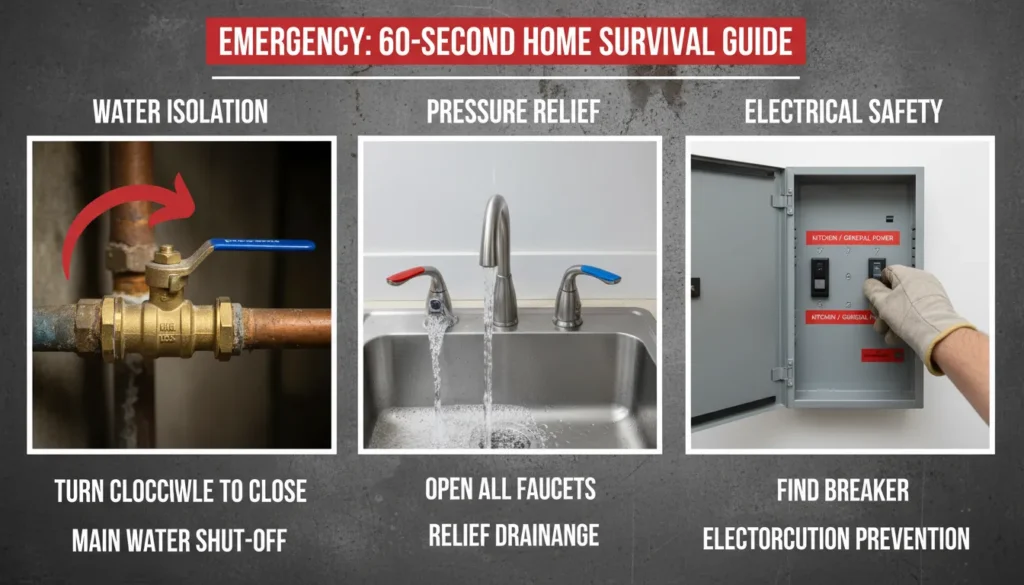
Turn off the water supply to the affected line if possible. If the pipe is holding water, drain it and relieve pressure before starting the repair.
A patch is much harder to apply reliably while water is actively pushing through the damaged area. Always follow the instructions for the particular epoxy product you are using, especially if its manufacturer provides specific requirements for wet or dry application.
2. Clean the PVC Around the Damage
Remove dirt, grease, algae, residue, and loose material from the repair area. The epoxy needs a suitable surface to bond to, so simply wiping around a dirty leak and covering it with putty is not a good preparation method.
Some epoxy products are designed for application to wet surfaces, while others may have different requirements. Follow the product label rather than assuming every epoxy behaves the same way.
3. Lightly Roughen the Surface When the Product Allows It
For products that call for surface preparation, lightly roughening the PVC around the damaged area can help create a better surface for the repair material to grip. Remove the resulting dust before applying the epoxy.
4. Cut and Knead the Epoxy Putty
Cut the required amount from the epoxy putty stick or use the amount specified by the product instructions. Knead it thoroughly with suitable gloves until the material is uniformly mixed according to the manufacturer’s directions.
5. Press the Epoxy Firmly Over the Hole or Crack
Press and mold the epoxy over and around the damaged section. The objective is to create a continuous patch over the defect rather than simply placing a small blob directly on the visible leak.
Work the material firmly into the damaged area and shape the outer surface as smoothly as practical.
6. Allow the Repair to Cure
Do not restore water pressure simply because the epoxy feels firm on the outside. Different products have different set and cure requirements.
For example, the supplied Loctite guidance describes a functional cure of 60 minutes and a full cure after 24 hours for the product discussed on its PVC repair guide. Your chosen product may specify something different, so its instructions should control. :contentReference[oaicite:0]{index=0}
7. Restore Water Pressure and Check the Repair
Once the manufacturer’s required cure period has been met, restore pressure gradually when practical and inspect the repaired area carefully. Look for renewed moisture, seepage, cracking, movement, or any sign that the patch is not holding.
If the leak returns, do not simply keep adding layers of epoxy without finding out why the repair failed.
Does Epoxy Work on PVC Joints?
It can sometimes be used as a patch around a leaking PVC joint, but a leaking joint deserves closer attention than a small hole in the middle of a straight pipe.
A joint can leak because of damage, movement, an installation problem, deterioration, or failure around the connection. Covering the outside of the joint may stop water temporarily without correcting the underlying problem.
If the joint is accessible and the connection itself is failing, replacing or rebuilding the affected fitting may provide a more appropriate permanent repair than repeatedly patching the outside.
Can You Fix a Leaking PVC Joint Without Cutting the Pipe?
Sometimes a localized external patch can stop a small leak without cutting the pipe. But “without cutting” should not automatically mean “better repair.”
If the pipe or fitting is structurally damaged, the joint has failed, or the leak continues after a properly prepared patch, cutting out the damaged section and installing the appropriate replacement may be the more reliable route.
The No-Cut Rule of Thumb
Use a no-cut patch because the damage is genuinely small and suitable for patching—not simply because you want to avoid replacing the damaged section. If the underlying pipe or fitting has failed, a cosmetic patch can hide the problem without solving it.
PVC Epoxy Putty vs. PVC Glue: What Is the Difference?
Epoxy putty and PVC solvent cement are not interchangeable products.
For example, manufacturer guidance distinguishes between epoxy repair putty and PVC-compatible silicone used around pipe penetrations. :contentReference[oaicite:1]{index=1}
What Is the Best Epoxy for PVC Pipe Repair?
There is no single epoxy that is automatically the best choice for every PVC repair. The better question is whether the particular product is appropriate for your specific application.
Before choosing an epoxy putty, check:
- Whether the product is intended for the material and application involved.
- Whether it is suitable for the conditions where you plan to use it.
- Whether it is designed for wet or dry application.
- Its working time and cure requirements.
- Whether the manufacturer provides plumbing-related application guidance.
- Whether the repair is a patch for a localized defect or being relied on as a permanent structural repair.
Products from manufacturers such as Loctite and Weld-On appear in the supplied search results, while retail results also include plumbing epoxy products. Product availability and formulations can change, so check the current product documentation before buying or applying one.
Related Product Resources
For product specifications and application instructions, check the manufacturer’s current documentation rather than choosing an epoxy based only on a product name or marketplace rating.
When Should You Replace the PVC Pipe Instead of Using Epoxy?
This is the decision many quick repair guides do not explain clearly enough.
Epoxy can be useful for a localized patch, but a patch should not be used to avoid a necessary pipe repair indefinitely.
Consider replacement when:
- The pipe has a long crack or large split.
- A substantial section of the pipe is damaged.
- The fitting itself has failed.
- The same area continues leaking after a properly applied repair.
- The pipe shows damage beyond the small area you originally intended to patch.
- The repair would be relied upon as a permanent solution on a pressurized line when the product or repair method is not intended for that application.
Manufacturer guidance also notes that pipes with long cracks or large gashes may be beyond a simple epoxy repair and that replacement can be the better long-term option. :contentReference[oaicite:2]{index=2}
Do Not Confuse “Leak Stopped” With “Repair Completed”
A patch that stops visible water is not automatically proof that the underlying pipe is permanently repaired. The condition of the pipe, location of the damage, line pressure, product suitability, and long-term reliability all matter.
PVC Epoxy Repair Decision Guide
Use This Simple Damage × Location × Pressure Check
Small damage + accessible surface + suitable product + appropriate line conditions → an epoxy patch may be worth considering.
Large damage + structural failure + failing fitting → replacement is usually the more appropriate direction.
Pressurized line + uncertain product suitability or recurring leak → do not assume another layer of epoxy is the answer; evaluate the underlying repair.
Common PVC Epoxy Repair Mistakes
Patching Without Finding the Actual Leak
Water can travel along the outside of a pipe, making the visible drip different from the actual source. Confirm where the defect begins before applying a patch.
Applying Epoxy to a Dirty Surface
Grease, dirt, algae, residue, and loose material can interfere with a repair. Surface preparation should be treated as part of the repair, not an optional extra.
Using the Wrong Product for the Application
“Epoxy” is a broad category. Read the manufacturer’s application and cure instructions instead of assuming one product is suitable for every plumbing situation.
Restoring Pressure Too Soon
Initial hardening and full cure are not necessarily the same thing. Follow the product’s specified cure schedule before relying on the repair.
Repeatedly Patching a Failed Joint
If a joint continues to leak, adding more material may only delay the underlying repair. Reassess whether the joint or fitting needs to be rebuilt or replaced.
What If the PVC Epoxy Repair Does Not Work?
If the patch continues to leak, stop and reassess rather than immediately adding more epoxy.
- Confirm that the leak is actually coming from the patched area.
- Check whether water pressure was fully relieved during application.
- Inspect whether the epoxy has bonded properly or separated from the PVC.
- Check whether the damage is larger or deeper than it first appeared.
- Determine whether the problem is actually a joint or fitting failure.
- Review the product’s application and cure requirements.
- If the underlying pipe or fitting is damaged, consider a proper replacement repair.
Can J-B Weld Be Used for PVC Repair?
Some J-B Weld products are marketed for plastic-related repairs, but the correct answer depends on the exact product and application. Do not assume that every J-B Weld formula is appropriate for every PVC plumbing repair.
Check the specific product’s current instructions for compatibility, intended use, application conditions, and cure requirements before using it on a PVC pipe.
Can PVC Glue Be Used to Fix a Leak?
PVC solvent cement is intended for making compatible PVC connections; it is not a universal substitute for a patching compound on a hole, crack, or damaged pipe wall.
If the pipe wall itself has a hole or crack, the repair question is different from joining a new PVC fitting to a replacement section. If an existing glued joint has failed, determine whether the connection needs to be rebuilt rather than simply covering the outside with another adhesive.
What About a PVC Leak Around a Pipe Penetration?
If the issue is not a damaged pipe but a gap around a PVC pipe where it passes through a wall, cabinet, floor, or other penetration, that is a different sealing problem.
A compatible sealant may be appropriate for creating a watertight seal around the penetration. That is different from repairing a hole or crack in the actual pipe wall.
PVC Epoxy Repair FAQ
The Bottom Line on PVC Epoxy Repair
PVC epoxy repair can be useful, but the best repair starts with diagnosis rather than the epoxy itself.
If you have a small, localized PVC hole, pinhole, or crack, determine the line conditions, prepare the surface properly, use a product that is suitable for the application, and follow its curing instructions.
If you have a large crack, major split, failing fitting, recurring leak, or a situation where the patch would be relied on as a permanent structural repair, do not let the convenience of epoxy replace a proper assessment of the damaged pipe.
Quick Takeaway
- Small localized damage: epoxy may be an option when the product and conditions are suitable.
- Large or structural damage: replacement deserves serious consideration.
- Leaking joint: diagnose the connection rather than automatically covering it.
- Pressurized line: use extra caution and do not assume a patch is permanent.
- Uncertain repair: getting the damaged pipe or fitting properly assessed can be safer than repeatedly patching it.
Need Help With a PVC Pipe Leak?
If you are dealing with a PVC leak and are not sure whether you need a patch, joint repair, or pipe replacement, you can review the plumbing services available from our plumbing team and choose the service that matches your situation.
You can also return to our plumbing homepage for additional plumbing information and service options.
If the leak is active, recurring, difficult to access, or connected to a pressurized water line, getting the problem properly evaluated can help you avoid turning a temporary patch into a repeated repair cycle.
So,I like it