If you’ve ever stood in the plumbing aisle staring at a wall of PEX fittings, you’re not alone. Between crimp rings, expansion sleeves, push-to-connect fittings, brass bodies, and poly-alloy versions, it’s easy to grab the wrong one. This guide walks you through exactly what each fitting does, which connection method fits your project, and the questions most homeowners have about durability, burial, and long-term reliability — the things product listings rarely explain.
What Are PEX Plumbing Fittings?
PEX plumbing fittings are the connectors that join sections of cross-linked polyethylene (PEX) pipe to each other, to fixtures, or to other pipe materials like copper or threaded steel. They’re typically made from brass or a poly-alloy (plastic) material, and they’re what allow a PEX system to branch, turn corners, or transition into a valve or fixture. Without the correct fitting and connection method, even the best PEX pipe won’t hold a reliable seal.
The Three Main Types of PEX Fitting Connections
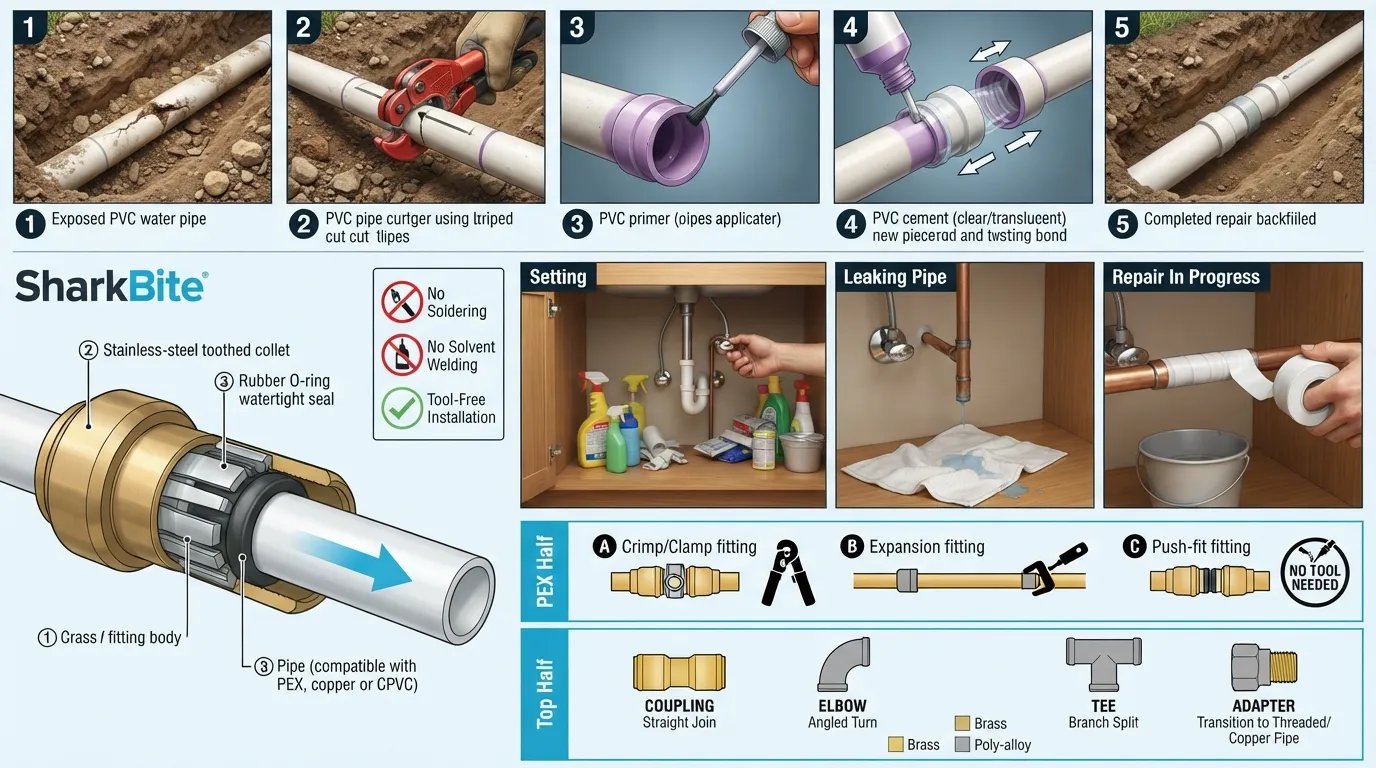
Every PEX fitting is installed using one of three connection methods. The method you choose affects which tools you need, how much it costs to get started, and how forgiving the installation is for a first-timer.
1. Crimp/Clamp Fittings
Crimp fittings use a metal ring that’s squeezed down over a barbed fitting with a dedicated crimping tool. It’s the most established method and works with both PEX-A and PEX-B pipe, which makes it a common choice for anyone doing a mix of repairs and new runs.
2. Expansion Fittings
Expansion fittings work only with PEX-A pipe. An expander tool stretches the end of the pipe, the fitting is inserted, and the pipe’s memory causes it to shrink back down around the fitting to form the seal. Because there’s no ring compressing the pipe wall, many installers find this method leaves a more consistent, full-flow connection.
3. Push-Fit Fittings
Push-fit (push-to-connect) fittings grip the pipe the moment it’s pushed in, with no crimping or expanding tool required. They’re the fastest option for small repairs or tight spaces, though they tend to cost more per fitting than crimp options.
| Connection Type | Tool Needed | Works With | Best For |
|---|---|---|---|
| Crimp/Clamp | Crimping tool + go/no-go gauge | PEX-A & PEX-B | General repairs and full re-pipes |
| Expansion | Expander tool | PEX-A only | Tight bends, full-flow connections |
| Push-Fit | None required | PEX-A, PEX-B & PEX-C | Quick repairs, accessible areas |
Common PEX Fitting Shapes and What They Do
Once you’ve picked a connection method, you’ll also need the right shape for the job:
- Couplings — join two straight sections of pipe together.
- Elbows — turn a water line at a 90-degree or 45-degree angle.
- Tees — split a single line into a branch, useful when adding a fixture off a main run.
- Adapters — transition PEX pipe to threaded connections, shut-off valves, or copper pipe.
PEX-A vs. PEX-B: Which Is Better for Fittings?
This is one of the most common points of confusion, and it matters because it directly limits which fittings you can use.
- PEX-A is more flexible, has better memory (so it can be expanded and will shrink back), and is compatible with all three connection methods, including expansion fittings.
- PEX-B is stiffer and generally less expensive, but it cannot be used with expansion fittings — it’s limited to crimp/clamp or push-fit connections.
For underground water lines specifically, PEX-A is usually the preferred choice because its flexibility means fewer fittings are needed for a given run, and every fitting is a potential point of failure underground.
Can You Bury PEX Directly in the Ground?
How deep should a PEX water line be buried? Burial depth depends on your local frost line and plumbing code, so this is worth confirming with your local building department or a licensed plumber before you dig, since requirements vary significantly by region.
How Long Will PEX Last?
PEX pipe and fittings are generally built for a long service life, whether buried underground or set in concrete. Longevity in both scenarios depends heavily on installation quality — using the correct fitting type for the application, protecting joints from stress, and following manufacturer burial and embedment guidelines. Poor installation is a far more common cause of early failure than the material itself.
Why Some Insurance Companies Are Cautious About PEX Plumbing
Some insurance companies have historically been more cautious about PEX plumbing due to past manufacturing defects linked to specific fitting brands and production batches, along with a general unfamiliarity with the material compared to copper. This isn’t a reflection of PEX as a whole — it’s largely tied to specific legacy products. If you’re concerned, it’s worth asking your insurer directly what their current stance is, since policies and PEX quality standards have evolved.
The PEX Pipe Lawsuit: What Homeowners Should Know
Downsides of PEX Plumbing You Should Know
- PEX cannot be used outdoors where it’s exposed to direct sunlight for extended periods, since UV exposure degrades the material over time.
- It’s more vulnerable to damage from rodents than metal piping.
- Certain fitting types (especially expansion) require specific tools, which adds upfront cost for a first-time installer.
- Not all fittings are interchangeable between PEX-A and PEX-B, so mixing pipe types on one project requires extra care.
How to Protect PEX Pipes From Rodents
Because PEX is a flexible plastic, it’s more prone to gnaw damage than rigid copper or steel pipe. A few practical steps help reduce the risk:
- Run PEX through metal conduit or sleeving in areas with known rodent activity, such as crawl spaces or attics.
- Seal entry points around foundation walls and utility penetrations where pipe passes through.
- Avoid leaving excess slack in exposed runs, since loose pipe is easier for rodents to reach and chew.
Tools You’ll Need for Each Fitting Type
| Fitting Type | Required Tools |
|---|---|
| Crimp/Clamp | Crimp tool, go/no-go gauge, pipe cutter |
| Expansion | Expansion tool with correct-size head, pipe cutter |
| Push-Fit | Pipe cutter only (fitting handles the rest) |
Watch: How PEX Fittings Are Installed
If you’d rather see the process in action before choosing a fitting type, this walkthrough covers the crimp and push-fit methods step by step:
Which PEX Fitting Should You Choose?
Quick Decision Guide
- Doing a full re-pipe or working with PEX-A? Expansion fittings usually give the most consistent, full-flow connection.
- Mixing PEX-A and PEX-B, or want a proven method? Crimp/clamp fittings work with both pipe types.
- Making a quick repair in a tight or hard-to-reach spot? Push-fit fittings need no tools and install in seconds.
- Not sure which pipe or fitting your existing system uses? It’s worth having a licensed plumber confirm before you buy, especially for buried or in-wall repairs.
Frequently Asked Questions
What are the two main types of PEX fittings?
Fittings are generally grouped by connection method (crimp, expansion, or push-fit) and by material (brass or poly-alloy). Brass fittings are more durable in high-heat or high-stress areas, while poly-alloy fittings are lighter and cost less.
Is PEX-A or PEX-B better for underground water lines?
PEX-A is generally preferred underground because its flexibility allows longer continuous runs with fewer fittings, reducing the number of potential failure points below grade.
What is the downside to PEX plumbing?
PEX degrades with prolonged UV exposure, is more vulnerable to rodent damage than metal pipe, and some fitting types require specific tools to install correctly.
How long will PEX last in concrete?
PEX is commonly embedded in concrete slabs and, when installed correctly with proper sleeving where required, is designed for long-term use. As with buried lines, the quality of the installation matters more than the material itself.
Not Sure Which PEX Fitting Your Repair Needs?
Our licensed plumbers can inspect your system, confirm your pipe type, and handle the repair or installation correctly the first time.
Choosing the right PEX fitting is only part of a reliable plumbing job — proper installation and code compliance matter just as much. If you’re planning a repair or a full water heater replacement that involves PEX line work, our team can walk you through it. You can also browse our full range of plumbing services or head back to our homepage to learn more about who we are.
Additional Resources
If you’re ready to shop for fittings or want to dig deeper into manufacturer specs, these are solid places to start: