A leaking pipe rarely stays small for long. What starts as a slow drip under a sink or behind a wall can quickly turn into water damage, mold, and a much bigger repair bill. In this guide, I’ll walk you through exactly why pipes leak, how to find the source, what you can safely do yourself, and when it’s time to call a licensed plumber.
To fix a leaking pipe, first shut off the main water supply, dry the area, and identify the exact leak point (pinhole, crack, or joint). Small leaks can often be stopped temporarily with a pipe repair clamp, epoxy putty, or self-fusing silicone tape. However, any leak at a joint, inside a wall, or caused by corrosion usually needs a permanent fix from a licensed plumber to prevent it from returning.
Common Causes of a Leaking Pipe
Before you patch anything, it helps to know what actually causes pipes to leak. The fix you choose depends heavily on the root cause.
- Corrosion: Older metal pipes (galvanized steel, copper) weaken over time and develop pinhole leaks.
- High water pressure: Pressure that’s too high stresses joints, fittings, and pipe walls until they give way.
- Loose or failed joints: Fittings and connections can loosen from vibration, temperature changes, or age.
- Temperature swings: Pipes expand and contract with heat and cold, which can crack joints over repeated cycles.
- Physical damage: Nails, drilling, or shifting foundations can puncture or crack a pipe.
- Worn-out seals and washers: Rubber components inside fittings degrade and stop sealing properly.
How to Find Where a Pipe Is Leaking
A leak isn’t always where the water shows up. Water often travels along a pipe or inside a wall cavity before dripping somewhere visible. Here’s how to trace it back to the source:
- Dry the suspected area completely with a towel.
- Wrap the pipe or joint in dry tissue paper and check where it gets wet first.
- Check your water meter: turn off every fixture in the house, then watch if the meter still moves — that confirms an active leak somewhere in the system.
- Look for warning signs like discoloration, bubbling paint, a musty smell, or soft drywall, which often point to a hidden leak behind a wall or ceiling.
Step-by-Step: How to Stop a Leaking Pipe (Temporary Fix)
If you’ve got active water coming from a pipe right now, these steps will help you stop the damage until a permanent repair can be made.
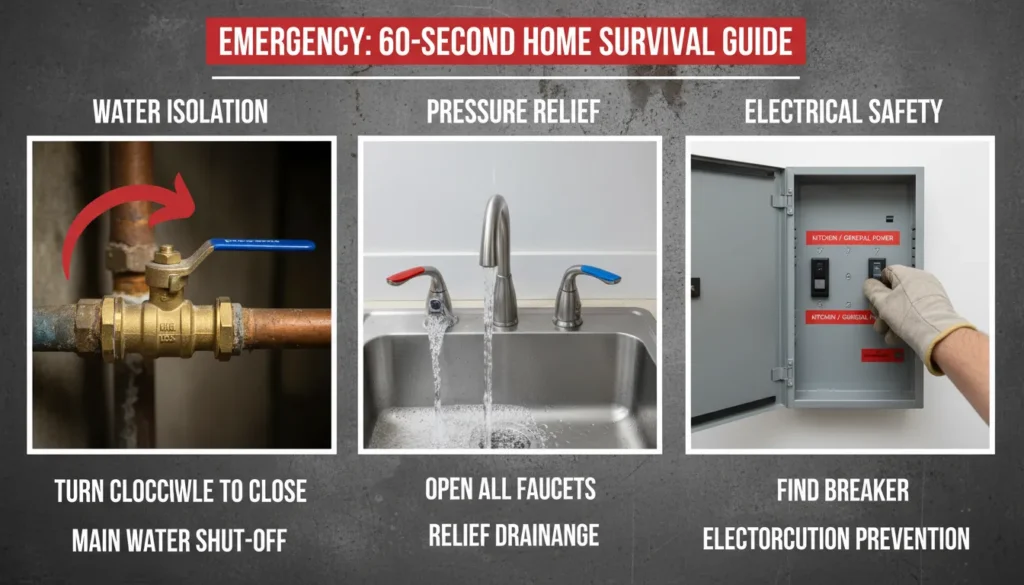
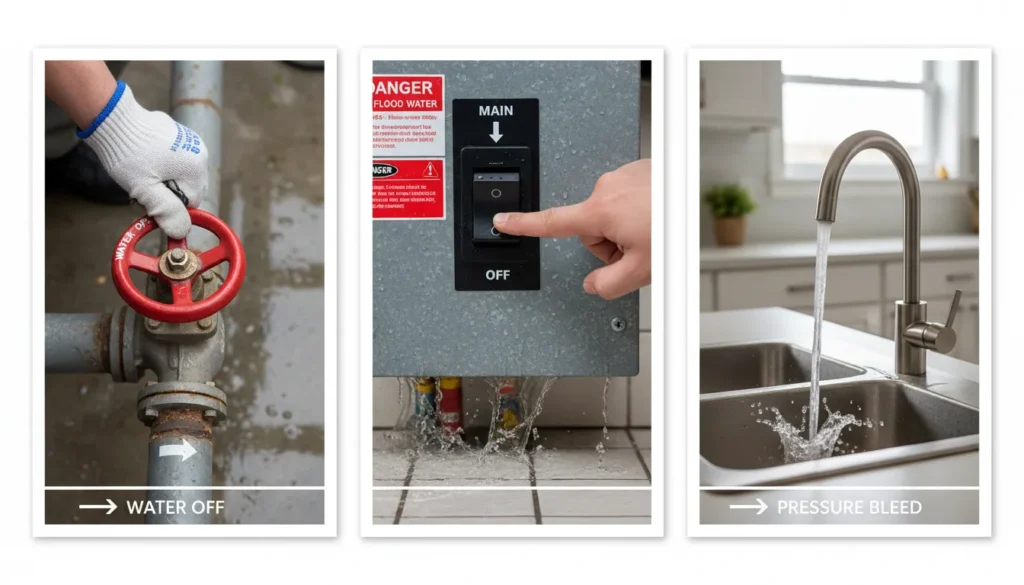
- Shut off the water supply. Use the isolation valve for that fixture if there is one, or shut off the main water valve for the house.
- Drain the line. Open the nearest faucet below the leak to relieve pressure and let remaining water drain out.
- Dry the pipe completely. Repair materials won’t bond properly to a wet surface.
- Choose your temporary fix based on the leak type:
- Pinhole leak: Self-fusing silicone repair tape wrapped tightly around the area.
- Small crack: Two-part epoxy putty molded directly over the crack.
- Split or hole: A pipe repair clamp (rubber sleeve with metal clamp) tightened over the damaged section.
- Leaking joint or fitting: Turn off water and tighten the fitting slightly, or wrap with rubber and a hose clamp as a short-term measure.
- Turn the water back on slowly and watch closely for any sign the leak is continuing.
Important: These are temporary fixes, not permanent solutions. Repair clamps, tape, and putty are meant to hold you over — they are not a substitute for replacing a corroded pipe or resealing a joint properly.
How to Fix a Leaking Pipe Joint Specifically
Joint leaks behave differently than leaks along a straight section of pipe, so they need a slightly different approach:
- Threaded joints: Shut off the water, disassemble the joint, clean off old sealant, and reapply plumber’s tape or pipe joint compound before reassembling.
- Compression fittings: Often the fix is as simple as tightening the nut — but overtightening can crack the fitting, so snug it gradually and check for leaks after each turn.
- Soldered (sweated) copper joints: These generally need to be desoldered, cleaned, and re-soldered — this is not a DIY-friendly repair for most homeowners and is best left to a professional.
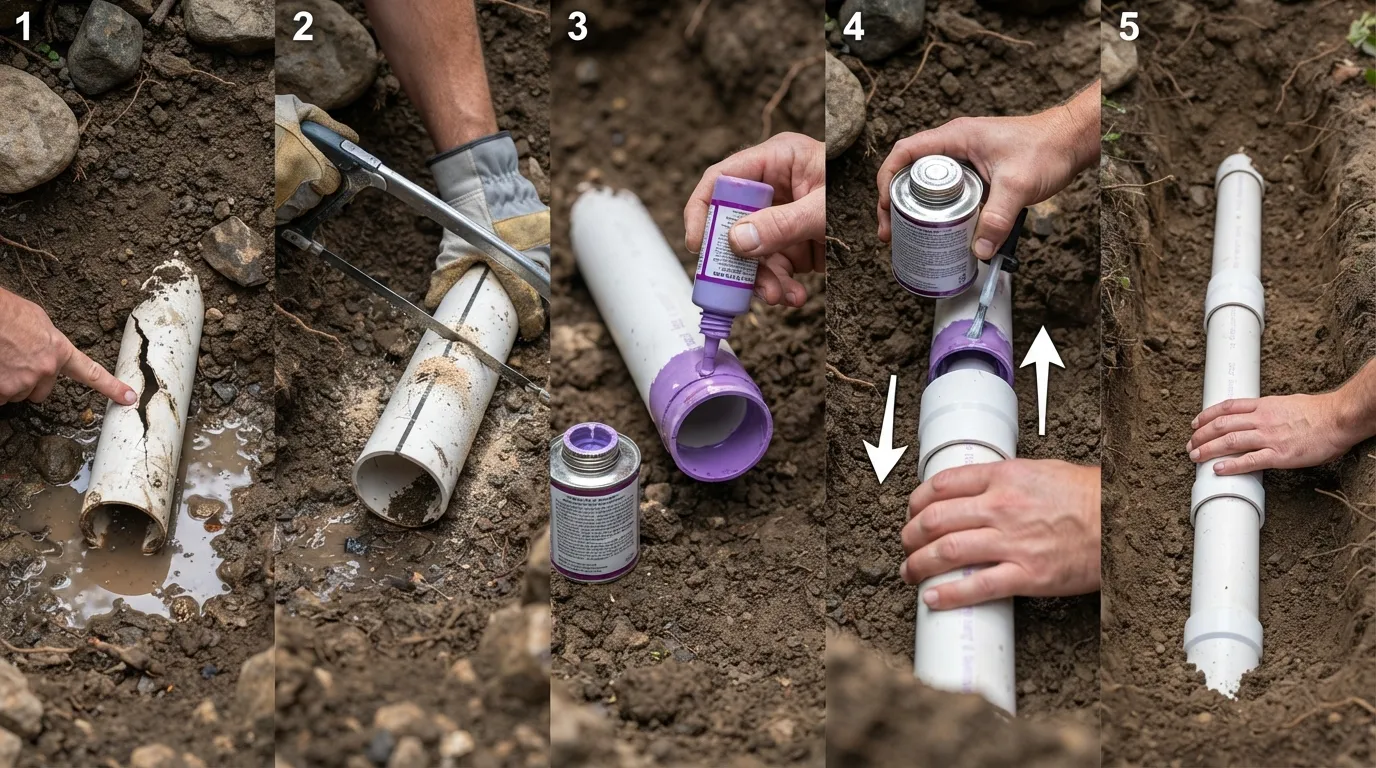
- PVC joints: A failed PVC joint usually needs to be cut out and reglued with primer and PVC cement, since patching over old cement rarely holds.
DIY Fix or Call a Plumber? How to Decide
Not every leak needs a service call, but some absolutely do. Here’s a simple way to weigh it:
| Situation | Recommended Action |
|---|---|
| Small drip from an accessible pipe under a sink | Safe to attempt a temporary DIY fix |
| Leak inside a wall, ceiling, or slab foundation | Call a licensed plumber — hidden leaks cause structural damage fast |
| Leaking joint on copper or soldered pipe | Professional repair recommended |
| Leak near your water heater connection | Have a plumber inspect it — it may signal the water heater needs replacement |
| Recurring leak after a DIY patch | Underlying issue (pressure, corrosion) needs a professional diagnosis |
What Happens If You Ignore a Leaking Pipe
A leak that’s left unrepaired doesn’t stay the same size — it gets worse. Over time it can lead to:
- Mold and mildew growth in walls, floors, or cabinets
- Weakened drywall, subflooring, or wood framing
- Higher water bills from continuous water loss
- Reduced water pressure throughout the home
- Complete pipe failure, which is far more expensive to repair than the original leak
How to Prevent Pipe Leaks in the Future
- Have your water pressure checked and set within a safe range for your plumbing system.
- Insulate exposed pipes to protect against temperature swings.
- Replace aging galvanized or corroded piping before it fails.
- Schedule periodic plumbing inspections, especially for homes over 20 years old.
- Avoid over-tightening fittings, which can crack rather than seal them.
Key Takeaways
- Shut off water and dry the area before attempting any repair
- Repair clamps, epoxy putty, and silicone tape work as temporary fixes only
- Joint leaks, hidden leaks, and soldered copper repairs are best handled by a plumber
- Ignoring a leak almost always costs more than fixing it early
Frequently Asked Questions
Can I fix a leaking pipe without turning off the main water supply?
If the fixture has its own shut-off valve, you can isolate just that line. Otherwise, you’ll need to shut off the main supply so the area is dry enough to repair.
How long will a pipe repair clamp or epoxy putty last?
These are temporary measures. They can hold for weeks or months depending on water pressure and pipe condition, but they don’t address the underlying cause, so a permanent repair is still needed.
Why does my pipe keep leaking even after I fixed it?
A recurring leak usually points to a bigger issue, such as high water pressure or advanced pipe corrosion, rather than a problem with the patch itself. A plumber can pressure-test the line to find the real cause.
Is a leaking pipe an emergency?
If the leak is fast, near electrical wiring, or inside a wall or ceiling, treat it as an emergency and shut off the water immediately. Slow, contained drips can usually wait for a scheduled repair.
Dealing With a Leaking Pipe Right Now?
Our licensed Miami plumbing team can trace, diagnose, and permanently repair any pipe leak — including hidden leaks and joint failures. If the leak is coming from an aging water heater connection, we can also assess whether a replacement makes more sense than a repeated repair. Browse our full range of plumbing services to see how we can help.