If you’re dealing with recurring leaks, discolored water, or pipes that just feel like they’re on borrowed time, you’ve probably started asking one question: how much is this actually going to cost? Repiping a whole house isn’t cheap, but the price swings a lot depending on your home’s size, your pipe material, and — if you’re in South Florida — some local factors most national cost guides never mention.
We’ll walk through real cost ranges by size and material, the hidden costs that catch homeowners off guard, and why repiping in Florida often plays by different rules than repiping in, say, Ohio.
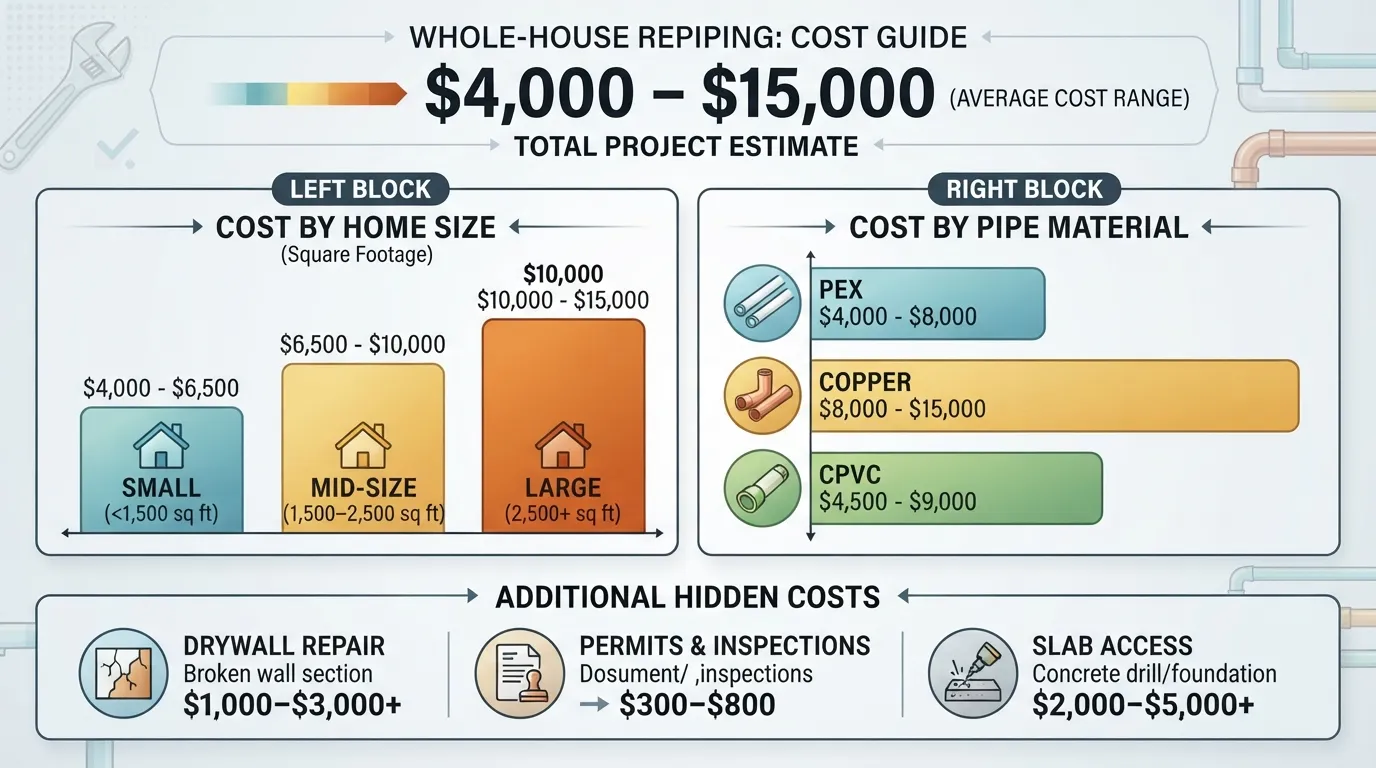
Repiping a house typically costs $4,000 to $15,000, with most homeowners paying around $7,500 on average. The final number depends mainly on your home’s square footage and whether you choose PEX, copper, or CPVC piping.
Repiping Cost by House Size
Square footage is the single biggest cost driver, since it determines how much pipe run, wall access, and labor time the job needs.
| Home Size | Estimated Cost Range |
|---|---|
| Small home (under 1,500 sq ft) | $3,000 – $6,000 |
| Mid-size home (1,500 – 2,500 sq ft) | $5,500 – $10,000 |
| Large home (2,500+ sq ft) | $10,000 – $20,000+ |
Repiping Cost by Pipe Material: PEX vs. Copper vs. CPVC
Material is the second-biggest factor, and it’s also where most homeowners get stuck deciding. Here’s how the three main options compare.
| Material | Cost Range | Best For |
|---|---|---|
| PEX | $4,000 – $10,000 | Budget-conscious homeowners; flexible, fast to install |
| Copper | $8,000 – $18,000 | Long-term durability, resale value, traditionalists |
| CPVC | $4,000 – $8,000 | Rigid plastic option, sits between PEX and copper on price |
Here’s the honest breakdown so you’re not just picking based on price:
- PEX is the most common choice today. It’s flexible enough to snake through walls without as much demolition, which keeps labor costs down. It’s not as heat-resistant as copper and isn’t recommended for exterior or direct sunlight exposure.
- Copper lasts longer, handles heat well, and is often what buyers expect in higher-end homes — but the material and labor costs are significantly higher, and copper prices fluctuate with commodity markets.
- CPVC is a middle-ground option: more affordable than copper, more rigid than PEX, but less commonly used by plumbers in newer installations.
Why Do Some Insurance Companies Have Issues With PEX?
This comes up a lot, and it’s a fair concern. Some older insurance policies were written when PEX was newer to the market, and a handful of insurers historically flagged it due to concerns about UV degradation (if exposed to sunlight) or compatibility with certain water treatment systems. Today, PEX is widely accepted by most major insurers, but it’s worth a quick call to your provider before you commit, since policies do vary.
Hidden Costs Most Repipe Quotes Don’t Mention
The material and labor number is rarely the full picture. Here’s what tends to get added on:
- Drywall and wall repair: $300 – $900+. Plumbers have to cut into walls to reach old pipes, and patching or repainting is usually billed separately.
- Concrete slab access: If your home is built on a slab, accessing pipes is harder and can add thousands to the labor bill.
- Permits and inspections: Typically $50 – $500 depending on your local building department.
Why Repiping Costs More (and Matters More) in South Florida
Most repipe cost guides are written with a generic, national homeowner in mind. If you’re in Miami or anywhere in South Florida, a few things change the math:
- Slab-on-grade construction is the norm here. Unlike homes with basements or crawl spaces, most South Florida homes have pipes running through or under a concrete slab, which makes access more labor-intensive and can push costs toward the higher end of the range.
- Older homes often still have galvanized steel or cast-iron plumbing. These materials corrode faster in our climate, and once they start failing, patch repairs stop making financial sense — a full repipe becomes the more cost-effective long-term fix.
- Humidity and hard water accelerate wear. South Florida’s water and climate conditions can shorten the lifespan of aging pipes compared to drier regions, which is why repiping tends to come up sooner here than in other parts of the country.
If your home was built before the 1980s and still has its original plumbing, it’s worth having a licensed plumber inspect the pipe material before you assume a “cost to repipe” number applies evenly to your situation.
Can You DIY a Repipe With PEX?
PEX is flexible and beginner-friendlier than copper, so it’s technically possible for an experienced DIYer to install sections of it. That said, a whole-house repipe is a different scale of project — it usually requires pulling permits, passing inspection, and correctly sizing and routing pipe throughout the home. In many areas, including South Florida, permit approval for whole-house repiping typically requires the work to be performed or signed off by a licensed plumber. Before attempting this yourself, check with your local building department, since getting it wrong can mean costly rework or issues at resale.
Is It Worth It to Repipe Your House?
Generally, yes, if you’re dealing with any of the following:
- Recurring leaks in different parts of the house (a sign the whole system is aging out, not just one bad section)
- Low water pressure caused by internal pipe corrosion
- Discolored or rusty-tasting water
- Visible corrosion on exposed pipes
- Frequent, expensive individual pipe repairs that are starting to add up to repipe-level cost anyway
If you’re only dealing with one isolated issue — like a single leaking connection — a targeted repair is usually the smarter first move. A full repipe makes the most financial sense when problems are spreading, not isolated.
Does the Number of Bathrooms Affect the Cost?
Yes. Every bathroom adds fixtures (sinks, toilets, showers, sometimes tubs), and each fixture needs its own supply line connection. More bathrooms generally mean more pipe runs and more labor hours, which is one reason two homes with the same square footage can still land at different price points depending on their layout.
Repiping a Mobile Home vs. a Standard House
Mobile and manufactured homes are usually cheaper and faster to repipe than a traditional house. The plumbing systems tend to be more compact, with shorter pipe runs and easier under-home access (rather than pipes buried in walls or a slab), which typically reduces labor time compared to a standard home repipe. That said, material choice and the home’s specific layout still matter, so it’s worth getting a quote based on your exact setup rather than assuming a flat lower rate.
Getting an Accurate Quote
Before you commit to a number, keep these in mind:
- Get at least 3 bids. Prices for the exact same scope of work can vary significantly between companies, so one quote alone won’t tell you if you’re getting a fair price.
- Remember that labor is the bulk of the bill — roughly 70% of your total quote goes toward labor, not materials. This is why two quotes with similar material costs can still differ a lot based on the company’s labor rates.
- Ask if permit fees and wall repair are included in the quoted price, or billed separately — this is one of the most common places quotes end up higher than expected.
If your home is also due for a water heater upgrade, it’s often worth timing both projects together — our water heater replacement guide breaks down what that typically involves.
Watch: A Quick Look at the Repiping Process
Key Takeaways
- Whole-house repiping costs $4,000–$15,000 on average, driven mainly by home size and pipe material
- PEX is the most budget-friendly option; copper costs more but lasts longer
- Slab construction and older pipe materials make South Florida repipes cost more than the national average in many cases
- Always get 3+ bids and confirm whether permits and wall repair are included
Frequently Asked Questions
How much does it cost to repipe a 1,500 sq ft house?
A home under 1,500 sq ft typically falls in the $3,000–$6,000 range, though the final cost depends on your chosen pipe material and how accessible your walls or slab are.
How much does it cost to plumb a 2,000 sq ft house?
A 2,000 sq ft home sits in the mid-size bracket, generally $5,500–$10,000, depending on material and layout complexity.
Is it better to repipe a house with PEX or copper?
There’s no single right answer — PEX is more budget-friendly and easier to install, while copper is more durable and often preferred for resale value. Your choice should depend on budget, timeline, and how long you plan to stay in the home.
Is copper or PEX cheaper?
PEX is cheaper. It typically runs $4,000–$10,000 versus copper’s $8,000–$18,000, mainly because PEX requires less labor time and the material itself costs less.
What is the downside to PEX plumbing?
PEX isn’t ideal for exterior use or direct sunlight exposure, as UV can degrade it over time. It’s also not as heat-tolerant as copper.
Is it worth replacing copper pipes with PEX?
If your copper pipes are still in good condition, replacing them purely to switch materials usually isn’t worth it. It makes more sense when the copper is already failing or when you’re doing a renovation that opens up the walls anyway.
A note on DIY repiping: Whole-house repiping without a permit or licensed plumber can create issues with insurance claims and home resale down the line. Even if you’re comfortable with the physical work, it’s worth having a licensed plumber pull the permit and sign off on the job.
Helpful Resources
- IAPMO – plumbing code and standards information
- EPA WaterSense – water efficiency guidance for home plumbing
Not Sure If You Need a Full Repipe or Just a Repair?
Our team can take a look and give you a straight answer — no upsell, just an honest assessment for your home.
For more plumbing guides and tips, browse our full plumbing services page.