If you’ve just spotted water dripping from a copper pipe, you’re probably asking two things right now: can I fix this myself, and how? The good news is that most copper pipe leaks — pinholes, small joint leaks, even a nail puncture — can be temporarily or permanently repaired without calling anyone, as long as you use the right method for your situation.
In this guide, I’ll walk you through every practical repair option, help you figure out which one fits your leak, and show you exactly when it’s time to stop DIYing and bring in a licensed plumber instead.
The fastest way to fix a leaking copper pipe is a push-to-connect slip coupling or a rubber-and-clamp repair kit — both work without soldering and can stop a leak in minutes. For a permanent, code-approved fix, soldering a replacement section is still the standard method plumbers rely on.
Why Is Your Copper Pipe Leaking?
Before picking a repair method, it helps to know what caused the leak — it often determines whether a quick patch is enough or whether you’re looking at a bigger problem.
- Pinhole leaks: Usually caused by high water pressure, acidic water, or chemical reactions from flux residue left inside the pipe after installation.
- Burst pipes: Typically the result of water freezing inside the line and expanding, cracking the copper.
- Bad joints: Caused by improper soldering or poor pipe preparation during the original installation.
- Physical damage: A nail, screw, or drill bit accidentally puncturing the pipe during construction or renovation work.
Step 1: Prep the Area Before Any Repair
No matter which repair method you choose, always start here:
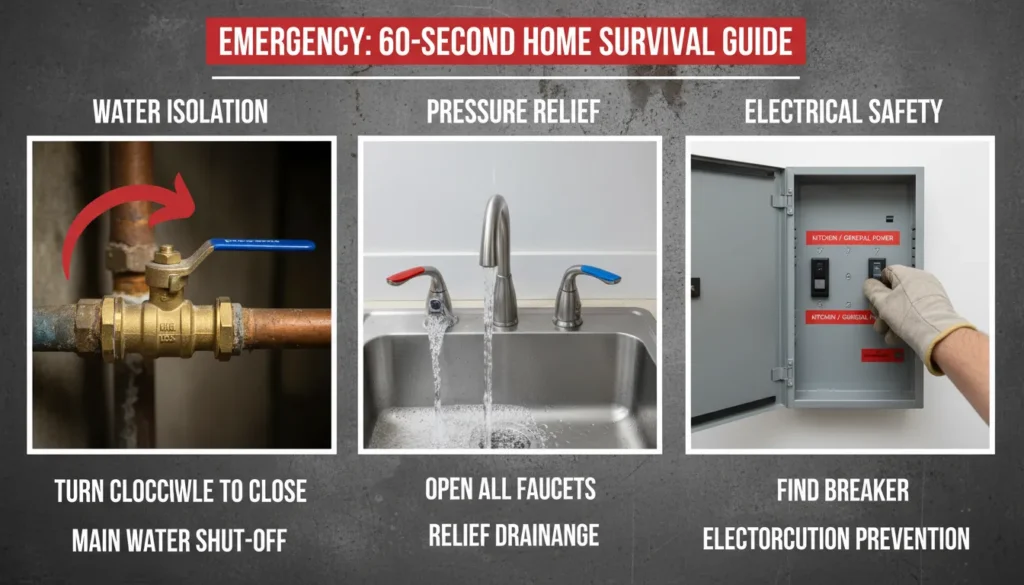
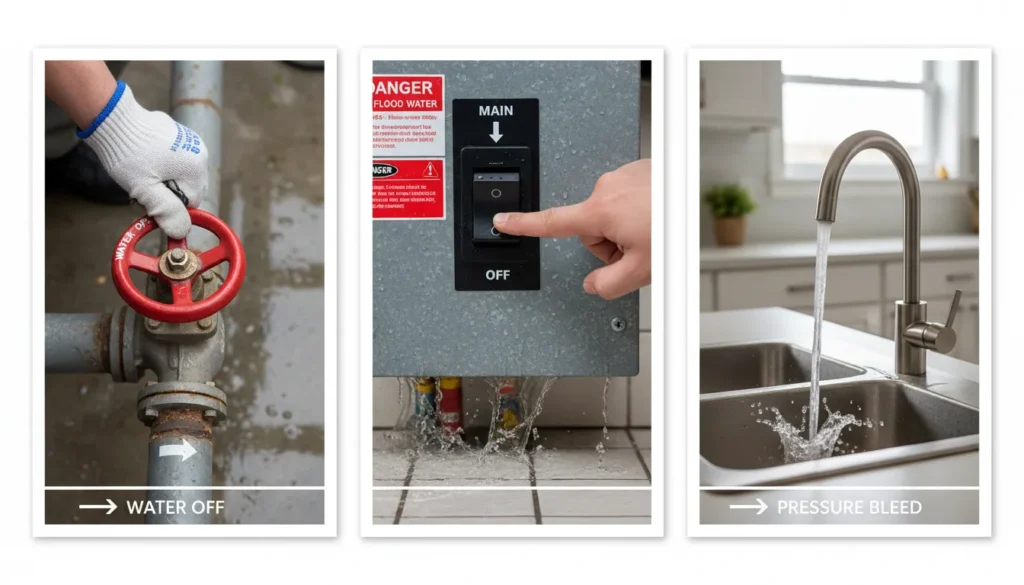
- Turn off the main water supply to your home.
- Open the lowest faucet in the house to drain remaining water from the lines.
- Thoroughly dry the outside of the pipe around the leak before doing anything else.
Step 2: Choose the Right Repair Method for Your Leak
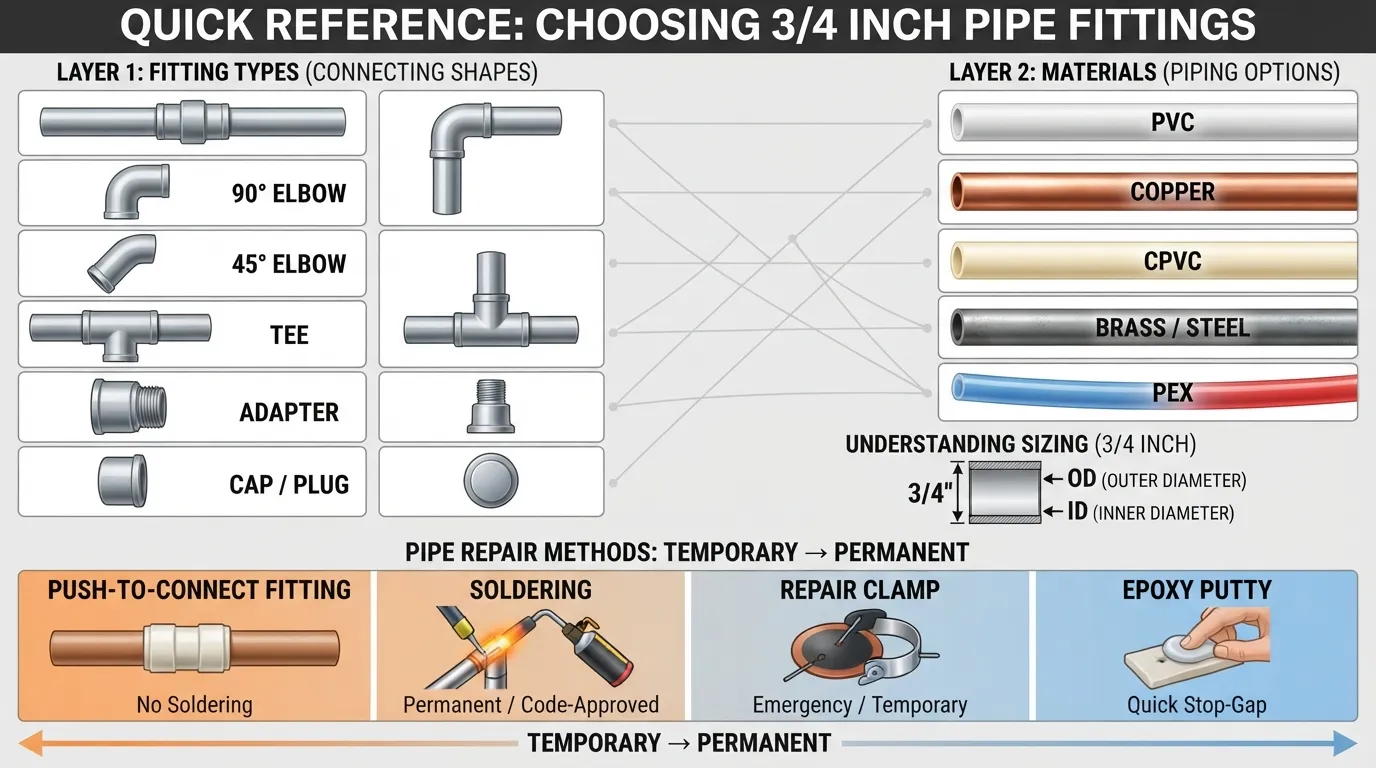
Not every leak needs the same fix. Here’s how the main repair options compare, so you can pick the one that matches your situation, tools, and how permanent you need the fix to be.
Push-to-Connect Fitting (Easiest, No Soldering)
Best for: Small pinholes or a cut section in a straight run of pipe.
Permanence: Semi-permanent to permanent, depending on the fitting used.
How to do it: Use a pipe cutter to remove the damaged section, then a deburring tool to smooth the rough edges. Push a push-to-connect slip coupling directly onto the pipe to bridge the gap — no torch or flux required.
Soldering (Traditional, Code-Approved)
Best for: A permanent repair that meets plumbing code.
Permanence: Permanent.
How to do it: Clean and polish the outside of the pipe and the inside of the coupling with an emery cloth or wire brush. Apply water-soluble flux, slide the coupling into place, heat the joint evenly with a blowtorch, and touch solder to the joint until it’s drawn fully inside.
Pipe Repair Clamp (Fast, Temporary)
Best for: An emergency stop-gap until a permanent repair or a plumber visit.
Permanence: Temporary.
How to do it: Wrap a rubber patch over the hole, place the metal clamp over the patch, and tighten the screws evenly until the seal compresses.
Epoxy Putty (Emergency, No Tools)
Best for: A very quick, tool-free stop-gap for a small pinhole leak.
Permanence: Temporary.
How to do it: Dry the pipe completely, knead a two-part plumbing epoxy putty, and press it firmly over the leak, extending slightly past the edges of the damage. Let it cure fully before restoring water pressure.
How to Fix a Copper Pipe Leak Without Soldering
If you don’t own a blowtorch — or you’re just not comfortable using one near a wall or ceiling — you have solid options. Push-to-connect couplings, repair clamps, and epoxy putty all work without any heat source. Push-to-connect fittings are the strongest of the no-solder options, since they create a genuine mechanical seal rather than just covering the leak, which is why many homeowners treat them as a semi-permanent fix rather than a stop-gap.
Some people also ask about push-fit brands like SharkBite for this exact reason — more on that below.
Fixing a Leak at a Pipe Joint
A leak at a joint is usually a different problem than a leak in the middle of a straight pipe run. It typically means the original soldering wasn’t done correctly, or the joint has slowly loosened over time. Repair clamps and epoxy putty can stop the drip temporarily, but because the failure is at a connection point rather than the pipe wall itself, re-soldering the joint — or replacing it with a push-to-connect coupling — is usually the more reliable long-term fix. If the joint is hidden behind a wall or in a tight space, this is one of the more common reasons homeowners end up calling a plumber rather than repairing it themselves.
Accidentally Put a Nail Through a Copper Pipe? Here’s What to Do
This happens more often than people expect, usually while hanging a shelf or during a renovation. The good news is that a nail puncture is treated exactly like a pinhole leak: shut off the water, dry the area, and use a repair clamp, epoxy putty, or a push-to-connect coupling depending on how permanent you need the fix to be. The one difference is that a nail can sometimes cause a slightly larger or irregular hole than a typical pinhole, so a repair clamp with a larger rubber patch — or replacing the short damaged section entirely — tends to seal more reliably than epoxy alone.
Does SharkBite Work on Copper? Why Some Plumbers Are Cautious About It
Yes — SharkBite and similar push-to-connect fittings are designed to work directly on copper pipe, and they’re genuinely useful for a fast, tool-free repair. That said, you’ll hear some plumbers recommend against relying on them long-term, for a few practical reasons:
- The internal rubber O-ring can degrade over time, especially with certain water conditions, whereas a soldered joint doesn’t have a rubber component that can wear out.
- They can be harder to inspect once installed, since there’s no visible solder joint to check for quality.
- Some local plumbing codes restrict where push-to-connect fittings can be used in permanent, concealed installations.
For an emergency or a temporary repair, this generally isn’t a concern. For a permanent fix inside a wall you won’t be able to access again, it’s worth weighing a soldered joint instead — or having a licensed plumber make that call for you.
Safety First
- Always shut off the main water supply before touching the pipe.
- If you’re soldering, keep a fire extinguisher nearby and protect any nearby wood framing or insulation from the torch.
- Never solder a pipe that still has water inside it — trapped moisture can turn to steam and cause the joint to fail.
When to Stop DIYing and Call a Licensed Plumber
Simple pinhole leaks and small pipe cracks in accessible areas are usually manageable on your own. It’s time to call a professional if:
- The damaged pipe is hidden inside a wall, ceiling, or slab and hard to reach.
- The leak was caused by major structural or water damage, not just a small puncture.
- You’re not comfortable using a blowtorch or cutting into your home’s water lines.
- The leak keeps recurring after a temporary repair, which can point to a wider pressure or corrosion issue.
If any of that sounds like your situation, our licensed plumbing team can take it from here — from a quick pipe repair to a full inspection if there’s a bigger issue behind the wall.
Watch: Copper Pipe Repair in Action
If you’d rather see the process before picking up a tool, these walkthroughs cover both the soldering method and a no-solder repair:
Key Takeaways
- Push-to-connect fittings and repair clamps are your best no-solder options.
- Soldering is still the go-to for a permanent, code-approved repair.
- A leaking joint or a hidden pipe is more likely to need a plumber than a straightforward pinhole.
- Water heater lines can develop similar leaks over time — if yours is aging, it’s worth reading our water heater replacement guide as well.
Frequently Asked Questions
What is the quickest way to fix a leaking copper pipe?
A push-to-connect slip coupling or a repair clamp with a rubber patch — both can stop a leak in minutes without soldering.
Can J-B Weld be used to fix a copper pipe leak?
Epoxy putty products, including J-B Weld’s plumbing epoxy, can seal a small pinhole leak as a temporary fix, but they aren’t intended to replace a proper repair on a pressurized water line long-term.
Can you repair damaged copper pipe, or does it need full replacement?
Most localized damage — a pinhole, a small crack, or a puncture — can be repaired without replacing the whole pipe. Full replacement is usually only needed if corrosion or damage is widespread along the line.
Can Flex Seal fix a leaky copper pipe?
Flex Seal-type products can offer a very short-term seal on a small leak, but they’re not designed for continuous water pressure and shouldn’t be treated as a lasting repair.
What type of tape can I use to fix a copper pipe leak?
Self-fusing silicone repair tape is the option most commonly used for a temporary wrap-style fix, since it bonds to itself under pressure. Like other temporary methods, it’s meant to hold you over until a permanent repair.
Does SharkBite work on copper pipe?
Yes, SharkBite push-to-connect fittings are designed to work directly on copper pipe without soldering or special tools.
Why do some plumbers say not to use SharkBite?
Their concern is mainly around long-term, concealed installations — the internal rubber O-ring can wear over time, and it’s harder to visually inspect the joint compared to a soldered connection. For emergency or temporary repairs, this isn’t usually a concern.
How long will SharkBite fittings last on copper?
They’re built for long-term use, but like any fitting with a rubber seal, their lifespan depends on water quality and conditions. This is part of why some plumbers prefer soldering for repairs that will be permanently hidden behind a wall.
Not Comfortable Fixing It Yourself? We Can Help.
A leaking pipe won’t wait — and neither do we.
Whether it’s a quick pinhole repair or a leak hidden behind a wall, our licensed team at Miami Florida Plumbing can handle it safely and correctly the first time.