Roto-Rooter on Undercover Boss: Full Episode Recap, Henry's Story and Where to Watch
Roto-Rooter on Undercover Boss
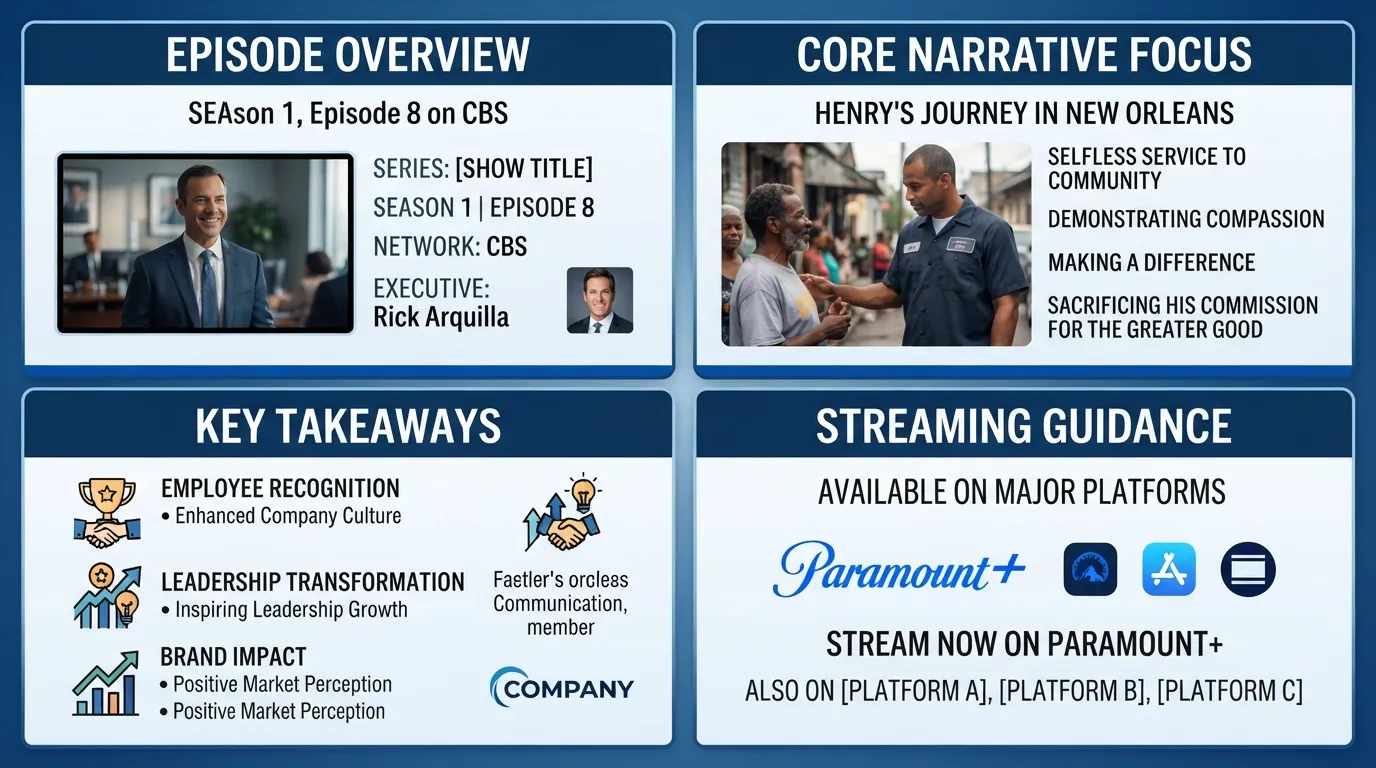
Roto-Rooter President and COO Rick Arquilla went undercover as a rookie plumbing and drain cleaning technician named “Hank Denman” for CBS’s hit reality series. Aired on April 4, 2010, as Season 1, Episode 8, this memorable episode followed Arquilla as he worked hands-on service jobs across New Orleans, Chicago, and Des Moines before revealing his true identity to the employees he evaluated.
Discover the exact timeline of Rick Arquilla’s undercover journey across key U.S. cities.
Learn about the specific field challenges he faced while working as rookie technician Hank Denman.
Explore the emotional corporate aftermath, including structural changes and employee support Roto-Rooter implemented post-reveal.
What Happened in the Roto-Rooter Episode of Undercover Boss?
Rick Arquilla stepped down from his executive suite to experience the daily realities of frontline plumbing and drain cleaning technicians. Operating under the alias “Hank Denman,” he discovered operational bottlenecks, field communication gaps, and the extraordinary dedication of everyday staff.
The Transformation: Armed with a fake backstory and television crew cover story, Arquilla traded his corporate attire for work boots and a uniform to learn the physical demands of field service.
The Locations: His undercover assignment spanned multiple regional branches, including busy crews in New Orleans, Chicago, and Des Moines.
The Reality Check: Working alongside veteran technicians exposed him to equipment shortcomings, challenging customer service scenarios, and the genuine pride employees took in the Roto-Rooter brand.
The Reveal: After completing his multi-city journey, Arquilla invited the featured employees to corporate headquarters to disclose his true identity, reward their hard work, and address the systemic issues he uncovered firsthand.
Roto-Rooter Undercover Boss Episode at a Glance
Quick Facts Table
| Episode Detail | Information |
| Show | Undercover Boss |
| Network | CBS |
| Season & Episode | Season 1, Episode 8 (IMDb episode listing{ noopener” target=”_blank”}) |
| Air Date | April 4, 2010 (Easter Sunday) |
| Runtime | Approximately 43 minutes |
| Content Rating | TV-PG |
| Undercover Boss | Rick Arquilla (President and COO) |
| Undercover Alias | Hank Denman |
| Filming Locations | Cincinnati headquarters, New Orleans, Chicago, and West Des Moines |
| Production Company | Studio Lambert |
Who Is Roto-Rooter?
Roto-Rooter is a premier plumbing and drain-cleaning service provider, widely recognized as the largest 24-hour plumbing company operating across the United States and Canada. Headquartered in Cincinnati, Ohio, the brand has delivered residential and commercial plumbing solutions for decades.
Industry Scale: From emergency drain cleaning to water damage restoration, the company handles millions of service calls annually through a vast network of company-owned branches and independent franchise locations.
Non-Affiliation Note: This website is an independent informational resource and is not officially affiliated with, endorsed by, or sponsored by Roto-Rooter, CBS, Studio Lambert, or the Undercover Boss franchise.
Who Is Rick Arquilla, the Boss Behind "Hank Denman"?
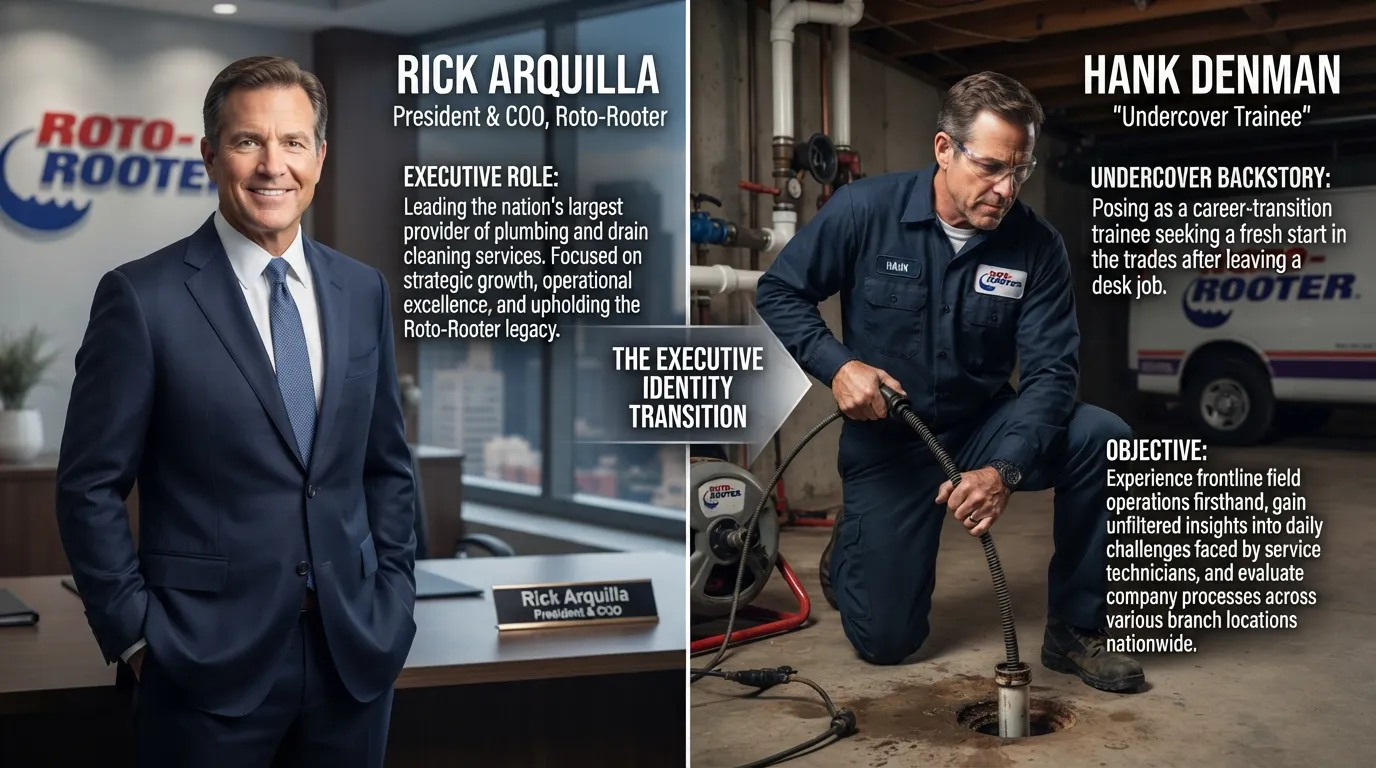
Rick L. Arquilla stepped into the spotlight as one of the most memorable executives of the reality television series’ inaugural season. A native of Mt. Vernon, Ohio, Arquilla was 57 years old when the episode filmed, bringing decades of corporate leadership experience and a grounded Midwestern work ethic to the executive team.
Rick Arquilla’s Role at Roto-Rooter
Serving as the President and Chief Operating Officer (COO), Rick Arquilla oversaw daily operations, service standards, and strategic growth for the enterprise. His executive responsibilities required balancing corporate profitability with the grueling demands of a nationwide mobile workforce.
Executive Leadership: As COO, Arquilla was directly responsible for the operational efficiency of thousands of technicians and support staff.
Corporate Oversight: He managed nationwide logistics, customer satisfaction benchmarks, and regional branch policies from the company’s headquarters.
The Human Element: Despite his high-level executive status, Arquilla maintained a deep appreciation for the physical labor performed by field service workers every single day.
Why the “Hank Denman” Cover Story Worked
To experience the company without special treatment, Arquilla transformed into “Hank Denman,” a rookie sewer and drain technician entering the industry for a career change. This persona allowed him to blend in seamlessly with everyday crews.
The Disguise: Complete with a new haircut, tinted glasses, and a fictional backstory about leaving a career in sales, the persona completely masked his identity.
The Dirtiest Jobs: Arquilla was immediately thrown into the most physically grueling tasks, including crawling through tight spaces, unblocking severe sewer lines, and handling heavy industrial equipment.
Authentic Interactions: Because coworkers believed he was simply a struggling trainee, they spoke candidly about management, company policies, and workplace frustrations without hesitation.
What He Hoped to Learn
Going into the experiment, Arquilla wanted to bridge the widening gap between executive decision-making and frontline reality. He sought to evaluate how well corporate policies actually translated in the field.
Policy vs. Practice: He aimed to discover whether corporate guidelines made field operations easier or created unnecessary roadblocks for technicians.
Equipment Needs: Observing firsthand tool performance helped management identify outdated gear that slowed workers down.
Employee Well-Being: Arquilla wanted to understand the personal sacrifices, safety concerns, and morale levels of the people driving Roto-Rooter’s brand reputation.
Every Stop of Arquilla's Week Undercover
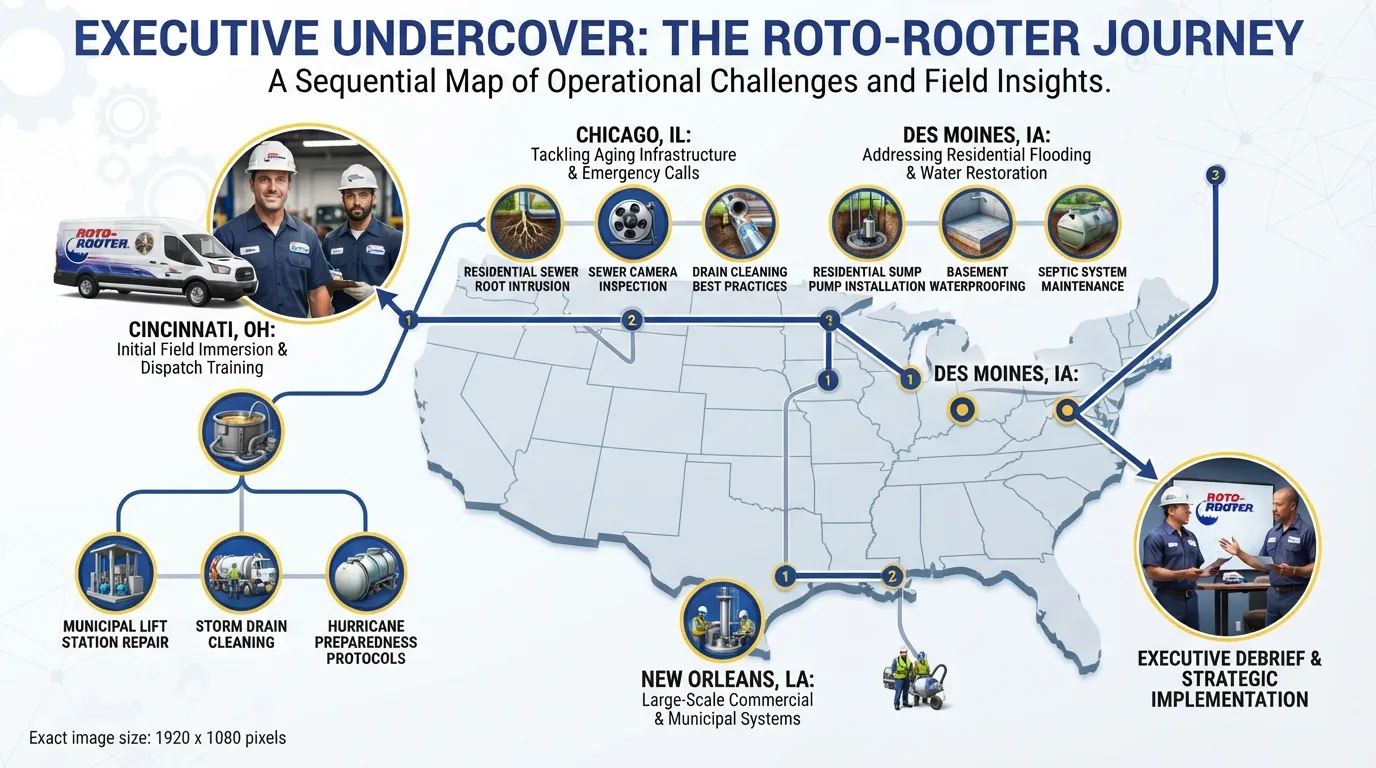
Rick Arquilla’s undercover journey took him across multiple regions, exposing him to the intense manual labor, operational logistics, and manufacturing processes that keep Roto-Rooter running. By experiencing these diverse roles firsthand, the executive gained an unfiltered perspective on what it truly takes to deliver 24-hour plumbing and drain cleaning services.
New Orleans: Sewer Cleaning With Three Technicians
In New Orleans, Arquilla worked alongside local field crews handling some of the most grueling residential plumbing emergencies. This stop tested his physical endurance with intense tasks like crawling through tight spaces and lying in sewage beneath a house.
Heavy Machinery: He operated a massive 300-pound sewer-cleaning machine to clear stubborn main line obstructions.
Advanced Equipment: He utilized smaller specialized drain tools, high-pressure water jetters, and closed-circuit pipe cameras to diagnose underground pipe damage, as detailed in Arquilla’s subsequent newspaper interviews.
The Reality Check: Wrestling with heavy, mud-soaked cables under a residential structure gave him a profound appreciation for the physical toll field service takes on technicians.
Chicago: Grease Traps and the 24-Hour Call Center
Shifting to Chicago, Arquilla faced the harsh realities of commercial plumbing maintenance and the high-pressure environment of nighttime dispatch operations.
Grease Trap Sanitation: He assisted in cleaning foul-smelling commercial grease traps using a heavy-duty pump truck, confronting an odor and physical mess that tested his resolve.
Night Shift Dispatch: Arquilla observed the complex logistics of the 24-hour call center, witnessing how emergency plumbers are coordinated during late-night hours to assist distressed customers.
Communication Bottlenecks: This stop highlighted coordination hurdles between regional dispatchers and field technicians working in a fast-paced urban environment.
West Des Moines: Building Roto-Rooter Machines at the Factory
Arquilla traveled to West Des Moines to work at the facility responsible for manufacturing the very tools and equipment Roto-Rooter technicians rely on every day.
Factory Operations: He engaged in metal welding and machine-building tasks alongside factory workers who construct industrial drain-cleaning units.
Quality Control: Building the equipment from scratch provided insight into manufacturing durability and the importance of reliable, heavy-duty tools in the field.
Worker Dedication: He bonded with manufacturing employees who took immense pride in supplying durable machinery to plumbers across North America.
Cincinnati: The Corporate Headquarters Context
The journey began and concluded at Roto-Rooter’s home base in Cincinnati, Ohio. This location framed the executive setup and served as the stage for the emotional final reveals.
The Executive Departure: The week started with Arquilla shedding his executive routine at corporate headquarters to adopt the “Hank Denman” persona.
The Return to Base: The loop closed in Cincinnati, where the unsuspecting employees he worked with were flown in to learn his true identity.
Corporate Accountability: Headquarters became the operational hub where Arquilla initiated sweeping policy and equipment updates based on his frontline findings.
Plumber’s Note: Understanding Field Equipment
“To the untrained eye, plumbing equipment might just look like a bunch of heavy metal and hoses, but every tool has a very specific job when you are knee-deep in a blockage. A cable machine uses rotating steel blades to cut through roots and hard scale inside a pipe, whereas a high-pressure water jetter uses a stream of pressurized water to scour grease and sludge away from the pipe walls entirely. Meanwhile, a closed-circuit pipe camera is our set of eyes underground—it lets us inspect cracks, root intrusions, and offsets so we can fix the root cause instead of just guessing.”
— Licensed Field Technician
Henry's Story: The Employee Who Gave Up His Commission
The Elderly Customer in New Orleans
In New Orleans, an elderly customer faced a severe plumbing crisis when massive tree roots grew directly under her home and backed up her main sewer pipes. A standard diagnostic assessment and quoted repair price came out to approximately $1,200—an overwhelming financial burden for a senior citizen living on a fixed income. Recognizing her distress, field technician Henry stepped in and offered to perform the complex repair independently for just $500, drastically lowering the cost to save her from financial strain.
The Core Crisis: Tree roots breached the underground sewer lines, completely halting residential wastewater drainage.
The Original Quote: Standard company pricing estimated the necessary excavation and repair at roughly $1,200.
Henry’s Intervention: Henry offered a compassionate workaround, charging only $500 to alleviate the customer’s financial stress.
Why It Cost Henry Personally
Henry’s decision to slash the repair price was not an authorized company discount; it came entirely out of his own pocket. Operating under a commission-based pay structure, field technicians earn their livelihood directly from the labor and service fees they bill to clients. By reducing the bill from $1,200 to $500, Henry sacrificed a substantial portion of his personal commission earnings, leaving company executives—including Rick Arquilla—shocked by his selflessness and financial sacrifice.
Commission-Based Structure: Henry’s earnings depend directly on the total revenue generated from each service call.
Direct Financial Loss: Sashing the price meant Henry absorbed the wage deficit himself rather than passing it to the company or the customer.
Executive Astonishment: Leadership figures like Rick Arquilla were stunned that an employee would willingly forfeit personal income to help a stranger.
Coaching Local Kids
Beyond his demanding job as a field technician, Henry dedicates his personal time to uplifting his community through youth sports. Four nights a week, alongside his wife, he volunteers as a local basketball coach, mentoring young athletes and teaching discipline, teamwork, and resilience. This deep-seated commitment to service defines his character far beyond his work in the plumbing industry.
Community Dedication: Henry spends four nights a week coaching youth basketball alongside his wife.
Mentorship Role: Beyond athletic drills, he focuses on instilling life skills, discipline, and confidence in local youth.
Character Consistency: His selfless volunteer work mirrors the exact empathy he displayed for the elderly customer in New Orleans.
The Reward
Henry’s extraordinary integrity and empathy did not go unnoticed by company leadership. In recognition of his outstanding character, unwavering dedication to customer care, and selflessness, company management surprised him with a brand-new 15-passenger van and a formal promotion to Field Supervisor accompanied by a substantial raise. This reward underscored the core philosophy that genuine customer-first values ultimately elevate those who practice them.
Leadership Recognition: Management acknowledged that Henry’s actions embodied the ultimate standard of customer empathy.
Tangible Upgrade: He was awarded a brand-new 15-passenger van to support his daily operations and personal utility.
Career Advancement: Henry earned a well-deserved promotion to Field Supervisor, complete with an increased base compensation structure.
Plumber’s Note: Understanding Sewer Line Root Intrusion
Tree roots naturally seek out moisture, nutrients, and warmth, making underground sewer pipes an ideal target for intrusion. Tiny cracks, loose joints, or aging pipe materials allow vapor to escape into the surrounding soil, drawing root systems directly toward the source. Once inside, roots proliferate rapidly, forming dense hair-like masses that catch toilet paper, grease, and debris, ultimately resulting in complete structural blockages and severe sewage backups.
The Reveal and Arquilla's Emotional Turning Point
The Other Employees Arquilla Worked With
During his undercover journey, Rick Arquilla shadowed multiple frontline workers to experience the day-to-day realities of his company from the ground level. While Henry’s story of selflessness became the emotional anchor of the experience, Henry was one of several employees Arquilla worked alongside. Because specific documentation and individual outcomes for all shadowed workers remain limited across verified media broadcasts, Henry’s extraordinary contribution stands out as the defining turning point of the executive’s undercover assignment.
Frontline Immersion: Arquilla stepped away from executive leadership to experience the daily operational challenges faced by field staff.
Operational Insight: Working side-by-side with technicians provided direct visibility into customer interactions and labor constraints.
Standout Impact: Henry’s unique sacrifice overshadowed the other assignments, cementing itself as the core emotional narrative of the episode.
How the Boss Revealed Himself
The climactic reveal scene delivered a powerful emotional shockwave as Arquilla stepped out of disguise to disclose his true identity to the hardworking staff. Standing face-to-face with Henry and his colleagues, Arquilla stripped away the corporate veil to express raw, unfiltered gratitude for their dedication. The unmasking dismantled traditional hierarchical barriers, replacing corporate detachment with mutual vulnerability and respect.
Disguise Removal: Arquilla revealed his true executive identity, transitioning from a perceived fellow trainee to company leadership.
Emotional Confrontation: The reveal elicited immediate astonishment and reflection from the technicians who had shared their daily routines.
Corporate Vulnerability: Leadership demonstrated genuine accountability by standing shoulder-to-shoulder with the workforce.
Arquilla’s Reflection on His Past and Legacy
Witnessing the daily sacrifices and resilient work ethic of his frontline team triggered a profound introspective shift in Arquilla regarding his personal legacy. He reflected on how insulated executive suites can become, often disconnecting leadership from the human stories driving daily enterprise success. This deep self-examination forced him to reevaluate what kind of leader he wanted to be remembered as—one defined purely by corporate bottom lines or one measured by empathy and empowerment.
Executive Introspection: Arquilla confronted the disconnect between high-level management and the harsh realities of field labor.
Legacy Realignment: He recognized that true corporate legacy is built on how leadership supports and uplifts its people.
Cultural Shift: The experience exposed systemic blind spots, prompting a commitment to more compassionate corporate governance.
What He Said He Gained
The ultimate takeaway from Arquilla’s undercover journey was a renewed, unwavering respect for the frontline staff who keep operations running smoothly. He openly acknowledged that the true heartbeat of the company resides not in the boardroom, but with the technicians tackling difficult conditions every day. This newfound perspective reshaped his management philosophy, cementing a permanent commitment to investing in employee welfare and recognition.
Profound Respect: Arquilla gained a deep appreciation for the physical and emotional toll endured by frontline technicians.
Shifted Perspective: The experience shattered executive detachment, fostering a culture of active listening and visible support.
Empowerment Focus: Leadership pledged to prioritize mentorship, fair rewards, and career growth for dedicated team members.
What Happened After the Episode?
The Rerun and Viewer Reaction
The emotional impact of the broadcast extended far beyond its initial premiere. According to official corporate updates from the Roto-Rooter blog, the episode returned to television screens for a summer rerun on July 25, drawing renewed waves of attention. Viewers worldwide responded with an overwhelming outpouring of positive feedback, flooding company channels with praise for Henry’s selflessness and the company’s human-centric culture.
Global Audience Engagement: Viewers from around the world reached out via digital and social platforms to express admiration for the frontline staff.
Summer Rerun Impact: The July 25 rebroadcast successfully re-ignited public interest, validating the long-term resonance of the episode.
Brand Perception Boost: The widespread positive reaction significantly enhanced public goodwill toward Roto-Rooter and its workforce.
Arquilla’s Later Media Appearance
Following the massive visibility generated by his time on television, Rick Arquilla transitioned from reality television to expert commentary. As highlighted on the official Roto-Rooter blog, Arquilla made a high-profile guest appearance on the MSNBC program Your Business. During this segment, the president and COO shared leadership insights, management strategies, and lessons learned from his unique journey into the trenches of frontline operations.
Expert Commentary: Arquilla leveraged his platform to discuss effective corporate management and leadership philosophies.
MSNBC Your Business Feature: The appearance bridged reality television exposure with practical business advice for entrepreneurs and executives.
Corporate Transparency: Continued media engagement allowed leadership to reinforce the values of empathy and employee investment on national television.
Was Undercover Boss Real? Common Questions About the Show

How Fake Was Undercover Boss?
Undercover Boss is a heavily structured reality television format rather than a completely unscripted documentary. Producers from Studio Lambert pre-select specific work locations, vet employees, and guide executives through artificial scenarios to ensure high emotional payoff. While the fundamental interactions and corporate gifts are genuine, the production process utilizes tight editing, dramatic pacing, and staged pretexts to protect the executive’s identity from being exposed prematurely.
Produced Pretexts: Employees are usually told a documentary crew is filming a show about workers entering new trades or trying out different jobs.
Vetted Participants: Cast members and locations are carefully chosen in advance to maximize narrative drama and emotional resonance.
Application to Roto-Rooter: Rick Arquilla’s undercover journey was carefully managed by production teams to ensure safe filming conditions while capturing authentic workplace challenges.
Do Employees on Undercover Boss Really Get Paid?
Employees featured on Undercover Boss genuinely receive the financial rewards, promotions, paid vacations, and educational assistance promised to them on camera. While reality television productions often face skepticism regarding follow-through, participating corporations—including major brands like Roto-Rooter—legally and contractually fulfill their public pledges to protect their corporate reputation and maintain employee trust.
Contractual Obligations: Corporate gifts and cash bonuses shown on screen are legally binding agreements fulfilled after filming wraps.
Long-Term Support: Many companies provide ongoing career advancement, wage increases, and equipment upgrades to the workers they spotlight.
The Roto-Rooter Outcome: True to his word on camera, Rick Arquilla delivered a promotion, a significant raise, and a brand-new 15-passenger van directly to Henry.
Which Undercover Boss Got Fired?
While executives themselves do not get fired on the show, a few rare episodes featured frontline employees whose poor performance or negative attitude during undercover training led to severe disciplinary action or termination. In most cases, however, the show highlights exceptional or struggling workers rather than penalizing staff, ensuring that the primary narrative focuses on redemption, empathy, and corporate philanthropy.
Disciplinary Precedents: Fired or reprimanded employees typically violated company policy or showed extreme disregard for customers on camera.
Focus on Positivity: Producers heavily favor uplifting stories that showcase hardworking talent over punishing everyday frontline staff.
Roto-Rooter’s Contrast: The Roto-Rooter episode stood out precisely because it highlighted extraordinary selflessness and generosity rather than workplace incompetence.
What Was the Biggest Company Giveaway on Undercover Boss?
Over the course of its broadcast history, various companies on Undercover Boss have given away hundreds of thousands of dollars in cumulative grants, debt relief, house payoffs, and educational funds. While individual bonuses frequently range from ten thousand to over one hundred thousand dollars, the true value often lies in company-wide operational changes or life-changing personal assets bestowed upon deserving staff.
Massive Financial Grants: CEOs frequently pay off mortgages, clear medical debt, or fund college tuitions for struggling employees.
Asset Upgrades: Vehicles, specialized equipment, and paid sabbaticals are common high-value rewards featured across multiple seasons.
Roto-Rooter’s Contribution: Rick Arquilla’s gift of a brand-new 15-passenger van and a promotion represented a major operational investment in Henry’s future.
Why Was Undercover Boss Cancelled?
Undercover Boss was never permanently cancelled; rather, it operated on an intermittent production schedule before being officially revived by CBS for a twelfth season hosted by Drew Carey. After airing 136 episodes across eleven seasons, the franchise took a scheduled production break, proving that audience appetite for workplace empathy and corporate transformation remains exceptionally strong.
Intermittent Hiatus: The show frequently went on multi-year breaks between production blocks depending on network scheduling priorities.
Franchise Revival: CBS officially announced a refreshed twelfth season with a new host to expand its popular reality television lineup.
Enduring Legacy: The timeless appeal of corporate leaders connecting with frontline workers ensures continued syndication and streaming popularity for classic episodes like Roto-Rooter’s.
What Was the Controversy With Undercover Boss?
Undercover Boss has periodically faced criticism from viewers and media analysts who argue that the show functions as high-end corporate public relations. Critics point out that focusing intensely on one or two inspiring employees can mask systemic issues like low baseline wages, long working hours, and inadequate compensation affecting the rest of the workforce who receive nothing.
PR Scrubbing Allegations: Skeptics argue the show allows corporations to polish their public image while ignoring broader labor reform.
The “Chosen Few” Dilemma: Rewarding a single standout worker leaves thousands of other employees facing identical hardships without corporate assistance.
The Roto-Rooter Reception: Despite broader industry critiques, the Roto-Rooter episode won widespread acclaim because Henry’s genuine sacrifice struck a rare chord of authentic human kindness.
What the Roto-Rooter Episode Shows About Real Plumbing Work
Why Tree Roots Cause Sewer Backups
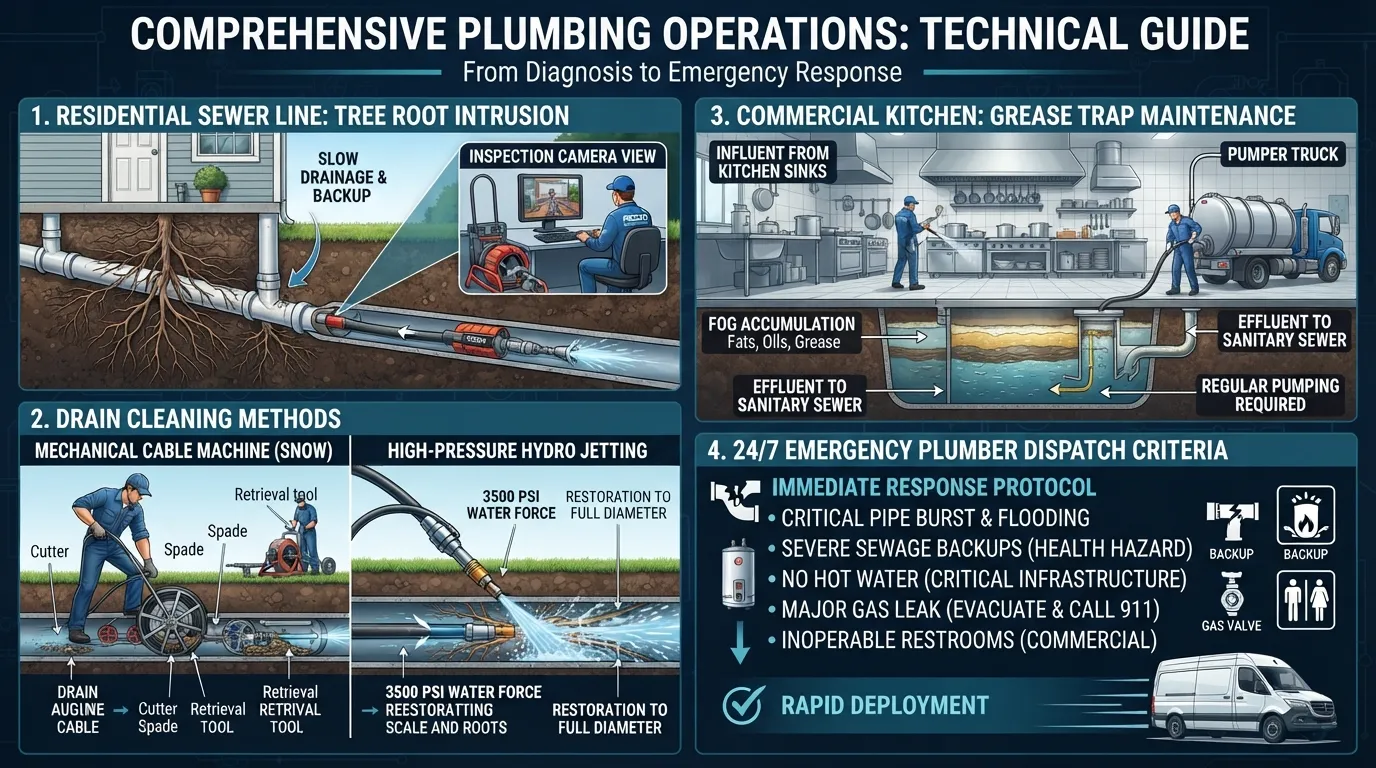
Tree roots naturally target underground sewer line infrastructure because they are drawn to moisture, nutrients, and warmth. Even microscopic cracks or loose pipe joints allow water vapor to escape into the soil, drawing aggressive root systems directly toward the source. Once inside, roots proliferate rapidly to form dense masses that catch toilet paper, grease, and debris, triggering total blockages.
Warning Signs: Homeowners should watch for slow-draining tubs, gurgling toilets, and sewage odors backing up into ground-floor fixtures.
Diagnostic Protocol: Professional plumbers always perform a high-definition video camera inspection before attempting repairs to locate the exact break.
Long-Term Prevention: Removing the root mass is only temporary; structural pipe lining or replacement is often necessary to stop permanent intrusion.
Drain Cleaning: Cable Machine vs. Hydro Jetting
Professional drain cleaning relies on specialized heavy-duty equipment to clear stubborn blockages that standard household plungers and chemical drain cleaners cannot touch. Traditional cable machines use a rotating steel snake to punch through blockages and break up roots, while hydro jetting uses high-pressure water streams to scour pipe walls completely clean.
Cable Machines: Highly effective for boring immediate holes through root masses and solid obstructions in residential lines.
Hydro Jetting: Delivers a comprehensive wall-to-wash cleaning that blasts away grease, scale, and remaining root fibers without damaging pipes.
Choosing the Right Tool: Camera inspections determine whether a mechanical cable or high-pressure water jet is best suited for the pipe condition.
Grease Traps and Commercial Kitchens
Commercial food service operations face unique wastewater challenges due to the massive volume of fats, oils, and grease (FOG) entering their plumbing systems daily. Without properly maintained grease traps, liquid fats cool and solidify inside drainage pipes, creating rock-hard blockages that shut down kitchens and violate municipal health codes.
FOG Accumulation: Warm fats cool down rapidly inside underground drains, coating pipe walls and drastically restricting water flow.
Interceptor Maintenance: Commercial kitchens require routine pumping, cleaning, and enzyme treatments to prevent trap overflow.
Business Impact: Neglecting commercial plumbing systems leads to catastrophic health department shutdowns, costly emergency repairs, and lost revenue.
Why 24-Hour Plumbing Dispatch Matters
Plumbing emergencies rarely happen during standard business hours, making 24-hour dispatch a critical lifeline for both residential and commercial property owners. True plumbing emergencies involve situations that actively threaten structural integrity, cause extensive property damage, or create hazardous sanitary conditions for occupants.
Defining Emergencies: Major sewer backups, burst supply lines, active gas leaks, and overflowing commercial toilets require immediate professional intervention.
Mitigating Damage: Rapid response times prevent thousands of dollars in water damage, mold growth, and subfloor rot.
Finding Help: Property owners should always keep a trusted emergency plumber on speed dial before a midnight crisis strikes.
Plumber’s Note: Field Insights on Roots and Grease
Licensed field technicians report that root intrusion and grease buildup account for the overwhelming majority of severe mainline sewer emergencies. In older neighborhoods featuring mature shade trees, minor pipe micro-fractures almost inevitably lead to root infiltration within a few years if preventive maintenance is skipped. Similarly, commercial kitchens that skip scheduled grease trap maintenance experience sudden, disruptive backups during peak dinner rushes.
Preventive Maintenance: Routine hydro jetting and annual camera inspections can catch root intrusion and grease hardening before they cause a full blockage.
Reality of the Job: Field work involves diagnosing complex underground failures under intense pressure, mirroring the real challenges shown on television.
Non-Affiliation Note
This guide is an independent editorial recap and analysis, and is not affiliated with, endorsed by, or sponsored by Roto-Rooter or CBS.
Is It Roto-Rooter or Mr. Rooter? Clearing Up the Confusion
What Episode Was Mr. Rooter on Undercover Boss?
Mr. Rooter appeared on Season 3, Episode 2 of Undercover Boss, which originally aired in January 2012. Instead of a local brand manager, the executive going undercover was Dina Dwyer-Owens, then-CEO and Chairwoman of The Dwyer Group (now known as Neighborly), which serves as the parent company for Mr. Rooter Plumbing alongside several other home service franchises.
Episode Details: Season 3, Episode 2 features Dina Dwyer-Owens working alongside her franchise network’s service technicians.
The Executive Role: As the head of the parent company, she stepped into the shoes of frontline workers—including a Mr. Rooter employee—to evaluate franchise standards and operational challenges.
Common Confusion: Because both companies feature prominent plumbing services and similar names, viewers frequently conflate Roto-Rooter’s corporate episode with the Dwyer Group’s Mr. Rooter appearance.
Roto-Rooter vs. Mr. Rooter: Key Differences
To clear up common industry confusion, it helps to look at the distinct corporate structures, brand identities, and television appearances associated with each household plumbing name:
| Parent Company | Featured Brand | Undercover Boss Episode |
| Independent / Coroprate Operations | Roto-Rooter | Season 1 (Rick Arquilla, President and COO) |
| The Dwyer Group (Neighborly) | Mr. Rooter Plumbing | Season 3, Episode 2 (Dina Dwyer-Owens, CEO) |
Corporate Structure: Roto-Rooter operates through a mix of company-owned branches and independent franchises, whereas Mr. Rooter is structured entirely as a franchise under the Neighborly holding umbrella.
Television Milestones: Roto-Rooter’s featured segment highlighted field operations and individual technician rewards, while the Mr. Rooter episode focused on corporate franchise governance from the parent company perspective.
Leadership Lessons From the Roto-Rooter Episode
Why Frontline Experience Changes Decisions
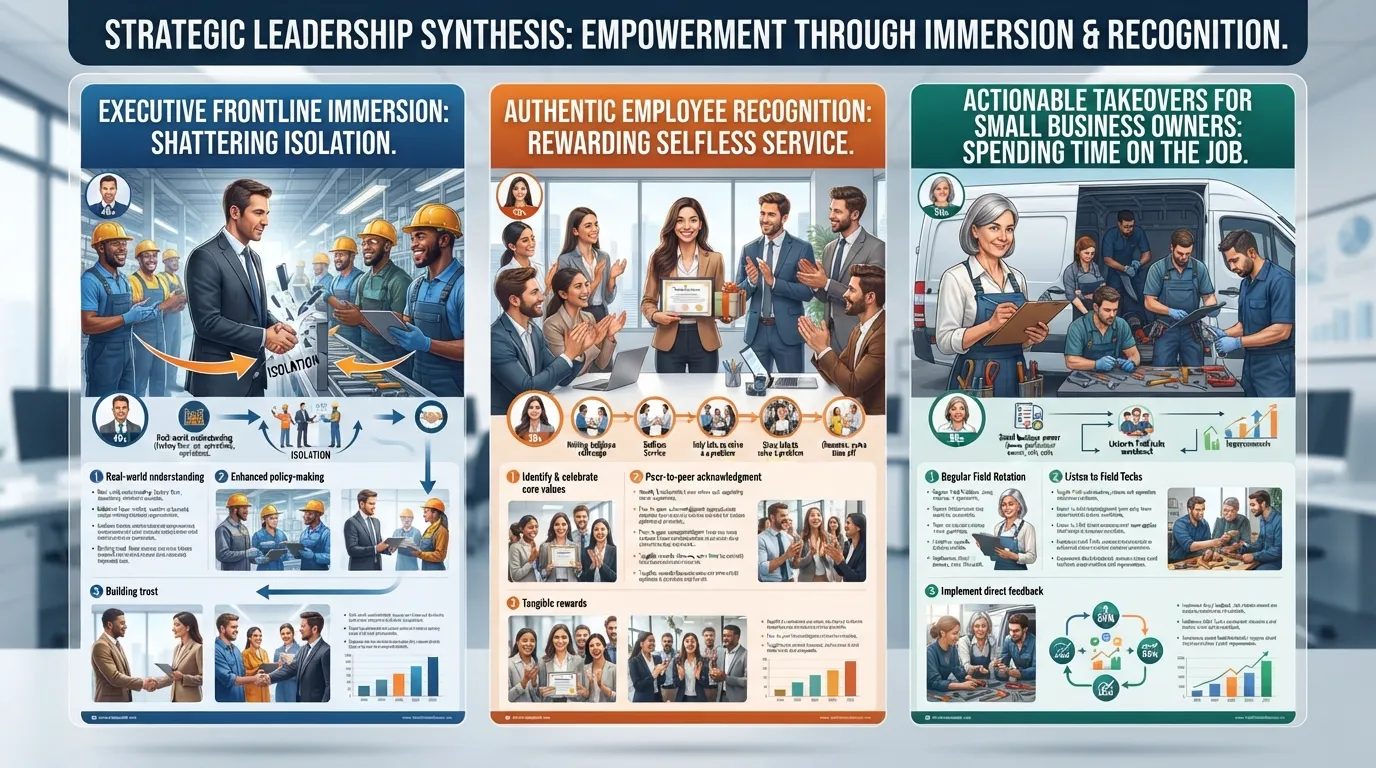
Executive leadership often operates from high-level boardrooms far removed from day-to-day operational realities. When executives like Rick Arquilla step directly into the trenches to shadow frontline employees, they gain an unfiltered view of the physical toll, technical friction, and customer service hurdles that define everyday business operations.
Breaking Executive Isolation: Direct observation shatters assumptions, replacing abstract corporate metrics with tangible human experiences.
Informed Policy Making: Leaders who understand field-level roadblocks make smarter, more empathetic operational and safety decisions.
Bridging the Cultural Gap: Field employees gain immense trust and respect for leadership when executives are willing to roll up their sleeves.
Recognising Selfless Work (the Henry Example)
Henry’s choice to sacrifice his own commission to help a financially distressed senior citizen in New Orleans serves as a masterclass in organic, values-driven customer care. True excellence in company culture cannot be forced by rigid corporate handbooks; it emerges naturally when employees feel valued and empowered to do the right thing.
The Power of Empathy: Henry prioritized human well-being over corporate billables, setting a gold standard for customer advocacy.
Authentic Recognition: Management responded appropriately by rewarding his selflessness with a promotion and a 15-passenger van, reinforcing positive behaviors.
Inspiring the Workforce: Publicly honoring acts of genuine kindness sets a powerful benchmark for the entire company network.
What Small Business Owners Can Take From It
Business owners across all industries can apply the core lessons of this undercover journey to cultivate stronger, more resilient organizations. Building a thriving company requires continuous engagement, active listening, and a genuine commitment to rewarding exceptional service quality.
Spend Time on the Job: Regularly step away from administrative duties to work alongside frontline staff and understand their daily friction points.
Listen to Technicians: Your field personnel speak directly with customers every day; their feedback is your most valuable operational asset.
Reward Service Quality: Actively recognize and compensate employees who go above and beyond to protect your brand’s reputation and care for clients.
Where to Watch the Roto-Rooter Episode of Undercover Boss
Streaming Options
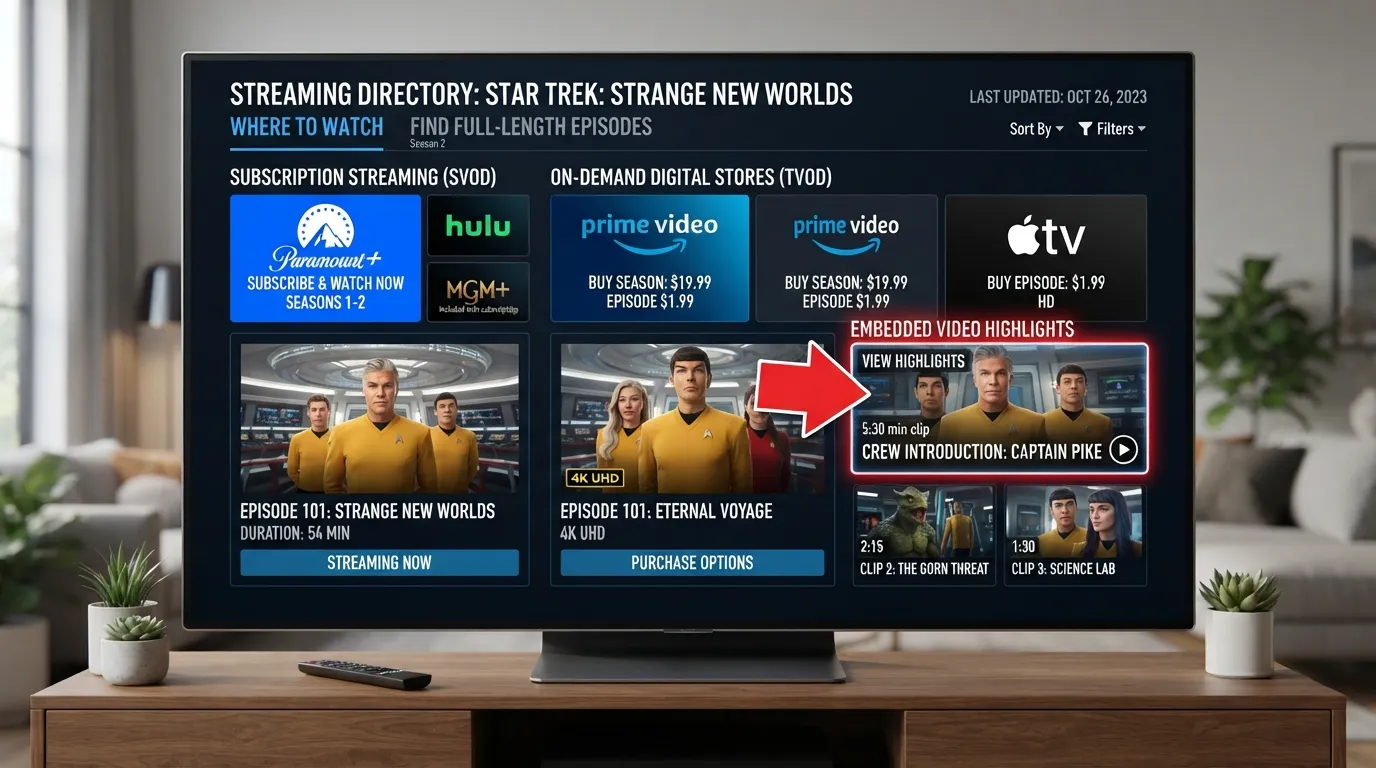
Viewers looking to stream the iconic Roto-Rooter episode can find Undercover Boss Season 1, Episode 8 available across several major digital platforms. Depending on regional licensing and platform availability, the episode can be streamed on subscription services like Paramount+ and Amazon Prime Video, or purchased digitally through on-demand storefronts.
Paramount+: Features selective catalog access to classic episodes of Undercover Boss, though availability varies by region.
On-Demand Digital Stores: Platforms like Apple TV and Amazon Prime Video allow users to purchase individual episodes or the complete first season.
Checking Local Listings: Because syndication rights rotate frequently, streaming availability may change across third-party networks.
Clips and Highlights
For those who want an immediate look at the most memorable moments without tracking down a full-length stream, curated clips and emotional highlights from the Roto-Rooter episode are embedded directly throughout this guide. Viewers can rewatch key segments—including Henry’s touching interaction with the New Orleans homeowner, the emotional unmasking by company president Rick Arquilla, and the final reward presentation—in Sections 3, 5, and 6 above.
Roto-Rooter on Undercover Boss: Frequently Asked Questions
Who was the boss in the Roto-Rooter Undercover Boss episode?
The executive who went undercover was Rick Arquilla, who served as the President and Chief Operating Officer of Roto-Rooter at the time of filming. Stepping away from the corporate headquarters, Arquilla traded his executive suite for a uniform to experience frontline field operations firsthand, working side-by-side with technicians across multiple city branches.
What was Rick Arquilla’s alias?
During his undercover assignment, Rick Arquilla used the alias Hank Denman. Posing as a participant in a fictional reality television documentary about career transitions, he claimed to be a worker exploring new trades. This backstory successfully prevented employees and branch managers from discovering his true corporate identity throughout the filming process.
When did the Roto-Rooter episode air?
The Roto-Rooter episode of Undercover Boss officially aired on April 4, 2010, broadcast nationally on CBS. Following its initial premiere during the show’s blockbuster inaugural season, the episode drew massive viewer engagement and established itself as one of the most memorable installments in the entire franchise history.
Where was the Roto-Rooter episode filmed?
Production took place across multiple cities where Roto-Rooter operates major branch locations and service hubs. Filming locations included Cincinnati, Ohio, where the corporate roots are planted, alongside field operations in Chicago, Des Moines, and New Orleans, capturing diverse working conditions ranging from commercial grease traps to residential sewer line repairs.
Which Undercover Boss season and episode was Roto-Rooter?
Roto-Rooter was featured in Season 1, Episode 8 of Undercover Boss. As part of the groundbreaking first season on CBS, this specific episode helped cement the show’s cultural popularity by showcasing authentic workplace empathy, high-stakes plumbing challenges, and unforgettable employee recognition moments.
What did Henry receive at the end of the episode?
In recognition of his extraordinary selflessness and dedication to customer care, Henry received a brand-new 15-passenger van to support his daily work and personal life. Additionally, company leadership surprised him with a formal promotion to Field Supervisor, accompanied by a substantial salary raise to honor his exceptional integrity.
Is Roto-Rooter the largest plumbing company in North America?
According to the company’s own official corporate claims, Roto-Rooter stands as the largest provider of plumbing and drain cleaning services in North America. Operating a vast network of company-owned branches and independent franchise locations, the brand handles millions of residential and commercial service calls annually across the United States and Canada.
Final Thoughts
Why This Episode Still Resonates
The Roto-Rooter episode of Undercover Boss remains an enduring fan favorite because it transcends standard reality television formulas to capture genuine human empathy and integrity. Henry’s selfless decision to sacrifice his own commission to help a struggling senior citizen in New Orleans reminded viewers that true character shines brightest away from the spotlight. Decades after its initial broadcast, the episode continues to inspire audiences by proving that compassion and kindness remain the most powerful driving forces in business and everyday life.
Need a Professional Plumber?
If watching these complex plumbing challenges made you think about your own slow drains, gurgling pipes, or potential sewer line issues, our expert team is here to assist you. Whether you need routine preventive maintenance or urgent diagnostics, Book a plumber today to keep your home’s wastewater system running smoothly and reliably.
Main Services
Related Posts
Need a Plumber in Miami?
Schedule service online or speak directly with the EZ Plumbing team.
Owner-Led Local Service
Know who is behind the business before you request service. The owners, contact line and Miami service pages are published clearly.
- Named business owners
- Direct phone and social channels
- Local Miami service information
Clear Help Before You Book
Review the relevant service page, contact the team directly and use the booking page when you are ready—without relying on vague claims.
- Service-specific information
- Direct questions before scheduling
- Clear online booking route