
How to Clean a Dishwasher: Easy Step by Step Guide
How to Clean a Dishwasher
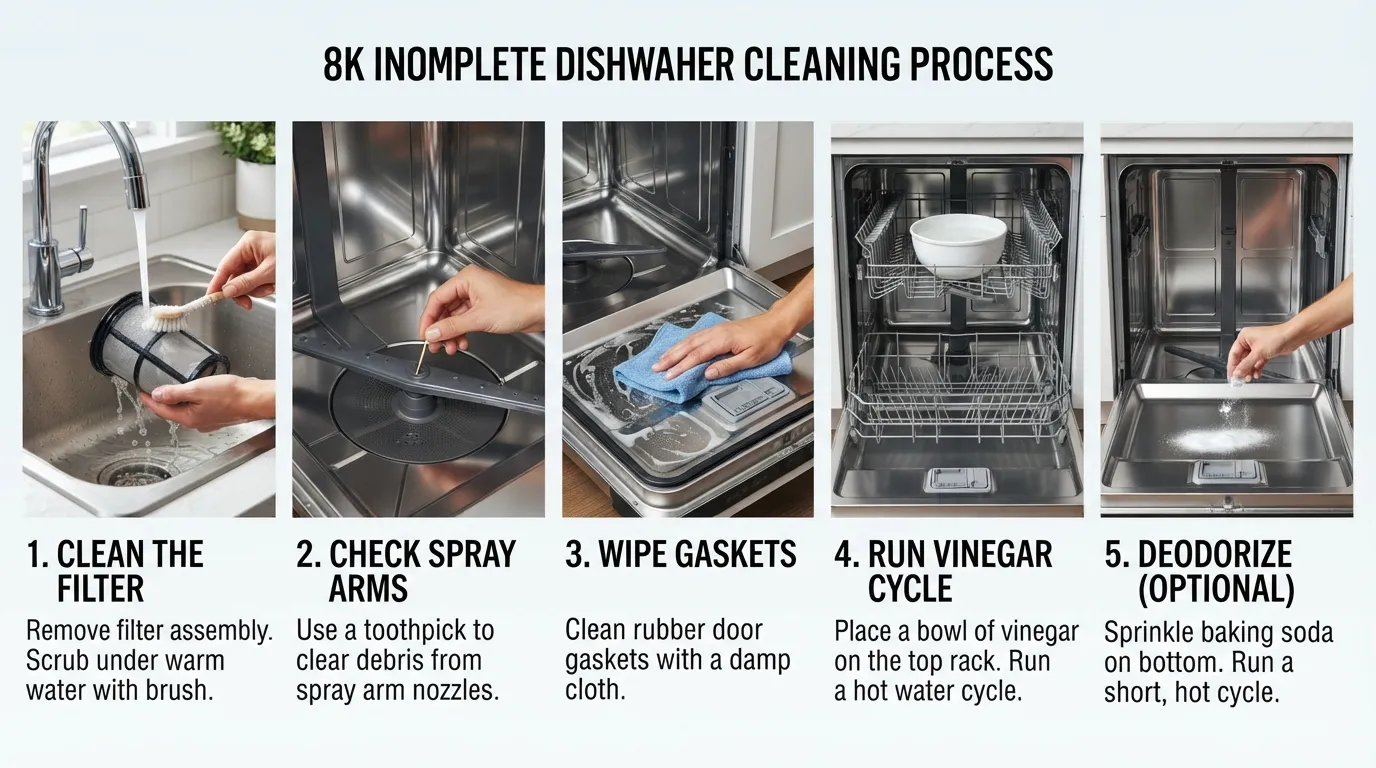
A sparkling clean dishwasher starts with a straightforward, four-step routine that clears out trapped food, grease, and mineral buildup. By tackling the filter, spray arms, interior walls, and running a specialized vinegar cycle, you restore peak washing performance and eliminate lingering odors in about 30 minutes of hands-on work.
The 4-Part Method at a Glance
Cleaning your dishwasher efficiently comes down to four core phases that target problem areas. First, remove and rinse the lower filter along with checking the spray arm holes for debris. Next, wipe down the rubber door gasket and interior walls with a damp microfiber cloth to remove built-up grime. Then, place a bowl of white vinegar on the top rack and run a hot water cycle to cut through grease and hard water scale. Finally, sprinkle baking soda on the bottom for a quick deodorizing cycle and wipe down the exterior controls.
Time, Difficulty, Cost and Frequency
Time: About 30 minutes of hands-on work plus one running cycle
Difficulty: Easy
Cost: Under a few dollars using everyday household items
Frequency: Once a month for a full clean, and weekly for a quick filter check
What You’ll Need
White vinegar
Baking soda
Soft-bristled brush or old toothbrush
Microfiber cloth
Dish soap
Warm water
Optional: Citric acid powder (for tough mineral deposits)
Before You Start: Prep and Safety Checks
Proper preparation protects your appliance from accidental damage and ensures a safe, efficient cleaning process. Taking five minutes to check your specific appliance model, clear out hazardous debris, and gather the right tools sets the foundation for a thorough deep clean.
Check Your Manual and Model First
Always consult your appliance’s owner’s manual or look up your model number online before starting. Different brands—such as Whirlpool, Bosch, or Samsung—have unique filter removal mechanisms and specialized cleaning cycles. Some modern units feature a dedicated self-cleaning cycle or a “Sanitize” button that optimizes hot water temperatures for deep sanitation.
Gather Your Supplies
| Item | What It’s For |
| White Vinegar | Cuts through grease and neutralizes lingering odors |
| Baking Soda | Deodorizes the interior and provides gentle scouring action |
| Dishwasher-Safe Bowl | Holds the vinegar upright on the top rack during the hot cycle |
| Soft Toothbrush | Cleans tight spaces around spray arm holes and crevices |
| Toothpick | Pokes out stubborn food particles trapped in spray nozzles |
| Microfiber Cloth | Wipes down interior walls and exterior panels without scratching |
| Rubber Gloves | Protects hands from hot water, harsh mineral deposits, and debris |
Empty the Dishwasher and Remove Visible Debris
Ensure the machine is completely empty of all dishware, cutlery, and racks if needed. Inspect the bottom of the tub and the drain area closely, removing any hazardous items like broken glass shards, hard fruit seeds, labels, or small bones that could damage the drain pump.
Safety Do’s and Don’ts
Do wear rubber gloves to protect your hands from residual detergent and sharp hidden debris.
Do unplug the dishwasher or switch off the dedicated circuit breaker if you need to reach deep into the electrical components.
Don’t mix cleaning chemicals—never combine chlorine bleach with vinegar or ammonia, as this creates toxic fumes.
Don’t use steel wool or abrasive scouring pads on the interior tub, as they can scratch protective coatings and trigger rust.
How to Clean a Dishwasher Step by Step
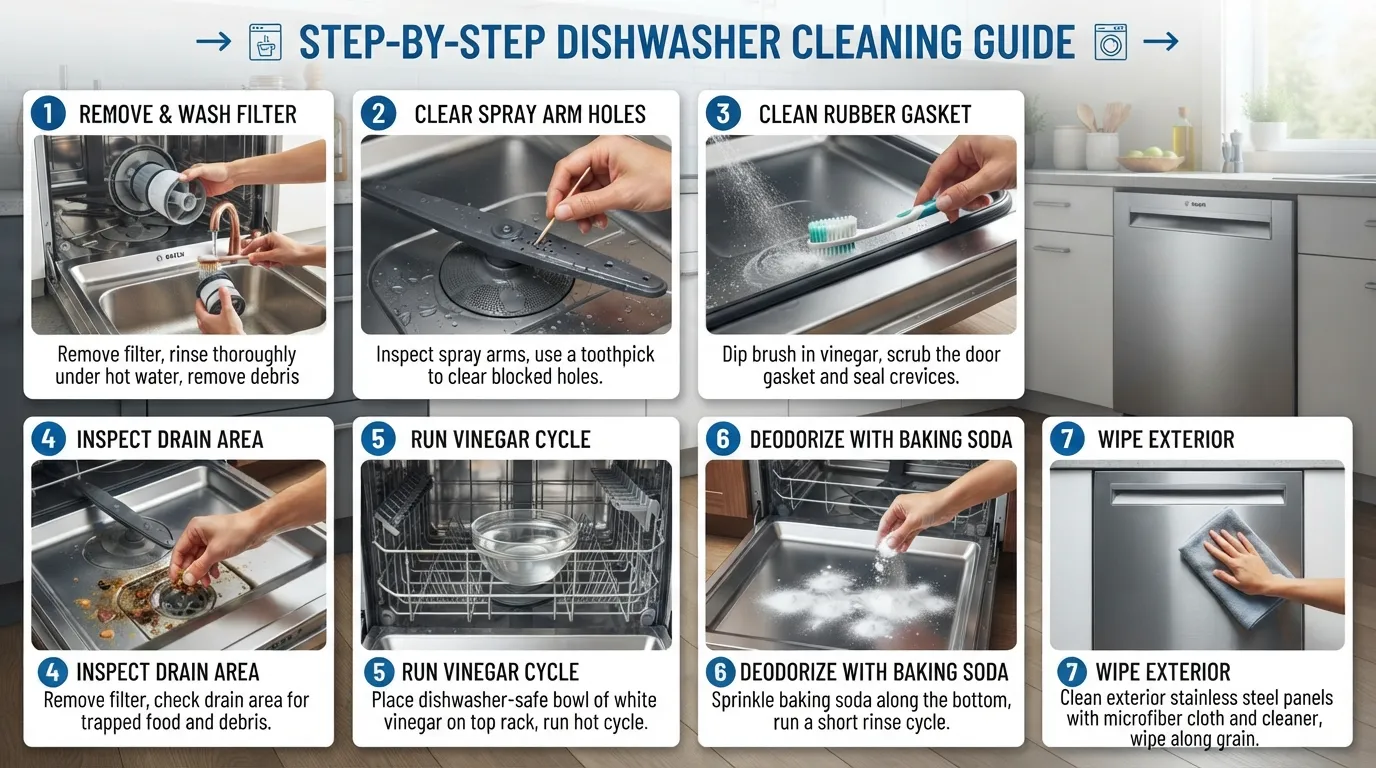
Executing a deep clean requires a systematic, step-by-step approach to eliminate built-up grease, mineral scale, and trapped debris. By following this comprehensive seven-step method, you ensure every internal component functions at peak efficiency.
Step 1: Remove and Clean the Dishwasher Filter
Locate the cylindrical filter at the bottom of the tub beneath the lower spray arm, twist or unlock it counter-clockwise, and lift it out. Rinse it thoroughly under hot running water, then scrub it gently with dish soap and a soft brush to remove greasy film.
First-hand tip: A heavily neglected filter often feels slimy and emits a foul odor from trapped food particles. If it is severely encrusted, let it soak in warm, soapy water for 10 to 15 minutes before scrubbing.
Step 2: Clear the Spray Arms
Detach the upper and lower spray arms if your model allows by unlatching or unscrewing them. Inspect the tiny outlet holes for blockages caused by hard water mineral scale or food debris, and poke them clear using a wooden toothpick.
First-hand tip: Shake the spray arms gently after rinsing them out to ensure any dislodged internal debris falls completely out of the center hub.
Step 3: Scrub the Door Gasket and Edges
Mix equal parts warm water and white vinegar or mild soapy water in a small container. Dip an old toothbrush into the solution and scrub the rubber door gasket grooves, the detergent dispenser area, and the bottom inner edge of the door where grime accumulates.
First-hand tip: Wipe the rubber seal dry with a microfiber cloth afterward to prevent mold spores from taking root in damp crevices.
Step 4: Check the Drain Area
Inspect the drain basket and sump area at the base of the machine for any hidden debris like food bits, twist ties, or paper labels. Pull out any accumulated gunk by hand while wearing rubber gloves to keep the drainage path completely clear.
First-hand tip: Never use sharp metal tools near the soft plastic drain components to avoid accidental punctures or tears.
Step 5: Run a Hot Vinegar Cycle
Place one to two cups of white vinegar in an upright, dishwasher-safe bowl on the top rack of the empty machine. Run a normal cycle on the hottest water setting without any detergent or dishes loaded.
First-hand tip: If your dishwasher isn’t getting hot water, the problem may be your water heater, not the dishwasher; refer to water heater issues for troubleshooting guidance.
Step 6: Refresh with a Baking Soda Cycle (Optional)
Sprinkle one cup of baking soda directly across the bottom of the dishwasher tub after the vinegar cycle finishes. Run a short, hot water cycle to neutralize lingering odors and lift stubborn surface stains.
First-hand tip: Skip this step if your machine already smells fresh and clean after the vinegar wash to save water and time.
Step 7: Wipe Down the Exterior and Control Panel
Clean the outer control panel and front door by wiping them down with a damp microfiber cloth and mild soap. If your appliance has a stainless steel finish, always wipe strictly along the direction of the metal grain to prevent streaks.
First-hand tip: Apply a tiny drop of mineral oil on a cloth and buff stainless steel surfaces to restore shine and resist future fingerprints.
Vinegar vs. Baking Soda vs. Dishwasher Cleaner Tablets: What Actually Works?
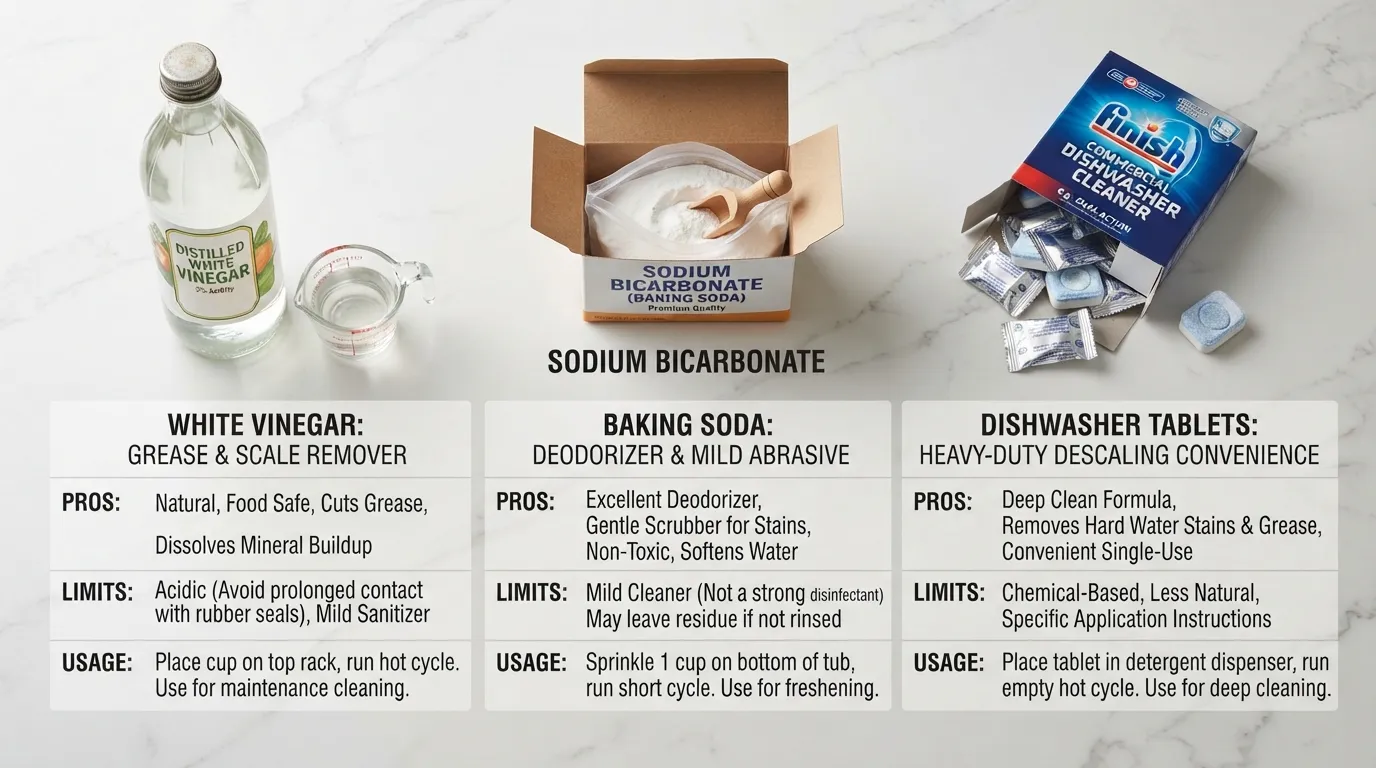
Choosing the right cleaning agent depends on whether you are tackling routine grease, hard water scale, or foul odors. Understanding how acetic acid, sodium bicarbonate, and commercial tablets interact with your appliance ensures maximum cleaning power without damaging delicate rubber seals or internal parts.
Can You Pour Vinegar in A Dishwasher?
Pouring white vinegar into your dishwasher is safe and highly effective for dissolving hard water minerals and cutting through grease. However, you should always place the vinegar in an upright, dishwasher-safe bowl rather than pouring it directly onto the bottom of the tub, and consult your manufacturer’s manual because frequent acid exposure can degrade certain older rubber door gaskets.
Vinegar vs. Baking Soda: Which Is Better?
White Vinegar (Acetic Acid): Best for dissolving hard water mineral scale and cutting through grease; used in a hot bowl cycle.
Baking Soda (Sodium Bicarbonate): Best for neutralizing stubborn sour odors and providing gentle, non-scratch scouring; sprinkled on the tub floor.
Why They Are Separate: Mixing vinegar and baking soda together neutralizes both agents into a fizzy salt water, rendering them ineffective, which is why they must be run in separate, consecutive cycles.
Do Dishwasher Cleaner Tablets Work?
Commercial tablets like Affresh offer unmatched convenience and pack heavy-duty chelating agents designed to strip away severe grease and limescale buildup in a single cycle. While natural solutions like white vinegar cost under a dollar and work wonderfully for regular monthly maintenance, commercial tablets are often superior for deeply neglected machines experiencing heavy mineral neglect.
Can You Use Dawn or Regular Dish Soap?
Never use regular dish soap, hand soap, or liquid Dawn in a dishwasher under any circumstances. Doing so generates excessive, microscopic suds that will overflow out of the door seals, flood your kitchen floor, and potentially trip appliance sensors.
What to Use If You’re Out of Dishwasher Cleaner
If you run out of commercial dishwasher cleaner or white vinegar, you can safely substitute food-grade citric acid powder to strip away stubborn hard water mineral deposits. Alternatively, plain baking soda can be used alone as a deodorizer, or lemon juice can act as a mild natural acid substitute.
Never mix chlorine bleach with vinegar, ammonia, or other acids. Combining bleach with an acid like acetic acid triggers a chemical reaction that releases toxic chlorine gas, which causes severe respiratory irritation and coughing. Always use one cleaning product at a time and ensure proper kitchen ventilation. For more details, review the official CDC guidance on chlorine gas{target=”_blank” ” rel=”noopener”}.
How to Clean a Dishwasher Without a Removable Filter
Not all dishwashers feature a twist-out cylindrical trap. Many modern or older appliance designs rely on a fixed, non-removable filter system or an integrated hard-food disposer that grinds up debris automatically. Knowing how to maintain these specialized setups ensures your machine stays fresh even without a removable basket.
Does Your Dishwasher Have a Self-Cleaning Filter?
Appliances equipped with a hard-food disposer or self-cleaning filter system feature a built-in metal grinder blade at the base of the tub that automatically pulverizes food waste during operation. You can identify these systems by checking the bottom of the tub: if there is no twist-lock cylindrical plastic basket under the lower spray arm, but rather a flat or slightly domed fine metal mesh screen with no removable parts, your unit relies on a fixed-filter design.
How to Clean Around a Fixed Filter or Fine Mesh Screen
When working with a fixed-filter system, you cannot lift out a trap, so manual surface cleaning becomes essential.
Wipe down the fine mesh screen area carefully with a damp microfiber cloth and a mild soapy solution.
Use a soft-bristled brush to gently dislodge any grease or food particles trapped around the perimeter of the fixed screen.
Run a hot vinegar cycle immediately afterward to flush liquefied residue and mineral buildup through the internal drain system.
Brand Notes: Whirlpool, Thermador, Bosch and Others
| Brand & Filter Type | Where to Look | Manual Cleaning Cycle |
| Whirlpool (Self-Cleaning / Fixed) | Flat bottom plate beneath the lower spray arm | Check control panel for a dedicated “Clean Cycle” or run a heavy cycle with vinegar |
| Bosch (Removable Triple-Filter) | Twist-lock cylindrical trap at the tub floor base | Use the machine’s specialized “Machine Care” button or program |
| Thermador (Fine Mesh / Fixed) | Lower sump area surrounding the central pump hub | Run a high-temperature normalization wash with citric acid or vinegar |
Dishwasher Still Dirty or Smelly? Troubleshooting Common Problems
Even after a routine wipe-down, persistent odors, cloudy glassware, or poor washing performance can indicate deeper underlying mechanical or chemical issues. Identifying the root cause quickly restores your appliance to peak operating condition.
Quick Troubleshooting Table
| Problem | Likely Cause | Quick Fix |
| Bad Smell | Trapped food particles in filter or mold in door gaskets | Clean cylindrical filter, wipe seals, and run a hot vinegar cycle |
| White Film / Cloudy Glasses | Hard water mineral scale or excess rinse aid | Run a hot citric acid or vinegar cycle; adjust rinse aid dispenser |
| Greasy Residue | Clogged spray arms or low water heater temperature | Clean spray arm outlet holes with a toothpick; run hot water at tap first |
| Black Mold or Gunk | Standing moisture and trapped debris in hidden crevices | Scrub with a 1:1 vinegar and water solution using a soft toothbrush |
| Hard Water Spots | Mineral deposits drying on glass during cycle | Use a commercial rinse aid and check water softening settings |
| Standing Water | Clogged drain basket, filter trap, or blocked drain hose | Clear debris from sump and check connection at garbage disposal |
| Stops Mid-Cycle | Faulty door latch, power interruption, or drainage error | Inspect door switch, reset circuit breaker, or check for hidden leaks behind or under your appliance |
How to Get Rid of Dishwasher Odor
Foul smells usually stem from decomposing food trapped inside the cylindrical filter, drain basket, or hidden underneath the rubber door gasket.
Remove and wash the filter thoroughly in warm, soapy water with a soft brush.
Scrub the perimeter of the door gasket where stagnant water and mildew tend to accumulate.
Finish by running an empty hot vinegar cycle followed by a baking soda refresh to completely neutralize lingering odors.
How to Remove Hard Water Buildup and White Film
Hard water minerals leave a stubborn, chalky white film on dishes and glass surfaces. In warm, humid environments like South Florida homes, mineral scale combines with high ambient humidity to accelerate mold growth and scale hardening inside plumbing fixtures.
Run a hot water cycle using one cup of citric acid powder or white vinegar placed in a bowl on the top rack.
Ensure your rinse aid dispenser is filled to prevent water droplets from drying into spots on glassware.
Inspect spray arm holes for calcified blockages and clear them out with a toothpick.
What to Do About Standing Water in the Dishwasher
Water pooling at the bottom of the tub after a cycle completes indicates a blockage in the drainage path.
Check and clean the filter trap and sump area first to remove trapped food debris or paper labels.
Inspect the flexible drain hose behind or beneath the unit for kinks or clogs.
If the obstruction is located further down the line in your kitchen plumbing, you may need professional drain cleaning to clear the garbage disposal inlet or main waste line.
Why Does My Dishwasher Stop Mid-Cycle?
When a dishwasher halts abruptly mid-wash, it is usually a safety or power-related interruption.
Check if the door latch clicks securely and makes proper contact with the control switch.
Verify that the unit is receiving steady power and that the circuit breaker hasn’t tripped.
Inspect for drainage errors or hidden leaks behind or under your appliance that might trigger built-in safety float switches to shut off the machine.
Oops! Fixing Common Dishwasher Mistakes
Accidentally using the wrong soap or detergent creates an immediate overflow emergency filled with thick, billowing foam. Knowing how to neutralize suds and handle urgent kitchen mishaps saves your floors from water damage and restores normal appliance operation in minutes.
Dishwasher Full of Bubbles? How to Remove the Suds
If your dishwasher tub fills with billowing suds due to the wrong soap, stop the cycle immediately. Scoop out as much foam as possible with a cup or towel, then consult your manual before adding a small amount of a food-safe defoamer or salt to break the surface tension. Finally, run a plain water rinse cycle and drain the machine completely.
What to Do If You Put Laundry Detergent in the Dishwasher
Laundry detergents and hand soaps are formulated to create rich lathers, which spells disaster inside a high-pressure washing machine.
Stop the cycle right away and cancel any running programs.
Scoop out the standing pool of suds by hand using a plastic container or old towels.
Rinse the interior thoroughly with clean water, then run a complete empty cycle to flush out all residual surfactants.
Is It Safe to Use Dawn or Hand Dish Soap in a Dishwasher?
Never use liquid Dawn or standard hand dish soap in an automatic dishwasher. Hand soaps produce microscopic bubbles that multiply exponentially under high-water agitation, instantly overflowing the door seals and flooding your kitchen floor.
What Can You Use If You’re Out of Dishwasher Soap?
If you run out of automatic dishwasher detergent, do not substitute liquid dish soap or shampoo. Instead, use a cup of baking soda as a temporary emergency wash, or simply run the machine with plain hot water for lightly soiled dishes until you can buy proper detergent.
When Suds Overflow onto the Floor
A massive suds overflow can quickly turn into a slippery kitchen hazard if not addressed immediately.
Pause or power down the machine at the wall switch or breaker.
Lay down old towels and mop up standing puddles immediately to prevent slip hazards or laminate floor damage.
If water keeps pooling due to a stuck valve or continuous flood, shut off your water supply line and call an emergency plumber for rapid assistance.
How Often Should You Clean Your Dishwasher?
Maintaining a regular cleaning schedule prevents grease buildup, hard water scale, and foul odors from compromising your appliance’s performance. Balancing daily habits with monthly deep cleans ensures your dishwasher runs efficiently and keeps your glassware sparkling.
Recommended Cleaning Schedule
| Frequency | Maintenance Task | What It Focuses On |
| Weekly | Quick filter check and exterior wipe | Removing trapped food debris and wiping door controls |
| Monthly | Deep filter wash, spray arm check, and hot vinegar cycle | Clearing mineral scale and eliminating grease buildup |
| Every 3 Months | Gasket deep-clean, drain inspection, and optional baking soda refresh | Preventing mold spores and sanitizing internal corners |
Daily Habits That Keep It Clean
Scrape, Don’t Pre-Rinse: Simply scrape large food chunks into the trash rather than aggressively pre-washing dishes, as modern enzyme detergents need food soils to cling to.
Leave the Door Ajar: Prop the dishwasher door slightly open after a cycle finishes to let residual interior moisture escape and prevent mildew.
Use Rinse Aid: Fill your rinse aid dispenser regularly to sheet water off dishes and reduce mineral spotting.
Can You Leave Clean Dishes in the Dishwasher Overnight?
Leaving clean dishes inside the dishwasher overnight is completely safe as long as the drying cycle finished properly and the interior is fully dry. However, keeping the closed, humid environment shut for too long can trap ambient moisture, so cracking the door open once cool is recommended.
How Long Can Clean Dishes Sit in the Dishwasher?
Clean dishes should generally be unloaded within one to two days. If left sitting in a closed, damp machine for extended periods, ambient humidity can cause moisture to resettle on the items, creating an ideal breeding ground for musty odors and airborne bacteria.
Printable Dishwasher Cleaning Checklist
Step 1: Remove and scrub the cylindrical filter under hot water with dish soap.
Step 2: Inspect spray arm holes and clear any calcified blockages with a toothpick.
Step 3: Wipe down the rubber door gaskets and inner rim with a vinegar-water solution.
Step 4: Place a bowl of white vinegar on the top rack and run a hot water cycle.
Step 5: Run an optional short baking soda cycle to deodorize and freshen the tub.
Step 6: Wipe down the outer control panel and stainless steel exterior along the grain.
When to Stop Cleaning and Call a Plumber
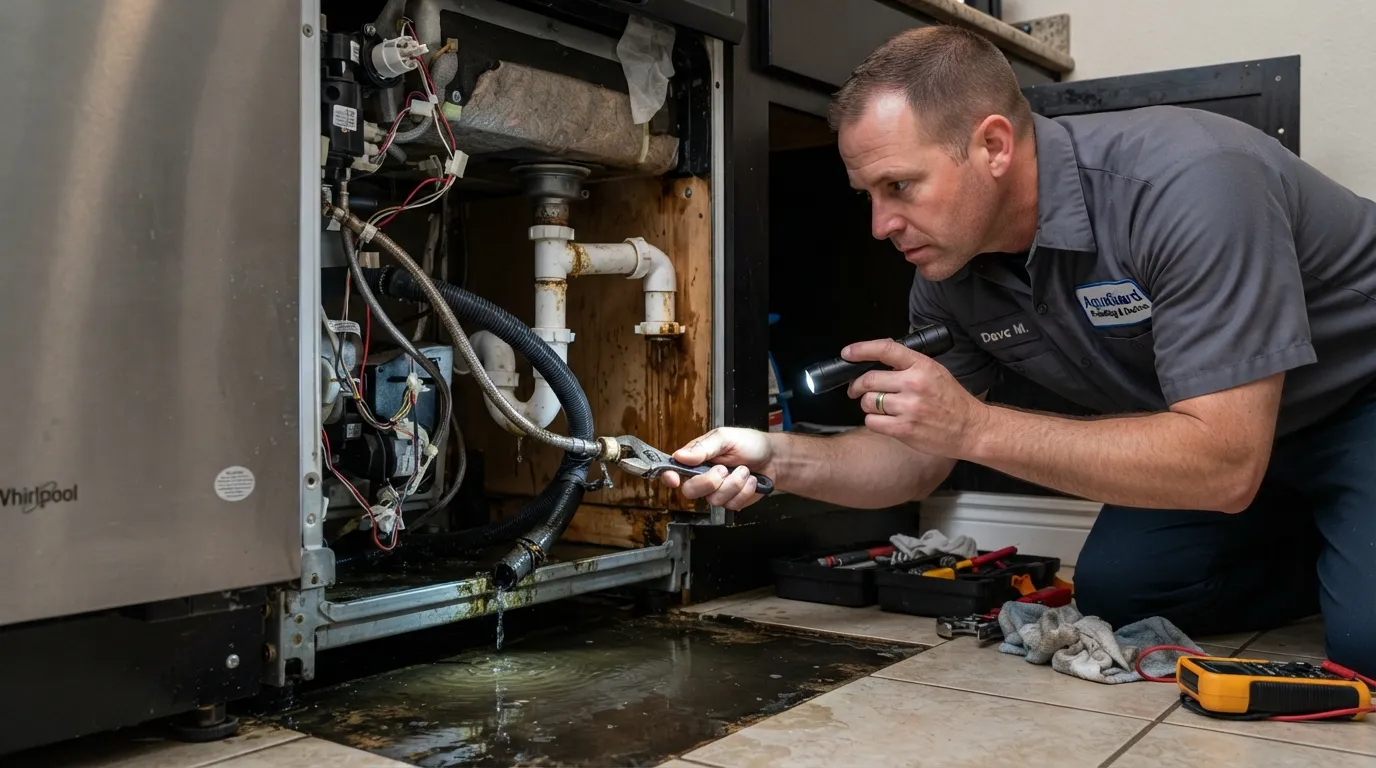
While most dishwasher performance issues stem from trapped food particles, grease, or hard water scale, certain persistent symptoms indicate a deeper mechanical or plumbing failure. Knowing when to put down the cleaning supplies and call for expert plumbing services prevents minor appliance glitches from turning into major property damage.
Signs the Problem Isn’t Dirt
Deep cleaning and running vinegar cycles will not resolve issues that originate outside the appliance. Look out for these warning signs:
Recurring standing water that remains in the bottom of the tub even after manual filter and drain cleaning.
Strange gurgling sounds or wastewater backing up into your kitchen sink while the dishwasher runs.
Mysterious puddles or moisture pooling under the unit during or between wash cycles.
Lukewarm or cold water filling the tub, regardless of the cycle setting selected.
Slow draining behavior affecting other plumbing fixtures nearby.
Plumbing Problems That Look Like Dishwasher Problems
Several common household plumbing failures mimic a broken or dirty dishwasher, often leading to wasted time scrubbing a clean machine:
Clogged Drain Line: A blocked garbage disposal inlet or main kitchen waste pipe prevents wastewater from exiting, requiring a specialized drain cleaning service to clear the blockage.
Under-Unit Leaks: Punctured supply hoses or worn-out pump seals cause hidden leaks that require professional leak detection and repair to protect your subflooring.
Water Heater Malfunctions: If your dishes come out greasy and cold, your dishwasher might be starved of hot water due to an aging or failing water heater.
Get Professional Help
If you have cleared your filters, run vinegar descaling cycles, and verified your drainage paths, but your dishwasher still refuses to drain, heat, or run properly, the issue requires licensed expertise. Don’t let plumbing complications disrupt your daily routine—Book a plumber today for a comprehensive inspection and fast, reliable repairs.
Dishwasher Cleaning FAQs
What is the best way to clean a dishwasher?
The most effective way to clean a dishwasher is a multi-step routine. Start by removing and washing the cylindrical filter and checking the spray arms for debris. Next, wipe down the door gaskets, place a bowl of white vinegar on the top rack, and run a hot water cycle to cut through grease and hard water scale.
Can I pour vinegar in my dishwasher to clean it?
Yes, pouring white vinegar in your dishwasher is completely safe and effective for dissolving mineral buildup and grease. Always place one to two cups of vinegar in an upright, dishwasher-safe bowl on the top rack rather than pouring it directly onto the tub floor, and check your manual to protect older rubber seals.
Is it better to use baking soda or vinegar to clean the dishwasher?
Neither is strictly better because they serve entirely different cleaning purposes. White vinegar acts as an acid to dissolve hard water scale and cut grease, whereas baking soda functions as a mild abrasive and deodorizer. For optimal results, use them in two separate, consecutive hot cycles rather than mixing them together.
Do you just run an empty dishwasher to clean it?
Yes, you should always run your dishwasher completely empty when performing deep cleaning cycles with vinegar, citric acid, or commercial cleaner tablets. Running the machine empty allows the cleaning solution and hot water to circulate freely through the spray arms, filters, and internal drain lines without interference from dishware.
Can I use Dawn dish soap to clean my dishwasher?
Never use liquid Dawn or standard hand dish soap in a dishwasher. Hand soaps produce microscopic bubbles that multiply exponentially under high-water agitation, instantly overflowing the door seals, flooding your kitchen floor, and creating a major slip hazard.
I accidentally put laundry detergent in my dishwasher. What should I do?
If you accidentally used laundry detergent, stop the cycle immediately. Scoop out the billowing suds by hand using containers or towels, rinse the interior with clean water, and run a complete empty cycle to flush out all residual surfactants before attempting to use the machine again.
What can I use instead of dishwasher cleaner?
If you do not have commercial cleaner or white vinegar, you can safely substitute food-grade citric acid powder to strip away hard water scale. Alternatively, plain baking soda can be sprinkled on the tub floor as a temporary deodorizer, or fresh lemon juice can act as a mild natural acid substitute.
How do you use a dishwasher cleaner?
To use a commercial cleaner tablet like Affresh, place the tablet directly into the detergent dispenser or on the bottom of the tub as directed by the packaging. Select your appliance’s hottest and longest normal washing cycle, ensure the machine is completely empty, and run the cycle from start to finish.
What causes a dishwasher not to clean properly?
Poor cleaning performance is usually caused by clogged cylindrical filters, blocked spray arm outlet holes trapping food debris, or insufficient water temperature. Regular monthly maintenance, clearing mineral scale, and ensuring your water heater operates correctly will instantly restore proper washing efficiency.
Can you leave clean dishes in the dishwasher overnight?
Leaving clean dishes inside the dishwasher overnight is entirely safe as long as the drying cycle finished completely and the interior is fully dry. However, leaving the closed, humid environment shut for prolonged periods can trap ambient moisture, so cracking the door open once cool is recommended.
Final Thoughts
Keep Your Dishwasher Clean and Running Well
Maintaining a high-performing appliance requires a simple monthly routine built around four core steps: clearing the filter, checking spray arm jets, wiping down rubber seals, and running a hot vinegar cycle. Consistent maintenance prevents foul odors, mineral scale, and cloudy glassware. If persistent drainage issues or leaks continue after deep cleaning, it is time to schedule a plumbing visit to resolve underlying mechanical faults.
Main Services
Related Posts
Need a Plumber in Miami?
Schedule service online or speak directly with the EZ Plumbing team.
Owner-Led Local Service
Know who is behind the business before you request service. The owners, contact line and Miami service pages are published clearly.
- Named business owners
- Direct phone and social channels
- Local Miami service information
Clear Help Before You Book
Review the relevant service page, contact the team directly and use the booking page when you are ready—without relying on vague claims.
- Service-specific information
- Direct questions before scheduling
- Clear online booking route