
Dishwasher Clogged? Five Early Warning Signs and How to Fix It
How Do You Know If Your Dishwasher Is Clogged?
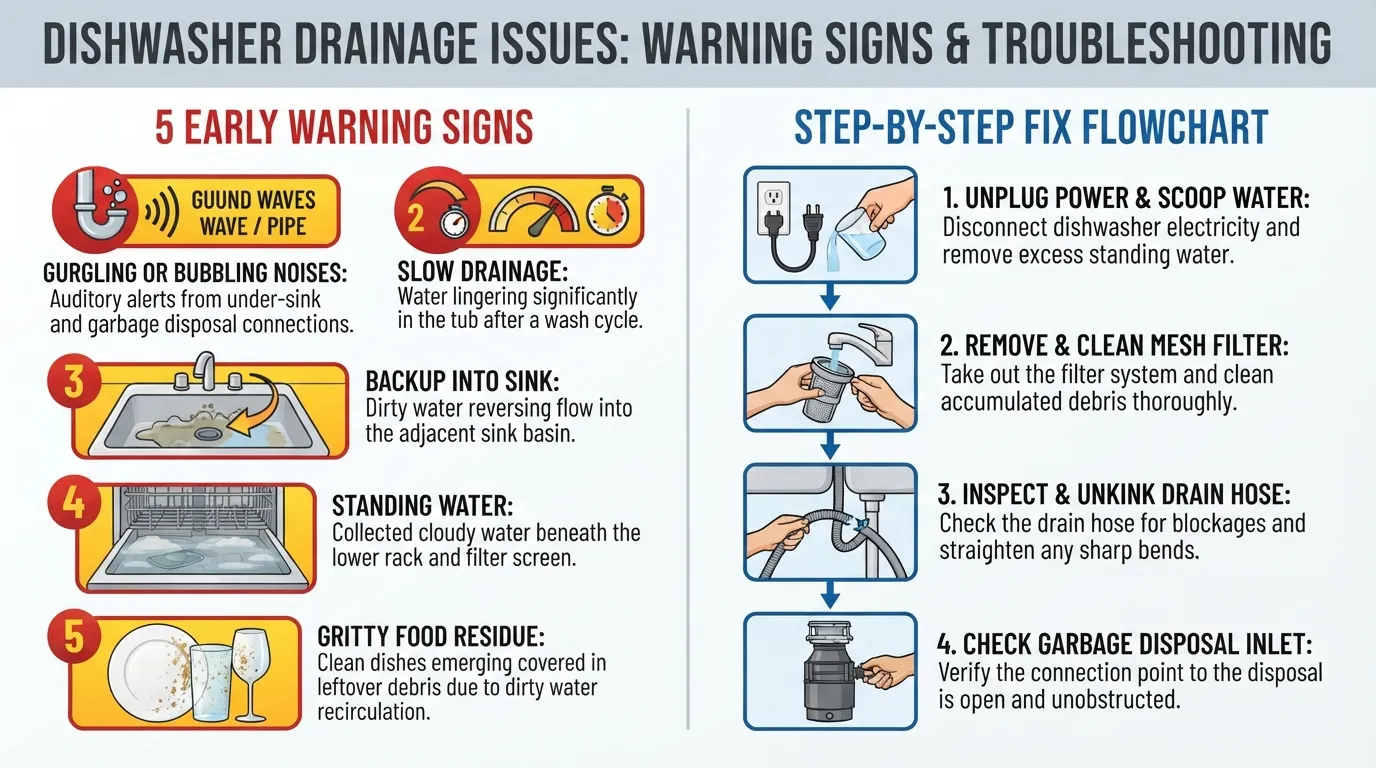
A clogged dishwasher typically shows distinct warning signs before completely backing up, including standing water at the bottom of the tub, gurgling sounds from nearby pipes, slow drainage during the pump-out cycle, wastewater backing up into your kitchen sink, and dishes coming out covered in food residue or grit.
Recognizing these early warning signs allows you to address drainage issues before they escalate:
Gurgling Sounds: Loud gurgling or thumping noises coming from your kitchen pipes or garbage disposal while the appliance is running indicate trapped air caused by a blockage in the drain line.
Slow Drainage: Water remaining in the basin long after the cycle ends points to an obstruction restricted within the filter basket, drain hose, or disposal inlet.
Sink Backup: Water rising in your kitchen sink during a wash cycle signifies a shared blockage downstream in the primary drain line.
Standing Water: Dirty water pooling beneath the bottom rack indicates that the drain pump or filter mesh is completely blocked from passing water.
Dirty or Gritty Dishes: Recirculated debris left on glassware and plates occurs when dirty wash water cannot properly evacuate between wash and rinse phases.
Addressing these early signals immediately prevents dirty water overflows, foul bacterial odors, and permanent mechanical damage to your dishwasher’s drain pump motor.
The 5 Early Warning Signs of a Clogged Dishwasher
Sign 1: Gurgling or Bubbling Noises During or After a Cycle
What you notice: Loud gurgling, bubbling, or thumping sounds echoing from your kitchen sink, garbage disposal, or lower cabinets while the dishwasher is running.
Why it happens: Air and water are being forced past a partial blockage in the secondary drain line, garbage disposal, or shared branch drain, creating vacuum pockets and pressure bubbles [00:19].
Quick check: Listen closely—does your kitchen sink or another nearby plumbing fixture gurgle at the exact same time the dishwasher pumps out water?
What to do next: Inspect your garbage disposal inlet or under-sink pipe connections to ensure trapped food waste isn’t choking the shared drainage path.
Sign 2: Water Drains Slowly From the Tub
What you notice: A slow, sluggish evacuation of wash water where the basin takes several extra minutes to empty, or water continues to lap at the bottom after the cycle finishes [00:39].
Why it happens: Accumulated food particles, grease, and mineral scale are building up inside the filter basket, drain hose, or pump inlet, severely restricting the volume of water passing through [00:31].
Quick check: Track the timing—how long does water stay in the bottom after the wash cycle ends [00:44]? If it takes more than a minute to completely clear, your flow rate is compromised.
What to do next: Remove and scrub the mesh filter assembly with warm soapy water and a soft brush to clear away grease films.
Sign 3: Water Backs Up Into the Kitchen Sink
What you notice: Dirty, sudsy wastewater rising up into your kitchen sink basin while the dishwasher is actively running through its drain cycle.
Why it happens: A blocked disposal inlet, a shared branch drain clogged with grease, or a missing high loop / air gap allows wastewater to take the path of least resistance up into the sink.
Quick check: Run your garbage disposal and watch carefully whether the sink fills with wastewater or fails to discharge properly into the main plumbing stack.
What to type/do next: Clear out any debris packing the disposal side inlet nipple where the dishwasher drain hose connects.
Sign 4: Standing Water Left in the Bottom of the Dishwasher
What you notice: A stagnant puddle of cloudy, foul-smelling water pooling beneath the bottom rack once the entire wash program has fully completed [00:03].
Why it happens: A completely blocked filter, an obstructed drain path, a pinched drain hose, or an unremoved knockout plug on a brand-new garbage disposal installation [00:54].
Quick check: Pull out the bottom dish rack and inspect the sump and filter screen area [00:51] for pooling debris, glass shards, or foreign objects.
What to do next: Scoop out the standing water with a cup, remove the filter components, and check the impeller blades in the drain pump for blockages [00:58].
Sign 5: Dishes Come Out Dirty, Gritty, or Cloudy
What you notice: Glassware, plates, and cutlery covered in a gritty film, sand-like particles, or dried food specks even after a heavy-duty cycle.
Why it happens: Restricted water flow or clogged spray arm nozzles are forcing the machine to recirculate dirty, debris-laden water instead of clean rinsing fluid [00:39].
Quick check: Unclip the upper and lower spray arms and check if the tiny water exit ports are clogged with hard water mineral scale or trapped food bits.
What to do next: Use a toothpick or straightened paperclip to clear out blocked spray arm holes and run a hot vinegar cleaning cycle.
Technician Insight: “Out of all the service calls we run for kitchen appliances, slow drainage and standing water caused by grease-choked filters or drain hoses account for over 70% of early-stage failures. Homeowners often assume the pump burned out, but 9 times out of 10, it’s just a localized blockage that takes five minutes to clear.” — Dave Miller, Master Plumber & Lead Technician, Miami Plumbing & Repair.
Visual Reference: Identifying Dishwasher Drainage Issues
Visual Reference: Identifying Dishwasher Drainage Issues
Visual Reference 1: Filter Assembly Inspection
A neglected filter choked with grease and food debris, which restricts water flow and triggers slow drainage.
Visual Reference 2: Drain Line Interior View
Internal view of a drain hose showing long-term organic sludge and fat accumulation.
Bonus Signs: Bad Odor and Longer Cycles
Beyond the five primary red flags, persistent foul, mildew-like odors emanating from the interior tub and noticeably longer wash cycles (as sensors struggle to compensate for poor water evacuation) are secondary indicators that your dishwasher is fighting an internal clog.
Is It Your Dishwasher or Your Drain? How to Tell the Difference
Determining whether your drainage failure stems from the appliance itself or your home’s broader plumbing network is crucial before attempting repairs or booking a service call. Misdiagnosing the source often leads to unnecessary part replacements when the true culprit is an obstructed branch drain or mainline sewer backup.
Knowing the root cause determines whether you need an appliance repair technician or a licensed plumber to resolve the issue safely.
Quick Diagnosis Table: Dishwasher-Only Clog vs Shared Drain Clog
| What You See / Hear | Likely Location | Who Can Fix It |
| Water stays in tub, sink drains normally | Internal filter, pump impeller, or unit hose | Appliance Repair Specialist or DIY |
| Sink drains slowly, dishwasher backs up | Garbage disposal or shared sink P-trap | Professional Plumber or DIY |
| Sink gurgles when dishwasher pumps out | Partial blockage in shared branch drain | Professional Plumber |
| Water rises into sink during wash cycle | Garbage disposal inlet plug or P-trap clog | Professional Plumber or DIY |
| Multiple fixtures gurgle or back up | Main sewer line obstruction downstream | Licensed Plumber |
When Only the Dishwasher Is Affected
If your kitchen sink drains at full capacity, the garbage disposal runs clearly, and no other fixtures exhibit slow drainage, the blockage is isolated inside the appliance.
Filter Basket: Food debris, labels, and fat accumulation restrict flow through the fine mesh screen beneath the bottom rack.
Drain Pump & Impeller: Broken glass, toothpicks, or foreign objects can jam the pump blades, preventing the motor from forcing water out.
Drain Hose: A kinked, pinched, or sludge-filled drain line running between the pump and under-sink connection starves the system of outflow capacity.
Spray Arms: Blocked nozzle holes prevent proper water distribution, leading to stagnant pools and poor washing performance.
When the Sink or Other Fixtures Are Also Slow or Gurgling
When your kitchen sink drains sluggishly or gurgles in tandem with your dishwasher’s drain cycle, the restriction lies within the shared plumbing lines beneath your sink. Dishwashers connect directly to your garbage disposal or sink tailpiece upstream of the kitchen P-trap.
If grease, starch, or organic sludge builds up inside this shared pipe, wastewater pushed out by the dishwasher pump cannot clear the trap, forcing dirty water up into the sink basin. Clearing these persistent grease blockages requires targeted drain clearing techniques or professional drain cleaning to clear the shared branch drain completely without damaging under-sink pipe joints.
When Multiple Drains in the House Act Up
If running your dishwasher causes water to gurgle or back up in nearby fixtures—such as a ground-floor shower, bathtub, or laundry sink—the issue extends beyond your kitchen plumbing.
This symptom points directly to a mainline obstruction further downstream in your drainage system. Tree root intrusion, collapsed pipe sections, or heavy grease buildup in the primary sewer lateral can restrict flow for the entire home. In these scenarios, attempting to fix the dishwasher will not resolve the issue, as you are dealing with a severe sewer line problem that requires professional diagnostic equipment, such as sewer camera inspections and hydro-jetting equipment.
Is It Okay to Run the Dishwasher When the Sink Is Clogged?
The Short Answer: Usually No
No, you should never run your dishwasher if your kitchen sink is backed up or draining slowly. Because both appliances share the same downstream drain path and P-trap, running a wash cycle will force wastewater directly into the blocked pipe, causing contaminated water to overflow onto your counters and kitchen floor.
What Can Happen if You Keep Running It
Continuing to operate the appliance while your sink is clogged creates immediate risks for your kitchen and plumbing system:
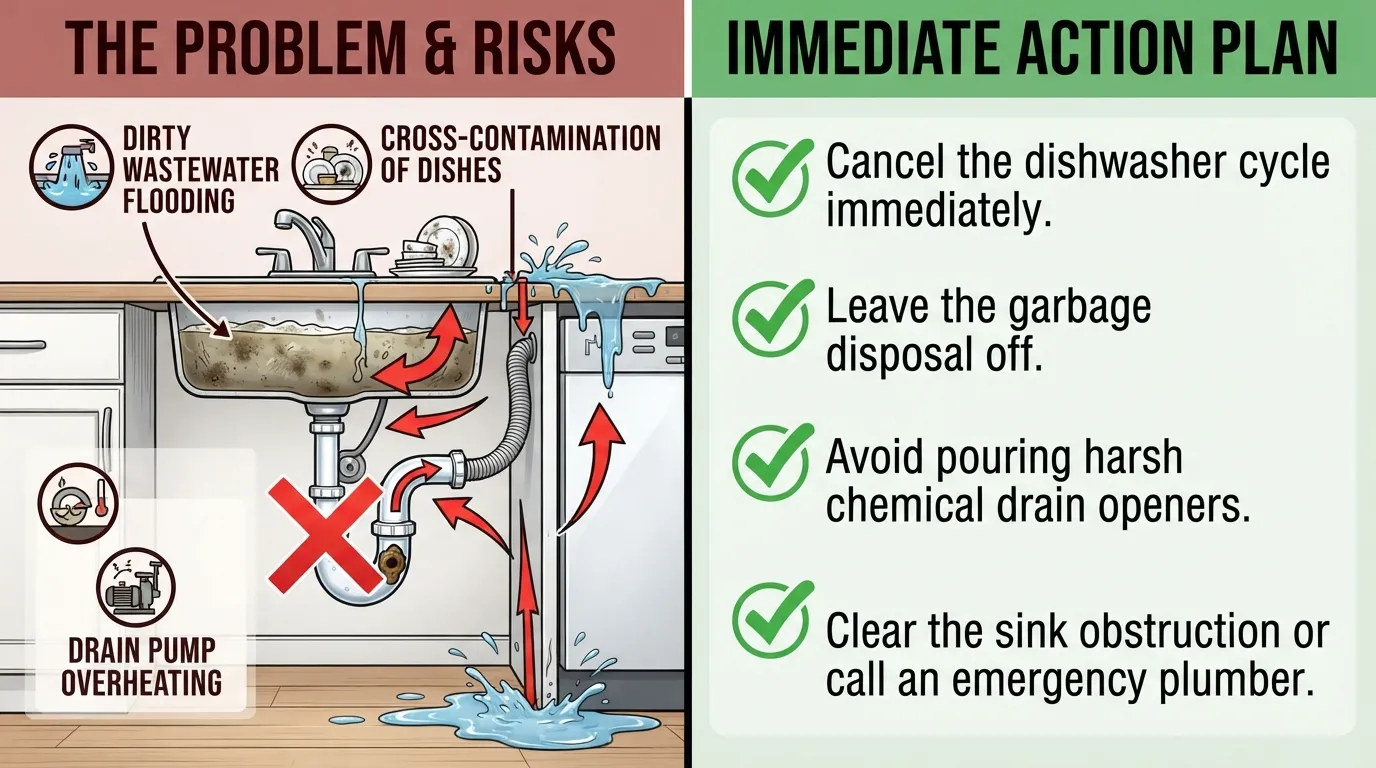
Dirty Wastewater Flooding: Dishwasher drain pumps discharge water at high pressure, which quickly forces dirty, sudsy water up through the sink drain or air gap, flooding your kitchen countertops and flooring.
Cross-Contamination: Stagnant, bacteria-laden sink water can siphon back through the drain hose into the dishwasher basin, contaminating clean dishes and creating severe health hazards.
Drain Pump Overheating: The drain pump motor experiences extreme backpressure when attempting to force water against a solid clog, which can burn out the motor or crack the pump housing.
What to Do Instead
If you discover a clogged sink while the dishwasher is running, take these immediate steps to prevent structural water damage:
Cancel the Cycle Immediately: Press and hold the “Cancel” or “Reset” button on your dishwasher control panel to stop the wash sequence without triggering an auto-drain cycle.
Leave the Garbage Disposal Turned Off: Avoid turning on your garbage disposal if it is completely submerged in standing water, as running a jammed unit can burn out its motor or push debris deeper into the branch line.
Avoid Harsh Chemical Drain Cleaners: Do not pour caustic chemical drain openers into the sink or dishwasher. These chemicals can melt rubber drain hose seals, corrode aluminum pump components, and cause dangerous chemical splashes if water backs up.
Clear the Sink Obstruction First: Use a manual sink plunger or clear the under-sink P-trap to restore proper flow before attempting to run another wash cycle.
If dirty water is actively backing up onto your floor or leaking under your kitchen cabinets, immediately contact an emergency plumber to inspect and clear the main blockage before structural water damage occurs.
What Causes a Dishwasher to Clog?
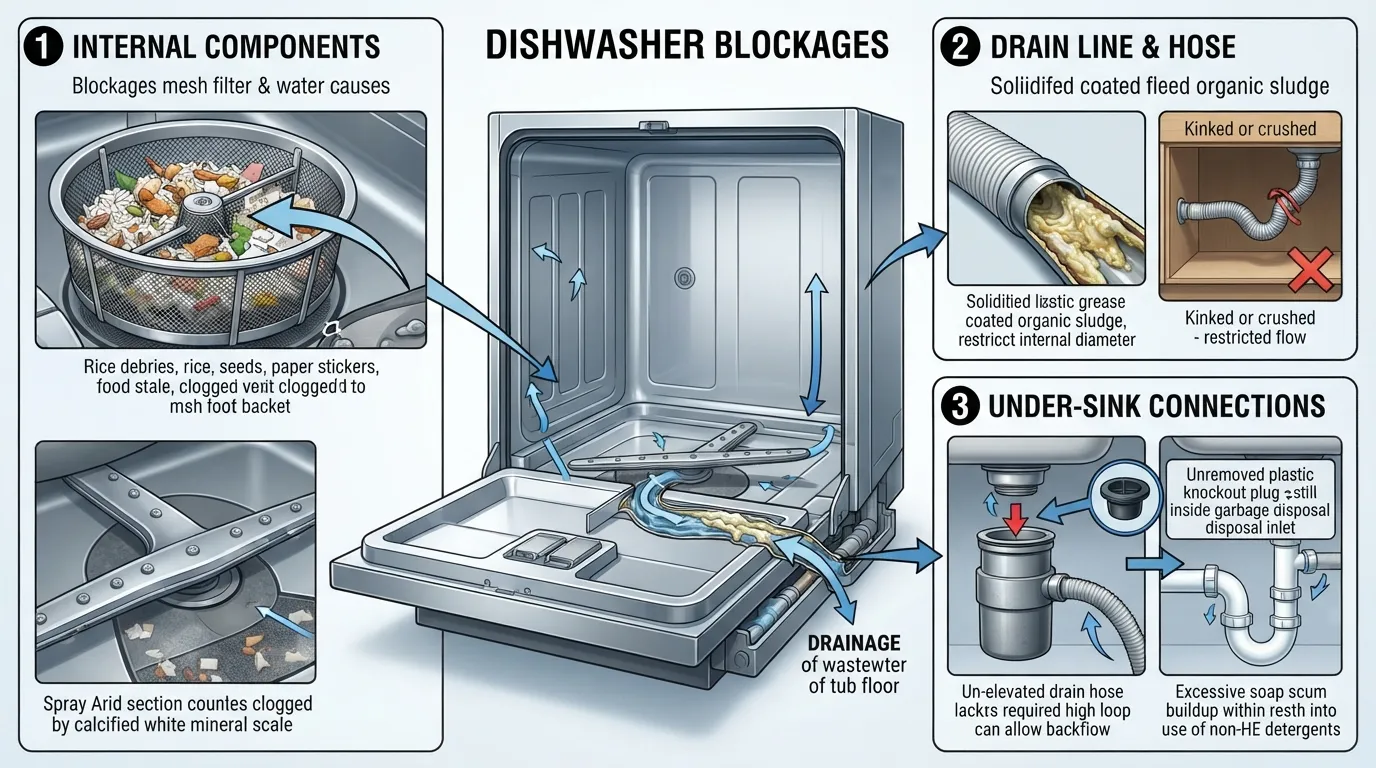
Understanding the underlying causes of dishwasher clogs helps you prevent sudden drainage failures, preserve pump life, and avoid recurring plumbing calls. Most obstructions develop over time from a combination of organic buildup, installation oversights, and improper maintenance habits.
Food Debris and Skipping the Filter Clean
Failing to clean your dishwasher’s filter assembly regularly is the leading cause of internal drainage blockages. Modern high-efficiency dishwashers rely on fine mesh filter screens to trap food waste rather than grinding it up.
When un-rinsed plates with seeds, rice, bone fragments, or stickers are loaded continuously, these particles blanket the filter. Over time, water cannot pass through the mesh into the sump, leaving dirty rinse water trapped inside the basin.
Grease and Fat Buildup
Hot water dissolves animal fats, oils, and butter during the wash cycle. However, as this greasy water cools while traveling through the cold drain hose beneath your cabinet, the liquefied lipids solidify into a thick, waxy paste.
This fat accumulation coats the inner walls of the drain hose and garbage disposal connection, steadily narrowing the pipe diameter until normal pump pressure can no longer force wastewater out.
Technician Insight: “The absolute most common cause we see in Miami homes isn’t broken parts—it’s grease and food slurry solidifying inside the flexible drain line under the sink. People treat their dishwashers like garbage disposals, and within 6 to 12 months, that grease creates a rubbery plug that completely chokes off the pump.” — Lead Plumbing Technician, Miami Florida Plumbing.
Hard Water and Mineral Scale
Homes across South Florida deal with high municipal water hardness, often measuring between 200 to 400 parts per million (PPM) of dissolved calcium and magnesium minerals. As hard water heats up during wash cycles, these minerals precipitate out and form crusty white limescale deposits inside your appliance.
This mineral scale constricts internal spray arm nozzles, coats the drain pump impeller, and calcifies inside the drain hose walls, creating a rough surface that catches passing food debris and accelerates blockages.
Kinked or Collapsed Drain Hose
The flexible plastic drain hose running from your dishwasher to the under-sink plumbing can easily become twisted, pinched, or kinked.
Pushed Cabinets or Racks: Pushing heavy cleaning supplies or trash bins under the sink can crush the flexible hose against cabinet walls.
Improper Hose Length: An excessively long drain hose that sags or loops improperly creates low points where heavy sludge settles and creates artificial blockages.
Thermal Collapse: Older or lower-quality hoses exposed to repeated high-heat wash cycles can soften and collapse internally under vacuum pressure.
New Garbage Disposal With the Knockout Plug Still In
A classic cause of a suddenly clogged dishwasher following a kitchen upgrade is an unremoved drain plug inside a newly installed garbage disposal. Garbage disposals come from the factory with a plastic knockout plug sealing the dishwasher inlet nipple.
If the installer forgets to punch out and remove this internal plastic plug before connecting the dishwasher drain hose, the wastewater has nowhere to go. During the very first drain cycle, water will immediately back up into the tub.
Missing High Loop or Air Gap Problems
Building codes require a high loop or an air gap on the dishwasher drain line to prevent dirty sink water from siphoning back into the clean appliance.
If your drain hose is installed flat along the cabinet floor without a raised high loop (fastened near the top underside of the countertop), dirty water from your kitchen sink will flow downward into the dishwasher. Additionally, physical air gaps mounted on the sink deck can become clogged with food debris, causing water to leak onto the counter during discharge cycles.
Too Much Detergent or Soap Residue
Using non-HE (High-Efficiency) dish soap, low-quality detergents, or excessive amounts of powdered detergent creates a heavy layer of chemical residue and soapy scum.
Excess suds trap air inside the drain pump housing—causing airlocks where the pump spins without moving water—while detergent scum forms a sticky coating inside pipes that traps food particles and speeds up clog formation.
How to Unclog a Dishwasher Step by Step
Fixing a clogged dishwasher yourself is entirely achievable without calling a service technician, provided you follow a systematic troubleshooting process. Working methodically from the inside tub out to the under-sink plumbing allows you to locate and clear restrictions safely.
Before You Start: Safety First
Protect your kitchen and ensure your own safety before taking apart any internal components:
Cut the Power: Unplug your dishwasher from the wall outlet or switch off the dedicated circuit breaker in your electrical panel to prevent accidental shocks.
Prep Protection: Lay down thick towels or old bath mats around the base of the machine, put on waterproof rubber gloves, and keep a small bucket or plastic bowl nearby to bail out standing water.
Step 1: Remove Standing Water
Scoop out any stagnant, pooling water from the bottom of the tub using a small plastic cup or container. For stubborn remaining water, use a wet/dry vacuum or soak up the final moisture with a large sponge so you can see and access the lower sump components clearly.
Step 2: Clean the Dishwasher Filter
Pull out the bottom dish rack and locate the cylindrical mesh filter assembly at the base of the tub. Twist and lift the filter out to remove trapped food debris, grease, and slime.
Scrub the mesh filter thoroughly under warm running water using a soft-bristled brush and mild dish soap. For complete manufacturer instructions on handling delicate upper and lower filter screens for specific models, consult this manufacturer’s cleaning guidance.
Visual Reference: Filter Assembly Removal
Unlocking and lifting out the cylindrical filter assembly to expose the drain sump area.
Step 3: Check the Spray Arms
Unclip or unscrew the upper and lower spray arms to inspect their tiny water exit ports. Food fragments, mineral scale, and calcium deposits frequently clog these holes, reducing water pressure and washing efficiency. Use a toothpick or straightened paperclip to push blockages out of the nozzles.
Step 4: Inspect the Drain Hose and Garbage Disposal Connection
Move under your kitchen sink to inspect the flexible drain hose running from the dishwasher to your tailpiece or garbage disposal. Check for physical kinks, sharp bends, or soft spots caused by thermal collapse. If you recently installed a new garbage disposal, verify that the internal knockout plug inside the disposal inlet nipple was fully punched out and removed during installation.
Step 5: Run a Hot Water Cycle
Reinstall all clean filters and spray arms securely, restore power at the breaker, and run a short rinse cycle using hot water to flush remaining loose debris through the drain system.
Does the Dishwasher Have a Reset Button?
Most modern dishwashers do not feature a physical “reset” button on the front control panel. Instead, resetting the appliance requires executing a specific button sequence or canceling the current program. Always check your appliance owner’s manual for the exact key combination—such as pressing and holding the “Start/Reset” button for 3 to 5 seconds—to clear error codes and initiate an automatic drain cycle.
How to Force a Dishwasher to Drain
If your cycle stalls with a tub full of water, you can trigger a manual forced drain:
Close the dishwasher door completely and ensure power is active.
Press and hold the Start / Cancel button for 3 to 5 seconds until the indicator light changes or turns off.
Wait 60 to 90 seconds while the internal computer cancels the wash program and commands the drain pump to evacuate the water.
Open the door once the pumping sound stops to check if the basin is clear.
Note: Filter locations, disassembly clips, and reset sequences vary significantly by brand and model; always verify your specific appliance specifications before forcing repairs.
What Can You Pour Down a Dishwasher to Unclog It?
When faced with standing water, many homeowners reflexively reach for chemical drain openers or household remedies. However, pouring aggressive chemicals into a closed appliance can severely damage internal components, degrade seals, and release toxic fumes into your living space.
Can You Use Vinegar and Baking Soda in a Dishwasher Drain?
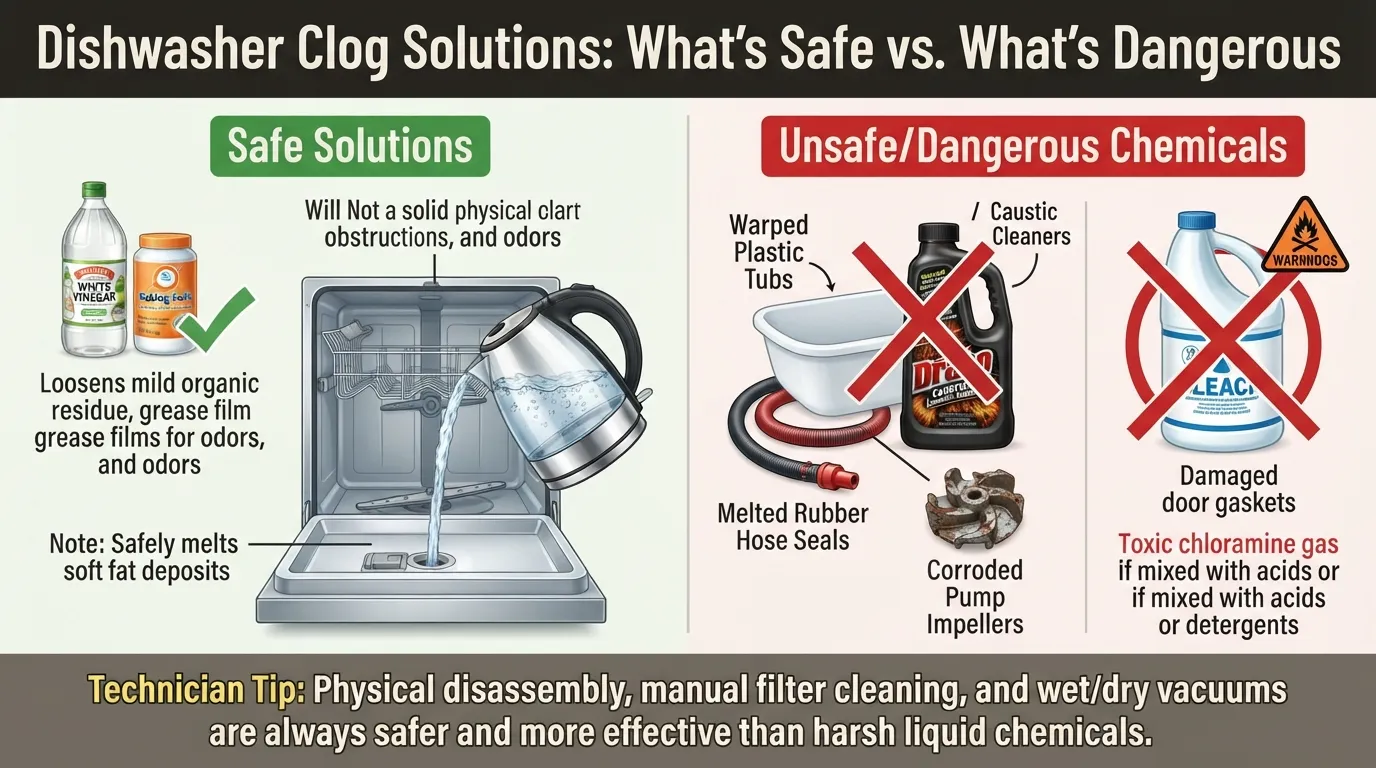
Using white vinegar and baking soda can help dissolve light grease films, break down mild mineral scale, and neutralize unpleasant odors, but this combination will not clear a solid physical blockage.
When mixed, vinegar and baking soda create an effervescent reaction that releases carbon dioxide gas, which can loosen soft, organic residue inside the sump. However, if your dishwasher is completely blocked by hard food debris, bone fragments, or a densely packed grease plug in the drain hose, this gentle reaction lacks the pressure and chemical strength to clear the line.
Can You Put Drano in a Dishwasher?
No, you should never pour Drano, Liquid-Plumr, or any commercial chemical drain cleaner into a dishwasher.
Caustic drain cleaners contain sodium hydroxide or lye, which generate intense heat during chemical reactions. This thermal reaction can warp plastic tub basins, melt thin-walled rubber drain hose seals, and corrode sensitive aluminum pump impellers. Furthermore, residual chemicals will remain inside the pump housing, potentially splashing onto your dinnerware during subsequent wash cycles. Always consult your appliance owner’s manual before introducing chemical agents into the unit.
Technician Insight: “We frequently replace burned-out drain pumps and melted hoses because a homeowner tried pouring chemical drain openers into a clogged dishwasher. These products are formulated for heavy PVC or iron sink pipes, not the delicate plastic and rubber assemblies inside an appliance. Chemical cleaners almost always cause hundreds of dollars in collateral damage.” — Senior Appliance & Plumbing Specialist, Miami Florida Plumbing.
Can You Pour Bleach Down the Dishwasher Drain?
Pouring chlorine bleach down your dishwasher drain is dangerous and ineffective for clearing clogs. Bleach lacks the grease-cutting or fat-dissolving properties required to break down organic blockages.
More critically, bleach destroys rubber door gaskets, corrupts plastic seals, and tarnishes stainless steel tub interiors. Never mix bleach with other household cleaners—combining bleach with vinegar, acids, or ammonia produces deadly chloramine or chlorine gas fumes that can cause severe respiratory damage.
Safer Alternatives
Rather than risking appliance damage or hazardous chemical reactions, rely on these proven, safe clearing methods:
Manual Component Disassembly: Remove the bottom rack, twist out the mesh filter basket, and physically clear food waste and sludge from the sump basin using gloves and a soft brush.
Wet/Dry Vacuum Extraction: Attach a wet/dry vacuum hose directly to the drain line or sump outlet to pull out stubborn grease plugs and standing water using strong suction.
Targeted Hot Water Flush: Pouring hot (non-boiling) water directly into the sump basin helps soften minor fat deposits without risking structural damage to internal plastic components.
When to Call a Plumber for a Clogged Dishwasher and What It May Cost
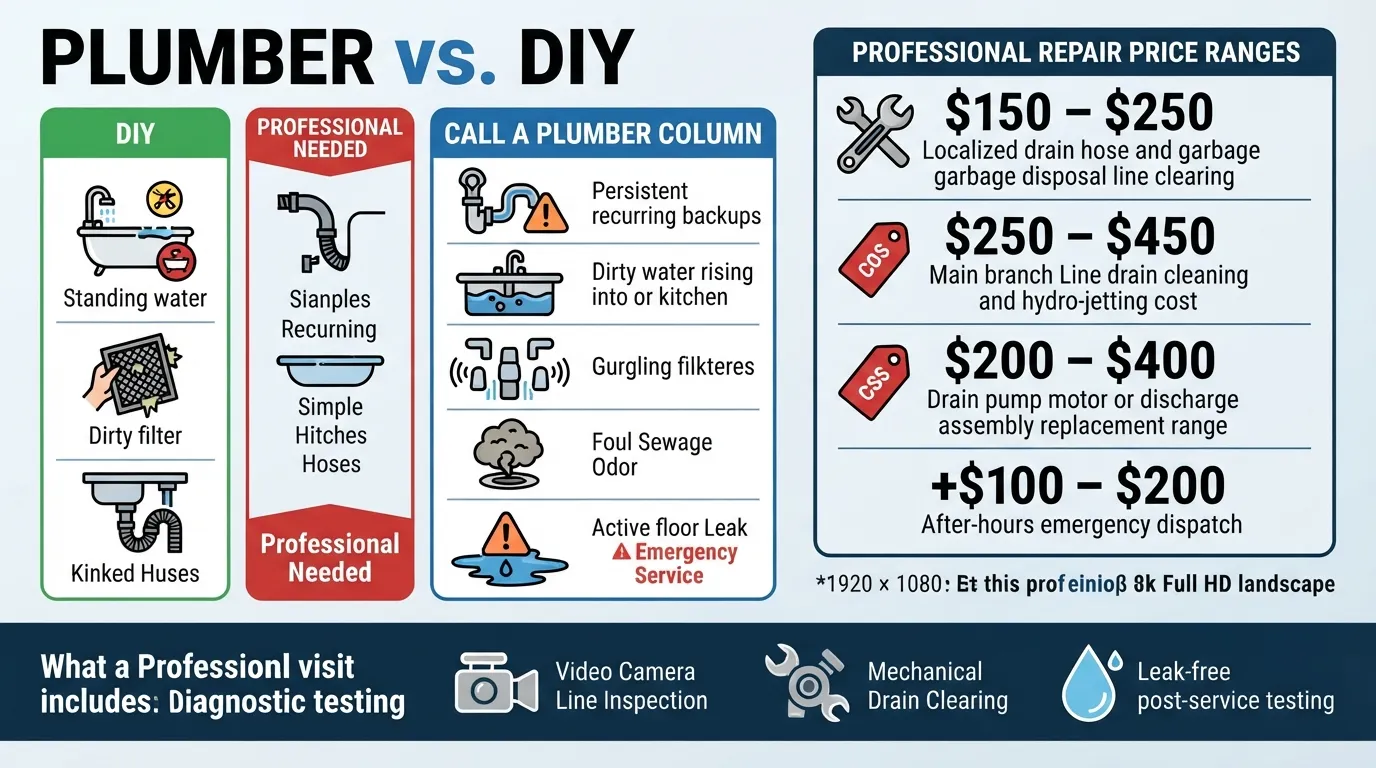
While basic maintenance like cleaning filters and straightening hoses can be handled at home, certain drainage failures require professional diagnostic tools and specialized equipment. Knowing when to transition from DIY troubleshooting to expert repair prevents costly water damage to your kitchen subflooring and cabinetry.
Signs It’s Time to Call a Professional
If basic cleaning steps fail to resolve the blockage, contact a licensed technician immediately under the following conditions:
Persistent, Recurring Clogs: The dishwasher repeatedly backs up within a few cycles of cleaning the filter or resetting the unit.
Multiple Fixtures Affected: Wastewater backs up simultaneously in your kitchen sink, adjoining laundry line, or ground-floor bathroom shower.
Foul Sewage Odors: Strong sewer gas smells emanate from the drain, indicating a broken trap seal or main sewer line venting issue.
Active Water Overflows: Stagnant water spills out from under the appliance or rises uncontrollably in the sink, requiring immediate intervention from our drain cleaning service team.
Grinding or Humming Noises: The drain pump motor makes high-pitched humming or metal-on-metal grinding sounds without evacuating water, signaling a damaged impeller or jammed motor shaft.
When standing water begins spreading across your kitchen floor or backing up rapidly through nearby fixtures, call for emergency plumbing assistance to shut down supply lines and prevent structural flooding.
Water Around the Dishwasher? It May Be a Leak, Not a Clog
Pooling water beneath or in front of your dishwasher does not always stem from an internal clog. A cracked door gasket, a loose supply line fitting, a split drain hose, or a failed water inlet valve can drop gallons of water onto your floor during wash cycles.
To distinguish between the two: if water collects inside the tub, you are dealing with a drainage clog; if water accumulates outside the appliance while the tub drains normally, you have a plumbing leak. If you suspect an unseen breach behind your cabinetry, schedule professional leak detection and repair to pinpoint the leak source without tearing out your kitchen drywall.
Plumber or Appliance Technician: Who Should You Call?
Choosing the right specialist depends on where the obstruction is located:
Call an Appliance Technician: If the issue is strictly isolated to the dishwasher internal components—such as a burned-out drain pump, faulty control board, cracked spray arm, or blocked internal filter—and your kitchen sink drains perfectly.
Call a Licensed Plumber: If wastewater backs up into your kitchen sink, if the garbage disposal or P-trap is blocked, if multiple drains gurgle, or if the main branch line under the house is obstructed.
How Much Does It Cost to Unclog a Dishwasher Drain?
The total cost to resolve a dishwasher drainage issue depends on the severity of the blockage, its physical location in the system, and whether parts need replacement:
Basic Drain Line & Disposal Clearing: Clearing localized grease or food obstructions in the under-sink tailpiece, garbage disposal inlet, or flexible hose typically ranges from $150 to $250.
Main Branch Line Drain Cleaning: Snaking or hydro-jetting a shared kitchen branch drain blocked with heavy mineral scale or grease accumulation ranges from $250 to $450.
Drain Pump or Hose Replacement: Replacing an internally damaged drain pump motor or cracked discharge line usually costs between $200 and $400, including labor and manufacturer parts.
After-Hours Emergency Service: Emergency dispatch fees for night, weekend, or holiday water overflow calls may add an additional $100 to $200 to standard service rates.
What a Professional Drain Cleaning Visit Includes
When a licensed plumber arrives at your home to resolve a dishwasher backup, they perform a comprehensive diagnostic inspection:
System Isolation & Testing: The technician tests the appliance drain pump pressure and inspects the under-sink P-trap, garbage disposal, and high-loop configuration.
Video Camera Inspection: If an obstruction lies deep within the branch line or main sewer stack, a flexible fiber-optic camera is routed through the pipe to locate roots, grease buildup, or structural damage.
Mechanical Clearing: Using professional drain snakes, air-burst tools, or hydro-jetting systems, the plumber clears the obstruction completely to restore full pipe capacity.
Post-Service Verification: The plumber runs a full drain cycle while monitoring under-sink fittings to verify leak-free, high-volume flow.
How to Prevent a Clogged Dishwasher
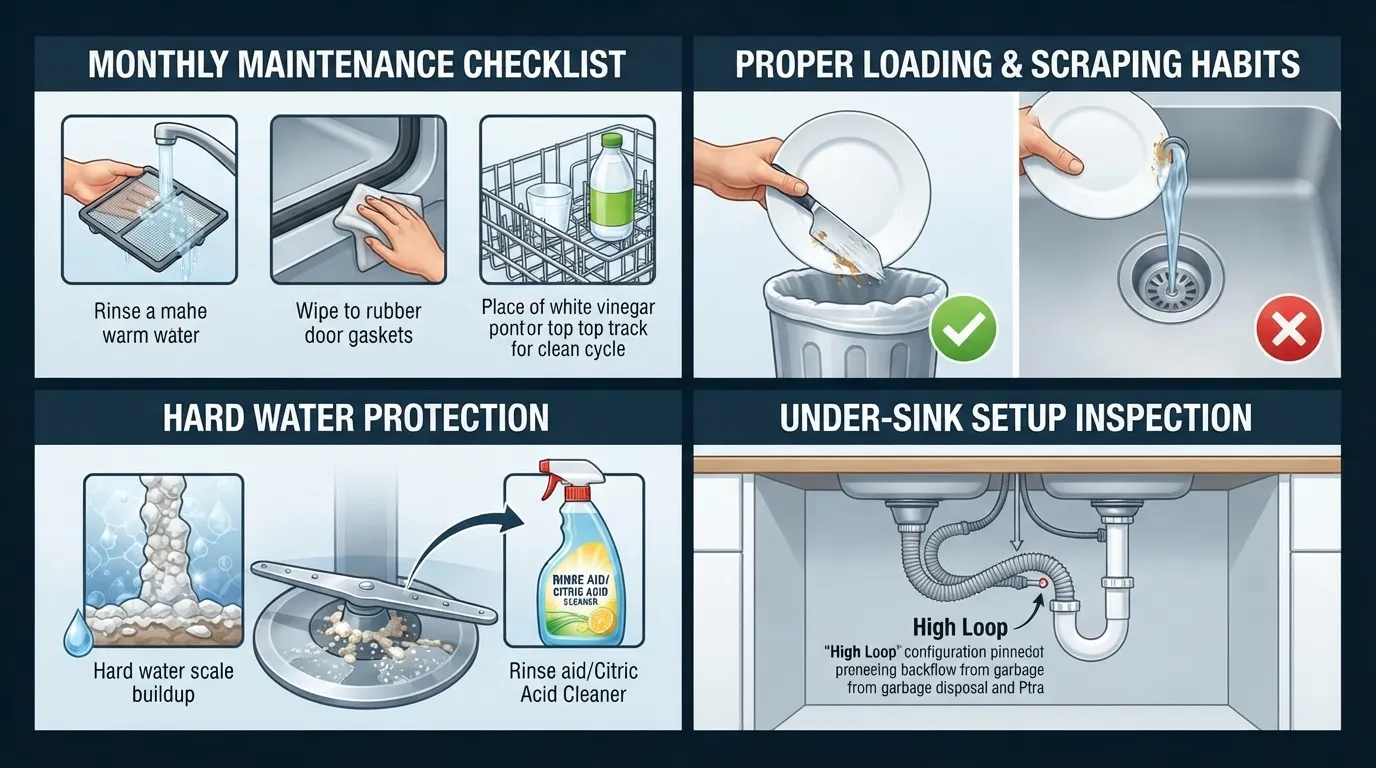
Preventing future dishwasher clogs saves you from messy cleanup emergencies, foul odors, and expensive repair bills. Establishing simple preventative habits and consistent maintenance routines ensures your appliance drains smoothly and operates at peak efficiency year-round.
Monthly Maintenance Checklist
Performing four quick checks once a month keeps your dishwasher free from grease accumulation, mineral scaling, and food blockages:
Clean the Filter: Remove and wash the cylindrical mesh filter under warm water to clear trapped food particles and slime.
Wipe Door Gaskets: Clean around the rubber door seals and bottom edge where soap scum and grime naturally collect.
Inspect Spray Arms: Check that all water jets are clear of mineral scale and food debris using a toothpick or pin.
Run a Cleaning Cycle: Run an empty hot cycle using a specialized dishwasher cleaner or a bowl of white vinegar on the top rack to dissolve interior grease.
Dishwashing Habits That Prevent Clogs
Small adjustments to how you load and prepare your dinnerware dramatically reduce strain on your dishwasher’s drain pump:
Scrape, Don’t Pre-Rinse: Scrape large food scraps, bones, and heavy grease into the trash without rinsing plates completely clean, as modern enzyme detergents require minor food particles to latch onto during the wash cycle.
Avoid Pouring Grease Down Inserts: Never dump leftover cooking oils, pan drippings, or bacon grease into plates or pots loaded into the machine.
Do Not Overload Racks: Space dishes properly so water spray reaches every surface, preventing unwashed food particles from accumulating and washing down into the sump.
Protecting Against Hard Water Buildup
South Florida’s hard water deposits calcium and magnesium inside heating elements and spray nozzles over time. Using a quality dishwasher rinse aid helps water slide off dishes cleanly while minimizing mineral spotting. Additionally, running a monthly citric acid or vinegar cleaning cycle breaks down calcified scale before it can restrict internal water flow.
Check Your Setup: High Loop, Air Gap, and Garbage Disposal Connection
Verify your under-sink plumbing configuration to protect against backflow and chronic blockages:
High Loop: Ensure your flexible drain hose loops securely up to the highest point under your countertop before connecting to the disposal, preventing dirty sink water from flowing back into the appliance.
Air Gap: If required by local building codes, ensure your countertop air gap remains clear of debris and mineral scale buildup.
Disposal Connection: Keep your garbage disposal clean and run it frequently to clear food waste out of the shared branch drain before it backs up into the dishwasher hose.
Frequently Asked Questions About a Clogged Dishwasher
What are the signs that my dishwasher is clogged?
The five primary signs include standing water left in the tub basin, gurgling sounds coming from under-sink pipes, dirty water backing up into the kitchen sink, slow drainage at cycle completion, and dishes coming out covered in gritty food residue. Early detection prevents major plumbing overflows.
How do I unclog a dishwasher with standing water?
First, disconnect power to the appliance and bail out standing water using a cup or wet/dry vacuum. Next, remove the bottom rack, twist out the filter basket assembly, clean off trapped food debris under warm water, and check the pump impeller in the lower sump before restarting a short hot rinse cycle.
How do I know if my dishwasher drain hose is clogged?
Disconnect power and inspect the flexible drain line running beneath your sink for physical kinks, sags, or heavy grease buildup. If the internal pump hums during evacuation but no water moves through the hose—or if squeezing the line reveals hard internal blockages—the drain hose is obstructed.
How do I clean a clogged dishwasher filter?
Remove the lower dish rack, unlock the cylindrical mesh filter by turning it counterclockwise, and lift it out of the sump basin. Scrub the mesh screen thoroughly with a soft-bristled brush, warm water, and mild liquid dish soap to dissolve grease and organic sludge before locking it back into place.
Can I pour bleach or Drano down my dishwasher drain?
No. Never pour Drano, Liquid-Plumr, or chlorine bleach down an appliance drain. Chemical drain cleaners generate intense heat that warps plastic components, melts rubber hose seals, and ruins internal pump impellers. Bleach degrades seals and releases hazardous chloramine fumes if mixed with detergent or acidic residues.
Is there a reset button on my dishwasher?
Most modern dishwashers lack a physical “reset” button. Instead, execute a forced reset by pressing and holding the Start / Cancel button for 3 to 5 seconds to initiate an auto-drain sequence, or switch off the dedicated circuit breaker in your electrical panel for 5 minutes to reset the internal computer module.
Can vinegar and baking soda unclog a dishwasher drain?
Vinegar and baking soda can dissolve mild grease films, break down light mineral scale, and neutralize lingering odors, but they will not clear dense physical clogs. Hard obstructions like bone fragments, glass, stickers, or solid grease plugs require manual filter cleaning, hose clearing, or mechanical drain snaking.
Is it okay to run the dishwasher when the sink is clogged?
No. Operating your dishwasher while the kitchen sink is backed up will force high-pressure wastewater directly into the obstructed line, causing dirty, sudsy water to overflow onto countertops and kitchen flooring. Always clear the sink and P-trap blockage before starting a dishwashing cycle.
How much does it cost to unclog a dishwasher drain?
Clearing a localized clog in an under-sink tailpiece, disposal connection, or drain hose typically costs $150 to $250. Snaking or hydro-jetting a shared main branch line ranges from $250 to $450, while replacing a damaged internal drain pump motor generally costs between $200 and $400.
Act Early to Avoid a Bigger Problem
Paying attention to early warning signs like gurgling pipes, slow drainage, sink backups, standing water in the tub, and dirty dishes keeps a simple clog from turning into an expensive emergency. Catching these indicators early protects your home from water damage, prevents bad odors, and extends the lifespan of your appliance.
For simple issues like a dirty mesh filter screen or a kinked drain line, manual cleaning and DIY troubleshooting often resolve the problem in a few minutes. However, if wastewater backs up into your sink basin, multiple drains gurgle simultaneously, or cleaning the filter fails to restore flow, the restriction lies deeper inside your shared branch drain line. In those situations, exploring our plumbing services ensures your drainage system is cleared safely using professional equipment without risking damage to your kitchen pipes.
Main Services
Related Posts
Need a Plumber in Miami?
Schedule service online or speak directly with the EZ Plumbing team.
Owner-Led Local Service
Know who is behind the business before you request service. The owners, contact line and Miami service pages are published clearly.
- Named business owners
- Direct phone and social channels
- Local Miami service information
Clear Help Before You Book
Review the relevant service page, contact the team directly and use the booking page when you are ready—without relying on vague claims.
- Service-specific information
- Direct questions before scheduling
- Clear online booking route