3 Frequently Asked Plumbing Questions and How to Fix Them
3 Frequently Asked Plumbing Questions And How to Fix Them
Homeowners face three main plumbing emergencies: a running toilet, a clogged drain, and running out of hot water. These issues account for over 80% of service requests sent to local trade specialists. Left unchecked, a minor leak or partial blockage can rapidly spiral into severe structural water damage, mold growth, or inflated utility bills. If you need professional assistance resolving these issues immediately, our team providing comprehensive plumbing services is ready to assist.
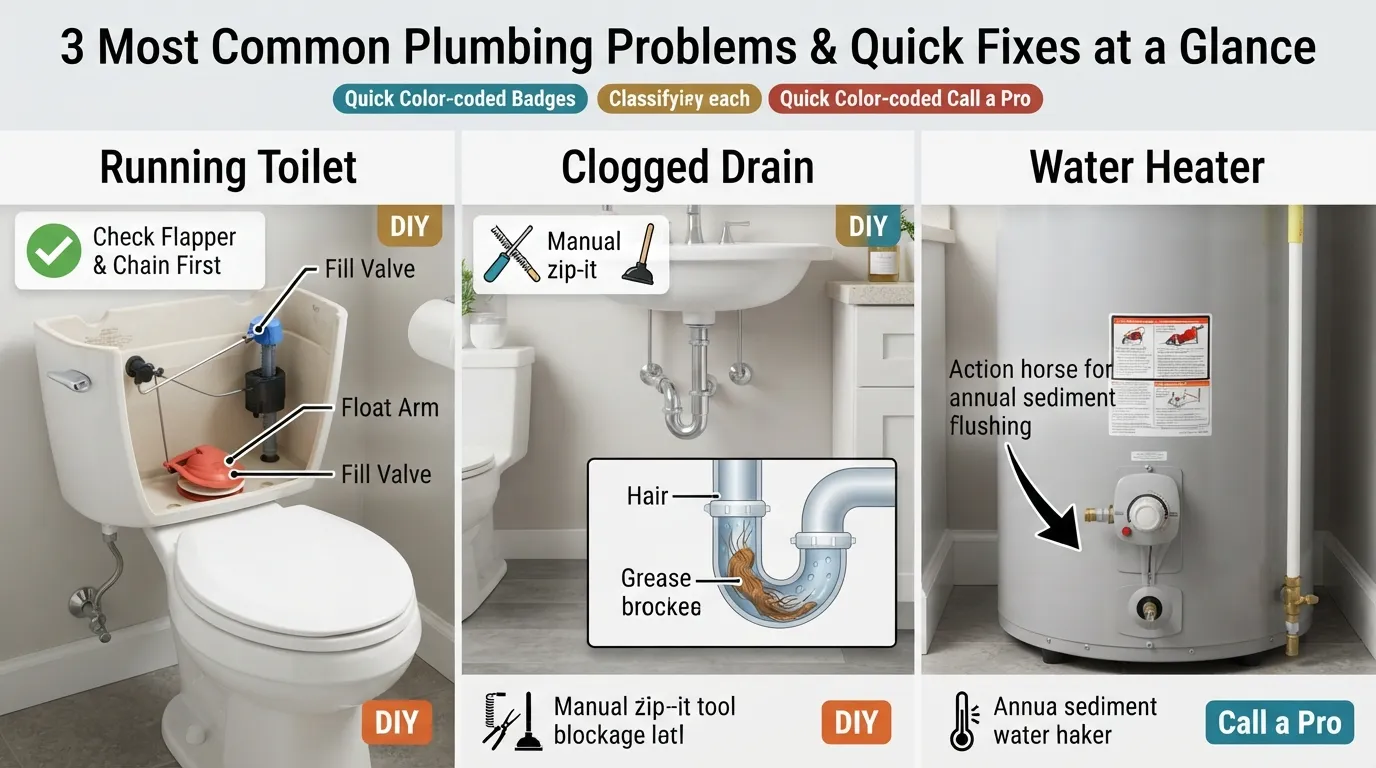
The 3 Most Common Plumbing Problems at a Glance
| Problem | Most Common Cause | Quick Fix | DIY or Call a Pro? |
| Running Toilet | Worn-out rubber flapper or misaligned float valve | Replace the flapper valve or adjust the water level chain inside the tank. | DIY (Simple hand tools) |
| Clogged Drain | Buildup of hair, soap scum, grease, or foreign objects | Clear using a manual drain snake or a hand-pump plunger. | DIY First / Pro if main line |
| Running Out of Hot Water | Sediment buildup or a failing heating element | Flush the water heater tank or reset the high-temperature limit switch. | Pro (Electrical/Gas safety) |
Who This Guide Is For
This practical guide is designed for Miami homeowners dealing with active residential plumbing issues who need immediate, reliable troubleshooting steps to resolve problems safely.
Why Does My Toilet Keep Running?
What Does It Mean When a Toilet Keeps Running?
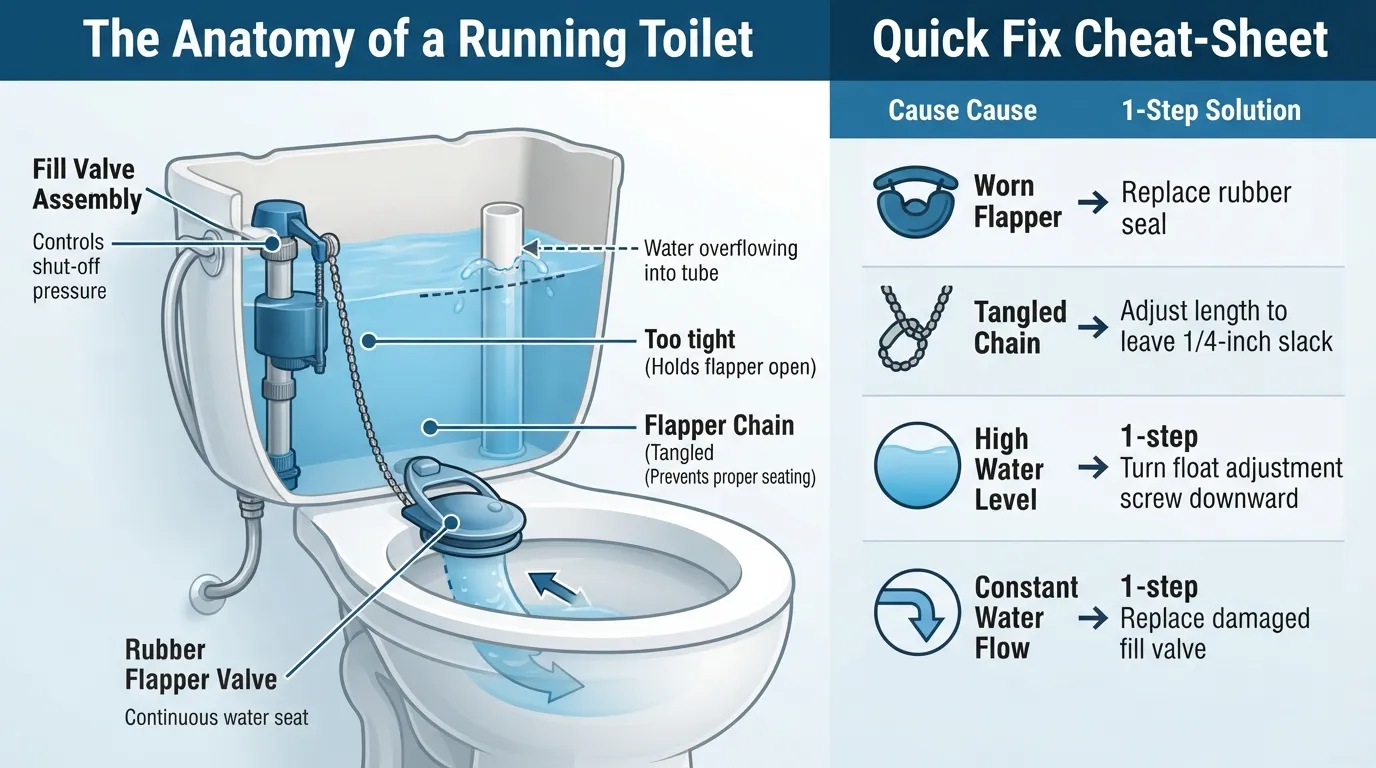
A running toilet means water continuously leaks from the toilet tank into the bowl instead of holding steady until the next flush. This constant flow is usually caused by a mechanical misalignment or a worn-out component inside the tank, resulting in a frustrating sound and a massive spike in your monthly utility bills.
Why Is Your Toilet Running? 4 Common Causes
Worn or warped flapper: The rubber seal at the bottom of the tank degrades over time, creating gaps that let water slip through into the bowl.
Flapper chain too tight, too loose, or tangled: An improper chain length prevents the flapper from sitting flush against the flush valve seat.
Float or fill valve set too high: When the water level exceeds the top of the overflow tube, excess water constantly drains away.
Faulty fill valve: A damaged fill valve assembly fails to shut off the water supply once the correct water level is reached.
How to Fix a Running Toilet Step by Step
Fixing a running toilet requires basic hand tools and typically takes between 15 to 30 minutes.
Tools required: Adjustable pliers, sponge, replacement rubber flapper, and a pair of gloves.
Step 1: Remove the tank lid and check the water level to see if it sits roughly one inch below the top of the overflow tube.
Step 2: Inspect the flapper chain; ensure it has about 1/8 to 1/4 inch of slack so it does not pull the flapper open slightly.
Step 3: Adjust the float clip or turn the adjustment screw on the fill valve downward to lower the water cutoff level.
Step 4: Shut off the water supply valve behind the toilet, flush the toilet to drain the tank, and use a sponge to remove any remaining water.
Step 5: Unclip the old rubber flapper from the flush valve tabs, snap the new flapper into place, reattach the chain, and turn the water supply back on.
How to Test for a Silent Toilet Leak (Dye Test)
Drop a few tablets of food coloring or a few drops of dark food coloring directly into your toilet tank.
Wait 15 to 20 minutes without flushing the toilet.
Check the water inside the toilet bowl; if the color has seeped into the bowl, you have a silent flapper leak.
Note: Flush the bowl immediately after checking to prevent any permanent dye staining on porcelain surfaces. If you suspect broader plumbing leaks across your property, professional leak detection services can identify hidden issues quickly.
How Much Water and Money Can a Running Toilet Waste?
A malfunctioning toilet can waste up to 200 gallons of water per day, turning a minor mechanical glitch into a major resource drain. According to the EPA WaterSense program, ignoring a silent leak can inflate your quarterly utility expenses by dozens of dollars. For instance, wasting 200 gallons daily adds up to roughly 6,000 gallons a month, translating to significant monetary waste on municipal water and sewer rates.
Practical Tip from the Field
The most common issue encountered during local service calls is a rubber flapper that looks intact but has hardened from chemical water treatment additives. Even a microscopic change in texture prevents a proper seal, making routine flapper replacements an essential periodic maintenance task.
When to Call a Plumber for a Running Toilet
The running persists even after replacing the flapper, chain, and fill valve entirely.
You notice pooling water or moisture gathering at the base of the toilet.
Your water bill climbs unexpectedly with no visible plumbing leaks anywhere else in the house.
The porcelain tank or bowl features a hairline crack that compromises structural integrity.
When DIY adjustments fail, expert professional toilet repair ensures the issue is resolved correctly.
Mistakes to Avoid
Over-tightening plastic lock nuts: This can crack the porcelain tank or flush valve shank, causing major leaks.
Using chemical drop-in tablets: Harsh chlorine bleach tablets can degrade rubber flappers and internal plastic seals prematurely.
Ignoring the fill tube position: Ensure the small refill tube clips securely to the top of the overflow tube without dipping too far below the waterline.
How Do I Fix or Prevent Clogged Drains?
What Causes a Clogged Drain?
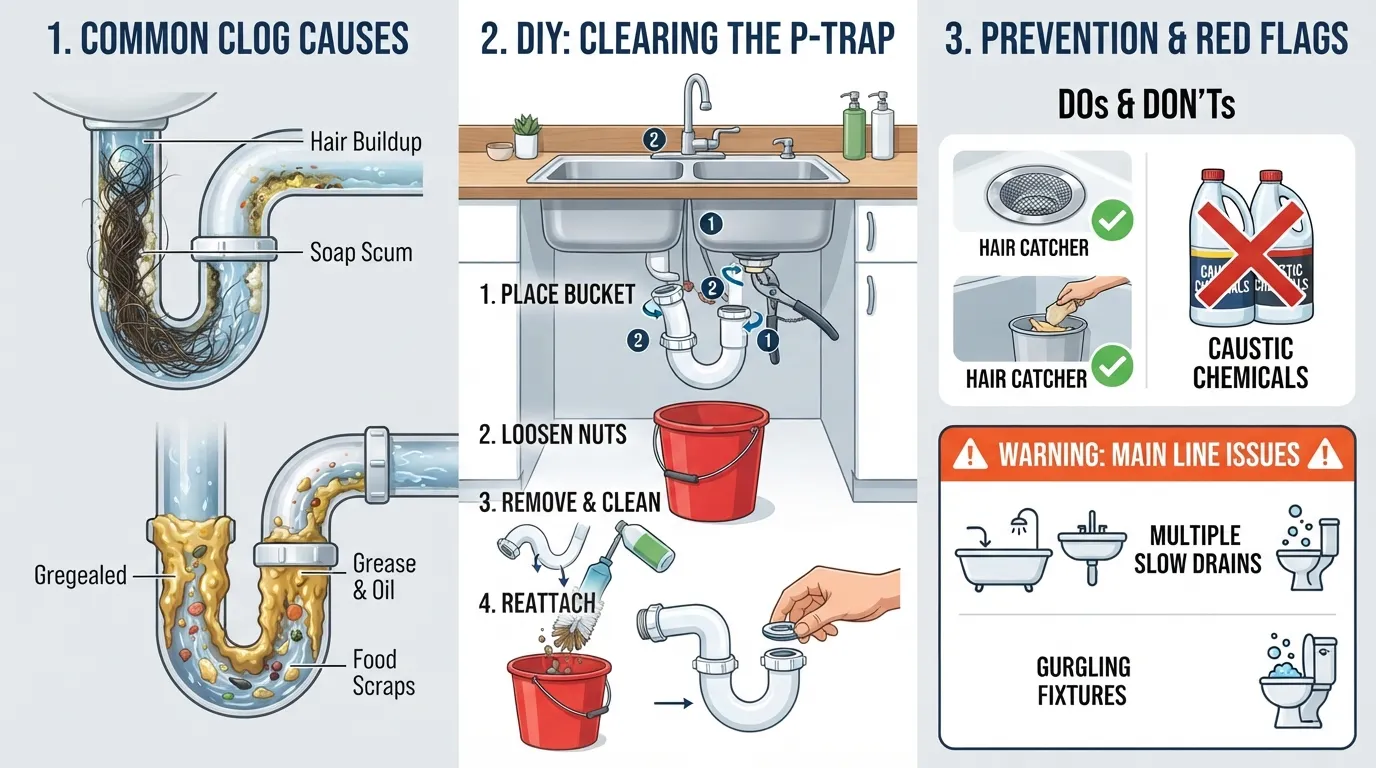
A clogged drain occurs when foreign matter accumulates inside waste pipes, restricting the smooth flow of wastewater down the system. Different fixtures accumulate distinct types of debris:
Bathroom drains: Hair, soap scum, and shed skin cells bind together inside the trap and pipe walls.
Kitchen drains: Grease, cooking oil, coffee grounds, and starchy food scraps solidify inside the pipe.
Toilets and utility sinks: Paper products, hygiene wipes, and accidental foreign objects cause sudden blockages.
How to Unclog a Bathroom Sink or Shower Drain
Clear the stopper: Remove the popup stopper by unscrewing or lifting it out, then manually pull away tangled hair and slime using a hooked wire or glove.
Use a plastic hair-grabber: Insert a flexible barbed plastic drain snake down the drain opening, twist it gently, and pull upward to snag hidden clumps of hair.
Plunge the fixture: Fill the sink or shower basin with a few inches of water, cover the overflow hole with a damp cloth, and use a cup plunger to force air and loosen the obstruction.
How to Unclog a Kitchen Sink (Including the P-Trap)
Place a bucket underneath the curved pipe (P-trap) beneath your kitchen sink to catch residual water.
Manually unthread the slip-nut fittings on both ends of the P-trap using adjustable pliers if needed.
Remove the P-trap, tip it over into the bucket, and clear out any compacted grease, sludge, or food debris trapped inside.
Inspect the horizontal arm leading into the wall, clear any blockages with a small bottle brush, and reassemble the P-trap securely before running water to test for leaks.
Can You Use Chemical Drain Cleaners?
Harsh chemical drain cleaners should generally be avoided because strong caustic formulas can corrode older metal pipes, warp PVC lines, and destroy beneficial bacteria in septic systems. Safer alternative methods include:
Mechanical removal: Using a hand-cranked drain snake or manual plunger to physically break apart the clog.
Natural fizzing method: Pour half a cup of baking soda down the drain followed by half a cup of white vinegar, let it bubble for 15 minutes, and flush with boiling hot water.
Enzyme treatments: Apply a bio-enzymatic cleaner monthly to organically digest organic waste and grease buildup safely.
Warning Signs That Your Clog Is a Bigger Problem
Multiple slow fixtures: Several sinks or showers drain sluggishly at the exact same time.
Gurgling sounds: Plumbing fixtures bubble or gurgle when you flush a toilet or run a nearby washing machine.
Unpleasant odors: A distinct raw sewage smell emanates from your floor drains or sink openings.
Fixture backup: Water bubbles up into your bathtub or shower drain whenever the washing machine discharges wastewater.
When these symptoms appear, the issue often stems deeper in the system. You may require a thorough evaluation of your sewer line to address structural blockages.
How to Prevent Clogged Drains
Bathroom prevention: Install mesh hair catchers over every tub and shower drain to intercept hair before it enters the trap.
Kitchen prevention: Never pour cooking oil, grease, or liquid fat down the garbage disposal; instead, wipe pans with paper towels or collect grease in a container.
Maintenance flushes: Pour a kettle of boiling water down your kitchen drain weekly to melt away minor soap and grease films.
Monthly enzyme care: Use commercial bio-enzymatic drain maintainers monthly to keep pipe interiors clear of organic buildup.
Field Insight
During routine field service calls, plumbers frequently extract massive, hardened masses of congealed grease mixed with wet wipes from kitchen lines, or dense hair-and-soap mats that completely block bathroom cross-sections. In older properties, root infiltration through cracked clay pipes is another leading culprit behind persistent slow drains.
When to Call a Plumber for a Clogged Drain
DIY plunging and manual snaking fail to clear the blockage after multiple attempts.
Water backs up into unexpected fixtures or floor drains across the house.
You suspect structural pipe damage, bellied sewer lines, or intrusive tree roots.
For persistent issues, scheduling professional drain cleaning ensures your plumbing system is cleared safely without damaging pipe walls.
Why Am I Running Out of Hot Water So Fast?
Why Does the Hot Water Run Out So Quickly?
Running out of hot water too fast usually indicates that your tank’s heating efficiency has dropped, the thermostat is misadjusted, or mineral scale has accumulated inside the vessel and displaced usable hot water volume. When components fail or heavy sediment creates a thermal barrier, your water heater struggles to keep pace with normal household demands.
5 Common Causes of Running Out of Hot Water
Sediment buildup: Calcium and magnesium minerals settle at the bottom of the tank, reducing total water capacity and creating a barrier between the burner or element and the water.
Failed heating element: In electric water heaters, a burned-out upper or lower heating element stops generating thermal energy.
Broken dip tube: A cracked or degraded plastic dip tube lets incoming cold water mix with the hot water at the top of the tank instead of sending it to the bottom to be heated.
Thermostat set too low or faulty: Incorrect thermostat calibration prevents the water from reaching an adequate storage temperature.
Pilot light or burner problem: Gas water heaters experience sudden hot water loss if the pilot light extinguishes or the gas burner malfunctions.
Why Hard Water Makes This Worse in South Florida
South Florida municipal water supplies contain exceptionally high levels of dissolved calcium and magnesium, creating severe hard water conditions. These hard water minerals rapidly precipitate inside water heater tanks, accelerating scale accumulation, clogging internal components, and shortening appliance lifespans much faster than in soft water regions.
How to Flush a Water Heater Safely, Step by Step
Flushing your tank annual removes damaging mineral scale and restores peak heating efficiency.
Tools required: Flathead screwdriver, standard garden hose, and bucket.
Step 1: Shut off the electrical power to electric water heaters at the circuit breaker, or turn the gas control valve to the “Pilot” or “Off” position.
Step 2: Close the cold water supply valve located at the top of the water heater tank.
Step 3: Attach a garden hose securely to the drain valve at the base of the tank and run the opposite end to a safe drainage point or floor drain.
Step 4: Open a nearby hot water faucet inside your home to relieve pressure, then open the tank drain valve to let water flow out.
Step 5: Briefly open the cold water supply valve for a few seconds to stir up remaining sediment, then let it drain until the water runs completely clear.
Step 6: Close the drain valve, disconnect the hose, open the cold water supply valve to refill the tank completely, and never turn the power back on until the tank is entirely full of water to prevent burning out the elements.
Gas vs. Electric Water Heaters: Common Problems
| Feature | Electric Water Heaters | Gas Water Heaters |
| Primary Power Source | 240V Dedicated Circuit & Breaker | Natural Gas or Propane Supply |
| Most Common Failure | Tripped reset button or burned-out heating element | Extinguished pilot light or faulty thermocouple |
| Recovery Speed | Slower heating recovery time | Faster heating recovery time |
Is It Time to Replace Your Water Heater?
Advanced age: Your tank unit is more than 10 to 12 years old and requires frequent repairs.
Discolored water: Rusty or brownish water flows from your hot water taps, indicating internal tank corrosion.
Leaking tank body: Moisture or active puddling appears around the base of the tank shell, signaling a ruptured inner liner.
Strange noises: Persistent rumbling, popping, or banging noises echo from the tank due to heavy sediment boiling.
When these warning indicators appear, scheduling professional water heater repair and replacement prevents catastrophic property flooding.
Field Insight
Many service calls for sudden hot water loss turn out to be nothing more than a tripped circuit breaker or a slightly misadjusted thermostat dial, which you can safely inspect and fix in under two minutes before calling a technician.
When to Call a Plumber
You restore power or pilot settings, but the water remains freezing cold.
Water leaks actively from the tank body, fittings, or pressure relief valve.
You notice a suspicious gas odor near the appliance, requiring an immediate call to an emergency plumber for safety inspection.
Your tank is past its expected lifespan and requires complete replacement.
DIY or Call a Plumber? A Quick Decision Guide
DIY or Professional? Quick Comparison Table
Knowing whether to tackle a plumbing issue yourself or hand it off to a licensed plumber can save you hundreds of dollars in unnecessary repairs and water damage. Use this framework to evaluate your situation quickly:
| Problem | Safe to DIY? | Typical Time | Approx. Cost (DIY vs. Pro) | Call a Plumber If… |
| Running Toilet | Yes | 15–30 min | $10–$25 vs. $150–$250 | Replacing parts fails to stop the leak or the porcelain tank is cracked. |
| Bathroom Drain Clog | Yes | 15–30 min | $5–$15 vs. $150–$300 | The clog persists after plunging or snaking, or multiple drains back up. |
| Kitchen Sink Clog | Yes | 30–60 min | $10–$20 vs. $150–$300 | Water backs up into the garbage disposal or leaks out from behind cabinets. |
| Water Heater Flush | Yes | 45–60 min | $10–$20 vs. $200–$350 | The drain valve leaks or heavy scale blocks the discharge line completely. |
| No Hot Water | Conditional | 15 min–2 hrs | $0–$40 vs. $175–$450 | Resetting breakers fails, or gas burners, thermostats, or heating elements fail. |
| Repeated Clogs | No | 1–3 hrs | N/A vs. $250–$600+ | Blockages return frequently across multiple fixtures, signaling main line issues. |
| Sewage Smell | No | Variable | N/A vs. $200–$500+ | Foul odors escape drains or vents, indicating broken sewer pipes or dry traps. |
Red Flags That Mean Stop and Call a Professional
Water near electrical connections: Standing water near outlets, appliances, or breaker panels poses severe shock and electrocution hazards.
Scent of natural gas or propane: A rotten-egg odor around gas line connections requires immediate evacuation and professional utility repairs.
Raw sewage backup: Wastewater bubbling up from floor drains or bath basins contains hazardous pathogens requiring sanitary containment.
Active burst or leaking pipes: Sudden pipe ruptures can dump dozens of gallons per minute into your home, causing catastrophic structural damage.
Water stains on walls or ceilings: Discoloration or sagging drywall indicates hidden structural leaks behind walls or between floor joists.
What To Do First in a Plumbing Emergency
Locate and shut off the main water valve: Turn your main water shut-off valve clockwise until fully closed to stop water flow into your home immediately.
Isolate electrical and heating sources: Turn off the circuit breaker or switch gas valves to “Off” if water accumulates near electrical panels or water heaters.
Contact a certified emergency technician: Call a qualified emergency plumber right away to dispatch a local specialist to manage hazardous leaks or main line backups.
Simple Plumbing Maintenance Checklist
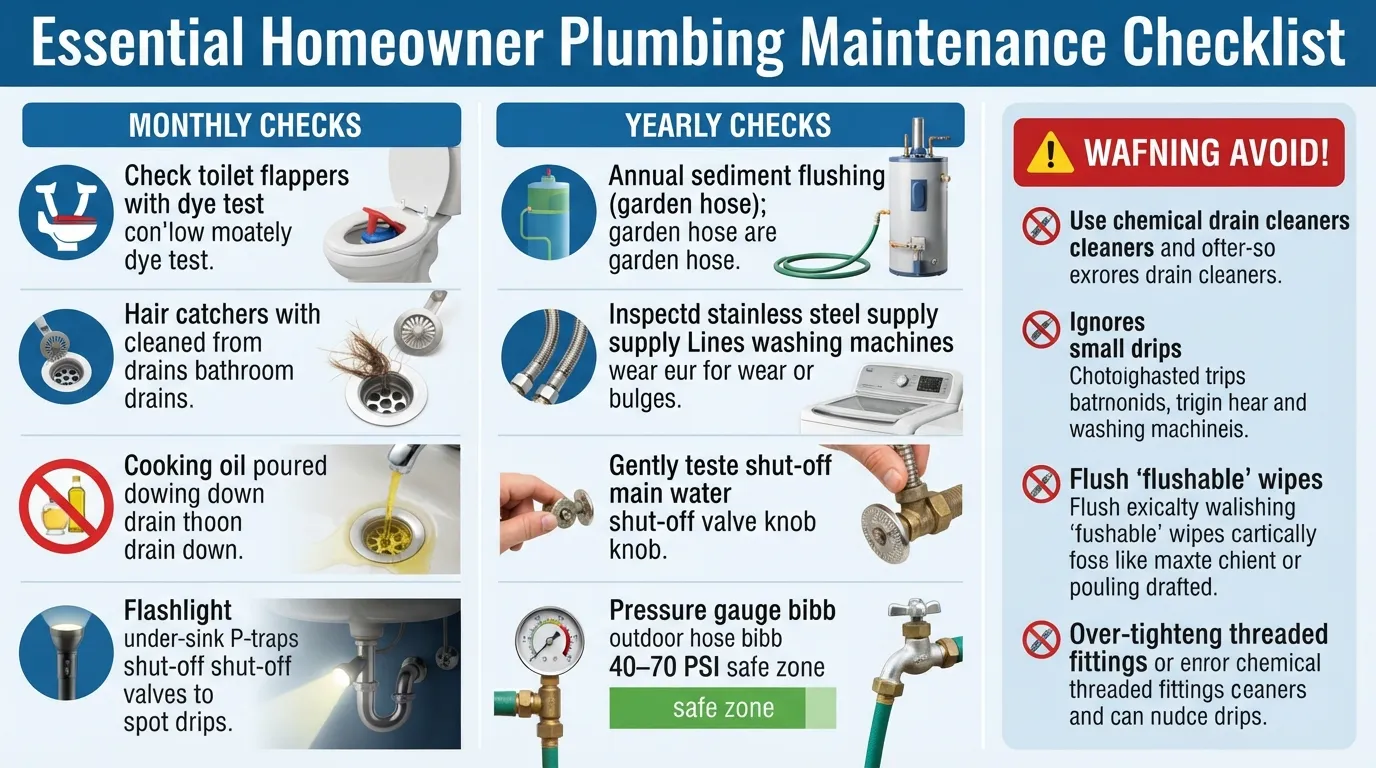
Monthly Checks
Performing quick monthly inspections keeps minor plumbing wear from turning into costly emergency repairs.
Inspect toilet flappers: Drop a few drops of food coloring into the tank to confirm the rubber seal holds without leaking into the bowl.
Clean drain hair catchers: Remove collected hair and soap scum from bathroom sink and shower strainers to preserve full drainage flow.
Enforce grease disposal rules: Never pour cooking fats, oils, or grease down kitchen sinks; wipe pans into the trash before washing.
Check under-sink cabinets for drips: Run a clean paper towel along supply lines, shut-off valves, and P-traps to spot early dampness or small leaks.
Yearly Checks
Complete these annual maintenance tasks to protect your home’s major plumbing assets and ensure reliable operation year-round.
Flush the water heater: Drain accumulated mineral scale and sediment from your water heater tank to maintain energy efficiency and heating output.
Inspect appliance supply lines: Check flexible braided steel and rubber hoses on washing machines, dishwashers, and ice makers for bulging, cracking, or corrosion.
Test shut-off valves: Gently turn fixture angle stops and the main water shut-off valve off and back on to prevent mineral binding and ensure smooth operation during an emergency.
Verify home water pressure: Attach a thread-on pressure gauge to an outside hose bibb to ensure water pressure remains safely between 40 and 70 PSI.
Common Plumbing Mistakes Homeowners Make
Using chemical drain cleaners: Caustic liquid formulas corrode metal pipes, warp plastic lines, and damage septic systems.
Ignoring small leaks: A slow faucet drip or minor under-sink seepage can waste thousands of gallons annually and rot wooden cabinetry.
Flushing “flushable” wipes: Pre-moistened wipes do not disintegrate like toilet paper, causing severe obstructions inside drain pipes and main lines.
Over-tightening threaded fittings: Excessive force strips plastic threads and cracks porcelain fixtures, leading to immediate high-pressure leaks.
Quick Plumbing FAQs
What are the most common plumbing problems?
The most common plumbing problems include running toilets, clogged shower and kitchen drains, dripping faucets, low water pressure, and sudden hot water loss. These issues stem from normal wear and tear on rubber seals, mineral sediment buildup, or debris accumulation within pipes. Routine maintenance prevents most minor faults from becoming costly repairs.
What are the three main types of plumbing systems?
Residential plumbing relies on three primary interconnected systems: the potable water supply system (delivers clean pressurised water), the Drain-Waste-Vent (DWV) system (removes wastewater and vents sewer gases safely), and the fixture and appliance system (connects sinks, toilets, water heaters, and washing machines to the main lines).
What are the most common types of plumbing pipes?
Modern homes typically feature four main plumbing pipe materials: durable copper (used for water supply lines), light PVC (ideal for drain and vent lines), flexible PEX (popular for modern supply retrofits), and heavy cast iron (found in older drain and sewer stacks due to its sound-dampening qualities).
What are the basic tools every homeowner should have?
Every homeowner should keep a basic plumbing emergency kit containing a cup plunger, a flange plunger, an adjustable wrench, a pipe wrench, a flexible barbed drain snake, and a roll of PTFE plumber’s tape to address minor leaks, clear simple clogs, and perform routine fixture maintenance quickly.
Is PEX plumbing safe?
Yes, PEX (cross-linked polyethylene) tubing is completely safe for drinking water. Approved by national plumbing codes, PEX resists corrosion, scale buildup, and freeze damage while eliminating lead solder risks. It undergoes rigorous testing to meet strict health standards for residential potable water supply lines.
Why is my water bill suddenly high?
A sudden spike in your water bill usually signals an undetected continuous leak, such as a running toilet flapper or a hidden pipe fissure. Even minor leaks waste hundreds of gallons daily. Professional leak detection helps isolate concealed water loss before structural damage occurs.
Resolving Your Top Plumbing Challenges
Running Toilet: Test with food coloring dye and replace the rubber flapper valve or adjust the float chain to prevent continuous water loss.
Clogged Drain: Clear hair and soap scum using a manual zip-it tool or plunger, and clear the P-trap before resorting to heavy tools.
Hot Water Shortage: Flush accumulated sediment scale out of the tank annually and check heating elements or thermostat settings to restore full temperature recovery.
Need Help With a Plumbing Problem in Miami?
When DIY troubleshooting falls short, our team of fully insured and licensed plumbers is ready to step in with fast, dependable service. We provide transparent upfront pricing, comprehensive diagnostic inspections, and 24/7 emergency support across the greater Miami region.
To restore your home’s plumbing system to peak condition without hassle, explore our plumbing services or Schedule a Plumber directly with our expert team today.
About the Author
Master Plumber & Technical Director
With over 15 years of hands-on experience serving residential and commercial properties across Miami-Dade County, our master plumbing team specializes in advanced leak detection, main line drain clearing, and energy-efficient water heater installations.
Last updated: October 2026
Main Services
Related Posts
Need a Plumber in Miami?
Schedule service online or speak directly with the EZ Plumbing team.
Owner-Led Local Service
Know who is behind the business before you request service. The owners, contact line and Miami service pages are published clearly.
- Named business owners
- Direct phone and social channels
- Local Miami service information
Clear Help Before You Book
Review the relevant service page, contact the team directly and use the booking page when you are ready—without relying on vague claims.
- Service-specific information
- Direct questions before scheduling
- Clear online booking route