
3 Tricks for Retrieving Items from the Garbage Disposal Safely
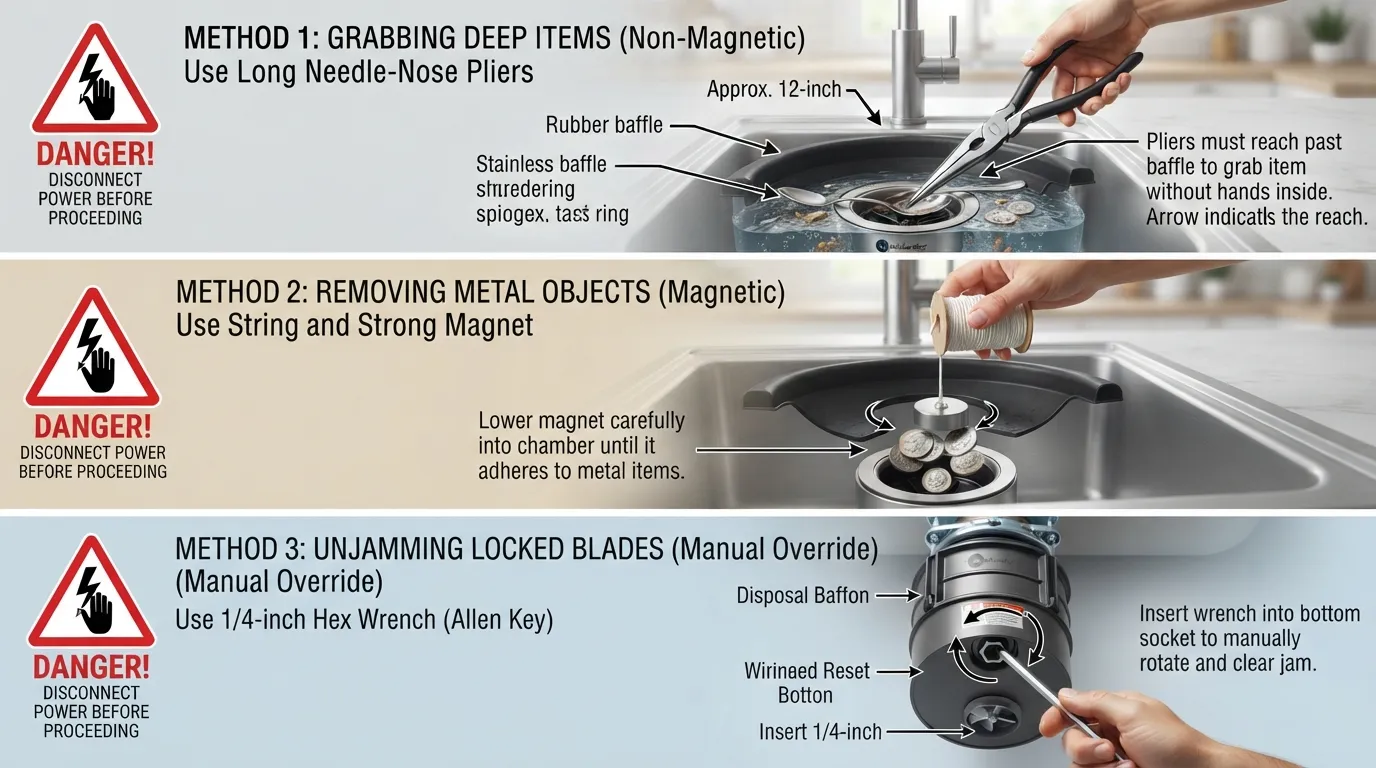
Something Fell Into Your Garbage Disposal? Do This First
Turn off the power at the wall switch and the circuit breaker before doing anything else. Shine a flashlight inside the chamber, then use needle-nose pliers, tongs, a magnet on a string, or a hex wrench to retrieve your item or clear a jammed blade. Never reach your bare hand inside the disposal under any circumstances.
Don’t Panic: Most Items Can Be Recovered
Dropping a wedding ring, a piece of silverware, or a bottle cap down the drain feels like an emergency, but most foreign objects stay trapped right in the upper grinding chamber or just below the rubber splash baffle. Because the disposal housing is designed to catch heavy debris, items rarely make it past the impellers into your home plumbing unless the unit is actively running and shredding them.
What This Guide Covers
This guide walks you through three core retrieval tricks, handling special cases like lost jewelry, and knowing the exact moment to call a professional plumber.
Three Retrieval Methods: How to use pliers, magnets, and hex wrenches safely.
Special Cases: What to do if a ring or glass shard slips past the blades.
When to Call a Pro: Recognizing mechanical failure or items lost deep in the P-trap.
Safety First: Turn Off the Power Before You Touch Anything
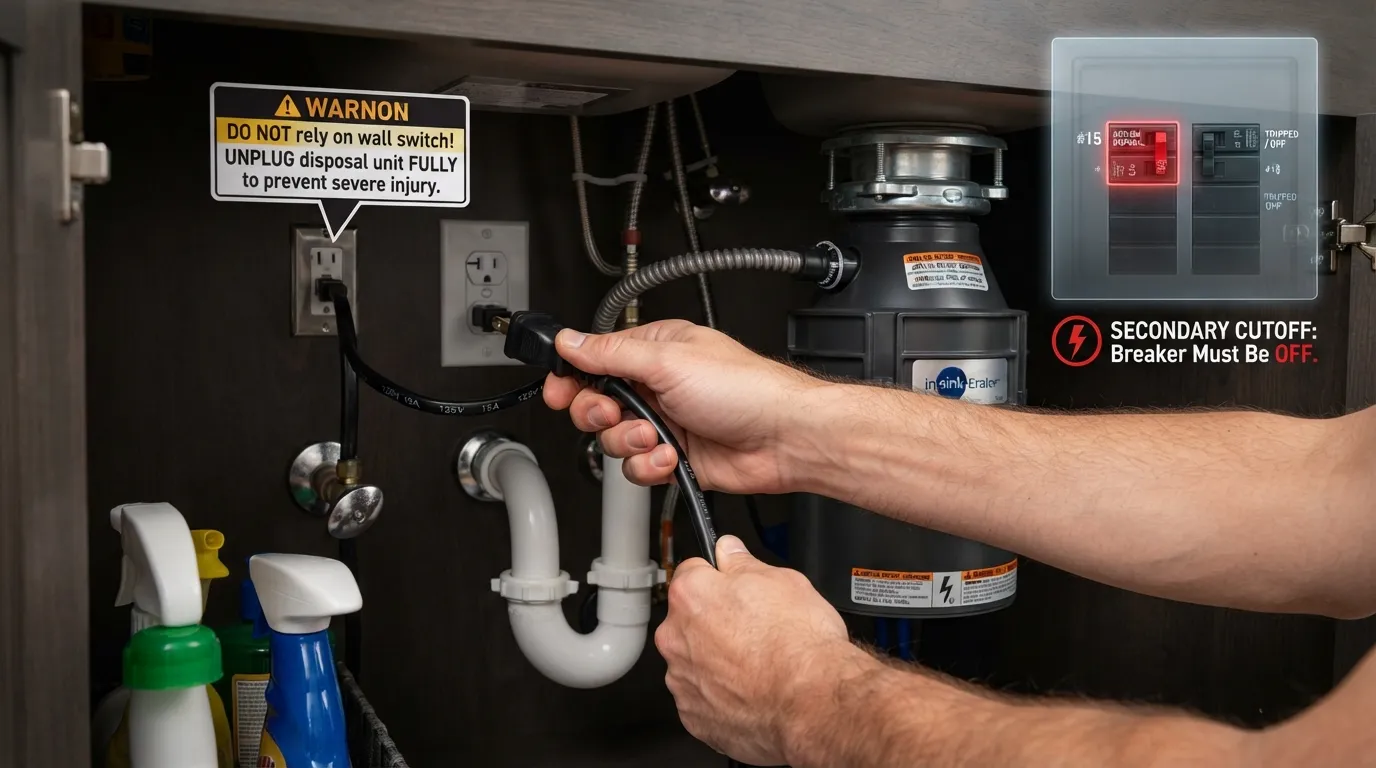
Never rely solely on the wall switch when retrieving an item from your garbage disposal. Always unplug the unit beneath the sink or switch off the dedicated circuit breaker to completely eliminate the risk of accidental activation and severe hand injury.
Unplug the Disposal or Switch Off the Circuit Breaker
Locate the power cord underneath your sink and pull the plug directly from the wall outlet. If your garbage disposal is hardwired rather than plugged into an outlet, go to your electrical panel and flip the circuit breaker associated with the kitchen disposal.
Avoid Wall Switch Reliance: Wall switches can short out, malfunction, or be accidentally bumped by someone walking past the counter.
Double-Check Power Status: Try flipping the wall switch after unplugging the unit to ensure zero electrical current reaches the motor.
Why You Should Never Use Your Bare Hand
Reaching blindly into the grinding chamber is extremely dangerous even when the power is disconnected. The interior contains sharp metal impellers, spinning blades, and jagged food debris that can easily slice skin or cause deep puncture wounds.
Hidden Edges: The cutting edges of the impellers are designed to shred tough food waste and remain sharp over years of use.
Pinch Points: Moving the blades manually can create dangerous pinch points against the rigid housing walls.
Quick Safety Checklist
Review this essential checklist before attempting any retrieval or troubleshooting inside the sink basin.
Power fully disconnected at the wall outlet or circuit breaker panel.
Wall switch confirmed in the off position.
Bright flashlight or headlamp positioned to illuminate the dark grinding chamber.
Heavy-duty utility gloves worn if dealing with broken glass, ceramics, or sharp metal.
Plumber’s Note: I once rolled up to an emergency call where a homeowner flipped the wall switch back on while blindly poking around inside with a wooden spoon—the spoon splintered instantly, and their hand narrowly missed the spinning blades. Always kill the power at the source first; it takes ten seconds and prevents a life-changing ER visit.
Where Is the Item, and What Is It? A Quick Diagnosis
Pinpointing the exact location and material of the dropped object dictates your next move and prevents you from pushing the debris deeper into your plumbing system. Assess the layout of the grinding chamber before reaching for any tools.
Step 1: Look Inside with a Flashlight
Shine a bright light straight through the rubber baffle to illuminate the dark interior of the grinding chamber. Because the thick rubber flaps block your line of sight, use your smartphone’s camera on video mode with the flash turned on, or slip a small cosmetic mirror down the drain to see around blind corners.
Check the Flaps: Look closely underneath the rubber flaps of the splash guard where small rings or coins frequently get caught.
Inspect the Blades: Look down past the rotating impellers to see if the object has jammed against the outer shredder ring.
Where Can the Item Be?
Foreign objects generally settle in one of four specific locations inside or directly below your sink fixture. Identifying where the object rests determines whether you need simple extraction tools or a wrench.
On Top of the Blades: Resting visibly in the upper chamber basin, making it easily reachable with pliers or tongs.
Wedged Between Impellers: Jammed tightly between the rotating impeller arm and the stationary shredder ring, stopping the motor from spinning.
Under the Baffle Flaps: Stuck inside the folds of the rubber splash guard.
Past the Chamber: Slipped past the grinding mechanism entirely and settled further down in the P-trap curve of your drainpipe.
Match the Item to the Best Trick
Use this quick reference table to pair your dropped object with the safest and most effective extraction method.
| Item Type | Best Retrieval Method | Why It Works |
| Metal ring, coin, hardware | Magnet on a string or needle-nose pliers | Magnets instantly grab ferrous metals without slipping; pliers grip non-ferrous metals securely. |
| Spoon, bottle cap, larger objects | Needle-nose pliers or kitchen tongs | Provides the reach and leverage needed to lift larger items out of narrow gaps. |
| Wedged item stopping blades | Hex wrench (Allen key) from below plus pliers | Cranks the bottom motor shaft to free jammed parts so you can pull them out from the top. |
| Glass or sharp fragments | Heavy-duty pliers followed by a wet-dry vacuum | Prevents hand lacerations while clearing dangerous microscopic shards. |
| Plastic or small items | Kitchen tongs or long-handled pliers | Reaches deep into awkward angles without risking hand safety. |
What Is Your Disposal Doing?
The sound and behavior of your appliance when you flip the wall switch reveal what is happening inside the chamber.
Humming Noise: The motor is receiving power and trying to spin, but a foreign object or coin is physically wedged against the blades, locking them in place. Action: Turn off the power immediately to prevent motor burnout.
Completely Dead: No sound at all when switched on. Action: The internal overload protector tripped, or the unit is unplugged. Check the reset button on the bottom of the disposal housing.
Turns Freely: The motor spins without unusual noises, but the item dropped down while the unit was off. Action: Power down and look inside; the item is sitting loose on the impeller plates.
Tools You Need Before You Start
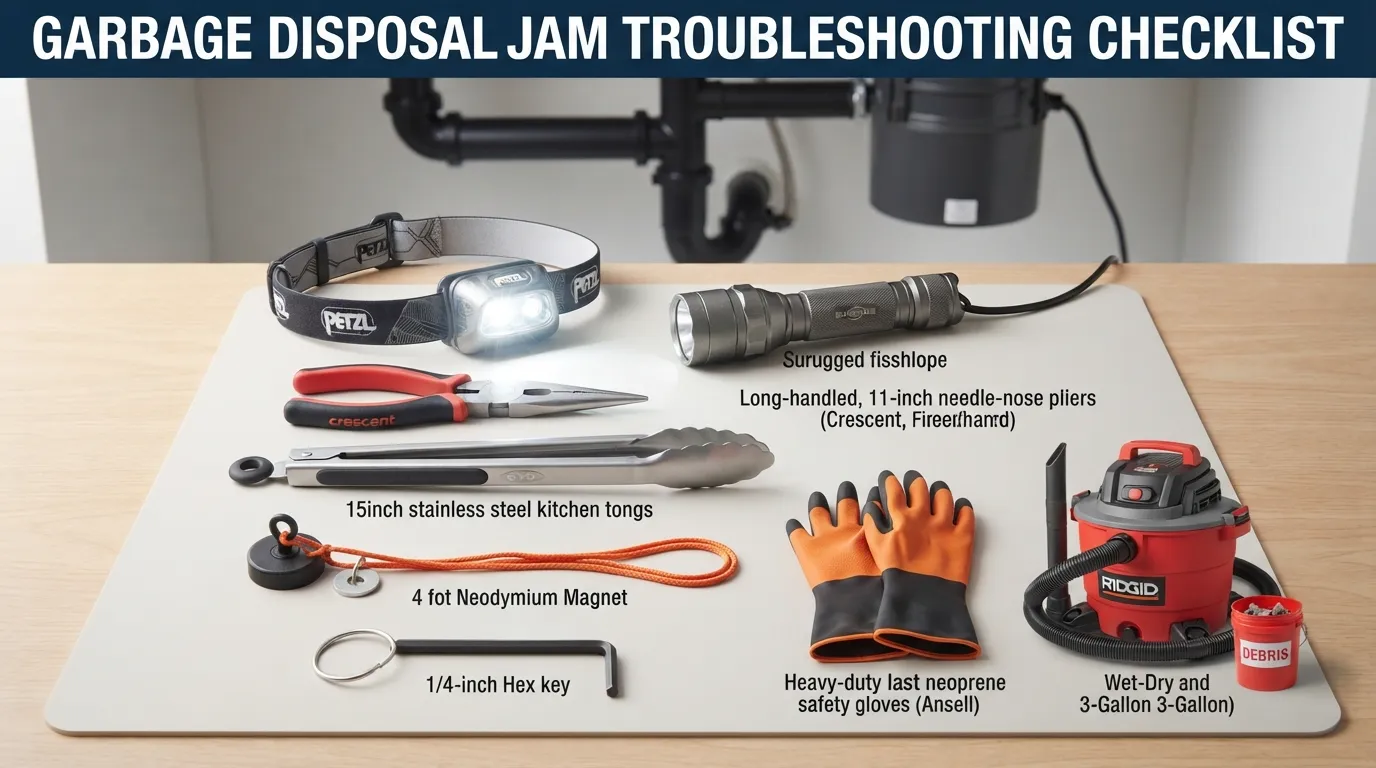
Gathering the right equipment before you begin prevents frustrating mid-job trips to the hardware store and keeps your hands safe. Most necessary items are standard household tools you likely already own in your kitchen or garage.
Must-Have Tools
Keep these four essential items ready to hand before you attempt any physical extraction or mechanical unjamming:
Flashlight or Headlamp: Bright illumination is critical to see past the rubber splash guard into the shadowed grinding chamber.
Needle-Nose Pliers or Kitchen Tongs: Long-handled tools provide the necessary reach and precise grip to pluck small items from tight spaces.
Strong Magnet and String: Ideal for fishing out lost rings, steel screws, or coins without having to blindly grope around the blades.
One-Quarter-Inch Allen Wrench (Hex Wrench): The universal size required to fit the manual socket at the bottom of standard garbage disposals for freeing stuck flywheels.
Nice-to-Have Tools
These supplementary items make the job cleaner, faster, and much safer if you encounter unexpected complications:
Heavy-Duty Rubber Gloves: Essential if you are dealing with broken glass, ceramic shards, or grimy food buildup.
Buckets and Towels: Placed under the sink basin to catch grey water if you need to disconnect the P-trap down the line.
Wet-Dry Shop Vacuum: Unmatched for sucking out tiny fragments of glass, plastic, or loose debris that pliers cannot grab.
Telescoping Magnetic Pick-Up Tool: Offers rigid control and strong magnetic pull compared to a makeshift string and magnet setup.
Phone Camera: Set to video mode with the flash on to record the interior corners you cannot view directly.
No Hex Wrench? Alternatives
If your garbage disposal did not come with a specialized service wrench and you do not have a 1/4-inch Allen key in your toolbox, you can manually rotate the blades from the top sink opening.
Use a Wooden Tool: Insert a wooden broom handle, a sturdy wooden spoon, or a thick wooden dowel straight down through the rubber baffle.
Leverage Against Impellers: Gently press the end of the wooden handle against one of the rotating metal impeller arms and push to manually crank the mechanism back and forth.
Go Gently: Never use a metal tool like a screwdriver from the top to force the blades, as it can easily slip, damage the cutting edges, or puncture the internal housing.
Use Needle-Nose Pliers or Tongs
Needle-nose pliers and long kitchen tongs are your best line of defense for grabbing foreign objects that are fully visible inside the basin. This method works quickly without requiring any plumbing disassembly underneath the sink.
When This Trick Works Best
This method is ideal for foreign objects resting right on top of the spinning blades, caught in the sink drain opening, or visible in the upper grinding chamber. If you can see the item clearly with a flashlight, pliers will have it out in seconds.
Step-by-Step Instructions
Verify Power Disconnection: Unplug the disposal cord from the wall outlet or switch off the circuit breaker before placing any tool near the drain [00:27].
Illuminate the Chamber: Shine your flashlight directly down the drain or use a phone light to keep the target clearly in view [00:44].
Navigate the Baffle: Slip your needle-nose pliers or tongs carefully through the rubber splash guard flaps [01:04].
Grip Firmly: Clamp down securely onto the object using the tips of the pliers, ensuring a stable hold on metal or plastic [01:10].
Lift Straight Up: Pull the tool and the retrieved item straight up and out of the drain without tilting or dropping it [01:12].
Pro Tips from the Field
Hold Near the Tip: Keep your hand positioned firmly along the tool shaft to maintain maximum control and prevent the jaws from wobbling off-target.
Avoid Pushing Down: Keep steady, upward pressure and avoid resting the tool’s weight against the blades, which can push lightweight items like bottle caps deeper into the drain chamber.
Securing Round Objects: For slippery rings or spherical items, approach from the side and squeeze gently so the jaws cradle the item rather than sliding across its smooth surface.
Common Mistakes
Using Short Tools: Standard kitchen forks or short butter knives do not offer enough reach, forcing you to push your hands closer to the hazardous blades.
Rushing the Grip: Grabbing frantically without illumination often knocks the item sideways or wedges it tighter between the impellers.
Lower a Magnet on a String
Fishing with a strong magnet on a string is an effortless, hands-free way to pull small metal objects out of hard-to-reach crevices without blindly poking around the grinding chamber.
Best For Metal Items
This technique works best for ferrous metal objects that magnetic fields naturally attract [00:24]. Common targets include loose pennies, quarters, paperclips, steel screws, nails, and metal bottle caps.
How to Do It Step by Step
Secure the Magnet: Tie a heavy-duty nylon string or sturdy twine tightly around a strong rare-earth magnet, testing the knot to ensure it will not slip off.
Confirm Power is Off: Double-check that your disposal is unplugged or the circuit breaker is flipped so the motor cannot start [00:24].
Lower It Slowly: Feed the string down through the rubber splash guard, guiding the magnet into the center of the chamber.
Move It Gently: Sweep the magnet in small circles across the impeller plates and shredder ring until you feel it snap onto the metal object.
Lift Out: Steadily pull the string straight up, guiding the item smoothly through the drain opening.
Important: Magnets Don’t Attract Gold, Silver, or Platinum Rings
Many homeowners mistakenly believe a magnet will retrieve a lost wedding band. Precious metals like gold, silver, and platinum are non-ferrous and completely non-magnetic, meaning a string and magnet will slide right past them.
The Alternative for Rings: If you dropped a precious metal band, skip the magnet entirely and use needle-nose pliers or a telescoping mechanical pick-up claw to grab it securely.
Check Alloy Composition: Some costume jewelry or cheap fashion rings contain iron alloys and will stick to a magnet, but high-purity gold and sterling silver require a physical grip.
Safety Tip
Always keep a firm grip on the tail end of the string while lowering the magnet. If the entire string slips and drops into the disposal, you will have a second foreign object to retrieve before you can fix the original problem.
Manually Rotate the Impellers with an Allen Wrench
When foreign objects wedge tightly between the rotating impeller arms and the outer shredder ring, the motor will lock up completely, emitting a low humming sound instead of spinning. Manual unjamming from beneath the sink bypasses this lockout.
When to Use This Trick
Use this method when your garbage disposal hums loudly upon activation but fails to turn, or when you can see that an item is wedged so tightly that pliers cannot budge it from the top.
How to Find the Hex Socket
Crawl underneath your kitchen sink with a flashlight and look at the absolute center of the bottom housing underneath the motor [04:04]. You will find a small hexagonal socket designed specifically to accept a service wrench [04:06]. For confirmation on your specific model’s layout and exact socket dimensions, consult the manufacturer’s owner’s manual.
Step-by-Step Instructions
Confirm Power is Off: Ensure the disposal is completely unplugged or the circuit breaker is shut off before reaching under the housing [03:53].
Insert the Allen Wrench: Push a 1/4-inch Allen wrench (or the specialized service wrench that came with your unit) straight into the hexagonal socket at the base of the motor [04:21].
Twist Back and Forth: Work the wrench back and forth in a sweeping motion [04:26]. Resistance is normal at first as you break through built-up gunk or dislodge the trapped item.
Check for Free Rotation: Continue rocking the wrench until the shaft spins smoothly and freely in a full 360-degree circle [04:30].
Retrieve from Above: Remove the wrench, go back to the top of the sink, and use needle-nose pliers to lift out the now-loosened debris [03:01].
What If There’s No Hex Socket?
Some older or custom disposal models do not feature an external hex socket on the bottom of the motor housing.
Use the Top-Down Method: Insert a wooden broom handle or heavy wooden spoon down through the sink drain opening [03:47].
Leverage the Impellers: Wedge the wooden handle firmly against one of the metal impeller plates and apply gentle pressure to crank the internal flywheel back and forth.
Exercise Caution: Never force a metal tool from the top, as slipping can damage internal components or puncture the casing.
Press the Reset Button Afterwards
Once the obstruction is cleared and the mechanism spins freely, press the small red reset button located on the bottom housing to restore electrical connectivity before testing the unit.
Special Cases: Rings, Broken Glass, Small Items, and More
Different types of debris require tailored removal strategies to prevent injury or prevent pushing the object past the grinding chamber and into your home plumbing lines. Handle specialized items using the precise techniques outlined below.
How to Retrieve a Ring or Necklace from the Sink Drain
Dropping jewelry down the drain triggers immediate panic, but quick, deliberate action keeps precious items safe from the P-trap below.
Cease All Water Flow: Do not run the faucet or let anyone wash dishes, as running water can wash lightweight chains or rings deeper into the drainage system.
Inspect the Baffle Flaps: Carefully peel back the rubber splash guard folds, as rings frequently get wedged right inside the rubber slits.
Use Precision Tools: Reach in with needle-nose pliers or a telescoping mechanical claw to secure the band without scratching the metal.
How to Remove Broken Glass Safely
Shattered glassware or ceramic plates require extreme caution to avoid severe hand lacerations and microscopic cuts.
Suit Up: Put on heavy-duty utility or puncture-resistant work gloves before coming anywhere near the drain opening.
Pull Large Shards First: Use needle-nose pliers to pick out large chunks of glass resting on top of the blades or in the chamber corners.
Vacuum Tiny Fragments: Insert the hose attachment of a wet-dry shop vacuum directly into the drain opening to suck out microscopic glass dust and small splinters that pliers cannot catch.
How to Get a Toothbrush or Other Long Object Out
Long, slender items like toothbrushes, straws, or plastic cutlery often span horizontally across the chamber or wedge down the waste outlet.
Pinch the Head: Clamp your pliers firmly onto the head or bristles of the toothbrush to get a solid mechanical hold.
Pull Straight Up: Pull vertically with steady force; do not twist violently, which can wedge the handle tighter against the shredder ring.
Use a Wire Hook: If the object is too deep for pliers, bend a wire coat hanger into a small hook shape to snag the handle or loop.
What Happens If You Drop Something in the Drain?
The outcome of dropping an item depends entirely on its material, its physical size, and whether the appliance is running when it falls.
If the Disposal Is Off: The item simply sits harmlessly in the upper chamber or on the impellers until you retrieve it.
If the Disposal Is Running: Hard metal objects will jam or break the blades, plastic items will get chewed into fragments, and soft items may pass right through into the P-trap.
What If the Item Isn't in the Disposal? Checking the P-Trap
If your upper chamber and impeller zones are completely clear but your item is nowhere to be found, it has likely slipped past the grinding blades and settled directly into the curved drain line beneath your sink.
Signs the Item Has Passed the Chamber
When you cannot spot the object with a flashlight or magnetic probe, but you heard a distinct metallic clink or felt the object drop while water was running, gravity has pulled it further down into your home plumbing layout.
How To Check the P-Trap
Position a Bucket: Place a deep bucket directly underneath the curved P-trap section of your sink drain line to catch trapped grey water and debris [03:45].
Loosen the Slip Nuts: Turn the plastic or metal slip nuts connecting the P-trap to the wall tailpiece and the disposal discharge tube counterclockwise by hand.
Inspect the Trap Curve: Lower the curved pipe gently, dump the contents into your bucket, and check the bottom curve for your missing ring, coin, or hardware.
Reassemble Securely: Hand-tighten the slip nuts back into place, ensuring the rubber washers are properly seated to prevent leaks [05:46].
Stop Here If You’re Unsure
If you empty the P-trap and still do not find your item, the object has traveled deeper into your main plumbing stack beyond the accessible under-sink assembly. If the item has gone deeper into the line, our team offers professional drain cleaning to retrieve it without damaging your pipes. If you notice a drip after reassembling the trap, a quick leak detection and repair visit can prevent water damage.
What NOT to Do When Something Falls into Your Garbage Disposal
Avoiding common mistakes during a plumbing mishap protects your appliance from catastrophic damage and keeps you safe from serious injury. Never resort to risky shortcuts or aggressive force when dealing with a jammed sink.
Never Turn the Disposal On to “Grind It Out”
Flipping the wall switch to smash or shred a dropped foreign object is a costly mistake.
Severe Damage: Hard metal or glass items will instantly shatter cutting edges, warp impeller plates, or strip the internal motor gears.
Motor Burnout: Locking the blades while power is applied causes the motor to overheat rapidly, tripping internal breakers or permanently burning out the windings.
Never Put Your Hand Inside the Chamber
Reaching your bare hand down the drain is hazardous under any circumstance.
Hidden Lacerations: Even when completely unplugged, the stainless steel edges of the shredder ring and blunt impellers remain razor-sharp and abrasive.
Inherent Risk: Muscle memory or accidental power surges can lead to severe hand injuries before you can react.
Don’t Use Chemical Drain Cleaners
Pouring harsh liquid drain openers into a clogged or jammed disposal creates a dangerous chemical hazard.
Splashback Risk: Standing water or chemical residue can splash back up through the splash guard and onto your skin or eyes.
Appliance Degradation: Strong chemical agents corrode internal aluminum components, rubber gaskets, and metal housing seals.
Don’t Force the Blades
Using excessive muscle when rocking the service wrench from underneath can break internal shafts.
Stop and Assess: If the hex wrench refuses to budge after a moderate amount of pressure, a hard object is wedged immovably against the housing walls.
Disassemble Instead: Switch to inspecting the P-trap or removing the unit rather than forcing mechanical rotation.
Don’t Run Water Until You’ve Found the Item
Leaving the kitchen faucet running while trying to troubleshoot washes lightweight items and fine debris straight past the grinding chamber and deep into your drainage pipes.
Emergency Note: If you’re stuck, or water is backing up, call our emerge ncy plumber right away.
When to Call a Professional Plumber
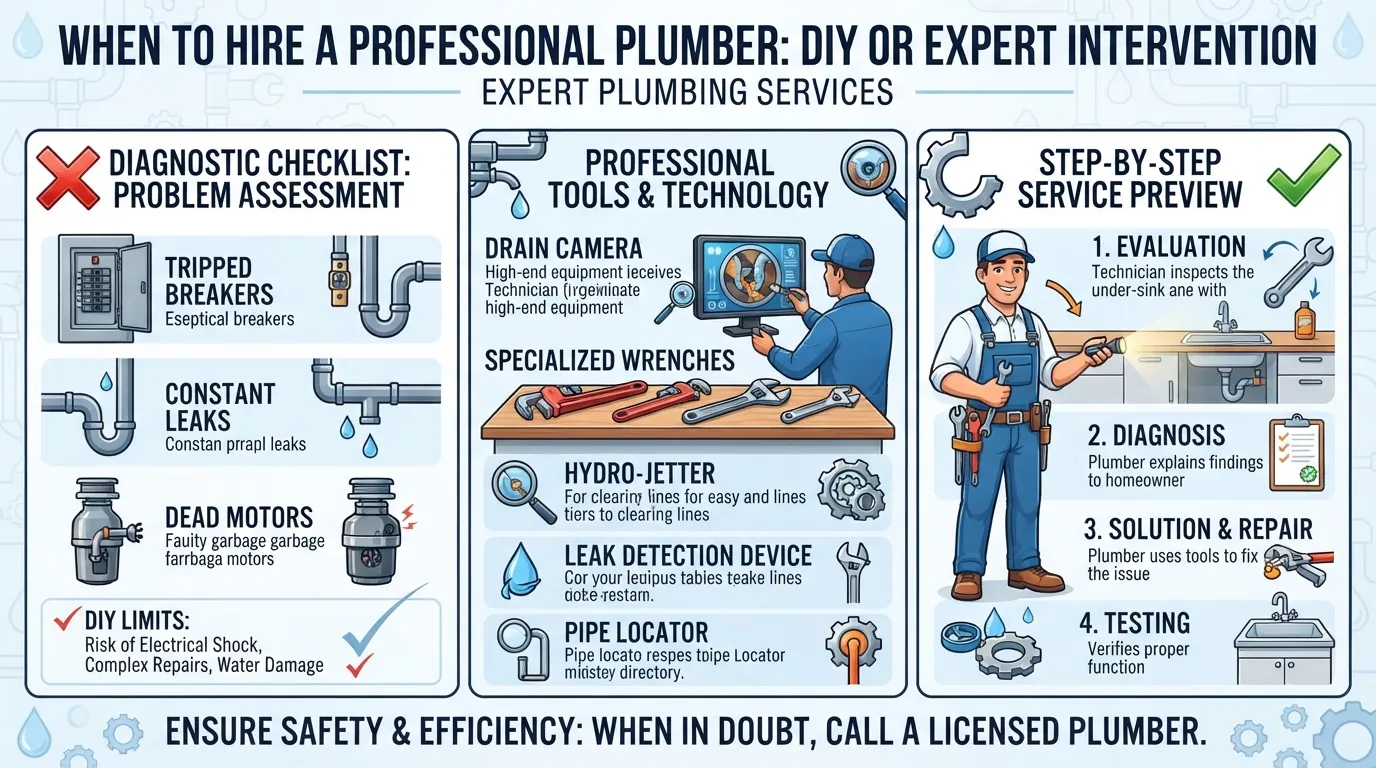
While DIY retrieval methods work for most foreign objects, certain complications require professional tools and technical expertise. Knowing when to step back prevents costly property damage and personal injury.
Signs It’s Time to Stop DIY
Recognize when a routine retrieval has exceeded your home toolkit and requires licensed intervention:
Stuck Fast: The item is wedged immovably, and the bottom hex wrench will not budge despite firm pressure.
Persistent Electrical Faults: The disposal keeps tripping your electrical breaker or internal overload button immediately upon reset.
Active Water Leaks: You notice water pooling underneath the sink housing or leaking from the mounting assembly flange.
Total Electrical Failure: The motor remains completely dead even after confirming power flow and pressing the reset button.
Lost Out of Reach: The object has slipped past the P-trap and into your hidden wall or floor drains.
What a Plumber Does That You Can’t
Licensed technicians bring advanced diagnostic equipment and specialized plumbing methods to handle severe kitchen sink blockages:
Drain Camera Inspections: Specialized miniature cameras thread directly into waste lines to visually locate lost jewelry or pipe cracks.
Safe Unit Extraction: Plumbers can detach, disassemble, and inspect the entire garbage disposal unit without damaging surrounding cabinetry or PVC lines.
Professional Snaking: Industrial power snakes and hydro-jetting tools clear deep line obstructions that standard household plungers or wires cannot reach.
What to Expect During a Visit
When a professional arrives to service your jammed or blocked garbage disposal, they follow a systematic diagnostic process:
System Evaluation: The technician tests the electrical circuit, inspects the switch, and checks the manual motor rotation.
Targeted Extraction: They safely remove the foreign obstruction using professional-grade retrieval tools or by unmounting the unit.
Function Testing: The system undergoes a comprehensive pressure and flow test to guarantee zero leaks and proper grinding performance.
Need help right now? Talk to our licensed team or book a service online at our booking portal. You can also see our full range of plumbing services.
After You Retrieve the Item: Reset, Test, and Prevent It Happening Again
Once you have successfully extracted the foreign object and cleared any jams, bring your garbage disposal back online safely and implement a few simple habits to protect your appliance from future mishaps.
How to Reset and Test the Disposal
Restore Power: Plug the disposal back into the wall outlet or flip the dedicated circuit breaker back to the on position [00:34].
Press the Reset Button: If the motor tripped during the jam, firmly push the small red reset button located on the bottom housing.
Turn on Cold Water: Let a steady stream of cold tap water run into the sink basin.
Test Briefly: Flip the wall switch on for two to three seconds to verify smooth operation, listening for any abnormal scraping or grinding sounds.
Quick Check for Damage
After running your brief test, check the appliance for hidden signs of wear or internal damage that could lead to future breakdowns:
Unusual Noises: Listen for metallic rattling or humming that indicates bent impeller blades or loose housing screws.
Burning Odors: A faint electrical or hot-rubber smell can signal a strained motor winding that overheated during the jam.
Slow Draining: Watch the water level as it empties to ensure no debris is trapped further down the discharge pipe.
How to Prevent Items from Falling In
Simple preventative steps eliminate the risk of dropping future valuables or hardware down an open sink drain.
Use a Sink Strainer: Keep a metal or silicone sink strainer basket inside the drain opening whenever you are not actively operating the disposal.
Form a Habit for Jewelry: Take off rings, bracelets, and necklaces and store them safely on the counter before doing dishes or food prep.
Clear the Counter Edge: Keep silverware, bottle caps, and plastic food wrappers away from the immediate rim of the sink basin.
What Should Never Go into A Garbage Disposal
Protect your grinding mechanism from future jams and motor strain by keeping these troublesome items out of your kitchen sink:
Grease and Cooking Oils: Congeals inside pipes and coats the grinding ring, trapping food waste and creating stubborn clogs.
Hard Bones and Fruit Pits: Dense materials overstress the motor and can crack or shatter the shredder ring.
Fibrous Scraps: Celery stalks, corn husks, and onion skins wrap tightly around the impeller shaft, locking the motor.
Coffee Grounds in Bulk: Mass quantities pack tightly together in pipe bends, forming a cement-like sludge.
Frequently Asked Questions
How do you retrieve something from a garbage disposal?
First, disconnect all power by unplugging the unit or flipping the circuit breaker. Shine a flashlight into the chamber, and use needle-nose pliers, tongs, a magnet, or a hex wrench to remove the item. Never place your bare hand into the disposal housing.
How do you get a foreign object out of a garbage disposal?
Cut off power at the electrical source and illuminate the grinding chamber with a flashlight. Match your retrieval tool to the item: use pliers for utensils, a magnet for steel hardware, or an Allen wrench from underneath to free jammed impellers before pulling the debris out.
How do you find something stuck in a garbage disposal?
Turn off the power completely and shine a bright flashlight or smartphone camera light through the rubber baffle. Inspect the top impeller blades, check the folds of the rubber splash guard, or peer down into the chamber to spot hidden objects.
How do you get something out of your sink drain?
If an item passes the grinding chamber, place a bucket underneath the P-trap, loosen the slip nuts by hand, and lower the curved pipe to catch the object. Reassemble the trap securely and hand-tighten the nuts to prevent future leaks.
How do you get a necklace out of a sink drain?
Stop running water immediately so the chain does not wash further down. Peel back the rubber splash guard to check the baffle folds, then use needle-nose pliers or a telescoping mechanical claw to grab the jewelry and lift it straight up.
How do you get a toothbrush out of a sink drain?
Disconnect the power supply and shine a flashlight into the disposal chamber. Use needle-nose pliers to grip the toothbrush head or bristles firmly, or bend a wire coat hanger into a hook to catch the handle and pull it straight up.
What happens if you drop something in the drain?
If the disposal is turned off, the object simply rests harmlessly on the blades or in the chamber. If the unit is running, hard items can jam or shatter the blades, while lightweight debris might slip past into the P-trap.
Can you turn on a garbage disposal to get something out?
Never turn the disposal on to grind up a dropped item. Activating the motor with a foreign object inside can shatter the blades, warp internal components, burn out the motor windings, or project sharp debris back up through the sink.
Who should I call if my garbage disposal isn’t working?
If your disposal remains dead after a reset, refuses to budge with a hex wrench, or has an active leak, contact a licensed professional. You can explore our expert plumbing services for reliable repairs and diagnostics.
How do I fix a garbage disposal that is not draining?
A disposal that won’t drain is usually clogged by food buildup or a lodged foreign object in the P-trap. Clear the trap manually or seek professional help through our expert drain cleaning services to restore proper flow.
Conclusion
Recovering a dropped item from your garbage disposal is entirely manageable when you approach the situation methodically and prioritize safety above all else. By cutting off the power supply, selecting the correct retrieval tool, and avoiding common mistakes, you can protect your appliance and prevent costly service calls.
Quick Recap
Power Off First: Always disconnect the power cord or flip the circuit breaker before placing any tool near the drain opening.
Use the Right Trick: Match your extraction method to the item by using pliers, a magnet, or an Allen wrench.
Call a Pro When Stuck: Contact a licensed plumber if the object is lodged deep in your pipes or the unit requires mechanical repair.
Need Help Retrieving Your Item?
If you are struggling to clear a stubborn jam, or if your garbage disposal needs professional attention, our expert technicians are ready to assist. You can book an appointment or schedule a service call instantly through our online booking portal.
Main Services
Related Posts
Need a Plumber in Miami?
Schedule service online or speak directly with the EZ Plumbing team.
Owner-Led Local Service
Know who is behind the business before you request service. The owners, contact line and Miami service pages are published clearly.
- Named business owners
- Direct phone and social channels
- Local Miami service information
Clear Help Before You Book
Review the relevant service page, contact the team directly and use the booking page when you are ready—without relying on vague claims.
- Service-specific information
- Direct questions before scheduling
- Clear online booking route