Drain Clearing vs Drain Cleaning: What's the Real Difference?
Drain Clearing vs. Drain Cleaning: What is the Difference and Why It Matters
A sudden clog can bring your daily routine to a complete halt, making it tempting to grab the nearest chemical fix or plunger. However, understanding the fundamental difference between drain clearing and drain cleaning is essential to protecting your plumbing system from recurring blockages and expensive damage.
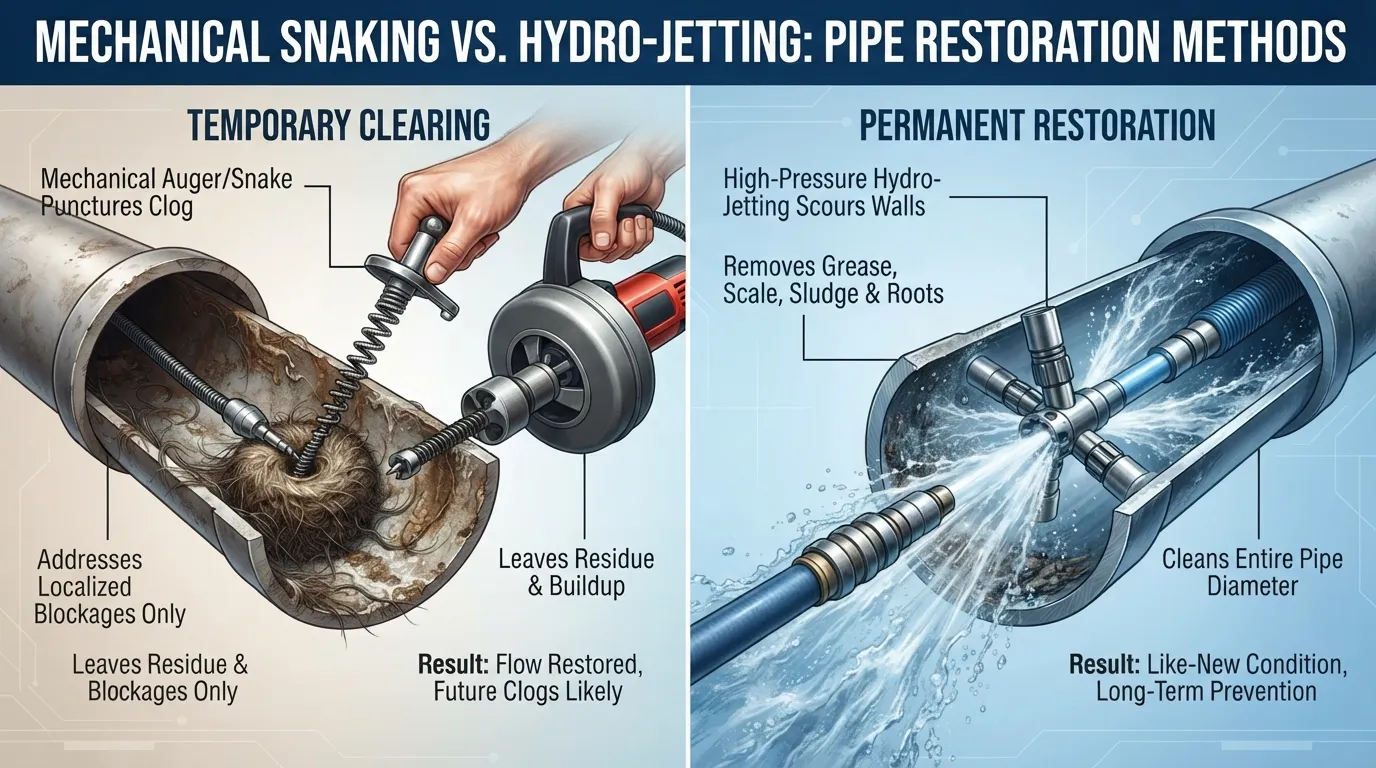
Drain clearing focuses on puncturing or removing an immediate clog to restore basic water flow, whereas drain cleaning utilizes advanced tools like hydro-jetting to scour the entire inner pipe walls, removing grease, scale, and debris for long-term prevention. While clearing offers a fast temporary fix, professional cleaning addresses the root cause to stop future plumbing failures.
Understanding Core Plumbing Maintenance
Knowing which service your home needs depends entirely on the nature of the blockage and the overall health of your pipes.
Drain Clearing (Immediate Relief): This process breaks up localized obstructions—such as hair, food waste, or foreign objects—using snakes, augers, or plunges to get water moving again.
Drain Cleaning (Comprehensive Restoration): This preventative maintenance completely sanitizes and scours the internal pipe infrastructure, eliminating hidden buildup that narrowing pipe diameters over time.
The Maintenance Gap: Relying exclusively on clearing methods leaves behind residual sludge, meaning identical clogs will likely form again in the exact same location.
Drain Clearing vs Drain Cleaning: Key Differences and Comparison
What Is Drain Clearing?
Drain clearing focuses entirely on punching through or pulling out an immediate blockage to restore water flow. It serves as a rapid, targeted intervention when a specific line backs up.
Primary Function: Punctures or breaks apart localized obstructions like hair, soap scum, or food waste to provide instant relief.
Common Tools: Uses standard household tools or basic mechanical devices, including a plunger, hand auger, or motorized drain snake.
Limitations: Acts as a temporary vs permanent fix because it only clears a channel through the debris, leaving behind sticky residue, grease, and sludge on the pipe walls.
What Is Drain Cleaning?
Drain cleaning provides total interior pipe restoration by removing all accumulated buildup down to the bare pipe walls. It acts as a deep-cleansing overhaul for your entire plumbing system.
Primary Function: Scours away organic buildup, mineral deposits, and years of accumulated residue to restore full pipe diameter.
Common Tools: Employs advanced heavy-duty equipment like a hydro jetter, specialized descaling attachments, and video camera inspection systems to verify pipe health.
Benefits: Offers long-term protection against frequent backups by eliminating the root causes of recurring clogs.
Drain Clearing vs Drain Cleaning — Comparison Table
| Feature | Drain Clearing | Drain Cleaning |
| Goal | Puncture immediate blockages and restore basic flow | Scour and sanitize the entire inner pipe wall |
| Method | Mechanical pushing, pulling, or snaking of debris | High-pressure water scouring and mechanical scrubbing |
| Tools | Plunger, hand auger, drain snake | Hydro jetter, descaling equipment, video camera inspection |
| Best For | Emergency response to sudden, single-fixture clogs | Preventative maintenance and chronic, recurring backups |
| Longevity | Short-term fix; buildup remains inside the pipes | Long-term solution; removes grease, scale, and sludge completely |
Which One Do You Need? A Symptom-Based Decision Guide
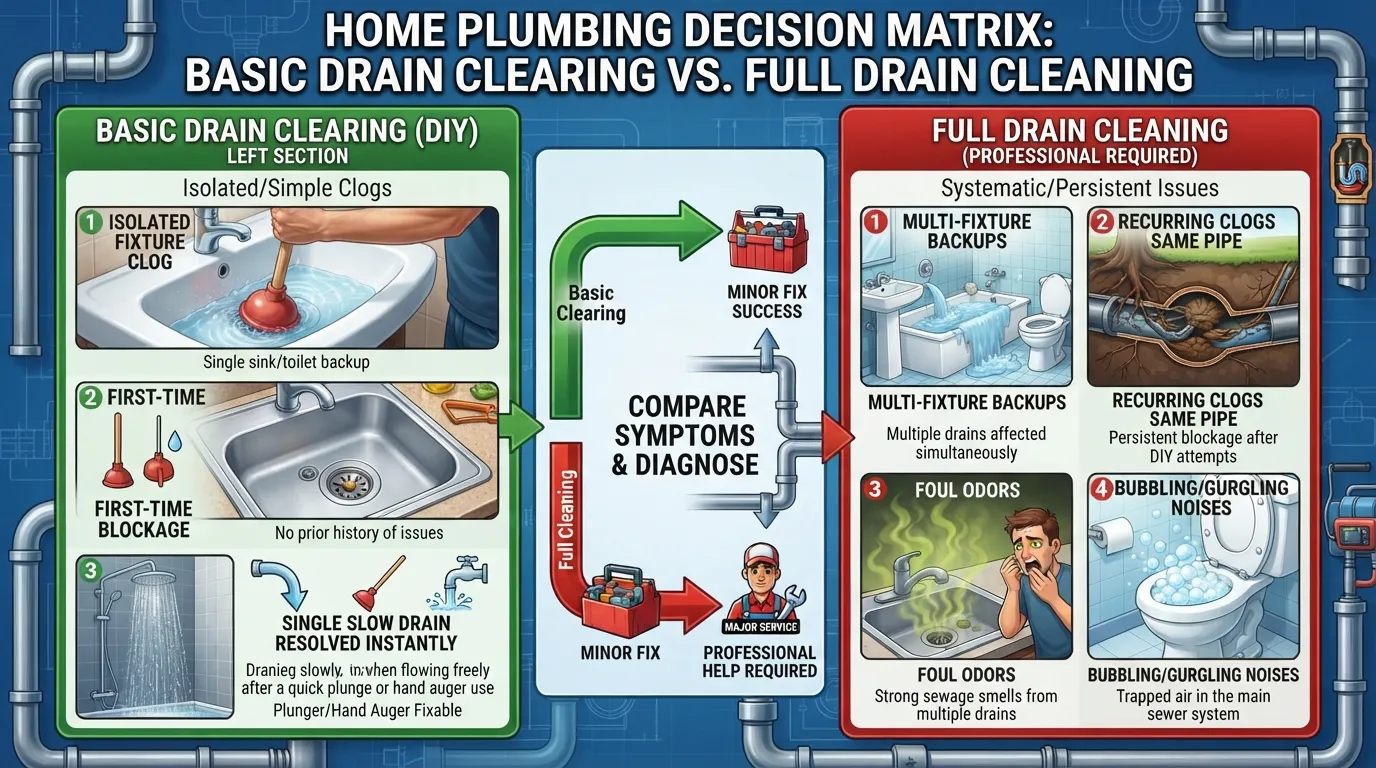
Deciding between a quick fix and a heavy-duty service comes down to analyzing your plumbing symptoms accurately. Recognizing the difference early saves you from emergency service calls and prevents costly property damage.
Symptom Scope: Single, isolated plumbing issues usually require basic clearing, while widespread anomalies point directly to a need for comprehensive cleaning.
Frequency Factor: A one-time obstruction caused by accidental misuse requires only standard clearing, whereas recurring issues demand deep pipe scouring.
Signs You Only Need Drain Clearing
A straightforward, surface-level obstruction typically affects just one spot in your home and clears up quickly with targeted intervention.
Single Fixture Impact: Water backs up in only one location, such as a single fixture or an isolated toilet/fixture clog, while all other household drains function normally.
First-Time Blockage: The plumbing issue happens suddenly without any prior history of slow drainage or previous backups in that specific line.
Immediate Resolution: Running a small hand snake or plunging the fixture instantly resolves the issue and restores full water flow.
Signs You Need Full Drain Cleaning
Persistent or systemic plumbing symptoms indicate that your pipe walls are compromised by heavy accumulation over years of daily use.
Recurring Clog Patterns: You experience the exact same recurring clog in the same drain every few weeks despite using temporary fixes.
Multiple Slow Drains: Several fixtures throughout the house—such as a kitchen sink and a nearby bathroom shower—exhibit a sluggish slow drain simultaneously.
Unusual Sensory Cues: You notice a persistent foul odor wafting from the drains or hear an alarming gurgling noise when appliances like washing machines or dishwashers empty.
Quick Self-Check Checklist
Review this quick checklist to match your current situation with the correct plumbing intervention:
[ ] Does only one drain back up, or are multiple fixtures affected?
[ ] Is this the first time this blockage has occurred this year?
[ ] Do you hear bubbling or gurgling sounds when water drains elsewhere?
[ ] Are foul smells escaping from your kitchen sink or bathroom floor drains?
Signs Your Main Drain or Sewer Line Is Clogged
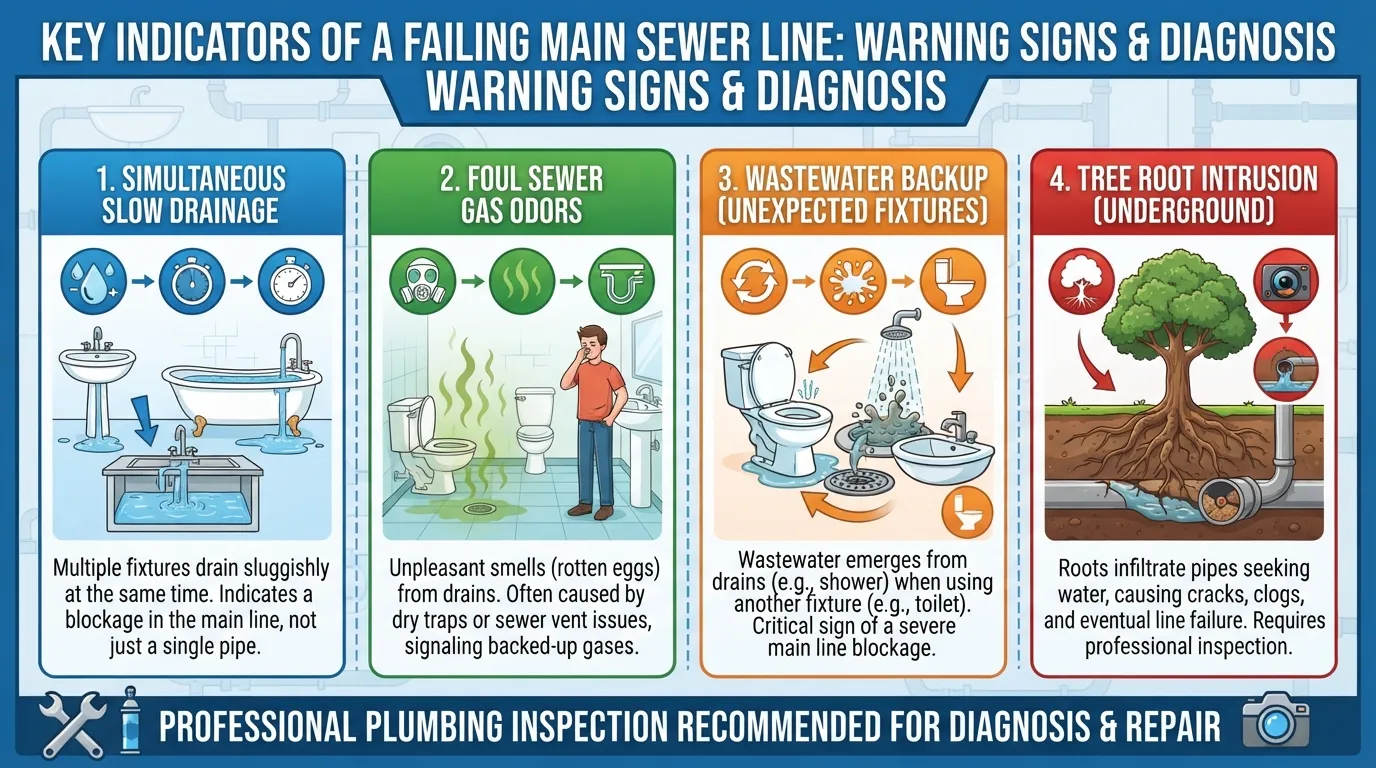
A failing main sewer line presents distinct, widespread symptoms that differ significantly from a localized fixture blockage. Recognizing these critical warning signs early protects your entire property from catastrophic water damage and expensive structural repairs.
Systemic Failure: Main line obstructions impact multiple areas of your plumbing infrastructure simultaneously rather than affecting just one isolated sink or shower.
Property Threat: Unaddressed sewer line failures can lead to raw sewage backups inside living spaces, creating severe health hazards and property destruction.
Multiple Drains Backing Up at Once
When several unrelated fixtures throughout your home slow down or stop working entirely, the issue extends far beyond a standard branch pipe.
Widespread Slowdown: Showers, sinks, and toilets begin draining sluggishly at the same exact time across different rooms.
System Bottleneck: The central main drain line has become completely choked, blocking wastewater from exiting your home.
Sewage Smell From Multiple Fixtures
An unmistakable odor wafting from multiple floor drains or plumbing fixtures points directly to sewer gas venting improperly into your living space.
Trapped Vapors: A heavy backup in the sewer line forces foul-smelling sewer gases back up through dry or compromised plumbing traps.
Pervasive Odor: Unlike a single smelly sink trap, a main line gas leak introduces unpleasant odors across multiple bathrooms and utility rooms.
Water Backing Up From Unexpected Drains
Wastewater frequently seeks the path of least resistance when the main sewer pipe fails, resulting in bizarre and unsanitary backup behaviors.
Cross-Fixture Reactions: Flushing your toilet causes wastewater to bubble up into your bathtub or shower basin.
Appliance Rejection: Running your washing machine causes dirty water to back up into the kitchen sink or floor drain, signaling a severe backup in the main conduit.
Root Intrusion Warning Signs
Subterranean tree roots constantly seek out moisture sources, frequently infiltrating aging sewer pipes and causing extensive structural blockages.
Gradual Deterioration: Tiny hairline cracks in underground pipes allow roots to enter, expanding over time and trapping toilet paper and debris.
Persistent Vulnerability: Root intrusion requires heavy-duty hydro-jetting or professional trenchless repair to restore full structural integrity to the affected multiple fixtures and lines.
Can You DIY It? Safety, Tools & Chemical Drain Cleaner Warnings
Tackling a sluggish fixture on your own can save time and money, but improper techniques or harsh products often turn a minor inconvenience into a major plumbing disaster. Knowing the boundaries of a safe DIY unclog approach protects both your household safety and your plumbing infrastructure.
Risk Management: Simple mechanical methods work well for surface-level obstructions, whereas chemical shortcuts frequently introduce severe pipe degradation.
Property Protection: Recognizing when a problem exceeds DIY capabilities prevents accidental flooding and structural leaks.
Safe DIY Methods
Minor, localized blockages in sinks or tubs can often be resolved safely using basic household tools and natural reactions before calling a professional.
The Standard Plunger: A flat-cup or flange plunger creates necessary pressure changes to dislodge loose hair and soap scum [00:26] without stressing pipe joints.
Boiling Water Flush: Pouring hot water down metal pipes helps dissolve accumulated grease, provided your home does not feature vulnerable PVC connections.
Baking Soda & Vinegar Method: Combining equal parts baking soda and white vinegar creates a fizzy, non-corrosive bubbling action that helps break down organic buildup organically.
Why Chemical Drain Cleaners and Bleach Can Damage Pipes
Relying on a harsh chemical drain cleaner or pouring undiluted bleach down stubborn drains creates a false sense of security while actively destroying your plumbing system.
Exothermic Reactions: Liquid chemical openers generate intense heat designed to melt organic clogs, which can warp or crack older PVC pipes and degrade rubber seals.
Severe Metal Corrosion: Corrosive formulas linger in pipe traps, eating away at cast iron or copper lines over time and resulting in sudden leaks behind walls. According to safety guidance outlined by the U.S. Environmental Protection Agency, hazardous chemical residues also present severe exposure risks during household maintenance.
Toxic Fumes: Mixing bleach with residual cleaning agents in a blocked pipe creates dangerous chemical reactions and toxic gas emissions.
When DIY Is Not Enough
Attempting to force a complex plumbing obstruction with repeated DIY efforts often worsens the underlying issue.
Persistent Resistance: If a plunger or hand auger fails after multiple attempts, the obstruction is likely hardened scale or a main line intrusion.
Systemic Symptoms: Multiple slow drains or sewage odors appearing across the house mean the issue requires commercial-grade hydro-jetting rather than basic consumer tools.
How Much Does It Cost? Drain Clearing vs. Drain Cleaning Pricing
Understanding the financial investment between basic clearing and deep cleaning helps you budget accurately and avoid unexpected repair bills. While a quick mechanical fix offers immediate relief at a lower price point, comprehensive pipe maintenance requires specialized equipment that shifts overall project costs.
Pricing Hierarchy: Basic mechanical snaking represents a minor entry-level expense, whereas high-pressure hydro-jetting and main sewer line restoration reflect heavy-duty capital investments.
Cost Predictability: Scheduled maintenance appointments are significantly cheaper than reactive emergency dispatch fees.
Average Cost of Drain Clearing
Basic drain clearing is designed for speed and simplicity, making it the most affordable intervention for isolated household blockages.
Standard Snaking: Professional mechanical snaking for a single fixture—such as a kitchen sink, bathtub, or toilet—typically ranges from $150 to $400.
Minor Service Scope: This price point covers standard labor, basic trip fees, and the removal of localized obstructions like hairballs or localized food waste.
Value Consideration: While economical, remember that clearing does not remove internal grease or scale, meaning the clog may return and incur repeat costs.
Average Cost of Drain Cleaning (Hydro Jetting)
Comprehensive drain cleaning utilizes advanced technology to scour entire pipe networks, commanding a higher rate due to the specialized machinery required.
Hydro-Jetting Rates: Standard residential hydro-jetting ranges from $350 to $1,500, heavily dependent on whether technicians are servicing an interior branch line or the main sewer conduit.
Comprehensive Value: Although more expensive upfront, high-pressure water scouring eliminates years of accumulated buildup, saving money by preventing catastrophic main-line failures.
Diagnostic Add-Ons: Many professional packages include a complementary or bundled video camera inspection to verify the complete removal of scale and roots.
What Affects the Price?
Several physical and logistical variables influence the final price tag quoted by a licensed plumbing professional.
Clog Severity & Location: Simple branch-line clogs are inexpensive to clear, whereas stubborn root intrusions or deep main sewer line blockages require intensive labor.
Pipe Accessibility: Easily reached cleanouts keep labor times low, while pipes running beneath concrete slabs or behind finished walls increase excavation and access requirements.
Pipe Age & Material: Fragile, older cast iron or degraded clay pipes require delicate handling or specialized low-pressure settings to prevent structural damage.
Emergency vs. Scheduled Service: Calling a plumber on weekends, holidays, or late at night triggers premium after-hours rates and increased service-call fees. Get an exact quote for your home to lock in transparent scheduling before minor drainage issues escalate.
How Often Should You Clean Your Drains? A Practical Maintenance Schedule
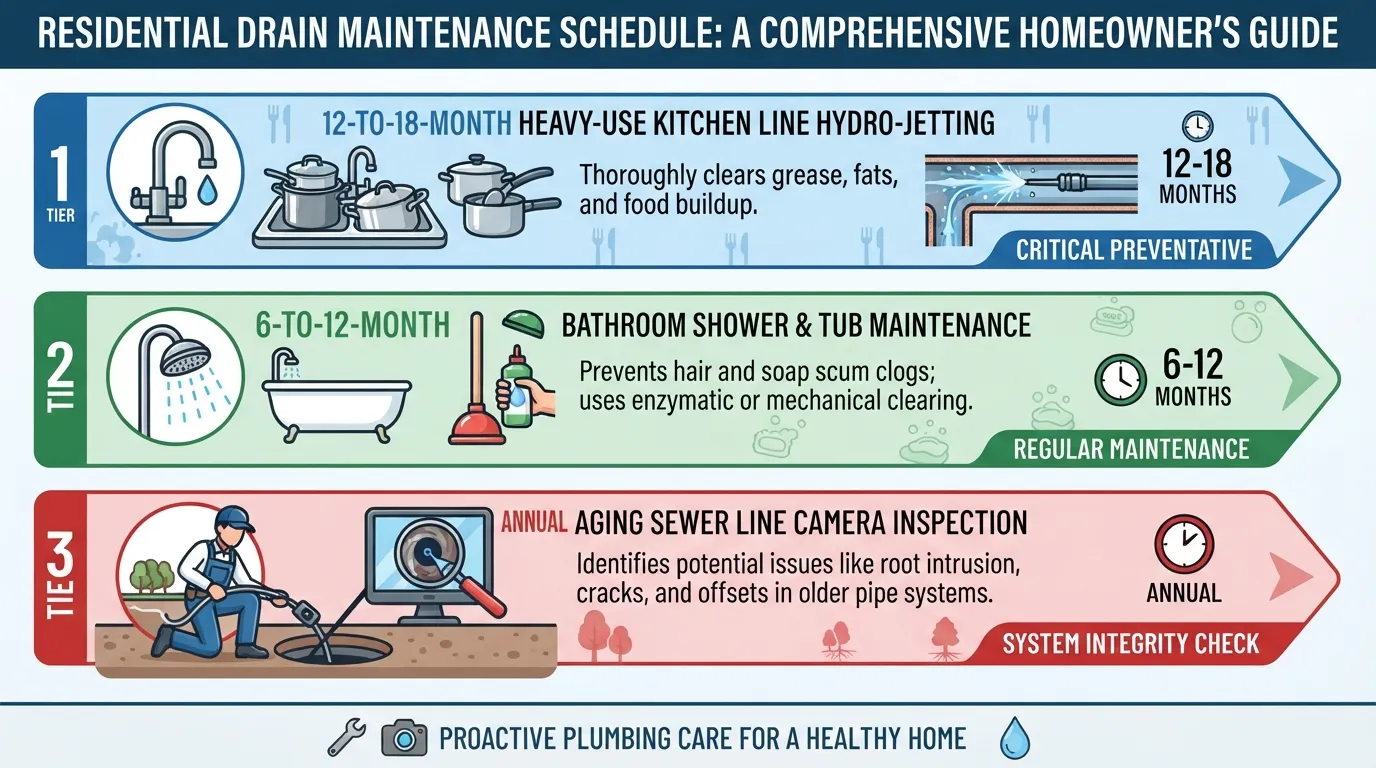
Establishing a proactive maintenance schedule is the single most effective way to prevent catastrophic plumbing failures and expensive emergency repairs. Waiting for a complete blockage to occur guarantees property disruption and higher repair bills.
Proactive Protection: Routine upkeep stops organic sludge, grease, and mineral scale from hardening into impenetrable blockages inside your pipes.
System Longevity: Regular servicing extends the operational lifespan of your entire plumbing network, protecting older joints and fittings from premature failure.
Recommended Frequency for Average Households
Most residential properties benefit from a structured maintenance schedule tailored to daily usage levels and household size.
Annual Inspections: Schedule an annual drain cleaning or professional camera inspection once a year to catch early signs of scale buildup, sagging pipes, or minor root intrusions before they escalate.
Kitchen Maintenance: Kitchen lines handling heavy cooking oils and food debris often require professional hydro-jetting every 12 to 18 months to maintain optimal flow diameters.
Secondary Drains: Bathroom showers, tubs, and secondary sinks typically require light mechanical clearing or eco-friendly enzymatic maintenance every 6 to 12 months.
Signs You Need to Clean More Often
Certain environmental factors and structural characteristics demand a more aggressive, frequent preventative cleaning routine.
Aging Infrastructure: Homes featuring older sewer lines—particularly cast-iron or clay pipes installed decades ago—are highly susceptible to rapid scale accumulation and require cleaning every 12 months.
Heavy Root Pressures: Properties surrounded by mature trees with invasive root systems frequently face subterranean intrusions that necessitate semi-annual hydro-jetting.
High-Volume Kitchens: Large families or households that frequently dispose of fats, oils, and grease down the sink will experience accelerated restriction, requiring quarterly or bi-annual deep scouring.
What Do Plumbers Recommend? Professional Insight
Licensed plumbing experts consistently emphasize that relying exclusively on reactive quick fixes sets homeowners up for chronic plumbing failures. Investing in professional intervention transforms your home maintenance strategy from emergency firefighting to total system protection.
Preventative Mindset: Industry standards focus on diagnosing the root cause of a blockage rather than just treating immediate surface symptoms.
Technological Advantage: Commercial-grade tools deliver results that off-the-shelf consumer devices simply cannot replicate.
What Professionals Use That Homeowners Don’t
A licensed plumber utilizes specialized equipment designed to inspect, scour, and restore piping networks without causing structural wear.
High-Powered Hydro Jetter: Unlike a basic motorized snake, a commercial hydro jetter [00:35] utilizes high-pressure water streams up to 4,000 PSI to scour grease, mineral scale, and root intrusions entirely from the pipe walls.
High-Definition Camera Inspection: Technicians feed waterproof fiber-optic cameras down the line to visually identify cracks, bellies, and joint separations before selecting a repair strategy.
Specialized Descaling Attachments: Rotating chain knockers break apart hard mineral deposits in older cast-iron pipes, restoring smooth interior surfaces.
Is Professional Drain Cleaning Worth the Cost?
Investing in professional drain cleaning delivers long-term savings by eliminating the cycle of recurring emergency service calls.
Eliminating Repeat Failures: While DIY clearing temporarily opens a channel through debris [00:14], professional cleaning removes the underlying sludge [00:35] that causes identical clogs to return.
Protecting Property Investment: Comprehensive maintenance preserves the structural integrity of your plumbing [01:30], preventing catastrophic sewage backups and expensive structural water damage.
Guaranteed Peace of Mind: Partnering with an expert plumbing service professional ensures that complex issues like main line root intrusions are resolved correctly the first time.
Frequently Asked Questions About Drain Clearing and Cleaning
Navigating household plumbing issues often raises urgent questions regarding pricing, safety, and the right tools for the job. Review these expert answers to common queries to make informed maintenance decisions.
How Much Does Roto-Rooter Charge to Clear a Clogged Drain?
Standard industry pricing for professional emergency drain clearing generally ranges from $150 to $450, depending on your geographical location and the severity of the blockage. Major national franchise brands often quote higher baseline service fees or charge premium rates for after-hours emergency dispatches. Always request a transparent, upfront estimate before authorizing any mechanical work in your home.
How Long Does It Take a Plumber to Clear a Clog?
A standard residential drain clearing for an isolated fixture like a kitchen sink or toilet typically takes 30 minutes to one hour. However, if a technician needs to perform a comprehensive hydro-jetting session or conduct a full video camera inspection of a main sewer line, the entire process can take 1 to 3 hours to complete thoroughly.
What Is the Cheapest Way to Unclog a Drain?
The most cost-effective DIY method for minor blockages is using a traditional plunger combined with a kettle of hot, boiling water (if your home features metal pipes). Alternatively, pouring a half-cup of baking soda followed by a half-cup of white vinegar creates a natural, fizzy reaction that breaks down organic surface soap scum and hair without costing more than a few pantry items.
Can Bleach Be Used for Clearing Pipes and Drains?
Pouring undiluted bleach down a drain is strongly discouraged because it does not dissolve hair, grease, or heavy organic sludge. Furthermore, bleach can react dangerously with chemical residues left behind by other commercial cleaners, producing toxic gas emissions, and it can weaken older PVC or metal pipe joints over time.
Should I Use a Chemical Drain Cleaner for My Plumbing?
Using a harsh chemical drain cleaner is generally a poor choice because corrosive formulas generate excessive heat that can warp PVC pipes and corrode metal traps. Repeated use eats away at pipe walls, turning a minor slow drain into an expensive cracked-pipe emergency. Mechanical methods or professional hydro-jetting provide safe, long-lasting alternatives.
What Are the Signs That My Drains Need Professional Cleaning?
Key indicators that your plumbing system requires comprehensive cleaning include persistent gurgling noises from fixtures, foul odors rising from sink traps, and multiple slow drains backing up simultaneously. If you notice water bubbling up into your bathtub or shower when you flush the toilet, your main sewer line requires immediate professional attention.
Is a Drain Snake the Right Tool for a Long-Term Clogged Bath Pipe?
A standard hand-held drain snake is an effective short-term tool for pulling out hairballs and localized soap buildup near a bathtub trap. However, if the exact same bath pipe clogs again within a few weeks, snaking only acts as a temporary patch rather than a solution. Recurring blockages indicate deep internal buildup that requires professional hydro-jetting to completely scour the pipe walls.
Conclusion & Expert Action Plan
Knowing when to apply a quick mechanical fix versus investing in deep restorative maintenance is the key to safeguarding your home against costly plumbing failures. While basic drain clearing handles sudden surface blockages [00:00], comprehensive professional cleaning eliminates the hidden sludge and grease that trigger recurring headaches.
If you are dealing with persistent backups, multiple slow fixtures, or stubborn clogs that refuse to go away, it is time to rely on an expert professional drain service. Protect your property and ensure long-term plumbing reliability by partnering with a licensed plumbing service today.
Main Services
Related Posts
Need a Plumber in Miami?
Schedule service online or speak directly with the EZ Plumbing team.
Owner-Led Local Service
Know who is behind the business before you request service. The owners, contact line and Miami service pages are published clearly.
- Named business owners
- Direct phone and social channels
- Local Miami service information
Clear Help Before You Book
Review the relevant service page, contact the team directly and use the booking page when you are ready—without relying on vague claims.
- Service-specific information
- Direct questions before scheduling
- Clear online booking route