Water Jet Sewer Cleaning: What It Is, How It Works & When You Need It
Understanding Water Jet Sewer Cleaning
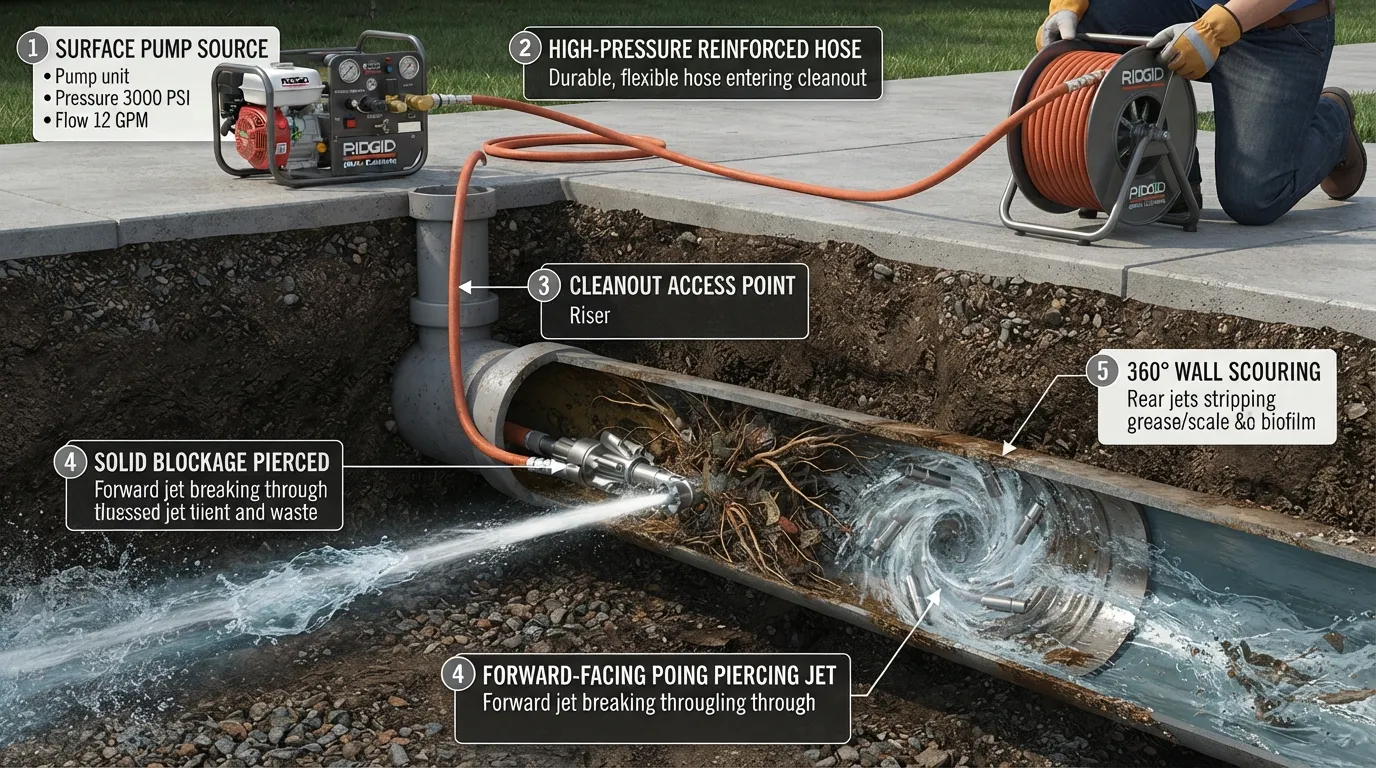
Water jet sewer cleaning, commonly known as hydro jetting, is an advanced plumbing technique that uses streams of high-pressure water to scour the interior of sewer lines and drain pipes. This method efficiently blasts away stubborn clogs, tree roots, grease buildup, and mineral scale without damaging your plumbing infrastructure.
Why Traditional Methods Fall Short
Property owners frequently struggle with recurring sewer backups and slow drains because traditional snaking only punches a small hole through a blockage. Grease, sludge, and calcified buildup are left clinging to the pipe walls, guaranteeing that the clog will return in a matter of weeks.
Temporary Relief: Mechanical augers clear immediate pathways but leave residue behind.
Hidden Damage: Metal cables can occasionally scratch or crack older clay and PVC pipes.
Incomplete Cleansing: Sludge layers continue to trap debris, narrowing the functional diameter of the pipe.
The Hydro Jetting Solution
Hydro jetting completely revolutionizes drain maintenance by addressing the root cause of pipe failure rather than just the symptoms. By delivering water pressures ranging from 1,500 to 4,000 PSI directly through a specialized multi-directional nozzle, this system completely restores the inner diameter of your drain pipes to a like-new condition.
360-Degree Scouring: High-pressure jets wash away every trace of grease, silt, and scale from the entire pipe circumference.
Root Eradication: Powerful streams slice through invasive tree roots and flush them completely out of the system.
Preventative Longevity: Regular hydro jetting dramatically reduces the frequency of emergency plumbing callouts and extends the lifespan of your sewer lateral.
Expert Insight: Unlike harsh chemical drain cleaners that can corrode metal and degrade PVC over time, water jet sewer cleaning relies entirely on pure kinetic energy, making it completely safe for your plumbing system and environmentally friendly.
What Is Water Jet Sewer Cleaning?
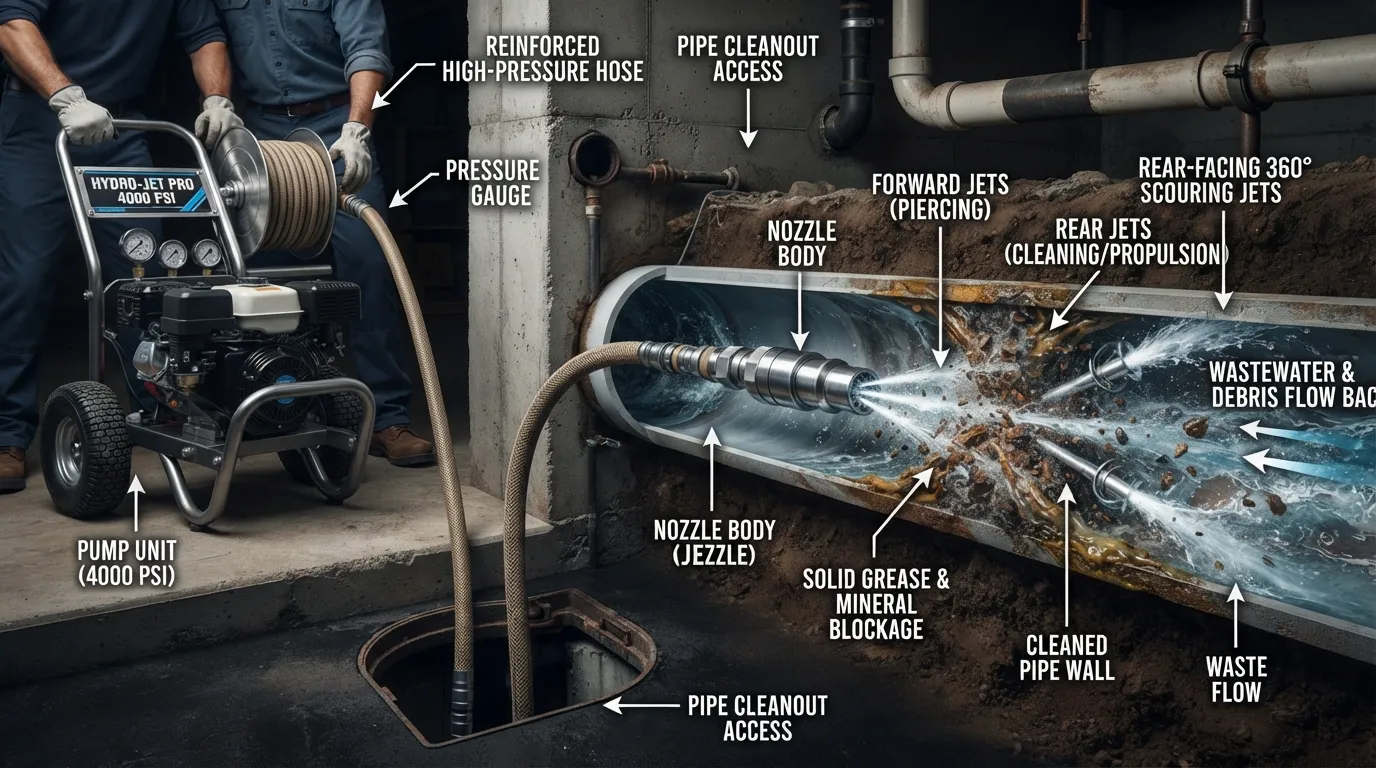
Water jet sewer cleaning is a high-performance plumbing process that utilizes a specialized, high-pressure water pump to thoroughly scour and sanitize the interior of sewer lines and drain pipes. By converting high-volume water into a concentrated, high-velocity stream, this technique removes stubborn blockages and buildup that conventional cleaning methods leave behind.
The Equipment Behind Water Jetting
A professional water jetting system relies on integrated, heavy-duty components working in unison to generate and control extreme water velocity. The entire apparatus is engineered to safely navigate complex residential or commercial plumbing networks without compromising pipe integrity.
Pressurized Water Pump: The powerhouse of the system, capable of generating immense pressure and high water flow rates through a gas or diesel engine.
Reinforced High-Pressure Hose: Flexible, abrasion-resistant tubing designed to withstand thousands of pounds of pressure while traveling long distances through sewer lines.
Specialized Metal Nozzle: Attached to the end of the hose, this precision-engineered component features precisely angled orifices that direct water streams at specific vectors to clean the pipe wall.
Access Cleanout: The designated entry point in your plumbing system where technicians feed the hose directly into the main sewer line.
PSI Levels Explained
Understanding water pressure is essential for evaluating how effectively different clogs can be pulverized and cleared from your sewer system. Technicians calibrate the Pounds per Square Inch (PSI) and Gallons Per Minute (GPM) based on the pipe material, diameter, and severity of the obstruction.
Standard Residential Maintenance (1,500 to 3,000 PSI): Ideal for routine cleaning, clearing minor grease buildup, and washing away silt or soap scum from standard drain pipes.
Standard Heavy-Duty Clearing (3,000 to 4,000 PSI): The industry benchmark for tackling stubborn blockages, heavy scale accumulation, and moderate debris in main sewer lines.
Extreme Obstruction Removal (Up to 5,000 PSI): Utilized exclusively for severe, hardened blockages, extensive mineral deposits, and heavy root intrusion inside thick-walled industrial or municipal pipes.
Forward Jets vs. Rear Jets — How 360° Cleaning Works
The secret to complete pipe restoration lies in the opposing propulsion design of the jetting nozzle. By balancing water force in multiple directions, the nozzle simultaneously propels itself forward and meticulously scours the entire interior surface.
Forward-Facing Jet: Points directly ahead to bore a path through solid blockages, ice, or dense sludge directly in front of the hose.
Rear-Facing Jets: Angled backward at 15 to 45 degrees to blast the pipe wall, scour away grease, and simultaneously propel the hose forward through the sewer line.
360-Degree Scouring: The combined action ensures that every square inch of the pipe wall is completely polished, preventing leftover residue from acting as a seed for future clogs.
How Does Water Jet Sewer Cleaning Work? (Step-by-Step Process)
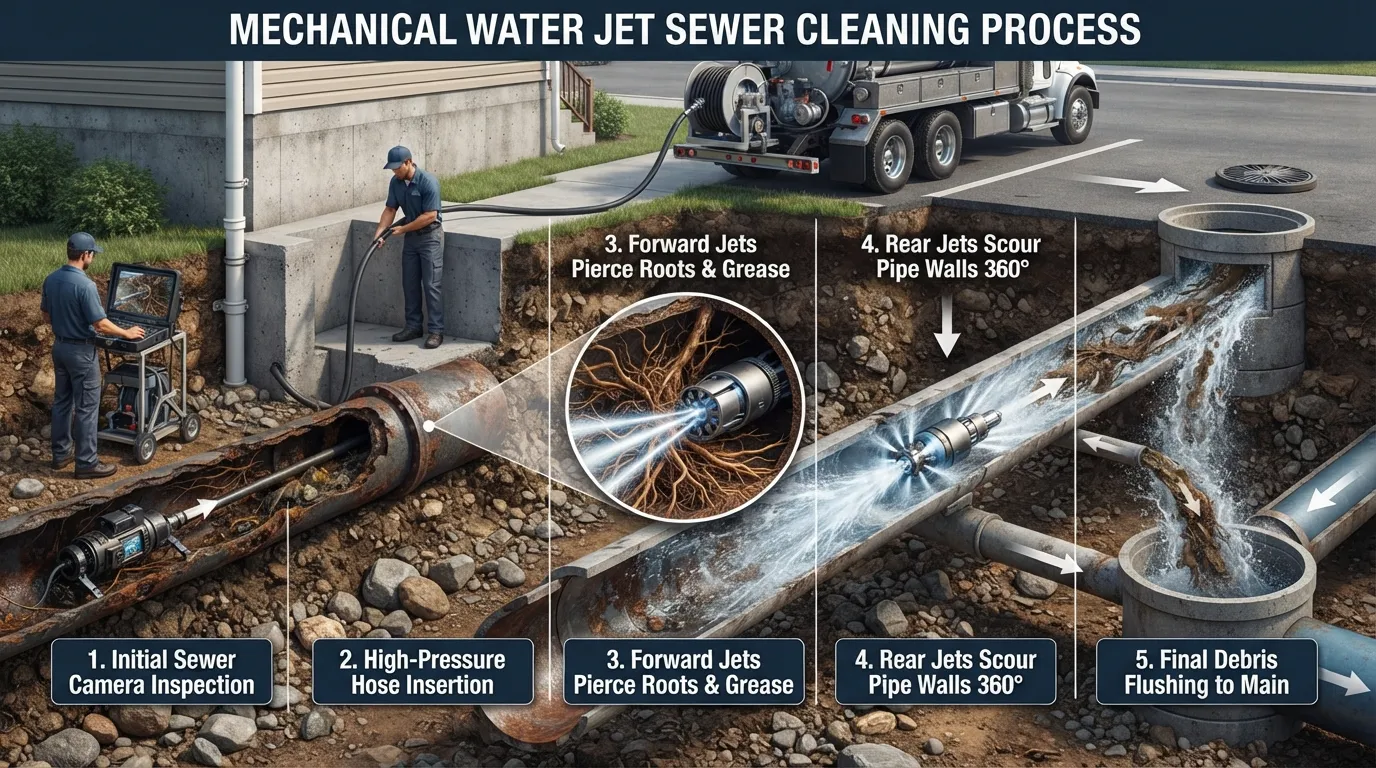
Water jet sewer cleaning follows a precise, multi-stage engineering process that ensures complete restoration of your plumbing infrastructure. By combining high-pressure mechanics with systematic execution, professional technicians safely remove complex obstructions from the entire pipe system.
Step 1 – Initial Camera Inspection
Before any high-pressure water enters the line, technicians conduct a preliminary visual assessment to evaluate the interior layout and structural condition of the pipe.
Diagnostic Assessment: Identifies the precise location, nature, and severity of clogs, tree roots, or structural defects.
Material Verification: Confirms whether the system consists of PVC, cast iron, or fragile clay pipes to determine the safe operational PSI threshold.
Foundation Setting: Establishes a baseline condition so the team can monitor cleaning effectiveness throughout the process.
Step 2 – Inserting the Nozzle Through the Cleanout
Once the system assessment is complete, the operator accesses the plumbing network via a designated cleanout access point to introduce the specialized hardware.
Secure Entry: The high-pressure hose and specialized nozzle are fed directly into the main sewer line through the cleanout.
System Integration: Technicians connect the assembly to a high-capacity pressurized water pump mounted on a service vehicle or portable unit.
Controlled Descent: The hose is carefully metered into the pipe to prevent kinks or sudden pressure spikes during initial deployment.
Step 3 – Breaking Through the Blockage (Forward Jet Action)
When the hose reaches the obstruction, forward-facing jets engage to break apart dense blockages and clear an initial pilot path.
Targeted Piercing: High-velocity streams fracture solid masses of grease buildup and mineral scale head-on.
Root Penetration: Concentrated pressure slices through dense root masses blocking the pipe interior.
Path Creation: Generates a stable channel through the sludge, allowing the nozzle to travel deeper into the main line.
Step 4 – Full-Diameter Scouring (Rear Jet Action)
After punching through the primary blockage, the focus shifts to comprehensive wall-to-wall scouring driven by the rear-facing jets.
360-Degree Polish: Rear-facing orifices blast the entire circumference of the pipe wall to strip away lingering residue.
Sludge Removal: Eliminates years of accumulated organic sludge and biofilm that standard mechanical augers miss.
Diameter Restoration: Cleans the interior until the original pipe diameter is fully restored, maximizing fluid capacity.
Step 5 – Flushing Debris Out of the System
The final phase involves completely clearing all dislodged material out of the lateral line to leave the entire plumbing system running clear.
Downstream Sweep: High-volume water flow sweeps fragmented tree roots, scale, and grease particles toward the municipal sewer or main trap.
System Verification: Ensures zero residual debris remains trapped within bends or low spots along the line.
Final Flow Test: Confirms smooth water drainage across all connected fixtures before completing the service call.
Signs You Need Water Jet Sewer Cleaning
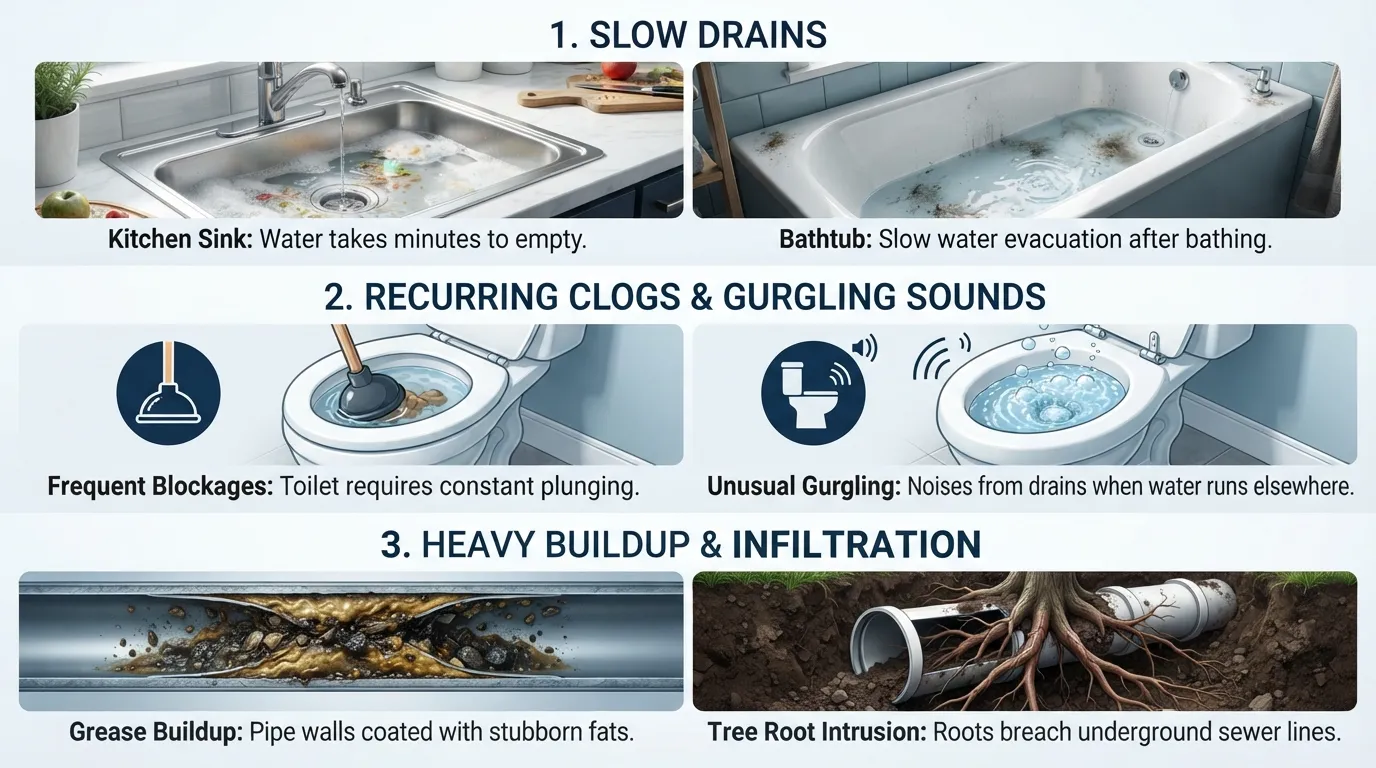
Recognizing the early warning signs of a failing drainage system can save your property from catastrophic water damage and expensive emergency repairs. When minor clogs escalate into systemic pipe blockages, identifying the root cause early allows you to schedule preventative maintenance before total failure occurs.
Recurring or Stubborn Clogs That Keep Coming Back
If you find yourself constantly reaching for a plunger or renting a mechanical snake for the same plumbing fixture, you are only experiencing a temporary fix. Traditional augers punch a small hole through obstructions, leaving grease, sludge, and calcified buildup clinging to the pipe walls to trap new debris.
Persistent Blockages: The same sink, shower, or toilet backs up repeatedly within weeks of being cleared.
Ineffective Plunging: Chemical drain cleaners and manual plungers fail to provide lasting relief because the underlying pipe restriction remains intact.
Systemic Issues: Multiple clogged fixtures simultaneously indicate a primary sewer line blockage rather than a localized drain issue, meaning our team can diagnose the exact cause and apply a permanent hydro-jet solution.
Slow Drains and Gurgling Sounds
Drainage that gradually loses its velocity is one of the earliest indicators that your pipe’s inner diameter is shrinking due to internal buildup. When air becomes trapped and compressed by traveling water, it creates audible gurgling sounds as it escapes up through secondary fixtures.
Sluggish Drainage: Sinks and bathtubs take significantly longer to empty, pooling water during routine use.
Acoustic Warnings: Gurgling or bubbling noises echoing from your toilet bowls or floor drains when running the washing machine.
Restricted Flow: Narrowed pathways force wastewater to crawl past thick layers of organic waste and mineral scale.
Heavy Grease and Soap Scum Buildup
Kitchen sinks and industrial food preparation areas routinely accumulate massive layers of cooking fats, oils, grease, and soap scum that solidify against cold pipe walls. Over time, this sticky lining hardens into a concrete-like substance that acts as the biggest cause of blocked drains in residential properties.
Solidified Lining: Fats coat the entire 360-degree interior circumference of the drain pipe, reducing overall carrying capacity.
Trapped Particulate: Food particles and debris catch effortlessly on the sticky grease matrix, accelerating complete pipe closure.
Stubborn Residue: Standard snaking passes right through soft grease layers without removing the film, necessitating high-pressure scouring.
Tree Root Intrusion
Invasive tree roots naturally seek out microscopic cracks or joints in underground sewer lines to access moisture and nutrients. Once inside, these roots proliferate rapidly, forming dense, hair-like mats that catch toilet paper and solid waste, resulting in complete structural backups.
Rapid Proliferation: Roots expand rapidly inside the nutrient-rich environment of a main sewer lateral.
Structural Strain: Expanding roots can crack older clay or cast iron pipes if not thoroughly cleared and repaired.
Total Blockage: Dense root masses act as a net, trapping all passing debris and halting wastewater flow entirely.
Foul Odors Coming From Drains
A healthy plumbing system utilizes drain traps to block sewer gases from venting inside your living spaces. When organic sludge, hair, food waste, and bacteria accumulate along the pipe walls, they decompose and emit pungent gases that permeate your home.
Persistent Smells: A lingering odor resembling rotting food or sulfur rises from bathroom and kitchen drains.
Dry or Dirty Traps: Trapped organic matter continues to decay inside the pipe even when the water seal is functional.
Hygienic Hazard: Unpleasant smells signal an advanced buildup of biofilm that requires aggressive high-pressure sanitization.
Water Jet Sewer Cleaning vs. Drain Snaking — Which Do You Need?
Choosing the right plumbing intervention depends entirely on the severity, location, and composition of your obstruction. While both methods address drainage issues, they operate at vastly different levels of thoroughness, making it crucial to match the tool to the specific problem inside your sewer line.
What Drain Snaking Does Differently
A drain snake, also known as a plumbing auger, uses a flexible steel cable with a specialized cutting head to mechanically pierce through immediate blockages. It is designed for quick localized interventions rather than deep structural cleaning.
Targeted Piercing: The rotating head punches a clear pathway through hair, paper, or localized clogs to restore emergency flow.
Channel Creation: The auger clears a hole just wide enough for the cable, leaving the surrounding pipe wall untouched.
Limited Reach: Traditional snakes are generally used for secondary lines like sinks, tubs, and toilets rather than main sewer lines.
Side-by-Side Comparison Table
| Feature | Drain Snaking (Auguring) | Water Jet Sewer Cleaning (Hydro Jetting) |
| Effectiveness | Temporary relief; punches a hole through clogs | Permanent restoration; scours 360 degrees of pipe walls |
| Cost Range | Low ($100 – $250) | Moderate to High ($350 – $600+) |
| Longevity | Weeks to months before clogs return | Years of clean, unobstructed flow |
| Best Use Case | Single-fixture hair or paper clogs | Grease, scale, roots, and main line backups |
When Snaking Is Enough
Drain snaking remains a staple in plumbing toolkits because it excels at solving straightforward, isolated issues without unnecessary expense. For simple, one-time clogs, an auger is often all that is required.
Single Fixture Blockages: Perfect for a bathroom sink clogged with toothpaste or a toilet blocked by excess paper.
Immediate Emergency Relief: Quickly restores basic functionality when a household drain stops working unexpectedly.
Low-Cost Maintenance: An affordable option for minor, non-recurring issues where pipe walls are still clean.
When Jetting Is the Better Long-Term Fix
When plumbing problems stem from systemic buildup or structural obstructions, hydro jetting provides superior value by eliminating the root cause entirely. Instead of a temporary fix, jetting delivers a permanent reset for your piping network.
Recurring Blockages: Essential when the same drain backs up repeatedly despite previous snaking attempts.
Heavy Scale and Grease: The only effective method for stripping hardened mineral deposits and thick grease layers from the entire pipe circumference.
Severe Root Intrusion: Blasts away dense root masses and polishes the pipe interior to prevent future growth from catching easily.
How Much Does Water Jet Sewer Cleaning Cost?
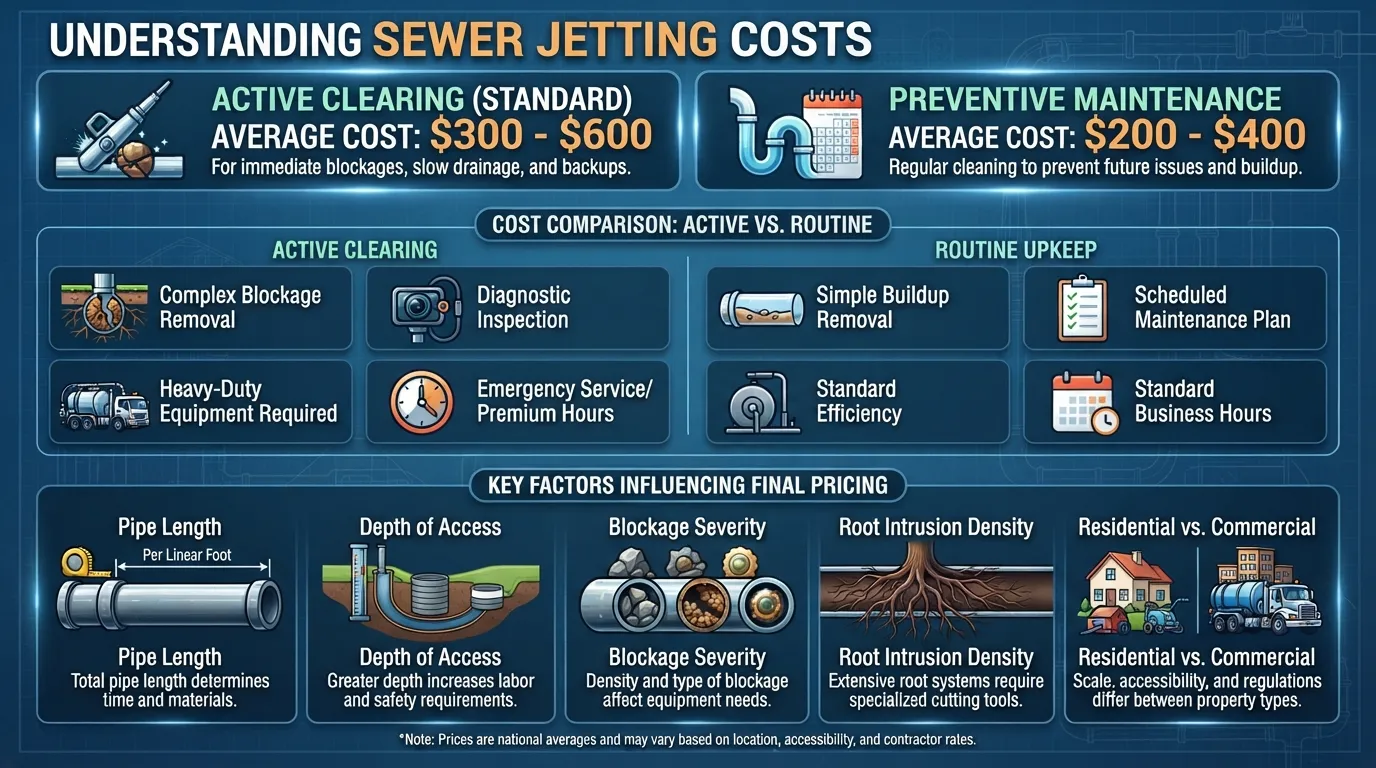
Water jet sewer cleaning pricing typically ranges from three hundred to six hundred dollars for standard residential properties, depending on the severity of the blockage. Investing in professional hydro-jetting provides long-term savings by eliminating recurring service calls and preventing catastrophic pipe failures.
Cost of Preventive Maintenance Jetting
Preventive maintenance hydro-jetting is the most cost-effective way to protect your plumbing infrastructure before a complete blockage occurs. Routine cleaning keeps pipe interiors smooth and prevents organic waste from hardening into stubborn obstructions.
Affordable Upkeep: Routine maintenance sessions typically range between two hundred and four hundred dollars for standard residential lateral lines.
Proactive Protection: Ideal for restaurants, commercial kitchens, and homes with mature landscaping prone to recurring debris accumulation.
Extended Lifespan: Regular flushing preserves pipe integrity and delays the need for costly trenchless sewer repairs or replacements.
Cost of Active Clearing (Roots, Heavy Blockages)
When dealing with emergency backups, severe root intrusion, or concrete-like mineral scale, active clearing requires specialized high-pressure equipment and extended labor time. This intensive process ensures every trace of the obstruction is completely eradicated.
Higher Investment: Active clearing services generally range from four hundred to eight hundred dollars or more depending on job complexity.
Complex Extraction: Slices through dense root masses and pulverized scale that standard augers cannot touch.
Complete Restoration: Thoroughly cleans the entire pipe diameter, ensuring you get an exact quote for your property before technicians begin work.
Factors That Affect Price (Pipe Length, Severity, Residential vs. Commercial)
Several physical and logistical variables influence the final cost of a water jetting service call. Understanding these cost drivers helps property owners anticipate pricing before scheduling a technician.
Pipe Length and Depth: Longer sewer runs and deep underground lines require more hose deployment, time, and specialized pump power.
Severity of the Blockage: Hardened scale, thick grease matrices, and heavy structural root mats require higher PSI calibration and multiple passes.
Residential vs. Commercial Scale: Commercial properties often feature wider pipe diameters, longer grease trap runs, and complex layouts that require heavy-duty industrial equipment.
Why a Camera Inspection Comes Before Jetting
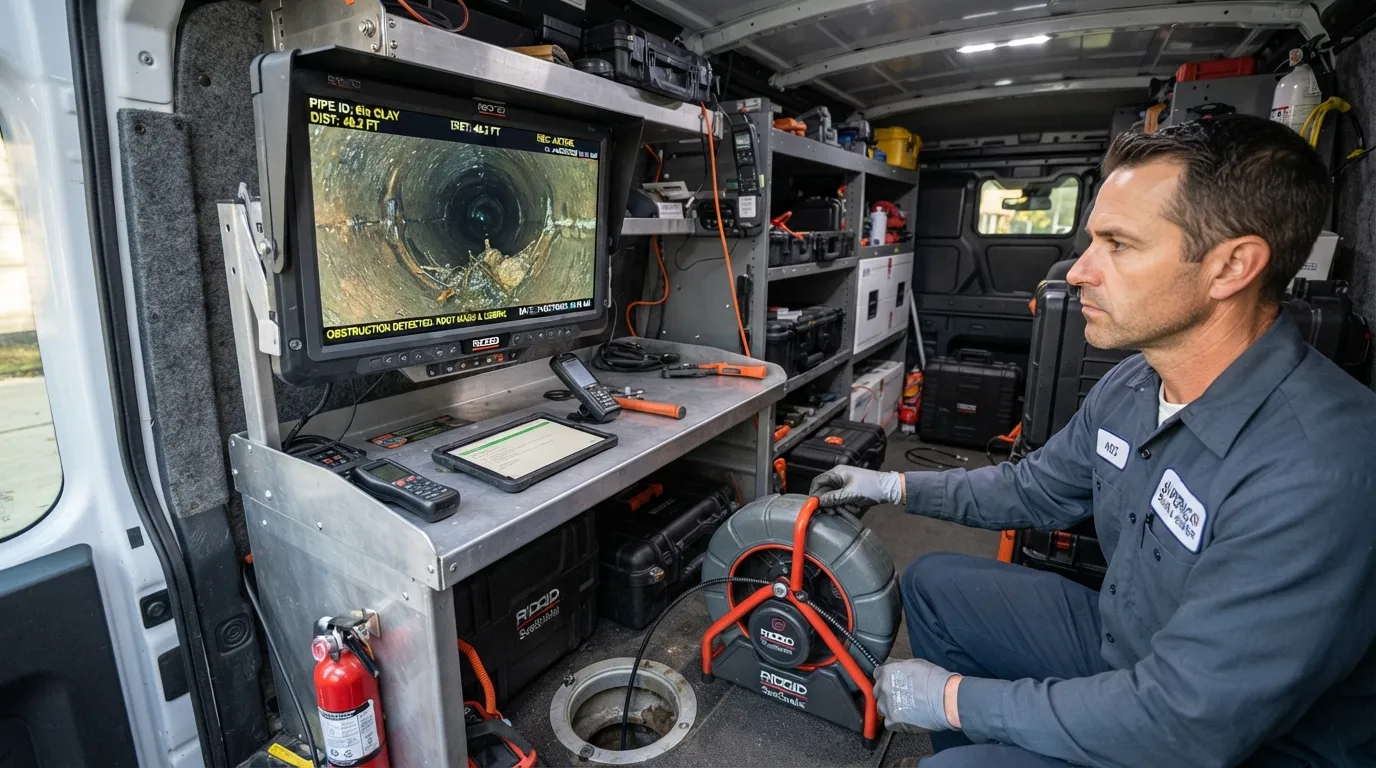
A professional sewer camera inspection is a mandatory diagnostic step performed before any high-pressure water enters your plumbing system. By feeding a waterproof, high-definition camera fiber-optic cable through the cleanout, technicians gain real-time visibility into the exact condition of your underground sewer lines.
What a Sewer Camera Inspection Reveals
High-resolution sewer camera inspections remove the guesswork from plumbing diagnostics by providing an unobstructed view of the pipe’s interior landscape. This visual confirmation allows technicians to pinpoint the exact nature of the problem before selecting the appropriate water pressure.
Precise Blockage Location: Identifies the exact footage and distance of clogs, grease buildup, or root intrusions from the access point.
Structural Pipe Condition: Reveals existing cracks, collapsed sections, offset joints, or severe corrosion in older piping materials.
Material Identification: Confirms whether your sewer lines are constructed from modern PVC, cast iron, orangeburg, or fragile clay tile.
Why Diagnosing Before Jetting Prevents Costly Mistakes
Skipping a camera inspection before hydro-jetting introduces massive risks to your plumbing infrastructure. Because water jetting operates at immense pressure levels ranging from 1,500 to 5,000 PSI, applying it blindly to compromised pipes can result in catastrophic failure.
Preventing Pipe Blowouts: Applying high-pressure water to heavily cracked, rusted, or structurally compromised clay pipes can cause them to fracture or collapse entirely.
Tailored Pressure Calibration: Allows technicians to dial in the exact PSI and nozzle configuration required for your specific pipe condition, ensuring safe and effective cleaning.
Targeted Intervention: Ensures that jetting is the correct solution for your specific issue, preventing unnecessary service expenses and protecting your home from preventable water damage.
When You Should NOT Use Water Jetting (Limitations)
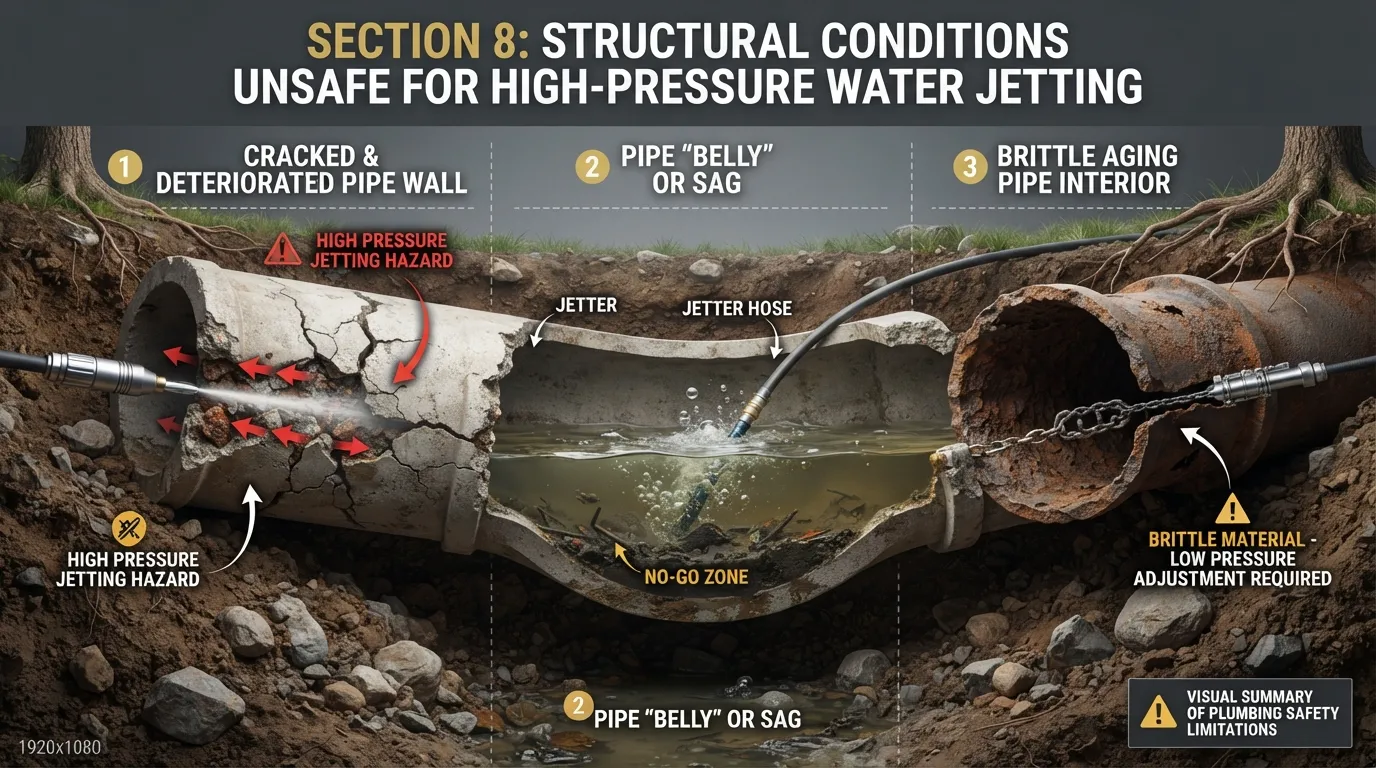
While water jet sewer cleaning is one of the most powerful maintenance tools available, it is not a universal solution for every plumbing scenario. An honest, professional-grade assessment requires recognizing when high-pressure intervention could do more harm than good, protecting your home from preventable damage and costly repairs.
Cracked or Severely Deteriorated Pipes
Applying high-pressure streams ranging from 1,500 to 5,000 PSI to an already compromised pipe structure creates an immediate risk of catastrophic failure. If a sewer camera inspection reveals major structural cracks, fractured walls, or heavy corrosion, hydro-jetting can easily shatter the remaining pipe material.
Risk of Collapse: Intense water force can blow out weakened sections of old piping, turning a minor crack into a total structural failure.
Wastewater Seepage: Damaged pipe walls exposed to extreme pressure can leak raw sewage into surrounding soil or beneath your building foundation.
Alternative Solutions: Technicians will typically recommend trenchless pipe lining or direct excavation and replacement instead of jetting when severe structural damage is present.
A “Belly” or Sagging Section in the Pipe
A pipe “belly” occurs when the ground beneath a section of your sewer line sinks, creating a low spot or dip that collects standing water and debris. Introducing high-pressure water into a sagging section can exacerbate the structural displacement rather than solving the underlying drainage issue.
Water Accumulation: Bellies naturally trap wastewater, silt, and heavy particulate regardless of how clean the rest of the line is.
Erosion Risks: Blasting high-velocity water into a sunken joint can wash away the supporting soil bed, worsening the sag and accelerating pipe separation.
Targeted Repairs: Sagging lines require mechanical soil stabilization or physical section replacement to correct the grade permanently.
Older Cast Iron or Clay Pipes (Pressure Adjustments Needed)
Historic properties featuring aging cast iron or fragile clay tile sewer lines demand extreme caution and precise pressure adjustments. Decades of wear, oxidation, and root penetration make these vintage materials significantly more vulnerable to aggressive mechanical forces.
Material Sensitivity: Untreated scale inside old cast iron might actually be holding thin, corroded pipe walls together; stripping it too aggressively can cause leaks.
Precision Calibration: Professional technicians must lower the operational PSI, utilize specialized low-impact rotating nozzles, or opt for alternative cleaning methods.
Material Safety First: Verifying pipe age and composition via a preliminary camera inspection ensures that cleaning protocols are customized to match the structural limits of vintage plumbing systems.
Is Water Jetting a DIY Job?
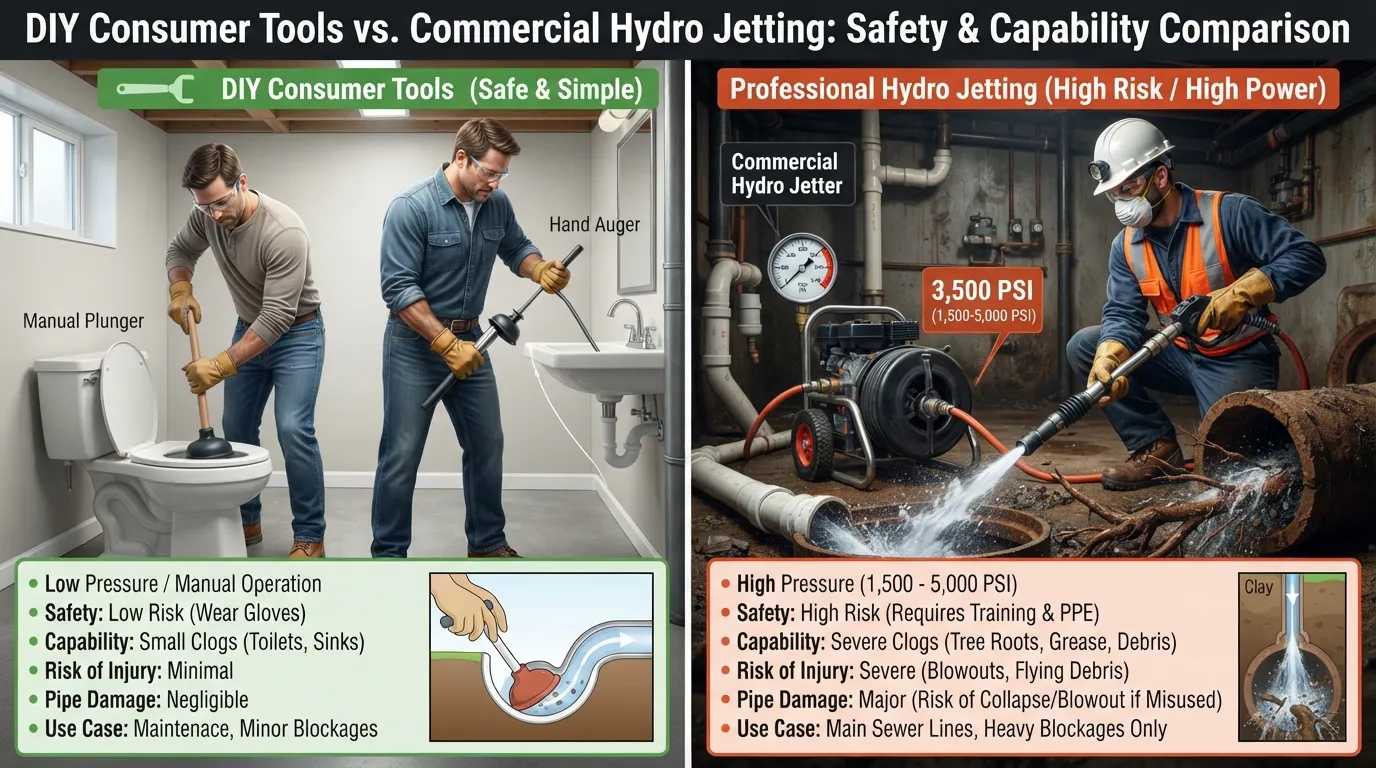
Attempting to perform water jet sewer cleaning as a do-it-yourself project presents significant safety hazards, equipment challenges, and the risk of severe property damage. While basic minor clogs can often be managed with standard household tools, true high-pressure hydro-jetting requires specialized training, commercial-grade machinery, and expert knowledge of plumbing infrastructure.
What You Can Safely Try for Minor Clogs
Before calling a professional plumbing team, property owners can safely attempt a few simple, low-risk methods to resolve minor localized blockages. These household techniques work best for surface-level hair, soap scum, or food particulate caught in secondary trap lines.
Standard Plunging: Utilizing a flange plunger for toilets or a cup plunger for sinks can dislodge shallow, localized seals using manual air pressure.
Manual Drain Snakes: Lightweight, hand-cranked consumer augers can reach shallow hair clogs in bathroom sink or shower traps.
Safe Natural Solvents: Pouring hot water mixed with baking soda and vinegar can help dissolve minor soap residue without degrading your pipe walls.
Why Full Water Jetting Requires Licensed Professionals
Professional-grade water jetting systems generate extreme pressures between 1,500 and 5,000 PSI, delivering high water volumes that demand expert handling. Entrusting this work to a licensed plumber ensures that the job is executed safely, effectively, and without compromising your home’s plumbing system.
Severe Injury Risks: Commercial water jets operate with enough force to cause severe physical injury or slice through skin if handled improperly.
Equipment Calibration: Licensed professionals know how to accurately calibrate PSI and GPM settings based on pipe age, material, and diameter to prevent pipe blowouts.
Comprehensive Protection: Hiring experts guarantees that the entire sewer lateral is thoroughly cleared and inspected, protecting your investment and preventing costly emergency flooding.
Who Is Responsible for a Cracked or Blocked Sewer Line?
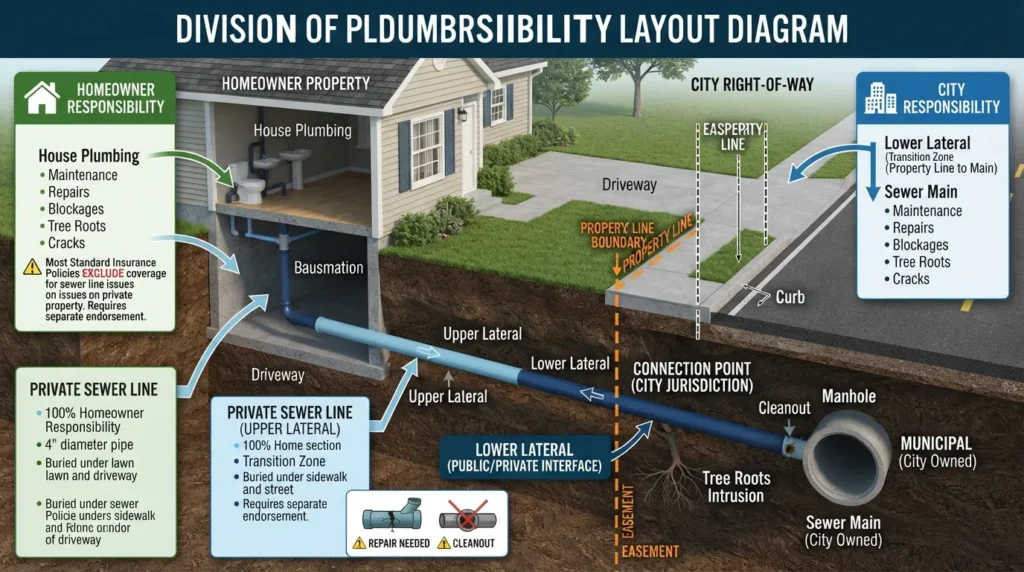
Determining financial and legal accountability for underground plumbing issues depends entirely on where the damage or blockage occurs within the wastewater network. Navigating the boundary between private property lines and public infrastructure prevents unexpected repair expenses.
Homeowner Responsibility vs. Municipal Responsibility
Property owners are typically responsible for the entire sewer lateral—the private underground pipe connecting a home to the municipal sewer main. This private responsibility usually covers both upper and lower lateral sections, even if a portion of the pipe extends underneath a public sidewalk, curb, or street.
Upper Lateral (Private Property): The section running directly from your house structure to your legal property boundary is entirely the owner’s maintenance duty.
Lower Lateral (Right-of-Way): The section extending from the property line to the public street connection is also managed and financed by the homeowner in most municipalities.
Public Sewer Main: Local government agencies and public works departments maintain sole responsibility for the large municipal lines running beneath public roads. For further guidance on jurisdictional definitions, consult resources like the US Environmental Protection Agency guidelines on decentralized and public wastewater systems.
Does Home Insurance Cover Sewer Line Damage?
Standard homeowner insurance policies typically exclude damage, cracks, or blockages occurring within underground sewer lines, classifying them under normal wear and tear. Because standard policies focus on sudden interior water damage, exterior sewer lateral failures are frequently left uncovered unless specific policy endorsements are purchased ahead of time.
Standard Policy Exclusions: Gradual pipe deterioration, root intrusion, and aging corrosion are almost always excluded from base homeowner coverage.
Service Line Endorsements: Many insurance providers offer optional “service line coverage” or sewer line riders that pay to repair or replace exterior underground pipes.
Timing Requirements: Coverage riders cannot be added retroactively after a failure occurs; they must be active on your policy prior to any diagnostic discovery or structural break.
How Often Should You Schedule Water Jet Sewer Cleaning?
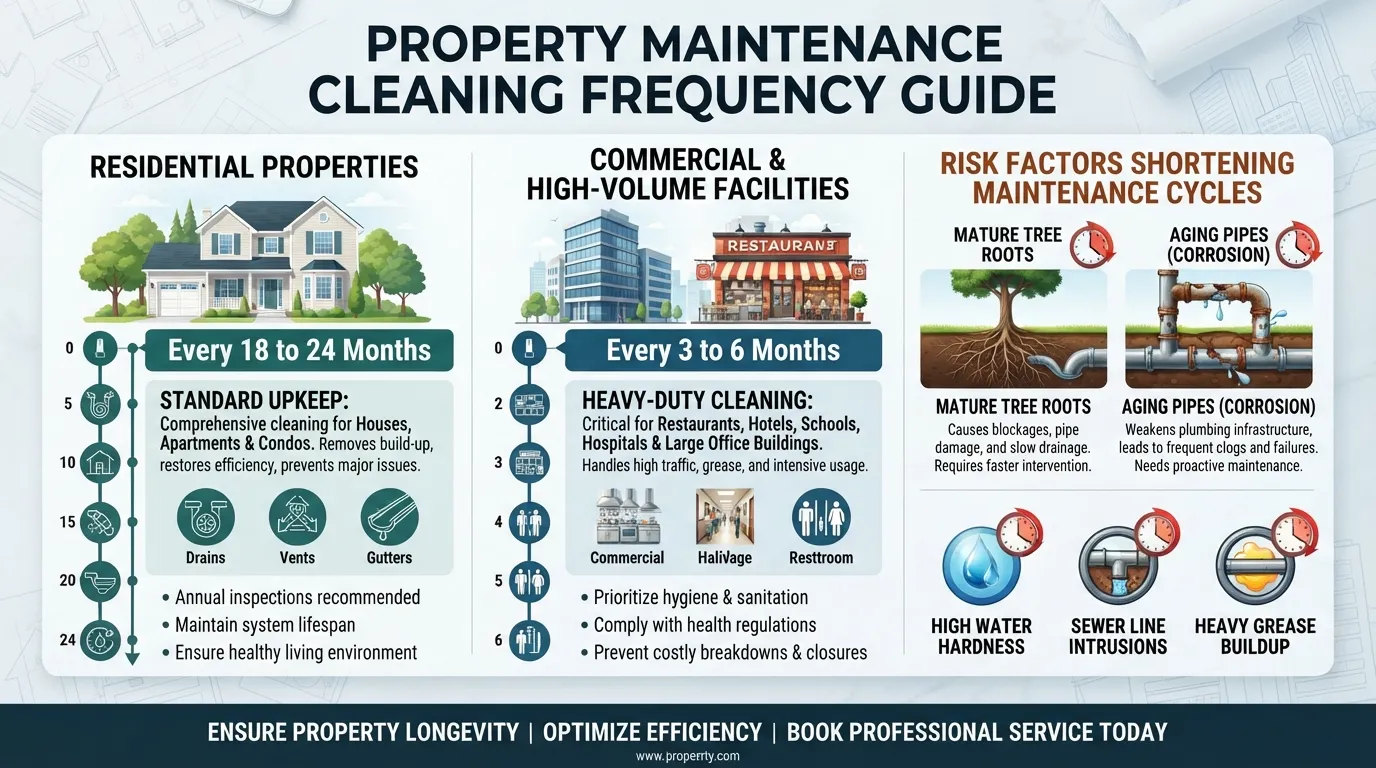
Scheduling routine water jet sewer cleaning depends primarily on your property type, household size, and surrounding environmental factors. Establishing a proactive maintenance schedule prevents sudden backups and keeps your main sewer line free of heavy grease, scale, and root buildup.
Recommended Frequency for Residential Properties
Standard residential properties generally require professional hydro-jetting much less frequently than commercial buildings, provided everyday disposal habits are maintained. For most homeowners, a periodic cleanout schedule ensures long-term system reliability.
Standard Preventive Interval: Every 18 to 24 months is ideal for average households with healthy plumbing and minimal debris generation.
Proactive Interventions: Great for homes experiencing occasional slow drains or those situated on older municipal connections.
Peace of Mind: Routine flushing protects finished basements and ground floors from catastrophic backup damage.
Recommended Frequency for Commercial Properties
Commercial and industrial facilities—especially restaurants, food processing plants, and multi-family complexes—generate high volumes of grease, oil, and organic waste that demand frequent intervention. Adhering to a strict maintenance schedule avoids health code violations and costly business downtime.
High-Volume Facilities: Restaurants and commercial kitchens require professional jetting every 3 to 6 months to prevent severe grease trap blockages.
Multi-Family Housing: Apartment complexes and commercial office buildings benefit from annual or semi-annual maintenance to handle heavy daily usage.
Compliance Assurance: Regular servicing ensures continuous operational flow during peak business hours.
Factors That Shorten the Interval (Mature Trees, Older Pipes)
Certain property characteristics accelerate debris accumulation and structural stress, requiring you to shorten the gap between professional water jetting sessions. Identifying these risk factors helps you tailor your cleaning schedule to your property’s specific demands.
Mature Tree Roots: Properties surrounded by large trees with aggressive root systems often need annual jetting to clear recurring root intrusion before it causes complete blockages.
Aging Infrastructure: Older clay or cast iron pipes collect scale and grease faster due to rough interior surfaces, necessitating more frequent preventative maintenance.
High-Volume Usage: Large families or properties with older, narrower pipe diameters should inspect and clean their sewer lines every 12 months to avoid sudden emergency backups.
Frequently Asked Questions
Is sewer jetting worth it?
Sewer jetting is entirely worth the investment because it thoroughly scours 360 degrees of your pipe walls, permanently removing grease, roots, and scale rather than just punching a temporary hole. This comprehensive cleaning prevents recurring emergency backups, protects your plumbing infrastructure, and extends the lifespan of your sewer lateral.
What is the biggest cause of blocked drains?
The biggest cause of blocked drains is the accumulation of cooking fats, oils, grease, and soap scum that solidify against cold pipe walls. When combined with hair, paper products, and invasive tree roots, this sticky layer narrows the interior pipe diameter and chokes off wastewater flow.
How much does it cost to install a drainage system around a house?
Installing a complete exterior perimeter drainage system or French drain around a house typically ranges from three thousand to six thousand dollars, depending on property grading and linear footage. Complex topography, retaining wall integrations, and heavy excavation can push total project investments higher.
Can hydro jetting damage my pipes?
Hydro jetting can damage pipes if applied to severely cracked, collapsed, or heavily deteriorated lines, as operating pressures range from 1,500 to 5,000 PSI. This is why professional plumbers always perform a preliminary sewer camera inspection to verify pipe material and structural integrity before beginning work.
How long does a water jetting service take?
A standard residential water jetting service typically takes between one and three hours to complete, depending on the severity of the blockage and accessibility. The process includes initial camera diagnostics, high-pressure line scouring, and a final verification flush to confirm complete system restoration.
If you have any questions about scheduling a professional assessment or determining the right maintenance plan for your property, what specific plumbing concerns are you currently experiencing?
Conclusion & Call-to-Action
Navigating recurring clogs, slow drains, and stubborn root intrusion requires more than a temporary fix; it demands a comprehensive, engineered solution. By combining precision camera diagnostics, accurate PSI calibration, and powerful 360-degree scouring, professional water jet sewer cleaning restores your underground lines to pristine, like-new condition.
Proactive Protection: Regular maintenance prevents unexpected sewer backups and protects your home from costly water damage.
Expert Execution: Relying on a licensed plumber ensures your specific pipe material is evaluated and treated safely.
Lasting Results: Permanent removal of grease, scale, and roots guarantees smooth, unobstructed drainage for years to come.
Don’t let a failing sewer line compromise your property’s safety and comfort. Book your water jet sewer cleaning service today to secure professional care, or explore our full range of plumbing services to keep your entire home flowing freely.
Main Services
Related Posts
Need a Plumber in Miami?
Schedule service online or speak directly with the EZ Plumbing team.
Owner-Led Local Service
Know who is behind the business before you request service. The owners, contact line and Miami service pages are published clearly.
- Named business owners
- Direct phone and social channels
- Local Miami service information
Clear Help Before You Book
Review the relevant service page, contact the team directly and use the booking page when you are ready—without relying on vague claims.
- Service-specific information
- Direct questions before scheduling
- Clear online booking route