Snaking a Drain: When to Use It and How to Do It
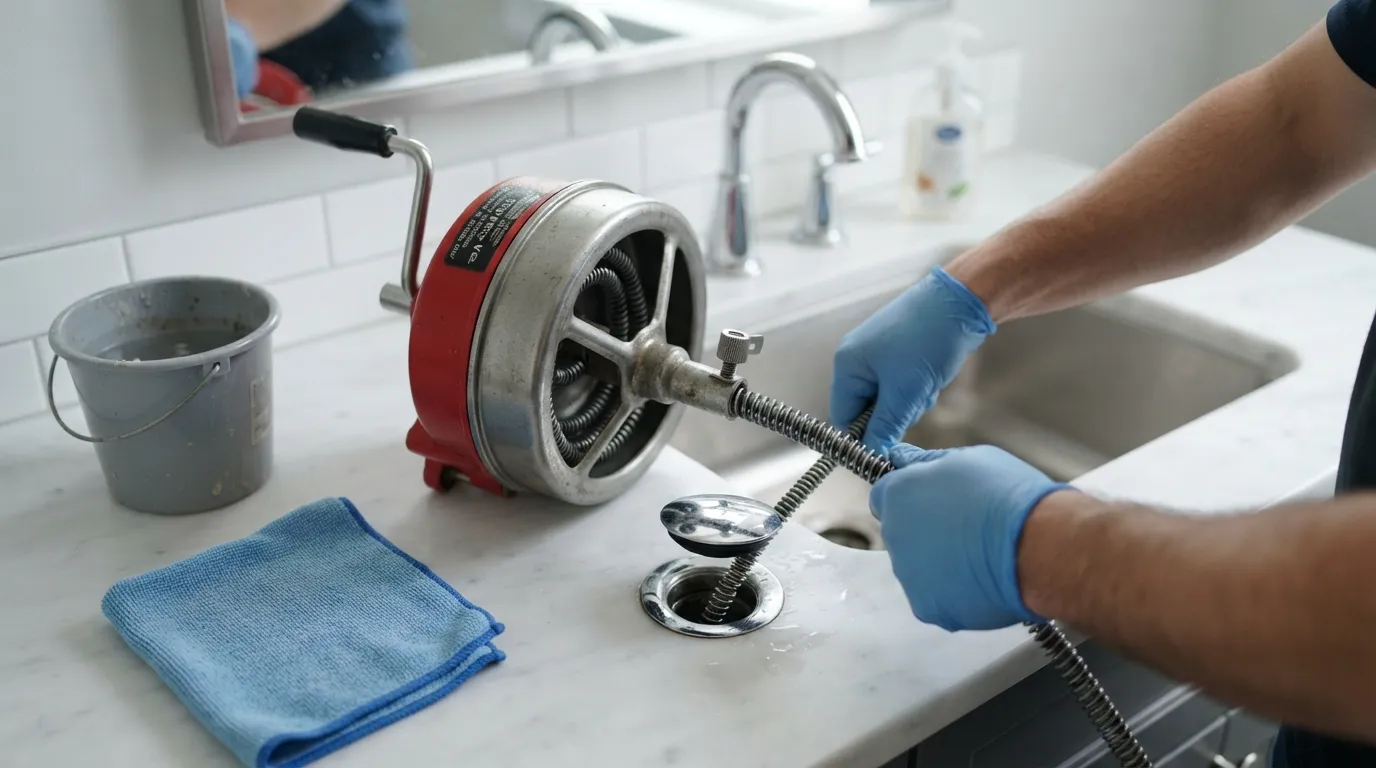
Understanding the Drain Snake: Definition and Primary Use Case
A drain snake—frequently referred to as a plumbing auger—is a flexible, handheld or motorized cable tool engineered to break up, snag, and clear tough blockages deep within residential and commercial plumbing pipes.
Primary Definition: A long, coiled steel wire featuring a corkscrew or brush tip designed to navigate pipe bends.
Core Use Case: Clearing persistent localized clogs, stubborn slow drains, and standing water caused by hair, soap scum, or foreign debris that standard plunging cannot reach.
Why Plumbers Rely on the Auger for Stubborn Blockages
Standard liquid chemical cleaners often corrode older pipes while failing to remove dense obstructions. The mechanical design of a drain snake physically engages the blockage, ensuring complete removal without damaging your plumbing infrastructure.
Navigating Traps: The flexible cable easily maneuvers through curved P-traps beneath sinks and shower drains.
Retrieving Debris: Unlike plungers that only push clogs further down, augers hook and pull obstructions back up and out of the pipe.
Safe for Pipes: Manual hand-crank models give you complete tactile control, minimizing the risk of puncturing PVC or metal pipes.
What Is a Drain Snake & How Does It Work
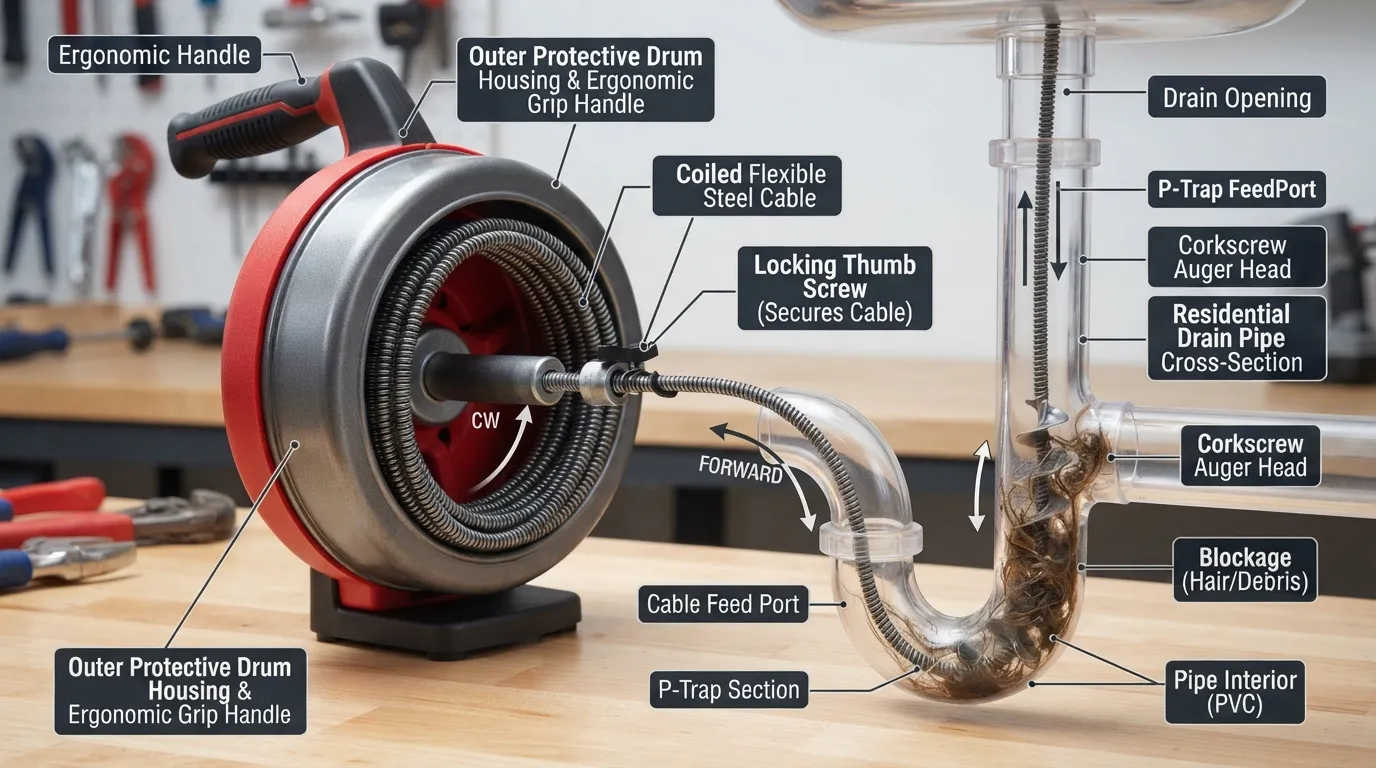
A drain snake, also commonly known as a plumbing snake or hand-crank drum auger, is an essential manual tool designed to clear stubborn blockages located past the immediate sink or shower trap. It features a flexible steel cable housed inside a protective plastic or metal drum, which extends safely into your pipes to physically dislodge or retrieve hair, grease, and debris.
The Parts of a Drain Snake
Understanding the individual components of a plumbing snake ensures safer and more efficient clog removal. Each part plays a specific mechanical role in navigating pipe turns and breaking up tough obstructions.
Cable/Coil: A flexible yet rigid wound steel spring wire that pushes through tight pipe bends without kinking or breaking.
Thumb Screw: A mechanical locking mechanism that tightens or loosens to secure the cable at your desired extension length.
Auger Head: The business end of the tool, shaped like a corkscrew, bulb, or hook to grab onto or puncture obstructions.
Hand-Crank Drum: The outer housing container that stores the coiled cable neatly and provides a handle to rotate the wire inside the pipe.
How the Cable Breaks Through a Clog
The mechanical operation of a drain snake relies on a combination of linear force and rotational torque to dismantle blockages. As you feed the cable down the pipe, it interacts directly with the material causing the backup.
Advancing the Cable: You feed the flexible coil manually into the drain until you feel resistance from the localized clog.
Applying Torque: Turning the hand-crank drum rotates the entire length of the cable, causing the auger head to drill into dense masses.
Snagging or Puncturing: The spinning head either bores a hole through solid buildup to restore water flow or hooks onto fibrous material like hair so you can pull it out.
When to Use a Drain Snake
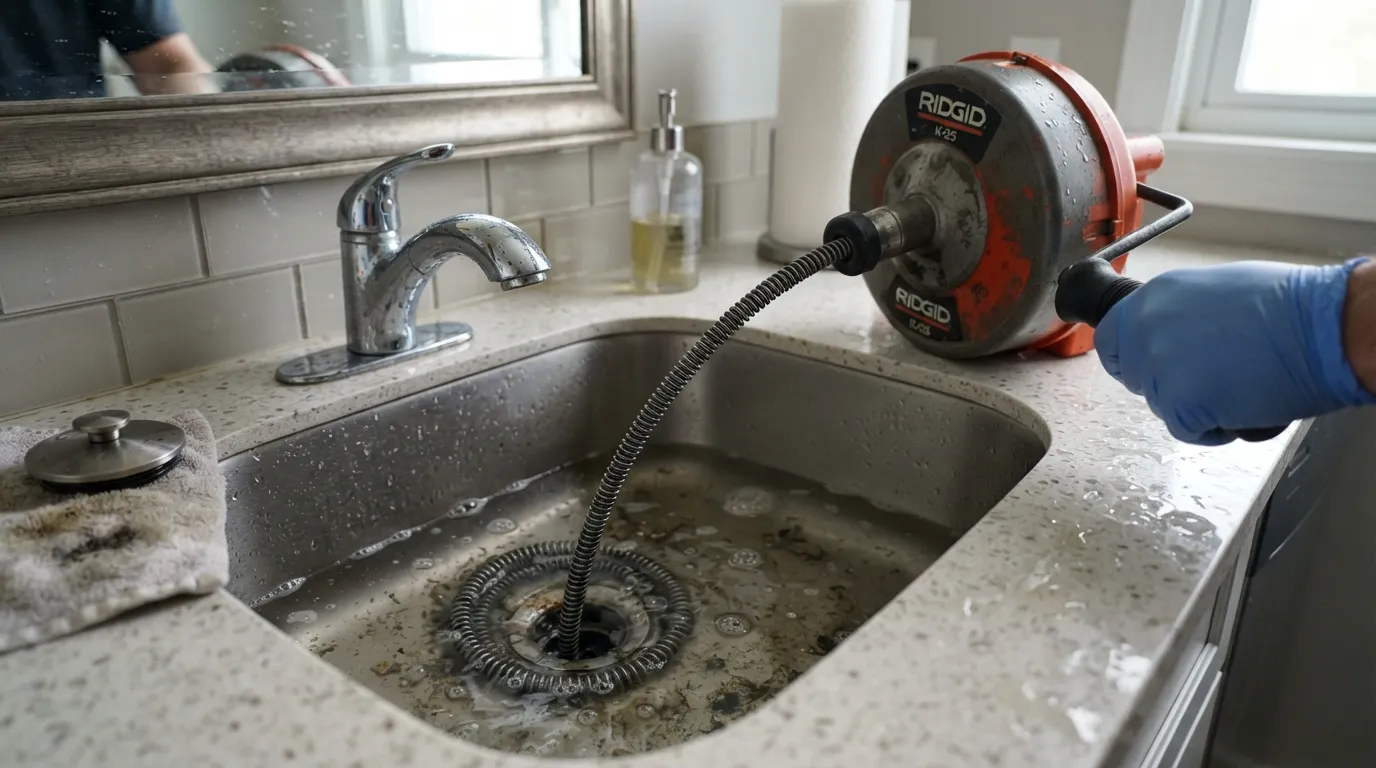
A drain snake is most effective when dealing with stubborn, isolated blockages that standard plungers cannot displace. Knowing the right scenario ensures you apply the correct tool without risking pipe damage.
Targeted Intervention: Use a plumbing snake when a clog is localized to a single fixture rather than affecting your entire home plumbing system.
Mechanical Efficacy: It provides an immediate physical solution when chemical treatments and plungers have already failed.
Slow or Standing Water in One Fixture
A slow drain or pools of standing water confined to a single sink, tub, or shower stall usually indicate a buildup located just past the trap.
Single-Fixture Isolation: If only one drain is backing up while nearby fixtures empty normally, the obstruction is close and ideal for a snake.
Clearing the P-Trap: The flexible coil easily navigates the curved pipe beneath the fixture to break up the water-blocking restriction.
Localized Clogs (Hair, Soap Scum, Food Debris)
Bathroom and kitchen drains frequently accumulate specific organic materials that form dense, tangled masses over time.
Bathroom Sinks and Showers: Hair and soap scum bind together into tough clogs that a manual hand-crank drum auger can easily snag and pull back out.
Kitchen Sinks: Accumulated food debris and grease solidify inside the pipe walls, requiring a mechanical auger head to bore through and clear the path.
When You Want to Avoid Harsh Chemicals
Liquid chemical drain cleaners often rely on corrosive formulas that can degrade older metal pipes and harm the environment.
Safe Chemical Alternative: A drain snake acts as a purely mechanical chemical drain cleaner alternative, protecting your plumbing infrastructure.
Preventing Pipe Damage: Manual snaking removes blockages safely without the thermal or chemical degradation associated with caustic store-bought liquids. If your snaking attempts do not resolve the issue, it may be time to consult a professional drain cleaning service to inspect deeper main line issues.
When NOT to Use a Drain Snake — Call a Professional Instead
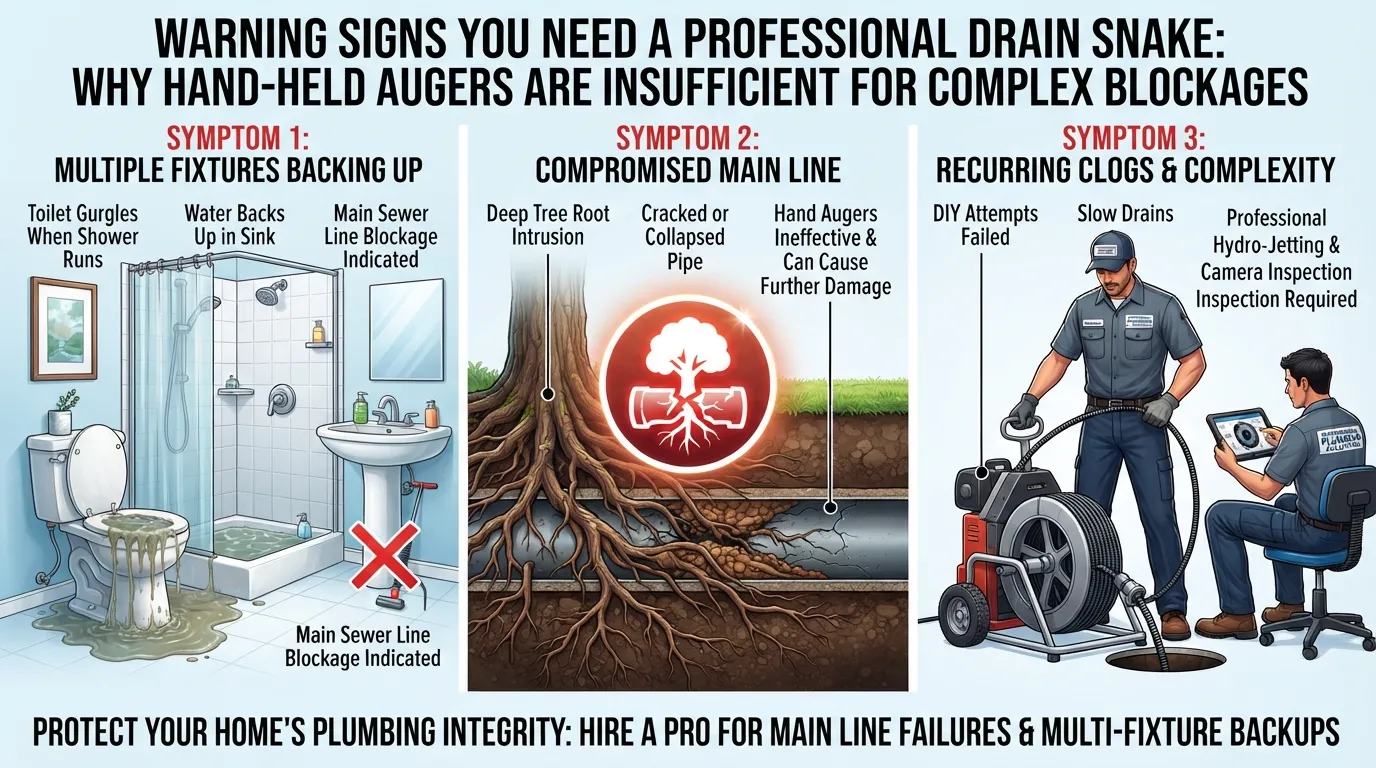
Knowing your limits with DIY plumbing prevents minor inconveniences from turning into costly property damage. If a blockage extends beyond a single fixture’s trap, using a hand-held auger can worsen the issue or fail to fix the root cause.
Recognizing Red Flags: Certain household plumbing symptoms indicate deep-system failures that require heavy-duty industrial equipment.
Protecting Your System: Knowing when to stop snaking safeguards your pipes from structural cracks and saves you from unnecessary frustration.
Multiple Drains Backed Up at Once
When several fixtures begin backing up simultaneously across different rooms, the blockage is no longer localized.
System-Wide Impact: Water backing up in both the bathtub and the toilet means the obstruction sits deep in the shared drainage branches.
Professional Intervention: A standard hand-crank drum auger lacks the reach and torque to clear multi-fixture branches, requiring an expert touch.
Gurgling Sounds From Other Fixtures
Unusual bubbling or gurgling noises whenever you run water or flush a toilet point to trapped air in your drainage system.
Trapped Air Pressure: Blocked vents or deep pipe restrictions force air bubbles back up through water traps in unrelated rooms.
Immediate Action: If you notice gurgling paired with sluggish drainage, contact an emergency plumber to inspect the vent stack before sewage backs up into your living space.
Suspected Main Sewer Line Issue
The main sewer line carries all wastewater away from your home to the municipal sewer or septic tank, meaning any failure here affects the entire house.
Major Warning Signs: Slow floor drains in the basement or water pooling around basement cleanout plugs indicate a compromised main line.
Specialized Gear Needed: Tree root intrusion or collapsed exterior pipes require professional video camera inspections and hydro-jetting rather than a basic drain snake.
Recurring Clogs in the Same Spot
If a stubborn clog returns shortly after you thought you cleared it, the underlying issue has not been resolved.
Structural Pipe Damage: Sagging pipe sections, offset joints, or heavy scale buildup will continually trap debris in the exact same location.
Long-Term Solutions: A professional plumber can pinpoint structural defects using diagnostic scopes to provide a permanent pipe repair rather than temporary snaking.
Manual vs. Power Auger — Which One Do You Need?
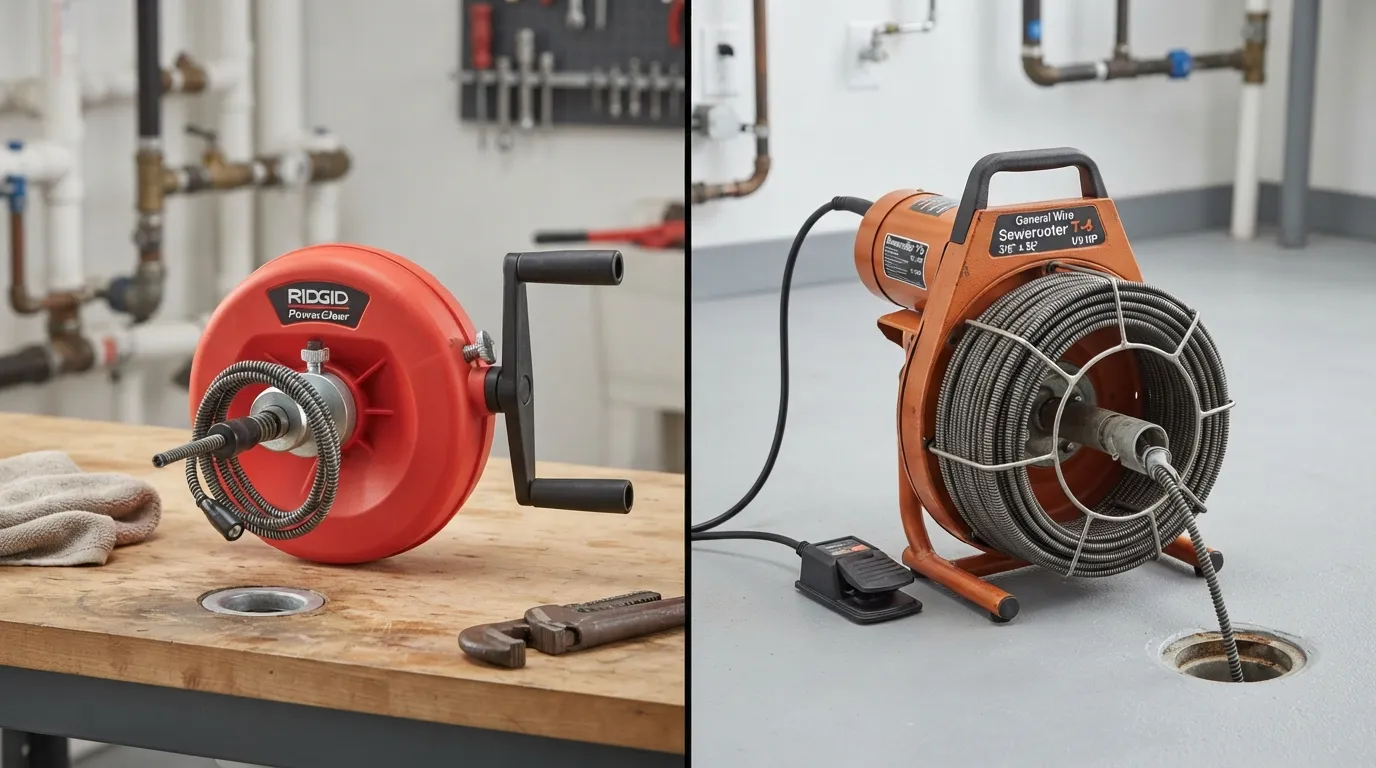
Choosing the right plumbing snake depends heavily on the severity of the obstruction and where it is located within your drainage system. Matching your tool to the specific job ensures efficient clog removal without risking unnecessary strain on your pipes.
Assessing Complexity: Simple hair clogs in sinks require only a basic hand tool, whereas dense main-line obstructions demand motorized power.
Tool Specialization: Selecting the correct drum or closet auger prevents fixture scratching and guarantees adequate cable reach.
Hand-Crank Drum Auger — Best For Small Household Clogs
A manual drum auger is an affordable, straightforward tool designed primarily for DIY plumbing maintenance around bathroom and kitchen sinks.
Complete Manual Control: You feed the flexible steel cable and rotate the handle by hand, giving you precise tactile feedback as you encounter resistance.
Ideal Applications: Perfectly suited for shallow clogs in bathtubs, shower stalls, and bathroom sinks caused by everyday soap scum and hair buildup.
Storage and Safety: Features a compact protective housing that keeps the greasy coiled wire contained, preventing mess during home storage.
Motorized/Power Auger — Best For Tough or Deep Clogs
A motorized or power auger uses an electric motor or drill attachment to drive the cable through stubborn blockages with high rotational speed.
Enhanced Torque: The motorized snake blasts through dense grease, tree roots, or heavy scale that would stall a manual hand-crank unit.
Deeper Reach: These units often feature longer, heavy-duty cables capable of clearing lines far past the immediate trap.
Safety Precautions: Requires careful handling and safety glasses, as the high-speed rotation can kink the wire or splash wastewater if mishandled.
Closet Auger vs Standard Auger (Preview for Toilet Section)
Standard drain snakes are built for open-ended pipes like sinks and tubs, whereas specialized closet augers are engineered exclusively for porcelain toilets.
Protecting Porcelain: A closet auger features a protective vinyl or rubber sleeve guard that prevents the metal shaft from scratching or cracking fragile toilet bowls.
Built-In Bend: The rigid curved shaft is pre-shaped to navigate the built-in trapway of a toilet effortlessly, eliminating the need to unbolt the fixture.
Tools & Materials Checklist
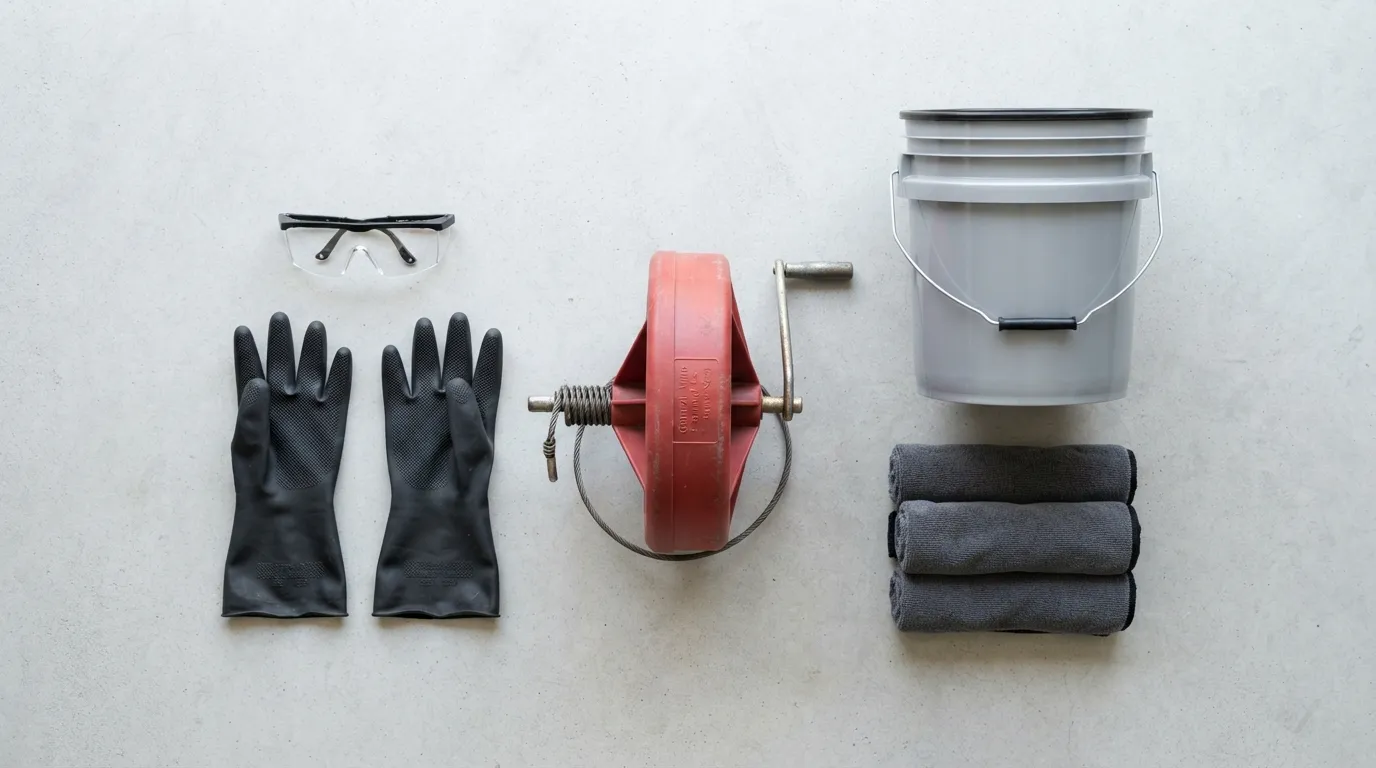
Gathering your supplies before starting a DIY plumbing project prevents messy delays and protects your workspace from wastewater spills. Proper preparation ensures you can handle the cleanup efficiently while keeping your tools within arm’s reach.
Preparation is Key: Having the right equipment ready saves time and minimizes exposure to stagnant pipe bacteria.
Tool Reference: For additional guidance on selecting equipment, you can review the official Home Depot Guide on How to Use a Drain Snake for industry-standard retail recommendations.
What You’ll Need Before Starting
Setting up an organized workspace ensures a smooth snaking process from start to finish. Make sure you have these standard household items ready:
Drain Snake Tool: Choose a manual hand-crank drum auger or a specialized closet auger matching your specific plumbing fixture.
Bucket: Place a large bucket directly beneath the P-trap to catch residual water and sludge as you dismantle pipe connections.
Old Towels or Rags: Lay absorbent towels around the base of the work area to soak up any accidental drips or splashes.
Safety Gear (Gloves, Eye Protection)
Working with residential drainage systems exposes you to biohazards, harsh pipe residue, and fast-moving mechanical cables. Prioritizing personal protection is non-negotiable.
Heavy-Duty Rubber Gloves: Protect your hands from harmful bacteria, mold, and caustic chemical residues lingering inside the stagnant trap water.
Safety Glasses: Shield your eyes from splashing wastewater and tiny debris particles that can flick outward when you crank or retract the cable.
How to Snake a Sink Drain (Step-by-Step)
Clearing a stubborn sink drain clog requires a systematic approach to protect your fixtures and ensure the obstruction is completely removed. Following a structured step-by-step process prevents pipe damage and eliminates messy wastewater backups.
Preparation is Vital: Clear out the vanity cabinet under the sink and place your bucket and towels ready before breaking any pipe seals.
Targeted Execution: Working through the open drain connection guarantees your cable goes straight into the branch line rather than getting caught in the stopper mechanism.
Step 1 — Remove the P-Trap
Before feeding your hand-crank drum auger into the pipe wall, you must disconnect the curved P-trap beneath the sink.
Catching Residual Water: Position your bucket directly under the P-trap to capture stagnant water and trapped debris [07:35].
Loosening Slip Nuts: Manually twist or use pliers to loosen the plastic or metal slip nuts holding the trap in place, then slide the trap free from the wall [07:57].
Step 2 — Insert and Feed the Cable
Once you have an open pipe end pointing toward the wall, you can safely introduce the flexible auger cable into the drainage system.
Extending the Cable: Pull the thumb screw or locking lever back to release the wire, then feed 6 to 8 inches of the steel coil into the open pipe [00:34], [08:19].
Locking the Mechanism: Secure the thumb screw so the cable stays firmly positioned at your desired working length [00:48].
Step 3 — Rotate and Work Through the Clog
Navigating the cable through pipe bends requires a controlled combination of forward pressure and rotational torque.
Clockwise Rotation: Turn the hand-crank drum clockwise while gently pushing forward to help the auger head bore through or snag the sink drain clog [00:58].
Advancing Incrementally: Release the lock, pull back another 6 to 8 inches of wire, lock it again, and repeat the turning process whenever you encounter resistance [01:06].
Step 4 — Retrieve, Reassemble, and Test
After the cable moves smoothly through the pipe without resistance, you can retract the tool and restore your plumbing setup.
Cleaning the Auger Head: Slowly pull the cable back out of the pipe, using paper towels to wipe away captured hair and sludge [09:12].
Reattaching Components: Reconnect the P-trap, hand-tighten the slip nuts securely [09:41], and run warm water to test the drainage flow.
How to Snake a Bathtub or Shower Drain (Step-by-Step)
Clearing a bathtub or shower drain requires accessing the pipe through the correct opening to prevent the flexible cable from getting stuck in internal plumbing fixtures. Going through the overflow plate rather than the drain basket provides a direct, unhindered path straight to the main clog.
Bypassing Obstacles: Entering through the tub overflow plate avoids the internal linkage assembly of trip-lever stoppers that would otherwise block your tool.
Targeting Hair Buildup: Showers and tubs accumulate dense mats of hair and soap residue that respond best to the hooking action of a manual drum auger.
Step 1 — Remove the Overflow Plate for a Straighter Path
Accessing the drainage system from the metal or plastic cover plate on the front wall of your tub creates an optimal entry angle for your snake.
Unscrewing the Plate: Use a screwdriver to remove the screws holding the overflow plate in place, then gently pull the plate and its attached linkage mechanism out of the wall.
Preparing the Opening: Shine a flashlight into the open pipe if needed to ensure a clear pathway down into the P-trap below.
Step 2 — Feed the Cable and Break Through the Clog
Once you have clear access through the overflow opening, you can feed and rotate your plumbing snake to destroy the obstruction.
Extending the Wire: Release the locking thumb screw on your drum auger and feed 6 to 8 inches of the coiled steel cable down into the overflow pipe.
Cranking Through Resistance: Lock the cable in place, push gently while turning the drum clockwise to snag tangled hair buildup, and repeat the process until the wire moves freely.
Step 3 — Flush With Hot Water to Confirm Clear Flow
After successfully retrieving or breaking up the obstruction, clean out the pipe remnants to restore normal water drainage speed.
Retracting and Cleaning: Slowly wind the cable back into its protective housing, wiping away debris with paper towels as it emerges.
Testing the Drain: Reinstall the overflow plate securely, then run hot tap water down the fixture for a few minutes to flush away loosened sludge and confirm a fast, clear flow.
How to Snake a Toilet (Closet Auger Guide)
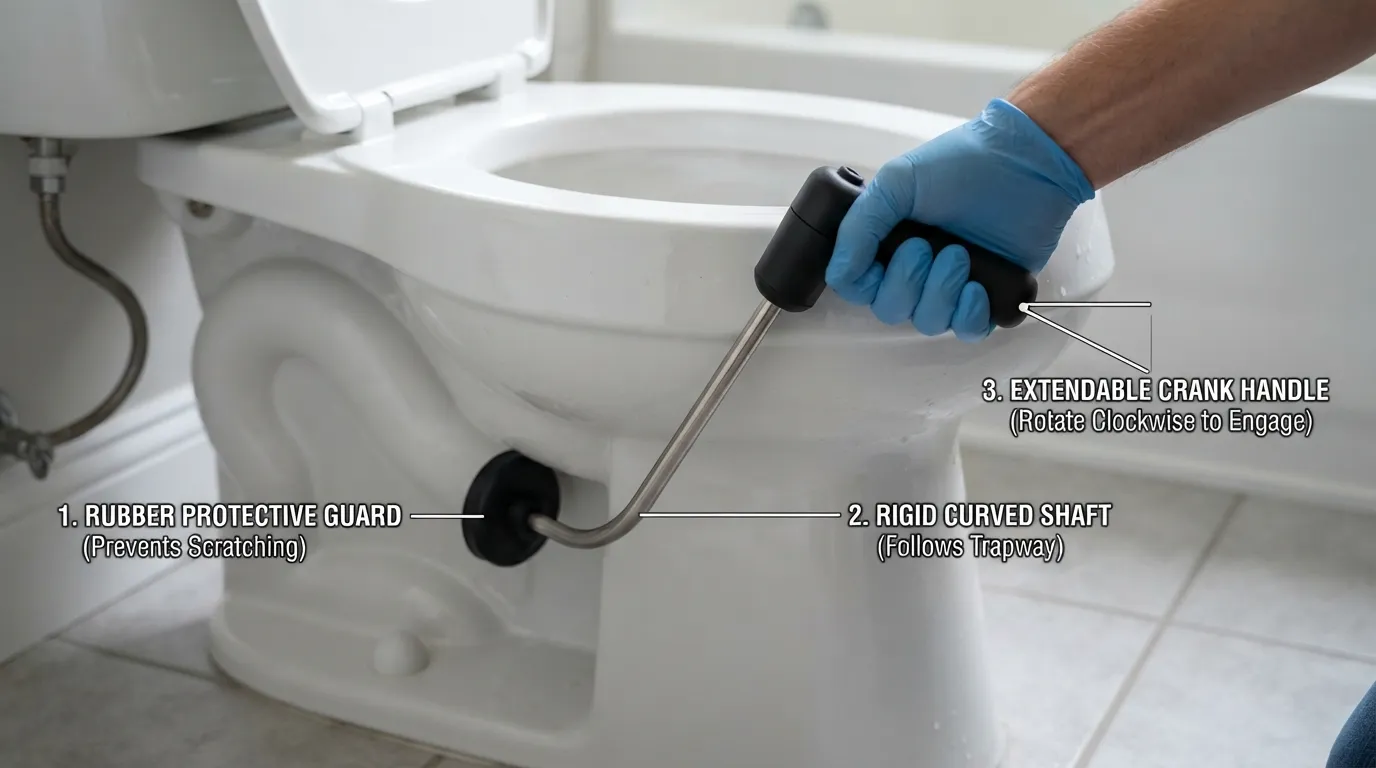
Clearing a stubborn toilet backup requires specialized equipment designed specifically for fragile porcelain fixtures. Using the correct tool prevents permanent bowl damage while safely cutting through dense obstructions trapped inside the built-in trapway.
Specialized Tooling: Never use a standard drum auger or wire coat hanger on a toilet, as exposed steel scratching porcelain ruins the fixture instantly.
Efficient Clearing: A dedicated closet auger features a protective rubber or vinyl guard that cushions the bowl while driving the cable directly into the clog.
Why You Need a Closet Auger, Not a Standard Snake
Understanding the functional difference between a closet auger and a standard drain snake protects your bathroom investment from expensive accidents.
Porcelain Protection: Standard snakes lack protective sleeves, causing the rigid metal cable to gouge or crack the interior glaze of your toilet bowl.
Pre-Shaped Trapway Design: A closet auger features a rigid curved metal tube that matches the exact contour of a toilet trapway, guiding the wire effortlessly to the obstruction.
Step-by-Step Toilet Snaking Process
Executing a clean and successful toilet unblocking follows a straightforward mechanical sequence.
Positioning the Guard: Place the rubber-coated protective bowl guard securely against the bottom curve of the toilet bowl to anchor the tool.
Extending the Crank: Pull the handle up to retract the auger head inside the protective tube, then guide the curved shaft into the drain hole.
Cranking and Engaging: Turn the hand crank clockwise to drive the spring head into the blockage, then pull back or push through to break up the trapped mass before flushing.
Signs the Clog Is Beyond a Toilet Auger
When a closet auger fails to restore normal flushing, the obstruction resides further down in the main branch line rather than the toilet trap.
Persistent Backups: If water continues to pool or refuses to drain despite multiple successful auger passes, the issue is deeper in your plumbing system.
Professional Help: Stop DIY attempts immediately if wastewater begins bubbling up in your shower or floor drains, and contact a specialist for professional toilet repair services to diagnose main-line blockages.
Wet or Dry? Best Practices for Snaking a Drain
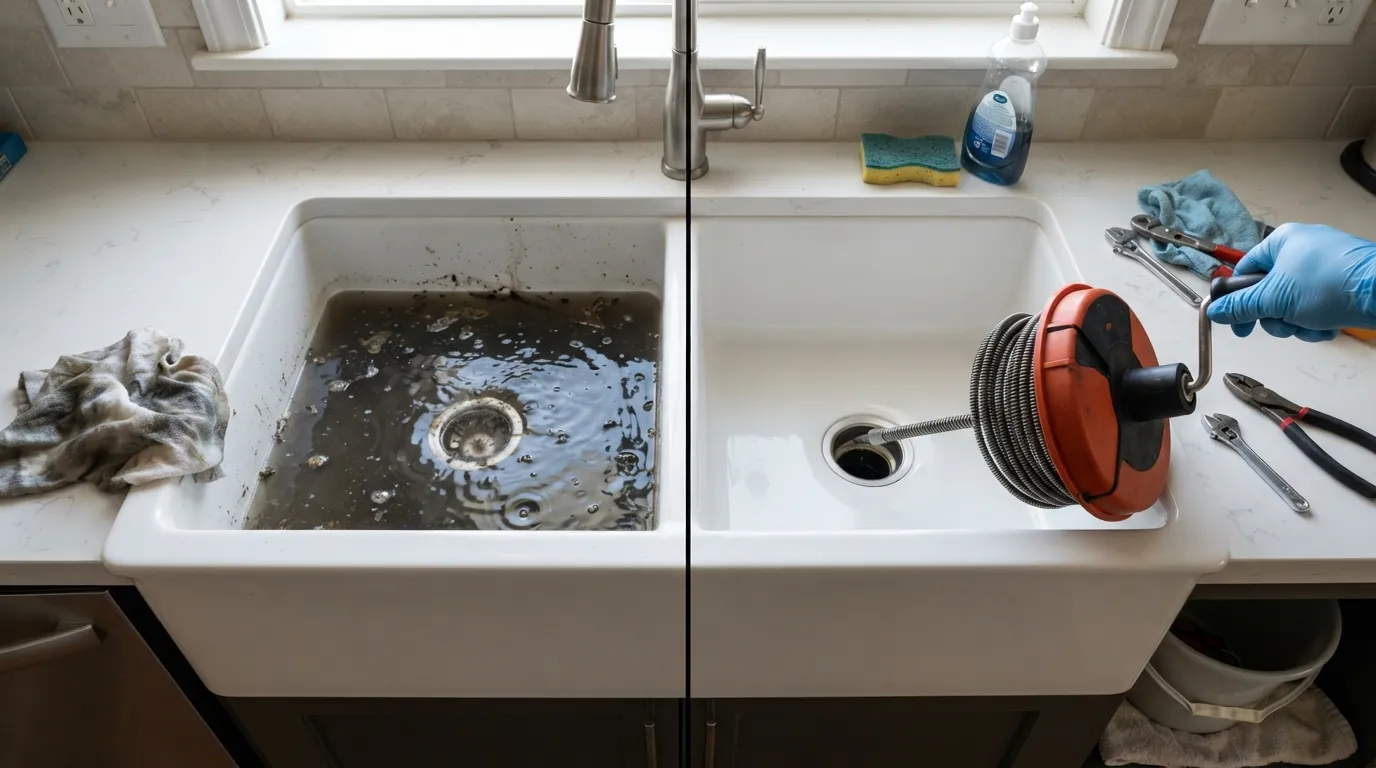
Deciding whether to clear a backup while water fills your basin depends entirely on the nature of the blockage and your tool type. Understanding the mechanics of wet versus dry snaking ensures better cable control and minimizes cleanup time.
Assessing Moisture Levels: While manual drum augers can operate through standing water, removing excess liquid often improves visibility and tool traction.
Fixture Preparation: Proper drain preparation prevents unnecessary splashing and allows the auger head to engage obstructions directly without slipping.
Why Standing Water Affects Cable Control
Leaving a sink or tub completely full of standing water while you insert a plumbing snake presents distinct operational challenges.
Reduced Visibility: Submerged drain openings make it difficult to guide the auger head smoothly into the pipe aperture without scratching surrounding fixtures.
Increased Mess: As you rotate and retract the cable, turbulent standing water easily splashes onto your vanity, counters, and floors.
When Draining the Fixture First Helps
Bailing out excessive standing water before you begin the snaking process offers several distinct advantages for DIY plumbers.
Better Tool Traction: Removing excess liquid gives you a cleaner workspace, allowing you to feed the cable and operate the hand-crank drum with precision.
Accurate Diagnosis: A partially drained basin lets you observe whether water levels drop instantly once the clog breaks, confirming a successful clearing.
Snaking the Main Sewer Line — When DIY Isn't Enough
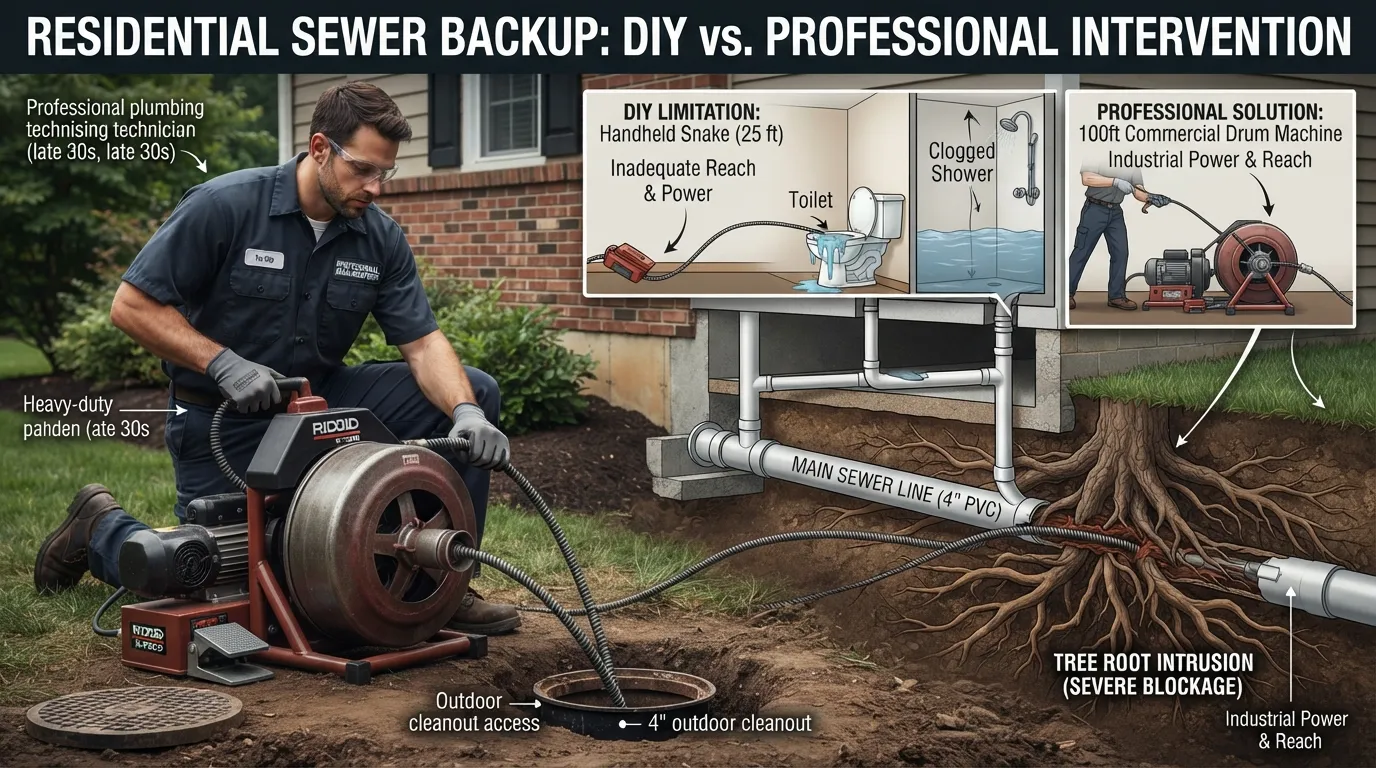
While handheld drum augers excel at clearing localized fixture clogs, major obstructions in your primary drainage system demand industrial-grade solutions. Recognizing when an issue transcends individual sinks and toilets protects your home from severe sewage backups and property destruction.
Understanding Scope: Main sewer line failures impact your entire household infrastructure simultaneously rather than affecting just one isolated bathroom or kitchen.
Knowing Your Limits: Attempting to clear a primary sewer line with a standard consumer tool is ineffective and risks damaging your property’s underground pipes.
Signs Your Clog Is in the Main Line, Not a Single Fixture
When your home plumbing system exhibits widespread operational failures, the blockage is firmly lodged in the main sewer line.
Multiple Fixture Failures: If flushing your toilet causes water to bubble up in your shower stall or kitchen sink, a shared pipe restriction is forcing wastewater backward.
Basement Floor Drains: Water pooling around lowest-level floor drains during heavy appliance use or rainstorms is a classic warning sign of a compromised sewer line.
Why 100-ft Sewer Snakes Require Professional Equipment
Clearing a primary sewer line requires heavy-duty machinery capable of reaching deep underground exits and cutting through aggressive obstructions.
Extended Reach and Torque: Professional plumbers utilize motorized 100-foot sewer snakes featuring robust steel cables and specialized cutting blades to slice through invasive tree roots.
Advanced Diagnostics: Experts pair heavy-duty augers with alternative techniques like hydro-jetting or video camera inspections to completely scour pipe walls. For reliable diagnostics and heavy-duty repairs, always trust professional sewer line services rather than risking incomplete DIY clearances.
Common Mistakes to Avoid When Using a Drain Snake
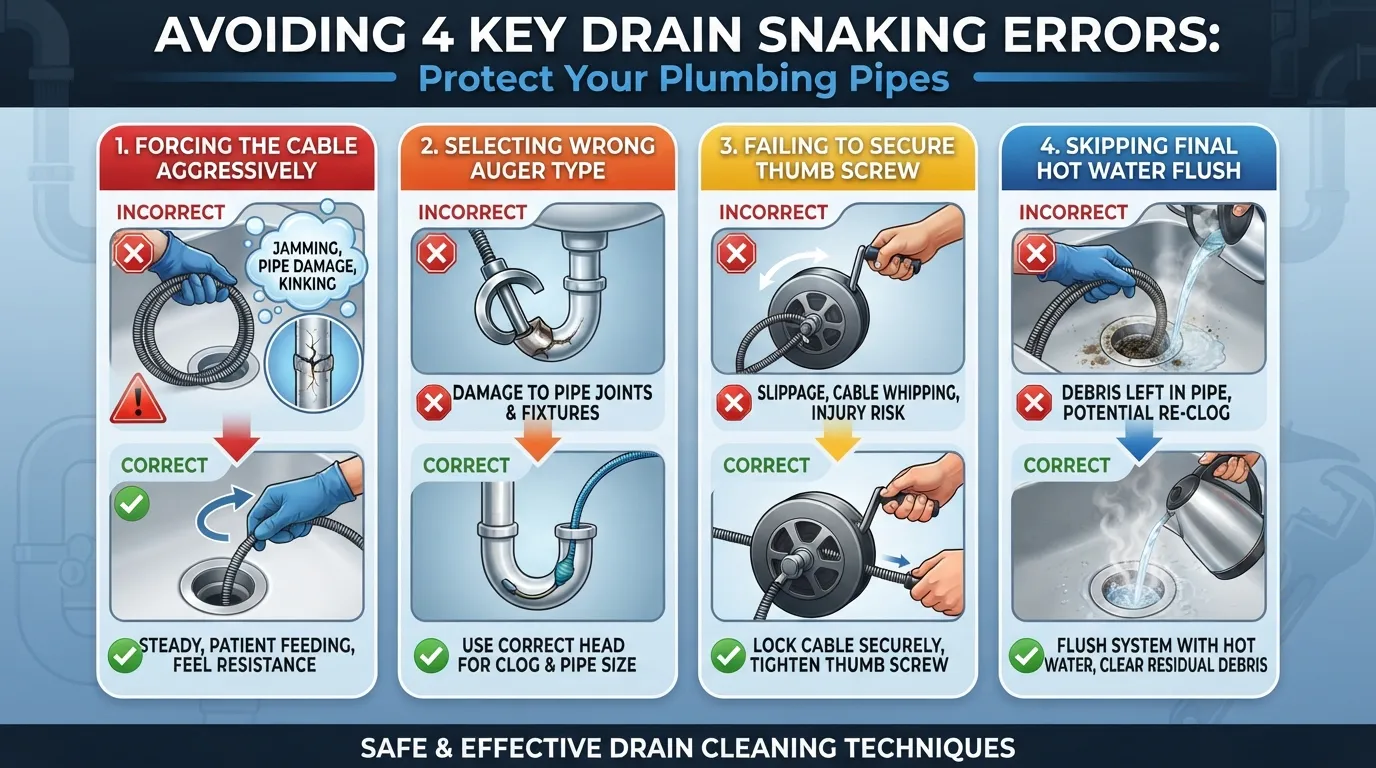
Operating a plumbing auger incorrectly can turn a minor slow drain into a costly plumbing disaster. Avoiding common user errors ensures your DIY project remains safe, efficient, and damage-free.
Prioritizing Technique: Patience and controlled rotation clear blockages far more effectively than aggressive brute force.
Protecting Infrastructure: Using the right tool and proper steps prevents pipe punctures and fixture scratches.
Forcing the Cable Instead of Working It Gently
Pushing a flexible steel cable too hard when it meets resistance usually results in cable binding or kinking inside the pipe.
Avoiding Kinks: Jamming the wire forward causes it to loop back on itself inside the drain, rendering the tool useless.
Controlled Pushing: Feed the snake slowly, and when you feel resistance, alternate gently between pulling back and rotating to break up the mass.
Using the Wrong Auger for the Fixture
Matching the correct tool to your specific plumbing fixture prevents severe accidental damage to your home.
Toilet Protection: Using a standard metal drum auger instead of a vinyl-sleeved closet auger will permanently scratch or crack fragile porcelain bowls.
Sizing Matters: Ensure your cable diameter and head shape fit comfortably through the pipe trap without getting wedged against tight joints.
Not Locking the Cable Before Turning
Failing to tighten the thumb screw or locking lever before cranking the handle makes it impossible to apply effective rotational torque.
Slipping Wires: An unlocked cable simply slides back into the drum instead of turning the auger head against the blockage.
Securing Length: Always lock your desired working length firmly into place before applying any twisting motion.
Skipping the Hot Water Flush at the End
Pulling out a major clump of hair or grease does not automatically clear all residual sludge clinging to the pipe walls.
Clearing Residue: Neglecting a final hot water flush leaves behind loose debris that can rapidly reform into a brand new clog.
Verifying Flow: Always run warm or hot tap water for several minutes post-snaking to wash down lingering particles and confirm normal drainage speed.
Still Clogged After Snaking? Troubleshooting Guide
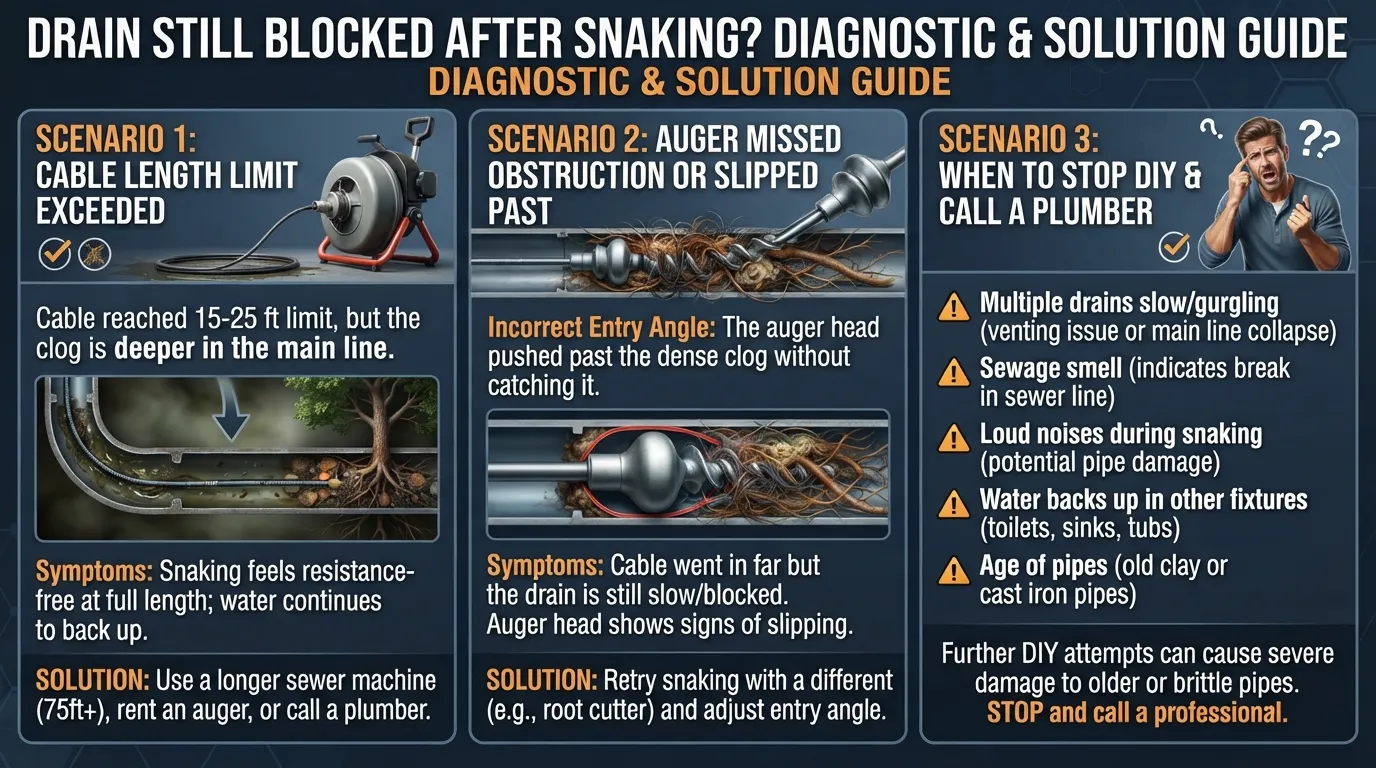
Experiencing a stubborn backup even after putting in the effort to snake your drain can be deeply frustrating. Understanding why your DIY attempt failed helps you decide whether a different approach will work or if it is time to hand the job over to an expert.
Diagnosing the Barrier: A failed snaking attempt usually points to cable length limitations, incorrect entry angles, or an obstruction located deep within the main plumbing branches.
Avoiding Over-Exertion: Continuing to force a cable into an unyielding pipe risks bending your equipment or cracking internal joints.
The Clog May Be Farther Down the Line Than Your Cable Reached
Standard consumer drain snakes and handheld drum augers are built with limited cable lengths, typically ranging from 15 to 25 feet.
Reaching Limitations: If your obstruction sits 30 or 40 feet deep in the drainage stack, your short cable simply stops short of the actual blockage.
Deep Obstructions: Grease accumulation and pipe scaling far past the P-trap require commercial-grade, motorized 100-foot snakes to clear effectively.
You May Have Missed the Clog Entirely (Wrong Angle)
The path water and debris take through plumbing connections is complex, and a flexible snake can easily bypass certain blockages.
Slipping Past Debris: A loose cable can punch a small, temporary hole through the center of a dense mass like toilet paper or sludge without actually pulling or breaking it out.
Vent Stacks and Tees: If you fed the snake through the wrong fixture opening or missed a tight pipe junction, the auger head might be spinning in open air rather than engaging the clog.
When It’s Time to Call a Plumber Instead of Re-Trying
Repeatedly running an auger down a persistently clogged drain without success means you have hit the ceiling of effective DIY home maintenance.
Risking Pipe Integrity: Continuous friction from a mismanaged metal snake can weaken older PVC or cast-iron pipe walls, leading to leaks or structural fractures.
Expert Solutions: When troubleshooting steps fail, stop risking water damage and book a plumber to deploy high-resolution camera diagnostics and heavy-duty hydro-jetting.
Does a Drain Snake Damage Pipes?
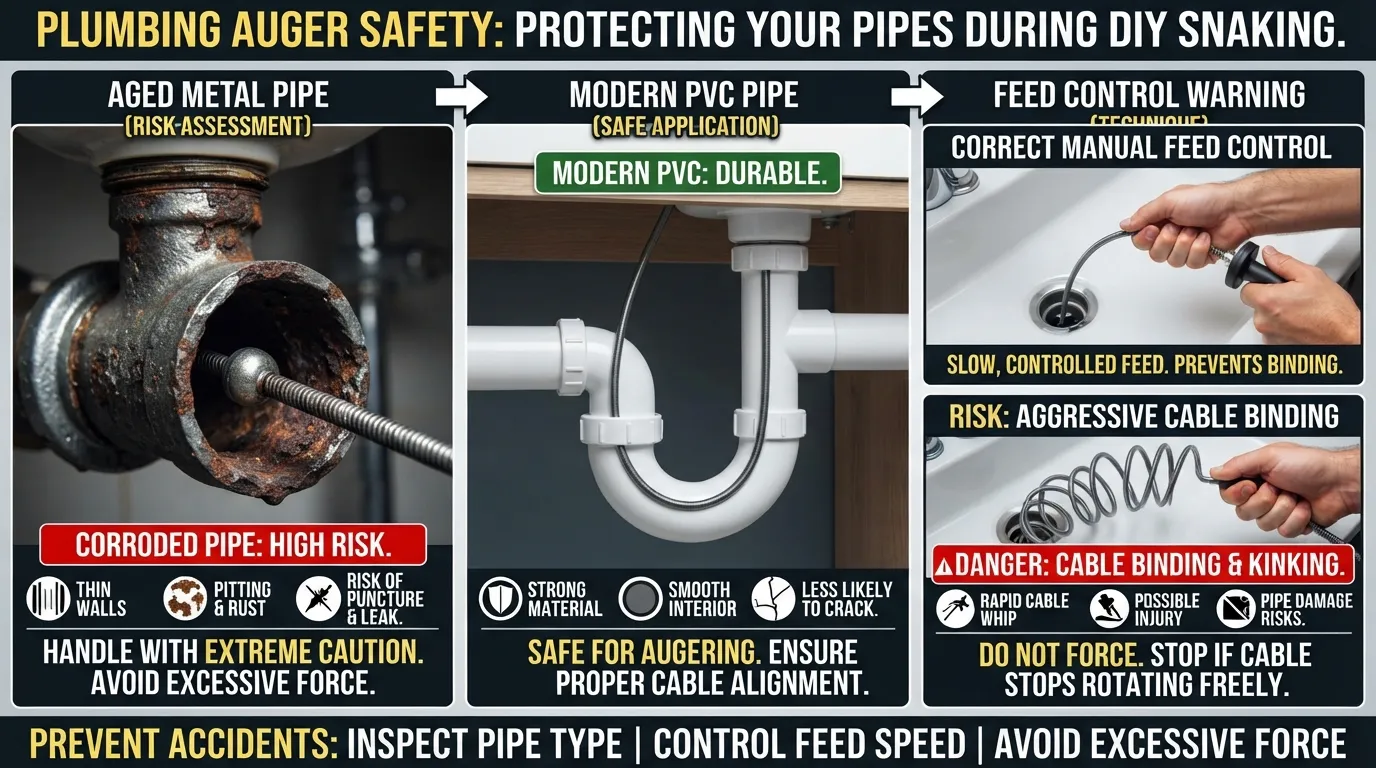
A common concern among DIY plumbers is whether mechanical augers can scratch, puncture, or fracture household drainage pipes. Under normal operating conditions with proper technique, a drain snake is safe for standard plumbing, but certain pipe materials and existing structural damage require extra caution.
Material Vulnerability: Older or degraded pipe systems are significantly more susceptible to mechanical friction than modern installations.
Controlled Technique: Using appropriate manual force and matching the tool size to your drain ensures you clear clogs without compromising pipe integrity.
Risk With Older or Corroded Pipes
Plumbing systems installed decades ago experience natural material breakdown due to age, chemical exposure, and mineral scaling.
Compromised Walls: Heavily corroded metal pipes feature thinning walls that can easily puncture or crack if a rigid steel auger head is forced aggressively through a bend.
Pre-Existing Weaknesses: If your pipes are already compromised, the mechanical torque of a heavy snake can turn a minor hairline defect into a major structural failure.
PVC vs Cast Iron vs Corrugated Pipe Considerations
Different plumbing materials react uniquely to the physical friction and rotational force of a drain snake.
PVC Pipes: Modern plastic PVC pipes are generally durable, but a sharp metal auger can gouge or punch through them if pushed too aggressively around tight joints.
Cast Iron Pipes: Highly durable against standard snaking, but interior corrosion scale can sometimes snag the cable and cause it to bind or kink.
Corrugated Pipes: Flexible black corrugated extension hoses found under some DIY sinks will easily shred, puncture, or catch a snake cable; never snake through corrugated tubing.
How to Minimize Risk While Snaking
Adopting careful operational habits protects your plumbing infrastructure from accidental tears, cracks, and leaks during a DIY clearing session.
Feed Smoothly: Never use excessive brute force when you encounter an obstruction; work the cable gently back and forth to let the cutting head do the work.
Inspect Older Systems: If you notice dampness or unexplained moisture around your piping before starting, a tool accident could worsen the damage. In such cases, professional leak detection and repair services should be scheduled before attempting any mechanical snaking.
Drain Snake vs. Alternatives — Plunger, Chemicals, Boiling Water, Dawn, Salt
Choosing the right method to clear a sluggish or blocked drain depends heavily on the severity and location of the obstruction. While a drain snake provides a physical mechanical solution, several popular household alternatives and chemical treatments offer varying levels of success for different types of clogs.
Choosing Your Method: Simple surface clogs often respond well to hot water or dish soap, whereas stubborn hair masses require physical tools like a plumbing auger.
Comparing Options: Evaluating pros, cons, and safety profiles helps you select the most effective remedy without harming your plumbing infrastructure.
| Method / Alternative | Best Used For | Effectiveness | Primary Risk / Drawback |
|---|---|---|---|
| Drain Snake | Deep clogs, hair, soap scum past the trap | High | Can kink or scratch pipes if forced aggressively |
| Plunger | Surface-level clogs in sinks, tubs, and toilets | Moderate | Only works on immediate, shallow suction blocks |
| Chemical Cleaners | Dissolving grease and organic buildup | Moderate to High | Corrodes older pipes and harms the environment |
| Boiling Water | Dissolving minor grease traps in metal pipes | Low to Moderate | Can crack fragile porcelain or melt PVC joints |
| Dawn Dish Soap | Lubricating minor grease clogs in kitchen sinks | Low to Moderate | Ineffective against dense hair or solid objects |
| Salt (DIY Remedy) | Minor preventative maintenance and odor control | Very Low | Does not dissolve existing physical obstructions |
Drain Snake vs Plunger
Both tools rely on mechanical action rather than caustic chemicals, but they serve entirely different stages of a plumbing backup.
Suction vs Removal: A plunger uses air pressure and water displacement to force a surface clog loose, whereas a drain snake physically reaches past traps to snag or break up deep obstructions.
Fixture Suitability: Plungers excel on toilets and shallow sink basins, while drum augers are necessary when the blockage is lodged feet down inside the pipe branches.
Drain Snake vs Chemical Drain Cleaners
Store-bought chemical liquids and mechanical snakes represent opposite approaches to tackling stubborn household clogs.
Chemical Limitations: Corrosive liquids sit against pipe walls and generate heat, which can warp PVC or destroy aged metal pipes while failing to clear solid items like toys or heavy hair mats.
Mechanical Safety: A drain snake removes the actual debris physically from your plumbing system without introducing hazardous toxins into your wastewater.
Does Boiling Water Actually Unclog a Drain?
Pouring boiling water down a drain is a popular home remedy, but its effectiveness depends entirely on your pipe material and the type of clog.
Melting Grease: Hot water successfully liquefies minor grease and soap buildup in metal kitchen pipes, helping it wash away.
Thermal Shock Dangers: Boiling water can crack porcelain fixtures or weaken older PVC pipe joints, making it a risky choice for severe backups.
Does Dawn Dish Soap Really Unclog Drains?
Dawn dish soap is frequently recommended online as a gentle lubricant to help slide stubborn clogs through drainage pipes.
Breaking Down Grease: Dish soap acts as a surfactant that breaks up oily residue, making it useful for slow kitchen sinks lined with food grease.
Limited Power: Soap cannot dissolve dense hairballs, mineral scale, or solid objects, meaning it will only work on very minor, slick blockages.
Why People Pour Salt Down the Drain (Does It Work?)
Home remedies often suggest mixing salt with baking soda and vinegar for routine drain maintenance and odor control.
Preventative Freshness: Salt acts as a mild abrasive and deodorizer that helps keep drain walls clean of minor buildup.
Not a Clog Remover: Salt has no chemical properties capable of dissolving a severe clog, making it entirely ineffective once a complete backup occurs.
How to Prevent Future Clogs (Maintenance Tips)
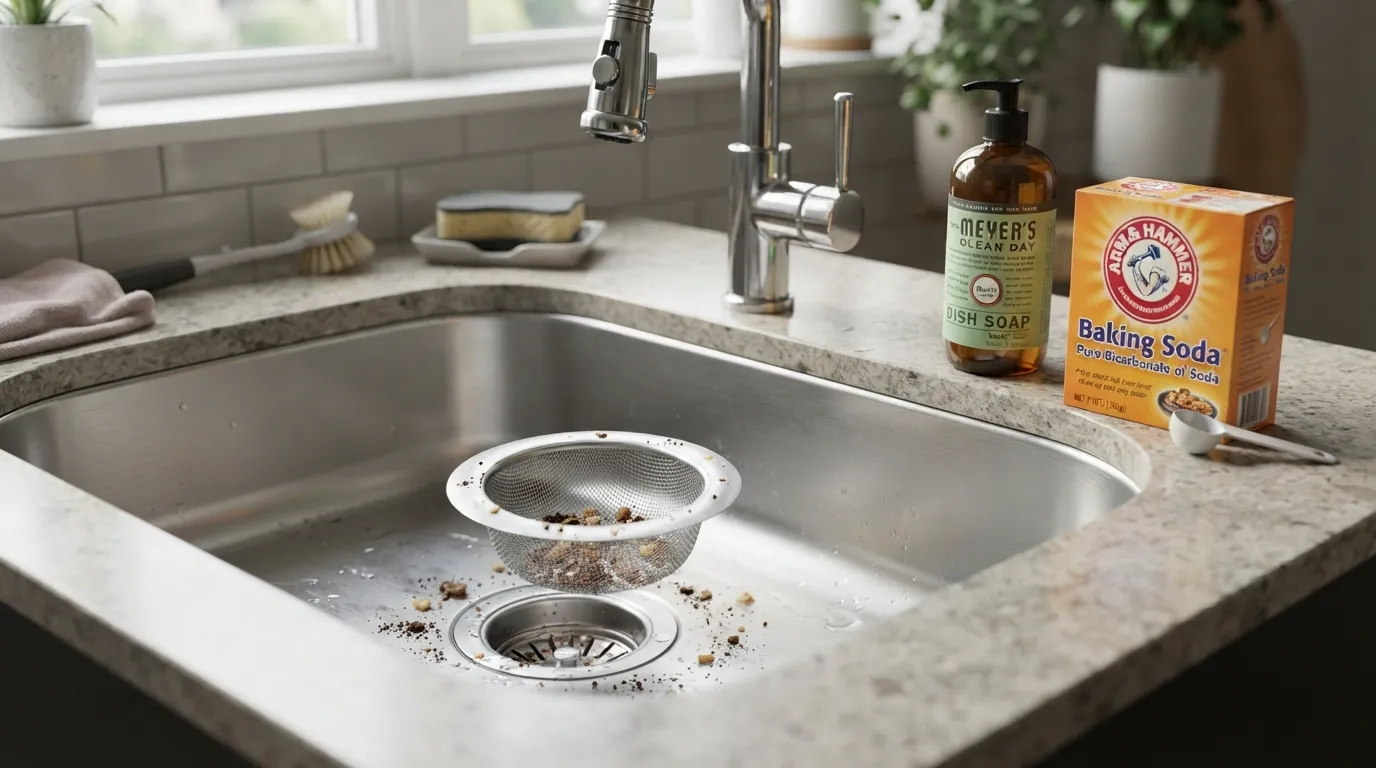
Implementing consistent preventative habits dramatically reduces the frequency of stubborn household backups and protects your plumbing infrastructure from premature wear. Taking proactive measures keeps water flowing smoothly and minimizes the need for emergency interventions.
Proactive Defense: Establishing a simple routine catches hair, grease, and soap scum before they accumulate into dense, pipe-blocking masses.
Long-Term Savings: Regular maintenance protects your pipes from corrosive chemical damage and expensive emergency service calls.
Weekly Habits to Reduce Buildup
Small, consistent adjustments to your daily kitchen and bathroom routines prevent organic debris from binding together inside your pipes.
Install Mesh Drain Catchers: Place fine mesh strainers over every sink, tub, and shower drain to trap loose hair and food particles before they enter the P-trap.
Avoid Pouring Grease Down Sinks: Never dump cooking oils, grease, or coffee grounds down kitchen drains; instead, let them cool and dispose of them in the trash.
Weekly Hot Water Flushes: Run hot tap water down your primary household drains for a few minutes once a week to liquefy and wash away minor soap residue.
When to Schedule Preventive Drain Cleaning
Even with diligent daily upkeep, mineral scaling and hidden grease layers slowly build up deep within your home plumbing branches over time.
Annual Inspections: Scheduling routine maintenance every year helps catch minor restrictions before they transform into complete sewer line backups.
Professional Care: When DIY habits no longer keep your drains running at peak speed, contact an expert to book a preventive drain cleaning service to thoroughly scour your entire system.
Frequently Asked Questions About Drain Snakes
Finding clear, direct answers to common plumbing questions helps you troubleshoot clogs safely and efficiently. Reviewing these frequently asked questions ensures you apply the correct techniques for every fixture in your home.
These concise answers target common People Also Search For (PAA) queries to help you resolve minor blockages with confidence.
Expert Guidance: Understanding proper tool handling protects your plumbing infrastructure from accidental damage.
How to correctly use a drain snake?
To use a drain snake correctly, disconnect the P-trap or access the cleanout, then feed 6 to 8 inches of the steel cable into the pipe until you feel resistance. Lock the cable in place using the thumb screw and turn the hand-crank drum clockwise to bore through or snag the blockage. Repeat this extension and rotation cycle until the cable moves freely through the pipe.
Should you run water while using a drain snake?
It is generally best not to run water continuously while actively feeding and cranking a manual drain snake, as standing or flowing liquid reduces visibility and causes messy splashing. Instead, keep a bucket underneath to catch residual trap water, and reserve water usage for a final flush after the clog has been completely cleared.
Is it better to snake a drain when it’s wet or dry?
Snaking a drain when it is mostly drained or dry offers superior cable control and prevents wastewater from splashing onto your counters and floors. While manual drum augers can operate through standing liquid, clearing excess water first lets you guide the auger head into the pipe aperture with precision.
Do drain snakes damage pipes?
Standard drain snakes do not damage healthy, modern plumbing pipes when used with gentle, controlled rotation and appropriate manual force. However, aggressive pushing, using a metal snake on old corroded pipes, or snaking through fragile corrugated tubing can cause punctures, kinks, or structural cracks.
Does pouring boiling water down a drain help unclog it?
Pouring boiling water down a drain helps melt minor grease and soap scum accumulation inside metal pipes. However, it will not dissolve solid objects or dense hair mats, and thermal shock from boiling water can crack porcelain fixtures or warp PVC joints.
Does Dawn really unclog drains?
Dawn dish soap acts as a surfactant that helps lubricate and break down minor grease clogs in slow kitchen sinks. It is ineffective against dense hairballs, mineral scale, or solid obstructions, meaning it only works on very minor, slick blockages.
Why pour salt down the drain every night?
Pouring salt down the drain is a popular home remedy used primarily for routine preventative maintenance and minor odor control. Salt acts as a mild abrasive and deodorizer, but it possesses no chemical properties capable of dissolving a severe clog once a complete backup occurs.
Can you snake a bathroom sink?
Yes, you can easily snake a bathroom sink to clear stubborn hair and soap clogs. For best results, disconnect the P-trap underneath to get a direct line of sight into the wall pipe, feed your hand-crank drum auger into the opening, and crank through the obstruction.
Conclusion — When to DIY vs When to Call a Pro
Tackling a stubborn household backup with a drain snake is an empowering and cost-effective way to handle localized clogs in sinks, showers, and toilets. By matching your tool to the specific fixture, practicing careful manual control, and avoiding common pitfalls like aggressive cable forcing, you can safely restore fast drainage without damaging your plumbing infrastructure.
Mastering the Basics: Manual hand-crank drum augers and specialized closet augers provide excellent mechanical leverage for hair, soap scum, and everyday organic blockages.
Knowing Your Limits: When faced with system-wide backups, gurgling vent stacks, or deep main sewer line obstructions, stepping back from DIY methods protects your home from severe water damage.
When minor snaking fails to resolve an issue or you encounter red flags pointing to deeper plumbing failures, do not risk further pipe wear. Take the next step by exploring our plumbing services or schedule a plumber to ensure expert diagnostics and permanent solutions for your home.
Main Services
Related Posts
Need a Plumber in Miami?
Schedule service online or speak directly with the EZ Plumbing team.
Owner-Led Local Service
Know who is behind the business before you request service. The owners, contact line and Miami service pages are published clearly.
- Named business owners
- Direct phone and social channels
- Local Miami service information
Clear Help Before You Book
Review the relevant service page, contact the team directly and use the booking page when you are ready—without relying on vague claims.
- Service-specific information
- Direct questions before scheduling
- Clear online booking route