
Sewer Gas: What It Is, Causes, Dangers & How to Fix It Fast
What Is Sewer Gas?
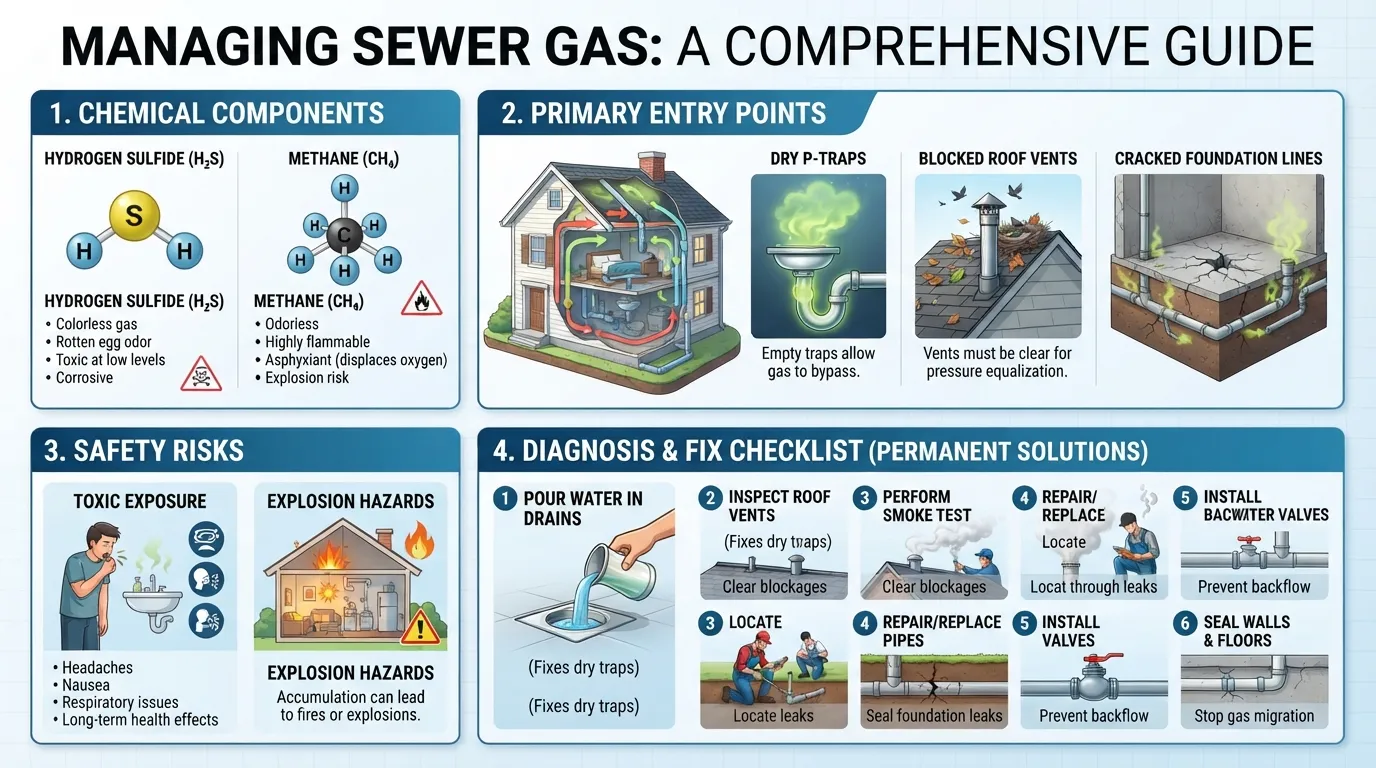
Sewer gas is a complex and potentially hazardous toxic gas mixture generated during the decomposition of organic waste within a municipal or residential sewage system. Composed primarily of methane, hydrogen sulfide, carbon dioxide, and ammonia, it poses serious health risks and produces a distinct, unpleasant sulfur odor reminiscent of rotten eggs.
Where Does Sewer Gas Come From?
Sewer gas originates from the continuous organic waste breakdown managed by anaerobic bacteria residing deep within underground pipes, septic tanks, and municipal treatment facilities. As human waste, organic debris, and household byproducts travel through the sewage system, complex biological and chemical processes transform this discarded wastewater into volatile gases.
The generation and upward migration of these vapors are driven by several key factors:
Microbial Decomposition: Anaerobic microorganisms break down organic matter in oxygen-deprived environments, releasing hydrogen sulfide and methane as metabolic byproducts.
Plumbing and Environmental Dynamics: Pressure fluctuations, temperature changes, and turbulent water flow inside the pipes push these gases upward, seeking points of release.
Vulnerable Exit Points: Dry plumbing traps, cracked vent pipes, or broken seals allow these trapped vapors to infiltrate living spaces, signaling potential plumbing failures.
What's in Sewer Gas? (Gas Composition)
Sewer gas is a volatile mixture of chemical compounds produced by the anaerobic decay of organic waste, featuring hydrogen sulfide, methane, and ammonia as its primary hazardous constituents. Recognizing this complex chemical breakdown is essential for accurately diagnosing plumbing failures and mitigating serious health and explosion risks.
Hydrogen Sulfide (Rotten Egg Smell)
Hydrogen sulfide is a highly toxic and corrosive gas recognized instantly by its distinct rotten egg smell, serving as the primary olfactory indicator of sewer leaks. At low levels, it irritates the eyes and respiratory system, while high concentrations rapidly cause olfactory fatigue, rendering the nose unable to detect the danger.
Toxicity Profile: Acts as a cellular poison that disrupts oxygen utilization in the human body.
Corrosive Nature: Reacts with moisture in pipes to form sulfuric acid, accelerating infrastructure damage.
Methane (Odorless & Flammable)
Methane is a potent flammable gas produced during waste breakdown that creates extreme explosion hazards inside confined plumbing networks. Because it is completely colorless and odorless, it cannot be detected by smell alone, making specialized gas monitoring vital.
Explosive Limits: Forms highly explosive mixtures with air when trapped in enclosed spaces like basements or utility vaults.
Asphyxiation Risk: Displaces ambient oxygen, increasing the danger of suffocation in poorly ventilated areas.
Ammonia (Sharp Irritant Smell)
Ammonia introduces a sharp, pungent odor to sewer vapor and acts as an aggressive chemical irritant to human mucous membranes. Inhalation of concentrated ammonia fumes triggers immediate coughing, throat irritation, and burning sensations in the eyes.
Solubility: Dissolves readily in moisture, making it particularly damaging to moist tissues in the respiratory tract.
Source: Derived directly from the breakdown of nitrogen-rich organic matter like urine and proteins.
Carbon Dioxide & Sulfur Dioxide
Carbon dioxide and sulfur dioxide are significant secondary components that compound the environmental toxicity and oxygen-depleting nature of sewer air. Carbon dioxide is an odorless asphyxiant, while sulfur dioxide adds respiratory distress hazards through its pungent, acidic properties.
Oxygen Displacement: Carbon dioxide builds up in low-lying, poorly ventilated zones, reducing available breathable air.
Acidic Impact: Sulfur dioxide heightens the corrosive capacity of the gas mixture against metallic and concrete plumbing structures.
Sewer Gas Composition Reference
| Gas | Smell | Color | Risk Level |
| Hydrogen Sulfide | Rotten Egg | Colorless | High (Toxic / Corrosive) |
| Methane | Odorless | Colorless | Extreme (Flammable / Asphyxiant) |
| Ammonia | Sharp / Pungent | Colorless | Moderate to High (Irritant) |
| Carbon Dioxide | Odorless | Colorless | Moderate (Asphyxiant) |
| Sulfur Dioxide | Pungent / Irritating | Colorless | High (Respiratory Hazard) |
Signs You're Smelling Sewer Gas
Identifying sewer gas involves recognizing specific sensory and physical indicators that distinguish it from everyday household odors. Detecting these gas leak signs early prevents prolonged exposure to hazardous chemicals and pinpoints hidden plumbing failures.
Rotten Egg or Sulfur-Like Smell
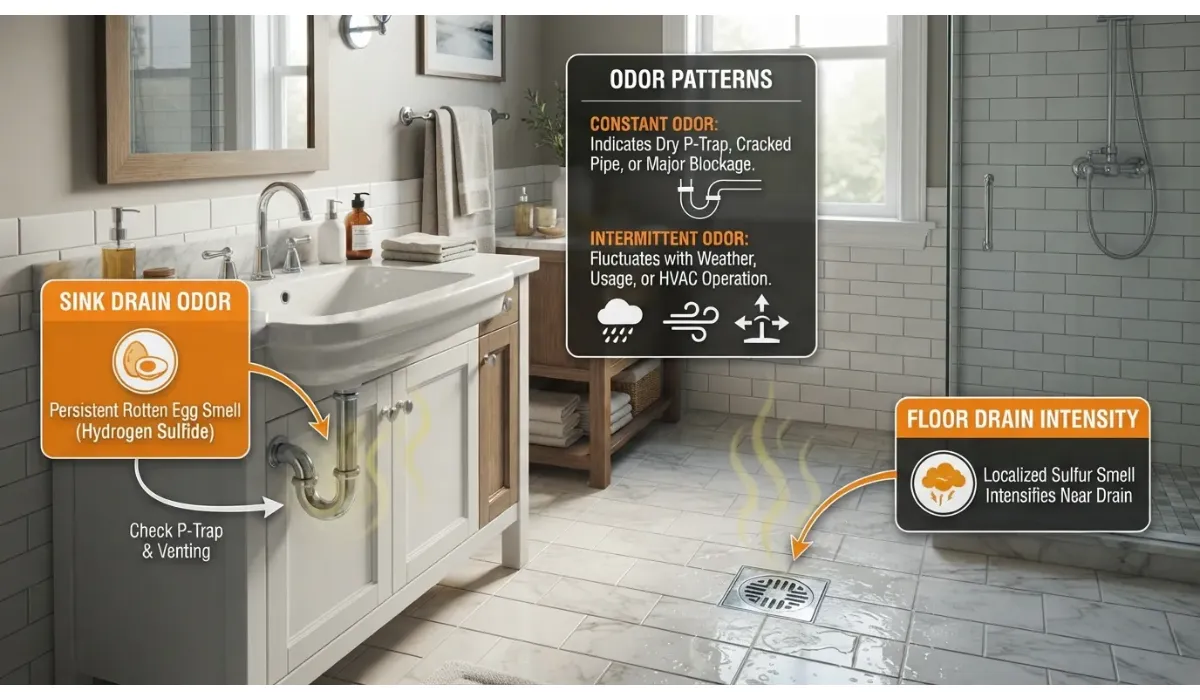
The most common indicator of sewer vapor intrusion is a distinct, persistent rotten egg smell caused by the presence of hydrogen sulfide. This heavy sulfur smell lingers near plumbing fixtures and indicates that waste is decomposing somewhere within the enclosed drainage network.
Olfactory Fatigue: The nose can quickly adjust to low concentrations of hydrogen sulfide, making the odor seem to disappear even though the gas remains present.
Distinction from Natural Gas: While both contain added or natural sulfur compounds, sewer gas smells organic and damp, typically originating directly from floor drains or sinks rather than utility lines.
Smell Gets Worse Near Drains or Vents
A definitive sign of sewer gas is an intensifying drain odor that becomes noticeably stronger around specific plumbing fixtures, floor drains, or roof vent pipes. If the scent concentrates sharply in a particular bathroom, laundry room, or basement utility corner, it points to a localized drainage issue.
Dry Trap Indicators: Sinks or showers used infrequently lose the water barrier in their P-traps, allowing air to vent freely into the room.
Ventilation Failures: Blocked roof vents force displaced air and gas back down through household fixtures instead of safely releasing them outside.
Intermittent vs. Constant Odor
The timing and pattern of the odor provide crucial clues about the structural integrity of your plumbing system and external environmental pressures. Determining whether the smell is constant or sporadic helps isolate the root cause.
Intermittent Patterns: Odors that appear during heavy winds, after heavy rain, or when using multiple appliances often stem from pressure imbalances or siphonage in the vent stack.
Constant Patterns: Persistent, unchanging smells usually indicate a cracked pipe, a damaged wax ring under a toilet, or a completely dry P-trap that requires immediate repair.
Why You Smell Sewer Gas in Specific Rooms
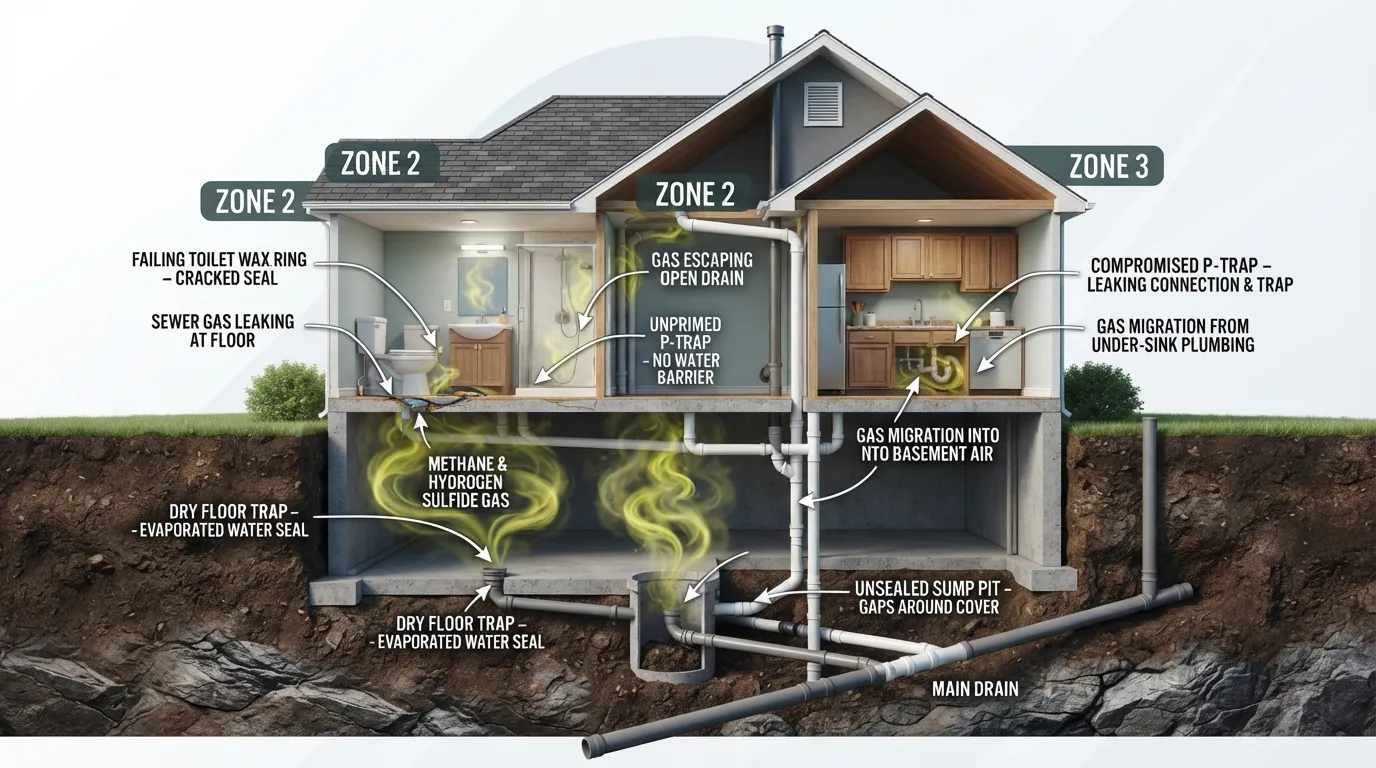
Pinpointing where the odor originates is the fastest way to diagnose a plumbing failure. Each room features unique fixtures and connection points that, when compromised, allow a localized bathroom sewer smell or basement sewer smell to escape into your living space.
Bathroom: Toilet Wax Ring, Sink Trap, or Vent Issue
The bathroom is the most common location for sewer gas leaks due to the high concentration of drainage fixtures. If you notice persistent odors here, the issue usually stems from a failing seal or an unprimed trap.
Toilet Wax Ring Failure: The wax ring beneath the base of the toilet creates an airtight seal against the waste pipe; when it degrades, gas escapes freely into the room. (Learn more about fixing this in our guide on toilet-repair.)
Sink and Shower P-Traps: Hair clogs or infrequent use can siphon or evaporate the water barrier inside the drain trap, opening a direct pathway for vapor.
Roof Vent Stacks: Clogs from leaves or debris in the vertical vent line force gas backward, pushing it out through bathroom sink overflows or shower drains.
Basement: Floor Drain or Sump Pit Cause
Basements sit at the lowest point of the drainage system, making them vulnerable to dry infrastructure and pressure-driven gas leaks. Identifying a floor drain or sump pit source is critical for restoring indoor air quality.
Dry Floor Drains: Basement floor drains feature internal traps that dry out quickly if water isn’t poured down them regularly to block rising vapors.
Unsealed Sump Pits: Sump pump basins connected to perimeter drains or weeping tiles must have a tightly fitted, airtight lid; otherwise, they act as open chimneys for sewer gases. (Check your setup using our recommendations for a proper sump-pump.)
Cracked Foundation Lines: Older cast iron or clay sewer lines running beneath the concrete slab can develop fractures that seep gas directly into the basement.
Kitchen: Dry Trap Under Sink
Kitchens generate heavy wastewater loads, yet lingering odors often point to maintenance oversights within the under-sink assembly. The kitchen sink trap requires proper venting and regular use to maintain its blocking function.
Evaporated or Siphoned Water: Sinks that see light use or experience suction from nearby appliance discharges can lose their water seal, letting air vent upward.
Loose or Disconnected Slip Joints: Degraded washers or loose PVC connections beneath the basin can leak microscopic amounts of vapor even if water isn’t actively dripping.
Improper Venting Loops: Kitchen islands lacking a proper loop vent often experience pressure fluctuations that force air past the trap barrier during heavy dishwasher cycles.
Why Do I Smell It When No One Else Does?

Noticing a faint odor when other household members detect nothing can feel confusing, but it is a common phenomenon rooted in sensory biology and environmental positioning. Understanding why this happens helps determine whether you are experiencing heightened smell sensitivity or if a localized leak is genuinely confined to your immediate space.
Sense of Smell Sensitivity Differences
Human olfactory perception varies dramatically from person to person due to genetics, age, and biological makeup. Some individuals possess a heightened smell sensitivity that allows them to detect chemical compounds like hydrogen sulfide at microscopic parts-per-million levels before anyone else notices.
Genetic Olfactory Receptors: Variations in genes governing nasal receptor proteins mean certain people are hyper-aware of specific sulfur or organic compounds.
Health and Lifestyle Factors: Non-smokers, individuals with acute sensory processing, or those with heightened alertness to household hazards often pick up subtle environmental changes instantly.
Localized Leak Near Your Specific Room
If you spend extended hours working or relaxing in a specific area, you may be the only person close enough to encounter a localized leak. A microscopic gap in a nearby kitchen sink trap, a dry floor drain in a home office, or a cracked seal on a bathroom fixture can emit a faint, directional plume that stays confined to that exact micro-climate.
Airflow Patterns: HVAC drafts, closed doors, and thermal currents can push rising gases into one specific corner of a room while leaving the rest of the house completely odorless.
Proximity to Source: Sitting within a few feet of a compromised plumbing connection places you directly in the path of the vapor trail before it dilutes into the wider room volume.
Adaptation and Nose Fatigue in Other Household Members
Olfactory fatigue, often referred to as nose blindness, explains why others in your home might fail to notice a persistent background scent. When exposed to a steady, low-level chemical presence, nasal receptors quickly adapt and stop signaling the brain, making the smell effectively disappear for everyone else.
Constant Exposure: Family members who move through the house or enter the space later may experience temporary sensory adaptation, whereas your initial detection caught the odor fresh.
Intermittent Release: If the gas escapes only during specific plumbing usage—such as when a washer drains or a shower runs—you may happen to be present at the exact moment of release while others are not.
Is Sewer Gas Dangerous? Health Risks Explained
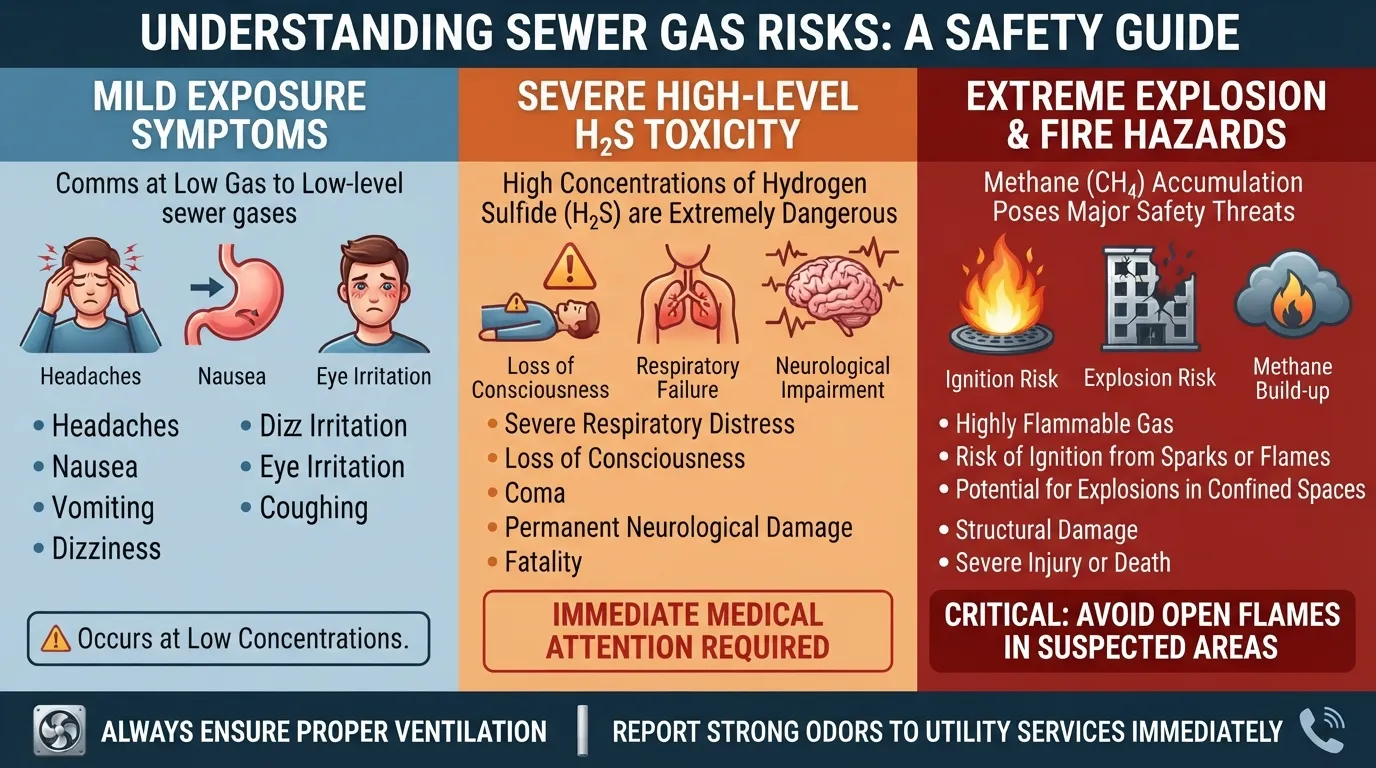
Sewer gas exposure presents legitimate health and safety hazards depending on the concentration levels and duration of inhalation. Because it contains toxic compounds like hydrogen sulfide, prolonged or severe exposure can lead to clinical sewer gas poisoning, requiring immediate action to safeguard indoor air quality.
Mild Exposure Symptoms (Headache, Nausea, Eye Irritation)
Low-level or short-term exposure to sewer vapor frequently triggers localized irritation and systemic discomfort as toxic elements affect the mucous membranes. According to medical insights outlined in health overviews like Healthline’s guide on toxic air irritants initial reactions often mimic mild illness.
Neurological Indicators: Frequent bouts of a dull headache, fatigue, or light dizziness often accompany indoor vapor leaks.
Mucosal and Digestive Discomfort: Inhabitants commonly report persistent nausea, watery or burning eyes, and minor throat irritation.
Severe and High-Level Exposure Risks
When structural plumbing failures or confined spaces trap high volumes of gas, hydrogen sulfide toxicity escalates rapidly. At elevated concentrations, hydrogen sulfide paralyzes the olfactory nerve, abruptly eliminating the warning scent and lulling victims into a false sense of security before critical symptoms manifest.
Advanced Physiological Distress: High-level inhalation causes severe respiratory distress, pulmonary fluid accumulation, sudden loss of coordination, and cognitive confusion.
Critical Emergencies: Extreme concentrations can induce rapid unconsciousness, systemic organ failure, coma, or fatal asphyxiation within minutes.
Fire and Explosion Hazard (Methane)
Beyond direct human toxicity, the accumulation of methane explosion risk transforms poorly ventilated spaces into structural tinderboxes. Because methane is lighter than air and highly flammable, concentrated pockets trapped in utility rooms, crawlspaces, or basements can ignite from a simple electrical spark or appliance pilot light.
Is It Safe to Sleep in a House With Sewer Gas?
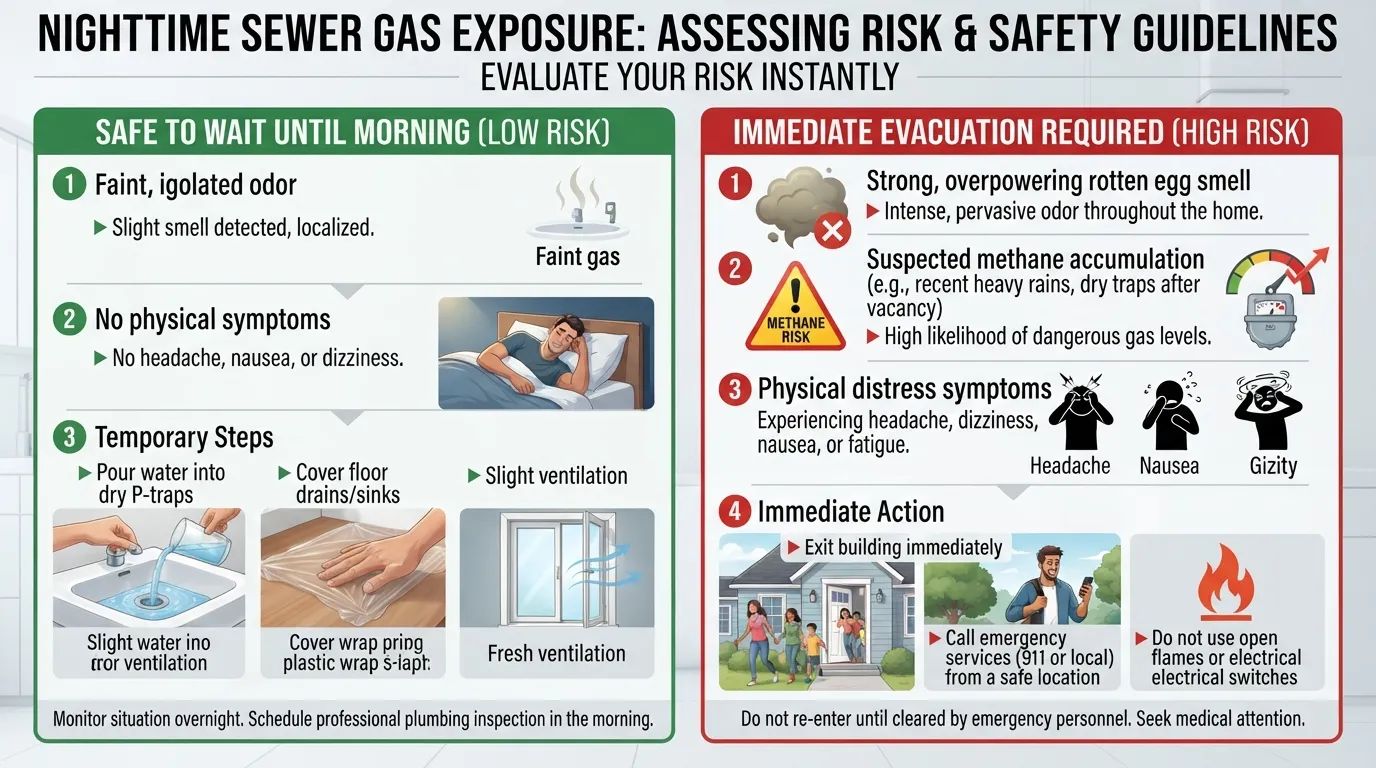
Deciding whether it is safe to sleep in a home with a suspected sewer gas leak depends entirely on the intensity of the smell and whether physical symptoms are present. While a faint, distant whiff from a dry floor drain is usually manageable overnight with basic emergency ventilation, heavy concentrations pose acute health and explosion risks that require immediate evacuation.
When It’s Safe to Wait Until Morning
If the odor is faint, isolated to a single unused bathroom or basement corner, and no occupants are experiencing physical discomfort, it is generally safe to stay overnight provided you take immediate containment steps.
Apply Temporary Seals: Pour water down dry P-traps and floor drains to restore the liquid barrier, or cover unused drains with a damp cloth or plastic wrap.
Maximize Airflow: Open windows slightly in the affected room and run ceiling fans or portable air purifiers to maintain continuous emergency ventilation until a plumber arrives the next day.
Monitor for Symptoms: Ensure no household members develop headaches, dizziness, or nausea during the night.
When You Should Leave Immediately
Staying in the house overnight becomes unsafe the moment the odor transitions from a minor nuisance to a heavy, overpowering chemical presence. You and your family must vacate the premises immediately under the following conditions:
Physical Symptoms Appear: If anyone experiences unexplained nausea, headaches, eye irritation, or dizziness while inside, the gas concentration has reached harmful levels.
Overwhelming Sulfur Smell: A dense, suffocating rotten egg smell indicates a major pipe rupture or severe blockages that home fixes cannot resolve safely.
Suspected Methane Accumulation: Because methane introduces an extreme explosion hazard in enclosed spaces, any suspicion of heavy gas buildup requires leaving the home immediately, avoiding electrical switches or flames, and calling emergency services or a professional gas technician from outside.
How Does Sewer Gas Get Into a Home? (Causes)
Sewer gas infiltrates a residence whenever the physical barriers and pressure boundaries designed to contain plumbing vapors are compromised. Pinpointing the root structural failure is essential for permanently eliminating odors and protecting indoor air quality.
Dry P-Trap (Most Common Cause)
The P-trap is a curved section of pipe located beneath every sink, tub, and floor drain that holds a standing pool of water to act as an airtight seal against rising gases. When these traps lose their water barrier, they open a direct pathway for vapor to enter the room.
Evaporation from Disuse: Sinks, guest bathrooms, or basement floor drains that are used infrequently dry out completely within weeks, allowing gas to vent freely.
Siphonage and Pressure Pulls: Improper venting or the discharge of high-volume appliances can pull the water right out of the trap through suction, breaking the seal.
Blocked or Damaged Roof Vents
The plumbing vent stack is a vertical pipe running through your roof that equalizes air pressure and safely expels sewer gases above the roofline. When this system fails, displaced gases have nowhere else to go but back down into the house.
Debris Blockages: Leaves, bird nests, or ice buildup can choke the vent pipe, creating backpressure that forces foul air out through household sink and shower drains.
Poor Vent Placement: Vents terminating too close to operable windows or attic air intakes can pull outdoor sewer odors right back inside.
Cracked Pipes or Foundation Leaks
Hidden structural failures in drainage lines or the building envelope allow concentrated vapors to bleed directly into living areas, wall cavities, or crawlspaces. Identifying these issues early prevents long-term air quality degradation.
Failing Joints and Pipe Fractures: Aging cast iron or PVC drain lines can develop a cracked pipe due to shifting soil, root intrusion, or thermal expansion. Learn how to address these structural issues through professional leak-detection-repair-services.
Foundation Seepage: Settling concrete can produce a structural foundation crack near main sewer lateral paths, letting underground gas seep straight into basements.
Damaged Sewer Line
Severe exterior failures involving the main lateral connecting your home to the municipal main or septic tank can flood the surrounding soil with gas.
Severe Structural Collapse: Crushed, broken, or offset underground lines allow gases to pool around the foundation and find entry points into utility penetrations. Explore options for resolving major external pipe failures with a complete sewer-line overhaul.
Temporary Fix vs. Permanent Fix
Resolving a sewer gas leak requires understanding the difference between a temporary fix that offers immediate relief and a permanent fix that addresses the underlying plumbing failure. While short-term measures stop indoor air contamination quickly, failing to follow up with a lasting pipe repair usually results in recurring odor issues.
Temporary Fix: Refilling the P-Trap With Water
When an unpleasant odor suddenly appears, executing a quick P-trap refill is the fastest way to block vapor intrusion while you investigate the source. This immediate intervention restores the liquid barrier needed to keep gases contained inside the drainage network.
Pouring Water into Dry Drains: Add a bucket of water or run the tap for a full minute on infrequently used sinks, showers, and basement floor drains to replenish evaporated trap water.
Adding Mineral Oil: Pouring a tablespoon of mineral oil over the standing water in a rarely used guest drain slows down evaporation significantly, extending the life of the temporary seal.
Surface Sealing: Cover stubborn drains with plastic wrap or a damp cloth weighted down until a professional plumber can inspect the line.
Permanent Fix: Vent/Pipe Repair or Replacement
Eliminating sewer gas for good requires a structural plumbing repair administered by a licensed professional to correct the root cause of the system failure. Long-term solutions ensure that air pressure and liquid barriers operate reliably without ongoing maintenance interventions.
Clearing or Extending Vent Stacks: Clearing debris blockages from the roof vent or extending short pipes past nearby windows permanently resolves pressure-driven backdrafts.
Sealing or Replacing Compromised Pipes: Replacing cracked PVC segments, repairing broken toilet wax rings, or sealing foundation penetrations stops gas from escaping into living spaces.
Main Line Restoration: Fixing collapsed or offset exterior sewer lines eliminates underground soil saturation and prevents structural gas infiltration at the foundation level.
Fix Comparison Reference
| Method | Time to Fix | Cost | Durability |
| P-Trap Refill (Temporary) | Immediate (1–2 minutes) | Free | Very Low (Days to Weeks) |
| Mineral Oil Addition (Short-Term) | Immediate (1 minute) | Minimal | Moderate (Weeks to Months) |
| Clearing Vent Stacks (Permanent) | 1–2 hours | Low to Moderate | High (Permanent until next blockage) |
| Pipe / Vent Replacement (Permanent) | 2–6 hours | Moderate to High | High (Decades) |
Does Sewer Gas Smell Go Away on Its Own?
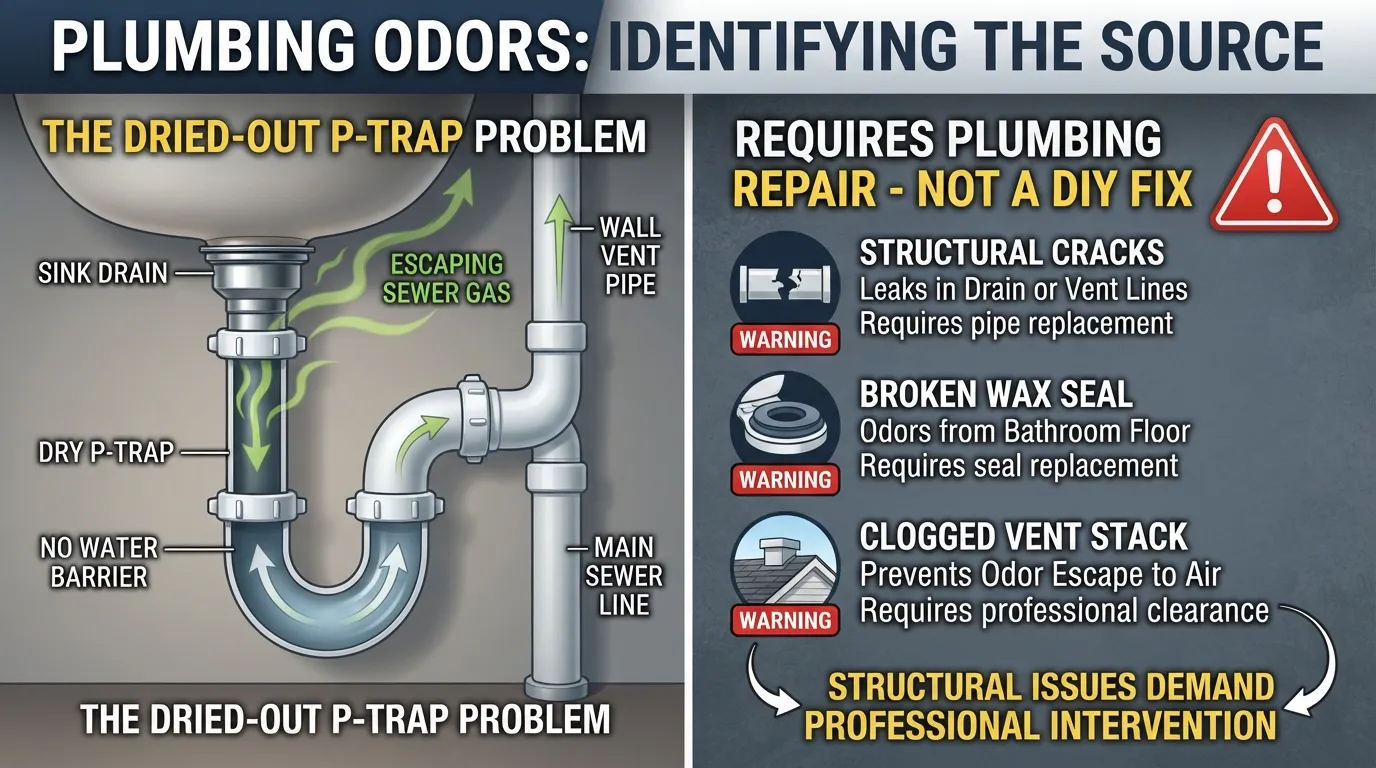
No, a sewer gas smell will not go away on its own unless the underlying cause is a temporary anomaly, such as a briefly unprimed P-trap that you happen to refill with water. If the odor stems from a structural issue—such as a cracked pipe, a dry floor drain, a broken toilet wax ring, or a blocked roof vent—the persistent odor will remain or worsen over time. Because sewer gas leaks point to mechanical or physical failures in your drainage system, waiting for a self-resolving smell is ineffective and allows hazardous chemical exposure to continue unchecked.
Best Ways to Get Rid of Sewer Gas Smell (Step-by-Step)
Successfully learning how to get rid of sewer gas smell requires a systematic approach to isolate the root cause and apply the correct DIY plumbing fix. Following a step-by-step diagnostic process ensures you resolve minor maintenance issues before they escalate into costly structural repairs.
Step 1: Locate the Source
Begin by sniffing around individual fixtures to map out where the odor is strongest. Check basement floor drains, utility boxes, laundry standpipes, and bathroom sinks to determine if the issue is localized to a single fixture or widespread.
Isolate Rooms: Close interior doors for a few hours to see if the smell concentrates in a specific room or bathroom.
Inspect Visible Assemblies: Look closely at under-sink connections and toilet bases for dampness or structural cracks.
Step 2: Refill Dry Traps
Because evaporated water barriers are the most frequent culprit, re-establishing your drainage seals provides immediate relief.
Prime Every Drain: Pour a full gallon of water down every infrequently used sink, shower, tub, and basement floor drain.
Add Protective Oil: Pour a small amount of mineral oil down guest or basement drains to trap the water and prevent rapid evaporation.
Step 3: Check and Clear Vent Pipes
Examine your exterior plumbing system to ensure air pressure is venting correctly without blockages.
Perform Vent Clearing: Inspect your roof vent stack from a safe vantage point to clear away leaves, bird nests, or ice buildup.
Ensure Proper Flow: Clear any debris choking the vertical pipe to eliminate backpressure that pushes foul air into your home.
Step 4: Use a Safe Deodorizer (Temporary)
While addressing the mechanical fault, you can neutralize lingering ambient odors safely without masking structural danger.
Apply Natural Neutralizers: Place bowls of white vinegar or baking soda in the affected room to absorb airborne sulfur compounds temporarily.
Avoid Masking Agents: Refrain from using heavy chemical air fresheners that only mask the smell without resolving the underlying toxic gas leak.
Step 5: Call a Professional for Pipe and Vent Repairs
If basic interventions fail to eliminate the odor, the problem likely stems from a hidden structural defect requiring expert intervention.
Book Professional Maintenance: Contact a licensed plumber to run video camera inspections and execute complex repairs like replacing cracked drain lines, resetting toilet wax rings, or performing comprehensive drain-cleaning services.
Myth Busting — Can Rats Enter Your Home Through the Sewer/Toilet?
A common anxiety among homeowners experiencing plumbing odors is whether a smelly drain also signals an incoming infestation. While the visual of rats in toilet bowls sounds like an urban legend, it is a mechanically possible occurrence that often correlates with the same structural vulnerabilities responsible for sewer gas leaks.
Can Sewer Gas Odor Indicate a Pest Entry Point?
Yes, a persistent sewer gas smell can indirectly point to a sewer gas vs pest entry overlap because both pests and gases exploit the exact same physical defects in your drainage infrastructure. When a pipe cracks, a joint separates, or a P-trap goes dry, the resulting opening provides both a free pathway for volatile vapors and a physical entry tunnel for vermin.
Compromised Barriers: Dry traps or broken seals remove the liquid and physical blocks that normally stop both air and small animals from traveling upward.
Shared Pathways: Pests navigate through the damp, dark interior of vent stacks and main lateral lines, seeking escape routes into residential structures.
How Rodents Actually Enter Through Plumbing
Rats are exceptional swimmers capable of holding their breath for extended periods and navigating complex vertical and horizontal pipe networks. They exploit specific structural flaws to breach indoor plumbing lines.
Navigating the P-Trap: While the curved water pool of a standard P-trap usually blocks pests, low water levels or damaged, unsealed traps allow rodents to push through.
Damaged Main Lateral Lines: Breaks, offsets, or holes in underground sewer pipes allow rats to tunnel out of the soil and enter the interior building drainage path. Learn how to safeguard your property against these vulnerabilities with our expert plumbing-pest-prevention strategies.
Unscreened Roof Vents: Rats can climb along exterior walls or overhanging tree branches to drop directly down un-screened vertical vent stacks, landing inside household plumbing systems.
When to Call a Professional Plumber
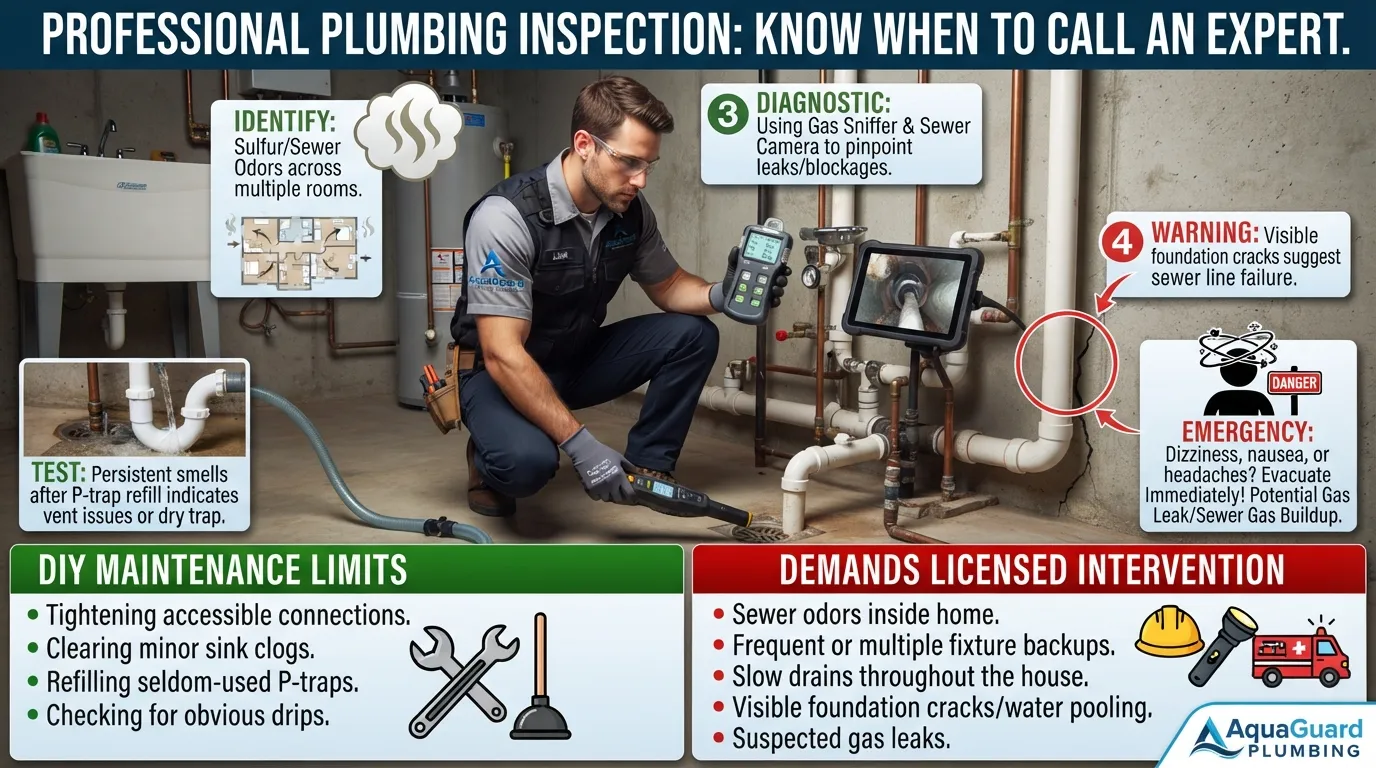
Knowing when to transition from a DIY fix to hiring a professional plumber is critical for safeguarding your home’s structural integrity and your family’s health. While simple dry traps can be resolved independently, persistent or severe issues require certified expertise and specialized equipment.
Signs You Need Professional Help (Persistent Smell, Multiple Rooms, Visible Cracks)
If basic troubleshooting fails or the issue spans multiple areas of your home, you need the help of a licensed plumber to perform advanced diagnostics and permanent sewer gas repair.
Multi-Fixture Odors: When a sulfur smell affects several bathrooms or rooms simultaneously, the issue typically stems from a blocked roof vent or a compromised main line.
Persistent Smells After Priming: If running water through your drains does not eliminate the odor within a few hours, a hidden crack or broken seal is likely present.
Visible Structural Damage: Cracks in foundation slabs, rusted-out cast iron pipes, or leaking pipe joints demand immediate intervention through our professional plumbing services.
Emergency Situations (Strong Odor + Dizziness/Nausea)
Certain scenarios bypass standard maintenance timelines and constitute a plumbing emergency requiring immediate evacuation and expert dispatch.
Acute Physical Symptoms: If anyone in the home experiences nausea, dizziness, severe headaches, or eye irritation, high-level hydrogen sulfide exposure is occurring.
Overwhelming Gas Concentrations: A suffocating rotten egg smell signals a major pipe break or severe methane accumulation.
Immediate Action Plan: Leave the premises immediately, avoid all electrical switches, and secure emergency-plumber assistance from a safe location. Ready to resolve your plumbing issues? Book Now to schedule an expert inspection.
Frequently Asked Questions
Is it unhealthy to breathe sewer gas?
Yes, breathing sewer gas is unhealthy because it contains toxic compounds like hydrogen sulfide and ammonia that irritate the respiratory system. Prolonged or high-level exposure can lead to headaches, dizziness, nausea, and severe health complications.
How do I know if it’s sewer gas?
You can identify sewer gas by its distinct, pungent rotten egg smell caused by hydrogen sulfide. The odor typically intensifies near plumbing fixtures, floor drains, or roof vent pipes where water traps have failed.
What is the main cause of sewer gas in a home?
The most common cause of sewer gas entering a home is a dry P-trap. When sinks, showers, or floor drains go unused, the standing water barrier evaporates, allowing gases to vent directly into living spaces.
How do you get rid of sewer gas?
To eliminate sewer gas, first locate the source and pour water down all dry P-traps to restore the liquid seal. If the smell persists, clear roof vent stacks of debris or contact a professional for permanent pipe repairs.
Is it safe to sleep in a house with sewer gas?
Sleeping in a home with a faint, isolated odor is generally safe if you provide ventilation and refill dry traps. However, if the smell is overwhelming or causes physical symptoms like nausea, you must evacuate immediately.
What are the first signs of sewer gas poisoning?
Early signs of sewer gas exposure include dull headaches, dizziness, fatigue, nausea, and eye or throat irritation. These symptoms appear as toxic compounds begin affecting the body’s mucous membranes and nervous system.
Does sewer gas go away on its own?
No, sewer gas odors will not resolve on their own unless caused by a temporary, easily corrected issue like an unprimed drain. Structural faults like cracked pipes or broken seals require active repair to eliminate the smell.
What is the best deodorizer for sewer smell?
Natural absorbents like baking soda or bowls of white vinegar work best to temporarily neutralize ambient odors without masking structural dangers. Avoid chemical air fresheners, as they only hide the smell without stopping toxic leaks.
Why do I keep smelling sewer gas in my bathroom?
Bathrooms frequently experience sewer gas leaks due to dried-out P-traps, clogged roof vent stacks, or a failing wax ring beneath the toilet base. These issues eliminate the barriers keeping volatile plumbing vapors contained.
Why do I smell sewer gas when no one else does?
Heightened personal smell sensitivity or close proximity to a localized, minor leak can cause you to detect odors before others notice them. Additionally, other household members may experience olfactory fatigue (nose blindness) from constant exposure.
Main Services
Related Posts
Need a Plumber in Miami?
Schedule service online or speak directly with the EZ Plumbing team.
Owner-Led Local Service
Know who is behind the business before you request service. The owners, contact line and Miami service pages are published clearly.
- Named business owners
- Direct phone and social channels
- Local Miami service information
Clear Help Before You Book
Review the relevant service page, contact the team directly and use the booking page when you are ready—without relying on vague claims.
- Service-specific information
- Direct questions before scheduling
- Clear online booking route