Main Sewer Line Blockage: 7 Warning Signs You Shouldn't Ignore
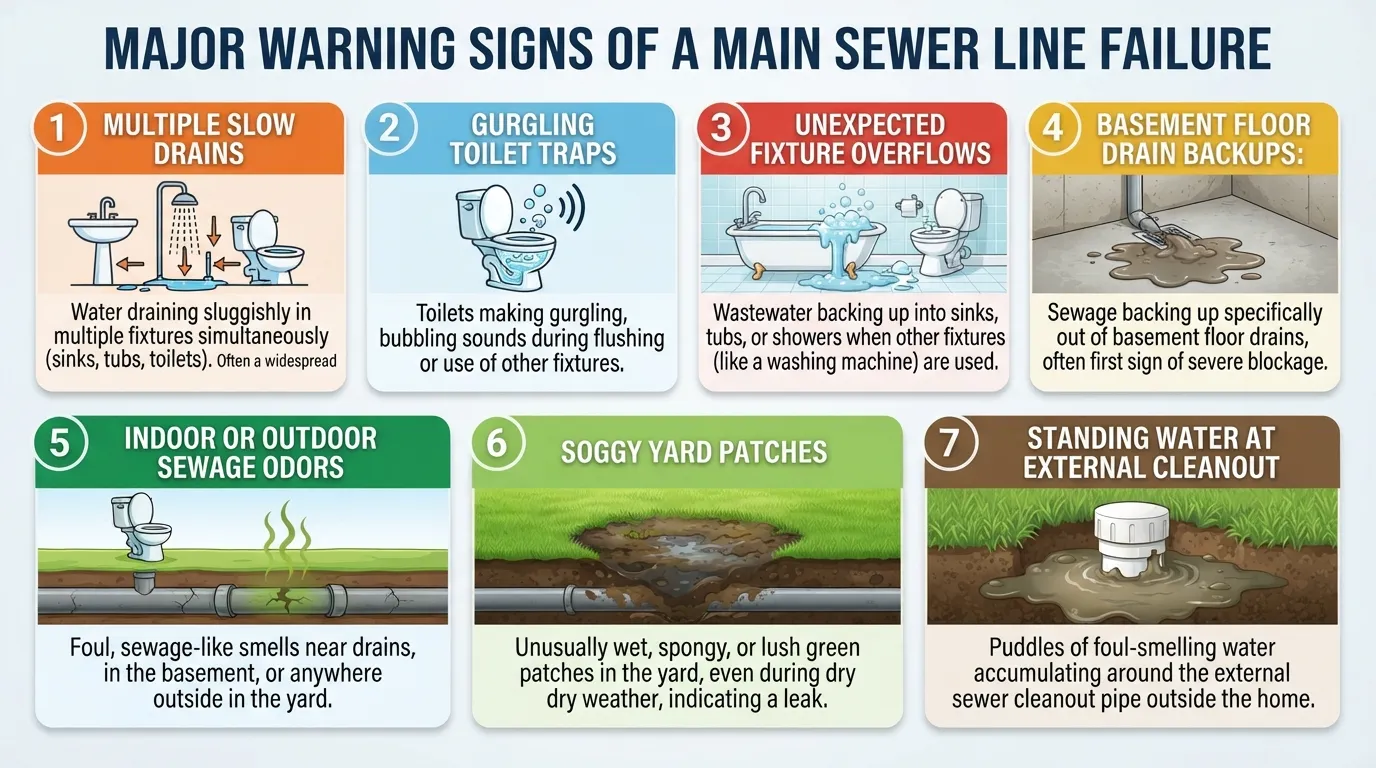
When your main sewer line experiences a sudden blockage, wastewater can no longer escape your property smoothly. Instead, it reverses direction, forcing sewage and greywater back up into your home fixtures, typically starting at the lowest drain point such as a basement floor drain, shower, or lowest toilet.
What Happens When Your Main Sewer Line Gets Blocked?
A main sewer line blockage completely halts the flow of household wastewater into the municipal sewer system or septic tank. Because all internal plumbing fixtures share this primary exit pipe, a severe clog triggers a hazardous wastewater backup throughout the entire house.
The Pressure Reversal: Trapped water and gas build up behind the obstruction, seeking any available escape route upward.
Fixture Overflow: Multi-fixture backups occur simultaneously, meaning flushing a toilet might cause water to bubble up into your bathtub or shower stall.
Property Threat: Unaddressed blockages can cause severe structural water damage and health hazards, often requiring professional intervention to resolve underlying sewer line issues safely and permanently.
The 7 Key Warning Signs of a Main Sewer Line Blockage
Recognizing early warning signs can prevent catastrophic property damage and costly structural repairs. When your main sewer system begins to fail, specific symptoms manifest throughout your home and property due to disruptions in wastewater flow and air venting.
Slow Draining Across Multiple Fixtures (Not Just One)
When a single sink or tub drains slowly, the issue is typically a localized clog trapped within that specific branch line. However, if you notice multiple fixtures backup simultaneously—such as your kitchen sink, bathroom shower, and laundry drain all sluggishly emptying at the same time—the restriction is almost certainly in the main line.
The “Why It Happens”: Wastewater from every area of the house converges into the main sewer pipe. When a blockage obstructs this central trunk line, water across the entire network loses its momentum and clearance, causing widespread drainage delays.
Gurgling or Bubbling Sounds From Toilets and Drains
Hearing strange bubbling, gurgling, or burping noises when your washing machine spins, a sink empties, or a toilet flushes is a classic red flag. This phenomenon occurs because of trapped air in pipes seeking an escape route.
The “Why It Happens”: As a heavy blockage builds up in your sewer line, wastewater traps pockets of air ahead of it. When you flush or run water, that displaced air is forced backward through the system, venting upward through your traps and causing distinct gurgling sounds. For recurring issues with specific bathroom fixtures, professional toilet repair services can help determine if the problem is isolated or connected to the main line.
Water Backing Up in Odd or Unexpected Places
A hallmark symptom of a main line obstruction is cross-fixture interference. For instance, you might notice water bubbling up into your shower pan when you flush the toilet, or your washing machine discharge overflowing into a nearby floor drain.
The “Why It Happens”: Because water seeks the path of least resistance, a main line clog blocks wastewater from exiting. The incoming water from an upper-floor fixture has nowhere to go and is forced laterally into the lowest available branch pipe, erupting through unexpected drains.
Basement Floor Drain Overflow
Your basement floor drain is typically the lowest physical drainage point in a multi-story home, making it the primary target for overflowing sewage when a main line fails.
The “Why It Happens”: Gravity dictates that wastewater backs up to the lowest elevation first. If a clog prevents your home’s output from reaching the municipal connection, liquid and debris will rise out of the basement floor drain before reaching upper-level fixtures. If you frequently experience moisture or flooding risks in lower levels, evaluating your broader drainage setup alongside a sump pump system is critical.
Persistent Foul Sewage Odors Indoors or Outdoors
An unmistakable sewage odor lingering around your drains, yard, or crawlspace indicates that sewer gases are escaping the plumbing network instead of venting safely through your roof.
The “Why It Happens”: Plumbing traps rely on standing water to block sewer gases from entering your living space. A severe main line blockage or a structural break can disrupt trap water seals or push foul gases backward past the vents, creating an unhygienic environment.
Unusually Lush or Soggy Patches in the Yard
If you notice a patch of grass in your yard that is remarkably greener, denser, or consistently soggy—even during dry weather—it often points to a compromised underground sewer pipe.
The “Why It Happens”: Wastewater leaking from a cracked or heavily blocked sewer line acts as a potent, continuous fertilizer and moisture source for surrounding soil and turf, resulting in localized over-saturation and abnormally lush grass growth.
Standing Water or Waste at the Sewer Cleanout
The sewer cleanout is an external access pipe fitted with a cap, designed to give plumbers direct entry to your main line. Inspecting this area can provide immediate confirmation of a blockage.
The “Why It Happens”: If you remove the cleanout cap and find wastewater pooling or debris spilling out, the obstruction is located between that point and the municipal main. Trapped pressure and backing water naturally overflow through this external access point first.
Where Is Your Sewer Cleanout?
Finding your sewer cleanout pipe is the fastest way to verify a mainline blockage before water backs up inside your home. This short vertical pipe—topped with a threaded outdoor cleanout cap made of brass, plastic, or PVC—gives plumbing professionals direct access to clear out obstructions.
What Is a Sewer Cleanout and Why It Matters
A sewer cleanout is an essential service port connected directly to your home’s main drainage stack. It allows plumbers to run drain snakes, hydro-jetters, or sewer cameras straight into the line.
Bypassing the Interior: Instead of dragging heavy equipment through your living areas, technicians use this exterior access point to clear blockages quickly.
Pressure Relief: Opening a cleanout allows trapped wastewater and gas to vent safely outside your home rather than pushing up through your indoor bathtubs and toilets.
System Diagnostic: It acts as a testing station to determine whether a clog is located inside your private property lines or further down in the municipal main.
How to Find Yours (Typical Locations)
Knowing where to look saves valuable time during a plumbing emergency. Most residential cleanouts are located near the exterior wall closest to your main bathroom or kitchen plumbing stack.
Exterior Foundation Check: Walk the perimeter of your house facing the street or municipal sewer connection and look near the foundation wall for a small round cap protruding a few inches above the ground.
Yard or Landscaping Boundaries: In some properties, the PVC cleanout or cast-iron pipe sits slightly recessed inside a small plastic utility box flush with the lawn or flower beds.
Basement or Crawlspace Alternatives: If your home lacks a yard-level access point, check near the base of the main basement wall or inside a utility closet where the drain pipe exits the foundation.
What to Do If You Spot Standing Water There
If you remove the cleanout cap and immediately see wastewater pooling or bubbling up, you have confirmation of a severe main line obstruction.
Cease All Water Usage: Stop running washing machines, taking showers, and flushing toilets immediately to prevent additional sewage from overflowing into your living spaces.
Keep the Cap Slightly Loose (Cautiously): If you suspect pressure buildup, letting a tiny amount of water release externally can keep it from backing up inside your walls, though wastewater contamination risks require careful handling.
Call a Professional: Because standing water at this access point indicates a blockage between your house and the street, contact a licensed plumber immediately to safely clear the line using industrial equipment.
Clogged vs. Broken Sewer Line: Know the Difference
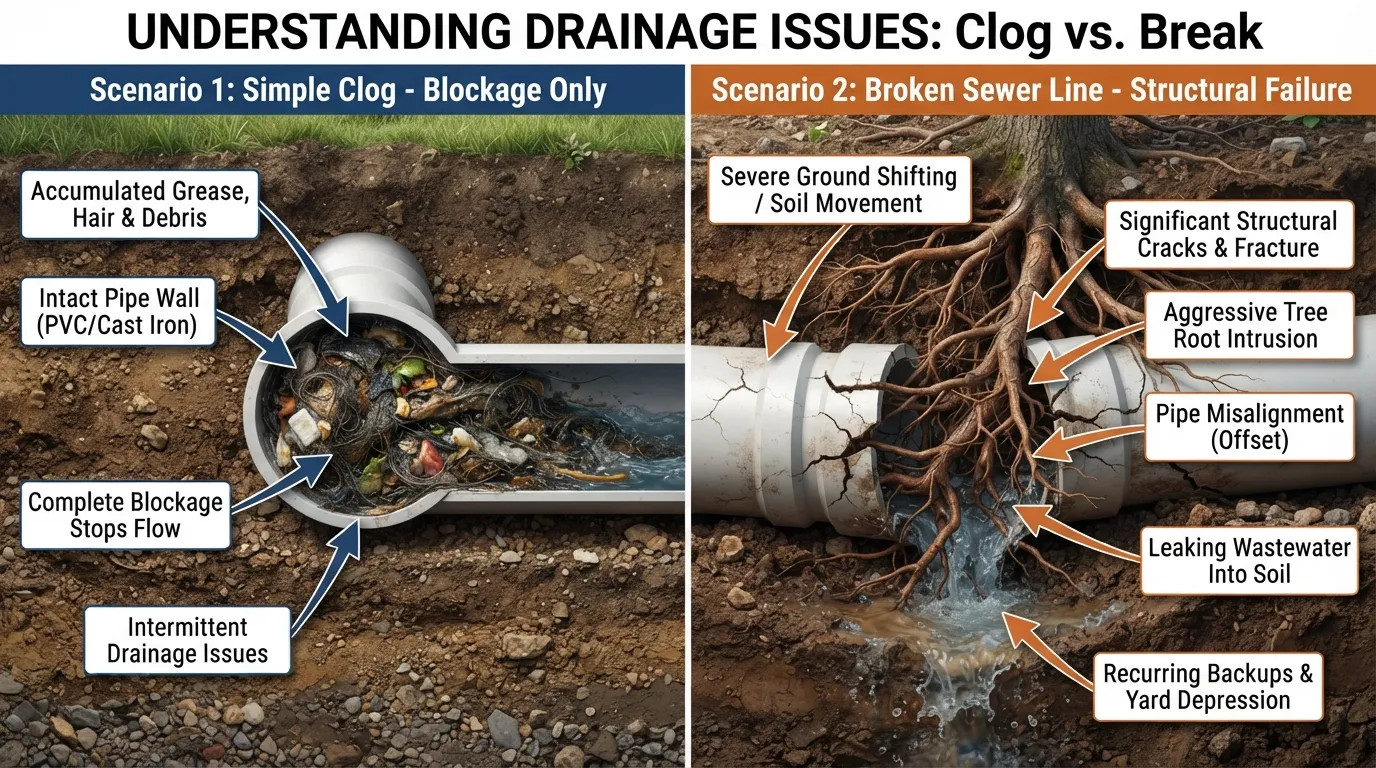
Determining whether your drainage issues stem from a temporary obstruction or structural failure is critical for proper remediation. While both scenarios present identical indoor symptoms, distinguishing between a clog vs break saves homeowners from paying for repeated cleanings when a pipe requires complete restoration.
Signs That Point to a Simple Clog
A standard blockage restricts the flow of water without destroying the physical integrity of the pipe walls. These issues usually develop gradually due to grease buildup, flushable wipes, or localized debris accumulation.
Intermittent Relief: The system temporarily drains normally after being snaked or plunging, only to slow down again after weeks of heavy use.
No Structural Yard Damage: Lawns remain flat and dry without mysterious sinkholes, persistent foul odors, or localized patches of unusually dense grass growth.
Clean Camera Feed: A professional camera inspection reveals smooth interior pipe walls free of cracks, structural offsets, or major fractures.
Signs That Point to a Broken or Collapsed Pipe
Structural damage occurs when external forces breach or shatter the conduit. Common culprits include tree root intrusion, ground shifting, or corrosion in older cast-iron and clay systems.
Persistent Repeat Blockages: Clearing the line provides no lasting relief, and the same backups recur within days because incoming debris catches on jagged pipe edges.
Severe Yard Distortion: You notice sunken depressions in the soil, unexplainable mud puddles, or structural settling near the underground sewer path.
Debris in the Line: A sewer camera reveals missing pipe segments, total pipe collapse, or jagged root masses tearing through a cracked sewer pipe. When hidden structural faults cause moisture intrusion or property degradation, specialized professional leak detection & repair services are required to identify and fix the exact point of failure.
Why Guessing Wrong Can Cost You More
Treating a structural pipe failure as a simple clog can waste hundreds of dollars on temporary drain snaking while the underlying damage worsens.
Escalating Damage: Unresolved structural cracks allow continuous wastewater leakage beneath your foundation, washing away supportive sub-soil and causing concrete slabs to sink.
Wasted Diagnostic Fees: Paying a technician for repeated mechanical clearing when a pipe is collapsed only delays necessary trenchless or excavation repairs.
Property Contamination: Continuous sewage leakage from a broken pipe significantly raises health risks and environmental contamination on your property.
Can You Fix a Sewer Line Blockage Yourself? (DIY Reality Check)
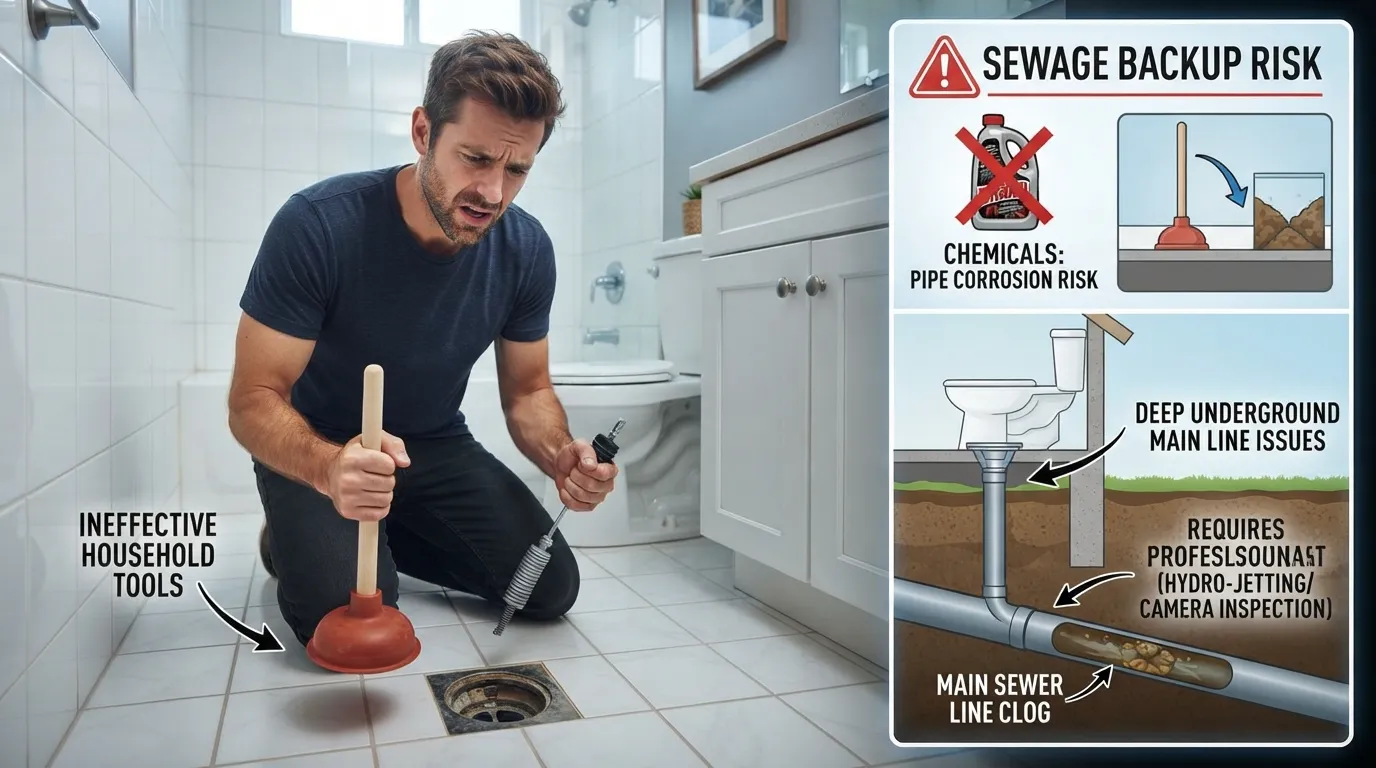
Tackling a main line stoppage with household tools is tempting, but most quick fixes are designed for localized branch clogs rather than central sewer trunks. Understanding the limits of DIY methods prevents hazardous sewage spills and expensive plumbing damage.
Will a Plunger Work on a Main Line Clog? (Usually No — Here’s Why)
A standard cup or flange plunger creates pressure to dislodge clogs trapped in a single fixture’s trap or immediate tailpiece. However, it cannot overcome a severe obstruction deep inside a main sewer line.
Pressure Displacement: Because a main line clog sits feet away past multiple vent and branch intersections, a plunger’s force simply displaces air through nearby sink or tub drains instead of reaching the blockage.
Temporary Disturbance: At best, plunging might slightly break up grease near a branch junction, but it leaves the core trunk line obstruction intact.
Is Drano or Chemical Cleaner Safe for Main Sewer Lines?
Pouring harsh chemical drain openers down your drains to fix a main line blockage is strongly discouraged by plumbing professionals due to high pipe corrosion risk.
Chemical Stagnation: When a main line is completely blocked, heavy chemical liquids cannot reach the obstruction. Instead, they pool inside the pipes or sit stagnant against pipe walls.
Material Damage: Corrosive formulas can eat away at older cast-iron lines, weaken PVC joints, and create dangerous toxic fumes if they back up into living spaces or react with other substances.
Does Boiling Water Actually Help?
Boiling water is an effective maintenance trick for melting minor soap scum and grease accumulation in kitchen sink traps, but it offers zero help for main line blocks.
Rapid Heat Loss: By the time several gallons of boiling water travel through dozens of feet of cold underground piping, the water temperature drops significantly.
Zero Mechanical Power: Boiling water cannot dissolve heavy tree roots, sanitary wipes, structural pipe collapses, or dense accumulations of solid waste.
What Is the Best Chemical/Method for Minor Clogs?
If you suspect a minor restriction is just beginning to form, safer enzymatic cleaners or mechanical clearing are vastly superior alternatives to caustic store-bought chemicals.
Enzyme-Based Cleaners: Natural bacterial treatments digest organic waste, grease, and paper buildup over time without harming pipe integrity.
Hand-Cranked Drain Augers: For minor clogs near accessible branch lines, a short manual snake can safely hook and pull out localized hair or paper masses.
When DIY Attempts Can Make Things Worse
Pushing amateur methods too far on a main sewer blockage frequently results in compounded property damage and safety hazards.
Tool Entrapment: Forcing a consumer-grade drill snake into a main line can cause the cable to kink, knot, or snap off entirely inside the underground pipe.
Wastewater Flooding: Opening pipe cleanouts or aggressively plunging without knowing the layout can unleash pressurized raw sewage directly into your home. When home remedies fail to restore proper flow, professional drain cleaning services utilize industrial hydro-jetting and high-torque mechanical augers to safely clear the line.
Emergency or Not? How to Decide
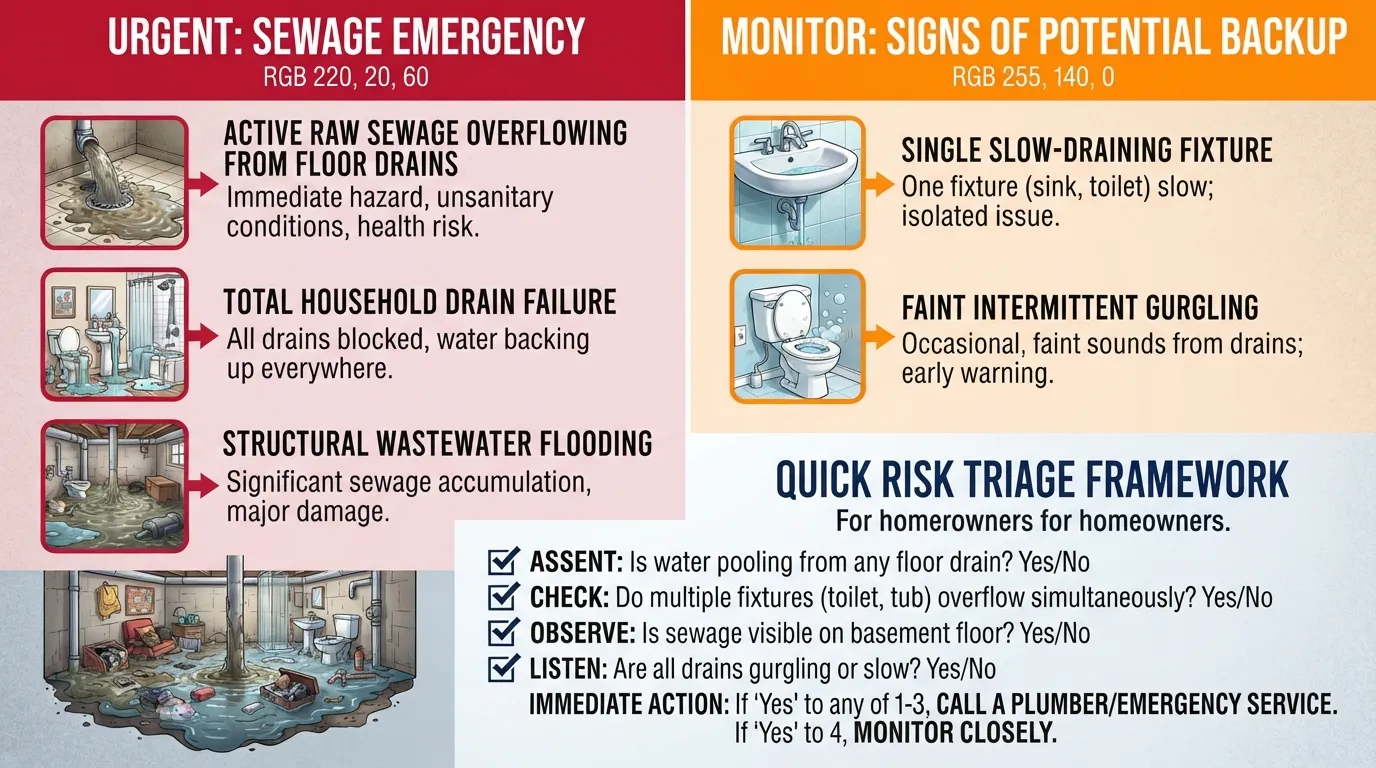
Knowing whether a plumbing issue requires an after-hours dispatch or can wait until morning prevents unnecessary panic while protecting your property from severe destruction. A main line malfunction quickly shifts from an inconvenience into a critical plumbing emergency depending on the scale and location of the wastewater discharge.
Signs That Mean Call a Plumber Immediately
Certain red flags demand immediate professional intervention to prevent catastrophic structural damage and severe health risks. If you delay action during these critical scenarios, you face compounding repair costs.
Active Sewage Overflow: Raw wastewater continuously spilling out of floor drains, showers, or toilets creates an immediate health hazard and toxic environment in your living areas.
Total Household Drain Failure: When every single plumbing fixture in the house completely stops draining simultaneously, the main sewer trunk is entirely blocked or collapsed.
Foundation or Structural Flooding: Water pooling around your home’s interior base or exterior foundation walls requires urgent sewer repair to safeguard your property’s structural integrity. When disaster strikes without warning, contacting an experienced emergency plumber ensures rapid containment and mitigation.
Signs You Can Monitor for 24–48 Hours
Not every minor plumbing hiccup warrants a midnight service call. If symptoms remain contained and manageable, brief observation is acceptable.
Single Slow Fixture: A single sink draining slower than usual while all other bathrooms and kitchen lines function normally typically indicates a localized branch clog rather than a main line crisis.
Faint, Intermittent Gurgling: Occasional bubbling sounds when running heavy water appliances without any actual backing up or standing water can be monitored briefly.
Controlled Water Usage: If your household temporarily curtails water consumption (such as pausing laundry and dishwasher loads) and drainage performance stabilizes, you can safely schedule a standard daytime service appointment.
Simple Self-Check Table/Checklist
Use this rapid triage checklist to assess your current situation and determine the appropriate urgency level before contacting a technician.
Active Sewage in Living Areas: Immediate Emergency — Stop all water use and call a professional right away to mitigate sewage backup risk.
Multiple Fixtures Slow/Gurgling: Urgent Same-Day Attention — Restrict water usage and schedule an inspection within 24 hours.
Single Drain Sluggish: Standard Maintenance — Try manual clearing or schedule a convenient service visit during regular business hours.
How Professionals Diagnose and Fix Main Sewer Line Blockages
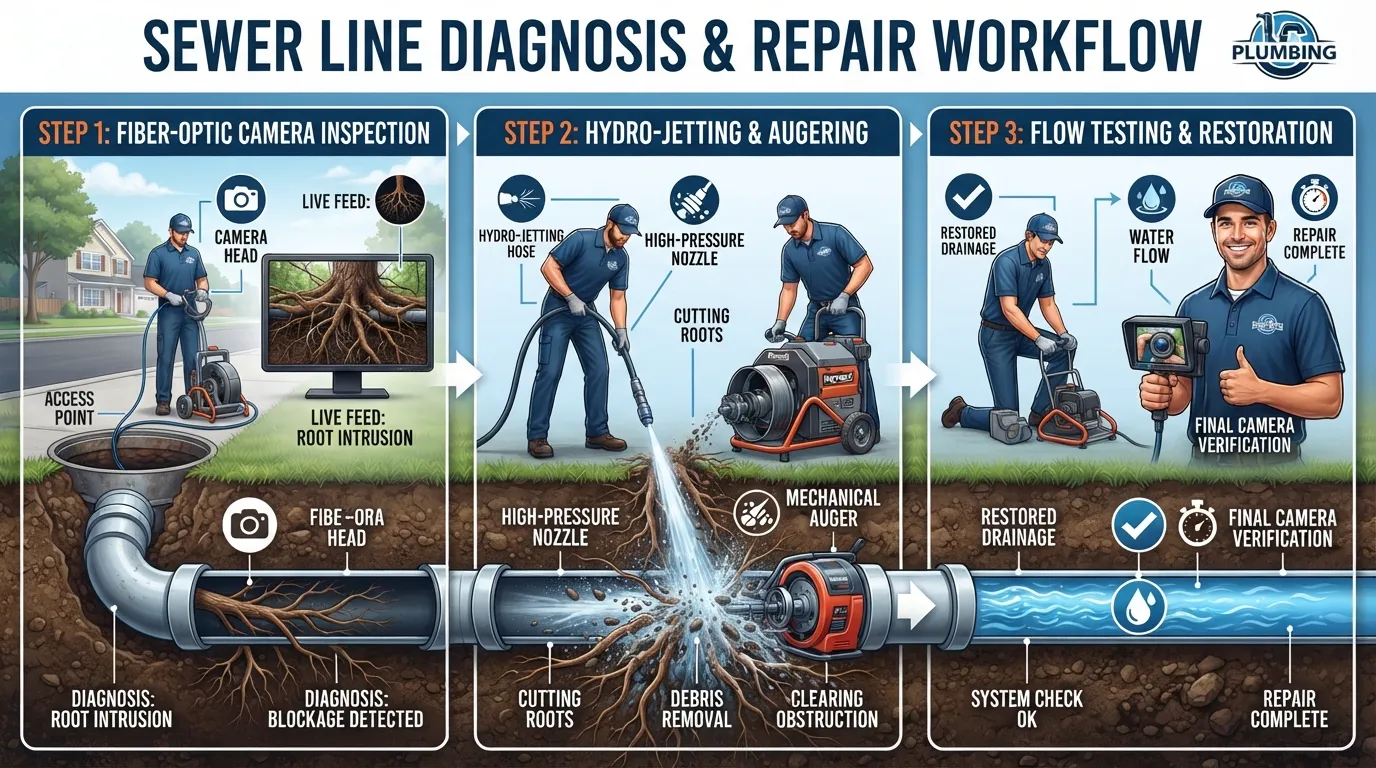
When homeowner troubleshooting and quick fixes fail, resolving a severe obstruction requires specialized industrial machinery and technical expertise. Understanding how a professional plumber diagnoses and treats main line failures provides peace of mind and ensures your drainage system is restored correctly.
Camera Inspection: Finding the Exact Cause
Before initiating any mechanical clearing, a technician performs a targeted camera inspection by feeding a high-definition fiber-optic camera directly through your exterior cleanout.
Real-Time Visual Feed: The technician and homeowner can watch a live monitor display to pinpoint the exact distance, depth, and nature of the obstruction.
Identifying Root Causes: This diagnostic step instantly differentiates between simple grease buildup, heavy tree root intrusion, or structural pipe breaks.
Hydro Jetting vs. Traditional Snaking
Depending on what the camera reveals, a plumber will select between heavy-duty mechanical clearing or high-pressure scouring to clean the line.
Traditional Sewer Auger: A motorized cable with specialized steel cutting heads is driven down the pipe to punch through dense clogs and slice apart intrusive roots.
High-Pressure Hydro Jetting: This advanced technique blasts water at pressures up to 4,000 PSI, completely scouring pipe walls free of grease, scale, and stubborn debris to restore lines to like-new condition.
Typical Repair/Clearing Timeline
Many homeowners wonder how long it takes to clear a main trunk line when dealing with an active backup.
Standard Clearing Duration: For routine clogs or root blockages, a standard service call utilizing a sewer auger or hydro-jetter typically takes between 1 to 3 hours from arrival to final cleanup.
Complex Repairs: If the camera reveals a collapsed pipe requiring spot excavation or trenchless repair, the project can span anywhere from a single day to multiple days depending on permitting and site scope.
What to Expect During a Professional Visit
A structured, transparent service call minimizes stress and ensures your property is treated with care.
Initial Assessment: The technician evaluates affected fixtures, locates your property access points, and sets up protective floor coverings indoors.
Execution & Testing: After clearing or repairing the line, the plumber runs a flow test across multiple household fixtures to verify that drainage is completely smooth and unobstructed. For specialized maintenance or recurring blockages, professional sewer line solutions ensure long-term system reliability.
Cost and Does Homeowners Insurance Cover It?
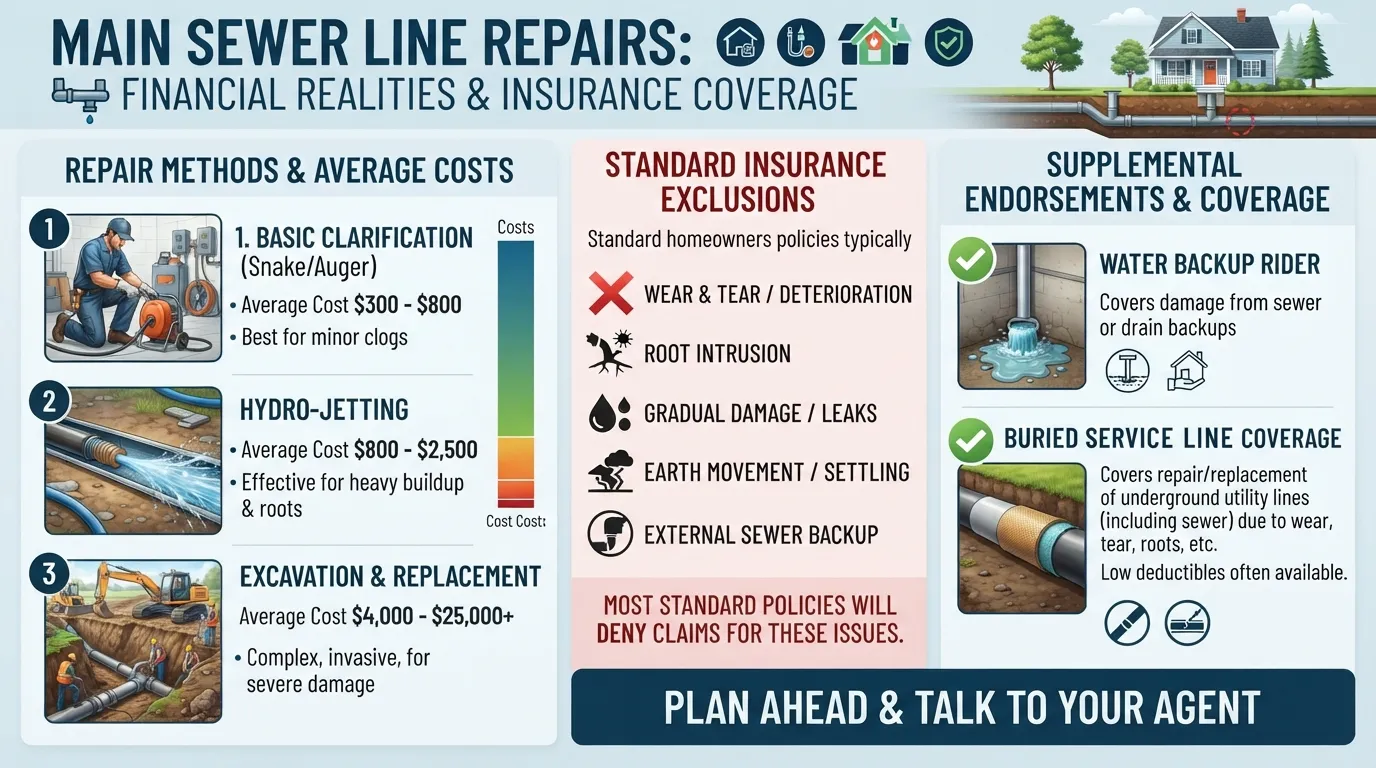
Dealing with a failing main sewer line often brings immediate financial anxiety. Understanding typical service pricing and insurance limitations helps you navigate unexpected plumbing crises without unexpected out-of-pocket shocks.
Average Cost to Clear or Repair a Main Sewer Line
The total financial outlay depends heavily on whether your problem requires simple mechanical clearing, advanced hydro-jetting, or major underground excavation.
Basic Clearing Services: Standard snaking or clearing a main line via an accessible cleanout typically ranges between $250 and $600 for straightforward blockages.
Hydro-Jetting: Comprehensive high-pressure water scouring generally costs between $600 and $1,200 depending on line length and severity of grease or scale buildup.
Trenchless or Excavation Repairs: If pipes are structurally collapsed or broken by roots, total repair costs can range from $3,000 to over $10,000 based on yard depth, landscaping restoration, and local labor rates.
What Homeowners Insurance Typically Covers (and Doesn’t)
A common misconception is that standard policies pay for all plumbing mishaps. According to the Insurance Information Institute, standard homeowners insurance policies do not automatically cover damage caused by sewer backups or underground pipe deterioration.
Standard Exclusions: Damage resulting from gradual wear and tear, tree root intrusion, or lack of maintenance is entirely the homeowner’s financial responsibility.
Interior Water Damage: Standard policies exclude backups entering from outside drains unless specific endorsements are attached.
City Main vs. Private Lateral: Homeowners are universally responsible for the private service lateral connecting their home to the public municipal main under the street.
When Sewer Line Coverage/Endorsements Make Sense
Because standard policies leave major coverage gaps, purchasing supplemental protection can prevent devastating financial losses.
Water Backup Endorsements: Adding a water backup coverage rider (often costing $50 to $250 annually) covers interior property damage, flooring replacements, and professional biohazard cleanup when lines overflow.
Buried Service Line Riders: Service line endorsements specifically protect against sudden underground pipe breaks, leaks, and root damage outside your foundation walls.
Older Neighborhood Risk Assessment: If your home features aging cast-iron or clay pipes surrounded by mature shade trees, investing in these low-cost policy add-ons provides essential peace of mind.
How to Prevent Future Sewer Line Blockages
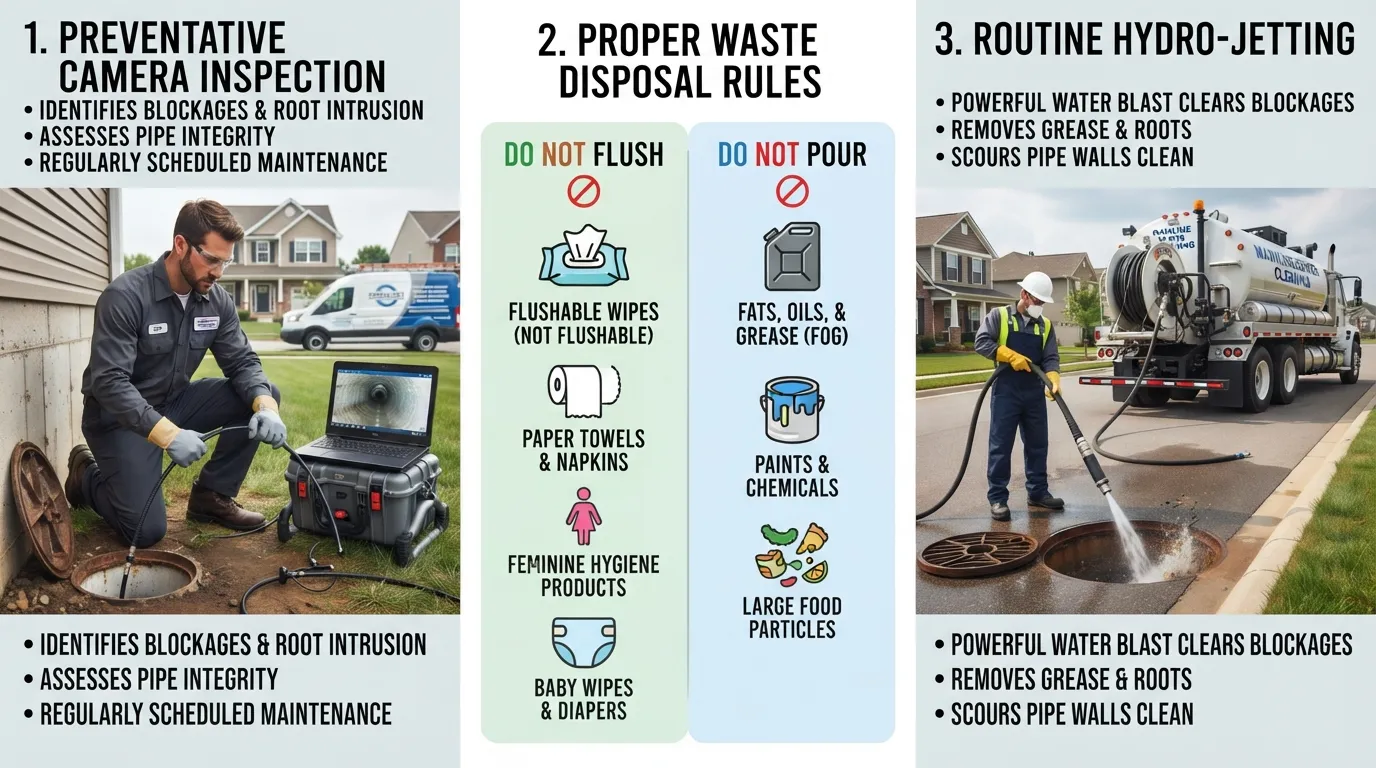
Implementing a proactive maintenance routine is the most effective defense against unexpected plumbing emergencies and costly repairs. Establishing consistent habits protects your drainage network, prevents disruptive wastewater backups, and extends the overall operational lifespan of your underground plumbing infrastructure.
Recommended Cleaning/Inspection Frequency
Knowing how often to service your plumbing system keeps minor buildup from escalating into a severe sewer line cleaning schedule emergency. While every property is unique, standard industry guidelines help establish a reliable timeline.
Standard Residential Homes: Schedule a professional camera inspection and preventative cleaning every 18 to 24 months to catch early scale or grease accumulation.
Properties with Mature Trees: Homes situated near large oak, maple, or willow trees require an annual inspection and root-clearing cycle to combat aggressive underground root intrusion.
Multi-Family or High-Usage Properties: Larger households or heavy commercial settings require more frequent servicing. For specialized facilities, professional commercial plumbing maintenance ensures high-capacity drainage systems remain fully functional under heavy daily loads.
Root Barrier and Grease Prevention Tips
Daily household habits play a massive role in whether your main sewer line remains clear or becomes choked with debris and grease.
Proper Kitchen Disposal: Never pour cooking oil, bacon grease, or heavy food scraps down your kitchen sink. Instead, let grease solidify in a container and dispose of it in the trash.
Chemical Root Inhibitors: Utilize copper sulfate or foaming root barriers in your cleanout periodically if you live in a wooded area, as these treatments inhibit root growth without harming mature trees.
The “Nothing Else” Rule: Strictly limit toilet usage to human waste and standard toilet paper. Never flush “flushable” wipes, paper towels, feminine products, or cotton swabs, as they do not disintegrate and quickly form clogs.
Signs to Watch for Between Inspections
Remaining vigilant between scheduled service visits allows you to catch minor restrictions before they develop into full-blown blockages.
Subtle Slowdowns: Pay attention if your shower drains slightly slower during laundry cycles, as this minor cross-fixture interference is an early indicator of pipeline restriction.
Intermittent Odors: Notice any faint, occasional smells near floor drains or yard cleanouts, which often signal venting disruption or early pipe scaling.
Proactive Monitoring: Keep your outdoor cleanout cap easily accessible and free of heavy landscaping so you can quickly inspect for moisture or standing water at the first sign of trouble.
Frequently Asked Questions
How do you know if your main sewer line is blocked?
The primary indicator of a main sewer line blockage is simultaneous slow draining or backing up across multiple fixtures, such as your toilets, showers, and sinks all acting up at once. Other common red flags include gurgling sounds coming from drains when appliances run, water bubbling up into your bathtub when you flush a toilet, or wastewater pooling around your basement floor drain and outdoor sewer cleanout.
Can you clear a main sewer line clog yourself?
In most cases, homeowners cannot effectively clear a main sewer line clog because the obstruction is located deep underground past multiple branch intersections. Standard consumer tools lack the reach and power required, meaning you will typically need professional equipment like a sewer auger or hydro-jetter to fully resolve the issue.
How do I unblock my main sewer line?
Safely unblocking a main sewer line requires accessing your exterior sewer cleanout pipe to run a motorized plumbing snake or high-pressure water jet. Because severe blockages are often caused by heavy tree root intrusion or structural pipe damage, professional intervention is recommended to clear the obstruction safely without causing further damage.
How long does it take a plumber to unclog a main sewer line?
For standard blockages, root intrusions, or grease clogs, a professional camera inspection and mechanical clearing or hydro-jetting typically takes between 1 to 3 hours. However, if the blockage is caused by a complete pipe collapse requiring excavation or trenchless repair, the project can take anywhere from a single day to multiple days.
Will Drano unclog a main sewer line?
No, standard chemical cleaners like Drano will not clear a main sewer line blockage and are strongly discouraged. Because a main line is completely blocked, heavy chemicals pool stagnant against pipe walls, creating a severe pipe corrosion risk without reaching or dissolving the actual obstruction.
Does pouring boiling water down a drain help unclog it?
Boiling water can help melt minor grease or soap scum buildup inside a localized kitchen sink trap, but it has no effect on a main sewer line block. By the time water travels through dozens of feet of cold underground piping, it loses its heat entirely and cannot break down solid waste, roots, or physical clogs.
Can a plunger unclog a main sewer line?
A standard plunger cannot clear a main sewer line because its pressure only affects localized blockages in a single fixture’s trap. When applied to a main line backup, the plunger’s force simply escapes through nearby air vents or other drain openings instead of reaching the deep trunk obstruction.
How often should the main sewer line be cleaned?
For standard residential properties, a preventative annual inspection or a professional cleaning every 18 to 24 months is ideal to prevent unexpected backups. Homes with large trees nearby or older cast-iron plumbing systems should schedule routine preventative maintenance more frequently to combat persistent tree root intrusion.
What is the best chemical to unclog a sewer line?
Harsh chemical drain openers are unsafe for main sewer lines, but natural, eco-friendly enzyme-based treatments are effective for routine maintenance. These biological cleaners slowly digest organic waste and grease buildup over time without threatening your home’s plumbing integrity or increasing pipe corrosion risk.
Does homeowners insurance cover sewer lines?
Standard homeowners insurance policies do not automatically cover damage caused by sewer backups, gradual wear and tear, or underground pipe failures. To protect against these unexpected costs, homeowners must purchase optional policy add-ons such as a water backup coverage endorsement or a buried service line rider.
Final Call to Action
Ignoring the early warning signs of a main sewer line blockage only leads to escalating property damage, unhygienic living conditions, and significantly higher repair costs down the road. Whether you are dealing with persistent slow drains, gurgling toilets, or an active wastewater backup, taking swift action protects your home’s foundation and your family’s health.
When You Notice These Signs, Don’t Wait — Book a Professional Inspection
When plumbing problems threaten your home, professional expertise is your fastest and safest solution. Don’t let a minor drainage restriction turn into a catastrophic property emergency.
Expert Diagnostics: Certified technicians arrive equipped with advanced diagnostic tools to pinpoint the exact root cause of your blockage without guesswork.
Rapid Resolution: From high-pressure hydro-jetting to targeted trenchless repairs, professional intervention restores your plumbing system quickly and safely.
Take Action Now: Skip the stress of trial-and-error home remedies. Book a plumber today to secure reliable, expert emergency plumbing service and schedule your comprehensive sewer line inspection before minor issues escalate into major disasters.
Main Services
Related Posts
Need a Plumber in Miami?
Schedule service online or speak directly with the EZ Plumbing team.
Owner-Led Local Service
Know who is behind the business before you request service. The owners, contact line and Miami service pages are published clearly.
- Named business owners
- Direct phone and social channels
- Local Miami service information
Clear Help Before You Book
Review the relevant service page, contact the team directly and use the booking page when you are ready—without relying on vague claims.
- Service-specific information
- Direct questions before scheduling
- Clear online booking route