How to Prevent Clogged Drains in Your Home: A Room-by-Room Guide
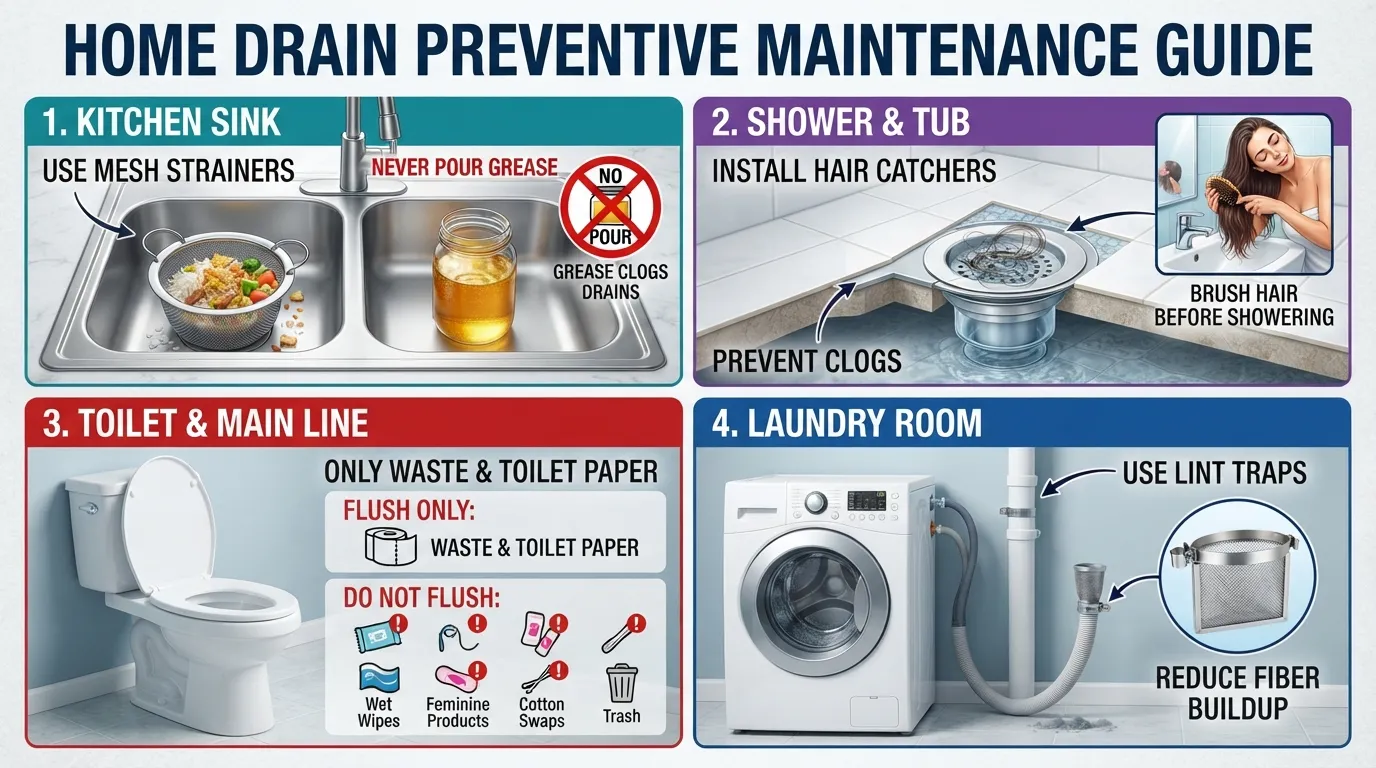
Preventing Clogged Drains: The Ultimate Room-by-Room Maintenance Guide
Dealing with slow drains and stubborn blockages can disrupt your entire household, but most plumbing headaches are entirely preventable with the right routine care. Whether you are tackling daily kitchen prep or managing heavy bathroom usage, proactive drain maintenance saves you from messy emergencies and expensive plumber callouts.
This comprehensive guide delivers a practical, room-by-room blueprint combining effective DIY prevention strategies with expert insights. By mastering these simple maintenance habits for your kitchen, bathroom, toilet, and laundry drains, you can keep your plumbing flowing smoothly year-round. However, if a tough blockage has already formed beyond your home toolkit, bringing in a reliable professional drain cleaning service ensures the issue is resolved safely and completely.
Why Do Drains Clog? Common Causes
Understanding the root causes of plumbing blockages is the first step toward effective prevention. Drains rarely clog overnight; instead, restrictions develop gradually as everyday debris accumulates inside your home’s pipes [00:09].
Grease, Fat & Oil Buildup
Kitchen drains frequently fall victim to liquid fats, cooking oils, and grease clogs. When warm or hot grease is poured down the sink, it cools rapidly as it travels through underground or basement pipes, solidifying and sticking to the pipe walls [01:04].
Over months and years, successive layers of fat accumulate, drastically narrowing the pipe’s interior diameter [01:55].
Eventually, this restricted aperture traps food particles and other organic debris, resulting in a complete flow stoppage [01:55].
Older galvanized or cast-iron pipes feature higher interior friction, making them especially vulnerable to this layer-upon-layer buildup [02:18].
Hair & Soap Scum
Bathroom sinks, showers, and tubs face a different primary culprit: hair combined with sticky soap residue [02:37]. Hair easily catches on tiny imperfections or mechanical obstructions within the drain assembly, such as pop-up stoppers [02:59].
Once trapped, hair strands act like a net, catching body oils, skin flakes, and soap scum to form dense, fibrous blockages.
Because hair is highly resilient against standard water flow, it anchors securely in place until manually removed or dissolved.
Foreign Objects & Wipes
Accidental or improper flushing of non-disposable items introduces rigid obstructions into your plumbing system. P-traps are intentionally designed to hold water to block sewer gases, but this tight bend also catches solid items [02:24].
Common culprits include dental flossers, coffee stirrers, jewelry, cotton swabs, and personal hygiene products [02:29].
Even items marketed as “flushable wipes” frequently fail to break down rapidly enough, snagging on pipe joints and catching loose grease or hair.
Mineral & Sediment Buildup (Hard Water Angle)
Homes supplied with hard water experience a unique, insidious form of restriction caused by dissolved calcium and magnesium minerals. As hard water evaporates or flows through pipes, mineral deposits precipitate out of the solution.
Limescale and pipe sediment line the interior walls of your plumbing system, creating a rough, chalky texture.
This rough mineral crust accelerates problems by providing a high-friction surface that catches grease, hair, and soap scum much faster than smooth PVC piping.
Kitchen Drain Prevention Tips
Protecting your kitchen sink drain from stubborn blockages requires establishing a few simple daily habits and routine cleaning practices. Because the kitchen handles heavy volumes of food waste, oils, and starches, proactive care stops minor debris from turning into major plumbing emergencies.
Never Pour Grease or Oil Down the Drain
Liquid fats, cooking oils, and bacon grease are the leading causes of severe kitchen plumbing failures. Even when washed down with hot tap water, liquid grease quickly cools and solidifies inside your pipes, creating a sticky trap for future food particles.
Let cooking grease cool and solidify in a pan or container before scraping it directly into the trash or organic waste bin.
Wipe down oily cookware and plates with a paper towel to remove excess fat before washing them in the sink.
Never use hot water and dish soap as a justification for washing liquid oil down the drain, as the fat will eventually re-coagulate further down the line.
Use a Sink Strainer for Food Particles
Catching food waste at the surface prevents it from ever entering your plumbing system and settling inside your P-trap. A simple, inexpensive mesh sink strainer acts as your first line of defense during meal prep and dishwashing.
Empty your sink strainer into the trash or compost bin regularly rather than tapping it out into the drain.
Choose a stainless steel or durable silicone strainer that fits snugly over your drain opening to ensure no loose scraps slip through the edges.
Garbage Disposal Do’s and Don’ts
Garbage disposals are designed to handle minor food residue, but they are not industrial shredders. Improperly loading your disposal introduces fibrous and starchy waste that binds together or expands inside drainage pipes.
Avoid grinding fibrous or stringy food waste, such as celery stalks, artichokes, onion skins, and corn husks, which wrap around the disposal’s impeller blades.
Keep starchy, expanding items like potato peels, rice, pasta, and coffee grounds out of the disposal because they swell with water and form a cement-like sludge.
Always run a steady stream of cold water before, during, and for several seconds after operating your disposal to help flush pulverized waste entirely through the system.
Weekly Hot Water Flush Routine
A weekly maintenance flush helps keep your kitchen pipes clear by melting away minor residue before it hardens into a permanent restriction. This natural preventative step takes just minutes and requires no harsh chemicals.
Boil a full kettle of water on your stovetop once a week.
Pour the boiling water slowly and steadily directly down the kitchen sink drain in two or three stages, allowing the heat to work its way through the trap and horizontal pipes.
Follow up with a tablespoon of standard dish soap or a natural enzyme cleaner to help break down microscopic organic films.
Bathroom Drain Prevention Tips
Preventing bathroom drain blockages requires targeting the two primary culprits behind localized clogs: accumulated human hair and binding soap scum. Implementing proactive hardware barriers alongside routine maintenance schedules stops debris from forming stubborn, hardened plugs deep within your p-trap and branch drain lines.
Install Hair Catchers on Shower & Tub Drains
Installing a high-efficiency hair catcher over or inside shower and tub drains creates an immediate physical barrier that captures strands before they enter the plumbing system. Shower drains are particularly vulnerable because loose hair combines with bath oils and body wash to create dense, water-impermeability mats.
Mesh Screen Catchers: Positioned directly over flat shower grates, fine stainless steel mesh screen units capture long strands and small debris while allowing high-volume water flow.
In-Drain Tub Catchers: Designed for bathtub drains, silicone or metal cylindrical strainers fit inside the drain opening, wrapping hair neatly around an internal core out of sight.
Maintenance Protocol: Empty and rinse the hair catcher after every 2 to 3 uses to prevent standing water and biofilm accumulation.
Clean Your Pop-Up Stopper Weekly
Bathroom sink pop-up stoppers feature underground pivot rods that act as natural magnets for hair, toothpaste, and soap scum buildup. Over time, this mixture hardens along the stopper mechanism, progressively narrowing the drain diameter and slowing water discharge.
Remove the Stopper: Twist the pop-up top counterclockwise or lift and disengage the clevis strap linkage beneath the sink basin.
Clear Organic Debris: Wipe away accumulated hair, slime, and soap scum using a paper towel and a stiff nylon brush.
Sanitize the Mechanism: Soak the stopper assembly in warm white vinegar for 10 minutes to dissolve mineral scale and lingering soap scum before reinstalling.
Brush Hair Before Showering (Practical Habit Tip)
Brushing your hair thoroughly prior to showering significantly reduces the volume of loose strands shed during washing. Dry hair stays intact during brushing, allowing you to catch loose strands in a hairbrush rather than sending them down the shower drain.
Reduces Shedding in Drains: Brushing dry hair removes up to 70% of loose, resting-phase strands before water lubrication causes them to slide down your back and into the plumbing.
Prevents Matting: Dry hair is easier to clear from a brush than wet hair is to pull from a wet drain grate.
Complements Drain Guards: Pre-shower brushing prevents heavy water backup by reducing the load on your physical hair catcher.
Monthly Enzyme/Bacterial Drain Treatment
A monthly enzyme drain cleaner uses live non-pathogenic bacteria and biological enzymes to digest organic matter coat-lining the interior of PVC and cast iron pipes. Unlike harsh chemical drain openers, bacterial drain treatment formulations break down hair, body fats, and soap scum without corroding metal fittings or melting plastic pipes.
Targeted Digestion: Biological enzymes specifically target and hydrolyze organic proteins, oils, and grease deposits lining branch pipes.
Pipe-Safe Application: Non-corrosive formulas maintain line integrity and protect septic tank ecosystems by enhancing natural bacterial decomposition.
Overnight Protocol: Pour the recommended dose of liquid or powder enzyme cleaner down the drain late at night, letting the biological cultures digest waste undisturbed for 6 to 8 hours before flushing with warm water.
Toilet Drain Prevention Tips
Maintaining a clear toilet drainage system depends entirely on controlling what enters the bowl, as toilet traps and branch sewer lines are engineered strictly for organic human waste and water-soluble tissue. Preventing severe line blockages requires adhering to strict flushing boundaries and eliminating household habits that introduce non-degradable materials into your home’s waste infrastructure.
The Golden Rule — Only Waste and Toilet Paper
The foundational principle of toilet maintenance is straightforward: human waste and standard toilet paper are the only substances engineered to pass safely through waste lines. Toilet paper is uniquely designed with short cellulose fibers that disintegrate within seconds of water contact, allowing effortless passage through internal traps and main sewer lines.
Rapid Disintegration: Standard toilet paper breaks down rapidly under hydraulic turbulence, preventing structural dams inside your drain pipes.
Optimal Flow Volume: Flushing only organic waste and toilet paper ensures that standard 1.6-gallon or high-efficiency 1.28-gallon flush volumes generate sufficient force to sweep solids completely to the municipal sewer or septic tank.
System Longevity: Restricting inputs to flushable-safe organic matter prevents recurring waste line restrictions and stops premature pipe degradation.
Why “Flushable” Wipes Still Cause Clogs
Despite product packaging claims, “flushable” wipes represent one of the leading causes of severe residential plumbing blockages and municipal sewer pipe failures. Unlike rapid-dissolving toilet paper, these wipes are manufactured using synthetic fibers, plastic polymers, or reinforced viscose designed to maintain structural integrity when wet.
Indestructible Fibers: Synthetic wipe materials do not break down in water, remaining fully intact as they travel through your plumbing fixtures.
Trap Catching: Wipes easily snag on the internal cast-iron ridges, imperfect pipe joints, or minor burrs inside drain lines, creating an immediate physical anchor for incoming solids.
Fatberg Formation: Once lodged, synthetic wipes catch grease, hair, and other debris, rapidly expanding into dense, impermeable blockages that cause severe backup.
If non-degradable wipes or foreign objects become trapped deep inside your waste line, persistent toilet clogs that won’t clear using standard plungers require professional augering or pipe inspection to prevent fixture overflow and structural water damage.
Items That Should Never Be Flushed
Numerous everyday bathroom items are mistakenly discarded into toilet bowls, leading to immediate localized blockages or long-term line constriction. Treating your toilet as a trash receptacle introduces non-biodegradable solids that lock together inside drain lines.
Dental Floss: Made of braided nylon or Teflon, dental floss is virtually indestructible. It forms tough, web-like nets inside drain pipes that catch toilet paper and solid waste.
Feminine Hygiene Products: Tampons and sanitary pads are specifically designed to absorb liquids and expand exponentially. Inside a narrow 3-inch or 4-inch drain pipe, this expansion creates an immediate, airtight plug.
Paper Towels & Tissues: Facial tissues and heavy paper towels are treated with wet-strength resins to resist tearing when saturated, making them unable to dissolve like toilet paper.
Cotton Swabs & Balls: Cotton products absorb water without dissolving, bundling together in pipe bends and trapways to form rigid physical obstructions.
Laundry Room Drains — The Overlooked 4th Room
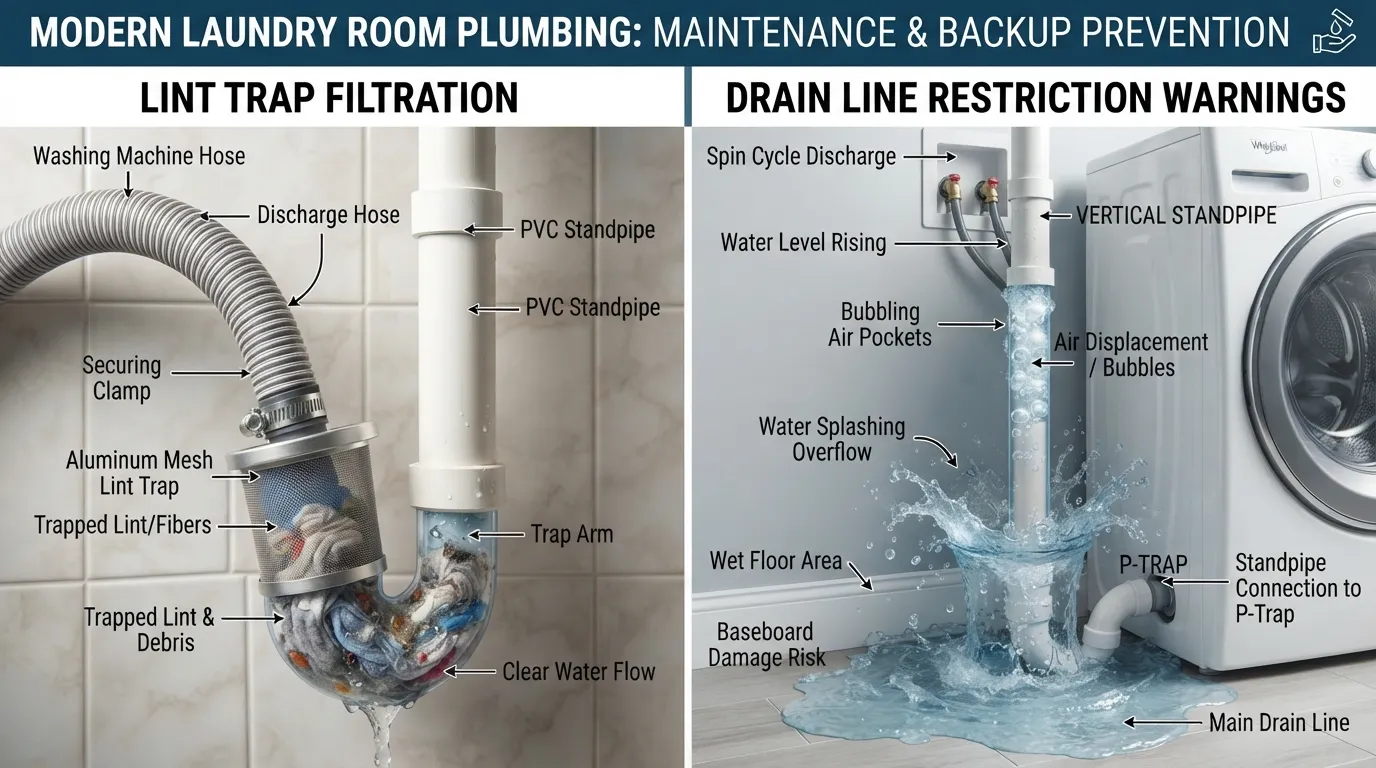
While home safety checklists heavily focus on kitchens and bathrooms, the laundry room contains one of the highest-volume, highest-risk drainage points in any home. Every washing machine discharge cycle pumps up to 30 gallons of water per minute under high pressure into a narrow 2-inch drain pipe. Without proper discharge protection, this rapid water volume carries dense textile debris that rapidly forms a severe laundry drain clog.
Install a Lint Trap on Your Washing Machine Hose
The single most effective preventive measure for laundry room plumbing is adding an external filtration barrier to your washing machine discharge line. Synthetic microfibers, cotton lint, pet hair, and tissue remnants bypass internal washing machine filters, entering the drain hose in concentrated suspension.
Mesh Screen Traps: Inexpensive wire mesh or aluminum mesh strainers attach directly to the end of the drain hose using a hose clamp or cable tie. They catch heavy lint matting before water enters the standpipe.
In-Line Canister Filters: For dedicated wall boxes, reusable canister filters install along the discharge line to strain fine microfibers without restricting discharge flow rates.
Maintenance Schedule: Inspect and clean mesh traps monthly, or replace disposable mesh screens whenever lint accumulation covers more than 50% of the surface area to ensure unobstructed drainage.
Signs Your Laundry Drain Line Is Backing Up
Detecting a main line obstruction early prevents high-volume water overflows that cause immediate floor, wall, and subfloor structural damage. Because washing machines pump water out mechanically rather than relying on gravity alone, early warning signs often manifest right at the standpipe.
Water Overflow at the Standpipe: Water splashing over the top of the wall box or standpipe during the drain/spin cycle indicates a partial obstruction downstream restricting pipe capacity.
Gurgling Fixtures: Hearing bubbling or deep gurgling sounds coming from nearby utility sinks, floor drains, or adjacent bathroom fixtures while the washing machine empties points to line air displacement caused by a building blockage.
Slower Drainage & Standing Water: Residual water remaining in the utility basin or slow discharge from the drain pipe confirms that soap scum, lint, and hard water scale have narrowed the internal pipe wall diameter.
What You Should Never Pour Down Any Drain
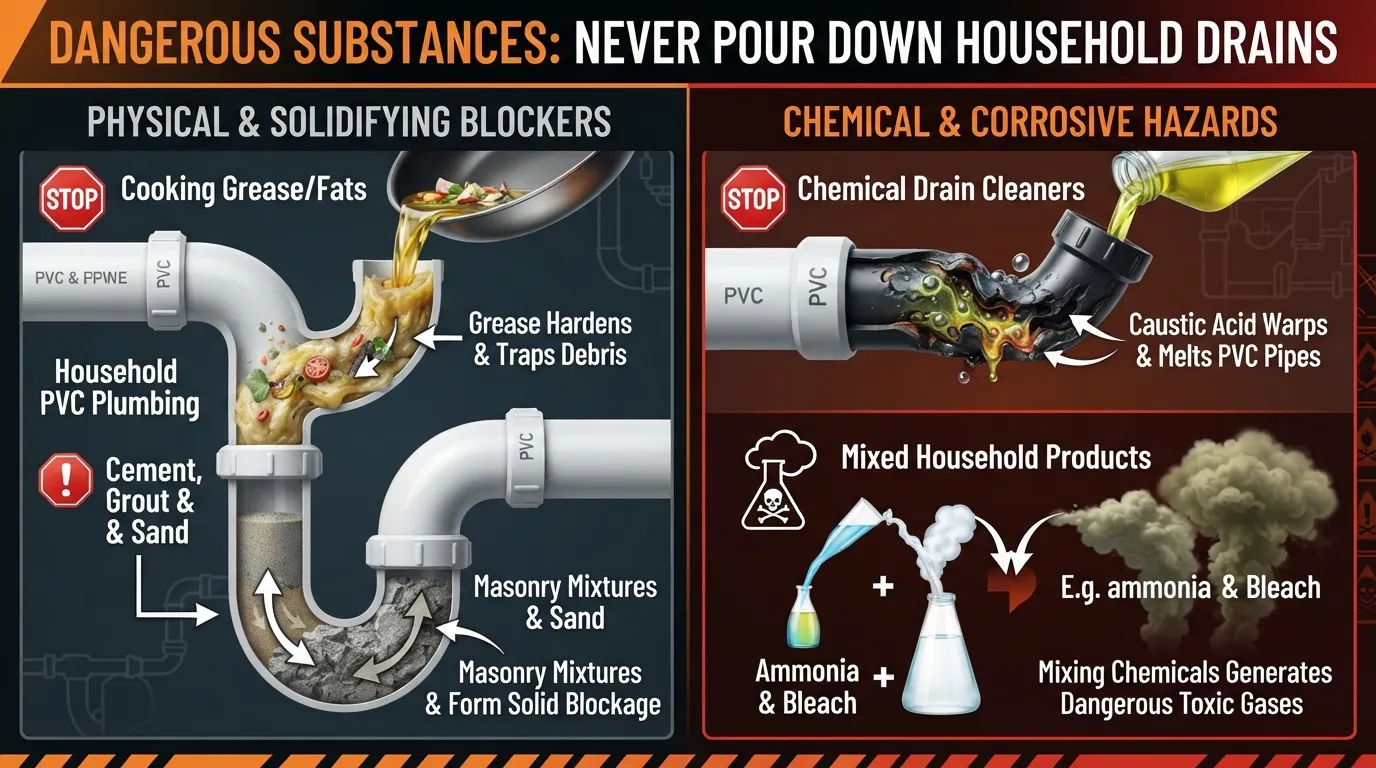
Protecting your plumbing system requires absolute strictness regarding what enters your branch lines and main stack. Beyond organic waste and standard greywater, non-liquid solids, quick-setting materials, and corrosive chemicals present immediate hazards to structural pipe walls, joints, and municipal sewer systems.
Grease, Cement, Grout & Sand
Renovation waste, masonry materials, and cooking byproducts rank among the most destructive substances ever introduced to residential drain lines. Unlike organic waste that decomposes over time, construction heavy solids and hardened lipids form rock-like barriers that require hydro-jetting or physical mechanical removal.
Fats, Oils, and Grease (FOG): Warm liquid grease coats cold interior pipe walls, solidifying into thick, sticky lipid layers. FOG binds with loose hair, paper products, and minerals to form expanding blockages that completely seal the pipe diameter.
Grout and Joint Compound: Drywall joint compound, ceramic tile grout, and thin-set mortar contain water-reactive binders. Washing these tools in household sinks causes heavy mineral pastes to settle in low points like p-traps and building drain slopes, where they cure under water into solid concrete plugs.
Sand and Masonry Particles: Silica sand, concrete washings, and stone dust are highly dense and non-biodegradable. They accumulate at pipe elbows and horizontal runs, creating abrasive bed loads that restrict waste flow and accelerate internal pipe erosion.
Chemical Drain Cleaners — Risks of Mixing Products
Pouring over-the-counter chemical drain cleaners down clogged pipes introduces severe risks to both plumbing integrity and personal safety. Most conventional liquid drain openers rely on heavy concentrations of sodium hydroxide (lye) or sulfuric acid to generate exothermic (heat-producing) reactions that burn through organic blockages.
Exothermic Pipe Damage: The intense heat generated by caustic chemicals softens and warps thin-walled schedule 40 PVC drain pipes, melts rubber trap seals, and cracks old porcelain fixtures.
Corrosive Joint Degradation: Standing chemical solutions held against aging galvanized iron or copper fittings dissolve thread joint compounds, leading to hidden pinhole leaks inside walls and subfloors.
Toxic Gas Hazards: Mixing different commercial drain products—or combining a bleach-based cleaner with an acid-based opener—triggers immediate chemical reactions that release lethal chlorine or chloramine gas. Review official health safety reports on chemical drain cleaner hazards before introducing caustic agents into standing water fixtures.
DIY Drain Cleaning Methods — What Actually Works Myth-Busting
Popular home remedies promise instant drain clearing using simple pantry items, but few DIY solutions address the actual mechanical structure of an established pipe blockage. Dissecting these internet hacks reveals why some household methods provide mild maintenance benefits while others fail entirely against physical obstructions.
Does Pouring Salt Down the Drain at Night Work?
Pouring coarse salt down a drain overnight acts as a mild abrasive and natural desiccant, but it cannot dissolve severe hair plugs or solid physical blockages. When combined with boiling water, the crystalline salt particles scrub minor buildup along pipe walls as they flush through.
Abrasive Scouring: The jagged edge of rock salt or table salt helps scour away soft slime coats and fresh grease films inside the p-trap.
Odors & Moisture: Salt absorbs moisture and neutralizes odor-causing bacteria lurking within organic bio-films.
Real Limitations: The salt drain trick will not break down protein-based obstructions like human hair, cellulose paper products, or hardened grease.
Does Dawn Dish Soap Really Unclog Drains?
Concentrated Dawn dish soap effectively breaks down fresh grease-based kitchen sink clogs due to its heavy surfactant formulation designed to emulsify fats and oils. However, its effectiveness drops off significantly against hair, mineral scale, or cool, hardened fat deposits situated far down the branch line.
Grease Emulsification: Pouring 1/2 cup of liquid dish soap directly down a slow drain breaks the surface tension of oily residues clinging to plastic or metal pipes.
Lubrication Boost: The soap slickens the inner pipe surface, allowing minor organic debris to slide through narrow fittings when flushed with hot water.
Temperature Dependency: Always follow dish soap with gallons of scalding water; using lukewarm or cold water causes loosened fats to solidify further down the line.
Baking Soda + Vinegar vs. Drano — Which Is Better?
Choosing between a natural drain cleaner combination and caustic chemical formulations like Drano comes down to balancing safety against immediate clearing power. While chemical drain openers offer fast action against organic matter, their extreme toxicity and heat-producing properties carry high risks for household plumbing
| Feature / Criteria | Baking Soda & Vinegar | Caustic Chemical Openers (e.g., Drano) |
|---|---|---|
| Primary Mechanism | Carbon dioxide gas pressure & mild acid | Caustic chemical hydrolysis (lye/acid) |
| Safety Level | Non-toxic, 100% pipe-safe | Highly toxic, severe chemical burn risk |
| Target Material | Soft bio-films & light grease | Hair, organic matter, soap scum |
| Pipe Impact | Zero structural risk | Softens PVC, corrodes older metal fittings |
| Environmental Hazard | None | Toxic to aquatic systems & septic tanks |
Why Some Plumbers Say Skip Baking Soda and Vinegar
The viral combination of baking soda (sodium bicarbonate) and vinegar (acetic acid) is often touted as a magic fix, but professional plumbers frequently advise against relying on it for actual line blockages. High-school chemistry explains why this popular mixture fails to clear dense obstructions:
Acid-Base Neutralization: Combining an acid with a base creates a rapid fizzing reaction that produces water, sodium acetate, and carbon dioxide gas. Once the initial effervescence dies down, you are left with little more than diluted saltwater.
Lack of Degreasing Power: The fizzing action provides mild mechanical agitation inside an open pipe, but it lacks the chemical strength required to break down dense protein chains in hair or melt thick lipid grease caps.
False Sense of Clearance: While the foaming reaction may bubble up past a minor standing water bottleneck, it rarely removes the core obstruction, leaving the pipe vulnerable to an immediate secondary clog within days.
Drain Maintenance Schedule Daily, Weekly, Monthly
Establishing a structured preventive maintenance routine eliminates the organic waste, mineral deposits, and grease accumulation that cause unexpected line blockages. Following this tiered drain maintenance schedule ensures optimal waste line flow, protects pipe integrity, and eliminates foul plumbing odors across all household fixtures.
| Frequency | Fixture / Location | Preventive Maintenance Action | Primary Benefit |
|---|---|---|---|
| Daily | Kitchen Sink | Clear mesh strainers of all solid food scraps; scrape plates into compost/trash prior to rinsing. | Prevents solid food accumulation and reduces organic waste inside p-traps. |
| Daily | Shower & Bathtub | Empty hair catchers after use; wipe down surface drain grates. | Captures shed hair before it combines with soap scum to form dense plugs. |
| Daily | Toilet | Enforce “waste and tissue only” rule; discard wipes, floss, and cotton swabs in trash cans. | Prevents non-degradable materials from lodging in internal toilet traps. |
| Weekly | Kitchen Sink | Perform a hot water flush by pouring 1–2 gallons of scalding water down the main drain. | Melts and washes away trace grease deposits clinging to cold pipe walls. |
| Weekly | Bathroom Sink | Pull up and scrub pop-up stoppers; clear hair, toothpaste residue, and visible bio-films. | Restores full water flow capacity and eliminates localized bacterial odors. |
| Weekly | Garbage Disposal | Grind ice cubes with citrus peels, then flush thoroughly with cold water for 60 seconds. | Scours internal impellers, removes stuck food film, and freshens the grinding chamber. |
| Monthly | All Branch Drains | Apply a biological or enzyme drain cleaner late at night; let digest for 6–8 hours. | Safely digests organic buildup, soap scum coating, and hair without pipe corrosion. |
| Monthly | Washing Machine | Clean or replace line lint traps; inspect the external drain hose for crimps or sediment buildup. | Prevents high-volume standpipe overflows and reduces microfiber lint accumulation. |
| Monthly | Floor & Utility Drains | Pour 1 gallon of fresh water down basement and utility floor drains to fill p-traps. | Replenishes water seals to permanently block hazardous sewer gases from entering the home. |
Daily Habits
Executing small, daily preventive habits stops heavy debris from entering branch lines in the first place. Simple behavioral adjustments at every household sink, shower, and toilet reduce overall mechanical stress on your plumbing infrastructure.
Scrape Plates Thoroughly: Always scrape excess food particles into the garbage or compost before washing dishes to keep solids out of kitchen p-traps.
Clear Surface Strainers: Empty hair strainers and food catchers immediately after cooking or bathing so water flows freely during subsequent uses.
Cover Open Drains: Keep drain stoppers or mesh guards in place full-time to prevent accidental entry of small foreign objects like jewelry or caps.
Weekly Maintenance Tasks
Weekly maintenance focuses on flushing out soft bio-films, fresh grease coatings, and minor particulate settling before materials harden along interior pipe walls.
Execute Hot Water Flushes: Run hot tap water or pour scalding water down kitchen and bathroom sinks to liquefy and clear soft fats and soap residues.
Scrub Bathroom Fixture Hardware: Remove pop-up stoppers and sink strainers to wipe away accumulating slime, hair, and toothpaste buildup.
Sanitize the Disposal: Run ice cubes and fresh lemon slices through the garbage disposal to mechanically knock off stubborn debris from the grinding ring.
Monthly Deep-Clean Checklist
A monthly deep clean provides targeted biological treatment and critical structural checks to ensure main branch lines stay open and leak-free.
Dose with Biological Enzymes: Pour commercial enzyme or bacterial drain treatments into all house drains to digest clinging organic matter overnight.
Inspect Washing Machine Hose Filters: Remove mesh lint catchers from the laundry discharge hose, clear trapped fabric fibers, or replace saturated screens.
Prime Dry P-Traps: Pour water into infrequently used basement, guest bathroom, or utility floor drains to maintain the protective water seal that blocks sewer gas.
Warning Signs You Need Professional Drain or Sewer Line Service
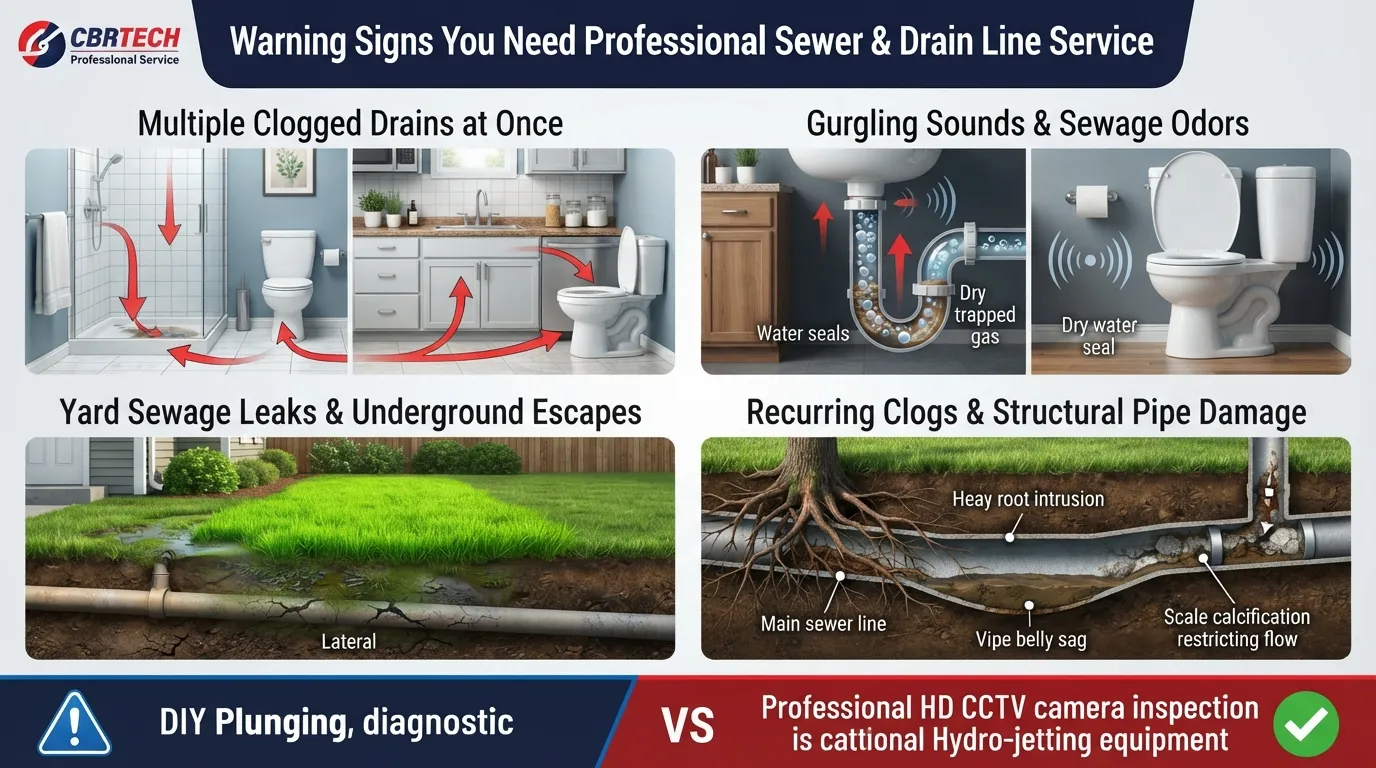
When routine household maintenance and standard plunging fail to restore proper flow, localized drainage issues often point to deeper structural defects or main sewer line blockages. Recognizing critical system-wide warning signs early allows you to seek professional drain cleaning before standing wastewater causes extensive property flooding or health hazards.
Multiple Drains Clogging at Once
A localized clog affects a single fixture, such as a hair plug beneath a bathroom sink or grease trapped in a kitchen p-trap. However, when multiple plumbing fixtures across different rooms back up simultaneously, the obstruction resides deep within your home’s main waste stack or primary sewer lateral.
System-Wide Backups: Water backing up into a shower pan or bathtub whenever a nearby toilet is flushed confirms that the main branch pipe cannot process wastewater volume.
Fixture Cross-Contamination: Running a washing machine cycle that forces soapy water upward through adjacent floor drains or kitchen sinks signals a severe mainline choke point.
Widespread Flow Restriction: Simultaneous slow drainage across every level of your house indicates a downstream mainline clog rather than individual fixture traps.
Gurgling Sounds or Sewage Odors
Unusual auditory or olfactory signals originating from your drain pipes indicate displaced air pressure and trapped sewer gases caused by downstream line blockages. Healthy drainage systems operate silently under neutral atmospheric pressure maintained by rooftop vent stacks.
Gurgling Fixtures: Deep glug-glug or bubbling sounds coming from unused sinks or shower drains happen when trapped wastewater forces air upward through p-trap water seals.
Persistent Sewer Gas Odors: Foul hydrogen sulfide or methane smells escaping from indoor drains mean negative line pressure is siphoning dry the water barrier inside your p-traps.
Soggy Yard Patches: Unexplained wet patches or unusually lush grass growth above your underground sewer lateral point to broken, leaking underground sewer pipes releasing nutrient-rich effluent into the surrounding soil.
Recurring Clogs Despite Prevention
If a single drain continues to clog repeatedly despite consistent maintenance, physical hair catchers, and routine biological flushing, the problem is rarely superficial. Persistent drainage failure points to physical structural defects within the pipe line itself that require mechanical intervention.
Tree Root Intrusion: Microscopic tree root tips enter small pipe joints, clay pipe cracks, or worn cast-iron seals, expanding inside the line into dense root masses that block solid waste.
Pipe Sagging or Bellies: Settling soil causes sections of underground drain pipe to bow downward, creating low points (bellies) where standing water and heavy debris continuously collect.
Scale and Calcification: Decades of hard water minerals, rust, and calcified scale narrow the internal pipe diameter, creating rough surfaces that snag paper and waste.
Attempting to force continuous chemical openers or repeated DIY augering through structurally compromised lines risks punching holes through aged pipe walls. Scheduling an advanced HD camera inspection allows licensed plumbers to pinpoint underground root intrusions, cracked joints, or collapsed lines, providing exact visual diagnostics to guide effective sewer line repairs.
When It's an Emergency
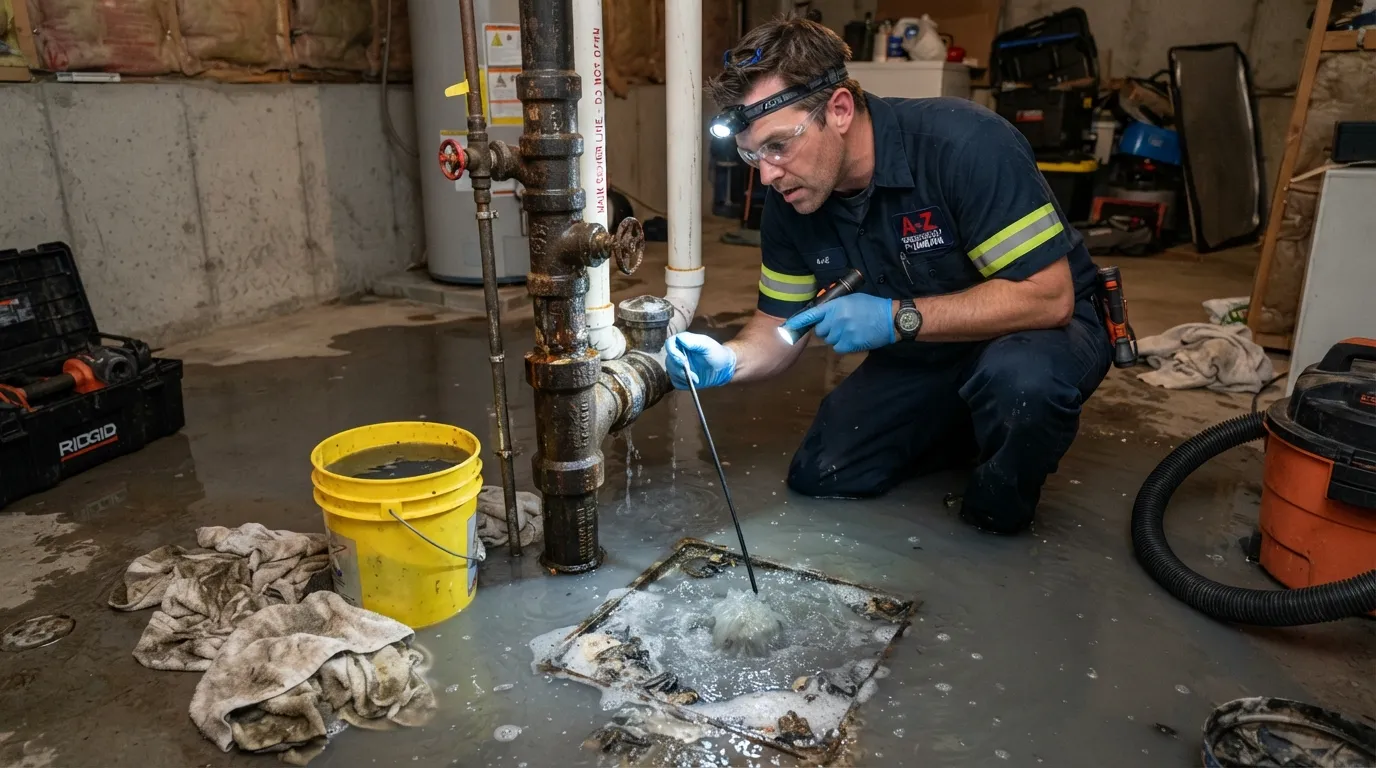
When a severe drainage failure escalates from slow water flow to active sewage overflow, immediate intervention is critical to prevent severe structural damage and biohazard exposure. Recognizing an urgent plumbing emergency and taking swift containment steps reduces repair costs and protects your home’s living areas from irreversible contamination.
Signs of a Plumbing Emergency
Not all drainage issues require after-hours emergency service, but certain critical symptoms indicate that your primary waste line has failed completely. Ignoring these immediate red flags can result in widespread toxic wastewater flooding throughout lower-level living areas.
Active Sewage Backing Up: Wastewater containing raw sewage rising through basement floor drains, shower pans, or ground-floor toilets indicates an absolute main line blockage.
Uncontrollable Water Overflows: Sinks, toilets, or washing machine standpipes spilling water continuously over fixture rims during usage creates immediate floor and ceiling structural damage.
Severe Multi-Fixture Backups: Simultaneous flooding across multiple low-level fixtures whenever water is used anywhere in the house confirms a fully choked main sewer stack.
Persistent Sewage Odors indoors: Strong, suffocating methane or hydrogen sulfide gas smells filling living spaces indicate broken drain lines or completely drained p-trap seals under pressure.
If you observe any of these critical signs, calling a 24/7 emergency plumber immediately is essential to isolate the primary waste line choke point and restore safe sanitation.
What to Do While You Wait for Help
Taking prompt containment action during the initial minutes of a plumbing disaster minimizes property damage and ensures a safer environment for repair technicians upon arrival. Follow these essential safety protocols while waiting for emergency assistance:
Shut Off the Main Water Supply: Locate your home’s main water shutoff valve—typically near the water meter or main entrance line—and turn it clockwise to cut all incoming water pressure immediately.
Stop Using All Water Fixtures: Enforce an absolute moratorium on running faucets, flushing toilets, running dishwashers, or operating washing machines to stop adding volume to the backed-up lines.
Contain Wastewater and Turn Off Electricity: Contain standing wastewater using towels or buckets, and shut off power at the circuit breaker box to any rooms where standing water approaches electrical outlets or appliances.
Frequently Asked Questions
Why do plumbers recommend pouring salt down the drain?
Plumbers occasionally recommend pouring coarse salt down a drain as an abrasive, deodorizing maintenance step rather than an active unclogging tool. Combined with boiling water, the crystalline salt scours soft slime, absorbs foul odors, and helps scrub minor grease films off p-trap walls without damaging pipe materials.
Scouring Action: Jagged salt crystals act as a mild, natural abrasive that scrapes away early bio-film deposits.
Deodorizing Power: Salt draws out moisture and kills odor-producing bacteria multiplying inside drain traps.
Safety Limits: While useful for light maintenance, salt cannot dissolve hair, paper, or dense structural obstructions.
What is the safest drain cleaner for pipes?
The safest drain cleaner for household pipes is an enzyme-based or biological bacterial drain treatment. Unlike caustic chemical openers containing lye or sulfuric acid, biological treatments use live non-pathogenic bacteria to break down organic waste naturally without generating pipe-damaging heat or chemical corrosion.
Zero Corrosive Risk: Safe for all plumbing materials, including thin-walled PVC, ABS plastic, galvanized iron, and older copper lines.
Septic Safe: Protects underlying waste ecosystems by supporting natural bacterial breakdown inside septic tanks.
Non-Toxic: Releases zero volatile fumes, making it safe for indoor air quality and homes with children or pets.
What is the best homemade drain cleaner?
The best homemade drain cleaner for minor organic residue is a combination of concentrated liquid dish soap followed by a scalding water flush. For light deodorizing and bio-film breakdown, a mixture of 1/2 cup baking soda followed by 1/2 cup white vinegar offers a safe alternative to harsh off-the-shelf chemicals.
For Grease Buildup: Pour 1/4 cup of heavy-duty dish soap down the drain, let it sit for 10 minutes, and flush with 1 gallon of near-boiling water to emulsify lipids.
For Odors & Light Slime: Pour 1/2 cup baking soda down the drain, follow with 1/2 cup white vinegar, cover with a drain plug for 30 minutes, and flush thoroughly with hot water.
Safety Advantage: Natural mixtures avoid the severe chemical burn hazards and pipe degradation associated with synthetic liquid openers.
What is the quickest way to unblock a drain?
The quickest way to unblock a localized drain is using direct mechanical force via a cup plunger or a handheld plastic drain snake (zip-it tool). Mechanical tools immediately dislodge physical obstructions without waiting hours for liquid treatments to react.
Flat Cup Plungers: Creating a tight seal over sink or shower drains and applying rapid up-and-down pressure forces water hydraulic energy against the blockage, dislodging it instantly.
Barbed Zip-It Tools: Inserting a flexible barbed plastic snake into the drain opening catches hair and lint mats within seconds, allowing you to pull the obstruction out directly.
Hand Augers: For blockages situated beyond the p-trap, a manual drain snake mechanically pierces and clears obstructions faster than any chemical process.
Is it safe to pour vinegar down the drain?
Yes, it is entirely safe to pour standard household white vinegar (5% acetic acid) down your drains. The mild acidity of vinegar helps neutralize alkaline soap scum, break down light mineral deposits, and eliminate foul odors without damaging metal, plastic, or rubber plumbing components.
Dissolves Soap Scum: Acetic acid breaks down fatty acid deposits left behind by bar soaps and body washes.
Neutralizes Odors: Kills surface bacteria in p-traps to stop drain smells at the source.
Pipe Material Compatible: Safe for continuous use across PVC, ABS, copper, cast iron, and PEX piping systems.
What causes frequent drain clogs?
Frequent drain clogs are caused by the ongoing accumulation of physical binding agents—specifically human hair, fats, oils, grease (FOG), and soap scum—within narrow pipe runs. When recurring clogs persist despite preventative habits, the primary cause is often an underlying structural failure deep in the waste system.
Tree Root Intrusion: Underground roots enter pipe joints or minor cracks, creating physical nets that continuously catch outgoing waste.
Pipe Bellies (Sagging): Settled soil causes horizontal pipe sections to bow downward, creating low spots where water stalls and solids collect.
Severe Scale Buildup: Aging cast iron or galvanized pipes develop rough internal mineral scale that snags toilet paper and organic debris.
Conclusion & Call-to-Action
Maintaining clear, free-flowing drain lines across your entire home requires a proactive balance of daily physical barriers, smart waste disposal habits, and routine biological treatment. By installing hair catchers, keeping grease and synthetic products out of waste lines, and sticking to a consistent monthly drain maintenance schedule, you can prevent the vast majority of sudden household clogs and avoid costly emergency repairs.
When severe mainline obstructions, recurring backups, or tree root intrusions surpass standard preventive measures, partnering with a licensed professional plumber ensures your entire plumbing infrastructure remains safe, efficient, and fully code-compliant. Do not wait for a minor drainage issue to escalate into a destructive wastewater overflow—visit our booking page today to schedule a comprehensive video pipe inspection or professional line cleaning with our expert team.
Main Services
Related Posts
Need a Plumber in Miami?
Schedule service online or speak directly with the EZ Plumbing team.
Owner-Led Local Service
Know who is behind the business before you request service. The owners, contact line and Miami service pages are published clearly.
- Named business owners
- Direct phone and social channels
- Local Miami service information
Clear Help Before You Book
Review the relevant service page, contact the team directly and use the booking page when you are ready—without relying on vague claims.
- Service-specific information
- Direct questions before scheduling
- Clear online booking route