Slow Draining Sink: 8 DIY Methods to Fix It Fast
Quick Snapshot: How to Fix a Slow-Draining Sink
A slow-draining sink is usually caused by a buildup of hair, soap scum, grease, or food debris trapped in the upper drain inlet or the P-trap directly beneath the basin. You can clear most minor to moderate blockages yourself without calling a plumber or using harsh chemical drain cleaners.
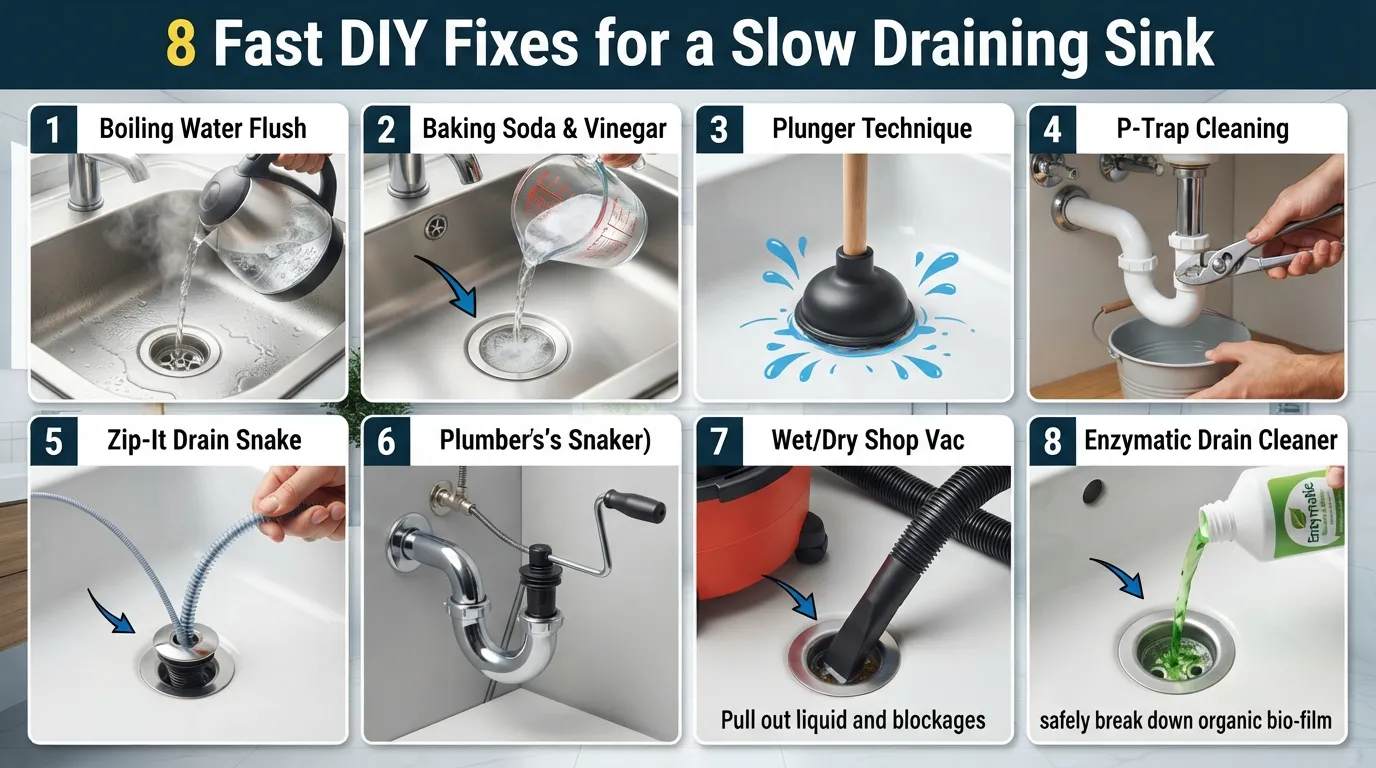
Here is a quick breakdown of the eight proven DIY drain cleaning methods to restore full water flow:
Boiling Water Flush: Best for dissolving soft soap scum and light grease buildup in kitchen and bathroom sinks.
Baking Soda and Vinegar: A classic non-toxic chemical reaction that breaks up minor organic gunk and deodorizes pipes.
Manual Debris Extraction: Using a needle-nose pliers or a flexible plastic drain zip-tool to pull hair clumps directly out of the drain opening.
Sink Plunger Clearing: Uses water pressure and suction to dislodge stubborn blockages trapped in the trap or branch line.
Drain Snake (Auger) Threading: Mechanical cable insertion that pierces, breaks apart, or retrieves dense clogs further down the pipe.
P-Trap Removal and Cleaning: Manual disassembly of the curved pipe beneath the sink basin to empty heavy debris, small dropped objects, and dense sludge.
Wet/Dry Shop Vac Extraction: Converts a standard utility vacuum into a high-suction puller to draw standing water and solid blockages out through the top drain inlet.
Plumber’s Snake with Mechanical Auger: For severe, deep-set line restrictions that require a longer reach and high-torque mechanical rotation.
Why Is Your Sink Draining Slowly? Common Causes
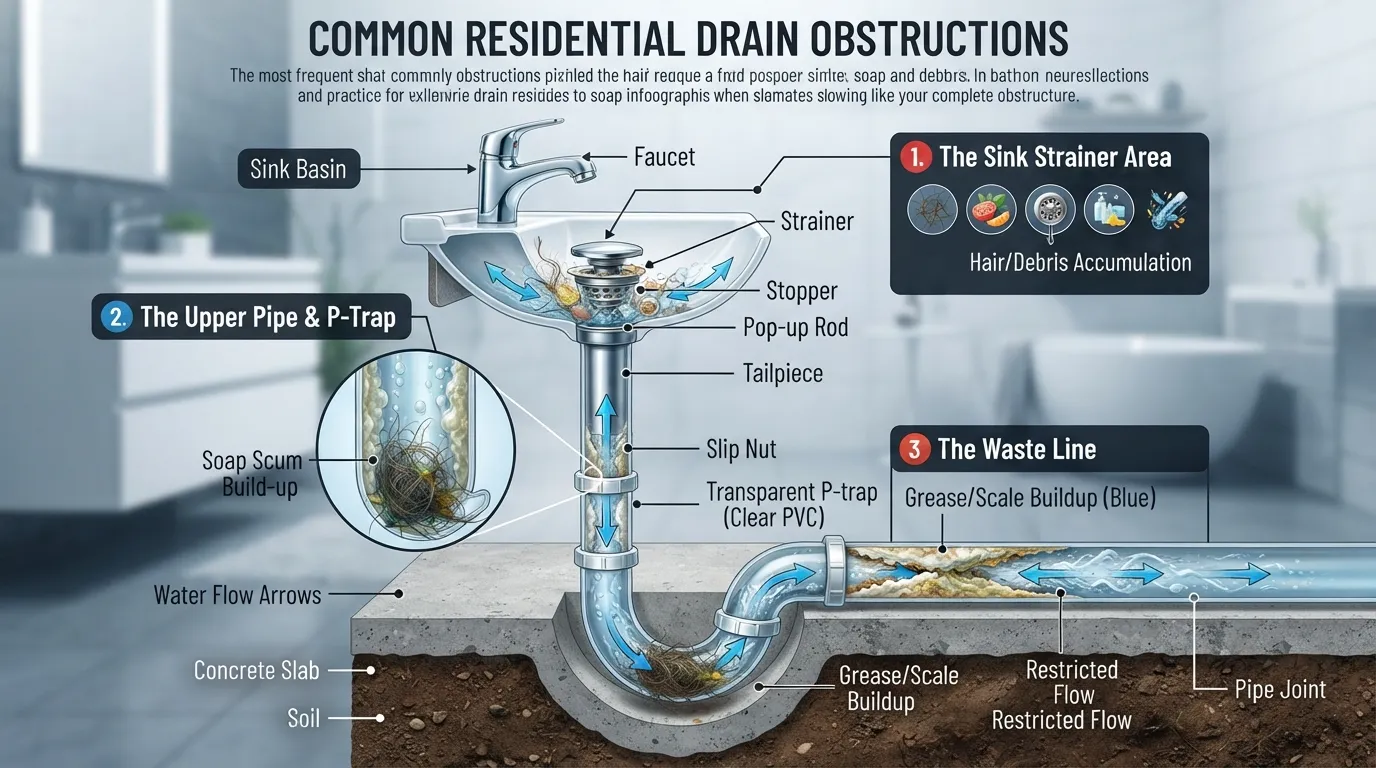
Slow sink drainage occurs when internal pipe volume is restricted by organic debris, mineral accumulation, or improper plumbing dynamics. Accurately diagnosing the root cause prevents repeated overflows and protects your plumbing infrastructure from long-term damage.
Hair, Soap Scum, and Grease Buildup
The primary catalyst for a slow-draining sink is the physical accumulation of daily waste materials inside the upper drainage assembly. In bathroom sinks, human hair binds with sticky soap scum to create dense, net-like blockages directly below the pop-up stopper.
In kitchen sinks, liquefied cooking fats, oils, and grease enter the drain in liquid form and solidify as they cool against the cold interior walls of the pipe. Over time, these fat layers catch passing food particles, progressively narrowing the passage and restricting wastewater flow.
Mineral/Scale Buildup in Older Pipes
Homes supplied with hard water frequently experience scale accumulation inside their drainage systems. Dissolved minerals, primarily calcium and magnesium, precipitate out of stagnant water and cling to the inner surfaces of metallic and PVC piping.
Rough pipe walls: Scale creates a coarse, sandpaper-like texture inside the pipe that snags hair and fibrous debris.
Corrosion product: In galvanized iron or cast-iron pipes, rust and limescale combine to form thick tuberculation crusts that permanently reduce the pipe diameter.
Poor Pipe Slope or Venting Issues
A drain requires proper air displacement and gravity gradient to move water efficiently. If the drain pipe lacks a minimum slope of 1/4 inch per foot toward the main sewer line, water pools in low spots and loses velocity, causing suspended solids to settle.
Inadequate plumbing venting creates a vacuum effect within the drainage network. When the plumbing air vent stack on your roof becomes blocked by leaves, bird nests, or ice, air cannot enter the system behind the draining water, leading to sluggish flow and distinctive gurgling noises.
When There’s No Visible Clog at All
If your sink drains slowly despite a clean strain basket, clear P-trap, and no observable blockage, the issue stems from fluid dynamics or hidden airlock conditions.
Air Lock Formation: Trapped air bubbles between the sink strainer and the trap can prevent water from dropping down the tailpiece efficiently.
Partial Main Line Blockage: A restriction further down the main stack or sewer lateral can cause backpressure, slowing down the nearest fixture while showing no local obstruction.
Incorrect Drain Assembly Installation: Oversized tailpieces or improperly adjusted pop-up stoppers can restrict the initial clearance required for rapid water entry.
8 DIY Methods to Fix a Slow-Draining Sink
Dealing with a slow-draining sink is frustrating, but you can usually resolve the issue yourself using basic tools and safe household techniques. Ranging from the easiest preventative steps to more hands-on mechanical fixes, here are eight proven DIY methods to restore full drainage to your bathroom or kitchen sink.
Method 1 – Use a Cup Plunger
A standard cup plunger is one of the fastest ways to dislodge soft clogs near the drain opening. Fill the sink with an inch or two of water to create a proper suction seal around the rubber cup.
Cover the Overflow: Seal the sink’s overflow hole using a wet cloth or damp sponge to maintain strong pneumatic pressure.
Plunge Vigorously: Place the cup directly over the drain opening and pump up and down rapidly 5 to 6 times.
Flush and Clear: Quickly pull the plunger away and let hot tap water flush any loosened debris down the line.
Method 2 – Pour Hot or Boiling Water
Thermal energy helps melt and dissolve accumulated soap scum, toothpaste residue, and grease buildup inside plastic or metal pipes.
Heat the Water: Bring a pot of water to a hot temperature (around 150°F to 170°F), avoiding a rolling boil if your sink uses standard PVC pipes to prevent warping [02:28].
Pour Carefully: Slowly pour the hot water directly down the drain opening in a steady stream [02:39].
Rinse: Let it sit for a minute, then run your tap to check if the flow speed has improved.
Method 3 – Apply Baking Soda and Vinegar
This classic, eco-friendly chemical reaction creates natural fizzing action that breaks down organic gunk lining your pipes without harsh commercial acids.
Add Baking Soda: Pour half a cup of baking soda directly down the dry drain opening.
Introduce Vinegar: Follow it immediately with one cup of white vinegar and immediately plug or cover the drain loosely.
Wait and Flush: Let the mixture bubble and fizz for 15 to 30 minutes, then flush the lines thoroughly with hot tap water.
Method 4 – Clear the Pop-Up Stopper
Hair, lint, and sticky slime frequently wrap around the mechanical pop-up stopper right beneath the drain flange.
Release the Pivot Rod: Reach under the sink basin to locate the horizontal rod connected to the vertical strap and unscrew the retaining slip nut.
Pull the Stopper: Detach the pivot rod from the stopper assembly, then lift the pop-up stopper straight up and out from inside the sink.
Clean and Reinstall: Wipe away trapped hair and debris, scrub it clean, and drop it back into place before resecuring the rod and nut.
Method 5 – Use a Plastic Drain Zip Tool
A flexible plastic zip tool features small side barbs specifically engineered to catch and pull out hair masses trapped just below the strainer.
Remove Stopper: Take out your pop-up stopper or sink strainer basket to gain clear access to the vertical pipe opening.
Insert and Twist: Push the flexible zip tool down into the drain and gently twist or maneuver it to snag hidden hairballs [02:24].
Pull Out Debris: Slowly extract the tool and discard the pulled waste into a trash bag before repeating until clean [02:39].
Method 6 – Remove and Clean the P-Trap
When clogs are stubborn, taking apart the curved under-sink P-trap allows you to physically clear out heavy sludge and trapped objects.
Prep the Area: Place a bucket and a folded towel directly underneath the P-trap to catch residual stagnant water [04:01].
Loosen Slip Nuts: Hand-twist or carefully use pliers to loosen the threaded slip nuts on both ends of the curved trap pipe [04:06].
Clean and Reassemble: Empty the trap contents into your bucket, scrub the interior walls with a small brush, and reattach everything securely to check for water leaks [05:26].
If the clog is deeper in the line or you’re not comfortable removing the P-trap yourself, a professional drain cleaning service can clear it safely without risking pipe damage.
Method 7 – Use a Drain Snake (Auger)
A hand-cranked drain snake or auger reaches far past the P-trap into the branch drain lines to break apart deep, stubborn obstructions.
Feed the Cable: Loosen the thumbscrew on the auger housing and feed the flexible steel cable into the open pipe.
Crank Through Bends: Push the cable forward until you feel resistance, then rotate the handle clockwise to hook or break up the blockage.
Retract and Flush: Carefully pull the cable back out while wiping it clean with a disposable rag, then run warm water to clear the line.
Method 8 – Try a Wet-Dry Vacuum
A shop vacuum creates powerful suction capable of pulling stubborn clogs backward up through the drain pipe assembly.
Prep the Vacuum: Set your wet-dry vacuum to liquid suction mode and remove any paper filter inside the unit.
Form a Tight Seal: Wrap a damp rag tightly around the vacuum hose nozzle and press it firmly over the sink drain opening.
Vacuum the Line: Turn the shop vacuum on high for 5 to 10 seconds to draw up hair, grease, and debris out of the pipes and into the vacuum canister.
Are Home Remedies Actually Safe? Dawn, Bleach, Hydrogen Peroxide, Vinegar
Home remedies offer a popular, inexpensive way to tackle slow drains, but not all kitchen and bathroom staples are safe for your plumbing or septic system. Understanding how specific solutions like Dawn, bleach, hydrogen peroxide, and vinegar chemically interact with your pipes protects your home from costly damage.
Does Dawn Dish Soap Really Unclog Drains?
Dawn dish soap effectively breaks down light grease and soap scum clogs when combined with hot water. The surfactants in the dish soap reduce surface tension, allowing greasy residues to loosen and wash away down the pipe.
Best For: Kitchen sinks experiencing slow drainage caused by mild grease accumulation or food oil buildup.
How to Apply: Squirting a generous amount of Dawn directly into the drain followed by hot water works well for regular maintenance.
Limitations: Dawn cannot dissolve hair clogs, hard mineral scale, or deep physical blockages in bathroom sinks.
Is It Safe to Pour Hydrogen Peroxide Down the Drain?
Hydrogen peroxide acts as a safe, mild oxidizing agent that can help sanitize smelly drains and break down organic matter. It poses no threat to standard PVC pipes or metal plumbing components when used in household concentrations.
Septic System Safe: Unlike harsh chemical cleaners, hydrogen peroxide breaks down into water and oxygen, leaving beneficial septic bacteria unharmed.
How to Apply: Pouring one cup of standard 3% hydrogen peroxide down the drain and letting it foam for 20 minutes effectively deodorizes the line.
Limitations: It is too weak to dissolve dense hairballs or heavy organic blockages on its own.
Can You Pour Bleach Down a Sink to Unclog It?
Pouring pure bleach down a sink to clear a clog is ineffective and potentially hazardous to your plumbing system. Bleach fails to dissolve hair, grease, or heavy buildup, and it can damage older metal pipes or degrade rubber seals over time.
Chemical Hazards: Mixing bleach with acidic cleaners or residual drain chemicals creates toxic chlorine gas.
Plumbing Risks: Frequent exposure to concentrated bleach can corrode metal drain fixtures and weaken pipe connections.
Safe Alternative: Use enzymatic cleaners or vinegar-based solutions instead of bleach for routine sanitization.
Best Homemade Drain Unblocker (Comparison)
Choosing the right homemade solution depends on the specific type of clog and your plumbing material. This quick comparison breaks down the safety and effectiveness of common DIY drain treatments:
| Solution | Best Used For | Plumbing Safety | Septic Safety |
| Baking Soda & Vinegar | Organic gunk, light hair, deodorizing | Safe for PVC and metal | High (neutralizes reaction) |
| Dawn & Hot Water | Kitchen grease, soap scum | Safe (if water is under 170°F) | Safe |
| Hydrogen Peroxide | Sanitizing, minor organic buildup | Completely safe | Safe |
| Pure Bleach | Disinfecting mold/mildew | Risky for metal/seals | Low (kills good bacteria) |
Bathroom Sink vs. Kitchen Sink — Different Clogs, Different Fixes
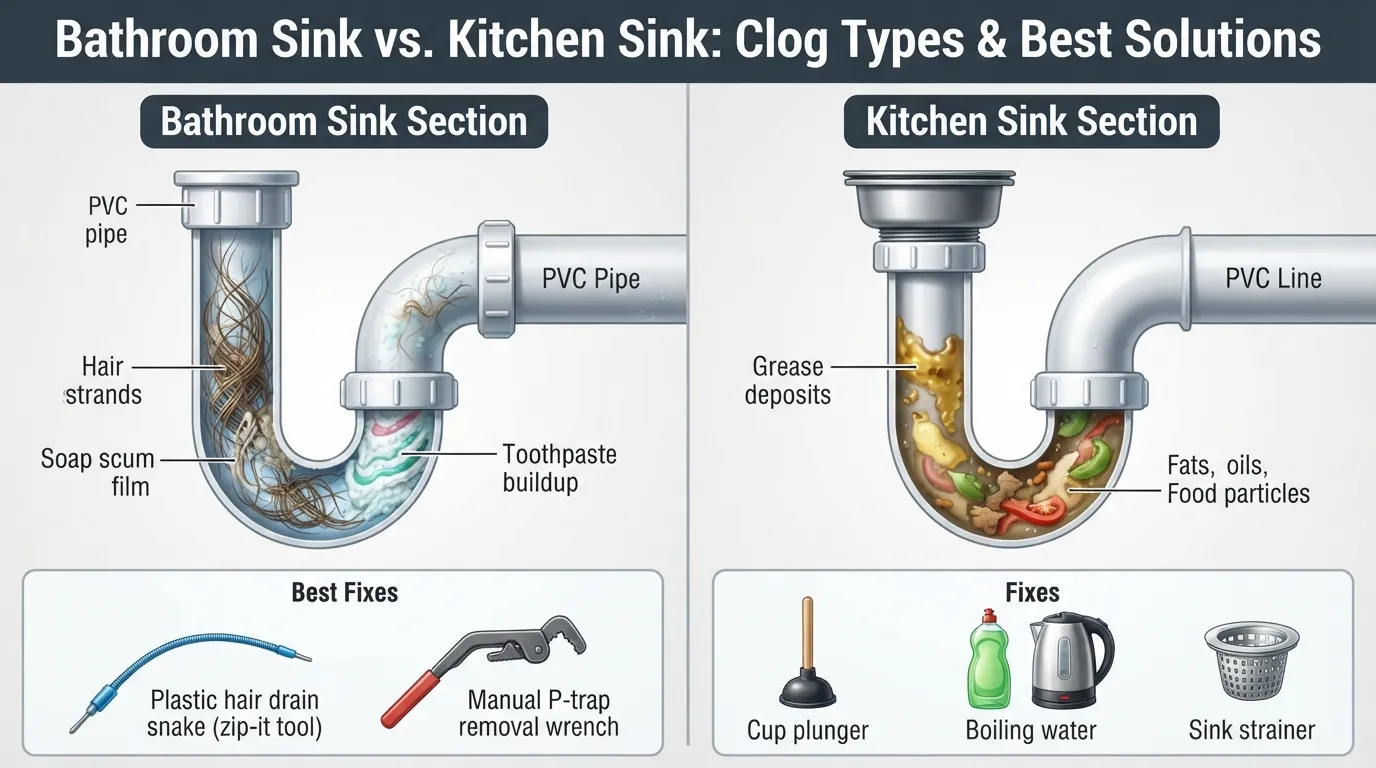
Treating bathroom and kitchen sink clogs with the exact same method often leads to frustration because both systems deal with completely different types of waste. Tailoring your unclogging approach to the specific source of debris guarantees a faster, more permanent fix.
Bathroom Sink Clogs: Hair and Soap Scum
Bathroom sinks primarily collect organic debris that binds together into dense, stubborn mats just inches below the drain opening. The main culprits are stray hairs, dead skin cells, toothpaste residue, and waxy soap scum binding to the pop-up stopper.
Primary Entities Involved: Bathroom sink drain, hair clog, soap scum, pop-up stopper, pivot rod.
Best Removal Tools: Plastic zip tools, manual removal via the P-trap, or pulling the pop-up stopper mechanism directly.
Why Chemical Solvents Often Fail: Standard liquid drain cleaners struggle to dissolve thick hairballs efficiently without multiple harsh treatments that can degrade older metal pipes.
Kitchen Sink Clogs: Grease, Food Particles, and Garbage Disposal Issues
Kitchen sink drains face heavy organic challenges driven by culinary fats, starchy food residues, and mechanical blockages tied to built-in appliances. Cooling cooking oils solidify inside the pipes, trapping random food debris and creating rock-hard blockages.
Primary Entities Involved: Kitchen sink drain, garbage disposal, food debris, grease trap, P-trap.
Best Removal Tools: Hot water flushes with Dawn dish soap, plumbing snakes, or clearing jammed impellers inside a garbage disposal unit.
Why Prevention Matters Most: Pouring liquid grease down a kitchen drain guarantees a future clog; wiping pans with paper towels before washing is far more effective than relying on chemical quick fixes.
Drano Alternatives — What Plumbers Actually Use
Professional plumbers rarely reach for harsh chemical drain cleaners like Drano when servicing slow or clogged fixtures. Instead, they rely on a strategic mix of enzymatic formulas and heavy-duty mechanical tools to clear blockages safely without destroying your plumbing infrastructure.
Chemical Cleaners vs. Enzyme-Based Cleaners vs. Mechanical Tools
Choosing the right drain-clearing method requires balancing unclogging power with long-term pipe safety. This comparison breaks down how commercial chemicals, biological enzymes, and mechanical tools stack up against each other:
| Solution Type | How It Works | Plumbing & Pipe Safety | Best Used For |
| Chemical Cleaners (Drano) | Uses lye or sulfuric acid to generate extreme heat and dissolve organic matter. | High risk of pipe corrosion, melted PVC joints, and ruined fixture finishes. | Emergency DIY clearance when mechanical tools fail (use with extreme caution). |
| Enzyme-Based Cleaners | Uses specialized bacteria and live cultures to biologically digest organic sludge over time. | 100% safe for all pipe materials, rubber seals, and municipal or septic systems. | Routine maintenance, organic buildup prevention, and slow-moving foul drains. |
| Mechanical Tools (Augers/Snakes) | Physically punches through, hooks, or retrieves physical obstructions using steel cables. | Completely safe for pipes when operated correctly; zero chemical degradation. | Dense hair clogs, deep object blockages, food waste, and compacted grease. |
Why Plumbers Avoid Chemical Drain Cleaners
Professional plumbers understand the hidden destructive costs of pouring caustic chemical liquids down residential drain lines. Chemical formulas create intense exothermic reactions that can permanently damage modern PVC plumbing networks and historical metal fixtures alike.
Severe Pipe Corrosion: Sulfuric acid and lye-based solutions generate massive internal heat that can warp thin plastic pipes and weaken threaded joints.
Fixture Finish Damage: Splashing or backing up harsh chemicals onto porcelain, acrylic, or stainless steel sinks often leaves permanent etching and discoloration.
Safety Hazards for Technicians: If a chemical cleaner fails to clear a clog, standing caustic liquid remains trapped in the P-trap, posing a severe chemical burn hazard to anyone attempting to disassemble the pipe later.
Sink Keeps Clogging Again? Dealing with a Recurring Slow Drain
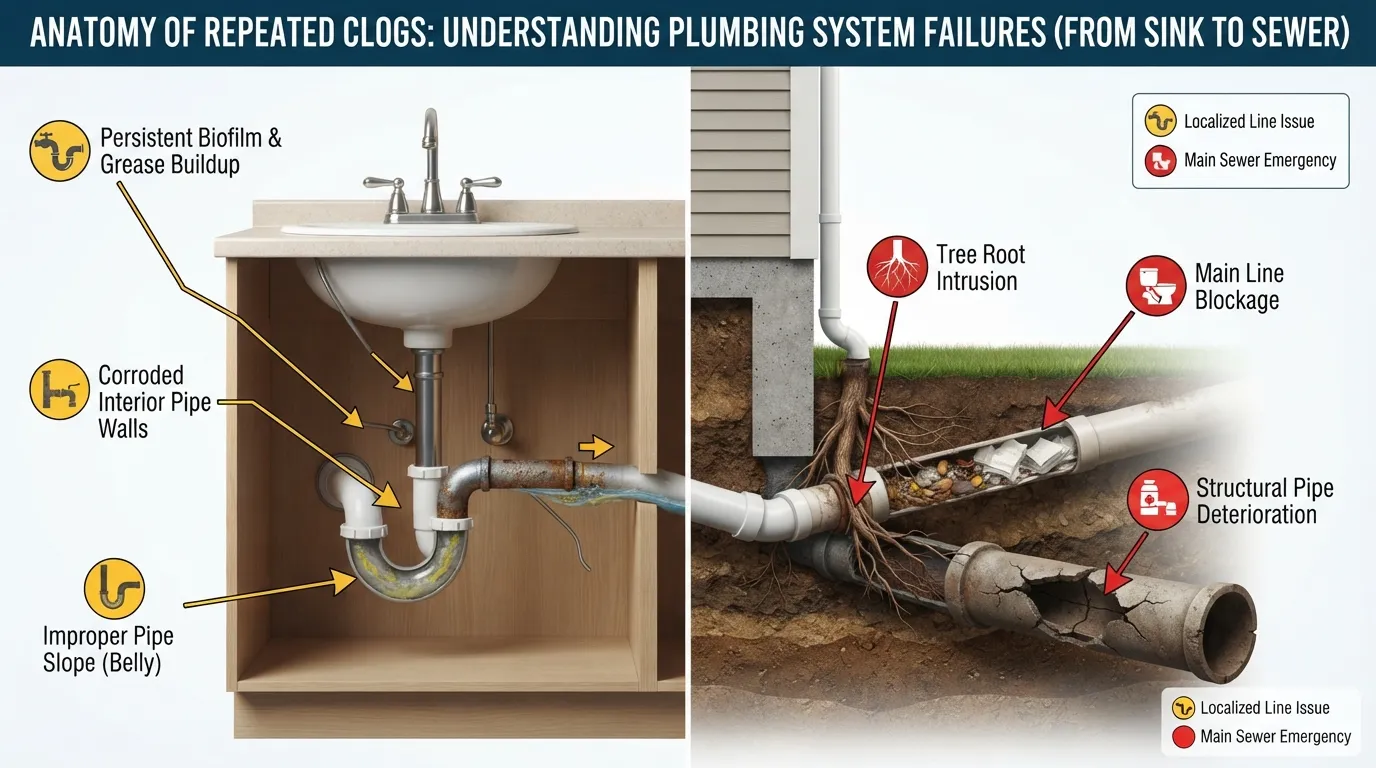
A sink that clogs repeatedly usually points to an underlying issue deeper within your plumbing network rather than a surface-level obstruction. While single clogs stem from temporary debris like hair, soap scum, or food waste trapped in the P-trap, recurring blockages indicate partial line constriction, structural pipe damage, or main sewer line interference that standard plunge-and-clear methods cannot resolve.
Why the Same Sink Keeps Clogging
When a drain slows down repeatedly after short-term clearing, the root cause is rarely the debris you just removed. Instead, physical conditions inside the pipe wall or improper drainage mechanics cause waste to accumulate rapidly in the exact same spot.
Persistent Biofilm and Grease Buildup: Standard snaking often punctures a narrow hole through a clog without scouring the pipe walls. Sticky grease, soap scum, and organic residue remain stuck to the PVC or cast iron, capturing new debris within days of clearing.
Corroded or Deteriorated Pipes: Older galvanized iron or cast iron pipes suffer from interior pipe deterioration. Rust and mineral deposits create a rough, jagged interior surface that catches passing debris and restricts wastewater flow.
Inadequate Pipe Slope (Belly in the Line): If a drain line sags over time, it creates a low point—known as a belly—where water collects and loses velocity. Solid particles settle at the bottom of the sag rather than flushing completely through.
Improper Venting: Plumbing vents regulate air pressure within your drain pipes. A blocked or improperly installed vent stack creates a vacuum effect, slowing drainage speed and allowing solids to settle inside the line.
Could It Be a Deeper Sewer Line Issue?
A persistent slow drain confined to a single sink can quickly escalate into a household-wide backup if the problem originates in your main drain stack or lateral pipe. If the slow drain keeps coming back no matter what you try, the issue may be further down in your sewer line rather than the sink itself.
When main sewer line obstructions occur, wastewater has nowhere to escape and begins backing up into the lowest fixtures in your home.
Tree Root Intrusion: Underground tree roots naturally seek out moisture, entering tiny cracks or loose joints in your main sewer line. Once inside, they expand into dense mats that trap waste, slow drainage, and eventually crush the pipe.
Main Line Grease or Foreign Object Clogs: Years of flushed solids, non-degradable products, or fats, oils, and grease (FOG) can form severe blockages deep in the main line, causing secondary backups in individual fixture drains upstairs.
Pipe Collapses and Misalignment: Shifting soil, freeze-thaw cycles, and age can fracture buried pipes, leading to structural pipe deterioration or complete line failure that requires professional hydro-jetting or trenchless sewer repair.
Recognizing these warnings early prevents costly structural water damage and keeps minor pipe constriction from turning into a complete sewer line shutdown.
When to Stop DIY-ing and Call a Professional Plumber
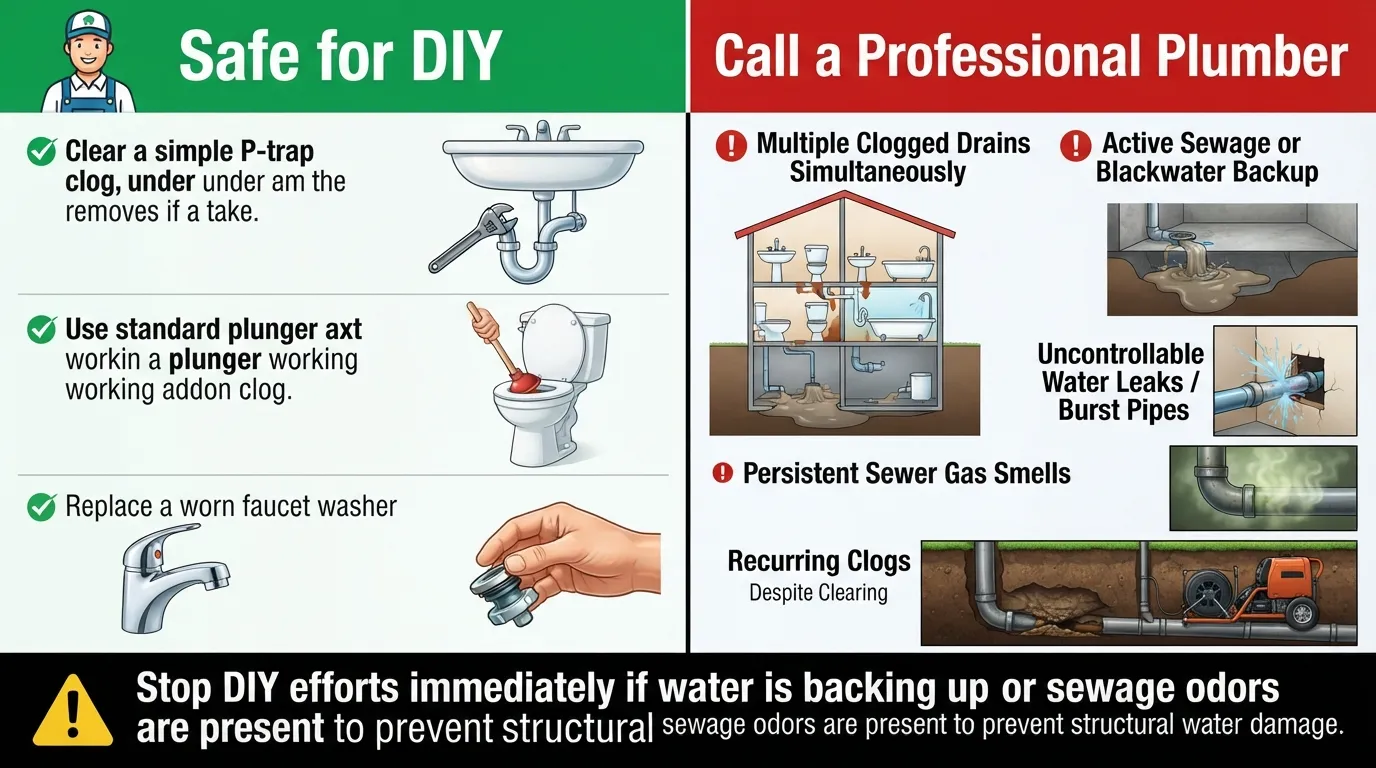
Recognizing the boundary between a simple DIY drain clear and a serious structural issue saves thousands of dollars in preventable water damage and pipe destruction. While household plungers and drain snakes handle basic localized blockages, persistent drainage failures, multiple clogged fixtures, and structural pipe noises require the specialized equipment and diagnostic expertise of a licensed professional plumber.
Signs You Need Professional Drain Cleaning
When standard DIY techniques yield short-lived results, underlying pipe constriction or deep main line blockages require professional intervention. Continuing to push manual snakes or harsh chemical drain cleaners down a compromised line risks puncturing older pipes or compacting the obstruction.
Multiple Slow Drains Simultaneously: If your kitchen sink, bathroom tub, and laundry line all drain slowly at the same time, the blockage lies deep within your primary drainage stack rather than an individual branch line.
Recurring Blockages Despite Clearing: A drain that clogs again days after clearing indicates heavy grease buildup, mineral scaling, or root intrusion that requires motorized augers or high-pressure hydro-jetting from a dedicated drain cleaning service.
Gurgling Sounds and Foul Sewer Smell: Bubbling noises coming from your drain or a persistent sewer smell escaping from fixtures signal trapped sewer gases caused by blocked vents or a dried-out, improperly functioning P-trap.
Water Rising in Other Fixtures: Flushes from your toilet that cause water to bubble up into your shower drain or sink point directly to a severe main line restriction that standard plungers cannot displace.
Signs of a Plumbing Emergency
Certain plumbing failures pose immediate health risks and structural hazards that require urgent professional containment. Sewage exposure introduces hazardous pathogens, including bacteria and viral agents, into living spaces—a risk highlighted in health warnings from the Centers for Disease Control and Prevention (CDC) regarding contaminated indoor environments.
Active Sewage or Blackwater Backup: Wastewater flowing backward out of floor drains, toilets, or sinks carries toxic bacteria and biohazards that require immediate isolation and professional remediation.
Uncontrollable Water Leaks or Burst Pipes: If a clogged or pressurized line causes an active pipe rupture, shut off your main water valve immediately to prevent structural damage and electrical hazards.
Pervasive Sewer Smell Indoors: Strong, persistent sewer gas emissions indicate broken underground drain pipes or a compromised main stack, exposing occupants to dangerous hydrogen sulfide gas.
If water is backing up or you notice a plumbing emergency, contact our emergency plumber team right away. Professional intervention stops active flooding, restores safe sanitation, and protects your home’s foundation from hidden structural decay.
FAQ Section
What is the best home remedy for a slow draining sink?
The most effective home remedy for a slow draining sink is flushing the drain with a mixture of baking soda, white vinegar, and boiling water. Pour half a cup of baking soda into the drain, follow it with one cup of white vinegar, and cover the opening with a drain stopper for 15 minutes to allow the effervescent reaction to break down organic buildup. Finish by flushing the pipe with a kettle of boiling water to wash away loose grease and debris.
Why is my sink draining slow but there’s no clog?
If your sink drains slowly despite having an open, debris-free pipe, the underlying issue is usually improper drainage ventilation or a sagging drain line. A blocked plumbing vent stack prevents air from entering the system, creating a vacuum that restricts natural water flow through the pipes. Alternatively, an inadequate pipe slope or partial main sewer line constriction further down the system can slow drainage speed without creating an immediate total blockage.
What can I pour down my sink to make it drain faster?
To speed up a slow drain, pour boiling water mixed with dish soap directly down the sink to melt grease and dissolve fresh soap scum. For stubborn organic buildup, use an enzymatic drain cleaner, which uses natural bacteria and enzymes to digest organic material safely overnight without damaging your pipes. Avoid relying on caustic chemical cleaners, as they generate high heat that can warp PVC pipes or corrode older metal plumbing.
What’s the most powerful drain unblocker?
The most powerful chemical option is a professional-grade enzymatic or main-line opener, but mechanical tools remain the safest and most effective method for clearing tough obstructions. A heavy-duty drain snake or auger physically breaks up dense blockages without compromising pipe integrity. For severe main line restrictions, professional hydro-jetting utilizes high-pressure water streams to completely scour pipe walls clean.
What do plumbers use instead of Drano?
Licensed plumbers avoid liquid chemical drain openers like Drano because their corrosive active ingredients can damage pipes, destroy pipe seals, and create dangerous chemical splashbacks. Instead, plumbers use professional mechanical drain augers (snakes) to physically punch through and remove deep blockages. For comprehensive pipe restoration, they rely on commercial hydro-jetting equipment and high-definition sewer inspection cameras to diagnose and clear line constriction safely.
Clear Your Slow Drain Today
Managing a slow drain transitions quickly from a simple DIY task to a complex plumbing challenge when standard household fixes fail to yield lasting results. While baking soda flushes, manual augers, and routine maintenance effectively resolve everyday hair and soap scum buildup, recurring blockages and multi-fixture backups demand specialized equipment and precise diagnostic skill. Identifying when to step back protects your home’s infrastructure from accidental pipe damage, toxic sewer gas leaks, and expensive structural water remediation.
If standard home remedies haven’t cleared your pipes, continuing to push tools into a stubborn line can compact debris or compromise aging joint seals. Securing professional plumbing help ensures your system receives thorough camera inspections, safe hydro-jetting, and permanent slow drain repair without risking your pipe integrity.
Still dealing with a stubborn slow drain? Book a plumber today and get it fixed fast. Our team of experienced technicians brings the right tools and deep domain expertise to restore full, uninterrupted flow to your home’s drainage network immediately.
Main Services
Related Posts
Need a Plumber in Miami?
Schedule service online or speak directly with the EZ Plumbing team.
Owner-Led Local Service
Know who is behind the business before you request service. The owners, contact line and Miami service pages are published clearly.
- Named business owners
- Direct phone and social channels
- Local Miami service information
Clear Help Before You Book
Review the relevant service page, contact the team directly and use the booking page when you are ready—without relying on vague claims.
- Service-specific information
- Direct questions before scheduling
- Clear online booking route