Floor Drain Maintenance Tips: How to Prevent Clogs, Odors & Costly Repairs
How to Maintain a Floor Drain: The Complete Preventative Guide
A neglected floor drain is a ticking clock for severe water damage, hazardous mold growth, and foul sewer odors permeating your home. Regular floor drain maintenance prevents stubborn clogs, keeps the underlying P-trap properly sealed, and ensures wastewater flows away efficiently before minor debris turns into an expensive plumbing emergency.
Why Floor Drain Maintenance Matters
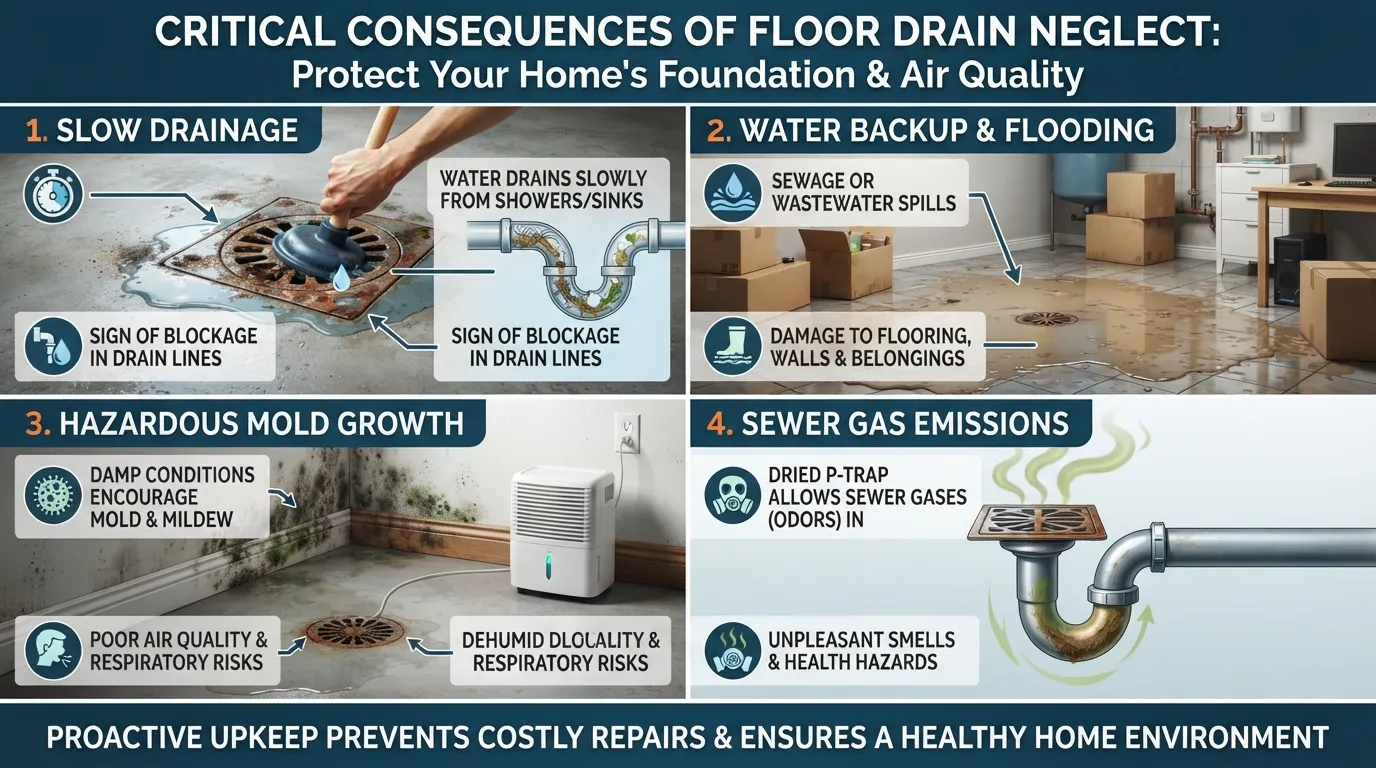
Proactive floor drain maintenance protects your home from hidden plumbing failures, expensive structural repairs, and hazardous health risks. Ignoring this critical utility area often leads to compound failures that compromise indoor air quality and home foundations.
Common Signs Your Floor Drain Needs Attention
Catching drainage issues early prevents minor blockages from turning into major household disasters. Watch for these early warning signals:
Slow Drainage: Water pooling slowly around the drain grate indicates narrowing pipe walls or grease buildup.
Foul Odors: A dry P-trap or trapped decomposing debris releases unpleasant smells resembling sulfur or rotting organic matter.
Gurgling Sounds: Bubbling noises or air pockets escaping the drain signal trapped air and restricted airflow within the plumbing lines.
Unexplained Pests: Drain flies and fruit flies frequently breed in stagnant water and organic film inside unmaintained pipes.
What Happens If You Ignore a Clogged Floor Drain
Allowing a compromised drain to go untreated triggers a cascade of costly property and health consequences. The primary risks of neglect include:
Water Backup and Property Damage: Blocked lines force wastewater backward during heavy usage, ruining flooring, drywall, and stored belongings.
Hazardous Mold Growth: Persistent moisture around the drainage area creates an ideal breeding ground for toxic mold spores.
Sewer Gas Exposure: A dried-out P-trap allows harmful methane and sewer gases to enter living spaces, causing headaches and respiratory irritation.
Structural Decay: Constant moisture seepage weakens subfloors, rots wooden joists, and compromises building foundations over time.
Step-by-Step Routine Floor Drain Cleaning
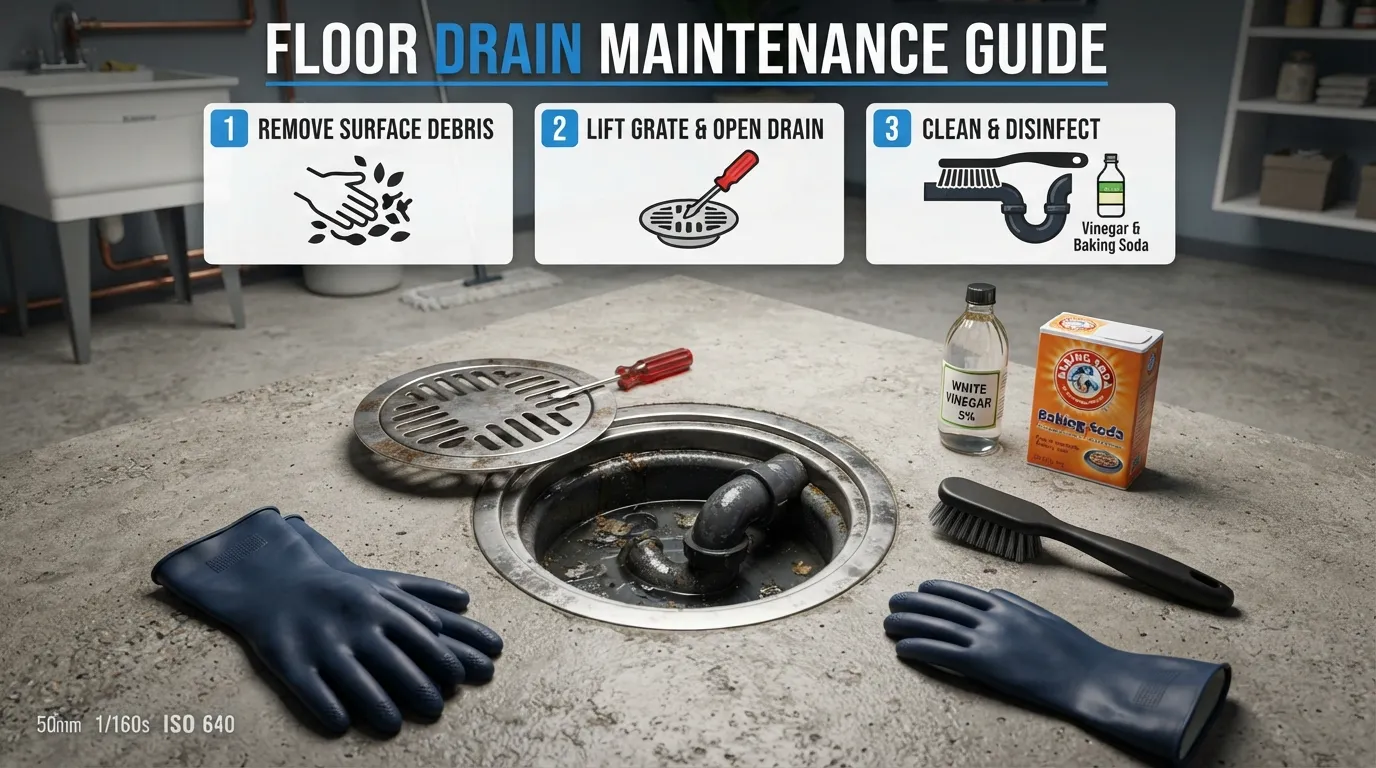
Executing a consistent cleaning routine prevents sludge buildup and keeps your drainage system running at peak capacity. Follow these actionable steps to clean and inspect your floor drain safely at least twice a year [01:22].
Step 1 – Remove the Drain Cover Safely
Accessing the internal pipe requires carefully detaching the drain grate without damaging the surrounding floor or finish.
Protect Your Hands: Put on heavy-duty rubber gloves [01:30] to shield your skin from bacteria, mold, and sharp metallic edges.
Unfasten Screws: Use a flathead screwdriver to remove any retaining screws holding the drain grate in place.
Lift Gently: Pry the drain cover upward gently using a putty knife if it is stuck due to dried soap scum or mineral deposits.
Step 2 – Clear Surface Debris and Hair
Manual extraction of top-level obstructions prevents clogs from being pushed deeper down into the P-trap assembly.
Scoop Out Solids: Remove accumulated hair, pet fur, and solid debris by hand or with a small brush [01:30].
Scrape Sludge: Clean the interior walls of the drain opening to eliminate slimy bacterial film and soap residue [01:14].
Dispose Safely: Place all extracted waste directly into a trash bag rather than pushing it further down the pipe.
Step 3 – Flush With Water to Test Flow
Testing the drainage system verifies that water flows freely and confirms that no underlying restriction remains in the line.
Pour Boiling Water: Slowly pour a bucket of hot water down the drain to dissolve lingering grease and soap scum.
Apply Eco-Friendly Solutions: Use natural mixtures like baking soda and vinegar [01:30] to break down organic buildup safely without harsh chemicals.
Perform a Flow Test: Run a steady stream of water from a hose or bucket to ensure rapid, unhindered drainage [00:35].
For a visual breakdown of basement drain maintenance, types, and inspection tips, watch the guide above [00:00].
Natural Deodorizing – Baking Soda and Vinegar Method
Baking soda and white vinegar provide a powerful, eco-friendly way to eliminate foul drain odors and break down minor grease accumulation. This non-toxic bubbling reaction neutralizes acidic odors while clearing organic film safely without damaging your pipes.
How to Use Baking Soda and Vinegar on a Floor Drain
Follow these simple steps to freshen your drain using pantry staples:
Pour Baking Soda: Dump one-half cup of baking soda directly down the open floor drain opening.
Add White Vinegar: Follow immediately with one cup of white vinegar to trigger a foaming chemical reaction.
Let It Sit: Cover the drain with a damp cloth for 15 to 30 minutes to trap the fizzing action inside the pipe.
Rinse Thoroughly: Flush the line with a kettle of boiling water to wash away loosened debris and neutralize smells.
Does Vinegar Actually Remove Drain Odor?
Yes, white vinegar contains acetic acid, which neutralizes alkaline odor compounds produced by decaying organic matter.
Neutralizes Pungent Gases: Vinegar counteracts alkaline sulfur compounds that cause rotten egg and mildew smells.
Kills Surface Bacteria: The mild acidity helps eliminate odor-causing bacteria clinging to the interior pipe walls.
Safe Alternative: Unlike harsh chemical cleaners, it deodorizes effectively without eroding plastic or metal drain pipes.
Natural Cleaners vs. Chemical Drain Openers
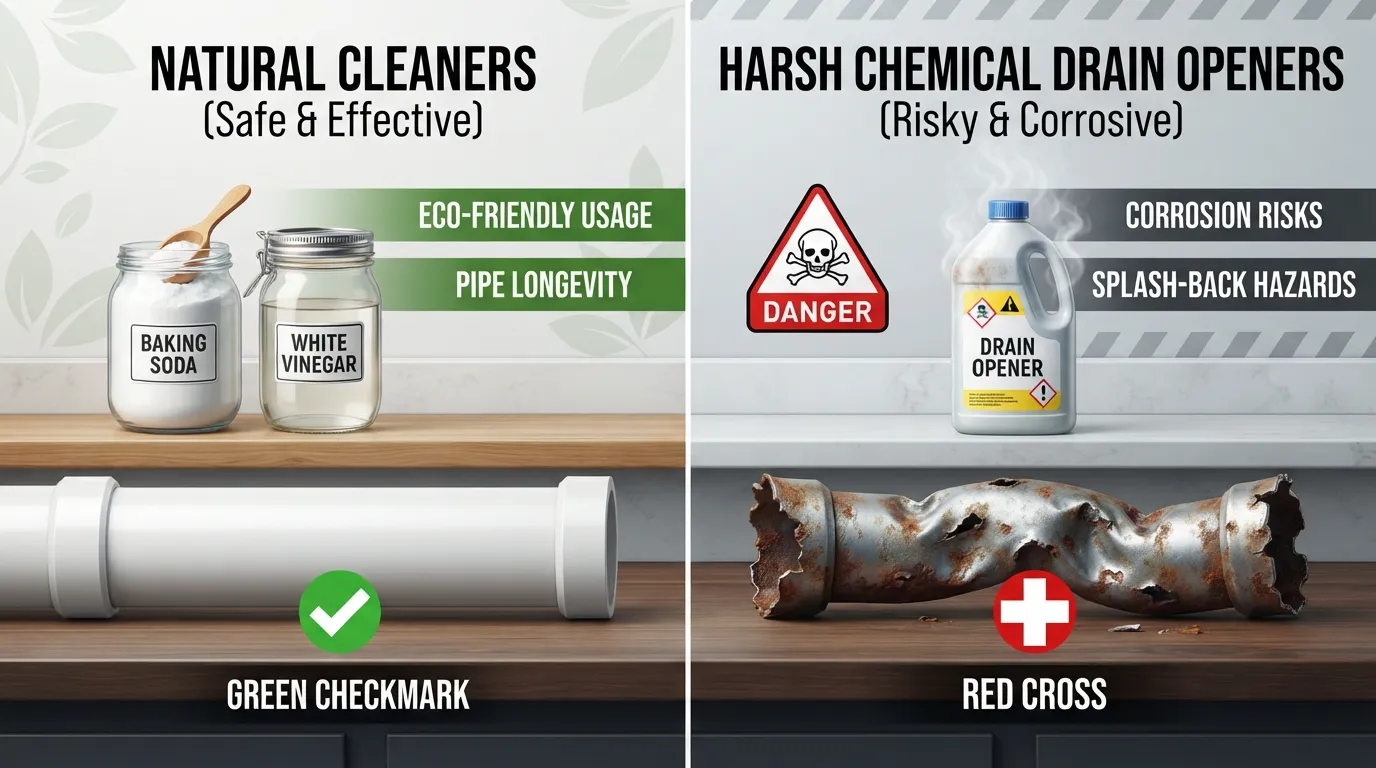
Choosing the right cleaning agent is crucial for protecting your plumbing infrastructure from long-term deterioration. While commercial chemical cleaners promise quick fixes, professional plumbers consistently advise against them due to severe risks to pipe integrity and personal safety.
Are Chemical Drain Cleaners Safe for Floor Drains?
Harsh chemical drain cleaners pose significant hazards to both residential plumbing systems and human health.
Severe Pipe Corrosion: Highly alkaline or acidic chemical formulas generate extreme heat that can warp PVC pipes and corrode older metal lines.
Splash-Back Risks: Standing water in neglected floor drains can cause caustic chemicals to splash upward, resulting in chemical burns or eye injuries.
Environmental Impact: Toxic chemicals wash into local water systems, harming aquatic ecosystems and wastewater treatment biology.
Temporary Band-Aid: Chemical openers often eat only a small hole through a clog rather than cleaning the entire pipe wall, leading to rapid re-clogging.
Natural vs. Chemical – Quick Comparison
Reviewing how natural alternatives stack up against harsh chemical treatments highlights why preventative maintenance is the preferred approach:
Safety Level: Natural solutions like baking soda and hot water are non-toxic to humans and pets, whereas chemical cleaners emit dangerous fumes.
Pipe Longevity: Eco-friendly methods preserve the lifespan of rubber seals, PVC fittings, and metal pipes, while harsh chemicals degrade joint adhesives.
Cost Efficiency: Pantry staples cost pennies per application, saving homeowners hundreds of dollars in avoided plumbing repair bills.
Maintenance Approach: Natural cleaning relies on regular preventative care, whereas chemical cleaners are reactive stopgaps for major emergencies.
Understanding the P-Trap and Preventing Sewer Smells
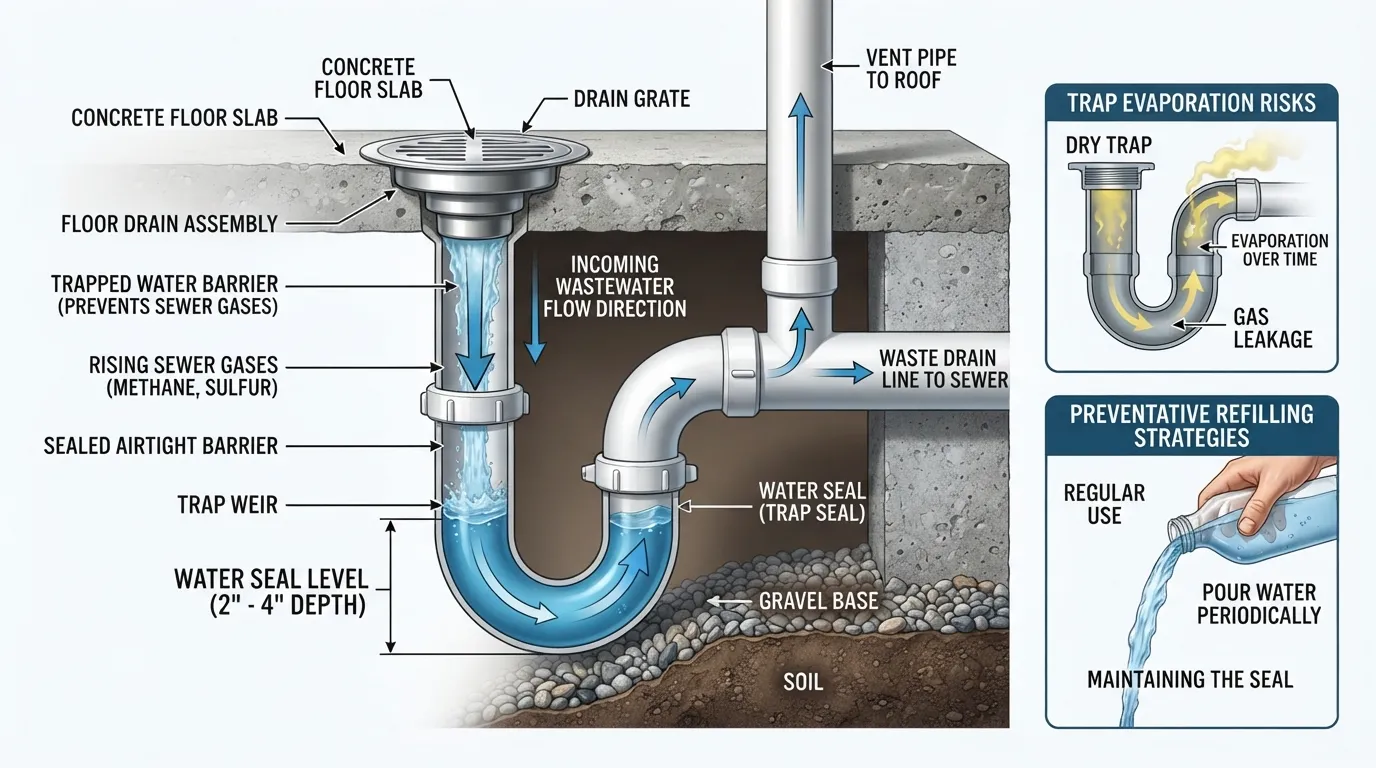
The P-trap is the critical curved pipe located beneath or immediately adjacent to a floor drain that holds a standing pool of water. This water barrier forms a vital gas-tight seal, engineered to prevent harmful sewer gases, foul odors, and pests from entering your living spaces. According to the International Plumbing Code (IPC), fixture traps must maintain a liquid seal depth between 2 and 4 inches to guarantee optimal safety and function.
What Is a P-Trap and How Does It Work?
The P-trap relies on simple plumbing geometry to block noxious gases while letting wastewater pass through freely.
U-Shaped Design: The downward bend catches and retains a specific volume of wastewater every time the drain is used.
The Vapor Barrier: This standing water acts as an impenetrable wall blocking methane, hydrogen sulfide, and other hazardous sewer odors.
Self-Scouring Action: Correctly sized traps use the velocity of flowing water to wash away minor suspended particles, preventing heavy buildup.
How Often Should You Pour Water Down a Floor Drain?
Floor drains located in rarely used areas like basements, utility rooms, or guest bathrooms frequently dry out due to natural evaporation.
Monthly Refill Routine: Pour at least one gallon of water down every infrequently used floor drain once a month.
Combatting Evaporation: Hot, dry indoor climates or winter heating systems can evaporate a 2-inch P-trap seal in just a few weeks.
Adding Mineral Oil: Pouring a tablespoon of vegetable oil or mineral oil on top of the water surface slows down evaporation significantly in seasonal vacation homes.
What Can You Pour Down a Drain to Stop It From Smelling?
When foul odors emerge from a dried or dirty drain, targeted home solutions neutralize the source quickly.
Hot Water and Dish Soap: A bucket of soapy hot water cuts through stagnant grease and flushes out organic films.
Baking Soda and Vinegar: This fizzy mixture deodorizes organic sulfur compounds and cleans the upper pipe walls safely.
Commercial Trap Primers: Installing an automated trap primer line connected to a nearby water supply ensures the P-trap stays constantly replenished without manual effort.
Location-Specific Floor Drain Maintenance
Different areas of the home introduce unique debris, chemicals, and organic matter into drainage systems. Tailoring your maintenance approach to each specific location ensures long-term reliability and prevents location-specific clogs [00:16].
Basement Floor Drain Maintenance Tips
Basement floor drains handle fine dust, tracked-in soil, and occasional storm surge water [02:07].
Combat Silent Evaporation: Refill the basement drain trap monthly to prevent dry traps and foul sewer gas leaks [03:13].
Clear Fine Sediments: Scrub away accumulated concrete dust and fine soil particles before major storms hit [02:07].
Protect Against Flooding: Pair your drain checks with sump pump backup protection to handle catastrophic water accumulation [00:50].
Garage Floor Drain Maintenance Tips
Garage drains deal with harsh automotive fluids, road salts, oil drips, and heavy grit that can quickly cement inside pipes [03:47].
Trap Oil and Grease: Never pour motor oil, antifreeze, or paint down a garage drain; wipe up chemical spills with absorbent rags first.
Install Sediment Baskets: Use a fine mesh sediment basket underneath the grate to catch metal shavings, sand, and pebbles.
Flush with Hot Water: Pour hot, soapy water down the drain bi-weekly to dissolve petroleum residues and road grime.
Laundry Room Floor Drain Maintenance Tips
Laundry room drains manage high volumes of wastewater laden with lint, fabric fibers, and detergent residue [00:30].
Capture Lint Particles: Attach a lint-trap mesh over your washing machine discharge hose to keep fibers from entering the floor drain.
Prevent Soap Scum Buildup: Run a hot water flush with baking soda monthly to break down sticky laundry detergent buildup.
Inspect Hose Connections: Check washing machine drain hoses regularly to prevent accidental overflow directly onto the floor.
Bathroom Floor Drain Maintenance Tips
Bathroom floor drains and shower jalis experience constant exposure to human hair, soap scum, and dead skin cells [00:30].
Remove Hair Weekly: Clear hair traps and drain covers weekly to prevent stubborn clogs from forming deep in the trap.
Sanitize the Jali: Remove and scrub the metal or plastic jali cover with a disinfectant brush to eliminate pink mold and mildew.
Prevent Soap Ring Blockages: Flush the drain with boiling water after heavy bathing usage to melt away solidified soap films.
For a comprehensive breakdown of basement drain troubleshooting, anatomy, and red flags, watch the video guide above [00:00].
Maintenance Schedule and Checklist
Adhering to a structured maintenance schedule prevents minor buildup from turning into emergency plumbing repairs. This quick-reference checklist breaks down essential tasks by weekly, monthly, and seasonal frequencies to keep your drainage system fully operational year-round.
Weekly, Monthly, and Seasonal Floor Drain Maintenance Checklist
Following a consistent timeline ensures every drain in your home receives the precise attention it requires:
Weekly Tasks: Remove bathroom and shower drain covers to clear out hair, lint, and surface soap scum before clogs form deep inside the pipe.
Monthly Tasks: Pour one gallon of water down infrequently used basement and utility room floor drains to keep the P-trap seal full and block sewer gases.
Bi-Monthly Tasks: Deodorize kitchen, garage, and laundry room drains using a natural half-cup of baking soda followed by one cup of white vinegar.
Seasonal Tasks: Inspect garage sediment baskets, check for slow drainage before heavy storm seasons, and clear away exterior yard debris surrounding outdoor area drains.
When to Call a Professional Plumber
Knowing when to transition from do-it-yourself maintenance to professional intervention prevents minor drainage issues from escalating into major property damage. While routine care handles everyday buildup, deep structural clogs and severe sewer backups require specialized commercial equipment and licensed expertise.
Signs You Need Professional Drain Cleaning
If basic cleaning methods and hand snakes fail to restore normal flow, your drainage system likely has a deeper systemic issue [06:53].
Persistent Clogs: A blockage that repeatedly returns shortly after cleaning points to root intrusion, collapsed lines, or heavy scale buildup requiring expert professional drain cleaning service [07:07].
Multiple Slow Fixtures: When your floor drain backs up simultaneously with nearby sinks, showers, or toilets, the main sewer line is obstructed.
Gurgling Across Multiple Drains: Bubbling sounds echoing through various household drains indicate trapped air venting improperly through the main stack.
What to Do During a Sewage Backup Emergency
A sudden sewage backup poses immediate health risks and requires rapid, decisive action to protect your home and family.
Evacuate and Protect: Turn off your main water supply if water is rising rapidly, and contact an emergency plumber immediately for rapid dispatch.
Avoid Electrical Hazards: Never step into standing wastewater near floor drains if there is any chance of submerged electrical outlets or appliances.
Prevent Cross-Contamination: Keep family members and pets away from the affected area until licensed professionals sanitize and clear the main line [07:17].
For a step-by-step visual demonstration of clearing stubborn blockages and using a hand snake on a floor drain, watch the video guide above [01:10].
Frequently Asked Questions
What is a good odor eliminator for floor drains?
Natural ingredients like baking soda combined with white vinegar create an effective, non-toxic odor eliminator that breaks down organic film and neutralizes foul-smelling bacteria. Pouring a half-cup of baking soda followed by one cup of vinegar directly into the drain neutralizes sulfur compounds safely.
What do plumbers recommend for smelly drains?
Plumbers recommend restoring the P-trap water seal by pouring at least one gallon of fresh water down the drain monthly to block rising sewer gases. For persistent biological odors, they advise using enzymatic cleaners that consume organic waste safely without corroding pipe walls.
How can I get rid of sewer smells from my floor drain?
Eliminating sewer smells requires identifying whether the P-trap has dried out due to evaporation or if organic debris is trapped in the drain opening. Pouring a full bucket of water down the pipe immediately restores the vapor barrier, while scrubbing the drain grate removes decaying residue.
What will neutralize sewer smell?
A mixture of baking soda, boiling water, and white vinegar neutralizes alkaline sewer gases and washes away the decomposing organic matter causing the odor. Adding a tablespoon of mineral oil on top of the water seal afterwards helps prevent the water from evaporating prematurely.
What is a good floor drain odor stopper?
A specialized mechanical floor drain trap seal or an integrated one-way valve acts as an exceptional odor stopper for infrequently used drains. These rubber or silicone inserts open to let wastewater flow downward automatically while remaining tightly closed to block sewer gases and pests when dry.
Conclusion and Next Steps
Routine floor drain maintenance is the single most effective way to protect your home from costly water damage, hazardous mold, and unpleasant sewer odors. By committing to a simple schedule of cleaning drain grates, clearing surface debris, and keeping your P-trap sealed, you ensure your entire plumbing infrastructure remains reliable year-round.
When DIY methods are not enough or you encounter persistent backups, expert help is just a click away. Explore our comprehensive general plumbing services to learn how our licensed professionals can keep your home safe and dry. Ready to schedule an expert inspection or service? Book a plumber today to secure fast, reliable assistance.
Main Services
Related Posts
Need a Plumber in Miami?
Schedule service online or speak directly with the EZ Plumbing team.
Owner-Led Local Service
Know who is behind the business before you request service. The owners, contact line and Miami service pages are published clearly.
- Named business owners
- Direct phone and social channels
- Local Miami service information
Clear Help Before You Book
Review the relevant service page, contact the team directly and use the booking page when you are ready—without relying on vague claims.
- Service-specific information
- Direct questions before scheduling
- Clear online booking route