Tree Roots Sewer Damage: Why It Happens & How to Fix It
Understanding Why Tree Roots Damage Sewer Pipes
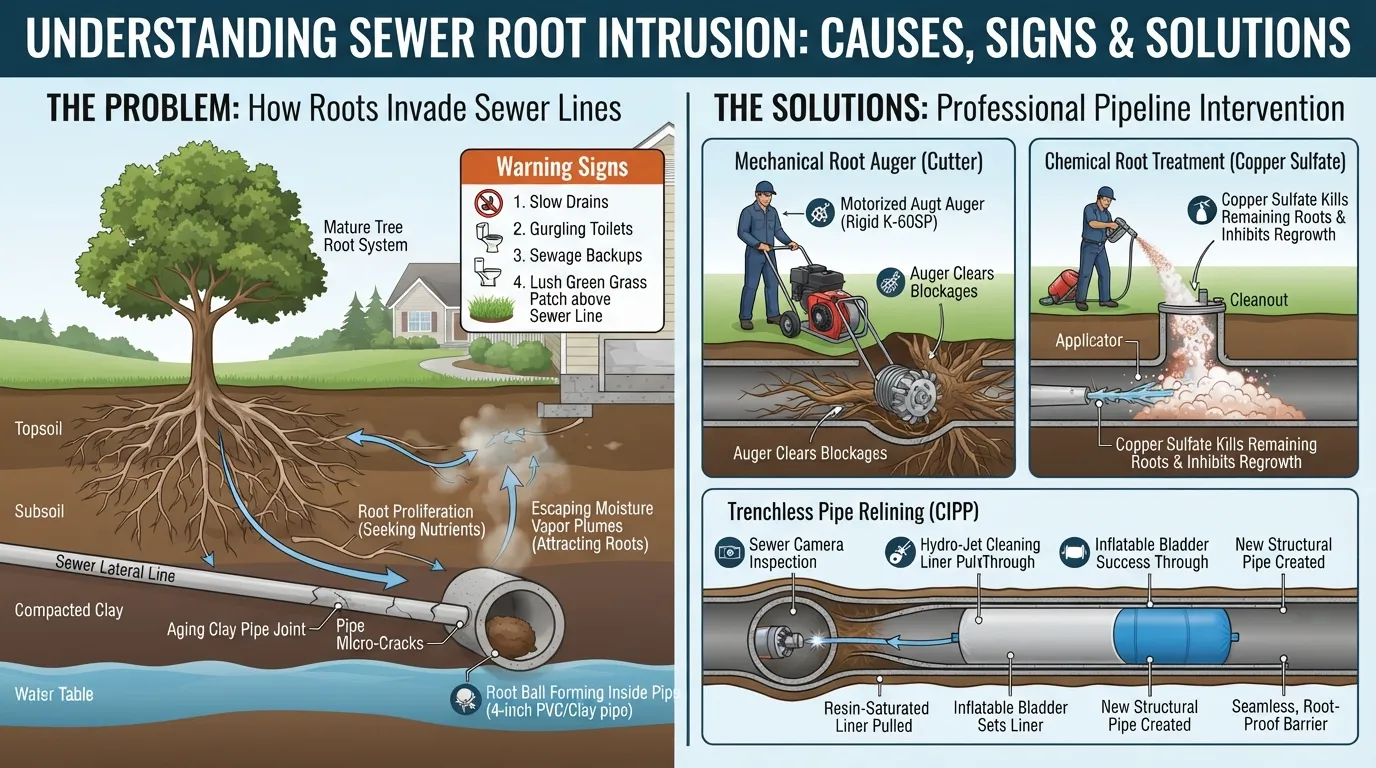
Tree roots naturally grow toward underground sources of moisture, nutrients, and oxygen, which frequently emanate from tiny structural weaknesses in underground pipes. When moisture escapes through micro-cracks or loose pipe joints, tree roots follow the vapor gradient directly to the source, penetrating the opening and rapidly multiplying inside the pipe.
Moisture Attraction: Underground pipes constantly emit condensation and vapor, creating an ideal microclimate that aggressively draws in surrounding tree roots.
Vulnerable Entry Points: Aging pipe joints, hairline cracks, and structural shifts provide easy access points for aggressive root growth.
Severe Consequences: Once inside, the roots expand, block wastewater flow, exert immense outward pressure, and eventually cause total pipe collapse if left unaddressed.
For comprehensive insights into protecting your infrastructure, you can explore professional guidance on sewer line maintenance and repair strategies.
How Tree Roots Infiltrate and Damage Sewer Pipes
Seeking Moisture — Why Roots Are Attracted to Sewer Lines
Tree roots naturally expand outward in search of vital resources, constantly hunting for underground pockets of water vapor, oxygen, and nutrients [02:02]. When sewer lines experience subtle temperature fluctuations or minor structural weeping, they release microscopic condensation and water vapor into the surrounding soil. This escaping vapor acts as an irresistible beacon for nearby root systems, drawing them directly toward the exterior of the pipe wall [02:32].
Vapor Trails: Sub-surface condensation creates a warm, nutrient-rich moisture plume that trees detect from surprisingly long distances [02:43].
Active Growth Zones: Roots prioritize areas with continuous moisture availability, making household sewer lines a primary target over seasonal groundwater [03:02].
Initial Infiltration — How Roots Enter Through Microscopic Cracks
Healthy, intact modern pipes are virtually impenetrable to tree roots, meaning intrusion always begins at a pre-existing structural vulnerability [02:02]. Decades of soil settling, ground shifting, or thermal expansion cause hairline cracks, pinholes, and loose joints in older clay, cast iron, or orangeberg pipes [02:12]. Sensing the concentrated moisture leaking from these flaws, fine hair-thin root fibers force their way through minuscule gaps to access the interior [02:54].
Vulnerable Junctions: Pipe joints and aging seals are the most common entry points where microscopic gaps first develop [02:22].
Hair-Thin Probes: The root tips narrow down to thread-like fibers capable of squeezing through pinholes and minor hairline fractures [02:54].
Expansion and Clogging — How a Small Root Becomes a Blockage
Once a single root fiber penetrates the interior of the pipe, it encounters an endless, pressurized supply of warm water and organic nutrients [03:02]. This hyper-abundant environment triggers exponential growth, causing the single strand to branch out, thicken, and rapidly transform into a dense root mass or root ball [03:10]. As this tangled web expands, it traps toilet paper, grease, and debris, severely restricting wastewater flow and causing widespread slow drains [05:12].
The Nutrient Jackpot: Continuous wastewater exposure accelerates root proliferation far beyond normal soil growth rates [03:10].
Debris Catchment: The fibrous network acts like a net, catching solid waste and creating recurring backups throughout the entire plumbing system [05:32].
Structural Destruction — How Roots Crack and Collapse Pipes
As the trapped root mass continues to thicken and bulk up inside the pipeline, it exerts immense, continuous outward pressure against the pipe wall [03:20]. This unrelenting radial force widens the original entry cracks, breaks pipe seals apart, and eventually compromises the entire structural integrity of the conduit [06:45]. Left unmitigated, the combination of internal pressure and exterior soil shifting leads directly to full structural failure and total pipe collapse [00:34].
Expanding Pressures: Thickening root clusters exert constant outward mechanical stress on fragile or aging pipe materials [03:20].
Total Collapse: Severe structural degradation results in crushed pipe segments, localized sinkholes, and catastrophic sewer line failures [07:29].
Why Some Homes Are More at Risk Vulnerability Factors
Older Pipe Materials — Clay Tile, Orangeburg, and Cast Iron Risks
Homes built before 1980 frequently utilize legacy pipe materials that are structurally vulnerable to root intrusion. Clay tile, widely used from the early 1900s through the 1970s, features short two-foot sections with numerous joints that easily separate over time. Similarly, compressed tar-paper Orangeburg pipes and aging cast iron lines degrade, soften, and develop hairline fractures that invite aggressive root entry.
Clay Tile Vulnerability: Rigid mortar joints degrade and crack with routine soil settling, creating prime entry gaps.
Orangeburg Deterioration: Compressed cellulose fiber pipes warp, flatten, and break down under prolonged moisture exposure.
Cast Iron Lifespan: While durable, cast iron develops internal scaling and structural pitting after fifty to sixty years of service.
High-Risk Tree Species Near Sewer Lines (Willows, Maples, Poplars, Elms)
Certain ornamental and shade trees possess notoriously aggressive, water-seeking root systems that actively target underground infrastructure. USDA Forest Service research highlights that many fast-growing canopy trees extend root networks far beyond their drip lines in search of stable moisture https://research.fs.usda.gov/treesearch/45998. Willows, silver maples, poplars, and American elms represent the highest risk factors for residential plumbing systems.
Weeping Willows: Known to send out sprawling, relentless root structures extending over one hundred feet from the trunk.
Silver Maples: Feature shallow, aggressive surface roots that thrive in moist soil environments near utility paths.
Poplars and Elms: Rapid growth rates demand massive daily water consumption, driving roots directly toward sewer lines.
Soil Movement, Drought, and Ground Settling as Hidden Triggers
Environmental stressors and geological shifts play a major role in opening up underground pipelines to biological intrusion. Extended drought conditions cause clay soils to shrink and crack, pulling soil away from buried pipes and forcing joints to pull apart. Conversely, heavy rainfall and subsequent ground settling place extreme physical torque on rigid conduits, generating new micro-fissures.
Drought Shrinkage: Dehydrated soil contracts tightly around pipes, placing immense shear stress on structural joints.
Seasonal Settling: Repeated freeze-thaw cycles and heavy rain events shift the surrounding earth, creating sudden pipe misalignments.
Safe Planting Distance — How Far Should Trees Be From Sewer Lines?
Strategic landscaping choices and strict planting distances are essential for safeguarding your sewer line against long-term root damage. Arborists generally recommend maintaining a minimum safe planting distance of at least 15 to 20 feet between large canopy trees and underground utility corridors. Installing physical root barriers or choosing slow-growing species with compact root balls further minimizes structural risks.
Minimum Clearance: Keep mature trees at least 15 to 20 feet away from the known path of your lateral pipe.
Alternative Options: Select dwarf varieties, evergreen shrubs, or shallow-rooted ornamental plants near utility zones.
Warning Signs of Tree Root Damage in Your Sewer Line
Slow or Gurgling Drains
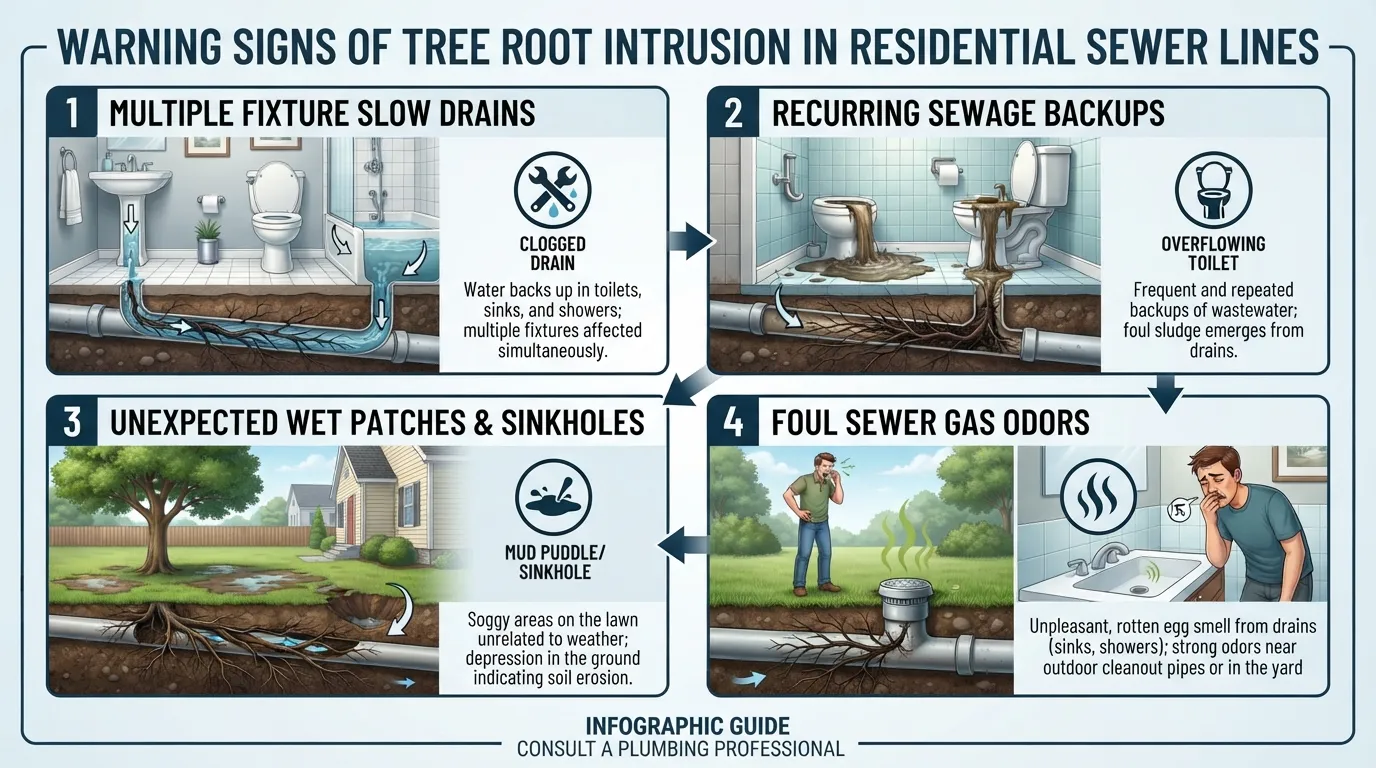
When tree roots constrict the interior of your main sewer line, wastewater encounters immediate resistance across multiple plumbing fixtures. If your kitchen sink, bathtub, and basement floor drain all become sluggish simultaneously, the restriction is in your main line rather than a local trap. Additionally, trapped air pockets forced backward through the system create a distinct gurgling sound in toilets and sinks during drainage.
Multi-Fixture Sluggishness: Simultaneous slow drainage across disparate home fixtures is the hallmark of a main line blockage.
Trapped Air Displacement: Escaping air bubbles escaping through fixture traps signal a partial pathway obstruction underground.
Recurring Sewage Backups
Repeated plumbing blockages that return shortly after standard plunging or snaking indicate an active, growing root mass. Because mechanical augers only cut away the interior roots without sealing the entry cracks, the roots quickly regrow within weeks. If you are experiencing a severe sewage backup that threatens your living space, immediate professional intervention is required.
Stubborn Clogs: Clearances that fail to hold for more than a few weeks point directly to biological intrusion.
Escalating Crises: Unchecked root proliferation rapidly transitions from slow flow to total wastewater obstruction.
Wet Patches or Sinkholes in the Yard
Leaking wastewater from compromised pipe joints enriches and fertilizes the soil directly above the damage zone. You may notice an isolated patch of grass growing noticeably greener and lusher than the surrounding lawn. If you are not sure of the source of the leak, localized spongy ground or unexpected sinkholes can signal a collapsed pipe wall washing soil inward.
Lush Growth Strips: Exceptionally green grass tracks precisely along the underground path of your leaking lateral.
Structural Depression: Soft, spongy earth or sudden surface depressions indicate serious sub-surface soil erosion.
Foul Odors Near Drains or Outdoor Pipes
Root clusters do not just capture solid waste; they actively pry open pipe joints to widen original entry fissures. This structural separation allows pungent sewer gases to seep out into the surrounding soil and up toward the surface. An unmistakable rotten egg or sulfur smell near floor drains, outdoor cleanouts, or yard surfaces demands urgent diagnostic attention.
Gas Seepage: Widened pipe fractures allow noxious sewer odors to permeate near exterior cleanout caps.
Indoor Odor Triggers: Escaping vapors frequently vent backward through dry floor drain traps inside the home.
How to Remove Tree Roots From Sewer Lines
Mechanical Removal — Cutting and Hydro Jetting
Clearing established blockages begins with mechanical cutting using a heavy-duty sewer augur or motorized root-cutting head [00:00]. This process physically shears away intrusive root masses packed inside the pipeline, instantly restoring drainage functionality. For stubborn or grease-lined pipes, professional hydro jetting utilizes high-pressure water streams to scour interior pipe walls clean of lingering root fibers and debris.
Rotary Cutting Heads: Specialized auger blades rotate at high torque to chew through dense, fibrous root balls [00:00].
High-Pressure Jetting: Water-blasting technology clears residual root hair and sediment that standard snakes leave behind.
Chemical Root Killers — Copper Sulfate and Foaming Herbicides (How Long They Take)
After mechanical clearing, chemical treatments are essential to destroy remaining root fibers and deter future regrowth inside the pipe. Copper sulfate crystals dissolved in the system release copper ions that kill localized root tissue within several days to a couple of weeks [09:01]. Alternatively, foaming root killers expand to fill the entire pipe diameter, ensuring complete contact with upper joint intrusions.
Copper Sulfate Action: Typically takes 7 to 14 days to fully kill cut root tissue and inhibit immediate return growth.
Foaming Herbicides: Expands upward to coat the entire circumference of the pipe, reaching vulnerable joints that bottom-flowing crystals miss.
Pipe Relining and Trenchless Repair for Severe Damage
When repeated root intrusions have severely fractured or compromised structural pipe walls, trenchless repair offers a permanent solution without total excavation. Cured-in-place pipe (CIPP) relining inserts an epoxy-resin-coated liner directly into the existing damaged conduit, inflating it to create a seamless, root-proof new pipe internally. This modern approach saves landscaping while permanently sealing off vulnerable entry joints.
Trenchless CIPP Lining: Creates a solid, jointless interior barrier that blocks future root entry entirely.
Structural Preservation: Restores full hydraulic integrity to aging clay or cast iron lines without heavy yard excavation.
DIY vs. Professional Removal — When to Call a Plumber
While minor root clogs can sometimes be managed with rental augers or preventative chemical maintenance, severe structural blockages require expert intervention. Engaging certified specialists for professional drain cleaning ensures proper diagnostic camera inspections and safe clearance without damaging fragile pipe materials. Attempting heavy mechanical clearing without proper training risks kinking cables or puncturing weakened lines.
Diagnostic Accuracy: Professional camera inspections verify whether a line can be cleared or requires structural repair.
Mitigating Risk: Experienced technicians prevent equipment entrapment and structural pipe collapses during high-torque root cutting.
How Much Does It Cost to Remove Tree Roots From a Sewer Line?
Cost Factors (Pipe Depth, Damage Severity, Method Used)
The total financial investment for resolving tree root intrusion varies based on several specific job parameters. Pipe depth dictates how much excavation is required for spot repairs, while damage severity determines whether simple root cutting will suffice or if structural rehabilitation is mandatory. Additionally, the chosen removal technique—ranging from chemical treatments to trenchless pipe relining—directly influences your overall sewer repair estimate.
Buried Depth & Accessibility: Deeper lines or obstructed access points require more labor hours and specialized excavation equipment.
Structural Extent: Superficial root intrusions cost significantly less to resolve than crushed, collapsed, or severely fractured pipeline segments.
Technique Complexity: Basic chemical applications and mechanical snaking cost far less than advanced hydro jetting or trenchless relining.
Average Price Range by Removal Method
Root removal cost ranges widely depending on the required scope of work and intervention type. Standard mechanical snaking or chemical root treatments typically range between 150 and 400 dollars. Professional hydro jetting or heavy cutting services generally run from 300 to 600 dollars, whereas extensive trenchless pipe relining or excavation replacements can span from 3,000 to 15,000 dollars based on linear footage.
Mechanical & Chemical Treatments: Standard snaking and chemical flushing generally cost between 150 and 400 dollars.
Hydro Jetting Services: High-pressure scouring typically ranges from 300 to 600 dollars for standard residential lines.
Trenchless & Excavation Repairs: Major structural fixes like CIPP lining or full replacements range from 3,000 to over 10,000 dollars.
To determine the exact condition of your plumbing infrastructure and schedule an inspection or get an estimate, consulting an experienced technician ensures you select the most cost-effective solution for your home.
Who Is Responsible for Tree Root Sewer Damage?
Is the Homeowner Responsible for Tree Root Damage?
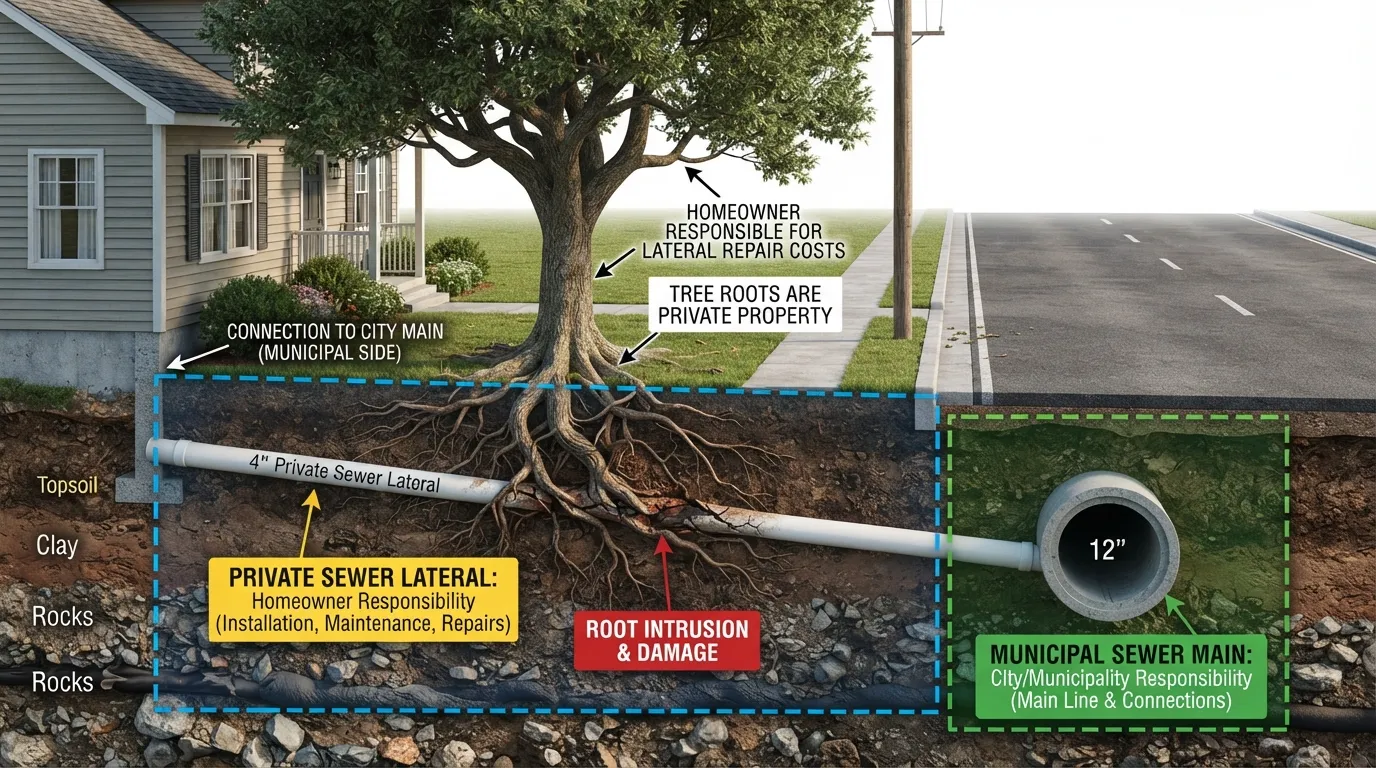
Property owners are almost universally responsible for maintaining and repairing the entire sewer lateral connecting their home to the municipal main line. This responsibility applies regardless of whether the intruding tree originates on your own property, a shared boundary, or a neighbor’s yard. Because the portion of the pipe failing on your land is classified as private infrastructure, local utility authorities rarely cover private lateral maintenance.
Private Lateral Ownership: Homeowners hold legal responsibility for the full length of the private sewer line up to the municipal connection point.
Property Boundaries: Your obligation typically includes the section running across your yard, even if the offending vegetation sits elsewhere.
Does Homeowners Insurance Cover Tree Root Sewer Damage?
Standard homeowners insurance policies generally do not cover tree root damage to sewer lines because insurers classify root intrusion as gradual wear, tear, and lack of maintenance. However, coverage may apply if the root damage results in a sudden, accidental collapse that causes raw sewage to back up and damage your home’s interior living spaces. Reviewing your specific policy or considering an optional underground utility endorsement is essential for proactive protection.
Exclusion of Gradual Wear: Standard policies treat slow root infiltration and pipe aging as routine homeowner upkeep.
Secondary Interior Damage: While the pipe repair itself is usually excluded, resulting water or sewage damage inside the house may qualify for a claim.
What If a Neighbor’s Tree Is Causing the Damage?
Property law typically dictates that you have the legal right to trim any intruding tree roots or branches that cross your property line at your own expense. If your neighbor’s tree roots breach your sewer line, resolving the financial burden usually falls on you as the owner of the damaged lateral. However, amicable communication or local municipal dispute mediation can sometimes help negotiate shared removal costs if the tree is demonstrably hazardous or neglected.
Right to Trim: You are legally permitted to cut and clear roots that cross your subterranean property boundary line.
Liability Limitations: Suing a neighbor for natural root growth is rarely successful unless direct negligence or structural property endangerment can be proven.
How Fast Do Tree Roots Grow Back — and How to Prevent Future Damage
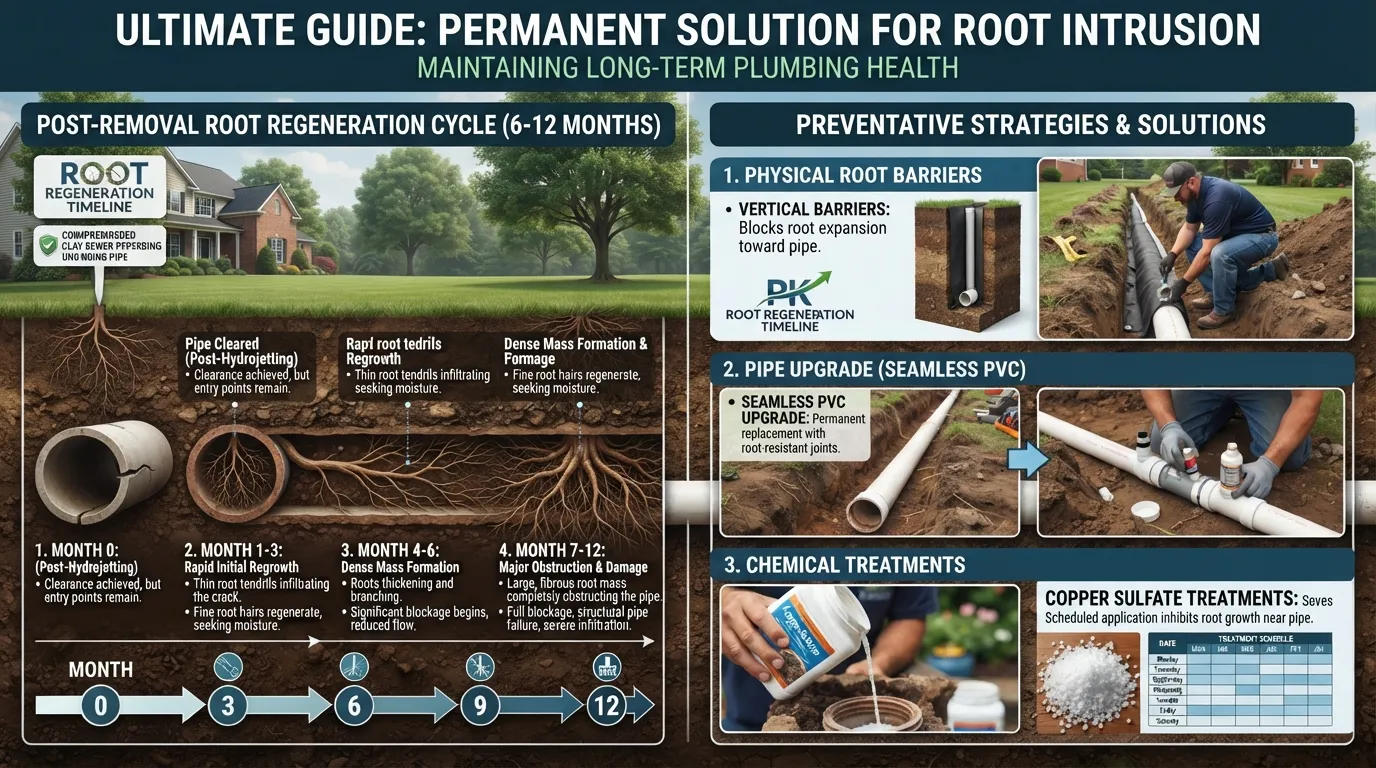
Root Regrowth Timeline After Removal
Tree roots typically begin growing back inside compromised sewer lines within six to twelve months after mechanical cutting or clearing. Because mechanical augers only shear away the interior mass without sealing the structural entry cracks, surviving root tips rapidly regenerate in response to continuous moisture. Establishing a structured chemical inhibitor schedule immediately following a physical clearing is critical to interrupting this fast-paced regrowth cycle.
Rapid Regeneration: Unmitigated roots often re-establish restrictive blockages in under a year as they chase constant wastewater vapor.
The Necessity of Treatment: Mechanical snaking alone provides temporary relief; pairing it with root-killing foaming agents stops rapid post-clearing recovery.
Root Barriers and Physical Prevention Methods
Installing physical barriers during landscaping or trench repairs provides an effective long-term defense against encroaching root systems. Heavy-duty vertical root barriers placed between mature trees and underground utility corridors force roots to divert downward or outward away from your pipes. Additionally, sealing pipe joints with root-resistant wrapping or replacing vulnerable segments with seamless PVC prevents future intrusion entirely.
Vertical Root Blockades: Plastic or metal panels buried two to three feet deep physically deflect lateral root expansion.
Material Upgrades: Transitioning legacy clay or Orangeburg pipes to welded PVC eliminates the vulnerable joints roots love to target.
Routine Sewer Inspections and Maintenance Schedules
Proactive upkeep is the single most reliable strategy for preventing catastrophic sewer line failures before they disrupt your home. Scheduling an annual or biannual sewer line inspection using a specialized drain camera allows you to catch minor root entry points early. Coupled with routine preventive maintenance treatments, this vigilance safeguards your plumbing infrastructure and protects your budget from emergency repair costs.
Biannual Camera Checks: Visual tracking catches tiny root fibers before they mature into massive, destructive blockages.
Scheduled Chemical Flushing: Applying approved foaming root killers or copper sulfate every six to twelve months maintains a hostile environment for stray root tips.
Frequently Asked Questions
What Dissolves Tree Roots in Sewer Lines Fast?
Foaming root killers containing chemical herbicides or copper sulfate crystals dissolve root fibers fastest when applied after mechanical clearing. While chemicals take several days to break down active organic tissue, foaming agents provide immediate contact with upper pipe walls where roots enter.
Does Homeowners Insurance Cover Tree Root Damage to Sewer Lines?
Standard homeowners insurance policies do not cover tree root damage to sewer lines because insurers classify root intrusion as gradual wear and tear. However, policies may cover secondary water damage inside your home if a sudden pipe collapse causes an interior sewage backup.
Who Is Responsible If Tree Roots Are Causing Damage?
Property owners are legally responsible for maintaining and repairing the entire private sewer lateral connecting their home to the municipal main line. This responsibility applies regardless of whether the intruding tree originates on your property or a neighbor’s yard.
How Do Plumbers Get Rid of Tree Roots?
Plumbers eliminate tree roots using heavy-duty motorized augers or high-pressure hydro jetting to mechanically clear blockages from the pipe. Following physical removal, professionals often apply chemical root killers or recommend trenchless pipe relining to prevent future intrusions.
How Much Does It Cost to Remove Tree Roots From a Sewer Line?
Basic mechanical snaking or chemical root treatments typically cost between 150 and 400 dollars for standard residential lines. Advanced hydro jetting or heavy cutting ranges from 300 to 600 dollars, while extensive trenchless relining or excavation costs thousands.
What Kills Tree Roots Immediately?
No safe chemical product dissolves living tree roots immediately upon contact because organic tissue requires days to absorb and break down. Mechanical cutting tools and high-pressure hydro jetting provide immediate physical destruction of intrusive root masses inside pipes.
How Fast Do Tree Roots Grow Back in Sewer Pipes?
Tree roots typically begin regrowing inside compromised sewer lines within six to twelve months after mechanical clearing. Because cutting tools do not seal entry cracks, continuous wastewater moisture accelerates rapid root regeneration without chemical inhibition.
What Is the Best Way to Unclog the Main Sewer Line?
The best way to unclog a main sewer line is through professional mechanical snaking or hydro jetting to clear blockages safely. Following up with a camera inspection ensures the pipe structural integrity is assessed and treated correctly.
How Do You Stop Tree Roots From Damaging Pipes?
Stop tree roots from damaging pipes by maintaining a safe planting distance of at least 15 feet from utility lines. Installing vertical root barriers, using copper sulfate treatments, and upgrading legacy clay pipes to seamless PVC also prevent root intrusion.
How Long Does It Take Copper Sulfate to Dissolve Roots?
Copper sulfate crystals typically take between 7 and 14 days to fully kill cut root tissue and inhibit immediate regrowth. The chemical works gradually by releasing copper ions that disrupt cellular processes within the remaining root fibers.
Protecting Your Home From Tree Root Intrusion
Tree root intrusion is an escalating threat that can transform minor slow drains into catastrophic sewage backups if left unaddressed. Understanding how roots exploit vulnerable pipe joints and aging materials empowers you to catch warning signs early before major structural damage occurs. Whether you need preventative maintenance, emergency clearing, or a long-term trenchless solution, proactive care safeguards both your plumbing infrastructure and your property investment.
Do not wait for a complete pipeline collapse to take action against aggressive root growth. Connect with a trusted, licensed plumber today to evaluate your sewer line health, clear stubborn blockages, and secure professional repairs. To get started, schedule a free inspection or book a plumber today to ensure your home is fully protected against unexpected plumbing emergencies.
Main Services
Related Posts
Need a Plumber in Miami?
Schedule service online or speak directly with the EZ Plumbing team.
Owner-Led Local Service
Know who is behind the business before you request service. The owners, contact line and Miami service pages are published clearly.
- Named business owners
- Direct phone and social channels
- Local Miami service information
Clear Help Before You Book
Review the relevant service page, contact the team directly and use the booking page when you are ready—without relying on vague claims.
- Service-specific information
- Direct questions before scheduling
- Clear online booking route