Common Causes of Sewer Backups: Signs, Cost & Fixes
What Is a Sewer Backup?
A sewer backup occurs when wastewater from the municipal main reverses flow and pushes back through your home’s drainage system, fixtures, and floor drains. This hazardous issue typically stems from blockages, structural damage, or hydraulic overloads within your private lateral or the broader sanitary sewer system.
What Happens When a Sewer Line Backs Up
When wastewater flow is completely obstructed, the trapped liquid and raw sewage seek the path of least resistance, forcing their way upward into your living space.
Fixture Overflow: Toilets, bathtubs, and showers on lower levels frequently begin gurgling, draining slowly, or overflowing entirely with contaminated water.
Property Contamination: Unsanitary black water spills across flooring, drywall, and personal belongings, creating severe property damage and biohazard risks.
Foul Gas Release: Strong, persistent sulfur or sewage odors escape from dry drain traps as pressure builds inside the plumbing network.
Why This Is Considered a Plumbing Emergency
A sewer backup requires an immediate professional response to protect structural integrity and household health. Delaying intervention exponentially increases repair costs and environmental contamination risks.
Severe Health Hazards: Raw wastewater contains dangerous pathogens, bacteria, and viruses that can trigger serious illnesses upon contact or inhalation.
Accelerated Property Damage: Prolonged exposure to moisture compromises subfloors, framing, and drywall, rapidly encouraging toxic mold growth.
Immediate Intervention: Homeowners experiencing this crisis must contact a certified Emergency Plumber right away to safely mitigate the blockage, extract contaminated water, and sanitize the affected spaces.
Main Causes of Sewer Backups
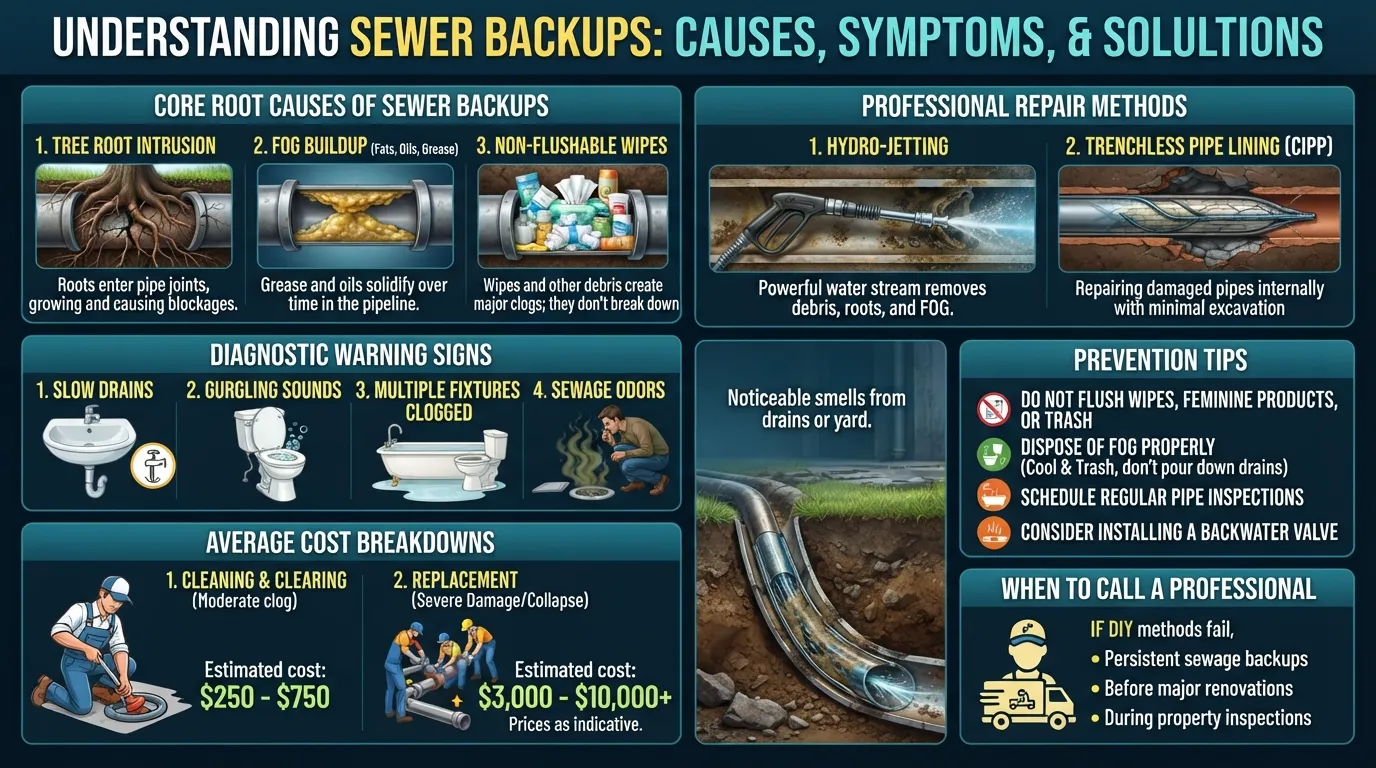
Sewer backups typically stem from blocked pipes, structural degradation, or hydraulic overloads within the private lateral or municipal system. Identifying the root trigger is essential for deploying targeted Drain Cleaning or repair solutions before catastrophic indoor flooding occurs.
Plumb Hero – Number 1 Cause of Sewer Backups
Tree Root Intrusion in Sewer Pipes
Tree root intrusion happens when underground roots are naturally drawn to the moisture, warmth, and nutrient vapor escaping from tiny cracks or loose pipe joints. Once inside, these roots proliferate rapidly, forming dense hair-like webs that catch grease, toilet paper, and debris, eventually causing a total blockage.
Targeted Attraction: Pipe joints and micro-fractures leak condensation, acting as beacon signals for thirsty tree roots seeking hydration.
Structural Expansion: As roots grow thicker inside the line, they exert immense pressure, widening cracks and potentially crushing older pipe materials.
Chronic Clogs: Standard plunging or minor snaking only offers temporary relief, as the remaining root mass quickly regenerates without professional root cutting and hydro-jetting.
Grease, Fat, and Oil Buildup (FOG)
FOG buildup occurs when cooking fats, oils, and grease are poured down kitchen sinks in liquid form, only to cool, solidify, and coat the interior walls of your plumbing lines. Over time, this sticky residue accumulates layers of soap scum, food scraps, and debris, drastically narrowing the pipe diameter.
Cooling and Hardening: Hot grease cools down quickly once inside underground plumbing, turning into a wax-like solid that clings tenaciously to pipe walls.
Debris Trapping: The tacky surface catches loose particles, hair, and paper waste, forming dense blockages that resist standard clearing methods.
Kitchen Line Restrictions: This accumulation predominantly restricts kitchen waste branches before they even reach the main sewer lateral, causing slow sinks and foul odors.
Flushing Non-Flushable Items (Wipes, Paper Towels, Sanitary Products)
Flushing non-flushable items introduces synthetic fibers, plastics, and dense cotton materials into a drainage system designed solely for human waste and toilet paper. Unlike standard toilet paper, products marketed as flushable wipes do not rapidly disintegrate in water.
Synthetic Accumulation: Materials like wet wipes, paper towels, and sanitary products knot together in pipe bends and tree root intrusion zones.
Mechanical Snagging: These tough fibers wrap securely around pipe imperfections or root tendrils, creating impenetrable dams that stall all wastewater flow.
Widespread System Strain: These items also wreak havoc further down the line, clogging municipal pumps and creating massive blockages in city infrastructure.
Aging and Damaged Pipes (Clay, Cast Iron, Orangeburg)
Aging and damaged pipes suffer from decades of structural fatigue, material degradation, and soil shifting, making them highly susceptible to collapses, breaks, and leaks. Homes built decades ago frequently rely on legacy materials that have long exceeded their expected service life.
Material Vulnerabilities: Older clay pipe systems are prone to cracked bells and root infiltration, while cast iron pipe networks suffer from interior scaling and rust corrosion.
Orangeburg Failure: Homes utilizing bituminous fiber Orangeburg pipe often experience complete wall delamination, flattening, and structural failure over time.
Comprehensive Renewal: Property owners facing persistent failures due to deteriorated infrastructure must invest in professional sewer line replacement or trenchless pipe rehabilitation.
Sagging or “Bellied” Pipes
A bellied pipe occurs when a section of the underground sewer line sinks into soft or improperly compacted soil, creating a downward dip or low spot where wastewater pools. This pool traps heavy solids and debris instead of allowing gravity to sweep them cleanly toward the municipal main.
Gravity Failure: The structural depression disrupts the continuous downward slope required for smooth wastewater transit.
Debris Accumulation: Sludge, paper, and waste continuously settle in the belly, forming recurring blockages even after professional cleaning.
Corrective Grading: Resolving a severe pipe belly typically requires excavating and physically re-supporting or replacing the compromised pipe section to restore proper pitch.
Heavy Rainfall and Municipal Sewer Overload
Heavy rainfall and municipal sewer overload happen when massive volumes of stormwater infiltrate sanitary sewer networks, overwhelming the carrying capacity of the system. In combined sewer systems, intense weather events push water backward through service connections faster than it can escape.
System Inundation: Excessive stormwater enters through sump pump improper connections, manhole covers, and cracked municipal lines.
Hydraulic Pressure: The sudden surge in volume creates intense backpressure, driving water up through floor drains and basement fixtures.
Overflow Risks: Neighborhoods experiencing intense downpours face widespread sanitary sewer backups independently of their private home maintenance habits.
Blockages in City Sanitary Mains
Blockages in city sanitary mains occur when a major obstruction develops within the municipal public sewer infrastructure, impacting multiple properties connected to the same line. When the city main clogs, wastewater from neighboring homes has nowhere else to go and backs up into lower-elevation lateral connections.
Upstream Impact: A blockage in the public main forces municipal wastewater to seek relief through private service connections, flooding residential basements.
Utility Notification: Homeowners cannot clear municipal main clogs independently; resolution requires immediate intervention by city public works departments.
Distinguishing Backups: If multiple plumbing fixtures throughout the house back up simultaneously while municipal streets or neighboring homes experience similar issues, the city main is the primary suspect.
Signs Your Main Sewer Line Is Clogged
Recognizing early warning signs of a failing drainage system helps homeowners prevent catastrophic indoor flooding and costly property destruction. When your main sewer lateral begins to choke, your entire plumbing network exhibits distinct symptoms that set a main line blockage apart from a simple localized clog.
Multiple Drains Backing Up at Once
When multiple plumbing fixtures throughout your home back up simultaneously, the issue almost always stems from a main line obstruction rather than a single branch pipe.
Widespread Impact: Water pushing up into a shower drain when you flush the toilet or running the washing machine discharging into a floor drain indicates a centralized restriction.
Immediate Action Required: Because this points directly to a major blockage in your primary outflow path, homeowners should schedule professional drain cleaning before total wastewater backup occurs.
Fixture Isolation: Testing fixtures on upper versus lower levels helps plumbers map out exactly where the restriction begins within your drainage stack.
Gurgling Sounds From Toilets or Drains
Gurgling or bubbling noises coming from your plumbing fixtures signal that trapped air is being violently displaced by moving water unable to vent properly.
Air Pocket Displacement: As wastewater passes a partial obstruction, it traps air bubbles that travel backward and escape through the nearest drain trap.
Toilet Bubbling: Flushing a nearby toilet often causes air to bubble up through your bathtub or sink drains, indicating a growing constriction in the main line.
Early Diagnostics: Catching these acoustic warnings early allows you to address tree roots or grease buildup before a complete sewer collapse happens.
Slow Drainage Throughout the House
When every sink, tub, and shower in the house drains sluggishly despite standard cleaning efforts, your main sewer line is likely restricted by scale, root intrusion, or FOG buildup.
Uniform Sluggishness: Unlike a single hair clog in a bathroom sink, a main line restriction causes uniform, whole-house drainage delays.
Gravity Disruption: Water struggles to find a clear path downward, resulting in standing water in showers and slow-emptying kitchen sinks.
Professional Assessment: Trying chemical drain openers on a whole-house slow drain is ineffective and hazardous; a video camera inspection is required to view the interior pipe condition.
Sewage Odor Indoors or in the Yard
Persistent foul sulfur or sewage smells around your living spaces or property indicate that wastewater gases are escaping due to a compromised seal or venting failure.
Dry P-Traps and Venting: Backpressure from a clogged sewer line can siphon water out of floor drain traps, letting sewer gases vent freely inside.
Yard Seepage: Unpleasant odors outdoors often point to a cracked, broken, or leaking underground sewer lateral pooling raw sewage beneath the soil.
Health and Safety: Persistent gas odors are an immediate warning sign of biohazard exposure, requiring professional plumbing diagnostics to locate and seal the leak.
Water Pooling Near the Cleanout or Yard
Unexplained puddles, wet patches, or exceptionally lush, green grass patches in your yard directly above the sewer line point to an underground pipe failure.
Subsurface Leaks: When a sewer pipe cracks, collapses, or separates, wastewater and liquid waste seep into the surrounding soil instead of reaching the municipal main.
Cleanout Overflows: If wastewater begins pooling around your outdoor sewer cleanout cap, the main line is entirely blocked downstream.
Immediate Containment: Avoid walking in or disturbing pooled yard water, as it carries harmful pathogens that present severe contamination and health risks.
Is It Safe to Stay in Your House After a Sewage Backup?
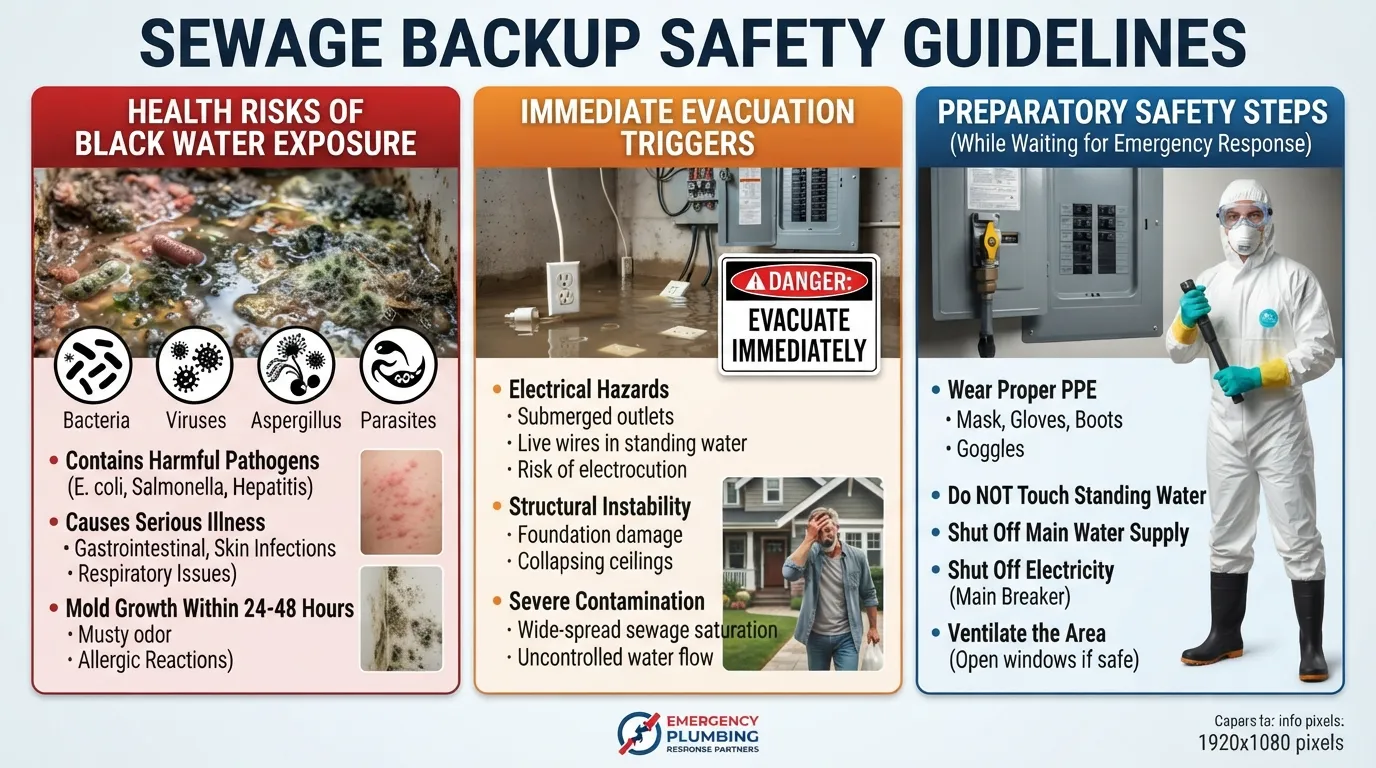
Staying in a home experiencing a raw sewage backup presents severe health and safety hazards that require immediate caution. Raw wastewater, classified as black water, contains high concentrations of infectious pathogens that demand strict protective measures or temporary evacuation.
Health Risks of Raw Sewage Exposure
Raw sewage is laden with dangerous microorganisms that pose direct threats to human and pet health through physical contact, ingestion, or airborne inhalation.
Pathogen Transmission: Contaminated water carries harmful bacteria, viruses, and parasites that can cause severe gastrointestinal illness, skin infections, and respiratory distress.
Mold Proliferation: Moisture from a backup creates an ideal breeding ground for toxic mold spores, worsening asthma and allergy symptoms within 24 to 48 hours.
Vulnerable Populations: Children, elderly residents, and individuals with compromised immune systems face the highest risk of acute illness from sewage exposure and should be immediately separated from the affected zone.
When to Evacuate the Affected Area
While minor localized spills in a well-ventilated bathroom can sometimes be managed safely, certain conditions mandate immediate evacuation of the home.
Extensive Flooding: If raw sewage covers large living areas, basement floors, or prevents access to essential facilities like bathrooms and exits, evacuate immediately.
Electrical Hazards: When rising wastewater threatens electrical outlets, baseboard heaters, or the main breaker panel, the risk of electrocution requires immediate departure and power shutdown.
Air Quality Warnings: Overwhelming, noxious sewer gas odors that cause dizziness, nausea, or headaches mean the indoor air is unsafe to breathe without specialized respirators.
Immediate Safety Steps Before a Plumber Arrives
If you remain in the home while waiting for professional help, taking immediate containment actions protects your health and minimizes structural damage.
Avoid Contact: Never touch raw sewage or contaminated items without wearing proper personal protective gear, including heavy-duty gloves, rubber boots, and eye protection.
Shut Off Utilities: If safe to do so without standing in water, turn off your home’s water supply to prevent adding more liquid to the overflowing system.
Call for Backup: Contact a certified Emergency Plumber right away to dispatch professional restoration and repair teams equipped to sanitize and secure your property.
Why Sewer Backups Keep Happening Recurring Backups
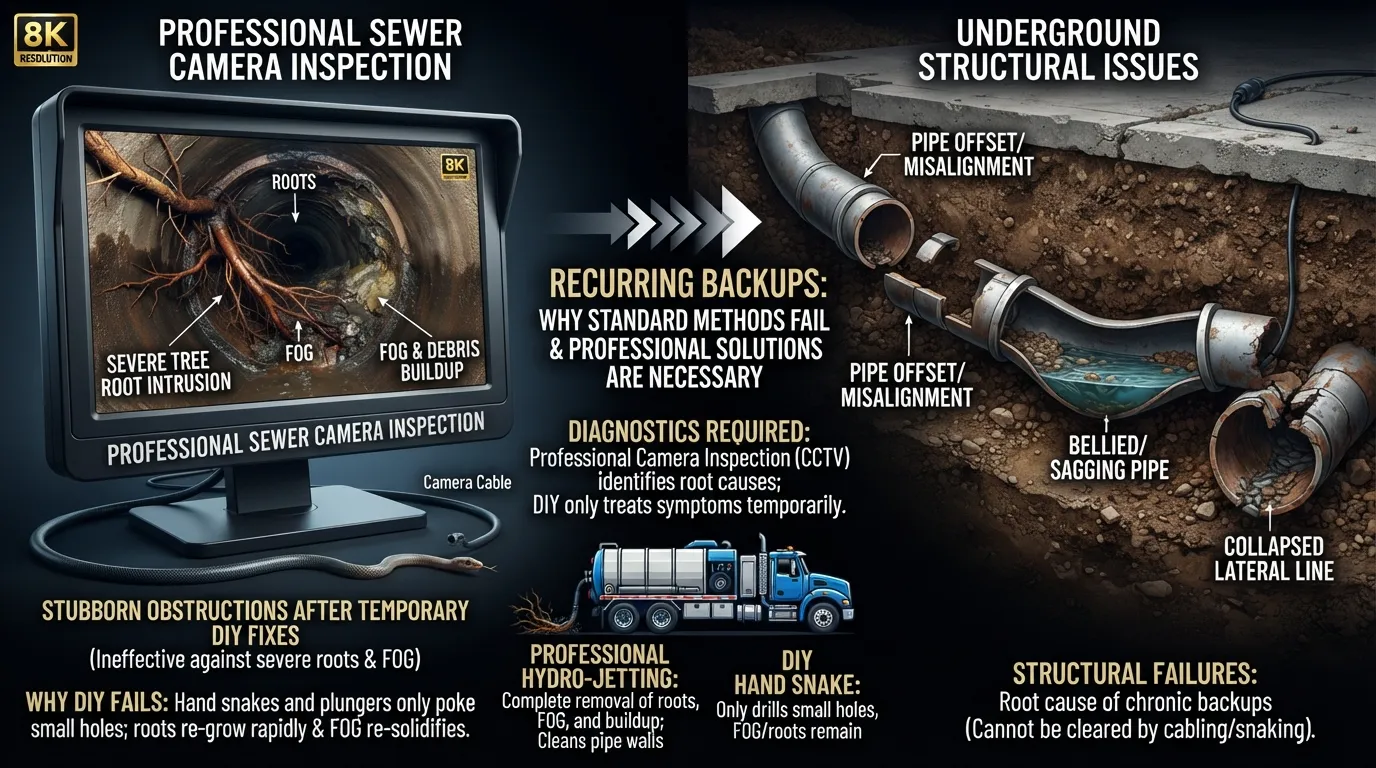
Dealing with a recurring sewer backup indicates that the underlying trigger was never fully resolved by temporary fixes. Chronic clogs point to stubborn structural flaws or persistent obstructions hiding deep within your private lateral that require professional diagnostic intervention.
Partial Blockages That Return After DIY Fixes
A partial blockage returns soon after using a standard plunger, chemical cleaner, or manual hand snake because these tools only poke a small hole through the obstruction rather than removing it.
Superficial Clearance: Standard homeowner tools pass through thick grease rings, root mats, or compressed wipes, leaving residue behind that quickly catches new debris.
Aggressive Growth: Roots cut by basic snaking often regrow thicker and faster than before, creating even denser blockages within weeks.
Comprehensive Cleaning: Eliminating chronic clogs requires professional hydro-jetting to completely scour pipe interior walls down to the bare material.
Structural Pipe Damage That Requires Inspection
When sewer backups happen repeatedly despite clean lines, structural damage like a collapsed pipe, severe offset joint, or major ground settling is usually to blame.
Compromised Integrity: Shifting soil, heavy traffic, or aging materials can cause pipes to crack, warp, or pull apart completely underground.
Catch Basins: Structural gaps allow soil, rocks, and silt to enter the pipe, creating artificial dams that continually trap solid waste.
Targeted Renovation: Identifying these permanent failures early allows plumbers to recommend trenchless repairs or localized replacements before total line collapse occurs.
When a Camera Inspection Is the Only Way to Know
A professional video inspection is the only definitive way to diagnose the exact cause and location of a recurring sewer backup without destructive guesswork.
Real-Time Footage: A high-definition waterproof camera pushed through your lateral reveals root intrusions, cracks, bellies, and grease buildups with absolute clarity.
Precise Mapping: Modern locators pinpoint the exact depth and surface location of underground problems, saving your landscaping from unnecessary excavation.
Professional Assessment: Property owners experiencing ongoing drainage failures should schedule a comprehensive sewer line inspection or specialized leak detection services to permanently resolve the issue.
DIY vs. Professional Help — Can You Unclog a Sewer Line Yourself?
Attempting to clear a main line clog independently rarely succeeds and frequently results in worsened property damage or personal injury. While minor localized clogs in single fixtures respond well to home tool kits, a full main line obstruction requires commercial-grade power equipment and specialized expertise.
Balkan Sewer & Water Main Service – City Sewer Back Up Causes & How To Prevent Sewer Flooding
When a Plunger or Drain Snake Is Enough
A standard household plunger or a short manual hand snake is only effective for minor blockages confined to individual branch lines like a sink or toilet trap.
Localized Restrictions: These tools can successfully dislodge hair, soap scum, or small toilet paper clumps sitting just inches past the fixture drain.
Main Line Limitations: Standard consumer snakes lack the reach and torque needed to penetrate deep into underground lateral lines where tree roots or heavy grease reside.
False Security: Using a short hand snake often just pokes a temporary hole through a major main line clog, allowing water to drain briefly before completely blocking up again.
Why Chemical Drain Cleaners Are Risky for Main Lines
Pouring caustic chemical drain cleaners into your plumbing system to fix a main line backup is hazardous to your pipes, your health, and professional technicians.
Thermal Damage: Chemical reactions inside clogged pipes generate extreme heat that can warp PVC lines, crack older clay pipes, and ruin deteriorated joints.
Chemical Splatter Hazards: If a chemical cleaner fails to clear the clog, standing toxic liquid remains trapped in the pipe, creating extreme danger when a plumber opens the cleanout or removes a trap.
Zero Structural Efficacy: Liquid formulas cannot cut through dense tree root masses, structural pipe collapses, or heavy FOG buildup.
Warning Signs You Need a Licensed Plumber
Recognizing when a drainage issue exceeds DIY capabilities protects your home from catastrophic wastewater damage and ensures the problem is permanently resolved.
Whole-House Symptoms: Multiple fixtures backing up simultaneously or gurgling violently indicate a primary system failure requiring heavy mechanical clearing.
Advanced Technology: Resolving deep blockages safely requires professional-grade equipment, camera inspections, and high-pressure drain cleaning solutions managed by certified experts.
Permanent Resolution: Contacting a licensed professional guarantees that the underlying structural trigger is accurately diagnosed and repaired according to municipal plumbing standards.
How Much Does It Cost to Fix a Sewer Backup?
Sewer backup repair costs vary widely depending on the severity of the obstruction, the depth of the line, and whether the pipe requires basic clearing or total structural replacement. Understanding these financial breakdowns helps homeowners budget effectively for professional plumbing interventions.
| Repair Scenario | Average Cost Range | Scope of Work |
| Simple Clog Clearing | $250 – $650 | Standard snaking or hydro-jetting to remove localized debris, grease, or soft blockages. |
| Trenchless Sewer Repair | $4,000 – $12,000 | Pipe lining or bursting technology to fix damaged lines without extensive trench excavation. |
| Full Sewer Line Replacement | $7,000 – $25,000+ | Traditional excavation and complete physical replacement of collapsed, severely offset, or broken sewer laterals. |
Cost to Clear a Simple Clog
Clearing a straightforward main line blockage using professional mechanical augers or hydro-jetting represents the most affordable intervention tier.
Targeted Clearing: This pricing covers labor, diagnostic camera runs, and high-pressure cleaning to strip out grease rings or routine root masses.
Immediate Relief: Prompt professional clearing prevents minor restrictions from escalating into costly structural failures or total pipe collapses.
Service Investment: Investing in routine maintenance cleaning is far more cost-effective than dealing with emergency sewage water extraction and property restoration.
Cost of Trenchless Sewer Line Repair
Trenchless sewer repair offers a minimally invasive alternative that preserves your landscaping, paving, and concrete structures while permanently sealing leaks.
Advanced Techniques: Methods like cured-in-place pipe (CIPP) lining insert a flexible, resin-coated tube into the damaged line, creating a durable new pipe inside the old one.
Property Preservation: Because trenchless solutions require only small entry and exit access points, homeowners save significantly on expensive lawn, driveway, and structural restoration.
Professional Standards: Homeowners looking into modern pipe rehabilitation should consult plumbing experts specializing in sewer line solutions to determine if their specific pipe layout qualifies.
Cost of Full Sewer Line Replacement
Traditional full sewer line replacement becomes necessary when legacy pipes experience total structural collapse, extreme sagging, or widespread fragmentation.
Excavation Demands: This labor-intensive process requires heavy machinery to dig up the entire length of the compromised private lateral from the house foundation to the municipal connection.
Material Renewal: Outdated clay or deteriorated Orangeburg lines are completely removed and swapped for modern, high-durability PVC piping.
Comprehensive Restoration: Total replacement projects carry higher upfront costs due to extensive excavation, pipe installation, and subsequent property landscape reconstruction.
Factors That Affect Final Pricing
Several physical and logistical variables influence the final quote provided by a licensed plumbing contractor when addressing a sewer backup.
Line Depth and Accessibility: Deeply buried lines or pipes running beneath paved driveways, concrete slabs, or structural decks require specialized labor and equipment.
Extent of Damage: Minor localized root cracks cost substantially less to repair than extensive pipe breaks spanning dozens of feet across the property.
Emergency Service Timing: Calling out specialized cleaning and repair crews during nights, weekends, or holidays can incur standard emergency dispatch surcharges.
Does Homeowners Insurance Cover Sewer Backup Damage?
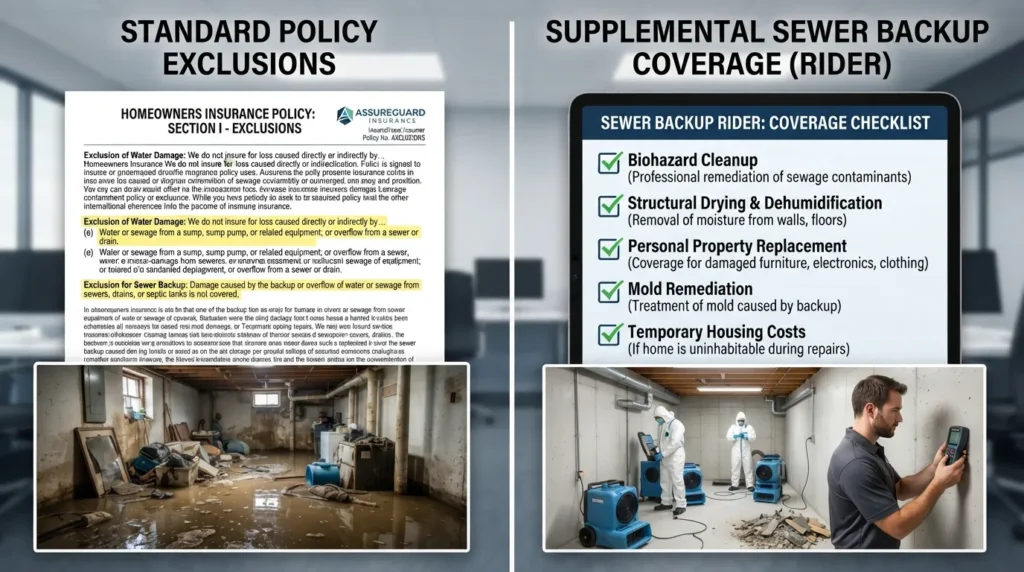
Standard homeowners insurance policies typically exclude water and sewage damage caused by a backed-up main line. Protecting your home from these costly recovery expenses requires understanding specific policy limitations and securing the correct supplemental coverage.
Standard Homeowners Policies and Sewer Backup Exclusions
Most standard property insurance policies cover water damage from sudden internal plumbing failures, such as a burst supply pipe, but explicitly exclude sewer backups and external flooding.
Exclusionary Clauses: Insurance providers categorize main line backups and surface water intrusion as separate risks that fall outside standard dwelling protection.
Out-of-Pocket Liability: Without specialized provisions, homeowners must pay entirely out of pocket for professional sewage cleanup, mold remediation, and structural repairs.
Industry Standards: According to the Insurance Information Institute, standard policies do not cover water that backs up through sewers or drains unless a separate endorsement has been purchased.
What a Sewer Backup Rider/Endorsement Covers
Adding a sewer backup endorsement or rider to your homeowners policy provides vital financial protection against the immense costs of wastewater disasters.
Cleanup and Restoration: Endorsements generally cover professional water extraction, biohazard sanitization, and structural drying services.
Property Replacement: Coverage often extends to ruined personal belongings, ruined drywall, damaged flooring, and ruined basement furnishings.
Affordable Protection: Adding this endorsement typically involves a modest annual premium increase, making it a high-value investment for homeowners connected to municipal sewer systems.
Steps to Take for an Insurance Claim
Navigating an insurance claim after a sewage backup requires careful documentation and prompt action to ensure maximum reimbursement for your losses.
Document the Damage: Take clear, high-resolution photographs and videos of all affected rooms, ruined items, and standing wastewater before any cleanup begins.
Notify Your Insurer Immediately: Contact your insurance agent as soon as the emergency is contained to report the incident and verify your rider details.
Keep Detailed Receipts: Save all itemized invoices from licensed restoration companies, plumbers, and temporary housing expenses to support your formal claim submission.
How Professionals Fix Sewer Backups Repair Options
Professional plumbing interventions go far beyond temporary fixes, deploying advanced technologies to eliminate deep blockages, rehabilitate damaged lines, and protect your property from future flooding.
Black Mountain Plumbing – What causes a sewer line to back up and how can you prevent it?
Hydro Jetting and Drain Clearing
Hydro jetting utilizes high-pressure water streams to scour the interior walls of your sewer lateral, completely eliminating grease, scale, and root intrusions.
Complete Restorative Cleaning: Unlike traditional augers that bore a single hole, hydro jetting thoroughly washes away all accumulated debris down to the bare pipe material.
Root Eradication: High-pressure streams slice cleanly through persistent tree root masses, delaying regrowth far longer than standard mechanical snaking.
Preventative Maintenance: Regular hydro jetting keeps commercial and residential drainage networks clear, preventing unexpected emergency backups.
Trenchless Sewer Line Repair (No-Dig Technology)
Trenchless sewer line repair allows plumbing professionals to structurally rehabilitate broken or leaking pipes without destroying your landscaping, driveways, or hardscaping.
Cured-in-Place Lining: A flexible resin-infused liner is pulled or blown into the damaged pipe and inflated, curing in place to form a seamless, jointless new inner pipe.
Minimal Disruption: No-dig solutions spare your lawn, concrete walkways, and structural paving from heavy excavation equipment.
Expert Solutions: Homeowners dealing with damaged infrastructure can rely on professional sewer line trenchless rehabilitation to restore long-term structural integrity.
Traditional Excavation Repair (When It’s Necessary)
Traditional excavation involves digging down to physically access, repair, or completely replace sections of a severely damaged or collapsed underground sewer pipe.
Severe Structural Failure: When pipes experience total structural collapse, extreme sagging, or severe off-sets, trenchless lining is no longer viable and physical replacement is mandatory.
Complete Overhaul: This method allows technicians to fully remove compromised legacy materials and lay down modern, heavy-duty piping systems.
Targeted Intervention: Experienced plumbing teams map the exact problem area beforehand to minimize the excavation footprint required on your property.
Sump Pump Installation for Flood-Prone Properties
Installing a heavy-duty sump pump system provides a critical defense line for homes vulnerable to heavy rainfall, rising groundwater, and municipal surcharges.
Active Water Management: Sump systems collect incoming subsurface water and pump it safely away from your foundation before it can breach living spaces.
Backup Protection: Integrating a battery backup system ensures continuous operation during severe storms when local power grids fail.
Flood Mitigation: Property owners facing chronic water accumulation should invest in professional sump pump installation to safeguard their basements against catastrophic flooding.
How to Prevent Future Sewer Backups
Preventing future sewer backups requires adopting disciplined disposal habits, scheduling routine professional maintenance, and upgrading your plumbing system with advanced protective hardware. Taking these proactive steps safeguards your home against unexpected wastewater emergencies and expensive property repairs.
Proper Disposal Habits (What Never to Flush or Pour Down Drains)
Establishing strict household guidelines regarding what enters your drainage system is the single most effective way to eliminate preventable clogs.
The Three Ps Rule: Only human waste and standard toilet paper should ever be flushed down your toilets; everything else must go into household trash receptacles.
FOG Management: Never pour cooking oils, fats, or grease down kitchen sinks; instead, let them cool and solidify before throwing them away or wiping them with paper towels.
Targeted Care: Adhering to these strict disposal rules dramatically reduces stress on your plumbing network and helps you avoid premature calls for toilet repair or main line clearing.
Scheduling Regular Drain Cleaning and Camera Inspections
Proactive maintenance allows plumbing professionals to identify and eliminate minor buildup before it escalates into a catastrophic sewer backup.
Routine Hydro-Jetting: Scheduling periodic drain cleaning scour’s pipe walls clean of accumulated grease, scale, and early-stage root intrusion.
Diagnostic Checkups: Periodic camera inspections let you monitor the interior condition of your underground laterals, catching cracks or bellies before they cause a full blockage.
Long-Term Savings: Investing in scheduled preventive maintenance costs a fraction of emergency water extraction and structural restoration services.
Installing a Backwater Prevention Valve
A backwater valve is a specialized one-way mechanical gate installed on your main sewer line that automatically stops municipal wastewater from reversing flow into your home.
Automatic Sealing: The internal flapper gate opens freely to let wastewater exit your home but instantly snaps shut if municipal pressure tries to push water backward.
Flood Defense: This device provides essential protection for homes connected to overloaded municipal infrastructure or combined sewer systems during heavy storms.
Professional Installation: Retrofitting a backwater valve requires professional excavation and installation to ensure compliance with local plumbing codes.
Managing Tree Root Growth Near Sewer Lines
Controlling tree root growth around your property protects your underground sewer laterals from aggressive natural infiltration and structural damage.
Strategic Landscaping: Avoid planting large trees, willows, or shrubs with invasive root systems directly over or adjacent to your underground sewer line path.
Root Barriers: Installing physical root barriers or applying approved chemical root inhibitors in the soil surrounding your pipes deters root tendrils from seeking out pipe joints.
Early Intervention: Addressing minor root intrusion quickly with professional treatments prevents roots from expanding and cracking your sewer pipe walls.
Frequently Asked Questions
Does Homeowners Insurance Cover Sewer Backup Damage?
Standard homeowners policies typically exclude main line backups and external flooding. However, you can secure comprehensive protection by purchasing a specific sewer backup rider or endorsement. This optional add-on covers professional biohazard cleanup, structural drying, and personal property replacement costs following a wastewater disaster.
What Causes Sewage to Come Back Up the Pipes?
Sewer backups are primarily caused by stubborn blockages, structural pipe damage, or municipal system overloads. Common culprits include tree root intrusion, heavy grease accumulation, flushing non-flushable wet wipes, collapsed aging lines, and intense storm runoff overwhelming public municipal mains.
How Much Does a Sewer Backup Cost to Fix?
Repair costs range from $250 to $650 for clearing a simple localized clog using standard snaking or hydro-jetting. More extensive repairs, such as trenchless pipe lining, typically cost between $4,000 and $12,000, while full traditional excavations and replacements can exceed $7,000 to $25,000.
How Do You Fix Sewage That Is Backing Up?
Fixing a sewage backup requires immediate professional intervention starting with a high-definition video camera inspection to locate the obstruction. Technicians then utilize high-pressure hydro-jetting to clear blockages, advanced trenchless rehabilitation for damaged pipes, or full traditional excavation when structural collapse occurs.
What Is the Most Common Cause of Sewer Backup?
The most common cause of a sewer backup is the accumulation of non-flushable items, particularly synthetic wet wipes, paper towels, and sanitary products. Unlike standard toilet paper, these materials do not break down in water, knotting together inside pipe bends and catching grease or tree roots.
What Is the Best Chemical to Unclog a Sewer Line?
There is no safe or effective chemical solution for clearing a main sewer line clog. Caustic chemical drain cleaners fail to cut through tree roots or structural damage, generate extreme heat that warps pipes, and leave hazardous standing liquid that threatens professional technicians.
Can I Unclog My Sewer Line Myself?
Homeowners should generally avoid attempting to clear a main line blockage independently. While a plunger or small hand snake works for minor fixture traps, main line clogs require commercial hydro-jetting equipment, professional expertise, and safety gear to prevent severe contamination exposure.
Is It Safe to Stay in the House After a Sewage Backup?
Staying in a home during a raw sewage backup carries high health risks due to dangerous pathogens, bacteria, and toxic mold spores found in black water. If flooding is extensive, electrical hazards are present, or noxious gas odors cause dizziness, residents should evacuate immediately.
What Are the Signs That My Main Sewer Line Is Clogged?
Key warning signs of a clogged main line include multiple plumbing fixtures backing up simultaneously, gurgling sounds from toilets or floor drains, and uniform slow drainage throughout the house. Additional indicators feature persistent sulfur odors and unexplained pooling water or lush grass patches in the yard.
Can You Repair a Sewer Line Without Digging It Up?
Yes, many modern sewer line issues can be repaired without traditional trench excavation using trenchless technology. Methods like cured-in-place pipe lining insert a flexible, resin-coated tube through small access points, creating a durable new pipe inside the damaged existing line.
When to Call a Professional Plumber
Recognizing when a drainage issue requires expert intervention is the most effective way to protect your home from severe structural damage and biohazard risks. Professional plumbing contractors bring specialized tools, diagnostic technology, and safety protocols to resolve severe backups safely and permanently.
Recap: Key Signs You Shouldn’t Ignore
Ignoring early warning signs of a failing drainage system almost always leads to catastrophic indoor flooding and significantly higher repair bills.
Whole-House Symptoms: Multiple fixtures backing up simultaneously, persistent gurgling sounds, or uniform slow drainage across every room indicate a compromised main sewer lateral.
Property Hazards: Unexplained wet patches, lush grass spots in your yard, or foul sewage odors require immediate professional investigation to locate underground leaks.
Proactive Action: Contacting a trusted local plumbing company at the first sign of trouble prevents minor restrictions from turning into total system collapses.
Why Fast Response Matters for Sewer Backups
Delaying professional intervention during a sewage backup exponentially increases property destruction, mold growth risks, and overall restoration expenses.
Mitigating Biohazard Exposure: Rapid water extraction and professional sanitization protect your family from harmful pathogens, bacteria, and toxic mold spores.
Preventing Structural Failure: Quick repairs stop corrosive wastewater from undermining your subfloors, framing, and foundation walls.
Immediate Assistance: Homeowners facing an active crisis should secure reliable help right away by scheduling same-day service or contacting an expert Emergency Plumber to restore safety and peace of mind.
Main Services
Related Posts
Need a Plumber in Miami?
Schedule service online or speak directly with the EZ Plumbing team.
Owner-Led Local Service
Know who is behind the business before you request service. The owners, contact line and Miami service pages are published clearly.
- Named business owners
- Direct phone and social channels
- Local Miami service information
Clear Help Before You Book
Review the relevant service page, contact the team directly and use the booking page when you are ready—without relying on vague claims.
- Service-specific information
- Direct questions before scheduling
- Clear online booking route