Clay Sewer Pipes: Common Problems, Warning Signs & Fix Costs
What Are Clay Sewer Pipes?
Clay sewer pipes, widely known in the industry as vitrified clay pipe (VCP), have served as a backbone of underground infrastructure for generations. Understanding what these systems are, their historical background, and how to identify them helps homeowners determine if their property relies on legacy plumbing materials.
A Brief History of Clay Pipe in Residential & Municipal Sewer Systems
Vitrified clay pipe represents one of the oldest and most durable materials used in modern sanitation. Manufactured by molding natural clay and shale, pipes are fired at extremely high temperatures until the material achieves a glass-like vitrification. This process makes the clay impervious to water and highly resistant to chemical corrosion.
Ancient Origins: Civilizations dating back thousands of years utilized fired clay for drainage, recognizing its structural stability.
Mid-Century Boom: Municipalities and residential developers extensively installed vitrified clay pipe from the late 19th century through the mid-1970s.
Legacy Presence: Millions of properties across North America and Europe still rely on these legacy installations for their main sewer line connections.
How to Tell If Your Home Has Clay Sewer Pipes (Age & Construction Clues)
Identifying your home’s sewer material prevents costly guesswork when planning maintenance or renovations. Homeowners can determine if they have a clay sewer pipe system by examining municipal records, construction timelines, and physical access points.
Construction Era: If your residential plumbing system or neighborhood was established before 1980, there is a high statistical probability your lateral sewer line is constructed from clay.
Property Inspection Records: Review original home blueprints, municipal permits, or previous plumbing inspection reports, which frequently specify the material used during the initial pipe installation year.
Basement or Crawlspace Exit: Inspect where the main sewer line exits the foundation; older homes often feature a cleanout or transition point revealing the vintage piping material.
Why Pipes Were Once the Industry Standard
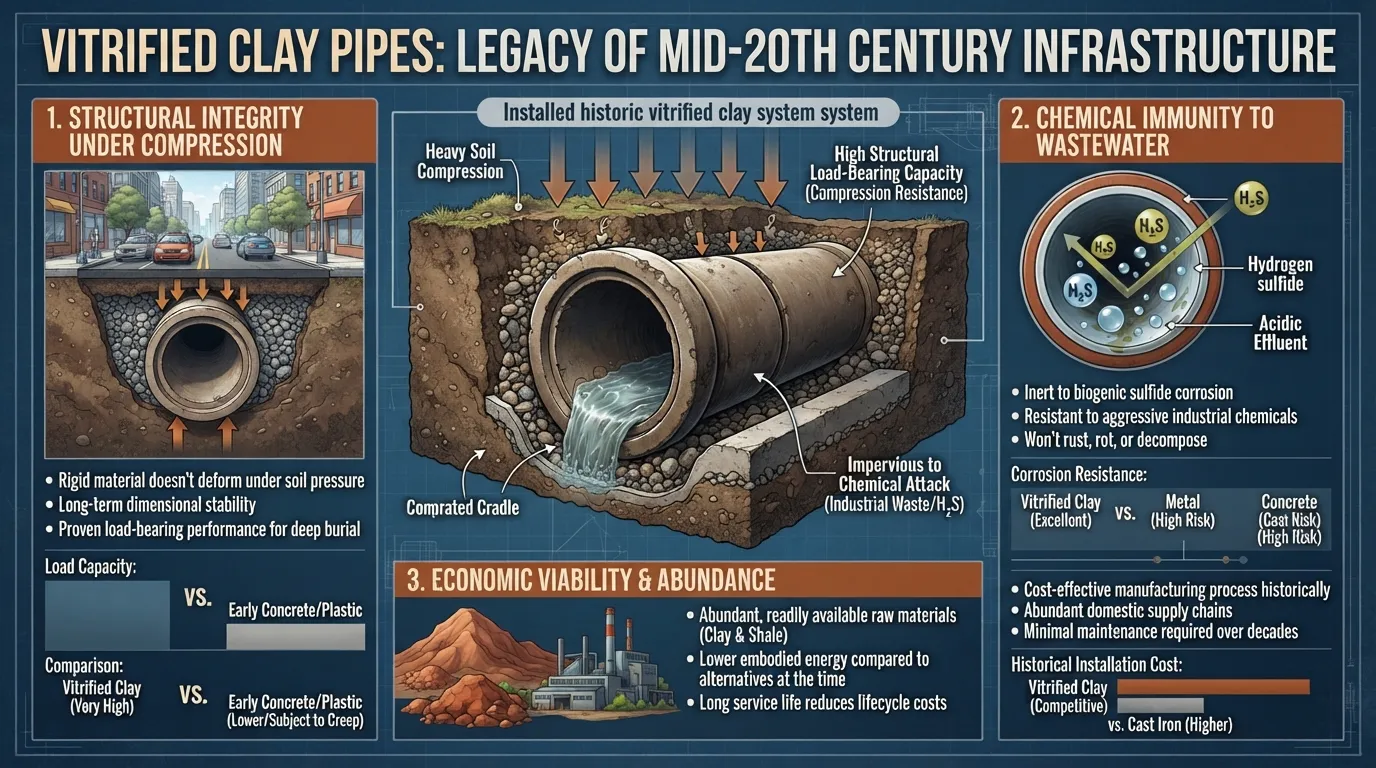
Vitrified clay dominated residential and municipal plumbing for decades due to its unique combination of raw material availability and engineering performance. Understanding why builders historically favored this material provides essential context for why millions of legacy installations still function underground today.
Strength Under Compression: Why Builders Trusted Clay
Vitrified clay offers exceptional structural performance when subjected to vertical loads from surrounding soil and heavy traffic. This high compression strength made it a reliable choice for deep sewer line burials where shifting earth could crush lesser materials.
Load-Bearing Capacity: The dense, rigid nature of fired clay handles heavy overburden pressure without buckling or collapsing over long spans.
Dimensional Stability: Unlike modern plastics that can warp or sag under sustained soil pressure, clay maintains its rigid shape indefinitely.
Rigid Infrastructure: Builders relied on this rigidity to ensure consistent wastewater flow gradients beneath city streets and residential yards.
Affordability, Availability, and Chemical Resistance
Beyond its physical strength, clay provided unmatched economic and chemical advantages during the mid-20th-century housing boom. Natural raw materials were abundant, keeping project budgets manageable for large-scale municipal developments.
Raw Material Abundance: Plentiful local deposits of clay and shale reduced manufacturing and shipping overhead compared to metal alternatives.
Corrosion Immunity: Vitrified clay is naturally immune to hydrogen sulfide gas, acidic industrial waste, and aggressive soil chemicals that quickly degraded early metal pipes.
Long Operating Lifespan: When left undisturbed by external forces, clay installations regularly achieved lifespans exceeding 50 to 100 years.
Why the Industry Eventually Moved Away From Clay
Despite its impressive durability, inherent material limitations eventually led plumbing codes and civil engineers to adopt alternative materials. The rise of lightweight plastics fundamentally shifted modern construction practices.
Brittleness and Joint Vulnerability: Clay’s rigidity makes it highly susceptible to cracking or shearing under seismic shifts, heavy surface vibrations, or intrusive tree roots.
Short Section Lengths: Traditional clay pipes were manufactured in short segments, resulting in numerous joints that served as prime entry points for root infiltration.
The PVC Revolution: The introduction of polyvinyl chloride (PVC) and durable cast iron offered flexible, lightweight alternatives that were faster to install and less prone to catastrophic fracturing.
Common Problems With Clay Sewer Pipes
While vitrified clay pipe offered incredible longevity and corrosion resistance, aging infrastructure inevitably succumbs to specific structural failures. Understanding these common vulnerabilities helps homeowners identify early warning signs of line failure before catastrophic backups occur.
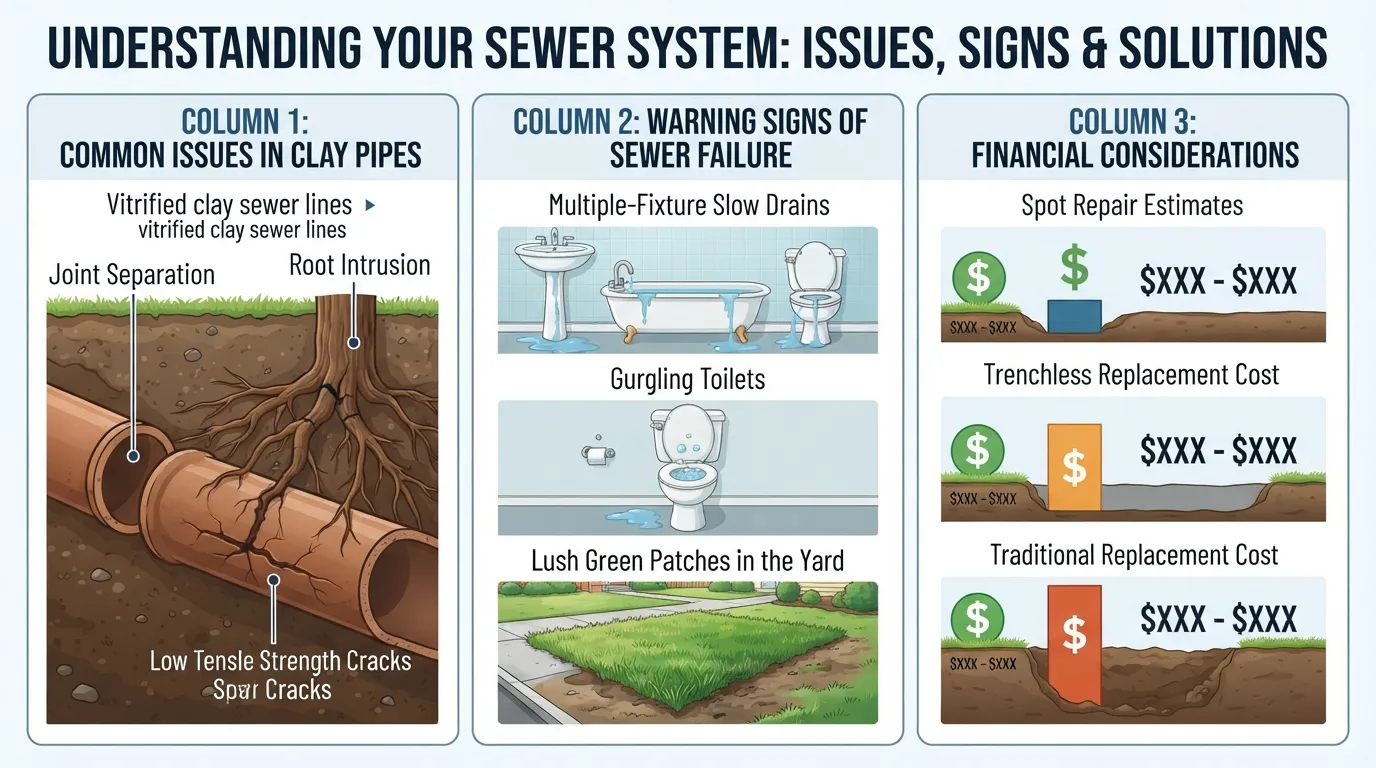
Root Intrusion Through Joint Gaps
Tree roots naturally seek out moisture and nutrients, making underground sewer lines a prime target. Legacy clay lines feature numerous segments connected by mortar joints or bituminous joints that degrade over decades.
Nutrient Seepage: Microscopic moisture vapor escapes through aging joints, attracting aggressive root growth directly toward the pipe.
Joint Penetration: Fine roots force their way into minor gaps, expanding over time to crack the pipe walls and completely clog the interior channel.
Blockage Catalysts: Once roots establish a foothold inside the line, they catch toilet paper and debris, rapidly forming severe clogs.
Brittle Material & Low Tensile Strength
Despite handling high downward soil pressure, vitrified clay possesses low tensile strength, meaning it shatters easily under pulling forces, sudden impacts, or structural stress.
Traffic Vibration: Decades of heavy vehicle traffic passing above residential streets create continuous ground vibrations that fracture rigid, brittle clay walls.
Freeze-Thaw Cycles: Extreme seasonal temperature fluctuations cause surrounding soil to expand and contract, placing localized stress points on fragile pipe sections.
Impact Fractures: Ground excavation, heavy landscaping equipment, or seismic shifting can easily crack or crush brittle pipe segments without warning.
Joint Separation and Pipe Offsets
As surrounding soil settles unevenly over decades, individual segments of clay pipe begin to shift out of alignment. Because each section is relatively short, a multi-joint run is prone to cascading displacements.
Soil Settling: Improper initial compaction or shifting earth causes sections to drop or tilt away from neighboring pipes.
Offset Edges: When a joint separates vertically or horizontally, it creates a lip inside the pipe where solid waste catches and builds up.
Structural Leakage: Disconnected joints allow raw sewage to leak into the surrounding soil, washing away support bedding and worsening the ground settling.
Pipe Bellies and Sagging Sections
A pipe “belly” occurs when a section of the trench floor settles, causing a dip or low spot in the horizontal run of the sewer line. This structural defect disrupts the gravity-fed flow essential for proper drainage.
Standing Water Accumulation: Wastewater pools in the sagging depression instead of flowing smoothly toward the municipal main.
Debris Buildup: Sludge, grease, and solid waste accumulate in the belly over time, significantly reducing the functional diameter of the pipe.
Recurrent Backups: Homeowners experiencing frequent, unexplained slow drains or recurring clogs often trace the issue to an underground pipe belly.
Warning Signs Your Clay Sewer Pipe Is Failing
Recognizing the early indicators of a damaged sewer line can save homeowners thousands of dollars in emergency excavation and property damage repairs. When a legacy clay pipe begins to crack, separate, or suffer from root intrusion, specific warning signs consistently manifest throughout the household and property grounds.
Recurring Clogs and Slow Drains Across Multiple Fixtures
When a single drain slows down, the issue is typically isolated to that specific fixture’s trap or branch line. However, when multiple plumbing fixtures back up simultaneously, the primary sewer line is compromised.
Whole-House Impact: If flushing your toilet causes water to bubble up in the shower drain or running the washing machine backs up the kitchen sink, the main line is obstructed.
Persistent Issues: Experiencing persistent clogs across your home that return shortly after professional snaking indicates structural damage or severe root matting inside a clay pipe.
Flow Restriction: Displaced joints and collapsed pipe walls catch everyday wastewater debris, creating a permanent bottleneck that standard cable augers can only temporarily clear.
Gurgling Toilets and Sewer Gas Odors
Unusual noises and noxious odors coming from your plumbing fixtures are classic red flags signaling that venting is compromised or that air is trapped by a downstream blockage.
Acoustic Warnings: Hearing a gurgling or slow-draining toilet whenever you run a sink or washing machine means air is escaping through the water trap due to a blocked or broken sewer line.
Unpleasant Smells: Detecting faint or strong sulfur and raw sewage odors around floor drains, basement corners, or the yard indicates that cracks in the clay pipe are leaking gas into the surrounding environment.
Trapped Air Pressure: Structural breaks prevent proper air circulation throughout the drainage stack, forcing gurgles and foul odors back up into living spaces.
Wet Spots or Unusually Green/Lush Patches in the Yard
Subsurface sewer leaks act as a natural fertilizer, causing distinct visual changes in your landscaping directly above the damaged pipe run.
Disproportionate Growth: A patch of grass that remains brilliantly green and aggressively lush during a dry summer spell often sits directly over a leaking or broken sewer joint.
Soggy Ground: Unexplained wet spots, depressions, or constantly marshy areas in the yard—especially far away from irrigation heads or natural drainage paths—point to exfiltrating wastewater.
Foundation Erosion: Undetected leaks washing away surrounding soil can eventually lead to sinkholes, settling pavers, or structural stress on nearby concrete slabs.
How Serious Is a Cracked Clay Sewer Pipe?
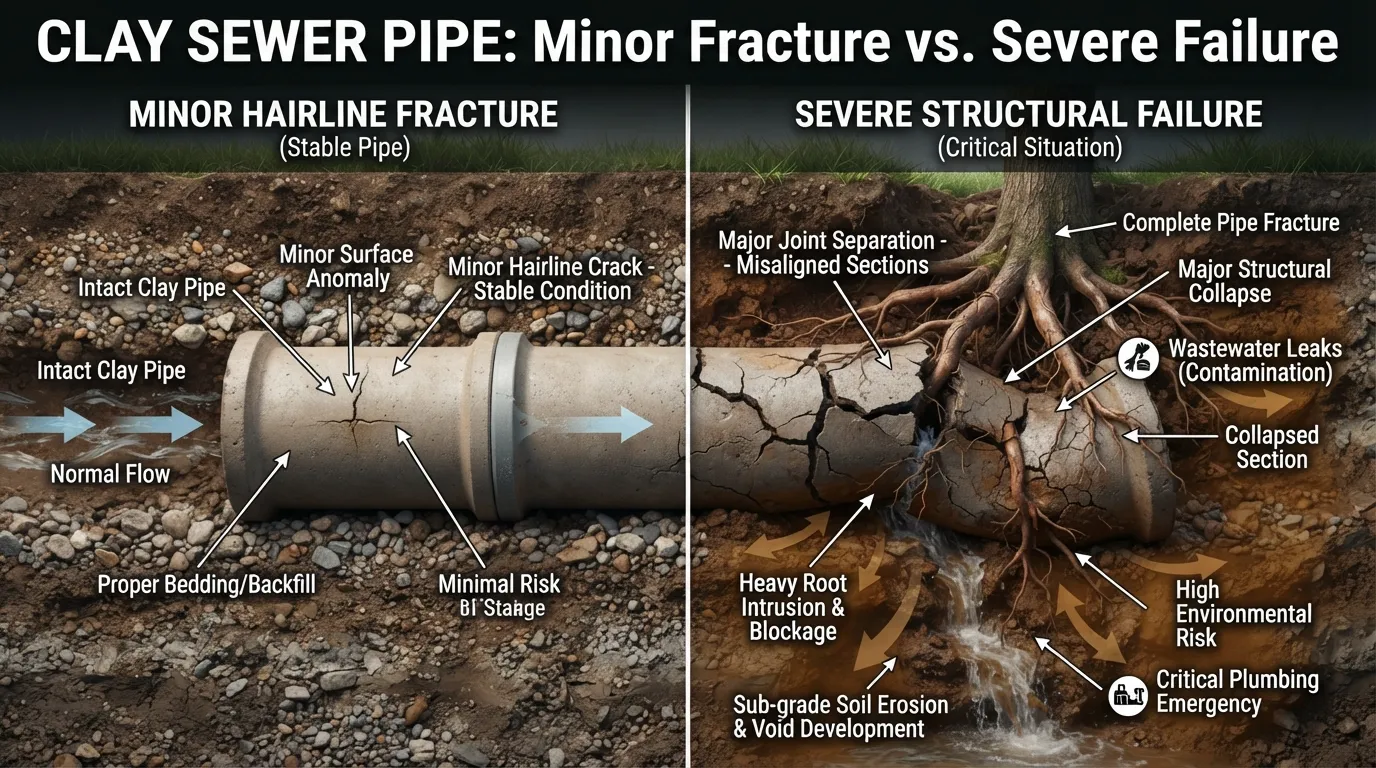
A cracked clay sewer pipe is a severe plumbing issue that demands prompt evaluation by a licensed professional. Because underground drainage systems operate under constant environmental pressure, untreated cracks rarely stabilize on their own and typically escalate into complete structural failures over time.
Minor Hairline Cracks vs. Structural Failure
The severity of a damaged clay pipe largely depends on the orientation, width, and stability of the defect. While some minor anomalies can be managed, major structural compromise carries significant risks for your property.
Hairline Fractures: Small, stable cracks caused by minor ground settling may function for years if root intrusion is controlled through routine hydro-jetting or root-inhibiting treatments.
Structural Collapse: Severe breaks, wide joint separations, or crushed pipe walls eliminate the pipe’s hydraulic integrity, stopping wastewater flow completely.
Subsurface Erosion: Even slow leaks from minor cracks wash away the surrounding soil bedding, destabilizing the pipe alignment and turning a small crack into a major collapse.
When a Cracked Pipe Becomes a Plumbing Emergency
Ignoring early warning signs transforms a manageable repair into a catastrophic health hazard and property damage event. if you notice sewage backing up suddenly, treat it as an emergency to prevent raw waste from flooding living spaces.
Total Drainage Failure: When wastewater completely stops exiting the home, all indoor plumbing fixtures become instantly unusable, risking indoor flooding and unsanitary conditions.
Structural Property Damage: Severe sub-grade leaks can saturate foundation footings, causing concrete shifting, basement wall cracks, and expensive structural damage.
Environmental & Health Risks: Raw sewage pooling in yards or under crawlspaces exposes occupants to harmful pathogens, dangerous gases, and severe contamination risks.
Clay vs. PVC vs. Cast Iron Sewer Pipes — Comparison
Selecting or replacing a sewer line requires understanding how legacy clay stacks up against alternative materials like PVC pipe and cast iron pipe. Each material features distinct structural characteristics, durability profiles, and cost implications that influence long-term maintenance needs.
Lifespan Comparison Table
Evaluating pipe material lifespan helps homeowners determine whether an existing line can be repaired or if a full-scale replacement is more cost-effective. According to industry data compiled by the National Association of Home Builders (NAHB) regarding residential building components, material longevity varies significantly based on environmental stressors and structural composition:
| Pipe Material | Typical Lifespan | Primary Vulnerability |
| Vitrified Clay | 50 to 75+ years | Brittle joints, root intrusion, and soil shifting |
| PVC (Polyvinyl Chloride) | 100+ years | Improper installation slope or heavy ground movement |
| Cast Iron | 50 to 75 years | Internal corrosion, scale buildup, and acidic soil |
Cost Comparison (Material + Installation)
Financial considerations extend far beyond initial material expenses, encompassing labor, excavation requirements, and long-term repair frequency.
Clay Replacement Costs: While raw clay is rarely installed in modern residential construction, replacing a damaged clay line with modern alternatives typically ranges from moderate to high due to heavy excavation and specialized labor.
PVC Affordability and Ease: PVC pipe offers the lowest overall material and installation cost because its lightweight sections and solvent-welded joints require less heavy machinery and time to lay.
Cast Iron Expense: Cast iron pipe represents a premium material cost, coupled with heavy labor requirements and specialized cutting tools, making it significantly more expensive to install than plastic alternatives.
Durability and Long-Term Maintenance Differences
How a pipe interacts with its surrounding subterranean environment dictates its ongoing maintenance schedule and susceptibility to emergency failures.
Corrosion Resistance: Clay and PVC are completely immune to internal rust and chemical corrosion, whereas cast iron is notorious for degrading from the inside out due to scaling and household waste acidity.
Flexibility vs. Rigidity: PVC offers minor flexibility to handle shifting earth, while rigid clay and heavy cast iron are prone to cracking or snapping under severe ground movement or traffic vibrations.
Joint Integrity: Modern PVC utilizes fused or gasketed connections that block root entry, whereas older clay and cast iron systems rely on mortar or hub-and-spigot joints that degrade and invite aggressive root infiltration over decades.
Repair vs. Replacement — What Are Your Options?
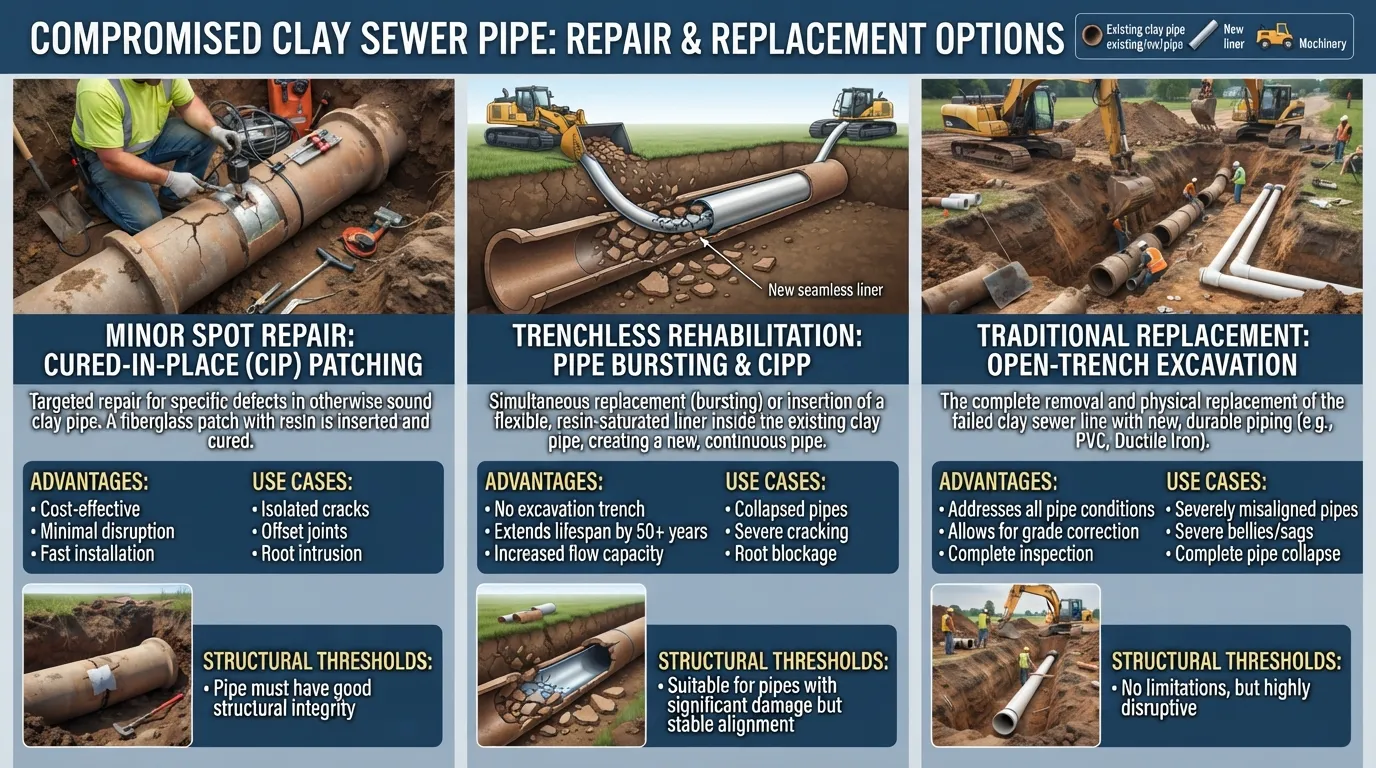
Evaluating restoration methods for a damaged clay sewer system depends heavily on the extent of structural deterioration. Property owners facing compromised lines can choose between advanced no-dig technologies and traditional excavation techniques, depending on the severity of the damage.
DIY Patch Kits: When They Work (and When They Don’t)
Homeowners frequently search for quick, cost-effective fixes, but underground sewer lines rarely lend themselves to permanent DIY solutions.
Temporary Band-Aids: External rubber band couplers or temporary epoxy patches can temporarily seal minor, highly accessible cracks, but they cannot resolve systemic aging or shifting pipe runs.
Hidden Failures: Because clay pipes degrade along multiple underground joints, patching a single visible crack leaves adjacent brittle sections vulnerable to imminent root intrusion.
Professional Necessity: Structural sewer line damage requires professional sewer line repair utilizing specialized diagnostic equipment and industrial-grade materials to ensure long-term reliability.
Trenchless Pipe Repair & Pipe Bursting (No-Dig Methods)
Modern trenchless technology has revolutionized sewer restoration, allowing contractors to rehabilitate or replace old clay pipes without tearing up landscaped yards, concrete driveways, or porches.
Cured-in-Place Pipe (CIPP) Lining: Technicians insert a resin-saturated flexible tube into the damaged clay pipe, inflating and curing it with heat or UV light to form a seamless, jointless structural new pipe from within.
Pipe Bursting Method: When a clay line is heavily cracked or collapsed, a specialized steel bursting head is pulled through the old pipe, simultaneously shattering the fragile clay outward while dragging a seamless HDPE replacement pipe behind it.
Landscape Preservation: These no-dig methods require only small access pits at either end of the run, saving homeowners from expensive surface restoration costs.
Traditional Dig-and-Replace Method
When ground conditions, severe pipe offsets, or complete structural collapse prevent trenchless options, conventional open-trench excavation remains the definitive solution.
Comprehensive Access: Contractors excavate directly down to the compromised line, allowing complete physical removal of the deteriorated clay segments.
Bedding Correction: This method enables technicians to correct improper slopes, eliminate structural bellies, and compact the underlying soil bed to prevent future settling.
Diagnostic Verification: Professionals always perform leak detection before repair begins to map the exact underground layout and ensure the chosen replacement strategy completely resolves the issue.
How Much Does It Cost to Repair or Replace a Clay Sewer Line?
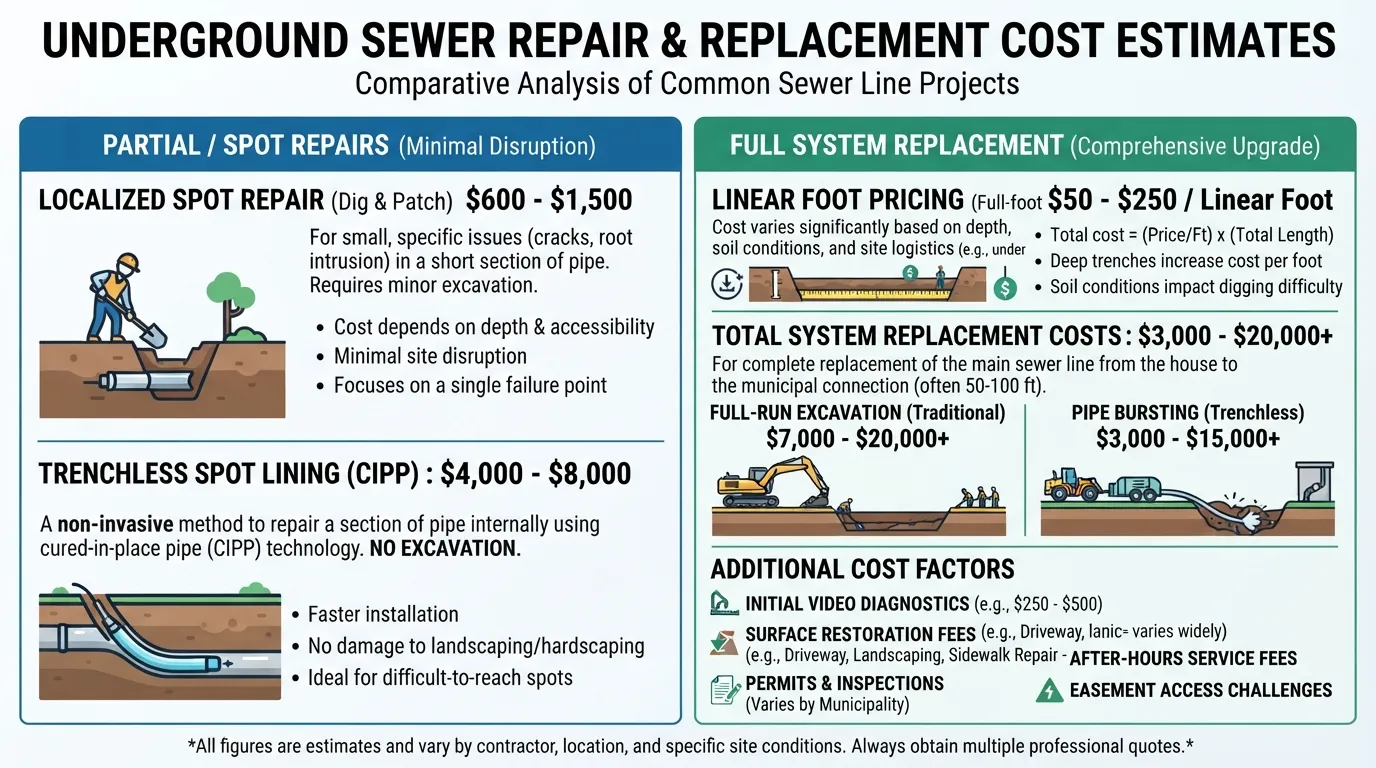
Budgeting for underground utility work requires a clear understanding of localized repairs versus full-scale line upgrades. Because sewer excavation and modern trenchless technologies vary significantly in scope, pricing depends heavily on linear foot pricing, depth, and property accessibility.
Cost to Repair a Small Crack or Section
When a camera inspection reveals isolated damage—such as a single cracked joint or minor root intrusion point—targeted spot repairs keep expenses manageable.
Localized Spot Repairs: Repairing a short, localized section of a clay sewer line typically ranges from $600 to $1,500, depending on excavation depth and surface obstructions.
Trenchless Section Lining: Cured-in-place pipe (CIPP) spot lining for a small section generally costs between $4,000 and $8,000, avoiding major landscape destruction.
Hydro-Jetting and Root Removal: Routine clearing of root blockages before they fracture pipe walls ranges from $100 to $600 per service visit.
Cost to Fully Replace a Clay Sewer Line
Because aging clay pipes typically feature multiple failing joints throughout the run, many homeowners eventually face complete system replacement.
Linear Foot Pricing: Standard sewer line replacement costs between $50 and $250 per linear foot, with overall project totals ranging from $3,000 to $10,000 for standard residential runs.
Full Excavation vs. Trenchless: Comprehensive traditional digs or advanced trenchless methods like pipe bursting for an entire property span range from $6,000 to $20,000+.
Additional Cost Factors: Expect to budget an extra $100 to $500 for initial video diagnostics, plus potential surface restoration fees if concrete driveways or mature landscaping must be breached.
Cast Iron Replacement Cost Comparison
When transitioning away from legacy clay, comparing alternative material project scopes helps clarify long-term investment value.
Material Price Differences: While raw plastic and PVC materials cost less upfront, replacing a mainline with heavy-duty cast iron or modern high-density polymers averages $50 to $250 per linear foot including professional labor.
Labor Intensity: Cast iron installation requires specialized cutting and heavy lifting equipment, driving labor expenses higher than lightweight PVC alternatives.
Next Steps: To determine the exact scope and financial investment required for your property, request a free, no-obligation quote with a licensed plumbing specialist.
Is a Cracked Sewer Line Covered by Homeowners Insurance?
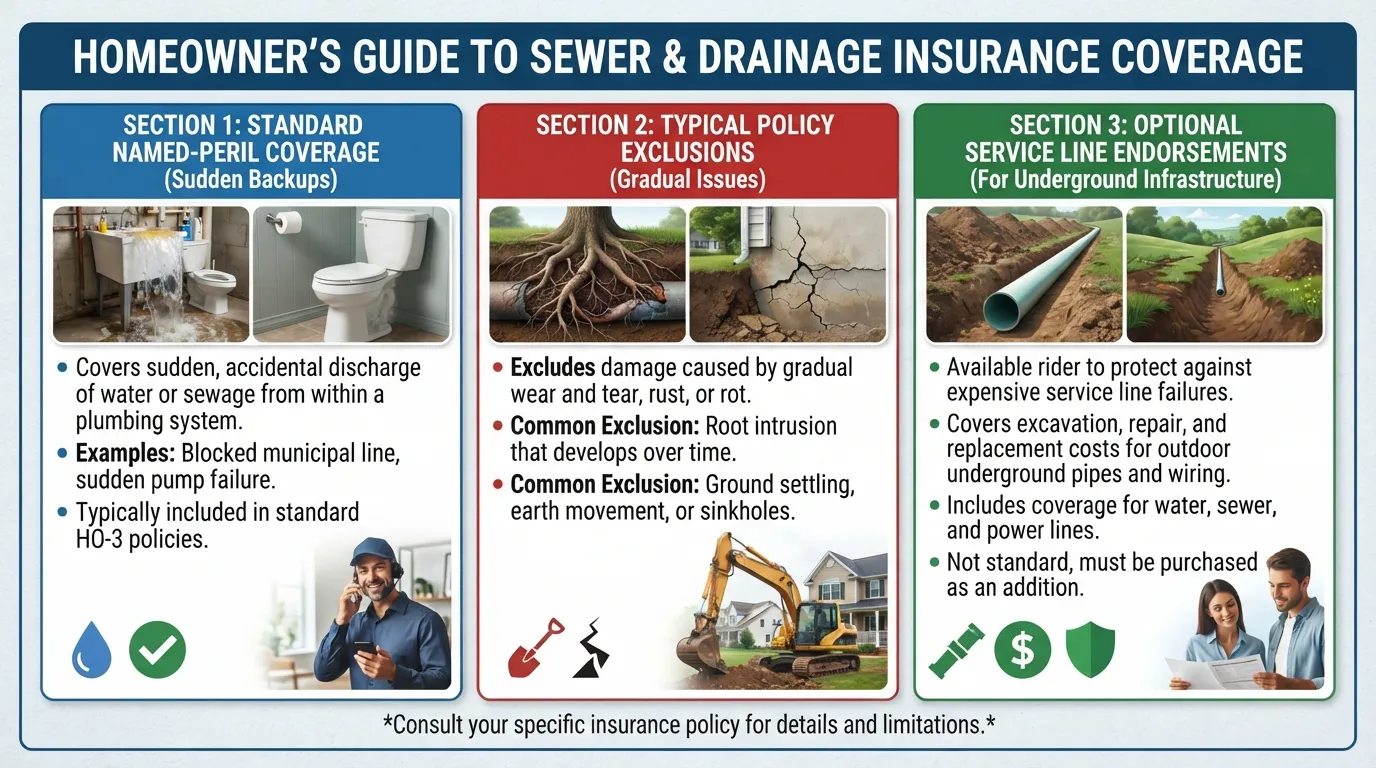
Navigating insurance claims for underground infrastructure damage can be frustrating for homeowners facing expensive repairs. Understanding how standard policies apply to aging clay pipes prevents unexpected out-of-pocket shocks when leaks or collapses occur.
What Standard Homeowners Insurance Typically Covers
Standard homeowners insurance policies generally operate on a named-peril basis, meaning they cover sudden and accidental damage to your dwelling caused by specific events.
Sudden Internal Backups: If a collapsed sewer line causes wastewater to back up inside your home, resulting in immediate physical damage to drywall, flooring, or furniture, the resulting interior cleanup and restoration are frequently covered.
Accidental External Impact: Damage caused by a sudden, external event—such as a contractor accidentally striking and crushing the sewer line during unrelated utility excavation—is typically eligible for liability claims.
Gradual Wear and Exclusion: Standard policies specifically exclude damage resulting from normal wear and tear, lack of maintenance, or structural aging.
When Sewer Line Damage Is Excluded From Coverage
Most property owners discover too late that standard insurance policies explicitly omit underground service lines from their baseline coverage protections.
Tree Root Intrusion: Because root infiltration is a gradual process rather than a sudden disaster, insurers classify it as preventable maintenance neglect.
Ground Settling and Shifting: Structural cracks and joint offsets caused by seasonal soil movement, age, or ground settling fall under maintenance exclusions.
Service Line Disclaimers: Standard homeowners policies almost universally exclude the underground water and sewer pipes running from the municipal main to your home’s foundation.
Sewer Line Insurance Riders / Endorsements
Because baseline policies leave a major gap in underground infrastructure protection, homeowners can proactively safeguard their finances through specialized policy additions.
Service Line Endorsements: Many major insurance providers offer low-cost optional riders specifically covering underground water and sewer pipes against leaks, breaks, and root damage.
Coverage Scope: These endorsements typically pay for the excavation, repair, or replacement costs of damaged exterior lines up to a specified policy limit.
Proactive Verification: Contact your insurance agent before plumbing issues arise to confirm whether your current policy includes service line protection or if you need to add an endorsement.
How to Confirm You Have a Clay Pipe Problem (Inspection Process)
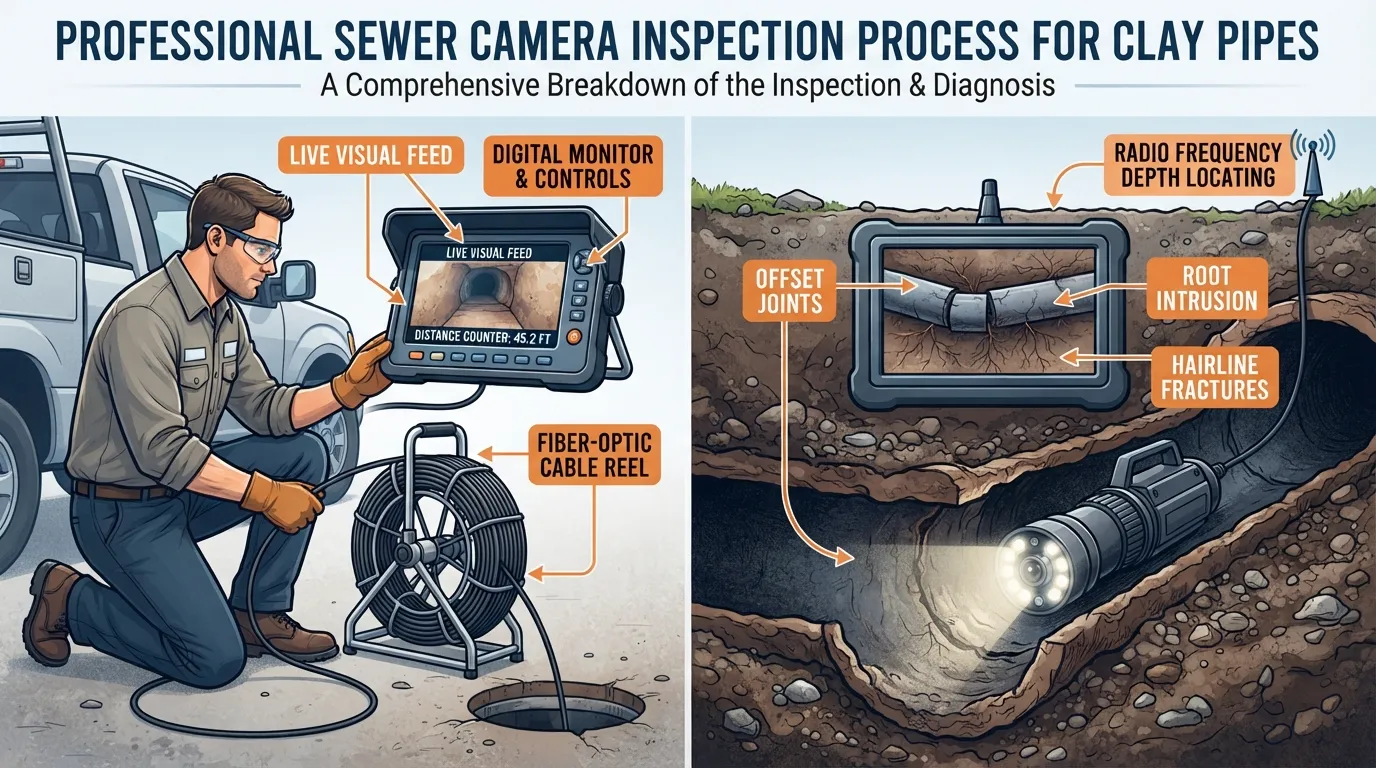
Relying on surface symptoms alone is never enough to diagnose subsurface infrastructure failures accurately. Professional diagnostics remove the guesswork by providing a precise, real-time look inside your plumbing lines before any excavation or repair strategy is finalized.
How a Sewer Camera Inspection Works
A professional sewer camera inspection is the gold standard for evaluating aging clay piping systems without destroying your yard. Technicians feed a high-resolution, waterproof fiber-optic camera into the cleanout and guide it through the entire underground run.
Real-Time Visual Feed: The camera transmits live video to a monitor, allowing technicians to see structural cracks, offset joints, and blockages as they happen.
Radio Frequency Locating: Specialized transmitters on the camera head allow technicians to pinpoint the exact depth and surface location of any underground defect from above ground.
Definitive Diagnosis: This process eliminates unnecessary guesswork, ensuring our leak detection and inspection services identify the precise root cause of your drainage issues.
What an Inspection Report Actually Shows
A thorough camera inspection generates concrete data and visual proof regarding the exact physical condition of your clay sewer lines.
Structural Integrity Mapping: The report highlights fractured pipe walls, crushed sections, and displaced joints that compromise the hydraulic flow.
Obstruction Analysis: Technicians document the exact density and location of root intrusion mats, grease buildup, or heavy sludge accumulation.
On-Screen Footage and Footage Counters: Distance markers on the screen show the exact footage from the cleanout to the defect, enabling pinpoint accuracy for targeted spot repairs or full replacements.
Real-World Example: A Typical Clay Pipe Inspection Finding
Reviewing actual plumbing inspection scenarios reveals why early detection is critical for homeowners with vintage systems.
The Scenario: A homeowner with a 1960s suburban property experiences recurrent slow drains in the primary bathroom and a gurgling toilet downstairs.
The Inspection Discovery: The camera enters the clay lateral line and reveals a series of misaligned mortar joints heavily packed with fibrous root masses, alongside a slight sagging belly near the property line.
The Resolution: Armed with this definitive visual evidence, the plumber recommends a trenchless pipe bursting replacement to permanently eliminate the aging joints, rather than wasting money on temporary snaking or patchy fixes.
Frequently Asked Questions
What Is the Life Expectancy of Clay Sewer Pipes?
Vitrified clay sewer pipes typically last between 50 and 75+ years under favorable soil conditions. While the fired clay material is chemically inert and highly durable, their ultimate lifespan is often limited by the degradation of aging joints, ground settling, and aggressive tree root intrusion.
Why Did They Stop Using Clay Sewer Pipes?
Municipalities and builders largely moved away from clay pipe due to its high brittleness and the labor-intensive nature of installing numerous short sections. Modern materials like PVC offer superior flexibility, seamless welded joints, and a significantly lower risk of cracking under shifting earth or heavy traffic vibrations.
Can a Cracked Clay Sewer Pipe Be Patched?
Minor, stable hairline cracks can sometimes be temporarily sealed using localized epoxy patches or spot sleeves. However, because clay systems degrade across multiple interconnected joints, temporary patches rarely provide a permanent fix for systemic aging or widespread structural movement.
Can You Repair a Sewer Line Without Digging It Up?
Yes, advanced trenchless technologies allow professional contractors to rehabilitate damaged clay lines without traditional excavation. Methods like cured-in-place pipe (CIPP) lining insert a seamless structural sleeve inside the old pipe, while pipe bursting simultaneously shatters the old clay and pulls a new HDPE line into place.
What Is the Standard Diameter of a Clay Sewer Pipe?
Residential lateral clay sewer pipes typically feature a standard internal diameter of 4 inches or 6 inches. Larger municipal main lines running beneath streets and commercial developments commonly range from 8 inches to 36 inches or greater depending on capacity needs.
When Did PVC Sewer Pipe Start Being Used?
Polyvinyl chloride (PVC) pipe gained widespread commercial acceptance in residential and municipal plumbing during the late 1960s and 1970s. As manufacturing processes improved, PVC rapidly replaced vitrified clay and cast iron due to its lightweight construction, chemical resistance, and ease of installation.
Conclusion & Next Steps
Navigating an aging clay sewer pipe system requires proactive awareness and timely professional intervention. While vitrified clay served as a durable industry standard for decades, legacy installations eventually succumb to joint degradation, root intrusion, and structural shifting. Recognizing early warning signs protects your home from severe damage and expensive emergency repairs.
Signs You Shouldn’t Ignore
Ignoring minor plumbing red flags can quickly escalate a localized maintenance issue into a catastrophic property disaster.
Systemic Red Flags: Recurrent multiple-fixture clogs, persistent gurgling toilets, and unexplained lush green patches in your yard demand immediate evaluation.
Proactive Assessment: Because clay systems degrade along multiple interconnected joints, addressing issues early prevents complete structural collapse and raw sewage backups.
Comprehensive Care: For assistance with other household needs alongside your main line concerns, explore our general plumbing services to keep your entire system running smoothly.
Schedule a Professional Sewer Inspection Today
The most effective way to determine the true condition of your underground infrastructure is through expert diagnostic evaluation.
Definitive Clarity: A professional video camera inspection removes the guesswork by showing exact structural damage, offset joints, and root mats.
Expert Guidance: Licensed professionals can accurately assess whether your property requires a targeted repair or a complete, modern clay pipe replacement.
Take Action: Don’t wait for a total drainage failure to address aging infrastructure. Book your inspection now with our experienced team to secure peace of mind for your home.
Main Services
Related Posts
Need a Plumber in Miami?
Schedule service online or speak directly with the EZ Plumbing team.
Owner-Led Local Service
Know who is behind the business before you request service. The owners, contact line and Miami service pages are published clearly.
- Named business owners
- Direct phone and social channels
- Local Miami service information
Clear Help Before You Book
Review the relevant service page, contact the team directly and use the booking page when you are ready—without relying on vague claims.
- Service-specific information
- Direct questions before scheduling
- Clear online booking route