4 Signs of a Broken Sewer Line And What to Do About It
Understanding the Signs of a Broken Sewer Line Early
Catching sewer line damage early prevents catastrophic property destruction, costly foundational repairs, and severe health hazards. When a main pipe cracks, collapses, or suffers root intrusion, prompt identification is essential to mitigate extensive property damage.
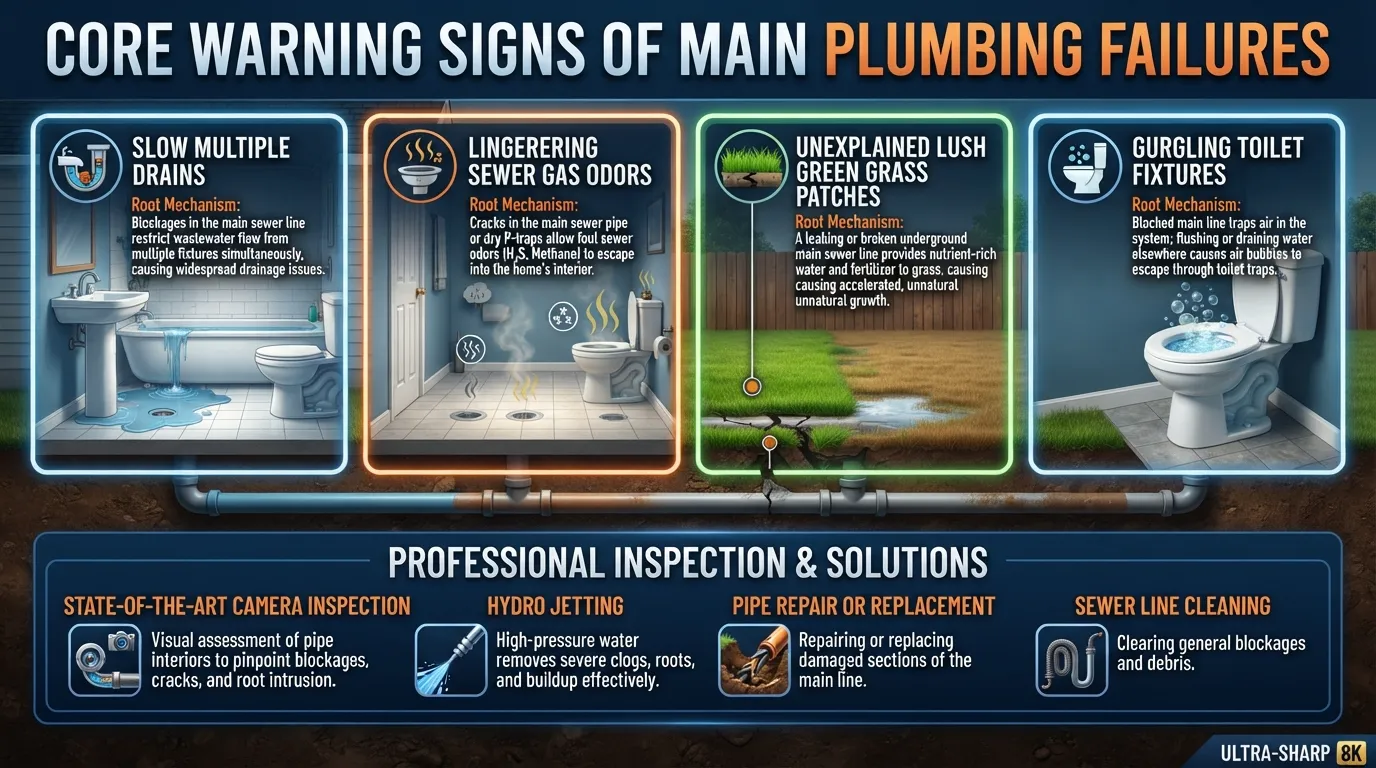
The 4 critical signs of a broken sewer line include persistent slow drains throughout the house, foul sewage odors lingering indoors or outdoors, unexplained soggy patches or unusually lush grass in the yard, and gurgling sounds coming from toilets or plumbing fixtures.
Addressing sewer line issues immediately helps homeowners avoid structural failures and extensive excavation costs. Recognizing these primary warning indicators ensures timely professional intervention before minor pipe cracks escalate into total system blockages.
How a Sewer Line Works Why These Signs Happen
Understanding the mechanical failure points of a drainage network clarifies why physical symptoms manifest throughout a property [00:15]. Every plumbing fixture relies on pressure dynamics, gravity, and precise venting to safely transport wastewater away from living spaces [00:31].
How a Healthy Sewer System Is Designed to Work
A functional residential plumbing network operates as a completely sealed plumbing system driven by gravity and atmospheric balance. When wastewater leaves sinks, showers, or toilets, it flows downward into main collection pipes while air is simultaneously regulated through a roof vent extending above the roofline.
Gravity Flow: Sloped main pipes use natural downward momentum to move waste away from the residence.
Pressure Equilibrium: The roof vent allows air to enter the pipes, preventing wastewater from pulling vacuum locks on drain traps.
Vapor Isolation: Traps filled with water block harmful gases from entering habitable indoor rooms.
What Happens Inside the Pipe When It Cracks or Breaks
When physical structural damage compromises the piping network, the balanced internal pressures and watertight seals fail entirely [00:31]. Whether caused by earth movement or aggressive root intrusion, structural damage alters how air and fluids move through the system [00:00].
Pipe Crack: A minor fracture allows wastewater to seep into surrounding soil, creating localized soggy spots while destabilizing underlying soil foundations [00:22].
Pipe Collapse: A major structural failure blocks wastewater passage completely, forcing sewage backward into lowest-level home fixtures [00:15].
Gas Leaks: Compromised pipe walls let toxic sewer gas escape into living areas instead of venting safely through the roof stack [00:07].
The 4 Primary Signs of a Broken Sewer Line
Recognizing the earliest indicators of a failing sewage system prevents catastrophic property damage and costly excavations [00:07]. Property owners must distinguish ordinary localized clogs from systemic main pipe failures by analyzing pattern behaviors across plumbing fixtures [01:16].
Foul Sewer Odors (Rotten Egg Smell)
A persistent rotten egg smell inside or outside the home indicates that sewer gases are escaping through compromised pipe walls or broken seals rather than venting safely through the roof stack [02:40].
The Mechanism: Intact plumbing systems use water-filled P-traps and elevated roof vents to safely route toxic gases outward [02:50]. A sewer gas leak occurs when cracks, dry floor drain traps, or failed wax rings allow hydrogen sulfide and methane to seep into living spaces [03:24].
Distinction from Harmless Issues: While a dry trap can be resolved by pouring water down an unused drain, a persistent odor unaffected by plumbing use signifies a structural pipe fracture [03:39].
Slow Drains, Multiple Clogs & Gurgling Sounds
When multiple plumbing fixtures drain sluggishly at the same time or produce bubbling noises, the issue extends far beyond a simple localized obstruction [01:16].
The Mechanism: A main line clog or structural collapse forces wastewater to bottle up, trapping air pockets that push back through water traps when other fixtures are used [04:50]. This results in slow drains and a gurgling toilet as displaced air forces its way upward [03:30].
Distinction from Harmless Issues: A slow single-fixture sink can be cleared with routine drain cleaning or minor hair removal [00:52]. In contrast, simultaneous sluggishness across basement floor drains, showers, and kitchen sinks points directly to a compromised main pipe [01:08]. For persistent fixtures, addressing underlying toilet issues early prevents total system backups [06:21].
Unusually Lush Grass or Soggy Yard Spots
An isolated patch of vibrant vegetation or perpetually saturated ground directly above the underground plumbing path often signals hidden structural failure [08:14].
The Mechanism: A cracked pipe continuously leaches nutrient-dense wastewater into the surrounding soil, acting as a potent fertilizer that creates a lush green grass patch along the trench line [08:30]. Ongoing leaks eventually wash away underlying earth, creating a soggy yard or depressions resembling a developing sinkhole [14:19].
Distinction from Harmless Issues: Natural lawn variations occur from over-watering or fertilizer application, but a localized linear streak of accelerated grass growth directly tracing your sewer pipe route strongly indicates an underground leak [08:50].
Unexpected Pest Infestations (Rodents, Cockroaches, Sewer Flies)
An sudden influx of unwanted wildlife or insects indoors can frequently be traced back to structural failures within sub-grade drainage infrastructure [11:18].
The Mechanism: A fractured or open sewer pipe provides a direct, nutrient-rich highway for pests from municipal lines straight into your property’s soil and foundation [11:26].
Distinction from Harmless Issues: Standard seasonal pest intrusions originate from exterior gaps or open doors, whereas recurring infestations of rodents, cockroaches, or sewer flies that persist despite professional extermination often signal an accessible underground pipe breach [11:53].
Broken Sewer Line vs. a Normal Clog: How to Tell the Difference
Distinguishing between a routine household blockage and a severe structural pipe failure saves property owners from wasting money on temporary fixes. Analyzing the distribution of plumbing symptoms across your home reveals whether you are dealing with minor debris buildup or a major system breakdown.
Signs It’s a Simple, Isolated Clog
A standard blockage affects only one specific fixture and stems from localized accumulation of everyday materials. These minor issues remain entirely confined to branch lines and do not impact the broader drainage network.
Single Fixture Impact: Only one sink, shower, or toilet drains slowly or backs up while all other household plumbing operates normally.
Immediate Resolution: The issue resolves completely using a standard plunger, a basic hand snake, or safe commercial drain cleaners without recurring.
No Environmental Symptoms: Yard conditions remain completely normal with zero odors, no soggy patches, and no uninvited pests near the property.
Signs It’s a Main Line / Structural Problem
A systemic failure indicates deep pipe damage or structural failure that requires professional intervention rather than routine household tools. These issues disrupt the entire network’s pressure and gravity balance.
Multiple Fixtures Affected: Sluggish drainage or bubbling occurs simultaneously across multiple unrelated fixtures, such as basement floors and kitchen sinks.
Recurring Obstructions: Clogs return immediately after plunging or clearing because root intrusion or an offset joint continues to catch debris.
Multisystem Red Flags: Accompanying symptoms like a rotten egg smell, a lush green grass patch, or persistent pest issues confirm a primary main line issue rather than a localized blockage.
How to Confirm a Broken Sewer Line Diagnostic Methods
Moving from suspicion to absolute confirmation requires specialized tools and targeted diagnostic techniques [01:00]. Professional leak detection eliminates guesswork, ensuring accurate sewer line diagnosis before any costly excavation begins [01:00:19].
Sewer Camera Inspection
A professional video inspection provides a direct, high-definition view of the interior pipe conditions [00:33]. A technician pushes a waterproof camera on a flexible fiber-optic cable through the home’s main cleanout [00:40].
Visualizing Damage: The camera instantly reveals root intrusions, structural cracks, collapsed sections, and pipe offsets in real-time [00:40].
Pinpointing Location: Modern locators attached to the camera head track the exact depth and surface location of the damage, minimizing unnecessary digging [00:40].
Dye Testing
When physical pipe views require additional verification or when tracing complex drainage paths, plumbers rely on specialized tracing dyes [00:00].
Tracing Leaks: Non-toxic colored dye is flushed down specific indoor fixtures while technicians monitor exterior cleanouts, suspected yard depressions, or municipal connections [00:46].
Isolating Breaks: The appearance of colored water in unauthorized locations confirms exactly where sub-surface wastewater escapes [00:46].
Video source:
Quick Symptom-to-Cause Diagnostic Table
| Observed Symptom | Likely Cause | What It Means for Your System |
| Multiple slow drains simultaneously | Main line restriction or root invasion | Wastewater is meeting a bottleneck in the primary pipe leaving the house [01:08]. |
| Gurgling toilets during sink usage | Trapped air forced through P-traps | Venting equilibrium is disrupted by a major downstream clog or pipe break [04:50]. |
| Unusually lush green grass streak | Leaking nutrient-dense wastewater | A cracked pipe underground is fertilizing a specific path along your lawn [08:30]. |
| Persistent indoor rotten egg odor | Compromised pipe wall or dry trap | Toxic sewer gases are escaping into living spaces instead of venting safely [03:24]. |
Health & Safety Risks of a Broken Sewer Line
Ignoring a compromised drainage system extends far beyond property damage, introducing critical human health and safety hazards. When structural line failures allow raw wastewater or toxic gases to breach your living environment, immediate remediation becomes essential to protect household occupants.
Health Risks of Raw Sewage Exposure
Raw wastewater carries a dense concentration of pathogenic microorganisms that pose severe threats to human and animal health. According to public health guidelines on wastewater health effects outlined by the CDC, exposure to untreated sewage can result in serious medical complications.
Bacterial and Viral Pathogens: Direct or indirect contact with contaminated fluids can introduce harmful strains of bacteria and viruses, triggering gastrointestinal illness, severe stomach cramps, nausea, and fever [1.2.1, 1.2.5].
Airborne Contaminants & Mold Risk: Chronically leaking sub-grade lines elevate indoor humidity and spread musty spores, significantly increasing mold risk and aggravating chronic respiratory conditions like asthma.
Toxic Gas Accumulation: Unchecked sewer gas leaks release hydrogen sulfide and methane into living spaces, causing chronic headaches, dizziness, and respiratory irritation.
Why You Shouldn’t Delay Repairs
Postponing sewer line repairs turns a manageable plumbing malfunction into an escalating public health crisis and structural liability.
Exponential Contamination: The longer wastewater leaks beneath or inside a structure, the deeper harmful pathogens saturate surrounding sub-flooring, drywall, and yard soils.
Escalating Restoration Costs: Timely professional intervention stops minor pipe fractures from evolving into total system backups, protecting both your family’s physical well-being and your home’s financial equity.
Sewer Line Repair Cost & Options
Understanding the financial investment required for damaged pipe restoration helps homeowners make informed decisions before minor fractures escalate into total system failures. Evaluating available repair techniques ensures you select the most cost-effective method for your specific structural situation.
Average Sewer Line Repair Cost
Property owners facing mainline failures generally encounter two distinct price tiers depending on the severity of the damage and whether a partial repair or total replacement is necessary.
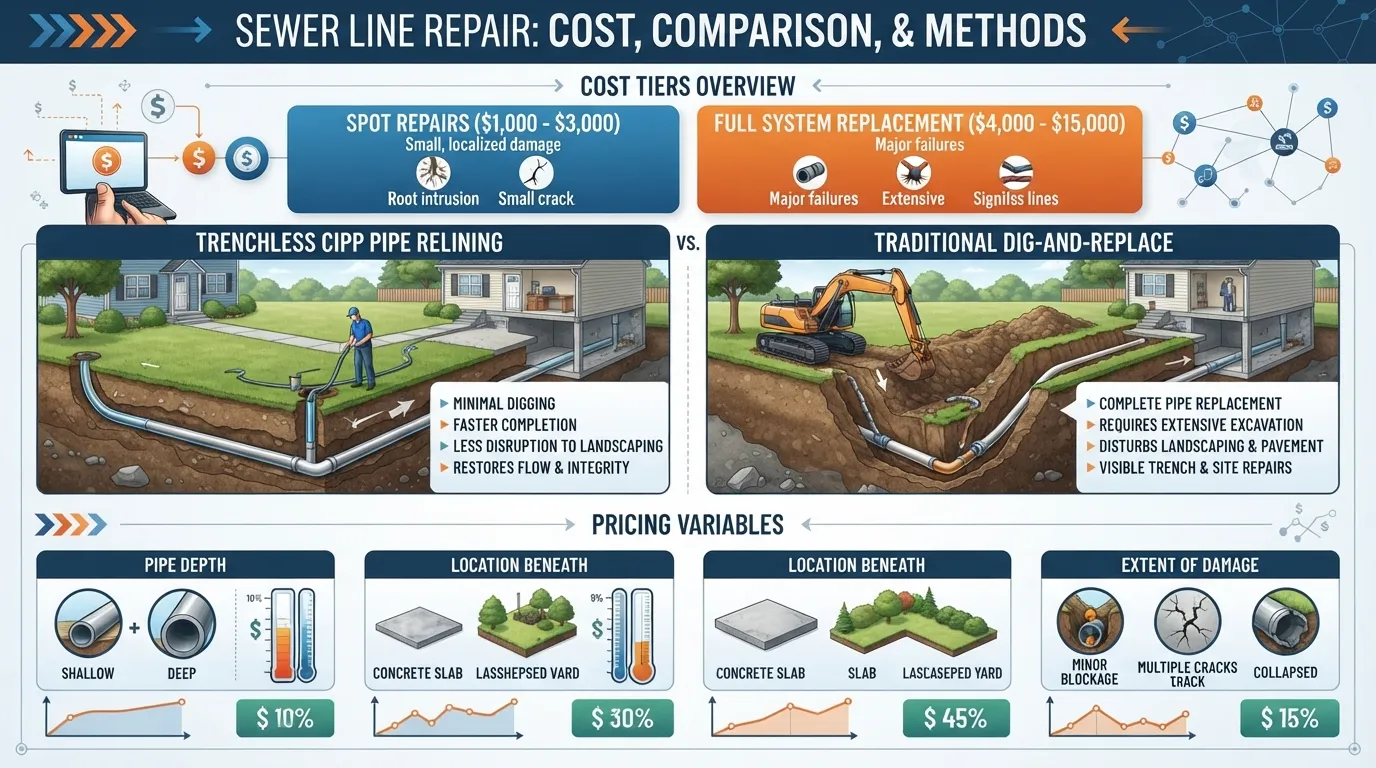
Minor Repairs and Spot Fixes: Localized repairs, such as fixing a single offset joint or clearing a deep root blockage, typically range from $1,000 to $3,000 depending on excavation depth.
Full System Replacement: Complete mainline replacement cost averages between $4,000 and $15,000, influenced heavily by the length of the run and whether surface landscaping requires extensive restoration.
Trenchless Repair (CIPP Relining) vs. Traditional Dig-and-Replace
Modern plumbing technology offers advanced alternatives to traditional trenching, significantly reducing property destruction and landscape restoration expenses.
Trenchless Repair (CIPP): Cured-in-Place Pipe (CIPP) relining inserts a flexible, resin-coated tube into the damaged line, inflating and hardening it to create a seamless new PVC pipe equivalent inside the old structure. This method preserves driveways, patios, and mature lawns while providing a long-lasting fix.
Traditional Dig-and-Replace: The conventional dig-and-replace method requires excavating a trench along the entire length of the compromised line to physically remove and swap out broken clay, cast iron, or Orangeberg pipes. While disruptive to property aesthetics, traditional excavation is mandatory when a pipe has completely collapsed or lost its structural grade.
What Affects the Final Price
Every plumbing layout presents unique variables that influence the ultimate repair cost and project timeline.
Pipe Depth and Location: Pipes buried deep beneath concrete slabs or running beneath municipal infrastructure require specialized equipment and extensive labor to access safely.
Extent of Damage: Spot repairs cost a fraction of total system overhauls, which is why early camera diagnostics are vital to isolate the exact damage zone.
Surface Restoration: Rebuilding custom hardscaping, retaining walls, or elaborate landscaping after trenching adds significant labor expenses to the final project total.
Will Homeowners Insurance Cover It?
Navigating insurance policies regarding underground pipe failures can be complex, as coverage depends heavily on the specific cause of the damage. Understanding policy terms prevents unexpected out-of-pocket expenses when filing an insurance claim for unexpected plumbing emergencies.
What’s Typically Covered
Standard homeowners insurance policies rarely cover the pipe itself, but they frequently cover the resulting collateral damage caused by the failure.
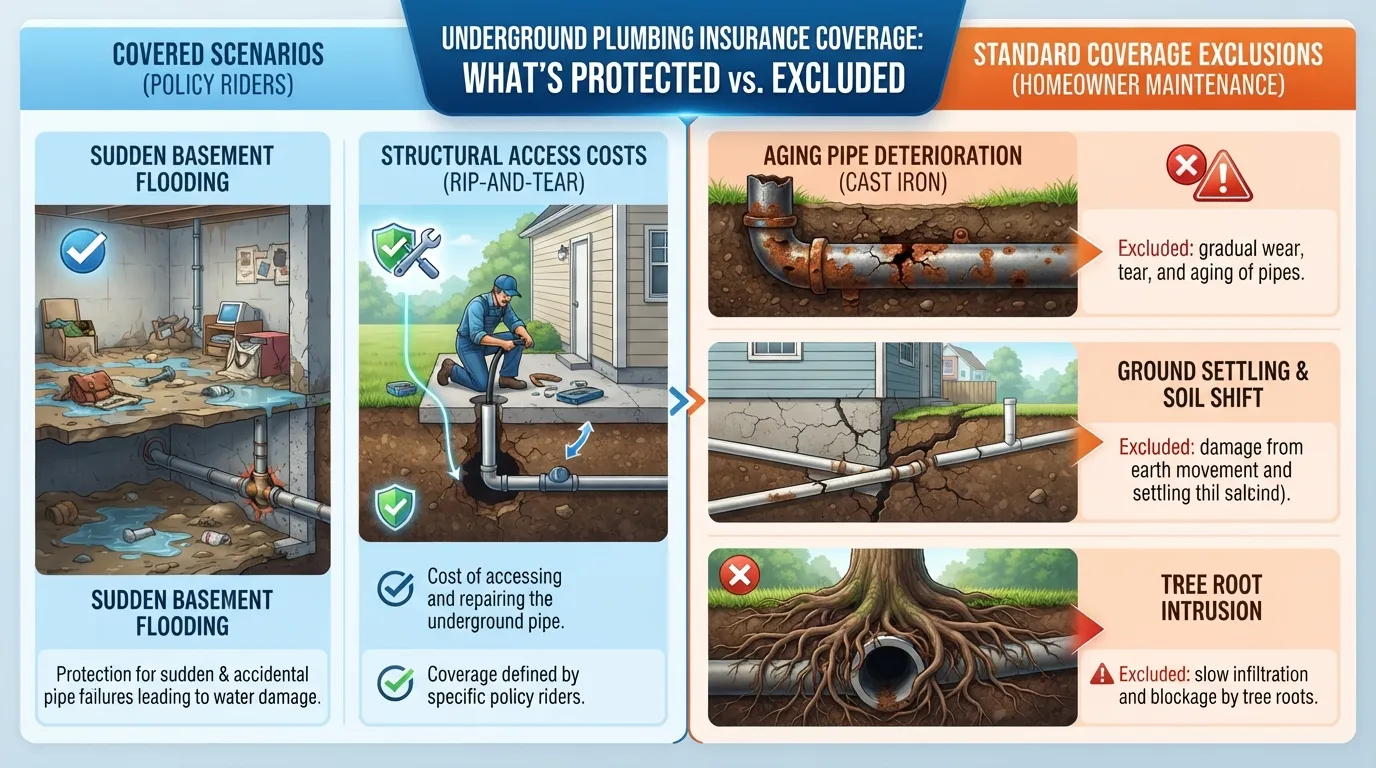
Sudden Water Damage: If a sudden, accidental burst floods your finished basement, policy provisions often cover indoor structural drying, ruined drywall, and damaged flooring.
Access Costs (Rip-and-Tear): Some policies include coverage for tearing out and replacing walls or concrete slabs to reach the leaking pipe, though the pipe repair itself remains excluded.
What’s Usually Excluded
Most insurance providers enforce strict coverage exclusions for underground infrastructure, classifying pipe deterioration as standard property upkeep.
Normal Wear and Tear: Gradual pipe corrosion, aging cast iron deterioration, and general wear and tear over decades are considered the homeowner’s maintenance responsibility.
Root Intrusion and Ground Settling: Damage resulting from slow tree root infiltration or shifting soil is typically omitted from standard policies unless you carry a specific endorsement or endorsement rider for underground service lines.
Can You Repair a Sewer Line Yourself? DIY vs. Professional

When dealing with catastrophic drainage failures, property owners frequently wonder whether they can tackle the fix independently to save money. While minor diagnostic steps can be performed safely at home, actual sewer line repairs require advanced technical expertise, heavy equipment, and specialized credentials.
What Homeowners Can Safely Check Themselves
Homeowners can perform several initial checks and troubleshooting steps before calling in a contractor. These actions help gather accurate details about the problem without risking injury or breaking municipal codes.
Locating the Cleanout: Finding your main cleanout cap lets you check if water is pooling or bubbling right outside your foundation.
Running a Fixture Test: Flushing individual toilets or running bathroom sinks helps determine if a clog is isolated to one room or affecting the whole house.
Inspecting Yard Surface Areas: Walking the path of your drainage run to check for soggy grass patches, foul odors, or depressions provides valuable context for a professional inspection.
Why Sewer Line Repair Usually Requires a Licensed Professional
Attempting DIY sewer repair on a main underground pipe is rarely feasible or legal for property owners due to the scale of excavation and regulatory requirements.
Heavy Excavation Requirements: Accessing buried lines often demands trenching equipment, backhoes, and precise shoring to prevent soil collapses.
Strict Legal Permits: Municipalities require formal engineering permits, utility line locates (such as calling 811), and strict adherence to local plumbing code compliance.
Specialized Technology: Trenchless relining and high-definition camera diagnostics require expensive commercial gear that only a licensed plumber possesses. If you’re facing an active backup right now and need immediate assistance, contact an experienced emergency plumber to prevent extensive wastewater damage to your home.
Frequently Asked Questions
How often should a sewer line be replaced?
A sewer line’s lifespan depends heavily on its material and installation quality, ranging from 30 years for older fiber-conduit pipes to over 75 years for durable cast iron. Replacement typically becomes necessary only when structural failures like root intrusion, severe cracking, or pipe collapse occur. Routine camera inspections every few years help monitor wear long before a total system failure happens.
How deep are sewer lines typically buried?
Residential sewer lines are usually buried between 18 inches and 3 feet deep in warmer climates where freezing temperatures are not a concern. In regions with severe winters, pipes must be installed below the local frost line, which can place them anywhere from 4 to 6 feet deep or more. This burial depth directly influences the complexity and labor required for excavation repairs.
Can a sewer line be replaced without digging?
Yes, trenchless repair methods allow professionals to rehabilitate or replace damaged pipes without excavating your entire yard or driveway. Techniques like Cured-in-Place Pipe (CIPP) relining pull a resin-coated liner through the existing damaged pipe, creating a seamless new structural wall from the inside. This approach preserves surface landscaping and significantly reduces restoration costs.
What is the cheapest way to replace a sewer line?
Trenchless pipe relining is frequently the most cost-effective long-term solution because it eliminates expensive landscape, driveway, and hardscape reconstruction. For minor localized breaks, spot repairs or targeted joint seals cost a fraction of a full system overhaul. Catching and addressing sewer line lifespan issues early through professional diagnostics always prevents the massive expenses associated with emergency digs.
Conclusion & Call-to-Action
Recognizing the early warning signs of a failing drainage system protects your property from severe structural damage and costly emergency repairs. Whether you are noticing slow drains, lingering odors, or unusual patches in your lawn, addressing these red signs promptly prevents minor pipe cracks from escalating into full system failures.
If you suspect damage to your drainage infrastructure, taking proactive steps like scheduling a professional sewer line inspection ensures you catch issues before excavation becomes necessary. Don’t wait for a complete backup to disrupt your home; schedule a plumber today to run a diagnostic camera and secure the long-term health of your plumbing network. To get expert help right away, book your service appointment online with our licensed plumbing team.
Main Services
Related Posts
Need a Plumber in Miami?
Schedule service online or speak directly with the EZ Plumbing team.
Owner-Led Local Service
Know who is behind the business before you request service. The owners, contact line and Miami service pages are published clearly.
- Named business owners
- Direct phone and social channels
- Local Miami service information
Clear Help Before You Book
Review the relevant service page, contact the team directly and use the booking page when you are ready—without relying on vague claims.
- Service-specific information
- Direct questions before scheduling
- Clear online booking route